Food Additives Market Research Report 2033

Food Additives Market Research Report 2033

Segments - by Product Type (Preservatives, Sweeteners, Emulsifiers, Enzymes, Flavors & Enhancers, Colorants, Others), by Source (Natural, Synthetic), by Application (Bakery & Confectionery, Beverages, Dairy & Frozen Desserts, Snacks, Meat & Poultry Products, Others), by Form (Liquid, Powder, Granules, Others)

https://growthmarketreports.com/Anuradha
Author : Anuradha B. More
https://growthmarketreports.com/Vaibhav
Fact-checked by : Vaibhav Chandola
https://growthmarketreports.com/Shruti
Editor : Shruti Bhat

Upcoming | Report ID :FB-1620 | 4.1 Rating | 38 Reviews | 286 Pages | Format : Docx PDF

Report Description


Food Additives Market Outlook

As per our latest research, the global food additives market size stood at USD 109.3 billion in 2024, reflecting the dynamic expansion of this industry driven by evolving consumer preferences and technological advancements in food processing. The market is exhibiting a robust growth trajectory, registering a CAGR of 5.7% during the forecast period. By 2033, the market is forecasted to reach a significant value of USD 179.2 billion, underpinned by the rising demand for convenience foods, clean label ingredients, and innovative food products. This remarkable growth is primarily fueled by the increasing global population, urbanization, and the shift towards processed and packaged food consumption.

The proliferation of convenience and ready-to-eat food products is a key growth factor for the food additives market. Urban lifestyles and busy work schedules have significantly altered eating habits, leading to a surge in demand for foods that offer longer shelf life, enhanced taste, and improved nutritional value. Food additives such as preservatives, emulsifiers, and flavor enhancers play a critical role in maintaining the quality, safety, and appeal of these products. Furthermore, the trend towards premiumization in the food and beverage sector is prompting manufacturers to innovate with new additive formulations that cater to consumer preferences for taste, texture, and appearance. These developments are not only expanding the application scope of food additives but also driving market value.

Technological advancements in food processing and ingredient formulation are another major driver for the food additives market. The industry is witnessing a wave of innovation, with developments such as enzyme-based additives, natural colorants, and plant-derived sweeteners gaining traction. These innovations are largely motivated by the growing consumer demand for natural, clean label, and health-oriented food products. Additionally, regulatory bodies across the globe are tightening standards related to food safety and additive usage, encouraging manufacturers to invest in research and development for safer, more effective, and sustainable food additives. The integration of advanced processing technologies and digital quality control systems is further enhancing the efficiency and reliability of additive production, contributing to market growth.

The rising health consciousness among consumers is reshaping the landscape of the food additives market. There is a noticeable shift toward additives that offer functional benefits, such as probiotics, dietary fibers, and antioxidants, in response to the increasing prevalence of lifestyle-related diseases and growing awareness regarding nutrition. Moreover, the demand for natural and organic additives is surging, as consumers are becoming more vigilant about ingredient transparency and potential health risks associated with synthetic additives. This trend is pushing manufacturers to reformulate products and explore novel sources of natural additives, thereby expanding the competitive landscape and fostering innovation in the market.

From a regional perspective, the Asia Pacific region is emerging as the fastest-growing market for food additives, driven by rapid urbanization, population growth, and rising disposable incomes. North America and Europe continue to hold substantial market shares due to their established food processing industries and high demand for processed and convenience foods. Meanwhile, Latin America and the Middle East & Africa are witnessing steady growth, supported by increasing investments in food manufacturing infrastructure and expanding retail sectors. The global food additives market is thus characterized by diverse regional dynamics, with each region presenting unique opportunities and challenges for market players.

Global Food Additives Industry Outlook

Product Type Analysis

The product type segment of the food additives market is highly diverse, encompassing a wide range of additives such as preservatives, sweeteners, emulsifiers, enzymes, flavors & enhancers, colorants, and others. Preservatives remain a cornerstone of the market, as they are essential for extending the shelf life of food products and preventing spoilage caused by microbial growth. The demand for natural preservatives, such as rosemary extract and tocopherols, is on the rise, reflecting the broader consumer preference for clean label ingredients. At the same time, synthetic preservatives continue to be widely used in high-volume food manufacturing due to their cost-effectiveness and efficacy, although they face increasing scrutiny from health-conscious consumers and regulatory agencies.

Sweeteners represent another significant product type within the food additives market, driven by the escalating demand for low-calorie and sugar-free food and beverage products. The global shift towards healthier lifestyles and the rising incidence of obesity and diabetes are propelling the adoption of alternative sweeteners, including stevia, monk fruit, and sugar alcohols. Artificial sweeteners such as aspartame and sucralose remain prevalent, particularly in diet sodas and sugar-free snacks, but the market is gradually pivoting towards natural options to align with evolving consumer preferences. This transition is also influencing the research and development efforts of major players, who are striving to develop innovative sweetener blends that offer superior taste and functionality.

Emulsifiers and enzymes are gaining prominence in the food additives market due to their critical roles in improving product texture, stability, and processing efficiency. Emulsifiers such as lecithin and mono- and diglycerides are widely used in bakery, confectionery, and dairy products to ensure uniform mixing of ingredients and prevent separation. Enzymes, on the other hand, are increasingly being utilized to enhance dough quality, improve shelf life, and reduce processing times in bakery and brewing applications. The growing focus on natural and sustainable ingredients is driving the adoption of plant-based and microbial-derived emulsifiers and enzymes, which offer clean label benefits and align with regulatory trends favoring natural additives.

Flavors & enhancers and colorants are integral to the sensory appeal of food products, making them indispensable in the food additives market. The demand for natural flavors and colors is surging, as consumers seek products that are free from artificial additives and synthetic dyes. Botanical extracts, fruit concentrates, and spice blends are being increasingly used as natural flavoring agents, while colorants derived from beetroot, turmeric, and spirulina are gaining popularity in the natural colorant segment. These trends are prompting manufacturers to invest in advanced extraction and formulation technologies to meet the growing demand for high-quality, natural flavors and colorants. As a result, the product type segment is witnessing significant innovation and diversification, contributing to the overall growth of the food additives market.

Report Scope

Attributes Details
Report Title Food Additives Market Research Report 2033
By Product Type Preservatives, Sweeteners, Emulsifiers, Enzymes, Flavors & Enhancers, Colorants, Others
By Source Natural, Synthetic
By Application Bakery & Confectionery, Beverages, Dairy & Frozen Desserts, Snacks, Meat & Poultry Products, Others
By Form Liquid, Powder, Granules, Others
Regions Covered North America, Europe, APAC, Latin America, MEA
Base Year 2024
Historic Data 2018-2023
Forecast Period 2025-2033
Number of Pages 286
Number of Tables & Figures 311
Customization Available Yes, the report can be customized as per your need.

Source Analysis

The source segment of the food additives market is characterized by a dynamic interplay between natural and synthetic additives, each catering to distinct consumer preferences and industry requirements. Natural additives, derived from plant, animal, or mineral sources, are experiencing robust growth as consumers increasingly prioritize health, safety, and environmental sustainability. The clean label movement, which emphasizes transparency and minimal processing, is a major driver for the adoption of natural additives. Manufacturers are responding by sourcing ingredients such as plant-based colorants, natural antioxidants, and enzyme preparations, which not only enhance food quality but also align with regulatory trends promoting natural ingredient usage.

Synthetic additives, while facing growing scrutiny, continue to play a vital role in the food industry due to their cost-effectiveness, stability, and consistency. These additives are widely used in large-scale food manufacturing to achieve specific functional properties that may be challenging to replicate with natural alternatives. However, concerns regarding potential health risks and adverse effects associated with certain synthetic additives are prompting regulatory agencies to impose stricter guidelines and encourage the development of safer alternatives. As a result, the synthetic segment is witnessing ongoing research and innovation aimed at improving safety profiles and reducing the use of controversial substances.

The dichotomy between natural and synthetic sources is shaping the competitive landscape of the food additives market, with manufacturers striving to strike a balance between functionality, safety, and consumer acceptance. The rising demand for organic and non-GMO food products is further amplifying the shift towards natural additives, compelling companies to invest in sustainable sourcing, advanced extraction technologies, and clean label certifications. At the same time, the synthetic segment remains indispensable for certain applications where natural alternatives may not offer the desired performance or cost efficiency, particularly in high-volume, shelf-stable food products.

Innovation in sourcing strategies is also influencing the food additives market, with companies exploring novel sources such as algae, fungi, and microbial fermentation to develop next-generation additives. These alternative sources offer unique functional properties, enhanced sustainability, and reduced environmental impact, making them attractive options for forward-thinking manufacturers. The convergence of natural and synthetic sourcing approaches, coupled with advancements in ingredient science, is expected to drive the future growth and diversification of the food additives market, ensuring that it remains responsive to evolving consumer and industry demands.

Application Analysis

The application segment of the food additives market is broad and multifaceted, encompassing bakery & confectionery, beverages, dairy & frozen desserts, snacks, meat & poultry products, and others. The bakery & confectionery sector is a major consumer of food additives, leveraging ingredients such as emulsifiers, enzymes, preservatives, and flavorings to enhance product quality, shelf life, and sensory appeal. The demand for innovative bakery products, including gluten-free, low-sugar, and fortified options, is driving the adoption of specialized additives that cater to specific dietary needs and consumer preferences. Additionally, the growing popularity of artisanal and premium bakery items is prompting manufacturers to explore novel additive formulations that deliver superior taste, texture, and nutritional value.

The beverages segment is another significant application area for food additives, with widespread use of sweeteners, colorants, flavors, and stabilizers in carbonated drinks, juices, energy drinks, and functional beverages. The rising demand for low-calorie and sugar-free beverages is fueling the adoption of alternative sweeteners and natural flavoring agents, as consumers seek healthier options without compromising on taste. Functional beverages, such as sports drinks, fortified waters, and probiotic drinks, are also driving the use of additives that offer health benefits, improved stability, and enhanced sensory profiles. These trends are contributing to the growth and diversification of the food additives market within the beverages sector.

Dairy & frozen desserts represent a dynamic application segment, where food additives are essential for achieving desired textures, preventing separation, and extending product shelf life. Emulsifiers, stabilizers, and thickeners are widely used in products such as ice cream, yogurt, and cheese to ensure smooth consistency and prevent crystallization. The increasing demand for plant-based and lactose-free dairy alternatives is creating new opportunities for additive manufacturers, who are developing tailored solutions to address the unique formulation challenges associated with these products. The focus on clean label and natural ingredients is also influencing additive selection in the dairy sector, driving innovation and product differentiation.

Snacks and meat & poultry products are key growth areas for the food additives market, as manufacturers seek to meet consumer demands for convenience, taste, and safety. Additives such as antioxidants, preservatives, and flavor enhancers are widely used to maintain product freshness, extend shelf life, and enhance flavor profiles in processed snacks, ready-to-eat meals, and packaged meat products. The trend towards protein-rich and functional snacks is driving the use of specialty additives that improve texture, nutritional value, and shelf stability. In the meat & poultry segment, the emphasis on food safety and quality is prompting the adoption of advanced preservative systems and natural antimicrobial agents, further expanding the application scope of food additives.

Form Analysis

The form segment of the food additives market is segmented into liquid, powder, granules, and others, each offering distinct advantages and catering to specific processing and application requirements. Liquid additives are widely used in the beverage, dairy, and bakery industries due to their ease of incorporation, rapid dispersion, and uniform distribution. Liquid forms are particularly advantageous in high-speed manufacturing environments, where precise dosing and consistent mixing are critical for product quality and efficiency. The growing demand for ready-to-drink beverages and liquid dairy products is further driving the adoption of liquid food additives, prompting manufacturers to develop innovative formulations that offer enhanced solubility and stability.

Powdered food additives are highly versatile and widely used across various food processing applications, including bakery, confectionery, snacks, and meat products. Powders offer several benefits, such as extended shelf life, ease of handling, and compatibility with dry blending processes. They are particularly suitable for large-scale production environments where bulk handling and storage efficiency are paramount. The rising demand for powdered flavors, colorants, and preservatives is driving innovation in encapsulation and spray-drying technologies, enabling manufacturers to deliver high-performance additives with improved stability and controlled release properties.

Granular food additives, while less common than liquid and powder forms, offer unique advantages in specific applications, particularly in the baking and confectionery industries. Granules are preferred for their ease of measurement, uniform particle size, and reduced dust formation during processing. They are often used in applications where controlled dissolution and even distribution are essential for product quality. The demand for granulated sweeteners, leavening agents, and flavor enhancers is growing, particularly in the production of pre-mixed baking ingredients and instant food products. Manufacturers are investing in advanced granulation technologies to improve product consistency and performance, further expanding the market potential for granular food additives.

The "others" category includes specialized forms such as pastes, gels, and encapsulated additives, which are gaining traction in niche applications and premium product segments. Encapsulated additives, for example, offer enhanced protection against oxidation, moisture, and heat, making them ideal for use in functional foods, dietary supplements, and fortified products. The increasing demand for customized additive solutions is driving innovation in formulation and delivery technologies, enabling manufacturers to develop tailored products that address specific processing challenges and consumer needs. As the food industry continues to evolve, the form segment of the food additives market is expected to witness ongoing diversification and technological advancement.

Opportunities & Threats

The food additives market is brimming with opportunities, particularly in the areas of natural and clean label ingredients, functional additives, and emerging markets. The growing consumer preference for transparency, health, and sustainability is creating significant demand for natural additives derived from plant, microbial, and marine sources. This trend is encouraging manufacturers to invest in research and development, sustainable sourcing, and advanced extraction technologies to deliver high-quality, natural solutions that meet regulatory requirements and consumer expectations. Additionally, the rise of functional foods and beverages, driven by increasing health awareness and the prevalence of lifestyle-related diseases, is fueling the demand for additives that offer nutritional and health benefits, such as probiotics, dietary fibers, and antioxidants. Emerging markets in Asia Pacific, Latin America, and the Middle East & Africa present lucrative growth opportunities, supported by rising incomes, urbanization, and expanding food processing industries.

Technological innovation is another key opportunity for the food additives market, with advancements in ingredient science, processing technologies, and digital quality control systems driving product development and market expansion. The adoption of novel food processing techniques, such as high-pressure processing, enzymatic modification, and microencapsulation, is enabling manufacturers to develop next-generation additives with improved functionality, safety, and sustainability. The integration of artificial intelligence and data analytics in quality control and supply chain management is further enhancing efficiency, traceability, and compliance in additive production. These technological advancements are not only opening new avenues for product innovation but also enabling manufacturers to address evolving consumer demands and regulatory challenges more effectively.

Despite the promising growth prospects, the food additives market faces several restraining factors, chief among them being regulatory complexity and consumer skepticism regarding synthetic additives. Stringent regulations governing additive usage, labeling, and safety assessments are posing challenges for manufacturers, particularly in regions with varying standards and approval processes. The growing prevalence of food allergies, sensitivities, and health concerns related to certain additives is also fueling consumer skepticism and prompting calls for greater transparency and stricter oversight. In addition, the high cost of developing and commercializing novel natural additives, coupled with supply chain challenges and raw material shortages, can hinder market growth and innovation. Addressing these challenges will require ongoing investment in research, regulatory compliance, and consumer education to build trust and ensure the long-term sustainability of the food additives market.

Regional Outlook

The Asia Pacific region is the fastest-growing market for food additives, accounting for a substantial share of the global market. In 2024, the Asia Pacific food additives market was valued at USD 38.7 billion, driven by rapid urbanization, population growth, and increasing disposable incomes. Countries such as China, India, and Japan are witnessing a surge in demand for processed and convenience foods, fueled by changing lifestyles and dietary preferences. The robust growth of the food processing industry, coupled with rising investments in food manufacturing infrastructure, is creating significant opportunities for additive manufacturers in the region. The Asia Pacific market is projected to grow at a CAGR of 6.5% during the forecast period, outpacing other regions and solidifying its position as a key growth engine for the global food additives market.

North America and Europe remain dominant players in the food additives market, with a combined market value of USD 54.2 billion in 2024. These regions are characterized by mature food processing industries, high consumer awareness, and stringent regulatory standards governing additive usage. The demand for clean label, organic, and functional food products is particularly strong in North America and Europe, driving innovation and product differentiation in the additives sector. The presence of leading multinational food companies and well-established distribution networks further supports market growth in these regions. However, the market is also facing challenges related to regulatory compliance, consumer skepticism regarding synthetic additives, and the need for continuous innovation to address evolving consumer preferences.

Latin America and the Middle East & Africa are emerging as promising markets for food additives, with a combined market value of USD 16.4 billion in 2024. These regions are benefiting from rising incomes, expanding urban populations, and increasing investments in food manufacturing and retail infrastructure. The growing demand for convenience foods, snacks, and beverages is driving the adoption of food additives, particularly in countries such as Brazil, Mexico, South Africa, and the Gulf Cooperation Council (GCC) states. While these regions present significant growth opportunities, they also face challenges related to regulatory harmonization, supply chain constraints, and the need for consumer education on the benefits and safety of food additives. Overall, the regional outlook for the food additives market is positive, with each region offering unique opportunities and challenges for market participants.

Food Additives Market Statistics

Competitor Outlook

The competitive landscape of the food additives market is highly dynamic and characterized by intense rivalry among global and regional players. Leading companies are focusing on strategic initiatives such as mergers and acquisitions, product innovation, and expansion into emerging markets to strengthen their market positions and capture new growth opportunities. The market is witnessing a wave of consolidation, as larger players seek to enhance their product portfolios, expand their geographic reach, and leverage economies of scale. At the same time, smaller and niche players are carving out specialized segments by offering innovative, natural, and clean label additive solutions that cater to specific consumer demands. The competitive intensity is further heightened by the entry of new players and startups, particularly in the natural and functional additives segments, who are leveraging advanced technologies and agile business models to disrupt the market.

Research and development (R&D) is a key focus area for leading companies in the food additives market, as they strive to develop novel ingredients, improve product performance, and address regulatory and consumer challenges. Investment in R&D is enabling companies to launch next-generation additives that offer enhanced functionality, safety, and sustainability. Collaborative partnerships with academic institutions, research organizations, and technology providers are also playing a crucial role in driving innovation and accelerating product development. In addition, companies are investing in digital transformation initiatives, such as data analytics, artificial intelligence, and blockchain, to improve quality control, traceability, and supply chain efficiency.

Sustainability and corporate social responsibility (CSR) are becoming increasingly important differentiators in the food additives market, as consumers and regulators demand greater transparency and ethical sourcing practices. Leading companies are adopting sustainable sourcing strategies, reducing their environmental footprint, and investing in renewable energy and circular economy initiatives. These efforts are not only enhancing brand reputation and customer loyalty but also contributing to long-term business resilience and competitiveness. The focus on sustainability is also driving the development of eco-friendly packaging, waste reduction, and resource optimization initiatives, further strengthening the market position of responsible players.

Some of the major companies operating in the global food additives market include Archer Daniels Midland Company (ADM), DuPont de Nemours, Inc., Cargill, Incorporated, Kerry Group plc, Ingredion Incorporated, Tate & Lyle PLC, Chr. Hansen Holding A/S, Corbion N.V., and DSM Nutritional Products. ADM and Cargill are prominent players in the natural and specialty ingredients segments, leveraging their extensive global supply chains and R&D capabilities to deliver innovative additive solutions. DuPont and DSM are leaders in enzyme, probiotic, and functional additive development, with a strong focus on health and wellness applications. Kerry Group and Ingredion are recognized for their expertise in taste, texture, and clean label ingredient systems, while Tate & Lyle and Corbion are at the forefront of sweeteners, emulsifiers, and preservation technologies.

These companies are actively expanding their product portfolios through strategic acquisitions, partnerships, and investments in emerging markets. For instance, Chr. Hansen has made significant investments in natural colorants and microbial solutions, while Tate & Lyle has focused on expanding its range of plant-based sweeteners and fibers. The competitive landscape is also witnessing increased collaboration between ingredient manufacturers and food processors to co-develop customized additive solutions that address specific formulation and processing challenges. As the food additives market continues to evolve, the ability to innovate, adapt to changing consumer preferences, and operate sustainably will be key determinants of long-term success and market leadership.

Key Players

  • Archer Daniels Midland Company (ADM)
  • Cargill, Incorporated
  • BASF SE
  • DuPont de Nemours, Inc.
  • Kerry Group plc
  • Tate & Lyle PLC
  • Corbion N.V.
  • Chr. Hansen Holding A/S
  • Givaudan SA
  • International Flavors & Fragrances Inc. (IFF)
  • Ingredion Incorporated
  • Sensient Technologies Corporation
  • DSM-Firmenich
  • Ajinomoto Co., Inc.
  • Lonza Group AG
  • Novozymes A/S
  • Tate & Lyle PLC
  • Associated British Foods plc
  • Jungbunzlauer Suisse AG
  • Roquette Frères
Food Additives Market Overview

Segments

The Food Additives market has been segmented on the basis of

Product Type

  • Preservatives
  • Sweeteners
  • Emulsifiers
  • Enzymes
  • Flavors & Enhancers
  • Colorants
  • Others

Source

  • Natural
  • Synthetic

Application

  • Bakery & Confectionery
  • Beverages
  • Dairy & Frozen Desserts
  • Snacks
  • Meat & Poultry Products
  • Others

Form

  • Liquid
  • Powder
  • Granules
  • Others

Competitive Landscape

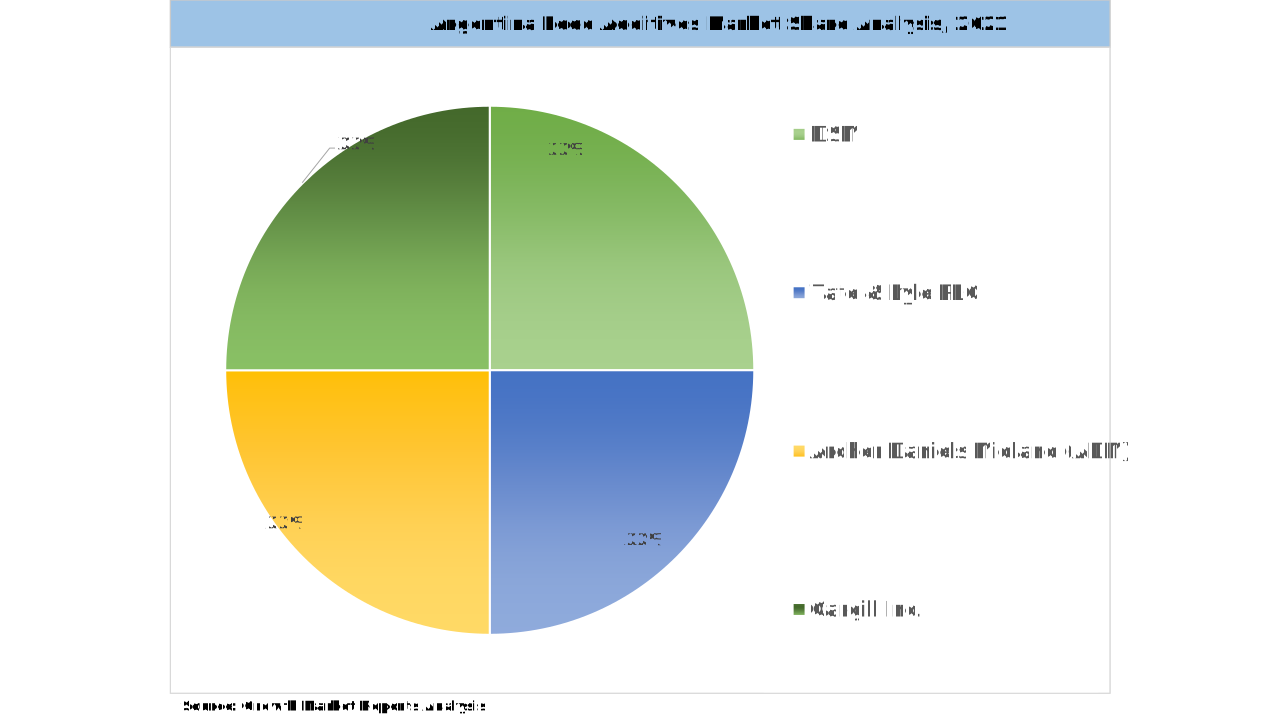
Key players competing in the Argentina food additives market include DSM; Tate & Lyle PLC; Archer Daniels Midland (ADM); and Cargill Inc.

Some of these players are using several market strategies including mergers, acquisitions, partnerships, collaborations, capacity expansion, and product launches to increase their market shares.

Argentina Food Additives Market By Key Players

Frequently Asked Questions

Key trends include the rise of natural and clean label ingredients, demand for functional and health-promoting additives, technological innovation in processing, and increased focus on sustainability and regulatory compliance.

Major companies include Archer Daniels Midland Company (ADM), Cargill, DuPont de Nemours, Kerry Group, Ingredion, Tate & Lyle, Chr. Hansen, Corbion, DSM Nutritional Products, and others.

Food additives are available in liquid, powder, granules, and specialized forms such as pastes, gels, and encapsulated additives, each suited to different processing needs.

Food additives are widely used in bakery & confectionery, beverages, dairy & frozen desserts, snacks, and meat & poultry products to improve shelf life, taste, texture, and nutritional value.

Natural additives are derived from plant, animal, or mineral sources and are favored for health and sustainability reasons. Synthetic additives are man-made, valued for their cost-effectiveness and stability, but face increasing scrutiny over health concerns.

The main types include preservatives, sweeteners, emulsifiers, enzymes, flavors & enhancers, colorants, and others.

Asia Pacific is the fastest-growing region, while North America and Europe hold substantial market shares due to established food processing industries and high demand for processed foods.

Key growth drivers include rising demand for convenience and processed foods, increasing health consciousness, technological advancements in food processing, and the shift towards natural and clean label ingredients.

The food additives market is expected to grow at a CAGR of 5.7% from 2025 to 2033, reaching USD 179.2 billion by 2033.

As of 2024, the global food additives market size is valued at USD 109.3 billion.

Table Of Content

Chapter 1 Executive Summary
Chapter 2 Assumptions and Acronyms Used
Chapter 3 Research Methodology
Chapter 4 Food Additives Market Overview
   4.1 Introduction
      4.1.1 Market Taxonomy
      4.1.2 Market Definition
      4.1.3 Macro-Economic Factors Impacting the Market Growth
   4.2 Food Additives Market Dynamics
      4.2.1 Market Drivers
      4.2.2 Market Restraints
      4.2.3 Market Opportunity
   4.3 Food Additives Market - Supply Chain Analysis
      4.3.1 List of Key Suppliers
      4.3.2 List of Key Distributors
      4.3.3 List of Key Consumers
   4.4 Key Forces Shaping the Food Additives Market
      4.4.1 Bargaining Power of Suppliers
      4.4.2 Bargaining Power of Buyers
      4.4.3 Threat of Substitution
      4.4.4 Threat of New Entrants
      4.4.5 Competitive Rivalry
   4.5 Global Food Additives Market Size & Forecast, 2023-2032
      4.5.1 Food Additives Market Size and Y-o-Y Growth
      4.5.2 Food Additives Market Absolute $ Opportunity

Chapter 5 Global Food Additives Market Analysis and Forecast By Product Type
   5.1 Introduction
      5.1.1 Key Market Trends & Growth Opportunities By Product Type
      5.1.2 Basis Point Share (BPS) Analysis By Product Type
      5.1.3 Absolute $ Opportunity Assessment By Product Type
   5.2 Food Additives Market Size Forecast By Product Type
      5.2.1 Preservatives
      5.2.2 Sweeteners
      5.2.3 Emulsifiers
      5.2.4 Enzymes
      5.2.5 Flavors & Enhancers
      5.2.6 Colorants
      5.2.7 Others
   5.3 Market Attractiveness Analysis By Product Type

Chapter 6 Global Food Additives Market Analysis and Forecast By Source
   6.1 Introduction
      6.1.1 Key Market Trends & Growth Opportunities By Source
      6.1.2 Basis Point Share (BPS) Analysis By Source
      6.1.3 Absolute $ Opportunity Assessment By Source
   6.2 Food Additives Market Size Forecast By Source
      6.2.1 Natural
      6.2.2 Synthetic
   6.3 Market Attractiveness Analysis By Source

Chapter 7 Global Food Additives Market Analysis and Forecast By Application
   7.1 Introduction
      7.1.1 Key Market Trends & Growth Opportunities By Application
      7.1.2 Basis Point Share (BPS) Analysis By Application
      7.1.3 Absolute $ Opportunity Assessment By Application
   7.2 Food Additives Market Size Forecast By Application
      7.2.1 Bakery & Confectionery
      7.2.2 Beverages
      7.2.3 Dairy & Frozen Desserts
      7.2.4 Snacks
      7.2.5 Meat & Poultry Products
      7.2.6 Others
   7.3 Market Attractiveness Analysis By Application

Chapter 8 Global Food Additives Market Analysis and Forecast By Form
   8.1 Introduction
      8.1.1 Key Market Trends & Growth Opportunities By Form
      8.1.2 Basis Point Share (BPS) Analysis By Form
      8.1.3 Absolute $ Opportunity Assessment By Form
   8.2 Food Additives Market Size Forecast By Form
      8.2.1 Liquid
      8.2.2 Powder
      8.2.3 Granules
      8.2.4 Others
   8.3 Market Attractiveness Analysis By Form

Chapter 9 Global Food Additives Market Analysis and Forecast by Region
   9.1 Introduction
      9.1.1 Key Market Trends & Growth Opportunities By Region
      9.1.2 Basis Point Share (BPS) Analysis By Region
      9.1.3 Absolute $ Opportunity Assessment By Region
   9.2 Food Additives Market Size Forecast By Region
      9.2.1 North America
      9.2.2 Europe
      9.2.3 Asia Pacific
      9.2.4 Latin America
      9.2.5 Middle East & Africa (MEA)
   9.3 Market Attractiveness Analysis By Region

Chapter 10 Coronavirus Disease (COVID-19) Impact 
   10.1 Introduction 
   10.2 Current & Future Impact Analysis 
   10.3 Economic Impact Analysis 
   10.4 Government Policies 
   10.5 Investment Scenario

Chapter 11 North America Food Additives Analysis and Forecast
   11.1 Introduction
   11.2 North America Food Additives Market Size Forecast by Country
      11.2.1 U.S.
      11.2.2 Canada
   11.3 Basis Point Share (BPS) Analysis by Country
   11.4 Absolute $ Opportunity Assessment by Country
   11.5 Market Attractiveness Analysis by Country
   11.6 North America Food Additives Market Size Forecast By Product Type
      11.6.1 Preservatives
      11.6.2 Sweeteners
      11.6.3 Emulsifiers
      11.6.4 Enzymes
      11.6.5 Flavors & Enhancers
      11.6.6 Colorants
      11.6.7 Others
   11.7 Basis Point Share (BPS) Analysis By Product Type 
   11.8 Absolute $ Opportunity Assessment By Product Type 
   11.9 Market Attractiveness Analysis By Product Type
   11.10 North America Food Additives Market Size Forecast By Source
      11.10.1 Natural
      11.10.2 Synthetic
   11.11 Basis Point Share (BPS) Analysis By Source 
   11.12 Absolute $ Opportunity Assessment By Source 
   11.13 Market Attractiveness Analysis By Source
   11.14 North America Food Additives Market Size Forecast By Application
      11.14.1 Bakery & Confectionery
      11.14.2 Beverages
      11.14.3 Dairy & Frozen Desserts
      11.14.4 Snacks
      11.14.5 Meat & Poultry Products
      11.14.6 Others
   11.15 Basis Point Share (BPS) Analysis By Application 
   11.16 Absolute $ Opportunity Assessment By Application 
   11.17 Market Attractiveness Analysis By Application
   11.18 North America Food Additives Market Size Forecast By Form
      11.18.1 Liquid
      11.18.2 Powder
      11.18.3 Granules
      11.18.4 Others
   11.19 Basis Point Share (BPS) Analysis By Form 
   11.20 Absolute $ Opportunity Assessment By Form 
   11.21 Market Attractiveness Analysis By Form

Chapter 12 Europe Food Additives Analysis and Forecast
   12.1 Introduction
   12.2 Europe Food Additives Market Size Forecast by Country
      12.2.1 Germany
      12.2.2 France
      12.2.3 Italy
      12.2.4 U.K.
      12.2.5 Spain
      12.2.6 Russia
      12.2.7 Rest of Europe
   12.3 Basis Point Share (BPS) Analysis by Country
   12.4 Absolute $ Opportunity Assessment by Country
   12.5 Market Attractiveness Analysis by Country
   12.6 Europe Food Additives Market Size Forecast By Product Type
      12.6.1 Preservatives
      12.6.2 Sweeteners
      12.6.3 Emulsifiers
      12.6.4 Enzymes
      12.6.5 Flavors & Enhancers
      12.6.6 Colorants
      12.6.7 Others
   12.7 Basis Point Share (BPS) Analysis By Product Type 
   12.8 Absolute $ Opportunity Assessment By Product Type 
   12.9 Market Attractiveness Analysis By Product Type
   12.10 Europe Food Additives Market Size Forecast By Source
      12.10.1 Natural
      12.10.2 Synthetic
   12.11 Basis Point Share (BPS) Analysis By Source 
   12.12 Absolute $ Opportunity Assessment By Source 
   12.13 Market Attractiveness Analysis By Source
   12.14 Europe Food Additives Market Size Forecast By Application
      12.14.1 Bakery & Confectionery
      12.14.2 Beverages
      12.14.3 Dairy & Frozen Desserts
      12.14.4 Snacks
      12.14.5 Meat & Poultry Products
      12.14.6 Others
   12.15 Basis Point Share (BPS) Analysis By Application 
   12.16 Absolute $ Opportunity Assessment By Application 
   12.17 Market Attractiveness Analysis By Application
   12.18 Europe Food Additives Market Size Forecast By Form
      12.18.1 Liquid
      12.18.2 Powder
      12.18.3 Granules
      12.18.4 Others
   12.19 Basis Point Share (BPS) Analysis By Form 
   12.20 Absolute $ Opportunity Assessment By Form 
   12.21 Market Attractiveness Analysis By Form

Chapter 13 Asia Pacific Food Additives Analysis and Forecast
   13.1 Introduction
   13.2 Asia Pacific Food Additives Market Size Forecast by Country
      13.2.1 China
      13.2.2 Japan
      13.2.3 South Korea
      13.2.4 India
      13.2.5 Australia
      13.2.6 South East Asia (SEA)
      13.2.7 Rest of Asia Pacific (APAC)
   13.3 Basis Point Share (BPS) Analysis by Country
   13.4 Absolute $ Opportunity Assessment by Country
   13.5 Market Attractiveness Analysis by Country
   13.6 Asia Pacific Food Additives Market Size Forecast By Product Type
      13.6.1 Preservatives
      13.6.2 Sweeteners
      13.6.3 Emulsifiers
      13.6.4 Enzymes
      13.6.5 Flavors & Enhancers
      13.6.6 Colorants
      13.6.7 Others
   13.7 Basis Point Share (BPS) Analysis By Product Type 
   13.8 Absolute $ Opportunity Assessment By Product Type 
   13.9 Market Attractiveness Analysis By Product Type
   13.10 Asia Pacific Food Additives Market Size Forecast By Source
      13.10.1 Natural
      13.10.2 Synthetic
   13.11 Basis Point Share (BPS) Analysis By Source 
   13.12 Absolute $ Opportunity Assessment By Source 
   13.13 Market Attractiveness Analysis By Source
   13.14 Asia Pacific Food Additives Market Size Forecast By Application
      13.14.1 Bakery & Confectionery
      13.14.2 Beverages
      13.14.3 Dairy & Frozen Desserts
      13.14.4 Snacks
      13.14.5 Meat & Poultry Products
      13.14.6 Others
   13.15 Basis Point Share (BPS) Analysis By Application 
   13.16 Absolute $ Opportunity Assessment By Application 
   13.17 Market Attractiveness Analysis By Application
   13.18 Asia Pacific Food Additives Market Size Forecast By Form
      13.18.1 Liquid
      13.18.2 Powder
      13.18.3 Granules
      13.18.4 Others
   13.19 Basis Point Share (BPS) Analysis By Form 
   13.20 Absolute $ Opportunity Assessment By Form 
   13.21 Market Attractiveness Analysis By Form

Chapter 14 Latin America Food Additives Analysis and Forecast
   14.1 Introduction
   14.2 Latin America Food Additives Market Size Forecast by Country
      14.2.1 Brazil
      14.2.2 Mexico
      14.2.3 Rest of Latin America (LATAM)
   14.3 Basis Point Share (BPS) Analysis by Country
   14.4 Absolute $ Opportunity Assessment by Country
   14.5 Market Attractiveness Analysis by Country
   14.6 Latin America Food Additives Market Size Forecast By Product Type
      14.6.1 Preservatives
      14.6.2 Sweeteners
      14.6.3 Emulsifiers
      14.6.4 Enzymes
      14.6.5 Flavors & Enhancers
      14.6.6 Colorants
      14.6.7 Others
   14.7 Basis Point Share (BPS) Analysis By Product Type 
   14.8 Absolute $ Opportunity Assessment By Product Type 
   14.9 Market Attractiveness Analysis By Product Type
   14.10 Latin America Food Additives Market Size Forecast By Source
      14.10.1 Natural
      14.10.2 Synthetic
   14.11 Basis Point Share (BPS) Analysis By Source 
   14.12 Absolute $ Opportunity Assessment By Source 
   14.13 Market Attractiveness Analysis By Source
   14.14 Latin America Food Additives Market Size Forecast By Application
      14.14.1 Bakery & Confectionery
      14.14.2 Beverages
      14.14.3 Dairy & Frozen Desserts
      14.14.4 Snacks
      14.14.5 Meat & Poultry Products
      14.14.6 Others
   14.15 Basis Point Share (BPS) Analysis By Application 
   14.16 Absolute $ Opportunity Assessment By Application 
   14.17 Market Attractiveness Analysis By Application
   14.18 Latin America Food Additives Market Size Forecast By Form
      14.18.1 Liquid
      14.18.2 Powder
      14.18.3 Granules
      14.18.4 Others
   14.19 Basis Point Share (BPS) Analysis By Form 
   14.20 Absolute $ Opportunity Assessment By Form 
   14.21 Market Attractiveness Analysis By Form

Chapter 15 Middle East & Africa (MEA) Food Additives Analysis and Forecast
   15.1 Introduction
   15.2 Middle East & Africa (MEA) Food Additives Market Size Forecast by Country
      15.2.1 Saudi Arabia
      15.2.2 South Africa
      15.2.3 UAE
      15.2.4 Rest of Middle East & Africa (MEA)
   15.3 Basis Point Share (BPS) Analysis by Country
   15.4 Absolute $ Opportunity Assessment by Country
   15.5 Market Attractiveness Analysis by Country
   15.6 Middle East & Africa (MEA) Food Additives Market Size Forecast By Product Type
      15.6.1 Preservatives
      15.6.2 Sweeteners
      15.6.3 Emulsifiers
      15.6.4 Enzymes
      15.6.5 Flavors & Enhancers
      15.6.6 Colorants
      15.6.7 Others
   15.7 Basis Point Share (BPS) Analysis By Product Type 
   15.8 Absolute $ Opportunity Assessment By Product Type 
   15.9 Market Attractiveness Analysis By Product Type
   15.10 Middle East & Africa (MEA) Food Additives Market Size Forecast By Source
      15.10.1 Natural
      15.10.2 Synthetic
   15.11 Basis Point Share (BPS) Analysis By Source 
   15.12 Absolute $ Opportunity Assessment By Source 
   15.13 Market Attractiveness Analysis By Source
   15.14 Middle East & Africa (MEA) Food Additives Market Size Forecast By Application
      15.14.1 Bakery & Confectionery
      15.14.2 Beverages
      15.14.3 Dairy & Frozen Desserts
      15.14.4 Snacks
      15.14.5 Meat & Poultry Products
      15.14.6 Others
   15.15 Basis Point Share (BPS) Analysis By Application 
   15.16 Absolute $ Opportunity Assessment By Application 
   15.17 Market Attractiveness Analysis By Application
   15.18 Middle East & Africa (MEA) Food Additives Market Size Forecast By Form
      15.18.1 Liquid
      15.18.2 Powder
      15.18.3 Granules
      15.18.4 Others
   15.19 Basis Point Share (BPS) Analysis By Form 
   15.20 Absolute $ Opportunity Assessment By Form 
   15.21 Market Attractiveness Analysis By Form

Chapter 16 Competition Landscape 
   16.1 Food Additives Market: Competitive Dashboard
   16.2 Global Food Additives Market: Market Share Analysis, 2023
   16.3 Company Profiles (Details – Overview, Financials, Developments, Strategy) 
      16.3.1 Archer Daniels Midland Company (ADM)
Cargill, Incorporated
BASF SE
DuPont de Nemours, Inc.
Kerry Group plc
Tate & Lyle PLC
Corbion N.V.
Chr. Hansen Holding A/S
Givaudan SA
International Flavors & Fragrances Inc. (IFF)
Ingredion Incorporated
Sensient Technologies Corporation
DSM-Firmenich
Ajinomoto Co., Inc.
Lonza Group AG
Novozymes A/S
Tate & Lyle PLC
Associated British Foods plc
Jungbunzlauer Suisse AG
Roquette Frères

Methodology

Our Clients

FedEx Logistics
Honda Motor Co. Ltd.
Nestle SA
Microsoft
Dassault Aviation
General Electric
The John Holland Group
Pfizer