Fluoroscopy Market Research Report 2033

Fluoroscopy Market Research Report 2033

Segments - by Product Type (Fixed Fluoroscopy Systems, Mobile Fluoroscopy Systems), by Application (Diagnostic, Surgical, Interventional), by End-User (Hospitals, Diagnostic Centers, Specialty Clinics, Others)

https://growthmarketreports.com/raksha
Author : Raksha Sharma
https://growthmarketreports.com/Vaibhav
Fact-checked by : V. Chandola
https://growthmarketreports.com/Shruti
Editor : Shruti Bhat

Upcoming | Report ID :HC-1185 | 4.3 Rating | 64 Reviews | 269 Pages | Format : Docx PDF

Report Description


Fluoroscopy Market Outlook

According to our latest research, the global fluoroscopy market size in 2024 is valued at USD 2.97 billion, reflecting robust demand for real-time imaging solutions across healthcare settings. The market is anticipated to grow at a CAGR of 5.8% during the forecast period, reaching a projected value of USD 5.01 billion by 2033. This growth is primarily driven by the rising prevalence of chronic diseases, technological advancements in imaging systems, and the increasing adoption of minimally invasive procedures. As per our latest research, the fluoroscopy market is witnessing strong momentum, underpinned by continuous innovation and expanding clinical applications.

A key growth factor fueling the fluoroscopy market is the increasing incidence of chronic diseases such as cardiovascular disorders, orthopedic conditions, and gastrointestinal ailments. These conditions often require precise diagnostic and interventional procedures, for which fluoroscopy offers invaluable real-time imaging capabilities. The aging global population further amplifies this demand, as older adults are more susceptible to such chronic health issues. Additionally, the rise in trauma cases and emergency surgeries, especially in urban centers, has necessitated the use of advanced imaging modalities to improve patient outcomes. The integration of fluoroscopy with other imaging techniques, such as CT and MRI, is also enhancing the accuracy and effectiveness of diagnosis and treatment, thereby accelerating market growth.

Technological advancements represent another significant driver for the fluoroscopy market. The industry has witnessed a shift towards digital fluoroscopy systems that provide higher image resolution, lower radiation exposure, and improved workflow efficiency. Innovations such as flat-panel detectors, dose-reduction technologies, and software enhancements for image processing are making fluoroscopy systems safer and more user-friendly. Furthermore, the emergence of mobile fluoroscopy units has expanded the reach of these systems beyond traditional hospital settings, enabling point-of-care diagnostics and interventions in outpatient clinics, surgical centers, and even remote locations. These advancements not only enhance clinical outcomes but also contribute to cost-effectiveness, which is increasingly important for healthcare providers facing budgetary constraints.

The growing preference for minimally invasive surgeries is another pivotal factor propelling the fluoroscopy market. Surgeons are increasingly relying on fluoroscopic guidance for procedures such as orthopedic fracture reductions, cardiac catheterizations, and gastrointestinal interventions. Minimally invasive techniques reduce patient recovery times, minimize surgical risks, and lower healthcare costs, all of which are highly valued by both patients and providers. The real-time visualization offered by fluoroscopy is essential for the precision and safety of these interventions. Moreover, government initiatives and reimbursement policies supporting minimally invasive procedures are further encouraging the adoption of fluoroscopy systems across various healthcare settings.

From a regional perspective, North America currently dominates the global fluoroscopy market, accounting for the largest share due to its advanced healthcare infrastructure, high adoption of cutting-edge medical technologies, and substantial investments in research and development. Europe follows closely, benefitting from a robust regulatory framework and increasing healthcare expenditures. The Asia Pacific region is witnessing the fastest growth, driven by expanding healthcare access, rising patient awareness, and significant government investments in medical imaging infrastructure. Latin America and the Middle East & Africa are also showing steady growth, albeit from a smaller base, as healthcare modernization initiatives gather pace. Collectively, these regional dynamics are shaping a competitive and rapidly evolving global fluoroscopy market.

Global Fluoroscopy Industry Outlook

Product Type Analysis

The fluoroscopy market is segmented by product type into fixed fluoroscopy systems and mobile fluoroscopy systems. Fixed fluoroscopy systems have traditionally dominated the market owing to their widespread use in hospitals and large diagnostic centers. These systems offer high image quality, advanced imaging features, and the ability to handle high patient volumes, making them indispensable for complex diagnostic and interventional procedures. Their integration with other imaging modalities, such as CT and MRI, further enhances their utility in multi-disciplinary healthcare settings. The durability and reliability of fixed systems also make them a preferred choice for high-throughput environments where system uptime is critical.

Mobile fluoroscopy systems, often referred to as C-arms, are gaining rapid traction due to their flexibility, portability, and ease of use. These systems are particularly valuable in surgical suites, emergency rooms, and outpatient clinics where space constraints and the need for on-the-spot imaging are prevalent. The ability to move the system to the patient, rather than vice versa, is a significant advantage in trauma and intraoperative scenarios. Recent technological advancements have improved the image quality and reduced the radiation dose of mobile fluoroscopy units, making them increasingly competitive with their fixed counterparts. As healthcare delivery models shift towards decentralized and ambulatory care, the demand for mobile systems is expected to surge.

The choice between fixed and mobile fluoroscopy systems is often dictated by the clinical application, patient volume, and available infrastructure. Large hospitals and specialty centers typically invest in both types to maximize their diagnostic and interventional capabilities. Fixed systems are preferred for high-complexity procedures and continuous imaging needs, while mobile systems are ideal for quick, targeted interventions and settings that require frequent relocation of equipment. The complementary nature of these two product types ensures that both segments will continue to grow, albeit at different rates, as healthcare providers seek to optimize their imaging resources.

Market competition is intensifying as manufacturers focus on developing hybrid systems that combine the strengths of both fixed and mobile platforms. Features such as wireless connectivity, advanced image processing software, and integration with hospital information systems are becoming standard offerings. These innovations are enhancing workflow efficiency, reducing operational costs, and improving patient safety. Additionally, the growing emphasis on radiation safety is prompting manufacturers to introduce dose-reduction technologies and real-time monitoring features, which are particularly appealing to safety-conscious healthcare providers.

Report Scope

Attributes Details
Report Title Fluoroscopy Market Research Report 2033
By Product Type Fixed Fluoroscopy Systems, Mobile Fluoroscopy Systems
By Application Diagnostic, Surgical, Interventional
By End-User Hospitals, Diagnostic Centers, Specialty Clinics, Others
Regions Covered North America, Europe, APAC, Latin America, MEA
Base Year 2024
Historic Data 2018-2023
Forecast Period 2025-2033
Number of Pages 269
Number of Tables & Figures 257
Customization Available Yes, the report can be customized as per your need.

Application Analysis

Fluoroscopy finds application across three primary domains: diagnostic, surgical, and interventional procedures. In the diagnostic segment, fluoroscopy is extensively used for gastrointestinal studies, barium swallow tests, and other contrast-enhanced imaging procedures. Its ability to provide real-time visualization of moving body structures makes it invaluable for diagnosing motility disorders, blockages, and abnormal growths. The diagnostic application continues to be a major revenue contributor, especially in regions with a high prevalence of digestive and musculoskeletal disorders. Enhanced image clarity and reduced radiation exposure in modern systems are further supporting the growth of this segment.

The surgical application segment is expanding rapidly, driven by the growing adoption of minimally invasive and image-guided surgeries. Fluoroscopy plays a critical role in orthopedic, cardiovascular, and neurological surgeries, where real-time imaging is essential for guiding instruments and ensuring procedural accuracy. The increasing complexity of surgical interventions, coupled with the need for precision and safety, is fueling demand for advanced fluoroscopy systems in operating rooms. Surgeons rely on these systems for tasks such as fracture reductions, stent placements, and catheterizations, where even minor errors can have significant consequences.

Interventional procedures represent another high-growth application area for fluoroscopy. Interventional radiology, cardiology, and pain management are among the specialties that extensively use fluoroscopic guidance for procedures such as angioplasties, biopsies, and nerve blocks. The rise of day-care and outpatient interventions is driving demand for compact and mobile fluoroscopy systems that can be easily deployed in diverse clinical settings. The trend towards personalized medicine and targeted therapies is also boosting the need for precise, real-time imaging solutions, further solidifying the importance of fluoroscopy in interventional applications.

The increasing integration of artificial intelligence (AI) and machine learning algorithms into fluoroscopy systems is enhancing their application across all domains. AI-powered image analysis, automated dose control, and workflow optimization are enabling clinicians to perform more accurate and efficient procedures. As healthcare providers seek to improve patient outcomes and operational efficiency, the adoption of advanced fluoroscopy systems with expanded application capabilities is expected to rise significantly over the forecast period.

End-User Analysis

The fluoroscopy market is segmented by end-users into hospitals, diagnostic centers, specialty clinics, and others. Hospitals remain the largest end-user segment, accounting for a substantial share of market revenue. This dominance is attributed to the comprehensive range of diagnostic and interventional procedures performed in hospital settings, as well as the availability of skilled personnel and advanced infrastructure. Hospitals also benefit from economies of scale, enabling them to invest in high-end fluoroscopy systems and related technologies. The growing trend of hospital consolidation and the emergence of multi-specialty healthcare networks are further driving the adoption of fluoroscopy systems in this segment.

Diagnostic centers represent another significant end-user group, particularly in urban and semi-urban areas where there is a high demand for outpatient imaging services. These centers cater to a large patient base seeking quick and accurate diagnostics without the need for hospitalization. The rise of standalone and chain diagnostic centers, especially in emerging markets, is contributing to the steady growth of this segment. The adoption of mobile fluoroscopy systems is particularly pronounced in diagnostic centers due to their portability, cost-effectiveness, and ease of integration with existing workflows.

Specialty clinics, including orthopedic, cardiology, and gastroenterology clinics, are increasingly investing in fluoroscopy systems to enhance their service offerings. These clinics focus on specific therapeutic areas where real-time imaging is critical for diagnosis and treatment. The shift towards outpatient care and minimally invasive procedures is prompting specialty clinics to adopt compact and advanced fluoroscopy systems that can be easily integrated into their practice. The growing prevalence of chronic diseases and the rising demand for specialized healthcare services are expected to drive further growth in this segment.

The "others" segment includes ambulatory surgical centers, academic and research institutions, and veterinary clinics. While these end-users represent a smaller portion of the overall market, their adoption of fluoroscopy systems is increasing as they seek to expand their diagnostic and therapeutic capabilities. Academic and research institutions are particularly interested in advanced fluoroscopy systems for training and research purposes, while veterinary clinics are leveraging these systems for animal diagnostics and surgeries. Overall, the end-user landscape for the fluoroscopy market is becoming increasingly diverse, reflecting the broadening scope of applications and the growing accessibility of advanced imaging technologies.

Opportunities & Threats

The fluoroscopy market presents several compelling opportunities for growth and innovation. One of the most significant opportunities lies in the continued advancement of digital imaging technologies. The transition from analog to digital fluoroscopy systems is enabling healthcare providers to achieve higher image resolution, faster processing times, and improved data storage and retrieval capabilities. This digital transformation is also facilitating the integration of fluoroscopy systems with hospital information systems, electronic health records, and telemedicine platforms, thereby enhancing workflow efficiency and patient care. Manufacturers that invest in research and development to create next-generation digital fluoroscopy systems are well-positioned to capture a larger share of the market.

Another major opportunity is the expanding application of fluoroscopy in emerging markets. Rapid urbanization, rising healthcare expenditures, and increasing awareness of advanced diagnostic and therapeutic options are driving demand for fluoroscopy systems in countries across Asia Pacific, Latin America, and the Middle East & Africa. Governments and private sector players are investing heavily in healthcare infrastructure, including the establishment of new hospitals, diagnostic centers, and specialty clinics. As access to healthcare improves and the burden of chronic diseases rises, the adoption of fluoroscopy systems is expected to accelerate in these regions, creating lucrative opportunities for market players.

Despite these opportunities, the fluoroscopy market faces certain restraining factors that could impede growth. One of the primary challenges is the concern over radiation exposure associated with fluoroscopic procedures. Although technological advancements have significantly reduced radiation doses, both patients and healthcare providers remain cautious about the potential long-term health risks. Regulatory agencies are imposing stricter guidelines on radiation safety, which may increase compliance costs and slow down the adoption of new systems. Additionally, the high initial capital investment required for advanced fluoroscopy equipment can be a barrier for smaller healthcare providers, particularly in resource-constrained settings. Addressing these challenges through continued innovation, education, and cost-effective solutions will be crucial for sustaining market growth.

Regional Outlook

North America is the leading region in the global fluoroscopy market, with a market size of approximately USD 1.11 billion in 2024. The region's dominance is driven by its advanced healthcare infrastructure, high adoption rate of innovative medical technologies, and a strong focus on research and development. The presence of major market players and favorable reimbursement policies further support market growth in the United States and Canada. The North American market is projected to maintain a steady growth trajectory, with a CAGR of around 5.2% over the forecast period, as healthcare providers continue to invest in state-of-the-art imaging solutions.

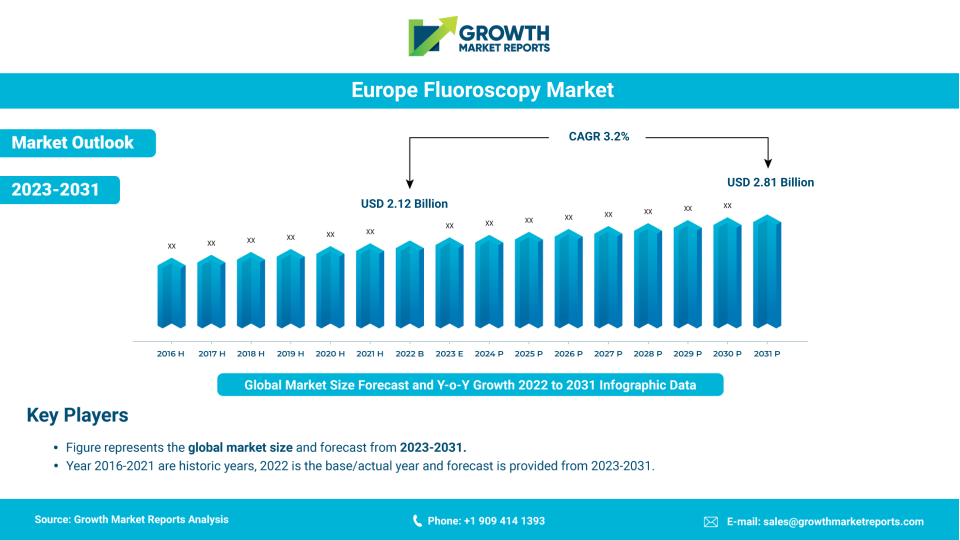
Europe holds the second-largest share in the global fluoroscopy market, with a market size of about USD 0.87 billion in 2024. The region benefits from a well-established healthcare system, increasing healthcare expenditures, and a strong emphasis on patient safety and quality of care. Countries such as Germany, the United Kingdom, and France are leading adopters of advanced fluoroscopy systems, particularly in academic and research institutions. The European market is expected to grow at a CAGR of 5.4% through 2033, driven by ongoing investments in healthcare modernization and the rising prevalence of chronic diseases.

The Asia Pacific region is emerging as the fastest-growing market for fluoroscopy, with a 2024 market size of approximately USD 0.67 billion. Rapid urbanization, expanding healthcare infrastructure, and increasing awareness of advanced diagnostic and therapeutic options are fueling market growth in countries such as China, India, and Japan. Government initiatives to improve healthcare access and quality, coupled with rising healthcare expenditures, are creating significant opportunities for market expansion. The Asia Pacific fluoroscopy market is projected to grow at a robust CAGR of 6.8% over the forecast period, outpacing other regions and attracting considerable attention from global and regional market players.

Fluoroscopy Market Statistics

Competitor Outlook

The global fluoroscopy market is characterized by intense competition, with several leading players vying for market share through product innovation, strategic partnerships, and geographic expansion. The competitive landscape is marked by the presence of established multinational companies as well as emerging regional players. Companies are focusing on developing advanced fluoroscopy systems with enhanced imaging capabilities, reduced radiation exposure, and improved user interfaces to meet the evolving needs of healthcare providers. Continuous investment in research and development is a key differentiator, enabling market leaders to introduce next-generation products that set new industry standards.

Strategic collaborations and mergers and acquisitions are common strategies employed by market participants to strengthen their market position and expand their product portfolios. Companies are also investing in expanding their distribution networks and establishing partnerships with hospitals, diagnostic centers, and specialty clinics to increase market penetration. The growing emphasis on after-sales service, training, and technical support is further enhancing customer loyalty and satisfaction. Additionally, manufacturers are increasingly focusing on emerging markets, where rapid healthcare infrastructure development and rising demand for advanced imaging solutions offer substantial growth opportunities.

The competitive landscape is also shaped by the entry of new players and the emergence of innovative start-ups that are leveraging digital technologies and artificial intelligence to disrupt the market. These companies are introducing cost-effective and user-friendly fluoroscopy systems that cater to the needs of smaller healthcare providers and resource-constrained settings. As the market continues to evolve, the ability to offer differentiated products and value-added services will be critical for sustaining competitive advantage.

Some of the major companies operating in the global fluoroscopy market include Siemens Healthineers, GE Healthcare, Koninklijke Philips N.V., Canon Medical Systems Corporation, Shimadzu Corporation, Hologic Inc., Ziehm Imaging GmbH, Carestream Health, and Fujifilm Holdings Corporation. Siemens Healthineers is renowned for its innovative fluoroscopy solutions that combine high image quality with advanced dose management features. GE Healthcare offers a comprehensive portfolio of fixed and mobile fluoroscopy systems designed to meet the needs of diverse clinical applications. Philips is a leader in digital imaging technologies, with a strong focus on user-friendly interfaces and workflow optimization. Canon Medical Systems and Shimadzu are recognized for their cutting-edge imaging technologies and robust service networks, particularly in the Asia Pacific region. Hologic, Ziehm Imaging, Carestream Health, and Fujifilm are also prominent players, each bringing unique strengths and capabilities to the market. Collectively, these companies are driving innovation, setting industry benchmarks, and shaping the future of the global fluoroscopy market.

Key Players

  • Siemens Healthineers
  • GE Healthcare
  • Philips Healthcare
  • Shimadzu Corporation
  • Canon Medical Systems Corporation
  • Hitachi, Ltd.
  • Hologic, Inc.
  • Ziehm Imaging GmbH
  • Carestream Health
  • Agfa-Gevaert Group
  • FUJIFILM Holdings Corporation
  • Konica Minolta, Inc.
  • Toshiba Medical Systems Corporation
  • Allengers Medical Systems Ltd.
  • Villa Sistemi Medicali S.p.A.
  • BMI Biomedical International S.r.l.
  • Trivitron Healthcare
  • Perlong Medical Equipment Co., Ltd.
  • Adani Systems, Inc.
  • DMS Imaging (Esaote Group)
Fluoroscopy Market Overview

Segments

The Fluoroscopy market has been segmented on the basis of

Product Type

  • Fixed Fluoroscopy Systems
  • Mobile Fluoroscopy Systems

Application

  • Diagnostic
  • Surgical
  • Interventional

End-User

  • Hospitals
  • Diagnostic Centers
  • Specialty Clinics
  • Others

Competitive Landscape

Key players competing in the Europe Fluoroscopy market include Siemens Healthcare Private Limited, Hitachi Medical Systems, GE Healthcare, Canon Medical System Corporation, and Koninklijke Philips NV. Some of these players are focusing on several market strategies such as mergers, acquisitions, partnerships, collaborations, capacity expansion, and product launches to increase their market shares.
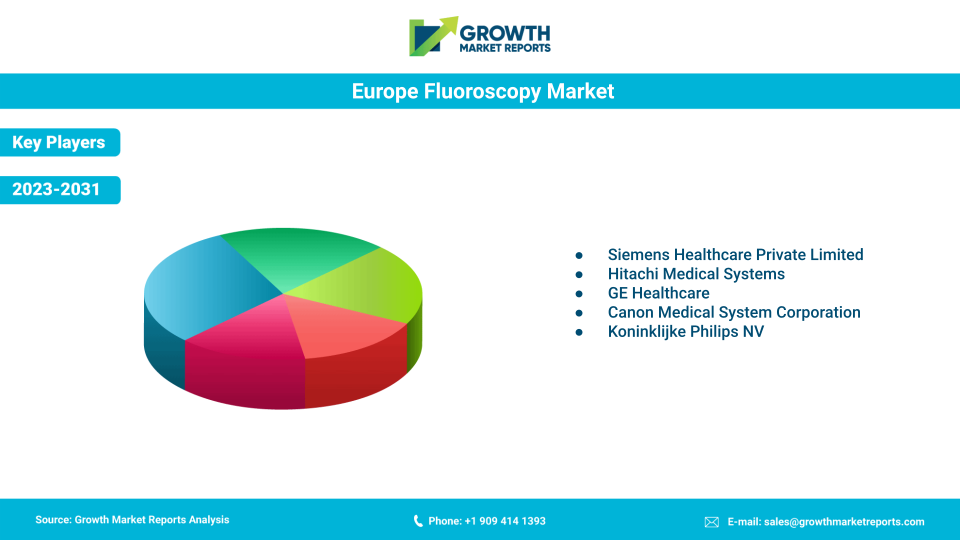

Europe Fluoroscopy Market Key Players

Frequently Asked Questions

Major players include Siemens Healthineers, GE Healthcare, Philips Healthcare, Canon Medical Systems Corporation, Shimadzu Corporation, Hologic Inc., Ziehm Imaging GmbH, Carestream Health, and Fujifilm Holdings Corporation.

Key challenges include concerns over radiation exposure, high initial investment costs for advanced equipment, and strict regulatory guidelines on radiation safety.

Recent advancements include digital fluoroscopy systems with higher image resolution, lower radiation exposure, flat-panel detectors, dose-reduction technologies, AI-powered image analysis, and mobile units for point-of-care diagnostics.

Major end-users include hospitals, diagnostic centers, specialty clinics (such as orthopedic and cardiology clinics), and others like ambulatory surgical centers, academic institutions, and veterinary clinics.

Fluoroscopy is used in diagnostic procedures (such as gastrointestinal studies), surgical applications (like orthopedic and cardiovascular surgeries), and interventional procedures (including angioplasties and biopsies).

North America currently dominates the market, followed by Europe. The Asia Pacific region is the fastest-growing market, while Latin America and the Middle East & Africa are also experiencing steady growth.

The market is segmented into fixed fluoroscopy systems, which are widely used in hospitals and diagnostic centers, and mobile fluoroscopy systems (C-arms), which are valued for their portability and flexibility in surgical and outpatient settings.

Key growth drivers include the rising prevalence of chronic diseases, technological advancements in imaging systems, increasing adoption of minimally invasive procedures, and an aging global population.

The fluoroscopy market is expected to grow at a CAGR of 5.8% from 2025 to 2033, reaching a projected value of USD 5.01 billion by 2033.

The global fluoroscopy market size in 2024 is valued at USD 2.97 billion, reflecting strong demand for real-time imaging solutions in healthcare.

Table Of Content

Chapter 1 Executive Summary
Chapter 2 Assumptions and Acronyms Used
Chapter 3 Research Methodology
Chapter 4 Fluoroscopy Market Overview
   4.1 Introduction
      4.1.1 Market Taxonomy
      4.1.2 Market Definition
      4.1.3 Macro-Economic Factors Impacting the Market Growth
   4.2 Fluoroscopy Market Dynamics
      4.2.1 Market Drivers
      4.2.2 Market Restraints
      4.2.3 Market Opportunity
   4.3 Fluoroscopy Market - Supply Chain Analysis
      4.3.1 List of Key Suppliers
      4.3.2 List of Key Distributors
      4.3.3 List of Key Consumers
   4.4 Key Forces Shaping the Fluoroscopy Market
      4.4.1 Bargaining Power of Suppliers
      4.4.2 Bargaining Power of Buyers
      4.4.3 Threat of Substitution
      4.4.4 Threat of New Entrants
      4.4.5 Competitive Rivalry
   4.5 Global Fluoroscopy Market Size & Forecast, 2023-2032
      4.5.1 Fluoroscopy Market Size and Y-o-Y Growth
      4.5.2 Fluoroscopy Market Absolute $ Opportunity

Chapter 5 Global Fluoroscopy Market Analysis and Forecast By Product Type
   5.1 Introduction
      5.1.1 Key Market Trends & Growth Opportunities By Product Type
      5.1.2 Basis Point Share (BPS) Analysis By Product Type
      5.1.3 Absolute $ Opportunity Assessment By Product Type
   5.2 Fluoroscopy Market Size Forecast By Product Type
      5.2.1 Fixed Fluoroscopy Systems
      5.2.2 Mobile Fluoroscopy Systems
   5.3 Market Attractiveness Analysis By Product Type

Chapter 6 Global Fluoroscopy Market Analysis and Forecast By Application
   6.1 Introduction
      6.1.1 Key Market Trends & Growth Opportunities By Application
      6.1.2 Basis Point Share (BPS) Analysis By Application
      6.1.3 Absolute $ Opportunity Assessment By Application
   6.2 Fluoroscopy Market Size Forecast By Application
      6.2.1 Diagnostic
      6.2.2 Surgical
      6.2.3 Interventional
   6.3 Market Attractiveness Analysis By Application

Chapter 7 Global Fluoroscopy Market Analysis and Forecast By End-User
   7.1 Introduction
      7.1.1 Key Market Trends & Growth Opportunities By End-User
      7.1.2 Basis Point Share (BPS) Analysis By End-User
      7.1.3 Absolute $ Opportunity Assessment By End-User
   7.2 Fluoroscopy Market Size Forecast By End-User
      7.2.1 Hospitals
      7.2.2 Diagnostic Centers
      7.2.3 Specialty Clinics
      7.2.4 Others
   7.3 Market Attractiveness Analysis By End-User

Chapter 8 Global Fluoroscopy Market Analysis and Forecast by Region
   8.1 Introduction
      8.1.1 Key Market Trends & Growth Opportunities By Region
      8.1.2 Basis Point Share (BPS) Analysis By Region
      8.1.3 Absolute $ Opportunity Assessment By Region
   8.2 Fluoroscopy Market Size Forecast By Region
      8.2.1 North America
      8.2.2 Europe
      8.2.3 Asia Pacific
      8.2.4 Latin America
      8.2.5 Middle East & Africa (MEA)
   8.3 Market Attractiveness Analysis By Region

Chapter 9 Coronavirus Disease (COVID-19) Impact 
   9.1 Introduction 
   9.2 Current & Future Impact Analysis 
   9.3 Economic Impact Analysis 
   9.4 Government Policies 
   9.5 Investment Scenario

Chapter 10 North America Fluoroscopy Analysis and Forecast
   10.1 Introduction
   10.2 North America Fluoroscopy Market Size Forecast by Country
      10.2.1 U.S.
      10.2.2 Canada
   10.3 Basis Point Share (BPS) Analysis by Country
   10.4 Absolute $ Opportunity Assessment by Country
   10.5 Market Attractiveness Analysis by Country
   10.6 North America Fluoroscopy Market Size Forecast By Product Type
      10.6.1 Fixed Fluoroscopy Systems
      10.6.2 Mobile Fluoroscopy Systems
   10.7 Basis Point Share (BPS) Analysis By Product Type 
   10.8 Absolute $ Opportunity Assessment By Product Type 
   10.9 Market Attractiveness Analysis By Product Type
   10.10 North America Fluoroscopy Market Size Forecast By Application
      10.10.1 Diagnostic
      10.10.2 Surgical
      10.10.3 Interventional
   10.11 Basis Point Share (BPS) Analysis By Application 
   10.12 Absolute $ Opportunity Assessment By Application 
   10.13 Market Attractiveness Analysis By Application
   10.14 North America Fluoroscopy Market Size Forecast By End-User
      10.14.1 Hospitals
      10.14.2 Diagnostic Centers
      10.14.3 Specialty Clinics
      10.14.4 Others
   10.15 Basis Point Share (BPS) Analysis By End-User 
   10.16 Absolute $ Opportunity Assessment By End-User 
   10.17 Market Attractiveness Analysis By End-User

Chapter 11 Europe Fluoroscopy Analysis and Forecast
   11.1 Introduction
   11.2 Europe Fluoroscopy Market Size Forecast by Country
      11.2.1 Germany
      11.2.2 France
      11.2.3 Italy
      11.2.4 U.K.
      11.2.5 Spain
      11.2.6 Russia
      11.2.7 Rest of Europe
   11.3 Basis Point Share (BPS) Analysis by Country
   11.4 Absolute $ Opportunity Assessment by Country
   11.5 Market Attractiveness Analysis by Country
   11.6 Europe Fluoroscopy Market Size Forecast By Product Type
      11.6.1 Fixed Fluoroscopy Systems
      11.6.2 Mobile Fluoroscopy Systems
   11.7 Basis Point Share (BPS) Analysis By Product Type 
   11.8 Absolute $ Opportunity Assessment By Product Type 
   11.9 Market Attractiveness Analysis By Product Type
   11.10 Europe Fluoroscopy Market Size Forecast By Application
      11.10.1 Diagnostic
      11.10.2 Surgical
      11.10.3 Interventional
   11.11 Basis Point Share (BPS) Analysis By Application 
   11.12 Absolute $ Opportunity Assessment By Application 
   11.13 Market Attractiveness Analysis By Application
   11.14 Europe Fluoroscopy Market Size Forecast By End-User
      11.14.1 Hospitals
      11.14.2 Diagnostic Centers
      11.14.3 Specialty Clinics
      11.14.4 Others
   11.15 Basis Point Share (BPS) Analysis By End-User 
   11.16 Absolute $ Opportunity Assessment By End-User 
   11.17 Market Attractiveness Analysis By End-User

Chapter 12 Asia Pacific Fluoroscopy Analysis and Forecast
   12.1 Introduction
   12.2 Asia Pacific Fluoroscopy Market Size Forecast by Country
      12.2.1 China
      12.2.2 Japan
      12.2.3 South Korea
      12.2.4 India
      12.2.5 Australia
      12.2.6 South East Asia (SEA)
      12.2.7 Rest of Asia Pacific (APAC)
   12.3 Basis Point Share (BPS) Analysis by Country
   12.4 Absolute $ Opportunity Assessment by Country
   12.5 Market Attractiveness Analysis by Country
   12.6 Asia Pacific Fluoroscopy Market Size Forecast By Product Type
      12.6.1 Fixed Fluoroscopy Systems
      12.6.2 Mobile Fluoroscopy Systems
   12.7 Basis Point Share (BPS) Analysis By Product Type 
   12.8 Absolute $ Opportunity Assessment By Product Type 
   12.9 Market Attractiveness Analysis By Product Type
   12.10 Asia Pacific Fluoroscopy Market Size Forecast By Application
      12.10.1 Diagnostic
      12.10.2 Surgical
      12.10.3 Interventional
   12.11 Basis Point Share (BPS) Analysis By Application 
   12.12 Absolute $ Opportunity Assessment By Application 
   12.13 Market Attractiveness Analysis By Application
   12.14 Asia Pacific Fluoroscopy Market Size Forecast By End-User
      12.14.1 Hospitals
      12.14.2 Diagnostic Centers
      12.14.3 Specialty Clinics
      12.14.4 Others
   12.15 Basis Point Share (BPS) Analysis By End-User 
   12.16 Absolute $ Opportunity Assessment By End-User 
   12.17 Market Attractiveness Analysis By End-User

Chapter 13 Latin America Fluoroscopy Analysis and Forecast
   13.1 Introduction
   13.2 Latin America Fluoroscopy Market Size Forecast by Country
      13.2.1 Brazil
      13.2.2 Mexico
      13.2.3 Rest of Latin America (LATAM)
   13.3 Basis Point Share (BPS) Analysis by Country
   13.4 Absolute $ Opportunity Assessment by Country
   13.5 Market Attractiveness Analysis by Country
   13.6 Latin America Fluoroscopy Market Size Forecast By Product Type
      13.6.1 Fixed Fluoroscopy Systems
      13.6.2 Mobile Fluoroscopy Systems
   13.7 Basis Point Share (BPS) Analysis By Product Type 
   13.8 Absolute $ Opportunity Assessment By Product Type 
   13.9 Market Attractiveness Analysis By Product Type
   13.10 Latin America Fluoroscopy Market Size Forecast By Application
      13.10.1 Diagnostic
      13.10.2 Surgical
      13.10.3 Interventional
   13.11 Basis Point Share (BPS) Analysis By Application 
   13.12 Absolute $ Opportunity Assessment By Application 
   13.13 Market Attractiveness Analysis By Application
   13.14 Latin America Fluoroscopy Market Size Forecast By End-User
      13.14.1 Hospitals
      13.14.2 Diagnostic Centers
      13.14.3 Specialty Clinics
      13.14.4 Others
   13.15 Basis Point Share (BPS) Analysis By End-User 
   13.16 Absolute $ Opportunity Assessment By End-User 
   13.17 Market Attractiveness Analysis By End-User

Chapter 14 Middle East & Africa (MEA) Fluoroscopy Analysis and Forecast
   14.1 Introduction
   14.2 Middle East & Africa (MEA) Fluoroscopy Market Size Forecast by Country
      14.2.1 Saudi Arabia
      14.2.2 South Africa
      14.2.3 UAE
      14.2.4 Rest of Middle East & Africa (MEA)
   14.3 Basis Point Share (BPS) Analysis by Country
   14.4 Absolute $ Opportunity Assessment by Country
   14.5 Market Attractiveness Analysis by Country
   14.6 Middle East & Africa (MEA) Fluoroscopy Market Size Forecast By Product Type
      14.6.1 Fixed Fluoroscopy Systems
      14.6.2 Mobile Fluoroscopy Systems
   14.7 Basis Point Share (BPS) Analysis By Product Type 
   14.8 Absolute $ Opportunity Assessment By Product Type 
   14.9 Market Attractiveness Analysis By Product Type
   14.10 Middle East & Africa (MEA) Fluoroscopy Market Size Forecast By Application
      14.10.1 Diagnostic
      14.10.2 Surgical
      14.10.3 Interventional
   14.11 Basis Point Share (BPS) Analysis By Application 
   14.12 Absolute $ Opportunity Assessment By Application 
   14.13 Market Attractiveness Analysis By Application
   14.14 Middle East & Africa (MEA) Fluoroscopy Market Size Forecast By End-User
      14.14.1 Hospitals
      14.14.2 Diagnostic Centers
      14.14.3 Specialty Clinics
      14.14.4 Others
   14.15 Basis Point Share (BPS) Analysis By End-User 
   14.16 Absolute $ Opportunity Assessment By End-User 
   14.17 Market Attractiveness Analysis By End-User

Chapter 15 Competition Landscape 
   15.1 Fluoroscopy Market: Competitive Dashboard
   15.2 Global Fluoroscopy Market: Market Share Analysis, 2023
   15.3 Company Profiles (Details – Overview, Financials, Developments, Strategy) 
      15.3.1 Siemens Healthineers
GE Healthcare
Philips Healthcare
Shimadzu Corporation
Canon Medical Systems Corporation
Hitachi, Ltd.
Hologic, Inc.
Ziehm Imaging GmbH
Carestream Health
Agfa-Gevaert Group
FUJIFILM Holdings Corporation
Konica Minolta, Inc.
Toshiba Medical Systems Corporation
Allengers Medical Systems Ltd.
Villa Sistemi Medicali S.p.A.
BMI Biomedical International S.r.l.
Trivitron Healthcare
Perlong Medical Equipment Co., Ltd.
Adani Systems, Inc.
DMS Imaging (Esaote Group)

Methodology

Our Clients

Microsoft
Nestle SA
Deloitte
Siemens Healthcare
General Mills
FedEx Logistics
sinopec
Honda Motor Co. Ltd.