Segments - by Product Type (Fixed Fluoroscopy Devices, Mobile Fluoroscopy Devices), by Application (Diagnostic, Surgical, Therapeutic), by End-User (Hospitals, Diagnostic Centers, Specialty Clinics, Others)
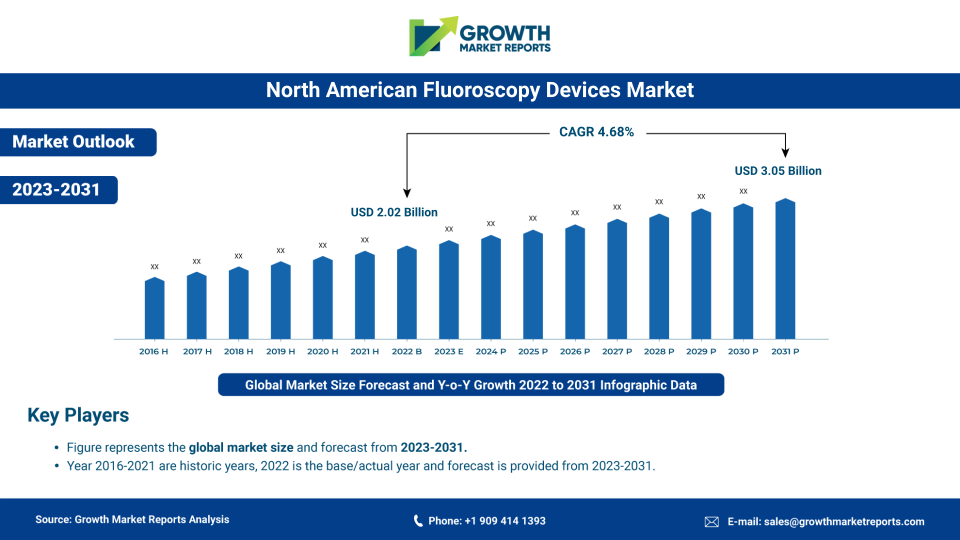
As per our latest research, the global fluoroscopy devices market size stood at USD 3.1 billion in 2024, with a compound annual growth rate (CAGR) of 5.2% expected through the forecast period. By 2033, the market is forecasted to reach nearly USD 4.8 billion, driven by the increasing adoption of minimally invasive procedures, technological advancements in imaging, and the rising prevalence of chronic diseases requiring real-time imaging solutions. The growth trajectory of the fluoroscopy devices market is firmly underpinned by the continuous evolution of healthcare infrastructure, expanding geriatric population, and the growing emphasis on improving diagnostic accuracy globally.
One of the primary growth factors for the fluoroscopy devices market is the significant surge in demand for minimally invasive surgeries across the globe. Minimally invasive procedures greatly benefit from real-time imaging, which fluoroscopy devices provide, allowing surgeons to navigate complex anatomical structures with higher precision and safety. The growing patient preference for procedures with reduced recovery times, minimal scarring, and lower risk of complications has led to a substantial increase in the number of fluoroscopy-guided interventions performed each year. Moreover, the global burden of diseases such as cardiovascular disorders, orthopedic injuries, and gastrointestinal ailments continues to rise, necessitating the adoption of advanced imaging modalities like fluoroscopy in both diagnostic and therapeutic applications.
Technological advancements represent another critical driver in the fluoroscopy devices market. The integration of digital imaging technologies, flat-panel detectors, dose-reduction features, and enhanced image processing capabilities have revolutionized the performance and safety profile of modern fluoroscopy systems. These innovations have not only improved image clarity and diagnostic accuracy but have also contributed to lower radiation exposure for both patients and healthcare providers. Additionally, the development of mobile and compact fluoroscopy units has expanded the utility of these devices beyond traditional hospital settings, enabling point-of-care imaging in emergency rooms, intensive care units, and even in remote or resource-limited environments. This flexibility has further fueled market growth by broadening the scope of fluoroscopy applications.
Another significant factor contributing to the expansion of the fluoroscopy devices market is the increasing investments in healthcare infrastructure, particularly in emerging economies. Governments and private sector players in regions such as Asia Pacific and Latin America are actively working to enhance access to advanced diagnostic and surgical technologies, including fluoroscopy. The rising awareness among clinicians and patients regarding the benefits of early and accurate diagnosis has also played a pivotal role in accelerating the adoption of fluoroscopy devices. Furthermore, favorable reimbursement policies in developed markets, coupled with ongoing training and education initiatives for healthcare professionals, are expected to sustain the momentum of market growth in the coming years.
From a regional perspective, North America currently dominates the fluoroscopy devices market, driven by a well-established healthcare system, high per capita healthcare expenditure, and a strong presence of leading medical device manufacturers. Europe follows closely, benefiting from robust research and development activities and a growing elderly population. However, the Asia Pacific region is projected to exhibit the fastest growth rate during the forecast period, owing to rapid urbanization, increasing healthcare investments, and a rising prevalence of chronic diseases. The market landscape in Latin America and the Middle East & Africa is also evolving, with gradual improvements in healthcare infrastructure and greater adoption of advanced imaging technologies fueling further opportunities for market expansion.
The fluoroscopy devices market, when segmented by product type, is primarily divided into fixed fluoroscopy devices and mobile fluoroscopy devices. Fixed fluoroscopy devices have traditionally held a substantial market share due to their widespread use in large hospitals and specialized diagnostic centers. These systems are well-suited for high-volume environments and complex procedures that require consistent, high-quality imaging, such as cardiac catheterizations, barium studies, and orthopedic surgeries. The robust construction and advanced features of fixed systems ensure superior image resolution and workflow efficiency, making them indispensable in tertiary care settings. However, the demand for these devices is somewhat limited by their high installation and maintenance costs, as well as the need for dedicated space within healthcare facilities.
On the other hand, mobile fluoroscopy devices, commonly referred to as C-arms, have witnessed remarkable growth in recent years. Their portability, compact design, and ease of use have made them increasingly popular in a variety of clinical settings, including operating rooms, emergency departments, and outpatient clinics. Mobile fluoroscopy devices are particularly advantageous for intraoperative imaging during orthopedic, vascular, and pain management procedures, where real-time visualization is crucial for optimal outcomes. The ability to move these units between different departments and even different healthcare facilities provides significant flexibility and cost-effectiveness, especially for smaller hospitals and ambulatory surgical centers.
Technological advancements have further enhanced the capabilities of both fixed and mobile fluoroscopy devices. The adoption of flat-panel detector technology, digital imaging, and advanced dose management systems has improved image quality while reducing radiation exposure. Manufacturers are focusing on incorporating artificial intelligence and machine learning algorithms to assist clinicians in image interpretation and workflow automation, thereby increasing the efficiency and diagnostic value of fluoroscopy procedures. These innovations are expected to drive the replacement of older, analog systems with next-generation digital devices across both fixed and mobile segments.
The competitive landscape within the product type segment is characterized by continuous innovation and strategic collaborations among leading manufacturers. Companies are investing heavily in research and development to introduce differentiated products that address the evolving needs of healthcare providers. Customization options, such as modular designs and software upgrades, are also gaining traction, enabling end-users to tailor fluoroscopy solutions to their specific clinical requirements. As a result, both fixed and mobile fluoroscopy devices are expected to maintain strong growth trajectories, with mobile systems likely to outpace fixed units in terms of adoption due to their versatility and expanding range of applications.
| Attributes | Details |
| Report Title | Fluoroscopy Devices Market Research Report 2033 |
| By Product Type | Fixed Fluoroscopy Devices, Mobile Fluoroscopy Devices |
| By Application | Diagnostic, Surgical, Therapeutic |
| By End-User | Hospitals, Diagnostic Centers, Specialty Clinics, Others |
| Regions Covered | North America, Europe, APAC, Latin America, MEA |
| Base Year | 2024 |
| Historic Data | 2018-2023 |
| Forecast Period | 2025-2033 |
| Number of Pages | 285 |
| Number of Tables & Figures | 293 |
| Customization Available | Yes, the report can be customized as per your need. |
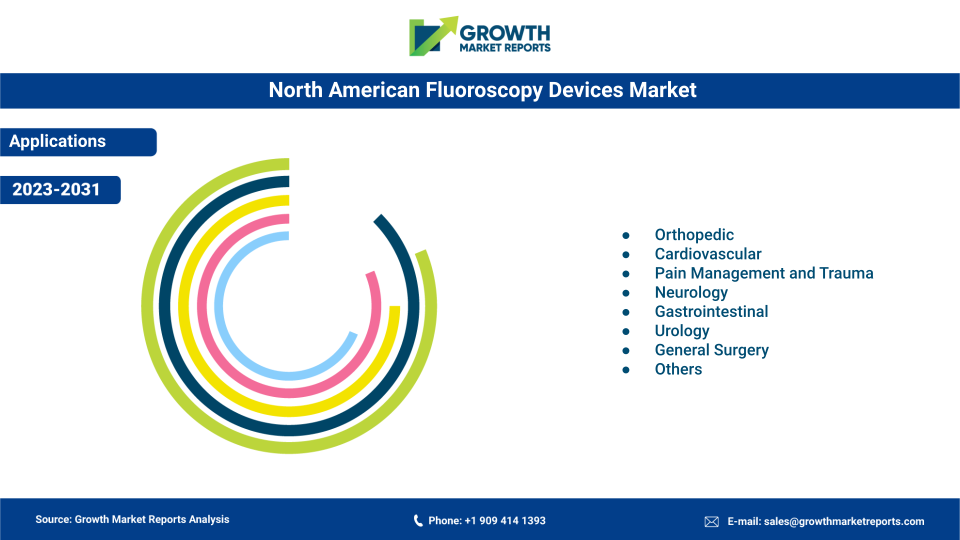
The application segment of the fluoroscopy devices market encompasses diagnostic, surgical, and therapeutic uses, each contributing uniquely to overall market growth. Diagnostic applications have historically dominated the market, as fluoroscopy provides unparalleled real-time visualization of dynamic bodily processes, such as gastrointestinal motility, vascular flow, and joint movement. Common diagnostic procedures utilizing fluoroscopy include barium swallow studies, angiography, and hysterosalpingography. The demand for diagnostic fluoroscopy is sustained by the rising incidence of conditions requiring precise anatomical assessment, as well as the growing emphasis on early disease detection and intervention.
Surgical applications of fluoroscopy devices have expanded significantly, driven by the increasing adoption of minimally invasive techniques across various medical specialties. Surgeons rely on intraoperative fluoroscopy to guide the placement of implants, catheters, and other devices with high accuracy, reducing the risk of complications and improving patient outcomes. Orthopedic, cardiovascular, and neurosurgical procedures, in particular, benefit from real-time imaging, which enables precise navigation and verification of anatomical landmarks. The trend towards outpatient and day-care surgeries has further boosted the demand for compact and mobile fluoroscopy systems that can be easily integrated into modern operating rooms.
Therapeutic applications, while representing a smaller segment compared to diagnostic and surgical uses, are gaining traction as the scope of fluoroscopy-guided interventions continues to expand. These include procedures such as pain management injections, tumor ablations, and certain endovascular therapies. The ability to deliver targeted treatments under direct visualization enhances procedural safety and efficacy, making fluoroscopy an invaluable tool in interventional radiology and pain medicine. As the range of therapeutic indications grows, this segment is expected to witness steady growth, particularly in specialized clinics and ambulatory care settings.
The interplay between diagnostic, surgical, and therapeutic applications is driving the adoption of versatile fluoroscopy systems capable of supporting multiple clinical workflows. Healthcare providers are increasingly seeking integrated solutions that offer seamless transition between diagnostic and interventional procedures, thereby improving patient throughput and operational efficiency. Manufacturers are responding by developing multifunctional fluoroscopy platforms with advanced software features, modular accessories, and user-friendly interfaces tailored to diverse clinical needs. This convergence of applications is anticipated to further propel market growth by broadening the utility and value proposition of fluoroscopy devices.
The end-user landscape for the fluoroscopy devices market is segmented into hospitals, diagnostic centers, specialty clinics, and others, each playing a distinct role in market dynamics. Hospitals account for the largest share of the market, owing to their comprehensive range of medical services, high patient volumes, and substantial investments in advanced imaging technologies. Large hospitals and academic medical centers often operate multiple fluoroscopy suites to support a wide array of diagnostic, surgical, and therapeutic procedures. The presence of skilled healthcare professionals and robust infrastructure further facilitates the adoption of state-of-the-art fluoroscopy systems in these settings.
Diagnostic centers represent another significant end-user segment, driven by the increasing trend towards decentralization of imaging services. These centers cater to outpatient populations and often serve as referral hubs for primary care physicians and specialists. The demand for high-throughput, cost-effective fluoroscopy solutions in diagnostic centers is fueling the adoption of both fixed and mobile systems, particularly those equipped with digital imaging capabilities and efficient workflow management tools. The emphasis on rapid turnaround times and patient convenience is prompting diagnostic centers to invest in modern fluoroscopy devices that can deliver high-quality imaging with minimal wait times.
Specialty clinics, including orthopedic, pain management, and cardiovascular clinics, are emerging as key adopters of mobile fluoroscopy devices. These facilities typically focus on specific clinical areas and perform a high volume of image-guided interventions requiring real-time visualization. The portability and ease of use of mobile C-arms make them ideal for specialty clinics, enabling clinicians to perform complex procedures with greater accuracy and efficiency. The growing prevalence of chronic musculoskeletal and cardiovascular conditions is expected to drive further growth in this segment, as more patients seek specialized care outside traditional hospital environments.
The "others" category includes ambulatory surgical centers, research institutions, and veterinary clinics, all of which are increasingly utilizing fluoroscopy devices for a variety of clinical and research applications. Ambulatory surgical centers, in particular, are witnessing rising demand for mobile fluoroscopy systems due to the shift towards outpatient surgeries and the need for cost-effective, space-saving imaging solutions. Research institutions are leveraging advanced fluoroscopy technologies for preclinical studies and medical device development, further expanding the market's reach. The diverse and evolving needs of end-users are prompting manufacturers to offer customizable solutions and comprehensive after-sales support, ensuring sustained market growth across all segments.
Opportunities within the fluoroscopy devices market are abundant, particularly as healthcare systems worldwide prioritize the modernization of imaging infrastructure and the adoption of advanced technologies. The growing trend towards outpatient care and ambulatory surgical procedures presents a significant opportunity for mobile and compact fluoroscopy devices, which offer unparalleled flexibility and cost savings. Additionally, the integration of artificial intelligence, machine learning, and cloud-based data management in fluoroscopy systems is poised to revolutionize workflow efficiency, diagnostic accuracy, and patient safety. These innovations are expected to open new avenues for market expansion by enabling personalized medicine, remote diagnostics, and tele-imaging services, especially in underserved regions.
Another promising opportunity lies in the increasing focus on radiation dose reduction and patient safety. Regulatory agencies and healthcare providers are setting stringent guidelines for radiation exposure, prompting manufacturers to invest in the development of low-dose fluoroscopy systems and advanced shielding technologies. The rising awareness among clinicians and patients regarding the risks associated with ionizing radiation is driving demand for devices that offer superior image quality at reduced doses. Furthermore, the expansion of healthcare access in emerging markets, supported by government initiatives and public-private partnerships, is expected to create substantial growth opportunities for fluoroscopy device manufacturers seeking to tap into new customer bases.
Despite these opportunities, the fluoroscopy devices market faces certain restraints, with the high cost of advanced systems being a primary concern. The initial capital investment required for purchasing and installing state-of-the-art fluoroscopy equipment can be prohibitive for smaller healthcare facilities, particularly in low- and middle-income countries. Additionally, ongoing maintenance, software upgrades, and staff training contribute to the total cost of ownership, further limiting market penetration. Reimbursement challenges, regulatory complexities, and concerns regarding radiation exposure also pose obstacles to widespread adoption. Addressing these barriers through innovative pricing models, robust after-sales support, and continuous education initiatives will be crucial for sustaining long-term market growth.
Regionally, North America leads the global fluoroscopy devices market, accounting for approximately 38% of the total market value in 2024, which translates to around USD 1.18 billion. The region's dominance is attributed to its advanced healthcare infrastructure, high prevalence of chronic diseases, and strong presence of leading medical device manufacturers. The United States, in particular, boasts a large installed base of fluoroscopy systems and a high rate of adoption of digital imaging technologies. Favorable reimbursement policies and ongoing investments in research and development further support market growth in North America, making it a key hub for innovation and product launches.
Europe holds the second-largest share of the fluoroscopy devices market, with a market value of approximately USD 870 million in 2024. The region benefits from a well-established healthcare system, a growing geriatric population, and a strong focus on early disease detection and minimally invasive interventions. Countries such as Germany, France, and the United Kingdom are at the forefront of adopting advanced fluoroscopy technologies, supported by robust regulatory frameworks and active participation in clinical research. The European market is expected to grow at a steady CAGR of 4.8% through 2033, driven by ongoing healthcare reforms and increasing investments in diagnostic imaging infrastructure.
The Asia Pacific region is poised to register the fastest growth rate in the fluoroscopy devices market, with a projected CAGR of 6.7% over the forecast period. In 2024, the market size for Asia Pacific stood at USD 640 million, and it is expected to surpass USD 1.1 billion by 2033. Rapid urbanization, rising healthcare expenditures, and a growing burden of chronic diseases are fueling demand for advanced imaging solutions in countries such as China, India, and Japan. Government initiatives to expand healthcare access and improve diagnostic capabilities are further accelerating market growth in the region. Latin America and the Middle East & Africa, while currently representing smaller shares of the global market, are also experiencing gradual growth as healthcare infrastructure improves and awareness about advanced diagnostic technologies increases.
The competitive landscape of the fluoroscopy devices market is characterized by intense rivalry among established players and the continuous emergence of innovative entrants. Leading companies in the market are focused on developing technologically advanced fluoroscopy systems that offer superior image quality, reduced radiation doses, and enhanced workflow efficiency. Strategic collaborations, mergers and acquisitions, and partnerships with healthcare providers are common strategies employed to strengthen market presence and expand product portfolios. The emphasis on research and development is evident, with companies investing heavily in the integration of artificial intelligence, 3D imaging, and digital connectivity features to differentiate their offerings and address evolving customer needs.
Market competition is further intensified by the growing demand for customized and modular fluoroscopy solutions tailored to specific clinical applications and end-user requirements. Manufacturers are increasingly offering flexible financing options, comprehensive service agreements, and training programs to attract and retain customers, particularly in price-sensitive markets. The shift towards value-based healthcare and the rising importance of total cost of ownership are prompting companies to focus on delivering holistic solutions that encompass hardware, software, and after-sales support. This approach not only enhances customer satisfaction but also fosters long-term relationships and brand loyalty.
In addition to established multinational corporations, the fluoroscopy devices market is witnessing the entry of regional and local players, especially in emerging markets. These companies often leverage their understanding of local healthcare dynamics and regulatory environments to offer competitively priced products and services. The growing trend towards localization of manufacturing and supply chains is also enabling faster product delivery and better responsiveness to market demands. However, maintaining high standards of quality and compliance remains a challenge for smaller players, particularly as regulatory requirements become more stringent worldwide.
Some of the major companies operating in the fluoroscopy devices market include Siemens Healthineers, GE Healthcare, Philips Healthcare, Canon Medical Systems Corporation, Shimadzu Corporation, Hologic Inc., Ziehm Imaging, Carestream Health, Fujifilm Holdings Corporation, and Hitachi Ltd. Siemens Healthineers is renowned for its advanced digital fluoroscopy solutions and strong focus on innovation, while GE Healthcare offers a comprehensive portfolio of fixed and mobile fluoroscopy systems with integrated dose management features. Philips Healthcare is a leader in imaging informatics and workflow optimization, and Canon Medical Systems is recognized for its high-resolution imaging technologies and user-friendly interfaces. Shimadzu Corporation and Hologic Inc. are also prominent players, known for their specialized fluoroscopy products and commitment to clinical excellence.
These companies are actively engaged in launching new products, expanding their distribution networks, and forging strategic alliances to enhance their market position. For instance, the introduction of AI-powered fluoroscopy platforms, cloud-based data management solutions, and portable C-arm systems are testament to the industry's commitment to meeting the evolving needs of healthcare providers. As competition intensifies, the ability to deliver innovative, cost-effective, and clinically relevant fluoroscopy solutions will be the key differentiator for companies seeking to capture a larger share of the global market.
The Fluoroscopy Devices market has been segmented on the basis of
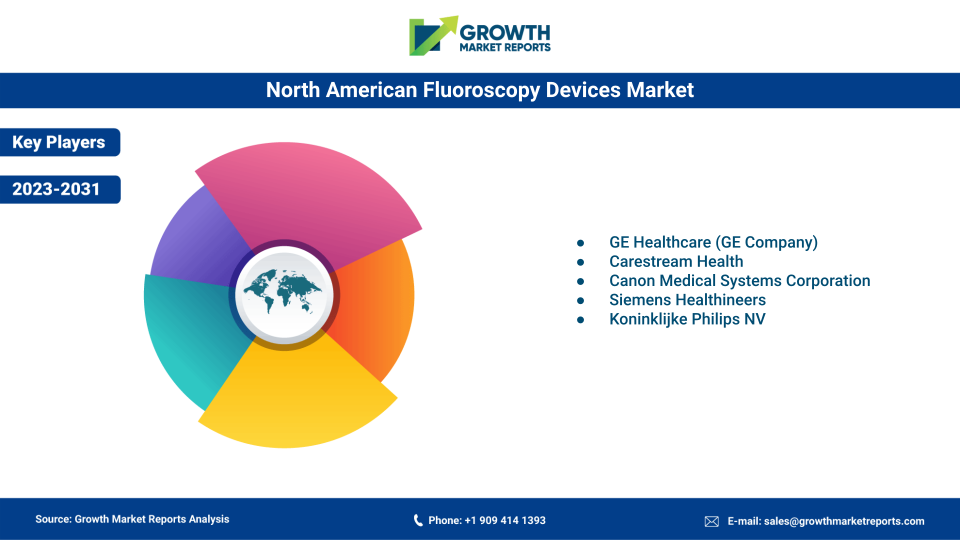
Key players competing in the North American fluoroscopy devices market include GE Healthcare (GE Company), Carestream Health, Canon Medical Systems Corporation, Siemens Healthineers and Koninklijke Philips NV.
Some of these players are using several market strategies such as mergers, acquisitions, partnerships, collaborations, capacity expansion, and product launches to enhance their market shares.
The fluoroscopy devices market is expected to grow at a CAGR of 5.2% from 2024 to 2033, driven by technological innovation, increased healthcare investments, and expanding applications in both developed and emerging markets.
Major players include Siemens Healthineers, GE Healthcare, Philips Healthcare, Canon Medical Systems Corporation, Shimadzu Corporation, Hologic Inc., Ziehm Imaging, Carestream Health, Fujifilm Holdings Corporation, and Hitachi Ltd.
Opportunities include the trend toward outpatient care, AI integration, and demand for low-dose imaging. Challenges include high equipment costs, reimbursement complexities, and concerns about radiation exposure.
Advancements include the integration of digital imaging, flat-panel detectors, dose-reduction features, artificial intelligence, and mobile/compact designs, all aimed at improving image quality, safety, and workflow efficiency.
Major end-users include hospitals, diagnostic centers, specialty clinics (such as orthopedic and cardiovascular clinics), ambulatory surgical centers, and research institutions.
Fluoroscopy devices are used for diagnostic, surgical, and therapeutic applications, including real-time imaging for gastrointestinal studies, angiography, orthopedic surgeries, and pain management procedures.
North America currently dominates the market, followed by Europe. The Asia Pacific region is expected to experience the fastest growth due to rapid urbanization, increasing healthcare investments, and a rising prevalence of chronic diseases.
The market is segmented into fixed fluoroscopy devices, commonly used in large hospitals and diagnostic centers, and mobile fluoroscopy devices (C-arms), which are popular for their portability and flexibility in various clinical settings.
Key growth drivers include the increasing adoption of minimally invasive procedures, technological advancements in imaging, rising prevalence of chronic diseases, and expanding healthcare infrastructure.
As of 2024, the global fluoroscopy devices market is valued at USD 3.1 billion, with projections to reach nearly USD 4.8 billion by 2033.