Segments - by Component (Solution, Services), by Deployment Type (Cloud, On-Premises), by Vehicle Type (Light Commercial Vehicles, Heavy Commercial Vehicles, Passenger Cars), by Application (Driver Management, Fleet Tracking and Geofencing, Fuel Management, Vehicle Maintenance, Safety and Compliance, Insurance Risk Assessment, Others), by End-User (Transportation and Logistics, Construction, Oil & Gas, Government, Retail, Others)
According to our latest research, the global Fleet Telematics market size reached USD 23.7 billion in 2024, reflecting robust adoption across multiple industries. The market is poised for significant expansion, projected to grow at a CAGR of 14.3% from 2025 to 2033. By the end of 2033, the Fleet Telematics market is anticipated to achieve a value of USD 69.1 billion. The surge in demand for real-time fleet monitoring, regulatory compliance, and cost optimization solutions is a primary growth factor propelling the market forward.
One of the principal growth drivers for the Fleet Telematics market is the increasing need for operational efficiency among fleet operators. Companies are under constant pressure to reduce costs, improve asset utilization, and enhance service delivery. Telematics solutions offer real-time data on vehicle location, driver behavior, and fuel consumption, enabling businesses to make data-driven decisions. Integration with advanced analytics platforms and AI-driven insights further empowers fleet managers to optimize routes, minimize downtime, and reduce maintenance expenses. These operational benefits are compelling organizations to invest extensively in telematics technologies, thus fueling market expansion.
Another significant factor contributing to the growth of the Fleet Telematics market is the tightening of government regulations regarding fleet safety, emissions, and driver compliance. Regulatory bodies in regions such as North America and Europe are mandating the installation of electronic logging devices (ELDs), GPS tracking, and other telematics systems to ensure compliance with safety standards and environmental norms. These mandates are accelerating the adoption of telematics solutions, particularly among large transportation and logistics companies. Furthermore, insurance providers are leveraging telematics data to assess risk profiles and offer usage-based insurance, creating additional incentives for fleet operators to implement these systems.
The rapid advancement of connectivity technologies, including 5G networks and IoT integration, is also playing a pivotal role in the growth of the Fleet Telematics market. Enhanced connectivity facilitates seamless data transmission between vehicles and central management systems, enabling real-time monitoring and predictive maintenance. The proliferation of cloud-based telematics platforms has made it easier for organizations of all sizes to deploy scalable solutions without significant upfront investments in infrastructure. As a result, small and medium-sized enterprises (SMEs) are increasingly adopting telematics solutions, further broadening the market base.
Regionally, North America continues to dominate the Fleet Telematics market, supported by stringent regulatory frameworks, high penetration of advanced technologies, and a mature transportation ecosystem. However, the Asia Pacific region is emerging as the fastest-growing market, driven by rapid urbanization, expanding logistics networks, and increasing investments in smart transportation infrastructure. Europe also holds a substantial market share, buoyed by the presence of leading automotive manufacturers and proactive regulatory initiatives. Latin America and the Middle East & Africa are witnessing steady growth, primarily due to the rising adoption of telematics in the construction, oil & gas, and government sectors.
The integration of GSE Fleet Telematics is becoming increasingly vital in industries that rely heavily on ground support equipment. This technology allows for precise tracking and management of equipment such as baggage tractors, belt loaders, and other airport vehicles, ensuring optimal utilization and minimizing downtime. By leveraging real-time data, operators can monitor equipment health, schedule maintenance proactively, and enhance operational efficiency. As airports and logistics hubs aim to streamline operations and reduce costs, GSE Fleet Telematics provides a comprehensive solution for managing diverse fleets of ground support equipment. This advancement not only improves service delivery but also ensures compliance with safety and regulatory standards, making it a crucial component in the modern telematics landscape.
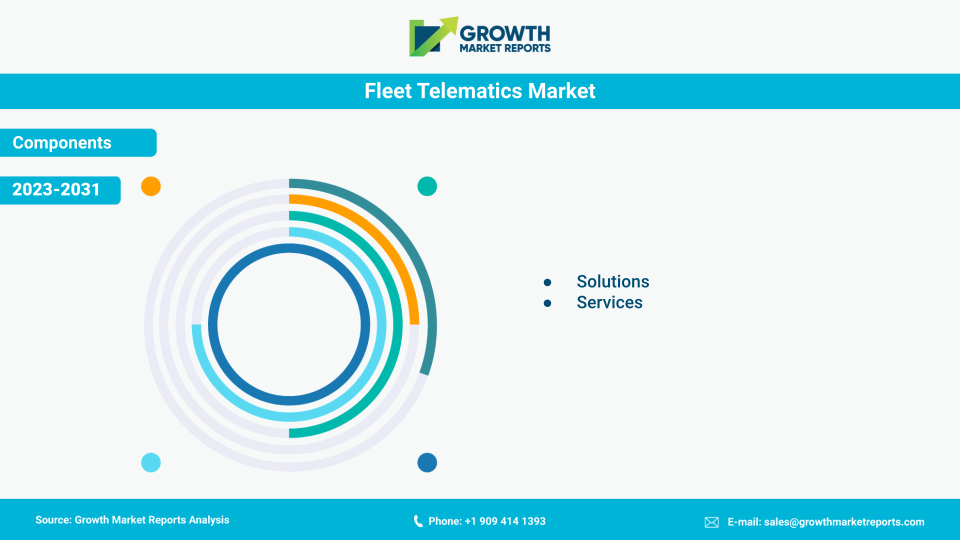
The Component segment of the Fleet Telematics market is bifurcated into Solutions and Services, with each segment playing a critical role in the overall ecosystem. Solutions comprise hardware and software platforms that enable real-time tracking, diagnostics, and analytics, while Services encompass consulting, integration, support, and maintenance. The Solutions segment currently commands a larger share, driven by the increasing deployment of telematics devices and platforms across diverse vehicle fleets. The proliferation of IoT-enabled sensors, GPS modules, and advanced analytics software has significantly enhanced the capabilities of telematics solutions, making them indispensable for efficient fleet management.
Within the Solutions segment, software platforms are witnessing rapid innovation, with vendors focusing on user-friendly interfaces, customizable dashboards, and seamless integration with enterprise resource planning (ERP) systems. Advanced features such as predictive maintenance, driver behavior analysis, and fuel optimization are becoming standard offerings, catering to the evolving needs of fleet operators. Hardware advancements, including the miniaturization of tracking devices and the integration of multiple sensors, are further augmenting the value proposition of telematics solutions. These technological advancements are expected to sustain the growth momentum of the Solutions segment throughout the forecast period.
The Services segment, while smaller in comparison, is experiencing robust growth as organizations seek expert guidance on telematics deployment and ongoing support. Consulting services are in high demand, particularly among companies transitioning from legacy fleet management systems to modern telematics platforms. Integration services ensure seamless connectivity between telematics devices, cloud platforms, and existing IT infrastructure, minimizing operational disruptions. Support and maintenance services are critical for ensuring system reliability, data security, and compliance with regulatory requirements. As telematics solutions become more sophisticated, the demand for specialized services is expected to rise, contributing to the overall expansion of the market.
Another notable trend within the Component segment is the growing emphasis on cybersecurity and data privacy. With the increasing volume of sensitive fleet data being transmitted and stored, solution providers are investing in robust security protocols and encryption technologies. This focus on data protection is particularly important for industries such as transportation, logistics, and government, where data breaches can have severe operational and reputational consequences. As regulatory scrutiny around data privacy intensifies, the Services segment is likely to see increased demand for compliance consulting and cybersecurity solutions.
In summary, both Solutions and Services are integral to the growth and sustainability of the Fleet Telematics market. While Solutions continue to drive market expansion through technological innovation, the Services segment is poised for accelerated growth as organizations prioritize expert support, integration, and data security. The interplay between these components will shape the future trajectory of the market, ensuring comprehensive value delivery to fleet operators across industries.
Fire Fleet Telematics is emerging as a critical tool for emergency response teams, offering unparalleled insights into fleet operations and safety. By integrating telematics into fire service vehicles, departments can monitor real-time location, vehicle status, and driver behavior, ensuring rapid and coordinated responses to emergencies. This technology aids in route optimization, reducing response times and enhancing the effectiveness of firefighting efforts. Additionally, Fire Fleet Telematics supports compliance with safety regulations and helps in assessing the performance of emergency vehicles. As fire departments face increasing demands for efficiency and accountability, the adoption of telematics solutions is becoming indispensable, providing a strategic advantage in managing resources and improving public safety outcomes.
| Attributes | Details |
| Report Title | Fleet Telematics Market Research Report 2033 |
| By Component | Solution, Services |
| By Deployment Type | Cloud, On-Premises |
| By Vehicle Type | Light Commercial Vehicles, Heavy Commercial Vehicles, Passenger Cars |
| By Application | Driver Management, Fleet Tracking and Geofencing, Fuel Management, Vehicle Maintenance, Safety and Compliance, Insurance Risk Assessment, Others |
| By End-User | Transportation and Logistics, Construction, Oil & Gas, Government, Retail, Others |
| Regions Covered | North America, Europe, APAC, Latin America, MEA |
| Base Year | 2024 |
| Historic Data | 2018-2023 |
| Forecast Period | 2025-2033 |
| Number of Pages | 298 |
| Number of Tables & Figures | 362 |
| Customization Available | Yes, the report can be customized as per your need. |
The Deployment Type segment of the Fleet Telematics market is categorized into Cloud and On-Premises deployments. Cloud-based telematics solutions have gained significant traction in recent years, owing to their scalability, flexibility, and cost-effectiveness. Organizations are increasingly opting for cloud deployments to leverage real-time data access, seamless updates, and remote management capabilities. The ability to scale resources on demand and integrate with other cloud-based enterprise applications makes cloud deployment an attractive choice for both large enterprises and SMEs. Moreover, cloud platforms facilitate collaboration between stakeholders, enabling centralized monitoring and decision-making.
On-Premises deployments, while less prevalent, remain important for organizations with stringent data security and compliance requirements. Certain industries, such as government, defense, and oil & gas, prefer on-premises solutions to maintain full control over their data and IT infrastructure. These deployments are characterized by higher upfront costs and longer implementation timelines but offer enhanced customization and integration with legacy systems. On-premises solutions are also favored in regions with limited internet connectivity or regulatory restrictions on data transmission. Despite the growing popularity of cloud deployments, on-premises solutions continue to serve niche market segments with specialized needs.
The shift towards cloud-based telematics is being driven by advancements in connectivity technologies, such as 5G and IoT, which enable real-time data transmission and analytics. Cloud platforms support the integration of diverse telematics devices, sensors, and third-party applications, creating a unified ecosystem for fleet management. Vendors are offering subscription-based pricing models, reducing the financial barriers to entry and enabling organizations to adopt telematics solutions without significant capital investments. The availability of mobile applications and remote access further enhances the appeal of cloud deployments, particularly for geographically dispersed fleets.
Despite the advantages of cloud deployment, concerns around data privacy, latency, and regulatory compliance persist. Some organizations are adopting hybrid deployment models, combining the benefits of cloud and on-premises solutions to address their unique requirements. Hybrid models allow organizations to store sensitive data on-premises while leveraging cloud-based analytics and reporting tools. This approach provides a balance between security, scalability, and cost-efficiency, making it an attractive option for large enterprises with complex operational needs.
Overall, the Deployment Type segment is witnessing a clear shift towards cloud-based telematics, driven by technological advancements, cost considerations, and the need for real-time data access. However, on-premises and hybrid deployments will continue to play a role in specific industries and regions, ensuring that organizations can choose the deployment model that best aligns with their operational and regulatory requirements. The evolution of deployment models will be a key factor shaping the future landscape of the Fleet Telematics market.
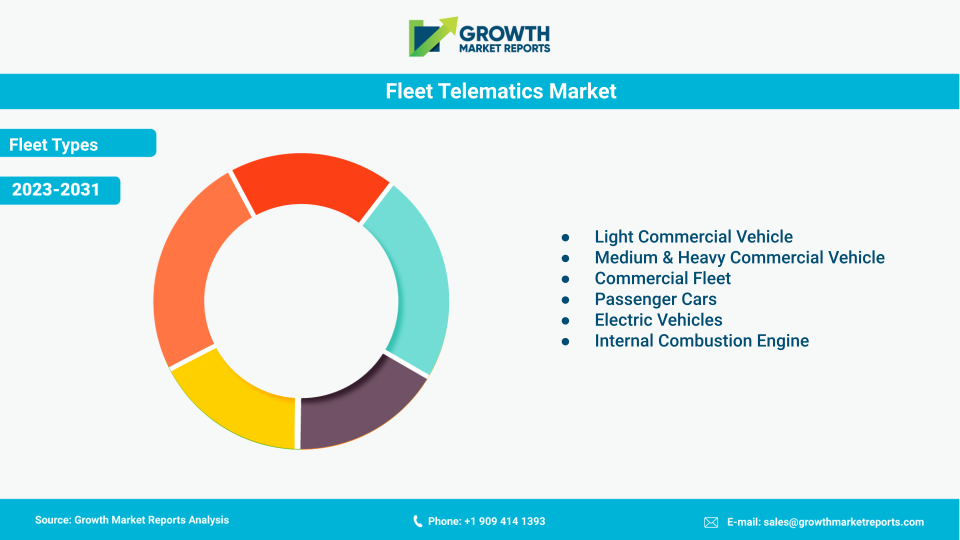
The Vehicle Type segment in the Fleet Telematics market is divided into Light Commercial Vehicles (LCVs), Heavy Commercial Vehicles (HCVs), and Passenger Cars. Light Commercial Vehicles represent the largest share of the market, owing to their widespread use in last-mile delivery, urban logistics, and small business operations. The rapid growth of e-commerce and on-demand delivery services has led to an exponential increase in the deployment of telematics solutions in LCVs. Fleet operators are leveraging telematics to optimize routes, monitor driver behavior, and ensure timely deliveries, thereby enhancing customer satisfaction and operational efficiency.
Heavy Commercial Vehicles, including trucks and trailers, constitute a significant segment of the Fleet Telematics market, particularly in the transportation and logistics industry. HCVs are often involved in long-haul operations, where real-time tracking, fuel management, and compliance monitoring are critical. Telematics solutions enable fleet managers to monitor vehicle health, prevent unauthorized usage, and ensure adherence to regulatory requirements such as hours-of-service (HOS) regulations. The integration of advanced features such as predictive maintenance and cargo monitoring is further driving the adoption of telematics in HCV fleets, reducing downtime and enhancing asset utilization.
The Passenger Cars segment is gaining traction, especially among corporate fleets, government agencies, and car rental companies. Organizations are deploying telematics solutions in passenger cars to monitor usage patterns, manage maintenance schedules, and improve driver safety. The growing trend of corporate car-sharing and mobility-as-a-service (MaaS) is also contributing to the adoption of telematics in this segment. Insurance companies are increasingly utilizing telematics data from passenger cars to offer usage-based insurance products, incentivizing safe driving behaviors and reducing claim costs.
Technological advancements in telematics hardware and software are enabling seamless integration across different vehicle types. Multi-vehicle telematics platforms allow fleet operators to manage diverse fleets comprising LCVs, HCVs, and passenger cars from a single interface. This unified approach simplifies fleet management, enhances data visibility, and supports data-driven decision-making. Vendors are also offering customizable solutions tailored to the specific requirements of each vehicle type, ensuring optimal performance and value delivery.
In summary, the Vehicle Type segment of the Fleet Telematics market is characterized by diverse adoption patterns and evolving use cases. While LCVs and HCVs continue to drive the bulk of the market, the Passenger Cars segment is emerging as a key growth area, fueled by corporate mobility initiatives and insurance applications. The ability of telematics solutions to cater to the unique needs of each vehicle type will be a critical success factor for vendors and fleet operators alike.
The Application segment of the Fleet Telematics market encompasses a wide range of use cases, including Driver Management, Fleet Tracking and Geofencing, Fuel Management, Vehicle Maintenance, Safety and Compliance, Insurance Risk Assessment, and others. Fleet Tracking and Geofencing represent the most widely adopted applications, enabling real-time monitoring of vehicle location, route adherence, and unauthorized movement detection. These capabilities are essential for ensuring timely deliveries, preventing theft, and optimizing fleet utilization. The integration of geospatial analytics and mapping technologies is further enhancing the accuracy and effectiveness of fleet tracking solutions.
Driver Management is another critical application area, focusing on monitoring and improving driver behavior. Telematics solutions collect data on speed, acceleration, braking, and idling patterns, enabling fleet managers to identify risky behaviors and implement targeted training programs. Driver scorecards and gamification features are being used to incentivize safe driving practices, reduce accident rates, and lower insurance premiums. The emphasis on driver safety and performance is particularly pronounced in industries such as transportation, logistics, and construction, where human error is a leading cause of accidents and operational disruptions.
Fuel Management is a key application driving cost savings and environmental sustainability in the Fleet Telematics market. Telematics solutions provide real-time insights into fuel consumption, idling times, and route efficiency, enabling fleet operators to identify inefficiencies and implement corrective measures. The adoption of fuel management solutions is being propelled by rising fuel costs, stringent emissions regulations, and the need for sustainable fleet operations. Advanced analytics and AI-driven recommendations are helping organizations achieve significant reductions in fuel consumption and carbon emissions.
Vehicle Maintenance applications leverage telematics data to monitor vehicle health, predict maintenance needs, and schedule repairs proactively. Predictive maintenance reduces unplanned downtime, extends vehicle lifespan, and minimizes repair costs. Telematics-enabled maintenance solutions are particularly valuable for large fleets with complex maintenance requirements, such as those in the transportation, construction, and oil & gas sectors. The integration of maintenance management systems with telematics platforms is streamlining workflows and enhancing operational efficiency.
Safety and Compliance, along with Insurance Risk Assessment, are emerging as high-growth application areas within the Fleet Telematics market. Regulatory mandates for electronic logging devices (ELDs), driver hours monitoring, and safety compliance are driving the adoption of telematics solutions across regions. Insurance companies are leveraging telematics data to assess risk, set premiums, and incentivize safe driving. The ability to provide verifiable data on driver behavior and vehicle usage is transforming risk assessment and claims management processes, creating new opportunities for telematics vendors and fleet operators.
The End-User segment of the Fleet Telematics market spans a diverse array of industries, including Transportation and Logistics, Construction, Oil & Gas, Government, Retail, and others. The Transportation and Logistics sector is the largest end-user, accounting for a substantial share of the market. The need for real-time tracking, route optimization, and regulatory compliance is driving widespread adoption of telematics solutions in this sector. Logistics companies are leveraging telematics to enhance supply chain visibility, improve delivery accuracy, and reduce operational costs. The integration of telematics with warehouse management and transportation management systems is further optimizing end-to-end logistics operations.
The Construction industry is increasingly deploying telematics solutions to monitor the location, usage, and maintenance of heavy equipment and vehicles. Telematics enables construction companies to track asset utilization, prevent unauthorized use, and schedule preventive maintenance, thereby reducing downtime and improving project efficiency. The ability to monitor equipment health and usage in real-time is particularly valuable in large-scale construction projects with dispersed assets. Telematics solutions are also supporting compliance with safety regulations and environmental standards in the construction sector.
In the Oil & Gas industry, telematics is playing a critical role in ensuring the safety, efficiency, and compliance of fleet operations. The transportation of hazardous materials and the need for strict adherence to safety protocols make telematics solutions indispensable for oil & gas companies. Real-time tracking, driver monitoring, and predictive maintenance are helping companies mitigate risks, prevent accidents, and comply with industry regulations. The integration of telematics with asset management and environmental monitoring systems is further enhancing operational visibility and control.
Government agencies are adopting telematics solutions for a variety of applications, including public transportation, emergency services, and municipal fleet management. Telematics enables government organizations to monitor vehicle usage, optimize routes, and ensure compliance with safety and environmental regulations. The ability to collect and analyze data on fleet operations is supporting data-driven decision-making and resource allocation in the public sector. Retail companies are also leveraging telematics to optimize delivery operations, manage inventory, and enhance customer service.
Other end-users, such as utilities, mining, and agriculture, are recognizing the value of telematics in optimizing fleet operations, improving safety, and reducing costs. The versatility of telematics solutions and their ability to address industry-specific challenges are driving adoption across a broad spectrum of end-users. The continued expansion of telematics applications and the development of industry-specific solutions will be key factors supporting the growth of the Fleet Telematics market in the coming years.
The Fleet Telematics market presents substantial opportunities for growth and innovation, particularly in the areas of data analytics, artificial intelligence, and IoT integration. The increasing availability of real-time data from connected vehicles is enabling the development of advanced analytics platforms that provide actionable insights for fleet operators. AI-powered algorithms are being used to predict maintenance needs, optimize routes, and enhance driver safety, creating new value propositions for telematics vendors and their customers. The integration of telematics with emerging technologies such as blockchain and edge computing is opening up new avenues for secure data sharing, decentralized fleet management, and real-time decision-making. These technological advancements are expected to drive the next wave of growth in the Fleet Telematics market.
Another major opportunity lies in the expansion of telematics applications beyond traditional fleet management. The rise of mobility-as-a-service (MaaS), shared mobility, and autonomous vehicles is creating new use cases for telematics solutions. Companies are exploring telematics-based business models, such as pay-per-use vehicle leasing, dynamic insurance pricing, and real-time asset tracking for high-value goods. The growing emphasis on sustainability and environmental responsibility is also driving demand for telematics solutions that support fuel efficiency, emissions reduction, and green fleet initiatives. As regulatory requirements evolve and customer expectations rise, telematics vendors have the opportunity to differentiate themselves through innovation, customization, and value-added services.
Despite the promising opportunities, the Fleet Telematics market faces several restraining factors, the most notable being concerns around data privacy and cybersecurity. The increasing volume of sensitive data being collected, transmitted, and stored by telematics systems makes them attractive targets for cyberattacks and data breaches. Organizations must invest in robust security protocols, encryption technologies, and compliance measures to protect fleet data and maintain customer trust. Regulatory uncertainties and variations in data privacy laws across regions further complicate the deployment and management of telematics solutions. Addressing these challenges will be critical for sustaining market growth and ensuring the long-term success of telematics initiatives.
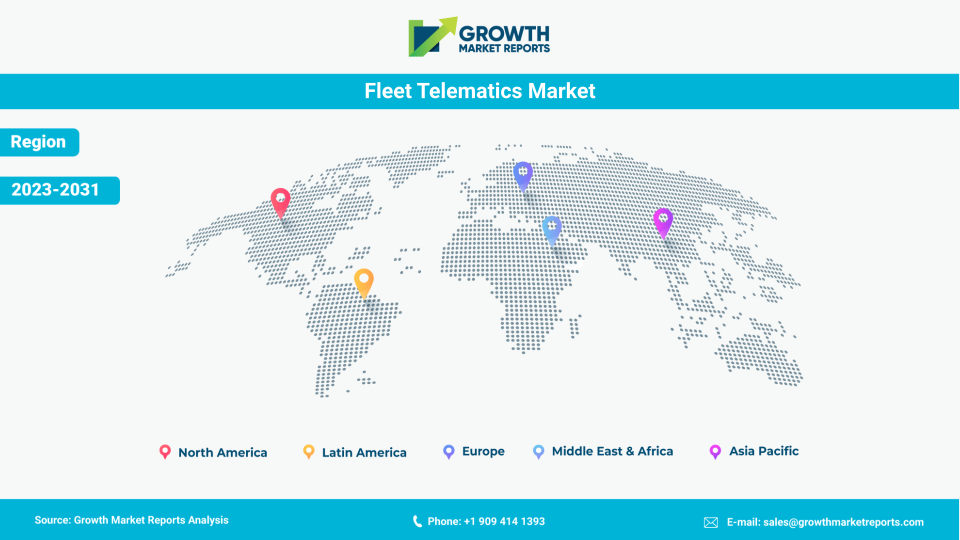
North America remains the leading regional market for Fleet Telematics, accounting for approximately USD 8.7 billion of the global market size in 2024. The region's dominance is underpinned by a mature transportation infrastructure, high penetration of advanced technologies, and stringent regulatory frameworks governing fleet safety and emissions. The adoption of electronic logging devices (ELDs), driver monitoring systems, and usage-based insurance is particularly widespread in the United States and Canada. Leading telematics vendors have established strong partnerships with automotive OEMs, logistics companies, and government agencies, further consolidating their market position. The North American market is expected to maintain a steady growth trajectory, supported by ongoing investments in smart transportation and connected vehicle initiatives.
The Asia Pacific region is emerging as the fastest-growing market for Fleet Telematics, with a projected CAGR of 17.1% from 2025 to 2033. The region accounted for USD 5.9 billion of the global market size in 2024 and is expected to witness rapid expansion, driven by urbanization, economic growth, and the proliferation of e-commerce and logistics services. Countries such as China, India, Japan, and Australia are investing heavily in smart city projects, intelligent transportation systems, and digital infrastructure. The increasing adoption of telematics in commercial vehicles, coupled with supportive government policies and initiatives, is fueling market growth across the region. Local vendors are also introducing cost-effective solutions tailored to the unique needs of regional markets, further accelerating adoption.
Europe represents a significant share of the Fleet Telematics market, with a market size of USD 5.4 billion in 2024. The region is characterized by a strong automotive industry, proactive regulatory initiatives, and a focus on sustainability and emissions reduction. The implementation of the European Union's Mobility Package, which mandates the use of smart tachographs and telematics systems, is driving widespread adoption across the transportation and logistics sectors. Leading European countries such as Germany, the United Kingdom, France, and the Netherlands are at the forefront of telematics innovation, supported by collaborations between technology vendors, automotive OEMs, and fleet operators. The European market is expected to experience steady growth, with increasing emphasis on green fleet management and digital transformation.
The Fleet Telematics market is highly competitive, characterized by the presence of global technology giants, established telematics vendors, and innovative startups. The competitive landscape is shaped by ongoing investments in research and development, strategic partnerships, and mergers and acquisitions. Leading companies are focusing on expanding their product portfolios, enhancing the functionality of their telematics platforms, and integrating advanced technologies such as AI, machine learning, and IoT. The ability to offer end-to-end solutions, including hardware, software, and services, is a key differentiator in the market. Vendors are also prioritizing customer support, data security, and regulatory compliance to strengthen their market position and build long-term relationships with fleet operators.
Innovation is a central theme in the Fleet Telematics market, with companies investing in the development of next-generation telematics devices, cloud-based platforms, and mobile applications. The integration of telematics with other fleet management solutions, such as maintenance management, driver training, and insurance, is creating new value propositions for customers. Customization and scalability are increasingly important, as fleet operators seek solutions that can adapt to their unique operational requirements and growth strategies. Vendors are leveraging data analytics and AI to provide actionable insights, predictive maintenance, and real-time decision support, enhancing the overall value delivered to customers.
The market is witnessing increased collaboration between telematics vendors, automotive OEMs, telecommunications providers, and technology partners. Strategic alliances are enabling companies to leverage complementary strengths, accelerate product development, and expand their geographic reach. Mergers and acquisitions are also reshaping the competitive landscape, with leading players acquiring niche technology providers to enhance their capabilities and address emerging market needs. The competitive intensity is expected to remain high, with new entrants and disruptive technologies challenging established players and driving continuous innovation.
Some of the major companies operating in the Fleet Telematics market include Geotab Inc., Verizon Connect, Trimble Inc., Omnitracs, Teletrac Navman, TomTom Telematics, MiX Telematics, Fleet Complete, and Gurtam. These companies have established a strong global presence, offering comprehensive telematics solutions for diverse industries and vehicle types. Geotab Inc. is recognized for its scalable, data-driven telematics platform, serving large enterprise fleets and government agencies. Verizon Connect offers a wide range of fleet management solutions, with a focus on real-time tracking, driver management, and compliance. Trimble Inc. is known for its advanced analytics and integration capabilities, catering to transportation, construction, and logistics sectors.
Omnitracs, a pioneer in fleet telematics, provides solutions for route optimization, compliance, and driver safety, with a strong presence in North America. Teletrac Navman and TomTom Telematics are leading providers in Europe, offering innovative solutions for fleet tracking, geofencing, and fuel management. MiX Telematics and Fleet Complete have established a global footprint, serving customers across North America, Europe, Asia Pacific, and Latin America. Gurtam is recognized for its flexible, customizable telematics platform, catering to a wide range of fleet sizes and industry requirements. These companies are continuously investing in product innovation, customer support, and strategic partnerships to maintain their competitive edge in the dynamic Fleet Telematics market.
The Fleet Telematics market has been segmented on the basis of
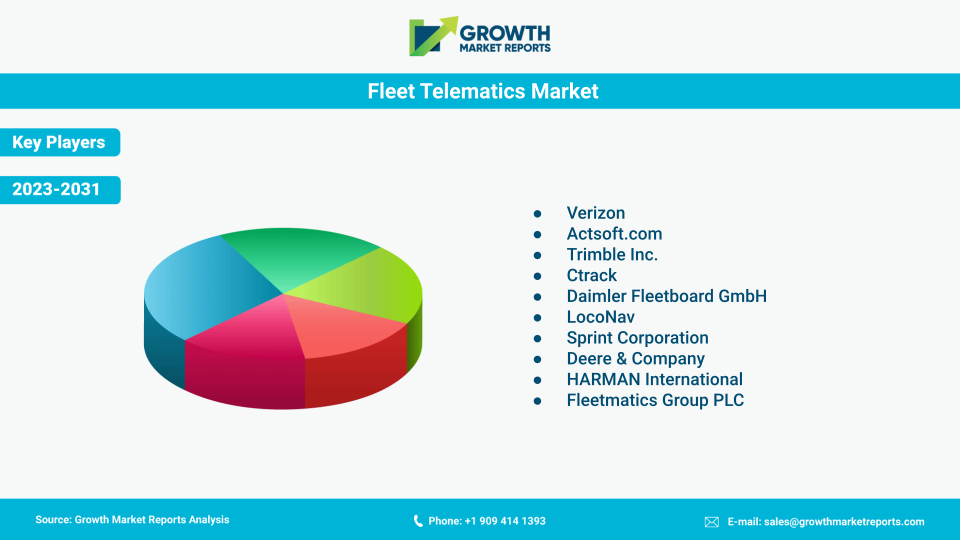
Key players competing in the global fleet telematics market are Verizon; Actsoft.com; Trimble Inc.; Ctrack; Daimler Fleetboard GmbH; LocoNav; Sprint Corporation; Deere & Company; HARMAN International; Fleetmatics Group PLC; KORE Wireless; TomTom International BV; Samsara Inc.; Masternaut Limited; and MiX Telematics.
Some of these players have adopted a series of business development strategies including merger and acquisition, entering into partnerships and collaboration, product launches, and production capacity expansion to expand their consumer base and enhance their market share.
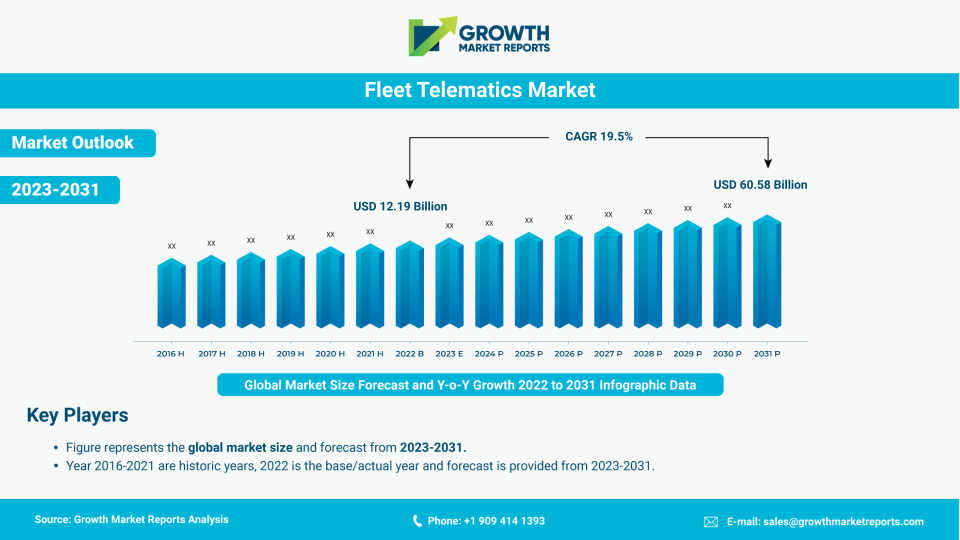
The global fleet telematics market size was valued at USD 10.2 billion in 2021 and is expected to surpass USD 45.4 billion by 2030.
The commercial fleet segment is projected to register a healthy growth rate during the forecast period.
The key drivers of the market include the increasing global trade volume and rapid expansion of industries, especially the transport and logistic industry due to globalization.
North America accounted for a major market share, representing more than 65% share of the global market revenue in 2021.
The key players of the market are Verizon; Actsoft.com; Trimble Inc.; Ctrack; Daimler Fleetboard GmbH; LocoNav; Sprint Corporation; Deere & Company; HARMAN International; Fleetmatics Group PLC; KORE Wireless; TomTom International BV; Samsara Inc.; Masternaut Limited; and MiX Telematics.