Fine Art Market Research Report 2033

Fine Art Market Research Report 2033

Segments - by Product Type (Paintings, Sculptures, Drawings, Prints, Photographs, Others), by Sales Channel (Auction Houses, Art Galleries, Online Platforms, Dealers, Others), by End User (Private Collectors, Museums, Corporates, Others)

https://growthmarketreports.com/Debadatta
Author : Debadatta Patel
https://growthmarketreports.com/Vaibhav
Fact-checked by : V. Chandola
https://growthmarketreports.com/Shruti
Editor : Shruti Bhat

Upcoming | Report ID :CG-4846 | 5.0 Rating | 99 Reviews | 279 Pages | Format : Docx PDF

Report Description


Fine Art Market Outlook

According to our latest research, the global fine art market size reached USD 68.3 billion in 2024, reflecting a robust position within the cultural and luxury goods sectors. The market is experiencing a steady compound annual growth rate (CAGR) of 5.7% from 2025 to 2033. By the end of 2033, the fine art market is forecasted to attain a value of USD 112.4 billion, fueled by increasing global wealth, the proliferation of digital sales channels, and a rising appreciation for art as both an investment and a cultural asset. This growth is underpinned by evolving consumer preferences, technological advancements, and the expanding influence of emerging economies in the global art ecosystem.

One of the primary growth factors in the fine art market is the diversification of sales channels, particularly the surge in online platforms. The digital transformation of the art world has democratized access, enabling collectors and enthusiasts from geographically diverse locations to participate in auctions and purchase works from renowned galleries. The COVID-19 pandemic acted as a catalyst, accelerating the adoption of online sales, which now account for a significant share of overall transactions. This shift has not only broadened the audience base but also introduced innovative tools such as virtual viewing rooms, augmented reality previews, and blockchain-based provenance verification, further enhancing buyer confidence and transparency in the market. As digital literacy continues to rise globally, the fine art market is poised to benefit from the seamless integration of technology into the traditional art buying experience.

Another key driver is the expanding demographic of art collectors, especially among younger generations and high-net-worth individuals in emerging economies. Millennials and Generation Z are increasingly viewing art as a viable alternative investment, motivated by both aesthetic appreciation and the potential for financial returns. This trend is particularly pronounced in regions such as Asia Pacific and the Middle East, where rapid economic growth and cultural investment have fostered a burgeoning class of collectors. Institutions and corporations are also playing a more prominent role, acquiring fine art to enhance their brand image, diversify investment portfolios, and support cultural heritage initiatives. The growing institutional demand, coupled with private acquisitions, is contributing to the sustained momentum of the global fine art market.

Additionally, the fine art market is being shaped by a heightened focus on provenance, authenticity, and sustainability. Buyers are increasingly seeking transparency regarding the origin and history of artworks, prompting market players to invest in advanced tracking technologies and rigorous authentication processes. This emphasis on due diligence is critical in maintaining market integrity and addressing concerns related to forgery, illicit trade, and ethical sourcing. Furthermore, there is a rising awareness of the environmental impact of art production and transportation, driving demand for sustainable materials and practices. These evolving consumer expectations are compelling galleries, auction houses, and artists to adopt more responsible and transparent business models, which in turn are enhancing the overall credibility and appeal of the fine art market.

The role of Fine Art Advisory services is becoming increasingly significant in navigating the complexities of the art market. These services provide collectors, investors, and institutions with expert guidance on acquisitions, valuations, and collection management. By leveraging their deep knowledge of art history, market trends, and artist reputations, advisors help clients make informed decisions that align with their aesthetic preferences and financial goals. As the art market becomes more globalized and competitive, the demand for personalized advisory services is growing, offering clients a strategic advantage in building and managing their art portfolios. This trend is further supported by the increasing sophistication of art buyers, who seek to enhance their collections with works that offer both cultural significance and investment potential.

From a regional perspective, North America continues to dominate the fine art market, accounting for the largest share of global sales, followed closely by Europe. The Asia Pacific region, however, is emerging as a dynamic growth engine, driven by increasing wealth, cultural investments, and a growing number of art fairs and exhibitions. China, in particular, has established itself as a major hub for both contemporary and traditional art, attracting international attention and investment. Meanwhile, markets in Latin America, the Middle East, and Africa are gradually gaining prominence, supported by supportive government policies, rising cultural tourism, and the establishment of world-class museums and galleries. This regional diversification is contributing to the resilience and vibrancy of the global fine art market, ensuring sustained growth in the years ahead.

Global Fine Art Industry Outlook

Product Type Analysis

The fine art market is segmented by product type into paintings, sculptures, drawings, prints, photographs, and others, each representing a unique facet of the industry with distinct demand dynamics and value propositions. Paintings remain the most significant and valuable segment, often commanding the highest prices at auctions and private sales. Masterpieces by renowned artists such as Picasso, Monet, and Basquiat continue to attract global attention, with record-breaking sales underscoring the enduring appeal of this category. The market for paintings is driven by a combination of historical significance, aesthetic appeal, and investment potential, making it a cornerstone of both private and institutional collections. As new artists gain prominence and contemporary styles evolve, the paintings segment is expected to maintain its leadership position in the fine art market.

Sculptures represent another vital segment, offering collectors the opportunity to engage with three-dimensional art forms that range from classical marble works to avant-garde installations. The demand for sculptures is supported by museums, public spaces, and private collectors seeking to diversify their portfolios and enhance the visual impact of their environments. Recent trends indicate a growing interest in contemporary sculpture, particularly pieces that incorporate unconventional materials or address social and environmental themes. The segment is also benefiting from increased cross-disciplinary collaborations between artists, architects, and designers, resulting in innovative and large-scale installations that push the boundaries of traditional sculpture.

The market for drawings and prints is characterized by accessibility and versatility, appealing to both seasoned collectors and newcomers. These works often serve as entry points for individuals looking to start their art collections, offering lower price points and unique insights into an artistÂ’s creative process. Limited edition prints and original drawings by celebrated artists can appreciate significantly in value over time, making them attractive investment options. The proliferation of online platforms has further democratized access to drawings and prints, enabling buyers to discover and acquire works from emerging and established artists worldwide. As the appreciation for graphic and illustrative art continues to grow, this segment is expected to witness steady expansion.

Photographs have emerged as a dynamic and rapidly growing segment within the fine art market, reflecting the evolving definition of art in the digital age. The acceptance of photography as a legitimate form of fine art has been bolstered by high-profile exhibitions, critical acclaim, and the success of contemporary photographers at major auctions. Collectors are increasingly drawn to both vintage and modern photographic works, appreciating their ability to capture moments, narratives, and cultural shifts with unparalleled immediacy. The segment is further supported by advancements in printing technology, which have enhanced the quality, durability, and scalability of photographic art. As digital natives continue to shape the art market, the demand for innovative and conceptually driven photographic works is set to rise.

Old Master Art continues to hold a revered place within the fine art market, captivating collectors with its historical significance and timeless appeal. Works from this category, which includes masterpieces from the Renaissance, Baroque, and Rococo periods, are celebrated for their technical mastery and rich narratives. Collectors are drawn to Old Master Art not only for its aesthetic and cultural value but also for its potential as a stable investment in an ever-evolving market. The enduring allure of these works is reflected in the strong performance of Old Master Art at auctions and private sales, where they often achieve record prices. As interest in art history and classical techniques grows, the demand for Old Master Art is expected to remain robust, attracting both seasoned collectors and new enthusiasts.

The “others” category encompasses a diverse array of fine art forms, including mixed media, installations, digital art, and performance pieces. This segment is gaining traction as artists experiment with new materials, technologies, and interdisciplinary approaches to creative expression. The increasing prevalence of digital art, in particular, is challenging traditional notions of ownership, display, and value, prompting market participants to develop new frameworks for authentication and transaction. As the boundaries of fine art continue to expand, the “others” segment is expected to play an increasingly important role in shaping the future landscape of the global fine art market.

Report Scope

Attributes Details
Report Title Fine Art Market Research Report 2033
By Product Type Paintings, Sculptures, Drawings, Prints, Photographs, Others
By Sales Channel Auction Houses, Art Galleries, Online Platforms, Dealers, Others
By End User Private Collectors, Museums, Corporates, Others
Regions Covered North America, Europe, APAC, Latin America, MEA
Base Year 2024
Historic Data 2018-2023
Forecast Period 2025-2033
Number of Pages 279
Number of Tables & Figures 391
Customization Available Yes, the report can be customized as per your need.

Sales Channel Analysis

The fine art marketÂ’s sales channels are broadly categorized into auction houses, art galleries, online platforms, dealers, and others, each contributing uniquely to the marketÂ’s structure and growth. Auction houses have long been the cornerstone of the fine art market, offering a transparent and competitive environment for the sale of high-value works. Leading global auction houses such as SothebyÂ’s, ChristieÂ’s, and Phillips regularly set industry benchmarks with record-breaking sales and curated events that attract international attention. The auction model benefits from its ability to generate excitement, establish price benchmarks, and provide liquidity to the market. In recent years, auction houses have also embraced digital transformation, integrating online bidding and hybrid sale formats to reach a broader audience and enhance convenience for buyers and sellers alike.

Art galleries serve as critical intermediaries between artists and collectors, offering curated exhibitions, personalized advisory services, and exclusive access to emerging and established talent. Galleries play a vital role in nurturing artistsÂ’ careers, promoting cultural dialogue, and fostering long-term relationships with clients. The gallery segment is characterized by its emphasis on connoisseurship, education, and community engagement, often organizing events, talks, and collaborations that enrich the art ecosystem. While traditional brick-and-mortar galleries remain central to the market, many are expanding their digital presence, launching virtual viewing rooms and online catalogs to adapt to changing consumer preferences and globalize their reach.

The rise of online platforms has been one of the most transformative developments in the fine art market over the past decade. Digital marketplaces such as Artsy, Artnet, and Saatchi Art have democratized access to art, enabling collectors to browse, compare, and purchase works from anywhere in the world. The convenience, transparency, and breadth of offerings available online have attracted a new generation of buyers, including millennials and international collectors who may not have access to traditional sales channels. Online platforms also facilitate greater price discovery, data analytics, and social engagement, empowering buyers to make informed decisions. As technology continues to advance, the online segment is expected to capture an increasing share of total fine art sales.

Dealers represent a more personalized and relationship-driven sales channel, leveraging their expertise, networks, and market knowledge to connect buyers and sellers. Dealers often operate in niche markets or specialize in specific genres, periods, or artists, providing tailored advisory services and discreet transactions. The dealer segment is known for its emphasis on trust, confidentiality, and long-term client relationships, making it a preferred choice for high-net-worth individuals and institutional collectors seeking exclusive access to rare or high-value works. As the fine art market becomes more complex and globalized, the role of experienced dealers in facilitating cross-border transactions and navigating regulatory challenges is becoming increasingly important.

The “others” category encompasses a variety of alternative sales channels, including art fairs, pop-up exhibitions, and private sales. Art fairs such as Art Basel, Frieze, and TEFAF have become major events in the global art calendar, attracting collectors, curators, and industry professionals from around the world. These events provide a unique platform for networking, discovery, and transaction, often setting trends and shaping market sentiment. Private sales, meanwhile, offer discretion and flexibility, allowing buyers and sellers to negotiate terms outside the public eye. As the fine art market continues to evolve, the interplay between traditional and emerging sales channels will be critical in shaping its future trajectory.

End User Analysis

The fine art market caters to a diverse array of end users, including private collectors, museums, corporates, and others, each with distinct motivations, purchasing behaviors, and impact on the market. Private collectors remain the backbone of the fine art market, accounting for a substantial share of global transactions. These individuals are driven by a combination of passion, prestige, and investment potential, often building extensive collections that reflect personal tastes and cultural interests. Private collectors play a crucial role in supporting artists, galleries, and the broader art ecosystem, frequently lending works for exhibitions, funding new projects, and participating in philanthropic initiatives. As wealth continues to grow globally, especially in emerging markets, the number and influence of private collectors are expected to rise.

Museums represent another significant end user segment, serving as custodians of cultural heritage and public education. Museums acquire fine art through purchases, donations, and bequests, with the aim of preserving, studying, and exhibiting works for the benefit of society. The acquisition strategies of museums are often guided by curatorial priorities, institutional missions, and public engagement goals. In recent years, many museums have expanded their collections to include contemporary and non-Western art, reflecting broader trends in globalization and cultural diversity. The growing importance of museums as buyers and exhibitors of fine art is also driving demand for provenance research, conservation expertise, and collaborative partnerships with artists and other institutions.

The corporate segment is an increasingly important driver of demand in the fine art market, as businesses seek to enhance their brand image, create inspiring work environments, and diversify their investment portfolios. Corporate art collections are often displayed in offices, headquarters, and public spaces, serving as symbols of prestige, creativity, and social responsibility. Companies may also sponsor exhibitions, commission site-specific works, or partner with artists and galleries to support cultural initiatives. The integration of art into corporate strategy is seen as a way to foster innovation, attract talent, and engage stakeholders, making it a growing area of focus for both art market participants and business leaders.

The “others” category includes a wide range of end users, such as government agencies, educational institutions, non-profit organizations, and cultural foundations. These entities acquire fine art for purposes ranging from public display and education to preservation and research. Government support for the arts, in the form of grants, acquisitions, and policy initiatives, plays a vital role in sustaining the market and promoting cultural participation. Educational institutions, meanwhile, use fine art to enrich curricula, foster creativity, and support academic research. As the societal value of art continues to be recognized, the diversity and significance of end users in the fine art market are expected to increase.

Overall, the interplay between private collectors, museums, corporates, and other end users is shaping the evolution of the fine art market. Each segment brings unique perspectives, resources, and objectives, contributing to a dynamic and resilient ecosystem. As the market continues to globalize and diversify, understanding the needs and behaviors of different end users will be critical for market participants seeking to capitalize on emerging opportunities and navigate potential challenges.

Opportunities & Threats

The fine art market is brimming with opportunities, particularly in the realm of digital transformation and technological innovation. The proliferation of online platforms and digital tools has opened up new avenues for artists, galleries, and collectors to connect, transact, and engage with art. Blockchain technology, for example, is being leveraged to enhance provenance verification, combat forgery, and streamline transactions, addressing longstanding challenges related to authenticity and trust. Virtual reality and augmented reality are enabling immersive viewing experiences, allowing buyers to visualize artworks in their own spaces before making a purchase. These advancements are not only expanding the marketÂ’s reach but also attracting a younger, tech-savvy demographic that values convenience, transparency, and innovation. As digital adoption accelerates, market participants who embrace technology and adapt to changing consumer preferences are well-positioned to capture growth and drive industry evolution.

Another significant opportunity lies in the globalization and democratization of the fine art market. As emerging economies continue to grow, new collectors and investors are entering the market, bringing fresh perspectives and expanding the demand for diverse art forms. The rise of art fairs, biennials, and cross-cultural collaborations is fostering greater exchange between artists, institutions, and audiences worldwide. Additionally, there is increasing recognition of underrepresented artists, including women, artists of color, and those from non-Western regions, leading to a more inclusive and vibrant art ecosystem. This trend is being supported by initiatives aimed at promoting diversity, equity, and inclusion within the industry. By tapping into new markets, championing diverse voices, and fostering cross-border partnerships, the fine art market can unlock significant growth opportunities in the coming years.

Despite these opportunities, the fine art market faces several restraining factors and threats that could impede growth. Economic uncertainty, fluctuating currencies, and geopolitical tensions can impact buyer confidence, investment flows, and the overall stability of the market. Regulatory challenges, including import/export restrictions, tax policies, and anti-money laundering requirements, add complexity to cross-border transactions and may deter participation from certain buyers and sellers. Additionally, issues related to authenticity, provenance, and ethical sourcing remain persistent concerns, necessitating ongoing investment in due diligence and risk management. The market is also vulnerable to shifts in consumer preferences, technological disruptions, and competition from alternative investment vehicles. To navigate these challenges, market participants must remain agile, informed, and proactive in addressing risks and capitalizing on emerging trends.

Regional Outlook

North America continues to hold the largest share of the global fine art market, accounting for approximately 38% of total sales in 2024, equivalent to USD 25.9 billion. The regionÂ’s dominance is underpinned by a well-established network of auction houses, galleries, and private collectors, as well as robust institutional support from museums and cultural organizations. The United States, in particular, serves as a global hub for art transactions, exhibitions, and innovation, attracting buyers, artists, and investors from around the world. The regionÂ’s market is further buoyed by a strong economy, high levels of disposable income, and a vibrant cultural scene that fosters ongoing demand for fine art. As the market continues to evolve, North America is expected to maintain its leadership position while embracing new technologies and business models.

Europe represents the second-largest regional market, with a share of approximately 32% and a market value of USD 21.9 billion in 2024. The regionÂ’s rich artistic heritage, diverse cultural institutions, and active art market infrastructure make it a key player in the global fine art ecosystem. Major cities such as London, Paris, and Berlin serve as important centers for auctions, galleries, and art fairs, attracting collectors and industry professionals from across the globe. EuropeÂ’s market is characterized by a balance between tradition and innovation, with a growing emphasis on contemporary art, cross-cultural exchange, and digital engagement. The region is expected to achieve a CAGR of 5.1% through 2033, driven by ongoing investments in cultural infrastructure, education, and international collaboration.

The Asia Pacific region is emerging as a dynamic growth engine for the fine art market, accounting for 22% of global sales in 2024, or USD 15.0 billion. China is at the forefront of this expansion, supported by rising wealth, government investment in the arts, and a growing number of high-profile collectors and institutions. Other markets such as Japan, South Korea, and Singapore are also gaining prominence, fueled by cultural initiatives, art fairs, and cross-border collaborations. The regionÂ’s market is characterized by rapid growth, increasing sophistication, and a strong appetite for both traditional and contemporary art. Latin America and the Middle East & Africa, while smaller in absolute terms, are showing promising signs of development, driven by supportive policies, cultural tourism, and the establishment of world-class museums and galleries. Together, these regions are expected to play an increasingly important role in shaping the global fine art marketÂ’s future trajectory.

Fine Art Market Statistics

Competitor Outlook

The competitive landscape of the fine art market is characterized by a diverse array of players, including auction houses, galleries, online platforms, dealers, and ancillary service providers. The market is highly fragmented, with a mix of global giants and niche specialists competing for market share across different segments and geographies. Leading auction houses such as SothebyÂ’s, ChristieÂ’s, and Phillips continue to set industry benchmarks, leveraging their global reach, brand reputation, and expertise to attract high-value consignments and buyers. These firms are increasingly investing in digital transformation, hybrid sale formats, and data-driven marketing to enhance their competitive edge and adapt to evolving market dynamics. At the same time, a vibrant ecosystem of regional and specialized auction houses is contributing to the marketÂ’s diversity and resilience.

Art galleries play a pivotal role in the fine art market, nurturing talent, curating exhibitions, and fostering relationships with collectors and institutions. The gallery segment is marked by intense competition, with established players such as Gagosian, Hauser & Wirth, and Pace Gallery operating alongside innovative newcomers and boutique spaces. Many galleries are expanding their digital presence, launching online viewing rooms, and participating in international art fairs to reach new audiences and stay relevant in a rapidly changing market. The ability to identify and promote emerging artists, create compelling narratives, and deliver exceptional client experiences is critical for success in this segment.

Online platforms have emerged as powerful disruptors in the fine art market, democratizing access and introducing new business models. Companies such as Artsy, Artnet, and Saatchi Art are leveraging technology to connect buyers and sellers, provide market intelligence, and facilitate seamless transactions. The online segment is characterized by rapid innovation, with platforms experimenting with virtual reality, artificial intelligence, and blockchain solutions to enhance user engagement and trust. As digital adoption accelerates, competition among online platforms is expected to intensify, with success hinging on the ability to offer differentiated value propositions, robust security, and personalized experiences.

In addition to these core segments, the fine art market includes a wide range of ancillary service providers, such as art advisors, logistics companies, insurers, and conservation experts. These firms play a critical role in supporting market transactions, ensuring the safe handling, transportation, and preservation of valuable works. The market is also witnessing increased collaboration between different types of players, with auction houses partnering with galleries, online platforms, and financial institutions to offer integrated solutions and expand their reach. As the competitive landscape continues to evolve, the ability to innovate, adapt, and build strategic partnerships will be key to sustaining growth and leadership in the global fine art market.

Among the major companies in the fine art market, SothebyÂ’s stands out as a global leader in auction sales, with a strong presence in both traditional and digital channels. The company has pioneered hybrid auctions, expanded its online offerings, and invested in technology to enhance client experiences. ChristieÂ’s, another industry giant, is renowned for its expertise in high-value sales, innovative marketing, and commitment to sustainability and diversity. Phillips specializes in contemporary art and design, leveraging its niche focus to attract a younger and more diverse clientele. Leading galleries such as Gagosian and Hauser & Wirth are known for their global networks, curatorial excellence, and support for both established and emerging artists.

Online platforms such as Artsy and Artnet have established themselves as key players in the digital transformation of the fine art market, offering comprehensive marketplaces, data analytics, and virtual exhibitions. Saatchi Art has differentiated itself by focusing on accessible, affordable art and supporting emerging talent through its global platform. These companies are investing heavily in technology, marketing, and partnerships to capture a growing share of the online art market. In addition, a host of specialized dealers, advisors, and service providers are contributing to the marketÂ’s vibrancy and resilience, offering tailored solutions for collectors, institutions, and artists.

The competitive landscape is further enriched by the presence of regional leaders and boutique firms, who bring local expertise, cultural knowledge, and personalized service to the market. These players are often at the forefront of identifying new trends, supporting underrepresented artists, and fostering community engagement. As the fine art market continues to globalize and diversify, the interplay between global giants and local specialists will be critical in shaping its future direction. Companies that can balance tradition with innovation, leverage technology, and build strong relationships with clients and partners are best positioned to thrive in this dynamic and evolving industry.

Key Players

  • Sotheby's
  • Christie's
  • Phillips
  • Heritage Auctions
  • Bonhams
  • Poly Auction
  • China Guardian Auctions
  • Artcurial
  • Dorotheum
  • Rago/Wright
  • Bukowskis
  • Ketterer Kunst
  • Van Ham Kunstauktionen
  • Hindman Auctions
  • Freeman's
  • MutualArt
  • Artnet
  • Paddle8
  • Barnebys
  • Heffel Fine Art Auction House
Fine Art Market Overview

Segments

The Fine Art market has been segmented on the basis of

Product Type

  • Paintings
  • Sculptures
  • Drawings
  • Prints
  • Photographs
  • Others

Sales Channel

  • Auction Houses
  • Art Galleries
  • Online Platforms
  • Dealers
  • Others

End User

  • Private Collectors
  • Museums
  • Corporates
  • Others

Competitive Landscape

Key players operating in the market are Fabulous Masterpiece, EAMES FINE ART, Hancock Gallery, Haynes Fine Art of Broadway, Chantry Fine Art, ADDIS FINE ART, Robert Perera Fine Art Ltd, Tindalls the Stationers Ltd., Castle Fine Art, Halcyon Gallery.

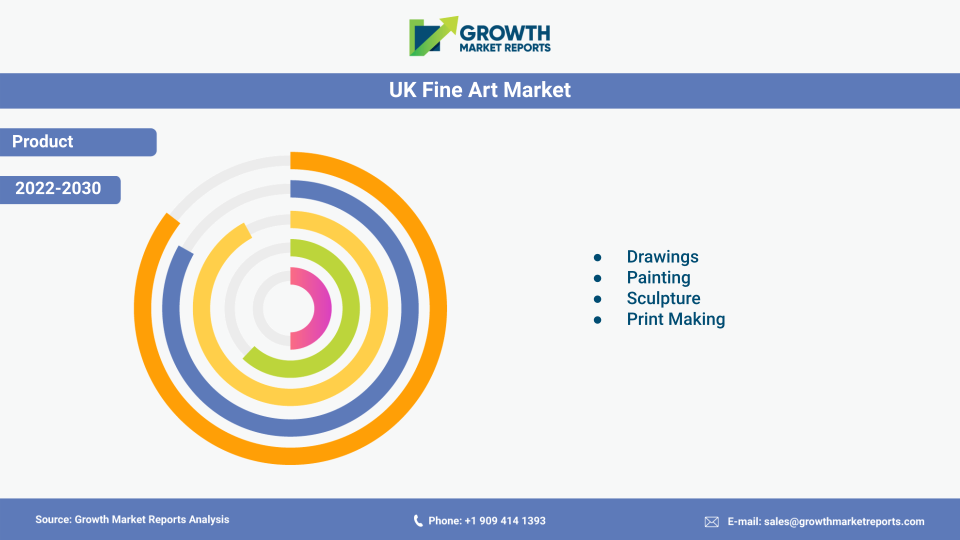
These are fine art galleries and stores that specialize in producing paintings, drawings, sculptures, print making and others. 
The players are adopting key strategies such as acquisition, collaborations, and geographical expansion where potential opportunities for the UK Fine Art Market.
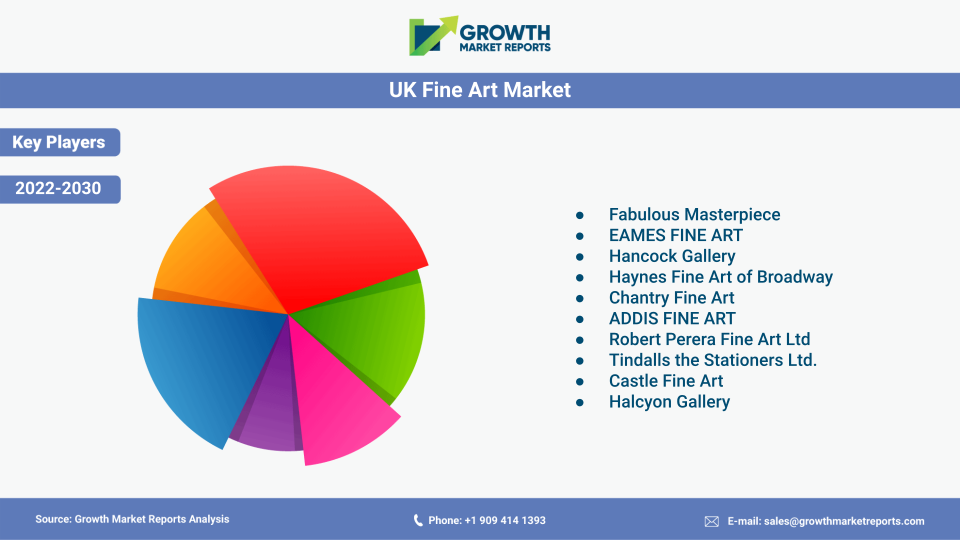

UK Fine Art Market Key Players

Frequently Asked Questions

Additional company profiles are provided on request For a discussion related to the above findings, click Speak to Analyst

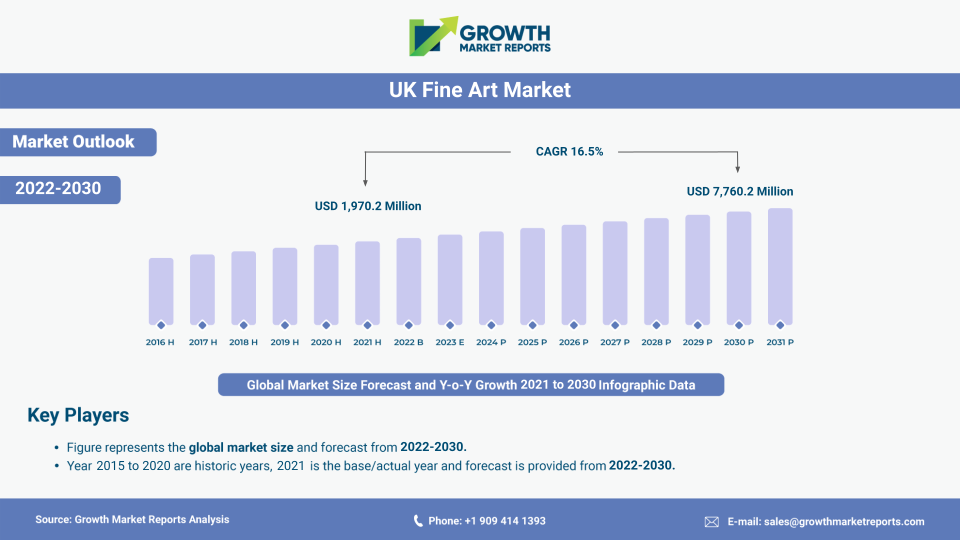
According to this UMR report, the UK Fine Art Market is expected to register a CAGR of 16.5% during the forecast period, 2022-2030, with an anticipated valuation of USD 7,760.2 million by the end of 2030.

Factors such as competitive strength and market positioning are key areas considered while selecting top companies to be profiled.

The UK Fine Art market is projected to expand at a rapid pace, owing to the increasing demand for fine art paintings, drawings that are aesthetically pleasing and a mode of investment.

The base year considered for the UK Fine Art Market report is 2021. The complete analysis period is 2015 to 2030, wherein, 2015 to 2020 are the historic years, and the forecast is provided from 2022 to 2030.

Factors such as Product Development, Consumer Behavior Analysis, Disposable Income and Others are analyzed in the final report.

Major players include Fabulous Masterpiece, EAMES FINE ART, Hancock Gallery, Haynes Fine Art of Broadway, Chantry Fine Art, ADDIS FINE ART, Robert Perera Fine Art Ltd, Tindalls the Stationers Ltd., Castle Fine Art, Halcyon Gallery.

Table Of Content

Chapter 1 Executive Summary
Chapter 2 Assumptions and Acronyms Used
Chapter 3 Research Methodology
Chapter 4 Fine Art Market Overview
   4.1 Introduction
      4.1.1 Market Taxonomy
      4.1.2 Market Definition
      4.1.3 Macro-Economic Factors Impacting the Market Growth
   4.2 Fine Art Market Dynamics
      4.2.1 Market Drivers
      4.2.2 Market Restraints
      4.2.3 Market Opportunity
   4.3 Fine Art Market - Supply Chain Analysis
      4.3.1 List of Key Suppliers
      4.3.2 List of Key Distributors
      4.3.3 List of Key Consumers
   4.4 Key Forces Shaping the Fine Art Market
      4.4.1 Bargaining Power of Suppliers
      4.4.2 Bargaining Power of Buyers
      4.4.3 Threat of Substitution
      4.4.4 Threat of New Entrants
      4.4.5 Competitive Rivalry
   4.5 Global Fine Art Market Size & Forecast, 2023-2032
      4.5.1 Fine Art Market Size and Y-o-Y Growth
      4.5.2 Fine Art Market Absolute $ Opportunity

Chapter 5 Global Fine Art Market Analysis and Forecast By Product Type
   5.1 Introduction
      5.1.1 Key Market Trends & Growth Opportunities By Product Type
      5.1.2 Basis Point Share (BPS) Analysis By Product Type
      5.1.3 Absolute $ Opportunity Assessment By Product Type
   5.2 Fine Art Market Size Forecast By Product Type
      5.2.1 Paintings
      5.2.2 Sculptures
      5.2.3 Drawings
      5.2.4 Prints
      5.2.5 Photographs
      5.2.6 Others
   5.3 Market Attractiveness Analysis By Product Type

Chapter 6 Global Fine Art Market Analysis and Forecast By Sales Channel
   6.1 Introduction
      6.1.1 Key Market Trends & Growth Opportunities By Sales Channel
      6.1.2 Basis Point Share (BPS) Analysis By Sales Channel
      6.1.3 Absolute $ Opportunity Assessment By Sales Channel
   6.2 Fine Art Market Size Forecast By Sales Channel
      6.2.1 Auction Houses
      6.2.2 Art Galleries
      6.2.3 Online Platforms
      6.2.4 Dealers
      6.2.5 Others
   6.3 Market Attractiveness Analysis By Sales Channel

Chapter 7 Global Fine Art Market Analysis and Forecast By End User
   7.1 Introduction
      7.1.1 Key Market Trends & Growth Opportunities By End User
      7.1.2 Basis Point Share (BPS) Analysis By End User
      7.1.3 Absolute $ Opportunity Assessment By End User
   7.2 Fine Art Market Size Forecast By End User
      7.2.1 Private Collectors
      7.2.2 Museums
      7.2.3 Corporates
      7.2.4 Others
   7.3 Market Attractiveness Analysis By End User

Chapter 8 Global Fine Art Market Analysis and Forecast by Region
   8.1 Introduction
      8.1.1 Key Market Trends & Growth Opportunities By Region
      8.1.2 Basis Point Share (BPS) Analysis By Region
      8.1.3 Absolute $ Opportunity Assessment By Region
   8.2 Fine Art Market Size Forecast By Region
      8.2.1 North America
      8.2.2 Europe
      8.2.3 Asia Pacific
      8.2.4 Latin America
      8.2.5 Middle East & Africa (MEA)
   8.3 Market Attractiveness Analysis By Region

Chapter 9 Coronavirus Disease (COVID-19) Impact 
   9.1 Introduction 
   9.2 Current & Future Impact Analysis 
   9.3 Economic Impact Analysis 
   9.4 Government Policies 
   9.5 Investment Scenario

Chapter 10 North America Fine Art Analysis and Forecast
   10.1 Introduction
   10.2 North America Fine Art Market Size Forecast by Country
      10.2.1 U.S.
      10.2.2 Canada
   10.3 Basis Point Share (BPS) Analysis by Country
   10.4 Absolute $ Opportunity Assessment by Country
   10.5 Market Attractiveness Analysis by Country
   10.6 North America Fine Art Market Size Forecast By Product Type
      10.6.1 Paintings
      10.6.2 Sculptures
      10.6.3 Drawings
      10.6.4 Prints
      10.6.5 Photographs
      10.6.6 Others
   10.7 Basis Point Share (BPS) Analysis By Product Type 
   10.8 Absolute $ Opportunity Assessment By Product Type 
   10.9 Market Attractiveness Analysis By Product Type
   10.10 North America Fine Art Market Size Forecast By Sales Channel
      10.10.1 Auction Houses
      10.10.2 Art Galleries
      10.10.3 Online Platforms
      10.10.4 Dealers
      10.10.5 Others
   10.11 Basis Point Share (BPS) Analysis By Sales Channel 
   10.12 Absolute $ Opportunity Assessment By Sales Channel 
   10.13 Market Attractiveness Analysis By Sales Channel
   10.14 North America Fine Art Market Size Forecast By End User
      10.14.1 Private Collectors
      10.14.2 Museums
      10.14.3 Corporates
      10.14.4 Others
   10.15 Basis Point Share (BPS) Analysis By End User 
   10.16 Absolute $ Opportunity Assessment By End User 
   10.17 Market Attractiveness Analysis By End User

Chapter 11 Europe Fine Art Analysis and Forecast
   11.1 Introduction
   11.2 Europe Fine Art Market Size Forecast by Country
      11.2.1 Germany
      11.2.2 France
      11.2.3 Italy
      11.2.4 U.K.
      11.2.5 Spain
      11.2.6 Russia
      11.2.7 Rest of Europe
   11.3 Basis Point Share (BPS) Analysis by Country
   11.4 Absolute $ Opportunity Assessment by Country
   11.5 Market Attractiveness Analysis by Country
   11.6 Europe Fine Art Market Size Forecast By Product Type
      11.6.1 Paintings
      11.6.2 Sculptures
      11.6.3 Drawings
      11.6.4 Prints
      11.6.5 Photographs
      11.6.6 Others
   11.7 Basis Point Share (BPS) Analysis By Product Type 
   11.8 Absolute $ Opportunity Assessment By Product Type 
   11.9 Market Attractiveness Analysis By Product Type
   11.10 Europe Fine Art Market Size Forecast By Sales Channel
      11.10.1 Auction Houses
      11.10.2 Art Galleries
      11.10.3 Online Platforms
      11.10.4 Dealers
      11.10.5 Others
   11.11 Basis Point Share (BPS) Analysis By Sales Channel 
   11.12 Absolute $ Opportunity Assessment By Sales Channel 
   11.13 Market Attractiveness Analysis By Sales Channel
   11.14 Europe Fine Art Market Size Forecast By End User
      11.14.1 Private Collectors
      11.14.2 Museums
      11.14.3 Corporates
      11.14.4 Others
   11.15 Basis Point Share (BPS) Analysis By End User 
   11.16 Absolute $ Opportunity Assessment By End User 
   11.17 Market Attractiveness Analysis By End User

Chapter 12 Asia Pacific Fine Art Analysis and Forecast
   12.1 Introduction
   12.2 Asia Pacific Fine Art Market Size Forecast by Country
      12.2.1 China
      12.2.2 Japan
      12.2.3 South Korea
      12.2.4 India
      12.2.5 Australia
      12.2.6 South East Asia (SEA)
      12.2.7 Rest of Asia Pacific (APAC)
   12.3 Basis Point Share (BPS) Analysis by Country
   12.4 Absolute $ Opportunity Assessment by Country
   12.5 Market Attractiveness Analysis by Country
   12.6 Asia Pacific Fine Art Market Size Forecast By Product Type
      12.6.1 Paintings
      12.6.2 Sculptures
      12.6.3 Drawings
      12.6.4 Prints
      12.6.5 Photographs
      12.6.6 Others
   12.7 Basis Point Share (BPS) Analysis By Product Type 
   12.8 Absolute $ Opportunity Assessment By Product Type 
   12.9 Market Attractiveness Analysis By Product Type
   12.10 Asia Pacific Fine Art Market Size Forecast By Sales Channel
      12.10.1 Auction Houses
      12.10.2 Art Galleries
      12.10.3 Online Platforms
      12.10.4 Dealers
      12.10.5 Others
   12.11 Basis Point Share (BPS) Analysis By Sales Channel 
   12.12 Absolute $ Opportunity Assessment By Sales Channel 
   12.13 Market Attractiveness Analysis By Sales Channel
   12.14 Asia Pacific Fine Art Market Size Forecast By End User
      12.14.1 Private Collectors
      12.14.2 Museums
      12.14.3 Corporates
      12.14.4 Others
   12.15 Basis Point Share (BPS) Analysis By End User 
   12.16 Absolute $ Opportunity Assessment By End User 
   12.17 Market Attractiveness Analysis By End User

Chapter 13 Latin America Fine Art Analysis and Forecast
   13.1 Introduction
   13.2 Latin America Fine Art Market Size Forecast by Country
      13.2.1 Brazil
      13.2.2 Mexico
      13.2.3 Rest of Latin America (LATAM)
   13.3 Basis Point Share (BPS) Analysis by Country
   13.4 Absolute $ Opportunity Assessment by Country
   13.5 Market Attractiveness Analysis by Country
   13.6 Latin America Fine Art Market Size Forecast By Product Type
      13.6.1 Paintings
      13.6.2 Sculptures
      13.6.3 Drawings
      13.6.4 Prints
      13.6.5 Photographs
      13.6.6 Others
   13.7 Basis Point Share (BPS) Analysis By Product Type 
   13.8 Absolute $ Opportunity Assessment By Product Type 
   13.9 Market Attractiveness Analysis By Product Type
   13.10 Latin America Fine Art Market Size Forecast By Sales Channel
      13.10.1 Auction Houses
      13.10.2 Art Galleries
      13.10.3 Online Platforms
      13.10.4 Dealers
      13.10.5 Others
   13.11 Basis Point Share (BPS) Analysis By Sales Channel 
   13.12 Absolute $ Opportunity Assessment By Sales Channel 
   13.13 Market Attractiveness Analysis By Sales Channel
   13.14 Latin America Fine Art Market Size Forecast By End User
      13.14.1 Private Collectors
      13.14.2 Museums
      13.14.3 Corporates
      13.14.4 Others
   13.15 Basis Point Share (BPS) Analysis By End User 
   13.16 Absolute $ Opportunity Assessment By End User 
   13.17 Market Attractiveness Analysis By End User

Chapter 14 Middle East & Africa (MEA) Fine Art Analysis and Forecast
   14.1 Introduction
   14.2 Middle East & Africa (MEA) Fine Art Market Size Forecast by Country
      14.2.1 Saudi Arabia
      14.2.2 South Africa
      14.2.3 UAE
      14.2.4 Rest of Middle East & Africa (MEA)
   14.3 Basis Point Share (BPS) Analysis by Country
   14.4 Absolute $ Opportunity Assessment by Country
   14.5 Market Attractiveness Analysis by Country
   14.6 Middle East & Africa (MEA) Fine Art Market Size Forecast By Product Type
      14.6.1 Paintings
      14.6.2 Sculptures
      14.6.3 Drawings
      14.6.4 Prints
      14.6.5 Photographs
      14.6.6 Others
   14.7 Basis Point Share (BPS) Analysis By Product Type 
   14.8 Absolute $ Opportunity Assessment By Product Type 
   14.9 Market Attractiveness Analysis By Product Type
   14.10 Middle East & Africa (MEA) Fine Art Market Size Forecast By Sales Channel
      14.10.1 Auction Houses
      14.10.2 Art Galleries
      14.10.3 Online Platforms
      14.10.4 Dealers
      14.10.5 Others
   14.11 Basis Point Share (BPS) Analysis By Sales Channel 
   14.12 Absolute $ Opportunity Assessment By Sales Channel 
   14.13 Market Attractiveness Analysis By Sales Channel
   14.14 Middle East & Africa (MEA) Fine Art Market Size Forecast By End User
      14.14.1 Private Collectors
      14.14.2 Museums
      14.14.3 Corporates
      14.14.4 Others
   14.15 Basis Point Share (BPS) Analysis By End User 
   14.16 Absolute $ Opportunity Assessment By End User 
   14.17 Market Attractiveness Analysis By End User

Chapter 15 Competition Landscape 
   15.1 Fine Art Market: Competitive Dashboard
   15.2 Global Fine Art Market: Market Share Analysis, 2023
   15.3 Company Profiles (Details – Overview, Financials, Developments, Strategy) 
      15.3.1 Sotheby's
Christie's
Phillips
Heritage Auctions
Bonhams
Poly Auction
China Guardian Auctions
Artcurial
Dorotheum
Rago/Wright
Bukowskis
Ketterer Kunst
Van Ham Kunstauktionen
Hindman Auctions
Freeman's
MutualArt
Artnet
Paddle8
Barnebys
Heffel Fine Art Auction House

Methodology

Our Clients

Honda Motor Co. Ltd.
Deloitte
FedEx Logistics
sinopec
General Mills
The John Holland Group
Siemens Healthcare
Dassault Aviation