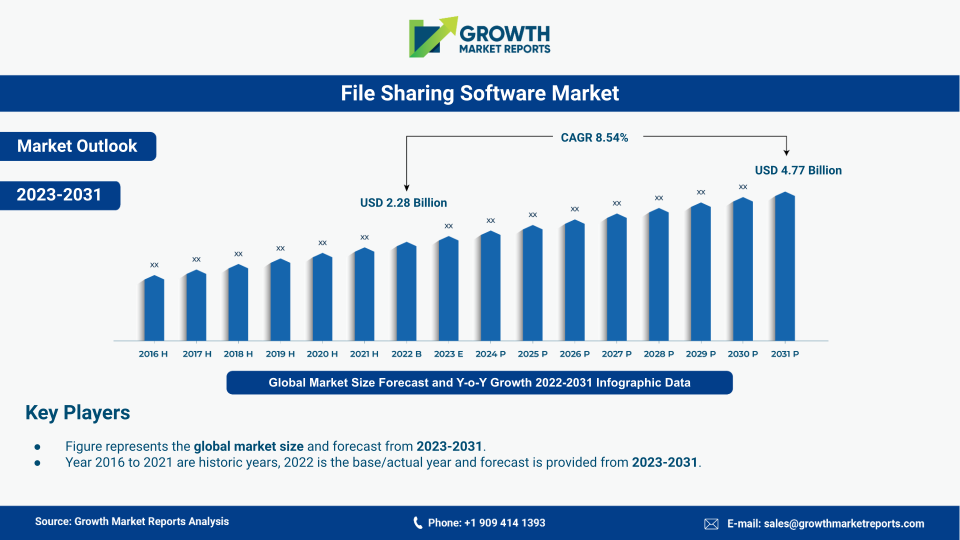
The global file sharing software market size was valued at around USD 2.28 Billion in 2022 and is estimated to reach USD 4.77 Billion by 2031, expanding at a CAGR of 8.54% during the forecast period, 2023-2031. The growth of the market is attributed to the extensive usage of file sharing software platforms across multiple end-user industries.
File transfer sharing software is used for sharing information and data on a network with various levels of access privilege. It carries out a task such as sending, receiving, and storing files, including documents, video, audio, and images among users via the Internet or the local network. Sharing information and being transparent is important for any business enterprise, as it increases the efficiency and productivity of these organizations.
File transfer software provides safe and secure file data transferring solutions among trading partners and file servers from the sources to the destination. In today’s content-driven era, information becomes a vital asset for any organization, and communication and exchange of data from B2B or the securely stored file have become important.
Every file-sharing software such as client-server, peer-to-peer, cloud-based, and system-native offers collaboration tools and document management. The file sharing technology provides the ability to share a wide range of any type and size of file formats across various devices. In fact, file sharing offers various advantages to people working from different geographic locations in varied time zones. Everyone in sync can get the most out of their collaborative work safely, regardless of their device or physical location.
It usually takes a single click to send files to a number of users of a group with minimal error, hence it saves time. File sharing software apps, such as Dropbox, Microsoft, Google, Apple, Media fire, and Tresorit, all offer online cloud storage options that include file sharing, collaboration, and multiple synchronization features.
As compared to the traditional method of file sharing via email, parcel, or speed courier, file transfer sharing software saves important business employers the effort and time spent on delivering and sharing information. For instance, with cloud-based technology, employees have the ability to access information instantly from any location with internet access.
Additionally, file transfer sharing software facilitates the connection of international clients and sends them the required information without the worries of having different distances. File sharing platforms are also instrumental in creating new forms of job arrangements, such as work-from-home and third-party contracting workplaces, providing the opportunity for remote work.
However, file sharing software does not meet the security standards in highly regulated environments and a lack of high security leads to the leak of crucial data. With rapid globalization, increasing concerns over data security and rising threat of cyber-attacks leads to the surging adoption of these file-sharing solutions across diverse applications.
File transfer sharing software has extensive usage in multiple industries, including healthcare, BFSI, media and entertainment, IT & telecommunication, education & research, and others. Advances in digital technology further promote the increased adoption of file transfer software across the globe.
COVID-19 Impact File Sharing Software Market
The recent outbreak of COVID-19 is affecting many people and industries. To avoid the risk of infection, governments around the world imposed several restrictions in each country, leading to the slowdown of many economies across the world. However, the pandemic had a positive impact on the global file sharing software market. Several lockdowns and curfews confined people to their homes on account of rapid growth of confirmed positive cases across the world.
As a result of the pandemic situation, almost all private enterprises and public organizations adopted new job arrangements such as work-from-home policies for the safe continuity of business. Thus, there was a rapid surge of adoption of file sharing solutions via the internet or local network to meet the requirements of transferring confidential data or files among the employees. Therefore, extensive usage of file sharing software during the pandemic is influencing the growth of the file sharing market at a rapid pace.
File Sharing Software Market Dynamics
The file sharing software market report presents a complete overview of market dynamics by focusing on the current market trends, existing drivers, growth opportunities, emerging challenges, market research, and future market trends that can shape the outcome or overall performance of the market during the forecast period, 2023 to 2031.
Major Trends
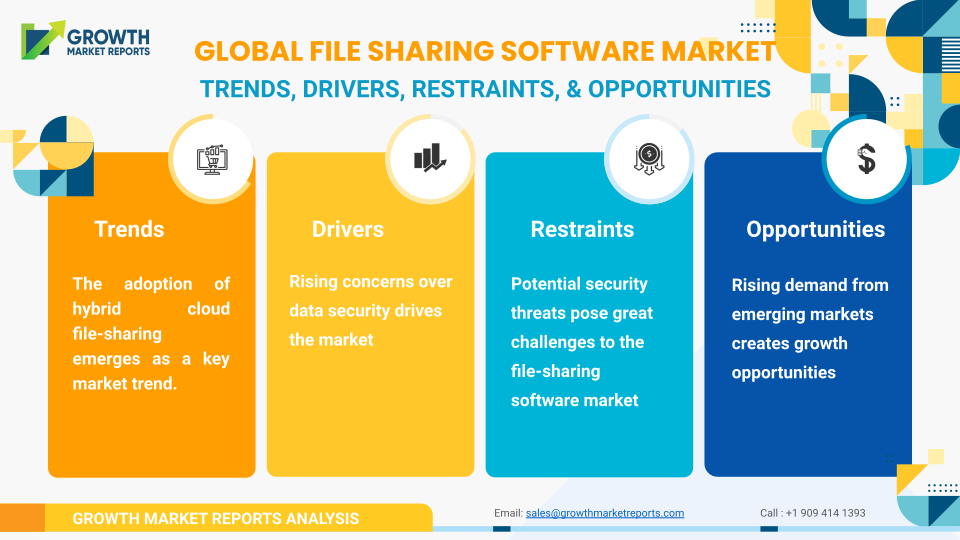
The adoption of hybrid cloud file-sharing emerges as a key market trend.
Many enterprises are rapidly switching to hybrid cloud file-sharing models to become efficient and deliver better customer experiences. The adoption of hybrid cloud file-sharing emerges as a key market trend, as it is highly preferred in many companies. With the file-sharing technology, companies can back up data by duplicating critical data to the cloud in case of a disaster or other computing failure, and it also allows for continuous and uninterrupted business operations.
Key Drivers
Rising concerns over data security drives the market
Sharing of information among organizations and clients becomes a vital process for any enterprise. Rapid globalization increases the demand for file-sharing platforms in response to the expansion in the volume of confidential data. File sharing among a number of consumers across the world has gained certain risk regarding data security and is prone to major threats such as cyber-attacks and hacking.
As a result, the requirement for safe and secure data transferring solutions has increased among the consumers, leading to high adoption of file-sharing software platforms, as they eliminate the risk of breaches with modular designs, in-built interfaces, and advanced capabilities in folder management. They provide data security with secure protocol support and flexible deployment options.
The reliability of such features increases productivity in real time, which in turn, increases the sales of such file-sharing software platforms for diverse applications. These aforementioned factors are contributing to the growth of the market rapidly across the globe.
Integration of innovative technologically advanced applications boosts the file-sharing market
The global file-sharing software market is fueled by technological advancements in the market. The integration of innovative technologically advanced applications such as IOS applications, cloud computing technology for automatically encrypting data prior to transfer, managed file transfer as-a-service solution, and android enhances performance efficiency, sustainability, accuracy, and safety during operations.
These file-sharing solutions are cost-effective, resource-saving, and easy-to-use. Additionally, the growth in data analytics, big data, and integration of IoT devices and artificial intelligence are contributing to the development of the global file-sharing software market.
Extensive usage in IT and telecommunication services aids the growth of the file sharing software market
File sharing software finds extensive usage in the IT and telecommunication industries. IT and the telecom sector involves transmission of data in words, voice, audio, or video across the globe, sharing and transferring information, and collaboration among various enterprises. With file-sharing solutions, employees are able to share and distribute contents and project documents to other devices seamlessly.
Extensive usage of file-sharing software in this sector is a key factor that aids the growth of the market. Additionally, the surging adoption of file-sharing solutions in government institutions further contributes to the market growth.
Existing Challenges
Potential security threats pose great challenges to the file-sharing software market
Vulnerabilities of network systems and potential cyber threats such as hacking, malware, and ransomware in the file-sharing software market disrupt and damage the operation of the computer network. These factors are expected to hamper the market expansion. Unauthorized access to file-sharing software leads to theft of valuable data and leaking of information, which leads to severe consequences in the market. This factor is anticipated to restrain the market growth.
Switching to alternative solutions limits the market growth
Availability of substitutes to file-sharing software, such as file sync and share services, and the rapid switch to these alternative solutions by many companies hamper the sales of the file-sharing software market.
Emerging Opportunities
Rising demand from emerging markets creates growth opportunities
Rising demand for secure file-sharing software platforms from emerging markets creates several growth opportunities for the market players. An increasing number of enterprises in developing countries is raising the demand for file-sharing solutions. Cloud-based file-sharing, for instance, has gained significant popularity across diverse end-users, as it helps in developing network infrastructures in organizations.
Increasing investments provide growth prospects
Government initiatives and investments in the advancement of file-sharing software companies provide growth prospects for the key players in the file-sharing software market.
Scope of the File Sharing Software Market Report
The report on the global file-sharing software market includes an assessment of the market analysis, trends, segments, and regional markets. Overview and dynamics have also been included in the report.
|
Attributes
|
Details
|
|
Report Title
|
File Sharing Software Market - Global Industry Analysis, Growth, Share, Size, Trends, and Forecast
|
|
Base Year
|
2022
|
|
Historic Data
|
2016–2021
|
|
Forecast Period
|
2023–2031
|
|
Segmentation
|
Types (Client-Server, Peer to Peer, Cloud-based, system-native), Solutions (Ad-Hoc, People-Centric, and Application-Centric), Services (Managed Services, Professional Services), End-users (Large Enterprises, SMEs, Governments, and individuals), Verticals (Healthcare, BFSI, Media and Entertainment, IT & Telecommunication, Education & Research, and Others)
|
|
Regional Scope
|
Asia Pacific, North America, Latin America, Europe, and Middle East & Africa
|
|
Report Coverage
|
Company Share, Market Analysis and Size, Competitive Landscape, Growth Factors, and Trends, and Revenue Forecast
|
|
Key Players Covered in the Report
|
Google; CA Technologies; Hightail, Inc; Software AG; Microsoft Corporation; Oracle Corporation; IBM Corporation; Axway; Intralinks Holdings, Inc; Wipro Limited; Signiant; SecureDocs, Inc; Swift File Transfer; OpenText Corporation; Tibco Software; and others.
|
File Sharing Software Market Insights
Cloud-based file sharing software segment remained dominant in the market
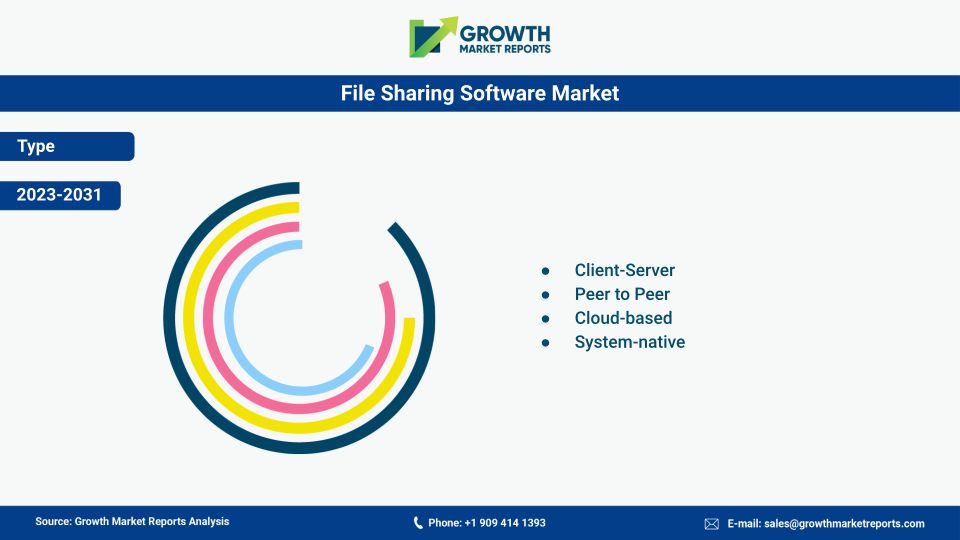
Based on types, the global file-sharing software market is segmented into client-server, peer-to-peer, cloud-based, and system-native. The cloud-based file sharing software segment remained dominant in the market in 2021 and is projected to expand at a high CAGR during the forecast period, 2022-2030. Cloud-based software offers convenience for operations, providing various advantages to the employees. This secure file-sharing solution allows for collaboration among teams.
It helps to create folders, and send and receive the file formats at any point in time. Dropbox, for instance, is the, an ideal business cloud-based file-sharing application with above 150,000 active users. This file-sharing tool finds extensive applications in both small and medium enterprises, owing to its properties such as powerful sharing, dedicated live support, generous storage space, enhanced security, collaboration, and easy-to-use features among the users, which facilitates the performance of the end-user companies.
Ad-hoc solution segment registers robust growth
On the basis of solutions, the global file-sharing software market is categorized as ad-hoc, people-centric, and application-centric. The ad-hoc solution segment registers robust growth and is anticipated to hold a major market share in the coming years. This is attributed to the fact that ad-hoc solution facilitates a secure person-to-person file transfer.
Professional services segment accounted for a major market share
Based on services, the global file sharing software is bifurcated into managed services and professional services. The professional services segment accounted for a major market share. Large-scale enterprises and IT professionals employ professional services for one-off projects or short-term changes in a company. Professional services provide design, planning, training, installation, and ongoing support, including troubleshooting and maintenance, after completing the work.
SMEs segment to hold a large market share in terms of revenue
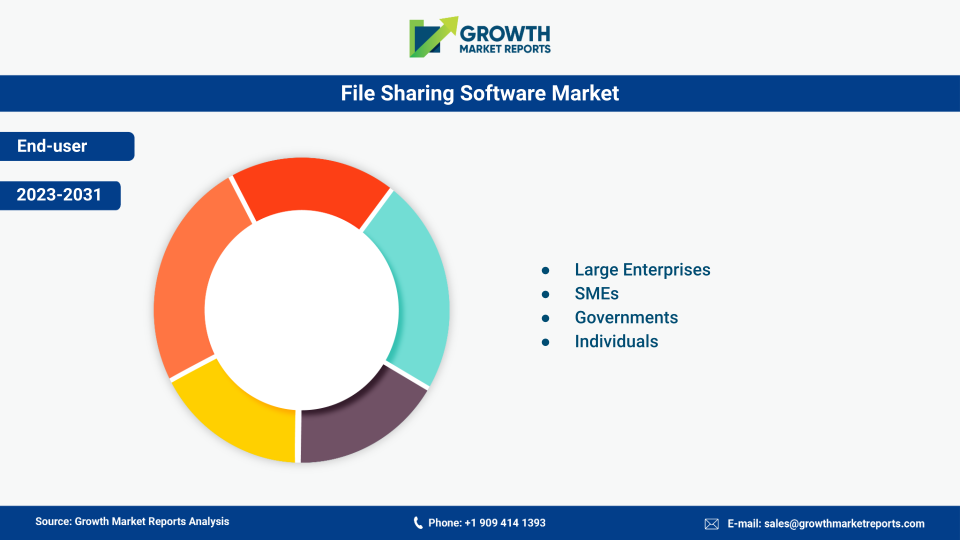
On the basis of end-users, the global file-sharing market is fragmented as large enterprises, SMEs, governments, and individuals. During the forecast period, the SMEs segment is expected to account for high revenue, owing to increasing requirements for security solutions to enhance productivity and efficiency among small and medium business enterprises. Growing number of SMEs across the globe is further influencing the growth of the file sharing software market.
BFSI segment registers robust growth
On the basis of verticals, the global file-sharing software market is segmented into healthcare, BFSI, media and entertainment, IT & telecommunications, education & research, and others. File-sharing software solutions are majorly applied in the banking sector, owing to the growing and rapid digitalization of the banking and finance sector. The BFSI segment registered robust growth with 26% of the total market value in 2021 and remained a key end user in the global file-sharing software services.
Banking involves the transfer of confidential data and documents on a daily basis. With file sharing tools, employees and consumers can securely share, download, and upload files and facilitate collaboration across other departments while meeting all standard regulations and security of organizations. Additionally, online banking, net banking, digital payments, and mobile wallets create several growth opportunities for file-sharing services in the BFSI sector.
Market in North America to grow rapidly
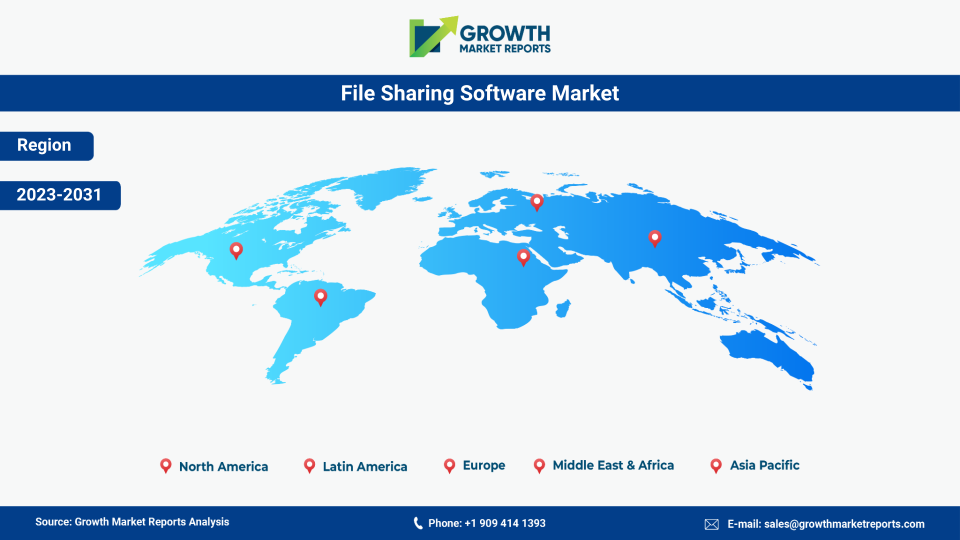
In terms of regions, the global file-sharing software market is classified as Asia Pacific, North America, Latin America, Europe, and Middle East & Africa. The market in North America is growing rapidly, owing to the presence of a large number of file-sharing software-providing companies across the region. North America has many IT and telecommunications companies and banking, financial services, and insurance (BFSI) companies, which aids the market growth in the region.
The massive presence of large-scale enterprises in the region is a key factor driving the market. Growing digital technological advancements and increasing requirements for highly secured file-sharing tools further contributes to the growth of the market across the region. Additionally, remote working policies by various enterprises are increasing the adoption of file sharing solutions at a rapid pace.
The market in Asia Pacific is considered to be the second-largest contributor to the growth of the global file-sharing software market, due to high adoption of file-sharing software among the emerging economies in the region.
Segments
The global file sharing software market has been segmented on the basis of
Types
- Client-Server
- Peer to Peer
- Cloud-based
- System-native
Solutions
- Ad-Hoc
- People-Centric
- Application-Centric
Services
- Managed Services
- Professional Services
End-users
- Large Enterprises
- SMEs
- Governments
- Individuals
Verticals
- Healthcare
- BFSI
- Media and Entertainment
- IT & Telecommunication
- Education & Research
Regions
- Asia Pacific
- North America
- Latin America
- Europe
- Middle East & Africa
Key Players
- Google
- CA Technologies,
- Hightail, Inc
- Software AG,
- Microsoft Corporation
- Oracle Corporation
- IBM Corporation
- Axway
- Intralinks Holdings, Inc
- Wipro Limited
- Signiant
- SecureDocs, Inc
- Swift File Transfer
- OpenText Corporation
- Tibco Software
Competitive Landscape
Key players competing in the global file-sharing software market are Google; CA Technologies; Hightail, Inc; Software AG; Microsoft Corporation; Oracle Corporation; IBM Corporation; Axway; Intralinks Holdings, Inc; Wipro Limited; Signiant; SecureDocs, Inc; Swift File Transfer; OpenText Corporation; Tibco Software; and others.
Some of these players have adopted a series of business development strategies including mergers and acquisitions, partnerships and collaborations, product launches, pricing analysis, and expansion of production capacity to expand their consumer base and enhance their market share.
Latest Developments
-
On June 2022, Oracle Corporation entered into a partnership with Microsoft Corporation and announced the availability of Oracle Database Service for Microsoft Azure.
-
On August 2022, OpenText Corporation introduced OpenText™ Magellan™ Risk Guard for the discovery of files with sensitive data related to specific data subjects.











 Request For Customization
 Enquiry Before Buying
 Speak With Analyst