Fiber Reinforced Thermoplastic Pipes (FRTP) Market Research Report 2033

Fiber Reinforced Thermoplastic Pipes (FRTP) Market Research Report 2033

Segments - by Product Type (Glass Fiber Reinforced, Carbon Fiber Reinforced, Aramid Fiber Reinforced, Others), by Application (Oil & Gas, Water & Wastewater, Chemical, Mining & Industrial, Others), by Diameter (Small, Medium, Large), by Pressure Rating (Low, Medium, High)

https://growthmarketreports.com/Raksha
Author : Raksha Sharma
https://growthmarketreports.com/Vaibhav
Fact-checked by : V. Chandola
https://growthmarketreports.com/Shruti
Editor : Shruti Bhat

Upcoming | Report ID :MC-1434 | 4.9 Rating | 20 Reviews | 286 Pages | Format : Docx PDF

Report Description


Fiber Reinforced Thermoplastic Pipes (FRTP) Market Outlook

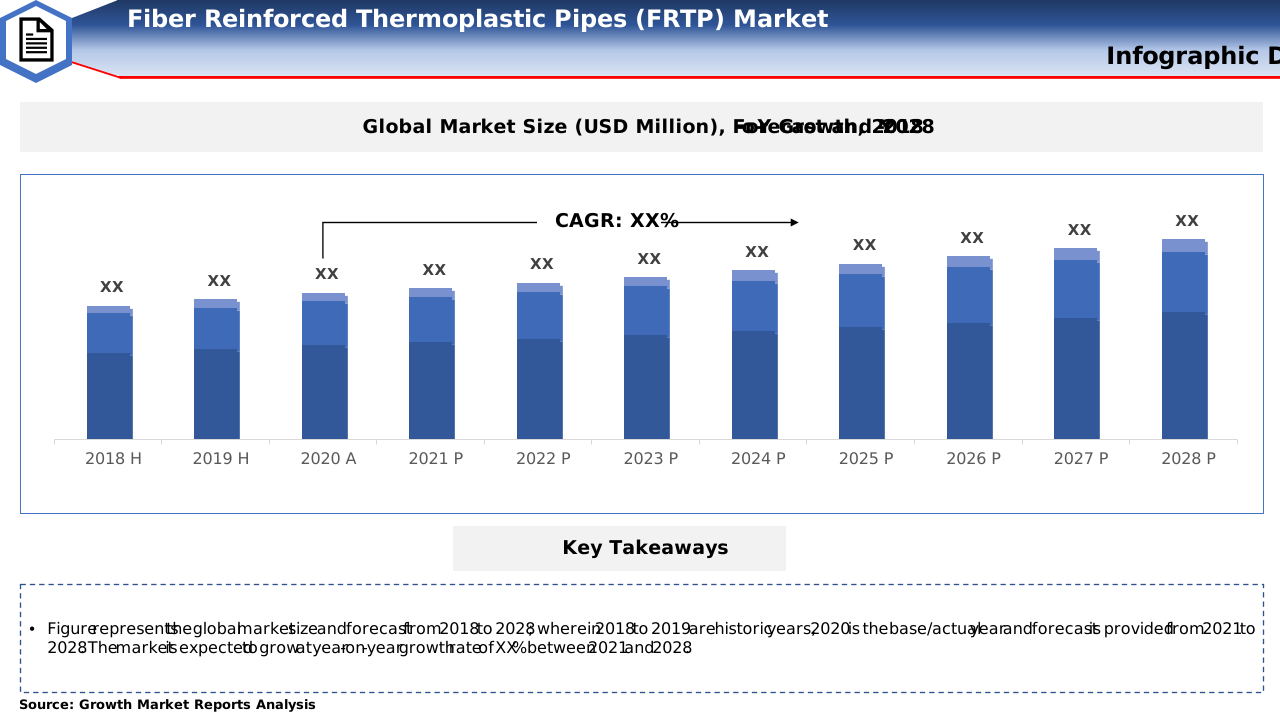
According to our latest research, the global Fiber Reinforced Thermoplastic Pipes (FRTP) market size reached USD 2.15 billion in 2024, demonstrating robust expansion across multiple industrial sectors. The market is expected to grow at a compelling CAGR of 6.8% from 2025 to 2033. By the end of 2033, the global FRTP market is forecasted to reach USD 3.94 billion, driven by escalating demand for lightweight, corrosion-resistant, and high-performance piping solutions, particularly in the oil & gas, water & wastewater, and chemical industries. As per the latest research, the marketÂ’s growth is propelled by the increasing adoption of advanced materials to enhance operational efficiency and sustainability in demanding applications.

One of the primary growth factors for the Fiber Reinforced Thermoplastic Pipes (FRTP) market is the rising demand for corrosion-resistant and lightweight piping systems in the oil & gas sector. Traditional steel pipes are susceptible to corrosion, resulting in frequent maintenance and higher operational costs. FRTP pipes, composed of high-strength fibers such as glass, carbon, or aramid embedded in thermoplastic matrices, offer superior resistance to harsh chemicals and extreme environmental conditions. This has led oil & gas operators to increasingly replace conventional piping systems with FRTP alternatives, especially in offshore and subsea environments where durability and weight reduction are critical. The ability of FRTP pipes to withstand high pressures and temperatures without compromising structural integrity further enhances their attractiveness, thereby fueling market growth.

Another significant driver is the growing emphasis on sustainability and environmental regulations across various industries. The water & wastewater and chemical sectors are witnessing a shift towards eco-friendly and energy-efficient infrastructure solutions. FRTP pipes, being recyclable and exhibiting a lower carbon footprint compared to traditional materials, align well with these sustainability goals. Their ease of installation, reduced need for heavy lifting equipment, and minimal maintenance requirements contribute to lower lifecycle costs, making them an attractive choice for municipal and industrial projects. As governments and regulatory bodies worldwide tighten environmental standards, the adoption of FRTP pipes is expected to accelerate, reinforcing the marketÂ’s upward trajectory.

Technological advancements in composite material science and manufacturing processes have also played a pivotal role in the expansion of the FRTP market. Innovations such as automated filament winding, advanced resin systems, and improved fiber-matrix bonding techniques have resulted in pipes with enhanced mechanical properties and longer service life. These technological strides have not only broadened the application spectrum of FRTP pipes but have also lowered production costs, making them more accessible to a wider range of end users. The integration of smart monitoring systems and sensors into FRTP pipelines is further enhancing their reliability and performance, particularly in critical infrastructure and remote locations.

Regionally, the Asia Pacific market is emerging as a powerhouse for FRTP adoption, driven by rapid industrialization, urbanization, and significant investments in oil & gas, water infrastructure, and chemical processing facilities. Countries such as China, India, and Southeast Asian nations are witnessing a surge in demand for modern piping solutions to support large-scale infrastructure development. North America and Europe, on the other hand, are characterized by early technological adoption and stringent regulatory frameworks, fostering steady market growth. Meanwhile, the Middle East & Africa region is leveraging FRTP pipes for oil & gas transportation and water desalination projects, capitalizing on their superior performance in harsh environments. Latin America is also experiencing moderate growth, primarily in mining and industrial applications, as the region modernizes its process industries.

In recent years, the development and deployment of Spoolable Composite Pipes have gained significant traction within the industry. These pipes offer a flexible, lightweight, and corrosion-resistant alternative to traditional steel pipes, making them particularly attractive for applications in challenging environments. The ability to spool these pipes on reels allows for rapid deployment and reduced installation times, which is a critical advantage in remote or offshore locations where logistics can be complex and costly. Spoolable Composite Pipes are increasingly being utilized in the oil & gas sector for flowlines, risers, and injection lines, where their durability and ease of handling provide substantial operational benefits. As the industry continues to seek cost-effective and efficient solutions, the adoption of Spoolable Composite Pipes is expected to rise, complementing the growth of the broader Fiber Reinforced Thermoplastic Pipes market.

Global Fiber Reinforced Thermoplastic Pipes (FRTP) Industry Outlook

Product Type Analysis

The Fiber Reinforced Thermoplastic Pipes (FRTP) market is segmented by product type into Glass Fiber Reinforced, Carbon Fiber Reinforced, Aramid Fiber Reinforced, and Others. Glass fiber reinforced thermoplastic pipes dominate the segment, accounting for a significant share due to their cost-effectiveness, excellent mechanical strength, and corrosion resistance. These pipes are widely used in water & wastewater, chemical, and oil & gas applications where moderate strength and high durability are required. The lightweight nature of glass fiber composites makes installation easier and reduces transportation costs, further enhancing their appeal in large-scale infrastructure projects. Ongoing research and development efforts are focused on enhancing the chemical resistance and temperature tolerance of glass fiber reinforced pipes, making them suitable for an even broader range of applications.

Carbon fiber reinforced thermoplastic pipes represent the fastest-growing sub-segment, driven by their exceptional strength-to-weight ratio, stiffness, and fatigue resistance. Although carbon fiber pipes command a premium price, their ability to withstand high internal pressures and aggressive environments makes them indispensable in demanding oil & gas and offshore applications. These pipes are increasingly being adopted for subsea flowlines, risers, and high-pressure transmission systems where weight reduction and mechanical performance are critical. The aerospace and automotive industries are also exploring carbon fiber FRTP pipes for specialized fluid transfer applications, further expanding the market potential for this product type.

Aramid fiber reinforced thermoplastic pipes are gaining traction due to their outstanding impact resistance, flexibility, and resistance to abrasion. Aramid fibers, such as Kevlar, are known for their high tensile strength and low weight, making them suitable for dynamic applications involving frequent pressure fluctuations and mechanical stresses. These pipes are particularly favored in mining, industrial, and high-pressure water injection systems, where durability and operational safety are paramount. The unique properties of aramid fiber composites are also being leveraged in emerging applications such as hydrogen transport and renewable energy infrastructure, contributing to the segmentÂ’s growth.

The “Others” category encompasses hybrid and specialty fiber reinforced thermoplastic pipes, including those incorporating basalt fibers, natural fibers, and novel composite formulations. These products are tailored for niche applications where specific performance attributes, such as fire resistance or enhanced thermal stability, are required. The ongoing development of hybrid composites aims to combine the best characteristics of different fibers, offering customized solutions for unique industrial challenges. As material science continues to advance, the diversity and performance of FRTP product types are expected to expand, catering to the evolving needs of end users across various sectors.

Report Scope

Attributes Details
Report Title Fiber Reinforced Thermoplastic Pipes (FRTP) Market Research Report 2033
By Product Type Glass Fiber Reinforced, Carbon Fiber Reinforced, Aramid Fiber Reinforced, Others
By Application Oil & Gas, Water & Wastewater, Chemical, Mining & Industrial, Others
By Diameter Small, Medium, Large
By Pressure Rating Low, Medium, High
Regions Covered North America, Europe, APAC, Latin America, MEA
Base Year 2024
Historic Data 2018-2023
Forecast Period 2025-2033
Number of Pages 286
Number of Tables & Figures 282
Customization Available Yes, the report can be customized as per your need.

Application Analysis

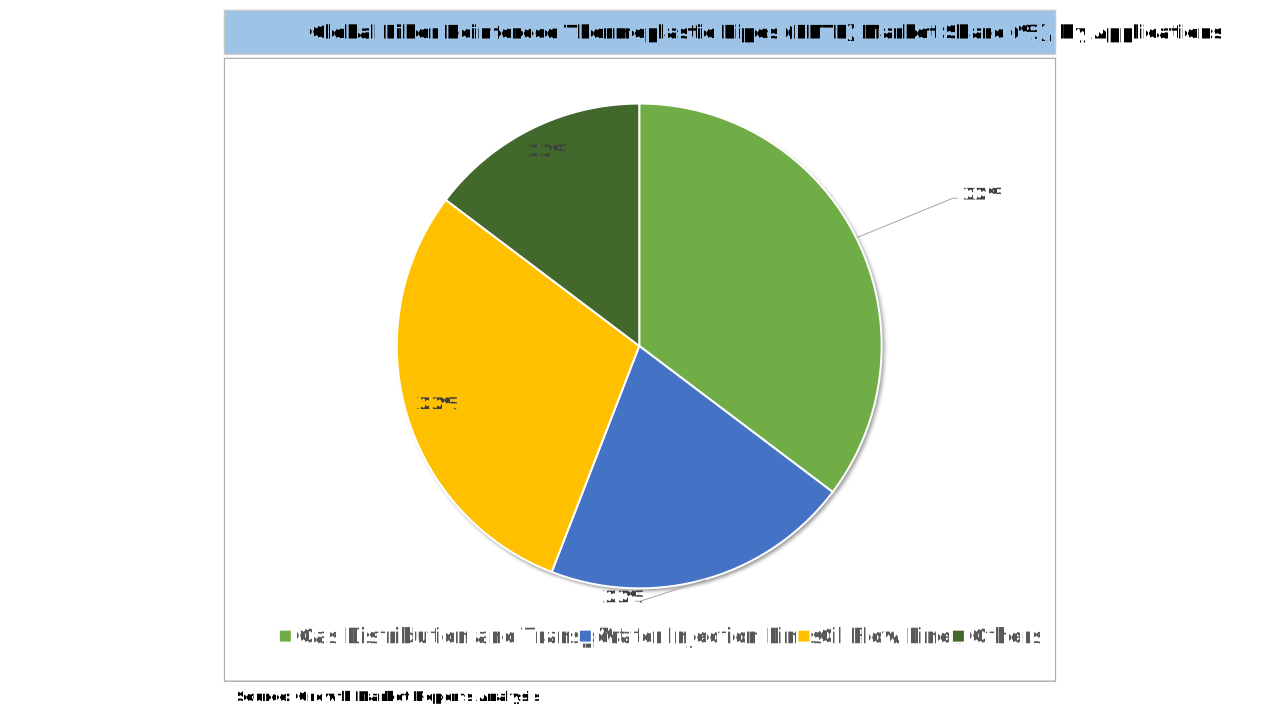
The application segment of the Fiber Reinforced Thermoplastic Pipes (FRTP) market is led by the oil & gas industry, which remains the largest consumer of FRTP solutions globally. The sectorÂ’s demand is driven by the need for reliable, lightweight, and corrosion-resistant pipes for both upstream and downstream operations. In offshore environments, where weight reduction is crucial for floating structures and platforms, FRTP pipes offer substantial advantages over conventional steel alternatives. The ability to withstand high pressures, aggressive chemicals, and extreme temperatures makes these pipes ideal for subsea flowlines, risers, and injection lines, ensuring long-term operational reliability and safety. As oil & gas exploration moves into deeper and more challenging environments, the adoption of FRTP pipes is expected to intensify further.

The water & wastewater segment is another significant application area for FRTP pipes, driven by the global push to upgrade and expand municipal water infrastructure. Aging pipelines, increasing urban populations, and stricter water quality regulations are compelling utilities to invest in modern, low-maintenance piping solutions. FRTP pipes, with their excellent resistance to corrosion, scaling, and biological fouling, are well-suited for potable water distribution, sewage systems, and desalination plants. Their ease of installation and minimal maintenance requirements translate into lower total cost of ownership, making them an attractive choice for public and private sector projects alike.

The chemical industry is increasingly adopting FRTP pipes for the safe transport of aggressive acids, bases, and solvents. The inert nature of thermoplastic matrices and the high mechanical strength provided by reinforcing fibers ensure leak-free, long-lasting performance in corrosive environments. Chemical processing plants, refineries, and storage facilities benefit from the reduced risk of pipe failure, lower maintenance costs, and enhanced safety associated with FRTP systems. As the chemical industry continues to expand, particularly in emerging markets, the demand for advanced piping solutions is expected to rise in parallel.

The mining & industrial segment leverages FRTP pipes for slurry transport, tailings management, and process water systems. The high abrasion resistance and flexibility of these pipes make them ideal for handling abrasive materials and navigating complex site layouts. Industrial applications also include compressed air, cooling water, and fire protection systems, where reliability and longevity are critical. The “Others” segment captures emerging and specialized applications, such as hydrogen transport, renewable energy infrastructure, and marine installations, reflecting the growing versatility of FRTP pipes across diverse industries.

Diameter Analysis

The diameter segment of the Fiber Reinforced Thermoplastic Pipes (FRTP) market is categorized into small, medium, and large diameter pipes, each serving distinct application needs. Small diameter FRTP pipes (typically less than 6 inches) are widely used in residential, commercial, and light industrial applications, such as potable water distribution, irrigation, and compressed air systems. Their lightweight construction and flexibility allow for easy handling and installation, even in confined spaces. The demand for small diameter pipes is particularly strong in urban infrastructure projects and retrofitting initiatives, where minimizing disruption and installation time is a key priority.

Medium diameter FRTP pipes (ranging from 6 to 24 inches) account for a substantial share of the market, owing to their versatility and suitability for a wide range of industrial and municipal applications. These pipes are commonly employed in oil & gas flowlines, chemical process lines, and wastewater transport systems, where moderate flow rates and pressures are encountered. The balance between strength, flexibility, and cost-effectiveness makes medium diameter FRTP pipes a preferred choice for infrastructure upgrades and new installations alike. Ongoing product innovations are focused on enhancing the pressure rating and chemical resistance of medium diameter pipes to meet the evolving demands of end users.

Large diameter FRTP pipes (greater than 24 inches) are primarily utilized in high-capacity applications such as water transmission mains, industrial effluent discharge, and offshore oil & gas pipelines. The ability to manufacture large diameter pipes with consistent quality and mechanical properties has been made possible by advancements in filament winding and extrusion technologies. Large diameter FRTP pipes offer significant advantages in terms of reduced jointing requirements, faster installation, and lower maintenance compared to traditional materials. These benefits are particularly valuable in large-scale infrastructure projects, such as regional water supply schemes and inter-basin transfer pipelines.

The demand for varying pipe diameters is closely linked to the specific requirements of each application and the operational environment. As infrastructure projects become more complex and performance standards more stringent, the ability to customize FRTP pipes in terms of diameter, wall thickness, and reinforcement type is becoming increasingly important. Manufacturers are investing in flexible production lines and advanced quality control systems to cater to this growing need for tailored solutions, ensuring optimal performance and longevity for each project.

Pressure Rating Analysis

The pressure rating segment of the Fiber Reinforced Thermoplastic Pipes (FRTP) market is divided into low, medium, and high pressure categories, each designed to meet the specific demands of different applications. Low pressure FRTP pipes are primarily used in applications such as irrigation, drainage, and low-pressure water distribution, where the operational pressures are typically below 10 bar. These pipes offer cost-effective solutions for non-critical applications, benefiting from the inherent corrosion resistance and ease of installation associated with thermoplastic composites. The market for low pressure pipes is driven by the growing need for efficient water management and agricultural infrastructure, particularly in developing regions.

Medium pressure FRTP pipes (10 to 40 bar) are widely utilized in municipal water supply systems, industrial process lines, and oil & gas flowlines, where moderate pressures are encountered. These pipes strike a balance between mechanical performance and cost, making them suitable for a broad range of applications. The ability to customize the fiber reinforcement and wall thickness allows manufacturers to tailor medium pressure pipes to specific project requirements, ensuring reliability and safety in service. The segment is witnessing steady growth as industries seek to replace aging metallic pipelines with modern, maintenance-free alternatives.

High pressure FRTP pipes (above 40 bar) represent a critical segment for demanding applications such as offshore oil & gas production, chemical injection, and high-pressure water transmission. The superior strength and fatigue resistance provided by advanced fiber reinforcements, such as carbon and aramid fibers, enable these pipes to operate safely under extreme conditions. High pressure FRTP pipes are increasingly being adopted in deepwater and ultra-deepwater projects, where traditional materials may fail due to weight, corrosion, or fatigue issues. The ongoing development of new resin systems and reinforcement technologies is further expanding the capabilities of high pressure FRTP pipes, opening up new opportunities in emerging sectors such as hydrogen transport and carbon capture.

The selection of pressure rating is a critical factor in the design and specification of FRTP piping systems, influencing both performance and cost. End users are placing greater emphasis on lifecycle analysis and total cost of ownership, driving demand for pipes that offer not only high pressure capability but also long-term reliability and minimal maintenance. Manufacturers are responding by investing in advanced testing and certification processes to ensure compliance with international standards and customer requirements, reinforcing the marketÂ’s reputation for quality and performance.

Opportunities & Threats

The Fiber Reinforced Thermoplastic Pipes (FRTP) market is poised for significant opportunities as industries worldwide accelerate the shift toward sustainable, high-performance infrastructure solutions. One of the most promising opportunities lies in the growing adoption of FRTP pipes in renewable energy sectors, including hydrogen transport, wind power, and geothermal energy. As countries invest in decarbonization and the transition to cleaner energy sources, the demand for lightweight, durable, and corrosion-resistant piping systems is expected to surge. FRTP pipes, with their superior mechanical properties and recyclability, are well positioned to support these initiatives, offering a compelling alternative to traditional materials in emerging applications. Additionally, the integration of smart monitoring technologies and IoT-enabled sensors into FRTP pipelines presents new avenues for value-added services, enabling predictive maintenance and real-time performance optimization for critical infrastructure assets.

Another major opportunity is the expansion of the FRTP market into developing regions, particularly in Asia Pacific, Africa, and Latin America. Rapid urbanization, population growth, and industrialization are driving massive investments in water supply, wastewater management, and energy infrastructure. Governments and international agencies are prioritizing the adoption of advanced materials to enhance the resilience and sustainability of public utilities. FRTP pipes, with their ease of installation, low maintenance requirements, and long service life, offer a cost-effective solution for large-scale infrastructure projects in these regions. Strategic collaborations between manufacturers, local contractors, and technology providers can further accelerate market penetration, fostering innovation and knowledge transfer to address region-specific challenges.

Despite the positive outlook, the FRTP market faces certain restraints that could hinder its growth trajectory. One of the primary challenges is the relatively high initial cost of FRTP pipes compared to conventional materials such as steel and PVC. While the total cost of ownership is often lower due to reduced maintenance and longer lifespan, the upfront investment can be a barrier for budget-constrained projects, particularly in price-sensitive markets. Additionally, the lack of standardized testing protocols and certification frameworks in some regions can impede market adoption, as end users may be hesitant to switch from well-established materials. Addressing these challenges will require concerted efforts from industry stakeholders to educate customers, demonstrate long-term benefits, and advocate for the development of international standards to facilitate wider acceptance of FRTP solutions.

Regional Outlook

The Asia Pacific region is the largest and fastest-growing market for Fiber Reinforced Thermoplastic Pipes (FRTP), accounting for approximately 38% of the global market share in 2024, or roughly USD 0.82 billion. The regionÂ’s rapid industrialization, urban expansion, and significant investments in oil & gas, water infrastructure, and chemical processing are key drivers of market growth. China and India are at the forefront, with large-scale infrastructure projects and government initiatives aimed at modernizing utilities and enhancing sustainability. The adoption of FRTP pipes in Asia Pacific is further supported by favorable regulatory frameworks, growing awareness of the benefits of composite materials, and the presence of leading manufacturers and research institutions. The region is expected to maintain a strong CAGR of 7.4% through 2033, outpacing other global markets.

North America holds a substantial share of the FRTP market, with a market size of approximately USD 0.59 billion in 2024, driven by advanced technological adoption and stringent regulatory standards in the oil & gas, water, and chemical sectors. The United States and Canada are leading adopters of FRTP solutions, particularly in offshore oil & gas production, municipal water supply, and industrial process lines. The region benefits from a mature industrial base, robust R&D capabilities, and a strong focus on sustainability and operational efficiency. Ongoing investments in upgrading aging infrastructure and expanding renewable energy capacity are expected to sustain market growth in North America, with a projected CAGR of 6.2% through the forecast period.

Europe represents another key market for FRTP pipes, with a 2024 market size of around USD 0.48 billion. The regionÂ’s emphasis on environmental protection, energy efficiency, and innovation is driving the adoption of advanced composite materials in a variety of applications. Countries such as Germany, the United Kingdom, and Norway are investing heavily in water management, offshore wind power, and hydrogen infrastructure, creating new opportunities for FRTP solutions. The Middle East & Africa and Latin America collectively account for the remaining market share, with growing demand in oil & gas, mining, and industrial sectors as these regions modernize their infrastructure and seek durable, low-maintenance piping alternatives. The global market landscape is characterized by dynamic regional trends, with each geography presenting unique opportunities and challenges for market participants.

Fiber Reinforced Thermoplastic Pipes (FRTP) Market Statistics

Competitor Outlook

The competitive landscape of the Fiber Reinforced Thermoplastic Pipes (FRTP) market is marked by the presence of several global and regional players, each striving to capture a larger share through innovation, strategic partnerships, and geographic expansion. Leading companies are investing heavily in research and development to enhance product performance, reduce manufacturing costs, and expand the application spectrum of FRTP pipes. The market is characterized by intense competition, with manufacturers differentiating themselves through proprietary technologies, customized solutions, and comprehensive after-sales support. Mergers, acquisitions, and joint ventures are common strategies employed to strengthen market position, access new markets, and diversify product portfolios.

Technological innovation is a key focus area for market leaders, with ongoing efforts to develop next-generation FRTP pipes featuring improved mechanical properties, enhanced chemical resistance, and integrated smart monitoring capabilities. Companies are leveraging advanced manufacturing techniques such as automated filament winding, pultrusion, and 3D printing to achieve consistent quality and scalability. The integration of digital technologies, including IoT sensors and predictive analytics, is enabling real-time monitoring and maintenance of FRTP pipelines, offering added value to customers in critical infrastructure sectors. Sustainability is another major theme, with manufacturers prioritizing the use of recyclable materials, energy-efficient processes, and eco-friendly product designs to align with global environmental goals.

Regional players are also making significant inroads, particularly in emerging markets where local knowledge, cost competitiveness, and agility are critical success factors. These companies are forming strategic alliances with global technology providers and raw material suppliers to enhance their capabilities and expand their reach. The ability to offer tailored solutions that address specific customer needs, regulatory requirements, and environmental conditions is a key differentiator for regional competitors. As the market continues to evolve, the competitive dynamics are expected to shift, with new entrants and disruptive technologies challenging established players and driving further innovation.

Major companies operating in the Fiber Reinforced Thermoplastic Pipes (FRTP) market include TechnipFMC, Pipelife, NOV Fiber Glass Systems, SoluForce, Shawcor, Wienerberger, Magma Global, and Composite Pipes Industry LLC, among others. TechnipFMC is recognized for its advanced composite pipe solutions for the oil & gas industry, with a strong focus on offshore and subsea applications. Pipelife and Wienerberger are leading suppliers of FRTP pipes for water and wastewater infrastructure, leveraging extensive distribution networks and technical expertise. SoluForce is known for its high-pressure thermoplastic composite pipe systems, catering to oil & gas, mining, and industrial markets. Magma Global specializes in carbon fiber reinforced thermoplastic pipes, offering innovative solutions for deepwater and high-pressure applications. Shawcor and NOV Fiber Glass Systems are prominent players with diversified product portfolios and a strong presence in North America and Europe. These companies are continuously expanding their product offerings, investing in R&D, and collaborating with end users to deliver customized solutions that meet the evolving demands of the global FRTP market.

Key Players

  • TechnipFMC
  • Pipelife
  • Wavin
  • Amiantit
  • Future Pipe Industries
  • Prysmian Group
  • Shawcor
  • National Oilwell Varco (NOV)
  • Evonik Industries
  • Baker Hughes
  • Aerosun Corporation
  • Hobas Pipe
  • Composite Pipes Industry LLC
  • Zhejiang Youfa Pipeline Technology Co., Ltd.
  • Magnum Venus Products
  • Saudi Arabian Amiantit Company
  • Fibrex Construction Group
  • Simona AG
  • Hengrun Group
  • Changchun Gaoxiang Special Pipes Co., Ltd.
Fiber Reinforced Thermoplastic Pipes (FRTP) Market Overview

Segments

The Fiber Reinforced Thermoplastic Pipes (FRTP) market has been segmented on the basis of

Product Type

  • Glass Fiber Reinforced
  • Carbon Fiber Reinforced
  • Aramid Fiber Reinforced
  • Others

Application

  • Oil & Gas
  • Water & Wastewater
  • Chemical
  • Mining & Industrial
  • Others

Diameter

  • Small
  • Medium
  • Large

Pressure Rating

  • Low
  • Medium
  • High

Competitive Landscape

The major players covered in the fiber reinforced thermoplastic pipes market report are TechnipFMC, GE Oil and Gas, National Oilwell Varco, Shawcor, Airborne Oil and Gas, Wienerberger, Cosmoplast, Polyflow, LLC, PES.TEC, and Aerosun Corporation.

 Companies are engaging acquisition and mergers, research & development, and product development to expand their market share.
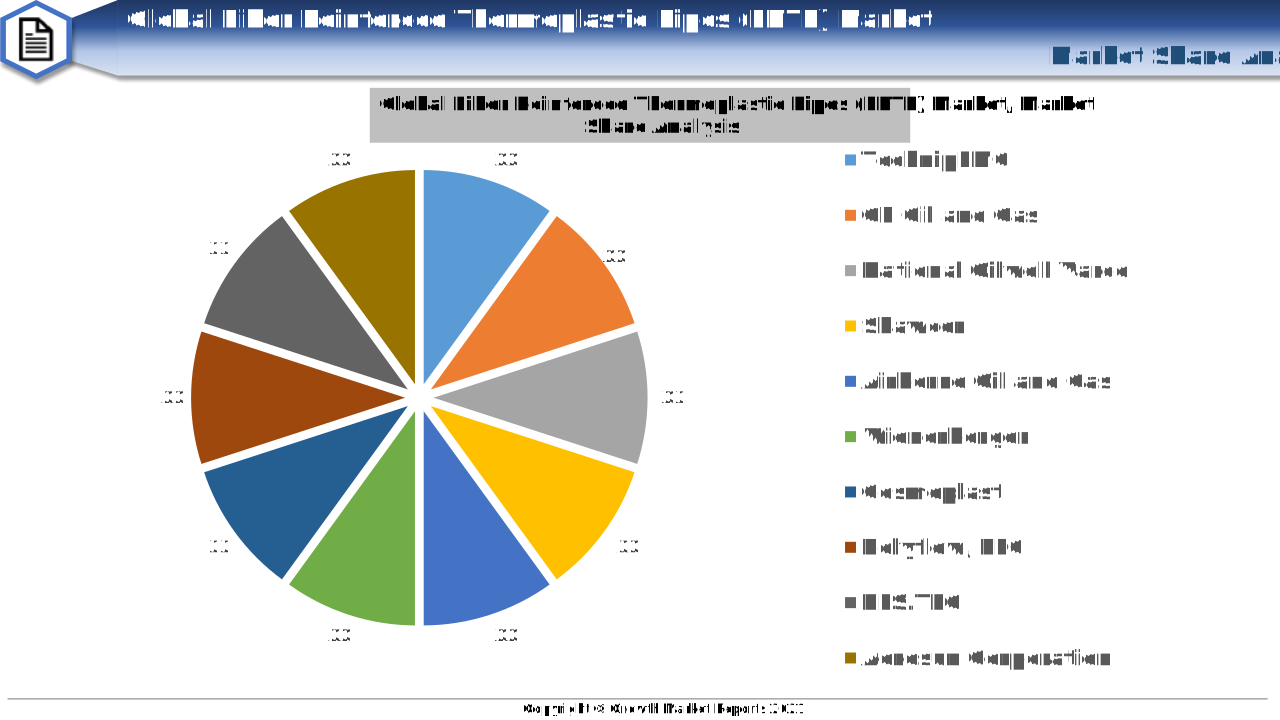

Global Fiber Reinforced Thermoplastic Pipes (FRTP) Market Key Players

Frequently Asked Questions

Growth opportunities include expanding into renewable energy sectors (hydrogen transport, wind, geothermal), adoption in developing regions, and the integration of IoT-enabled smart monitoring technologies for predictive maintenance.

Major players include TechnipFMC, Pipelife, NOV Fiber Glass Systems, SoluForce, Shawcor, Wienerberger, Magma Global, and Composite Pipes Industry LLC.

Key challenges include the high initial cost of FRTP pipes compared to conventional materials and the lack of standardized testing protocols and certification frameworks in some regions.

Technological advancements such as automated filament winding, advanced resin systems, improved fiber-matrix bonding, and integration of smart monitoring systems are enhancing the performance, reliability, and cost-effectiveness of FRTP pipes.

In the oil & gas industry, FRTP pipes are used for subsea flowlines, risers, injection lines, and offshore platforms due to their ability to withstand high pressures, aggressive chemicals, and extreme temperatures.

Asia Pacific is the largest and fastest-growing market for FRTP pipes, driven by rapid industrialization, urbanization, and infrastructure investments, especially in China and India.

The main types of FRTP pipes are Glass Fiber Reinforced, Carbon Fiber Reinforced, Aramid Fiber Reinforced, and hybrid or specialty composites.

FRTP pipes offer advantages such as lightweight construction, corrosion resistance, high mechanical strength, ease of installation, reduced maintenance, and a lower carbon footprint compared to traditional steel or PVC pipes.

Key industries driving demand for FRTP pipes include oil & gas, water & wastewater, chemical, mining & industrial sectors, with oil & gas being the largest consumer globally.

The global Fiber Reinforced Thermoplastic Pipes (FRTP) market reached USD 2.15 billion in 2024 and is projected to grow at a CAGR of 6.8% from 2025 to 2033, reaching USD 3.94 billion by 2033.

Table Of Content

Chapter 1 Executive Summary
Chapter 2 Assumptions and Acronyms Used
Chapter 3 Research Methodology
Chapter 4 Fiber Reinforced Thermoplastic Pipes (FRTP) Market Overview
   4.1 Introduction
      4.1.1 Market Taxonomy
      4.1.2 Market Definition
      4.1.3 Macro-Economic Factors Impacting the Market Growth
   4.2 Fiber Reinforced Thermoplastic Pipes (FRTP) Market Dynamics
      4.2.1 Market Drivers
      4.2.2 Market Restraints
      4.2.3 Market Opportunity
   4.3 Fiber Reinforced Thermoplastic Pipes (FRTP) Market - Supply Chain Analysis
      4.3.1 List of Key Suppliers
      4.3.2 List of Key Distributors
      4.3.3 List of Key Consumers
   4.4 Key Forces Shaping the Fiber Reinforced Thermoplastic Pipes (FRTP) Market
      4.4.1 Bargaining Power of Suppliers
      4.4.2 Bargaining Power of Buyers
      4.4.3 Threat of Substitution
      4.4.4 Threat of New Entrants
      4.4.5 Competitive Rivalry
   4.5 Global Fiber Reinforced Thermoplastic Pipes (FRTP) Market Size & Forecast, 2023-2032
      4.5.1 Fiber Reinforced Thermoplastic Pipes (FRTP) Market Size and Y-o-Y Growth
      4.5.2 Fiber Reinforced Thermoplastic Pipes (FRTP) Market Absolute $ Opportunity

Chapter 5 Global Fiber Reinforced Thermoplastic Pipes (FRTP) Market Analysis and Forecast By Product Type
   5.1 Introduction
      5.1.1 Key Market Trends & Growth Opportunities By Product Type
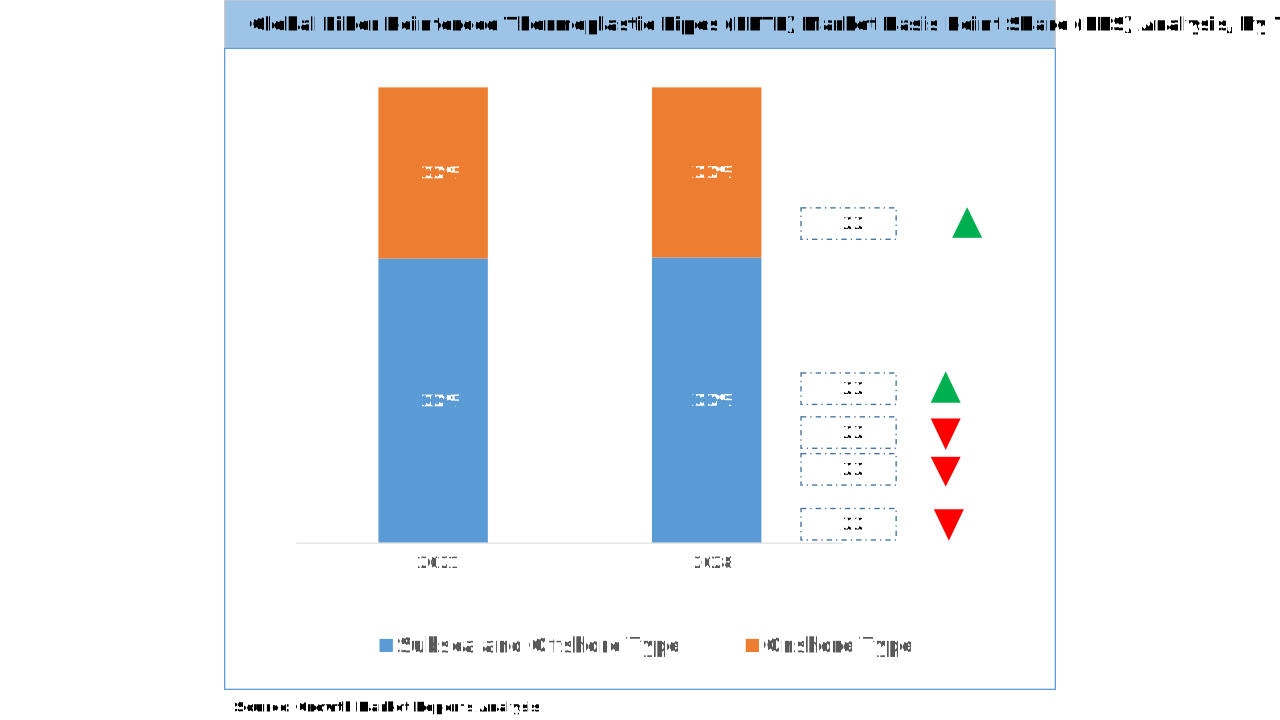
      5.1.2 Basis Point Share (BPS) Analysis By Product Type
      5.1.3 Absolute $ Opportunity Assessment By Product Type
   5.2 Fiber Reinforced Thermoplastic Pipes (FRTP) Market Size Forecast By Product Type
      5.2.1 Glass Fiber Reinforced
      5.2.2 Carbon Fiber Reinforced
      5.2.3 Aramid Fiber Reinforced
      5.2.4 Others
   5.3 Market Attractiveness Analysis By Product Type

Chapter 6 Global Fiber Reinforced Thermoplastic Pipes (FRTP) Market Analysis and Forecast By Application
   6.1 Introduction
      6.1.1 Key Market Trends & Growth Opportunities By Application
      6.1.2 Basis Point Share (BPS) Analysis By Application
      6.1.3 Absolute $ Opportunity Assessment By Application
   6.2 Fiber Reinforced Thermoplastic Pipes (FRTP) Market Size Forecast By Application
      6.2.1 Oil & Gas
      6.2.2 Water & Wastewater
      6.2.3 Chemical
      6.2.4 Mining & Industrial
      6.2.5 Others
   6.3 Market Attractiveness Analysis By Application

Chapter 7 Global Fiber Reinforced Thermoplastic Pipes (FRTP) Market Analysis and Forecast By Diameter
   7.1 Introduction
      7.1.1 Key Market Trends & Growth Opportunities By Diameter
      7.1.2 Basis Point Share (BPS) Analysis By Diameter
      7.1.3 Absolute $ Opportunity Assessment By Diameter
   7.2 Fiber Reinforced Thermoplastic Pipes (FRTP) Market Size Forecast By Diameter
      7.2.1 Small
      7.2.2 Medium
      7.2.3 Large
   7.3 Market Attractiveness Analysis By Diameter

Chapter 8 Global Fiber Reinforced Thermoplastic Pipes (FRTP) Market Analysis and Forecast By Pressure Rating
   8.1 Introduction
      8.1.1 Key Market Trends & Growth Opportunities By Pressure Rating
      8.1.2 Basis Point Share (BPS) Analysis By Pressure Rating
      8.1.3 Absolute $ Opportunity Assessment By Pressure Rating
   8.2 Fiber Reinforced Thermoplastic Pipes (FRTP) Market Size Forecast By Pressure Rating
      8.2.1 Low
      8.2.2 Medium
      8.2.3 High
   8.3 Market Attractiveness Analysis By Pressure Rating

Chapter 9 Global Fiber Reinforced Thermoplastic Pipes (FRTP) Market Analysis and Forecast by Region
   9.1 Introduction
      9.1.1 Key Market Trends & Growth Opportunities By Region
      9.1.2 Basis Point Share (BPS) Analysis By Region
      9.1.3 Absolute $ Opportunity Assessment By Region
   9.2 Fiber Reinforced Thermoplastic Pipes (FRTP) Market Size Forecast By Region
      9.2.1 North America
      9.2.2 Europe
      9.2.3 Asia Pacific
      9.2.4 Latin America
      9.2.5 Middle East & Africa (MEA)
   9.3 Market Attractiveness Analysis By Region

Chapter 10 Coronavirus Disease (COVID-19) Impact 
   10.1 Introduction 
   10.2 Current & Future Impact Analysis 
   10.3 Economic Impact Analysis 
   10.4 Government Policies 
   10.5 Investment Scenario

Chapter 11 North America Fiber Reinforced Thermoplastic Pipes (FRTP) Analysis and Forecast
   11.1 Introduction
   11.2 North America Fiber Reinforced Thermoplastic Pipes (FRTP) Market Size Forecast by Country
      11.2.1 U.S.
      11.2.2 Canada
   11.3 Basis Point Share (BPS) Analysis by Country
   11.4 Absolute $ Opportunity Assessment by Country
   11.5 Market Attractiveness Analysis by Country
   11.6 North America Fiber Reinforced Thermoplastic Pipes (FRTP) Market Size Forecast By Product Type
      11.6.1 Glass Fiber Reinforced
      11.6.2 Carbon Fiber Reinforced
      11.6.3 Aramid Fiber Reinforced
      11.6.4 Others
   11.7 Basis Point Share (BPS) Analysis By Product Type 
   11.8 Absolute $ Opportunity Assessment By Product Type 
   11.9 Market Attractiveness Analysis By Product Type
   11.10 North America Fiber Reinforced Thermoplastic Pipes (FRTP) Market Size Forecast By Application
      11.10.1 Oil & Gas
      11.10.2 Water & Wastewater
      11.10.3 Chemical
      11.10.4 Mining & Industrial
      11.10.5 Others
   11.11 Basis Point Share (BPS) Analysis By Application 
   11.12 Absolute $ Opportunity Assessment By Application 
   11.13 Market Attractiveness Analysis By Application
   11.14 North America Fiber Reinforced Thermoplastic Pipes (FRTP) Market Size Forecast By Diameter
      11.14.1 Small
      11.14.2 Medium
      11.14.3 Large
   11.15 Basis Point Share (BPS) Analysis By Diameter 
   11.16 Absolute $ Opportunity Assessment By Diameter 
   11.17 Market Attractiveness Analysis By Diameter
   11.18 North America Fiber Reinforced Thermoplastic Pipes (FRTP) Market Size Forecast By Pressure Rating
      11.18.1 Low
      11.18.2 Medium
      11.18.3 High
   11.19 Basis Point Share (BPS) Analysis By Pressure Rating 
   11.20 Absolute $ Opportunity Assessment By Pressure Rating 
   11.21 Market Attractiveness Analysis By Pressure Rating

Chapter 12 Europe Fiber Reinforced Thermoplastic Pipes (FRTP) Analysis and Forecast
   12.1 Introduction
   12.2 Europe Fiber Reinforced Thermoplastic Pipes (FRTP) Market Size Forecast by Country
      12.2.1 Germany
      12.2.2 France
      12.2.3 Italy
      12.2.4 U.K.
      12.2.5 Spain
      12.2.6 Russia
      12.2.7 Rest of Europe
   12.3 Basis Point Share (BPS) Analysis by Country
   12.4 Absolute $ Opportunity Assessment by Country
   12.5 Market Attractiveness Analysis by Country
   12.6 Europe Fiber Reinforced Thermoplastic Pipes (FRTP) Market Size Forecast By Product Type
      12.6.1 Glass Fiber Reinforced
      12.6.2 Carbon Fiber Reinforced
      12.6.3 Aramid Fiber Reinforced
      12.6.4 Others
   12.7 Basis Point Share (BPS) Analysis By Product Type 
   12.8 Absolute $ Opportunity Assessment By Product Type 
   12.9 Market Attractiveness Analysis By Product Type
   12.10 Europe Fiber Reinforced Thermoplastic Pipes (FRTP) Market Size Forecast By Application
      12.10.1 Oil & Gas
      12.10.2 Water & Wastewater
      12.10.3 Chemical
      12.10.4 Mining & Industrial
      12.10.5 Others
   12.11 Basis Point Share (BPS) Analysis By Application 
   12.12 Absolute $ Opportunity Assessment By Application 
   12.13 Market Attractiveness Analysis By Application
   12.14 Europe Fiber Reinforced Thermoplastic Pipes (FRTP) Market Size Forecast By Diameter
      12.14.1 Small
      12.14.2 Medium
      12.14.3 Large
   12.15 Basis Point Share (BPS) Analysis By Diameter 
   12.16 Absolute $ Opportunity Assessment By Diameter 
   12.17 Market Attractiveness Analysis By Diameter
   12.18 Europe Fiber Reinforced Thermoplastic Pipes (FRTP) Market Size Forecast By Pressure Rating
      12.18.1 Low
      12.18.2 Medium
      12.18.3 High
   12.19 Basis Point Share (BPS) Analysis By Pressure Rating 
   12.20 Absolute $ Opportunity Assessment By Pressure Rating 
   12.21 Market Attractiveness Analysis By Pressure Rating

Chapter 13 Asia Pacific Fiber Reinforced Thermoplastic Pipes (FRTP) Analysis and Forecast
   13.1 Introduction
   13.2 Asia Pacific Fiber Reinforced Thermoplastic Pipes (FRTP) Market Size Forecast by Country
      13.2.1 China
      13.2.2 Japan
      13.2.3 South Korea
      13.2.4 India
      13.2.5 Australia
      13.2.6 South East Asia (SEA)
      13.2.7 Rest of Asia Pacific (APAC)
   13.3 Basis Point Share (BPS) Analysis by Country
   13.4 Absolute $ Opportunity Assessment by Country
   13.5 Market Attractiveness Analysis by Country
   13.6 Asia Pacific Fiber Reinforced Thermoplastic Pipes (FRTP) Market Size Forecast By Product Type
      13.6.1 Glass Fiber Reinforced
      13.6.2 Carbon Fiber Reinforced
      13.6.3 Aramid Fiber Reinforced
      13.6.4 Others
   13.7 Basis Point Share (BPS) Analysis By Product Type 
   13.8 Absolute $ Opportunity Assessment By Product Type 
   13.9 Market Attractiveness Analysis By Product Type
   13.10 Asia Pacific Fiber Reinforced Thermoplastic Pipes (FRTP) Market Size Forecast By Application
      13.10.1 Oil & Gas
      13.10.2 Water & Wastewater
      13.10.3 Chemical
      13.10.4 Mining & Industrial
      13.10.5 Others
   13.11 Basis Point Share (BPS) Analysis By Application 
   13.12 Absolute $ Opportunity Assessment By Application 
   13.13 Market Attractiveness Analysis By Application
   13.14 Asia Pacific Fiber Reinforced Thermoplastic Pipes (FRTP) Market Size Forecast By Diameter
      13.14.1 Small
      13.14.2 Medium
      13.14.3 Large
   13.15 Basis Point Share (BPS) Analysis By Diameter 
   13.16 Absolute $ Opportunity Assessment By Diameter 
   13.17 Market Attractiveness Analysis By Diameter
   13.18 Asia Pacific Fiber Reinforced Thermoplastic Pipes (FRTP) Market Size Forecast By Pressure Rating
      13.18.1 Low
      13.18.2 Medium
      13.18.3 High
   13.19 Basis Point Share (BPS) Analysis By Pressure Rating 
   13.20 Absolute $ Opportunity Assessment By Pressure Rating 
   13.21 Market Attractiveness Analysis By Pressure Rating

Chapter 14 Latin America Fiber Reinforced Thermoplastic Pipes (FRTP) Analysis and Forecast
   14.1 Introduction
   14.2 Latin America Fiber Reinforced Thermoplastic Pipes (FRTP) Market Size Forecast by Country
      14.2.1 Brazil
      14.2.2 Mexico
      14.2.3 Rest of Latin America (LATAM)
   14.3 Basis Point Share (BPS) Analysis by Country
   14.4 Absolute $ Opportunity Assessment by Country
   14.5 Market Attractiveness Analysis by Country
   14.6 Latin America Fiber Reinforced Thermoplastic Pipes (FRTP) Market Size Forecast By Product Type
      14.6.1 Glass Fiber Reinforced
      14.6.2 Carbon Fiber Reinforced
      14.6.3 Aramid Fiber Reinforced
      14.6.4 Others
   14.7 Basis Point Share (BPS) Analysis By Product Type 
   14.8 Absolute $ Opportunity Assessment By Product Type 
   14.9 Market Attractiveness Analysis By Product Type
   14.10 Latin America Fiber Reinforced Thermoplastic Pipes (FRTP) Market Size Forecast By Application
      14.10.1 Oil & Gas
      14.10.2 Water & Wastewater
      14.10.3 Chemical
      14.10.4 Mining & Industrial
      14.10.5 Others
   14.11 Basis Point Share (BPS) Analysis By Application 
   14.12 Absolute $ Opportunity Assessment By Application 
   14.13 Market Attractiveness Analysis By Application
   14.14 Latin America Fiber Reinforced Thermoplastic Pipes (FRTP) Market Size Forecast By Diameter
      14.14.1 Small
      14.14.2 Medium
      14.14.3 Large
   14.15 Basis Point Share (BPS) Analysis By Diameter 
   14.16 Absolute $ Opportunity Assessment By Diameter 
   14.17 Market Attractiveness Analysis By Diameter
   14.18 Latin America Fiber Reinforced Thermoplastic Pipes (FRTP) Market Size Forecast By Pressure Rating
      14.18.1 Low
      14.18.2 Medium
      14.18.3 High
   14.19 Basis Point Share (BPS) Analysis By Pressure Rating 
   14.20 Absolute $ Opportunity Assessment By Pressure Rating 
   14.21 Market Attractiveness Analysis By Pressure Rating

Chapter 15 Middle East & Africa (MEA) Fiber Reinforced Thermoplastic Pipes (FRTP) Analysis and Forecast
   15.1 Introduction
   15.2 Middle East & Africa (MEA) Fiber Reinforced Thermoplastic Pipes (FRTP) Market Size Forecast by Country
      15.2.1 Saudi Arabia
      15.2.2 South Africa
      15.2.3 UAE
      15.2.4 Rest of Middle East & Africa (MEA)
   15.3 Basis Point Share (BPS) Analysis by Country
   15.4 Absolute $ Opportunity Assessment by Country
   15.5 Market Attractiveness Analysis by Country
   15.6 Middle East & Africa (MEA) Fiber Reinforced Thermoplastic Pipes (FRTP) Market Size Forecast By Product Type
      15.6.1 Glass Fiber Reinforced
      15.6.2 Carbon Fiber Reinforced
      15.6.3 Aramid Fiber Reinforced
      15.6.4 Others
   15.7 Basis Point Share (BPS) Analysis By Product Type 
   15.8 Absolute $ Opportunity Assessment By Product Type 
   15.9 Market Attractiveness Analysis By Product Type
   15.10 Middle East & Africa (MEA) Fiber Reinforced Thermoplastic Pipes (FRTP) Market Size Forecast By Application
      15.10.1 Oil & Gas
      15.10.2 Water & Wastewater
      15.10.3 Chemical
      15.10.4 Mining & Industrial
      15.10.5 Others
   15.11 Basis Point Share (BPS) Analysis By Application 
   15.12 Absolute $ Opportunity Assessment By Application 
   15.13 Market Attractiveness Analysis By Application
   15.14 Middle East & Africa (MEA) Fiber Reinforced Thermoplastic Pipes (FRTP) Market Size Forecast By Diameter
      15.14.1 Small
      15.14.2 Medium
      15.14.3 Large
   15.15 Basis Point Share (BPS) Analysis By Diameter 
   15.16 Absolute $ Opportunity Assessment By Diameter 
   15.17 Market Attractiveness Analysis By Diameter
   15.18 Middle East & Africa (MEA) Fiber Reinforced Thermoplastic Pipes (FRTP) Market Size Forecast By Pressure Rating
      15.18.1 Low
      15.18.2 Medium
      15.18.3 High
   15.19 Basis Point Share (BPS) Analysis By Pressure Rating 
   15.20 Absolute $ Opportunity Assessment By Pressure Rating 
   15.21 Market Attractiveness Analysis By Pressure Rating

Chapter 16 Competition Landscape 
   16.1 Fiber Reinforced Thermoplastic Pipes (FRTP) Market: Competitive Dashboard
   16.2 Global Fiber Reinforced Thermoplastic Pipes (FRTP) Market: Market Share Analysis, 2023
   16.3 Company Profiles (Details – Overview, Financials, Developments, Strategy) 
      16.3.1 TechnipFMC
Pipelife
Wavin
Amiantit
Future Pipe Industries
Prysmian Group
Shawcor
National Oilwell Varco (NOV)
Evonik Industries
Baker Hughes
Aerosun Corporation
Hobas Pipe
Composite Pipes Industry LLC
Zhejiang Youfa Pipeline Technology Co., Ltd.
Magnum Venus Products
Saudi Arabian Amiantit Company
Fibrex Construction Group
Simona AG
Hengrun Group
Changchun Gaoxiang Special Pipes Co., Ltd.

Methodology

Our Clients

Nestle SA
General Mills
General Electric
The John Holland Group
Honda Motor Co. Ltd.
Deloitte
sinopec
Pfizer