Fetal and Neonatal Care Monitoring Market Research Report 2033

Fetal and Neonatal Care Monitoring Market Research Report 2033

Segments - by Product Type (Fetal Monitors, Neonatal Monitors, Ultrasound Devices, Pulse Oximeters, Capnographs, Others), by Application (Hospitals, Clinics, Home Care Settings, Others), by End User (Hospitals, Diagnostic Centers, Ambulatory Surgical Centers, Others)

https://growthmarketreports.com/raksha
Author : Raksha Sharma
https://growthmarketreports.com/Vaibhav
Fact-checked by : V. Chandola
https://growthmarketreports.com/Shruti
Editor : Shruti Bhat

Upcoming | Report ID :HC-1804 | 4.5 Rating | 97 Reviews | 268 Pages | Format : Docx PDF

Report Description


Fetal and Neonatal Care Monitoring Market Outlook

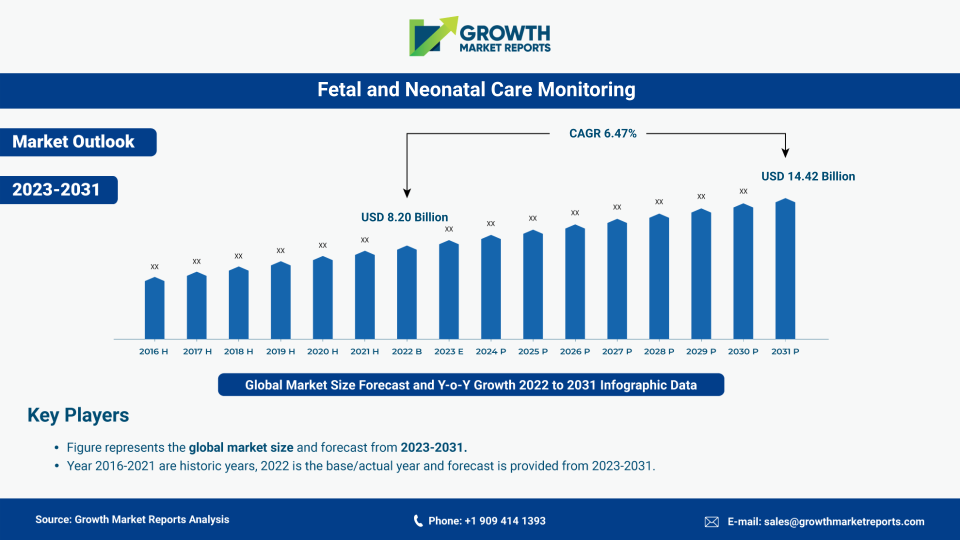
According to our latest research, the global fetal and neonatal care monitoring market size in 2024 stands at USD 8.65 billion, with a robust compound annual growth rate (CAGR) of 6.9% projected from 2025 to 2033. By leveraging this growth rate, the market is forecasted to reach approximately USD 16.97 billion by 2033. This significant expansion is primarily driven by increasing awareness regarding maternal and child health, technological advancements in monitoring devices, and the rising prevalence of preterm births and related complications worldwide.

One of the primary growth factors for the fetal and neonatal care monitoring market is the escalating incidence of preterm births and associated complications. Globally, the number of preterm births is on the rise due to various factors such as maternal age, lifestyle changes, and increased prevalence of chronic diseases among pregnant women. This has necessitated the adoption of advanced fetal and neonatal monitoring solutions to ensure early detection and prompt intervention in cases of fetal distress or neonatal complications. The growing emphasis on reducing infant mortality rates, supported by government and non-governmental initiatives, has further bolstered the demand for sophisticated monitoring devices in both developed and developing regions.

Another significant driver is the rapid technological evolution in the healthcare sector, particularly in fetal and neonatal care monitoring devices. The integration of artificial intelligence, wireless connectivity, and real-time data analytics has revolutionized patient monitoring, enabling healthcare providers to deliver more precise and timely care. These technological advancements have not only enhanced the accuracy and reliability of monitoring systems but also facilitated remote monitoring, which is especially beneficial in rural and underserved areas. The increasing adoption of portable and wearable monitoring devices has further expanded the market’s reach, catering to the needs of home care settings and ambulatory care, thus contributing to the overall market growth.

The rising healthcare expenditure and improving healthcare infrastructure, especially in emerging economies, have also played a crucial role in propelling the fetal and neonatal care monitoring market. Governments and private sector players are investing heavily in upgrading hospital facilities and equipping them with state-of-the-art monitoring devices to enhance patient outcomes. Additionally, growing awareness among healthcare professionals and expectant parents about the importance of continuous fetal and neonatal monitoring has led to higher adoption rates. The increasing trend of hospital births and the establishment of specialized neonatal intensive care units (NICUs) are further fueling the market’s expansion.

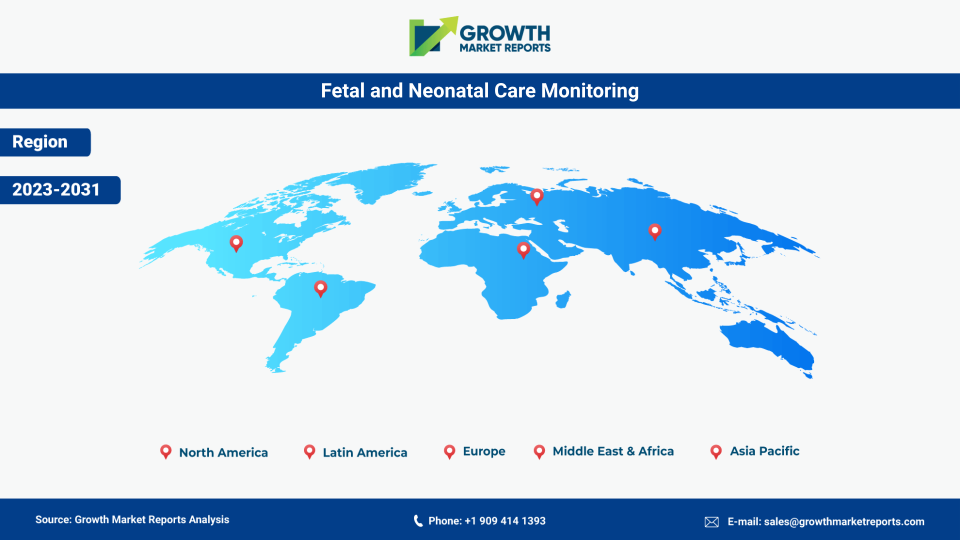
From a regional perspective, North America currently dominates the fetal and neonatal care monitoring market, accounting for the largest share in 2024, followed by Europe and Asia Pacific. The high market penetration in North America can be attributed to the presence of advanced healthcare infrastructure, favorable reimbursement policies, and the early adoption of innovative technologies. However, Asia Pacific is expected to witness the highest growth rate during the forecast period, driven by improving healthcare facilities, rising birth rates, and increasing government initiatives to reduce infant mortality. Latin America and the Middle East & Africa are also experiencing steady growth, supported by ongoing efforts to enhance maternal and child healthcare services.

Global Fetal and Neonatal Care Monitoring Industry Outlook

Product Type Analysis

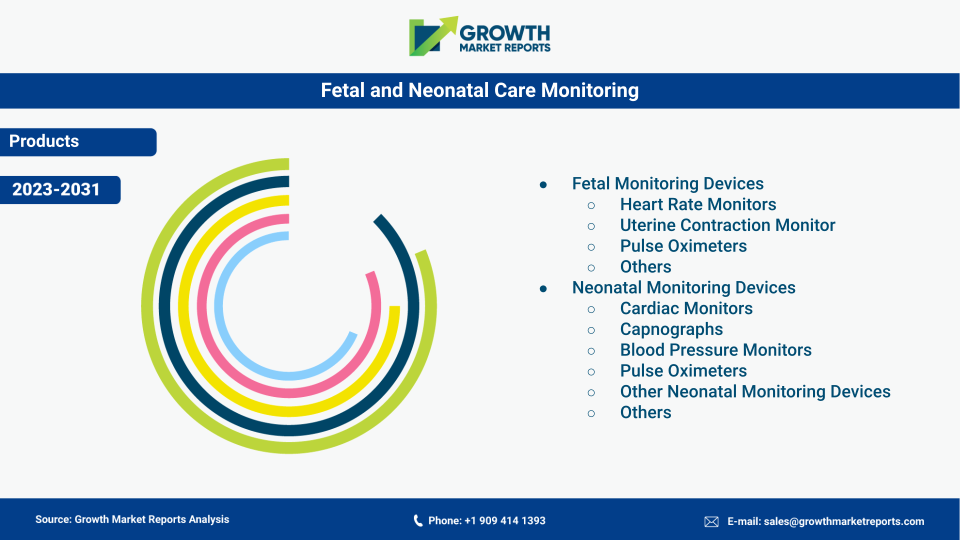
The product type segment in the fetal and neonatal care monitoring market encompasses a wide array of devices, including fetal monitors, neonatal monitors, ultrasound devices, pulse oximeters, capnographs, and other specialized equipment. Fetal monitors represent a significant share of the market, as they are essential for tracking the fetal heart rate and uterine contractions during pregnancy and labor. Technological advancements have led to the development of highly sensitive and non-invasive fetal monitors, which offer real-time data and improved diagnostic accuracy. The growing awareness among healthcare providers regarding the benefits of continuous fetal monitoring has resulted in increased adoption, particularly in hospital and clinical settings.

Neonatal monitors have also witnessed substantial demand, primarily driven by the rising number of preterm and low birth weight infants who require specialized care. These monitors are designed to track vital parameters such as heart rate, respiratory rate, blood pressure, and oxygen saturation in newborns, ensuring early detection of potential complications. The integration of advanced features, such as wireless connectivity and remote monitoring capabilities, has further enhanced the utility of neonatal monitors, making them indispensable tools in neonatal intensive care units (NICUs) and pediatric wards.

Ultrasound devices remain a cornerstone in fetal and neonatal care, providing non-invasive imaging for prenatal screening and diagnosis. The introduction of high-resolution, portable, and 3D/4D ultrasound systems has significantly improved the quality of prenatal care, enabling early detection of fetal anomalies and better assessment of fetal growth and development. The increasing preference for minimally invasive diagnostic procedures, coupled with the rising prevalence of high-risk pregnancies, has driven the demand for advanced ultrasound devices in both developed and emerging markets.

Other monitoring devices, such as pulse oximeters and capnographs, play a critical role in ensuring optimal oxygenation and respiratory function in newborns, particularly those admitted to NICUs. Pulse oximeters are widely used for continuous monitoring of oxygen saturation levels, while capnographs provide valuable insights into the respiratory status of neonates. The adoption of these devices has increased significantly due to their ease of use, portability, and ability to deliver real-time data, which is crucial for timely clinical intervention. The growing focus on patient safety and the need for comprehensive monitoring solutions are expected to drive further innovation and growth in this segment.

Report Scope

Attributes Details
Report Title Fetal and Neonatal Care Monitoring Market Research Report 2033
By Product Type Fetal Monitors, Neonatal Monitors, Ultrasound Devices, Pulse Oximeters, Capnographs, Others
By Application Hospitals, Clinics, Home Care Settings, Others
By End User Hospitals, Diagnostic Centers, Ambulatory Surgical Centers, Others
Regions Covered North America, Europe, APAC, Latin America, MEA
Base Year 2024
Historic Data 2018-2023
Forecast Period 2025-2033
Number of Pages 268
Number of Tables & Figures 362
Customization Available Yes, the report can be customized as per your need.

Application Analysis

The application segment of the fetal and neonatal care monitoring market is primarily divided into hospitals, clinics, home care settings, and others. Hospitals constitute the largest application segment, accounting for a substantial portion of the market share in 2024. This dominance is attributed to the presence of well-equipped maternity wards, neonatal intensive care units, and the availability of skilled healthcare professionals. Hospitals are increasingly adopting advanced monitoring systems to improve patient outcomes, reduce the risk of complications, and comply with stringent regulatory standards. The growing trend of hospital births and the increasing number of high-risk pregnancies have further bolstered the demand for fetal and neonatal monitoring devices in this setting.

Clinics also represent a significant application area, particularly in urban and semi-urban regions where access to specialized hospital care may be limited. Clinics are increasingly investing in portable and user-friendly monitoring devices to provide quality prenatal and neonatal care to a broader patient base. The rise in outpatient services and the growing preference for minimally invasive diagnostic procedures have contributed to the adoption of monitoring devices in clinics. Additionally, collaborations between clinics and diagnostic centers are facilitating the integration of advanced monitoring solutions, enhancing the overall quality of care.

The home care settings segment is witnessing rapid growth, driven by the increasing trend of home-based healthcare and the rising demand for remote monitoring solutions. Advances in telemedicine and wearable technology have made it possible for expectant mothers and newborns to be monitored in the comfort of their homes, reducing the need for frequent hospital visits. Home care monitoring devices are designed to be user-friendly, portable, and capable of transmitting real-time data to healthcare providers, enabling timely intervention and reducing the risk of complications. The growing aging population, rising healthcare costs, and the need for personalized care are expected to drive further growth in this segment.

Other application areas, such as ambulatory care centers and specialized maternal-fetal medicine units, are also contributing to the expansion of the fetal and neonatal care monitoring market. These settings are increasingly adopting advanced monitoring solutions to cater to the needs of high-risk pregnancies and critically ill newborns. The integration of digital health platforms and data analytics in these settings is enhancing the efficiency and effectiveness of care delivery. As healthcare systems continue to evolve, the demand for versatile and scalable monitoring solutions across various application areas is expected to increase, driving overall market growth.

End User Analysis

The end user segment in the fetal and neonatal care monitoring market includes hospitals, diagnostic centers, ambulatory surgical centers, and others. Hospitals remain the primary end users, accounting for the largest share of the market in 2024. The high patient influx, availability of skilled healthcare professionals, and the presence of advanced infrastructure make hospitals the preferred choice for fetal and neonatal monitoring. Hospitals are continuously upgrading their facilities with state-of-the-art monitoring devices to enhance patient care and comply with regulatory requirements. The increasing number of high-risk pregnancies and preterm births has further driven the demand for comprehensive monitoring solutions in hospital settings.

Diagnostic centers are emerging as significant end users, particularly in urban and semi-urban areas where access to specialized hospital care may be limited. These centers are equipped with advanced diagnostic and monitoring devices, enabling early detection and timely intervention in cases of fetal or neonatal complications. The growing trend of preventive healthcare and the increasing emphasis on early diagnosis have contributed to the rising adoption of monitoring devices in diagnostic centers. Collaborations between diagnostic centers and hospitals are further enhancing the quality and accessibility of care.

Ambulatory surgical centers (ASCs) are also witnessing increased adoption of fetal and neonatal monitoring devices, driven by the growing demand for minimally invasive procedures and outpatient care. ASCs offer a cost-effective and convenient alternative to traditional hospital-based care, making them an attractive option for expectant mothers and newborns requiring specialized monitoring. The integration of portable and wireless monitoring devices in ASCs has enhanced the efficiency and effectiveness of care delivery, contributing to the overall growth of the market.

Other end users, such as maternal-fetal medicine units, home healthcare providers, and community health centers, are also playing a crucial role in the expansion of the fetal and neonatal care monitoring market. These settings are increasingly adopting advanced monitoring solutions to cater to the needs of diverse patient populations, including those in remote or underserved areas. The growing focus on personalized and patient-centric care, coupled with advancements in telemedicine and digital health platforms, is expected to drive further growth in this segment. As healthcare delivery models continue to evolve, the demand for versatile and scalable monitoring solutions across various end user segments is set to increase.

Opportunities & Threats

The fetal and neonatal care monitoring market presents several promising opportunities for growth and innovation. One of the most significant opportunities lies in the integration of advanced technologies such as artificial intelligence, machine learning, and big data analytics into monitoring devices. These technologies have the potential to enhance the accuracy, reliability, and predictive capabilities of monitoring systems, enabling healthcare providers to deliver more personalized and proactive care. The growing adoption of telemedicine and remote monitoring solutions is also opening new avenues for market expansion, particularly in rural and underserved regions where access to specialized care may be limited. Additionally, the increasing focus on preventive healthcare and early diagnosis is expected to drive demand for advanced monitoring devices, creating lucrative opportunities for market players.

Another key opportunity for the fetal and neonatal care monitoring market is the rising demand for portable and wearable monitoring devices. These devices offer greater convenience and flexibility for both patients and healthcare providers, enabling continuous monitoring in home care settings and ambulatory care centers. The development of user-friendly and cost-effective monitoring solutions is expected to enhance market penetration, particularly in emerging economies where healthcare infrastructure is still developing. Strategic collaborations between device manufacturers, healthcare providers, and technology companies are also facilitating the development and adoption of innovative monitoring solutions, further driving market growth.

Despite the numerous opportunities, the fetal and neonatal care monitoring market faces certain restraining factors. One of the primary challenges is the high cost of advanced monitoring devices, which can limit their adoption in resource-constrained settings. Additionally, the lack of skilled healthcare professionals and inadequate healthcare infrastructure in some regions can hinder the effective implementation of monitoring solutions. Regulatory challenges and concerns regarding data privacy and security also pose significant threats to market growth. Addressing these challenges will require concerted efforts from stakeholders across the healthcare ecosystem to ensure equitable access to high-quality monitoring devices and services.

Regional Outlook

The regional analysis of the fetal and neonatal care monitoring market reveals a diverse landscape, with varying levels of market penetration and growth across different regions. In 2024, North America leads the market with a value of USD 3.12 billion, driven by the presence of advanced healthcare infrastructure, high adoption rates of innovative technologies, and favorable reimbursement policies. The United States accounts for the largest share within the region, supported by a strong focus on maternal and child health, well-established healthcare facilities, and a high prevalence of preterm births. Canada is also witnessing steady growth, supported by government initiatives to enhance maternal and neonatal care services.

Europe follows North America, with a market size of USD 2.49 billion in 2024. The region benefits from a robust healthcare system, increasing awareness about the importance of fetal and neonatal monitoring, and the presence of leading medical device manufacturers. Countries such as Germany, the United Kingdom, and France are at the forefront of market growth, driven by ongoing investments in healthcare infrastructure and the adoption of advanced monitoring solutions. The European market is also characterized by strong regulatory frameworks and a high emphasis on patient safety, which have contributed to the widespread adoption of monitoring devices.

The Asia Pacific region is poised for the highest growth during the forecast period, with a projected CAGR of 8.2% from 2025 to 2033. The market size in Asia Pacific is estimated at USD 1.83 billion in 2024, with significant growth expected in countries such as China, India, and Japan. The rapid expansion of healthcare infrastructure, rising birth rates, and increasing government initiatives to reduce infant mortality are key drivers of market growth in the region. Additionally, the growing adoption of telemedicine and remote monitoring solutions is enhancing access to quality care in rural and underserved areas. Latin America and the Middle East & Africa are also experiencing steady growth, supported by ongoing efforts to improve maternal and child healthcare services, with market sizes of USD 0.71 billion and USD 0.50 billion, respectively, in 2024.

Fetal and Neonatal Care Monitoring Market Statistics

Competitor Outlook

The competitive landscape of the fetal and neonatal care monitoring market is characterized by the presence of several established players and a growing number of emerging companies. The market is highly competitive, with companies focusing on product innovation, strategic collaborations, and mergers and acquisitions to strengthen their market position. Leading players are investing heavily in research and development to introduce advanced monitoring solutions that offer enhanced accuracy, reliability, and ease of use. The integration of artificial intelligence, wireless connectivity, and real-time data analytics into monitoring devices has emerged as a key differentiator, enabling companies to cater to the evolving needs of healthcare providers and patients.

Product differentiation and technological innovation remain at the forefront of competitive strategies in the fetal and neonatal care monitoring market. Companies are increasingly focusing on developing portable, wearable, and user-friendly monitoring devices that cater to the needs of home care settings and ambulatory care centers. The growing adoption of telemedicine and remote monitoring solutions has also prompted companies to enhance the interoperability and connectivity of their devices, enabling seamless data sharing and integration with electronic health records (EHRs). Strategic partnerships with healthcare providers, technology companies, and research institutions are facilitating the development and commercialization of innovative monitoring solutions.

In addition to product innovation, companies are also focusing on expanding their geographic presence to tap into emerging markets with high growth potential. The rising demand for advanced fetal and neonatal monitoring devices in Asia Pacific, Latin America, and the Middle East & Africa has prompted leading players to strengthen their distribution networks and establish local manufacturing facilities. Collaborations with local healthcare providers and government agencies are also helping companies to navigate regulatory challenges and enhance market penetration.

Major companies operating in the fetal and neonatal care monitoring market include GE Healthcare, Philips Healthcare, Siemens Healthineers, Medtronic, Drägerwerk AG & Co. KGaA, Natus Medical Incorporated, Masimo Corporation, Fujifilm SonoSite, Inc., Atom Medical Corporation, and Spacelabs Healthcare. GE Healthcare is renowned for its comprehensive portfolio of fetal and neonatal monitoring devices, offering innovative solutions that cater to the needs of hospitals, clinics, and home care settings. Philips Healthcare is a global leader in patient monitoring systems, with a strong focus on integrating advanced technologies such as artificial intelligence and wireless connectivity into its products. Siemens Healthineers and Medtronic are also prominent players, known for their commitment to product innovation and expanding their global footprint.

Drägerwerk AG & Co. KGaA and Natus Medical Incorporated have established themselves as key players in the neonatal care segment, offering a wide range of monitoring devices and solutions for NICUs and pediatric wards. Masimo Corporation specializes in non-invasive monitoring technologies, with a strong focus on pulse oximetry and capnography. Fujifilm SonoSite, Inc. is a leading provider of portable ultrasound devices, catering to the needs of both hospital and home care settings. Atom Medical Corporation and Spacelabs Healthcare are also notable players, known for their commitment to quality and innovation in the fetal and neonatal care monitoring market. Collectively, these companies are driving the growth and evolution of the market through continuous innovation, strategic collaborations, and a strong focus on meeting the evolving needs of healthcare providers and patients worldwide.

Key Players

  • GE Healthcare
  • Koninklijke Philips N.V.
  • Medtronic plc
  • Drägerwerk AG & Co. KGaA
  • Natus Medical Incorporated
  • Masimo Corporation
  • Fisher & Paykel Healthcare Limited
  • Atom Medical Corporation
  • Becton, Dickinson and Company (BD)
  • Mindray Medical International Limited
  • Nihon Kohden Corporation
  • Siemens Healthineers AG
  • Smiths Medical (ICU Medical, Inc.)
  • Phoenix Medical Systems Pvt. Ltd.
  • Spacelabs Healthcare (OSI Systems, Inc.)
  • Welch Allyn (Hillrom, now part of Baxter International Inc.)
  • Medtronic (Covidien)
  • CareFusion (now part of BD)
  • Vyaire Medical, Inc.
  • Edan Instruments, Inc.
Fetal and Neonatal Care Monitoring Market Overview

Segments

The Fetal and Neonatal Care Monitoring market has been segmented on the basis of

Product Type

  • Fetal Monitors
  • Neonatal Monitors
  • Ultrasound Devices
  • Pulse Oximeters
  • Capnographs
  • Others

Application

  • Hospitals
  • Clinics
  • Home Care Settings
  • Others

End User

  • Hospitals
  • Diagnostic Centers
  • Ambulatory Surgical Centers
  • Others

Competitive Landscape

Key players competing in the fetal and neonatal monitoring devices market include Siemens Healthineers, Becton, Dickinson and Company, Medtronic Plc, GE Healthcare, and KoninKlijke Philips NV.

Some of these players are using several market strategies such as mergers, acquisitions, partnerships, collaborations, capacity expansion, and product launches to enhance their market shares.
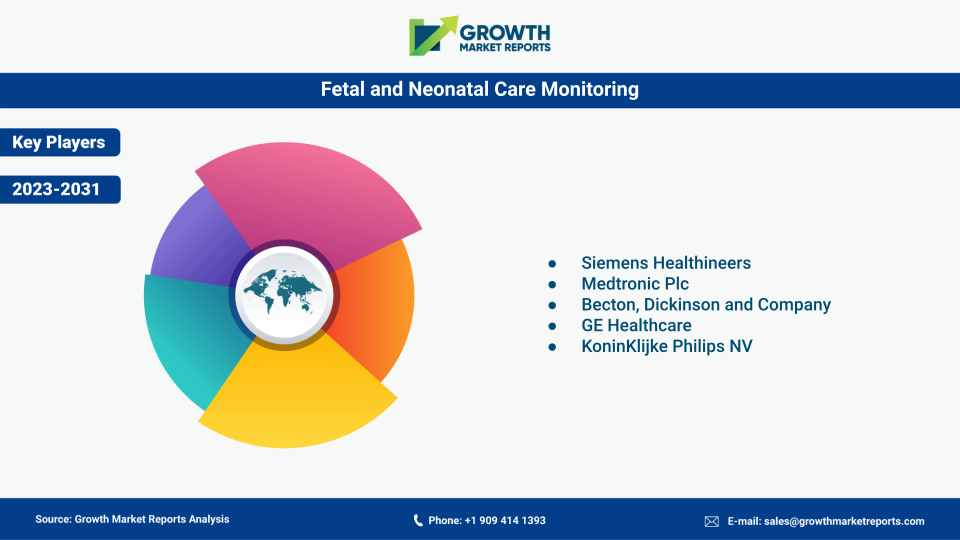

Global Fetal and Neonatal Care Monitoring Market keyplayers

Frequently Asked Questions

Emerging economies are seeing rapid growth due to improving healthcare infrastructure, rising birth rates, increased healthcare spending, and government efforts to reduce infant mortality.

Opportunities include the integration of AI and big data analytics, rising demand for portable and wearable monitoring devices, and expanding access to telemedicine and remote monitoring solutions.

Challenges include the high cost of advanced devices, lack of skilled healthcare professionals in some regions, inadequate healthcare infrastructure, and regulatory and data privacy concerns.

Key companies include GE Healthcare, Philips Healthcare, Siemens Healthineers, Medtronic, Drägerwerk AG & Co. KGaA, Natus Medical Incorporated, Masimo Corporation, Fujifilm SonoSite, Atom Medical Corporation, and Spacelabs Healthcare.

These devices are primarily used in hospitals, clinics, home care settings, ambulatory surgical centers, and specialized maternal-fetal medicine units.

Technological advancements such as artificial intelligence, wireless connectivity, and real-time data analytics are improving the accuracy, reliability, and remote monitoring capabilities of these devices.

The market includes fetal monitors, neonatal monitors, ultrasound devices, pulse oximeters, capnographs, and other specialized monitoring equipment.

North America currently dominates the market, followed by Europe and Asia Pacific. Asia Pacific is expected to experience the highest growth rate through 2033.

Key growth drivers include rising awareness of maternal and child health, technological advancements in monitoring devices, increasing preterm births, and government initiatives to reduce infant mortality rates.

As of 2024, the global fetal and neonatal care monitoring market is valued at USD 8.65 billion, with projections to reach approximately USD 16.97 billion by 2033.

Table Of Content

Chapter 1 Executive Summary
Chapter 2 Assumptions and Acronyms Used
Chapter 3 Research Methodology
Chapter 4 Fetal and Neonatal Care Monitoring Market Overview
   4.1 Introduction
      4.1.1 Market Taxonomy
      4.1.2 Market Definition
      4.1.3 Macro-Economic Factors Impacting the Market Growth
   4.2 Fetal and Neonatal Care Monitoring Market Dynamics
      4.2.1 Market Drivers
      4.2.2 Market Restraints
      4.2.3 Market Opportunity
   4.3 Fetal and Neonatal Care Monitoring Market - Supply Chain Analysis
      4.3.1 List of Key Suppliers
      4.3.2 List of Key Distributors
      4.3.3 List of Key Consumers
   4.4 Key Forces Shaping the Fetal and Neonatal Care Monitoring Market
      4.4.1 Bargaining Power of Suppliers
      4.4.2 Bargaining Power of Buyers
      4.4.3 Threat of Substitution
      4.4.4 Threat of New Entrants
      4.4.5 Competitive Rivalry
   4.5 Global Fetal and Neonatal Care Monitoring Market Size & Forecast, 2023-2032
      4.5.1 Fetal and Neonatal Care Monitoring Market Size and Y-o-Y Growth
      4.5.2 Fetal and Neonatal Care Monitoring Market Absolute $ Opportunity

Chapter 5 Global Fetal and Neonatal Care Monitoring Market Analysis and Forecast By Product Type
   5.1 Introduction
      5.1.1 Key Market Trends & Growth Opportunities By Product Type
      5.1.2 Basis Point Share (BPS) Analysis By Product Type
      5.1.3 Absolute $ Opportunity Assessment By Product Type
   5.2 Fetal and Neonatal Care Monitoring Market Size Forecast By Product Type
      5.2.1 Fetal Monitors
      5.2.2 Neonatal Monitors
      5.2.3 Ultrasound Devices
      5.2.4 Pulse Oximeters
      5.2.5 Capnographs
      5.2.6 Others
   5.3 Market Attractiveness Analysis By Product Type

Chapter 6 Global Fetal and Neonatal Care Monitoring Market Analysis and Forecast By Application
   6.1 Introduction
      6.1.1 Key Market Trends & Growth Opportunities By Application
      6.1.2 Basis Point Share (BPS) Analysis By Application
      6.1.3 Absolute $ Opportunity Assessment By Application
   6.2 Fetal and Neonatal Care Monitoring Market Size Forecast By Application
      6.2.1 Hospitals
      6.2.2 Clinics
      6.2.3 Home Care Settings
      6.2.4 Others
   6.3 Market Attractiveness Analysis By Application

Chapter 7 Global Fetal and Neonatal Care Monitoring Market Analysis and Forecast By End User
   7.1 Introduction
      7.1.1 Key Market Trends & Growth Opportunities By End User
      7.1.2 Basis Point Share (BPS) Analysis By End User
      7.1.3 Absolute $ Opportunity Assessment By End User
   7.2 Fetal and Neonatal Care Monitoring Market Size Forecast By End User
      7.2.1 Hospitals
      7.2.2 Diagnostic Centers
      7.2.3 Ambulatory Surgical Centers
      7.2.4 Others
   7.3 Market Attractiveness Analysis By End User

Chapter 8 Global Fetal and Neonatal Care Monitoring Market Analysis and Forecast by Region
   8.1 Introduction
      8.1.1 Key Market Trends & Growth Opportunities By Region
      8.1.2 Basis Point Share (BPS) Analysis By Region
      8.1.3 Absolute $ Opportunity Assessment By Region
   8.2 Fetal and Neonatal Care Monitoring Market Size Forecast By Region
      8.2.1 North America
      8.2.2 Europe
      8.2.3 Asia Pacific
      8.2.4 Latin America
      8.2.5 Middle East & Africa (MEA)
   8.3 Market Attractiveness Analysis By Region

Chapter 9 Coronavirus Disease (COVID-19) Impact 
   9.1 Introduction 
   9.2 Current & Future Impact Analysis 
   9.3 Economic Impact Analysis 
   9.4 Government Policies 
   9.5 Investment Scenario

Chapter 10 North America Fetal and Neonatal Care Monitoring Analysis and Forecast
   10.1 Introduction
   10.2 North America Fetal and Neonatal Care Monitoring Market Size Forecast by Country
      10.2.1 U.S.
      10.2.2 Canada
   10.3 Basis Point Share (BPS) Analysis by Country
   10.4 Absolute $ Opportunity Assessment by Country
   10.5 Market Attractiveness Analysis by Country
   10.6 North America Fetal and Neonatal Care Monitoring Market Size Forecast By Product Type
      10.6.1 Fetal Monitors
      10.6.2 Neonatal Monitors
      10.6.3 Ultrasound Devices
      10.6.4 Pulse Oximeters
      10.6.5 Capnographs
      10.6.6 Others
   10.7 Basis Point Share (BPS) Analysis By Product Type 
   10.8 Absolute $ Opportunity Assessment By Product Type 
   10.9 Market Attractiveness Analysis By Product Type
   10.10 North America Fetal and Neonatal Care Monitoring Market Size Forecast By Application
      10.10.1 Hospitals
      10.10.2 Clinics
      10.10.3 Home Care Settings
      10.10.4 Others
   10.11 Basis Point Share (BPS) Analysis By Application 
   10.12 Absolute $ Opportunity Assessment By Application 
   10.13 Market Attractiveness Analysis By Application
   10.14 North America Fetal and Neonatal Care Monitoring Market Size Forecast By End User
      10.14.1 Hospitals
      10.14.2 Diagnostic Centers
      10.14.3 Ambulatory Surgical Centers
      10.14.4 Others
   10.15 Basis Point Share (BPS) Analysis By End User 
   10.16 Absolute $ Opportunity Assessment By End User 
   10.17 Market Attractiveness Analysis By End User

Chapter 11 Europe Fetal and Neonatal Care Monitoring Analysis and Forecast
   11.1 Introduction
   11.2 Europe Fetal and Neonatal Care Monitoring Market Size Forecast by Country
      11.2.1 Germany
      11.2.2 France
      11.2.3 Italy
      11.2.4 U.K.
      11.2.5 Spain
      11.2.6 Russia
      11.2.7 Rest of Europe
   11.3 Basis Point Share (BPS) Analysis by Country
   11.4 Absolute $ Opportunity Assessment by Country
   11.5 Market Attractiveness Analysis by Country
   11.6 Europe Fetal and Neonatal Care Monitoring Market Size Forecast By Product Type
      11.6.1 Fetal Monitors
      11.6.2 Neonatal Monitors
      11.6.3 Ultrasound Devices
      11.6.4 Pulse Oximeters
      11.6.5 Capnographs
      11.6.6 Others
   11.7 Basis Point Share (BPS) Analysis By Product Type 
   11.8 Absolute $ Opportunity Assessment By Product Type 
   11.9 Market Attractiveness Analysis By Product Type
   11.10 Europe Fetal and Neonatal Care Monitoring Market Size Forecast By Application
      11.10.1 Hospitals
      11.10.2 Clinics
      11.10.3 Home Care Settings
      11.10.4 Others
   11.11 Basis Point Share (BPS) Analysis By Application 
   11.12 Absolute $ Opportunity Assessment By Application 
   11.13 Market Attractiveness Analysis By Application
   11.14 Europe Fetal and Neonatal Care Monitoring Market Size Forecast By End User
      11.14.1 Hospitals
      11.14.2 Diagnostic Centers
      11.14.3 Ambulatory Surgical Centers
      11.14.4 Others
   11.15 Basis Point Share (BPS) Analysis By End User 
   11.16 Absolute $ Opportunity Assessment By End User 
   11.17 Market Attractiveness Analysis By End User

Chapter 12 Asia Pacific Fetal and Neonatal Care Monitoring Analysis and Forecast
   12.1 Introduction
   12.2 Asia Pacific Fetal and Neonatal Care Monitoring Market Size Forecast by Country
      12.2.1 China
      12.2.2 Japan
      12.2.3 South Korea
      12.2.4 India
      12.2.5 Australia
      12.2.6 South East Asia (SEA)
      12.2.7 Rest of Asia Pacific (APAC)
   12.3 Basis Point Share (BPS) Analysis by Country
   12.4 Absolute $ Opportunity Assessment by Country
   12.5 Market Attractiveness Analysis by Country
   12.6 Asia Pacific Fetal and Neonatal Care Monitoring Market Size Forecast By Product Type
      12.6.1 Fetal Monitors
      12.6.2 Neonatal Monitors
      12.6.3 Ultrasound Devices
      12.6.4 Pulse Oximeters
      12.6.5 Capnographs
      12.6.6 Others
   12.7 Basis Point Share (BPS) Analysis By Product Type 
   12.8 Absolute $ Opportunity Assessment By Product Type 
   12.9 Market Attractiveness Analysis By Product Type
   12.10 Asia Pacific Fetal and Neonatal Care Monitoring Market Size Forecast By Application
      12.10.1 Hospitals
      12.10.2 Clinics
      12.10.3 Home Care Settings
      12.10.4 Others
   12.11 Basis Point Share (BPS) Analysis By Application 
   12.12 Absolute $ Opportunity Assessment By Application 
   12.13 Market Attractiveness Analysis By Application
   12.14 Asia Pacific Fetal and Neonatal Care Monitoring Market Size Forecast By End User
      12.14.1 Hospitals
      12.14.2 Diagnostic Centers
      12.14.3 Ambulatory Surgical Centers
      12.14.4 Others
   12.15 Basis Point Share (BPS) Analysis By End User 
   12.16 Absolute $ Opportunity Assessment By End User 
   12.17 Market Attractiveness Analysis By End User

Chapter 13 Latin America Fetal and Neonatal Care Monitoring Analysis and Forecast
   13.1 Introduction
   13.2 Latin America Fetal and Neonatal Care Monitoring Market Size Forecast by Country
      13.2.1 Brazil
      13.2.2 Mexico
      13.2.3 Rest of Latin America (LATAM)
   13.3 Basis Point Share (BPS) Analysis by Country
   13.4 Absolute $ Opportunity Assessment by Country
   13.5 Market Attractiveness Analysis by Country
   13.6 Latin America Fetal and Neonatal Care Monitoring Market Size Forecast By Product Type
      13.6.1 Fetal Monitors
      13.6.2 Neonatal Monitors
      13.6.3 Ultrasound Devices
      13.6.4 Pulse Oximeters
      13.6.5 Capnographs
      13.6.6 Others
   13.7 Basis Point Share (BPS) Analysis By Product Type 
   13.8 Absolute $ Opportunity Assessment By Product Type 
   13.9 Market Attractiveness Analysis By Product Type
   13.10 Latin America Fetal and Neonatal Care Monitoring Market Size Forecast By Application
      13.10.1 Hospitals
      13.10.2 Clinics
      13.10.3 Home Care Settings
      13.10.4 Others
   13.11 Basis Point Share (BPS) Analysis By Application 
   13.12 Absolute $ Opportunity Assessment By Application 
   13.13 Market Attractiveness Analysis By Application
   13.14 Latin America Fetal and Neonatal Care Monitoring Market Size Forecast By End User
      13.14.1 Hospitals
      13.14.2 Diagnostic Centers
      13.14.3 Ambulatory Surgical Centers
      13.14.4 Others
   13.15 Basis Point Share (BPS) Analysis By End User 
   13.16 Absolute $ Opportunity Assessment By End User 
   13.17 Market Attractiveness Analysis By End User

Chapter 14 Middle East & Africa (MEA) Fetal and Neonatal Care Monitoring Analysis and Forecast
   14.1 Introduction
   14.2 Middle East & Africa (MEA) Fetal and Neonatal Care Monitoring Market Size Forecast by Country
      14.2.1 Saudi Arabia
      14.2.2 South Africa
      14.2.3 UAE
      14.2.4 Rest of Middle East & Africa (MEA)
   14.3 Basis Point Share (BPS) Analysis by Country
   14.4 Absolute $ Opportunity Assessment by Country
   14.5 Market Attractiveness Analysis by Country
   14.6 Middle East & Africa (MEA) Fetal and Neonatal Care Monitoring Market Size Forecast By Product Type
      14.6.1 Fetal Monitors
      14.6.2 Neonatal Monitors
      14.6.3 Ultrasound Devices
      14.6.4 Pulse Oximeters
      14.6.5 Capnographs
      14.6.6 Others
   14.7 Basis Point Share (BPS) Analysis By Product Type 
   14.8 Absolute $ Opportunity Assessment By Product Type 
   14.9 Market Attractiveness Analysis By Product Type
   14.10 Middle East & Africa (MEA) Fetal and Neonatal Care Monitoring Market Size Forecast By Application
      14.10.1 Hospitals
      14.10.2 Clinics
      14.10.3 Home Care Settings
      14.10.4 Others
   14.11 Basis Point Share (BPS) Analysis By Application 
   14.12 Absolute $ Opportunity Assessment By Application 
   14.13 Market Attractiveness Analysis By Application
   14.14 Middle East & Africa (MEA) Fetal and Neonatal Care Monitoring Market Size Forecast By End User
      14.14.1 Hospitals
      14.14.2 Diagnostic Centers
      14.14.3 Ambulatory Surgical Centers
      14.14.4 Others
   14.15 Basis Point Share (BPS) Analysis By End User 
   14.16 Absolute $ Opportunity Assessment By End User 
   14.17 Market Attractiveness Analysis By End User

Chapter 15 Competition Landscape 
   15.1 Fetal and Neonatal Care Monitoring Market: Competitive Dashboard
   15.2 Global Fetal and Neonatal Care Monitoring Market: Market Share Analysis, 2023
   15.3 Company Profiles (Details – Overview, Financials, Developments, Strategy) 
      15.3.1 GE Healthcare
Koninklijke Philips N.V.
Medtronic plc
Drägerwerk AG & Co. KGaA
Natus Medical Incorporated
Masimo Corporation
Fisher & Paykel Healthcare Limited
Atom Medical Corporation
Becton, Dickinson and Company (BD)
Mindray Medical International Limited
Nihon Kohden Corporation
Siemens Healthineers AG
Smiths Medical (ICU Medical, Inc.)
Phoenix Medical Systems Pvt. Ltd.
Spacelabs Healthcare (OSI Systems, Inc.)
Welch Allyn (Hillrom, now part of Baxter International Inc.)
Medtronic (Covidien)
CareFusion (now part of BD)
Vyaire Medical, Inc.
Edan Instruments, Inc.

Methodology

Our Clients

General Mills
Nestle SA
sinopec
Dassault Aviation
Deloitte
The John Holland Group
General Electric
Siemens Healthcare