Feed Yeast Market Research Report 2033

Feed Yeast Market Research Report 2033

Segments - by Product Type (Live Yeast, Spent Yeast, Yeast Derivatives), by Application (Poultry, Swine, Ruminants, Aquaculture, Pets, Others), by Form (Dry, Liquid), by Source (Baker’s Yeast, Brewer’s Yeast, Others), by Distribution Channel (Direct, Indirect)

https://growthmarketreports.com/Anuradha
Author : Anuradha B. More
https://growthmarketreports.com/Vaibhav
Fact-checked by : Vaibhav Chandola
https://growthmarketreports.com/Shruti
Editor : Shruti Bhat

Upcoming | Report ID :FB-3664 | 4.5 Rating | 17 Reviews | 269 Pages | Format : Docx PDF

Report Description


Feed Yeast Market Outlook

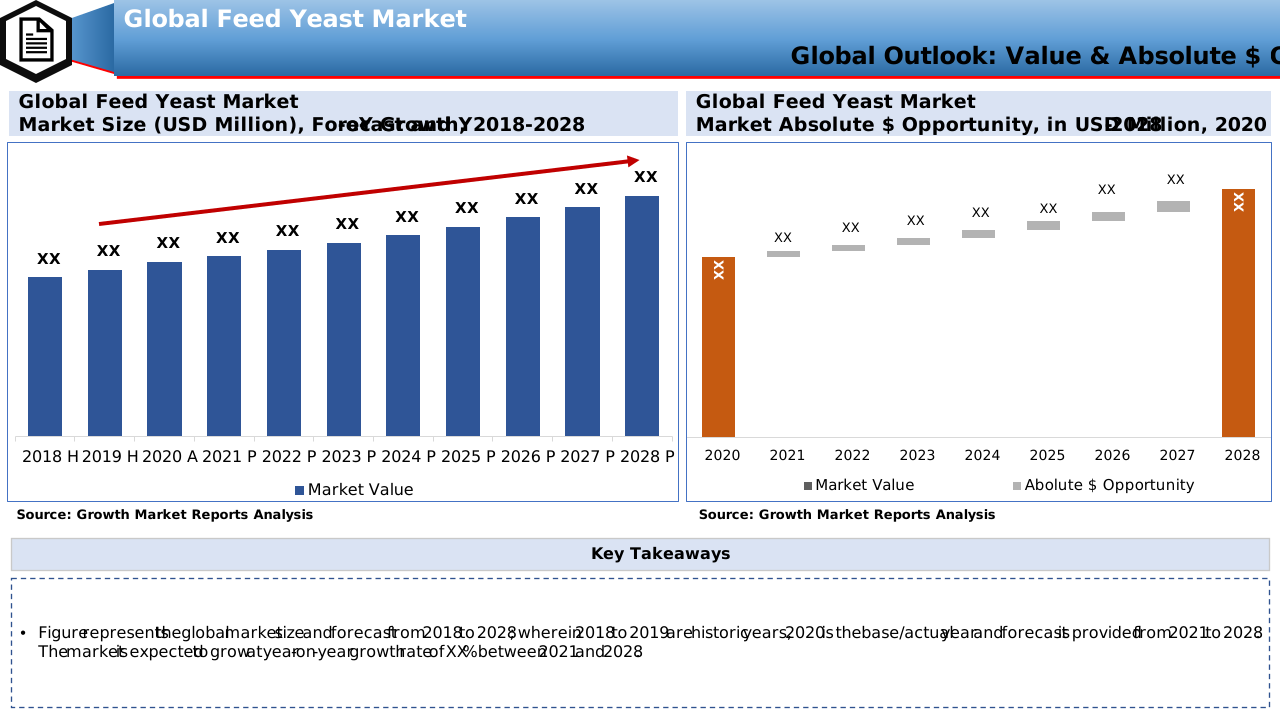
According to our latest research, the global feed yeast market size reached USD 2.13 billion in 2024, reflecting the robust integration of yeast-based additives in animal nutrition. The market is experiencing a healthy expansion, recording a CAGR of 5.7% during the forecast period. If this growth trajectory continues, the feed yeast market is projected to attain a value of USD 3.55 billion by 2033. The primary growth driver is the increasing global demand for high-quality animal protein, which is prompting livestock producers to seek advanced feed solutions that enhance animal health, productivity, and feed efficiency.

One of the key factors fueling the expansion of the feed yeast market is the rising awareness among feed manufacturers and livestock producers regarding the nutritional and functional benefits of yeast-based products. Feed yeast, including live yeast, spent yeast, and yeast derivatives, is being increasingly recognized for its ability to improve gut health, enhance immune response, and boost feed conversion ratios in a variety of animals such as poultry, swine, ruminants, and aquaculture species. The growing trend of antibiotic-free animal production systems, especially in developed regions, has further accelerated the adoption of yeast additives as natural growth promoters. This shift aligns with both regulatory pressures and consumer demand for safer, residue-free animal-derived foods, making feed yeast an indispensable component in modern animal nutrition programs.

Another significant growth driver is the continuous innovation in yeast fermentation and extraction technologies, which has enabled the production of highly functional and cost-effective yeast-based feed ingredients. Leading manufacturers are investing in research and development to create specialized yeast strains and derivatives tailored to address specific animal health challenges, such as stress mitigation, pathogen control, and improved nutrient utilization. These technological advancements are not only improving the efficacy of feed yeast but also expanding its application across a broader spectrum of livestock and aquaculture species. In addition, the integration of feed yeast with other feed additives, such as probiotics and enzymes, is gaining traction, offering synergistic benefits that further enhance animal performance and profitability for producers.

Sustainability concerns and the circular economy are also playing a pivotal role in shaping the feed yeast market landscape. The utilization of by-products from the bakery and brewery industries, such as bakerÂ’s yeast and brewerÂ’s yeast, as raw materials for feed yeast production, has created a win-win scenario for both waste management and value addition in the agri-food sector. This approach not only reduces environmental impact but also provides a cost-effective and reliable source of yeast biomass for feed applications. As global food systems strive for greater sustainability and resource efficiency, the role of feed yeast as a circular bio-ingredient is expected to gain further prominence, driving its adoption across diverse geographies and production systems.

The introduction of Hydrolyzed Yeast for Animal Nutrition is gaining traction as a novel approach to enhance the nutritional profile of animal feeds. Hydrolyzed yeast is produced through the enzymatic breakdown of yeast cells, resulting in a product rich in peptides, amino acids, and nucleotides. These components are highly bioavailable and can significantly improve the digestibility and absorption of nutrients in animals. By incorporating hydrolyzed yeast into feed formulations, producers can support better growth rates, improved immune function, and enhanced overall health in livestock. This innovation aligns with the growing demand for precision nutrition solutions that cater to the specific needs of different animal species, offering a promising avenue for optimizing feed efficiency and productivity.

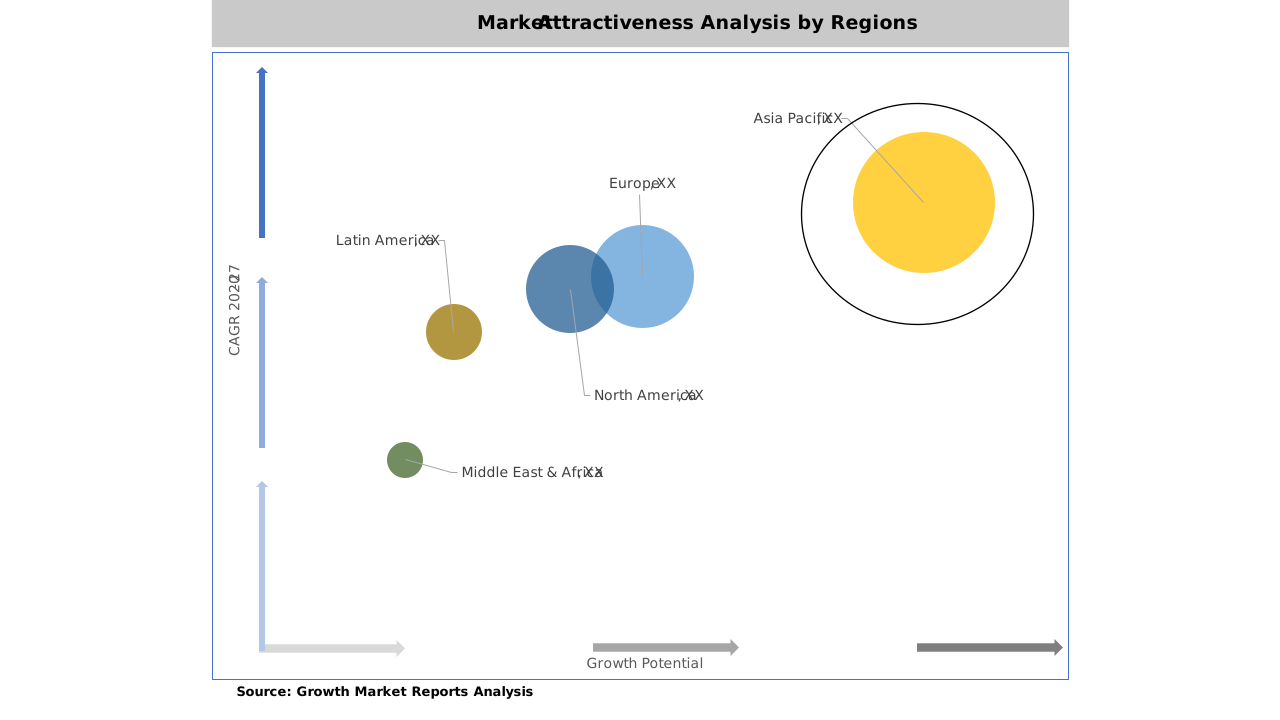
From a regional perspective, Asia Pacific remains the dominant market for feed yeast, accounting for the largest share in 2024 due to the regionÂ’s massive livestock population and rapidly expanding feed industry. North America and Europe are also significant contributors, driven by stringent regulatory frameworks, high livestock productivity standards, and a strong focus on antibiotic alternatives. Latin America and the Middle East & Africa are emerging as high-potential markets, supported by increasing investments in animal agriculture and rising awareness about advanced feed technologies. The regional outlook underscores the global nature of the feed yeast market, with growth opportunities spanning both mature and developing economies.

Global Feed Yeast Industry Outlook

Product Type Analysis

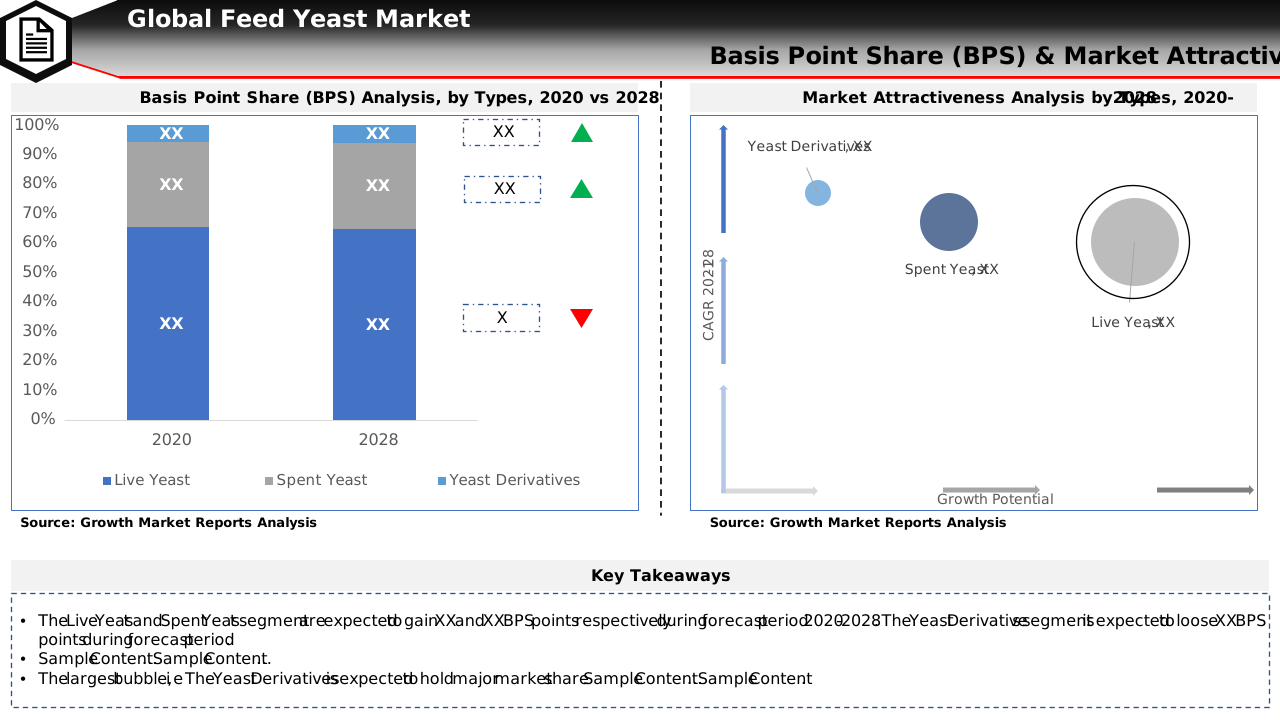
The feed yeast market is segmented by product type into live yeast, spent yeast, and yeast derivatives, each offering distinct functional benefits and application profiles. Live yeast products are particularly valued for their probiotic properties, which contribute to improved gut health, enhanced digestion, and better nutrient absorption in livestock. These benefits have made live yeast a preferred choice among poultry and ruminant producers, who seek to optimize feed efficiency and animal performance without relying on synthetic additives. The demand for live yeast is further supported by its ability to modulate the gut microbiota, reduce the incidence of digestive disorders, and support immune function, making it a cornerstone in antibiotic-free production systems.

Spent yeast, which is primarily a by-product of the brewing and bioethanol industries, has found increasing favor as a cost-effective and sustainable feed ingredient. While it contains lower levels of viable yeast cells compared to live yeast, spent yeast is rich in proteins, B-vitamins, and other bioactive compounds that contribute to animal growth and health. Its affordability and availability make it an attractive option for feed manufacturers, particularly in regions where cost sensitivity is paramount. The use of spent yeast also aligns with circular economy principles, as it enables the valorization of industrial by-products and reduces environmental waste.

Yeast derivatives, including yeast extracts, cell wall fractions, and beta-glucans, represent the most technologically advanced segment within the feed yeast market. These products are produced through specialized extraction and purification processes, resulting in highly concentrated functional ingredients that target specific animal health challenges. Yeast derivatives are widely used for their immunomodulatory, anti-inflammatory, and pathogen-binding properties, making them suitable for inclusion in high-value feed formulations for young animals, pets, and aquaculture species. The growing demand for precision nutrition and functional feed additives is expected to drive continued innovation and growth in the yeast derivatives segment.

The product type segmentation of the feed yeast market reflects the diverse needs of the animal nutrition industry, with each product offering unique advantages and application opportunities. As livestock producers increasingly prioritize animal health, productivity, and sustainability, the demand for specialized yeast-based products is expected to rise, driving further differentiation and value creation within the market. Manufacturers are responding by expanding their product portfolios, investing in advanced fermentation technologies, and developing customized solutions tailored to the specific requirements of different animal species and production systems.

Overall, the product type landscape in the feed yeast market is characterized by a dynamic interplay between innovation, sustainability, and cost-effectiveness. Live yeast, spent yeast, and yeast derivatives each play a critical role in meeting the evolving needs of the global livestock industry, ensuring that feed yeast remains a vital component of modern animal nutrition strategies.

Report Scope

Attributes Details
Report Title Feed Yeast Market Research Report 2033
By Product Type Live Yeast, Spent Yeast, Yeast Derivatives
By Application Poultry, Swine, Ruminants, Aquaculture, Pets, Others
By Form Dry, Liquid
By Source BakerÂ’s Yeast, BrewerÂ’s Yeast, Others
By Distribution Channel Direct, Indirect
Regions Covered North America, Europe, APAC, Latin America, MEA
Base Year 2024
Historic Data 2018-2023
Forecast Period 2025-2033
Number of Pages 269
Number of Tables & Figures 377
Customization Available Yes, the report can be customized as per your need.

Application Analysis

The application segment of the feed yeast market encompasses poultry, swine, ruminants, aquaculture, pets, and others, reflecting the widespread adoption of yeast-based feed additives across diverse animal species. Poultry remains the largest application area, accounting for a significant share of the market in 2024. The high feed conversion efficiency and rapid growth rates of poultry make them particularly responsive to the nutritional and functional benefits of feed yeast. Yeast supplementation in poultry diets has been shown to improve gut health, enhance immunity, and reduce the risk of enteric diseases, contributing to higher productivity and better flock health. The increasing consumer demand for antibiotic-free poultry products is further driving the adoption of yeast-based alternatives in this segment.

The swine segment is another major contributor to the feed yeast market, driven by the need to improve feed efficiency, support gut integrity, and mitigate the impact of weaning stress in piglets. Yeast products, particularly live yeast and derivatives, have demonstrated efficacy in enhancing nutrient digestibility, reducing the prevalence of gastrointestinal disorders, and supporting immune function in swine. These benefits are especially valuable in intensive production systems, where maintaining animal health and minimizing the use of antibiotics are top priorities. The growing emphasis on sustainable and responsible swine production practices is expected to further boost the demand for yeast-based feed additives in this segment.

Ruminants, including dairy and beef cattle, represent a significant application area for feed yeast, particularly live yeast products. The unique digestive physiology of ruminants, characterized by a complex microbial ecosystem in the rumen, makes them highly responsive to yeast supplementation. Live yeast has been shown to stabilize rumen pH, enhance fiber digestion, and improve milk yield and composition in dairy cows. These benefits translate into higher productivity, better feed utilization, and improved profitability for ruminant producers. The increasing focus on reducing methane emissions and enhancing the sustainability of ruminant production systems is also driving the adoption of yeast-based feed solutions.

The aquaculture and pet segments, while smaller in absolute terms, are experiencing rapid growth as producers seek advanced nutrition solutions to support animal health, growth, and disease resistance. In aquaculture, yeast derivatives are used to enhance immune response, improve gut health, and support stress resilience in fish and shrimp. The pet food industry is leveraging yeast extracts and beta-glucans to develop functional diets that promote digestive health, immune function, and overall well-being in companion animals. As consumer expectations for animal health and welfare continue to rise, the application of feed yeast in these segments is expected to expand, offering new growth opportunities for market players.

The application analysis of the feed yeast market highlights the versatility and broad utility of yeast-based feed additives across multiple animal species. By addressing key challenges in animal health, nutrition, and sustainability, feed yeast is poised to play an increasingly important role in the global animal agriculture landscape.

Form Analysis

The form segment of the feed yeast market is bifurcated into dry and liquid forms, each catering to specific processing, storage, and application requirements within the animal feed industry. Dry feed yeast is the most widely used form, owing to its ease of handling, longer shelf life, and compatibility with a wide range of feed manufacturing processes. The stability of dry yeast products during storage and transportation makes them particularly suitable for large-scale commercial feed operations, where logistical efficiency and product integrity are paramount. Dry yeast is available in various formats, including powders, granules, and pellets, allowing for flexible incorporation into compound feeds, premixes, and supplements.

Liquid feed yeast, while less prevalent than its dry counterpart, is gaining traction in specific applications where rapid assimilation and targeted delivery of yeast bioactives are desired. Liquid yeast products are often used in feed mills with advanced dosing systems, enabling precise and uniform distribution of yeast throughout the feed matrix. This form is particularly advantageous in applications where immediate bioavailability and functional efficacy are critical, such as in starter feeds for young animals or in stress mitigation protocols. The development of stabilized liquid yeast formulations has addressed some of the historical challenges related to shelf life and microbial contamination, making liquid yeast a viable option for specialized feed applications.

The choice between dry and liquid feed yeast is influenced by several factors, including feed manufacturing infrastructure, animal species, and specific nutritional objectives. For instance, large commercial poultry and swine operations often prefer dry yeast due to its compatibility with automated feed production lines and ease of storage. In contrast, high-value segments such as aquaculture and pet food may opt for liquid yeast to leverage its rapid bioactivity and customizable dosing capabilities. The ongoing evolution of feed processing technologies and the increasing emphasis on precision nutrition are expected to drive further innovation in both dry and liquid yeast formulations.

Manufacturers are investing in advanced drying and stabilization techniques to enhance the functional properties and shelf stability of dry yeast products. Technologies such as spray drying, freeze drying, and encapsulation are being employed to preserve the viability and bioactivity of yeast cells, ensuring consistent performance in animal diets. Similarly, the development of novel liquid yeast delivery systems, including emulsions and suspensions, is enabling the creation of highly functional and user-friendly products tailored to the needs of modern feed mills and producers.

The form analysis of the feed yeast market underscores the importance of product versatility and technological innovation in meeting the diverse requirements of the global animal feed industry. By offering both dry and liquid options, feed yeast manufacturers are well-positioned to address the evolving needs of producers across different species, production systems, and geographic regions.

Source Analysis

The feed yeast market is also segmented by source, primarily into bakerÂ’s yeast, brewerÂ’s yeast, and others. BakerÂ’s yeast is a major source of feed yeast, leveraging the extensive global bakery industry as a supplier of high-quality, nutrient-rich yeast biomass. The widespread availability and consistent quality of bakerÂ’s yeast make it a preferred choice for feed manufacturers seeking reliable and cost-effective raw materials. BakerÂ’s yeast is particularly valued for its high protein content, B-vitamin profile, and functional bioactives, which contribute to improved animal growth, immunity, and feed efficiency.

BrewerÂ’s yeast, a by-product of the brewing industry, is another important source of feed yeast, offering a sustainable and circular solution for both waste management and animal nutrition. BrewerÂ’s yeast is rich in proteins, amino acids, vitamins, and minerals, making it an excellent feed ingredient for a variety of animal species. Its use in animal feed not only adds value to brewing by-products but also aligns with the growing emphasis on environmental sustainability and resource efficiency in the agri-food sector. BrewerÂ’s yeast is particularly popular in ruminant and swine feeds, where its nutritional profile and functional benefits are well-recognized.

The others category includes yeast derived from alternative fermentation processes, specialty yeast strains, and emerging sources such as bioethanol production. These sources are gaining attention as the feed yeast market seeks to diversify its raw material base and reduce dependency on traditional supply chains. Advances in fermentation technology and microbial biotechnology are enabling the production of customized yeast strains with enhanced functional properties, tailored to specific animal health and nutrition requirements. The development of novel yeast sources is expected to drive further innovation and differentiation in the feed yeast market, creating new opportunities for value creation and competitive advantage.

The source segmentation of the feed yeast market reflects the industryÂ’s commitment to sustainability, resource optimization, and technological advancement. By leveraging a diverse array of yeast sources, feed manufacturers are able to offer a wide range of products that meet the specific needs of different animal species, production systems, and geographic regions. The integration of circular economy principles and the valorization of industrial by-products are expected to remain key trends in the feed yeast market, supporting both environmental and economic sustainability.

As the global demand for high-quality animal protein continues to rise, the importance of reliable, sustainable, and functional feed yeast sources will only increase. Manufacturers are investing in supply chain optimization, quality assurance, and R&D to ensure the consistent availability and performance of yeast-based feed ingredients, positioning the feed yeast market for continued growth and innovation.

Distribution Channel Analysis

The distribution channel segment of the feed yeast market is divided into direct and indirect channels, each playing a critical role in ensuring the efficient delivery of yeast-based feed additives to end users. Direct distribution involves manufacturers supplying feed yeast products directly to large-scale feed mills, integrators, and commercial livestock producers. This channel is characterized by strong supplier-customer relationships, customized product offerings, and streamlined logistics, enabling manufacturers to respond quickly to changing customer needs and market trends. Direct distribution is particularly prevalent in developed regions, where large commercial operations dominate the animal feed industry and demand high levels of service and technical support.

Indirect distribution involves the use of intermediaries such as distributors, wholesalers, and retailers to reach a broader base of customers, including small and medium-sized feed mills, independent livestock producers, and specialty feed manufacturers. This channel is essential for expanding market reach, especially in emerging economies where the feed industry is highly fragmented and access to advanced feed additives may be limited. Indirect distribution enables manufacturers to leverage the local market knowledge, sales networks, and logistical capabilities of their partners, facilitating the efficient delivery of feed yeast products to diverse customer segments.

The choice of distribution channel is influenced by several factors, including market structure, customer preferences, and regulatory requirements. In regions with highly consolidated feed industries, such as North America and Western Europe, direct distribution is often favored for its ability to provide tailored solutions and technical support to large-scale customers. In contrast, in regions with a more fragmented feed industry landscape, such as Asia Pacific and Latin America, indirect distribution is essential for reaching a wide array of small and medium-sized producers.

Manufacturers are increasingly adopting hybrid distribution strategies that combine the strengths of both direct and indirect channels, enabling them to maximize market penetration and customer engagement. This approach allows for the customization of product offerings and services to meet the specific needs of different customer segments, while also leveraging the scale and efficiency of established distribution networks. The ongoing digital transformation of the animal feed industry is also driving innovation in distribution, with e-commerce platforms and digital marketplaces emerging as new channels for feed yeast sales and customer engagement.

The distribution channel analysis underscores the importance of flexibility, market knowledge, and customer-centricity in the feed yeast market. By optimizing their distribution strategies, manufacturers are able to ensure the timely and efficient delivery of high-quality yeast-based feed additives to producers around the world, supporting the continued growth and development of the global animal agriculture sector.

Opportunities & Threats

The feed yeast market is poised for significant opportunities over the forecast period, driven by the global shift towards sustainable and antibiotic-free animal production systems. As regulatory authorities and consumers increasingly demand safe, high-quality animal-derived foods, the adoption of yeast-based feed additives is expected to accelerate across both developed and emerging markets. The rising prevalence of zoonotic diseases and the associated focus on animal health and biosecurity are creating additional demand for functional feed ingredients that support immune function and disease resistance. Furthermore, the integration of feed yeast with other advanced feed technologies, such as probiotics, enzymes, and precision nutrition platforms, offers substantial potential for product innovation and value creation.

Another major opportunity lies in the expansion of the feed yeast market into new and emerging application areas, such as aquaculture, pet food, and specialty livestock species. As producers seek to differentiate their products and meet evolving consumer preferences, the demand for functional and value-added feed yeast products is expected to rise. The development of novel yeast strains and derivatives with enhanced bioactivity, targeted health benefits, and improved cost-effectiveness will further expand the marketÂ’s growth potential. In addition, the increasing focus on circular economy principles and the valorization of industrial by-products as yeast sources are expected to drive sustainability and resource efficiency in the feed yeast value chain.

Despite these opportunities, the feed yeast market faces several restraining factors that could impact its growth trajectory. One of the primary challenges is the volatility in raw material supply and pricing, particularly for bakerÂ’s yeast and brewerÂ’s yeast, which are dependent on the performance of the bakery and brewing industries. Fluctuations in the availability and quality of these by-products can affect the consistency and cost-effectiveness of feed yeast production. In addition, the market faces competition from alternative feed additives, such as probiotics, prebiotics, and synthetic growth promoters, which may offer similar functional benefits at competitive price points. Regulatory hurdles related to the approval and labeling of yeast-based feed additives in certain regions can also pose barriers to market entry and expansion.

Regional Outlook

Asia Pacific continues to dominate the global feed yeast market, accounting for the largest regional share in 2024 with a market size of USD 0.77 billion. The regionÂ’s leadership is underpinned by its vast livestock population, rapid urbanization, and growing consumer demand for high-quality animal protein. Countries such as China, India, and Vietnam are experiencing strong growth in animal agriculture, supported by investments in feed infrastructure, technology adoption, and government initiatives aimed at improving food security and safety. The Asia Pacific feed yeast market is expected to maintain a robust CAGR of 6.2% through 2033, driven by continued expansion in both commercial and smallholder livestock production systems.

North America and Europe are also significant contributors to the global feed yeast market, with market sizes of USD 0.54 billion and USD 0.46 billion respectively in 2024. These regions are characterized by highly advanced animal agriculture sectors, stringent regulatory frameworks, and a strong emphasis on antibiotic alternatives and sustainable production practices. The adoption of feed yeast in North America and Europe is supported by high levels of technical expertise, robust R&D capabilities, and well-established distribution networks. The focus on animal welfare, food safety, and environmental sustainability is expected to drive continued growth in these mature markets.

Latin America and the Middle East & Africa represent emerging markets for feed yeast, with combined market sizes of USD 0.36 billion in 2024. These regions are witnessing increasing investments in animal agriculture, rising awareness about advanced feed technologies, and growing demand for high-quality animal protein. While the adoption of feed yeast is still at an early stage in many countries, the potential for market expansion is significant, particularly as producers seek to improve productivity, animal health, and resource efficiency. The regional outlook for the feed yeast market highlights the global nature of the industry, with growth opportunities spanning both established and developing economies.

Feed Yeast Market Statistics

Competitor Outlook

The competitive landscape of the feed yeast market is characterized by the presence of both multinational corporations and regional players, each vying for market share through innovation, product differentiation, and strategic partnerships. Leading companies are investing heavily in research and development to create advanced yeast strains, derivatives, and formulations that address specific animal health and nutrition challenges. The focus on product quality, efficacy, and sustainability is driving the development of next-generation feed yeast products that deliver enhanced functional benefits and value to producers. In addition, manufacturers are expanding their global footprint through mergers, acquisitions, and collaborations with local partners, enabling them to tap into new markets and customer segments.

Innovation is a key competitive driver in the feed yeast market, with companies leveraging advances in fermentation technology, microbial biotechnology, and precision nutrition to develop highly specialized and functional yeast-based feed additives. The integration of digital tools and data analytics is enabling manufacturers to offer customized solutions and technical support to customers, further strengthening their competitive position. Sustainability is also emerging as a critical differentiator, with companies emphasizing the use of renewable raw materials, circular economy principles, and environmentally friendly production processes in their marketing and branding efforts.

The market is witnessing increasing consolidation, as larger players seek to enhance their market presence and capabilities through strategic acquisitions and partnerships. This trend is enabling companies to achieve economies of scale, optimize their supply chains, and expand their product portfolios to meet the evolving needs of the global animal feed industry. At the same time, regional and niche players are carving out competitive advantages by focusing on specialized applications, local market knowledge, and customer service excellence. The dynamic and competitive nature of the feed yeast market is expected to drive continued innovation, investment, and value creation over the forecast period.

Some of the major companies operating in the global feed yeast market include Lesaffre Group, Alltech Inc., Angel Yeast Co. Ltd., Cargill Inc., Archer Daniels Midland Company, Lallemand Inc., Nutreco N.V., Associated British Foods plc, Diamond V (Cargill), and Novus International. Lesaffre Group is renowned for its extensive portfolio of yeast and fermentation products, serving both the animal nutrition and food industries. Alltech Inc. is a global leader in animal health and nutrition, with a strong focus on innovative yeast-based feed solutions. Angel Yeast Co. Ltd. is a major player in the production of yeast and yeast derivatives, with a significant presence in the Asia Pacific region.

Cargill Inc. and Archer Daniels Midland Company are two of the largest agribusiness conglomerates in the world, offering a wide range of feed ingredients, including yeast-based products. Lallemand Inc. specializes in the development and production of yeast and bacteria for animal nutrition, with a strong emphasis on research and technical support. Nutreco N.V. is a leading provider of animal nutrition solutions, including functional feed yeast products for livestock, aquaculture, and pets. Associated British Foods plc and Diamond V (a Cargill subsidiary) are also prominent players, known for their high-quality yeast products and commitment to sustainability.

Novus International is recognized for its focus on science-based animal nutrition solutions, including yeast-based additives that support gut health, immunity, and performance. These companies are continuously investing in product innovation, quality assurance, and customer engagement to maintain their competitive edge in the global feed yeast market. The presence of both global and regional players ensures a dynamic and competitive market environment, fostering innovation and driving the continued growth and development of the feed yeast industry.

Key Players

  • Associated British Foods plc
  • Lesaffre Group
  • Alltech Inc.
  • Angel Yeast Co., Ltd.
  • Cargill, Incorporated
  • Nutreco N.V.
  • Lallemand Inc.
  • ADM Animal Nutrition
  • Phibro Animal Health Corporation
  • Kemin Industries, Inc.
  • Diamond V Mills, Inc.
  • Oriental Yeast Co., Ltd.
  • Bio Springer
  • Leiber GmbH
  • Ohly GmbH
  • Novus International, Inc.
  • Synergy Flavors (Kerry Group)
  • Biorigin (Zilor)
  • Chr. Hansen Holding A/S
  • Titan Biotech Limited
Feed Yeast Market Overview

Segments

The Feed Yeast market has been segmented on the basis of

Product Type

  • Live Yeast
  • Spent Yeast
  • Yeast Derivatives

Application

  • Poultry
  • Swine
  • Ruminants
  • Aquaculture
  • Pets
  • Others

Form

  • Dry
  • Liquid

Source

  • Baker’s Yeast
  • Brewer’s Yeast
  • Others

Distribution Channel

  • Direct
  • Indirect

Competitive Landscape

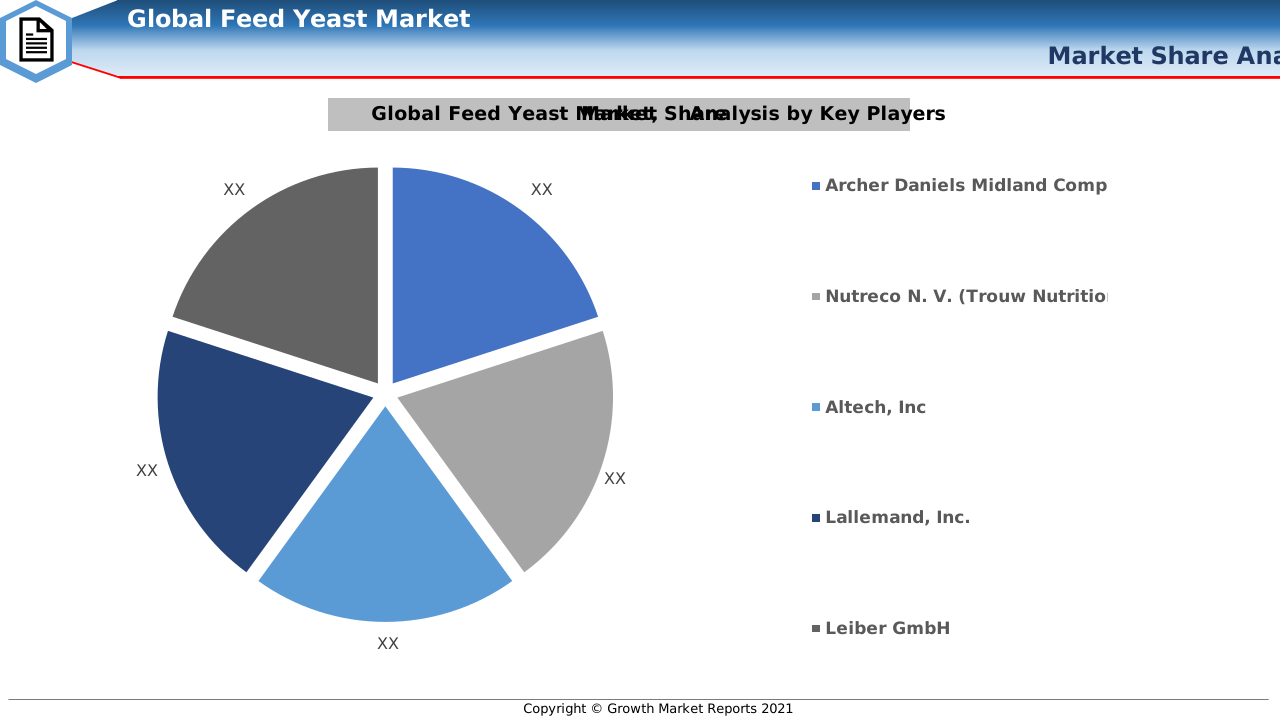
Key players competing in the global feed yeast market include Archer Daniels Midland Company.; Nutreco N. V. (Trouw Nutrition).; Altech, Inc.; Lallemand, Inc.; Leiber GmbH. Some of these players are using several market strategies such as acquisitions, merger, collaborations, partnerships, capacity expansion, and product launches to enhance their market shares and to generate revenue and raise their production line of the business in the coming years.

Global Feed Yeast Market keyplayers

Frequently Asked Questions

Opportunities include the shift toward sustainable and antibiotic-free animal production, expansion into aquaculture and pet food, and product innovation. Challenges include raw material price volatility, competition from alternative feed additives, and regulatory hurdles.

Key companies include Lesaffre Group, Alltech Inc., Angel Yeast Co. Ltd., Cargill Inc., Archer Daniels Midland Company, Lallemand Inc., Nutreco N.V., Associated British Foods plc, Diamond V, and Novus International.

Feed yeast is distributed through direct channels (manufacturers to large feed mills and producers) and indirect channels (distributors, wholesalers, and retailers), with hybrid strategies increasingly adopted to maximize market reach.

Asia Pacific is the dominant region, followed by North America and Europe. Latin America and the Middle East & Africa are emerging markets with significant growth potential.

Feed yeast production often utilizes by-products from the bakery and brewery industries, reducing waste and supporting circular economy principles by converting industrial by-products into valuable animal nutrition ingredients.

Feed yeast is available in dry and liquid forms. Major sources include baker’s yeast, brewer’s yeast, and other specialty yeast strains derived from fermentation and bioethanol production.

Feed yeast is widely used in poultry, swine, ruminants (dairy and beef cattle), aquaculture, and pet nutrition, with poultry being the largest application segment.

The feed yeast market is segmented into live yeast, spent yeast, and yeast derivatives. Each type offers unique benefits, such as probiotic effects, cost-effectiveness, and targeted functional properties.

Key growth drivers include rising demand for high-quality animal protein, increased awareness of the nutritional benefits of yeast-based additives, the shift towards antibiotic-free animal production, and advancements in yeast fermentation technologies.

The global feed yeast market reached USD 2.13 billion in 2024 and is expected to grow at a CAGR of 5.7%, reaching approximately USD 3.55 billion by 2033.

Table Of Content

Chapter 1 Executive Summary
Chapter 2 Assumptions and Acronyms Used
Chapter 3 Research Methodology
Chapter 4 Feed Yeast Market Overview
   4.1 Introduction
      4.1.1 Market Taxonomy
      4.1.2 Market Definition
      4.1.3 Macro-Economic Factors Impacting the Market Growth
   4.2 Feed Yeast Market Dynamics
      4.2.1 Market Drivers
      4.2.2 Market Restraints
      4.2.3 Market Opportunity
   4.3 Feed Yeast Market - Supply Chain Analysis
      4.3.1 List of Key Suppliers
      4.3.2 List of Key Distributors
      4.3.3 List of Key Consumers
   4.4 Key Forces Shaping the Feed Yeast Market
      4.4.1 Bargaining Power of Suppliers
      4.4.2 Bargaining Power of Buyers
      4.4.3 Threat of Substitution
      4.4.4 Threat of New Entrants
      4.4.5 Competitive Rivalry
   4.5 Global Feed Yeast Market Size & Forecast, 2023-2032
      4.5.1 Feed Yeast Market Size and Y-o-Y Growth
      4.5.2 Feed Yeast Market Absolute $ Opportunity

Chapter 5 Global Feed Yeast Market Analysis and Forecast By Product Type
   5.1 Introduction
      5.1.1 Key Market Trends & Growth Opportunities By Product Type
      5.1.2 Basis Point Share (BPS) Analysis By Product Type
      5.1.3 Absolute $ Opportunity Assessment By Product Type
   5.2 Feed Yeast Market Size Forecast By Product Type
      5.2.1 Live Yeast
      5.2.2 Spent Yeast
      5.2.3 Yeast Derivatives
   5.3 Market Attractiveness Analysis By Product Type

Chapter 6 Global Feed Yeast Market Analysis and Forecast By Application
   6.1 Introduction
      6.1.1 Key Market Trends & Growth Opportunities By Application
      6.1.2 Basis Point Share (BPS) Analysis By Application
      6.1.3 Absolute $ Opportunity Assessment By Application
   6.2 Feed Yeast Market Size Forecast By Application
      6.2.1 Poultry
      6.2.2 Swine
      6.2.3 Ruminants
      6.2.4 Aquaculture
      6.2.5 Pets
      6.2.6 Others
   6.3 Market Attractiveness Analysis By Application

Chapter 7 Global Feed Yeast Market Analysis and Forecast By Form
   7.1 Introduction
      7.1.1 Key Market Trends & Growth Opportunities By Form
      7.1.2 Basis Point Share (BPS) Analysis By Form
      7.1.3 Absolute $ Opportunity Assessment By Form
   7.2 Feed Yeast Market Size Forecast By Form
      7.2.1 Dry
      7.2.2 Liquid
   7.3 Market Attractiveness Analysis By Form

Chapter 8 Global Feed Yeast Market Analysis and Forecast By Source
   8.1 Introduction
      8.1.1 Key Market Trends & Growth Opportunities By Source
      8.1.2 Basis Point Share (BPS) Analysis By Source
      8.1.3 Absolute $ Opportunity Assessment By Source
   8.2 Feed Yeast Market Size Forecast By Source
      8.2.1 Baker’s Yeast
      8.2.2 Brewer’s Yeast
      8.2.3 Others
   8.3 Market Attractiveness Analysis By Source

Chapter 9 Global Feed Yeast Market Analysis and Forecast By Distribution Channel
   9.1 Introduction
      9.1.1 Key Market Trends & Growth Opportunities By Distribution Channel
      9.1.2 Basis Point Share (BPS) Analysis By Distribution Channel
      9.1.3 Absolute $ Opportunity Assessment By Distribution Channel
   9.2 Feed Yeast Market Size Forecast By Distribution Channel
      9.2.1 Direct
      9.2.2 Indirect
   9.3 Market Attractiveness Analysis By Distribution Channel

Chapter 10 Global Feed Yeast Market Analysis and Forecast by Region
   10.1 Introduction
      10.1.1 Key Market Trends & Growth Opportunities By Region
      10.1.2 Basis Point Share (BPS) Analysis By Region
      10.1.3 Absolute $ Opportunity Assessment By Region
   10.2 Feed Yeast Market Size Forecast By Region
      10.2.1 North America
      10.2.2 Europe
      10.2.3 Asia Pacific
      10.2.4 Latin America
      10.2.5 Middle East & Africa (MEA)
   10.3 Market Attractiveness Analysis By Region

Chapter 11 Coronavirus Disease (COVID-19) Impact 
   11.1 Introduction 
   11.2 Current & Future Impact Analysis 
   11.3 Economic Impact Analysis 
   11.4 Government Policies 
   11.5 Investment Scenario

Chapter 12 North America Feed Yeast Analysis and Forecast
   12.1 Introduction
   12.2 North America Feed Yeast Market Size Forecast by Country
      12.2.1 U.S.
      12.2.2 Canada
   12.3 Basis Point Share (BPS) Analysis by Country
   12.4 Absolute $ Opportunity Assessment by Country
   12.5 Market Attractiveness Analysis by Country
   12.6 North America Feed Yeast Market Size Forecast By Product Type
      12.6.1 Live Yeast
      12.6.2 Spent Yeast
      12.6.3 Yeast Derivatives
   12.7 Basis Point Share (BPS) Analysis By Product Type 
   12.8 Absolute $ Opportunity Assessment By Product Type 
   12.9 Market Attractiveness Analysis By Product Type
   12.10 North America Feed Yeast Market Size Forecast By Application
      12.10.1 Poultry
      12.10.2 Swine
      12.10.3 Ruminants
      12.10.4 Aquaculture
      12.10.5 Pets
      12.10.6 Others
   12.11 Basis Point Share (BPS) Analysis By Application 
   12.12 Absolute $ Opportunity Assessment By Application 
   12.13 Market Attractiveness Analysis By Application
   12.14 North America Feed Yeast Market Size Forecast By Form
      12.14.1 Dry
      12.14.2 Liquid
   12.15 Basis Point Share (BPS) Analysis By Form 
   12.16 Absolute $ Opportunity Assessment By Form 
   12.17 Market Attractiveness Analysis By Form
   12.18 North America Feed Yeast Market Size Forecast By Source
      12.18.1 Baker’s Yeast
      12.18.2 Brewer’s Yeast
      12.18.3 Others
   12.19 Basis Point Share (BPS) Analysis By Source 
   12.20 Absolute $ Opportunity Assessment By Source 
   12.21 Market Attractiveness Analysis By Source
   12.22 North America Feed Yeast Market Size Forecast By Distribution Channel
      12.22.1 Direct
      12.22.2 Indirect
   12.23 Basis Point Share (BPS) Analysis By Distribution Channel 
   12.24 Absolute $ Opportunity Assessment By Distribution Channel 
   12.25 Market Attractiveness Analysis By Distribution Channel

Chapter 13 Europe Feed Yeast Analysis and Forecast
   13.1 Introduction
   13.2 Europe Feed Yeast Market Size Forecast by Country
      13.2.1 Germany
      13.2.2 France
      13.2.3 Italy
      13.2.4 U.K.
      13.2.5 Spain
      13.2.6 Russia
      13.2.7 Rest of Europe
   13.3 Basis Point Share (BPS) Analysis by Country
   13.4 Absolute $ Opportunity Assessment by Country
   13.5 Market Attractiveness Analysis by Country
   13.6 Europe Feed Yeast Market Size Forecast By Product Type
      13.6.1 Live Yeast
      13.6.2 Spent Yeast
      13.6.3 Yeast Derivatives
   13.7 Basis Point Share (BPS) Analysis By Product Type 
   13.8 Absolute $ Opportunity Assessment By Product Type 
   13.9 Market Attractiveness Analysis By Product Type
   13.10 Europe Feed Yeast Market Size Forecast By Application
      13.10.1 Poultry
      13.10.2 Swine
      13.10.3 Ruminants
      13.10.4 Aquaculture
      13.10.5 Pets
      13.10.6 Others
   13.11 Basis Point Share (BPS) Analysis By Application 
   13.12 Absolute $ Opportunity Assessment By Application 
   13.13 Market Attractiveness Analysis By Application
   13.14 Europe Feed Yeast Market Size Forecast By Form
      13.14.1 Dry
      13.14.2 Liquid
   13.15 Basis Point Share (BPS) Analysis By Form 
   13.16 Absolute $ Opportunity Assessment By Form 
   13.17 Market Attractiveness Analysis By Form
   13.18 Europe Feed Yeast Market Size Forecast By Source
      13.18.1 Baker’s Yeast
      13.18.2 Brewer’s Yeast
      13.18.3 Others
   13.19 Basis Point Share (BPS) Analysis By Source 
   13.20 Absolute $ Opportunity Assessment By Source 
   13.21 Market Attractiveness Analysis By Source
   13.22 Europe Feed Yeast Market Size Forecast By Distribution Channel
      13.22.1 Direct
      13.22.2 Indirect
   13.23 Basis Point Share (BPS) Analysis By Distribution Channel 
   13.24 Absolute $ Opportunity Assessment By Distribution Channel 
   13.25 Market Attractiveness Analysis By Distribution Channel

Chapter 14 Asia Pacific Feed Yeast Analysis and Forecast
   14.1 Introduction
   14.2 Asia Pacific Feed Yeast Market Size Forecast by Country
      14.2.1 China
      14.2.2 Japan
      14.2.3 South Korea
      14.2.4 India
      14.2.5 Australia
      14.2.6 South East Asia (SEA)
      14.2.7 Rest of Asia Pacific (APAC)
   14.3 Basis Point Share (BPS) Analysis by Country
   14.4 Absolute $ Opportunity Assessment by Country
   14.5 Market Attractiveness Analysis by Country
   14.6 Asia Pacific Feed Yeast Market Size Forecast By Product Type
      14.6.1 Live Yeast
      14.6.2 Spent Yeast
      14.6.3 Yeast Derivatives
   14.7 Basis Point Share (BPS) Analysis By Product Type 
   14.8 Absolute $ Opportunity Assessment By Product Type 
   14.9 Market Attractiveness Analysis By Product Type
   14.10 Asia Pacific Feed Yeast Market Size Forecast By Application
      14.10.1 Poultry
      14.10.2 Swine
      14.10.3 Ruminants
      14.10.4 Aquaculture
      14.10.5 Pets
      14.10.6 Others
   14.11 Basis Point Share (BPS) Analysis By Application 
   14.12 Absolute $ Opportunity Assessment By Application 
   14.13 Market Attractiveness Analysis By Application
   14.14 Asia Pacific Feed Yeast Market Size Forecast By Form
      14.14.1 Dry
      14.14.2 Liquid
   14.15 Basis Point Share (BPS) Analysis By Form 
   14.16 Absolute $ Opportunity Assessment By Form 
   14.17 Market Attractiveness Analysis By Form
   14.18 Asia Pacific Feed Yeast Market Size Forecast By Source
      14.18.1 Baker’s Yeast
      14.18.2 Brewer’s Yeast
      14.18.3 Others
   14.19 Basis Point Share (BPS) Analysis By Source 
   14.20 Absolute $ Opportunity Assessment By Source 
   14.21 Market Attractiveness Analysis By Source
   14.22 Asia Pacific Feed Yeast Market Size Forecast By Distribution Channel
      14.22.1 Direct
      14.22.2 Indirect
   14.23 Basis Point Share (BPS) Analysis By Distribution Channel 
   14.24 Absolute $ Opportunity Assessment By Distribution Channel 
   14.25 Market Attractiveness Analysis By Distribution Channel

Chapter 15 Latin America Feed Yeast Analysis and Forecast
   15.1 Introduction
   15.2 Latin America Feed Yeast Market Size Forecast by Country
      15.2.1 Brazil
      15.2.2 Mexico
      15.2.3 Rest of Latin America (LATAM)
   15.3 Basis Point Share (BPS) Analysis by Country
   15.4 Absolute $ Opportunity Assessment by Country
   15.5 Market Attractiveness Analysis by Country
   15.6 Latin America Feed Yeast Market Size Forecast By Product Type
      15.6.1 Live Yeast
      15.6.2 Spent Yeast
      15.6.3 Yeast Derivatives
   15.7 Basis Point Share (BPS) Analysis By Product Type 
   15.8 Absolute $ Opportunity Assessment By Product Type 
   15.9 Market Attractiveness Analysis By Product Type
   15.10 Latin America Feed Yeast Market Size Forecast By Application
      15.10.1 Poultry
      15.10.2 Swine
      15.10.3 Ruminants
      15.10.4 Aquaculture
      15.10.5 Pets
      15.10.6 Others
   15.11 Basis Point Share (BPS) Analysis By Application 
   15.12 Absolute $ Opportunity Assessment By Application 
   15.13 Market Attractiveness Analysis By Application
   15.14 Latin America Feed Yeast Market Size Forecast By Form
      15.14.1 Dry
      15.14.2 Liquid
   15.15 Basis Point Share (BPS) Analysis By Form 
   15.16 Absolute $ Opportunity Assessment By Form 
   15.17 Market Attractiveness Analysis By Form
   15.18 Latin America Feed Yeast Market Size Forecast By Source
      15.18.1 Baker’s Yeast
      15.18.2 Brewer’s Yeast
      15.18.3 Others
   15.19 Basis Point Share (BPS) Analysis By Source 
   15.20 Absolute $ Opportunity Assessment By Source 
   15.21 Market Attractiveness Analysis By Source
   15.22 Latin America Feed Yeast Market Size Forecast By Distribution Channel
      15.22.1 Direct
      15.22.2 Indirect
   15.23 Basis Point Share (BPS) Analysis By Distribution Channel 
   15.24 Absolute $ Opportunity Assessment By Distribution Channel 
   15.25 Market Attractiveness Analysis By Distribution Channel

Chapter 16 Middle East & Africa (MEA) Feed Yeast Analysis and Forecast
   16.1 Introduction
   16.2 Middle East & Africa (MEA) Feed Yeast Market Size Forecast by Country
      16.2.1 Saudi Arabia
      16.2.2 South Africa
      16.2.3 UAE
      16.2.4 Rest of Middle East & Africa (MEA)
   16.3 Basis Point Share (BPS) Analysis by Country
   16.4 Absolute $ Opportunity Assessment by Country
   16.5 Market Attractiveness Analysis by Country
   16.6 Middle East & Africa (MEA) Feed Yeast Market Size Forecast By Product Type
      16.6.1 Live Yeast
      16.6.2 Spent Yeast
      16.6.3 Yeast Derivatives
   16.7 Basis Point Share (BPS) Analysis By Product Type 
   16.8 Absolute $ Opportunity Assessment By Product Type 
   16.9 Market Attractiveness Analysis By Product Type
   16.10 Middle East & Africa (MEA) Feed Yeast Market Size Forecast By Application
      16.10.1 Poultry
      16.10.2 Swine
      16.10.3 Ruminants
      16.10.4 Aquaculture
      16.10.5 Pets
      16.10.6 Others
   16.11 Basis Point Share (BPS) Analysis By Application 
   16.12 Absolute $ Opportunity Assessment By Application 
   16.13 Market Attractiveness Analysis By Application
   16.14 Middle East & Africa (MEA) Feed Yeast Market Size Forecast By Form
      16.14.1 Dry
      16.14.2 Liquid
   16.15 Basis Point Share (BPS) Analysis By Form 
   16.16 Absolute $ Opportunity Assessment By Form 
   16.17 Market Attractiveness Analysis By Form
   16.18 Middle East & Africa (MEA) Feed Yeast Market Size Forecast By Source
      16.18.1 Baker’s Yeast
      16.18.2 Brewer’s Yeast
      16.18.3 Others
   16.19 Basis Point Share (BPS) Analysis By Source 
   16.20 Absolute $ Opportunity Assessment By Source 
   16.21 Market Attractiveness Analysis By Source
   16.22 Middle East & Africa (MEA) Feed Yeast Market Size Forecast By Distribution Channel
      16.22.1 Direct
      16.22.2 Indirect
   16.23 Basis Point Share (BPS) Analysis By Distribution Channel 
   16.24 Absolute $ Opportunity Assessment By Distribution Channel 
   16.25 Market Attractiveness Analysis By Distribution Channel

Chapter 17 Competition Landscape 
   17.1 Feed Yeast Market: Competitive Dashboard
   17.2 Global Feed Yeast Market: Market Share Analysis, 2023
   17.3 Company Profiles (Details – Overview, Financials, Developments, Strategy) 
      17.3.1 Associated British Foods plc
Lesaffre Group
Alltech Inc.
Angel Yeast Co., Ltd.
Cargill, Incorporated
Nutreco N.V.
Lallemand Inc.
ADM Animal Nutrition
Phibro Animal Health Corporation
Kemin Industries, Inc.
Diamond V Mills, Inc.
Oriental Yeast Co., Ltd.
Bio Springer
Leiber GmbH
Ohly GmbH
Novus International, Inc.
Synergy Flavors (Kerry Group)
Biorigin (Zilor)
Chr. Hansen Holding A/S
Titan Biotech Limited

Methodology

Our Clients

Deloitte
Dassault Aviation
Siemens Healthcare
Honda Motor Co. Ltd.
FedEx Logistics
The John Holland Group
General Electric
General Mills