GCC Feed Premixes Market Research Report 2033

GCC Feed Premixes Market Research Report 2033

Segments - by Type (Vitamins, Minerals, Amino Acids, Antibiotics, Antioxidants, Others), by Livestock (Poultry, Ruminants, Swine, Aquaculture, Others), by Form (Powder, Liquid, Others), by And Country (Saudi Arabia, UAE, Qatar, Kuwait, Oman, Bahrain)

https://growthmarketreports.com/raksha
Author : Raksha Sharma
https://growthmarketreports.com/Vaibhav
Fact-checked by : V. Chandola
https://growthmarketreports.com/Shruti
Editor : Shruti Bhat

Upcoming | Report ID :HC-1292 | 4.0 Rating | 30 Reviews | 277 Pages | Format : Docx PDF

Report Description


GCC Feed Premixes Market Outlook

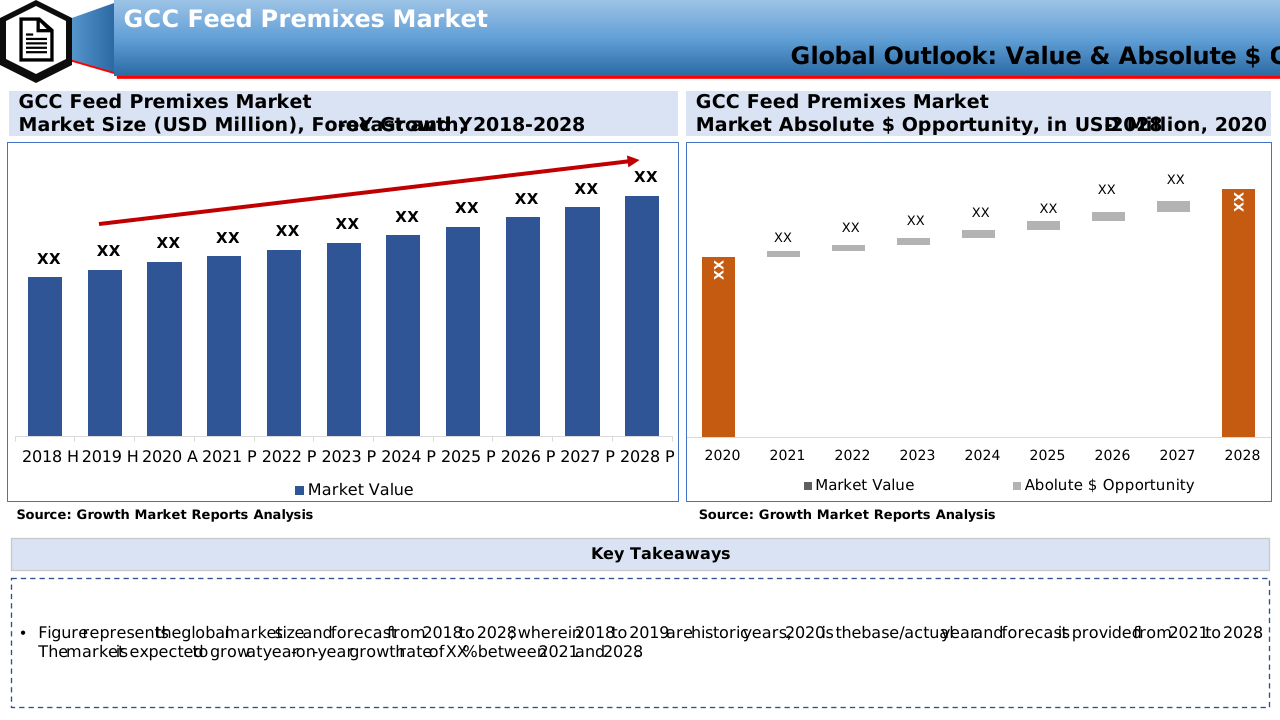
According to our latest research, the GCC feed premixes market size reached USD 1.14 billion in 2024, reflecting the region’s growing focus on advanced animal nutrition and sustainable livestock management. The market is projected to expand at a robust CAGR of 5.7% from 2025 to 2033, reaching a forecasted value of USD 1.89 billion by 2033. This impressive growth trajectory is primarily driven by increasing demand for high-quality animal protein, rising investments in the livestock sector, and the adoption of modern feed solutions to enhance animal health and productivity across the Gulf Cooperation Council (GCC) countries.

A significant growth factor in the GCC feed premixes market is the region’s ongoing efforts to reduce dependency on food imports by strengthening local livestock production. Governments in the GCC are actively investing in agricultural modernization programs and providing subsidies for the adoption of advanced feed solutions. This has resulted in a surge in demand for feed premixes, particularly those fortified with essential vitamins, minerals, and amino acids, which are crucial for improving animal immunity, growth rates, and meat quality. Additionally, the rapid urbanization and rising disposable incomes across the region are driving a shift in dietary preferences towards animal-based protein sources, further fueling the need for efficient and nutrient-rich animal feed.

The proliferation of commercial livestock farms and the intensification of poultry, ruminant, and aquaculture operations have also contributed to the expansion of the feed premixes market in the GCC. Large-scale producers are increasingly adopting customized premix solutions to address specific nutritional deficiencies, optimize feed conversion ratios, and ensure compliance with stringent food safety standards. The growing awareness among farmers regarding the benefits of feed premixes—such as improved animal health, enhanced reproductive performance, and reduced disease incidence—has led to higher penetration rates in both smallholder and commercial farming segments. Moreover, technological advancements in feed formulation and the introduction of innovative premix products tailored to regional requirements are expected to sustain market growth over the forecast period.

Another key driver is the region’s focus on sustainable livestock management practices, particularly in light of environmental challenges such as water scarcity and limited arable land. The use of feed premixes enables producers to optimize nutrient utilization, minimize feed wastage, and reduce the environmental footprint of livestock operations. Furthermore, the increasing prevalence of animal diseases and the ban on certain antibiotic growth promoters have prompted a shift towards natural and functional feed additives, including antioxidants and probiotics, within premix formulations. This trend is expected to create new opportunities for market players and foster innovation in product development.

From a regional perspective, Saudi Arabia dominates the GCC feed premixes market, accounting for the largest share due to its substantial investments in livestock infrastructure and government-led initiatives aimed at achieving food security. The United Arab Emirates (UAE) and Qatar are also emerging as high-growth markets, driven by rapid urban development, expanding hospitality sectors, and rising consumer demand for premium animal protein. Meanwhile, countries such as Kuwait, Oman, and Bahrain are witnessing steady growth, supported by efforts to diversify their economies and boost agricultural productivity. Overall, the GCC region presents a dynamic landscape for feed premix manufacturers, with ample opportunities for expansion and innovation.

Global GCC Feed Premixes  Industry Outlook

Type Analysis

The type segment of the GCC feed premixes market encompasses vitamins, minerals, amino acids, antibiotics, antioxidants, and other specialized additives. Among these, vitamin premixes hold a significant market share, driven by their critical role in supporting animal metabolism, immune function, and overall health. The increasing incidence of vitamin deficiencies in intensive livestock operations has led to a surge in demand for tailored vitamin blends, particularly for poultry and dairy cattle. The adoption of vitamin-enriched feed premixes is further bolstered by consumer preferences for high-quality, nutrient-dense animal products and the implementation of regulatory standards mandating optimal nutrient levels in animal feed.

Mineral premixes represent another vital segment, as minerals such as calcium, phosphorus, zinc, and selenium are essential for bone development, reproductive performance, and disease resistance in livestock. The prevalence of mineral deficiencies, especially in arid environments typical of the GCC, has prompted feed manufacturers to develop customized mineral blends suited to local conditions. The integration of chelated minerals and organic trace elements in premix formulations is gaining traction, as these forms offer superior bioavailability and absorption rates compared to conventional inorganic sources.

Amino acid premixes are witnessing robust growth, particularly in the poultry and aquaculture segments, where precise amino acid balance is crucial for optimal growth and feed efficiency. The rising cost of traditional protein sources, such as soybean meal and fishmeal, has intensified the focus on amino acid supplementation to enhance feed utilization and reduce production costs. Advanced technologies in amino acid synthesis and encapsulation are enabling the development of highly stable and effective premix products, catering to the evolving needs of the GCC livestock sector.

The use of antibiotic and antioxidant premixes is also evolving in response to regulatory changes and consumer concerns regarding food safety. While the use of antibiotics as growth promoters is being phased out in many markets, their inclusion in therapeutic premixes remains essential for disease control in certain cases. Antioxidant premixes, on the other hand, are gaining popularity as natural alternatives for preserving feed quality, preventing oxidative stress, and enhancing animal performance. The growing demand for clean-label and residue-free animal products is expected to drive further innovation in this segment, with a focus on plant-based and functional feed additives.

Report Scope

Attributes Details
Report Title GCC Feed Premixes Market Research Report 2033
By Type Vitamins, Minerals, Amino Acids, Antibiotics, Antioxidants, Others
By Livestock Poultry, Ruminants, Swine, Aquaculture, Others
By Form Powder, Liquid, Others
By And Country Saudi Arabia, UAE, Qatar, Kuwait, Oman, Bahrain
Regions Covered North America, Europe, APAC, Latin America, MEA
Base Year 2024
Historic Data 2018-2023
Forecast Period 2025-2033
Number of Pages 277
Number of Tables & Figures 305
Customization Available Yes, the report can be customized as per your need.

Livestock Analysis

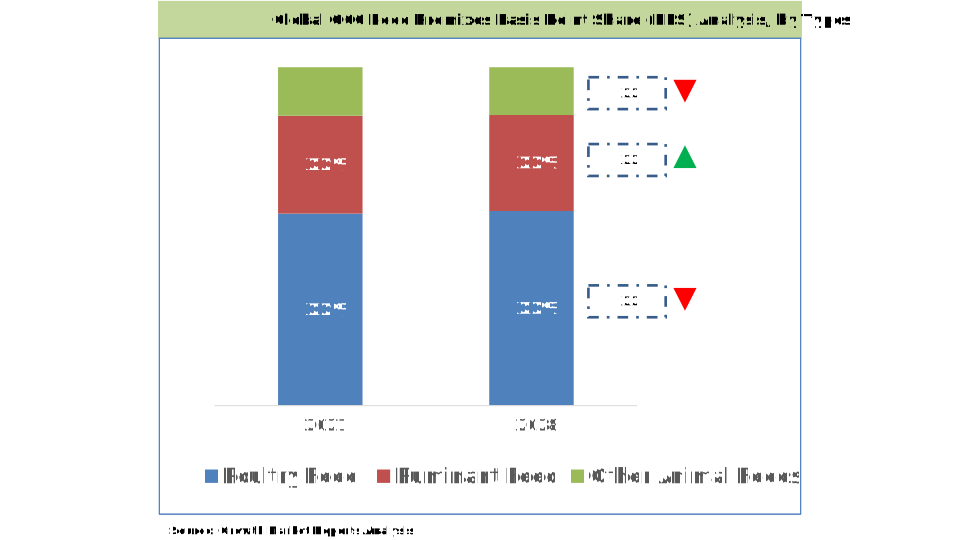
The livestock segment of the GCC feed premixes market is broadly categorized into poultry, ruminants, swine, aquaculture, and others. Poultry remains the dominant livestock category, accounting for the largest share of feed premix consumption in the region. The rapid expansion of commercial broiler and layer operations, coupled with increasing per capita consumption of chicken meat and eggs, has driven the demand for high-performance premix solutions. Feed premixes for poultry are specifically formulated to address the unique nutritional requirements at different growth stages, enhance feed conversion rates, and support immune function, thereby ensuring optimal productivity and profitability for producers.

Ruminants, including dairy cattle, beef cattle, sheep, and goats, constitute the second-largest segment, with a growing emphasis on improving milk yield, reproductive efficiency, and animal health. The adoption of feed premixes in ruminant nutrition is driven by the need to balance energy, protein, vitamin, and mineral intake, particularly in intensive dairy operations. The increasing prevalence of metabolic disorders and reproductive challenges in high-yielding dairy herds has led to greater reliance on customized premix solutions, incorporating functional additives such as rumen-protected amino acids, yeast cultures, and organic minerals.

Swine production, though relatively limited in the GCC due to cultural and religious factors, is nonetheless witnessing gradual growth in select markets, particularly for export-oriented operations. Feed premixes for swine are designed to support rapid growth, lean muscle development, and efficient nutrient utilization, with a focus on amino acid balance, trace mineral supplementation, and gut health management. The integration of advanced premix technologies is enabling producers to optimize feed efficiency and reduce environmental impacts, aligning with sustainability objectives.

Aquaculture is emerging as a high-growth segment, driven by increasing investments in fish and shrimp farming across the GCC. The demand for specialized feed premixes in aquaculture is fueled by the need to enhance growth rates, improve disease resistance, and ensure product quality in a variety of species. The development of species-specific premix formulations, incorporating essential micronutrients, immunostimulants, and functional additives, is gaining momentum as producers seek to capitalize on the rising demand for seafood in both domestic and export markets.

Other livestock categories, including equines, camels, and rabbits, represent niche segments with unique nutritional requirements. The adoption of feed premixes in these segments is supported by growing awareness among breeders and hobbyists regarding the benefits of balanced nutrition in promoting animal health, performance, and longevity. Overall, the diversification of livestock production systems and the increasing sophistication of animal nutrition practices are expected to drive sustained demand for feed premixes across all major livestock categories in the GCC.

Form Analysis

The form segment of the GCC feed premixes market is segmented into powder, liquid, and other forms, each offering distinct advantages in terms of ease of handling, mixing efficiency, and nutrient stability. Powdered feed premixes are the most widely used form, favored for their versatility, ease of storage, and compatibility with automated feed manufacturing processes. The homogenous distribution of powdered premixes in compound feeds ensures consistent nutrient delivery and minimizes the risk of segregation during transportation and storage. Additionally, the ability to incorporate a wide range of active ingredients, including heat-sensitive vitamins and microencapsulated additives, makes powder premixes the preferred choice for large-scale feed mills and commercial livestock operations.

Liquid feed premixes are gaining traction, particularly in intensive livestock systems where precision feeding and rapid nutrient absorption are critical. Liquid premixes offer several advantages, including improved bioavailability of water-soluble nutrients, enhanced palatability, and reduced dust formation during feed preparation. The use of liquid premixes is especially prevalent in poultry and swine operations, where they are often administered via drinking water or as part of liquid feed formulations. Advances in emulsion technology and the development of stable liquid formulations have further expanded the application of liquid premixes, enabling the inclusion of functional additives such as probiotics, enzymes, and organic acids.

Other forms of feed premixes, including granules, pellets, and microencapsulated products, are gaining popularity in specialized applications. Granular and pelletized premixes offer improved handling characteristics, reduced dustiness, and enhanced stability during storage and transportation. Microencapsulation technology, on the other hand, enables the protection of sensitive nutrients from degradation and targeted release in the gastrointestinal tract, thereby improving nutrient utilization and animal performance. The adoption of innovative premix forms is being driven by the need to address specific challenges in feed manufacturing, such as nutrient stability, ease of mixing, and compatibility with various feed ingredients.

The choice of premix form is influenced by several factors, including the type of livestock, feeding system, scale of operation, and regulatory requirements. Large commercial farms and integrated feed mills typically prefer powder and granular forms due to their cost-effectiveness and scalability, while smaller operations and specialty producers may opt for liquid or microencapsulated premixes to address specific nutritional or operational needs. The increasing adoption of precision feeding technologies and automated feed delivery systems is expected to drive further innovation in premix formulation and delivery, with a focus on improving nutrient efficiency, reducing feed wastage, and enhancing animal health outcomes.

Opportunities & Threats

The GCC feed premixes market presents significant opportunities for growth and innovation, particularly in the areas of product development, technological advancement, and market expansion. The rising demand for functional and specialty premixes, tailored to the specific needs of different livestock species and production systems, offers ample scope for manufacturers to differentiate their offerings and capture new market segments. The integration of advanced feed additives, such as probiotics, enzymes, and phytogenics, into premix formulations is expected to drive value addition and enhance the competitiveness of local producers. Additionally, the increasing focus on food safety, traceability, and sustainability is creating opportunities for the development of clean-label, residue-free, and environmentally friendly premix products.

Another promising opportunity lies in the expansion of distribution networks and the strengthening of partnerships with local feed manufacturers, livestock producers, and government agencies. The establishment of regional production facilities and the localization of premix formulations to suit the unique climatic, environmental, and nutritional conditions of the GCC can help manufacturers reduce costs, improve supply chain efficiency, and respond more effectively to market dynamics. Furthermore, the growing adoption of digital technologies, such as precision feeding systems, data analytics, and remote monitoring, is enabling producers to optimize feed formulation, monitor animal health, and enhance overall farm productivity, thereby driving demand for advanced premix solutions.

Despite these opportunities, the market faces several restraining factors, including the volatility of raw material prices, regulatory complexities, and the risk of disease outbreaks. The heavy reliance on imported raw materials for premix production exposes manufacturers to fluctuations in global commodity prices, supply chain disruptions, and currency exchange risks. Regulatory challenges, such as the harmonization of feed safety standards, import restrictions, and compliance with evolving food safety regulations, can also pose barriers to market entry and expansion. Additionally, the outbreak of animal diseases, such as avian influenza or foot-and-mouth disease, can disrupt livestock production and negatively impact demand for feed premixes. Addressing these challenges will require coordinated efforts from industry stakeholders, policymakers, and research institutions to ensure the resilience and sustainability of the GCC feed premixes market.

Regional Outlook

Regionally, Saudi Arabia leads the GCC feed premixes market, capturing over 52% of the market share in 2024, which translates to a value of approximately USD 0.59 billion. This dominance is attributed to the country’s aggressive investment in livestock infrastructure, government-backed food security initiatives, and the presence of large-scale commercial farming operations. Saudi Arabia’s Vision 2030 program emphasizes self-sufficiency in food production, further driving the adoption of advanced feed solutions and boosting demand for high-quality premixes. The country’s robust regulatory framework and well-established distribution networks also provide a conducive environment for market growth.

The United Arab Emirates (UAE) and Qatar collectively account for around 27% of the regional market, with the UAE valued at USD 0.18 billion and Qatar at USD 0.13 billion in 2024. Both countries are experiencing rapid urbanization, growth in the hospitality and tourism sectors, and increasing consumer demand for premium animal protein products. These factors have spurred investments in modern livestock farming, advanced feed milling technologies, and the adoption of innovative premix solutions. The CAGR for the UAE feed premixes market is expected to be around 6.1% through 2033, outpacing the regional average and reflecting the country’s commitment to agricultural innovation and food security.

Other GCC countries—Kuwait, Oman, and Bahrain—contribute the remaining 21% of the market, with a combined value of USD 0.24 billion in 2024. These markets are characterized by smaller-scale livestock operations, but they are gradually embracing modern feed practices as part of broader economic diversification strategies. Government support, coupled with growing awareness of the benefits of feed premixes in improving animal health and productivity, is expected to drive steady growth in these countries. As the GCC region continues to prioritize food security and sustainable agriculture, the overall feed premixes market is poised for sustained expansion, with each country contributing to the region’s dynamic and evolving livestock sector.

GCC Feed Premixes  Market Statistics

Competitor Outlook

The competitive landscape of the GCC feed premixes market is characterized by the presence of both international and regional players, each vying for market share through product innovation, strategic partnerships, and expansion of distribution networks. Leading multinational companies leverage their extensive research and development capabilities, global sourcing networks, and advanced manufacturing technologies to offer a comprehensive portfolio of feed premix solutions tailored to the unique needs of GCC livestock producers. These companies often collaborate with local partners to navigate regulatory requirements, customize formulations, and ensure timely delivery of products to end-users.

Regional manufacturers, on the other hand, are capitalizing on their deep understanding of local market dynamics, customer preferences, and regulatory frameworks to develop competitive and cost-effective premix solutions. Many of these companies focus on building strong relationships with feed mills, livestock producers, and government agencies, enabling them to respond quickly to changing market demands and regulatory shifts. The localization of production facilities and the use of regionally sourced raw materials are emerging as key differentiators, helping regional players enhance supply chain resilience and reduce operational costs.

Innovation is a critical driver of competitive advantage in the GCC feed premixes market, with companies investing heavily in research and development to introduce new products, improve nutrient bioavailability, and address emerging challenges such as antibiotic resistance and environmental sustainability. The integration of digital technologies, precision nutrition, and data-driven feed management solutions is enabling market leaders to offer value-added services and strengthen customer loyalty. Furthermore, the growing emphasis on food safety, traceability, and compliance with international quality standards is prompting companies to adopt rigorous quality control measures and obtain relevant certifications.

Among the major players in the GCC feed premixes market are Cargill, Archer Daniels Midland Company (ADM), Nutreco, DSM, and BASF. These global giants are known for their extensive product portfolios, robust R&D capabilities, and commitment to sustainability. Regional leaders such as Al-Watania Agriculture, Al Dahra, and Almarai have also established strong market positions by leveraging their local expertise, strategic partnerships, and focus on customer-centric innovation. Cargill and ADM, for example, have invested in state-of-the-art premix production facilities in the region, while Nutreco and DSM are actively involved in collaborative research projects aimed at developing next-generation feed additives and functional ingredients.

Local companies like Al-Watania Agriculture and Al Dahra are increasingly focusing on developing customized premix solutions for poultry, ruminants, and aquaculture, catering to the specific nutritional and operational needs of GCC producers. Almarai, a leading integrated dairy and poultry company, has set benchmarks for feed quality and animal health management, driving demand for premium premix products. The competitive dynamics of the market are further shaped by the entry of new players, ongoing consolidation, and the formation of strategic alliances aimed at expanding market reach and accelerating innovation. As competition intensifies, companies will need to prioritize customer engagement, technological advancement, and sustainable practices to maintain their leadership positions in the evolving GCC feed premixes market.

Key Players

  • Cargill, Inc.
  • Archer Daniels Midland Company (ADM)
  • BASF SE
  • DSM Nutritional Products
  • Nutreco N.V.
  • Alltech Inc.
  • Kemin Industries, Inc.
  • Land O’Lakes, Inc. (Purina Animal Nutrition)
  • AB Agri Ltd.
  • Godrej Agrovet Limited
  • Invivo NSA (Neovia)
  • De Heus Animal Nutrition
  • Novus International, Inc.
  • Biomin Holding GmbH
  • Zagro Asia Limited
  • Lallemand Inc.
  • Charoen Pokphand Foods PCL
  • Kent Nutrition Group
  • ForFarmers N.V.
  • Ridley Corporation Limited
GCC Feed Premixes  Market Overview

Segments

The GCC Feed Premixes market has been segmented on the basis of

Type

  • Vitamins
  • Minerals
  • Amino Acids
  • Antibiotics
  • Antioxidants
  • Others

Livestock

  • Poultry
  • Ruminants
  • Swine
  • Aquaculture
  • Others

Form

  • Powder
  • Liquid
  • Others

And Country

  • Saudi Arabia
  • UAE
  • Qatar
  • Kuwait
  • Oman
  • Bahrain

Competitive Landscape

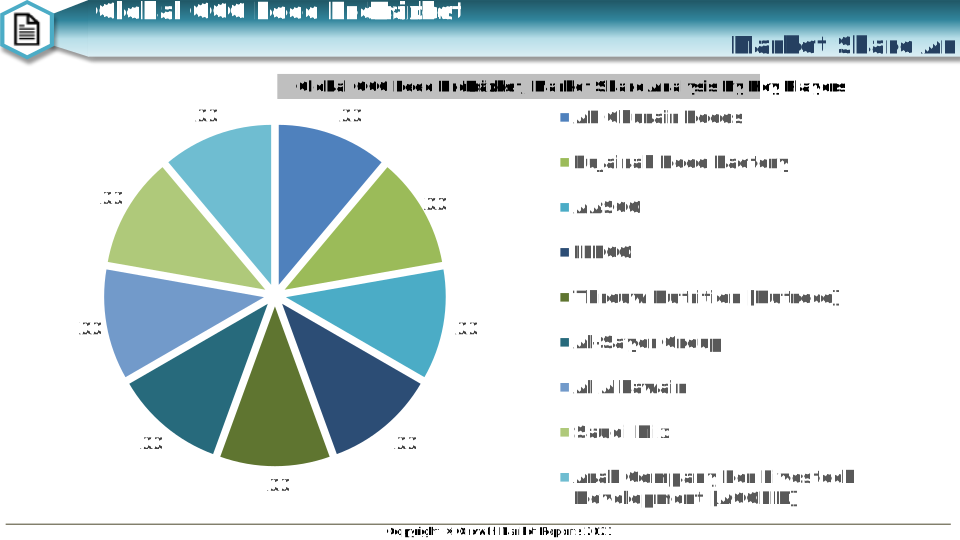
Key players competing in the GCC feed premixes market include AL Ghurair Foods, Fujairah Feed Factory, AASCO, IFFCO, Throuw Nutrition [Nutreco], Al-Sayer Group, Al Alkawain, Saudi Mix, and Arab Company For Livestock Development [ACOLID]

Some of these players are using several market strategies such as acquisitions, merger, collaborations, partnerships, capacity expansion, and product launches to enhance their market shares and to generate revenue and rise their production line of the business in the coming years.

GCC Feed Premixes Market Key Players

Frequently Asked Questions

Sustainability is a major focus, with feed premixes helping producers optimize nutrient utilization, reduce feed wastage, and minimize the environmental footprint of livestock operations, especially in the face of water scarcity and limited arable land.

Key players include Cargill, Archer Daniels Midland Company (ADM), BASF SE, DSM Nutritional Products, Nutreco N.V., Al-Watania Agriculture, Al Dahra, and Almarai.

Major challenges include raw material price volatility, regulatory complexities, risk of disease outbreaks, and reliance on imported ingredients for premix production.

Powdered feed premixes are the most widely used form, but liquid and other forms such as granules, pellets, and microencapsulated products are also gaining traction for specific applications.

Key growth drivers include rising demand for high-quality animal protein, government investments in livestock and agriculture, adoption of modern feed solutions, and a focus on sustainable livestock management.

Poultry is the dominant livestock segment in the GCC feed premixes market, driven by the rapid expansion of broiler and layer operations and increasing consumption of chicken meat and eggs.

The main types of feed premixes in the GCC market include vitamins, minerals, amino acids, antibiotics, antioxidants, and other specialized additives.

Saudi Arabia leads the GCC feed premixes market, accounting for over 52% of the market share in 2024, followed by the United Arab Emirates (UAE) and Qatar.

The GCC feed premixes market is expected to grow at a CAGR of 5.7% from 2025 to 2033, reaching a forecasted value of USD 1.89 billion by 2033.

As of 2024, the GCC feed premixes market size reached USD 1.14 billion, reflecting the region’s increasing focus on advanced animal nutrition and sustainable livestock management.

Table Of Content

Chapter 1 Executive Summary
Chapter 2 Assumptions and Acronyms Used
Chapter 3 Research Methodology
Chapter 4 GCC Feed Premixes  Market Overview
   4.1 Introduction
      4.1.1 Market Taxonomy
      4.1.2 Market Definition
      4.1.3 Macro-Economic Factors Impacting the Market Growth
   4.2 GCC Feed Premixes  Market Dynamics
      4.2.1 Market Drivers
      4.2.2 Market Restraints
      4.2.3 Market Opportunity
   4.3 GCC Feed Premixes  Market - Supply Chain Analysis
      4.3.1 List of Key Suppliers
      4.3.2 List of Key Distributors
      4.3.3 List of Key Consumers
   4.4 Key Forces Shaping the GCC Feed Premixes  Market
      4.4.1 Bargaining Power of Suppliers
      4.4.2 Bargaining Power of Buyers
      4.4.3 Threat of Substitution
      4.4.4 Threat of New Entrants
      4.4.5 Competitive Rivalry
   4.5 Global GCC Feed Premixes  Market Size & Forecast, 2023-2032
      4.5.1 GCC Feed Premixes  Market Size and Y-o-Y Growth
      4.5.2 GCC Feed Premixes  Market Absolute $ Opportunity

Chapter 5 Global GCC Feed Premixes  Market Analysis and Forecast By Type
   5.1 Introduction
      5.1.1 Key Market Trends & Growth Opportunities By Type
      5.1.2 Basis Point Share (BPS) Analysis By Type
      5.1.3 Absolute $ Opportunity Assessment By Type
   5.2 GCC Feed Premixes  Market Size Forecast By Type
      5.2.1 Vitamins
      5.2.2 Minerals
      5.2.3 Amino Acids
      5.2.4 Antibiotics
      5.2.5 Antioxidants
      5.2.6 Others
   5.3 Market Attractiveness Analysis By Type

Chapter 6 Global GCC Feed Premixes  Market Analysis and Forecast By Livestock
   6.1 Introduction
      6.1.1 Key Market Trends & Growth Opportunities By Livestock
      6.1.2 Basis Point Share (BPS) Analysis By Livestock
      6.1.3 Absolute $ Opportunity Assessment By Livestock
   6.2 GCC Feed Premixes  Market Size Forecast By Livestock
      6.2.1 Poultry
      6.2.2 Ruminants
      6.2.3 Swine
      6.2.4 Aquaculture
      6.2.5 Others
   6.3 Market Attractiveness Analysis By Livestock

Chapter 7 Global GCC Feed Premixes  Market Analysis and Forecast By Form
   7.1 Introduction
      7.1.1 Key Market Trends & Growth Opportunities By Form
      7.1.2 Basis Point Share (BPS) Analysis By Form
      7.1.3 Absolute $ Opportunity Assessment By Form
   7.2 GCC Feed Premixes  Market Size Forecast By Form
      7.2.1 Powder
      7.2.2 Liquid
      7.2.3 Others
   7.3 Market Attractiveness Analysis By Form

Chapter 8 Global GCC Feed Premixes  Market Analysis and Forecast By And Country
   8.1 Introduction
      8.1.1 Key Market Trends & Growth Opportunities By And Country
      8.1.2 Basis Point Share (BPS) Analysis By And Country
      8.1.3 Absolute $ Opportunity Assessment By And Country
   8.2 GCC Feed Premixes  Market Size Forecast By And Country
      8.2.1 Saudi Arabia
      8.2.2 UAE
      8.2.3 Qatar
      8.2.4 Kuwait
      8.2.5 Oman
      8.2.6 Bahrain
   8.3 Market Attractiveness Analysis By And Country

Chapter 9 Global GCC Feed Premixes  Market Analysis and Forecast by Region
   9.1 Introduction
      9.1.1 Key Market Trends & Growth Opportunities By Region
      9.1.2 Basis Point Share (BPS) Analysis By Region
      9.1.3 Absolute $ Opportunity Assessment By Region
   9.2 GCC Feed Premixes  Market Size Forecast By Region
      9.2.1 North America
      9.2.2 Europe
      9.2.3 Asia Pacific
      9.2.4 Latin America
      9.2.5 Middle East & Africa (MEA)
   9.3 Market Attractiveness Analysis By Region

Chapter 10 Coronavirus Disease (COVID-19) Impact 
   10.1 Introduction 
   10.2 Current & Future Impact Analysis 
   10.3 Economic Impact Analysis 
   10.4 Government Policies 
   10.5 Investment Scenario

Chapter 11 North America GCC Feed Premixes  Analysis and Forecast
   11.1 Introduction
   11.2 North America GCC Feed Premixes  Market Size Forecast by Country
      11.2.1 U.S.
      11.2.2 Canada
   11.3 Basis Point Share (BPS) Analysis by Country
   11.4 Absolute $ Opportunity Assessment by Country
   11.5 Market Attractiveness Analysis by Country
   11.6 North America GCC Feed Premixes  Market Size Forecast By Type
      11.6.1 Vitamins
      11.6.2 Minerals
      11.6.3 Amino Acids
      11.6.4 Antibiotics
      11.6.5 Antioxidants
      11.6.6 Others
   11.7 Basis Point Share (BPS) Analysis By Type 
   11.8 Absolute $ Opportunity Assessment By Type 
   11.9 Market Attractiveness Analysis By Type
   11.10 North America GCC Feed Premixes  Market Size Forecast By Livestock
      11.10.1 Poultry
      11.10.2 Ruminants
      11.10.3 Swine
      11.10.4 Aquaculture
      11.10.5 Others
   11.11 Basis Point Share (BPS) Analysis By Livestock 
   11.12 Absolute $ Opportunity Assessment By Livestock 
   11.13 Market Attractiveness Analysis By Livestock
   11.14 North America GCC Feed Premixes  Market Size Forecast By Form
      11.14.1 Powder
      11.14.2 Liquid
      11.14.3 Others
   11.15 Basis Point Share (BPS) Analysis By Form 
   11.16 Absolute $ Opportunity Assessment By Form 
   11.17 Market Attractiveness Analysis By Form
   11.18 North America GCC Feed Premixes  Market Size Forecast By And Country
      11.18.1 Saudi Arabia
      11.18.2 UAE
      11.18.3 Qatar
      11.18.4 Kuwait
      11.18.5 Oman
      11.18.6 Bahrain
   11.19 Basis Point Share (BPS) Analysis By And Country 
   11.20 Absolute $ Opportunity Assessment By And Country 
   11.21 Market Attractiveness Analysis By And Country

Chapter 12 Europe GCC Feed Premixes  Analysis and Forecast
   12.1 Introduction
   12.2 Europe GCC Feed Premixes  Market Size Forecast by Country
      12.2.1 Germany
      12.2.2 France
      12.2.3 Italy
      12.2.4 U.K.
      12.2.5 Spain
      12.2.6 Russia
      12.2.7 Rest of Europe
   12.3 Basis Point Share (BPS) Analysis by Country
   12.4 Absolute $ Opportunity Assessment by Country
   12.5 Market Attractiveness Analysis by Country
   12.6 Europe GCC Feed Premixes  Market Size Forecast By Type
      12.6.1 Vitamins
      12.6.2 Minerals
      12.6.3 Amino Acids
      12.6.4 Antibiotics
      12.6.5 Antioxidants
      12.6.6 Others
   12.7 Basis Point Share (BPS) Analysis By Type 
   12.8 Absolute $ Opportunity Assessment By Type 
   12.9 Market Attractiveness Analysis By Type
   12.10 Europe GCC Feed Premixes  Market Size Forecast By Livestock
      12.10.1 Poultry
      12.10.2 Ruminants
      12.10.3 Swine
      12.10.4 Aquaculture
      12.10.5 Others
   12.11 Basis Point Share (BPS) Analysis By Livestock 
   12.12 Absolute $ Opportunity Assessment By Livestock 
   12.13 Market Attractiveness Analysis By Livestock
   12.14 Europe GCC Feed Premixes  Market Size Forecast By Form
      12.14.1 Powder
      12.14.2 Liquid
      12.14.3 Others
   12.15 Basis Point Share (BPS) Analysis By Form 
   12.16 Absolute $ Opportunity Assessment By Form 
   12.17 Market Attractiveness Analysis By Form
   12.18 Europe GCC Feed Premixes  Market Size Forecast By And Country
      12.18.1 Saudi Arabia
      12.18.2 UAE
      12.18.3 Qatar
      12.18.4 Kuwait
      12.18.5 Oman
      12.18.6 Bahrain
   12.19 Basis Point Share (BPS) Analysis By And Country 
   12.20 Absolute $ Opportunity Assessment By And Country 
   12.21 Market Attractiveness Analysis By And Country

Chapter 13 Asia Pacific GCC Feed Premixes  Analysis and Forecast
   13.1 Introduction
   13.2 Asia Pacific GCC Feed Premixes  Market Size Forecast by Country
      13.2.1 China
      13.2.2 Japan
      13.2.3 South Korea
      13.2.4 India
      13.2.5 Australia
      13.2.6 South East Asia (SEA)
      13.2.7 Rest of Asia Pacific (APAC)
   13.3 Basis Point Share (BPS) Analysis by Country
   13.4 Absolute $ Opportunity Assessment by Country
   13.5 Market Attractiveness Analysis by Country
   13.6 Asia Pacific GCC Feed Premixes  Market Size Forecast By Type
      13.6.1 Vitamins
      13.6.2 Minerals
      13.6.3 Amino Acids
      13.6.4 Antibiotics
      13.6.5 Antioxidants
      13.6.6 Others
   13.7 Basis Point Share (BPS) Analysis By Type 
   13.8 Absolute $ Opportunity Assessment By Type 
   13.9 Market Attractiveness Analysis By Type
   13.10 Asia Pacific GCC Feed Premixes  Market Size Forecast By Livestock
      13.10.1 Poultry
      13.10.2 Ruminants
      13.10.3 Swine
      13.10.4 Aquaculture
      13.10.5 Others
   13.11 Basis Point Share (BPS) Analysis By Livestock 
   13.12 Absolute $ Opportunity Assessment By Livestock 
   13.13 Market Attractiveness Analysis By Livestock
   13.14 Asia Pacific GCC Feed Premixes  Market Size Forecast By Form
      13.14.1 Powder
      13.14.2 Liquid
      13.14.3 Others
   13.15 Basis Point Share (BPS) Analysis By Form 
   13.16 Absolute $ Opportunity Assessment By Form 
   13.17 Market Attractiveness Analysis By Form
   13.18 Asia Pacific GCC Feed Premixes  Market Size Forecast By And Country
      13.18.1 Saudi Arabia
      13.18.2 UAE
      13.18.3 Qatar
      13.18.4 Kuwait
      13.18.5 Oman
      13.18.6 Bahrain
   13.19 Basis Point Share (BPS) Analysis By And Country 
   13.20 Absolute $ Opportunity Assessment By And Country 
   13.21 Market Attractiveness Analysis By And Country

Chapter 14 Latin America GCC Feed Premixes  Analysis and Forecast
   14.1 Introduction
   14.2 Latin America GCC Feed Premixes  Market Size Forecast by Country
      14.2.1 Brazil
      14.2.2 Mexico
      14.2.3 Rest of Latin America (LATAM)
   14.3 Basis Point Share (BPS) Analysis by Country
   14.4 Absolute $ Opportunity Assessment by Country
   14.5 Market Attractiveness Analysis by Country
   14.6 Latin America GCC Feed Premixes  Market Size Forecast By Type
      14.6.1 Vitamins
      14.6.2 Minerals
      14.6.3 Amino Acids
      14.6.4 Antibiotics
      14.6.5 Antioxidants
      14.6.6 Others
   14.7 Basis Point Share (BPS) Analysis By Type 
   14.8 Absolute $ Opportunity Assessment By Type 
   14.9 Market Attractiveness Analysis By Type
   14.10 Latin America GCC Feed Premixes  Market Size Forecast By Livestock
      14.10.1 Poultry
      14.10.2 Ruminants
      14.10.3 Swine
      14.10.4 Aquaculture
      14.10.5 Others
   14.11 Basis Point Share (BPS) Analysis By Livestock 
   14.12 Absolute $ Opportunity Assessment By Livestock 
   14.13 Market Attractiveness Analysis By Livestock
   14.14 Latin America GCC Feed Premixes  Market Size Forecast By Form
      14.14.1 Powder
      14.14.2 Liquid
      14.14.3 Others
   14.15 Basis Point Share (BPS) Analysis By Form 
   14.16 Absolute $ Opportunity Assessment By Form 
   14.17 Market Attractiveness Analysis By Form
   14.18 Latin America GCC Feed Premixes  Market Size Forecast By And Country
      14.18.1 Saudi Arabia
      14.18.2 UAE
      14.18.3 Qatar
      14.18.4 Kuwait
      14.18.5 Oman
      14.18.6 Bahrain
   14.19 Basis Point Share (BPS) Analysis By And Country 
   14.20 Absolute $ Opportunity Assessment By And Country 
   14.21 Market Attractiveness Analysis By And Country

Chapter 15 Middle East & Africa (MEA) GCC Feed Premixes  Analysis and Forecast
   15.1 Introduction
   15.2 Middle East & Africa (MEA) GCC Feed Premixes  Market Size Forecast by Country
      15.2.1 Saudi Arabia
      15.2.2 South Africa
      15.2.3 UAE
      15.2.4 Rest of Middle East & Africa (MEA)
   15.3 Basis Point Share (BPS) Analysis by Country
   15.4 Absolute $ Opportunity Assessment by Country
   15.5 Market Attractiveness Analysis by Country
   15.6 Middle East & Africa (MEA) GCC Feed Premixes  Market Size Forecast By Type
      15.6.1 Vitamins
      15.6.2 Minerals
      15.6.3 Amino Acids
      15.6.4 Antibiotics
      15.6.5 Antioxidants
      15.6.6 Others
   15.7 Basis Point Share (BPS) Analysis By Type 
   15.8 Absolute $ Opportunity Assessment By Type 
   15.9 Market Attractiveness Analysis By Type
   15.10 Middle East & Africa (MEA) GCC Feed Premixes  Market Size Forecast By Livestock
      15.10.1 Poultry
      15.10.2 Ruminants
      15.10.3 Swine
      15.10.4 Aquaculture
      15.10.5 Others
   15.11 Basis Point Share (BPS) Analysis By Livestock 
   15.12 Absolute $ Opportunity Assessment By Livestock 
   15.13 Market Attractiveness Analysis By Livestock
   15.14 Middle East & Africa (MEA) GCC Feed Premixes  Market Size Forecast By Form
      15.14.1 Powder
      15.14.2 Liquid
      15.14.3 Others
   15.15 Basis Point Share (BPS) Analysis By Form 
   15.16 Absolute $ Opportunity Assessment By Form 
   15.17 Market Attractiveness Analysis By Form
   15.18 Middle East & Africa (MEA) GCC Feed Premixes  Market Size Forecast By And Country
      15.18.1 Saudi Arabia
      15.18.2 UAE
      15.18.3 Qatar
      15.18.4 Kuwait
      15.18.5 Oman
      15.18.6 Bahrain
   15.19 Basis Point Share (BPS) Analysis By And Country 
   15.20 Absolute $ Opportunity Assessment By And Country 
   15.21 Market Attractiveness Analysis By And Country

Chapter 16 Competition Landscape 
   16.1 GCC Feed Premixes  Market: Competitive Dashboard
   16.2 Global GCC Feed Premixes  Market: Market Share Analysis, 2023
   16.3 Company Profiles (Details – Overview, Financials, Developments, Strategy) 
      16.3.1 Cargill, Inc.
Archer Daniels Midland Company (ADM)
BASF SE
DSM Nutritional Products
Nutreco N.V.
Alltech Inc.
Kemin Industries, Inc.
Land O’Lakes, Inc. (Purina Animal Nutrition)
AB Agri Ltd.
Godrej Agrovet Limited
Invivo NSA (Neovia)
De Heus Animal Nutrition
Novus International, Inc.
Biomin Holding GmbH
Zagro Asia Limited
Lallemand Inc.
Charoen Pokphand Foods PCL
Kent Nutrition Group
ForFarmers N.V.
Ridley Corporation Limited

Methodology

Our Clients

Deloitte
sinopec
The John Holland Group
Siemens Healthcare
Pfizer
Honda Motor Co. Ltd.
Nestle SA
Dassault Aviation