Segments - by Product Type (Binders, Lubricants, Anti-caking Agents, Others), by Livestock (Poultry, Ruminants, Swine, Aquaculture, Others), by Source (Natural, Synthetic), by Form (Powder, Liquid, Granules), by Application (Commercial Feed, On-farm Feed, Others)
According to our latest research, the global feed pelletizing agents market size reached USD 2.23 billion in 2024, driven by rising demand for high-quality animal feed and increasing livestock production worldwide. The market is expected to grow at a robust CAGR of 5.7% from 2025 to 2033, reaching a projected value of USD 3.88 billion by 2033. This growth is primarily fueled by the expanding animal husbandry industry, heightened focus on feed efficiency, and the need to enhance animal health and productivity through improved feed formulations. As per our latest research, the feed pelletizing agents market is experiencing significant transformation due to evolving consumer preferences, regulatory changes, and technological advancements in feed manufacturing.
One of the most significant growth factors for the feed pelletizing agents market is the intensification of livestock farming practices across the globe. With the global population steadily increasing and dietary patterns shifting towards higher consumption of animal-based proteins, there is a mounting pressure on farmers and feed manufacturers to optimize animal nutrition and maximize productivity. Feed pelletizing agents, such as binders, lubricants, and anti-caking agents, play a crucial role in enhancing pellet quality, improving feed conversion ratios, and reducing wastage. The adoption of advanced pelletizing techniques ensures that nutrients are better preserved during processing, resulting in healthier animals and higher yields. Moreover, the growing awareness among farmers about the benefits of pelletized feed, such as improved digestibility and minimized feed loss, further contributes to the market's expansion.
Another key driver propelling the feed pelletizing agents market is the increasing regulatory scrutiny over feed quality and safety. Governments and regulatory bodies across regions have implemented stringent guidelines to ensure the production of safe and nutritionally balanced animal feed. This has led to a surge in demand for high-performance pelletizing agents that comply with safety standards while enhancing the physical and nutritional properties of feed pellets. Additionally, the trend towards sustainable and eco-friendly feed additives is gaining traction, as both producers and consumers become more conscious of environmental impacts. Manufacturers are investing in research and development to create innovative pelletizing agents derived from natural and renewable sources, aligning with global sustainability goals and catering to the evolving preferences of the feed industry.
The rapid technological advancements in feed processing machinery and formulation techniques are further accelerating the growth of the feed pelletizing agents market. Modern feed mills are increasingly adopting automated systems and precision technologies to improve the efficiency and consistency of pellet production. These advancements enable the precise incorporation of pelletizing agents, ensuring uniform pellet size, optimal hardness, and enhanced nutrient retention. The integration of digital monitoring tools and real-time quality control systems allows manufacturers to fine-tune their processes, minimize operational costs, and deliver superior feed products to end-users. As a result, the market is witnessing a steady influx of innovative solutions designed to address the evolving challenges of the animal feed industry.
Regionally, Asia Pacific dominates the feed pelletizing agents market, accounting for the largest share in 2024, followed by North America and Europe. The strong growth in Asia Pacific is attributed to the rapid expansion of the livestock sector, particularly in countries like China, India, and Vietnam, where rising incomes and urbanization are driving increased consumption of animal-derived foods. North America and Europe, on the other hand, are characterized by advanced feed manufacturing infrastructure, high adoption of premium feed additives, and stringent regulatory frameworks. Latin America and the Middle East & Africa are emerging as lucrative markets, driven by government initiatives to boost livestock productivity and improve food security. The regional outlook for the feed pelletizing agents market remains positive, with each region presenting unique opportunities and challenges for market participants.
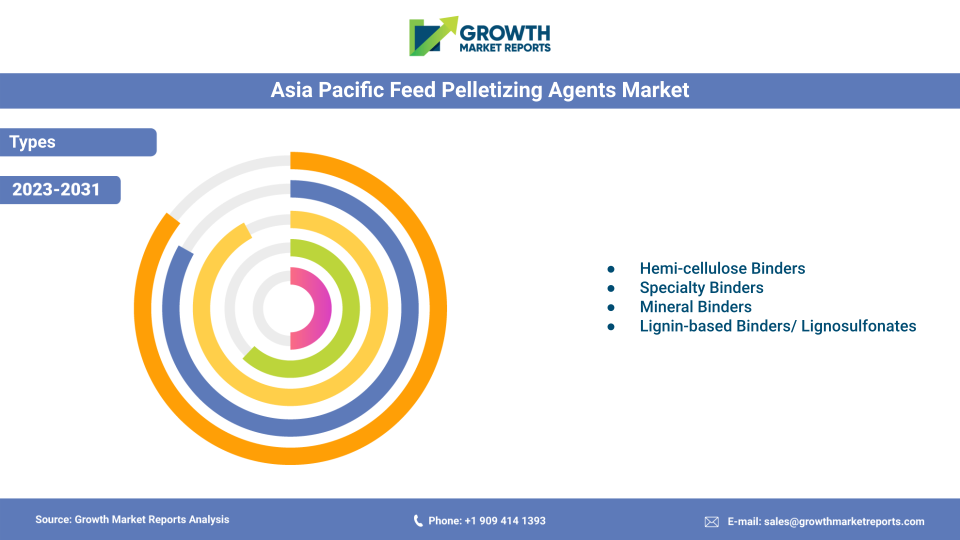
The feed pelletizing agents market is segmented by product type into binders, lubricants, anti-caking agents, and others, each serving distinct functions in the pelletizing process. Binders are the most widely used pelletizing agents, accounting for a significant share of the market. These compounds, such as lignosulfonates, bentonite, and starches, are essential for imparting structural integrity to feed pellets, minimizing fines, and ensuring consistent pellet size. The demand for high-quality binders is driven by the need to produce durable pellets that can withstand handling, transportation, and storage without disintegration. Technological advancements have led to the development of multifunctional binders that not only improve pellet quality but also enhance nutrient availability and feed palatability. The growing preference for natural and organic binders, in line with sustainability trends, is also shaping the competitive landscape of this segment.
Lubricants play a pivotal role in reducing friction and wear during the pelletizing process, thereby enhancing the operational efficiency of feed mills. These agents facilitate the smooth passage of feed materials through die holes, preventing blockages and reducing energy consumption. The use of lubricants leads to lower production costs and increased machine lifespan, making them indispensable in large-scale feed manufacturing operations. Market players are focusing on the development of eco-friendly and non-toxic lubricants that comply with regulatory standards and do not compromise feed safety. The adoption of advanced lubricant formulations is particularly prominent in regions with stringent environmental regulations, such as Europe and North America, where manufacturers prioritize sustainability and operational excellence.
Anti-caking agents are another critical product type in the feed pelletizing agents market, ensuring free-flowing properties and preventing the aggregation of feed particles during storage and transportation. These agents, including silica, calcium carbonate, and certain silicates, help maintain the physical quality of feed pellets and reduce the risk of spoilage due to moisture absorption. The rising demand for bulk feed storage solutions and the expansion of global supply chains have heightened the importance of effective anti-caking agents. Manufacturers are investing in research to develop innovative anti-caking solutions that offer superior moisture resistance, compatibility with various feed formulations, and cost-effectiveness. As the feed industry continues to evolve, the role of anti-caking agents in ensuring product quality and shelf life is expected to grow further.
The "others" category within product types encompasses a range of specialized pelletizing agents, such as emulsifiers, dispersants, and conditioners, which address specific challenges in feed production. These agents are increasingly being adopted in niche applications, such as aquaculture and specialty livestock feeds, where unique pellet properties are required. The diversification of product offerings within this segment reflects the dynamic nature of the feed pelletizing agents market, as manufacturers strive to cater to the diverse needs of end-users. Continuous innovation and customization are key strategies employed by market players to maintain a competitive edge and capture emerging opportunities in the global market.
| Attributes | Details |
| Report Title | Feed Pelletizing Agents Market Research Report 2033 |
| By Product Type | Binders, Lubricants, Anti-caking Agents, Others |
| By Livestock | Poultry, Ruminants, Swine, Aquaculture, Others |
| By Source | Natural, Synthetic |
| By Form | Powder, Liquid, Granules |
| By Application | Commercial Feed, On-farm Feed, Others |
| Regions Covered | North America, Europe, APAC, Latin America, MEA |
| Base Year | 2024 |
| Historic Data | 2018-2023 |
| Forecast Period | 2025-2033 |
| Number of Pages | 281 |
| Number of Tables & Figures | 370 |
| Customization Available | Yes, the report can be customized as per your need. |
The feed pelletizing agents market is segmented by livestock into poultry, ruminants, swine, aquaculture, and others, reflecting the diverse requirements of different animal species. Poultry represents the largest segment, driven by the massive scale of poultry farming worldwide and the critical importance of feed quality in optimizing growth rates and egg production. The use of pelletizing agents in poultry feed ensures uniform nutrient distribution, improved digestibility, and reduced feed wastage, all of which contribute to enhanced flock performance and profitability. The increasing adoption of intensive poultry farming systems, particularly in Asia Pacific and Latin America, is fueling the demand for high-performance pelletizing agents tailored to the specific nutritional needs of broilers, layers, and breeders.
Ruminants, including cattle, sheep, and goats, constitute a significant share of the feed pelletizing agents market, driven by the expanding dairy and beef industries. The unique digestive physiology of ruminants necessitates the use of specialized pelletizing agents that ensure optimal pellet durability and nutrient availability. The adoption of pelletized feed in ruminant nutrition is gaining traction, particularly in developed regions, where farmers seek to enhance milk yield, weight gain, and overall animal health. The development of customized pelletizing solutions that address the specific requirements of ruminant diets, such as fiber content and particle size, is a key focus area for market participants aiming to capture this lucrative segment.
The swine segment is another important contributor to the feed pelletizing agents market, driven by the global demand for pork and the need for efficient feed conversion. Pelletized feed is widely used in swine production to improve nutrient absorption, reduce feed losses, and enhance animal performance. The use of advanced pelletizing agents enables the production of pellets with optimal hardness and digestibility, catering to the varying nutritional needs of piglets, growers, and finishers. The increasing prevalence of commercial swine farms, particularly in Asia Pacific and Europe, is expected to drive the adoption of innovative pelletizing solutions that support sustainable and profitable swine production.
Aquaculture is emerging as a high-growth segment in the feed pelletizing agents market, reflecting the rapid expansion of fish and shrimp farming operations worldwide. The unique challenges associated with aquatic feed, such as water stability and nutrient leaching, necessitate the use of specialized pelletizing agents that ensure pellet integrity and nutrient retention in aquatic environments. The development of water-stable binders and anti-caking agents for aquafeed is a key area of innovation, as manufacturers seek to address the evolving needs of the aquaculture industry. The increasing demand for high-quality seafood and the shift towards sustainable aquafeed solutions are expected to drive significant growth in this segment over the forecast period.
The "others" category includes specialty livestock such as equine, pets, and exotic animals, where pelletized feed is gaining popularity due to its convenience and nutritional benefits. The use of pelletizing agents in these niche segments is driven by the growing trend of pet humanization and the demand for premium, customized feed products. Market players are investing in research to develop pelletizing solutions that cater to the unique dietary requirements of specialty animals, further expanding the scope of the feed pelletizing agents market.
The feed pelletizing agents market is segmented by source into natural and synthetic, reflecting the evolving preferences of feed manufacturers and end-users. Natural pelletizing agents, derived from plant, mineral, or animal sources, are gaining traction due to increasing consumer demand for sustainable and eco-friendly feed additives. Products such as starches, gums, and clays are widely used as natural binders and anti-caking agents, offering excellent functionality without compromising feed safety. The growing emphasis on organic and non-GMO feed production, particularly in developed regions, is driving the adoption of natural pelletizing agents. Manufacturers are focusing on the development of innovative natural formulations that deliver superior performance while meeting regulatory requirements and consumer expectations for clean-label products.
Synthetic pelletizing agents, on the other hand, offer advantages in terms of consistency, cost-effectiveness, and functional versatility. These agents, including certain polymers and chemical binders, are engineered to deliver precise performance characteristics, such as enhanced pellet durability, water resistance, and compatibility with various feed formulations. The use of synthetic agents is particularly prevalent in large-scale commercial feed operations, where operational efficiency and product uniformity are paramount. However, the growing scrutiny over the use of synthetic additives in animal feed, coupled with evolving regulatory frameworks, is prompting manufacturers to invest in safer and more environmentally friendly synthetic solutions.
The choice between natural and synthetic pelletizing agents is influenced by a range of factors, including cost considerations, regulatory compliance, and end-user preferences. While natural agents are favored for their sustainability credentials and consumer appeal, synthetic agents continue to dominate in applications where performance and cost efficiency are critical. The ongoing convergence of these trends is driving innovation in hybrid pelletizing solutions that combine the best attributes of both natural and synthetic sources, offering feed manufacturers greater flexibility and value.
The competitive dynamics within the source segment are shaped by the rapid pace of technological advancement and the increasing focus on product differentiation. Market players are leveraging cutting-edge research in materials science and feed technology to develop next-generation pelletizing agents that deliver enhanced functionality, safety, and sustainability. Strategic collaborations with research institutions and industry stakeholders are enabling manufacturers to stay ahead of regulatory changes and capitalize on emerging opportunities in the global feed pelletizing agents market.
Feed pelletizing agents are available in various forms, including powder, liquid, and granules, each offering unique advantages and applications in feed manufacturing. Powdered pelletizing agents are the most commonly used form, valued for their ease of handling, uniform dispersion, and compatibility with a wide range of feed ingredients. Powders are particularly suitable for dry feed formulations and are widely used in both commercial and on-farm feed production. The demand for high-quality powdered agents is driven by the need for consistent pellet quality and operational efficiency in modern feed mills. Manufacturers are focusing on the development of dust-free and flow-enhanced powder formulations to address handling and safety concerns.
Liquid pelletizing agents are increasingly being adopted in feed manufacturing processes that require rapid and uniform mixing. Liquids offer advantages in terms of ease of application, precise dosing, and improved efficacy in binding and lubricating feed particles. The use of liquid agents is particularly prominent in large-scale commercial feed operations, where automated dosing systems and real-time quality control are standard practices. The development of water-based and environmentally friendly liquid formulations is a key trend in this segment, as manufacturers seek to minimize environmental impact and comply with regulatory standards.
Granular pelletizing agents represent a growing segment in the feed pelletizing agents market, offering benefits such as reduced dust generation, improved flowability, and enhanced storage stability. Granules are particularly suitable for bulk feed storage and transportation, as they minimize caking and ensure consistent feed quality. The adoption of granular agents is gaining traction in regions with extensive feed supply chains and large-scale livestock operations. Manufacturers are investing in advanced granulation technologies to produce uniform and high-performance granular pelletizing agents that meet the evolving needs of the feed industry.
The choice of pelletizing agent form is influenced by factors such as feed formulation, processing technology, and end-user preferences. While powders remain the dominant form, the increasing demand for operational efficiency, safety, and sustainability is driving the adoption of liquid and granular agents. The ongoing innovation in formulation and delivery systems is expected to further diversify the product offerings within this segment, providing feed manufacturers with a broader range of options to optimize their production processes and deliver superior feed products.
The feed pelletizing agents market is segmented by application into commercial feed, on-farm feed, and others, reflecting the diverse end-use scenarios in the animal feed industry. Commercial feed production represents the largest application segment, driven by the scale and sophistication of modern feed mills. Commercial feed manufacturers rely on high-quality pelletizing agents to ensure consistent pellet quality, optimize production efficiency, and meet the stringent requirements of large-scale livestock operations. The adoption of advanced pelletizing solutions in commercial feed production is fueled by the need to enhance feed conversion ratios, minimize wastage, and comply with regulatory standards for feed safety and quality.
On-farm feed production is another important application segment, particularly in regions with a high prevalence of small and medium-scale livestock operations. Farmers and cooperatives are increasingly adopting pelletizing agents to improve the nutritional quality and handling characteristics of on-farm produced feed. The use of pelletizing agents in on-farm feed production enables farmers to customize feed formulations, reduce feed costs, and enhance animal performance. The growing awareness of the benefits of pelletized feed, coupled with the availability of user-friendly pelletizing solutions, is driving the adoption of these agents at the farm level.
The "others" category includes specialty applications such as aquafeed, pet food, and specialty livestock feeds, where pelletizing agents are used to address unique challenges and requirements. The demand for specialized pelletizing solutions in these niche segments is driven by the need for tailored feed formulations, enhanced product differentiation, and compliance with specific regulatory standards. Manufacturers are focusing on the development of innovative pelletizing agents that cater to the evolving needs of specialty feed producers, further expanding the scope of the feed pelletizing agents market.
The application landscape of the feed pelletizing agents market is characterized by increasing complexity and diversification, as feed manufacturers and end-users seek to optimize feed quality, efficiency, and sustainability. The integration of advanced pelletizing technologies and customized solutions is enabling market participants to address the evolving challenges of the animal feed industry and capitalize on emerging growth opportunities.
The feed pelletizing agents market presents a wealth of opportunities for growth and innovation, driven by the expanding global livestock sector and the increasing demand for high-quality animal feed. One of the most promising opportunities lies in the development of sustainable and eco-friendly pelletizing agents that align with the growing emphasis on environmental stewardship and responsible production. Manufacturers that invest in research and development to create natural, biodegradable, and non-toxic pelletizing solutions are well-positioned to capture market share and meet the evolving needs of feed producers and consumers. Additionally, the rising demand for specialty and functional feeds, such as medicated and fortified pellets, presents new avenues for product differentiation and value creation.
Another significant opportunity in the feed pelletizing agents market is the adoption of advanced manufacturing technologies and digital solutions. The integration of automation, real-time monitoring, and data analytics in feed production processes enables manufacturers to optimize the use of pelletizing agents, improve product quality, and reduce operational costs. The growing trend towards precision livestock farming and smart feed manufacturing is expected to drive demand for innovative pelletizing solutions that deliver consistent performance and support data-driven decision-making. Strategic partnerships with technology providers and research institutions can further enhance the competitive positioning of market players and accelerate the development of next-generation pelletizing agents.
Despite the positive outlook, the feed pelletizing agents market faces several restraining factors that could impact its growth trajectory. One of the primary challenges is the increasing regulatory scrutiny over the use of certain synthetic additives in animal feed, particularly in developed regions. Stringent regulations and evolving safety standards may limit the adoption of specific pelletizing agents, necessitating costly reformulations and compliance efforts for manufacturers. Additionally, the volatility in raw material prices and supply chain disruptions can impact the cost-effectiveness and availability of key pelletizing agents, posing challenges for feed producers and market participants. Addressing these challenges requires a proactive approach to regulatory compliance, supply chain management, and continuous innovation in product development.
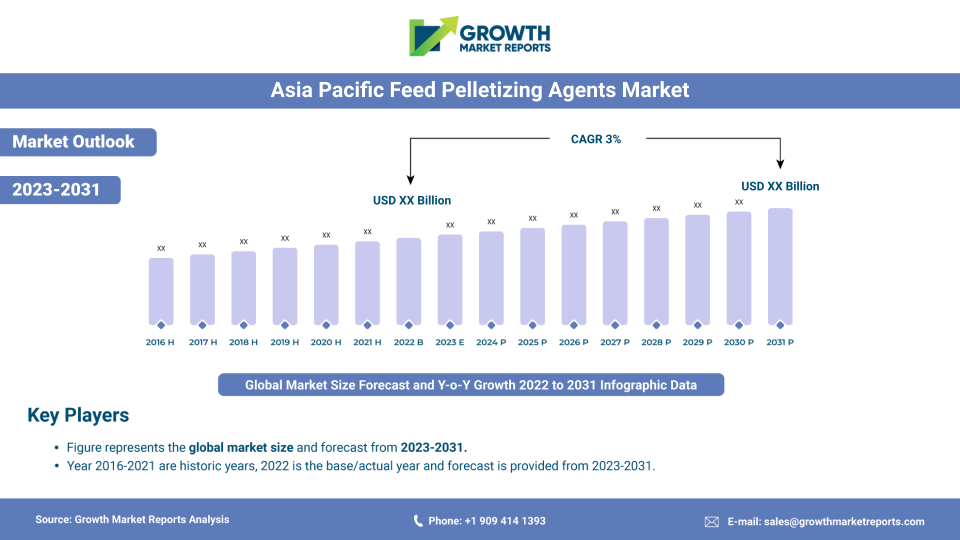
Regionally, Asia Pacific continues to lead the feed pelletizing agents market, accounting for USD 980 million in 2024, which represents approximately 44% of the global market. The region's dominance is fueled by rapid urbanization, rising income levels, and the increasing demand for animal protein in countries such as China, India, and Indonesia. The expansion of large-scale commercial livestock operations and the adoption of advanced feed manufacturing technologies are driving the demand for high-quality pelletizing agents in the region. The Asia Pacific market is expected to grow at a robust CAGR of 6.3% over the forecast period, outpacing other regions and offering significant opportunities for market participants.
North America holds the second-largest share in the feed pelletizing agents market, with a market size of USD 560 million in 2024. The region's growth is driven by the presence of a well-established feed industry, high adoption of premium feed additives, and stringent regulatory standards for feed quality and safety. The United States and Canada are the primary contributors to market growth, with a strong focus on innovation, sustainability, and operational efficiency. The increasing demand for specialty and functional feeds, coupled with the adoption of advanced manufacturing technologies, is expected to further drive the growth of the North American market over the forecast period.
Europe accounts for a significant share of the global feed pelletizing agents market, with a market size of USD 430 million in 2024. The region is characterized by a mature feed industry, high levels of regulatory compliance, and a strong emphasis on sustainability and animal welfare. Countries such as Germany, France, and the United Kingdom are leading the adoption of natural and eco-friendly pelletizing agents, reflecting the region's commitment to environmental stewardship and responsible production. Latin America and the Middle East & Africa are emerging as high-growth regions, with market sizes of USD 160 million and USD 100 million respectively in 2024. These regions offer untapped potential for market expansion, driven by government initiatives to boost livestock productivity and improve food security.
The feed pelletizing agents market is highly competitive, with a diverse mix of global and regional players vying for market share through product innovation, strategic partnerships, and geographic expansion. The competitive landscape is characterized by the continuous introduction of new and improved pelletizing agents, as manufacturers seek to differentiate their offerings and address the evolving needs of feed producers. Key strategies employed by market participants include investments in research and development, expansion of production capacities, and collaborations with feed manufacturers and research institutions. The ability to deliver high-performance, cost-effective, and sustainable pelletizing solutions is a critical success factor in this dynamic market environment.
Major players in the feed pelletizing agents market are focusing on expanding their product portfolios to include a broader range of natural, organic, and specialty agents that cater to the diverse requirements of different livestock species and feed formulations. The increasing demand for customized and value-added solutions is driving manufacturers to invest in advanced formulation technologies and process optimization. Strategic acquisitions and mergers are also common in the industry, as companies seek to strengthen their market position, enhance their technological capabilities, and access new customer segments. The entry of new players and startups, particularly in the natural and sustainable pelletizing agents segment, is intensifying competition and fostering innovation across the market.
The competitive dynamics are further shaped by the growing importance of regulatory compliance and sustainability in the feed industry. Leading companies are proactively engaging with regulatory authorities and industry stakeholders to ensure that their products meet the highest standards of safety, quality, and environmental responsibility. The adoption of digital technologies and data-driven solutions is enabling market participants to enhance their operational efficiency, improve customer engagement, and deliver superior value to end-users. The ability to adapt to changing market trends and regulatory requirements is essential for long-term success in the feed pelletizing agents market.
Some of the major companies operating in the global feed pelletizing agents market include BASF SE, Evonik Industries AG, Archer Daniels Midland Company, Bentonite Performance Minerals LLC, Bühler Group, CP Kelco, Uniscope Inc., Nutreco N.V., DuPont de Nemours, Inc., and Alltech Inc.. BASF SE and Evonik Industries AG are recognized for their strong focus on innovation and sustainability, offering a wide range of high-performance pelletizing agents for various livestock applications. Archer Daniels Midland Company and Nutreco N.V. are global leaders in animal nutrition, leveraging their extensive research capabilities and distribution networks to deliver customized solutions to feed manufacturers worldwide. Bühler Group and CP Kelco are known for their advanced feed processing technologies and expertise in functional additives, while Uniscope Inc. and Bentonite Performance Minerals LLC specialize in natural and mineral-based pelletizing agents.
These companies are actively engaged in research and development to create next-generation pelletizing agents that address the evolving challenges of the animal feed industry. Strategic partnerships with academic institutions, industry associations, and technology providers are enabling market leaders to stay ahead of regulatory changes and capitalize on emerging growth opportunities. The increasing focus on sustainability, digitalization, and customer-centric innovation is expected to shape the future competitive landscape of the feed pelletizing agents market, driving continued growth and value creation for market participants and stakeholders.
The Feed Pelletizing Agents market has been segmented on the basis of
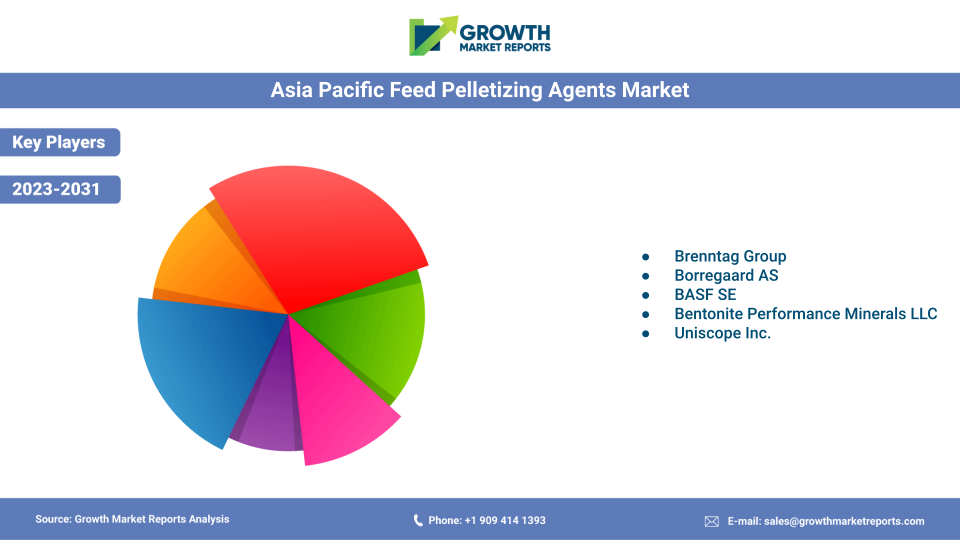
The key players competing in the Asia Pacific feed pelletizing agents are Brenntag Group; Borregaard AS; BASF SE; Bentonite Performance Minerals LLC; and Uniscope Inc.
Opportunities include the development of eco-friendly and specialty pelletizing agents, while challenges involve regulatory compliance, raw material price volatility, and supply chain disruptions.
Feed pelletizing agents are used in commercial feed production, on-farm feed, and specialty applications such as aquafeed and pet food.
Key companies include BASF SE, Evonik Industries AG, Archer Daniels Midland Company, Nutreco N.V., DuPont de Nemours, Inc., Alltech Inc., and others.
Feed pelletizing agents are available in powder, liquid, and granule forms, each offering specific benefits for different feed manufacturing processes.
Key trends include the shift towards natural and sustainable agents, adoption of advanced manufacturing technologies, and increasing regulatory scrutiny on feed safety.
Poultry is the largest segment, followed by ruminants, swine, aquaculture, and specialty livestock such as pets and equine.
The main types include binders, lubricants, anti-caking agents, and other specialized agents like emulsifiers and conditioners.
Asia Pacific leads the market with the largest share, followed by North America and Europe. Latin America and the Middle East & Africa are emerging as high-growth regions.
Feed pelletizing agents are additives such as binders, lubricants, and anti-caking agents used in animal feed production to improve pellet quality, enhance feed efficiency, and reduce wastage.
As of 2024, the global feed pelletizing agents market size reached USD 2.23 billion, with expectations to grow to USD 3.88 billion by 2033.