Fashion Influencer Marketing Market Research Report 2033

Fashion Influencer Marketing Market Research Report 2033

Segments - by Service Type (Campaign Management, Influencer Identification & Recruitment, Analytics & Reporting, Content Creation, Others), by Influencer Type (Mega Influencers, Macro Influencers, Micro Influencers, Nano Influencers), by Platform (Instagram, YouTube, TikTok, Facebook, Blogs, Others), by End-User (Apparel, Footwear, Accessories, Cosmetics & Beauty, Others)

https://growthmarketreports.com/Debadatta
Author : Debadatta Patel
https://growthmarketreports.com/Vaibhav
Fact-checked by : V. Chandola
https://growthmarketreports.com/Shruti
Editor : Shruti Bhat

Upcoming | Report ID :CG-1086 | 4.0 Rating | 82 Reviews | 291 Pages | Format : Docx PDF

Report Description


Fashion Influencer Marketing Market Outlook

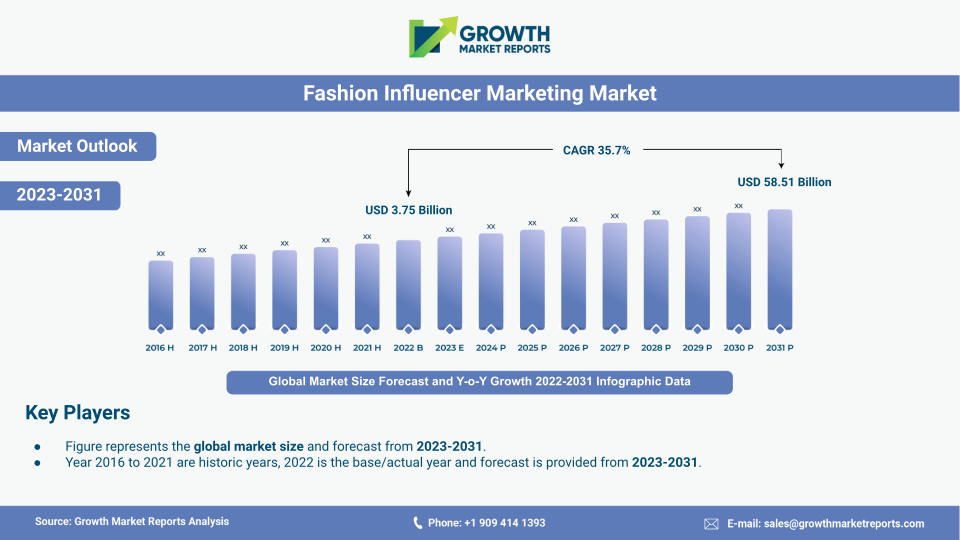
According to our latest research, the global fashion influencer marketing market size reached USD 2.76 billion in 2024, driven by the growing integration of social media in fashion brand strategies and the increasing reliance on digital platforms for consumer engagement. The market is expected to expand at a robust CAGR of 12.4% from 2025 to 2033, reaching a projected value of USD 7.86 billion by 2033. This remarkable growth is attributed to evolving consumer behavior, the proliferation of digital content, and the rising effectiveness of influencer-driven campaigns in driving brand loyalty and conversions.

One of the primary growth factors for the fashion influencer marketing market is the shift in consumer purchasing patterns toward online platforms, particularly among Gen Z and millennial demographics. These segments are highly responsive to influencer recommendations, perceiving them as authentic and relatable compared to traditional celebrity endorsements or direct brand advertising. The increasing penetration of smartphones and affordable internet access has further amplified the reach of influencers, enabling brands to tap into niche audiences and foster personalized connections. As a result, fashion labels are allocating larger portions of their marketing budgets to influencer collaborations, leveraging the power of social proof to enhance brand credibility and drive sales.

Another significant driver is the advancement in data analytics and artificial intelligence, which has revolutionized campaign management and influencer selection processes. Brands and agencies now have access to sophisticated tools that provide deep insights into influencer audience demographics, engagement rates, and content performance. These analytics empower marketers to make data-driven decisions, optimize campaign ROI, and track the effectiveness of influencer partnerships in real time. Additionally, the rise of micro and nano influencers, who offer highly engaged and loyal followings within specific niches, has diversified the market, allowing brands to experiment with various influencer tiers for tailored campaign objectives.

The growing emphasis on video and short-form content, fueled by platforms such as TikTok, Instagram Reels, and YouTube Shorts, has also catalyzed the expansion of the fashion influencer marketing market. Visual storytelling and interactive content formats have proven highly effective in capturing audience attention and driving higher engagement rates. Brands are increasingly collaborating with influencers to co-create compelling content that resonates with target consumers, enhances brand storytelling, and encourages user-generated content. This trend is expected to continue as social media algorithms prioritize video content, further solidifying the role of influencers as key marketing partners in the fashion industry.

Regionally, North America and Europe have traditionally dominated the fashion influencer marketing market due to high digital adoption rates, mature fashion industries, and a well-established influencer ecosystem. However, the Asia Pacific region is witnessing the fastest growth, propelled by rapid urbanization, the rise of local fashion brands, and a burgeoning population of digital natives. Countries such as China, India, and South Korea are emerging as significant markets, with homegrown influencers commanding substantial followings and shaping fashion trends. As brands seek to expand their global footprint, cross-border influencer collaborations and localized content strategies are becoming increasingly prevalent, driving further market growth and diversification.

Global Fashion Influencering Industry Outlook

Service Type Analysis

Within the fashion influencer marketing market, the segmentation by service type plays a pivotal role in shaping campaign outcomes and brand strategies. Campaign management services are at the forefront, encompassing the end-to-end execution of influencer partnerships, from conceptualization to performance tracking. These services are highly sought after by brands aiming to streamline their influencer marketing efforts and ensure seamless coordination between all stakeholders. Campaign management providers offer expertise in content planning, timeline management, and compliance with brand guidelines, which is crucial for maintaining consistency and achieving campaign objectives. As influencer marketing matures, the demand for comprehensive campaign management solutions is expected to rise, particularly among large fashion brands with complex, multi-platform campaigns.

Influencer identification and recruitment services are another critical segment, focusing on the discovery and vetting of influencers whose audience profiles align with brand values and target demographics. The proliferation of influencers across various platforms has made manual selection increasingly challenging and time-consuming. As a result, agencies and technology providers have developed advanced algorithms and databases to match brands with suitable influencers based on factors such as engagement rates, audience authenticity, and content relevance. This service type is particularly valuable for brands seeking to enter new markets or launch niche product lines, as it enables precise targeting and maximizes the likelihood of campaign success.

Analytics and reporting have emerged as indispensable components of the fashion influencer marketing market, driven by the need for transparency and measurable ROI. These services leverage data analytics tools to monitor key performance indicators such as reach, impressions, click-through rates, and conversion metrics. Detailed reporting allows brands to assess the effectiveness of influencer collaborations, identify areas for improvement, and justify marketing expenditures to stakeholders. Moreover, real-time analytics facilitate agile decision-making, enabling marketers to adjust strategies mid-campaign for optimal results. As brands increasingly demand accountability from influencer partnerships, the analytics and reporting segment is poised for substantial growth.

Content creation services are integral to the influencer marketing ecosystem, as the quality and creativity of content directly impact audience engagement and brand perception. This segment encompasses the production of photos, videos, stories, and other multimedia assets, often co-created by influencers and brand teams. High-quality content not only enhances the visual appeal of campaigns but also fosters authenticity and relatability, which are key drivers of consumer trust. With the rise of video-first platforms and immersive content formats, the demand for professional content creation services is expected to surge, prompting agencies to invest in talent and technology to meet evolving brand needs.

Other service types, such as compliance management, payment facilitation, and crisis management, complement the core offerings and address emerging challenges in the fashion influencer marketing market. As regulatory scrutiny increases and influencer marketing guidelines evolve, brands are seeking specialized services to ensure compliance with advertising standards and mitigate reputational risks. Payment facilitation services streamline compensation processes, enhancing the influencer experience and fostering long-term partnerships. Overall, the diversification of service offerings reflects the growing complexity of influencer marketing and underscores the need for integrated solutions to drive sustained growth in the sector.

Report Scope

Attributes Details
Report Title Fashion Influencer Marketing Market Research Report 2033
By Service Type Campaign Management, Influencer Identification & Recruitment, Analytics & Reporting, Content Creation, Others
By Influencer Type Mega Influencers, Macro Influencers, Micro Influencers, Nano Influencers
By Platform Instagram, YouTube, TikTok, Facebook, Blogs, Others
By End-User Apparel, Footwear, Accessories, Cosmetics & Beauty, Others
Regions Covered North America, Europe, APAC, Latin America, MEA
Base Year 2024
Historic Data 2018-2023
Forecast Period 2025-2033
Number of Pages 291
Number of Tables & Figures 328
Customization Available Yes, the report can be customized as per your need.

Influencer Type Analysis

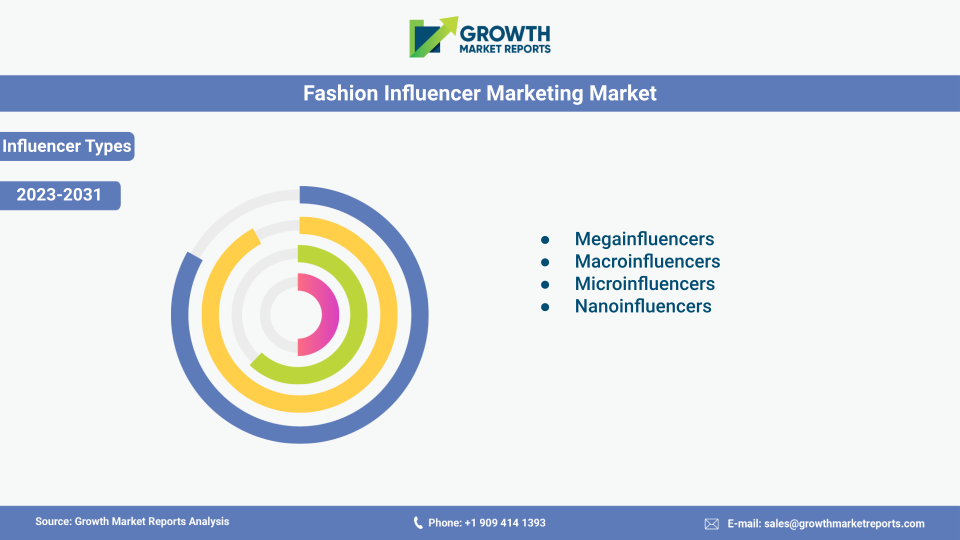
The fashion influencer marketing market is distinctly segmented by influencer type, each category offering unique advantages and strategic opportunities for brands. Mega influencers, typically defined as individuals with over one million followers, command significant reach and visibility. These influencers often include celebrities and high-profile personalities whose endorsements can generate substantial buzz and elevate brand prestige. Mega influencers are particularly effective for large-scale campaigns targeting mass audiences or for launching new product lines. However, collaborations with mega influencers often come with high costs and may not always guarantee deep audience engagement, as their followers are diverse and less niche-oriented.

Macro influencers, generally with follower counts ranging from 100,000 to one million, strike a balance between reach and engagement. They are often industry experts, fashion bloggers, or rising social media stars who have cultivated a dedicated following within specific fashion segments. Macro influencers offer brands the ability to target well-defined audiences with tailored messaging, making them ideal partners for campaigns aimed at driving both awareness and conversions. Their content is perceived as more authentic than that of mega influencers, and their audience is typically more engaged, resulting in higher interaction rates and better campaign outcomes.

Micro influencers, with followers typically between 10,000 and 100,000, are increasingly favored by brands for their high engagement rates and strong community ties. These influencers often specialize in niche areas of fashion, such as sustainable clothing, streetwear, or luxury accessories, and are seen as trusted authorities by their followers. Micro influencers excel in fostering genuine connections and driving word-of-mouth recommendations, which can translate into higher conversion rates and brand loyalty. Collaborating with multiple micro influencers allows brands to reach diverse segments while maintaining a personal touch, making this influencer type a cornerstone of many fashion marketing strategies.

Nano influencers, characterized by follower counts below 10,000, represent the most grassroots level of influencer marketing. Despite their limited reach, nano influencers boast exceptionally high engagement and influence within their close-knit communities. Their recommendations are perceived as highly credible and authentic, often resembling peer-to-peer advice rather than traditional advertising. Brands are increasingly recognizing the value of nano influencers for hyper-local campaigns, product launches, and initiatives targeting specific subcultures or demographics. The cost-effectiveness and authenticity associated with nano influencers make them an attractive option for emerging brands and limited-budget campaigns.

The segmentation by influencer type in the fashion influencer marketing market enables brands to adopt a tiered approach, combining the broad reach of mega and macro influencers with the targeted impact of micro and nano influencers. This multi-layered strategy allows for greater flexibility in campaign design, maximizes audience coverage, and enhances overall marketing effectiveness. As consumer preferences continue to evolve and the demand for authentic, relatable content grows, the strategic selection of influencer types will remain a critical determinant of success in the fashion influencer marketing landscape.

Platform Analysis

The choice of platform is a decisive factor in the fashion influencer marketing market, as each social media channel offers distinct advantages and caters to different audience segments. Instagram remains the dominant platform for fashion influencer marketing, owing to its visually-driven interface, robust engagement tools, and widespread popularity among fashion-conscious consumers. The platform’s features, such as Stories, Reels, and Shopping, enable influencers to showcase products creatively and drive direct sales through shoppable posts. Instagram’s algorithm also favors high-quality visual content, making it the go-to platform for fashion brands seeking to amplify their digital presence and connect with aesthetically-oriented audiences.

YouTube is another key platform, particularly for long-form content and in-depth product reviews. Fashion influencers on YouTube leverage the platform’s video capabilities to create tutorials, hauls, lookbooks, and behind-the-scenes content, offering audiences a comprehensive view of products and styling tips. The platform’s monetization features, such as AdSense and brand partnerships, incentivize influencers to produce high-quality content and foster loyal subscriber bases. YouTube’s searchability and evergreen content model also ensure sustained visibility and engagement, making it a valuable channel for brands aiming to build long-term relationships with consumers.

TikTok has rapidly ascended as a powerhouse in the fashion influencer marketing market, driven by its emphasis on short-form, viral video content and its appeal to younger demographics. The platform’s algorithm promotes content discovery, enabling even lesser-known influencers to achieve viral reach and influence fashion trends. TikTok’s interactive features, such as challenges, duets, and live streams, encourage user participation and foster a sense of community. Brands are increasingly leveraging TikTok for trend-driven campaigns, product launches, and real-time engagement, capitalizing on the platform’s dynamic and fast-paced environment to drive brand awareness and sales.

Facebook and blogs continue to play important roles, particularly among older demographics and within specific fashion niches. Facebook’s extensive user base, group functionalities, and targeted advertising capabilities make it a valuable platform for community building and campaign amplification. Fashion blogs, while less dominant than social media platforms, remain influential for in-depth product reviews, editorial content, and SEO-driven traffic. Influencers with established blogs often collaborate with brands for sponsored posts, affiliate marketing, and long-form storytelling, providing a complementary channel to social media campaigns.

Other platforms, such as Pinterest, Twitter, and Snapchat, offer additional opportunities for fashion influencer marketing, each catering to unique audience preferences and content formats. Pinterest, for example, excels in visual discovery and inspiration, making it ideal for fashion lookbooks and trend forecasting. Twitter is effective for real-time conversations and campaign virality, while Snapchat appeals to younger users with ephemeral content and interactive features. The diversification of platforms in the fashion influencer marketing market allows brands to adopt an omnichannel approach, maximizing reach and engagement across multiple touchpoints and adapting to evolving consumer behaviors.

End-User Analysis

The fashion influencer marketing market is segmented by end-user into categories such as apparel, footwear, accessories, cosmetics & beauty, and others, reflecting the diverse applications of influencer marketing within the fashion ecosystem. The apparel segment holds the largest market share, driven by the constant evolution of fashion trends and the high frequency of new product launches. Influencers play a crucial role in shaping consumer perceptions, showcasing new collections, and driving seasonal sales. Apparel brands leverage influencer partnerships to create buzz around limited-edition releases, promote sustainable fashion initiatives, and engage with fashion-forward audiences across multiple platforms.

The footwear segment is also witnessing significant growth, with influencers serving as key opinion leaders in sneaker culture, athleisure, and luxury footwear markets. Collaborations between brands and influencers often result in exclusive product drops, co-branded collections, and viral marketing campaigns that drive demand and foster brand loyalty. Footwear influencers excel in creating engaging content, such as unboxing videos, styling tips, and performance reviews, which resonate with both casual consumers and dedicated sneaker enthusiasts. The segment’s growth is further fueled by the rise of athleisure and the increasing popularity of limited-edition releases.

Accessories, including bags, jewelry, and eyewear, represent another dynamic segment within the fashion influencer marketing market. Influencers are instrumental in highlighting the versatility and style potential of accessories, often integrating them into broader fashion narratives and lifestyle content. Brands collaborate with influencers to showcase new designs, promote customization options, and drive impulse purchases through visually appealing content. The accessories segment benefits from the relatively low price points and high frequency of purchases, making it an attractive category for influencer-driven marketing strategies.

The cosmetics & beauty segment is increasingly converging with fashion influencer marketing, as influencers blur the lines between fashion, beauty, and lifestyle content. Beauty influencers are renowned for their ability to drive product discovery, educate consumers on application techniques, and create viral trends through makeup challenges and tutorials. The integration of cosmetics and fashion campaigns enables brands to offer holistic style solutions, enhance cross-selling opportunities, and tap into the growing demand for personalized, influencer-curated experiences. As the beauty industry continues to embrace digital transformation, influencer marketing is set to play an even greater role in shaping consumer preferences and driving category growth.

Other end-user segments, such as luxury brands, sustainable fashion labels, and emerging designers, are leveraging influencer marketing to build brand awareness, reach new audiences, and differentiate themselves in a crowded marketplace. Influencers serve as brand ambassadors, storytellers, and trendsetters, helping to humanize brands and foster emotional connections with consumers. The diverse applications of influencer marketing across end-user segments underscore its versatility and effectiveness as a strategic tool for driving growth and innovation in the fashion industry.

Opportunities & Threats

The fashion influencer marketing market presents a wealth of opportunities for brands, agencies, and influencers alike. One of the most promising opportunities lies in the integration of advanced technologies such as artificial intelligence, augmented reality, and blockchain into influencer marketing strategies. AI-powered tools can enhance influencer identification, audience segmentation, and content optimization, enabling brands to deliver highly personalized and impactful campaigns. Augmented reality experiences, such as virtual try-ons and interactive product showcases, offer innovative ways to engage consumers and drive conversions. Blockchain technology can enhance transparency and trust by enabling secure tracking of campaign metrics, influencer compensation, and intellectual property rights. As brands embrace digital transformation, the adoption of these technologies is expected to unlock new levels of efficiency, creativity, and effectiveness in influencer marketing.

Another significant opportunity in the fashion influencer marketing market is the rise of direct-to-consumer (DTC) brands and the democratization of fashion. DTC brands are leveraging influencer partnerships to bypass traditional retail channels, build direct relationships with consumers, and accelerate product launches. The accessibility of social media platforms has also empowered emerging designers and small businesses to collaborate with influencers, reach global audiences, and compete with established brands. This democratization is fostering greater diversity and inclusivity within the fashion industry, as influencers from diverse backgrounds and underrepresented communities gain visibility and influence. Brands that prioritize authentic, purpose-driven collaborations and champion social causes are well positioned to resonate with socially conscious consumers and drive long-term loyalty.

Despite these opportunities, the fashion influencer marketing market faces several restraining factors, chief among them being the growing concerns around influencer authenticity and transparency. The proliferation of fake followers, engagement fraud, and undisclosed sponsored content has eroded consumer trust and prompted regulatory scrutiny. Brands are increasingly challenged to verify influencer credibility, ensure compliance with advertising guidelines, and maintain transparency in influencer partnerships. Failure to address these issues can result in reputational damage, legal penalties, and diminished campaign effectiveness. As the market matures, the need for robust verification processes, transparent disclosure practices, and ethical standards will become paramount to sustaining growth and safeguarding stakeholder interests.

Regional Outlook

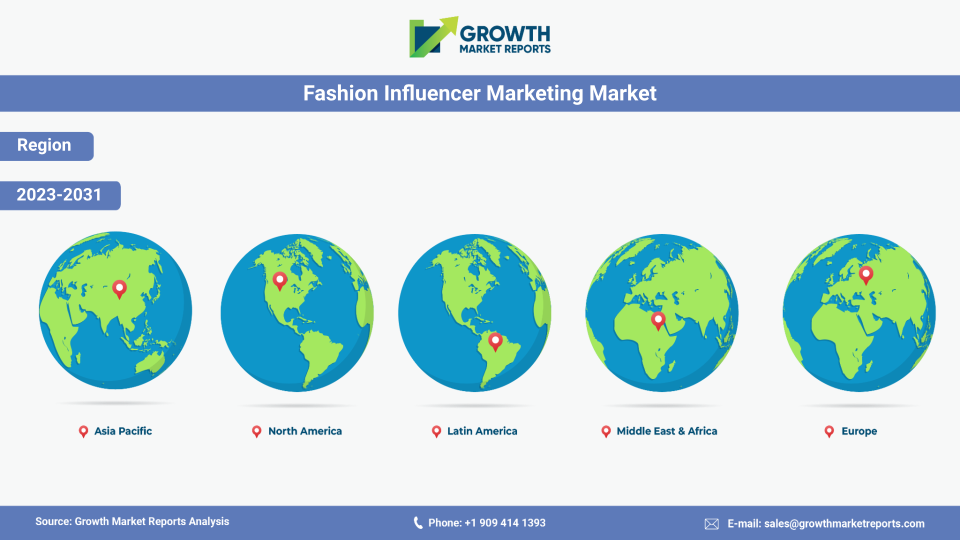
Regionally, the fashion influencer marketing market is characterized by varying levels of digital adoption, influencer ecosystem maturity, and consumer behavior. North America remains the largest market, accounting for approximately USD 1.08 billion in 2024, or nearly 39% of the global market. The region’s growth is driven by high internet penetration, a mature fashion industry, and the widespread adoption of influencer marketing among both established brands and digital-native startups. The United States, in particular, boasts a vibrant influencer community and a robust ecosystem of agencies, technology providers, and analytics platforms, making it a global hub for innovation in influencer marketing.

Europe is another significant market, with a 2024 value of around USD 0.74 billion, representing 27% of the global market. The region is characterized by a diverse fashion landscape, strong regulatory frameworks, and a growing emphasis on sustainability and ethical fashion. Influencer marketing in Europe is marked by localized content strategies, cross-border collaborations, and a focus on authenticity and transparency. Countries such as the United Kingdom, France, Germany, and Italy are leading the way, with brands leveraging influencer partnerships to navigate complex cultural nuances and engage with fashion-forward consumers.

The Asia Pacific region is experiencing the fastest growth, with a market value of USD 0.62 billion in 2024 and a projected CAGR of 15.7% through 2033. The region’s expansion is fueled by rapid urbanization, a burgeoning middle class, and the rise of homegrown influencers who command significant influence over local fashion trends. China, India, South Korea, and Japan are emerging as key markets, with brands increasingly investing in localized influencer campaigns and cross-border collaborations. The growing popularity of mobile-first platforms, live streaming, and e-commerce integration is further accelerating the adoption of influencer marketing in the Asia Pacific, positioning the region as a major driver of global market growth.

Fashion Influencering Market Statistics

Competitor Outlook

The competitive landscape of the fashion influencer marketing market is highly dynamic, characterized by the presence of established agencies, emerging technology providers, and a rapidly evolving influencer ecosystem. Leading players are continuously innovating their service offerings, investing in advanced analytics, and expanding their global footprints to capture new growth opportunities. The market is also witnessing increased consolidation, with larger agencies acquiring niche players and technology startups to enhance their capabilities and diversify their client portfolios. Strategic partnerships between brands, agencies, and influencers are becoming more prevalent, enabling stakeholders to leverage complementary strengths and deliver integrated, end-to-end solutions.

Technology is playing an increasingly central role in shaping the competitive dynamics of the market. Agencies and platforms that offer AI-driven influencer identification, real-time analytics, and campaign automation are gaining a competitive edge, as brands seek to optimize campaign performance and maximize ROI. The rise of self-serve influencer marketing platforms has democratized access to influencers, enabling small and medium-sized brands to launch campaigns with greater agility and cost efficiency. However, the proliferation of platforms has also intensified competition, prompting providers to differentiate themselves through value-added services such as content creation, compliance management, and strategic consulting.

Influencer agencies are focusing on building long-term relationships with both brands and influencers, emphasizing trust, transparency, and mutual value creation. This relationship-centric approach is critical for sustaining influencer loyalty, ensuring campaign consistency, and navigating the evolving regulatory landscape. Agencies are also investing in talent development, influencer education, and community building to foster a vibrant and engaged influencer ecosystem. As the market matures, the ability to deliver personalized, data-driven, and culturally relevant campaigns will be a key determinant of competitive success.

The fashion influencer marketing market is also witnessing the emergence of specialized agencies and platforms catering to niche segments, such as sustainable fashion, luxury brands, and direct-to-consumer startups. These players differentiate themselves through deep industry expertise, curated influencer networks, and tailored service offerings. The growing demand for authenticity and purpose-driven marketing is creating new opportunities for agencies that prioritize ethical standards, diversity, and social impact. As brands seek to navigate the complexities of influencer marketing, the role of trusted partners and advisors will become increasingly important in driving sustained growth and innovation.

Major companies in the fashion influencer marketing market include IZEA Worldwide Inc., AspireIQ, Influencer.co, Upfluence, Tagger Media, and Fohr. IZEA Worldwide Inc. is renowned for its comprehensive influencer marketing platform, offering end-to-end campaign management, influencer discovery, and advanced analytics. AspireIQ specializes in community-driven influencer marketing, enabling brands to build long-term partnerships and foster authentic engagement. Influencer.co and Upfluence are known for their robust influencer databases and AI-powered matching algorithms, streamlining the influencer selection process. Tagger Media offers a data-driven platform with real-time analytics and campaign optimization tools, while Fohr focuses on influencer verification and authenticity, addressing the growing demand for transparency and trust in the market.

These companies are continuously enhancing their platforms with new features, such as social listening, sentiment analysis, and e-commerce integration, to meet the evolving needs of fashion brands and influencers. Strategic investments in technology, talent, and global expansion are enabling market leaders to stay ahead of the competition and capture new growth opportunities. As the market continues to evolve, collaboration between brands, agencies, and technology providers will be essential for driving innovation, delivering superior campaign outcomes, and sustaining long-term success in the fashion influencer marketing market.

Key Players

  • AspireIQ
  • Influencer.co
  • IZEA
  • Upfluence
  • Traackr
  • Julius
  • HYPR
  • Klear
  • Tagger Media
  • Fohr
  • Heepsy
  • Mavrck
  • Brandwatch (formerly Falcon.io)
  • CreatorIQ
  • Socialbakers
  • GRIN
  • Obvious.ly
  • Takumi
  • Influencity
  • ZINE
Fashion Influencering Market Overview

Segments

The Fashion Influencer Marketing market has been segmented on the basis of

Service Type

  • Campaign Management
  • Influencer Identification & Recruitment
  • Analytics & Reporting
  • Content Creation
  • Others

Influencer Type

  • Mega Influencers
  • Macro Influencers
  • Micro Influencers
  • Nano Influencers

Platform

  • Instagram
  • YouTube
  • TikTok
  • Facebook
  • Blogs
  • Others

End-User

  • Apparel
  • Footwear
  • Accessories
  • Cosmetics & Beauty
  • Others

Competitive Landscape

Key players competing in the fashion influencer marketing market include InfluencerDB; IZEA; Klear; Launchmetrics; Mavrck; AspireIQ; Upfluence Inc.; Launchmetrics; and HYPR Brands.

Major market players are adopting several business strategies such as mergers, acquisitions, partnerships, collaborations, capacity expansion, and product launches to enhance their market shares. For instance, in July 2019, an interactive microsite, Insights100, was launched by Launchmetrics. It helps brands for gaining the access of comparative benchmark against their peers by analyzing the effectiveness of investments.
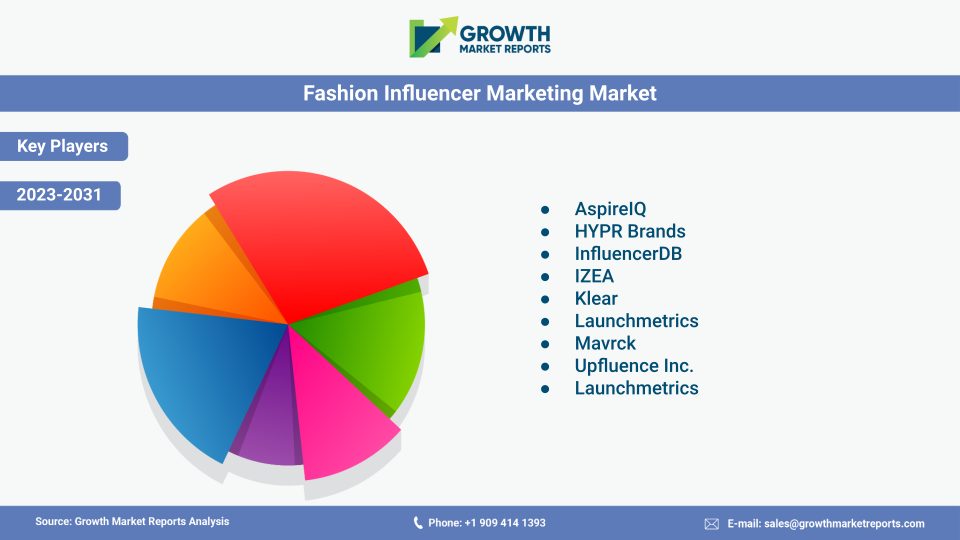

Fashion Influencer Marketing Market Key Players

Frequently Asked Questions

Advancements in data analytics, artificial intelligence, and campaign automation are enabling brands to optimize influencer selection, measure ROI, and deliver highly personalized campaigns.

Major players include IZEA Worldwide Inc., AspireIQ, Influencer.co, Upfluence, Tagger Media, Fohr, Traackr, Julius, HYPR, Klear, Heepsy, Mavrck, Brandwatch, CreatorIQ, Socialbakers, GRIN, Obvious.ly, Takumi, Influencity, and ZINE.

Opportunities include the integration of AI, AR, and blockchain, as well as the rise of direct-to-consumer brands. Challenges involve influencer authenticity, transparency, fake followers, and regulatory compliance.

Apparel holds the largest share, followed by footwear, accessories, and cosmetics & beauty. Other segments include luxury brands, sustainable fashion, and emerging designers.

Instagram leads the market, followed by YouTube, TikTok, Facebook, and blogs. Other platforms like Pinterest, Twitter, and Snapchat also play important roles depending on the campaign and audience.

The market is segmented into mega influencers (over 1 million followers), macro influencers (100,000-1 million), micro influencers (10,000-100,000), and nano influencers (under 10,000), each offering unique advantages for brands.

Key service types include campaign management, influencer identification & recruitment, analytics & reporting, content creation, and additional services such as compliance management and payment facilitation.

North America and Europe currently dominate the market, but the Asia Pacific region is experiencing the fastest growth, especially in countries like China, India, and South Korea.

The market is expected to grow at a CAGR of 12.4% from 2025 to 2033, reaching an estimated value of USD 7.86 billion by 2033.

As of 2024, the global fashion influencer marketing market size reached USD 2.76 billion, with strong growth expected through 2033.

Table Of Content

Chapter 1 Executive Summary
Chapter 2 Assumptions and Acronyms Used
Chapter 3 Research Methodology
Chapter 4 Fashion Influencering Market Overview
   4.1 Introduction
      4.1.1 Market Taxonomy
      4.1.2 Market Definition
      4.1.3 Macro-Economic Factors Impacting the Market Growth
   4.2 Fashion Influencering Market Dynamics
      4.2.1 Market Drivers
      4.2.2 Market Restraints
      4.2.3 Market Opportunity
   4.3 Fashion Influencering Market - Supply Chain Analysis
      4.3.1 List of Key Suppliers
      4.3.2 List of Key Distributors
      4.3.3 List of Key Consumers
   4.4 Key Forces Shaping the Fashion Influencering Market
      4.4.1 Bargaining Power of Suppliers
      4.4.2 Bargaining Power of Buyers
      4.4.3 Threat of Substitution
      4.4.4 Threat of New Entrants
      4.4.5 Competitive Rivalry
   4.5 Global Fashion Influencering Market Size & Forecast, 2023-2032
      4.5.1 Fashion Influencering Market Size and Y-o-Y Growth
      4.5.2 Fashion Influencering Market Absolute $ Opportunity

Chapter 5 Global Fashion Influencering Market Analysis and Forecast By Service Type
   5.1 Introduction
      5.1.1 Key Market Trends & Growth Opportunities By Service Type
      5.1.2 Basis Point Share (BPS) Analysis By Service Type
      5.1.3 Absolute $ Opportunity Assessment By Service Type
   5.2 Fashion Influencering Market Size Forecast By Service Type
      5.2.1 Campaign Management
      5.2.2 Influencer Identification & Recruitment
      5.2.3 Analytics & Reporting
      5.2.4 Content Creation
      5.2.5 Others
   5.3 Market Attractiveness Analysis By Service Type

Chapter 6 Global Fashion Influencering Market Analysis and Forecast By Influencer Type
   6.1 Introduction
      6.1.1 Key Market Trends & Growth Opportunities By Influencer Type
      6.1.2 Basis Point Share (BPS) Analysis By Influencer Type
      6.1.3 Absolute $ Opportunity Assessment By Influencer Type
   6.2 Fashion Influencering Market Size Forecast By Influencer Type
      6.2.1 Mega Influencers
      6.2.2 Macro Influencers
      6.2.3 Micro Influencers
      6.2.4 Nano Influencers
   6.3 Market Attractiveness Analysis By Influencer Type

Chapter 7 Global Fashion Influencering Market Analysis and Forecast By Platform
   7.1 Introduction
      7.1.1 Key Market Trends & Growth Opportunities By Platform
      7.1.2 Basis Point Share (BPS) Analysis By Platform
      7.1.3 Absolute $ Opportunity Assessment By Platform
   7.2 Fashion Influencering Market Size Forecast By Platform
      7.2.1 Instagram
      7.2.2 YouTube
      7.2.3 TikTok
      7.2.4 Facebook
      7.2.5 Blogs
      7.2.6 Others
   7.3 Market Attractiveness Analysis By Platform

Chapter 8 Global Fashion Influencering Market Analysis and Forecast By End-User
   8.1 Introduction
      8.1.1 Key Market Trends & Growth Opportunities By End-User
      8.1.2 Basis Point Share (BPS) Analysis By End-User
      8.1.3 Absolute $ Opportunity Assessment By End-User
   8.2 Fashion Influencering Market Size Forecast By End-User
      8.2.1 Apparel
      8.2.2 Footwear
      8.2.3 Accessories
      8.2.4 Cosmetics & Beauty
      8.2.5 Others
   8.3 Market Attractiveness Analysis By End-User

Chapter 9 Global Fashion Influencering Market Analysis and Forecast by Region
   9.1 Introduction
      9.1.1 Key Market Trends & Growth Opportunities By Region
      9.1.2 Basis Point Share (BPS) Analysis By Region
      9.1.3 Absolute $ Opportunity Assessment By Region
   9.2 Fashion Influencering Market Size Forecast By Region
      9.2.1 North America
      9.2.2 Europe
      9.2.3 Asia Pacific
      9.2.4 Latin America
      9.2.5 Middle East & Africa (MEA)
   9.3 Market Attractiveness Analysis By Region

Chapter 10 Coronavirus Disease (COVID-19) Impact 
   10.1 Introduction 
   10.2 Current & Future Impact Analysis 
   10.3 Economic Impact Analysis 
   10.4 Government Policies 
   10.5 Investment Scenario

Chapter 11 North America Fashion Influencering Analysis and Forecast
   11.1 Introduction
   11.2 North America Fashion Influencering Market Size Forecast by Country
      11.2.1 U.S.
      11.2.2 Canada
   11.3 Basis Point Share (BPS) Analysis by Country
   11.4 Absolute $ Opportunity Assessment by Country
   11.5 Market Attractiveness Analysis by Country
   11.6 North America Fashion Influencering Market Size Forecast By Service Type
      11.6.1 Campaign Management
      11.6.2 Influencer Identification & Recruitment
      11.6.3 Analytics & Reporting
      11.6.4 Content Creation
      11.6.5 Others
   11.7 Basis Point Share (BPS) Analysis By Service Type 
   11.8 Absolute $ Opportunity Assessment By Service Type 
   11.9 Market Attractiveness Analysis By Service Type
   11.10 North America Fashion Influencering Market Size Forecast By Influencer Type
      11.10.1 Mega Influencers
      11.10.2 Macro Influencers
      11.10.3 Micro Influencers
      11.10.4 Nano Influencers
   11.11 Basis Point Share (BPS) Analysis By Influencer Type 
   11.12 Absolute $ Opportunity Assessment By Influencer Type 
   11.13 Market Attractiveness Analysis By Influencer Type
   11.14 North America Fashion Influencering Market Size Forecast By Platform
      11.14.1 Instagram
      11.14.2 YouTube
      11.14.3 TikTok
      11.14.4 Facebook
      11.14.5 Blogs
      11.14.6 Others
   11.15 Basis Point Share (BPS) Analysis By Platform 
   11.16 Absolute $ Opportunity Assessment By Platform 
   11.17 Market Attractiveness Analysis By Platform
   11.18 North America Fashion Influencering Market Size Forecast By End-User
      11.18.1 Apparel
      11.18.2 Footwear
      11.18.3 Accessories
      11.18.4 Cosmetics & Beauty
      11.18.5 Others
   11.19 Basis Point Share (BPS) Analysis By End-User 
   11.20 Absolute $ Opportunity Assessment By End-User 
   11.21 Market Attractiveness Analysis By End-User

Chapter 12 Europe Fashion Influencering Analysis and Forecast
   12.1 Introduction
   12.2 Europe Fashion Influencering Market Size Forecast by Country
      12.2.1 Germany
      12.2.2 France
      12.2.3 Italy
      12.2.4 U.K.
      12.2.5 Spain
      12.2.6 Russia
      12.2.7 Rest of Europe
   12.3 Basis Point Share (BPS) Analysis by Country
   12.4 Absolute $ Opportunity Assessment by Country
   12.5 Market Attractiveness Analysis by Country
   12.6 Europe Fashion Influencering Market Size Forecast By Service Type
      12.6.1 Campaign Management
      12.6.2 Influencer Identification & Recruitment
      12.6.3 Analytics & Reporting
      12.6.4 Content Creation
      12.6.5 Others
   12.7 Basis Point Share (BPS) Analysis By Service Type 
   12.8 Absolute $ Opportunity Assessment By Service Type 
   12.9 Market Attractiveness Analysis By Service Type
   12.10 Europe Fashion Influencering Market Size Forecast By Influencer Type
      12.10.1 Mega Influencers
      12.10.2 Macro Influencers
      12.10.3 Micro Influencers
      12.10.4 Nano Influencers
   12.11 Basis Point Share (BPS) Analysis By Influencer Type 
   12.12 Absolute $ Opportunity Assessment By Influencer Type 
   12.13 Market Attractiveness Analysis By Influencer Type
   12.14 Europe Fashion Influencering Market Size Forecast By Platform
      12.14.1 Instagram
      12.14.2 YouTube
      12.14.3 TikTok
      12.14.4 Facebook
      12.14.5 Blogs
      12.14.6 Others
   12.15 Basis Point Share (BPS) Analysis By Platform 
   12.16 Absolute $ Opportunity Assessment By Platform 
   12.17 Market Attractiveness Analysis By Platform
   12.18 Europe Fashion Influencering Market Size Forecast By End-User
      12.18.1 Apparel
      12.18.2 Footwear
      12.18.3 Accessories
      12.18.4 Cosmetics & Beauty
      12.18.5 Others
   12.19 Basis Point Share (BPS) Analysis By End-User 
   12.20 Absolute $ Opportunity Assessment By End-User 
   12.21 Market Attractiveness Analysis By End-User

Chapter 13 Asia Pacific Fashion Influencering Analysis and Forecast
   13.1 Introduction
   13.2 Asia Pacific Fashion Influencering Market Size Forecast by Country
      13.2.1 China
      13.2.2 Japan
      13.2.3 South Korea
      13.2.4 India
      13.2.5 Australia
      13.2.6 South East Asia (SEA)
      13.2.7 Rest of Asia Pacific (APAC)
   13.3 Basis Point Share (BPS) Analysis by Country
   13.4 Absolute $ Opportunity Assessment by Country
   13.5 Market Attractiveness Analysis by Country
   13.6 Asia Pacific Fashion Influencering Market Size Forecast By Service Type
      13.6.1 Campaign Management
      13.6.2 Influencer Identification & Recruitment
      13.6.3 Analytics & Reporting
      13.6.4 Content Creation
      13.6.5 Others
   13.7 Basis Point Share (BPS) Analysis By Service Type 
   13.8 Absolute $ Opportunity Assessment By Service Type 
   13.9 Market Attractiveness Analysis By Service Type
   13.10 Asia Pacific Fashion Influencering Market Size Forecast By Influencer Type
      13.10.1 Mega Influencers
      13.10.2 Macro Influencers
      13.10.3 Micro Influencers
      13.10.4 Nano Influencers
   13.11 Basis Point Share (BPS) Analysis By Influencer Type 
   13.12 Absolute $ Opportunity Assessment By Influencer Type 
   13.13 Market Attractiveness Analysis By Influencer Type
   13.14 Asia Pacific Fashion Influencering Market Size Forecast By Platform
      13.14.1 Instagram
      13.14.2 YouTube
      13.14.3 TikTok
      13.14.4 Facebook
      13.14.5 Blogs
      13.14.6 Others
   13.15 Basis Point Share (BPS) Analysis By Platform 
   13.16 Absolute $ Opportunity Assessment By Platform 
   13.17 Market Attractiveness Analysis By Platform
   13.18 Asia Pacific Fashion Influencering Market Size Forecast By End-User
      13.18.1 Apparel
      13.18.2 Footwear
      13.18.3 Accessories
      13.18.4 Cosmetics & Beauty
      13.18.5 Others
   13.19 Basis Point Share (BPS) Analysis By End-User 
   13.20 Absolute $ Opportunity Assessment By End-User 
   13.21 Market Attractiveness Analysis By End-User

Chapter 14 Latin America Fashion Influencering Analysis and Forecast
   14.1 Introduction
   14.2 Latin America Fashion Influencering Market Size Forecast by Country
      14.2.1 Brazil
      14.2.2 Mexico
      14.2.3 Rest of Latin America (LATAM)
   14.3 Basis Point Share (BPS) Analysis by Country
   14.4 Absolute $ Opportunity Assessment by Country
   14.5 Market Attractiveness Analysis by Country
   14.6 Latin America Fashion Influencering Market Size Forecast By Service Type
      14.6.1 Campaign Management
      14.6.2 Influencer Identification & Recruitment
      14.6.3 Analytics & Reporting
      14.6.4 Content Creation
      14.6.5 Others
   14.7 Basis Point Share (BPS) Analysis By Service Type 
   14.8 Absolute $ Opportunity Assessment By Service Type 
   14.9 Market Attractiveness Analysis By Service Type
   14.10 Latin America Fashion Influencering Market Size Forecast By Influencer Type
      14.10.1 Mega Influencers
      14.10.2 Macro Influencers
      14.10.3 Micro Influencers
      14.10.4 Nano Influencers
   14.11 Basis Point Share (BPS) Analysis By Influencer Type 
   14.12 Absolute $ Opportunity Assessment By Influencer Type 
   14.13 Market Attractiveness Analysis By Influencer Type
   14.14 Latin America Fashion Influencering Market Size Forecast By Platform
      14.14.1 Instagram
      14.14.2 YouTube
      14.14.3 TikTok
      14.14.4 Facebook
      14.14.5 Blogs
      14.14.6 Others
   14.15 Basis Point Share (BPS) Analysis By Platform 
   14.16 Absolute $ Opportunity Assessment By Platform 
   14.17 Market Attractiveness Analysis By Platform
   14.18 Latin America Fashion Influencering Market Size Forecast By End-User
      14.18.1 Apparel
      14.18.2 Footwear
      14.18.3 Accessories
      14.18.4 Cosmetics & Beauty
      14.18.5 Others
   14.19 Basis Point Share (BPS) Analysis By End-User 
   14.20 Absolute $ Opportunity Assessment By End-User 
   14.21 Market Attractiveness Analysis By End-User

Chapter 15 Middle East & Africa (MEA) Fashion Influencering Analysis and Forecast
   15.1 Introduction
   15.2 Middle East & Africa (MEA) Fashion Influencering Market Size Forecast by Country
      15.2.1 Saudi Arabia
      15.2.2 South Africa
      15.2.3 UAE
      15.2.4 Rest of Middle East & Africa (MEA)
   15.3 Basis Point Share (BPS) Analysis by Country
   15.4 Absolute $ Opportunity Assessment by Country
   15.5 Market Attractiveness Analysis by Country
   15.6 Middle East & Africa (MEA) Fashion Influencering Market Size Forecast By Service Type
      15.6.1 Campaign Management
      15.6.2 Influencer Identification & Recruitment
      15.6.3 Analytics & Reporting
      15.6.4 Content Creation
      15.6.5 Others
   15.7 Basis Point Share (BPS) Analysis By Service Type 
   15.8 Absolute $ Opportunity Assessment By Service Type 
   15.9 Market Attractiveness Analysis By Service Type
   15.10 Middle East & Africa (MEA) Fashion Influencering Market Size Forecast By Influencer Type
      15.10.1 Mega Influencers
      15.10.2 Macro Influencers
      15.10.3 Micro Influencers
      15.10.4 Nano Influencers
   15.11 Basis Point Share (BPS) Analysis By Influencer Type 
   15.12 Absolute $ Opportunity Assessment By Influencer Type 
   15.13 Market Attractiveness Analysis By Influencer Type
   15.14 Middle East & Africa (MEA) Fashion Influencering Market Size Forecast By Platform
      15.14.1 Instagram
      15.14.2 YouTube
      15.14.3 TikTok
      15.14.4 Facebook
      15.14.5 Blogs
      15.14.6 Others
   15.15 Basis Point Share (BPS) Analysis By Platform 
   15.16 Absolute $ Opportunity Assessment By Platform 
   15.17 Market Attractiveness Analysis By Platform
   15.18 Middle East & Africa (MEA) Fashion Influencering Market Size Forecast By End-User
      15.18.1 Apparel
      15.18.2 Footwear
      15.18.3 Accessories
      15.18.4 Cosmetics & Beauty
      15.18.5 Others
   15.19 Basis Point Share (BPS) Analysis By End-User 
   15.20 Absolute $ Opportunity Assessment By End-User 
   15.21 Market Attractiveness Analysis By End-User

Chapter 16 Competition Landscape 
   16.1 Fashion Influencering Market: Competitive Dashboard
   16.2 Global Fashion Influencering Market: Market Share Analysis, 2023
   16.3 Company Profiles (Details – Overview, Financials, Developments, Strategy) 
      16.3.1 AspireIQ
Influencer.co
IZEA
Upfluence
Traackr
Julius
HYPR
Klear
Tagger Media
Fohr
Heepsy
Mavrck
Brandwatch (formerly Falcon.io)
CreatorIQ
Socialbakers
GRIN
Obvious.ly
Takumi
Influencity
ZINE

Methodology

Our Clients

The John Holland Group
Pfizer
General Electric
Honda Motor Co. Ltd.
Nestle SA
General Mills
Dassault Aviation
Siemens Healthcare