Extruded Polylactic Acid Fiber Market Research Report 2033

Extruded Polylactic Acid Fiber Market Research Report 2033

Segments - by Product Type (Monofilament, Multifilament, Staple Fiber, Others), by Application (Textiles, Medical, Packaging, Automotive, Agriculture, Others), by End-Use Industry (Healthcare, Consumer Goods, Industrial, Others)

https://growthmarketreports.com/Raksha
Author : Raksha Sharma
https://growthmarketreports.com/Vaibhav
Fact-checked by : V. Chandola
https://growthmarketreports.com/Shruti
Editor : Shruti Bhat

Upcoming | Report ID :MC-2159 | 4.6 Rating | 72 Reviews | 298 Pages | Format : Docx PDF

Report Description


Extruded Polylactic Acid Fiber Market Outlook

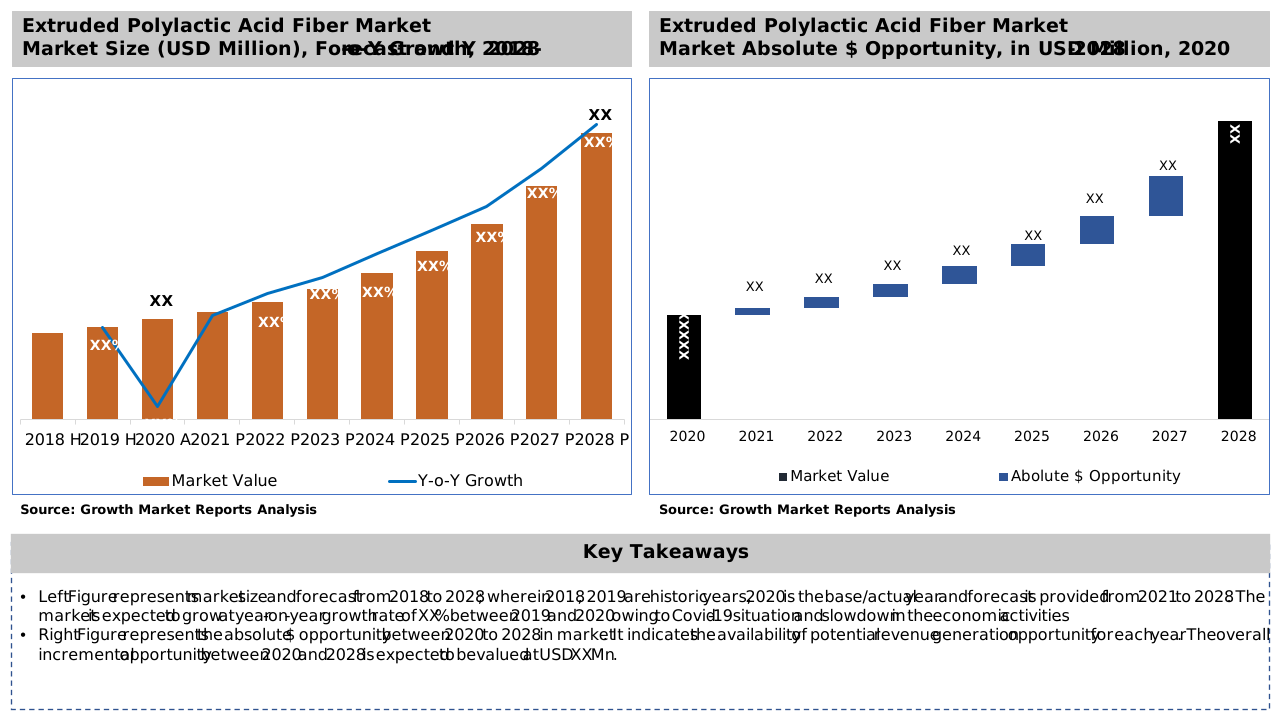
According to our latest research, the global extruded polylactic acid fiber market size reached USD 1.42 billion in 2024, demonstrating robust expansion driven by increasing demand for sustainable materials. The market is expected to grow at a CAGR of 12.7% during the forecast period, reaching USD 4.23 billion by 2033. This impressive growth is primarily fueled by the rising adoption of biodegradable polymers across various industries, including textiles, medical, packaging, and automotive sectors, as manufacturers and consumers alike shift toward more environmentally conscious solutions.

One of the primary growth factors for the extruded polylactic acid fiber market is the global push for sustainability and a circular economy. Governments around the world are implementing stricter regulations on single-use plastics and non-biodegradable materials, compelling industries to seek alternative solutions. Polylactic acid (PLA) fibers, derived from renewable resources such as corn starch or sugarcane, have emerged as a leading contender due to their compostable and biodegradable properties. The increasing consumer awareness about environmental preservation, coupled with corporate sustainability initiatives, is further accelerating the adoption of PLA fibers in both developed and developing economies. As a result, companies are investing heavily in research and development to enhance the performance, durability, and cost-effectiveness of extruded PLA fibers, thereby broadening their scope of application.

Another significant growth driver is the expanding application spectrum of extruded polylactic acid fibers, particularly in the medical and healthcare sectors. PLA fibers are being increasingly utilized in medical textiles, sutures, implants, and drug delivery systems due to their biocompatibility and non-toxicity. The COVID-19 pandemic has further underscored the importance of hygienic and disposable medical products, boosting demand for PLA-based materials. Additionally, the packaging industry is witnessing a paradigm shift toward eco-friendly materials, with PLA fibers being used for manufacturing bags, wraps, and cushioning materials that offer both functionality and environmental benefits. The automotive and agriculture sectors are also integrating PLA fibers in various applications, such as interior components and biodegradable mulch films, respectively, thereby providing a diversified growth avenue for the market.

Technological advancements in extrusion processes and fiber engineering are also playing a pivotal role in shaping the extruded polylactic acid fiber market. Innovations such as improved melt spinning techniques, enhanced fiber blending, and the development of high-performance additives are enabling the production of PLA fibers with superior mechanical and thermal properties. These advancements are making PLA fibers more competitive with conventional synthetic fibers like polyester and nylon, both in terms of performance and cost. Furthermore, the scalability of PLA fiber production is improving, with new manufacturing facilities being established in key regions to meet the surging demand. This technological progress is expected to not only reduce production costs but also expand the range of end-use applications, thereby sustaining the market’s upward trajectory.

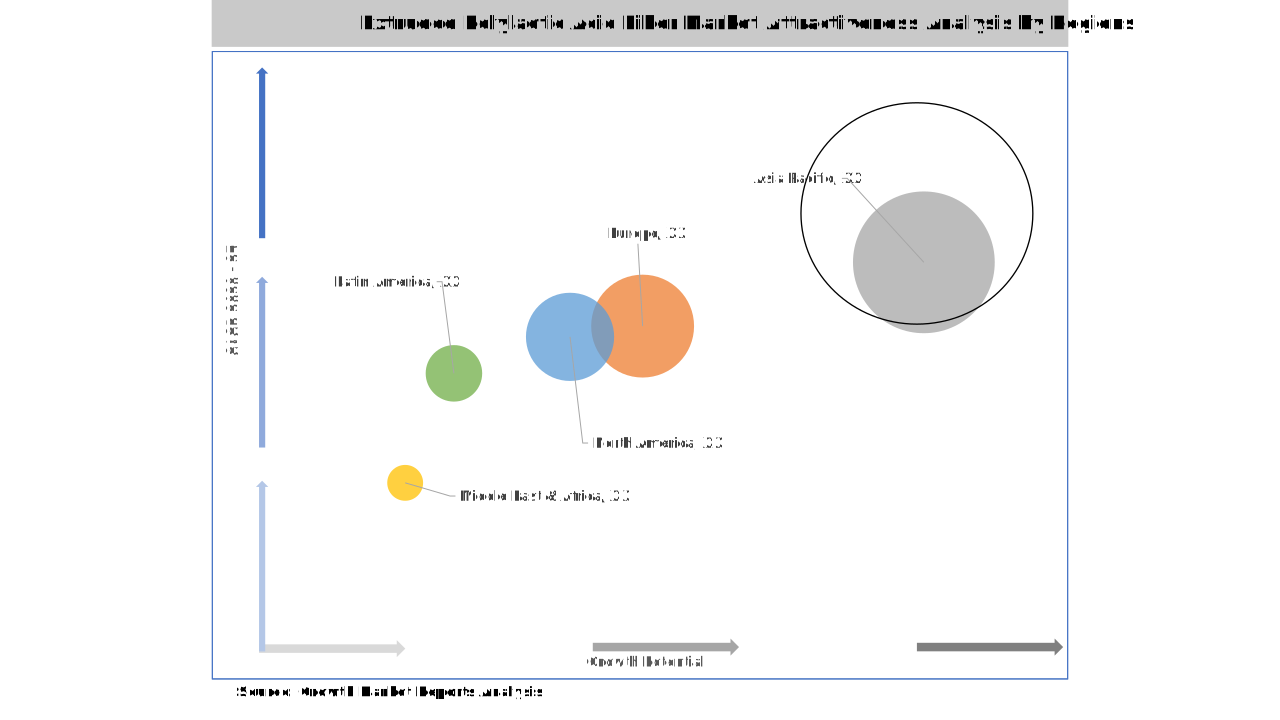
From a regional perspective, Asia Pacific currently dominates the extruded polylactic acid fiber market, accounting for the largest share in 2024, followed by North America and Europe. The region's leadership can be attributed to its robust textile and packaging industries, rapid industrialization, and supportive government policies promoting green materials. China, Japan, and India are at the forefront of PLA fiber adoption, driven by large-scale manufacturing capabilities and increasing environmental awareness. Meanwhile, Europe is witnessing significant growth due to stringent environmental regulations and a well-established circular economy framework. North America is also experiencing steady expansion, supported by growing investments in sustainable materials and a strong presence of key market players. As the market continues to evolve, regional dynamics will play a crucial role in shaping future growth patterns and competitive strategies.

Global Extruded Polylactic Acid Fiber Industry Outlook

Product Type Analysis

The extruded polylactic acid fiber market is segmented by product type into monofilament, multifilament, staple fiber, and others, each offering unique properties and catering to distinct application needs. Monofilament PLA fibers are characterized by their single, continuous filament structure, providing high strength and dimensional stability, making them ideal for medical sutures, fishing lines, and 3D printing applications. The demand for monofilament PLA fibers has seen a steady rise, particularly in the healthcare and industrial sectors, due to their biocompatibility and biodegradability. Manufacturers are focusing on enhancing the mechanical properties of monofilament PLA fibers to expand their use in high-performance applications, while also optimizing production processes to reduce costs and improve scalability.

Multifilament PLA fibers, composed of multiple fine filaments twisted together, offer superior flexibility, softness, and bulk compared to monofilament fibers. These attributes make them highly suitable for textile and apparel applications, where comfort and drapability are paramount. The textile industry is increasingly adopting multifilament PLA fibers for manufacturing sustainable fabrics, sportswear, and home textiles, driven by growing consumer preference for eco-friendly products. Additionally, multifilament PLA fibers are being explored for use in technical textiles, such as geotextiles and filtration media, due to their customizable properties and environmental advantages. The ongoing advancements in fiber spinning and blending technologies are further enhancing the performance profile of multifilament PLA fibers, thereby broadening their application scope.

Staple fibers represent another significant product type in the extruded PLA fiber market, known for their short, discrete lengths that can be spun into yarns or used as nonwoven materials. Staple PLA fibers are widely utilized in the production of nonwoven fabrics for hygiene products, wipes, and disposable medical textiles, owing to their excellent absorbency, softness, and biodegradability. The increasing focus on single-use, sustainable products in the healthcare and consumer goods industries is driving the demand for staple PLA fibers. Moreover, advancements in carding and spinning technologies are enabling the production of high-quality staple fibers with improved uniformity and strength, thereby enhancing their competitiveness against traditional synthetic and natural fibers.

The “others” category encompasses specialty PLA fibers and blends that are engineered to meet specific performance requirements. These may include fibers with enhanced flame retardancy, antimicrobial properties, or increased resistance to UV degradation. Specialty PLA fibers are finding niche applications in automotive interiors, outdoor textiles, and smart textiles, where conventional fibers may fall short in terms of sustainability or functionality. The development of customized PLA fiber formulations and composite structures is opening new avenues for innovation, enabling manufacturers to address emerging market needs and differentiate their product offerings. As the market matures, the demand for tailored PLA fiber solutions is expected to grow, fostering a more diverse and dynamic product landscape.

Report Scope

Attributes Details
Report Title Extruded Polylactic Acid Fiber Market Research Report 2033
By Product Type Monofilament, Multifilament, Staple Fiber, Others
By Application Textiles, Medical, Packaging, Automotive, Agriculture, Others
By End-Use Industry Healthcare, Consumer Goods, Industrial, Others
Regions Covered North America, Europe, APAC, Latin America, MEA
Base Year 2024
Historic Data 2018-2023
Forecast Period 2025-2033
Number of Pages 298
Number of Tables & Figures 319
Customization Available Yes, the report can be customized as per your need.

Application Analysis

The application landscape of the extruded polylactic acid fiber market is vast, encompassing textiles, medical, packaging, automotive, agriculture, and other industrial uses. The textile sector remains a major application area, leveraging PLA fibers for the production of eco-friendly fabrics and garments. With increasing consumer demand for sustainable fashion and home textiles, brands are incorporating PLA fibers into their product lines to minimize environmental impact and meet regulatory requirements. The superior breathability, moisture management, and biodegradability of PLA fibers make them particularly attractive for sportswear, activewear, and intimate apparel. Additionally, the textile industry is exploring the use of PLA fibers in technical textiles, such as protective clothing and industrial fabrics, further expanding their application scope.

In the medical field, extruded PLA fibers are gaining traction due to their biocompatibility, non-toxicity, and ability to degrade into harmless byproducts within the human body. PLA fibers are being utilized in the manufacture of absorbable sutures, tissue engineering scaffolds, wound dressings, and drug delivery systems, where traditional synthetic fibers may pose biocompatibility challenges. The ongoing advancements in medical device engineering and regenerative medicine are driving the adoption of PLA fibers for innovative healthcare solutions. Furthermore, the increasing emphasis on infection control and disposable medical products in the wake of global health crises is bolstering demand for PLA-based medical textiles, positioning the segment for sustained growth.

Packaging represents another high-growth application segment for extruded PLA fibers, as industries seek alternatives to conventional plastic packaging materials. PLA fibers are being used to produce biodegradable films, bags, trays, and cushioning materials that offer comparable performance to traditional plastics while significantly reducing environmental impact. The packaging industry is under mounting pressure from regulators and consumers to transition to sustainable materials, fueling investments in PLA fiber-based solutions. Companies are also developing PLA fiber composites and laminates to enhance barrier properties and extend shelf life, making them suitable for a wider range of packaging applications, including food, beverages, and personal care products.

The automotive and agriculture sectors are also emerging as important application areas for extruded PLA fibers. In the automotive industry, PLA fibers are being incorporated into interior components, seat fabrics, and insulation materials to improve sustainability and reduce vehicle weight. The agriculture sector is leveraging PLA fibers for the production of biodegradable mulch films, crop covers, and geotextiles, which help reduce plastic waste and promote soil health. The versatility and environmental benefits of PLA fibers are enabling their integration into a diverse array of industrial and consumer applications, underscoring their growing importance in the global materials landscape.

End-Use Industry Analysis

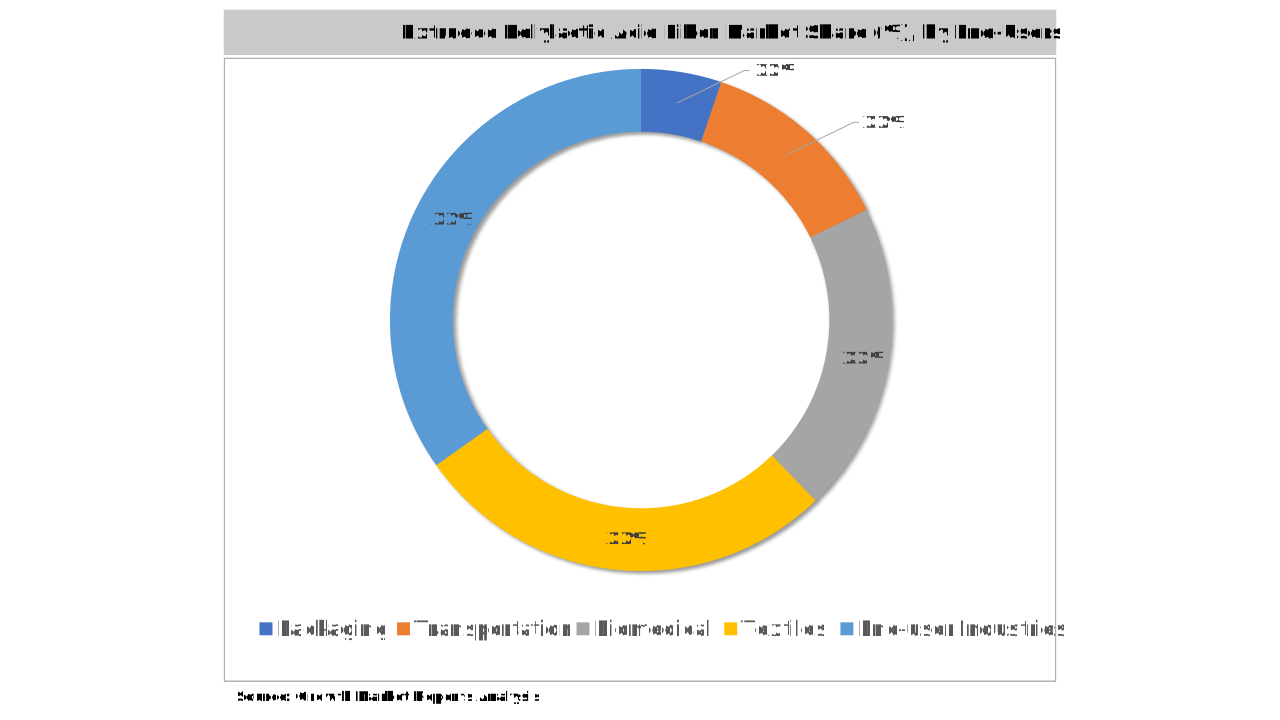
The extruded polylactic acid fiber market serves a wide range of end-use industries, including healthcare, consumer goods, industrial, and others, each with distinct requirements and growth drivers. The healthcare sector is a major consumer of PLA fibers, utilizing them in medical textiles, implants, sutures, and drug delivery devices due to their biocompatibility and biodegradability. The increasing prevalence of chronic diseases, rising surgical procedures, and growing awareness about infection control are driving demand for advanced medical textiles made from PLA fibers. Healthcare providers and device manufacturers are also prioritizing sustainability, further boosting the adoption of PLA-based solutions in medical applications.

The consumer goods industry represents another significant end-use segment, with PLA fibers being used in the manufacture of apparel, home textiles, hygiene products, and packaging materials. The shift toward eco-friendly and sustainable products is prompting leading brands to incorporate PLA fibers into their offerings, catering to environmentally conscious consumers. The versatility of PLA fibers allows for their use in a wide range of consumer goods, from clothing and bedding to disposable wipes and personal care items. The growing demand for sustainable packaging solutions is also driving the adoption of PLA fibers in consumer goods packaging, further expanding their market potential.

In the industrial sector, extruded PLA fibers are finding applications in technical textiles, filtration media, automotive components, and construction materials. The superior mechanical properties, chemical resistance, and biodegradability of PLA fibers make them suitable for demanding industrial environments where sustainability and performance are critical. Manufacturers are developing customized PLA fiber solutions to meet the specific needs of industrial clients, such as enhanced durability, flame retardancy, or UV resistance. The increasing focus on green manufacturing practices and regulatory compliance is further driving the adoption of PLA fibers in industrial applications, positioning the segment for robust growth.

The “others” category includes niche end-use industries such as agriculture, electronics, and specialty applications, where PLA fibers offer unique advantages over traditional materials. In agriculture, PLA fibers are being used for biodegradable mulch films, crop covers, and geotextiles that support sustainable farming practices. The electronics industry is exploring the use of PLA fibers in the production of eco-friendly electronic components and casings. Specialty applications, such as smart textiles and functional composites, are also emerging as promising areas for PLA fiber adoption. As the market continues to evolve, the demand for tailored PLA fiber solutions across diverse end-use industries is expected to drive innovation and market expansion.

Opportunities & Threats

The extruded polylactic acid fiber market presents numerous opportunities for growth and innovation, particularly in the context of the global shift toward sustainability and the circular economy. The increasing consumer preference for eco-friendly products, coupled with stringent environmental regulations, is creating a favorable environment for the adoption of PLA fibers across various industries. Technological advancements in fiber extrusion, blending, and functionalization are enabling the development of high-performance PLA fibers that can compete with traditional synthetic fibers in terms of strength, durability, and versatility. The expanding application spectrum of PLA fibers, from medical devices and packaging to automotive components and smart textiles, offers ample opportunities for market players to diversify their product portfolios and capture new revenue streams. Additionally, the growing investments in research and development, coupled with the establishment of new manufacturing facilities, are expected to enhance production efficiency and reduce costs, further accelerating market growth.

Another significant opportunity lies in the development of customized and specialty PLA fiber solutions tailored to meet the specific needs of end-use industries. The ability to engineer PLA fibers with enhanced properties, such as flame retardancy, antimicrobial activity, or UV resistance, opens up new avenues for innovation and market differentiation. The increasing adoption of PLA fibers in emerging markets, particularly in Asia Pacific and Latin America, presents lucrative opportunities for expansion, driven by rapid industrialization, urbanization, and rising environmental awareness. Strategic collaborations and partnerships between manufacturers, research institutions, and end-users are expected to foster innovation and facilitate the commercialization of advanced PLA fiber products. As the market matures, companies that invest in product development, process optimization, and market expansion are likely to gain a competitive edge and achieve long-term success.

Despite the promising growth prospects, the extruded polylactic acid fiber market faces certain restraining factors that could hamper its expansion. The relatively high production costs of PLA fibers, compared to conventional synthetic fibers, remain a significant challenge, particularly in price-sensitive markets. The limited availability of raw materials, such as corn starch and sugarcane, and the competition with food production can also impact the scalability and cost-effectiveness of PLA fiber manufacturing. Additionally, the performance limitations of PLA fibers, such as lower heat resistance and mechanical strength compared to some synthetic counterparts, may restrict their use in certain high-performance applications. Addressing these challenges through technological innovation, supply chain optimization, and cost reduction strategies will be critical for sustaining long-term market growth.

Regional Outlook

The regional analysis of the extruded polylactic acid fiber market reveals significant variations in market size, growth rates, and adoption patterns across different geographies. Asia Pacific holds the largest share of the global market, accounting for approximately USD 610 million in 2024, driven by the region’s robust textile, packaging, and consumer goods industries. The rapid industrialization, urbanization, and increasing environmental awareness in countries such as China, Japan, and India are fueling demand for sustainable materials, including PLA fibers. Government initiatives aimed at promoting green manufacturing and reducing plastic waste are further supporting market growth in the region. With a projected CAGR of 14.2% through 2033, Asia Pacific is expected to maintain its leadership position in the global PLA fiber market.

Europe is another key market for extruded polylactic acid fibers, with a market size of around USD 370 million in 2024. The region’s strong regulatory framework, emphasis on circular economy principles, and high consumer awareness about environmental issues are driving the adoption of PLA fibers across various industries. The European Union’s directives on single-use plastics and sustainable packaging are compelling manufacturers to transition to biodegradable alternatives, boosting demand for PLA fibers in packaging, textiles, and medical applications. The presence of leading PLA fiber manufacturers and research institutions in Europe is also fostering innovation and technological advancement, positioning the region as a hub for sustainable materials development.

North America follows closely, with a market size of USD 290 million in 2024, supported by growing investments in sustainable materials and a strong presence of key market players. The United States and Canada are witnessing increasing demand for PLA fibers in medical, packaging, and consumer goods applications, driven by rising environmental consciousness and regulatory support for biodegradable materials. Latin America and the Middle East & Africa, while currently representing smaller shares of the global market, are expected to experience steady growth over the forecast period, fueled by expanding industrial sectors and increasing adoption of sustainable practices. As regional markets continue to evolve, strategic investments in production capacity, research and development, and market expansion will be critical for capturing emerging opportunities and sustaining long-term growth.

Extruded Polylactic Acid Fiber Market Statistics

Competitor Outlook

The competitive landscape of the extruded polylactic acid fiber market is characterized by the presence of a mix of established multinational corporations and innovative startups. Market participants are focusing on expanding their product portfolios, enhancing production capabilities, and investing in research and development to gain a competitive edge. The industry is witnessing a wave of strategic collaborations, mergers, and acquisitions as companies seek to strengthen their market position, access new technologies, and enter emerging markets. The increasing emphasis on sustainability and regulatory compliance is driving manufacturers to develop eco-friendly and high-performance PLA fiber solutions that cater to the evolving needs of end-use industries.

Innovation remains a key differentiator in the extruded PLA fiber market, with companies investing in advanced extrusion technologies, fiber engineering, and material science to enhance the performance, durability, and functionality of their products. The development of specialty PLA fibers with tailored properties, such as flame retardancy, antimicrobial activity, and UV resistance, is enabling manufacturers to address niche market segments and create new revenue streams. Additionally, companies are focusing on optimizing supply chains, reducing production costs, and improving scalability to meet the growing demand for PLA fibers in both developed and developing regions. The ability to offer customized solutions and value-added services is becoming increasingly important for attracting and retaining customers in a competitive market environment.

Sustainability and corporate social responsibility are emerging as critical factors influencing competitive strategies in the PLA fiber market. Leading companies are adopting green manufacturing practices, sourcing renewable raw materials, and implementing circular economy principles to minimize environmental impact and enhance brand reputation. The integration of life cycle assessment (LCA) and eco-labeling initiatives is helping companies demonstrate the environmental benefits of their products and comply with regulatory requirements. As consumer awareness about sustainability continues to rise, companies that prioritize environmental stewardship and transparency are likely to gain a competitive advantage and strengthen customer loyalty.

Some of the major players in the global extruded polylactic acid fiber market include NatureWorks LLC, TotalEnergies Corbion, Futerro, Toray Industries, Evonik Industries, and Zhejiang Hisun Biomaterials. NatureWorks LLC is a leading producer of PLA resins and fibers, known for its innovative Ingeo brand and strong focus on sustainability. TotalEnergies Corbion is another key player, offering high-performance PLA solutions for packaging, textiles, and medical applications. Futerro is recognized for its proprietary PLA production technologies and commitment to circular economy principles. Toray Industries is a global leader in advanced materials, with a diverse portfolio of PLA fiber products catering to various industrial and consumer applications. Evonik Industries and Zhejiang Hisun Biomaterials are also prominent players, leveraging their expertise in material science and large-scale manufacturing to drive innovation and market growth.

These companies are actively engaged in research and development to enhance the performance and sustainability of their PLA fiber products, while also expanding their global footprint through strategic partnerships and capacity expansions. By focusing on innovation, sustainability, and customer-centric solutions, leading market players are well-positioned to capitalize on the growing demand for extruded polylactic acid fibers and shape the future of the global materials industry.

Key Players

  • NatureWorks LLC
  • Toray Industries Inc.
  • Teijin Limited
  • Evonik Industries AG
  • Unitika Ltd.
  • Far Eastern New Century Corporation
  • Shenzhen Esun Industrial Co. Ltd.
  • Jiangsu Supla Polylactic Acid Co. Ltd.
  • Futerro SA
  • TotalEnergies Corbion PLA
  • Hisun Biomaterials Co. Ltd.
  • Shanghai Tong-Jie-Liang Biomaterials Co. Ltd.
  • Green Dot Bioplastics
  • Biome Bioplastics Limited
  • Zhejiang Hisun Biomaterials Co. Ltd.
  • Synbra Technology BV
  • Danimer Scientific
  • Xiamen Changsu Industrial Co. Ltd.
  • BASF SE
  • Kingfa Sci. & Tech. Co. Ltd.
Extruded Polylactic Acid Fiber Market Overview

Segments

The Extruded Polylactic Acid Fiber market has been segmented on the basis of

Product Type

  • Monofilament
  • Multifilament
  • Staple Fiber
  • Others

Application

  • Textiles
  • Medical
  • Packaging
  • Automotive
  • Agriculture
  • Others

End-Use Industry

  • Healthcare
  • Consumer Goods
  • Industrial
  • Others

Competitive Landscape

Key players competing in the extruded polylactic acid fiber market are BASF SE; TORAY INDUSTRIES, INC; NatureWorks LLC; Danimer Scientific; and KURARAY CO., LTD.

Companies are adopting strategies such as acquisitions, expansions, and capacity expansion to expand their market share.
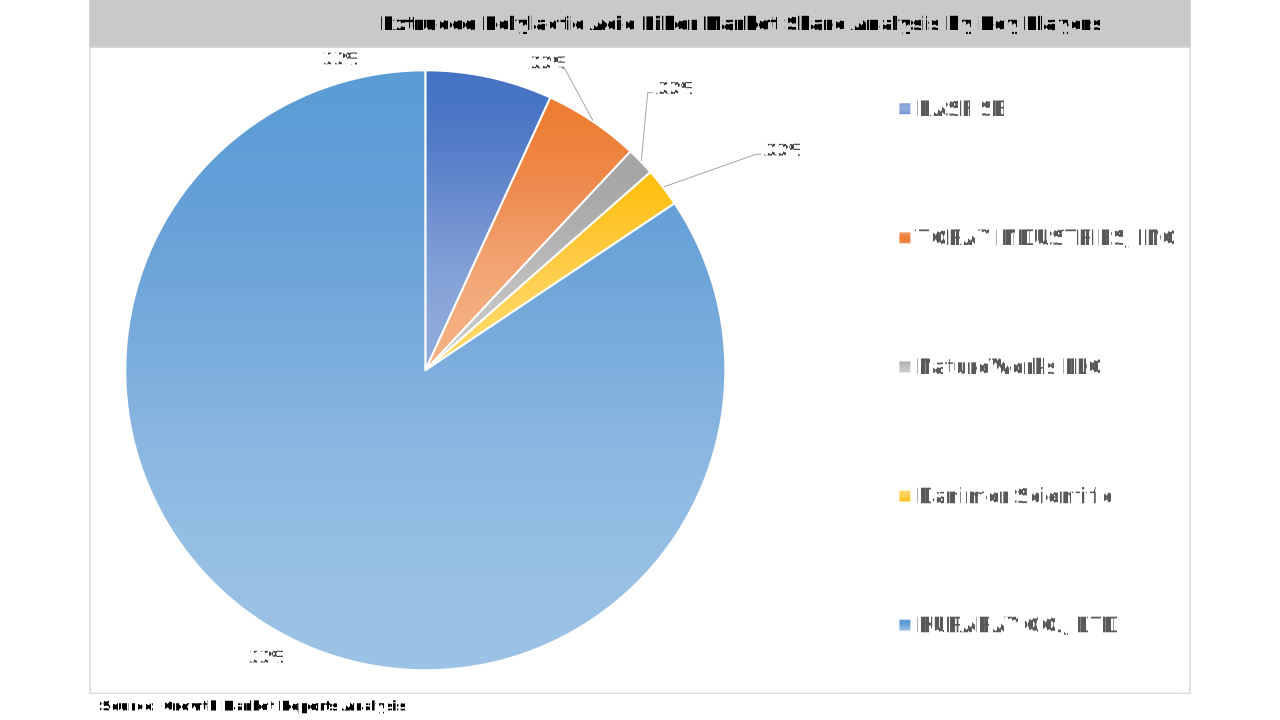

Global Extruded Polylactic Acid Fiber Market Key Players

Frequently Asked Questions

Yes, the report offers customization options to meet specific client needs, including additional data, regional analysis, or tailored market insights.

Opportunities include developing high-performance and specialty PLA fibers (e.g., flame retardant, antimicrobial), expanding into emerging markets, and leveraging technological advancements to improve cost-effectiveness and scalability.

Key challenges include higher production costs compared to conventional fibers, limited availability of raw materials, competition with food production, and performance limitations such as lower heat resistance.

Leading companies include NatureWorks LLC, TotalEnergies Corbion, Futerro, Toray Industries, Evonik Industries, Zhejiang Hisun Biomaterials, and others such as Teijin Limited, Unitika Ltd., and BASF SE.

Extruded PLA fibers are widely used in textiles (eco-friendly fabrics, sportswear), medical (sutures, implants, wound dressings), packaging (biodegradable films, bags), automotive (interior components), and agriculture (mulch films, geotextiles).

The market is segmented into monofilament, multifilament, staple fiber, and specialty PLA fibers. Each type caters to different applications, such as medical sutures, textiles, hygiene products, and technical textiles.

Asia Pacific leads the market, followed by Europe and North America. China, Japan, and India are major contributors in Asia Pacific, while Europe benefits from strong environmental regulations and North America sees steady growth due to investments in sustainable materials.

Key growth drivers include increasing demand for sustainable and biodegradable materials, stricter regulations on single-use plastics, advancements in fiber technology, and expanding applications in textiles, medical, packaging, automotive, and agriculture sectors.

The extruded PLA fiber market is expected to grow at a CAGR of 12.7% from 2025 to 2033, reaching approximately USD 4.23 billion by 2033.

As of 2024, the global extruded polylactic acid fiber market size reached USD 1.42 billion, with robust growth expected in the coming years.

Table Of Content

Chapter 1 Executive Summary
Chapter 2 Assumptions and Acronyms Used
Chapter 3 Research Methodology
Chapter 4 Extruded Polylactic Acid Fiber Market Overview
   4.1 Introduction
      4.1.1 Market Taxonomy
      4.1.2 Market Definition
      4.1.3 Macro-Economic Factors Impacting the Market Growth
   4.2 Extruded Polylactic Acid Fiber Market Dynamics
      4.2.1 Market Drivers
      4.2.2 Market Restraints
      4.2.3 Market Opportunity
   4.3 Extruded Polylactic Acid Fiber Market - Supply Chain Analysis
      4.3.1 List of Key Suppliers
      4.3.2 List of Key Distributors
      4.3.3 List of Key Consumers
   4.4 Key Forces Shaping the Extruded Polylactic Acid Fiber Market
      4.4.1 Bargaining Power of Suppliers
      4.4.2 Bargaining Power of Buyers
      4.4.3 Threat of Substitution
      4.4.4 Threat of New Entrants
      4.4.5 Competitive Rivalry
   4.5 Global Extruded Polylactic Acid Fiber Market Size & Forecast, 2023-2032
      4.5.1 Extruded Polylactic Acid Fiber Market Size and Y-o-Y Growth
      4.5.2 Extruded Polylactic Acid Fiber Market Absolute $ Opportunity

Chapter 5 Global Extruded Polylactic Acid Fiber Market Analysis and Forecast By Product Type
   5.1 Introduction
      5.1.1 Key Market Trends & Growth Opportunities By Product Type
      5.1.2 Basis Point Share (BPS) Analysis By Product Type
      5.1.3 Absolute $ Opportunity Assessment By Product Type
   5.2 Extruded Polylactic Acid Fiber Market Size Forecast By Product Type
      5.2.1 Monofilament
      5.2.2 Multifilament
      5.2.3 Staple Fiber
      5.2.4 Others
   5.3 Market Attractiveness Analysis By Product Type

Chapter 6 Global Extruded Polylactic Acid Fiber Market Analysis and Forecast By Application
   6.1 Introduction
      6.1.1 Key Market Trends & Growth Opportunities By Application
      6.1.2 Basis Point Share (BPS) Analysis By Application
      6.1.3 Absolute $ Opportunity Assessment By Application
   6.2 Extruded Polylactic Acid Fiber Market Size Forecast By Application
      6.2.1 Textiles
      6.2.2 Medical
      6.2.3 Packaging
      6.2.4 Automotive
      6.2.5 Agriculture
      6.2.6 Others
   6.3 Market Attractiveness Analysis By Application

Chapter 7 Global Extruded Polylactic Acid Fiber Market Analysis and Forecast By End-Use Industry
   7.1 Introduction
      7.1.1 Key Market Trends & Growth Opportunities By End-Use Industry
      7.1.2 Basis Point Share (BPS) Analysis By End-Use Industry
      7.1.3 Absolute $ Opportunity Assessment By End-Use Industry
   7.2 Extruded Polylactic Acid Fiber Market Size Forecast By End-Use Industry
      7.2.1 Healthcare
      7.2.2 Consumer Goods
      7.2.3 Industrial
      7.2.4 Others
   7.3 Market Attractiveness Analysis By End-Use Industry

Chapter 8 Global Extruded Polylactic Acid Fiber Market Analysis and Forecast by Region
   8.1 Introduction
      8.1.1 Key Market Trends & Growth Opportunities By Region
      8.1.2 Basis Point Share (BPS) Analysis By Region
      8.1.3 Absolute $ Opportunity Assessment By Region
   8.2 Extruded Polylactic Acid Fiber Market Size Forecast By Region
      8.2.1 North America
      8.2.2 Europe
      8.2.3 Asia Pacific
      8.2.4 Latin America
      8.2.5 Middle East & Africa (MEA)
   8.3 Market Attractiveness Analysis By Region

Chapter 9 Coronavirus Disease (COVID-19) Impact 
   9.1 Introduction 
   9.2 Current & Future Impact Analysis 
   9.3 Economic Impact Analysis 
   9.4 Government Policies 
   9.5 Investment Scenario

Chapter 10 North America Extruded Polylactic Acid Fiber Analysis and Forecast
   10.1 Introduction
   10.2 North America Extruded Polylactic Acid Fiber Market Size Forecast by Country
      10.2.1 U.S.
      10.2.2 Canada
   10.3 Basis Point Share (BPS) Analysis by Country
   10.4 Absolute $ Opportunity Assessment by Country
   10.5 Market Attractiveness Analysis by Country
   10.6 North America Extruded Polylactic Acid Fiber Market Size Forecast By Product Type
      10.6.1 Monofilament
      10.6.2 Multifilament
      10.6.3 Staple Fiber
      10.6.4 Others
   10.7 Basis Point Share (BPS) Analysis By Product Type 
   10.8 Absolute $ Opportunity Assessment By Product Type 
   10.9 Market Attractiveness Analysis By Product Type
   10.10 North America Extruded Polylactic Acid Fiber Market Size Forecast By Application
      10.10.1 Textiles
      10.10.2 Medical
      10.10.3 Packaging
      10.10.4 Automotive
      10.10.5 Agriculture
      10.10.6 Others
   10.11 Basis Point Share (BPS) Analysis By Application 
   10.12 Absolute $ Opportunity Assessment By Application 
   10.13 Market Attractiveness Analysis By Application
   10.14 North America Extruded Polylactic Acid Fiber Market Size Forecast By End-Use Industry
      10.14.1 Healthcare
      10.14.2 Consumer Goods
      10.14.3 Industrial
      10.14.4 Others
   10.15 Basis Point Share (BPS) Analysis By End-Use Industry 
   10.16 Absolute $ Opportunity Assessment By End-Use Industry 
   10.17 Market Attractiveness Analysis By End-Use Industry

Chapter 11 Europe Extruded Polylactic Acid Fiber Analysis and Forecast
   11.1 Introduction
   11.2 Europe Extruded Polylactic Acid Fiber Market Size Forecast by Country
      11.2.1 Germany
      11.2.2 France
      11.2.3 Italy
      11.2.4 U.K.
      11.2.5 Spain
      11.2.6 Russia
      11.2.7 Rest of Europe
   11.3 Basis Point Share (BPS) Analysis by Country
   11.4 Absolute $ Opportunity Assessment by Country
   11.5 Market Attractiveness Analysis by Country
   11.6 Europe Extruded Polylactic Acid Fiber Market Size Forecast By Product Type
      11.6.1 Monofilament
      11.6.2 Multifilament
      11.6.3 Staple Fiber
      11.6.4 Others
   11.7 Basis Point Share (BPS) Analysis By Product Type 
   11.8 Absolute $ Opportunity Assessment By Product Type 
   11.9 Market Attractiveness Analysis By Product Type
   11.10 Europe Extruded Polylactic Acid Fiber Market Size Forecast By Application
      11.10.1 Textiles
      11.10.2 Medical
      11.10.3 Packaging
      11.10.4 Automotive
      11.10.5 Agriculture
      11.10.6 Others
   11.11 Basis Point Share (BPS) Analysis By Application 
   11.12 Absolute $ Opportunity Assessment By Application 
   11.13 Market Attractiveness Analysis By Application
   11.14 Europe Extruded Polylactic Acid Fiber Market Size Forecast By End-Use Industry
      11.14.1 Healthcare
      11.14.2 Consumer Goods
      11.14.3 Industrial
      11.14.4 Others
   11.15 Basis Point Share (BPS) Analysis By End-Use Industry 
   11.16 Absolute $ Opportunity Assessment By End-Use Industry 
   11.17 Market Attractiveness Analysis By End-Use Industry

Chapter 12 Asia Pacific Extruded Polylactic Acid Fiber Analysis and Forecast
   12.1 Introduction
   12.2 Asia Pacific Extruded Polylactic Acid Fiber Market Size Forecast by Country
      12.2.1 China
      12.2.2 Japan
      12.2.3 South Korea
      12.2.4 India
      12.2.5 Australia
      12.2.6 South East Asia (SEA)
      12.2.7 Rest of Asia Pacific (APAC)
   12.3 Basis Point Share (BPS) Analysis by Country
   12.4 Absolute $ Opportunity Assessment by Country
   12.5 Market Attractiveness Analysis by Country
   12.6 Asia Pacific Extruded Polylactic Acid Fiber Market Size Forecast By Product Type
      12.6.1 Monofilament
      12.6.2 Multifilament
      12.6.3 Staple Fiber
      12.6.4 Others
   12.7 Basis Point Share (BPS) Analysis By Product Type 
   12.8 Absolute $ Opportunity Assessment By Product Type 
   12.9 Market Attractiveness Analysis By Product Type
   12.10 Asia Pacific Extruded Polylactic Acid Fiber Market Size Forecast By Application
      12.10.1 Textiles
      12.10.2 Medical
      12.10.3 Packaging
      12.10.4 Automotive
      12.10.5 Agriculture
      12.10.6 Others
   12.11 Basis Point Share (BPS) Analysis By Application 
   12.12 Absolute $ Opportunity Assessment By Application 
   12.13 Market Attractiveness Analysis By Application
   12.14 Asia Pacific Extruded Polylactic Acid Fiber Market Size Forecast By End-Use Industry
      12.14.1 Healthcare
      12.14.2 Consumer Goods
      12.14.3 Industrial
      12.14.4 Others
   12.15 Basis Point Share (BPS) Analysis By End-Use Industry 
   12.16 Absolute $ Opportunity Assessment By End-Use Industry 
   12.17 Market Attractiveness Analysis By End-Use Industry

Chapter 13 Latin America Extruded Polylactic Acid Fiber Analysis and Forecast
   13.1 Introduction
   13.2 Latin America Extruded Polylactic Acid Fiber Market Size Forecast by Country
      13.2.1 Brazil
      13.2.2 Mexico
      13.2.3 Rest of Latin America (LATAM)
   13.3 Basis Point Share (BPS) Analysis by Country
   13.4 Absolute $ Opportunity Assessment by Country
   13.5 Market Attractiveness Analysis by Country
   13.6 Latin America Extruded Polylactic Acid Fiber Market Size Forecast By Product Type
      13.6.1 Monofilament
      13.6.2 Multifilament
      13.6.3 Staple Fiber
      13.6.4 Others
   13.7 Basis Point Share (BPS) Analysis By Product Type 
   13.8 Absolute $ Opportunity Assessment By Product Type 
   13.9 Market Attractiveness Analysis By Product Type
   13.10 Latin America Extruded Polylactic Acid Fiber Market Size Forecast By Application
      13.10.1 Textiles
      13.10.2 Medical
      13.10.3 Packaging
      13.10.4 Automotive
      13.10.5 Agriculture
      13.10.6 Others
   13.11 Basis Point Share (BPS) Analysis By Application 
   13.12 Absolute $ Opportunity Assessment By Application 
   13.13 Market Attractiveness Analysis By Application
   13.14 Latin America Extruded Polylactic Acid Fiber Market Size Forecast By End-Use Industry
      13.14.1 Healthcare
      13.14.2 Consumer Goods
      13.14.3 Industrial
      13.14.4 Others
   13.15 Basis Point Share (BPS) Analysis By End-Use Industry 
   13.16 Absolute $ Opportunity Assessment By End-Use Industry 
   13.17 Market Attractiveness Analysis By End-Use Industry

Chapter 14 Middle East & Africa (MEA) Extruded Polylactic Acid Fiber Analysis and Forecast
   14.1 Introduction
   14.2 Middle East & Africa (MEA) Extruded Polylactic Acid Fiber Market Size Forecast by Country
      14.2.1 Saudi Arabia
      14.2.2 South Africa
      14.2.3 UAE
      14.2.4 Rest of Middle East & Africa (MEA)
   14.3 Basis Point Share (BPS) Analysis by Country
   14.4 Absolute $ Opportunity Assessment by Country
   14.5 Market Attractiveness Analysis by Country
   14.6 Middle East & Africa (MEA) Extruded Polylactic Acid Fiber Market Size Forecast By Product Type
      14.6.1 Monofilament
      14.6.2 Multifilament
      14.6.3 Staple Fiber
      14.6.4 Others
   14.7 Basis Point Share (BPS) Analysis By Product Type 
   14.8 Absolute $ Opportunity Assessment By Product Type 
   14.9 Market Attractiveness Analysis By Product Type
   14.10 Middle East & Africa (MEA) Extruded Polylactic Acid Fiber Market Size Forecast By Application
      14.10.1 Textiles
      14.10.2 Medical
      14.10.3 Packaging
      14.10.4 Automotive
      14.10.5 Agriculture
      14.10.6 Others
   14.11 Basis Point Share (BPS) Analysis By Application 
   14.12 Absolute $ Opportunity Assessment By Application 
   14.13 Market Attractiveness Analysis By Application
   14.14 Middle East & Africa (MEA) Extruded Polylactic Acid Fiber Market Size Forecast By End-Use Industry
      14.14.1 Healthcare
      14.14.2 Consumer Goods
      14.14.3 Industrial
      14.14.4 Others
   14.15 Basis Point Share (BPS) Analysis By End-Use Industry 
   14.16 Absolute $ Opportunity Assessment By End-Use Industry 
   14.17 Market Attractiveness Analysis By End-Use Industry

Chapter 15 Competition Landscape 
   15.1 Extruded Polylactic Acid Fiber Market: Competitive Dashboard
   15.2 Global Extruded Polylactic Acid Fiber Market: Market Share Analysis, 2023
   15.3 Company Profiles (Details – Overview, Financials, Developments, Strategy) 
      15.3.1 NatureWorks LLC
Toray Industries Inc.
Teijin Limited
Evonik Industries AG
Unitika Ltd.
Far Eastern New Century Corporation
Shenzhen Esun Industrial Co. Ltd.
Jiangsu Supla Polylactic Acid Co. Ltd.
Futerro SA
TotalEnergies Corbion PLA
Hisun Biomaterials Co. Ltd.
Shanghai Tong-Jie-Liang Biomaterials Co. Ltd.
Green Dot Bioplastics
Biome Bioplastics Limited
Zhejiang Hisun Biomaterials Co. Ltd.
Synbra Technology BV
Danimer Scientific
Xiamen Changsu Industrial Co. Ltd.
BASF SE
Kingfa Sci. & Tech. Co. Ltd.

Methodology

Our Clients

Honda Motor Co. Ltd.
Pfizer
Nestle SA
Deloitte
Dassault Aviation
sinopec
General Electric
General Mills