Epoxy Powder Coatings Market Research Report 2033

Epoxy Powder Coatings Market Research Report 2033

Segments - by Resin Type (Pure Epoxy, Hybrid Epoxy), by Application (Automotive, Appliances, Architectural, Furniture, Industrial, Electronics, Others), by End-Use Industry (Construction, Electrical & Electronics, Automotive, Consumer Goods, Others), by Distribution Channel (Direct Sales, Distributors/Wholesalers, Online Retail)

https://growthmarketreports.com/Raksha
Author : Raksha Sharma
https://growthmarketreports.com/Vaibhav
Fact-checked by : V. Chandola
https://growthmarketreports.com/Shruti
Editor : Shruti Bhat

Upcoming | Report ID :MC-1245 | 4.2 Rating | 78 Reviews | 274 Pages | Format : Docx PDF

Report Description


Epoxy Powder Coatings Market Outlook

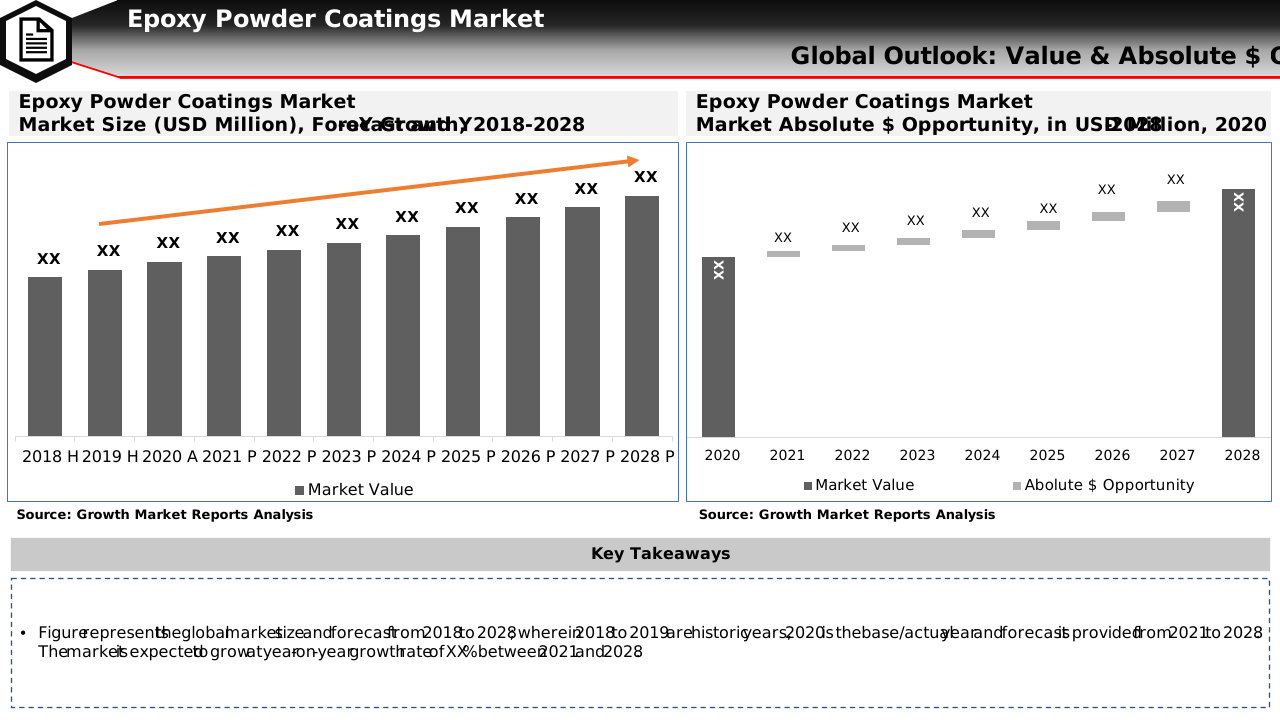
According to our latest research, the global epoxy powder coatings market size reached USD 3.4 billion in 2024, reflecting robust demand across multiple end-use industries. The market is exhibiting a steady growth trajectory, registering a CAGR of 5.2% from 2025 to 2033. By the end of the forecast period in 2033, the epoxy powder coatings market is expected to attain a value of USD 5.4 billion. This growth is primarily driven by the increasing adoption of environmentally friendly coating solutions, stringent regulatory frameworks promoting low-VOC products, and expanding applications in automotive, construction, and electronics sectors.

The growth of the epoxy powder coatings market is significantly influenced by the ongoing shift towards sustainable and eco-friendly coating technologies. Traditional liquid coatings, which often contain high levels of volatile organic compounds (VOCs), are increasingly being replaced by powder coatings due to their negligible VOC emissions and superior recyclability. Governments and regulatory bodies worldwide are enforcing stricter environmental regulations, compelling manufacturers and end-users to adopt powder-based alternatives. As a result, industries such as automotive, appliances, and construction are rapidly integrating epoxy powder coatings into their production processes, ensuring compliance with environmental standards while benefiting from enhanced durability and cost-effectiveness.

Technological advancements in epoxy powder coating formulations are further propelling market growth. Innovations such as improved curing mechanisms, enhanced adhesion properties, and the development of hybrid epoxy systems have expanded the range of applications for these coatings. Manufacturers are investing heavily in research and development to introduce products that offer superior chemical resistance, mechanical strength, and aesthetic appeal. The growing demand for highly durable and corrosion-resistant coatings in industrial and infrastructure projects is also fueling the adoption of epoxy powder coatings. Furthermore, the increasing utilization of automation and robotics in coating application processes is enhancing efficiency, reducing wastage, and lowering operational costs, thereby boosting market expansion.

The expanding scope of applications in emerging economies is another critical growth factor for the epoxy powder coatings market. Rapid industrialization and urbanization in regions such as Asia Pacific and Latin America are driving significant investments in construction, automotive manufacturing, and consumer electronics. These sectors are major consumers of epoxy powder coatings due to their need for high-performance, long-lasting surface protection. Additionally, the rising disposable income in these regions is spurring demand for durable and aesthetically appealing consumer goods, further augmenting market growth. The shift towards modern infrastructure and smart city projects is also expected to create new opportunities for market players in the coming years.

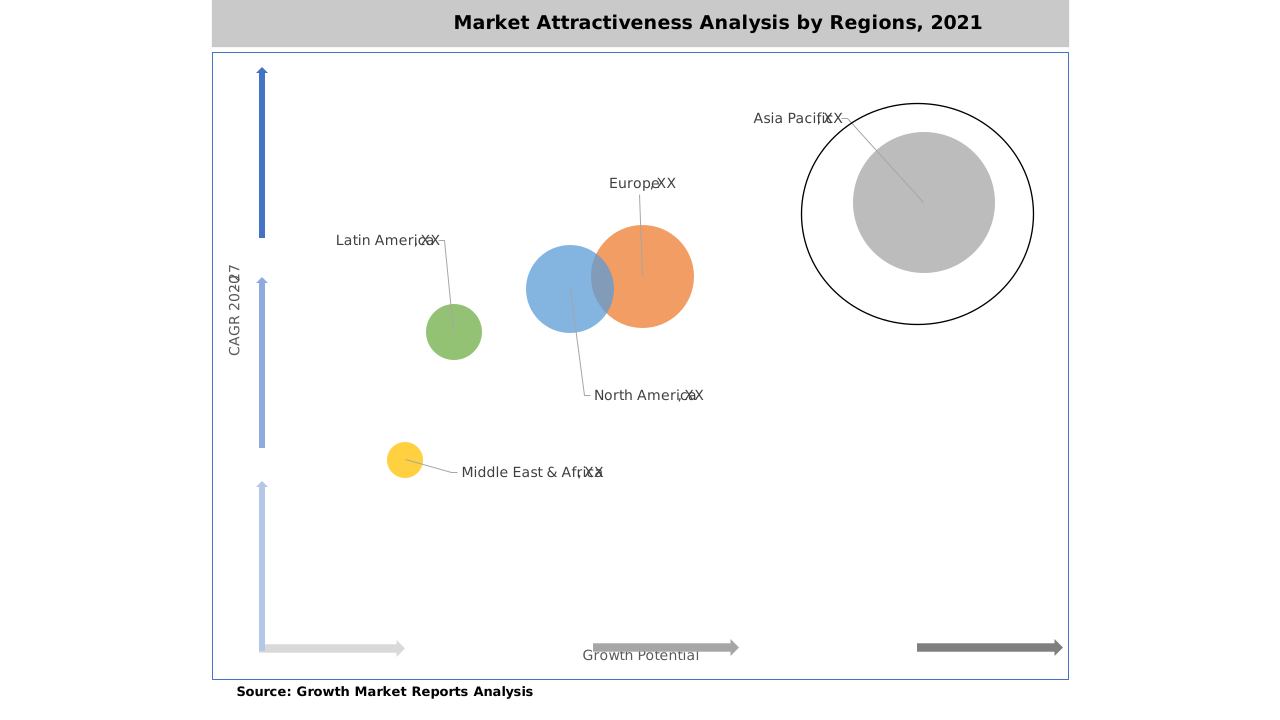
Regionally, Asia Pacific dominates the epoxy powder coatings market, accounting for the largest share in 2024, followed by Europe and North America. The Asia Pacific region's leadership is attributed to its booming manufacturing sector, rapid urbanization, and increasing investments in infrastructure development. China, India, and Southeast Asian countries are witnessing substantial growth in construction and automotive industries, which are major end-users of epoxy powder coatings. Europe and North America are also experiencing steady growth, driven by stringent environmental regulations and a strong focus on sustainable building practices. Meanwhile, Latin America and the Middle East & Africa are emerging as high-potential markets, supported by growing industrialization and infrastructural investments.

Global Epoxy Powder Coatings Industry Outlook

Resin Type Analysis

The resin type segment of the epoxy powder coatings market is primarily categorized into pure epoxy and hybrid epoxy. Pure epoxy powder coatings command a significant share due to their exceptional adhesion, chemical resistance, and mechanical strength, making them ideal for high-performance applications in harsh environments. These coatings are widely used in sectors such as industrial equipment, pipelines, and automotive components, where long-term durability and corrosion protection are critical. The increasing demand for coatings that can withstand extreme weather conditions and aggressive chemicals is further driving the adoption of pure epoxy formulations. Manufacturers are continually enhancing the properties of pure epoxy coatings to cater to evolving industry requirements, thereby strengthening their market position.

Hybrid epoxy powder coatings, which combine epoxy resins with other polymers such as polyester, are gaining traction due to their improved flexibility, enhanced weatherability, and cost-effectiveness. These coatings offer a balanced performance profile, making them suitable for applications where both mechanical strength and aesthetic appeal are important. The furniture, appliances, and architectural sectors are major consumers of hybrid epoxy coatings, as they require products that can deliver both functional and decorative benefits. The versatility of hybrid epoxy systems allows manufacturers to tailor coating properties to specific end-use requirements, thereby expanding their application scope and market reach.

The ongoing innovation in resin technology is leading to the development of advanced epoxy powder coatings with superior performance characteristics. For instance, the introduction of low-cure and fast-cure epoxy systems is enabling manufacturers to reduce energy consumption and increase production efficiency. These advancements are particularly beneficial for industries seeking to optimize their operations while maintaining high-quality standards. Additionally, the growing emphasis on sustainability is prompting the development of bio-based and waterborne epoxy resins, which further align with global environmental objectives. As a result, the resin type segment is expected to witness continuous evolution, with manufacturers focusing on product differentiation and value addition.

Market dynamics within the resin type segment are also influenced by regional preferences and regulatory frameworks. For example, stringent environmental regulations in Europe and North America are driving the adoption of low-VOC and eco-friendly epoxy coatings, while cost considerations in emerging markets are fueling demand for hybrid systems. The ability of manufacturers to offer a diverse portfolio of resin types, tailored to specific regional and industry needs, is a key factor in maintaining competitiveness and capturing new market opportunities. Overall, the resin type segment remains a cornerstone of innovation and growth within the epoxy powder coatings market.

Report Scope

Attributes Details
Report Title Epoxy Powder Coatings Market Research Report 2033
By Resin Type Pure Epoxy, Hybrid Epoxy
By Application Automotive, Appliances, Architectural, Furniture, Industrial, Electronics, Others
By End-Use Industry Construction, Electrical & Electronics, Automotive, Consumer Goods, Others
By Distribution Channel Direct Sales, Distributors/Wholesalers, Online Retail
Regions Covered North America, Europe, APAC, Latin America, MEA
Base Year 2024
Historic Data 2018-2023
Forecast Period 2025-2033
Number of Pages 274
Number of Tables & Figures 348
Customization Available Yes, the report can be customized as per your need.

Application Analysis

The application segment of the epoxy powder coatings market encompasses a wide range of industries, including automotive, appliances, architectural, furniture, industrial, electronics, and others. The automotive sector is a major consumer of epoxy powder coatings, leveraging their superior corrosion resistance, durability, and aesthetic versatility for components such as wheels, chassis, and underbody parts. The increasing demand for lightweight and fuel-efficient vehicles, coupled with the need for long-lasting protective coatings, is driving significant growth in this segment. Automotive manufacturers are also adopting advanced application technologies, such as electrostatic spraying and automation, to enhance coating efficiency and quality.

The appliances industry represents another key application area, with epoxy powder coatings being extensively used for refrigerators, washing machines, ovens, and other household appliances. These coatings offer excellent resistance to chemicals, moisture, and temperature fluctuations, ensuring the longevity and performance of appliances in demanding environments. The growing consumer preference for aesthetically appealing and durable home appliances is prompting manufacturers to invest in high-quality epoxy powder coatings. Additionally, the trend towards energy-efficient and environmentally friendly appliances is further boosting demand for low-VOC and sustainable coating solutions within this segment.

Architectural and furniture applications are witnessing robust growth, driven by increasing construction activities and the rising demand for modern, durable furnishings. Epoxy powder coatings are favored in architectural applications for their ability to provide long-lasting protection to metal structures, facades, and fittings, while also offering a wide range of color and finish options. In the furniture industry, these coatings are used to enhance the appearance and durability of metal and wood components, catering to both residential and commercial markets. The shift towards contemporary interior design trends and the emphasis on sustainability are further supporting the adoption of epoxy powder coatings in these sectors.

The industrial and electronics segments are also significant contributors to the epoxy powder coatings market. In industrial applications, these coatings are used for machinery, tools, pipes, and storage tanks, where resistance to abrasion, chemicals, and extreme temperatures is crucial. The electronics industry utilizes epoxy powder coatings for circuit boards, enclosures, and connectors, benefiting from their excellent electrical insulation properties and protection against environmental factors. The continuous expansion of industrial and electronic manufacturing, particularly in emerging economies, is expected to drive sustained growth in these application segments over the forecast period.

End-Use Industry Analysis

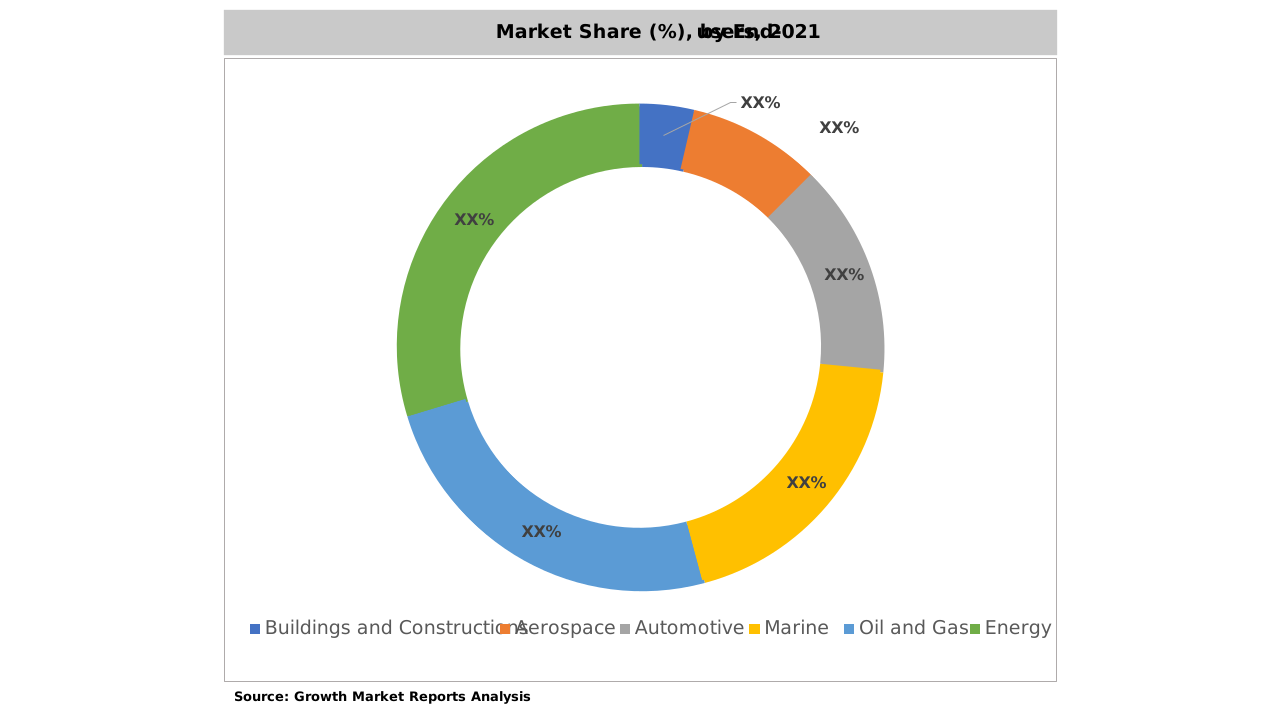
The end-use industry segment of the epoxy powder coatings market is diverse, with construction, electrical & electronics, automotive, consumer goods, and others as key categories. The construction industry is a leading end-user, driven by the need for durable, weather-resistant coatings for infrastructure, commercial buildings, and residential projects. Epoxy powder coatings are widely used for steel structures, bridges, and architectural elements, providing superior protection against corrosion, UV radiation, and mechanical wear. The ongoing trend towards green building practices and the adoption of sustainable materials are further boosting demand within the construction sector.

The electrical & electronics industry is another major end-user, utilizing epoxy powder coatings for a wide range of applications, including circuit boards, transformers, switchgear, and enclosures. These coatings offer excellent electrical insulation, thermal stability, and resistance to moisture and chemicals, ensuring the reliability and longevity of electronic components. The rapid growth of the electronics industry, fueled by technological advancements and increasing consumer demand for smart devices, is expected to drive significant market expansion in this segment.

In the automotive industry, epoxy powder coatings are applied to various components to enhance corrosion resistance, mechanical strength, and visual appeal. The shift towards electric vehicles and lightweight materials is creating new opportunities for advanced coating solutions that offer both performance and sustainability benefits. Automotive OEMs and suppliers are increasingly prioritizing coatings that can withstand harsh operating conditions while meeting stringent environmental standards. This focus on innovation and quality is expected to drive continued growth in the automotive end-use segment.

Consumer goods, including home appliances, furniture, and recreational equipment, represent a growing end-use category for epoxy powder coatings. The demand for durable, attractive, and easy-to-clean coatings is rising as consumers seek products that combine functionality with aesthetic appeal. Manufacturers are responding by offering a wide range of color and finish options, as well as coatings with enhanced scratch and stain resistance. The increasing consumer awareness of environmental issues is also driving demand for eco-friendly coating solutions in the consumer goods sector.

Distribution Channel Analysis

The distribution channel segment of the epoxy powder coatings market is segmented into direct sales, distributors/wholesalers, and online retail. Direct sales remain the predominant channel, particularly for large-scale industrial and commercial customers who require customized solutions and technical support. Manufacturers often establish long-term partnerships with key clients, offering tailored products, application services, and after-sales support. This approach enables manufacturers to maintain strong customer relationships, ensure product quality, and respond quickly to changing market demands.

Distributors and wholesalers play a crucial role in expanding market reach, particularly in regions with fragmented or developing supply chains. These intermediaries facilitate the distribution of epoxy powder coatings to small and medium-sized enterprises (SMEs), contractors, and end-users who may not have direct access to manufacturers. Distributors also provide value-added services such as inventory management, technical assistance, and logistics support, helping to streamline the procurement process for customers. The presence of a robust distributor network is essential for manufacturers seeking to penetrate new markets and enhance their competitive position.

The online retail channel is gaining momentum, driven by the increasing adoption of digital platforms and e-commerce solutions. Online sales offer convenience, wider product selection, and competitive pricing, making them attractive to both individual consumers and small businesses. The COVID-19 pandemic accelerated the shift towards online purchasing, prompting manufacturers and distributors to invest in digital marketing, e-commerce platforms, and online customer support. The growth of online retail is expected to continue, supported by advancements in logistics, payment systems, and customer engagement technologies.

The distribution channel landscape is evolving in response to changing customer preferences and technological advancements. Manufacturers are adopting omnichannel strategies, integrating online and offline sales channels to provide a seamless purchasing experience. Investments in digitalization, supply chain optimization, and customer relationship management are enabling companies to enhance service quality, reduce lead times, and improve customer satisfaction. The ability to offer flexible and efficient distribution solutions is becoming a key differentiator in the competitive epoxy powder coatings market.

Opportunities & Threats

The epoxy powder coatings market presents numerous opportunities for growth and innovation. The increasing emphasis on sustainability and environmental responsibility is creating demand for eco-friendly, low-VOC, and recyclable coating solutions. Manufacturers who invest in the development of green coatings, bio-based resins, and energy-efficient production processes are well-positioned to capitalize on this trend. Additionally, the rapid expansion of infrastructure and construction projects in emerging economies offers significant growth potential, as governments and private investors allocate substantial resources to modernize transportation, energy, and urban facilities. The integration of smart technologies and automation in coating application processes also presents opportunities for efficiency gains, cost savings, and enhanced product quality.

Another major opportunity lies in the diversification of product offerings to cater to niche and high-value applications. The growing demand for specialized coatings with advanced properties, such as anti-microbial, anti-graffiti, and self-healing capabilities, is opening new avenues for market players. The expansion of the electric vehicle market, renewable energy sector, and smart home technologies is generating demand for innovative coating solutions that can meet stringent performance and regulatory requirements. Strategic collaborations, mergers and acquisitions, and investments in research and development are key strategies for companies seeking to expand their product portfolios and enter new market segments.

Despite the positive growth outlook, the epoxy powder coatings market faces several restraining factors. Fluctuations in raw material prices, particularly for epoxy resins and curing agents, can impact production costs and profit margins. The availability and cost of raw materials are influenced by factors such as supply chain disruptions, geopolitical tensions, and changes in crude oil prices. Additionally, the presence of alternative coating technologies, such as polyurethane and polyester powder coatings, poses competitive challenges. These alternatives may offer comparable or superior performance characteristics for certain applications, requiring epoxy powder coating manufacturers to continuously innovate and differentiate their products to maintain market share.

Regional Outlook

The Asia Pacific region leads the epoxy powder coatings market, accounting for over 45% of the global market share in 2024, with a market value of approximately USD 1.53 billion. The region's dominance is driven by rapid industrialization, urbanization, and substantial investments in infrastructure and manufacturing. China is the largest contributor, followed by India and Southeast Asian countries, where the construction, automotive, and electronics industries are experiencing robust growth. The increasing adoption of advanced coating technologies and the presence of a strong manufacturing base are further supporting market expansion in Asia Pacific. The region is expected to maintain a high CAGR of 6.1% during the forecast period, outpacing other regions.

Europe holds the second-largest share of the epoxy powder coatings market, with a market size of approximately USD 850 million in 2024. The region's growth is supported by stringent environmental regulations, a strong focus on sustainability, and the widespread adoption of green building practices. Germany, France, and the United Kingdom are key markets, driven by advanced automotive, construction, and appliance manufacturing sectors. The European Union's emphasis on reducing carbon emissions and promoting circular economy principles is encouraging the use of eco-friendly powder coatings. The market in Europe is expected to grow at a steady CAGR of 4.5% through 2033.

North America, with a market size of around USD 680 million in 2024, is characterized by mature end-use industries, high product standards, and ongoing investments in infrastructure renewal. The United States is the largest market in the region, supported by strong demand from the construction, automotive, and electronics sectors. The adoption of advanced application technologies and the focus on product innovation are key growth drivers in North America. Latin America and the Middle East & Africa are emerging as promising markets, with a combined market size of approximately USD 370 million in 2024. These regions are benefiting from increasing industrialization, urban development, and rising consumer demand for durable goods, although growth rates may vary depending on economic and political stability.

Epoxy Powder Coatings Market Statistics

Competitor Outlook

The epoxy powder coatings market is highly competitive, with a mix of global and regional players vying for market share through product innovation, strategic partnerships, and expansion initiatives. Leading companies are focusing on developing advanced coating solutions that offer superior performance, environmental sustainability, and cost-effectiveness. The competitive landscape is characterized by continuous investments in research and development, aimed at enhancing product properties, expanding application areas, and meeting evolving regulatory requirements. Companies are also leveraging digital technologies, automation, and data analytics to optimize manufacturing processes, improve supply chain efficiency, and deliver value-added services to customers.

Market leaders are adopting strategic collaborations, mergers and acquisitions, and joint ventures to strengthen their market position and expand their global footprint. These strategies enable companies to access new technologies, diversify their product portfolios, and enter high-growth markets. The integration of sustainability into corporate strategies is becoming increasingly important, with companies investing in green chemistry, energy-efficient production processes, and circular economy initiatives. The ability to offer customized solutions, technical support, and comprehensive after-sales services is a key differentiator for market leaders, enabling them to build long-term customer relationships and secure repeat business.

Regional players play a significant role in addressing local market needs, offering tailored products and services that cater to specific industry requirements and regulatory frameworks. These companies often focus on cost competitiveness, flexible production capabilities, and strong distribution networks to capture market share in their respective regions. The presence of a large number of small and medium-sized enterprises (SMEs) contributes to market fragmentation, intensifying competition and driving innovation. The dynamic nature of the market requires companies to remain agile, responsive to customer needs, and proactive in identifying emerging trends and opportunities.

Some of the major companies operating in the epoxy powder coatings market include Akzo Nobel N.V., PPG Industries Inc., The Sherwin-Williams Company, Axalta Coating Systems Ltd., Jotun Group, BASF SE, and Asian Paints Limited. Akzo Nobel N.V. is recognized for its extensive product portfolio, strong global presence, and commitment to sustainability. PPG Industries Inc. is a leader in innovation, offering advanced coating solutions for automotive, industrial, and architectural applications. The Sherwin-Williams Company is known for its high-quality products, robust distribution network, and focus on customer service. Axalta Coating Systems Ltd. specializes in performance coatings, serving a diverse range of industries with tailored solutions. Jotun Group and BASF SE are also prominent players, leveraging their expertise in chemical and materials science to develop cutting-edge epoxy powder coatings. Asian Paints Limited is a key player in the Asia Pacific region, capitalizing on strong demand from construction and consumer goods sectors. These companies are continuously investing in research, sustainability, and market expansion to maintain their leadership positions and drive growth in the highly competitive epoxy powder coatings market.

Key Players

  • AkzoNobel N.V.
  • PPG Industries, Inc.
  • Axalta Coating Systems Ltd.
  • The Sherwin-Williams Company
  • BASF SE
  • Jotun Group
  • Kansai Paint Co., Ltd.
  • Nippon Paint Holdings Co., Ltd.
  • RPM International Inc.
  • Tiger Coatings GmbH & Co. KG
  • Berger Paints India Limited
  • Evonik Industries AG
  • Wacker Chemie AG
  • Sika AG
  • Hempel A/S
  • Teknos Group Oy
  • Asian Paints Limited
  • Allnex Group
  • Protech Group
  • IGP Pulvertechnik AG
Epoxy Powder Coatings Market Overview

Segments

The Epoxy Powder Coatings market has been segmented on the basis of

Resin Type

  • Pure Epoxy
  • Hybrid Epoxy

Application

  • Automotive
  • Appliances
  • Architectural
  • Furniture
  • Industrial
  • Electronics
  • Others

End-Use Industry

  • Construction
  • Electrical & Electronics
  • Automotive
  • Consumer Goods
  • Others

Distribution Channel

  • Direct Sales
  • Distributors/Wholesalers
  • Online Retail

Competitive Landscape

Key players competing in the epoxy powder coatings market includes The Sherwin-Williams Company, IFS Coatings, PPG Industries, Inc., Arekema S.A., Akzo Nobel N.V., 3M, OK Color, Tulip Paints, Jotun A/S, The Powder Coating Institute, HMG Powder Coatings Limited, THOMAS HOWSE LIMITED, Zhejiang Huacai Advanced Material Co., LTD., and Thermaset Ltd.

Some of these players are using several market strategies such as acquisitions, merger, collaborations, partnerships, capacity expansion, and product launches to enhance their market shares and to generate revenue and raise their production line of the business in the coming year.
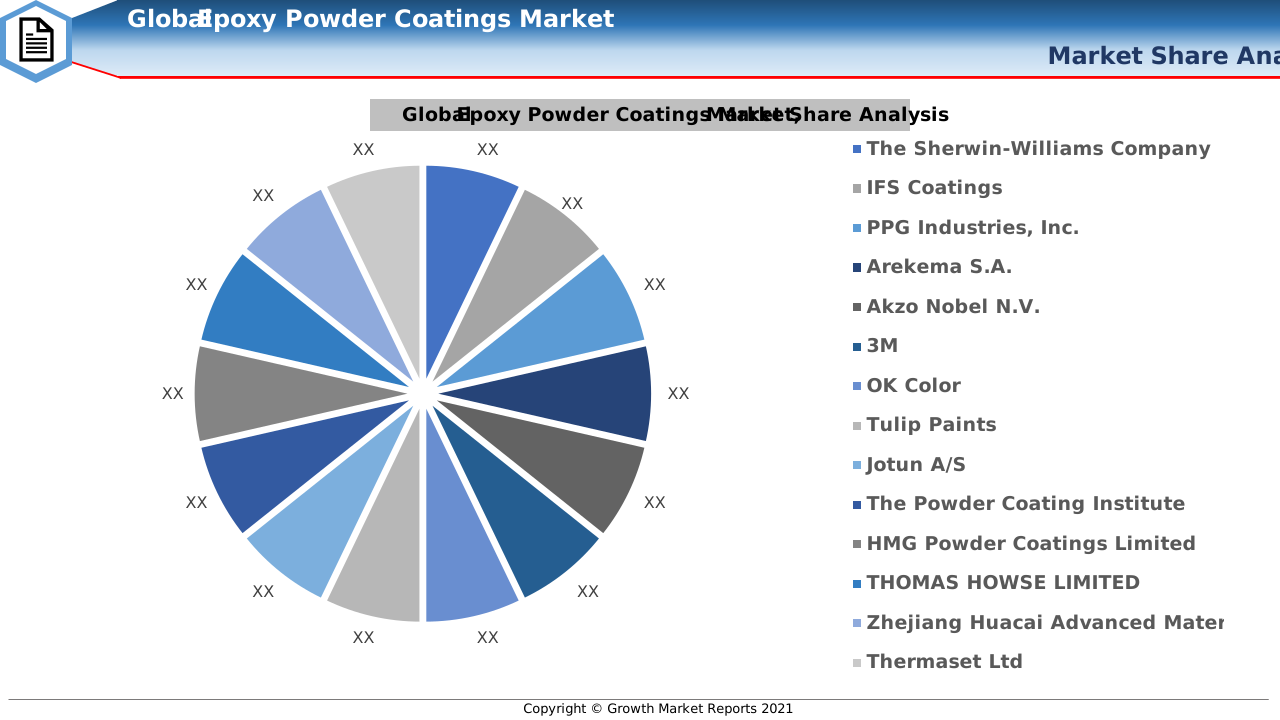
 

Epoxy Powder Coatings Market by Key Players

Frequently Asked Questions

Epoxy powder coatings are widely used in automotive components, appliances, architectural structures, furniture, industrial machinery, electronics, and other sectors requiring durable, corrosion-resistant, and aesthetically appealing finishes.

Challenges include fluctuations in raw material prices, competition from alternative coating technologies like polyurethane and polyester, and the need for continuous innovation to meet evolving regulatory and performance requirements.

Major companies include Akzo Nobel N.V., PPG Industries Inc., The Sherwin-Williams Company, Axalta Coating Systems Ltd., Jotun Group, BASF SE, Asian Paints Limited, and several others.

Key trends include the shift towards sustainable and recyclable coatings, development of bio-based and waterborne resins, adoption of automation in application processes, and growing demand for specialized coatings with advanced properties like anti-microbial and self-healing features.

Distribution channels include direct sales (mainly for large industrial customers), distributors/wholesalers (serving SMEs and contractors), and online retail, which is growing due to digitalization and e-commerce trends.

Asia Pacific is the largest regional market, followed by Europe and North America. Asia Pacific leads due to rapid industrialization, urbanization, and infrastructure investments, with China, India, and Southeast Asia as major contributors.

Major end-use industries include construction, electrical & electronics, automotive, consumer goods (such as appliances and furniture), and various industrial applications.

The main resin types are pure epoxy powder coatings, known for their exceptional adhesion and chemical resistance, and hybrid epoxy powder coatings, which combine epoxy with other polymers for enhanced flexibility and cost-effectiveness.

Key growth drivers include increasing demand for environmentally friendly and low-VOC coating solutions, stringent regulatory frameworks, expanding applications in automotive, construction, and electronics sectors, and ongoing technological advancements in coating formulations.

The global epoxy powder coatings market reached USD 3.4 billion in 2024 and is expected to grow at a CAGR of 5.2% from 2025 to 2033, reaching USD 5.4 billion by 2033.

Table Of Content

Chapter 1 Executive Summary
Chapter 2 Assumptions and Acronyms Used
Chapter 3 Research Methodology
Chapter 4 Epoxy Powder Coatings Market Overview
   4.1 Introduction
      4.1.1 Market Taxonomy
      4.1.2 Market Definition
      4.1.3 Macro-Economic Factors Impacting the Market Growth
   4.2 Epoxy Powder Coatings Market Dynamics
      4.2.1 Market Drivers
      4.2.2 Market Restraints
      4.2.3 Market Opportunity
   4.3 Epoxy Powder Coatings Market - Supply Chain Analysis
      4.3.1 List of Key Suppliers
      4.3.2 List of Key Distributors
      4.3.3 List of Key Consumers
   4.4 Key Forces Shaping the Epoxy Powder Coatings Market
      4.4.1 Bargaining Power of Suppliers
      4.4.2 Bargaining Power of Buyers
      4.4.3 Threat of Substitution
      4.4.4 Threat of New Entrants
      4.4.5 Competitive Rivalry
   4.5 Global Epoxy Powder Coatings Market Size & Forecast, 2023-2032
      4.5.1 Epoxy Powder Coatings Market Size and Y-o-Y Growth
      4.5.2 Epoxy Powder Coatings Market Absolute $ Opportunity

Chapter 5 Global Epoxy Powder Coatings Market Analysis and Forecast By Resin Type
   5.1 Introduction
      5.1.1 Key Market Trends & Growth Opportunities By Resin Type
      5.1.2 Basis Point Share (BPS) Analysis By Resin Type
      5.1.3 Absolute $ Opportunity Assessment By Resin Type
   5.2 Epoxy Powder Coatings Market Size Forecast By Resin Type
      5.2.1 Pure Epoxy
      5.2.2 Hybrid Epoxy
   5.3 Market Attractiveness Analysis By Resin Type

Chapter 6 Global Epoxy Powder Coatings Market Analysis and Forecast By Application
   6.1 Introduction
      6.1.1 Key Market Trends & Growth Opportunities By Application
      6.1.2 Basis Point Share (BPS) Analysis By Application
      6.1.3 Absolute $ Opportunity Assessment By Application
   6.2 Epoxy Powder Coatings Market Size Forecast By Application
      6.2.1 Automotive
      6.2.2 Appliances
      6.2.3 Architectural
      6.2.4 Furniture
      6.2.5 Industrial
      6.2.6 Electronics
      6.2.7 Others
   6.3 Market Attractiveness Analysis By Application

Chapter 7 Global Epoxy Powder Coatings Market Analysis and Forecast By End-Use Industry
   7.1 Introduction
      7.1.1 Key Market Trends & Growth Opportunities By End-Use Industry
      7.1.2 Basis Point Share (BPS) Analysis By End-Use Industry
      7.1.3 Absolute $ Opportunity Assessment By End-Use Industry
   7.2 Epoxy Powder Coatings Market Size Forecast By End-Use Industry
      7.2.1 Construction
      7.2.2 Electrical & Electronics
      7.2.3 Automotive
      7.2.4 Consumer Goods
      7.2.5 Others
   7.3 Market Attractiveness Analysis By End-Use Industry

Chapter 8 Global Epoxy Powder Coatings Market Analysis and Forecast By Distribution Channel
   8.1 Introduction
      8.1.1 Key Market Trends & Growth Opportunities By Distribution Channel
      8.1.2 Basis Point Share (BPS) Analysis By Distribution Channel
      8.1.3 Absolute $ Opportunity Assessment By Distribution Channel
   8.2 Epoxy Powder Coatings Market Size Forecast By Distribution Channel
      8.2.1 Direct Sales
      8.2.2 Distributors/Wholesalers
      8.2.3 Online Retail
   8.3 Market Attractiveness Analysis By Distribution Channel

Chapter 9 Global Epoxy Powder Coatings Market Analysis and Forecast by Region
   9.1 Introduction
      9.1.1 Key Market Trends & Growth Opportunities By Region
      9.1.2 Basis Point Share (BPS) Analysis By Region
      9.1.3 Absolute $ Opportunity Assessment By Region
   9.2 Epoxy Powder Coatings Market Size Forecast By Region
      9.2.1 North America
      9.2.2 Europe
      9.2.3 Asia Pacific
      9.2.4 Latin America
      9.2.5 Middle East & Africa (MEA)
   9.3 Market Attractiveness Analysis By Region

Chapter 10 Coronavirus Disease (COVID-19) Impact 
   10.1 Introduction 
   10.2 Current & Future Impact Analysis 
   10.3 Economic Impact Analysis 
   10.4 Government Policies 
   10.5 Investment Scenario

Chapter 11 North America Epoxy Powder Coatings Analysis and Forecast
   11.1 Introduction
   11.2 North America Epoxy Powder Coatings Market Size Forecast by Country
      11.2.1 U.S.
      11.2.2 Canada
   11.3 Basis Point Share (BPS) Analysis by Country
   11.4 Absolute $ Opportunity Assessment by Country
   11.5 Market Attractiveness Analysis by Country
   11.6 North America Epoxy Powder Coatings Market Size Forecast By Resin Type
      11.6.1 Pure Epoxy
      11.6.2 Hybrid Epoxy
   11.7 Basis Point Share (BPS) Analysis By Resin Type 
   11.8 Absolute $ Opportunity Assessment By Resin Type 
   11.9 Market Attractiveness Analysis By Resin Type
   11.10 North America Epoxy Powder Coatings Market Size Forecast By Application
      11.10.1 Automotive
      11.10.2 Appliances
      11.10.3 Architectural
      11.10.4 Furniture
      11.10.5 Industrial
      11.10.6 Electronics
      11.10.7 Others
   11.11 Basis Point Share (BPS) Analysis By Application 
   11.12 Absolute $ Opportunity Assessment By Application 
   11.13 Market Attractiveness Analysis By Application
   11.14 North America Epoxy Powder Coatings Market Size Forecast By End-Use Industry
      11.14.1 Construction
      11.14.2 Electrical & Electronics
      11.14.3 Automotive
      11.14.4 Consumer Goods
      11.14.5 Others
   11.15 Basis Point Share (BPS) Analysis By End-Use Industry 
   11.16 Absolute $ Opportunity Assessment By End-Use Industry 
   11.17 Market Attractiveness Analysis By End-Use Industry
   11.18 North America Epoxy Powder Coatings Market Size Forecast By Distribution Channel
      11.18.1 Direct Sales
      11.18.2 Distributors/Wholesalers
      11.18.3 Online Retail
   11.19 Basis Point Share (BPS) Analysis By Distribution Channel 
   11.20 Absolute $ Opportunity Assessment By Distribution Channel 
   11.21 Market Attractiveness Analysis By Distribution Channel

Chapter 12 Europe Epoxy Powder Coatings Analysis and Forecast
   12.1 Introduction
   12.2 Europe Epoxy Powder Coatings Market Size Forecast by Country
      12.2.1 Germany
      12.2.2 France
      12.2.3 Italy
      12.2.4 U.K.
      12.2.5 Spain
      12.2.6 Russia
      12.2.7 Rest of Europe
   12.3 Basis Point Share (BPS) Analysis by Country
   12.4 Absolute $ Opportunity Assessment by Country
   12.5 Market Attractiveness Analysis by Country
   12.6 Europe Epoxy Powder Coatings Market Size Forecast By Resin Type
      12.6.1 Pure Epoxy
      12.6.2 Hybrid Epoxy
   12.7 Basis Point Share (BPS) Analysis By Resin Type 
   12.8 Absolute $ Opportunity Assessment By Resin Type 
   12.9 Market Attractiveness Analysis By Resin Type
   12.10 Europe Epoxy Powder Coatings Market Size Forecast By Application
      12.10.1 Automotive
      12.10.2 Appliances
      12.10.3 Architectural
      12.10.4 Furniture
      12.10.5 Industrial
      12.10.6 Electronics
      12.10.7 Others
   12.11 Basis Point Share (BPS) Analysis By Application 
   12.12 Absolute $ Opportunity Assessment By Application 
   12.13 Market Attractiveness Analysis By Application
   12.14 Europe Epoxy Powder Coatings Market Size Forecast By End-Use Industry
      12.14.1 Construction
      12.14.2 Electrical & Electronics
      12.14.3 Automotive
      12.14.4 Consumer Goods
      12.14.5 Others
   12.15 Basis Point Share (BPS) Analysis By End-Use Industry 
   12.16 Absolute $ Opportunity Assessment By End-Use Industry 
   12.17 Market Attractiveness Analysis By End-Use Industry
   12.18 Europe Epoxy Powder Coatings Market Size Forecast By Distribution Channel
      12.18.1 Direct Sales
      12.18.2 Distributors/Wholesalers
      12.18.3 Online Retail
   12.19 Basis Point Share (BPS) Analysis By Distribution Channel 
   12.20 Absolute $ Opportunity Assessment By Distribution Channel 
   12.21 Market Attractiveness Analysis By Distribution Channel

Chapter 13 Asia Pacific Epoxy Powder Coatings Analysis and Forecast
   13.1 Introduction
   13.2 Asia Pacific Epoxy Powder Coatings Market Size Forecast by Country
      13.2.1 China
      13.2.2 Japan
      13.2.3 South Korea
      13.2.4 India
      13.2.5 Australia
      13.2.6 South East Asia (SEA)
      13.2.7 Rest of Asia Pacific (APAC)
   13.3 Basis Point Share (BPS) Analysis by Country
   13.4 Absolute $ Opportunity Assessment by Country
   13.5 Market Attractiveness Analysis by Country
   13.6 Asia Pacific Epoxy Powder Coatings Market Size Forecast By Resin Type
      13.6.1 Pure Epoxy
      13.6.2 Hybrid Epoxy
   13.7 Basis Point Share (BPS) Analysis By Resin Type 
   13.8 Absolute $ Opportunity Assessment By Resin Type 
   13.9 Market Attractiveness Analysis By Resin Type
   13.10 Asia Pacific Epoxy Powder Coatings Market Size Forecast By Application
      13.10.1 Automotive
      13.10.2 Appliances
      13.10.3 Architectural
      13.10.4 Furniture
      13.10.5 Industrial
      13.10.6 Electronics
      13.10.7 Others
   13.11 Basis Point Share (BPS) Analysis By Application 
   13.12 Absolute $ Opportunity Assessment By Application 
   13.13 Market Attractiveness Analysis By Application
   13.14 Asia Pacific Epoxy Powder Coatings Market Size Forecast By End-Use Industry
      13.14.1 Construction
      13.14.2 Electrical & Electronics
      13.14.3 Automotive
      13.14.4 Consumer Goods
      13.14.5 Others
   13.15 Basis Point Share (BPS) Analysis By End-Use Industry 
   13.16 Absolute $ Opportunity Assessment By End-Use Industry 
   13.17 Market Attractiveness Analysis By End-Use Industry
   13.18 Asia Pacific Epoxy Powder Coatings Market Size Forecast By Distribution Channel
      13.18.1 Direct Sales
      13.18.2 Distributors/Wholesalers
      13.18.3 Online Retail
   13.19 Basis Point Share (BPS) Analysis By Distribution Channel 
   13.20 Absolute $ Opportunity Assessment By Distribution Channel 
   13.21 Market Attractiveness Analysis By Distribution Channel

Chapter 14 Latin America Epoxy Powder Coatings Analysis and Forecast
   14.1 Introduction
   14.2 Latin America Epoxy Powder Coatings Market Size Forecast by Country
      14.2.1 Brazil
      14.2.2 Mexico
      14.2.3 Rest of Latin America (LATAM)
   14.3 Basis Point Share (BPS) Analysis by Country
   14.4 Absolute $ Opportunity Assessment by Country
   14.5 Market Attractiveness Analysis by Country
   14.6 Latin America Epoxy Powder Coatings Market Size Forecast By Resin Type
      14.6.1 Pure Epoxy
      14.6.2 Hybrid Epoxy
   14.7 Basis Point Share (BPS) Analysis By Resin Type 
   14.8 Absolute $ Opportunity Assessment By Resin Type 
   14.9 Market Attractiveness Analysis By Resin Type
   14.10 Latin America Epoxy Powder Coatings Market Size Forecast By Application
      14.10.1 Automotive
      14.10.2 Appliances
      14.10.3 Architectural
      14.10.4 Furniture
      14.10.5 Industrial
      14.10.6 Electronics
      14.10.7 Others
   14.11 Basis Point Share (BPS) Analysis By Application 
   14.12 Absolute $ Opportunity Assessment By Application 
   14.13 Market Attractiveness Analysis By Application
   14.14 Latin America Epoxy Powder Coatings Market Size Forecast By End-Use Industry
      14.14.1 Construction
      14.14.2 Electrical & Electronics
      14.14.3 Automotive
      14.14.4 Consumer Goods
      14.14.5 Others
   14.15 Basis Point Share (BPS) Analysis By End-Use Industry 
   14.16 Absolute $ Opportunity Assessment By End-Use Industry 
   14.17 Market Attractiveness Analysis By End-Use Industry
   14.18 Latin America Epoxy Powder Coatings Market Size Forecast By Distribution Channel
      14.18.1 Direct Sales
      14.18.2 Distributors/Wholesalers
      14.18.3 Online Retail
   14.19 Basis Point Share (BPS) Analysis By Distribution Channel 
   14.20 Absolute $ Opportunity Assessment By Distribution Channel 
   14.21 Market Attractiveness Analysis By Distribution Channel

Chapter 15 Middle East & Africa (MEA) Epoxy Powder Coatings Analysis and Forecast
   15.1 Introduction
   15.2 Middle East & Africa (MEA) Epoxy Powder Coatings Market Size Forecast by Country
      15.2.1 Saudi Arabia
      15.2.2 South Africa
      15.2.3 UAE
      15.2.4 Rest of Middle East & Africa (MEA)
   15.3 Basis Point Share (BPS) Analysis by Country
   15.4 Absolute $ Opportunity Assessment by Country
   15.5 Market Attractiveness Analysis by Country
   15.6 Middle East & Africa (MEA) Epoxy Powder Coatings Market Size Forecast By Resin Type
      15.6.1 Pure Epoxy
      15.6.2 Hybrid Epoxy
   15.7 Basis Point Share (BPS) Analysis By Resin Type 
   15.8 Absolute $ Opportunity Assessment By Resin Type 
   15.9 Market Attractiveness Analysis By Resin Type
   15.10 Middle East & Africa (MEA) Epoxy Powder Coatings Market Size Forecast By Application
      15.10.1 Automotive
      15.10.2 Appliances
      15.10.3 Architectural
      15.10.4 Furniture
      15.10.5 Industrial
      15.10.6 Electronics
      15.10.7 Others
   15.11 Basis Point Share (BPS) Analysis By Application 
   15.12 Absolute $ Opportunity Assessment By Application 
   15.13 Market Attractiveness Analysis By Application
   15.14 Middle East & Africa (MEA) Epoxy Powder Coatings Market Size Forecast By End-Use Industry
      15.14.1 Construction
      15.14.2 Electrical & Electronics
      15.14.3 Automotive
      15.14.4 Consumer Goods
      15.14.5 Others
   15.15 Basis Point Share (BPS) Analysis By End-Use Industry 
   15.16 Absolute $ Opportunity Assessment By End-Use Industry 
   15.17 Market Attractiveness Analysis By End-Use Industry
   15.18 Middle East & Africa (MEA) Epoxy Powder Coatings Market Size Forecast By Distribution Channel
      15.18.1 Direct Sales
      15.18.2 Distributors/Wholesalers
      15.18.3 Online Retail
   15.19 Basis Point Share (BPS) Analysis By Distribution Channel 
   15.20 Absolute $ Opportunity Assessment By Distribution Channel 
   15.21 Market Attractiveness Analysis By Distribution Channel

Chapter 16 Competition Landscape 
   16.1 Epoxy Powder Coatings Market: Competitive Dashboard
   16.2 Global Epoxy Powder Coatings Market: Market Share Analysis, 2023
   16.3 Company Profiles (Details – Overview, Financials, Developments, Strategy) 
      16.3.1 AkzoNobel N.V.
PPG Industries, Inc.
Axalta Coating Systems Ltd.
The Sherwin-Williams Company
BASF SE
Jotun Group
Kansai Paint Co., Ltd.
Nippon Paint Holdings Co., Ltd.
RPM International Inc.
Tiger Coatings GmbH & Co. KG
Berger Paints India Limited
Evonik Industries AG
Wacker Chemie AG
Sika AG
Hempel A/S
Teknos Group Oy
Asian Paints Limited
Allnex Group
Protech Group
IGP Pulvertechnik AG

Methodology

Our Clients

Nestle SA
Pfizer
General Electric
Microsoft
Siemens Healthcare
Honda Motor Co. Ltd.
General Mills
The John Holland Group