Enema Based Products Market Size, Share & Growth Report 2030
Global Enema Based Products Market
Segments - by Administration (Cleansing {Large Volume Enema, Small Volume Enema, and Prepackaged Disposable Enema}, Carminative, Retention {Oil Enema, Sedative Enema, Nutrient Enema, Anesthetic Enema, Medicinal Enema, and Others}, Return-Flow, and Others), Indication (Constipation, Diarrhea, Obesity, Cancer, and Others), Consumables (Enema Kits And Accessories and Preparation {Sodium Phosphate/Coffee}), Diagnostics Tests (Sodium Phosphate Enemas, Coffee Enemas, Barium Enemas {Single-Column Barium Enema and Double-Contrast Barium Enema}, Water-Soluble Contrast Enemas, and Others), End-user (Hospitals or Clinics, Home, and Others), and Regions (North America, Europe, Asia Pacific, Latin America, and Middle East & Africa) - Global Industry Analysis, Growth, Share, Size, Trends, and Forecast 2021 – 2028
Segments - by Administration (Cleansing {Large Volume Enema, Small Volume Enema, and Prepackaged Disposable Enema}, Carminative, Retention {Oil Enema, Sedative Enema, Nutrient Enema, Anesthetic Enema, Medicinal Enema, and Others}, Return-Flow, and Others), Indication (Constipation, Diarrhea, Obesity, Cancer, and Others), Consumables (Enema Kits And Accessories and Preparation {Sodium Phosphate/Coffee}), Diagnostics Tests (Sodium Phosphate Enemas, Coffee Enemas, Barium Enemas {Single-Column Barium Enema and Double-Contrast Barium Enema}, Water-Soluble Contrast Enemas, and Others), End-user (Hospitals or Clinics, Home, and Others), and Regions (North America, Europe, Asia Pacific, Latin America, and Middle East & Africa) - Global Industry Analysis, Growth, Share, Size, Trends, and Forecast 2021 – 2028
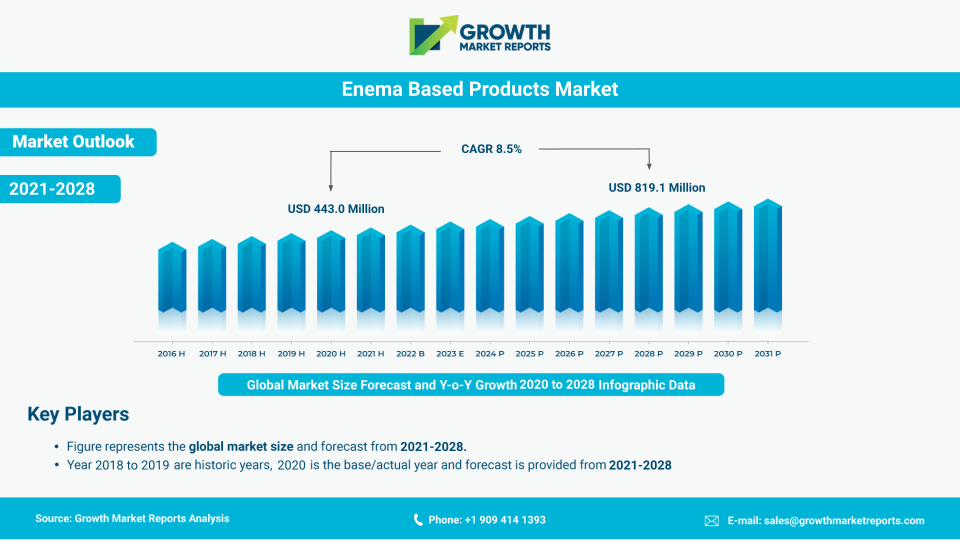
The global enema based products market was valued at USD 443.0 Mn in 2020 and is projected to reach USD 819.1 Mnby 2028, expanding at a CAGR of 8.5% during the forecast period. An enema is a procedure through which liquid or gas into the rectum is inserted. The purpose is to empty the intestines, allow an examination, or administer medication. An enema is helps in treating certain health conditions; however, regular use of enema cause serious health problems.
Enemas are used before medical examinations of the colon. Constipation is commonly treated by administering enema. Enema plays an effective role in digestion by removing water from digested material and forming feces (stool).
Enema Based Products Market Dynamics
Rising incidences of gastrointestinal disorders such as constipation, irritable bowel syndrome (IBS), nausea, food poisoning, gas, bloating, GERD, and diarrhea are driving the Enema based products market. Surging government investments in research and development programs to develop medical infrastructure in the field of gastroenterology are propelling the Enema based products market.
Enema is a procedure that involves injecting fluid into the bowel through the rectum. Thi approach is used to treat constipation, exhaustion, migraines, and backaches, among other ailments. It is a procedure that aids in the removal of waste from the rectum. Constipation is a common gastrointestinal ailment that affects people, with an ever-increasing incidence all over the world.
Rising awareness regarding enema administration for constipation and other diseases is expected to boost the market in the coming years. Increasing adoption of new diagnostic techniques, rising awareness of constipation and enema administration techniques, and the general development of the healthcare sector contribute to the growth of the market.
Increasing prevalence of chronic diseases such as ALS (Lou Gehrig's Disease), Alzheimer's disease, and other dementias, cancer, chronic obstructive pulmonary disease (COPD), cystic fibrosis, and diabetes in the geriatric population is expected to boost the Enema based products market in the forecast period. According to the World Health Organization’s report, cancer is one of the world's major causes of illness and death, with approximately 10 million deaths expected by 2020, with seven out of ten occurring in low and middle-income nations.
The Enema based products market is projected to be hampered by various side effects such as diarrhea associated with Enema based products. Mild abdominal discomfort/cramps or gas occurs after the use of Enema based products. Dehydration and electrolyte imbalance occur as a result of persistent diarrhea. This is expected to have catastrophic consequences for the kidneys and heart. These factors are expected to hinder the market growth during the forecast period.
Companies are adopting various strategies for development of Enema based products, which is anticipated to create huge opportunities in the market. Enema kits come in a range of shapes and sizes. Both single-use disposable enema kits and reusable enema kits are available. Companies are developing various types of Enema based products, which are expected to create huge opportunities in the market in the coming years.
Enema Based Products Market Segment Outlook
By Administration
Based on administration, the global Enema based products market is segmented into cleansing, carminative, retention, return-flow, and others. The cleansing segment is further bifurcated into large volume enema, small volume enema, and prepackaged disposable enema. The retention segment is further bifurcated into sedative enema, oil enema, anesthetic enema, nutrient enema, medicinal enema, and others.
Some people prefer herbs such as red raspberry leaves, garlic, or catnip tea mixed with water to make herbal enemas with purported nutritional, anti-infective, and anti-inflammatory benefits, which is expected to drive the market during the forecast period.
By Indication
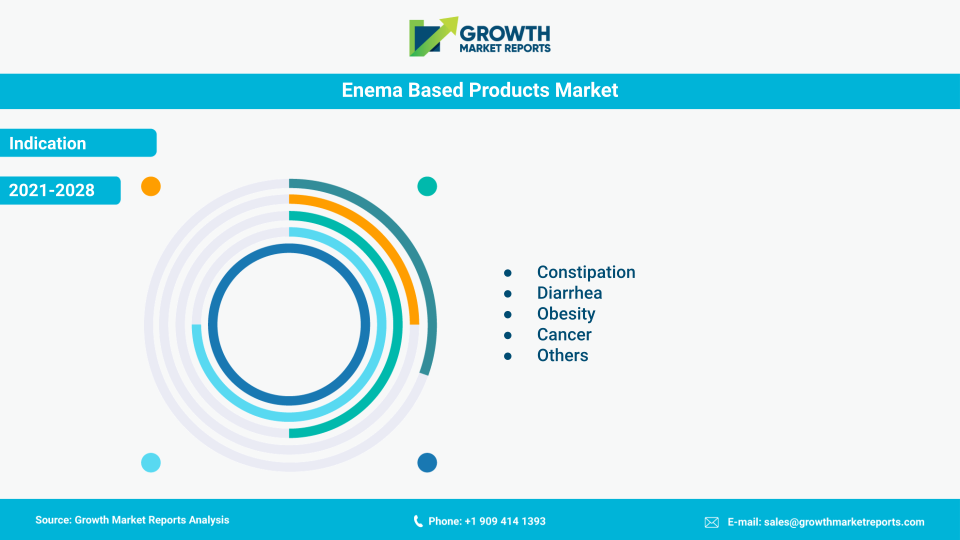
Based on indication, the global Enema based products market is segmented into constipation, obesity, diarrhea, cancer, and others. Enema is mostly used to treat constipation. Water-based solutions or oil-based solutions are injected into the bowel through the rectum to remove waste. Enema is important for people who are at high risk for constipation, including young children and the elderly.
By Consumables
Based on consumables, the global Enema based products market is bifurcated into enema kits and accessories, and preparation. The preparation segment is further bifurcated into sodium phosphate/coffee. Growing cases of gastrointestinal disorders such as constipation led to the increased availability of different types of enema administration kits in the market such as carminative and cleansing enema and the demand for enema administration products has been increased. This is expected to propel the market during the forecast period.
By Diagnostic Tests
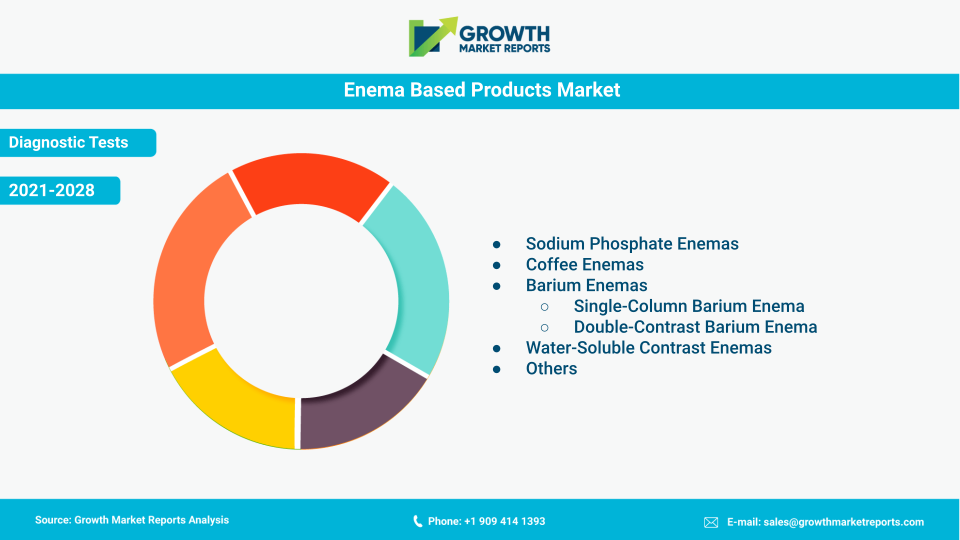
Based on diagnostic tests, the global Enema based products market is segmented into sodium phosphate enemas, coffee enemas, barium enemas, and water-soluble contrast enemas. The barium enemas segment is further bifurcated into single-column barium enema and double-contrast barium enema. A barium enema is an indirect form of visualization to examine the anatomy of the colon and the terminal ileum (the junction between the small intestine and the large intestine). Coffee enemas are used for the treatment of cancer, constipation, and depression.
By End-user
Based on end-users, the global Enema based products market is segmented into hospitals or clinics, home, and others. Barium enema is used in hospitals to perform an X-ray of the colon and rectum. A home enema kit increases risk, as an individual does not have the same experience as a doctor to insert the nozzle of the device.
Enema Based Products Market Regional Analysis
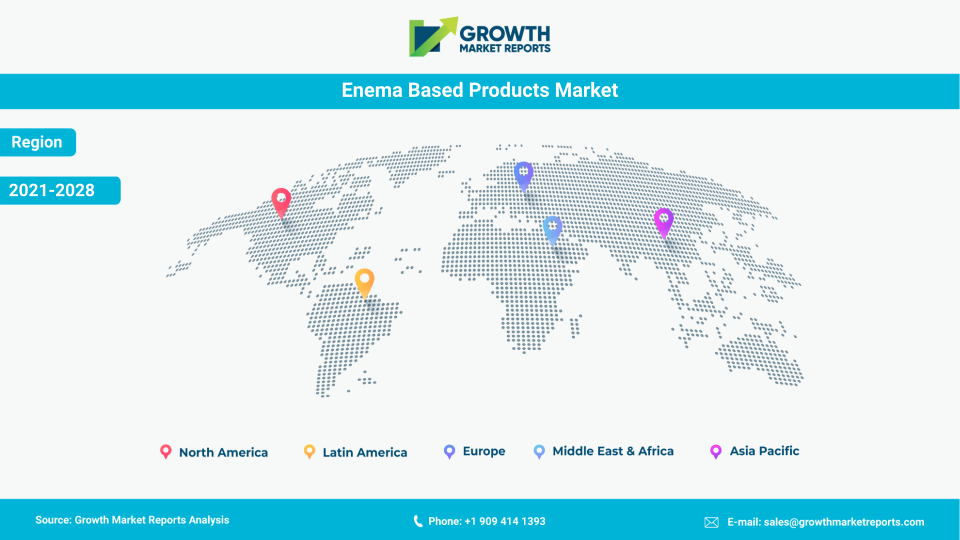
Based on regions, the global Enema based products market is segmented into North America, Europe, Asia Pacific, Latin America, and Middle East & Africa. The Enema based products market in Europe is growing, due to increasing demand for treatment of diabetes, constipation, and diarrhea. The Enema based products market in Asia Pacific is expected to hold a considerable market share during the forecast period, due to rising awareness about abdominal diseases. Increasing demand from the healthcare and pharmaceutical industry is expected to drive the market in the region during the forecast period.
Key Benefits for Industry Participants & Stakeholders
In-Depth Analysis of the Enema Based Products Market.
Historical, Current and Projected Market Size in Terms of Value.
Potential & Niche Segments and Regions Exhibiting Promising Growth Covered
Industry Drivers, Restraints and Opportunities Covered in the Study
Recent Industry Trends and Developments
Competitive Landscape & Strategies of Key Players
Neutral Perspective on From Enema Based Products Market Performance
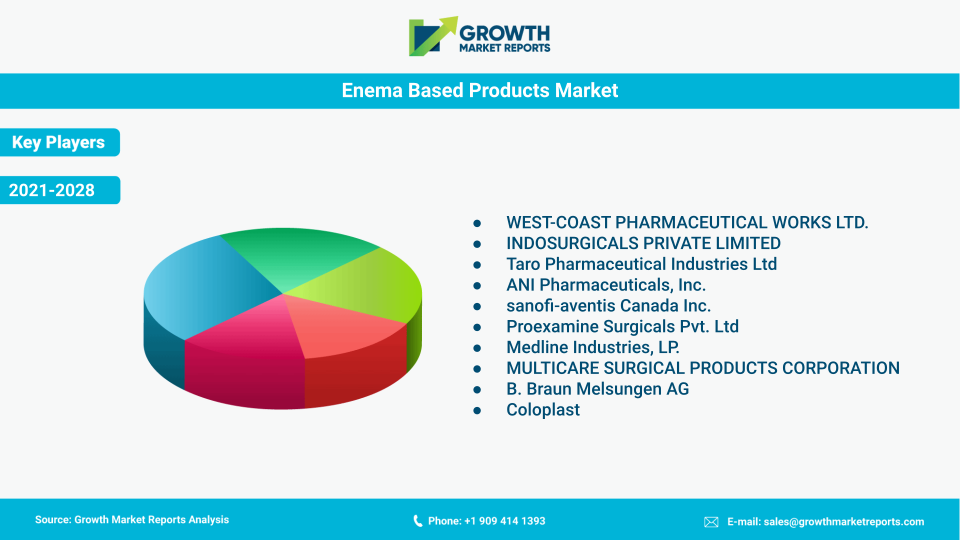
Key players in the enema based products market are WEST-COAST PHARMACEUTICAL WORKS LTD., INDOSURGICALS PRIVATE LIMITED, Taro Pharmaceutical Industries Ltd, ANI Pharmaceuticals, Inc., sanofi-aventis Canada Inc., Proexamine Surgicals Pvt. Ltd, Medline Industries, LP., MULTICARE SURGICAL PRODUCTS CORPORATION, B. Braun Melsungen AG, and Coloplast.
The players are adopting key strategies such as product development, geographical expansion, mergers and acquisition, and many other strategies to cater the increasing demand for enema based products. For instance, in June 2020, Taro Pharmaceutical Industries Ltd. acquired Canada-based, Aquinox Pharmaceutical for $8.2 million. The company follows the strategy of mergers & acquisitions to increase its market share and penetrate in different countries.
Chapter 1 Executive Summary Chapter 2 Assumptions and Acronyms Used Chapter 3 Research Methodology Chapter 4 Enema Based Products Market Overview 4.1 Introduction 4.1.1 Market Taxonomy 4.1.2 Market Definition 4.1.3 Macro-Economic Factors Impacting the Market Growth 4.2 Enema Based Products Market Dynamics 4.2.1 Market Drivers 4.2.2 Market Restraints 4.2.3 Market Opportunity 4.3 Enema Based Products Market - Supply Chain Analysis 4.3.1 List of Key Suppliers 4.3.2 List of Key Distributors 4.3.3 List of Key Consumers 4.4 Key Forces Shaping the Enema Based Products Market 4.4.1 Bargaining Power of Suppliers 4.4.2 Bargaining Power of Buyers 4.4.3 Threat of Substitution 4.4.4 Threat of New Entrants 4.4.5 Competitive Rivalry 4.5 Global Enema Based Products Market Size & Forecast, 2018-2028 4.5.1 Enema Based Products Market Size and Y-o-Y Growth 4.5.2 Enema Based Products Market Absolute $ Opportunity 4.6 Global Enema Based Products Market – Impact of key Regulation 4.7 Global Enema Based Products Market – Contract Manufacturing Organization (CMO) 4.8 Global Enema Based Products Market – Current & Future Changes in the Market Chapter 5 Global Enema Based Products Market Analysis and Forecast By Administration 5.1 Introduction 5.1.1 Key Market Trends & Growth Opportunities By Administration 5.1.2 Basis Point Share (BPS) Analysis By Administration 5.1.3 Absolute $ Opportunity Assessment By Administration 5.2 Enema Based Products Market Size Forecast By Administration 5.2.1 Cleansing 5.2.2 Carminative 5.2.3 Retention 5.2.3.1 Oil Enema 5.2.3.2 Sedative Enema 5.2.3.3 Nutrient Enema 5.2.3.4 Anesthetic Enema 5.2.3.5 Medicinal Enema 5.2.3.6 Others 5.2.4 Return-Flow 5.2.5 Others 5.3 Market Attractiveness Analysis By Administration Chapter 6 Global Enema Based Products Market Analysis and Forecast By Indication 6.1 Introduction 6.1.1 Key Market Trends & Growth Opportunities By Indication 6.1.2 Basis Point Share (BPS) Analysis By Indication 6.1.3 Absolute $ Opportunity Assessment By Indication 6.2 Enema Based Products Market Size Forecast By Indication 6.2.1 Constipation 6.2.2 Diarrhea 6.2.3 Obesity 6.2.4 Cancer 6.2.5 Others 6.3 Market Attractiveness Analysis By Indication Chapter 7 Global Enema Based Products Market Analysis and Forecast By Consumables 7.1 Introduction 7.1.1 Key Market Trends & Growth Opportunities By Consumables 7.1.2 Basis Point Share (BPS) Analysis By Consumables 7.1.3 Absolute $ Opportunity Assessment By Consumables 7.2 Enema Based Products Market Size Forecast By Consumables 7.2.1 Enema Kits and Accessories 7.2.2 Preparation (Sodium Phosphate/Coffee) 7.3 Market Attractiveness Analysis By Consumables Chapter 8 Global Enema Based Products Market Analysis and Forecast By Diagnostic Tests 8.1 Introduction 8.1.1 Key Market Trends & Growth Opportunities By Diagnostic Tests 8.1.2 Basis Point Share (BPS) Analysis By Diagnostic Tests 8.1.3 Absolute $ Opportunity Assessment By Diagnostic Tests 8.2 Enema Based Products Market Size Forecast By Diagnostic Tests 8.2.1 Sodium Phosphate Enemas 8.2.2 Coffee Enemas 8.2.3 Barium Enemas 8.2.3.1 Single-Column Barium Enema 8.2.3.2 Double-Contrast Barium Enema 8.2.4 Water-Soluble Contrast Enemas 8.2.5 Others 8.3 Market Attractiveness Analysis By Diagnostic Tests Chapter 9 Global Enema Based Products Market Analysis and Forecast By End-user 9.1 Introduction 9.1.1 Key Market Trends & Growth Opportunities By End-user 9.1.2 Basis Point Share (BPS) Analysis By End-user 9.1.3 Absolute $ Opportunity Assessment By End-user 9.2 Enema Based Products Market Size Forecast By End-user 9.2.1 Hospitals Or Clinics 9.2.2 Home 9.2.3 Others 9.3 Market Attractiveness Analysis By End-user Chapter 10 Global Enema Based Products Market Analysis and Forecast by Region 10.1 Introduction 10.1.1 Key Market Trends & Growth Opportunities by Region 10.1.2 Basis Point Share (BPS) Analysis by Region 10.1.3 Absolute $ Opportunity Assessment by Region 10.2 Enema Based Products Market Size Forecast by Region 10.2.1 North America 10.2.2 Europe 10.2.3 Asia Pacific 10.2.4 Latin America 10.2.5 Middle East & Africa (MEA) 10.3 Market Attractiveness Analysis by Region Chapter 11 Coronavirus Disease (COVID-19) Impact 11.1 Introduction 11.2 Current & Future Impact Analysis 11.3 Economic Impact Analysis 11.4 Government Policies 11.5 Investment Scenario Chapter 12 North America Enema Based Products Analysis and Forecast 12.1 Introduction 12.2 North America Enema Based Products Market Size Forecast by Country 12.2.1 U.S. 12.2.2 Canada 12.3 Basis Point Share (BPS) Analysis by Country 12.4 Absolute $ Opportunity Assessment by Country 12.5 Market Attractiveness Analysis by Country 12.6 North America Enema Based Products Market Size Forecast By Administration 12.6.1 Cleansing 12.6.2 Carminative 12.6.3 Retention 12.6.3.1 Oil Enema 12.6.3.2 Sedative Enema 12.6.3.3 Nutrient Enema 12.6.3.4 Anesthetic Enema 12.6.3.5 Medicinal Enema 12.6.3.6 Others 12.6.4 Return-Flow 12.6.5 Others 12.7 Basis Point Share (BPS) Analysis By Administration 12.8 Absolute $ Opportunity Assessment By Administration 12.9 Market Attractiveness Analysis By Administration 12.10 North America Enema Based Products Market Size Forecast By Indication 12.10.1 Constipation 12.10.2 Diarrhea 12.10.3 Obesity 12.10.4 Cancer 12.10.5 Others 12.11 Basis Point Share (BPS) Analysis By Indication 12.12 Absolute $ Opportunity Assessment By Indication 12.13 Market Attractiveness Analysis By Indication 12.14 North America Enema Based Products Market Size Forecast By Consumables 12.14.1 Enema Kits and Accessories 12.14.2 Preparation (Sodium Phosphate/Coffee) 12.15 Basis Point Share (BPS) Analysis By Consumables 12.16 Absolute $ Opportunity Assessment By Consumables 12.17 Market Attractiveness Analysis By Consumables 12.18 North America Enema Based Products Market Size Forecast By Diagnostic Tests 12.18.1 Sodium Phosphate Enemas 12.18.2 Coffee Enemas 12.18.3 Barium Enemas 12.18.3.1 Single-Column Barium Enema 12.18.3.2 Double-Contrast Barium Enema 12.18.4 Water-Soluble Contrast Enemas 12.18.5 Others 12.19 Basis Point Share (BPS) Analysis By Diagnostic Tests 12.20 Absolute $ Opportunity Assessment By Diagnostic Tests 12.21 Market Attractiveness Analysis By Diagnostic Tests 12.22 North America Enema Based Products Market Size Forecast By End-user 12.22.1 Hospitals Or Clinics 12.22.2 Home 12.22.3 Others 12.23 Basis Point Share (BPS) Analysis By End-user 12.24 Absolute $ Opportunity Assessment By End-user 12.25 Market Attractiveness Analysis By End-user Chapter 13 Europe Enema Based Products Analysis and Forecast 13.1 Introduction 13.2 Europe Enema Based Products Market Size Forecast by Country 13.2.1 Germany 13.2.2 France 13.2.3 Italy 13.2.4 U.K. 13.2.5 Spain 13.2.6 Russia 13.2.7 Rest of Europe 13.3 Basis Point Share (BPS) Analysis by Country 13.4 Absolute $ Opportunity Assessment by Country 13.5 Market Attractiveness Analysis by Country 13.6 Europe Enema Based Products Market Size Forecast By Administration 13.6.1 Cleansing 13.6.2 Carminative 13.6.3 Retention 13.6.3.1 Oil Enema 13.6.3.2 Sedative Enema 13.6.3.3 Nutrient Enema 13.6.3.4 Anesthetic Enema 13.6.3.5 Medicinal Enema 13.6.3.6 Others 13.6.4 Return-Flow 13.6.5 Others 13.7 Basis Point Share (BPS) Analysis By Administration 13.8 Absolute $ Opportunity Assessment By Administration 13.9 Market Attractiveness Analysis By Administration 13.10 Europe Enema Based Products Market Size Forecast By Indication 13.10.1 Constipation 13.10.2 Diarrhea 13.10.3 Obesity 13.10.4 Cancer 13.10.5 Others 13.11 Basis Point Share (BPS) Analysis By Indication 13.12 Absolute $ Opportunity Assessment By Indication 13.13 Market Attractiveness Analysis By Indication 13.14 Europe Enema Based Products Market Size Forecast By Consumables 13.14.1 Enema Kits and Accessories 13.14.2 Preparation (Sodium Phosphate/Coffee) 13.15 Basis Point Share (BPS) Analysis By Consumables 13.16 Absolute $ Opportunity Assessment By Consumables 13.17 Market Attractiveness Analysis By Consumables 13.18 Europe Enema Based Products Market Size Forecast By Diagnostic Tests 13.18.1 Sodium Phosphate Enemas 13.18.2 Coffee Enemas 13.18.3 Barium Enemas 13.18.3.1 Single-Column Barium Enema 13.18.3.2 Double-Contrast Barium Enema 13.18.4 Water-Soluble Contrast Enemas 13.18.5 Others 13.19 Basis Point Share (BPS) Analysis By Diagnostic Tests 13.20 Absolute $ Opportunity Assessment By Diagnostic Tests 13.21 Market Attractiveness Analysis By Diagnostic Tests 13.22 Europe Enema Based Products Market Size Forecast By End-user 13.22.1 Hospitals Or Clinics 13.22.2 Home 13.22.3 Others 13.23 Basis Point Share (BPS) Analysis By End-user 13.24 Absolute $ Opportunity Assessment By End-user 13.25 Market Attractiveness Analysis By End-user Chapter 14 Asia Pacific Enema Based Products Analysis and Forecast 14.1 Introduction 14.2 Asia Pacific Enema Based Products Market Size Forecast by Country 14.2.1 China 14.2.2 Japan 14.2.3 South Korea 14.2.4 India 14.2.5 Australia 14.2.6 South East Asia (SEA) 14.2.7 Rest of Asia Pacific (APAC) 14.3 Basis Point Share (BPS) Analysis by Country 14.4 Absolute $ Opportunity Assessment by Country 14.5 Market Attractiveness Analysis by Country 14.6 Asia Pacific Enema Based Products Market Size Forecast By Administration 14.6.1 Cleansing 14.6.2 Carminative 14.6.3 Retention 14.6.3.1 Oil Enema 14.6.3.2 Sedative Enema 14.6.3.3 Nutrient Enema 14.6.3.4 Anesthetic Enema 14.6.3.5 Medicinal Enema 14.6.3.6 Others 14.6.4 Return-Flow 14.6.5 Others 14.7 Basis Point Share (BPS) Analysis By Administration 14.8 Absolute $ Opportunity Assessment By Administration 14.9 Market Attractiveness Analysis By Administration 14.10 Asia Pacific Enema Based Products Market Size Forecast By Indication 14.10.1 Constipation 14.10.2 Diarrhea 14.10.3 Obesity 14.10.4 Cancer 14.10.5 Others 14.11 Basis Point Share (BPS) Analysis By Indication 14.12 Absolute $ Opportunity Assessment By Indication 14.13 Market Attractiveness Analysis By Indication 14.14 Asia Pacific Enema Based Products Market Size Forecast By Consumables 14.14.1 Enema Kits and Accessories 14.14.2 Preparation (Sodium Phosphate/Coffee) 14.15 Basis Point Share (BPS) Analysis By Consumables 14.16 Absolute $ Opportunity Assessment By Consumables 14.17 Market Attractiveness Analysis By Consumables 14.18 Asia Pacific Enema Based Products Market Size Forecast By Diagnostic Tests 14.18.1 Sodium Phosphate Enemas 14.18.2 Coffee Enemas 14.18.3 Barium Enemas 14.18.3.1 Single-Column Barium Enema 14.18.3.2 Double-Contrast Barium Enema 14.18.4 Water-Soluble Contrast Enemas 14.18.5 Others 14.19 Basis Point Share (BPS) Analysis By Diagnostic Tests 14.20 Absolute $ Opportunity Assessment By Diagnostic Tests 14.21 Market Attractiveness Analysis By Diagnostic Tests 14.22 Asia Pacific Enema Based Products Market Size Forecast By End-user 14.22.1 Hospitals Or Clinics 14.22.2 Home 14.22.3 Others 14.23 Basis Point Share (BPS) Analysis By End-user 14.24 Absolute $ Opportunity Assessment By End-user 14.25 Market Attractiveness Analysis By End-user Chapter 15 Latin America Enema Based Products Analysis and Forecast 15.1 Introduction 15.2 Latin America Enema Based Products Market Size Forecast by Country 15.2.1 Brazil 15.2.2 Mexico 15.2.3 Rest of Latin America (LATAM) 15.3 Basis Point Share (BPS) Analysis by Country 15.4 Absolute $ Opportunity Assessment by Country 15.5 Market Attractiveness Analysis by Country 15.6 Latin America Enema Based Products Market Size Forecast By Administration 15.6.1 Cleansing 15.6.2 Carminative 15.6.3 Retention 15.6.3.1 Oil Enema 15.6.3.2 Sedative Enema 15.6.3.3 Nutrient Enema 15.6.3.4 Anesthetic Enema 15.6.3.5 Medicinal Enema 15.6.3.6 Others 15.6.4 Return-Flow 15.6.5 Others 15.7 Basis Point Share (BPS) Analysis By Administration 15.8 Absolute $ Opportunity Assessment By Administration 15.9 Market Attractiveness Analysis By Administration 15.10 Latin America Enema Based Products Market Size Forecast By Indication 15.10.1 Constipation 15.10.2 Diarrhea 15.10.3 Obesity 15.10.4 Cancer 15.10.5 Others 15.11 Basis Point Share (BPS) Analysis By Indication 15.12 Absolute $ Opportunity Assessment By Indication 15.13 Market Attractiveness Analysis By Indication 15.14 Latin America Enema Based Products Market Size Forecast By Consumables 15.14.1 Enema Kits and Accessories 15.14.2 Preparation (Sodium Phosphate/Coffee) 15.15 Basis Point Share (BPS) Analysis By Consumables 15.16 Absolute $ Opportunity Assessment By Consumables 15.17 Market Attractiveness Analysis By Consumables 15.18 Latin America Enema Based Products Market Size Forecast By Diagnostic Tests 15.18.1 Sodium Phosphate Enemas 15.18.2 Coffee Enemas 15.18.3 Barium Enemas 15.18.3.1 Single-Column Barium Enema 15.18.3.2 Double-Contrast Barium Enema 15.18.4 Water-Soluble Contrast Enemas 15.18.5 Others 15.19 Basis Point Share (BPS) Analysis By Diagnostic Tests 15.20 Absolute $ Opportunity Assessment By Diagnostic Tests 15.21 Market Attractiveness Analysis By Diagnostic Tests 15.22 Latin America Enema Based Products Market Size Forecast By End-user 15.22.1 Hospitals Or Clinics 15.22.2 Home 15.22.3 Others 15.23 Basis Point Share (BPS) Analysis By End-user 15.24 Absolute $ Opportunity Assessment By End-user 15.25 Market Attractiveness Analysis By End-user Chapter 16 Middle East & Africa (MEA) Enema Based Products Analysis and Forecast 16.1 Introduction 16.2 Middle East & Africa (MEA) Enema Based Products Market Size Forecast by Country 16.2.1 Saudi Arabia 16.2.2 South Africa 16.2.3 UAE 16.2.4 Rest of Middle East & Africa (MEA) 16.3 Basis Point Share (BPS) Analysis by Country 16.4 Absolute $ Opportunity Assessment by Country 16.5 Market Attractiveness Analysis by Country 16.6 Middle East & Africa (MEA) Enema Based Products Market Size Forecast By Administration 16.6.1 Cleansing 16.6.2 Carminative 16.6.3 Retention 16.6.3.1 Oil Enema 16.6.3.2 Sedative Enema 16.6.3.3 Nutrient Enema 16.6.3.4 Anesthetic Enema 16.6.3.5 Medicinal Enema 16.6.3.6 Others 16.6.4 Return-Flow 16.6.5 Others 16.7 Basis Point Share (BPS) Analysis By Administration 16.8 Absolute $ Opportunity Assessment By Administration 16.9 Market Attractiveness Analysis By Administration 16.10 Middle East & Africa (MEA) Enema Based Products Market Size Forecast By Indication 16.10.1 Constipation 16.10.2 Diarrhea 16.10.3 Obesity 16.10.4 Cancer 16.10.5 Others 16.11 Basis Point Share (BPS) Analysis By Indication 16.12 Absolute $ Opportunity Assessment By Indication 16.13 Market Attractiveness Analysis By Indication 16.14 Middle East & Africa (MEA) Enema Based Products Market Size Forecast By Consumables 16.14.1 Enema Kits and Accessories 16.14.2 Preparation (Sodium Phosphate/Coffee) 16.15 Basis Point Share (BPS) Analysis By Consumables 16.16 Absolute $ Opportunity Assessment By Consumables 16.17 Market Attractiveness Analysis By Consumables 16.18 Middle East & Africa (MEA) Enema Based Products Market Size Forecast By Diagnostic Tests 16.18.1 Sodium Phosphate Enemas 16.18.2 Coffee Enemas 16.18.3 Barium Enemas 16.18.3.1 Single-Column Barium Enema 16.18.3.2 Double-Contrast Barium Enema 16.18.4 Water-Soluble Contrast Enemas 16.18.5 Others 16.19 Basis Point Share (BPS) Analysis By Diagnostic Tests 16.20 Absolute $ Opportunity Assessment By Diagnostic Tests 16.21 Market Attractiveness Analysis By Diagnostic Tests 16.22 Middle East & Africa (MEA) Enema Based Products Market Size Forecast By End-user 16.22.1 Hospitals Or Clinics 16.22.2 Home 16.22.3 Others 16.23 Basis Point Share (BPS) Analysis By End-user 16.24 Absolute $ Opportunity Assessment By End-user 16.25 Market Attractiveness Analysis By End-user Chapter 17 Competition Landscape 17.1 Enema Based Products Market: Competitive Dashboard 17.2 Global Enema Based Products Market: Market Share Analysis, 2020 17.3 Company Profiles (Details – Overview, Financials, Developments, Strategy) 17.3.1 ANI Pharmaceuticals, Inc 17.3.2 B. Braun Melsungen AG 17.3.3 C.B. Fleet Company, Inc. 17.3.4 IndoSurgicals Private Limited 17.3.5 Medline Industries, LP 17.3.6 MultiCare Surgical Products Corporation 17.3.7 Proexamine Surgicals Private Limited 17.3.8 sanofi-aventis Canada Inc. 17.3.9 Taro Pharmaceutical Industries Ltd 17.3.10 WEST-COAST PHARMACEUTICAL WORKS LTD.
Ask for Research To Be Focused On Specific Regions or Segments
Receive Data As Per Your Format and Definition
Companies Profiled based on Your Requirements
Breaking Down Competitive Landscape as per Your Requirements
Any Level of Customization
Our Clients
Client Testinomials
We needed a highly accurate and precise report, which Growth Market Reports delivered promptly. The company compiled information from a wide array of reliable agencies and sourcess.It is extremely satisfactory to be working with you. Strategy Head of Major Tech Company
We were very pleased to contact Growth Market Reports as they tailored reports precisely as per our requirements. As we are dealing with the aerospace and defense industry, we need reports of high accuracy and substantial quality. Major Player in Defense Industry
Extremely delighted to have a well-crafted report on “Global Packaging Solutions Market Research Report” from your team. Thank you for providing me with all our requirements and for incorporating our suggestions. CMO of Leading Packaging Company from USA
I had a good experience working with Growth Market Reports as they were very open to all constructive changes in the report. I found that the report had its charm embedded with ample of data. Founder and Managing Partner of Major Korean Company
Our company has been working with Growth Market Reports for some years now and we are very happy with the quality of the reports provided by the company.I, on behalf of my organization, would like to thank you for offering professional reports. Global Consulting Firm
Governments of many countries are conducting various health awareness programs related to the use of Enema based products in many chronic diseases, which is expected to create opportunities in the market in the coming years. Governments of many countries are creating policies to establish plant systems for large-scale production of enema based products is creating a huge opportunity for key players.
According to this Growth Market Reports, the market from enema based products market is likely to register a CAGR of 8.5% during period 2021-2028, with an anticipated valuation of USD 819.1 million by the end of the 2028.
In addition to market size (in USD Million) and Company Market Share (in % for base year 2020), other data such Macro-economic factors, Impact of regulations, Contract Manufacturing Organization (CMO) Outlook, Current & Future Changes in the Market, COVID-19 Impact on enema based products market is available in final report.
Factors such as rising prevalence of gastrointestinal disorders, rising awareness regarding enema administration, growing ageing population, and increasing prevalence of chronic diseases in geriatric patients are expected to propel the enema based products market over the forecast period.
According to United Nations, by 2050, the number of elderly people is estimated to be doubled, reaching over 2.1 billion. Several factors make old persons susceptible to illnesses. As people get old, comorbid illnesses such as diabetes, kidney failure, gastrointestinal disorders, and arthritis become increasingly common. Rising aging population is expected to boost the Enema based products market in the coming years.
The market is expected to witness decreased in terms of demand during 2019-2020 owing to the negative impact of COVID-19 pandemic on the enema based products market.
The base year considered for the enema based products market report is 2020. The complete analysis period is 2018 to 2028, wherein, 2018 & 2019 are the historic years, and the forecast is provided from 2021 to 2028.











 Request For Customization
 Enquiry Before Buying
 Speak With Analyst