Endocrinology Drugs Market Research Report 2033

Endocrinology Drugs Market Research Report 2033

Segments - by Drug Type (Insulin, Thyroid Hormones, Growth Hormones, Steroids, Oral Hypoglycemics, Others), by Disease Indication (Diabetes, Thyroid Disorders, Growth Hormone Deficiency, Cushing’s Syndrome, Addison’s Disease, Others), by Distribution Channel (Hospital Pharmacies, Retail Pharmacies, Online Pharmacies, Others)

https://growthmarketreports.com/raksha
Author : Raksha Sharma
https://growthmarketreports.com/Vaibhav
Fact-checked by : V. Chandola
https://growthmarketreports.com/Shruti
Editor : Shruti Bhat

Upcoming | Report ID :HC-2551 | 4.3 Rating | 50 Reviews | 294 Pages | Format : Docx PDF

Report Description


Endocrinology Drugs Market Outlook

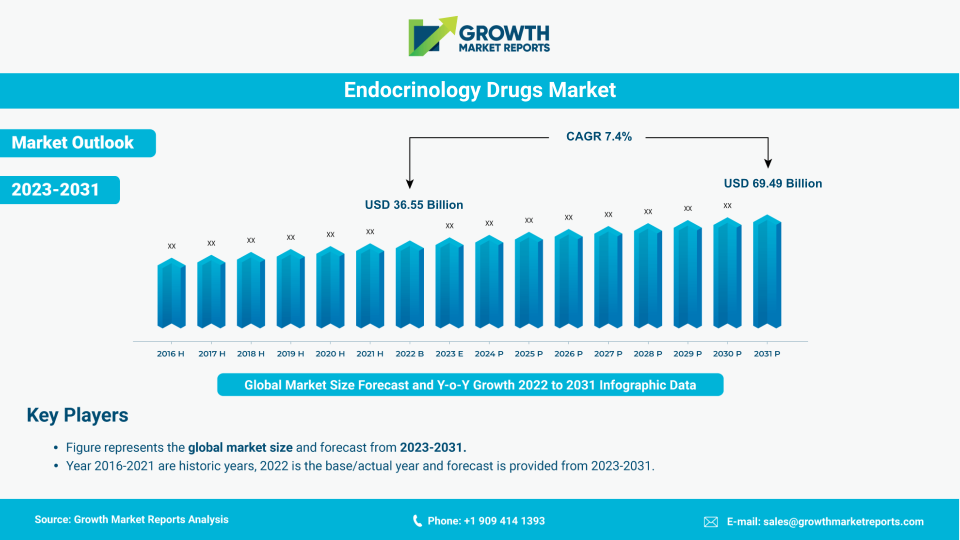
According to our latest research, the global endocrinology drugs market size reached USD 92.7 billion in 2024, demonstrating robust growth driven by the increasing prevalence of endocrine disorders and advancements in drug therapies. The market is expected to expand at a CAGR of 6.1% from 2025 to 2033, with the forecasted market size projected to reach USD 157.2 billion by 2033. This growth trajectory is primarily fueled by the rising incidence of diabetes and thyroid disorders, coupled with ongoing innovation in drug delivery and hormone replacement therapies, as per our latest research findings.

The growth of the endocrinology drugs market is underpinned by a surge in the global burden of endocrine diseases, particularly diabetes and thyroid disorders. The increasing adoption of sedentary lifestyles, unhealthy dietary habits, and rising obesity rates have significantly contributed to the escalating prevalence of these conditions worldwide. Moreover, the aging global population is more susceptible to endocrine dysfunctions, further amplifying demand for effective pharmacological interventions. The ongoing research and development activities aimed at introducing novel drug formulations with improved efficacy and safety profiles are also propelling market growth. Additionally, the integration of advanced diagnostic tools and personalized medicine approaches is enabling healthcare providers to tailor treatments, thereby improving patient outcomes and driving the adoption of endocrinology drugs across diverse patient populations.

Technological advancements in drug delivery systems and the development of biosimilars have also played a pivotal role in the expansion of the endocrinology drugs market. Companies are investing heavily in the creation of user-friendly delivery mechanisms, such as auto-injectors and transdermal patches, to enhance patient compliance and convenience. The introduction of long-acting formulations and combination therapies has further improved therapeutic efficacy and minimized the frequency of dosing, which is particularly beneficial for chronic endocrine conditions like diabetes and growth hormone deficiencies. Furthermore, regulatory agencies are increasingly approving new drugs and expanding indications for existing therapies, which is accelerating product launches and broadening the therapeutic landscape. This, in turn, is fostering healthy competition among market players and ensuring a steady pipeline of innovative endocrinology drugs.

Another significant growth driver for the endocrinology drugs market is the expanding healthcare infrastructure and increasing healthcare expenditure in emerging economies. Countries in Asia Pacific and Latin America are witnessing substantial investments in healthcare facilities, leading to improved access to diagnostic and treatment services for endocrine disorders. Government initiatives aimed at raising awareness about endocrine diseases, coupled with the implementation of screening programs, are facilitating early diagnosis and timely intervention. The growing penetration of health insurance and reimbursement policies for endocrine therapies is also making these drugs more affordable and accessible to larger segments of the population. Consequently, the market is expected to witness sustained demand, particularly in regions with high unmet medical needs and rapidly growing patient populations.

In addition to these mainstream endocrine disorders, there is a growing focus on Rare Endocrine Disorders Therapeutics. These rare conditions, though affecting a smaller patient population, often require highly specialized treatment approaches. The development of therapeutics for rare endocrine disorders is gaining momentum as pharmaceutical companies recognize the unmet medical needs and potential for innovation in this niche. With advancements in genetic research and personalized medicine, there is an increasing ability to tailor treatments to the specific genetic profiles of patients with rare endocrine conditions. This not only enhances the efficacy of the treatments but also improves the quality of life for patients who previously had limited therapeutic options. The market for rare endocrine disorder therapeutics is expected to grow as awareness and diagnostic capabilities improve, paving the way for more targeted and effective interventions.

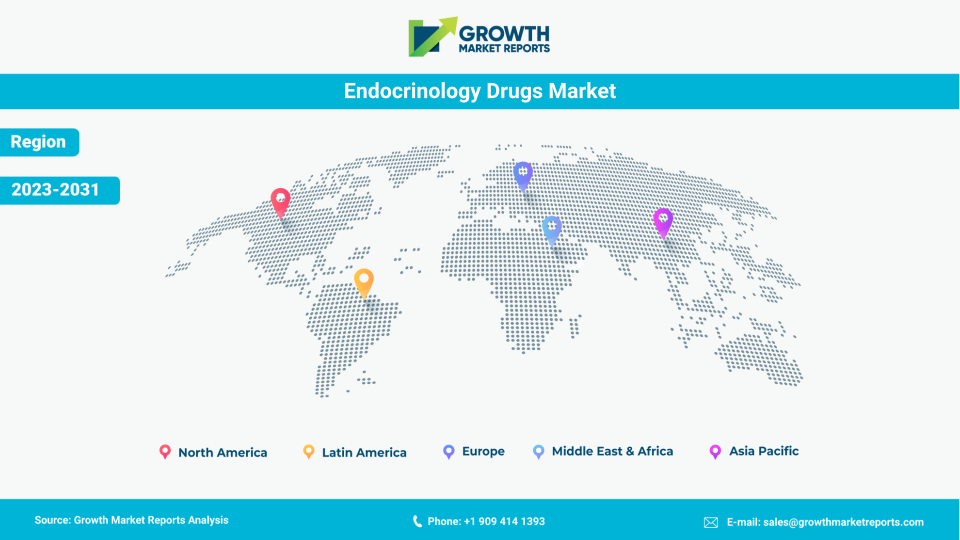
Regionally, North America continues to dominate the endocrinology drugs market due to its advanced healthcare system, high prevalence of diabetes and thyroid disorders, and strong presence of leading pharmaceutical companies. However, the Asia Pacific region is poised for the fastest growth over the forecast period, driven by rising disease awareness, increasing healthcare investments, and a burgeoning middle-class population. Europe also holds a significant market share, supported by well-established healthcare infrastructure and favorable reimbursement policies. Latin America and the Middle East & Africa are emerging as promising markets, albeit at a relatively slower pace, owing to gradual improvements in healthcare access and growing investments in medical research and development.

Global Endocrinology Drugs Industry Outlook

Drug Type Analysis

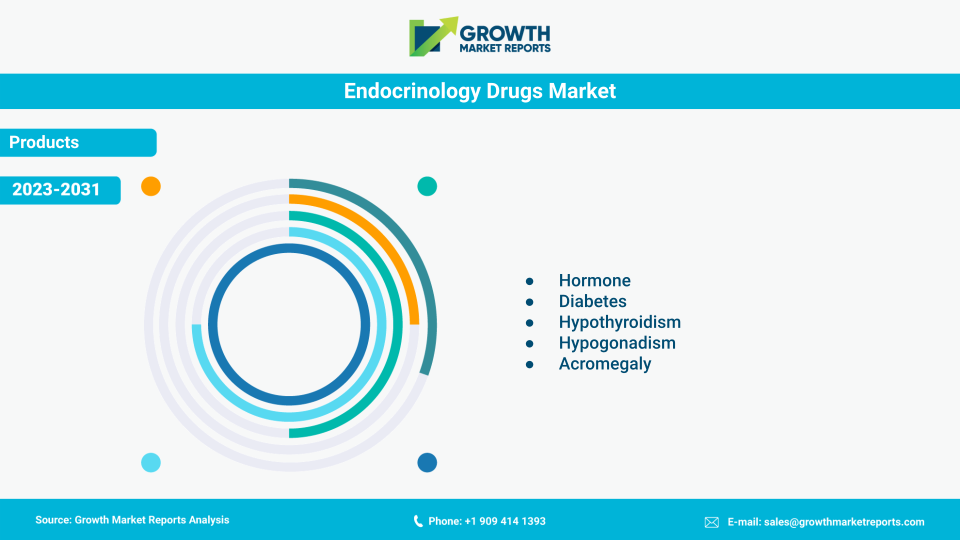
The drug type segment in the endocrinology drugs market encompasses a wide range of therapeutic agents, including insulin, thyroid hormones, growth hormones, steroids, oral hypoglycemics, and others. Insulin remains the cornerstone of diabetes management and accounts for a substantial share of the global market. The increasing prevalence of both type 1 and type 2 diabetes, coupled with the introduction of advanced insulin analogs and delivery devices, has significantly boosted the demand for insulin products. Innovations such as ultra-long-acting insulins and smart insulin pens are enhancing patient compliance and improving glycemic control, thereby driving market growth. Additionally, the rising adoption of biosimilar insulins is making diabetes management more affordable, particularly in cost-sensitive markets.

Thyroid hormones represent another critical segment within the endocrinology drugs market, addressing the needs of patients with hypothyroidism and other thyroid dysfunctions. The growing awareness of thyroid disorders and the availability of effective replacement therapies have led to sustained demand for levothyroxine and related products. Pharmaceutical companies are focusing on optimizing dosage forms and improving the stability of thyroid hormone formulations to enhance therapeutic outcomes. Furthermore, the increasing prevalence of autoimmune thyroid diseases and the rising incidence of thyroid cancer are expected to drive further growth in this segment over the forecast period.

Growth hormones are essential for the treatment of growth hormone deficiency and related disorders in both pediatric and adult populations. The development of recombinant human growth hormone (rhGH) and long-acting formulations has transformed the management of these conditions, offering improved efficacy and patient convenience. The market for growth hormones is also benefiting from expanding indications, such as Turner syndrome, Prader-Willi syndrome, and idiopathic short stature. Pharmaceutical companies are investing in research to develop next-generation growth hormone therapies with enhanced safety profiles and reduced injection frequency, which is expected to fuel segment growth in the coming years.

The steroids segment includes corticosteroids and anabolic steroids used in the management of various endocrine and metabolic disorders. Corticosteroids are widely prescribed for conditions such as AddisonÂ’s disease, CushingÂ’s syndrome, and adrenal insufficiency. The increasing prevalence of autoimmune and inflammatory diseases, along with advancements in steroid formulations, is driving demand for these drugs. However, concerns regarding long-term side effects and the risk of dependency are prompting the development of safer alternatives and combination therapies. The oral hypoglycemics segment, primarily comprising drugs for type 2 diabetes, is witnessing robust growth due to the rising global diabetes burden and the introduction of novel agents such as SGLT2 inhibitors and DPP-4 inhibitors.

Other drug types, including parathyroid hormone analogs and medications for rare endocrine disorders, are gaining traction as awareness and diagnostic capabilities improve. The growing focus on orphan drug development and the increasing willingness of payers to reimburse high-cost therapies are creating new opportunities in these niche segments. Overall, the drug type landscape in the endocrinology drugs market is characterized by rapid innovation, increasing therapeutic options, and a strong emphasis on patient-centric drug development.

Report Scope

Attributes Details
Report Title Endocrinology Drugs Market Research Report 2033
By Drug Type Insulin, Thyroid Hormones, Growth Hormones, Steroids, Oral Hypoglycemics, Others
By Disease Indication Diabetes, Thyroid Disorders, Growth Hormone Deficiency, CushingÂ’s Syndrome, AddisonÂ’s Disease, Others
By Distribution Channel Hospital Pharmacies, Retail Pharmacies, Online Pharmacies, Others
Regions Covered North America, Europe, APAC, Latin America, MEA
Base Year 2024
Historic Data 2018-2023
Forecast Period 2025-2033
Number of Pages 294
Number of Tables & Figures 292
Customization Available Yes, the report can be customized as per your need.

Disease Indication Analysis

The disease indication segment of the endocrinology drugs market is dominated by diabetes, which accounts for the largest share due to its high global prevalence and significant morbidity and mortality burden. The World Health Organization estimates that over 537 million adults are living with diabetes worldwide, and this number is expected to rise steadily in the coming years. The increasing incidence of obesity, sedentary lifestyles, and dietary changes are major contributors to the diabetes epidemic. Pharmaceutical companies are continuously innovating to develop more effective and convenient diabetes therapies, including novel insulins, oral hypoglycemics, and combination products. The emphasis on early intervention, patient education, and self-management is further driving the adoption of endocrinology drugs for diabetes care.

Thyroid disorders, including hypothyroidism, hyperthyroidism, and thyroid cancer, represent the second-largest disease indication within the endocrinology drugs market. The rising awareness of thyroid health, coupled with advancements in diagnostic technologies, has led to increased detection and treatment rates. Levothyroxine remains the standard of care for hypothyroidism, while antithyroid drugs and radioactive iodine therapy are commonly used for hyperthyroidism. The growing prevalence of autoimmune thyroid diseases, such as HashimotoÂ’s thyroiditis and GravesÂ’ disease, is also contributing to the expanding market for thyroid drugs. Additionally, the increasing incidence of thyroid nodules and cancers is driving demand for targeted therapies and hormone replacement treatments.

Growth hormone deficiency is another key disease indication, particularly affecting children with impaired growth and adults with metabolic dysfunctions. The availability of recombinant human growth hormone and advances in genetic testing have improved the diagnosis and management of this condition. The expanding indications for growth hormone therapy, including Turner syndrome and chronic renal insufficiency, are further boosting market growth. Pharmaceutical companies are focusing on developing long-acting and biosimilar growth hormone products to enhance patient adherence and reduce healthcare costs.

CushingÂ’s syndrome and AddisonÂ’s disease are relatively rare endocrine disorders but represent significant therapeutic challenges due to their complex pathophysiology and the need for lifelong management. The development of targeted therapies and hormone replacement drugs has improved outcomes for patients with these conditions. Ongoing research into novel treatment modalities, including gene therapies and precision medicine approaches, holds promise for further advancements in the management of rare endocrine diseases. The "others" category includes a range of less common disorders, such as hyperparathyroidism, polycystic ovary syndrome (PCOS), and adrenal tumors, which are gaining attention as diagnostic capabilities and disease awareness improve.

Overall, the disease indication segment in the endocrinology drugs market is characterized by a diverse and evolving landscape, with a strong focus on addressing both prevalent and rare endocrine disorders. The increasing emphasis on early diagnosis, personalized treatment, and patient education is expected to drive sustained demand for endocrinology drugs across all major disease indications.

Distribution Channel Analysis

The distribution channel segment in the endocrinology drugs market plays a crucial role in ensuring timely and efficient access to essential medications. Hospital pharmacies account for a significant share of the market, particularly for acute and specialized endocrine therapies that require close monitoring and administration under medical supervision. The growing number of hospitals and specialty clinics, coupled with the increasing complexity of endocrine disorders, has led to a rise in the demand for hospital-based pharmacy services. Hospitals are also at the forefront of adopting advanced drug delivery systems and implementing stringent quality control measures, which contribute to improved patient outcomes and safety.

Retail pharmacies represent another major distribution channel, catering to the needs of patients requiring chronic endocrine therapies, such as insulin and oral hypoglycemics. The widespread presence of retail pharmacy chains and independent pharmacies ensures broad accessibility to endocrinology drugs, particularly in urban and semi-urban areas. Retail pharmacies are increasingly leveraging digital technologies and inventory management systems to streamline operations and enhance customer service. The growing trend of pharmacist-led patient counseling and medication management is also improving adherence to endocrine therapies and reducing the risk of complications.

The online pharmacies segment is experiencing rapid growth, driven by the increasing adoption of e-commerce platforms and the rising demand for convenience and privacy in medication procurement. Online pharmacies offer a wide range of endocrinology drugs, often at competitive prices, and provide doorstep delivery services, which are particularly beneficial for patients with mobility challenges or those residing in remote areas. The COVID-19 pandemic has further accelerated the shift towards online pharmacy services, as patients seek to minimize in-person visits to healthcare facilities. Regulatory authorities are implementing stringent guidelines to ensure the safety and authenticity of online pharmacy operations, which is expected to enhance consumer confidence and drive further growth in this segment.

Other distribution channels, such as specialty pharmacies and mail-order pharmacies, are gaining prominence, particularly for high-cost and complex endocrine therapies that require specialized handling and patient support services. Specialty pharmacies provide comprehensive care management programs, including medication counseling, adherence support, and coordination with healthcare providers, which are essential for optimizing outcomes in patients with chronic and rare endocrine disorders. The growing focus on value-based care and the increasing adoption of integrated healthcare delivery models are expected to further expand the role of specialty and mail-order pharmacies in the endocrinology drugs market.

In summary, the distribution channel landscape in the endocrinology drugs market is evolving rapidly, with a strong emphasis on improving accessibility, convenience, and patient-centric care. The integration of digital technologies, enhanced supply chain management, and the expansion of specialty pharmacy services are expected to drive sustained growth across all major distribution channels.

Opportunities & Threats

The endocrinology drugs market presents significant opportunities for growth, driven by the rising global prevalence of endocrine disorders and the increasing adoption of innovative therapies. One of the most promising opportunities lies in the development of personalized medicine approaches, which leverage genetic and biomarker data to tailor treatments to individual patient profiles. The integration of advanced diagnostic tools and artificial intelligence (AI) in endocrinology is enabling earlier detection and more precise disease management, thereby improving patient outcomes and reducing healthcare costs. Pharmaceutical companies that invest in research and development to create targeted therapies and combination products are well-positioned to capture a larger share of the market. Additionally, the expansion of healthcare infrastructure and the increasing penetration of health insurance in emerging economies are creating new avenues for market growth, particularly in regions with high unmet medical needs.

Another major opportunity in the endocrinology drugs market is the growing demand for biosimilars and generic drugs, which offer cost-effective alternatives to branded therapies. The expiration of patents for several blockbuster endocrine drugs has paved the way for the entry of biosimilars and generics, leading to increased competition and greater affordability for patients. Regulatory agencies are streamlining approval processes for biosimilars, which is accelerating their adoption in both developed and developing markets. Furthermore, the increasing focus on patient education, disease awareness campaigns, and telemedicine services is enhancing access to endocrine care and driving demand for endocrinology drugs. Companies that prioritize patient-centric care and invest in digital health solutions are likely to benefit from these evolving market dynamics.

Despite the numerous opportunities, the endocrinology drugs market faces several restraining factors that could hinder its growth. One of the primary challenges is the high cost of innovative therapies, particularly biologics and specialty drugs, which can limit access for patients in low- and middle-income countries. Reimbursement constraints and variations in healthcare coverage across regions further exacerbate this issue, leading to disparities in treatment access and outcomes. Additionally, concerns regarding the long-term safety and side effects of certain endocrine drugs, such as steroids and hormone replacement therapies, are prompting regulatory authorities to implement stricter safety monitoring and post-marketing surveillance. The increasing complexity of endocrine disorders and the need for multidisciplinary care also pose challenges for healthcare providers, highlighting the importance of continuous medical education and training.

Regional Outlook

From a regional perspective, North America leads the global endocrinology drugs market, accounting for approximately USD 36.1 billion in 2024. The regionÂ’s dominance is attributed to its advanced healthcare infrastructure, high disease prevalence, and strong presence of leading pharmaceutical companies. The United States, in particular, is a major contributor, driven by high rates of diabetes and thyroid disorders, robust R&D investments, and favorable reimbursement policies. Canada also plays a significant role, with increasing awareness of endocrine diseases and expanding access to innovative therapies. The ongoing adoption of digital health solutions and telemedicine services is further enhancing patient access to endocrinology drugs in North America.

Europe holds the second-largest share of the endocrinology drugs market, with a market size of USD 27.4 billion in 2024. The region benefits from well-established healthcare systems, comprehensive insurance coverage, and a strong focus on preventive care and early diagnosis. Countries such as Germany, the United Kingdom, France, and Italy are key markets, supported by high disease awareness and the availability of advanced diagnostic and treatment options. The European market is also witnessing a growing emphasis on biosimilars and cost-effective therapies, driven by government initiatives to reduce healthcare expenditures. The region is expected to grow at a steady CAGR of 5.8% through 2033, supported by ongoing investments in healthcare infrastructure and research.

The Asia Pacific region is poised for the fastest growth in the endocrinology drugs market, with a market size of USD 18.6 billion in 2024 and an anticipated CAGR of 8.2% through 2033. Rapid urbanization, rising income levels, and increasing healthcare investments are driving demand for endocrinology drugs across major countries such as China, India, Japan, and South Korea. The growing burden of diabetes and thyroid disorders, coupled with improving access to healthcare services, is fueling market expansion in the region. Government initiatives aimed at raising disease awareness, implementing screening programs, and expanding insurance coverage are further supporting growth. Latin America and the Middle East & Africa are emerging as promising markets, with combined market sizes of USD 10.6 billion in 2024. These regions are benefiting from gradual improvements in healthcare infrastructure, increasing investments in medical research, and growing partnerships with global pharmaceutical companies.

Endocrinology Drugs Market Statistics

Competitor Outlook

The endocrinology drugs market is characterized by intense competition, with a mix of global pharmaceutical giants and emerging biotech firms vying for market share. The competitive landscape is shaped by ongoing innovation, strategic collaborations, and robust research and development pipelines. Leading companies are investing heavily in the development of novel drug formulations, advanced delivery systems, and biosimilars to address the evolving needs of patients with endocrine disorders. The emphasis on personalized medicine, digital health solutions, and patient-centric care is driving differentiation among market players. Additionally, companies are pursuing strategic mergers and acquisitions to expand their product portfolios, enhance geographic reach, and strengthen their competitive positions.

The market is witnessing a surge in the development and commercialization of biosimilar and generic drugs, particularly for insulin and growth hormone therapies. This trend is intensifying competition and driving price reductions, making endocrinology drugs more accessible to a broader patient population. Companies are also focusing on expanding indications for existing drugs and obtaining regulatory approvals for new formulations, which is contributing to market growth. The increasing adoption of digital health platforms and telemedicine services is enabling companies to engage more effectively with patients and healthcare providers, thereby enhancing brand loyalty and market penetration.

Regulatory compliance and intellectual property management are critical aspects of the competitive landscape in the endocrinology drugs market. Companies must navigate complex regulatory frameworks to obtain approvals for new drugs and ensure ongoing safety monitoring and pharmacovigilance. The expiration of patents for several blockbuster drugs has opened the door for biosimilar and generic competition, necessitating continuous innovation and lifecycle management strategies. Strategic partnerships with research institutions, healthcare providers, and patient advocacy groups are also playing a key role in driving product development and market access.

Major companies operating in the endocrinology drugs market include Sanofi, Novo Nordisk, Eli Lilly and Company, Merck & Co., Pfizer, Novartis, Abbott Laboratories, AstraZeneca, Takeda Pharmaceutical Company, and Bayer AG. Sanofi and Novo Nordisk are global leaders in the insulin and diabetes care segments, with extensive product portfolios and strong R&D capabilities. Eli Lilly and Company is a major player in diabetes and growth hormone therapies, while Merck & Co. and Pfizer have significant presence in the thyroid and steroid drug markets. Novartis and Abbott Laboratories are recognized for their innovative approaches to hormone replacement and rare endocrine disease therapies. AstraZeneca and Takeda Pharmaceutical Company are expanding their footprints in emerging markets, leveraging strategic partnerships and investments in local manufacturing facilities. Bayer AG is known for its leadership in womenÂ’s health and adrenal disorder therapies, supported by a robust pipeline of new drug candidates.

These companies are actively engaged in launching new products, expanding indications, and investing in clinical research to maintain their competitive edge. Collaborative efforts with academic institutions and healthcare organizations are facilitating the development of cutting-edge therapies and improving patient outcomes. The competitive landscape is expected to remain dynamic, with ongoing innovation, strategic alliances, and a strong focus on addressing unmet medical needs driving sustained growth in the endocrinology drugs market.

Key Players

  • Novo Nordisk A/S
  • Sanofi S.A.
  • Eli Lilly and Company
  • Pfizer Inc.
  • Merck & Co., Inc.
  • AstraZeneca plc
  • Boehringer Ingelheim GmbH
  • Novartis AG
  • AbbVie Inc.
  • Johnson & Johnson
  • Bayer AG
  • Takeda Pharmaceutical Company Limited
  • F. Hoffmann-La Roche Ltd
  • GlaxoSmithKline plc
  • Ipsen S.A.
  • Amgen Inc.
  • Teva Pharmaceutical Industries Ltd.
  • Sun Pharmaceutical Industries Ltd.
  • Mylan N.V.
  • Endo International plc
Endocrinology Drugs Market Overview

Segments

The Endocrinology Drugs market has been segmented on the basis of

Drug Type

  • Insulin
  • Thyroid Hormones
  • Growth Hormones
  • Steroids
  • Oral Hypoglycemics
  • Others

Disease Indication

  • Diabetes
  • Thyroid Disorders
  • Growth Hormone Deficiency
  • Cushing’s Syndrome
  • Addison’s Disease
  • Others

Distribution Channel

  • Hospital Pharmacies
  • Retail Pharmacies
  • Online Pharmacies
  • Others

Competitive Landscape

Key players competing in the endocrinology drugs market include F. Hoffmann-La Roche AG.; Alacer Corporation; Pfizer Inc.; Abbott Laboratories; Novartis International AG; Eli Lilly and Company; Facet Biotech Corporation; Novo Nordisk A/S, and Sanofi.

Some of these players are using several market strategies such as acquisitions, merger, collaborations, partnerships, capacity expansion, and product launches to enhance their market shares and to generate revenue and raise their production line of the business in the coming years.
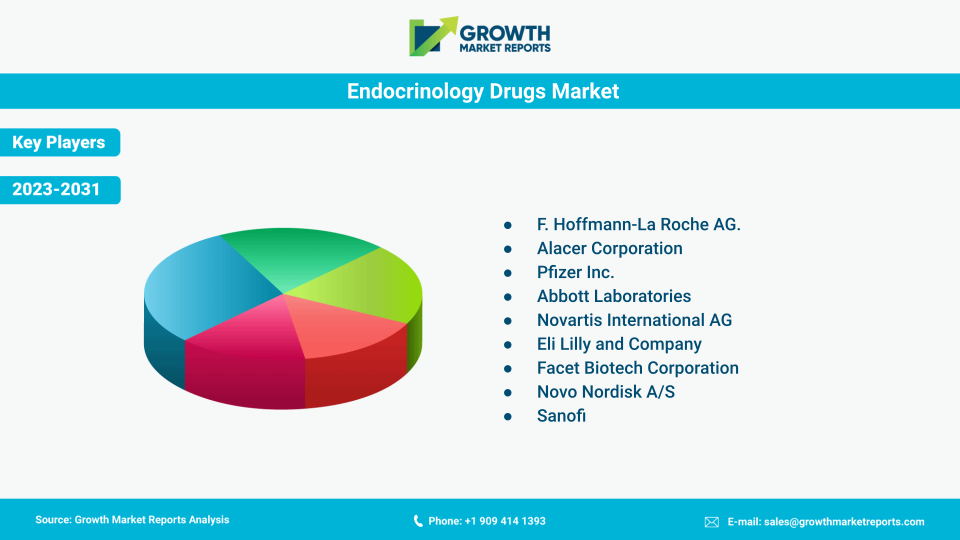

Endocrinology Drugs Market Key Players

Frequently Asked Questions

Key challenges include high costs of innovative therapies, reimbursement constraints, long-term safety concerns, and disparities in treatment access across regions.

Opportunities include expanding healthcare infrastructure in emerging economies, the rise of biosimilars and generics, personalized medicine, and increased disease awareness.

Trends include the development of biosimilars, advanced drug delivery systems (like auto-injectors and transdermal patches), personalized medicine, and digital health solutions.

Major players include Novo Nordisk, Sanofi, Eli Lilly and Company, Pfizer, Merck & Co., AstraZeneca, Novartis, Abbott Laboratories, Takeda, and Bayer AG.

Endocrinology drugs are distributed through hospital pharmacies, retail pharmacies, online pharmacies, specialty pharmacies, and mail-order pharmacies.

North America leads the market due to advanced healthcare infrastructure and high disease prevalence, followed by Europe and the rapidly growing Asia Pacific region.

Key drug types include insulin, thyroid hormones, growth hormones, steroids, oral hypoglycemics, and other specialized medications for rare endocrine disorders.

The market growth is primarily fueled by the increasing prevalence of diabetes and thyroid disorders, along with growth hormone deficiencies and rare endocrine diseases.

The endocrinology drugs market is expected to grow at a CAGR of 6.1% from 2025 to 2033, reaching a projected value of USD 157.2 billion by 2033.

As of 2024, the global endocrinology drugs market size reached USD 92.7 billion, driven by rising endocrine disorders and advancements in drug therapies.

Table Of Content

Chapter 1 Executive Summary
Chapter 2 Assumptions and Acronyms Used
Chapter 3 Research Methodology
Chapter 4 Endocrinology Drugs Market Overview
   4.1 Introduction
      4.1.1 Market Taxonomy
      4.1.2 Market Definition
      4.1.3 Macro-Economic Factors Impacting the Market Growth
   4.2 Endocrinology Drugs Market Dynamics
      4.2.1 Market Drivers
      4.2.2 Market Restraints
      4.2.3 Market Opportunity
   4.3 Endocrinology Drugs Market - Supply Chain Analysis
      4.3.1 List of Key Suppliers
      4.3.2 List of Key Distributors
      4.3.3 List of Key Consumers
   4.4 Key Forces Shaping the Endocrinology Drugs Market
      4.4.1 Bargaining Power of Suppliers
      4.4.2 Bargaining Power of Buyers
      4.4.3 Threat of Substitution
      4.4.4 Threat of New Entrants
      4.4.5 Competitive Rivalry
   4.5 Global Endocrinology Drugs Market Size & Forecast, 2023-2032
      4.5.1 Endocrinology Drugs Market Size and Y-o-Y Growth
      4.5.2 Endocrinology Drugs Market Absolute $ Opportunity

Chapter 5 Global Endocrinology Drugs Market Analysis and Forecast By Drug Type
   5.1 Introduction
      5.1.1 Key Market Trends & Growth Opportunities By Drug Type
      5.1.2 Basis Point Share (BPS) Analysis By Drug Type
      5.1.3 Absolute $ Opportunity Assessment By Drug Type
   5.2 Endocrinology Drugs Market Size Forecast By Drug Type
      5.2.1 Insulin
      5.2.2 Thyroid Hormones
      5.2.3 Growth Hormones
      5.2.4 Steroids
      5.2.5 Oral Hypoglycemics
      5.2.6 Others
   5.3 Market Attractiveness Analysis By Drug Type

Chapter 6 Global Endocrinology Drugs Market Analysis and Forecast By Disease Indication
   6.1 Introduction
      6.1.1 Key Market Trends & Growth Opportunities By Disease Indication
      6.1.2 Basis Point Share (BPS) Analysis By Disease Indication
      6.1.3 Absolute $ Opportunity Assessment By Disease Indication
   6.2 Endocrinology Drugs Market Size Forecast By Disease Indication
      6.2.1 Diabetes
      6.2.2 Thyroid Disorders
      6.2.3 Growth Hormone Deficiency
      6.2.4 Cushing’s Syndrome
      6.2.5 Addison’s Disease
      6.2.6 Others
   6.3 Market Attractiveness Analysis By Disease Indication

Chapter 7 Global Endocrinology Drugs Market Analysis and Forecast By Distribution Channel
   7.1 Introduction
      7.1.1 Key Market Trends & Growth Opportunities By Distribution Channel
      7.1.2 Basis Point Share (BPS) Analysis By Distribution Channel
      7.1.3 Absolute $ Opportunity Assessment By Distribution Channel
   7.2 Endocrinology Drugs Market Size Forecast By Distribution Channel
      7.2.1 Hospital Pharmacies
      7.2.2 Retail Pharmacies
      7.2.3 Online Pharmacies
      7.2.4 Others
   7.3 Market Attractiveness Analysis By Distribution Channel

Chapter 8 Global Endocrinology Drugs Market Analysis and Forecast by Region
   8.1 Introduction
      8.1.1 Key Market Trends & Growth Opportunities By Region
      8.1.2 Basis Point Share (BPS) Analysis By Region
      8.1.3 Absolute $ Opportunity Assessment By Region
   8.2 Endocrinology Drugs Market Size Forecast By Region
      8.2.1 North America
      8.2.2 Europe
      8.2.3 Asia Pacific
      8.2.4 Latin America
      8.2.5 Middle East & Africa (MEA)
   8.3 Market Attractiveness Analysis By Region

Chapter 9 Coronavirus Disease (COVID-19) Impact 
   9.1 Introduction 
   9.2 Current & Future Impact Analysis 
   9.3 Economic Impact Analysis 
   9.4 Government Policies 
   9.5 Investment Scenario

Chapter 10 North America Endocrinology Drugs Analysis and Forecast
   10.1 Introduction
   10.2 North America Endocrinology Drugs Market Size Forecast by Country
      10.2.1 U.S.
      10.2.2 Canada
   10.3 Basis Point Share (BPS) Analysis by Country
   10.4 Absolute $ Opportunity Assessment by Country
   10.5 Market Attractiveness Analysis by Country
   10.6 North America Endocrinology Drugs Market Size Forecast By Drug Type
      10.6.1 Insulin
      10.6.2 Thyroid Hormones
      10.6.3 Growth Hormones
      10.6.4 Steroids
      10.6.5 Oral Hypoglycemics
      10.6.6 Others
   10.7 Basis Point Share (BPS) Analysis By Drug Type 
   10.8 Absolute $ Opportunity Assessment By Drug Type 
   10.9 Market Attractiveness Analysis By Drug Type
   10.10 North America Endocrinology Drugs Market Size Forecast By Disease Indication
      10.10.1 Diabetes
      10.10.2 Thyroid Disorders
      10.10.3 Growth Hormone Deficiency
      10.10.4 Cushing’s Syndrome
      10.10.5 Addison’s Disease
      10.10.6 Others
   10.11 Basis Point Share (BPS) Analysis By Disease Indication 
   10.12 Absolute $ Opportunity Assessment By Disease Indication 
   10.13 Market Attractiveness Analysis By Disease Indication
   10.14 North America Endocrinology Drugs Market Size Forecast By Distribution Channel
      10.14.1 Hospital Pharmacies
      10.14.2 Retail Pharmacies
      10.14.3 Online Pharmacies
      10.14.4 Others
   10.15 Basis Point Share (BPS) Analysis By Distribution Channel 
   10.16 Absolute $ Opportunity Assessment By Distribution Channel 
   10.17 Market Attractiveness Analysis By Distribution Channel

Chapter 11 Europe Endocrinology Drugs Analysis and Forecast
   11.1 Introduction
   11.2 Europe Endocrinology Drugs Market Size Forecast by Country
      11.2.1 Germany
      11.2.2 France
      11.2.3 Italy
      11.2.4 U.K.
      11.2.5 Spain
      11.2.6 Russia
      11.2.7 Rest of Europe
   11.3 Basis Point Share (BPS) Analysis by Country
   11.4 Absolute $ Opportunity Assessment by Country
   11.5 Market Attractiveness Analysis by Country
   11.6 Europe Endocrinology Drugs Market Size Forecast By Drug Type
      11.6.1 Insulin
      11.6.2 Thyroid Hormones
      11.6.3 Growth Hormones
      11.6.4 Steroids
      11.6.5 Oral Hypoglycemics
      11.6.6 Others
   11.7 Basis Point Share (BPS) Analysis By Drug Type 
   11.8 Absolute $ Opportunity Assessment By Drug Type 
   11.9 Market Attractiveness Analysis By Drug Type
   11.10 Europe Endocrinology Drugs Market Size Forecast By Disease Indication
      11.10.1 Diabetes
      11.10.2 Thyroid Disorders
      11.10.3 Growth Hormone Deficiency
      11.10.4 Cushing’s Syndrome
      11.10.5 Addison’s Disease
      11.10.6 Others
   11.11 Basis Point Share (BPS) Analysis By Disease Indication 
   11.12 Absolute $ Opportunity Assessment By Disease Indication 
   11.13 Market Attractiveness Analysis By Disease Indication
   11.14 Europe Endocrinology Drugs Market Size Forecast By Distribution Channel
      11.14.1 Hospital Pharmacies
      11.14.2 Retail Pharmacies
      11.14.3 Online Pharmacies
      11.14.4 Others
   11.15 Basis Point Share (BPS) Analysis By Distribution Channel 
   11.16 Absolute $ Opportunity Assessment By Distribution Channel 
   11.17 Market Attractiveness Analysis By Distribution Channel

Chapter 12 Asia Pacific Endocrinology Drugs Analysis and Forecast
   12.1 Introduction
   12.2 Asia Pacific Endocrinology Drugs Market Size Forecast by Country
      12.2.1 China
      12.2.2 Japan
      12.2.3 South Korea
      12.2.4 India
      12.2.5 Australia
      12.2.6 South East Asia (SEA)
      12.2.7 Rest of Asia Pacific (APAC)
   12.3 Basis Point Share (BPS) Analysis by Country
   12.4 Absolute $ Opportunity Assessment by Country
   12.5 Market Attractiveness Analysis by Country
   12.6 Asia Pacific Endocrinology Drugs Market Size Forecast By Drug Type
      12.6.1 Insulin
      12.6.2 Thyroid Hormones
      12.6.3 Growth Hormones
      12.6.4 Steroids
      12.6.5 Oral Hypoglycemics
      12.6.6 Others
   12.7 Basis Point Share (BPS) Analysis By Drug Type 
   12.8 Absolute $ Opportunity Assessment By Drug Type 
   12.9 Market Attractiveness Analysis By Drug Type
   12.10 Asia Pacific Endocrinology Drugs Market Size Forecast By Disease Indication
      12.10.1 Diabetes
      12.10.2 Thyroid Disorders
      12.10.3 Growth Hormone Deficiency
      12.10.4 Cushing’s Syndrome
      12.10.5 Addison’s Disease
      12.10.6 Others
   12.11 Basis Point Share (BPS) Analysis By Disease Indication 
   12.12 Absolute $ Opportunity Assessment By Disease Indication 
   12.13 Market Attractiveness Analysis By Disease Indication
   12.14 Asia Pacific Endocrinology Drugs Market Size Forecast By Distribution Channel
      12.14.1 Hospital Pharmacies
      12.14.2 Retail Pharmacies
      12.14.3 Online Pharmacies
      12.14.4 Others
   12.15 Basis Point Share (BPS) Analysis By Distribution Channel 
   12.16 Absolute $ Opportunity Assessment By Distribution Channel 
   12.17 Market Attractiveness Analysis By Distribution Channel

Chapter 13 Latin America Endocrinology Drugs Analysis and Forecast
   13.1 Introduction
   13.2 Latin America Endocrinology Drugs Market Size Forecast by Country
      13.2.1 Brazil
      13.2.2 Mexico
      13.2.3 Rest of Latin America (LATAM)
   13.3 Basis Point Share (BPS) Analysis by Country
   13.4 Absolute $ Opportunity Assessment by Country
   13.5 Market Attractiveness Analysis by Country
   13.6 Latin America Endocrinology Drugs Market Size Forecast By Drug Type
      13.6.1 Insulin
      13.6.2 Thyroid Hormones
      13.6.3 Growth Hormones
      13.6.4 Steroids
      13.6.5 Oral Hypoglycemics
      13.6.6 Others
   13.7 Basis Point Share (BPS) Analysis By Drug Type 
   13.8 Absolute $ Opportunity Assessment By Drug Type 
   13.9 Market Attractiveness Analysis By Drug Type
   13.10 Latin America Endocrinology Drugs Market Size Forecast By Disease Indication
      13.10.1 Diabetes
      13.10.2 Thyroid Disorders
      13.10.3 Growth Hormone Deficiency
      13.10.4 Cushing’s Syndrome
      13.10.5 Addison’s Disease
      13.10.6 Others
   13.11 Basis Point Share (BPS) Analysis By Disease Indication 
   13.12 Absolute $ Opportunity Assessment By Disease Indication 
   13.13 Market Attractiveness Analysis By Disease Indication
   13.14 Latin America Endocrinology Drugs Market Size Forecast By Distribution Channel
      13.14.1 Hospital Pharmacies
      13.14.2 Retail Pharmacies
      13.14.3 Online Pharmacies
      13.14.4 Others
   13.15 Basis Point Share (BPS) Analysis By Distribution Channel 
   13.16 Absolute $ Opportunity Assessment By Distribution Channel 
   13.17 Market Attractiveness Analysis By Distribution Channel

Chapter 14 Middle East & Africa (MEA) Endocrinology Drugs Analysis and Forecast
   14.1 Introduction
   14.2 Middle East & Africa (MEA) Endocrinology Drugs Market Size Forecast by Country
      14.2.1 Saudi Arabia
      14.2.2 South Africa
      14.2.3 UAE
      14.2.4 Rest of Middle East & Africa (MEA)
   14.3 Basis Point Share (BPS) Analysis by Country
   14.4 Absolute $ Opportunity Assessment by Country
   14.5 Market Attractiveness Analysis by Country
   14.6 Middle East & Africa (MEA) Endocrinology Drugs Market Size Forecast By Drug Type
      14.6.1 Insulin
      14.6.2 Thyroid Hormones
      14.6.3 Growth Hormones
      14.6.4 Steroids
      14.6.5 Oral Hypoglycemics
      14.6.6 Others
   14.7 Basis Point Share (BPS) Analysis By Drug Type 
   14.8 Absolute $ Opportunity Assessment By Drug Type 
   14.9 Market Attractiveness Analysis By Drug Type
   14.10 Middle East & Africa (MEA) Endocrinology Drugs Market Size Forecast By Disease Indication
      14.10.1 Diabetes
      14.10.2 Thyroid Disorders
      14.10.3 Growth Hormone Deficiency
      14.10.4 Cushing’s Syndrome
      14.10.5 Addison’s Disease
      14.10.6 Others
   14.11 Basis Point Share (BPS) Analysis By Disease Indication 
   14.12 Absolute $ Opportunity Assessment By Disease Indication 
   14.13 Market Attractiveness Analysis By Disease Indication
   14.14 Middle East & Africa (MEA) Endocrinology Drugs Market Size Forecast By Distribution Channel
      14.14.1 Hospital Pharmacies
      14.14.2 Retail Pharmacies
      14.14.3 Online Pharmacies
      14.14.4 Others
   14.15 Basis Point Share (BPS) Analysis By Distribution Channel 
   14.16 Absolute $ Opportunity Assessment By Distribution Channel 
   14.17 Market Attractiveness Analysis By Distribution Channel

Chapter 15 Competition Landscape 
   15.1 Endocrinology Drugs Market: Competitive Dashboard
   15.2 Global Endocrinology Drugs Market: Market Share Analysis, 2023
   15.3 Company Profiles (Details – Overview, Financials, Developments, Strategy) 
      15.3.1 Novo Nordisk A/S
Sanofi S.A.
Eli Lilly and Company
Pfizer Inc.
Merck & Co., Inc.
AstraZeneca plc
Boehringer Ingelheim GmbH
Novartis AG
AbbVie Inc.
Johnson & Johnson
Bayer AG
Takeda Pharmaceutical Company Limited
F. Hoffmann-La Roche Ltd
GlaxoSmithKline plc
Ipsen S.A.
Amgen Inc.
Teva Pharmaceutical Industries Ltd.
Sun Pharmaceutical Industries Ltd.
Mylan N.V.
Endo International plc

Methodology

Our Clients

Deloitte
sinopec
The John Holland Group
Microsoft
FedEx Logistics
Nestle SA
General Mills
General Electric