Empty Capsules Market Report 2025-2034

Empty Capsules Market Report 2025-2034

Segments - by Product Type (Gelatin Capsules, Non-Gelatin Capsules), by Raw Material (Bovine, Porcine, Fish, Hydroxypropyl Methylcellulose (HPMC), Pullulan, Starch, Others), by Application (Pharmaceuticals, Nutraceuticals, Cosmetics, Others), by End-User (Pharmaceutical Companies, Nutraceutical Companies, Research Laboratories, Others)

https://growthmarketreports.com/raksha
Author : Raksha Sharma
https://growthmarketreports.com/Vaibhav
Fact-checked by : V. Chandola
https://growthmarketreports.com/Shruti
Editor : Shruti Bhat

Last Updated : Jun, 2026 | Report ID :HC-2405 | 4.3 Rating | 10 Reviews | 282 Pages | Format : Docx PDF

Report Description

This report is updated with the latest market data and insights as of June 2026. Base year: 2025  |  Forecast period: 2026-2034


Empty Capsules Market Outlook

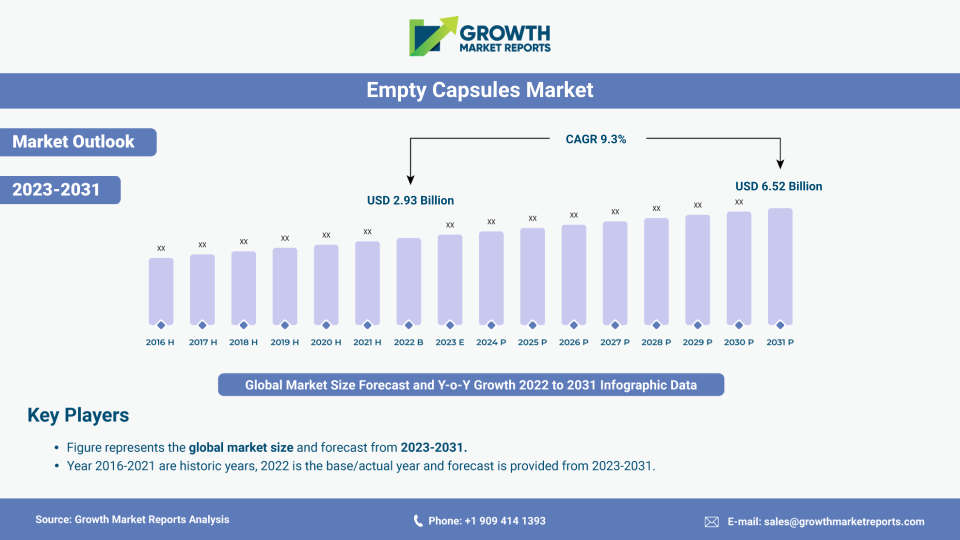
According to our latest research, the global empty capsules market size reached USD 3.23 billion in 2025, reflecting robust expansion driven by the increasing adoption of encapsulated drug delivery systems and the surging demand for nutraceutical and pharmaceutical products globally. The market is expected to grow at a CAGR of 7.4% during the forecast period, reaching an estimated USD 6.12 billion by 2034. The primary growth factor is the rising preference for oral dosage forms, supported by significant advancements in capsule manufacturing technologies and a pronounced shift towards vegetarian and non-animal-based capsule options across major end-use industries.

Global Empty Capsules Market Size Forecast 2025-2034, USD Billion

One of the key growth drivers for the empty capsules market is the escalating demand for dietary supplements and functional foods, particularly as global populations become increasingly health-conscious. The nutraceutical industry has witnessed exponential growth due to changing lifestyles, higher disposable incomes, and a greater focus on preventive healthcare. This has directly contributed to the surge in demand for empty capsules, which serve as ideal carriers for a wide range of vitamins, minerals, herbal extracts, and other bioactive compounds. Pharmaceutical companies are also leveraging empty capsules for their versatility, ease of formulation, and ability to mask unpleasant tastes or odors, further propelling market expansion through 2034.

Technological advancements in capsule manufacturing are another significant factor fueling the growth of the empty capsules market. Innovations such as the development of capsule-in-capsule technology, liquid-filled hard capsules, and enhanced tamper-evident designs have broadened the application scope of empty capsules considerably. Manufacturers are increasingly investing in research and development to produce capsules with improved stability, bioavailability, and controlled release properties. The growing trend of personalized medicine and the increasing prevalence of chronic diseases are also pushing demand for tailored drug delivery systems, where empty capsules play a pivotal role in both pharmaceutical and nutraceutical formulations.

The shift towards vegetarian and vegan lifestyles has positively impacted the empty capsules market, particularly in developed regions such as North America and Europe. Rising awareness regarding potential risks associated with animal-derived gelatin, such as transmissible spongiform encephalopathies (TSEs), has led to notable growth in the adoption of hydroxypropyl methylcellulose (HPMC) capsules, pullulan, and starch-based alternatives. Regulatory support for plant-based and allergen-free products, coupled with consumer preference for clean-label ingredients, is expected to sustain this trend and drive further market growth over the 2026-2034 forecast period. The parallel expansion of halal-certified capsule offerings is also reinforcing market diversity and widening the addressable consumer base across the Middle East, Southeast Asia, and beyond.

From a regional perspective, North America continues to dominate the empty capsules market, accounting for the largest revenue share in 2025, followed closely by Europe and Asia Pacific. The high concentration of pharmaceutical and nutraceutical manufacturers, coupled with a well-established healthcare infrastructure and favorable regulatory frameworks, has contributed to the region's sustained leadership. Meanwhile, the Asia Pacific region is experiencing the fastest growth, driven by expanding healthcare expenditure, rising geriatric populations, and increasing investments in pharmaceutical R&D, particularly in China and India.

Product Type Analysis

The empty capsules market is segmented by product type into gelatin capsules and non-gelatin capsules, each catering to specific end-user requirements and regulatory preferences. Gelatin capsules, traditionally derived from animal sources such as bovine and porcine, have long been the industry standard due to their cost-effectiveness, ease of production, and superior mechanical properties. In 2025, gelatin capsules account for approximately 62.5% of the total market, supported by their widespread use in pharmaceutical formulations, particularly for solid and semi-solid drugs. The robust demand for gelatin capsules stems from their high compatibility with a variety of active pharmaceutical ingredients (APIs) and their ability to provide rapid drug release, characteristics that remain critically important to formulators worldwide. The hard gelatin capsule segment in particular continues to attract significant investment from pharmaceutical manufacturers seeking reliable, scalable encapsulation solutions.

Empty Capsules Market Share by Product Type 2025

However, the market for non-gelatin capsules is expanding at a faster pace, driven by growing consumer awareness regarding animal welfare and the increasing prevalence of dietary restrictions and allergies. Non-gelatin capsules, primarily made from plant-derived materials such as HPMC, pullulan, and starch, offer a viable alternative for vegetarians, vegans, and individuals with specific religious or cultural dietary requirements. These capsules are also preferred for encapsulating hygroscopic or moisture-sensitive ingredients, as they provide better stability under varying environmental conditions. The shift towards non-animal-based capsules is particularly pronounced in the nutraceutical and cosmetics sectors, where clean-label and allergen-free products are in high demand. Acid-resistant variants, including acid-resistant pullulan capsules, are gaining considerable traction among formulators seeking targeted gastrointestinal delivery without synthetic enteric coatings.

Technological advancements have further enhanced the performance characteristics of both gelatin and non-gelatin capsules. Manufacturers are now producing capsules with specialized coatings, enteric properties, and controlled-release mechanisms, expanding their application in complex drug delivery systems. The integration of capsule-in-capsule technology, which allows for the simultaneous delivery of multiple APIs or the protection of sensitive ingredients, is gaining traction among pharmaceutical innovators. As the industry continues to evolve through 2034, the balance between gelatin and non-gelatin capsules is expected to shift further in favor of plant-based options, especially as regulatory agencies tighten restrictions on animal-derived excipients and consumer transparency expectations continue to rise.

The efficiency and precision of capsule filling equipment are pivotal in the production of empty capsules, particularly as the market expands to meet increasing global demand. These machines, designed to automate the filling process, ensure consistency and accuracy in dosage, which is critical for maintaining product quality and compliance with regulatory standards. With advancements in technology, modern capsule filling systems are equipped with features that allow for high-speed production, minimal waste, and the ability to handle a variety of capsule sizes and fill materials. This versatility is essential for manufacturers looking to diversify their product offerings and cater to the varied needs of pharmaceutical and nutraceutical clients. As the industry continues to innovate, the role of advanced filling equipment in enhancing production efficiency and reducing operational costs becomes ever more crucial.

Despite the rising popularity of non-gelatin capsules, gelatin capsules remain indispensable for certain pharmaceutical applications, particularly where cost efficiency and rapid dissolution are paramount. The ongoing research into alternative raw materials and manufacturing processes is likely to yield new product innovations, enabling manufacturers to cater to a broader spectrum of end-user needs through the 2026-2034 period. Ultimately, the product type segment of the empty capsules market is characterized by a dynamic interplay between tradition and innovation, with consumer preferences, regulatory trends, and technological advancements shaping the competitive landscape.

Report Scope

Attributes Details
Report Title Empty Capsules Market Research Report 2034
By Product Type Gelatin Capsules, Non-Gelatin Capsules
By Raw Material Bovine, Porcine, Fish, Hydroxypropyl Methylcellulose (HPMC), Pullulan, Starch, Others
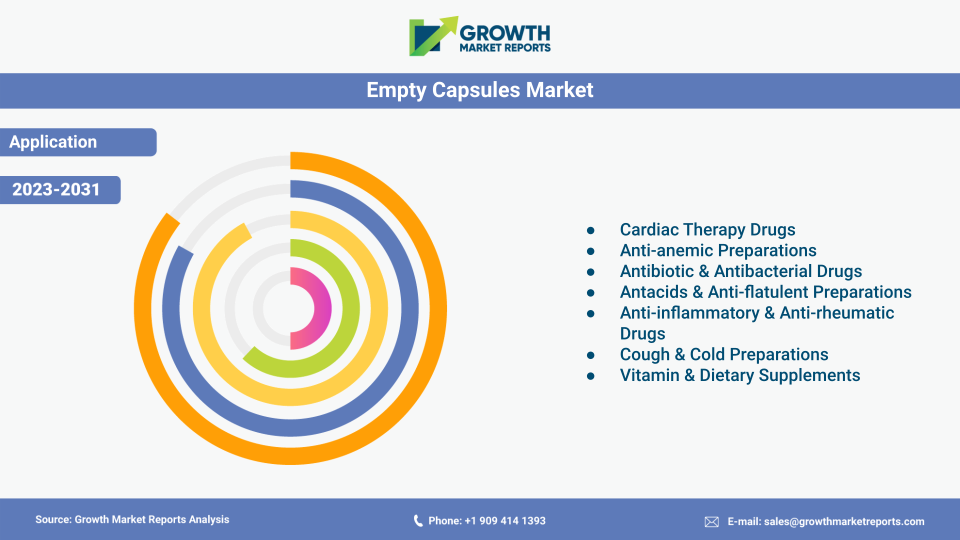
By Application Pharmaceuticals, Nutraceuticals, Cosmetics, Others
By End-User Pharmaceutical Companies, Nutraceutical Companies, Research Laboratories, Others
Regions Covered North America, Europe, APAC, Latin America, MEA
Base Year 2025
Historic Data 2019-2024
Forecast Period 2026-2034
Number of Pages 282
Number of Tables & Figures 380
Customization Available Yes, the report can be customized as per your need.

Raw Material Analysis

The raw material segment of the empty capsules market encompasses a diverse range of sources, including bovine, porcine, fish, hydroxypropyl methylcellulose (HPMC), pullulan, starch, and others. Gelatin, derived primarily from bovine and porcine sources, remains the most widely used raw material due to its excellent film-forming properties, biocompatibility, and cost-effectiveness. Bovine-derived gelatin is particularly favored in regions where religious or cultural restrictions limit the use of porcine products. However, concerns regarding zoonotic diseases and the traceability of animal-derived materials have prompted manufacturers to explore alternative sources such as fish gelatin, which offers similar functional properties with a reduced risk of transmissible diseases.

The rising demand for vegetarian and vegan capsules has propelled the use of plant-based raw materials such as HPMC, pullulan, and starch. HPMC, a cellulose derivative, is renowned for its stability, low moisture content, and compatibility with a wide range of APIs, making it the preferred choice for non-gelatin capsule manufacturing in 2025. Pullulan, a polysaccharide produced through fermentation, is valued for its high transparency, oxygen barrier properties, and suitability for encapsulating sensitive compounds. Starch-based capsules, while less common, are gaining traction due to their biodegradability and allergen-free profile, aligning with the growing trend towards sustainable and responsible sourcing in both pharmaceutical and nutraceutical manufacturing.

The selection of raw materials is heavily influenced by regulatory requirements, end-user preferences, and the specific characteristics of the encapsulated product. Pharmaceutical companies often prioritize raw materials that are pharmacopeia-compliant, non-allergenic, and free from genetically modified organisms (GMOs). Nutraceutical and cosmetic manufacturers may favor materials that are certified organic, kosher, or halal, reflecting the diverse needs of global consumers. The ongoing innovation in raw material sourcing and processing is expected to drive further differentiation in the empty capsules market, enabling manufacturers to offer highly customized solutions through 2034.

Supply chain dynamics and cost considerations also play a pivotal role in the raw material segment. The price volatility of animal-derived gelatin, coupled with increasing scrutiny of supply chain transparency, has prompted many manufacturers to invest in alternative raw material development. The adoption of advanced extraction and purification technologies has improved the quality and consistency of both animal- and plant-based raw materials, ensuring that capsules meet stringent quality standards across regulated markets. As the market continues to evolve, the raw material segment will remain a critical determinant of product performance, regulatory compliance, and overall competitiveness.

Application Analysis

The application segment of the empty capsules market is broadly classified into pharmaceuticals, nutraceuticals, cosmetics, and others, reflecting the versatile utility of capsules across multiple industries. The pharmaceutical sector dominates the application landscape, accounting for the largest share of the market in 2025. Capsules are the preferred dosage form for a wide range of prescription and over-the-counter medications, owing to their ease of administration, precise dosing, and ability to mask unpleasant tastes or odors. The growing prevalence of chronic diseases, coupled with the increasing adoption of combination therapies and controlled-release formulations, has further fueled demand for empty capsules in pharmaceutical applications.

The nutraceutical industry represents the fastest-growing application segment, driven by the global shift towards preventive healthcare and wellness. Consumers are increasingly seeking dietary supplements, herbal extracts, and functional foods to support their health and well-being, leading to a surge in demand for empty capsules as convenient and effective delivery vehicles. The ability to encapsulate a wide variety of bioactive compounds, including vitamins, minerals, amino acids, and probiotics, has positioned empty capsules as a cornerstone of the nutraceutical market. Manufacturers are responding to this trend by developing capsules with enhanced stability, bioavailability, and targeted release properties, tailored specifically to the unique needs of the nutraceutical sector. The growing category of softgel capsule formulations for oil-based nutraceuticals further illustrates how diverse encapsulation technologies are collectively expanding the total addressable market.

Cosmetic applications of empty capsules, while still a niche segment, are gaining traction as manufacturers explore novel delivery systems for skincare and personal care products. Encapsulated ingredients offer improved protection against oxidation, enhanced stability, and controlled release, making them ideal for formulating high-performance cosmetic products. The trend towards personalized beauty and the growing demand for clean-label and natural ingredients are expected to drive further innovation in this segment through 2034. Additionally, the use of empty capsules in veterinary medicine underscores the versatility of capsule technology, with flavored capsule shells for veterinary use representing a specialized and growing niche that leverages core encapsulation capabilities.

The application segment is characterized by a high degree of innovation and customization, as manufacturers seek to address the evolving needs of end-users. The integration of advanced encapsulation technologies, such as microencapsulation and nanoencapsulation, has expanded the functional capabilities of empty capsules, enabling the delivery of complex and sensitive compounds. Regulatory considerations, including compliance with pharmacopeial standards and labeling requirements, play a critical role in shaping the application landscape, particularly in highly regulated sectors. As the market continues to evolve, the application segment will remain a key driver of growth and differentiation in the global empty capsules industry.

End-User Analysis

The end-user segment of the empty capsules market includes pharmaceutical companies, nutraceutical companies, research laboratories, and others, each with distinct requirements and purchasing patterns. Pharmaceutical companies represent the largest end-user group in 2025, driven by the extensive use of capsules in both branded and generic drug formulations. The ability to produce customized capsule sizes, colors, and release profiles has made empty capsules an indispensable component of pharmaceutical manufacturing worldwide. The increasing focus on patient-centric drug delivery, coupled with the rise of specialty and orphan drugs, has further elevated the strategic importance of capsules across the pharmaceutical sector.

Nutraceutical companies constitute the second-largest end-user segment, reflecting the rapid expansion of the dietary supplement and functional food markets. The demand for empty capsules in this segment is fueled by growing consumer preference for natural, plant-based, and allergen-free products. Nutraceutical manufacturers are increasingly seeking capsules that offer enhanced bioavailability, stability, and targeted delivery, driving continuous innovation in capsule design and formulation. The trend towards personalized nutrition and the proliferation of e-commerce channels have also contributed to the growth of this end-user segment, as consumers seek convenient and effective health and wellness solutions through increasingly direct purchasing pathways.

Research laboratories, including academic institutions and contract research organizations (CROs), represent a critical end-user group for the empty capsules market. These entities utilize empty capsules for a wide range of applications, including preclinical studies, clinical trials, and formulation development. The ability to rapidly prototype and test new drug candidates, combined with the flexibility to encapsulate diverse APIs and excipients, has made empty capsules an essential tool for pharmaceutical research and innovation. The increasing emphasis on translational research and the growing pipeline of novel therapeutics are expected to sustain demand from research laboratories over the 2026-2034 forecast period.

Other end-users, such as veterinary medicine manufacturers and industrial product formulators, also contribute to overall demand for empty capsules. The versatility of capsule technology, coupled with ongoing advancements in manufacturing processes and raw material sourcing, has enabled manufacturers to serve a broad spectrum of end-user needs. As the market continues to evolve, the end-user segment will play a pivotal role in shaping product development priorities, regulatory compliance strategies, and market differentiation, ensuring that empty capsules remain at the forefront of drug and supplement delivery innovation.

Opportunities & Threats

The empty capsules market presents significant opportunities for growth, particularly in the areas of technological innovation and product diversification. The development of advanced capsule technologies, such as enteric-coated, sustained-release, and capsule-in-capsule systems, offers manufacturers the ability to address complex drug delivery challenges and meet the evolving needs of pharmaceutical and nutraceutical companies. The increasing adoption of personalized medicine and the rise of biologics and specialty drugs are expected to drive demand for customized capsule solutions, creating new avenues for market expansion through 2034. Additionally, the growing trend towards clean-label, allergen-free, and plant-based products presents a substantial opportunity for manufacturers to differentiate their offerings and capture a larger share of the rapidly expanding nutraceutical and cosmetics markets globally.

Geographic expansion and strategic partnerships represent another key opportunity for market participants. The rapid growth of the pharmaceutical and nutraceutical industries in emerging markets, particularly in Asia Pacific and Latin America, offers significant potential for market penetration and revenue growth. Manufacturers can leverage collaborations with local distributors, contract manufacturers, and research organizations to enhance their market presence and address region-specific regulatory and consumer preferences. The ongoing digital transformation of the healthcare sector, including the adoption of e-commerce and direct-to-consumer sales channels, also presents new opportunities for market players to reach broader audiences and streamline their supply chain operations.

Despite the favorable growth outlook, the empty capsules market faces several restraining factors that could impede its expansion. One of the primary challenges is the volatility of raw material prices, particularly for animal-derived gelatin, which can impact production costs and profit margins. Regulatory uncertainties and stringent requirements for product quality, safety, and traceability pose additional hurdles for manufacturers, particularly in highly regulated markets such as the United States and Europe. The risk of contamination, cross-reactivity, and allergenicity associated with certain raw materials also necessitates rigorous quality control measures, increasing operational complexity and compliance costs. Manufacturers will need to navigate these challenges while maintaining a focus on innovation, sustainability, and regulatory compliance to sustain long-term growth through 2034.

Regional Outlook

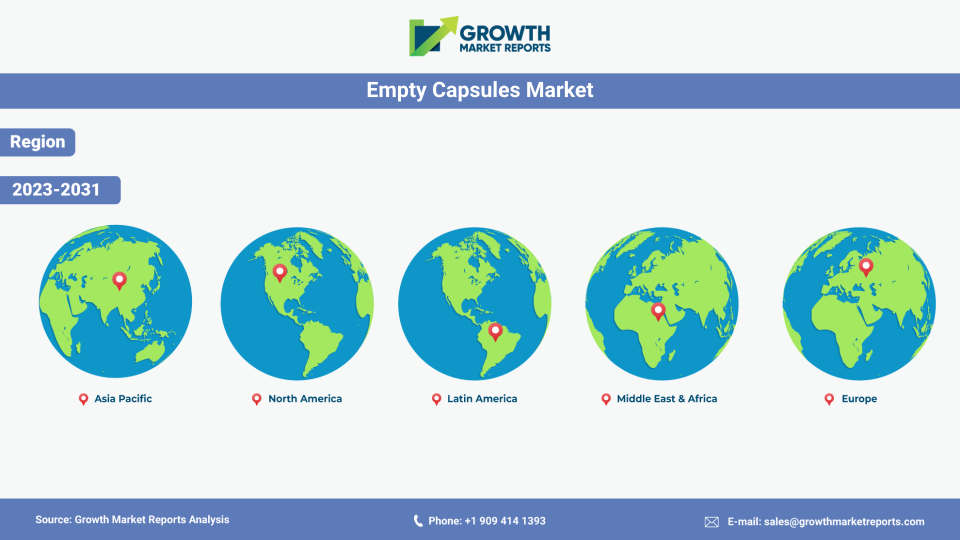
The regional landscape of the empty capsules market is characterized by significant disparities in market size, growth rates, and end-user preferences. North America remains the largest regional market, accounting for approximately USD 1.22 billion in 2025, driven by a well-established pharmaceutical industry, high healthcare expenditure, and favorable regulatory frameworks. The United States, in particular, is a major contributor to regional growth, supported by a robust pipeline of new drug approvals and the widespread adoption of dietary supplements. The presence of leading capsule manufacturers and contract manufacturing organizations (CMOs) further strengthens the region's competitive position, enabling rapid innovation and product development through the forecast horizon.

Empty Capsules Market Regional Share 2025

Europe is the second-largest regional market, with a market size of approximately USD 0.86 billion in 2025. The region benefits from a strong pharmaceutical and nutraceutical manufacturing base, coupled with high consumer awareness regarding health and wellness. Regulatory support for plant-based and allergen-free products has fueled the adoption of non-gelatin capsules, particularly in countries such as Germany, France, and the United Kingdom. The growing emphasis on sustainable packaging and clean-label ingredients is expected to drive further innovation and market growth in Europe over the forecast period. The region is anticipated to grow at a steady CAGR of 6.8% through 2034, supported by ongoing investments in research and development and expanding e-commerce distribution channels.

The Asia Pacific region is the fastest-growing market for empty capsules, with a market size of approximately USD 0.71 billion in 2025 and a projected CAGR of 9.2% through 2034. The rapid expansion of the pharmaceutical and nutraceutical industries in countries such as China, India, and Japan, combined with rising healthcare expenditure and increasing consumer awareness, has created a fertile environment for sustained market growth. Local manufacturers are investing in advanced manufacturing technologies and expanding their product portfolios to cater to the diverse needs of regional consumers. The growing prevalence of chronic diseases, coupled with government initiatives to improve healthcare access and quality, is expected to maintain high growth rates in Asia Pacific through the 2026-2034 forecast period. Latin America and the Middle East & Africa collectively account for the remaining market share, with Latin America benefiting from expanding domestic pharmaceutical production and the Middle East & Africa region driven by increasing healthcare infrastructure investment and growing awareness of nutraceutical benefits.

Competitor Outlook

The competitive landscape of the empty capsules market is highly dynamic, characterized by intense rivalry among leading global and regional players. Market participants are focused on expanding their product portfolios, enhancing manufacturing capabilities, and investing in research and development to maintain a competitive edge. Strategic initiatives such as mergers and acquisitions, partnerships, and collaborations with pharmaceutical and nutraceutical companies are increasingly common, enabling manufacturers to broaden their market reach and leverage synergies in product development and distribution. The emphasis on quality, regulatory compliance, and sustainability has prompted companies to adopt advanced manufacturing technologies and implement rigorous quality control measures, ensuring that their products meet the highest standards of safety and efficacy.

Innovation is a key differentiator in the empty capsules market, with manufacturers competing on the basis of product performance, customization, and value-added features. The development of specialized capsules, such as enteric-coated, sustained-release, and capsule-in-capsule systems, has enabled companies to address complex drug delivery challenges and cater to the evolving needs of pharmaceutical and nutraceutical clients. The shift towards plant-based and allergen-free capsules has also spurred innovation in raw material sourcing and processing, with companies investing in the development of HPMC, pullulan, and starch-based materials to capture a larger share of the growing vegetarian and vegan consumer markets worldwide.

The global nature of the empty capsules market necessitates a strong focus on supply chain management, regulatory compliance, and customer service. Leading companies have established extensive distribution networks and manufacturing facilities in key markets, enabling them to respond quickly to changing customer demands and regulatory requirements. The increasing adoption of digital technologies, including automation, data analytics, and e-commerce platforms, has further enhanced operational efficiency and customer engagement, positioning market leaders for sustained growth in an increasingly competitive environment through 2034.

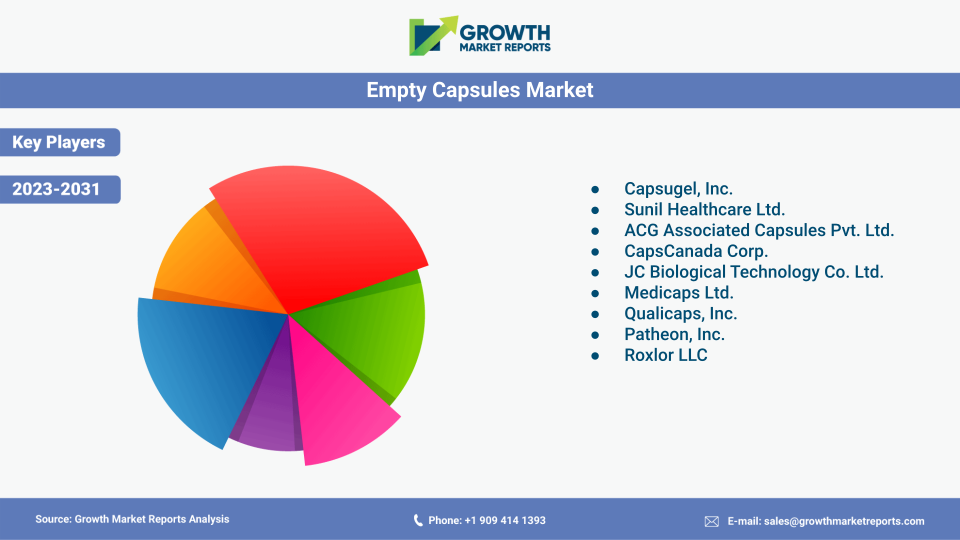
Major players in the empty capsules market include Capsugel (a Lonza company), ACG Worldwide, Qualicaps (a Mitsubishi Chemical Group subsidiary), Suheung Co., Ltd., and CapsCanada Corporation. Capsugel, now fully integrated within Lonza, is a global leader in capsule manufacturing, renowned for its extensive product portfolio, advanced R&D capabilities, and commitment to quality and innovation. ACG Worldwide is another prominent player, offering a wide range of gelatin and non-gelatin capsules as well as integrated solutions for capsule filling and packaging. Qualicaps specializes in high-quality capsules for pharmaceutical and nutraceutical applications, with a strong focus on sustainability and regulatory compliance across multiple markets. Suheung Co., Ltd. and CapsCanada are notable regional players with significant market presence in Asia and North America, respectively, known for their emphasis on product customization, customer service, and technological innovation.

These companies are continuously investing in capacity expansion, product development, and strategic partnerships to strengthen their market positions and capitalize on emerging growth opportunities through 2034. Additional players such as Sunil Healthcare Limited, Medi-Caps Ltd., Erawat Pharma Limited, HealthCaps India Ltd., Natural Capsules Limited, Pharmatrans Sanaq AG, Hunan Er-Kang Pharmaceutical Co., Ltd., and Farmacapsulas S.A. contribute meaningfully to the global supply base, particularly in their respective regional markets. The competitive landscape is expected to remain dynamic, with ongoing consolidation and the entry of specialized new players driving continued innovation and value creation in the empty capsules market.

Segments

The Empty Capsules market has been segmented on the basis of

Product Type

  • Gelatin Capsules
  • Non-Gelatin Capsules

Raw Material

  • Bovine
  • Porcine
  • Fish
  • Hydroxypropyl Methylcellulose (HPMC)
  • Pullulan
  • Starch
  • Others

Application

  • Pharmaceuticals
  • Nutraceuticals
  • Cosmetics
  • Others

End-User

  • Pharmaceutical Companies
  • Nutraceutical Companies
  • Research Laboratories
  • Others

Frequently Asked Questions

The market faces several challenges, including volatility in animal-derived gelatin prices, stringent and evolving regulatory requirements across multiple jurisdictions, and the high cost of transitioning to plant-based raw materials. Supply chain disruptions, quality control complexities for diverse raw material sources, and the risk of cross-contamination or allergenicity present ongoing operational hurdles. Additionally, intense price competition, particularly in price-sensitive emerging markets, can pressure manufacturer margins. Ensuring consistent product quality while scaling up production of newer non-gelatin capsule types remains a technical and financial challenge for many mid-sized manufacturers.

Consumer preferences are shifting decisively toward plant-based, vegan, and allergen-free capsules, particularly in developed markets where dietary transparency and clean-label standards are paramount. The growing Muslim and Jewish populations worldwide have also elevated demand for halal and kosher-certified capsules. Personalized nutrition and precision medicine trends are driving interest in customized capsule solutions. Sustainability concerns are pushing manufacturers toward biodegradable and environmentally friendly raw materials. E-commerce growth is enabling direct-to-consumer nutraceutical brands to reach broader audiences, further boosting capsule demand across diverse demographic segments.

Leading companies include Capsugel (a Lonza company), ACG Worldwide, Qualicaps (a Mitsubishi Chemical Group subsidiary), Suheung Co., Ltd., CapsCanada Corporation, Sunil Healthcare Limited, Medi-Caps Ltd., Erawat Pharma Limited, HealthCaps India Ltd., Natural Capsules Limited, Pharmatrans Sanaq AG, Hunan Er-Kang Pharmaceutical Co., Ltd., and Farmacapsulas S.A. These companies compete on product quality, customization capabilities, regulatory compliance, and geographic reach. Many are actively investing in plant-based capsule development and capacity expansion to capture growth in emerging markets.

North America leads the global empty capsules market with an estimated share of approximately 37.8% in 2025, driven by a mature pharmaceutical industry, high healthcare expenditure, and strong nutraceutical consumption. Europe holds the second-largest share at around 26.5%, supported by robust regulatory frameworks and growing demand for plant-based capsules. Asia Pacific, accounting for roughly 22.1% in 2025, is the fastest-growing region with a projected CAGR of 9.2% through 2034, fueled by rapid pharmaceutical sector expansion in China, India, and Japan, rising disposable incomes, and increasing health awareness.

Innovations such as capsule-in-capsule technology, liquid-filled hard capsules, enteric-coated variants, and sustained-release mechanisms have significantly expanded the functional scope of empty capsules. Advances in capsule filling equipment, including high-speed automated systems with real-time monitoring, have improved manufacturing efficiency and dosage precision. The integration of microencapsulation and nanoencapsulation techniques is enabling the delivery of complex biologics and sensitive bioactives. Digital manufacturing technologies and data analytics are further enhancing quality control and supply chain transparency, positioning innovative manufacturers for competitive advantage through 2034.

The primary raw materials are bovine gelatin, porcine gelatin, and fish gelatin for traditional capsules, while HPMC, pullulan, and starch serve as the main plant-based alternatives. HPMC is the leading non-gelatin material due to its low moisture content and broad API compatibility. Pullulan is prized for its oxygen barrier properties and suitability for sensitive compounds. Starch-based capsules are gaining ground owing to their biodegradability and allergen-free profile. The selection of raw material is guided by regulatory requirements, end-user dietary preferences, and the physicochemical properties of the encapsulated ingredient.

Empty capsules are utilized across pharmaceuticals, nutraceuticals, cosmetics, and veterinary medicine. Pharmaceutical companies use them for prescription and over-the-counter drug formulations. Nutraceutical companies rely on capsules to deliver vitamins, minerals, herbal extracts, and probiotics. Cosmetic manufacturers are increasingly adopting encapsulation technology for skincare actives. Veterinary medicine and industrial product formulators represent smaller but growing application segments, reflecting the broad versatility of capsule technology.

Empty capsules are primarily classified into gelatin capsules and non-gelatin capsules. Gelatin capsules, derived from bovine or porcine sources, are cost-effective, offer rapid dissolution, and remain the most widely used option in pharmaceutical formulations. Non-gelatin capsules, made from plant-based materials such as HPMC, pullulan, and starch, cater to vegetarians, vegans, and individuals with dietary or religious restrictions. Non-gelatin capsules also provide superior stability for hygroscopic and moisture-sensitive ingredients, making them increasingly preferred in nutraceutical and cosmetic applications.

Key growth drivers include the increasing prevalence of chronic diseases that require long-term oral medication, surging global demand for dietary supplements and nutraceuticals, technological advancements in capsule design such as enteric-coated and controlled-release variants, and the rising preference for vegan and allergen-free capsule options. Favorable regulatory frameworks in North America, Europe, and Asia Pacific are also supporting market expansion through 2034.

The global empty capsules market reached USD 3.23 billion in 2025 and is forecast to grow at a CAGR of 7.4% from 2026 to 2034, reaching approximately USD 6.12 billion by 2034. This growth is underpinned by rising demand for oral drug delivery systems, expanding nutraceutical consumption, and a sustained shift toward plant-based capsule formulations across major global markets.

Table Of Content

Chapter 1 Executive Summary
Chapter 2 Assumptions and Acronyms Used
Chapter 3 Research Methodology
Chapter 4 Empty Capsules Market Overview
   4.1 Introduction
      4.1.1 Market Taxonomy
      4.1.2 Market Definition
      4.1.3 Macro-Economic Factors Impacting the Market Growth
   4.2 Empty Capsules Market Dynamics
      4.2.1 Market Drivers
      4.2.2 Market Restraints
      4.2.3 Market Opportunity
   4.3 Empty Capsules Market - Supply Chain Analysis
      4.3.1 List of Key Suppliers
      4.3.2 List of Key Distributors
      4.3.3 List of Key Consumers
   4.4 Key Forces Shaping the Empty Capsules Market
      4.4.1 Bargaining Power of Suppliers
      4.4.2 Bargaining Power of Buyers
      4.4.3 Threat of Substitution
      4.4.4 Threat of New Entrants
      4.4.5 Competitive Rivalry
   4.5 Global Empty Capsules Market Size & Forecast, 2023-2032
      4.5.1 Empty Capsules Market Size and Y-o-Y Growth
      4.5.2 Empty Capsules Market Absolute $ Opportunity

Chapter 5 Global Empty Capsules Market Analysis and Forecast By Product Type
   5.1 Introduction
      5.1.1 Key Market Trends & Growth Opportunities By Product Type
      5.1.2 Basis Point Share (BPS) Analysis By Product Type
      5.1.3 Absolute $ Opportunity Assessment By Product Type
   5.2 Empty Capsules Market Size Forecast By Product Type
      5.2.1 Gelatin Capsules
      5.2.2 Non-Gelatin Capsules
   5.3 Market Attractiveness Analysis By Product Type

Chapter 6 Global Empty Capsules Market Analysis and Forecast By Raw Material
   6.1 Introduction
      6.1.1 Key Market Trends & Growth Opportunities By Raw Material
      6.1.2 Basis Point Share (BPS) Analysis By Raw Material
      6.1.3 Absolute $ Opportunity Assessment By Raw Material
   6.2 Empty Capsules Market Size Forecast By Raw Material
      6.2.1 Bovine
      6.2.2 Porcine
      6.2.3 Fish
      6.2.4 Hydroxypropyl Methylcellulose (HPMC)
      6.2.5 Pullulan
      6.2.6 Starch
      6.2.7 Others
   6.3 Market Attractiveness Analysis By Raw Material

Chapter 7 Global Empty Capsules Market Analysis and Forecast By Application
   7.1 Introduction
      7.1.1 Key Market Trends & Growth Opportunities By Application
      7.1.2 Basis Point Share (BPS) Analysis By Application
      7.1.3 Absolute $ Opportunity Assessment By Application
   7.2 Empty Capsules Market Size Forecast By Application
      7.2.1 Pharmaceuticals
      7.2.2 Nutraceuticals
      7.2.3 Cosmetics
      7.2.4 Others
   7.3 Market Attractiveness Analysis By Application

Chapter 8 Global Empty Capsules Market Analysis and Forecast By End-User
   8.1 Introduction
      8.1.1 Key Market Trends & Growth Opportunities By End-User
      8.1.2 Basis Point Share (BPS) Analysis By End-User
      8.1.3 Absolute $ Opportunity Assessment By End-User
   8.2 Empty Capsules Market Size Forecast By End-User
      8.2.1 Pharmaceutical Companies
      8.2.2 Nutraceutical Companies
      8.2.3 Research Laboratories
      8.2.4 Others
   8.3 Market Attractiveness Analysis By End-User

Chapter 9 Global Empty Capsules Market Analysis and Forecast by Region
   9.1 Introduction
      9.1.1 Key Market Trends & Growth Opportunities By Region
      9.1.2 Basis Point Share (BPS) Analysis By Region
      9.1.3 Absolute $ Opportunity Assessment By Region
   9.2 Empty Capsules Market Size Forecast By Region
      9.2.1 North America
      9.2.2 Europe
      9.2.3 Asia Pacific
      9.2.4 Latin America
      9.2.5 Middle East & Africa (MEA)
   9.3 Market Attractiveness Analysis By Region

Chapter 10 Coronavirus Disease (COVID-19) Impact 
   10.1 Introduction 
   10.2 Current & Future Impact Analysis 
   10.3 Economic Impact Analysis 
   10.4 Government Policies 
   10.5 Investment Scenario

Chapter 11 North America Empty Capsules Analysis and Forecast
   11.1 Introduction
   11.2 North America Empty Capsules Market Size Forecast by Country
      11.2.1 U.S.
      11.2.2 Canada
   11.3 Basis Point Share (BPS) Analysis by Country
   11.4 Absolute $ Opportunity Assessment by Country
   11.5 Market Attractiveness Analysis by Country
   11.6 North America Empty Capsules Market Size Forecast By Product Type
      11.6.1 Gelatin Capsules
      11.6.2 Non-Gelatin Capsules
   11.7 Basis Point Share (BPS) Analysis By Product Type 
   11.8 Absolute $ Opportunity Assessment By Product Type 
   11.9 Market Attractiveness Analysis By Product Type
   11.10 North America Empty Capsules Market Size Forecast By Raw Material
      11.10.1 Bovine
      11.10.2 Porcine
      11.10.3 Fish
      11.10.4 Hydroxypropyl Methylcellulose (HPMC)
      11.10.5 Pullulan
      11.10.6 Starch
      11.10.7 Others
   11.11 Basis Point Share (BPS) Analysis By Raw Material 
   11.12 Absolute $ Opportunity Assessment By Raw Material 
   11.13 Market Attractiveness Analysis By Raw Material
   11.14 North America Empty Capsules Market Size Forecast By Application
      11.14.1 Pharmaceuticals
      11.14.2 Nutraceuticals
      11.14.3 Cosmetics
      11.14.4 Others
   11.15 Basis Point Share (BPS) Analysis By Application 
   11.16 Absolute $ Opportunity Assessment By Application 
   11.17 Market Attractiveness Analysis By Application
   11.18 North America Empty Capsules Market Size Forecast By End-User
      11.18.1 Pharmaceutical Companies
      11.18.2 Nutraceutical Companies
      11.18.3 Research Laboratories
      11.18.4 Others
   11.19 Basis Point Share (BPS) Analysis By End-User 
   11.20 Absolute $ Opportunity Assessment By End-User 
   11.21 Market Attractiveness Analysis By End-User

Chapter 12 Europe Empty Capsules Analysis and Forecast
   12.1 Introduction
   12.2 Europe Empty Capsules Market Size Forecast by Country
      12.2.1 Germany
      12.2.2 France
      12.2.3 Italy
      12.2.4 U.K.
      12.2.5 Spain
      12.2.6 Russia
      12.2.7 Rest of Europe
   12.3 Basis Point Share (BPS) Analysis by Country
   12.4 Absolute $ Opportunity Assessment by Country
   12.5 Market Attractiveness Analysis by Country
   12.6 Europe Empty Capsules Market Size Forecast By Product Type
      12.6.1 Gelatin Capsules
      12.6.2 Non-Gelatin Capsules
   12.7 Basis Point Share (BPS) Analysis By Product Type 
   12.8 Absolute $ Opportunity Assessment By Product Type 
   12.9 Market Attractiveness Analysis By Product Type
   12.10 Europe Empty Capsules Market Size Forecast By Raw Material
      12.10.1 Bovine
      12.10.2 Porcine
      12.10.3 Fish
      12.10.4 Hydroxypropyl Methylcellulose (HPMC)
      12.10.5 Pullulan
      12.10.6 Starch
      12.10.7 Others
   12.11 Basis Point Share (BPS) Analysis By Raw Material 
   12.12 Absolute $ Opportunity Assessment By Raw Material 
   12.13 Market Attractiveness Analysis By Raw Material
   12.14 Europe Empty Capsules Market Size Forecast By Application
      12.14.1 Pharmaceuticals
      12.14.2 Nutraceuticals
      12.14.3 Cosmetics
      12.14.4 Others
   12.15 Basis Point Share (BPS) Analysis By Application 
   12.16 Absolute $ Opportunity Assessment By Application 
   12.17 Market Attractiveness Analysis By Application
   12.18 Europe Empty Capsules Market Size Forecast By End-User
      12.18.1 Pharmaceutical Companies
      12.18.2 Nutraceutical Companies
      12.18.3 Research Laboratories
      12.18.4 Others
   12.19 Basis Point Share (BPS) Analysis By End-User 
   12.20 Absolute $ Opportunity Assessment By End-User 
   12.21 Market Attractiveness Analysis By End-User

Chapter 13 Asia Pacific Empty Capsules Analysis and Forecast
   13.1 Introduction
   13.2 Asia Pacific Empty Capsules Market Size Forecast by Country
      13.2.1 China
      13.2.2 Japan
      13.2.3 South Korea
      13.2.4 India
      13.2.5 Australia
      13.2.6 South East Asia (SEA)
      13.2.7 Rest of Asia Pacific (APAC)
   13.3 Basis Point Share (BPS) Analysis by Country
   13.4 Absolute $ Opportunity Assessment by Country
   13.5 Market Attractiveness Analysis by Country
   13.6 Asia Pacific Empty Capsules Market Size Forecast By Product Type
      13.6.1 Gelatin Capsules
      13.6.2 Non-Gelatin Capsules
   13.7 Basis Point Share (BPS) Analysis By Product Type 
   13.8 Absolute $ Opportunity Assessment By Product Type 
   13.9 Market Attractiveness Analysis By Product Type
   13.10 Asia Pacific Empty Capsules Market Size Forecast By Raw Material
      13.10.1 Bovine
      13.10.2 Porcine
      13.10.3 Fish
      13.10.4 Hydroxypropyl Methylcellulose (HPMC)
      13.10.5 Pullulan
      13.10.6 Starch
      13.10.7 Others
   13.11 Basis Point Share (BPS) Analysis By Raw Material 
   13.12 Absolute $ Opportunity Assessment By Raw Material 
   13.13 Market Attractiveness Analysis By Raw Material
   13.14 Asia Pacific Empty Capsules Market Size Forecast By Application
      13.14.1 Pharmaceuticals
      13.14.2 Nutraceuticals
      13.14.3 Cosmetics
      13.14.4 Others
   13.15 Basis Point Share (BPS) Analysis By Application 
   13.16 Absolute $ Opportunity Assessment By Application 
   13.17 Market Attractiveness Analysis By Application
   13.18 Asia Pacific Empty Capsules Market Size Forecast By End-User
      13.18.1 Pharmaceutical Companies
      13.18.2 Nutraceutical Companies
      13.18.3 Research Laboratories
      13.18.4 Others
   13.19 Basis Point Share (BPS) Analysis By End-User 
   13.20 Absolute $ Opportunity Assessment By End-User 
   13.21 Market Attractiveness Analysis By End-User

Chapter 14 Latin America Empty Capsules Analysis and Forecast
   14.1 Introduction
   14.2 Latin America Empty Capsules Market Size Forecast by Country
      14.2.1 Brazil
      14.2.2 Mexico
      14.2.3 Rest of Latin America (LATAM)
   14.3 Basis Point Share (BPS) Analysis by Country
   14.4 Absolute $ Opportunity Assessment by Country
   14.5 Market Attractiveness Analysis by Country
   14.6 Latin America Empty Capsules Market Size Forecast By Product Type
      14.6.1 Gelatin Capsules
      14.6.2 Non-Gelatin Capsules
   14.7 Basis Point Share (BPS) Analysis By Product Type 
   14.8 Absolute $ Opportunity Assessment By Product Type 
   14.9 Market Attractiveness Analysis By Product Type
   14.10 Latin America Empty Capsules Market Size Forecast By Raw Material
      14.10.1 Bovine
      14.10.2 Porcine
      14.10.3 Fish
      14.10.4 Hydroxypropyl Methylcellulose (HPMC)
      14.10.5 Pullulan
      14.10.6 Starch
      14.10.7 Others
   14.11 Basis Point Share (BPS) Analysis By Raw Material 
   14.12 Absolute $ Opportunity Assessment By Raw Material 
   14.13 Market Attractiveness Analysis By Raw Material
   14.14 Latin America Empty Capsules Market Size Forecast By Application
      14.14.1 Pharmaceuticals
      14.14.2 Nutraceuticals
      14.14.3 Cosmetics
      14.14.4 Others
   14.15 Basis Point Share (BPS) Analysis By Application 
   14.16 Absolute $ Opportunity Assessment By Application 
   14.17 Market Attractiveness Analysis By Application
   14.18 Latin America Empty Capsules Market Size Forecast By End-User
      14.18.1 Pharmaceutical Companies
      14.18.2 Nutraceutical Companies
      14.18.3 Research Laboratories
      14.18.4 Others
   14.19 Basis Point Share (BPS) Analysis By End-User 
   14.20 Absolute $ Opportunity Assessment By End-User 
   14.21 Market Attractiveness Analysis By End-User

Chapter 15 Middle East & Africa (MEA) Empty Capsules Analysis and Forecast
   15.1 Introduction
   15.2 Middle East & Africa (MEA) Empty Capsules Market Size Forecast by Country
      15.2.1 Saudi Arabia
      15.2.2 South Africa
      15.2.3 UAE
      15.2.4 Rest of Middle East & Africa (MEA)
   15.3 Basis Point Share (BPS) Analysis by Country
   15.4 Absolute $ Opportunity Assessment by Country
   15.5 Market Attractiveness Analysis by Country
   15.6 Middle East & Africa (MEA) Empty Capsules Market Size Forecast By Product Type
      15.6.1 Gelatin Capsules
      15.6.2 Non-Gelatin Capsules
   15.7 Basis Point Share (BPS) Analysis By Product Type 
   15.8 Absolute $ Opportunity Assessment By Product Type 
   15.9 Market Attractiveness Analysis By Product Type
   15.10 Middle East & Africa (MEA) Empty Capsules Market Size Forecast By Raw Material
      15.10.1 Bovine
      15.10.2 Porcine
      15.10.3 Fish
      15.10.4 Hydroxypropyl Methylcellulose (HPMC)
      15.10.5 Pullulan
      15.10.6 Starch
      15.10.7 Others
   15.11 Basis Point Share (BPS) Analysis By Raw Material 
   15.12 Absolute $ Opportunity Assessment By Raw Material 
   15.13 Market Attractiveness Analysis By Raw Material
   15.14 Middle East & Africa (MEA) Empty Capsules Market Size Forecast By Application
      15.14.1 Pharmaceuticals
      15.14.2 Nutraceuticals
      15.14.3 Cosmetics
      15.14.4 Others
   15.15 Basis Point Share (BPS) Analysis By Application 
   15.16 Absolute $ Opportunity Assessment By Application 
   15.17 Market Attractiveness Analysis By Application
   15.18 Middle East & Africa (MEA) Empty Capsules Market Size Forecast By End-User
      15.18.1 Pharmaceutical Companies
      15.18.2 Nutraceutical Companies
      15.18.3 Research Laboratories
      15.18.4 Others
   15.19 Basis Point Share (BPS) Analysis By End-User 
   15.20 Absolute $ Opportunity Assessment By End-User 
   15.21 Market Attractiveness Analysis By End-User

Chapter 16 Competition Landscape 
   16.1 Empty Capsules Market: Competitive Dashboard
   16.2 Global Empty Capsules Market: Market Share Analysis, 2023
   16.3 Company Profiles (Details – Overview, Financials, Developments, Strategy) 
      16.3.1 Capsugel (Lonza Group AG)
      16.3.2 ACG Worldwide
      16.3.3 Qualicaps (Mitsubishi Chemical Group)
      16.3.4 Suheung Co., Ltd.
      16.3.5 Sunil Healthcare Limited
      16.3.6 Medi-Caps Ltd.
      16.3.7 Erawat Pharma Limited
      16.3.8 CapsCanada Corporation
      16.3.9 Bright Pharma Caps, Inc.
      16.3.10 HealthCaps India Ltd.
      16.3.11 Natural Capsules Limited
      16.3.12 Pharmatrans Sanaq AG
      16.3.13 Hunan Er-Kang Pharmaceutical Co., Ltd.
      16.3.14 Shanghai Wisdom Star Vegetable Capsule Co., Ltd.
      16.3.15 Farmacapsulas S.A.
      16.3.16 Qingdao Yiqing Biotechnology Co., Ltd.
      16.3.17 SteriCaps
      16.3.18 Snail Pharma Industry Co., Ltd.

Methodology

Our Clients

Honda Motor Co. Ltd.
sinopec
Nestle SA
General Mills
Siemens Healthcare
Deloitte
Dassault Aviation
FedEx Logistics