Segments - by Product Type (Sandwich ELISA Kits, Competitive ELISA Kits, Direct ELISA Kits, Indirect ELISA Kits, Others), by Application (Diagnostics, Research, Drug Development, Others), by End-User (Hospitals & Clinics, Pharmaceutical & Biotechnology Companies, Academic & Research Institutes, Others), by Sample Type (Blood, Urine, Saliva, Others)
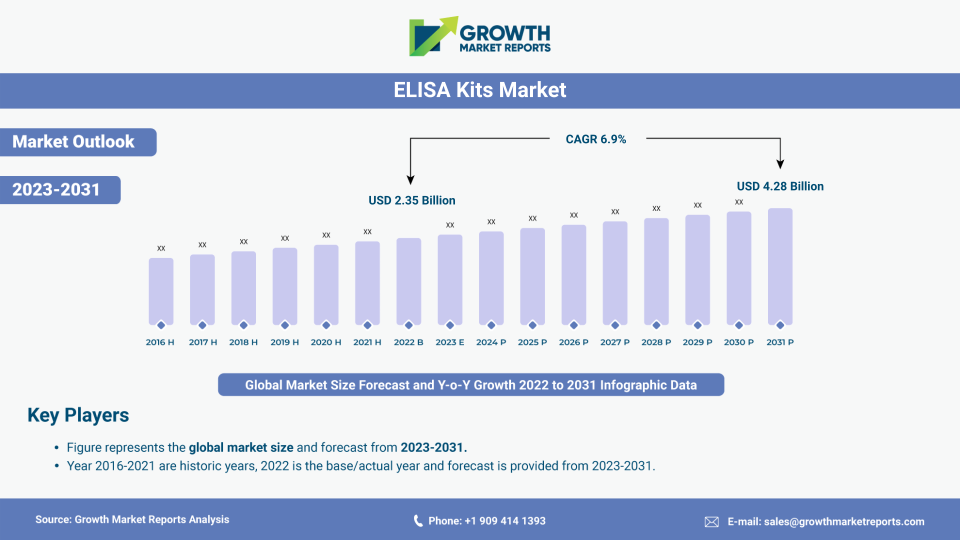
According to our latest research, the global ELISA Kits market size reached USD 2.53 billion in 2024, with a robust compound annual growth rate (CAGR) of 6.8% projected from 2025 to 2033. By the end of the forecast period, the market is expected to attain a value of USD 4.65 billion, reflecting the increasing adoption of ELISA-based diagnostics and research tools across the globe. This growth is primarily driven by the expanding prevalence of chronic and infectious diseases, technological advancements in immunoassay platforms, and the growing emphasis on precision medicine and drug discovery.
One of the key growth factors for the ELISA Kits market is the rising global burden of chronic and infectious diseases such as cancer, HIV, hepatitis, and autoimmune disorders. The increasing incidence of these diseases has spurred a significant demand for reliable, sensitive, and cost-effective diagnostic tools, with ELISA kits emerging as a preferred choice among clinicians and researchers. The ability of ELISA kits to deliver quantitative and qualitative results with high specificity and sensitivity makes them indispensable in clinical laboratories. Furthermore, the ongoing COVID-19 pandemic has further highlighted the critical role of ELISA-based serological tests in epidemiological surveillance and vaccine efficacy studies, thereby expanding the market's reach and application scope.
Another pivotal driver for the ELISA Kits market is the rapid advancements in assay technologies, automation, and reagent development. The integration of high-throughput screening platforms, multiplexing capabilities, and improved detection systems has significantly enhanced the efficiency and accuracy of ELISA assays. These technological innovations have not only streamlined laboratory workflows but have also reduced turnaround times and operational costs, making ELISA kits more accessible to a broader range of end-users. Additionally, the emergence of point-of-care ELISA devices and portable analyzers has facilitated decentralized testing, particularly in resource-limited settings, thereby bridging the gap between laboratory diagnostics and patient care.
The expanding applications of ELISA kits in drug development, biomarker discovery, and academic research further contribute to market growth. Pharmaceutical and biotechnology companies are increasingly utilizing ELISA kits for pharmacokinetic and toxicological studies, as well as for screening potential therapeutic candidates. The versatility of ELISA kits in detecting a wide array of analytes, including proteins, peptides, hormones, and antibodies, has cemented their role in translational research and personalized medicine initiatives. Moreover, academic and research institutes are leveraging ELISA kits to explore disease mechanisms, validate novel biomarkers, and advance scientific understanding in immunology and molecular biology.
From a regional perspective, North America currently dominates the ELISA Kits market, accounting for the largest revenue share in 2024, followed closely by Europe and Asia Pacific. The strong presence of leading diagnostic companies, well-established healthcare infrastructure, and robust research funding in these regions have fueled market expansion. Meanwhile, the Asia Pacific region is anticipated to exhibit the fastest CAGR during the forecast period, driven by rising healthcare expenditures, increasing awareness about early disease detection, and expanding biotechnology sectors in countries such as China, India, and Japan. Emerging markets in Latin America and the Middle East & Africa are also witnessing gradual growth, supported by government initiatives to strengthen laboratory diagnostics and combat infectious disease outbreaks.
The Product Type segment of the ELISA Kits market is broadly categorized into Sandwich ELISA Kits, Competitive ELISA Kits, Direct ELISA Kits, Indirect ELISA Kits, and Others. Among these, Sandwich ELISA Kits held the largest market share in 2024, owing to their superior sensitivity and specificity in detecting low-abundance analytes. These kits are widely utilized in clinical diagnostics and biomarker research, as they can accurately quantify proteins, hormones, and cytokines even at minute concentrations. The dual-antibody approach employed in sandwich ELISA minimizes background noise and cross-reactivity, making it a gold standard for diagnostic applications.
Competitive ELISA Kits are gaining traction, particularly in drug testing, hormone analysis, and small molecule detection. These kits offer a unique advantage in measuring analytes that are too small to be effectively captured by traditional sandwich assays. The competitive format allows for the quantification of antigens in complex biological samples, making them indispensable in toxicology, endocrinology, and food safety testing. Market players are continuously innovating to enhance assay sensitivity and reduce interference, further driving adoption in both clinical and research laboratories.
Direct ELISA Kits, while less commonly used than sandwich or competitive formats, offer a simplified workflow by utilizing a single antibody directly conjugated to an enzyme. This format is particularly advantageous for rapid screening and high-throughput applications where sample throughput is a priority. Although direct ELISA is limited by lower signal amplification and potential cross-reactivity, it remains a cost-effective solution for certain diagnostic and quality control applications, especially in resource-constrained settings.
Indirect ELISA Kits are widely employed for antibody detection, such as in serological testing for infectious diseases and vaccine efficacy studies. The use of a secondary antibody conjugated to an enzyme enhances signal amplification, improving assay sensitivity and versatility. Indirect ELISA is a preferred method for detecting immune responses in both clinical and research contexts, contributing to its sustained demand. The "Others" category encompasses novel and customized ELISA formats developed for niche applications, reflecting the market's adaptability and continuous innovation.
| Attributes | Details |
| Report Title | ELISA Kits Market Research Report 2033 |
| By Product Type | Sandwich ELISA Kits, Competitive ELISA Kits, Direct ELISA Kits, Indirect ELISA Kits, Others |
| By Application | Diagnostics, Research, Drug Development, Others |
| By End-User | Hospitals & Clinics, Pharmaceutical & Biotechnology Companies, Academic & Research Institutes, Others |
| By Sample Type | Blood, Urine, Saliva, Others |
| Regions Covered | North America, Europe, APAC, Latin America, MEA |
| Base Year | 2024 |
| Historic Data | 2018-2023 |
| Forecast Period | 2025-2033 |
| Number of Pages | 259 |
| Number of Tables & Figures | 361 |
| Customization Available | Yes, the report can be customized as per your need. |
The Application segment of the ELISA Kits market is divided into Diagnostics, Research, Drug Development, and Others. Diagnostics remains the dominant application, accounting for the majority of market revenue in 2024. The widespread use of ELISA kits in disease screening, confirmation, and monitoring has solidified their position as a cornerstone of clinical laboratory diagnostics. ELISA-based tests are routinely employed for the detection of infectious diseases, autoimmune disorders, allergies, and cancer biomarkers, enabling timely and accurate patient management.
Research applications represent a rapidly growing segment, driven by the increasing focus on translational and basic research in immunology, oncology, and molecular biology. ELISA kits are indispensable tools for quantifying proteins, cytokines, and antibodies in cell culture supernatants, serum, and tissue samples. Academic and research institutes rely on ELISA assays for validating experimental findings, characterizing disease mechanisms, and identifying novel therapeutic targets. The proliferation of high-throughput and multiplex ELISA platforms has further accelerated research productivity and data generation.
In the realm of Drug Development, ELISA kits play a critical role in pharmacokinetic studies, biomarker validation, and toxicity assessments. Pharmaceutical and biotechnology companies leverage ELISA assays to monitor drug efficacy, evaluate immunogenicity, and ensure product safety throughout the development pipeline. The ability to customize ELISA kits for specific analytes and assay formats has facilitated their integration into preclinical and clinical trial workflows, supporting the advancement of precision medicine and targeted therapies.
The "Others" application category encompasses a diverse range of uses, including food safety testing, environmental monitoring, and veterinary diagnostics. ELISA kits are employed to detect contaminants, allergens, and pathogens in food and environmental samples, safeguarding public health and regulatory compliance. The versatility and adaptability of ELISA technology continue to drive its adoption across new and emerging application areas, contributing to sustained market growth.
The End-User segment of the ELISA Kits market includes Hospitals & Clinics, Pharmaceutical & Biotechnology Companies, Academic & Research Institutes, and Others. Hospitals & Clinics represent the largest end-user group, driven by the high volume of diagnostic testing performed in these settings. The demand for rapid, reliable, and cost-effective assays has made ELISA kits an integral component of routine clinical diagnostics, particularly for infectious diseases, autoimmune disorders, and oncology markers. The increasing emphasis on early disease detection and personalized patient care further bolsters the adoption of ELISA-based testing in hospitals and clinics worldwide.
Pharmaceutical & Biotechnology Companies are significant contributors to market growth, utilizing ELISA kits for drug discovery, development, and quality control. These organizations rely on ELISA assays to screen potential drug candidates, monitor therapeutic efficacy, and assess immunogenicity during preclinical and clinical trials. The customization of ELISA kits for specific research needs and regulatory requirements has facilitated their widespread use in the pharmaceutical and biotechnology sectors, supporting innovation and pipeline development.
Academic & Research Institutes constitute a vital end-user segment, leveraging ELISA kits for a broad spectrum of research applications. From basic immunology studies to advanced biomarker discovery, ELISA assays are essential tools for generating reproducible and quantitative data. The proliferation of research funding, collaborative projects, and interdisciplinary studies has fueled the demand for high-quality ELISA kits in academic settings. Furthermore, the integration of automated and multiplex ELISA platforms has enhanced research throughput and efficiency, driving continued market expansion.
The "Others" category encompasses diagnostic laboratories, contract research organizations (CROs), and government agencies involved in public health surveillance and regulatory testing. These entities utilize ELISA kits for population health monitoring, outbreak investigations, and compliance with food and environmental safety standards. The versatility and scalability of ELISA technology make it well-suited for a wide range of end-user applications, ensuring sustained demand across diverse sectors.
The Sample Type segment in the ELISA Kits market is segmented into Blood, Urine, Saliva, and Others. Blood-based ELISA kits dominate the market, accounting for the largest share in 2024, due to the high reliability and accuracy of blood as a sample matrix. Blood samples, including serum and plasma, are widely used for the detection of antibodies, antigens, and biomarkers associated with infectious diseases, autoimmune disorders, and cancer. The widespread availability of standardized protocols and reference ranges for blood-based assays further supports their dominance in clinical and research applications.
Urine-based ELISA kits are gaining prominence, particularly in the detection of hormones, drugs, and metabolic markers. The non-invasive nature of urine collection, coupled with the ability to monitor analyte levels over time, makes urine-based assays attractive for both clinical diagnostics and drug testing. Advances in assay sensitivity and specificity have expanded the range of analytes that can be reliably detected in urine, driving adoption in endocrinology, toxicology, and occupational health settings.
Saliva-based ELISA kits represent a rapidly growing segment, fueled by the increasing demand for non-invasive and easy-to-collect sample types. Saliva offers a convenient alternative for monitoring hormones, antibodies, and viral antigens, particularly in pediatric, geriatric, and remote populations. The development of highly sensitive and specific saliva-based assays has enabled their use in infectious disease surveillance, stress hormone analysis, and therapeutic drug monitoring. The portability and ease of sample collection associated with saliva-based ELISA kits are expected to drive further market growth.
The "Others" sample type category includes cerebrospinal fluid, tissue homogenates, and environmental samples. These niche applications are critical for specialized research studies, neurological disease diagnostics, and environmental monitoring. The adaptability of ELISA technology to accommodate diverse sample types underscores its versatility and broad utility across clinical, research, and public health domains.
The ELISA Kits market is poised for significant growth opportunities, particularly in emerging markets and decentralized testing environments. The increasing focus on early disease detection, personalized medicine, and preventive healthcare is driving demand for rapid, reliable, and cost-effective diagnostic solutions. Emerging economies in Asia Pacific, Latin America, and Africa present untapped potential, supported by rising healthcare investments, expanding laboratory infrastructure, and growing awareness about the importance of timely diagnostics. The shift towards point-of-care testing and home-based monitoring is further opening new avenues for ELISA kit manufacturers to develop portable, user-friendly, and affordable assay platforms tailored to resource-limited settings.
Technological advancements in assay design, automation, and multiplexing represent another significant opportunity for market players. The integration of artificial intelligence, machine learning, and data analytics into ELISA workflows is enhancing assay performance, data interpretation, and clinical decision-making. The development of multiplex ELISA platforms capable of simultaneously detecting multiple analytes from a single sample is streamlining laboratory operations and reducing costs. These innovations are expanding the application scope of ELISA kits beyond traditional diagnostics, enabling their use in precision medicine, biomarker discovery, and therapeutic monitoring.
Despite the promising growth prospects, the ELISA Kits market faces certain restraining factors that could impede its expansion. One of the primary challenges is the increasing competition from alternative immunoassay technologies, such as chemiluminescent immunoassays (CLIA), lateral flow assays, and next-generation sequencing-based diagnostics. These technologies offer advantages in terms of sensitivity, speed, and multiplexing capabilities, posing a threat to the market share of traditional ELISA kits. Additionally, stringent regulatory requirements, quality control challenges, and the need for skilled laboratory personnel may hinder market adoption, particularly in low-resource settings.
North America remains the largest regional market for ELISA Kits, accounting for USD 1.05 billion in revenue in 2024. The region's dominance is attributed to the presence of leading diagnostic companies, advanced healthcare infrastructure, and robust research funding. The United States, in particular, is a major contributor, driven by high disease prevalence, widespread adoption of advanced diagnostics, and favorable reimbursement policies. Canada also plays a significant role, supported by government initiatives to enhance laboratory capacity and disease surveillance.
Europe is the second-largest market, with a market size of USD 690 million in 2024. The region benefits from a strong network of clinical laboratories, research institutions, and pharmaceutical companies. Countries such as Germany, the United Kingdom, and France are at the forefront of diagnostic innovation, supported by public and private investments in healthcare and research. The increasing focus on personalized medicine, early disease detection, and regulatory harmonization is further driving market growth in Europe. The region is projected to witness a steady CAGR of 6.3% during the forecast period.
The Asia Pacific region is emerging as the fastest-growing market, with a revenue of USD 480 million in 2024 and a projected CAGR of 8.1% from 2025 to 2033. Rapid urbanization, rising healthcare expenditures, and expanding biotechnology sectors in countries such as China, India, and Japan are fueling market expansion. Government initiatives to strengthen laboratory diagnostics, combat infectious disease outbreaks, and improve healthcare access are further supporting growth. Latin America and the Middle East & Africa collectively accounted for USD 310 million in market revenue in 2024, with gradual growth driven by increasing investments in healthcare infrastructure and public health initiatives.
The competitive landscape of the ELISA Kits market is characterized by the presence of several global and regional players, each striving to enhance their market position through product innovation, strategic partnerships, and geographic expansion. Leading companies are focusing on developing high-sensitivity and high-specificity ELISA kits tailored to a wide range of applications, including diagnostics, research, and drug development. The integration of automation, multiplexing capabilities, and digital data management solutions is enabling market leaders to differentiate their offerings and cater to the evolving needs of end-users.
Mergers and acquisitions, collaborations, and licensing agreements are common strategies employed by major players to expand their product portfolios and strengthen their global footprint. Companies are also investing in research and development to introduce novel assay formats, improve assay performance, and address emerging healthcare challenges. The growing emphasis on regulatory compliance, quality assurance, and customer support is further shaping the competitive dynamics of the market, as manufacturers seek to build trust and loyalty among end-users.
The market is witnessing increased competition from new entrants and regional players, particularly in emerging economies. These companies are leveraging cost-effective manufacturing processes, local distribution networks, and customized product offerings to capture market share. However, established players maintain a competitive edge through their brand reputation, extensive product portfolios, and global distribution capabilities. The ability to rapidly respond to changing market demands, regulatory requirements, and technological advancements will be critical for sustained success in this dynamic market.
Some of the major companies operating in the ELISA Kits market include Thermo Fisher Scientific, Bio-Rad Laboratories, Merck KGaA, Abcam plc, Enzo Life Sciences, R&D Systems (a Bio-Techne brand), and RayBiotech Life. Thermo Fisher Scientific is renowned for its comprehensive range of ELISA kits, high-quality reagents, and robust technical support. Bio-Rad Laboratories offers innovative ELISA solutions with advanced detection systems and automation capabilities. Merck KGaA and Abcam plc are recognized for their extensive portfolios of research-grade and diagnostic ELISA kits, catering to diverse customer needs. Enzo Life Sciences and RayBiotech Life are known for their focus on biomarker discovery and multiplex assay platforms, supporting cutting-edge research and translational medicine.
These companies are continuously investing in product development, quality assurance, and customer engagement to maintain their competitive edge. Strategic collaborations with academic institutions, research organizations, and healthcare providers are enabling market leaders to stay abreast of emerging trends and unmet needs. The focus on sustainability, regulatory compliance, and digital transformation is further shaping the future of the ELISA Kits market, as companies strive to deliver innovative, reliable, and accessible diagnostic solutions to a global customer base.
The ELISA Kits market has been segmented on the basis of
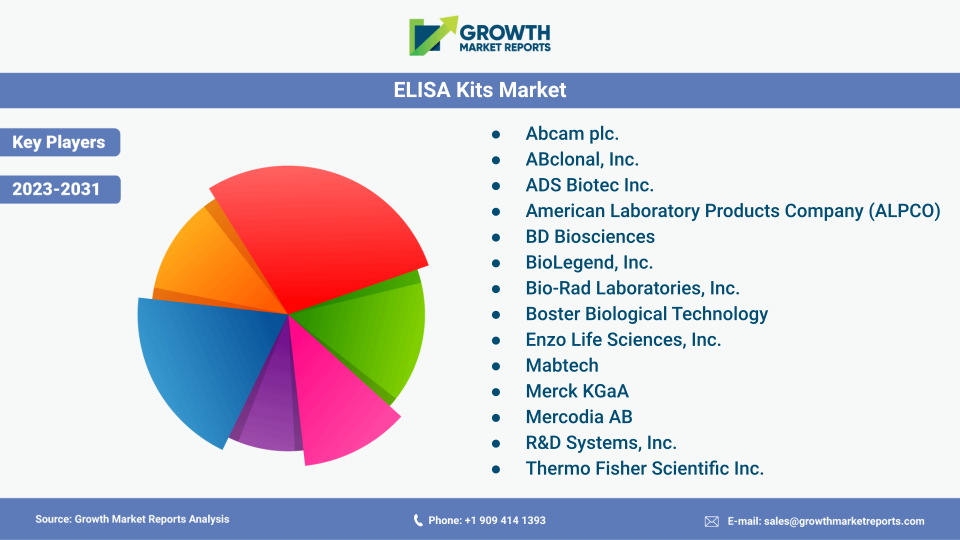
Key players in the global ELISA kits market include Abcam plc.; ABclonal, Inc.; ADS Biotec Inc.; American Laboratory Products Company (ALPCO); BD Biosciences; BioLegend, Inc.; Bio-Rad Laboratories, Inc.; Boster Biological Technology; Enzo Life Sciences, Inc.; Mabtech; Merck KGaA; Mercodia AB; R&D Systems, Inc.; and Thermo Fisher Scientific Inc. These players are focusing on strategies such as partnerships, collaborations, joint ventures, mergers and acquisitions, product launch, technological advancements, and R&D.
Technological advancements such as automation, high-throughput screening, multiplexing, and integration with digital data management are enhancing assay efficiency, accuracy, and accessibility.
Key players include Thermo Fisher Scientific, Bio-Rad Laboratories, Merck KGaA, Abcam plc, Enzo Life Sciences, R&D Systems (Bio-Techne), RayBiotech Life, and others.
Opportunities include growth in emerging markets, decentralized testing, and technological advancements like multiplexing and automation. Threats include competition from alternative immunoassay technologies and regulatory challenges.
Common sample types include blood, urine, saliva, and others such as cerebrospinal fluid, tissue homogenates, and environmental samples.
Major end-users include hospitals & clinics, pharmaceutical & biotechnology companies, academic & research institutes, and diagnostic laboratories.
ELISA Kits are primarily used in diagnostics, research, drug development, and other applications such as food safety testing, environmental monitoring, and veterinary diagnostics.
The main product types are Sandwich ELISA Kits, Competitive ELISA Kits, Direct ELISA Kits, Indirect ELISA Kits, and others, with Sandwich ELISA Kits holding the largest market share in 2024.
North America currently dominates the ELISA Kits market, followed by Europe and Asia Pacific. Asia Pacific is expected to exhibit the fastest growth rate during the forecast period.
Key growth drivers include the rising prevalence of chronic and infectious diseases, technological advancements in immunoassay platforms, and the growing emphasis on precision medicine and drug discovery.
As of 2024, the global ELISA Kits market size reached USD 2.53 billion, with projections to grow to USD 4.65 billion by 2033.