Electronics Adhesive Market Research Report 2033

Electronics Adhesive Market Research Report 2033

Segments - by Product Type (Epoxy, Silicone, Polyurethane, Acrylic, Others), by Application (Consumer Electronics, Automotive Electronics, Industrial Electronics, Medical Devices, Others), by Form (Liquid, Paste, Film, Others), by End-User (OEMs, Aftermarket, Others)

https://growthmarketreports.com/Raksha
Author : Raksha Sharma
https://growthmarketreports.com/Vaibhav
Fact-checked by : V. Chandola
https://growthmarketreports.com/Shruti
Editor : Shruti Bhat

Upcoming | Report ID :MC-3700 | 5.0 Rating | 13 Reviews | 253 Pages | Format : Docx PDF

Report Description


Electronics Adhesive Market Outlook

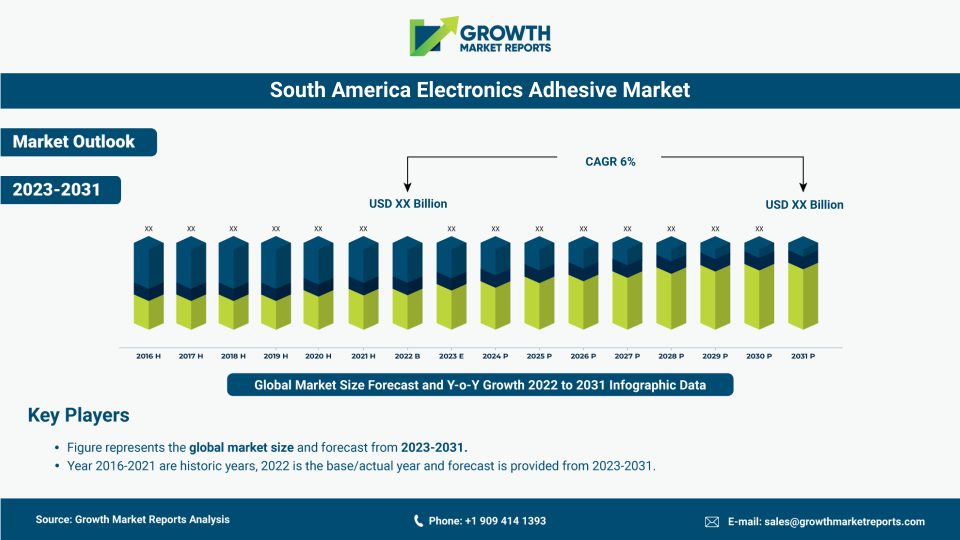
According to our latest research, the global electronics adhesive market size reached USD 6.7 billion in 2024, reflecting robust growth driven by the expanding electronics manufacturing sector and increasing demand for high-performance bonding solutions. The market is projected to grow at a CAGR of 7.1% from 2025 to 2033, reaching an estimated USD 12.5 billion by 2033. This impressive growth trajectory is primarily attributed to technological advancements in adhesive formulations, rising miniaturization trends in electronic devices, and the surging adoption of advanced materials in automotive and consumer electronics. As per the latest research, the electronics adhesive sector is positioned as a critical enabler in the evolution of next-generation electronic devices, underpinning both performance and reliability.

One of the core growth drivers for the electronics adhesive market is the relentless pace of innovation within the electronics industry itself. As devices become increasingly compact and complex, the need for reliable, high-performance adhesives that can operate under diverse environmental conditions has become paramount. The proliferation of wearables, smartphones, tablets, and IoT devices has spurred demand for adhesives that offer superior electrical conductivity, thermal management, and mechanical strength. Manufacturers are investing heavily in research and development to formulate adhesives that not only meet stringent technical requirements but also adhere to evolving environmental and safety standards. Furthermore, the shift towards lead-free and halogen-free adhesive solutions, prompted by regulatory mandates and consumer awareness, is reshaping product portfolios across the value chain.

Another significant growth factor is the expanding application of electronics adhesives in the automotive sector. As vehicles become more connected and incorporate advanced driver-assistance systems (ADAS), infotainment modules, and electric drivetrains, the integration of electronic components has surged. This has led to a corresponding increase in the use of specialty adhesives for circuit board assembly, sensor integration, and thermal management applications. Automotive electronics now demand adhesives that can withstand extreme temperature fluctuations, vibrations, and chemical exposures, fueling innovation and differentiation among market participants. Additionally, the global shift towards electric vehicles (EVs) and hybrid electric vehicles (HEVs) is amplifying the need for adhesives that support battery assembly and power electronics, thereby creating new revenue streams for market stakeholders.

Sustainability considerations are also shaping the electronics adhesive market. Environmental regulations, such as the Restriction of Hazardous Substances (RoHS) directive and the Registration, Evaluation, Authorisation, and Restriction of Chemicals (REACH) regulation, are compelling manufacturers to develop eco-friendly adhesive formulations. This trend is particularly pronounced in Europe and North America, where regulatory compliance and green manufacturing practices are seen as competitive differentiators. The adoption of solvent-free, water-based, and bio-based adhesives is gaining momentum, with market leaders investing in sustainable chemistry and lifecycle analysis to minimize environmental impact. These factors collectively position the electronics adhesive sector for sustained growth, with innovation and compliance at the heart of market expansion.

Regionally, the Asia Pacific region dominates the electronics adhesive market, accounting for the largest share in both production and consumption. The presence of major electronics manufacturing hubs in China, South Korea, Japan, and Taiwan, coupled with rising investments in semiconductor and consumer electronics industries, underpins this leadership. North America and Europe continue to play pivotal roles, particularly in high-value applications and regulatory-driven product innovation. Meanwhile, emerging markets in Latin America and the Middle East & Africa are witnessing steady growth, supported by increasing electronics assembly operations and rising consumer demand for smart devices.

Global Electronics Adhesive Industry Outlook

Product Type Analysis

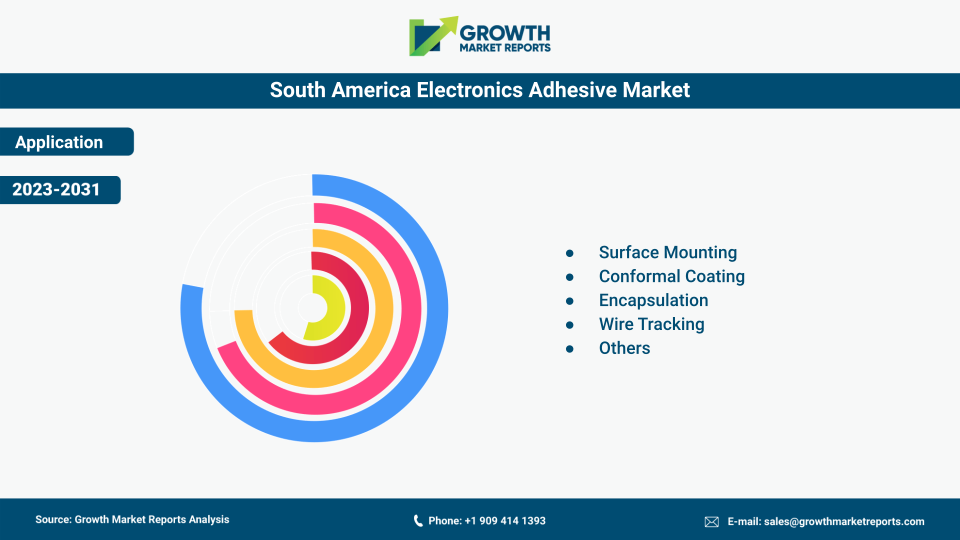
The electronics adhesive market is segmented by product type into epoxy, silicone, polyurethane, acrylic, and others, each offering distinct performance characteristics tailored to specific application requirements. Epoxy adhesives remain the most widely used segment, renowned for their exceptional mechanical strength, chemical resistance, and thermal stability. These properties make epoxies the adhesive of choice for printed circuit board (PCB) assembly, chip packaging, and encapsulation applications. Epoxy adhesives are particularly valued in high-reliability environments, such as aerospace and automotive electronics, where long-term durability and resistance to harsh operating conditions are paramount. The evolution of low-temperature curing and fast-setting epoxy formulations is further broadening their adoption in high-throughput manufacturing settings.

Silicone adhesives are another significant product segment, prized for their flexibility, electrical insulation properties, and resistance to moisture and temperature extremes. These attributes make silicones ideal for applications requiring vibration damping, thermal management, and sealing in both consumer and industrial electronics. The demand for silicone adhesives is rising in sectors like automotive electronics, where components must endure wide temperature ranges and exposure to automotive fluids. Moreover, the increasing integration of LEDs in lighting systems and displays is fueling the use of silicone adhesives for optical clarity and UV resistance. Manufacturers are responding by developing advanced silicone-based products with enhanced adhesion to diverse substrates and improved processability.

Polyurethane adhesives, while smaller in market share compared to epoxies and silicones, are gaining traction due to their excellent elasticity, impact resistance, and fast curing times. These adhesives are extensively used in flexible electronics, wearable devices, and applications requiring robust bonding to plastics and composites. Polyurethanes are also favored for their ability to accommodate differential thermal expansion between dissimilar materials, reducing the risk of delamination or joint failure. The trend towards lightweight and flexible electronic assemblies is expected to accelerate the adoption of polyurethane adhesives, particularly in emerging applications like foldable smartphones and flexible displays.

Acrylic adhesives offer a compelling balance of performance and cost-effectiveness, making them popular in high-volume consumer electronics and general-purpose assembly. Acrylics are known for their rapid curing, strong adhesion to a variety of substrates, and resistance to environmental aging. The segment is witnessing innovation in UV-curable and pressure-sensitive acrylic adhesives, which enable faster processing and automation in electronics manufacturing. The "others" category includes specialty adhesives such as cyanoacrylates and hot-melt adhesives, which cater to niche applications where rapid bonding or reworkability is required. Collectively, these product segments reflect the diverse and evolving needs of the electronics industry, with ongoing R&D efforts focused on enhancing performance, sustainability, and ease of use.

Report Scope

Attributes Details
Report Title Electronics Adhesive Market Research Report 2033
By Product Type Epoxy, Silicone, Polyurethane, Acrylic, Others
By Application Consumer Electronics, Automotive Electronics, Industrial Electronics, Medical Devices, Others
By Form Liquid, Paste, Film, Others
By End-User OEMs, Aftermarket, Others
Regions Covered North America, Europe, APAC, Latin America, MEA
Base Year 2024
Historic Data 2018-2023
Forecast Period 2025-2033
Number of Pages 253
Number of Tables & Figures 387
Customization Available Yes, the report can be customized as per your need.

Application Analysis

The application landscape of the electronics adhesive market is broad, encompassing consumer electronics, automotive electronics, industrial electronics, medical devices, and other specialized sectors. Consumer electronics represent the largest application segment, driven by the proliferation of smartphones, tablets, laptops, wearables, and smart home devices. Adhesives are essential for assembling displays, touch panels, batteries, speakers, and camera modules, where precision, miniaturization, and aesthetic quality are critical. As device form factors become slimmer and more complex, the demand for high-performance adhesives that enable robust bonding without compromising design or functionality continues to rise. Manufacturers are developing low-outgassing, transparent, and flexible adhesives to meet the evolving needs of consumer electronics OEMs.

Automotive electronics is another dynamic application segment, characterized by the integration of advanced electronic modules for safety, connectivity, and electrification. Adhesives play a pivotal role in bonding sensors, control units, battery packs, and infotainment systems, ensuring reliability and longevity in demanding automotive environments. The shift towards electric and autonomous vehicles is amplifying the need for adhesives that offer superior thermal management, vibration resistance, and compatibility with new materials such as lightweight composites and high-voltage components. Regulatory requirements for vehicle safety and emissions are also driving the adoption of adhesives that contribute to weight reduction and improved energy efficiency.

Industrial electronics, encompassing factory automation, robotics, power electronics, and energy management systems, represent a growing application area for electronics adhesives. These environments demand adhesives that can withstand high mechanical loads, temperature extremes, and exposure to chemicals or moisture. The trend towards Industry 4.0 and smart manufacturing is spurring investments in advanced adhesive technologies that support the assembly of sensors, actuators, and control systems. Medical devices form a specialized application segment, where adhesives must meet stringent biocompatibility, sterilization, and regulatory requirements. Medical electronics, including diagnostic equipment, wearable health monitors, and implantable devices, rely on adhesives for reliable assembly and hermetic sealing.

The "others" application category includes aerospace, telecommunications, and defense electronics, where performance and reliability are non-negotiable. These sectors often require custom adhesive solutions tailored to unique operational challenges, such as extreme altitudes, radiation exposure, or electromagnetic interference. Across all application segments, the push for miniaturization, multifunctionality, and environmental compliance is driving continuous innovation in adhesive formulations and application methods. The evolution of smart adhesives with embedded sensing or self-healing capabilities is also on the horizon, promising to unlock new opportunities in high-value electronics markets.

Form Analysis

The form factor of electronics adhesives plays a crucial role in their selection and application, with the market segmented into liquid, paste, film, and other specialized forms. Liquid adhesives dominate the market, favored for their versatility, ease of application, and adaptability to automated dispensing systems. Liquid adhesives are widely used in PCB assembly, component bonding, and encapsulation processes, where precise control over adhesive volume and placement is essential. Advances in rheology and curing chemistry have enabled the development of liquid adhesives that offer rapid curing, low viscosity, and compatibility with high-speed production lines, supporting the trend towards mass customization and miniaturization in electronics manufacturing.

Paste adhesives, characterized by their higher viscosity and thixotropic properties, are commonly employed in applications requiring gap filling, structural bonding, or enhanced mechanical strength. Paste adhesives are particularly valued in power electronics, automotive modules, and applications involving uneven or irregular substrates. The ability of paste adhesives to maintain their shape during assembly and curing makes them ideal for vertical bonding and applications where sag resistance is critical. Manufacturers are innovating with thermally conductive and electrically insulating paste adhesives to address the thermal management challenges posed by high-power electronic devices.

Film adhesives represent a rapidly growing segment, driven by their advantages in precision, uniformity, and process efficiency. Film adhesives are pre-formed, solid sheets that can be cut to shape and laminated onto substrates, offering consistent bond thickness and minimal waste. These adhesives are increasingly used in flexible circuits, display assemblies, and microelectronic packaging, where thin, uniform adhesive layers are required for optimal performance. The adoption of film adhesives is also being propelled by the rise of flexible and wearable electronics, where traditional liquid or paste adhesives may not provide the necessary flexibility or reworkability.

The "others" category includes hot-melt, pressure-sensitive, and foam adhesives, which cater to niche applications requiring rapid bonding, temporary fixation, or cushioning. Hot-melt adhesives are favored for their fast setting times and suitability for automated assembly lines, while pressure-sensitive adhesives are used in applications requiring repositionability or peelability. The diversity of adhesive forms available in the market reflects the wide-ranging needs of electronics manufacturers, with selection criteria often dictated by application requirements, production processes, and end-use performance expectations. Ongoing research into new delivery systems, such as microcapsules or printable adhesives, is expected to further expand the range of form factors available to the industry.

End-User Analysis

The end-user segmentation of the electronics adhesive market encompasses OEMs (original equipment manufacturers), the aftermarket, and other specialized user groups. OEMs constitute the largest share of the market, as they are directly involved in the design, assembly, and integration of electronic components into finished products. OEMs demand adhesives that offer consistent quality, high throughput, and compatibility with automated manufacturing processes. The emphasis on zero-defect production and just-in-time inventory management has led to close collaborations between adhesive suppliers and OEMs, with co-development of custom formulations and application methods becoming increasingly common. OEMs also play a pivotal role in driving innovation, as they seek adhesives that can enable new product designs, reduce assembly costs, and enhance device reliability.

The aftermarket segment, while smaller in comparison to OEMs, represents an important growth area, particularly in automotive and industrial electronics. Aftermarket users include repair shops, maintenance providers, and refurbishment centers that require adhesives for component replacement, rework, and field repairs. The demand for easy-to-use, fast-curing, and versatile adhesives is high in the aftermarket, where downtime and serviceability are key considerations. Adhesive manufacturers are responding by offering user-friendly packaging, pre-measured kits, and technical support to address the unique needs of aftermarket customers.

Other end-user groups include contract manufacturers, research institutions, and specialty electronics producers, each with distinct requirements and purchase behaviors. Contract manufacturers, for instance, often operate on thin margins and high volumes, prioritizing adhesives that offer cost-effectiveness, process efficiency, and supply chain reliability. Research institutions and specialty producers, on the other hand, may require small quantities of highly specialized adhesives for prototyping, testing, or niche applications. The ability of adhesive suppliers to offer flexible order quantities, technical support, and customization is a key differentiator in serving these diverse end-user segments.

Across all end-user categories, the trend towards vertical integration and strategic partnerships is becoming more pronounced. Large OEMs are increasingly seeking long-term relationships with adhesive suppliers to ensure supply security, consistency, and alignment with their sustainability goals. This is driving consolidation in the market, with leading adhesive manufacturers expanding their capabilities through mergers, acquisitions, and investments in local manufacturing. The evolving landscape of end-user requirements underscores the importance of agility, innovation, and customer-centricity in the electronics adhesive market.

Opportunities & Threats

The electronics adhesive market is brimming with opportunities, particularly as new applications and technologies emerge in the electronics ecosystem. One of the most promising opportunities lies in the development of adhesives for advanced packaging technologies, such as system-in-package (SiP), 3D packaging, and chip-on-board (COB) assembly. These technologies demand adhesives with ultra-fine dispensing, high thermal conductivity, and compatibility with miniaturized components. The rise of flexible, stretchable, and wearable electronics is also opening up new frontiers for adhesive innovation, with demand for materials that can maintain performance under dynamic mechanical stress and repeated flexing. Furthermore, the push towards sustainable manufacturing is creating opportunities for adhesives based on renewable feedstocks, biodegradable polymers, and solvent-free formulations, enabling manufacturers to differentiate their products and meet regulatory requirements.

Another significant opportunity is the integration of smart functionalities into adhesives, such as self-healing, sensing, or thermal switching properties. Smart adhesives can enhance the reliability, safety, and performance of electronic devices by providing real-time monitoring, damage detection, or adaptive response to environmental changes. The adoption of Industry 4.0 practices and automation in electronics manufacturing is also driving demand for adhesives that are compatible with robotic dispensing, machine vision inspection, and data-driven process control. These trends present lucrative opportunities for adhesive manufacturers to collaborate with electronics OEMs, equipment suppliers, and research institutions to co-develop next-generation solutions that address evolving industry needs.

Despite the abundance of opportunities, the electronics adhesive market faces several restraining factors that could impede growth. One of the primary challenges is the stringent regulatory landscape governing the use of chemicals and hazardous substances in electronics manufacturing. Compliance with regulations such as RoHS, REACH, and the Waste Electrical and Electronic Equipment (WEEE) Directive requires continuous investment in product reformulation, testing, and certification. Additionally, the volatility of raw material prices, particularly for petroleum-based resins and specialty chemicals, poses risks to cost structures and profit margins. The highly competitive nature of the market, with frequent price wars and commoditization in certain segments, further intensifies the pressure on manufacturers to innovate while maintaining cost competitiveness.

Regional Outlook

The regional distribution of the electronics adhesive market is heavily influenced by the global electronics manufacturing footprint and the presence of key end-user industries. Asia Pacific is the undisputed leader, accounting for approximately 52% of the global market in 2024, or about USD 3.5 billion. The region's dominance is underpinned by the concentration of electronics manufacturing giants in China, South Korea, Japan, and Taiwan, as well as the rapid expansion of the semiconductor, display, and battery industries. Asia Pacific is expected to maintain its leadership position through 2033, driven by ongoing investments in 5G infrastructure, electric vehicles, and smart manufacturing. The region also boasts the highest CAGR, projected at 7.8% during the forecast period, reflecting robust demand from both domestic and export-oriented industries.

North America and Europe collectively account for a significant share of the electronics adhesive market, with North America representing around 21% and Europe about 18% of the global market in 2024. North America, valued at approximately USD 1.4 billion, benefits from the presence of leading technology firms, automotive OEMs, and a strong focus on innovation and regulatory compliance. The region is witnessing steady growth in high-value applications such as aerospace, medical devices, and industrial automation, with a particular emphasis on sustainable and high-performance adhesive solutions. Europe, with a market size of USD 1.2 billion, is characterized by stringent environmental regulations and a strong emphasis on green manufacturing. The region is a hub for specialty adhesives and advanced materials, with leading players investing in R&D to develop eco-friendly and high-reliability products.

Latin America and the Middle East & Africa, though smaller in market size, are emerging as important growth frontiers for the electronics adhesive market. Latin America, valued at USD 0.4 billion in 2024, is experiencing increased electronics assembly operations and rising consumer demand for smart devices, particularly in Brazil and Mexico. The Middle East & Africa, with a market size of USD 0.2 billion, is witnessing gradual growth, supported by investments in telecommunications infrastructure, industrial automation, and automotive assembly. Both regions present opportunities for market expansion, particularly as local manufacturing capabilities and supply chain networks mature. However, challenges related to regulatory compliance, supply chain complexity, and market fragmentation must be addressed to unlock the full potential of these regions.

Electronics Adhesive Market Statistics

Competitor Outlook

The electronics adhesive market is characterized by intense competition, rapid innovation, and a high degree of fragmentation, with a mix of global giants and regional specialists vying for market share. Leading players differentiate themselves through technological leadership, broad product portfolios, and strong customer relationships. The market is witnessing a trend towards consolidation, as large adhesive manufacturers acquire or partner with niche players to expand their capabilities, geographic reach, and application expertise. Strategic investments in R&D, sustainable chemistry, and advanced manufacturing are central to maintaining competitive advantage, with companies increasingly focusing on custom solutions and value-added services to meet the evolving needs of electronics OEMs and contract manufacturers.

Innovation remains the cornerstone of competitive strategy in the electronics adhesive market, with companies racing to develop next-generation products that offer superior performance, process efficiency, and regulatory compliance. The ability to co-develop custom adhesives in collaboration with key customers is a critical success factor, enabling manufacturers to address unique application challenges and accelerate time-to-market for new electronic devices. Digitalization and automation are also reshaping the competitive landscape, with leading players investing in smart manufacturing, data analytics, and supply chain optimization to enhance operational efficiency and customer responsiveness. Sustainability is emerging as a key differentiator, with companies that can offer eco-friendly, low-VOC, and recyclable adhesives gaining favor among environmentally conscious customers and regulators.

The competitive landscape is further shaped by the entry of new players specializing in advanced materials, nanotechnology, and smart adhesives. These entrants are leveraging cutting-edge research and agile business models to carve out niches in high-growth segments such as flexible electronics, medical devices, and electric vehicles. Established players are responding by expanding their innovation ecosystems through partnerships with universities, research institutes, and technology startups. The ability to anticipate market trends, invest in emerging technologies, and adapt to changing customer requirements will determine long-term success in this dynamic market.

Major companies operating in the electronics adhesive market include Henkel AG & Co. KGaA, 3M Company, H.B. Fuller Company, Dow Inc., Sika AG, and Dymax Corporation. Henkel is a global leader, renowned for its broad portfolio of adhesives, sealants, and functional coatings tailored to electronics assembly and packaging. The company invests heavily in R&D and sustainability, with a focus on developing high-reliability, low-emission adhesives for automotive and consumer electronics. 3M Company is another key player, offering a wide range of electrically conductive, thermally conductive, and optically clear adhesives for diverse electronics applications. H.B. Fuller is recognized for its expertise in specialty adhesives and its commitment to customer-centric innovation, while Dow Inc. leverages its materials science leadership to deliver advanced silicone, epoxy, and polyurethane adhesives. Sika AG and Dymax Corporation are known for their innovative solutions in industrial and medical electronics, with a strong focus on UV-curable and fast-setting adhesives.

These leading companies are continuously expanding their product offerings, investing in sustainable manufacturing, and strengthening their global distribution networks to capture emerging opportunities in the electronics adhesive market. Strategic collaborations, mergers and acquisitions, and investments in digitalization are expected to shape the competitive dynamics of the market in the coming years, as companies strive to deliver differentiated solutions and create lasting value for their customers.

Key Players

  • 3M
  • Henkel AG & Co. KGaA
  • H.B. Fuller Company
  • Dow Inc.
  • Sika AG
  • Bostik SA
  • Dymax Corporation
  • Ashland Global Holdings Inc.
  • Permabond LLC
  • Master Bond Inc.
  • Panacol-Elosol GmbH
  • LORD Corporation
  • Shenzhen DeepMaterial Technologies Co., Ltd.
  • ITW Performance Polymers
  • Avery Dennison Corporation
  • Parker Hannifin Corporation
  • DELO Industrial Adhesives
  • Huntsman Corporation
  • Lintec Corporation
  • Mitsui Chemicals, Inc.
Electronics Adhesive Market Overview

Segments

The Electronics Adhesive market has been segmented on the basis of

Product Type

  • Epoxy
  • Silicone
  • Polyurethane
  • Acrylic
  • Others

Application

  • Consumer Electronics
  • Automotive Electronics
  • Industrial Electronics
  • Medical Devices
  • Others

Form

  • Liquid
  • Paste
  • Film
  • Others

End-User

  • OEMs
  • Aftermarket
  • Others

Competitive Landscape

Key players competing in the South America electronics adhesive market include 3M; Henkel AG & Co.KGaA; Dow; BASF SE; and H.B. Fuller Company.

Some of these players are targeting on business strategies such as mergers, acquisitions, partnerships, collaborations, capacity expansion, and product launches to increase their market shares.
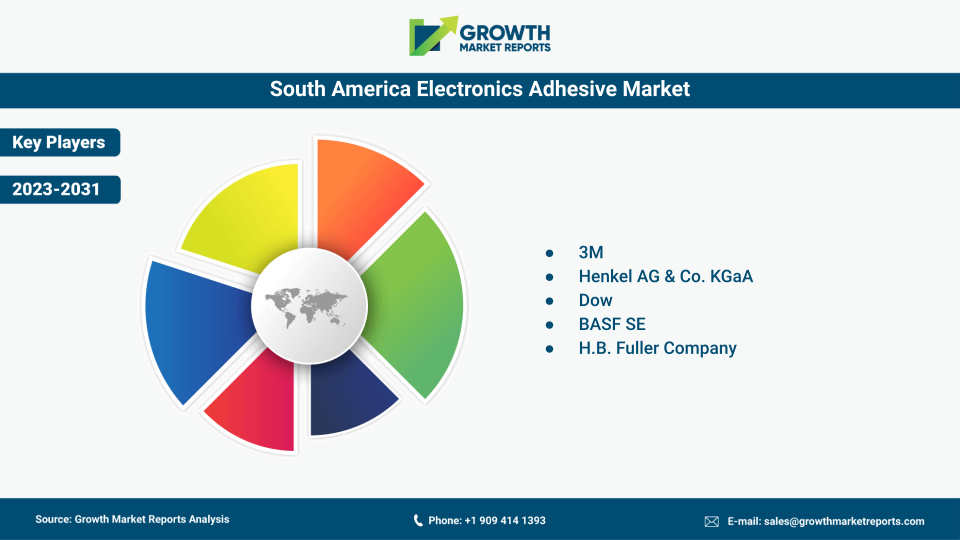

South America Electronics Adhesive Market Key Players

Frequently Asked Questions

Major companies include Henkel AG & Co. KGaA, 3M Company, H.B. Fuller Company, Dow Inc., Sika AG, Dymax Corporation, Bostik SA, Ashland Global Holdings Inc., Permabond LLC, and others.

Opportunities include advanced packaging, flexible and wearable electronics, smart adhesives with sensing or self-healing properties, and sustainable formulations. Challenges include regulatory compliance, raw material price volatility, and intense market competition.

Key end-users include OEMs (original equipment manufacturers), the aftermarket (repair and maintenance), contract manufacturers, research institutions, and specialty electronics producers.

Electronics adhesives are available in liquid, paste, film, and other forms. Liquids are favored for versatility and automation, pastes for gap filling and structural bonding, films for precision and uniformity, and others like hot-melt for rapid bonding.

Electronics adhesives are widely used in consumer electronics (smartphones, wearables), automotive electronics (ADAS, battery packs), industrial electronics (factory automation, robotics), medical devices, and specialized sectors like aerospace and defense.

Regulations like RoHS and REACH are driving the development of eco-friendly, solvent-free, water-based, and bio-based adhesives. Sustainability is becoming a key differentiator for manufacturers, especially in Europe and North America.

Major types include epoxy (for PCB assembly and chip packaging), silicone (for flexibility and thermal management), polyurethane (for flexible electronics), acrylic (for rapid curing and cost-effectiveness), and specialty adhesives like cyanoacrylates and hot-melt adhesives.

Asia Pacific leads the market, accounting for about 52% of global share in 2024, followed by North America and Europe. Latin America and the Middle East & Africa are emerging as growth regions.

Key growth drivers include technological advancements in adhesive formulations, increasing miniaturization of electronic devices, rising demand in automotive and consumer electronics, and the adoption of advanced materials.

The global electronics adhesive market reached USD 6.7 billion in 2024 and is projected to grow at a CAGR of 7.1% from 2025 to 2033, reaching an estimated USD 12.5 billion by 2033.

Table Of Content

Chapter 1 Executive Summary
Chapter 2 Assumptions and Acronyms Used
Chapter 3 Research Methodology
Chapter 4 Electronics Adhesive Market Overview
   4.1 Introduction
      4.1.1 Market Taxonomy
      4.1.2 Market Definition
      4.1.3 Macro-Economic Factors Impacting the Market Growth
   4.2 Electronics Adhesive Market Dynamics
      4.2.1 Market Drivers
      4.2.2 Market Restraints
      4.2.3 Market Opportunity
   4.3 Electronics Adhesive Market - Supply Chain Analysis
      4.3.1 List of Key Suppliers
      4.3.2 List of Key Distributors
      4.3.3 List of Key Consumers
   4.4 Key Forces Shaping the Electronics Adhesive Market
      4.4.1 Bargaining Power of Suppliers
      4.4.2 Bargaining Power of Buyers
      4.4.3 Threat of Substitution
      4.4.4 Threat of New Entrants
      4.4.5 Competitive Rivalry
   4.5 Global Electronics Adhesive Market Size & Forecast, 2023-2032
      4.5.1 Electronics Adhesive Market Size and Y-o-Y Growth
      4.5.2 Electronics Adhesive Market Absolute $ Opportunity

Chapter 5 Global Electronics Adhesive Market Analysis and Forecast By Product Type
   5.1 Introduction
      5.1.1 Key Market Trends & Growth Opportunities By Product Type
      5.1.2 Basis Point Share (BPS) Analysis By Product Type
      5.1.3 Absolute $ Opportunity Assessment By Product Type
   5.2 Electronics Adhesive Market Size Forecast By Product Type
      5.2.1 Epoxy
      5.2.2 Silicone
      5.2.3 Polyurethane
      5.2.4 Acrylic
      5.2.5 Others
   5.3 Market Attractiveness Analysis By Product Type

Chapter 6 Global Electronics Adhesive Market Analysis and Forecast By Application
   6.1 Introduction
      6.1.1 Key Market Trends & Growth Opportunities By Application
      6.1.2 Basis Point Share (BPS) Analysis By Application
      6.1.3 Absolute $ Opportunity Assessment By Application
   6.2 Electronics Adhesive Market Size Forecast By Application
      6.2.1 Consumer Electronics
      6.2.2 Automotive Electronics
      6.2.3 Industrial Electronics
      6.2.4 Medical Devices
      6.2.5 Others
   6.3 Market Attractiveness Analysis By Application

Chapter 7 Global Electronics Adhesive Market Analysis and Forecast By Form
   7.1 Introduction
      7.1.1 Key Market Trends & Growth Opportunities By Form
      7.1.2 Basis Point Share (BPS) Analysis By Form
      7.1.3 Absolute $ Opportunity Assessment By Form
   7.2 Electronics Adhesive Market Size Forecast By Form
      7.2.1 Liquid
      7.2.2 Paste
      7.2.3 Film
      7.2.4 Others
   7.3 Market Attractiveness Analysis By Form

Chapter 8 Global Electronics Adhesive Market Analysis and Forecast By End-User
   8.1 Introduction
      8.1.1 Key Market Trends & Growth Opportunities By End-User
      8.1.2 Basis Point Share (BPS) Analysis By End-User
      8.1.3 Absolute $ Opportunity Assessment By End-User
   8.2 Electronics Adhesive Market Size Forecast By End-User
      8.2.1 OEMs
      8.2.2 Aftermarket
      8.2.3 Others
   8.3 Market Attractiveness Analysis By End-User

Chapter 9 Global Electronics Adhesive Market Analysis and Forecast by Region
   9.1 Introduction
      9.1.1 Key Market Trends & Growth Opportunities By Region
      9.1.2 Basis Point Share (BPS) Analysis By Region
      9.1.3 Absolute $ Opportunity Assessment By Region
   9.2 Electronics Adhesive Market Size Forecast By Region
      9.2.1 North America
      9.2.2 Europe
      9.2.3 Asia Pacific
      9.2.4 Latin America
      9.2.5 Middle East & Africa (MEA)
   9.3 Market Attractiveness Analysis By Region

Chapter 10 Coronavirus Disease (COVID-19) Impact 
   10.1 Introduction 
   10.2 Current & Future Impact Analysis 
   10.3 Economic Impact Analysis 
   10.4 Government Policies 
   10.5 Investment Scenario

Chapter 11 North America Electronics Adhesive Analysis and Forecast
   11.1 Introduction
   11.2 North America Electronics Adhesive Market Size Forecast by Country
      11.2.1 U.S.
      11.2.2 Canada
   11.3 Basis Point Share (BPS) Analysis by Country
   11.4 Absolute $ Opportunity Assessment by Country
   11.5 Market Attractiveness Analysis by Country
   11.6 North America Electronics Adhesive Market Size Forecast By Product Type
      11.6.1 Epoxy
      11.6.2 Silicone
      11.6.3 Polyurethane
      11.6.4 Acrylic
      11.6.5 Others
   11.7 Basis Point Share (BPS) Analysis By Product Type 
   11.8 Absolute $ Opportunity Assessment By Product Type 
   11.9 Market Attractiveness Analysis By Product Type
   11.10 North America Electronics Adhesive Market Size Forecast By Application
      11.10.1 Consumer Electronics
      11.10.2 Automotive Electronics
      11.10.3 Industrial Electronics
      11.10.4 Medical Devices
      11.10.5 Others
   11.11 Basis Point Share (BPS) Analysis By Application 
   11.12 Absolute $ Opportunity Assessment By Application 
   11.13 Market Attractiveness Analysis By Application
   11.14 North America Electronics Adhesive Market Size Forecast By Form
      11.14.1 Liquid
      11.14.2 Paste
      11.14.3 Film
      11.14.4 Others
   11.15 Basis Point Share (BPS) Analysis By Form 
   11.16 Absolute $ Opportunity Assessment By Form 
   11.17 Market Attractiveness Analysis By Form
   11.18 North America Electronics Adhesive Market Size Forecast By End-User
      11.18.1 OEMs
      11.18.2 Aftermarket
      11.18.3 Others
   11.19 Basis Point Share (BPS) Analysis By End-User 
   11.20 Absolute $ Opportunity Assessment By End-User 
   11.21 Market Attractiveness Analysis By End-User

Chapter 12 Europe Electronics Adhesive Analysis and Forecast
   12.1 Introduction
   12.2 Europe Electronics Adhesive Market Size Forecast by Country
      12.2.1 Germany
      12.2.2 France
      12.2.3 Italy
      12.2.4 U.K.
      12.2.5 Spain
      12.2.6 Russia
      12.2.7 Rest of Europe
   12.3 Basis Point Share (BPS) Analysis by Country
   12.4 Absolute $ Opportunity Assessment by Country
   12.5 Market Attractiveness Analysis by Country
   12.6 Europe Electronics Adhesive Market Size Forecast By Product Type
      12.6.1 Epoxy
      12.6.2 Silicone
      12.6.3 Polyurethane
      12.6.4 Acrylic
      12.6.5 Others
   12.7 Basis Point Share (BPS) Analysis By Product Type 
   12.8 Absolute $ Opportunity Assessment By Product Type 
   12.9 Market Attractiveness Analysis By Product Type
   12.10 Europe Electronics Adhesive Market Size Forecast By Application
      12.10.1 Consumer Electronics
      12.10.2 Automotive Electronics
      12.10.3 Industrial Electronics
      12.10.4 Medical Devices
      12.10.5 Others
   12.11 Basis Point Share (BPS) Analysis By Application 
   12.12 Absolute $ Opportunity Assessment By Application 
   12.13 Market Attractiveness Analysis By Application
   12.14 Europe Electronics Adhesive Market Size Forecast By Form
      12.14.1 Liquid
      12.14.2 Paste
      12.14.3 Film
      12.14.4 Others
   12.15 Basis Point Share (BPS) Analysis By Form 
   12.16 Absolute $ Opportunity Assessment By Form 
   12.17 Market Attractiveness Analysis By Form
   12.18 Europe Electronics Adhesive Market Size Forecast By End-User
      12.18.1 OEMs
      12.18.2 Aftermarket
      12.18.3 Others
   12.19 Basis Point Share (BPS) Analysis By End-User 
   12.20 Absolute $ Opportunity Assessment By End-User 
   12.21 Market Attractiveness Analysis By End-User

Chapter 13 Asia Pacific Electronics Adhesive Analysis and Forecast
   13.1 Introduction
   13.2 Asia Pacific Electronics Adhesive Market Size Forecast by Country
      13.2.1 China
      13.2.2 Japan
      13.2.3 South Korea
      13.2.4 India
      13.2.5 Australia
      13.2.6 South East Asia (SEA)
      13.2.7 Rest of Asia Pacific (APAC)
   13.3 Basis Point Share (BPS) Analysis by Country
   13.4 Absolute $ Opportunity Assessment by Country
   13.5 Market Attractiveness Analysis by Country
   13.6 Asia Pacific Electronics Adhesive Market Size Forecast By Product Type
      13.6.1 Epoxy
      13.6.2 Silicone
      13.6.3 Polyurethane
      13.6.4 Acrylic
      13.6.5 Others
   13.7 Basis Point Share (BPS) Analysis By Product Type 
   13.8 Absolute $ Opportunity Assessment By Product Type 
   13.9 Market Attractiveness Analysis By Product Type
   13.10 Asia Pacific Electronics Adhesive Market Size Forecast By Application
      13.10.1 Consumer Electronics
      13.10.2 Automotive Electronics
      13.10.3 Industrial Electronics
      13.10.4 Medical Devices
      13.10.5 Others
   13.11 Basis Point Share (BPS) Analysis By Application 
   13.12 Absolute $ Opportunity Assessment By Application 
   13.13 Market Attractiveness Analysis By Application
   13.14 Asia Pacific Electronics Adhesive Market Size Forecast By Form
      13.14.1 Liquid
      13.14.2 Paste
      13.14.3 Film
      13.14.4 Others
   13.15 Basis Point Share (BPS) Analysis By Form 
   13.16 Absolute $ Opportunity Assessment By Form 
   13.17 Market Attractiveness Analysis By Form
   13.18 Asia Pacific Electronics Adhesive Market Size Forecast By End-User
      13.18.1 OEMs
      13.18.2 Aftermarket
      13.18.3 Others
   13.19 Basis Point Share (BPS) Analysis By End-User 
   13.20 Absolute $ Opportunity Assessment By End-User 
   13.21 Market Attractiveness Analysis By End-User

Chapter 14 Latin America Electronics Adhesive Analysis and Forecast
   14.1 Introduction
   14.2 Latin America Electronics Adhesive Market Size Forecast by Country
      14.2.1 Brazil
      14.2.2 Mexico
      14.2.3 Rest of Latin America (LATAM)
   14.3 Basis Point Share (BPS) Analysis by Country
   14.4 Absolute $ Opportunity Assessment by Country
   14.5 Market Attractiveness Analysis by Country
   14.6 Latin America Electronics Adhesive Market Size Forecast By Product Type
      14.6.1 Epoxy
      14.6.2 Silicone
      14.6.3 Polyurethane
      14.6.4 Acrylic
      14.6.5 Others
   14.7 Basis Point Share (BPS) Analysis By Product Type 
   14.8 Absolute $ Opportunity Assessment By Product Type 
   14.9 Market Attractiveness Analysis By Product Type
   14.10 Latin America Electronics Adhesive Market Size Forecast By Application
      14.10.1 Consumer Electronics
      14.10.2 Automotive Electronics
      14.10.3 Industrial Electronics
      14.10.4 Medical Devices
      14.10.5 Others
   14.11 Basis Point Share (BPS) Analysis By Application 
   14.12 Absolute $ Opportunity Assessment By Application 
   14.13 Market Attractiveness Analysis By Application
   14.14 Latin America Electronics Adhesive Market Size Forecast By Form
      14.14.1 Liquid
      14.14.2 Paste
      14.14.3 Film
      14.14.4 Others
   14.15 Basis Point Share (BPS) Analysis By Form 
   14.16 Absolute $ Opportunity Assessment By Form 
   14.17 Market Attractiveness Analysis By Form
   14.18 Latin America Electronics Adhesive Market Size Forecast By End-User
      14.18.1 OEMs
      14.18.2 Aftermarket
      14.18.3 Others
   14.19 Basis Point Share (BPS) Analysis By End-User 
   14.20 Absolute $ Opportunity Assessment By End-User 
   14.21 Market Attractiveness Analysis By End-User

Chapter 15 Middle East & Africa (MEA) Electronics Adhesive Analysis and Forecast
   15.1 Introduction
   15.2 Middle East & Africa (MEA) Electronics Adhesive Market Size Forecast by Country
      15.2.1 Saudi Arabia
      15.2.2 South Africa
      15.2.3 UAE
      15.2.4 Rest of Middle East & Africa (MEA)
   15.3 Basis Point Share (BPS) Analysis by Country
   15.4 Absolute $ Opportunity Assessment by Country
   15.5 Market Attractiveness Analysis by Country
   15.6 Middle East & Africa (MEA) Electronics Adhesive Market Size Forecast By Product Type
      15.6.1 Epoxy
      15.6.2 Silicone
      15.6.3 Polyurethane
      15.6.4 Acrylic
      15.6.5 Others
   15.7 Basis Point Share (BPS) Analysis By Product Type 
   15.8 Absolute $ Opportunity Assessment By Product Type 
   15.9 Market Attractiveness Analysis By Product Type
   15.10 Middle East & Africa (MEA) Electronics Adhesive Market Size Forecast By Application
      15.10.1 Consumer Electronics
      15.10.2 Automotive Electronics
      15.10.3 Industrial Electronics
      15.10.4 Medical Devices
      15.10.5 Others
   15.11 Basis Point Share (BPS) Analysis By Application 
   15.12 Absolute $ Opportunity Assessment By Application 
   15.13 Market Attractiveness Analysis By Application
   15.14 Middle East & Africa (MEA) Electronics Adhesive Market Size Forecast By Form
      15.14.1 Liquid
      15.14.2 Paste
      15.14.3 Film
      15.14.4 Others
   15.15 Basis Point Share (BPS) Analysis By Form 
   15.16 Absolute $ Opportunity Assessment By Form 
   15.17 Market Attractiveness Analysis By Form
   15.18 Middle East & Africa (MEA) Electronics Adhesive Market Size Forecast By End-User
      15.18.1 OEMs
      15.18.2 Aftermarket
      15.18.3 Others
   15.19 Basis Point Share (BPS) Analysis By End-User 
   15.20 Absolute $ Opportunity Assessment By End-User 
   15.21 Market Attractiveness Analysis By End-User

Chapter 16 Competition Landscape 
   16.1 Electronics Adhesive Market: Competitive Dashboard
   16.2 Global Electronics Adhesive Market: Market Share Analysis, 2023
   16.3 Company Profiles (Details – Overview, Financials, Developments, Strategy) 
      16.3.1 3M
Henkel AG & Co. KGaA
H.B. Fuller Company
Dow Inc.
Sika AG
Bostik SA
Dymax Corporation
Ashland Global Holdings Inc.
Permabond LLC
Master Bond Inc.
Panacol-Elosol GmbH
LORD Corporation
Shenzhen DeepMaterial Technologies Co., Ltd.
ITW Performance Polymers
Avery Dennison Corporation
Parker Hannifin Corporation
DELO Industrial Adhesives
Huntsman Corporation
Lintec Corporation
Mitsui Chemicals, Inc.

Methodology

Our Clients

Microsoft
Deloitte
Honda Motor Co. Ltd.
General Mills
Pfizer
General Electric
Siemens Healthcare
FedEx Logistics