Segments - by Capability (Electronic Attack, Electronic Protection, Electronic Support), by Platform (Airborne, Naval, Land, Space), by Product (Jammers, Countermeasure Systems, Radar Warning Receivers, Directed Energy Weapons, Others), by Application (Military, Homeland Security, Others)
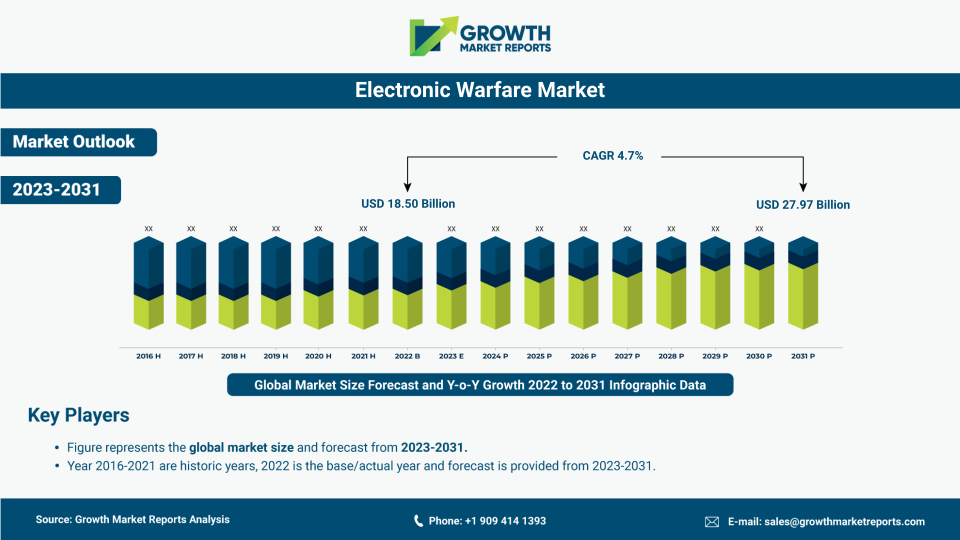
According to our latest research, the global electronic warfare market size reached USD 19.7 billion in 2024, demonstrating robust growth driven by escalating geopolitical tensions and rapid technological advancements. The market is projected to expand at a CAGR of 6.5% from 2025 to 2033, reaching a forecasted value of USD 34.7 billion by 2033. This upward trajectory is primarily fueled by increased defense spending, modernization initiatives, and the growing importance of electromagnetic spectrum dominance in modern warfare environments.
The primary growth factor for the electronic warfare market is the intensification of global security threats and the corresponding rise in defense budgets among major economies. As nations strive to maintain a strategic edge, the demand for advanced electronic warfare capabilities has surged. Governments are investing heavily in upgrading legacy systems and integrating next-generation technologies such as artificial intelligence, machine learning, and cognitive electronic warfare. These technologies enhance the ability to detect, deceive, and neutralize adversarial threats across multiple domains, including air, land, sea, and space. The proliferation of unmanned systems and network-centric warfare concepts further amplifies the need for sophisticated electronic warfare solutions, as these platforms rely heavily on secure and uninterrupted communication channels.
Another significant driver is the evolution of electronic attack and protection systems, which are becoming increasingly vital for both offensive and defensive operations. Modern military operations require robust countermeasure systems to protect assets from radar-guided missiles, improvised explosive devices, and cyber-physical attacks. The integration of electronic support measures, such as advanced signal intelligence and threat analysis tools, enables armed forces to gain real-time situational awareness and respond proactively to emerging threats. The growing adoption of multi-domain operations, where electronic warfare plays a central role in synchronizing efforts across different platforms, further contributes to market expansion. Additionally, the commercial sector, particularly in homeland security and critical infrastructure protection, is beginning to adopt electronic warfare technologies to counteract emerging threats, thereby expanding the addressable market beyond traditional military applications.
Technological innovation remains a cornerstone of market growth, with defense contractors and technology firms investing in research and development to deliver more agile, scalable, and resilient electronic warfare systems. The miniaturization of components, increased processing power, and the convergence of cyber and electronic warfare capabilities are enabling the deployment of advanced systems on a wider range of platforms, from large naval vessels to small drones. Furthermore, the emergence of directed energy weapons and quantum-based sensors is poised to revolutionize the electronic warfare landscape, offering new avenues for both attack and defense. Collaborative efforts between governments, academia, and industry stakeholders are accelerating the pace of innovation, ensuring that electronic warfare solutions remain at the forefront of modern defense strategies.
From a regional perspective, North America continues to dominate the electronic warfare market, accounting for the largest share in 2024, followed closely by Europe and Asia Pacific. The United States, in particular, leads in terms of technological innovation and defense spending, driving significant demand for advanced electronic warfare systems. Europe is witnessing increased investment as NATO allies prioritize modernization and interoperability in response to evolving security challenges. Meanwhile, Asia Pacific is emerging as a high-growth market, propelled by rising defense budgets in China, India, Japan, and South Korea. Latin America and the Middle East & Africa regions are also investing in electronic warfare capabilities, albeit at a slower pace, as they seek to address regional security concerns and participate in multinational defense collaborations.
The development of Cognitive EW Receiver technology is a significant advancement in the electronic warfare domain. These receivers are designed to autonomously adapt to the rapidly changing electromagnetic environment, enhancing the ability to detect and counteract sophisticated electronic threats. By leveraging artificial intelligence and machine learning algorithms, Cognitive EW Receivers can process vast amounts of data in real-time, identifying patterns and anomalies that may indicate adversarial activity. This capability not only improves situational awareness but also enables more effective deployment of electronic countermeasures. As the complexity of electronic threats continues to evolve, the integration of cognitive technologies into electronic warfare systems is becoming increasingly critical for maintaining a strategic edge in modern combat scenarios.
The electronic warfare market, when segmented by capability, encompasses three primary domains: electronic attack, electronic protection, and electronic support. Electronic attack capabilities focus on the deliberate use of electromagnetic energy to degrade, disrupt, or destroy enemy electronic systems. This includes jamming, deception, and the deployment of directed energy weapons to neutralize adversarial radar, communication, and navigation systems. The demand for electronic attack solutions is rising as modern battlefields become increasingly reliant on electronic systems, making them attractive targets for disruption. Militaries worldwide are investing in advanced jamming technologies and high-power microwave weapons to gain a tactical advantage and ensure mission success in contested environments.
Electronic protection involves safeguarding friendly forces from the effects of electronic attack. This capability is essential for maintaining operational effectiveness and ensuring the survivability of critical assets. Electronic protection systems employ techniques such as frequency hopping, signal encryption, and adaptive filtering to counteract jamming and spoofing attempts. The growing sophistication of electronic threats necessitates continuous innovation in protection measures, with a focus on developing resilient systems that can operate effectively in dense and dynamic electromagnetic environments. The integration of artificial intelligence and machine learning algorithms is enhancing the ability of electronic protection systems to detect and respond to novel threats in real time, further bolstering their effectiveness.
Electronic support capabilities are centered on the detection, interception, identification, and location of electromagnetic emissions from both friendly and adversarial sources. These systems provide critical situational awareness by enabling the collection and analysis of signal intelligence (SIGINT) and electronic intelligence (ELINT). Electronic support plays a pivotal role in threat assessment, mission planning, and tactical decision-making, allowing commanders to anticipate and counter enemy actions effectively. The increasing complexity of the electromagnetic spectrum, coupled with the proliferation of low-probability-of-intercept and frequency-agile emitters, is driving demand for advanced electronic support systems equipped with sophisticated signal processing and data fusion capabilities.
The interplay between electronic attack, protection, and support is fundamental to achieving electromagnetic spectrum superiority. Modern electronic warfare strategies emphasize the seamless integration of these capabilities across multiple platforms and domains, enabling coordinated and adaptive responses to evolving threats. Defense organizations are prioritizing the development of modular and interoperable systems that can be rapidly deployed and reconfigured to address specific mission requirements. This holistic approach to capability development is expected to drive sustained investment and innovation in the electronic warfare market over the forecast period.
| Attributes | Details |
| Report Title | electronic warfare Market Research Report 2033 |
| By Capability | Electronic Attack, Electronic Protection, Electronic Support |
| By Platform | Airborne, Naval, Land, Space |
| By Product | Jammers, Countermeasure Systems, Radar Warning Receivers, Directed Energy Weapons, Others |
| By Application | Military, Homeland Security, Others |
| Regions Covered | North America, Europe, APAC, Latin America, MEA |
| Base Year | 2024 |
| Historic Data | 2018-2023 |
| Forecast Period | 2025-2033 |
| Number of Pages | 275 |
| Number of Tables & Figures | 277 |
| Customization Available | Yes, the report can be customized as per your need. |
The electronic warfare market is segmented by platform into airborne, naval, land, and space-based systems, each playing a distinct role in modern defense architectures. Airborne platforms, including fighter jets, unmanned aerial vehicles (UAVs), and surveillance aircraft, are at the forefront of electronic warfare operations. These platforms provide rapid mobility, high-altitude coverage, and the ability to deliver electronic attack and support capabilities deep into contested territories. The integration of electronic warfare pods, radar warning receivers, and advanced jamming systems on airborne platforms enhances their survivability and mission effectiveness. The growing adoption of stealth technology and the need to counter increasingly sophisticated air defense systems are driving investments in next-generation airborne electronic warfare solutions.
The introduction of the Electronic Attack Training Pod represents a significant step forward in preparing military forces for the complexities of modern electronic warfare. These pods are equipped with advanced jamming and deception capabilities, allowing for realistic training scenarios that closely mimic the electromagnetic challenges encountered in actual combat. By simulating a wide range of electronic threats, the Electronic Attack Training Pod enables personnel to develop and refine their tactics, techniques, and procedures in a controlled environment. This hands-on training is essential for ensuring that operators are proficient in utilizing electronic warfare systems to their full potential, ultimately enhancing mission readiness and effectiveness. As electronic warfare continues to play a pivotal role in military operations, the demand for comprehensive training solutions like these pods is expected to grow significantly.
Naval platforms are equally critical, with warships, submarines, and aircraft carriers serving as key nodes in maritime electronic warfare networks. Naval electronic warfare systems are designed to protect fleets from anti-ship missiles, torpedoes, and other threats by employing a combination of electronic attack, protection, and support measures. The modernization of naval fleets, coupled with the rising threat of asymmetric warfare in littoral and open-ocean environments, is fueling demand for advanced electronic warfare suites capable of operating in complex electromagnetic environments. The integration of network-centric warfare concepts and the deployment of unmanned surface and underwater vehicles are further expanding the scope of naval electronic warfare operations.
Land-based platforms encompass a wide range of assets, including armored vehicles, mobile command centers, and ground-based radar installations. These platforms are essential for providing electronic warfare support to ground forces, enabling the detection and neutralization of improvised explosive devices, communication jammers, and other electronic threats. The increasing use of mobile and modular electronic warfare systems allows for rapid deployment and scalability, ensuring that ground forces can adapt to changing operational requirements. The emphasis on force protection and the need to maintain communications integrity in contested environments are driving the adoption of advanced land-based electronic warfare solutions.
Space-based platforms represent the next frontier in electronic warfare, with satellites and space assets playing a growing role in intelligence gathering, communication, and navigation. The militarization of space and the emergence of counter-space threats are prompting investments in space-based electronic warfare capabilities, including anti-jamming, signal interception, and cyber-electromagnetic operations. The integration of space-based sensors and communication relays with terrestrial and airborne platforms is enabling the creation of resilient, multi-domain electronic warfare networks. As space becomes increasingly contested, the development of advanced electronic warfare systems for space applications is expected to accelerate, offering new opportunities for market growth.
The electronic warfare market features a diverse array of products, including jammers, countermeasure systems, radar warning receivers, directed energy weapons, and other specialized equipment. Jammers are among the most widely deployed electronic warfare products, designed to disrupt enemy communications, radar, and navigation systems by emitting powerful electromagnetic signals. The evolution of jamming technology has led to the development of frequency-agile, software-defined jammers capable of targeting multiple threat types simultaneously. The increasing use of electronic countermeasures in both offensive and defensive operations is driving demand for advanced jamming solutions that can adapt to rapidly changing threat environments.
Countermeasure systems encompass a broad range of technologies designed to protect platforms and personnel from guided munitions, radar threats, and electronic attacks. These systems employ techniques such as chaff, flares, decoys, and active electronic countermeasures to confuse or neutralize incoming threats. The growing sophistication of missile guidance systems and the proliferation of smart munitions are prompting the development of more advanced countermeasure solutions, including directed energy countermeasures and integrated self-protection suites. The emphasis on survivability and mission assurance is driving continuous innovation in this product segment.
Radar warning receivers (RWRs) are critical components of electronic support systems, providing real-time alerts to operators about the presence of hostile radar emissions. RWRs enable timely threat detection, allowing platforms to take evasive action or deploy countermeasures as needed. The increasing complexity of radar threats, including low-probability-of-intercept and frequency-hopping radars, is necessitating the development of next-generation RWRs with enhanced sensitivity, processing power, and data fusion capabilities. The integration of RWRs with other situational awareness tools is enhancing the overall effectiveness of electronic warfare operations.
Directed energy weapons (DEWs) represent a cutting-edge segment of the electronic warfare market, leveraging high-energy lasers, microwaves, and particle beams to disable or destroy electronic systems and platforms. DEWs offer significant advantages in terms of speed, precision, and scalability, making them attractive options for countering emerging threats such as drones, missiles, and swarming attacks. The ongoing research and development in directed energy technologies, supported by substantial government funding, is expected to drive rapid growth in this product segment over the coming decade. Other products in the electronic warfare market include signal intelligence equipment, electronic intelligence systems, and specialized software tools for spectrum management and cyber-electromagnetic operations.
The electronic warfare market serves a broad spectrum of applications, with military, homeland security, and other sectors leveraging these technologies to address diverse operational requirements. The military segment accounts for the largest share of the market, driven by the need to maintain information superiority, protect critical assets, and ensure mission success in increasingly contested environments. Military applications encompass a wide range of use cases, including air defense, naval operations, ground force protection, and space-based intelligence gathering. The integration of electronic warfare capabilities into multi-domain operations is transforming the way armed forces plan and execute missions, enabling coordinated and adaptive responses to complex threats.
The homeland security segment is witnessing growing adoption of electronic warfare technologies to address emerging threats such as terrorism, cyber-attacks, and the proliferation of unmanned systems. Homeland security agencies are deploying electronic support and protection systems to safeguard critical infrastructure, secure communication networks, and enhance situational awareness during major events and emergencies. The increasing convergence of cyber and electromagnetic threats is prompting the development of integrated solutions that can detect, analyze, and respond to a wide range of hostile activities. The emphasis on public safety and national security is expected to drive sustained investment in electronic warfare capabilities within the homeland security sector.
Beyond traditional military and homeland security applications, electronic warfare technologies are finding new use cases in sectors such as law enforcement, border security, and critical infrastructure protection. The growing reliance on wireless communication and the Internet of Things (IoT) is exposing new vulnerabilities that can be exploited by malicious actors. Electronic warfare solutions are being adapted to detect and neutralize unauthorized transmissions, prevent data breaches, and ensure the integrity of critical systems. The expansion of the threat landscape is creating new opportunities for electronic warfare providers to address the evolving needs of non-military customers.
The application landscape for electronic warfare is expected to evolve rapidly over the forecast period, driven by technological innovation and the dynamic nature of modern threats. The increasing adoption of artificial intelligence, machine learning, and big data analytics is enabling the development of more intelligent and adaptive electronic warfare solutions. As the boundaries between military, homeland security, and commercial applications continue to blur, the electronic warfare market is poised for sustained growth and diversification.
The electronic warfare market presents significant opportunities for growth, driven by the increasing complexity of modern warfare and the escalating demand for spectrum dominance. One of the most promising opportunities lies in the integration of artificial intelligence and machine learning into electronic warfare systems. These technologies enable real-time analysis of vast amounts of electromagnetic data, allowing for more accurate threat detection, faster response times, and adaptive countermeasure deployment. The development of cognitive electronic warfare systems, which can learn and evolve in response to changing threat environments, is expected to revolutionize the market and create new avenues for innovation and value creation.
Another major opportunity is the expansion of electronic warfare capabilities into the commercial and civilian sectors. As critical infrastructure, transportation networks, and communication systems become increasingly reliant on wireless technologies, the need for robust protection against electronic threats is growing. Electronic warfare solutions are being adapted for use in sectors such as energy, telecommunications, and public safety, offering new growth opportunities for market participants. The emergence of smart cities and the proliferation of IoT devices are further expanding the addressable market, as stakeholders seek to safeguard their networks from potential disruptions and attacks.
Despite the numerous opportunities, the electronic warfare market faces several challenges and restrainers that could impact its growth trajectory. One of the primary restraining factors is the high cost and complexity associated with the development, integration, and maintenance of advanced electronic warfare systems. The rapid pace of technological change requires continuous investment in research and development, as well as the recruitment and training of highly skilled personnel. Budget constraints, particularly in emerging economies, can limit the adoption of cutting-edge solutions and slow market expansion. Additionally, the increasing sophistication of adversarial electronic warfare capabilities poses a constant challenge, necessitating ongoing innovation and adaptation to maintain a strategic edge.
The regional analysis of the electronic warfare market reveals a landscape characterized by varying levels of adoption, investment, and technological maturity. North America leads the market, accounting for approximately 38% of the global market size in 2024, driven by substantial defense budgets, a strong industrial base, and a focus on maintaining electromagnetic spectrum superiority. The United States, in particular, is at the forefront of electronic warfare innovation, with the Department of Defense investing heavily in next-generation systems and capabilities. Canada also contributes to regional growth, albeit on a smaller scale, through collaborative defense programs and technology partnerships.
Europe represents the second-largest market, with a share of around 26% in 2024. The region is witnessing increased investment in electronic warfare capabilities as NATO allies prioritize interoperability, modernization, and collective defense. Key markets such as the United Kingdom, France, Germany, and Italy are spearheading efforts to develop indigenous electronic warfare solutions and participate in multinational defense initiatives. The ongoing conflict in Eastern Europe and rising security concerns are prompting governments to accelerate procurement and deployment of advanced electronic warfare systems, driving a regional CAGR of approximately 6.2% through 2033.
The Asia Pacific region is emerging as the fastest-growing market, with a share of about 22% in 2024 and a projected CAGR exceeding 7.1% over the forecast period. Rising defense budgets in China, India, Japan, and South Korea, coupled with escalating regional tensions and the need to counter sophisticated threats, are fueling demand for advanced electronic warfare solutions. The region is also witnessing increased collaboration between domestic and international defense contractors, fostering innovation and capability development. Latin America and the Middle East & Africa regions collectively account for the remaining 14% of the market, with investments focused on addressing regional security challenges and participating in multinational defense programs. While these regions are growing at a slower pace, ongoing modernization efforts and the adoption of new technologies are expected to support steady market expansion.
The electronic warfare market is characterized by intense competition among a diverse array of global and regional players, each vying for market share through innovation, strategic partnerships, and mergers and acquisitions. The competitive landscape is dominated by established defense contractors with extensive experience in electronic warfare systems, as well as emerging technology firms specializing in software-defined solutions, artificial intelligence, and cyber-electromagnetic operations. Companies are investing heavily in research and development to deliver next-generation capabilities that can address the evolving needs of military and homeland security customers. The emphasis on interoperability, scalability, and modularity is driving the development of open-architecture solutions that can be easily integrated with existing platforms and systems.
Strategic collaborations and joint ventures are becoming increasingly common as companies seek to leverage complementary strengths and accelerate the development of innovative electronic warfare solutions. Partnerships between defense contractors, technology firms, and government agencies are enabling the rapid prototyping and deployment of advanced systems, while also facilitating knowledge transfer and capability development. The growing importance of software and data analytics in electronic warfare is prompting traditional hardware manufacturers to expand their offerings through acquisitions and investments in software development capabilities. This convergence of hardware and software expertise is expected to reshape the competitive dynamics of the market over the coming decade.
The competitive landscape is also influenced by government procurement policies, export regulations, and offset requirements, which can create both opportunities and challenges for market participants. Companies with a strong track record of delivering reliable, high-performance systems and maintaining robust cybersecurity standards are well-positioned to secure contracts and build long-term customer relationships. The increasing complexity of electronic warfare operations and the need for rapid innovation are driving demand for agile, customer-centric companies that can respond quickly to emerging threats and operational requirements.
Among the major players in the electronic warfare market are Raytheon Technologies Corporation, Lockheed Martin Corporation, Northrop Grumman Corporation, BAE Systems plc, and Leonardo S.p.A. These companies are recognized for their extensive portfolios of electronic warfare solutions, global presence, and commitment to innovation. Raytheon Technologies is a leader in electronic attack and protection systems, with a strong focus on airborne and naval platforms. Lockheed Martin is renowned for its advanced jamming and electronic support capabilities, as well as its integration expertise across multiple domains. Northrop Grumman excels in radar warning receivers, countermeasure systems, and directed energy weapons, while BAE Systems is known for its modular and scalable electronic warfare suites. Leonardo S.p.A. has a strong presence in the European market, offering a wide range of electronic warfare products for land, naval, and airborne applications.
Other notable companies include Elbit Systems Ltd., Saab AB, Thales Group, L3Harris Technologies, and HENSOLDT AG. These firms are actively expanding their electronic warfare portfolios through organic growth, strategic acquisitions, and collaborative R&D initiatives. Elbit Systems and Saab are particularly strong in the development of integrated electronic warfare solutions for air and ground platforms, while Thales Group and HENSOLDT are leading providers of advanced sensors and signal intelligence systems. L3Harris Technologies is recognized for its expertise in communication jamming, spectrum management, and cyber-electromagnetic operations. The presence of a vibrant ecosystem of suppliers, technology partners, and research institutions ensures that the electronic warfare market remains dynamic, innovative, and highly competitive.
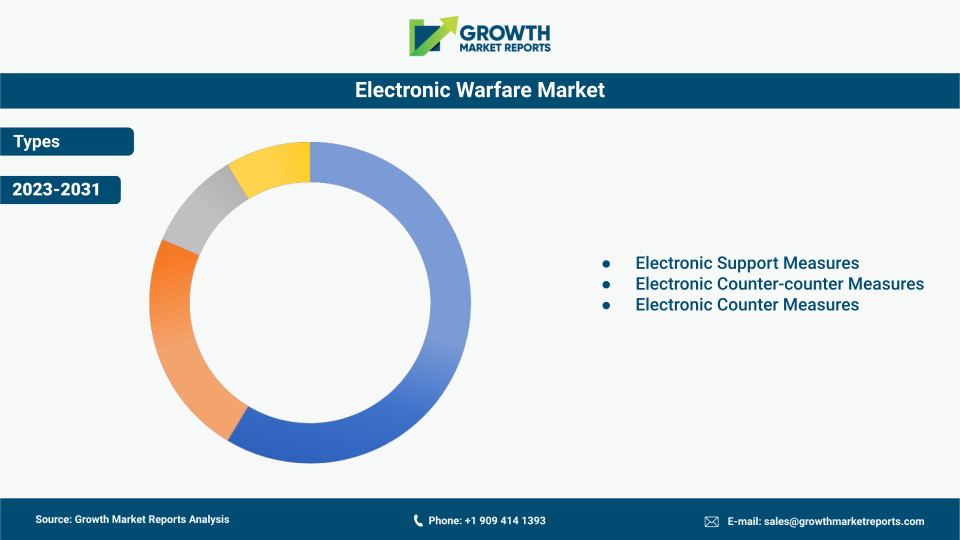
The electronic warfare market has been segmented on the basis of
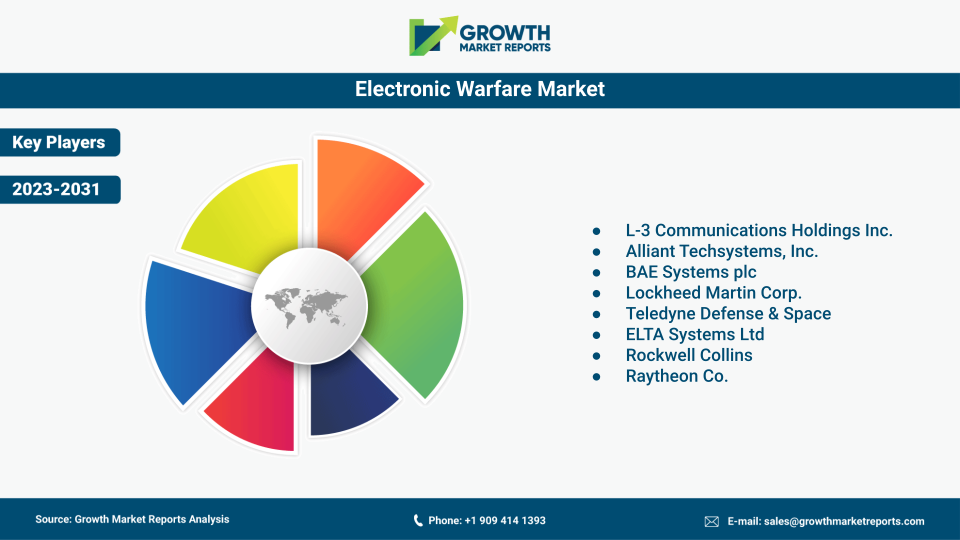
Key players competing in the global electronic warfare market are L-3 Communications Holdings Inc.; Alliant Techsystems, Inc.; BAE Systems plc; Lockheed Martin Corp.; Teledyne Defense & Space; ELTA Systems Ltd; Rockwell Collins; and Raytheon Co.
As part of their efforts to expand their client base and acquire a competitive advantage over competitors, manufacturers operating in the market have adopted various strategic initiatives, such as partnerships, collaborations, and mergers & acquisitions.
Moreover, companies are focusing on investment in R&D for development and launching of new products to maintain their competitive positions in the market.
Challenges include high costs and complexity of advanced systems, rapid technological change, budget constraints in emerging economies, and the increasing sophistication of adversarial electronic warfare capabilities.
Key trends include the integration of artificial intelligence and machine learning, miniaturization of components, convergence of cyber and electronic warfare, and the development of directed energy weapons and quantum-based sensors.
Major players include BAE Systems, Raytheon Technologies, Northrop Grumman, Lockheed Martin, Leonardo S.p.A., Thales Group, L3Harris Technologies, Elbit Systems, Saab AB, and others.
Major applications include military operations, homeland security, law enforcement, border security, and critical infrastructure protection.
Key products include jammers, countermeasure systems, radar warning receivers, directed energy weapons, and specialized software for spectrum management and cyber-electromagnetic operations.
Electronic warfare systems are deployed on airborne (fighter jets, UAVs), naval (warships, submarines), land (armored vehicles, command centers), and space-based (satellites) platforms.
The market is segmented by capability into electronic attack (jamming, deception, directed energy weapons), electronic protection (frequency hopping, signal encryption), and electronic support (signal intelligence, threat detection).
North America leads the market, accounting for about 38% of the global share in 2024, followed by Europe (26%) and Asia Pacific (22%), with Asia Pacific being the fastest-growing region.
Key growth drivers include escalating geopolitical tensions, increased defense spending, modernization initiatives, rapid technological advancements, and the growing importance of electromagnetic spectrum dominance.
The global electronic warfare market reached USD 19.7 billion in 2024 and is projected to grow at a CAGR of 6.5% from 2025 to 2033, reaching USD 34.7 billion by 2033.