Segments - by Product Type (Inline, Insertion, Low Flow, Others), by Application (Water & Wastewater, Chemicals, Food & Beverage, Oil & Gas, Power Generation, Pulp & Paper, Metals & Mining, Others), by End-User (Industrial, Municipal, Commercial, Others)
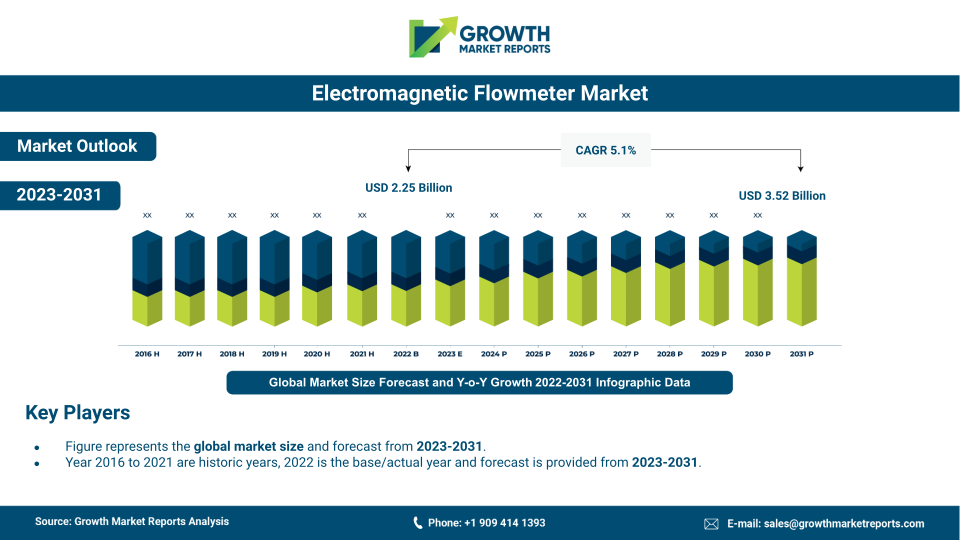
According to our latest research, the global electromagnetic flowmeter market size reached USD 2.65 billion in 2024, reflecting robust demand across multiple industrial and municipal applications. The market is expected to grow at a CAGR of 6.9% from 2025 to 2033, with the market size forecasted to reach USD 5.25 billion by 2033. This consistent growth trajectory is primarily driven by increasing investments in water and wastewater management, ongoing industrial automation, and the rising need for accurate flow measurement in process industries.
One of the key growth factors fueling the expansion of the electromagnetic flowmeter market is the global emphasis on efficient water management and stringent regulations regarding water quality. As governments and regulatory bodies worldwide intensify their focus on sustainable water usage, the demand for precise flow measurement technologies has surged. Electromagnetic flowmeters, known for their high accuracy and reliability in measuring the flow of conductive fluids, have become an essential component in municipal water and wastewater treatment facilities. The growing adoption of smart water infrastructure, coupled with the need for non-invasive and maintenance-free flow measurement solutions, is further accelerating the deployment of these devices. Additionally, the increasing frequency of water scarcity events and the necessity for better resource allocation are compelling utilities and municipalities to invest in advanced flow measurement systems, thereby propelling market growth.
Another significant driver is the rapid industrialization witnessed across emerging economies, particularly in Asia Pacific and Latin America. The expansion of industries such as chemicals, food and beverage, oil and gas, and power generation has led to a surge in demand for sophisticated process control and monitoring equipment. Electromagnetic flowmeters are highly favored in these sectors due to their ability to deliver accurate readings regardless of fluid properties such as density, viscosity, or temperature. The integration of Industry 4.0 technologies, including IoT-enabled flowmeters and real-time data analytics, is also playing a pivotal role in enhancing operational efficiency and reducing downtime. As industries strive to optimize their processes and comply with environmental standards, the adoption of electromagnetic flowmeters is poised to witness sustained growth.
Technological advancements and product innovations are also contributing to the positive outlook of the electromagnetic flowmeter market. Manufacturers are increasingly focusing on developing compact, user-friendly, and energy-efficient flowmeters that cater to a wide range of applications. The introduction of low-flow and insertion-type electromagnetic flowmeters has expanded the scope of use in niche applications such as pharmaceuticals, micro-breweries, and laboratory settings. Furthermore, the integration of wireless communication and remote monitoring capabilities has enhanced the functionality and versatility of these devices, making them suitable for deployment in remote or hazardous environments. Such innovations are not only broadening the application landscape but also offering end-users greater flexibility and cost savings.
Magnetic Flow Meters are a crucial component in the realm of flow measurement technology, particularly valued for their ability to measure the flow of conductive liquids with high accuracy and reliability. These devices operate on the principle of Faraday's law of electromagnetic induction, which states that a voltage is induced when a conductive fluid flows through a magnetic field. This principle allows Magnetic Flow Meters to provide precise measurements without the need for moving parts, making them ideal for applications in water and wastewater management, chemical processing, and food and beverage industries. Their non-intrusive nature and minimal maintenance requirements further enhance their appeal across various sectors, contributing to their widespread adoption and integration into modern flow measurement systems.
From a regional perspective, Asia Pacific continues to dominate the global electromagnetic flowmeter market, accounting for the largest revenue share in 2024. The regionÂ’s leadership is attributed to rapid urbanization, large-scale infrastructure projects, and substantial investments in water management and industrial automation. North America and Europe also represent significant markets, characterized by early adoption of advanced technologies and stringent regulatory frameworks. Meanwhile, the Middle East and Africa, as well as Latin America, are emerging as high-potential markets driven by growing industrialization and increasing government focus on sustainable resource management. Overall, the global electromagnetic flowmeter market is well-positioned for steady growth, underpinned by diverse applications, technological progress, and a favorable regulatory environment.
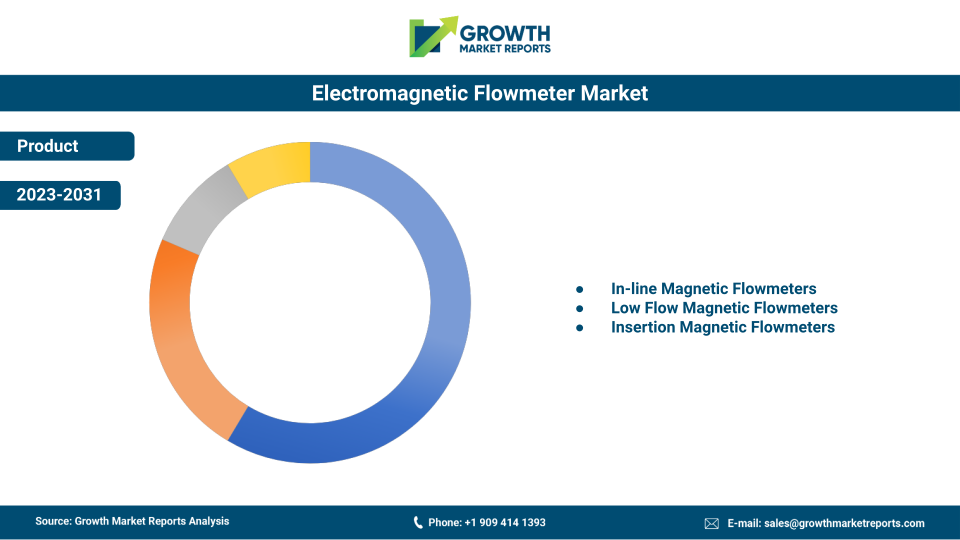
The product type segment of the electromagnetic flowmeter market is broadly categorized into Inline, Insertion, Low Flow, and Others. Inline electromagnetic flowmeters represent the most widely used product type, primarily due to their superior accuracy and reliability in measuring the flow of conductive liquids. These devices are extensively deployed in water and wastewater treatment plants, chemical processing industries, and power generation facilities. Inline flowmeters are typically installed directly into the pipeline, ensuring minimal pressure drop and maintenance requirements. Their robust construction and ability to handle a wide range of flow rates make them ideal for large-scale industrial and municipal applications. The growing trend toward automation and digitalization in process industries has further boosted the adoption of inline electromagnetic flowmeters, as they can be easily integrated with advanced control systems for real-time monitoring and data analysis.
Insertion electromagnetic flowmeters are gaining traction, especially in retrofit and large-diameter pipeline applications. Unlike inline models, insertion flowmeters can be installed without cutting or interrupting the flow in existing pipelines, making them a cost-effective solution for upgrading older infrastructure. These flowmeters are particularly popular in water distribution networks, irrigation systems, and district cooling applications where minimal disruption to operations is critical. The ease of installation and maintenance, coupled with lower upfront costs, has made insertion flowmeters a preferred choice for utilities and industries looking to enhance their flow measurement capabilities without significant capital investment. Technological advancements such as hot-tap installation and improved sensor designs are further driving the demand for insertion-type electromagnetic flowmeters.
The Industrial Magnetic Flow Meter is specifically designed to meet the rigorous demands of industrial applications, offering robust performance and durability in challenging environments. These flow meters are engineered to withstand high pressures, extreme temperatures, and corrosive fluids, making them indispensable in industries such as oil and gas, power generation, and pulp and paper. The integration of advanced technologies, such as digital communication and IoT capabilities, enables Industrial Magnetic Flow Meters to provide real-time data and diagnostics, enhancing process control and operational efficiency. As industries continue to evolve and prioritize sustainability and resource optimization, the demand for reliable and efficient flow measurement solutions like the Industrial Magnetic Flow Meter is expected to grow significantly.
Low flow electromagnetic flowmeters are specifically designed for applications that require precise measurement of small volumes of conductive liquids. These devices are widely used in pharmaceuticals, food and beverage production, laboratory research, and specialty chemical processing. The ability to accurately measure low flow rates, combined with features such as compact size and high sensitivity, makes these flowmeters indispensable in environments where even minor deviations in flow can impact product quality and process efficiency. Manufacturers are continually innovating to enhance the performance and versatility of low flow electromagnetic flowmeters, introducing models with advanced signal processing, digital communication, and enhanced chemical resistance to cater to a broader range of applications.
The "Others" category in the product type segment includes specialized electromagnetic flowmeters designed for unique or challenging applications. These may include hybrid models that combine electromagnetic and ultrasonic technologies, portable flowmeters for field measurements, and customized solutions for harsh or hazardous environments. The demand for such specialized products is driven by the need for tailored solutions that address specific operational challenges, such as high-pressure conditions, corrosive fluids, or remote monitoring requirements. As industries continue to diversify and seek customized solutions, the market for specialized and hybrid electromagnetic flowmeters is expected to witness steady growth.
Overall, the product type segment of the electromagnetic flowmeter market is characterized by a diverse range of offerings, each catering to specific application requirements and operational constraints. The ongoing trend toward miniaturization, digitalization, and enhanced connectivity is expected to further expand the product portfolio and drive innovation in this segment. As end-users increasingly prioritize accuracy, ease of installation, and cost-effectiveness, manufacturers are focusing on developing next-generation flowmeters that deliver superior performance and value.
The versatility of the Magnetic Flow Meter extends beyond traditional applications, finding use in specialized sectors such as pharmaceuticals, biotechnology, and environmental monitoring. In these fields, the ability to accurately measure low flow rates and handle a variety of fluid types is critical for ensuring product quality and compliance with stringent regulatory standards. Magnetic Flow Meters are increasingly being integrated with digital platforms and data analytics tools, allowing for enhanced monitoring and control of complex processes. This integration not only improves operational efficiency but also supports the development of innovative solutions tailored to the specific needs of each industry, reinforcing the Magnetic Flow Meter's role as a vital tool in modern flow measurement technology.
| Attributes | Details |
| Report Title | Electromagnetic Flowmeter Market Research Report 2033 |
| By Product Type | Inline, Insertion, Low Flow, Others |
| By Application | Water & Wastewater, Chemicals, Food & Beverage, Oil & Gas, Power Generation, Pulp & Paper, Metals & Mining, Others |
| By End-User | Industrial, Municipal, Commercial, Others |
| Regions Covered | North America, Europe, APAC, Latin America, MEA |
| Base Year | 2024 |
| Historic Data | 2018-2023 |
| Forecast Period | 2025-2033 |
| Number of Pages | 250 |
| Number of Tables & Figures | 321 |
| Customization Available | Yes, the report can be customized as per your need. |
The application segment of the electromagnetic flowmeter market is highly diverse, encompassing industries such as Water & Wastewater, Chemicals, Food & Beverage, Oil & Gas, Power Generation, Pulp & Paper, Metals & Mining, and Others. Water and wastewater management represents the largest application sector, accounting for over 35% of the global market share in 2024. The adoption of electromagnetic flowmeters in this sector is driven by the need for accurate and reliable measurement of water flow in treatment plants, distribution networks, and irrigation systems. Regulatory compliance, leak detection, and efficient resource allocation are among the key factors influencing the deployment of flowmeters in municipal and industrial water management projects. The ongoing investments in smart water infrastructure and the integration of IoT technologies are further boosting the demand for advanced electromagnetic flowmeters in this application area.
The chemicals industry is another major application area for electromagnetic flowmeters, owing to the critical importance of precise flow measurement in chemical processing and manufacturing. These flowmeters are highly valued for their ability to handle corrosive and abrasive fluids without compromising measurement accuracy. The increasing focus on process optimization, safety, and environmental compliance has led to widespread adoption of electromagnetic flowmeters in chemical plants, refineries, and petrochemical facilities. The integration of advanced diagnostics, remote monitoring, and predictive maintenance features is enabling chemical manufacturers to enhance operational efficiency and minimize downtime, further driving market growth in this segment.
In the food and beverage industry, electromagnetic flowmeters are extensively used for measuring the flow of liquids such as milk, juices, beer, and other beverages during production and packaging processes. The non-intrusive nature of these flowmeters, combined with their ability to deliver hygienic and contamination-free measurements, makes them ideal for applications where product quality and safety are paramount. Compliance with food safety regulations and the need for accurate batching, blending, and dosing are key factors driving the adoption of electromagnetic flowmeters in this sector. Additionally, the growing trend toward automation and digitalization in food processing plants is creating new opportunities for the deployment of smart and connected flow measurement solutions.
The oil and gas, power generation, pulp and paper, and metals and mining industries also represent significant application areas for electromagnetic flowmeters. In oil and gas, these devices are used for monitoring water injection, produced water, and other conductive fluids in upstream and downstream operations. In power generation, electromagnetic flowmeters play a critical role in measuring cooling water, boiler feedwater, and condensate flows. The pulp and paper industry relies on these flowmeters for monitoring process water, chemicals, and pulp slurry flows, while the metals and mining sector uses them for measuring slurry and process water in mineral processing plants. Each of these industries presents unique challenges and requirements, driving the demand for specialized and ruggedized electromagnetic flowmeter solutions.
The "Others" application segment includes niche and emerging areas such as pharmaceuticals, biotechnology, environmental monitoring, and research laboratories. The increasing need for precise and reliable flow measurement in these sectors, coupled with advancements in miniaturization and digitalization, is expected to drive further growth in this segment. Overall, the application landscape for electromagnetic flowmeters is expanding rapidly, fueled by diverse industry requirements, technological innovation, and a growing emphasis on process efficiency and regulatory compliance.
The end-user segment of the electromagnetic flowmeter market is classified into Industrial, Municipal, Commercial, and Others. The industrial sector holds the largest share of the market, accounting for more than 55% of total revenue in 2024. This dominance is attributed to the widespread use of electromagnetic flowmeters in process industries such as chemicals, oil and gas, power generation, food and beverage, and pulp and paper. Industrial end-users prioritize accuracy, reliability, and durability in flow measurement solutions, making electromagnetic flowmeters the preferred choice for critical process monitoring and control. The ongoing adoption of Industry 4.0 technologies, including automation, IoT, and predictive maintenance, is further driving the demand for advanced and connected flowmeters in industrial environments.
The municipal sector represents the second-largest end-user segment, driven by the growing need for efficient water and wastewater management in urban and rural areas. Municipalities and utilities are increasingly investing in smart water infrastructure to address challenges related to water scarcity, leakage, and regulatory compliance. Electromagnetic flowmeters play a vital role in monitoring water distribution networks, detecting leaks, and ensuring accurate billing and resource allocation. The integration of remote monitoring, wireless communication, and data analytics is enabling municipalities to enhance operational efficiency and reduce water losses. Government initiatives and funding for water infrastructure development are expected to sustain the growth of the municipal end-user segment in the coming years.
The commercial sector, although smaller in terms of market share, is witnessing steady growth as businesses and institutions seek to optimize their water and energy usage. Commercial buildings, hotels, shopping malls, hospitals, and educational institutions are increasingly deploying electromagnetic flowmeters for monitoring water consumption, ensuring compliance with environmental regulations, and reducing operational costs. The emphasis on sustainability, green building certifications, and corporate social responsibility is driving the adoption of advanced flow measurement solutions in the commercial sector. Manufacturers are responding to this trend by offering compact, easy-to-install, and cost-effective flowmeters tailored to the needs of commercial end-users.
The "Others" category in the end-user segment includes specialized applications in sectors such as pharmaceuticals, biotechnology, agriculture, and research laboratories. These end-users require highly accurate and reliable flow measurement solutions for critical processes, quality control, and research activities. The demand for miniaturized, portable, and high-precision electromagnetic flowmeters is growing in these niche markets, driven by advancements in sensor technology and digital communication. As industries continue to diversify and seek customized solutions, the market for specialized flowmeters in the "Others" end-user segment is expected to expand steadily.
Overall, the end-user segment of the electromagnetic flowmeter market is characterized by a broad and diverse customer base, each with unique requirements and operational challenges. The ongoing trends toward digitalization, sustainability, and process optimization are expected to drive further growth and innovation in this segment, as manufacturers strive to develop tailored solutions that meet the evolving needs of industrial, municipal, commercial, and specialized end-users.
The electromagnetic flowmeter market presents numerous opportunities for growth and innovation, particularly in the areas of smart water management and industrial automation. The increasing adoption of IoT-enabled flowmeters and real-time data analytics is enabling utilities and industries to optimize their operations, reduce energy consumption, and enhance resource allocation. The integration of wireless communication, remote monitoring, and predictive maintenance features is creating new avenues for product differentiation and value-added services. Furthermore, the rising emphasis on sustainability, environmental compliance, and water conservation is driving demand for advanced flow measurement solutions in both developed and emerging markets. Manufacturers that invest in research and development, product innovation, and digital transformation are well-positioned to capitalize on these opportunities and gain a competitive edge in the market.
Emerging markets in Asia Pacific, Latin America, and Africa offer significant growth potential for the electromagnetic flowmeter market, driven by rapid urbanization, industrialization, and infrastructure development. Governments in these regions are investing heavily in water and wastewater management, energy generation, and industrial modernization, creating a favorable environment for the adoption of advanced flow measurement technologies. The increasing focus on smart cities, digital infrastructure, and sustainable resource management is expected to drive further demand for electromagnetic flowmeters in these high-growth markets. Strategic partnerships, local manufacturing, and customized solutions tailored to regional requirements can help manufacturers tap into these opportunities and expand their market presence.
Despite the positive outlook, the electromagnetic flowmeter market faces certain restraining factors, particularly related to high initial costs and technical limitations. The upfront investment required for advanced electromagnetic flowmeters, especially those with digital and wireless capabilities, can be a barrier for small and medium-sized enterprises and budget-constrained municipalities. Additionally, electromagnetic flowmeters are limited to measuring conductive fluids, which restricts their applicability in certain industries and processes. Competition from alternative flow measurement technologies, such as ultrasonic and Coriolis flowmeters, also poses a threat to market growth. Addressing these challenges through cost reduction, product diversification, and targeted marketing strategies will be crucial for sustaining long-term growth in the electromagnetic flowmeter market.
Asia Pacific remains the dominant region in the global electromagnetic flowmeter market, accounting for approximately 39% of total revenue in 2024, or around USD 1.03 billion. The regionÂ’s leadership is driven by rapid industrialization, urbanization, and large-scale investments in water infrastructure and process industries. Countries such as China, India, Japan, and South Korea are at the forefront of adopting advanced flow measurement technologies to address challenges related to water scarcity, pollution, and industrial efficiency. The ongoing development of smart cities, digital infrastructure, and sustainable resource management initiatives is expected to further boost demand for electromagnetic flowmeters in Asia Pacific, with the market projected to grow at a robust CAGR of 7.4% through 2033.
North America represents the second-largest regional market, with a market size of approximately USD 750 million in 2024. The regionÂ’s growth is underpinned by early adoption of advanced technologies, stringent regulatory frameworks, and a strong focus on environmental compliance and sustainability. The United States and Canada are leading markets for electromagnetic flowmeters, driven by investments in water and wastewater management, industrial automation, and energy generation. The integration of IoT, cloud computing, and predictive analytics in flow measurement solutions is enabling utilities and industries in North America to enhance operational efficiency and reduce costs. The region is expected to maintain steady growth, supported by ongoing modernization of infrastructure and increasing demand for smart and connected flowmeters.
Europe accounts for a significant share of the global electromagnetic flowmeter market, with a market size of around USD 600 million in 2024. The region is characterized by stringent environmental regulations, high levels of industrial automation, and a strong emphasis on sustainability and resource efficiency. Countries such as Germany, the United Kingdom, France, and Italy are major contributors to market growth, driven by investments in water management, energy transition, and digitalization. The adoption of advanced flow measurement technologies is further supported by government initiatives and funding for research and innovation. Meanwhile, the Middle East and Africa, as well as Latin America, are emerging as high-potential markets, collectively accounting for approximately USD 270 million in 2024. These regions are experiencing growing demand for electromagnetic flowmeters due to increasing industrialization, urbanization, and government focus on sustainable development.
The competitive landscape of the electromagnetic flowmeter market is characterized by the presence of several global and regional players, each vying for market share through product innovation, strategic partnerships, and expansion into emerging markets. Leading manufacturers are focusing on enhancing their product portfolios by incorporating advanced features such as digital communication, wireless connectivity, and remote monitoring capabilities. The integration of IoT, cloud computing, and data analytics is enabling companies to offer value-added services such as predictive maintenance, real-time diagnostics, and performance optimization. As competition intensifies, differentiation through technology, quality, and customer service has become a key success factor for market participants.
Mergers, acquisitions, and strategic alliances are common strategies adopted by leading companies to strengthen their market position and expand their geographic footprint. By acquiring complementary businesses, companies can enhance their product offerings, access new customer segments, and leverage synergies in research and development, manufacturing, and distribution. Collaboration with technology providers, system integrators, and end-users is also helping manufacturers develop customized solutions that address specific industry requirements and operational challenges. The focus on sustainability, energy efficiency, and regulatory compliance is driving innovation in product design, materials, and manufacturing processes, further intensifying competition in the market.
Regional players and new entrants are also making significant inroads in the electromagnetic flowmeter market by offering cost-effective and tailored solutions for local markets. These companies often focus on niche applications, specialized industries, or underserved regions, leveraging their agility and customer proximity to gain a competitive advantage. The rise of digitalization and e-commerce is enabling smaller players to reach a wider audience and compete effectively with established brands. However, maintaining high standards of quality, reliability, and customer support remains a critical challenge for new entrants seeking to establish a foothold in the market.
Some of the major companies operating in the global electromagnetic flowmeter market include Siemens AG, ABB Ltd., Emerson Electric Co., Endress+Hauser Group, Krohne Group, Yokogawa Electric Corporation, Honeywell International Inc., Badger Meter Inc., Azbil Corporation, and Schneider Electric SE. Siemens AG is recognized for its comprehensive range of process automation solutions, including advanced electromagnetic flowmeters with digital integration and diagnostics. ABB Ltd. offers a wide portfolio of flow measurement products, emphasizing accuracy, reliability, and sustainability. Emerson Electric Co. and Endress+Hauser Group are known for their innovative solutions, robust product design, and strong global presence. Krohne Group and Yokogawa Electric Corporation are also prominent players, focusing on technological advancements and customer-centric solutions.
Honeywell International Inc. and Badger Meter Inc. have established themselves as leading providers of smart and connected flow measurement solutions, leveraging IoT, wireless communication, and data analytics to deliver enhanced value to customers. Azbil Corporation and Schneider Electric SE are expanding their presence in emerging markets, offering tailored solutions for water management, industrial automation, and energy efficiency. These companies are investing heavily in research and development, digital transformation, and sustainability initiatives to maintain their competitive edge and address evolving customer needs. Overall, the electromagnetic flowmeter market is poised for continued innovation and growth, driven by technological advancements, expanding applications, and a dynamic competitive landscape.
The Electromagnetic Flowmeter market has been segmented on the basis of
Key players competing in the electromagnetic flowmeter market include ABB Group, ONICON Incorporated, Badger Meter, Inc., McCrometer, Inc., Liquid Controls Group (IDEX Corporation), Endress+Hauser Group, Isoil Industria SpA, KROHNE Messtechnik GmbH, Tokyo Keiso Co., Ltd., Aichi Tokei Denki Co. Ltd. And VTM-UTAM.
Some of these players are using several market strategies such as mergers, acquisitions, partnerships, collaborations, capacity expansion, and product launches to enhance their market shares. For instances,
In March 2020, Micro Motion ProcessViz was introduced by Emerson, which is a cost-effective software solution for flow meter process data visualization. It provides significant visualization of data and translates into directly functional information, aiding plant operators in the food and beverage, chemical, and oil and gas industry.
In March 2020, Yokogawa Electric Corporation Hitachi Capital Corporation, , and Amnimo Inc., entered into a extensive partnership agreement with the aim of providing new services by adding Industrial IoT to each company's lease equipment and technologies. This alliance is projected to provide high value-added services, such as offering consultation on the efficient use of equipment and measurement of operating status data.
In May 2019, Endress+Hauser invested in sensor technology. Its subsidiary, i.e. Innovative Sensor Technology IST AG, has enlarged its plant in Ebnat-Kappel, Switzerland. This is likely to nutrilize the rising demand for innovative sensors, and promotes the growth of innovative Sensor Technology IST AG.
In March 2017, Gas launched & GE Oil a new product - TransPort PT900 Portable Ultrasonic Flow meter, which is a clamp-on meter for liquid flow measurement. This device has clamping fixtures and transmitter that enable application-driven user interface on an Android tablet.
Yes, the report offers customization options to meet specific research or business requirements.
Challenges include high initial costs, limitations to measuring only conductive fluids, and competition from alternative technologies like ultrasonic and Coriolis flowmeters.
Major players include Siemens AG, ABB Ltd., Emerson Electric Co., Endress+Hauser Group, Krohne Group, Yokogawa Electric Corporation, Honeywell International Inc., Badger Meter Inc., Azbil Corporation, and Schneider Electric SE.
They are used for accurate flow measurement in treatment plants, distribution networks, irrigation systems, leak detection, and smart water infrastructure projects.
Advancements include IoT-enabled flowmeters, wireless communication, remote monitoring, real-time data analytics, miniaturization, and enhanced chemical resistance.
Asia Pacific dominates the market, followed by North America and Europe. Emerging markets in Latin America, the Middle East, and Africa are also showing significant growth potential.
The main product types are Inline, Insertion, Low Flow, and specialized models (Others) such as hybrid and portable electromagnetic flowmeters.
Electromagnetic flowmeters are widely used in water and wastewater, chemicals, food and beverage, oil and gas, power generation, pulp and paper, metals and mining, pharmaceuticals, and research laboratories.
Key growth drivers include increasing investments in water and wastewater management, industrial automation, stringent water quality regulations, and the need for accurate flow measurement in process industries.
The global electromagnetic flowmeter market reached USD 2.65 billion in 2024 and is projected to grow at a CAGR of 6.9% from 2025 to 2033, reaching USD 5.25 billion by 2033.