Electric Rice Cooker Market Research Report 2033

Electric Rice Cooker Market Research Report 2033

Segments - by Product Type (Standard, Multifunctional, Induction Heating, Others), by Capacity (Small, Medium, Large), by Application (Household, Commercial), by Distribution Channel (Online Stores, Supermarkets/Hypermarkets, Specialty Stores, Others)

https://growthmarketreports.com/Debadatta
Author : Debadatta Patel
https://growthmarketreports.com/Vaibhav
Fact-checked by : V. Chandola
https://growthmarketreports.com/Shruti
Editor : Shruti Bhat

Upcoming | Report ID :CG-319 | 4.4 Rating | 56 Reviews | 267 Pages | Format : Docx PDF

Report Description


Electric Rice Cooker Market Outlook

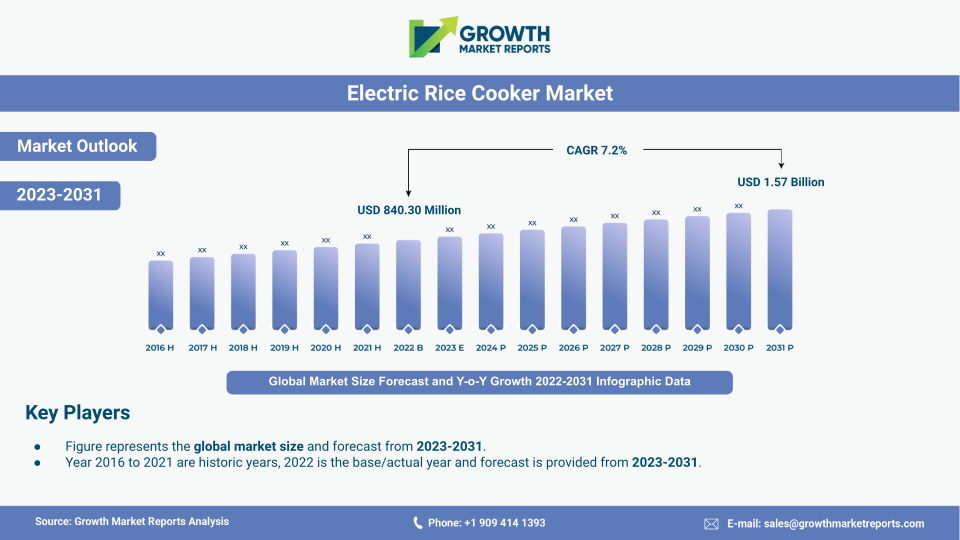
According to our latest research, the global electric rice cooker market size reached USD 5.6 billion in 2024, demonstrating robust growth fueled by evolving consumer lifestyles and technological advancements. The market is projected to expand at a CAGR of 6.2% during the forecast period, with the value anticipated to reach USD 9.6 billion by 2033. This steady growth is primarily attributed to rising urbanization, increased disposable incomes, and the growing preference for convenient cooking solutions across both developed and emerging economies.

One of the primary growth factors driving the electric rice cooker market is the significant shift in consumer behavior towards convenience-oriented kitchen appliances. As urban populations burgeon and dual-income households become more prevalent, time-saving devices such as electric rice cookers are increasingly sought after. These appliances offer a hassle-free cooking experience, automate the rice preparation process, and often come equipped with advanced features such as timers, keep-warm functions, and multiple cooking modes. The integration of smart technology, including IoT-enabled controls and app-based monitoring, is further enhancing user convenience and driving market adoption, especially among tech-savvy consumers.

Another critical driver is the diversification of product offerings by manufacturers to cater to various consumer needs and preferences. The market has witnessed the introduction of multifunctional and induction heating rice cookers, which not only cook rice but also support a wide range of culinary applications such as steaming, slow cooking, and baking. This versatility appeals to consumers who seek value-added kitchen appliances capable of performing multiple tasks, thereby optimizing kitchen space and reducing the need for multiple devices. Additionally, the trend toward healthy eating and precise cooking has led to increased demand for rice cookers with advanced temperature and pressure control features, further propelling market growth.

The expanding commercial segment, particularly in the hospitality, catering, and foodservice industries, is also contributing significantly to the electric rice cooker market's upward trajectory. Restaurants, hotels, and institutional kitchens require reliable, high-capacity appliances that can consistently deliver large quantities of perfectly cooked rice. The adoption of electric rice cookers in these settings ensures operational efficiency, uniform food quality, and reduced labor costs. Furthermore, as global cuisines become more popular and rice consumption rises in non-traditional markets, the need for efficient rice preparation solutions in commercial settings continues to grow, supporting the overall market expansion.

From a regional perspective, Asia Pacific remains the dominant market for electric rice cookers, accounting for the largest share in 2024. This is primarily due to the region's cultural reliance on rice as a staple food, high population density, and rapid urbanization. However, North America and Europe are witnessing increasing adoption rates, driven by changing culinary preferences, the influence of Asian cuisines, and the proliferation of specialty kitchen appliances. Latin America and the Middle East & Africa are also emerging as promising markets, with rising middle-class populations and growing awareness of modern cooking technologies contributing to the market's global growth dynamics.

Global Electric Rice Cooker Industry Outlook

Product Type Analysis

The electric rice cooker market is segmented by product type into standard, multifunctional, induction heating, and others. Standard rice cookers remain widely popular due to their affordability, simplicity, and ease of use, making them a preferred choice for households seeking basic rice preparation functionalities. These models typically offer one-touch operation and are ideal for consumers who prioritize reliability and cost-effectiveness over advanced features. Despite their basic design, continuous improvements in energy efficiency and safety features have helped standard rice cookers maintain a significant presence in both developed and emerging markets.

Multifunctional rice cookers are rapidly gaining traction, especially among urban consumers who value versatility and convenience. These appliances are engineered to perform a variety of cooking tasks beyond rice preparation, including steaming, slow cooking, baking, and even yogurt making. The inclusion of programmable settings, digital displays, and preset menus enhances user experience and allows for greater culinary experimentation. As consumers increasingly seek to optimize kitchen space and reduce clutter, multifunctional rice cookers are becoming a popular investment, particularly in metropolitan areas with limited kitchen real estate.

Induction heating rice cookers represent the premium segment of the market, distinguished by their advanced technology and superior cooking performance. Unlike conventional models, induction heating cookers utilize electromagnetic currents to heat the entire inner pot, resulting in more precise temperature control and uniform cooking. This technology enables the preparation of a wider range of rice varieties and dishes, catering to discerning consumers who demand restaurant-quality results at home. Although priced higher than standard and multifunctional models, induction heating rice cookers have seen growing adoption among affluent households and culinary enthusiasts, particularly in Asia Pacific and North America.

The "others" category encompasses specialized rice cookers, such as those designed for travel, compact single-serving models, and smart rice cookers equipped with IoT connectivity. These niche products cater to specific consumer segments, including frequent travelers, students, and tech-savvy users interested in remote control and monitoring capabilities. The growing trend toward smart homes and connected kitchen appliances is expected to drive further innovation in this segment, with manufacturers focusing on integrating voice assistants, app-based controls, and energy-saving features to differentiate their offerings in an increasingly competitive market.

Report Scope

Attributes Details
Report Title Electric Rice Cooker Market Research Report 2033
By Product Type Standard, Multifunctional, Induction Heating, Others
By Capacity Small, Medium, Large
By Application Household, Commercial
By Distribution Channel Online Stores, Supermarkets/Hypermarkets, Specialty Stores, Others
Regions Covered North America, Europe, APAC, Latin America, MEA
Base Year 2024
Historic Data 2018-2023
Forecast Period 2025-2033
Number of Pages 267
Number of Tables & Figures 265
Customization Available Yes, the report can be customized as per your need.

Capacity Analysis

Capacity is a critical factor influencing consumer purchasing decisions in the electric rice cooker market, with products generally categorized as small, medium, or large. Small-capacity rice cookers, typically ranging from 1 to 3 liters, are ideal for singles, couples, and small families. Their compact size and portability make them well-suited for apartments, dormitories, and travel purposes. The demand for small-capacity rice cookers is particularly strong in urban areas, where living spaces are limited and consumers seek efficient, space-saving kitchen solutions. Manufacturers are responding to this trend by introducing stylish, compact models with user-friendly features and attractive designs.

Medium-capacity rice cookers, generally accommodating 4 to 6 liters, represent the most popular segment among average-sized households. These models strike a balance between capacity and versatility, making them suitable for families of four to six members. Medium-capacity rice cookers often come equipped with additional features such as multi-cooking modes, delay timers, and keep-warm functions, enhancing their appeal to a broad consumer base. As family sizes and meal preparation needs vary across regions, the medium-capacity segment continues to witness steady growth, driven by its adaptability and value proposition.

Large-capacity rice cookers, with capacities exceeding 6 liters, are primarily targeted at commercial establishments, including restaurants, hotels, and catering services. These high-volume appliances are engineered to deliver consistent performance and durability, essential for environments that require the preparation of large quantities of rice on a daily basis. The commercial sector's increasing focus on operational efficiency and food quality has led to a growing preference for large-capacity rice cookers equipped with advanced safety features, energy-saving technologies, and easy-to-clean components. The rising popularity of buffet-style dining and institutional catering in emerging markets is further bolstering demand in this segment.

Manufacturers are also exploring modular and customizable capacity options to cater to evolving consumer needs. Some modern rice cookers offer adjustable inner pots or stackable trays, allowing users to increase or decrease capacity as required. This flexibility is particularly attractive to consumers who entertain guests frequently or have fluctuating meal preparation requirements. As the market matures, capacity-based segmentation is expected to remain a key differentiator, with manufacturers focusing on innovation and customization to address diverse consumer preferences across household and commercial applications.

Application Analysis

The electric rice cooker market is bifurcated by application into household and commercial segments, each exhibiting distinct growth patterns and consumer expectations. The household segment dominates the market, accounting for the majority of unit sales in 2024. The proliferation of nuclear families, busy lifestyles, and the growing influence of global cuisines have made electric rice cookers a staple in modern kitchens. Households are increasingly seeking appliances that offer convenience, reliability, and versatility, driving demand for multifunctional and smart rice cookers. The rising trend of home cooking, fueled by health consciousness and the popularity of meal prepping, is also contributing to sustained growth in the household segment.

In contrast, the commercial segment, while smaller in terms of unit volume, commands a significant share of the market's value due to the higher price points and advanced features required by professional kitchens. Restaurants, hotels, catering services, and institutional kitchens rely on large-capacity, heavy-duty rice cookers to ensure consistent food quality and operational efficiency. The adoption of electric rice cookers in commercial settings is driven by the need to streamline kitchen operations, reduce labor costs, and maintain food safety standards. As the foodservice industry continues to expand globally, particularly in emerging markets, the commercial application segment is poised for robust growth.

The boundaries between household and commercial applications are increasingly blurring, as manufacturers introduce hybrid models that cater to both segments. For instance, high-capacity rice cookers with advanced programming and safety features are finding favor among large families and home-based catering businesses. Conversely, compact, energy-efficient models are being adopted by small restaurants and cafes with limited kitchen space. This convergence of application segments is creating new opportunities for innovation and market expansion, with manufacturers focusing on modular designs and customizable features to address diverse user needs.

Furthermore, the growing trend of smart kitchens and connected appliances is influencing application-based adoption patterns. Households are increasingly interested in rice cookers that can be integrated with home automation systems, while commercial establishments prioritize models with remote monitoring, energy management, and predictive maintenance capabilities. As digitalization continues to reshape the kitchen appliance landscape, application-based product differentiation will remain a key driver of competitive advantage in the electric rice cooker market.

Distribution Channel Analysis

The electric rice cooker market is segmented by distribution channel into online stores, supermarkets/hypermarkets, specialty stores, and others. Online stores have emerged as a dominant sales channel, particularly in the wake of the global e-commerce boom. The convenience of online shopping, coupled with access to a wide variety of brands and models, has made digital platforms the preferred choice for many consumers. E-commerce giants and dedicated appliance websites offer detailed product information, customer reviews, and competitive pricing, enabling informed purchasing decisions. The proliferation of online-exclusive discounts, bundled offers, and doorstep delivery further strengthens the online channel's appeal, especially among younger, tech-savvy consumers.

Supermarkets and hypermarkets continue to play a vital role in the electric rice cooker market, particularly in regions where traditional retail remains strong. These outlets offer consumers the opportunity to physically examine products, compare features, and benefit from in-store promotions. The visibility and accessibility of rice cookers in high-traffic retail environments contribute to impulse purchases and brand awareness. Leading retailers are increasingly investing in dedicated kitchen appliance sections and experiential displays to enhance the in-store shopping experience and drive sales growth.

Specialty stores, focusing on home appliances and kitchenware, cater to consumers seeking expert advice and personalized service. These outlets often stock a curated selection of premium and niche rice cooker models, targeting discerning customers who prioritize quality, performance, and after-sales support. Specialty stores are particularly popular in urban centers and affluent neighborhoods, where consumers are willing to invest in high-end appliances and value added services such as installation, maintenance, and product demonstrations. The personalized shopping experience offered by specialty stores continues to differentiate them from mass-market retail channels.

The "others" category includes direct sales, wholesale distributors, and emerging retail formats such as pop-up shops and experiential showrooms. These alternative channels are gaining traction as manufacturers seek to expand their reach and engage directly with consumers. Direct sales, in particular, enable brands to build stronger customer relationships, gather feedback, and offer customized solutions. As the retail landscape evolves, the integration of omnichannel strategies, combining online and offline touchpoints, is becoming increasingly important for market players seeking to maximize their distribution reach and enhance customer engagement.

Opportunities & Threats

The electric rice cooker market is ripe with opportunities driven by technological innovation and evolving consumer preferences. The integration of smart technology, such as IoT connectivity, voice control, and app-based operation, is creating new avenues for product differentiation and value addition. Manufacturers have the opportunity to capitalize on the growing trend of smart homes by developing rice cookers that seamlessly integrate with home automation systems and offer personalized cooking experiences. Additionally, the increasing awareness of energy efficiency and sustainability presents opportunities for the development of eco-friendly rice cookers with reduced power consumption, recyclable materials, and advanced safety features. The expansion of online retail and direct-to-consumer sales channels further enables brands to reach new customer segments and build lasting relationships through personalized marketing and after-sales support.

Another significant opportunity lies in the untapped potential of emerging markets, particularly in Latin America, the Middle East, and Africa. As disposable incomes rise and urbanization accelerates in these regions, demand for modern kitchen appliances, including electric rice cookers, is expected to surge. Manufacturers can leverage localized marketing strategies, product customization, and strategic partnerships with regional distributors to establish a strong foothold in these high-growth markets. Furthermore, the increasing popularity of international cuisines and the globalization of food culture are driving demand for rice cookers in non-traditional markets, creating opportunities for product innovation and market expansion beyond Asia Pacific.

Despite these opportunities, the electric rice cooker market faces several restraining factors that could impede growth. One of the primary challenges is market saturation in developed regions, where household penetration rates are already high and replacement cycles are lengthening. Price sensitivity among consumers, particularly in emerging markets, poses another challenge, as low-cost alternatives and counterfeit products can erode brand value and profitability. Additionally, concerns regarding product durability, energy consumption, and environmental impact may deter environmentally conscious consumers from adopting electric rice cookers. To address these threats, manufacturers must focus on continuous innovation, quality assurance, and sustainable product development to maintain competitiveness and drive long-term market growth.

Regional Outlook

Asia Pacific continues to dominate the global electric rice cooker market, accounting for a substantial share of over 60% of total revenue in 2024 with a market value of approximately USD 3.4 billion. The region's leadership is underpinned by the cultural significance of rice as a dietary staple, high population density, and rapid urbanization in countries such as China, India, Japan, and South Korea. The proliferation of nuclear families and rising disposable incomes have fueled the adoption of modern kitchen appliances, including electric rice cookers, across both urban and rural areas. Additionally, the presence of leading manufacturers and continuous product innovation contribute to the region's robust market performance. The Asia Pacific market is expected to maintain a healthy growth rate, supported by ongoing urbanization and the increasing popularity of smart kitchen technologies.

North America represents a rapidly growing market, with a value of USD 1.1 billion in 2024 and an expected CAGR of 7.1% through 2033. The region's growth is driven by shifting dietary preferences, the influence of Asian cuisines, and the widespread adoption of convenient kitchen appliances. The United States and Canada are witnessing increasing demand for multifunctional and induction heating rice cookers, particularly among health-conscious consumers and culinary enthusiasts. The expansion of e-commerce platforms and the growing prevalence of smart home devices are further accelerating market penetration in North America. Manufacturers are focusing on product differentiation, advanced features, and targeted marketing campaigns to capture a larger share of this lucrative market.

Europe, Latin America, and the Middle East & Africa collectively account for the remaining market share, with a combined value of approximately USD 1.1 billion in 2024. Europe is experiencing steady growth, supported by the rising popularity of international cuisines and the increasing adoption of energy-efficient kitchen appliances. Latin America and the Middle East & Africa are emerging as high-potential markets, driven by rising urbanization, expanding middle-class populations, and growing awareness of modern cooking technologies. While these regions currently represent a smaller portion of the global market, their growth prospects are promising, with increasing investments in distribution networks and localized product offerings expected to drive future expansion.

Electric Rice Cooker Market Statistics

Competitor Outlook

The electric rice cooker market is characterized by intense competition, with a diverse mix of global and regional players vying for market share. The competitive landscape is shaped by continuous product innovation, aggressive pricing strategies, and a strong focus on brand differentiation. Leading manufacturers are investing heavily in research and development to introduce advanced features such as induction heating, smart connectivity, and eco-friendly materials, catering to evolving consumer preferences and regulatory requirements. The market is also witnessing increased consolidation, with mergers, acquisitions, and strategic partnerships enabling companies to expand their product portfolios, enhance distribution networks, and strengthen their global presence.

Brand reputation and customer loyalty play a crucial role in the electric rice cooker market, particularly in regions with high household penetration rates. Established brands leverage their extensive distribution networks, after-sales service capabilities, and marketing expertise to maintain a competitive edge. At the same time, new entrants and regional players are disrupting the market with innovative designs, competitive pricing, and localized product offerings. The rise of private-label brands, particularly in the online retail channel, is intensifying competition and driving price-based differentiation. To sustain growth, market players are increasingly focusing on customer engagement, personalized marketing, and value-added services such as extended warranties, installation support, and recipe-sharing platforms.

The growing importance of sustainability and energy efficiency is prompting manufacturers to adopt environmentally friendly materials, energy-saving technologies, and recyclable packaging. Companies are also prioritizing compliance with international safety and quality standards to enhance consumer trust and facilitate market entry in new regions. As digitalization transforms the kitchen appliance industry, leading players are integrating IoT capabilities, app-based controls, and data-driven insights to create differentiated product experiences and foster long-term customer relationships. The ability to anticipate and respond to changing consumer needs, regulatory developments, and technological advancements will be critical for maintaining competitiveness in the dynamic electric rice cooker market.

Some of the major companies operating in the global electric rice cooker market include Zojirushi Corporation, Panasonic Corporation, Toshiba Corporation, Philips, Tiger Corporation, Cuckoo Electronics, Sunbeam Products, Aroma Housewares, and Hamilton Beach Brands. Zojirushi and Tiger Corporation are renowned for their premium induction heating and multifunctional rice cookers, with a strong presence in Japan and other Asia Pacific markets. Panasonic and Toshiba leverage their extensive R&D capabilities and global distribution networks to offer a wide range of rice cookers catering to both household and commercial applications. Philips, a leading European brand, focuses on energy-efficient and user-friendly designs that appeal to health-conscious consumers in Europe and North America.

Cuckoo Electronics, based in South Korea, is recognized for its innovative smart rice cookers featuring advanced pressure and temperature control technologies. Sunbeam Products and Hamilton Beach Brands are prominent players in the North American market, offering affordable and reliable rice cookers through mass-market retail channels. Aroma Housewares, a leading U.S. brand, is known for its versatile and multifunctional rice cookers that cater to a diverse consumer base. These companies are continuously investing in product innovation, marketing, and customer support to strengthen their market positions and capitalize on emerging growth opportunities in the global electric rice cooker market.

Key Players

  • Panasonic Corporation
  • Zojirushi Corporation
  • Toshiba Corporation
  • Tiger Corporation
  • Cuckoo Electronics Co., Ltd.
  • Philips Electronics N.V.
  • Breville Group Limited
  • Aroma Housewares Company
  • Sunbeam Products, Inc.
  • Hamilton Beach Brands Holding Company
  • Midea Group Co., Ltd.
  • Supor (Zhejiang Supor Co., Ltd.)
  • Joyoung Co., Ltd.
  • Electrolux AB
  • Sharp Corporation
  • Hitachi, Ltd.
  • LG Electronics Inc.
  • Sanyo Electric Co., Ltd.
  • BLACK+DECKER (Stanley Black & Decker, Inc.)
  • Bajaj Electricals Limited
Electric Rice Cooker Market Overview

Segments

The Electric Rice Cooker market has been segmented on the basis of

Product Type

  • Standard
  • Multifunctional
  • Induction Heating
  • Others

Capacity

  • Small
  • Medium
  • Large

Application

  • Household
  • Commercial

Distribution Channel

  • Online Stores
  • Supermarkets/Hypermarkets
  • Specialty Stores
  • Others

Competitive Landscape

Key players in the global electric rice cooker market include Toshiba Corporation, Panasonic, Cuisinart, Zojirushi America Corporation, Philips, Sunbeam Products Inc., Bajaj Electricals, Aroma Housewares Company, Cuisinart, and Tiger Corporation. Competitors are investing in product advancement in order to gain a competitive advantage over other players.
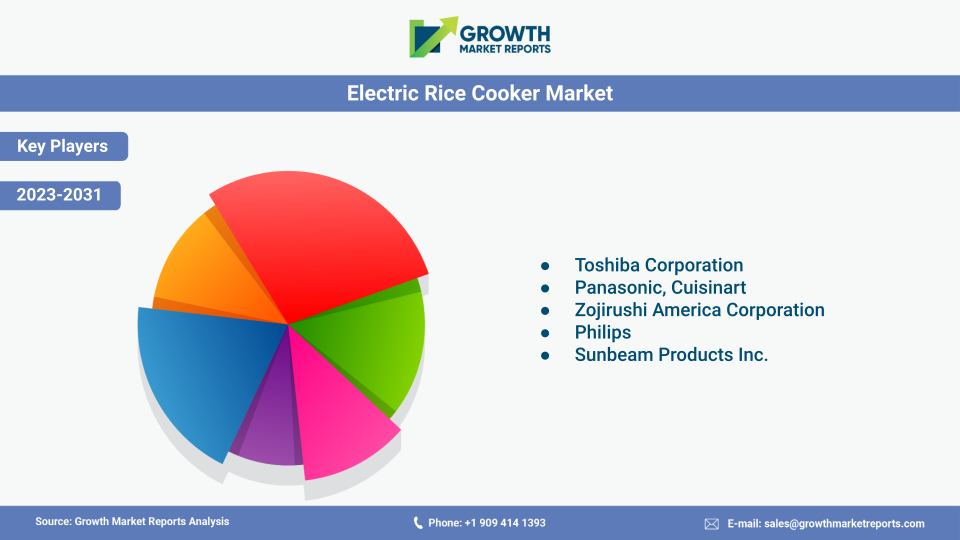

Electric Rice Cooker Market Key Players

Frequently Asked Questions

Opportunities include smart technology integration, expansion in emerging markets, and eco-friendly product development. Challenges involve market saturation in developed regions, price sensitivity, and concerns about product durability and environmental impact.

Major companies include Zojirushi Corporation, Panasonic Corporation, Toshiba Corporation, Tiger Corporation, Cuckoo Electronics, Philips, Aroma Housewares, Sunbeam Products, and Hamilton Beach Brands.

Trends include the integration of smart technology (IoT, app-based controls, voice assistants), energy efficiency, multifunctionality, and the use of eco-friendly materials.

Popular distribution channels include online stores, supermarkets/hypermarkets, specialty stores, and others such as direct sales and wholesale distributors. Online channels are particularly dominant due to the rise of e-commerce.

Electric rice cookers are used in both household and commercial settings, with households dominating unit sales and commercial establishments driving higher market value due to advanced features and larger capacities.

Electric rice cookers are categorized by capacity into small (1-3 liters), medium (4-6 liters), and large (over 6 liters), catering to singles, families, and commercial establishments respectively.

The market is segmented into standard, multifunctional, induction heating, and other specialized rice cookers, including travel and smart models.

Asia Pacific is the dominant region, accounting for over 60% of global revenue in 2024, followed by North America and Europe, with Latin America and the Middle East & Africa emerging as promising markets.

Key growth drivers include rising urbanization, increased disposable incomes, evolving consumer lifestyles, preference for convenient cooking solutions, and technological advancements such as smart and multifunctional features.

As of 2024, the global electric rice cooker market size reached USD 5.6 billion, with projections to grow to USD 9.6 billion by 2033.

Table Of Content

Chapter 1 Executive Summary
Chapter 2 Assumptions and Acronyms Used
Chapter 3 Research Methodology
Chapter 4 Electric Rice Cooker Market Overview
   4.1 Introduction
      4.1.1 Market Taxonomy
      4.1.2 Market Definition
      4.1.3 Macro-Economic Factors Impacting the Market Growth
   4.2 Electric Rice Cooker Market Dynamics
      4.2.1 Market Drivers
      4.2.2 Market Restraints
      4.2.3 Market Opportunity
   4.3 Electric Rice Cooker Market - Supply Chain Analysis
      4.3.1 List of Key Suppliers
      4.3.2 List of Key Distributors
      4.3.3 List of Key Consumers
   4.4 Key Forces Shaping the Electric Rice Cooker Market
      4.4.1 Bargaining Power of Suppliers
      4.4.2 Bargaining Power of Buyers
      4.4.3 Threat of Substitution
      4.4.4 Threat of New Entrants
      4.4.5 Competitive Rivalry
   4.5 Global Electric Rice Cooker Market Size & Forecast, 2023-2032
      4.5.1 Electric Rice Cooker Market Size and Y-o-Y Growth
      4.5.2 Electric Rice Cooker Market Absolute $ Opportunity

Chapter 5 Global Electric Rice Cooker Market Analysis and Forecast By Product Type
   5.1 Introduction
      5.1.1 Key Market Trends & Growth Opportunities By Product Type
      5.1.2 Basis Point Share (BPS) Analysis By Product Type
      5.1.3 Absolute $ Opportunity Assessment By Product Type
   5.2 Electric Rice Cooker Market Size Forecast By Product Type
      5.2.1 Standard
      5.2.2 Multifunctional
      5.2.3 Induction Heating
      5.2.4 Others
   5.3 Market Attractiveness Analysis By Product Type

Chapter 6 Global Electric Rice Cooker Market Analysis and Forecast By Capacity
   6.1 Introduction
      6.1.1 Key Market Trends & Growth Opportunities By Capacity
      6.1.2 Basis Point Share (BPS) Analysis By Capacity
      6.1.3 Absolute $ Opportunity Assessment By Capacity
   6.2 Electric Rice Cooker Market Size Forecast By Capacity
      6.2.1 Small
      6.2.2 Medium
      6.2.3 Large
   6.3 Market Attractiveness Analysis By Capacity

Chapter 7 Global Electric Rice Cooker Market Analysis and Forecast By Application
   7.1 Introduction
      7.1.1 Key Market Trends & Growth Opportunities By Application
      7.1.2 Basis Point Share (BPS) Analysis By Application
      7.1.3 Absolute $ Opportunity Assessment By Application
   7.2 Electric Rice Cooker Market Size Forecast By Application
      7.2.1 Household
      7.2.2 Commercial
   7.3 Market Attractiveness Analysis By Application

Chapter 8 Global Electric Rice Cooker Market Analysis and Forecast By Distribution Channel
   8.1 Introduction
      8.1.1 Key Market Trends & Growth Opportunities By Distribution Channel
      8.1.2 Basis Point Share (BPS) Analysis By Distribution Channel
      8.1.3 Absolute $ Opportunity Assessment By Distribution Channel
   8.2 Electric Rice Cooker Market Size Forecast By Distribution Channel
      8.2.1 Online Stores
      8.2.2 Supermarkets/Hypermarkets
      8.2.3 Specialty Stores
      8.2.4 Others
   8.3 Market Attractiveness Analysis By Distribution Channel

Chapter 9 Global Electric Rice Cooker Market Analysis and Forecast by Region
   9.1 Introduction
      9.1.1 Key Market Trends & Growth Opportunities By Region
      9.1.2 Basis Point Share (BPS) Analysis By Region
      9.1.3 Absolute $ Opportunity Assessment By Region
   9.2 Electric Rice Cooker Market Size Forecast By Region
      9.2.1 North America
      9.2.2 Europe
      9.2.3 Asia Pacific
      9.2.4 Latin America
      9.2.5 Middle East & Africa (MEA)
   9.3 Market Attractiveness Analysis By Region

Chapter 10 Coronavirus Disease (COVID-19) Impact 
   10.1 Introduction 
   10.2 Current & Future Impact Analysis 
   10.3 Economic Impact Analysis 
   10.4 Government Policies 
   10.5 Investment Scenario

Chapter 11 North America Electric Rice Cooker Analysis and Forecast
   11.1 Introduction
   11.2 North America Electric Rice Cooker Market Size Forecast by Country
      11.2.1 U.S.
      11.2.2 Canada
   11.3 Basis Point Share (BPS) Analysis by Country
   11.4 Absolute $ Opportunity Assessment by Country
   11.5 Market Attractiveness Analysis by Country
   11.6 North America Electric Rice Cooker Market Size Forecast By Product Type
      11.6.1 Standard
      11.6.2 Multifunctional
      11.6.3 Induction Heating
      11.6.4 Others
   11.7 Basis Point Share (BPS) Analysis By Product Type 
   11.8 Absolute $ Opportunity Assessment By Product Type 
   11.9 Market Attractiveness Analysis By Product Type
   11.10 North America Electric Rice Cooker Market Size Forecast By Capacity
      11.10.1 Small
      11.10.2 Medium
      11.10.3 Large
   11.11 Basis Point Share (BPS) Analysis By Capacity 
   11.12 Absolute $ Opportunity Assessment By Capacity 
   11.13 Market Attractiveness Analysis By Capacity
   11.14 North America Electric Rice Cooker Market Size Forecast By Application
      11.14.1 Household
      11.14.2 Commercial
   11.15 Basis Point Share (BPS) Analysis By Application 
   11.16 Absolute $ Opportunity Assessment By Application 
   11.17 Market Attractiveness Analysis By Application
   11.18 North America Electric Rice Cooker Market Size Forecast By Distribution Channel
      11.18.1 Online Stores
      11.18.2 Supermarkets/Hypermarkets
      11.18.3 Specialty Stores
      11.18.4 Others
   11.19 Basis Point Share (BPS) Analysis By Distribution Channel 
   11.20 Absolute $ Opportunity Assessment By Distribution Channel 
   11.21 Market Attractiveness Analysis By Distribution Channel

Chapter 12 Europe Electric Rice Cooker Analysis and Forecast
   12.1 Introduction
   12.2 Europe Electric Rice Cooker Market Size Forecast by Country
      12.2.1 Germany
      12.2.2 France
      12.2.3 Italy
      12.2.4 U.K.
      12.2.5 Spain
      12.2.6 Russia
      12.2.7 Rest of Europe
   12.3 Basis Point Share (BPS) Analysis by Country
   12.4 Absolute $ Opportunity Assessment by Country
   12.5 Market Attractiveness Analysis by Country
   12.6 Europe Electric Rice Cooker Market Size Forecast By Product Type
      12.6.1 Standard
      12.6.2 Multifunctional
      12.6.3 Induction Heating
      12.6.4 Others
   12.7 Basis Point Share (BPS) Analysis By Product Type 
   12.8 Absolute $ Opportunity Assessment By Product Type 
   12.9 Market Attractiveness Analysis By Product Type
   12.10 Europe Electric Rice Cooker Market Size Forecast By Capacity
      12.10.1 Small
      12.10.2 Medium
      12.10.3 Large
   12.11 Basis Point Share (BPS) Analysis By Capacity 
   12.12 Absolute $ Opportunity Assessment By Capacity 
   12.13 Market Attractiveness Analysis By Capacity
   12.14 Europe Electric Rice Cooker Market Size Forecast By Application
      12.14.1 Household
      12.14.2 Commercial
   12.15 Basis Point Share (BPS) Analysis By Application 
   12.16 Absolute $ Opportunity Assessment By Application 
   12.17 Market Attractiveness Analysis By Application
   12.18 Europe Electric Rice Cooker Market Size Forecast By Distribution Channel
      12.18.1 Online Stores
      12.18.2 Supermarkets/Hypermarkets
      12.18.3 Specialty Stores
      12.18.4 Others
   12.19 Basis Point Share (BPS) Analysis By Distribution Channel 
   12.20 Absolute $ Opportunity Assessment By Distribution Channel 
   12.21 Market Attractiveness Analysis By Distribution Channel

Chapter 13 Asia Pacific Electric Rice Cooker Analysis and Forecast
   13.1 Introduction
   13.2 Asia Pacific Electric Rice Cooker Market Size Forecast by Country
      13.2.1 China
      13.2.2 Japan
      13.2.3 South Korea
      13.2.4 India
      13.2.5 Australia
      13.2.6 South East Asia (SEA)
      13.2.7 Rest of Asia Pacific (APAC)
   13.3 Basis Point Share (BPS) Analysis by Country
   13.4 Absolute $ Opportunity Assessment by Country
   13.5 Market Attractiveness Analysis by Country
   13.6 Asia Pacific Electric Rice Cooker Market Size Forecast By Product Type
      13.6.1 Standard
      13.6.2 Multifunctional
      13.6.3 Induction Heating
      13.6.4 Others
   13.7 Basis Point Share (BPS) Analysis By Product Type 
   13.8 Absolute $ Opportunity Assessment By Product Type 
   13.9 Market Attractiveness Analysis By Product Type
   13.10 Asia Pacific Electric Rice Cooker Market Size Forecast By Capacity
      13.10.1 Small
      13.10.2 Medium
      13.10.3 Large
   13.11 Basis Point Share (BPS) Analysis By Capacity 
   13.12 Absolute $ Opportunity Assessment By Capacity 
   13.13 Market Attractiveness Analysis By Capacity
   13.14 Asia Pacific Electric Rice Cooker Market Size Forecast By Application
      13.14.1 Household
      13.14.2 Commercial
   13.15 Basis Point Share (BPS) Analysis By Application 
   13.16 Absolute $ Opportunity Assessment By Application 
   13.17 Market Attractiveness Analysis By Application
   13.18 Asia Pacific Electric Rice Cooker Market Size Forecast By Distribution Channel
      13.18.1 Online Stores
      13.18.2 Supermarkets/Hypermarkets
      13.18.3 Specialty Stores
      13.18.4 Others
   13.19 Basis Point Share (BPS) Analysis By Distribution Channel 
   13.20 Absolute $ Opportunity Assessment By Distribution Channel 
   13.21 Market Attractiveness Analysis By Distribution Channel

Chapter 14 Latin America Electric Rice Cooker Analysis and Forecast
   14.1 Introduction
   14.2 Latin America Electric Rice Cooker Market Size Forecast by Country
      14.2.1 Brazil
      14.2.2 Mexico
      14.2.3 Rest of Latin America (LATAM)
   14.3 Basis Point Share (BPS) Analysis by Country
   14.4 Absolute $ Opportunity Assessment by Country
   14.5 Market Attractiveness Analysis by Country
   14.6 Latin America Electric Rice Cooker Market Size Forecast By Product Type
      14.6.1 Standard
      14.6.2 Multifunctional
      14.6.3 Induction Heating
      14.6.4 Others
   14.7 Basis Point Share (BPS) Analysis By Product Type 
   14.8 Absolute $ Opportunity Assessment By Product Type 
   14.9 Market Attractiveness Analysis By Product Type
   14.10 Latin America Electric Rice Cooker Market Size Forecast By Capacity
      14.10.1 Small
      14.10.2 Medium
      14.10.3 Large
   14.11 Basis Point Share (BPS) Analysis By Capacity 
   14.12 Absolute $ Opportunity Assessment By Capacity 
   14.13 Market Attractiveness Analysis By Capacity
   14.14 Latin America Electric Rice Cooker Market Size Forecast By Application
      14.14.1 Household
      14.14.2 Commercial
   14.15 Basis Point Share (BPS) Analysis By Application 
   14.16 Absolute $ Opportunity Assessment By Application 
   14.17 Market Attractiveness Analysis By Application
   14.18 Latin America Electric Rice Cooker Market Size Forecast By Distribution Channel
      14.18.1 Online Stores
      14.18.2 Supermarkets/Hypermarkets
      14.18.3 Specialty Stores
      14.18.4 Others
   14.19 Basis Point Share (BPS) Analysis By Distribution Channel 
   14.20 Absolute $ Opportunity Assessment By Distribution Channel 
   14.21 Market Attractiveness Analysis By Distribution Channel

Chapter 15 Middle East & Africa (MEA) Electric Rice Cooker Analysis and Forecast
   15.1 Introduction
   15.2 Middle East & Africa (MEA) Electric Rice Cooker Market Size Forecast by Country
      15.2.1 Saudi Arabia
      15.2.2 South Africa
      15.2.3 UAE
      15.2.4 Rest of Middle East & Africa (MEA)
   15.3 Basis Point Share (BPS) Analysis by Country
   15.4 Absolute $ Opportunity Assessment by Country
   15.5 Market Attractiveness Analysis by Country
   15.6 Middle East & Africa (MEA) Electric Rice Cooker Market Size Forecast By Product Type
      15.6.1 Standard
      15.6.2 Multifunctional
      15.6.3 Induction Heating
      15.6.4 Others
   15.7 Basis Point Share (BPS) Analysis By Product Type 
   15.8 Absolute $ Opportunity Assessment By Product Type 
   15.9 Market Attractiveness Analysis By Product Type
   15.10 Middle East & Africa (MEA) Electric Rice Cooker Market Size Forecast By Capacity
      15.10.1 Small
      15.10.2 Medium
      15.10.3 Large
   15.11 Basis Point Share (BPS) Analysis By Capacity 
   15.12 Absolute $ Opportunity Assessment By Capacity 
   15.13 Market Attractiveness Analysis By Capacity
   15.14 Middle East & Africa (MEA) Electric Rice Cooker Market Size Forecast By Application
      15.14.1 Household
      15.14.2 Commercial
   15.15 Basis Point Share (BPS) Analysis By Application 
   15.16 Absolute $ Opportunity Assessment By Application 
   15.17 Market Attractiveness Analysis By Application
   15.18 Middle East & Africa (MEA) Electric Rice Cooker Market Size Forecast By Distribution Channel
      15.18.1 Online Stores
      15.18.2 Supermarkets/Hypermarkets
      15.18.3 Specialty Stores
      15.18.4 Others
   15.19 Basis Point Share (BPS) Analysis By Distribution Channel 
   15.20 Absolute $ Opportunity Assessment By Distribution Channel 
   15.21 Market Attractiveness Analysis By Distribution Channel

Chapter 16 Competition Landscape 
   16.1 Electric Rice Cooker Market: Competitive Dashboard
   16.2 Global Electric Rice Cooker Market: Market Share Analysis, 2023
   16.3 Company Profiles (Details – Overview, Financials, Developments, Strategy) 
      16.3.1 Panasonic Corporation
Zojirushi Corporation
Toshiba Corporation
Tiger Corporation
Cuckoo Electronics Co., Ltd.
Philips Electronics N.V.
Breville Group Limited
Aroma Housewares Company
Sunbeam Products, Inc.
Hamilton Beach Brands Holding Company
Midea Group Co., Ltd.
Supor (Zhejiang Supor Co., Ltd.)
Joyoung Co., Ltd.
Electrolux AB
Sharp Corporation
Hitachi, Ltd.
LG Electronics Inc.
Sanyo Electric Co., Ltd.
BLACK+DECKER (Stanley Black & Decker, Inc.)
Bajaj Electricals Limited

Methodology

Our Clients

General Mills
Deloitte
FedEx Logistics
Dassault Aviation
Siemens Healthcare
Honda Motor Co. Ltd.
Microsoft
Nestle SA