Electric Face Cleanser Market Research Report 2033

Electric Face Cleanser Market Research Report 2033

Segments - by Product Type (Sonic Cleansers, Rotating Cleansers, Ultrasonic Cleansers, Others), by Application (Personal Use, Professional/Salon Use), by Distribution Channel (Online Stores, Supermarkets/Hypermarkets, Specialty Stores, Others), by End User (Men, Women, Unisex)

https://growthmarketreports.com/Debadatta
Author : Debadatta Patel
https://growthmarketreports.com/Vaibhav
Fact-checked by : V. Chandola
https://growthmarketreports.com/Shruti
Editor : Shruti Bhat

Upcoming | Report ID :CG-396 | 4.9 Rating | 88 Reviews | 251 Pages | Format : Docx PDF

Report Description


Electric Face Cleanser Market Outlook

According to our latest research, the global electric face cleanser market size reached USD 3.1 billion in 2024, driven by increasing consumer focus on skincare and technological advancements in beauty devices. The market is expected to grow at a CAGR of 7.2% during the forecast period, reaching approximately USD 5.7 billion by 2033. This robust growth is primarily attributed to rising disposable incomes, growing awareness about personal grooming, and the proliferation of innovative cleansing technologies. As per our latest research, the market is witnessing a significant shift towards advanced cleansing solutions, with consumers increasingly seeking convenient and effective skincare devices.

One of the major growth drivers for the electric face cleanser market is the heightened focus on personal hygiene and skincare, particularly among urban populations. Consumers are becoming increasingly aware of the benefits of deep cleansing, exfoliation, and improved skin texture, which has led to a surge in demand for technologically advanced cleansing devices. The proliferation of social media and beauty influencers has further accelerated this trend, with consumers seeking to replicate professional skincare routines at home. Additionally, the rise in skin-related concerns, such as acne, pigmentation, and premature aging, has prompted individuals to invest in high-quality cleansing devices that promise visible results. This consumer shift is further bolstered by aggressive marketing campaigns and endorsements by celebrities, which have significantly increased product visibility and desirability.

Technological innovation is another critical factor propelling the growth of the electric face cleanser market. Manufacturers are continually investing in research and development to introduce next-generation devices equipped with features such as sonic and ultrasonic vibrations, adjustable speed settings, and waterproof designs. These advancements not only enhance the efficacy of the devices but also improve user experience by offering customizable cleansing options. The integration of smart technologies, such as app connectivity and skin analysis sensors, is also gaining traction, allowing users to personalize their skincare routines based on real-time feedback. Furthermore, the introduction of eco-friendly and rechargeable devices aligns with the growing consumer preference for sustainable products, thereby expanding the marketÂ’s appeal.

The expanding retail landscape, particularly the growth of online channels, has played a pivotal role in the marketÂ’s expansion. E-commerce platforms offer a wide array of electric face cleansers from various brands, enabling consumers to compare features, prices, and reviews before making a purchase. The convenience of home delivery, coupled with frequent discounts and promotional offers, has significantly boosted online sales. Traditional brick-and-mortar stores, including specialty beauty retailers and supermarkets, continue to be important distribution channels, providing consumers with the opportunity to physically experience the products before buying. The omnichannel approach adopted by leading brands ensures a seamless shopping experience, further fueling market growth.

Among the advanced technologies making waves in the electric face cleanser market, the Ultrasonic Skin-Scrubber stands out for its ability to deliver a deeper cleanse. Utilizing ultrasonic vibrations, these devices effectively remove impurities from the skin, enhancing the absorption of skincare products. This technology is particularly appealing to consumers seeking a non-invasive method to improve skin texture and tone. As the demand for sophisticated skincare solutions grows, the Ultrasonic Skin-Scrubber is gaining traction among both personal and professional users. Its ability to cater to diverse skin types and concerns makes it a versatile addition to any skincare regimen, further driving its popularity in the market.

From a regional perspective, Asia Pacific stands out as the fastest-growing market, driven by a large and youthful population, increasing urbanization, and a strong cultural emphasis on skincare. North America and Europe also account for substantial market shares, owing to high consumer spending on beauty products and early adoption of innovative technologies. Emerging markets in Latin America and the Middle East & Africa are witnessing steady growth, supported by rising disposable incomes and increasing awareness of personal grooming. The regional dynamics are further influenced by varying consumer preferences, regulatory environments, and distribution networks, shaping the overall trajectory of the global electric face cleanser market.

Global Electric Face Cleanser Industry Outlook

Product Type Analysis

The electric face cleanser market is segmented by product type into sonic cleansers, rotating cleansers, ultrasonic cleansers, and others. Sonic cleansers, which utilize high-frequency vibrations to dislodge dirt, oil, and makeup from the skin, have emerged as the dominant segment. Their popularity stems from their ability to provide a deep yet gentle cleanse, making them suitable for daily use across various skin types. The efficacy of sonic technology in enhancing blood circulation and promoting skin rejuvenation has garnered significant attention from both consumers and dermatologists. Leading brands are continually refining their sonic cleanser offerings by incorporating features such as multiple speed settings, silicone brush heads, and wireless charging capabilities, thereby enhancing their appeal.

Rotating cleansers, which employ spinning brush heads to exfoliate and cleanse the skin, also command a significant share of the market. These devices are particularly favored by consumers seeking a thorough exfoliation experience, as the rotating motion effectively removes dead skin cells and unclogs pores. While rotating cleansers are effective, some users with sensitive skin may find them too abrasive for daily use. To address this, manufacturers are introducing softer brush attachments and adjustable speed controls, making these devices more versatile and user-friendly. The affordability and widespread availability of rotating cleansers further contribute to their sustained demand.

The Sonic Blackhead Remover is another innovative device that is capturing consumer interest in the electric face cleanser market. Designed to target stubborn blackheads and clogged pores, this technology uses sonic vibrations to gently dislodge impurities without damaging the skin. Its effectiveness in providing a thorough yet gentle cleanse makes it a preferred choice for individuals dealing with persistent blackhead issues. The Sonic Blackhead Remover's ability to deliver visible results quickly has made it a popular tool among skincare enthusiasts and professionals alike. As awareness of its benefits spreads, it is expected to become a staple in both personal and salon skincare routines.

Ultrasonic cleansers represent the cutting edge of skincare technology, utilizing ultra-high-frequency sound waves to penetrate deeper layers of the skin. These devices are lauded for their ability to enhance the absorption of skincare products and promote collagen production, resulting in improved skin texture and tone. Although ultrasonic cleansers are typically priced higher than their sonic and rotating counterparts, their advanced features and proven efficacy have made them increasingly popular among skincare enthusiasts and professionals alike. The segment is witnessing rapid innovation, with brands integrating features such as iontophoresis and LED therapy to further boost the devicesÂ’ skincare benefits.

The “others” category encompasses a variety of niche cleansing devices, including oscillating and pulsating cleansers, as well as multifunctional devices that combine cleansing with additional skincare treatments. These products cater to specific consumer needs, such as targeted acne treatment or anti-aging benefits, and are often marketed as premium offerings. While the segment is relatively small compared to the mainstream categories, it is characterized by high growth potential due to ongoing product innovation and the rising demand for multifunctional beauty devices. As consumers become more discerning and seek personalized skincare solutions, the “others” segment is expected to witness increased traction in the coming years.

Report Scope

Attributes Details
Report Title Electric Face Cleanser Market Research Report 2033
By Product Type Sonic Cleansers, Rotating Cleansers, Ultrasonic Cleansers, Others
By Application Personal Use, Professional/Salon Use
By Distribution Channel Online Stores, Supermarkets/Hypermarkets, Specialty Stores, Others
By End User Men, Women, Unisex
Regions Covered North America, Europe, APAC, Latin America, MEA
Base Year 2024
Historic Data 2018-2023
Forecast Period 2025-2033
Number of Pages 251
Number of Tables & Figures 302
Customization Available Yes, the report can be customized as per your need.

Application Analysis

The electric face cleanser market is bifurcated by application into personal use and professional/salon use. The personal use segment dominates the market, accounting for the majority of sales globally. This dominance is largely attributed to the growing trend of at-home skincare routines, fueled by increased consumer awareness of the importance of regular facial cleansing. The convenience, affordability, and effectiveness of electric face cleansers have made them a staple in personal grooming kits. The COVID-19 pandemic further accelerated this trend, as consumers sought to replicate professional salon experiences in the comfort and safety of their homes. As a result, manufacturers are focusing on user-friendly designs, compact sizes, and affordable pricing to cater to the mass market.

The professional/salon use segment, while smaller in comparison, is witnessing steady growth driven by the rising number of beauty salons, spas, and dermatology clinics offering advanced skincare treatments. Electric face cleansers are increasingly being incorporated into professional facial services to enhance cleansing efficacy and improve treatment outcomes. These devices are valued for their ability to deliver consistent and superior results, thereby elevating the overall customer experience. Professional-grade cleansers often feature advanced technologies, such as ultrasonic and iontophoresis functions, which are not commonly found in consumer-grade devices. The segmentÂ’s growth is further supported by the increasing demand for premium and specialized skincare services, particularly in urban centers.

In the realm of pore care, the Sonic Pore Tightener is emerging as a game-changer. This device utilizes sonic technology to not only cleanse but also tighten pores, offering a dual benefit that appeals to consumers seeking comprehensive skincare solutions. The Sonic Pore Tightener's ability to enhance skin firmness and reduce the appearance of pores has made it a sought-after product among those looking to achieve a smoother complexion. Its integration into daily skincare routines is becoming increasingly common, as users appreciate its convenience and effectiveness. As the market for advanced skincare devices continues to expand, the Sonic Pore Tightener is poised to play a significant role in meeting consumer demands for targeted skincare treatments.

Manufacturers are recognizing the distinct requirements of personal and professional users and are tailoring their product offerings accordingly. For personal use, the emphasis is on ease of use, portability, and affordability, with devices designed for daily or weekly use. In contrast, professional devices prioritize durability, advanced features, and compatibility with a range of skincare treatments. This differentiation has led to the development of specialized product lines targeting each application segment, enabling brands to effectively cater to diverse consumer needs and preferences.

The application landscape is also influenced by regional variations in skincare practices and consumer behavior. In mature markets such as North America and Europe, personal use dominates due to high consumer spending power and a strong DIY culture. In contrast, professional/salon use is gaining traction in emerging markets, where consumers increasingly seek expert guidance and premium skincare experiences. This dynamic interplay between personal and professional applications is expected to shape the future growth trajectory of the electric face cleanser market.

Distribution Channel Analysis

Distribution channels play a pivotal role in the success of the electric face cleanser market, with the segment divided into online stores, supermarkets/hypermarkets, specialty stores, and others. Online stores have emerged as the leading distribution channel, accounting for a significant share of global sales. The convenience of shopping from home, coupled with a wide range of product options and attractive discounts, has made e-commerce platforms the preferred choice for many consumers. Online channels also enable brands to reach a broader audience, including those in remote or underserved regions. The proliferation of beauty-focused e-retailers and the integration of augmented reality (AR) tools for virtual product trials further enhance the online shopping experience.

Supermarkets and hypermarkets continue to be important distribution channels, particularly in regions where consumers prefer to physically inspect products before purchasing. These retail outlets offer the advantage of immediate product availability and often feature dedicated beauty sections showcasing a variety of electric face cleansers. The presence of knowledgeable sales staff and in-store demonstrations can also influence purchasing decisions, especially among first-time buyers. While supermarkets and hypermarkets may not offer as extensive a product range as online stores, their widespread presence ensures accessibility and convenience for a large segment of the population.

Specialty stores, including beauty and skincare boutiques, play a crucial role in the premium segment of the market. These stores typically carry a curated selection of high-end electric face cleansers, often accompanied by personalized consultations and product demonstrations. The focus on expert advice and tailored recommendations appeals to discerning consumers seeking specific skincare solutions. Specialty stores also serve as important touchpoints for brand building and customer engagement, allowing manufacturers to showcase the unique features and benefits of their products in an immersive retail environment.

The “others” category encompasses a variety of alternative distribution channels, such as direct sales, pharmacies, and department stores. These outlets cater to specific consumer segments, such as those seeking medical-grade devices or exclusive limited-edition products. The diversity of distribution channels reflects the market’s adaptability to changing consumer preferences and shopping behaviors. As omnichannel strategies become increasingly prevalent, brands are investing in seamless integration across online and offline platforms to enhance the overall customer experience and drive sales growth.

End User Analysis

The electric face cleanser market is segmented by end user into men, women, and unisex categories. Historically, women have constituted the largest end user segment, accounting for the majority of sales worldwide. This dominance is attributed to womenÂ’s greater engagement with skincare routines and their willingness to invest in beauty devices that promise enhanced results. Marketing campaigns and product designs have traditionally targeted female consumers, emphasizing benefits such as improved skin texture, anti-aging effects, and convenience. The growing influence of beauty bloggers and social media influencers has further amplified the appeal of electric face cleansers among women, driving sustained demand in this segment.

However, the menÂ’s segment is witnessing rapid growth, fueled by changing attitudes towards personal grooming and an increasing emphasis on skincare among male consumers. Men are becoming more conscious of their appearance and are seeking effective solutions for common skin concerns such as acne, oiliness, and shaving-related irritation. Manufacturers are responding to this trend by introducing products specifically designed for men, featuring masculine aesthetics, robust designs, and targeted functionalities. The rise of male grooming influencers and dedicated menÂ’s skincare brands is also contributing to the segmentÂ’s expansion, signaling a shift towards more inclusive marketing strategies.

The unisex segment represents a growing trend towards gender-neutral skincare solutions, catering to consumers who prioritize efficacy and convenience over traditional gender norms. Unisex electric face cleansers are designed to appeal to a broad audience, featuring neutral colors, versatile functionalities, and universal appeal. This segment is particularly popular among younger consumers who value inclusivity and simplicity in their skincare routines. The unisex approach also enables brands to streamline their product portfolios and reach a wider customer base, further driving market growth.

The evolving end user landscape is prompting manufacturers to adopt more diverse and inclusive product development and marketing strategies. By addressing the unique needs and preferences of different consumer segments, brands can enhance customer satisfaction and foster long-term loyalty. As societal norms continue to evolve and the stigma around male and unisex skincare diminishes, the end user segment of the electric face cleanser market is expected to become increasingly balanced and dynamic.

Opportunities & Threats

The electric face cleanser market presents a wealth of opportunities for innovation and expansion. One of the most promising opportunities lies in the integration of advanced technologies, such as artificial intelligence, IoT connectivity, and personalized skincare analytics. By leveraging these technologies, manufacturers can develop smart cleansing devices that offer real-time skin diagnostics, customized cleansing routines, and progress tracking. This not only enhances the user experience but also enables brands to differentiate themselves in a crowded marketplace. The growing demand for sustainable and eco-friendly products presents another significant opportunity, with consumers increasingly seeking devices made from recyclable materials, featuring energy-efficient designs, and offering long-lasting performance. Brands that prioritize sustainability and transparency in their supply chains are likely to gain a competitive edge and capture the loyalty of environmentally conscious consumers.

Geographic expansion into emerging markets represents another lucrative opportunity for electric face cleanser manufacturers. Rapid urbanization, rising disposable incomes, and increasing awareness of skincare in regions such as Asia Pacific, Latin America, and the Middle East & Africa are creating new avenues for growth. Tailoring product offerings to local preferences, price sensitivities, and skin types can help brands establish a strong foothold in these dynamic markets. Strategic partnerships with local retailers, influencers, and beauty professionals can further enhance brand visibility and credibility. Additionally, the rise of e-commerce platforms and digital marketing channels enables brands to reach previously untapped consumer segments, driving market penetration and revenue growth.

Despite the numerous opportunities, the electric face cleanser market faces certain restraining factors that could impede growth. One of the primary challenges is the presence of counterfeit and low-quality products, particularly in online marketplaces. These substandard devices not only undermine consumer trust but can also cause adverse skin reactions, tarnishing the reputation of legitimate brands. Regulatory compliance and quality assurance are critical to mitigating this threat, with manufacturers needing to invest in robust product testing, certification, and anti-counterfeiting measures. Additionally, the relatively high cost of advanced electric face cleansers may limit adoption among price-sensitive consumers, particularly in developing regions. Addressing these challenges through targeted pricing strategies, consumer education, and enhanced product safety can help sustain market growth in the long term.

Regional Outlook

Regionally, the Asia Pacific market is at the forefront of the global electric face cleanser industry, accounting for approximately 38% of the global market share in 2024. This dominance is driven by a large and youthful population, rapid urbanization, and a deep-rooted cultural emphasis on skincare and beauty. Countries such as China, Japan, and South Korea are leading the charge, with consumers displaying a strong preference for technologically advanced and multifunctional beauty devices. The proliferation of local and international brands, coupled with the widespread adoption of e-commerce platforms, has further accelerated market growth in the region. The Asia Pacific market is projected to expand at a robust CAGR of 8.1% through 2033, outpacing other regions and solidifying its position as a key growth engine for the industry.

North America holds a significant share of the global electric face cleanser market, valued at approximately USD 900 million in 2024. The regionÂ’s strong performance is underpinned by high consumer spending on beauty and personal care products, early adoption of innovative technologies, and a well-established retail infrastructure. The United States, in particular, is a major contributor, with a mature beauty market and a growing demand for premium skincare devices. The presence of leading global brands and a vibrant ecosystem of beauty influencers and dermatologists further enhance the regionÂ’s market dynamics. As consumers continue to prioritize health, wellness, and self-care, the North American market is expected to maintain steady growth throughout the forecast period.

Europe is another important region, accounting for around 24% of global market revenue in 2024. The regionÂ’s growth is supported by a strong tradition of skincare, a discerning consumer base, and stringent regulatory standards that ensure product quality and safety. Key markets such as Germany, France, and the United Kingdom are witnessing increased demand for electric face cleansers, particularly in the premium and professional segments. The rise of sustainable and cruelty-free beauty trends is also shaping consumer preferences, prompting brands to innovate and differentiate their offerings. While EuropeÂ’s market growth is slightly slower compared to Asia Pacific and North America, it remains a vital region for global players seeking to expand their footprint and cater to sophisticated consumers.

Electric Face Cleanser Market Statistics

Competitor Outlook

The electric face cleanser market is characterized by intense competition, with a diverse array of global and regional players vying for market share. The competitive landscape is shaped by continuous innovation, aggressive marketing strategies, and a relentless focus on product differentiation. Leading companies are investing heavily in research and development to introduce cutting-edge technologies, enhance device performance, and improve user experience. The integration of smart features, such as app connectivity, skin analysis sensors, and customizable cleansing modes, has become a key battleground for differentiation. In addition to technological innovation, companies are also prioritizing design aesthetics, ergonomic features, and sustainability to appeal to a broader range of consumers.

Brand reputation and customer loyalty play a crucial role in the competitive dynamics of the electric face cleanser market. Established brands with a strong heritage in beauty and skincare, such as Clarisonic, Foreo, and Philips, enjoy a significant advantage due to their extensive product portfolios, robust distribution networks, and loyal customer bases. These companies leverage their brand equity to command premium pricing and maintain a dominant presence in both online and offline retail channels. However, the market is also witnessing the entry of new and emerging players, particularly from Asia Pacific, who are disrupting the status quo with innovative products, competitive pricing, and agile go-to-market strategies.

Strategic partnerships, mergers and acquisitions, and collaborations with beauty professionals and influencers are common strategies employed by market participants to enhance brand visibility and expand their reach. Companies are also investing in targeted marketing campaigns, influencer collaborations, and experiential retail initiatives to engage consumers and drive brand preference. The growing importance of e-commerce and digital marketing has prompted brands to optimize their online presence, leveraging social media platforms, content marketing, and customer reviews to build trust and credibility.

Some of the major companies operating in the electric face cleanser market include Foreo, Philips, Panasonic, Clinique Laboratories, Clarisonic (now under L'Oréal), PMD Beauty, and Olay. Foreo is renowned for its innovative silicone-based sonic cleansers, which have gained a global following due to their efficacy, durability, and stylish design. Philips and Panasonic leverage their expertise in consumer electronics to offer a wide range of electric face cleansers featuring advanced cleansing technologies and ergonomic designs. Clinique Laboratories and Olay are prominent players in the skincare segment, offering electric cleansers that complement their extensive skincare product lines. PMD Beauty focuses on premium devices with advanced features such as microdermabrasion and smart cleansing, targeting discerning consumers seeking professional-grade results at home.

In summary, the competitive landscape of the electric face cleanser market is dynamic and rapidly evolving, marked by continuous innovation, brand building, and strategic expansion. Companies that can effectively combine technological excellence, design innovation, and customer-centric marketing are well-positioned to capitalize on the growing demand for electric face cleansers and achieve sustainable growth in the global market.

Key Players

  • Procter & Gamble (Olay)
  • Philips
  • Panasonic Corporation
  • Clarisonic (L'Oréal)
  • FOREO
  • Clinique (Estée Lauder Companies)
  • Shiseido Company
  • Nu Skin Enterprises
  • Mary Kay Inc.
  • Conair Corporation
  • Hitachi Ltd.
  • Kingdom Cares
  • Revlon Inc.
  • Michael Todd Beauty
  • PMD Beauty
  • Tria Beauty
  • Ya-Man Ltd.
  • Remington (Spectrum Brands)
  • Beurer GmbH
  • Lifetrons Switzerland
Electric Face Cleanser Market Overview

Segments

The Electric Face Cleanser market has been segmented on the basis of

Product Type

  • Sonic Cleansers
  • Rotating Cleansers
  • Ultrasonic Cleansers
  • Others

Application

  • Personal Use
  • Professional/Salon Use

Distribution Channel

  • Online Stores
  • Supermarkets/Hypermarkets
  • Specialty Stores
  • Others

End User

  • Men
  • Women
  • Unisex

Competitive Landscape

Key participants competing in the global electric face cleanser market include Amore Pacific Corp, Clinique Laboratories, Conair Corp, Hitachi Ltd, Loreal, Philips, and Pixnor.

Acquisition of small-scale manufacturers of electric devices by crucial beauty market leaders is a key trend witnessed in this market. Product innovations are undertaken by manufacturers to expand their product offerings and attract customers. The market may observe slow growth in the under-developed nations of Central and Latin America, owing to a lack of awareness of electric face cleansers.

L’Oréal, a cosmetics company, recently purchased Clarisonic, a market leader in sonic skin care devices and technology. This achievement expanded L’Oréal’s brand range and enabled the company to enter the skin care device market.

Pixnor recently launched a 7-in-1 electric face cleanser to enhance its product offerings. This face cleanser comes with 7 various types of brushes. These brushes serve a unique cleansing purpose with in-built features such as cleaning, exfoliation, and massaging.
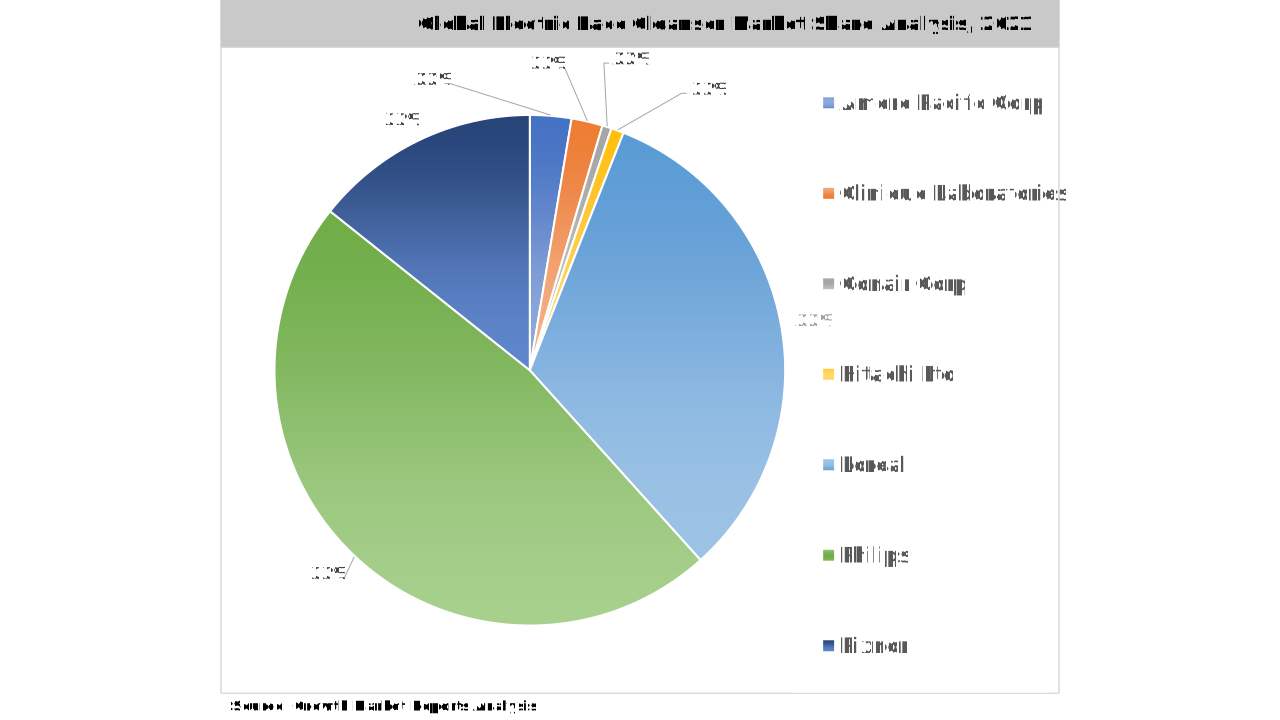
 

Electric Face Cleanser Market by key players

Frequently Asked Questions

Opportunities include integrating AI and IoT for smart cleansing, expanding into emerging markets, developing sustainable and eco-friendly products, and leveraging e-commerce and digital marketing for broader reach.

Key players include Foreo, Philips, Panasonic, Clinique Laboratories, Clarisonic (L'Oréal), PMD Beauty, Olay, Shiseido, Nu Skin Enterprises, and others.

Major challenges include the presence of counterfeit and low-quality products, regulatory compliance issues, and the relatively high cost of advanced devices, which may limit adoption in price-sensitive markets.

Innovations include sonic and ultrasonic vibrations, adjustable speed settings, waterproof designs, app connectivity, skin analysis sensors, and eco-friendly, rechargeable devices.

Women are the largest end user segment, but the market for men and unisex products is rapidly growing due to changing attitudes toward personal grooming and inclusive marketing strategies.

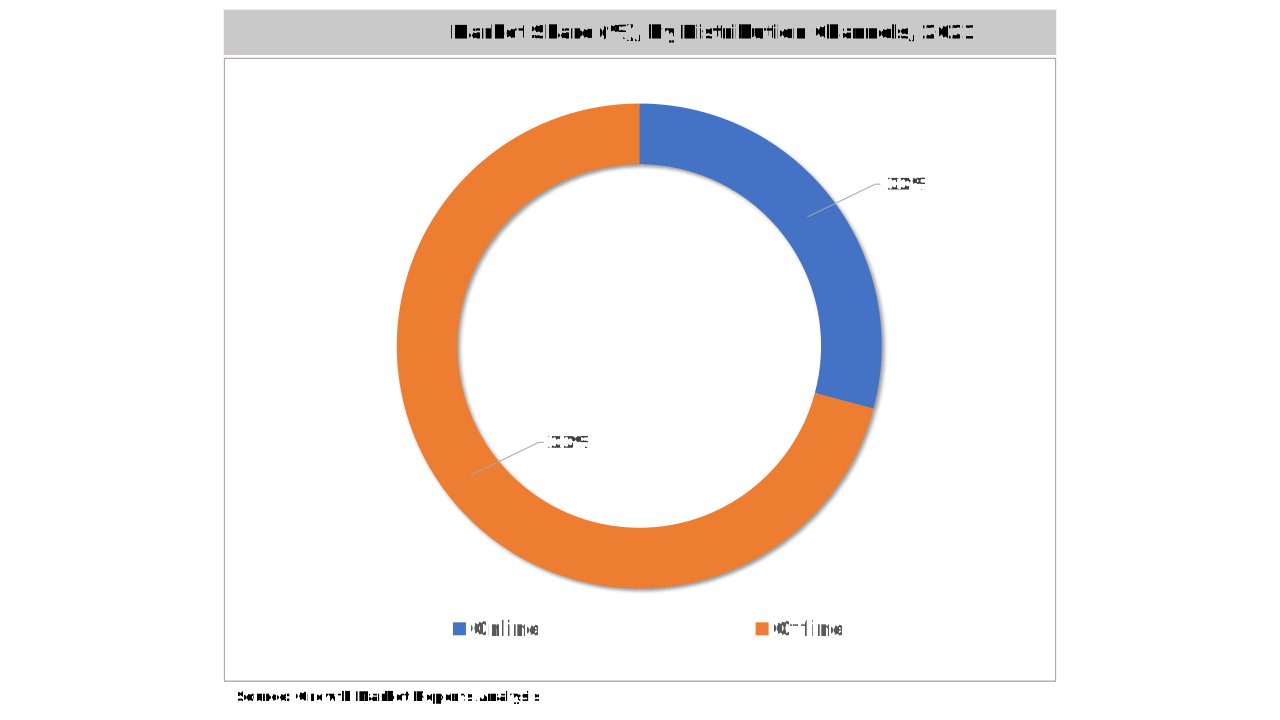
Online stores are the leading distribution channel, followed by supermarkets/hypermarkets, specialty stores, and other outlets such as pharmacies and department stores.

The market is segmented into sonic cleansers, rotating cleansers, ultrasonic cleansers, and other niche devices like oscillating and multifunctional cleansers.

Asia Pacific is the fastest-growing region, accounting for about 38% of the global market share in 2024. North America and Europe also hold significant shares due to high consumer spending and early adoption of innovative technologies.

Key growth drivers include rising disposable incomes, increased consumer focus on skincare and personal hygiene, technological advancements in beauty devices, and the influence of social media and beauty influencers.

As of 2024, the global electric face cleanser market is valued at USD 3.1 billion, with expectations to reach approximately USD 5.7 billion by 2033.

Table Of Content

Chapter 1 Executive Summary
Chapter 2 Assumptions and Acronyms Used
Chapter 3 Research Methodology
Chapter 4 Electric Face Cleanser Market Overview
   4.1 Introduction
      4.1.1 Market Taxonomy
      4.1.2 Market Definition
      4.1.3 Macro-Economic Factors Impacting the Market Growth
   4.2 Electric Face Cleanser Market Dynamics
      4.2.1 Market Drivers
      4.2.2 Market Restraints
      4.2.3 Market Opportunity
   4.3 Electric Face Cleanser Market - Supply Chain Analysis
      4.3.1 List of Key Suppliers
      4.3.2 List of Key Distributors
      4.3.3 List of Key Consumers
   4.4 Key Forces Shaping the Electric Face Cleanser Market
      4.4.1 Bargaining Power of Suppliers
      4.4.2 Bargaining Power of Buyers
      4.4.3 Threat of Substitution
      4.4.4 Threat of New Entrants
      4.4.5 Competitive Rivalry
   4.5 Global Electric Face Cleanser Market Size & Forecast, 2023-2032
      4.5.1 Electric Face Cleanser Market Size and Y-o-Y Growth
      4.5.2 Electric Face Cleanser Market Absolute $ Opportunity

Chapter 5 Global Electric Face Cleanser Market Analysis and Forecast By Product Type
   5.1 Introduction
      5.1.1 Key Market Trends & Growth Opportunities By Product Type
      5.1.2 Basis Point Share (BPS) Analysis By Product Type
      5.1.3 Absolute $ Opportunity Assessment By Product Type
   5.2 Electric Face Cleanser Market Size Forecast By Product Type
      5.2.1 Sonic Cleansers
      5.2.2 Rotating Cleansers
      5.2.3 Ultrasonic Cleansers
      5.2.4 Others
   5.3 Market Attractiveness Analysis By Product Type

Chapter 6 Global Electric Face Cleanser Market Analysis and Forecast By Application
   6.1 Introduction
      6.1.1 Key Market Trends & Growth Opportunities By Application
      6.1.2 Basis Point Share (BPS) Analysis By Application
      6.1.3 Absolute $ Opportunity Assessment By Application
   6.2 Electric Face Cleanser Market Size Forecast By Application
      6.2.1 Personal Use
      6.2.2 Professional/Salon Use
   6.3 Market Attractiveness Analysis By Application

Chapter 7 Global Electric Face Cleanser Market Analysis and Forecast By Distribution Channel
   7.1 Introduction
      7.1.1 Key Market Trends & Growth Opportunities By Distribution Channel
      7.1.2 Basis Point Share (BPS) Analysis By Distribution Channel
      7.1.3 Absolute $ Opportunity Assessment By Distribution Channel
   7.2 Electric Face Cleanser Market Size Forecast By Distribution Channel
      7.2.1 Online Stores
      7.2.2 Supermarkets/Hypermarkets
      7.2.3 Specialty Stores
      7.2.4 Others
   7.3 Market Attractiveness Analysis By Distribution Channel

Chapter 8 Global Electric Face Cleanser Market Analysis and Forecast By End User
   8.1 Introduction
      8.1.1 Key Market Trends & Growth Opportunities By End User
      8.1.2 Basis Point Share (BPS) Analysis By End User
      8.1.3 Absolute $ Opportunity Assessment By End User
   8.2 Electric Face Cleanser Market Size Forecast By End User
      8.2.1 Men
      8.2.2 Women
      8.2.3 Unisex
   8.3 Market Attractiveness Analysis By End User

Chapter 9 Global Electric Face Cleanser Market Analysis and Forecast by Region
   9.1 Introduction
      9.1.1 Key Market Trends & Growth Opportunities By Region
      9.1.2 Basis Point Share (BPS) Analysis By Region
      9.1.3 Absolute $ Opportunity Assessment By Region
   9.2 Electric Face Cleanser Market Size Forecast By Region
      9.2.1 North America
      9.2.2 Europe
      9.2.3 Asia Pacific
      9.2.4 Latin America
      9.2.5 Middle East & Africa (MEA)
   9.3 Market Attractiveness Analysis By Region

Chapter 10 Coronavirus Disease (COVID-19) Impact 
   10.1 Introduction 
   10.2 Current & Future Impact Analysis 
   10.3 Economic Impact Analysis 
   10.4 Government Policies 
   10.5 Investment Scenario

Chapter 11 North America Electric Face Cleanser Analysis and Forecast
   11.1 Introduction
   11.2 North America Electric Face Cleanser Market Size Forecast by Country
      11.2.1 U.S.
      11.2.2 Canada
   11.3 Basis Point Share (BPS) Analysis by Country
   11.4 Absolute $ Opportunity Assessment by Country
   11.5 Market Attractiveness Analysis by Country
   11.6 North America Electric Face Cleanser Market Size Forecast By Product Type
      11.6.1 Sonic Cleansers
      11.6.2 Rotating Cleansers
      11.6.3 Ultrasonic Cleansers
      11.6.4 Others
   11.7 Basis Point Share (BPS) Analysis By Product Type 
   11.8 Absolute $ Opportunity Assessment By Product Type 
   11.9 Market Attractiveness Analysis By Product Type
   11.10 North America Electric Face Cleanser Market Size Forecast By Application
      11.10.1 Personal Use
      11.10.2 Professional/Salon Use
   11.11 Basis Point Share (BPS) Analysis By Application 
   11.12 Absolute $ Opportunity Assessment By Application 
   11.13 Market Attractiveness Analysis By Application
   11.14 North America Electric Face Cleanser Market Size Forecast By Distribution Channel
      11.14.1 Online Stores
      11.14.2 Supermarkets/Hypermarkets
      11.14.3 Specialty Stores
      11.14.4 Others
   11.15 Basis Point Share (BPS) Analysis By Distribution Channel 
   11.16 Absolute $ Opportunity Assessment By Distribution Channel 
   11.17 Market Attractiveness Analysis By Distribution Channel
   11.18 North America Electric Face Cleanser Market Size Forecast By End User
      11.18.1 Men
      11.18.2 Women
      11.18.3 Unisex
   11.19 Basis Point Share (BPS) Analysis By End User 
   11.20 Absolute $ Opportunity Assessment By End User 
   11.21 Market Attractiveness Analysis By End User

Chapter 12 Europe Electric Face Cleanser Analysis and Forecast
   12.1 Introduction
   12.2 Europe Electric Face Cleanser Market Size Forecast by Country
      12.2.1 Germany
      12.2.2 France
      12.2.3 Italy
      12.2.4 U.K.
      12.2.5 Spain
      12.2.6 Russia
      12.2.7 Rest of Europe
   12.3 Basis Point Share (BPS) Analysis by Country
   12.4 Absolute $ Opportunity Assessment by Country
   12.5 Market Attractiveness Analysis by Country
   12.6 Europe Electric Face Cleanser Market Size Forecast By Product Type
      12.6.1 Sonic Cleansers
      12.6.2 Rotating Cleansers
      12.6.3 Ultrasonic Cleansers
      12.6.4 Others
   12.7 Basis Point Share (BPS) Analysis By Product Type 
   12.8 Absolute $ Opportunity Assessment By Product Type 
   12.9 Market Attractiveness Analysis By Product Type
   12.10 Europe Electric Face Cleanser Market Size Forecast By Application
      12.10.1 Personal Use
      12.10.2 Professional/Salon Use
   12.11 Basis Point Share (BPS) Analysis By Application 
   12.12 Absolute $ Opportunity Assessment By Application 
   12.13 Market Attractiveness Analysis By Application
   12.14 Europe Electric Face Cleanser Market Size Forecast By Distribution Channel
      12.14.1 Online Stores
      12.14.2 Supermarkets/Hypermarkets
      12.14.3 Specialty Stores
      12.14.4 Others
   12.15 Basis Point Share (BPS) Analysis By Distribution Channel 
   12.16 Absolute $ Opportunity Assessment By Distribution Channel 
   12.17 Market Attractiveness Analysis By Distribution Channel
   12.18 Europe Electric Face Cleanser Market Size Forecast By End User
      12.18.1 Men
      12.18.2 Women
      12.18.3 Unisex
   12.19 Basis Point Share (BPS) Analysis By End User 
   12.20 Absolute $ Opportunity Assessment By End User 
   12.21 Market Attractiveness Analysis By End User

Chapter 13 Asia Pacific Electric Face Cleanser Analysis and Forecast
   13.1 Introduction
   13.2 Asia Pacific Electric Face Cleanser Market Size Forecast by Country
      13.2.1 China
      13.2.2 Japan
      13.2.3 South Korea
      13.2.4 India
      13.2.5 Australia
      13.2.6 South East Asia (SEA)
      13.2.7 Rest of Asia Pacific (APAC)
   13.3 Basis Point Share (BPS) Analysis by Country
   13.4 Absolute $ Opportunity Assessment by Country
   13.5 Market Attractiveness Analysis by Country
   13.6 Asia Pacific Electric Face Cleanser Market Size Forecast By Product Type
      13.6.1 Sonic Cleansers
      13.6.2 Rotating Cleansers
      13.6.3 Ultrasonic Cleansers
      13.6.4 Others
   13.7 Basis Point Share (BPS) Analysis By Product Type 
   13.8 Absolute $ Opportunity Assessment By Product Type 
   13.9 Market Attractiveness Analysis By Product Type
   13.10 Asia Pacific Electric Face Cleanser Market Size Forecast By Application
      13.10.1 Personal Use
      13.10.2 Professional/Salon Use
   13.11 Basis Point Share (BPS) Analysis By Application 
   13.12 Absolute $ Opportunity Assessment By Application 
   13.13 Market Attractiveness Analysis By Application
   13.14 Asia Pacific Electric Face Cleanser Market Size Forecast By Distribution Channel
      13.14.1 Online Stores
      13.14.2 Supermarkets/Hypermarkets
      13.14.3 Specialty Stores
      13.14.4 Others
   13.15 Basis Point Share (BPS) Analysis By Distribution Channel 
   13.16 Absolute $ Opportunity Assessment By Distribution Channel 
   13.17 Market Attractiveness Analysis By Distribution Channel
   13.18 Asia Pacific Electric Face Cleanser Market Size Forecast By End User
      13.18.1 Men
      13.18.2 Women
      13.18.3 Unisex
   13.19 Basis Point Share (BPS) Analysis By End User 
   13.20 Absolute $ Opportunity Assessment By End User 
   13.21 Market Attractiveness Analysis By End User

Chapter 14 Latin America Electric Face Cleanser Analysis and Forecast
   14.1 Introduction
   14.2 Latin America Electric Face Cleanser Market Size Forecast by Country
      14.2.1 Brazil
      14.2.2 Mexico
      14.2.3 Rest of Latin America (LATAM)
   14.3 Basis Point Share (BPS) Analysis by Country
   14.4 Absolute $ Opportunity Assessment by Country
   14.5 Market Attractiveness Analysis by Country
   14.6 Latin America Electric Face Cleanser Market Size Forecast By Product Type
      14.6.1 Sonic Cleansers
      14.6.2 Rotating Cleansers
      14.6.3 Ultrasonic Cleansers
      14.6.4 Others
   14.7 Basis Point Share (BPS) Analysis By Product Type 
   14.8 Absolute $ Opportunity Assessment By Product Type 
   14.9 Market Attractiveness Analysis By Product Type
   14.10 Latin America Electric Face Cleanser Market Size Forecast By Application
      14.10.1 Personal Use
      14.10.2 Professional/Salon Use
   14.11 Basis Point Share (BPS) Analysis By Application 
   14.12 Absolute $ Opportunity Assessment By Application 
   14.13 Market Attractiveness Analysis By Application
   14.14 Latin America Electric Face Cleanser Market Size Forecast By Distribution Channel
      14.14.1 Online Stores
      14.14.2 Supermarkets/Hypermarkets
      14.14.3 Specialty Stores
      14.14.4 Others
   14.15 Basis Point Share (BPS) Analysis By Distribution Channel 
   14.16 Absolute $ Opportunity Assessment By Distribution Channel 
   14.17 Market Attractiveness Analysis By Distribution Channel
   14.18 Latin America Electric Face Cleanser Market Size Forecast By End User
      14.18.1 Men
      14.18.2 Women
      14.18.3 Unisex
   14.19 Basis Point Share (BPS) Analysis By End User 
   14.20 Absolute $ Opportunity Assessment By End User 
   14.21 Market Attractiveness Analysis By End User

Chapter 15 Middle East & Africa (MEA) Electric Face Cleanser Analysis and Forecast
   15.1 Introduction
   15.2 Middle East & Africa (MEA) Electric Face Cleanser Market Size Forecast by Country
      15.2.1 Saudi Arabia
      15.2.2 South Africa
      15.2.3 UAE
      15.2.4 Rest of Middle East & Africa (MEA)
   15.3 Basis Point Share (BPS) Analysis by Country
   15.4 Absolute $ Opportunity Assessment by Country
   15.5 Market Attractiveness Analysis by Country
   15.6 Middle East & Africa (MEA) Electric Face Cleanser Market Size Forecast By Product Type
      15.6.1 Sonic Cleansers
      15.6.2 Rotating Cleansers
      15.6.3 Ultrasonic Cleansers
      15.6.4 Others
   15.7 Basis Point Share (BPS) Analysis By Product Type 
   15.8 Absolute $ Opportunity Assessment By Product Type 
   15.9 Market Attractiveness Analysis By Product Type
   15.10 Middle East & Africa (MEA) Electric Face Cleanser Market Size Forecast By Application
      15.10.1 Personal Use
      15.10.2 Professional/Salon Use
   15.11 Basis Point Share (BPS) Analysis By Application 
   15.12 Absolute $ Opportunity Assessment By Application 
   15.13 Market Attractiveness Analysis By Application
   15.14 Middle East & Africa (MEA) Electric Face Cleanser Market Size Forecast By Distribution Channel
      15.14.1 Online Stores
      15.14.2 Supermarkets/Hypermarkets
      15.14.3 Specialty Stores
      15.14.4 Others
   15.15 Basis Point Share (BPS) Analysis By Distribution Channel 
   15.16 Absolute $ Opportunity Assessment By Distribution Channel 
   15.17 Market Attractiveness Analysis By Distribution Channel
   15.18 Middle East & Africa (MEA) Electric Face Cleanser Market Size Forecast By End User
      15.18.1 Men
      15.18.2 Women
      15.18.3 Unisex
   15.19 Basis Point Share (BPS) Analysis By End User 
   15.20 Absolute $ Opportunity Assessment By End User 
   15.21 Market Attractiveness Analysis By End User

Chapter 16 Competition Landscape 
   16.1 Electric Face Cleanser Market: Competitive Dashboard
   16.2 Global Electric Face Cleanser Market: Market Share Analysis, 2023
   16.3 Company Profiles (Details – Overview, Financials, Developments, Strategy) 
      16.3.1 Procter & Gamble (Olay)
Philips
Panasonic Corporation
Clarisonic (L'Oréal)
FOREO
Clinique (Estée Lauder Companies)
Shiseido Company
Nu Skin Enterprises
Mary Kay Inc.
Conair Corporation
Hitachi Ltd.
Kingdom Cares
Revlon Inc.
Michael Todd Beauty
PMD Beauty
Tria Beauty
Ya-Man Ltd.
Remington (Spectrum Brands)
Beurer GmbH
Lifetrons Switzerland

Methodology

Our Clients

The John Holland Group
Dassault Aviation
Honda Motor Co. Ltd.
FedEx Logistics
sinopec
Microsoft
Deloitte
General Electric