Segments - by Solution (Software, Services), by Function (Target Identification, Lead Generation, Compound Screening, Molecular Modeling, Data Analysis and Management, Others), by Application (Pharmaceuticals, Biotechnology, Contract Research Organizations, Academic and Research Institutes, Others), by End-User (Pharmaceutical Companies, Biotechnology Companies, Academic Institutes, CROs, Others)
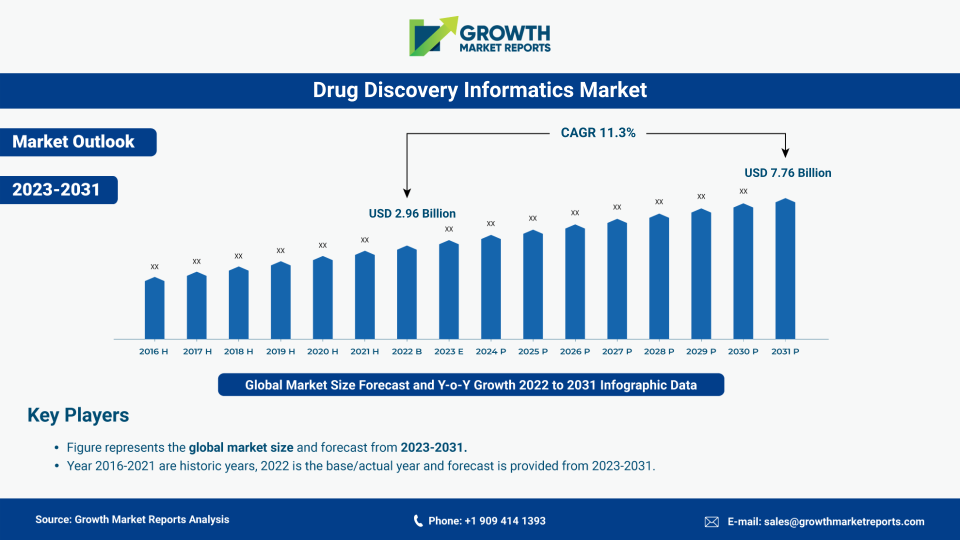
According to our latest research, the global Drug Discovery Informatics market size reached USD 4.72 billion in 2024, reflecting robust growth driven by escalating demand for advanced computational tools in pharmaceutical R&D. The market is expected to expand at a remarkable CAGR of 11.2% from 2025 to 2033, reaching an estimated USD 12.84 billion by the end of the forecast period. This impressive trajectory is primarily fueled by the increasing adoption of informatics solutions for accelerating drug development, optimizing research costs, and enhancing the efficiency of the drug discovery process.
One of the primary growth factors in the Drug Discovery Informatics market is the persistent rise in chronic diseases globally, which has intensified the need for novel therapeutics. Pharmaceutical and biotechnology companies are under immense pressure to deliver innovative drugs to market swiftly and cost-effectively. Informatics solutions, by enabling high-throughput screening, data integration, and advanced analytics, empower researchers to identify promising drug candidates faster and with greater accuracy. As data volumes from genomics, proteomics, and clinical trials continue to surge, the integration of sophisticated informatics platforms becomes indispensable for managing, analyzing, and extracting actionable insights from complex datasets, thereby driving market expansion.
Another significant driver is the rapid evolution of artificial intelligence (AI) and machine learning (ML) technologies within the drug discovery informatics landscape. These technologies are revolutionizing the way researchers predict molecular interactions, model biological systems, and identify drug targets. By leveraging AI-driven algorithms, companies can reduce the attrition rate of drug candidates and streamline the lead optimization process. Additionally, the growing emphasis on personalized medicine and precision therapeutics is compelling organizations to adopt informatics tools that facilitate data-driven decision-making and patient stratification. As a result, the convergence of AI, big data analytics, and cloud computing is expected to further propel the adoption of drug discovery informatics solutions across the pharmaceutical value chain.
The proliferation of collaborative research models, such as partnerships between pharmaceutical companies, academic institutions, and contract research organizations (CROs), is also catalyzing market growth. These collaborations often necessitate secure, interoperable informatics platforms that enable seamless data sharing, project management, and workflow integration. Moreover, regulatory agencies are increasingly advocating for the use of informatics solutions to enhance data transparency, reproducibility, and compliance in drug development. This regulatory impetus, combined with mounting R&D investments and the expansion of drug pipelines, is fostering a favorable environment for the widespread adoption of drug discovery informatics worldwide.
Drug discovery is a complex and multifaceted process that involves the identification and development of new therapeutic compounds. The integration of advanced informatics tools into this process is revolutionizing the way researchers approach drug development. By harnessing the power of computational models and data analytics, scientists can now simulate molecular interactions and predict the efficacy of potential drug candidates with unprecedented accuracy. This not only accelerates the identification of viable compounds but also reduces the costs associated with traditional experimental methods. As the field of drug discovery continues to evolve, the role of informatics in streamlining research and development processes becomes increasingly critical, offering new opportunities for innovation and efficiency.
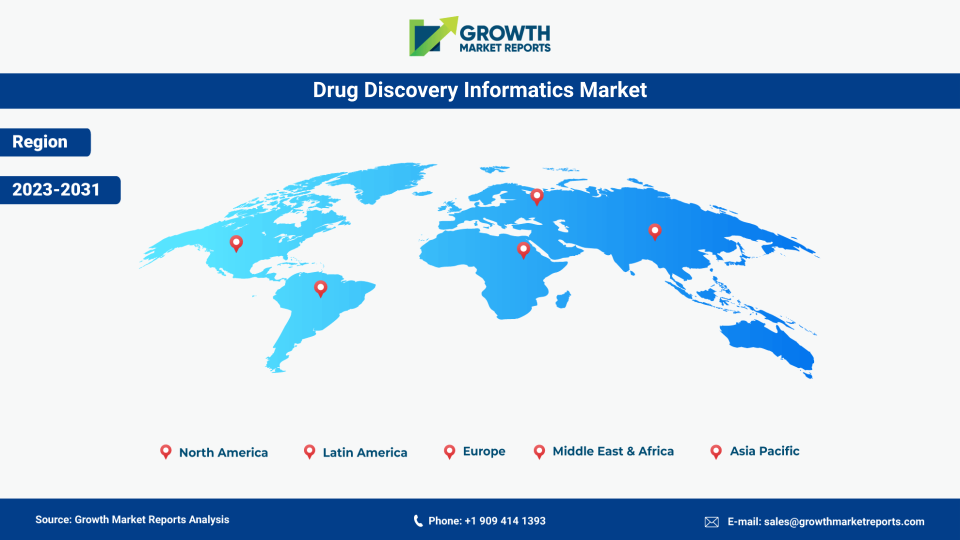
From a regional perspective, North America currently dominates the Drug Discovery Informatics market owing to the presence of leading pharmaceutical companies, advanced healthcare infrastructure, and substantial investments in R&D. However, the Asia Pacific region is witnessing the fastest growth, attributed to rising government initiatives, expanding biopharmaceutical sectors, and increasing adoption of digital health technologies. Europe also remains a key contributor, supported by a strong academic research base and a growing focus on precision medicine. Collectively, these factors are shaping a dynamic and competitive landscape for drug discovery informatics on a global scale.
The Solution segment of the Drug Discovery Informatics market is broadly categorized into software and services, each playing a pivotal role in the transformation of drug discovery workflows. Software solutions encompass a wide range of applications, including molecular modeling, data mining, cheminformatics, and bioinformatics platforms. These tools enable researchers to simulate molecular interactions, visualize complex biological pathways, and analyze large-scale omics data. The continuous evolution of user-friendly interfaces, integration capabilities, and cloud-based deployment models has made software solutions increasingly accessible to organizations of all sizes, driving their widespread adoption across the pharmaceutical and biotechnology industries.
On the other hand, the services sub-segment is gaining significant traction as organizations seek specialized expertise to optimize their informatics infrastructure and workflows. Service providers offer a spectrum of offerings, such as consulting, system integration, training, maintenance, and custom software development. These services are particularly valuable for companies lacking in-house informatics capabilities or seeking to accelerate digital transformation initiatives. Additionally, as drug discovery projects become more complex and data-intensive, the demand for managed services and outsourced informatics support is expected to rise, further bolstering the growth of the services segment.
The interplay between software and services is increasingly synergistic, with many vendors offering integrated solutions that combine robust software platforms with tailored support services. This approach not only enhances the scalability and flexibility of informatics deployments but also ensures that organizations can adapt to evolving research needs and regulatory requirements. Furthermore, the emergence of subscription-based and pay-per-use models is lowering the barriers to entry for smaller firms and academic institutions, democratizing access to advanced drug discovery informatics tools.
Looking ahead, innovation in the solution segment will be shaped by advancements in AI, machine learning, and cloud computing. Vendors are investing heavily in the development of next-generation software that leverages predictive analytics, natural language processing, and real-time data visualization. Simultaneously, service providers are expanding their portfolios to include end-to-end digital transformation services, cybersecurity solutions, and regulatory compliance consulting. This dynamic landscape is expected to foster greater competition, drive product differentiation, and ultimately deliver enhanced value to end-users across the drug discovery ecosystem.
| Attributes | Details |
| Report Title | Drug Discovery Informatics Market Research Report 2033 |
| By Solution | Software, Services |
| By Function | Target Identification, Lead Generation, Compound Screening, Molecular Modeling, Data Analysis and Management, Others |
| By Application | Pharmaceuticals, Biotechnology, Contract Research Organizations, Academic and Research Institutes, Others |
| By End-User | Pharmaceutical Companies, Biotechnology Companies, Academic Institutes, CROs, Others |
| Regions Covered | North America, Europe, APAC, Latin America, MEA |
| Base Year | 2024 |
| Historic Data | 2018-2023 |
| Forecast Period | 2025-2033 |
| Number of Pages | 279 |
| Number of Tables & Figures | 260 |
| Customization Available | Yes, the report can be customized as per your need. |
The Function segment encompasses a diverse array of applications within the drug discovery informatics market, including target identification, lead generation, compound screening, molecular modeling, data analysis and management, and others. Target identification remains a cornerstone of early-stage drug discovery, leveraging informatics platforms to pinpoint disease-associated genes, proteins, and pathways. Advanced computational techniques, such as network analysis and machine learning, are increasingly employed to unravel complex biological systems and prioritize potential drug targets. This functional area is witnessing rapid innovation, with new algorithms and databases continually enhancing the accuracy and efficiency of target discovery.
Lead generation and compound screening are equally critical functions that benefit immensely from informatics-driven automation and high-throughput data analysis. Informatics solutions facilitate virtual screening, compound library management, and predictive modeling, enabling researchers to efficiently identify and optimize lead compounds with desirable pharmacological properties. The integration of cheminformatics and bioinformatics tools allows for the rapid evaluation of chemical diversity, toxicity profiles, and structure-activity relationships, thereby accelerating the progression from hit identification to lead optimization.
Molecular modeling, another vital function, empowers scientists to simulate molecular interactions, predict binding affinities, and design novel compounds with enhanced efficacy and safety. Advances in computational chemistry, molecular dynamics, and quantum mechanics are driving the development of increasingly sophisticated modeling tools. These platforms enable researchers to visualize molecular structures, optimize drug candidates, and reduce the reliance on costly and time-consuming experimental assays. As a result, molecular modeling is becoming an indispensable component of modern drug discovery pipelines.
Data analysis and management underpin all functional areas within the drug discovery informatics landscape. The exponential growth of multi-omics data, coupled with the need for regulatory compliance and data integrity, necessitates robust platforms for data integration, storage, retrieval, and analysis. Informatics solutions equipped with advanced analytics, machine learning, and visualization capabilities are enabling researchers to extract actionable insights from complex datasets, drive hypothesis generation, and facilitate informed decision-making. Collectively, these functional innovations are transforming the pace, efficiency, and success rates of drug discovery endeavors worldwide.
The Application segment of the Drug Discovery Informatics market is characterized by its widespread adoption across pharmaceuticals, biotechnology, contract research organizations (CROs), academic and research institutes, and other stakeholders. Pharmaceutical companies remain the largest adopters of informatics solutions, leveraging these tools to streamline R&D operations, reduce time-to-market, and manage the complexity of expanding drug pipelines. The growing focus on precision medicine and targeted therapies is compelling pharmaceutical firms to invest in advanced informatics platforms that support biomarker discovery, patient stratification, and clinical trial optimization.
Biotechnology companies are also emerging as key users of drug discovery informatics, driven by their emphasis on innovation and agility. These organizations often operate at the forefront of cutting-edge research, exploring novel modalities such as gene therapies, biologics, and cell-based treatments. Informatics solutions enable biotech firms to efficiently manage experimental data, model biological systems, and accelerate the translation of scientific discoveries into viable drug candidates. The ability to harness big data analytics and AI-driven insights is particularly valuable for smaller biotech firms seeking to maximize R&D productivity and competitiveness.
Contract research organizations (CROs) play a pivotal role in the drug development ecosystem, providing outsourced research services to pharmaceutical and biotechnology companies. CROs rely heavily on informatics platforms to manage multi-client projects, ensure data security, and deliver high-quality results within stringent timelines. The growing trend towards strategic partnerships and collaborative research models is driving CROs to adopt integrated informatics solutions that facilitate seamless data sharing, project management, and regulatory compliance.
Academic and research institutes represent another important application area, contributing to early-stage drug discovery, translational research, and basic science investigations. These institutions benefit from informatics platforms that support hypothesis generation, experimental design, and data analysis across diverse research domains. Increased funding for academic research, coupled with the availability of cloud-based and open-source informatics tools, is democratizing access to advanced technologies and fostering innovation in drug discovery. Other emerging applications include government agencies, non-profit organizations, and healthcare providers, all of whom are leveraging informatics to drive breakthroughs in drug development and public health.
The End-User segment of the Drug Discovery Informatics market is comprised of pharmaceutical companies, biotechnology companies, academic institutes, contract research organizations (CROs), and other stakeholders. Pharmaceutical companies represent the largest end-user group, accounting for a significant share of global informatics investments. These organizations are under constant pressure to enhance R&D productivity, reduce costs, and accelerate the time-to-market for new drugs. Informatics solutions enable pharmaceutical firms to integrate diverse data sources, automate routine tasks, and implement data-driven decision-making processes, thereby optimizing the entire drug discovery continuum.
Biotechnology companies, characterized by their focus on innovation and niche therapeutic areas, are increasingly leveraging informatics tools to support their research endeavors. The ability to rapidly analyze genomic, proteomic, and metabolomic data is particularly valuable for biotech firms developing advanced therapies such as biologics, gene editing, and personalized medicine. Informatics platforms empower these organizations to identify novel drug targets, optimize lead compounds, and navigate complex regulatory landscapes with greater agility and precision.
Academic institutes are key contributors to the drug discovery ecosystem, conducting foundational research, training the next generation of scientists, and fostering collaborations with industry partners. Informatics solutions are integral to academic research, enabling efficient data management, experimental reproducibility, and cross-disciplinary collaboration. The increasing availability of cloud-based and open-source informatics platforms is lowering the barriers to entry for academic institutions, facilitating broader participation in drug discovery innovation.
Contract research organizations (CROs) serve as essential partners for pharmaceutical and biotechnology companies, providing specialized research services across the drug development lifecycle. CROs rely on advanced informatics platforms to manage complex projects, ensure data integrity, and comply with regulatory requirements. The growing trend towards outsourcing and collaborative research is driving CROs to invest in scalable, interoperable informatics solutions that enhance operational efficiency and client satisfaction. Other end-users, including government agencies and non-profit organizations, are also adopting informatics tools to support public health initiatives, regulatory oversight, and translational research.
The Drug Discovery Informatics market presents significant opportunities for innovation, growth, and value creation across the pharmaceutical and biotechnology sectors. One of the most promising opportunities lies in the integration of artificial intelligence and machine learning algorithms into informatics platforms. These technologies have the potential to revolutionize drug discovery by enabling predictive modeling, automated data analysis, and real-time decision support. As AI-driven solutions become more sophisticated, organizations can expect to achieve higher hit rates, reduced development timelines, and improved success rates for novel therapeutics. Additionally, the increasing adoption of cloud-based informatics platforms is democratizing access to advanced computational resources, enabling small and mid-sized organizations to participate in cutting-edge drug discovery initiatives.
Another major opportunity stems from the growing emphasis on precision medicine and personalized therapeutics. Informatics solutions are essential for integrating multi-omics data, patient health records, and clinical trial results to identify targeted treatment strategies. As healthcare systems shift towards value-based care and individualized treatment approaches, demand for informatics platforms that support biomarker discovery, patient stratification, and real-world evidence generation is expected to surge. Furthermore, the expansion of collaborative research models, including public-private partnerships and international consortia, is creating new avenues for data sharing, resource pooling, and joint innovation, further amplifying the potential of drug discovery informatics.
Despite these opportunities, the market faces certain restraints, most notably related to data privacy, security, and regulatory compliance. The sensitive nature of biomedical and patient data necessitates robust cybersecurity measures, stringent access controls, and adherence to evolving regulatory frameworks such as GDPR and HIPAA. Organizations must invest in secure informatics infrastructures and establish comprehensive data governance policies to mitigate the risk of data breaches and ensure regulatory compliance. Additionally, the complexity of integrating disparate data sources and legacy systems can pose significant technical challenges, requiring ongoing investment in interoperability and system integration solutions. Addressing these restrainers will be critical for sustaining long-term growth and maintaining stakeholder trust in the drug discovery informatics market.
North America remains the dominant region in the Drug Discovery Informatics market, accounting for approximately 42% of the global market value in 2024, or about USD 1.98 billion. This leadership is underpinned by the presence of major pharmaceutical and biotechnology companies, advanced healthcare infrastructure, and substantial investments in R&D. The United States, in particular, is a hub for drug discovery innovation, supported by strong government funding, a robust regulatory environment, and a vibrant ecosystem of academic and research institutions. The regionÂ’s high adoption rate of AI, machine learning, and cloud-based informatics platforms further cements its position as a global leader in this market.
Europe holds the second-largest share of the global Drug Discovery Informatics market, with a market value of approximately USD 1.18 billion in 2024. The region benefits from a strong tradition of academic excellence, active government support for biomedical research, and a growing emphasis on precision medicine. Countries such as Germany, the United Kingdom, and France are at the forefront of informatics adoption, driven by strategic investments in digital health, public-private partnerships, and regulatory harmonization efforts. The European market is expected to grow at a steady CAGR of 10.2% over the forecast period, fueled by the expansion of biopharmaceutical pipelines and increasing collaboration between academia and industry.
The Asia Pacific region is emerging as the fastest-growing market for drug discovery informatics, with a market size of USD 0.88 billion in 2024 and a projected CAGR of 13.8% through 2033. This rapid growth is attributed to rising healthcare expenditures, expanding biopharmaceutical sectors, and proactive government initiatives to promote digital health and innovation. Countries such as China, India, and Japan are investing heavily in R&D infrastructure, workforce development, and international collaborations, positioning the region as a key driver of future market expansion. The increasing adoption of cloud-based informatics platforms, coupled with a growing pool of skilled researchers, is expected to further accelerate market growth in Asia Pacific. Latin America and the Middle East & Africa, while representing smaller shares of the global market, are also witnessing steady growth, driven by improving healthcare infrastructure and rising awareness of the benefits of informatics in drug discovery.
The Drug Discovery Informatics market is characterized by intense competition, rapid technological innovation, and a diverse array of market participants. The competitive landscape is shaped by the presence of established software vendors, specialized service providers, and emerging startups, all vying for market share through product differentiation, strategic partnerships, and geographic expansion. Leading players are investing heavily in R&D to develop next-generation informatics platforms that leverage AI, machine learning, and cloud computing to deliver enhanced performance, scalability, and user experience. The market is also witnessing a wave of mergers, acquisitions, and collaborations aimed at consolidating expertise, expanding product portfolios, and accelerating innovation.
Informatics vendors are increasingly focusing on developing integrated solutions that address the end-to-end needs of drug discovery organizations. This includes platforms for target identification, molecular modeling, data management, and regulatory compliance, as well as specialized tools for omics data analysis, visualization, and workflow automation. Vendors are also prioritizing interoperability, security, and regulatory compliance to meet the evolving needs of global pharmaceutical and biotechnology clients. The shift towards subscription-based and cloud-native solutions is enabling vendors to reach a broader customer base and deliver continuous value through regular software updates and support services.
The competitive landscape is further enriched by the entry of technology giants and AI-focused startups, bringing fresh perspectives and disruptive innovations to the market. These companies are leveraging their expertise in big data analytics, machine learning, and cloud infrastructure to develop cutting-edge informatics solutions tailored to the unique challenges of drug discovery. Strategic partnerships between software vendors, CROs, academic institutions, and pharmaceutical companies are also becoming increasingly common, facilitating knowledge exchange, resource sharing, and joint product development initiatives.
Major companies operating in the Drug Discovery Informatics market include Thermo Fisher Scientific, PerkinElmer Inc., Schrödinger Inc., Dassault Systèmes, Certara, Charles River Laboratories, Collaborative Drug Discovery (CDD), and Infosys. Thermo Fisher Scientific is renowned for its comprehensive suite of informatics solutions, encompassing laboratory information management systems (LIMS), electronic lab notebooks (ELN), and data analytics platforms. PerkinElmer offers a wide range of software and services for molecular modeling, cheminformatics, and data integration, catering to both pharmaceutical and academic clients. Schrödinger is a leader in computational chemistry and molecular modeling, providing advanced simulation tools for drug design and optimization.
Dassault Systèmes, through its BIOVIA brand, delivers integrated informatics platforms that support collaborative research, data management, and predictive analytics across the drug discovery lifecycle. Certara specializes in biosimulation and regulatory informatics, helping organizations optimize clinical trial design and regulatory submissions. Charles River Laboratories offers a blend of informatics solutions and contract research services, supporting end-to-end drug discovery and development workflows. Collaborative Drug Discovery (CDD) focuses on secure, cloud-based data management platforms that enable seamless collaboration between research teams. Infosys leverages its expertise in digital transformation and AI to deliver custom informatics solutions for pharmaceutical and biotechnology clients. Collectively, these companies are shaping the future of the Drug Discovery Informatics market through continuous innovation, customer-centric solutions, and strategic investments in emerging technologies.
The Drug Discovery Informatics market has been segmented on the basis of
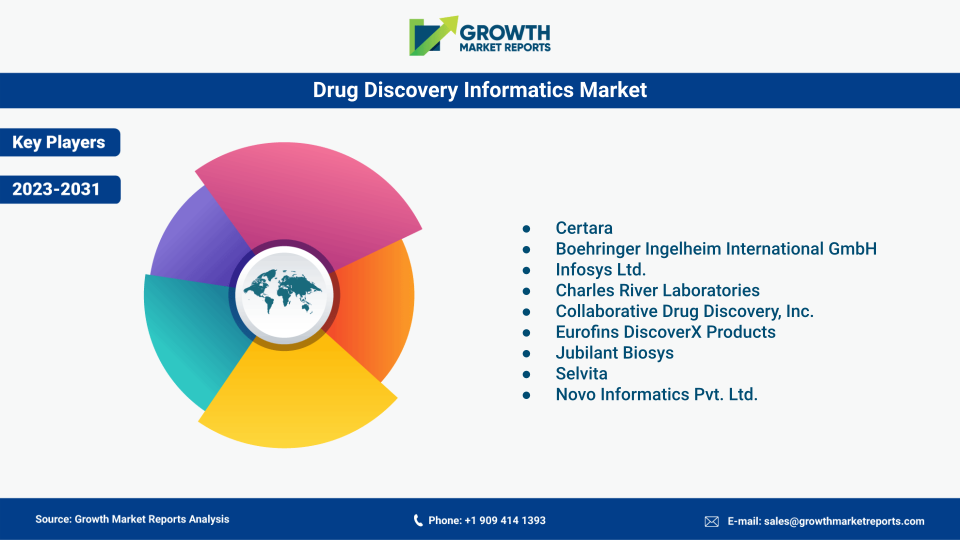
Key players competing in the drug discovery informatics market are Certara, Boehringer Ingelheim International GmbH, Infosys Ltd., Charles River Laboratories, Collaborative Drug Discovery, Inc., Eurofins DiscoverX Products, Jubilant Biosys, Selvita, Novo Informatics Pvt. Ltd., ChemAxon Ltd., Albany Molecular Research Inc., Oracle, Accenture, Agilent Technologies, Inc., and Illumina, Inc.
Companies are increasingly collaborating with other companies, research institutes, and CROs to enhance their market shares. In March 2020, Charles River Laboratories International, Inc. collaborated with Deciphex. The Patholytix Preclinical platform from Deciphex was expected to improve pathologists’ productivity and provide data to clients quickly.
Applications span pharmaceuticals, biotechnology, CROs, academic and research institutes, and include functions such as target identification, lead generation, compound screening, molecular modeling, and data analysis.
Key players include Thermo Fisher Scientific, PerkinElmer, Schrödinger, Dassault Systèmes (BIOVIA), Certara, Charles River Laboratories, Collaborative Drug Discovery (CDD), Infosys, and others.
Major challenges include data privacy and security concerns, regulatory compliance requirements, and the technical complexity of integrating disparate data sources and legacy systems.
AI and machine learning are revolutionizing drug discovery by enabling predictive modeling, automating data analysis, improving molecular interaction predictions, and streamlining lead optimization processes.
Major end-users include pharmaceutical companies, biotechnology companies, academic institutes, contract research organizations (CROs), and government or non-profit organizations.
The market offers software solutions (such as molecular modeling, data mining, cheminformatics, and bioinformatics platforms) and services (including consulting, system integration, training, maintenance, and custom software development).
North America currently dominates the market, accounting for about 42% of global value, followed by Europe and the rapidly growing Asia Pacific region.
Key growth drivers include the rising prevalence of chronic diseases, increasing adoption of AI and machine learning, demand for efficient drug development, and the need for advanced data management and analytics in pharmaceutical research.
The Drug Discovery Informatics market is expected to grow at a CAGR of 11.2% from 2025 to 2033, reaching an estimated USD 12.84 billion by the end of the forecast period.
As of 2024, the global Drug Discovery Informatics market size reached USD 4.72 billion, reflecting strong growth driven by increased demand for advanced computational tools in pharmaceutical R&D.