Segments - by Fluid Type (Water-Based Fluids, Oil-Based Fluids, Synthetic-Based Fluids, Pneumatic-Based Fluids, Others), by Application (Onshore, Offshore), by Well Type (Conventional, Unconventional), by End-User (Oil & Gas, Mining, Geothermal, Others)
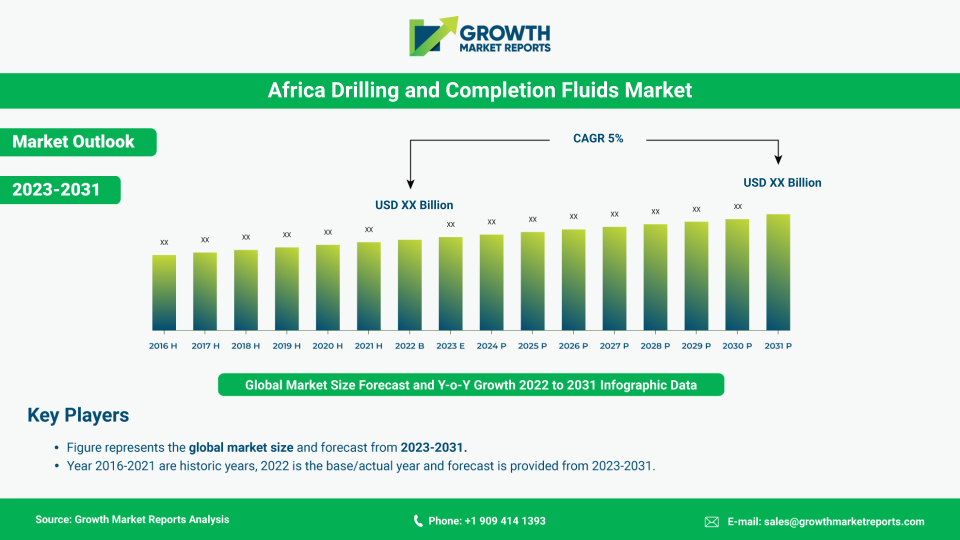
According to our latest research, the global Drilling and Completion Fluids market size reached USD 11.8 billion in 2024, reflecting robust demand across key end-use sectors. The market is projected to expand at a CAGR of 5.7% from 2025 to 2033, reaching a forecasted value of USD 19.7 billion by 2033. This growth trajectory is underpinned by increasing exploration and production activities in both conventional and unconventional hydrocarbon reserves, technological advancements in fluid formulations, and a rising focus on operational efficiency and well integrity.
The primary growth factor driving the Drilling and Completion Fluids market is the resurgence in oil and gas exploration projects globally. As energy demand continues to rise, particularly in developing regions, operators are investing in deeper and more complex wells. This necessitates advanced drilling and completion fluids capable of withstanding high pressures and temperatures, minimizing formation damage, and optimizing drilling performance. Additionally, the shift toward unconventional resources such as shale gas and tight oil has further amplified the need for specialized fluid systems, which can handle challenging geological conditions and enhance hydrocarbon recovery rates.
Another significant catalyst for market expansion is the ongoing technological innovation within the drilling fluids sector. Companies are increasingly developing environmentally friendly and high-performance fluid systems, such as synthetic-based and water-based fluids, which offer superior lubricity, stability, and reduced environmental impact. The integration of real-time monitoring and automation in fluid management is also enabling operators to optimize fluid properties on-the-fly, thereby improving drilling efficiency and reducing non-productive time. Furthermore, the adoption of digital solutions and advanced analytics is facilitating predictive maintenance and fluid optimization, supporting the overall growth of the Drilling and Completion Fluids market.
The market is also benefiting from the growing emphasis on well integrity and safety standards. Regulatory bodies across major oil-producing regions are enforcing stringent guidelines regarding the use and disposal of drilling fluids, compelling operators to invest in high-quality and compliant fluid systems. This trend is especially pronounced in offshore and deepwater projects, where the risk of wellbore instability and environmental contamination is elevated. As a result, demand for premium drilling and completion fluids that ensure wellbore stability, prevent formation damage, and facilitate efficient well completion is on the rise, contributing to the upward market trajectory.
In recent years, the development and utilization of Supercritical Geothermal Drilling Fluid have emerged as a promising advancement in the geothermal energy sector. This specialized fluid is engineered to withstand the extreme conditions encountered in supercritical geothermal wells, where temperatures and pressures exceed conventional limits. The ability of these fluids to maintain stability and performance under such conditions is crucial for the successful extraction of geothermal energy. As the demand for renewable energy sources grows, the role of supercritical geothermal drilling fluids becomes increasingly significant, offering enhanced efficiency and sustainability in geothermal operations. This innovation not only supports the transition to cleaner energy but also addresses the unique challenges posed by supercritical geothermal environments.
From a regional perspective, North America remains the dominant market, driven by the prolific shale gas and tight oil activities in the United States and Canada. However, emerging economies in Asia Pacific, Latin America, and the Middle East are witnessing accelerated growth, fueled by significant investments in upstream oil and gas infrastructure. These regions are not only expanding their exploration and production capacities but are also adopting advanced drilling and completion technologies to maximize output and minimize environmental footprint. Europe, while relatively mature, continues to focus on offshore and deepwater developments, further supporting the demand for sophisticated fluid systems.
The Drilling and Completion Fluids market is segmented by fluid type into Water-Based Fluids (WBF), Oil-Based Fluids (OBF), Synthetic-Based Fluids (SBF), Pneumatic-Based Fluids, and Others. Water-Based Fluids continue to dominate the market owing to their cost-effectiveness, environmental compatibility, and ease of disposal. These fluids are widely used in both onshore and offshore drilling operations, particularly in regions with stringent environmental regulations. The development of advanced water-based fluid formulations that offer improved lubricity, shale inhibition, and thermal stability is further boosting their adoption across various well types.
Oil-Based Fluids, on the other hand, are preferred in challenging drilling environments where high lubricity, thermal stability, and wellbore integrity are critical. These fluids are extensively utilized in deepwater and high-pressure, high-temperature (HPHT) wells, where water-based systems may fall short. However, concerns related to environmental impact and disposal costs have prompted operators to seek alternatives or invest in advanced treatment solutions. Despite these challenges, the demand for oil-based fluids remains robust, particularly in regions with complex geological formations.
Synthetic-Based Fluids are gaining significant traction due to their superior performance characteristics, including enhanced lubricity, reduced toxicity, and lower environmental footprint compared to traditional oil-based systems. These fluids are increasingly being adopted in offshore and environmentally sensitive areas, where regulatory compliance and operational efficiency are paramount. The higher initial cost of synthetic-based fluids is offset by their ability to minimize formation damage, reduce drilling time, and improve overall well productivity, making them a preferred choice for premium drilling operations.
Pneumatic-Based Fluids, which include air, mist, and foam systems, are primarily utilized in underbalanced drilling applications. These systems offer advantages such as reduced formation damage, improved rate of penetration, and lower fluid loss. Although their market share is relatively smaller compared to other fluid types, pneumatic-based fluids are expected to witness steady growth, especially in unconventional and depleted reservoir drilling. The "Others" segment encompasses specialized fluids and additives designed for specific drilling and completion challenges, reflecting the industry's ongoing commitment to innovation and customization.
| Attributes | Details |
| Report Title | Drilling and Completion Fluids Market Research Report 2033 |
| By Fluid Type | Water-Based Fluids, Oil-Based Fluids, Synthetic-Based Fluids, Pneumatic-Based Fluids, Others |
| By Application | Onshore, Offshore |
| By Well Type | Conventional, Unconventional |
| By End-User | Oil & Gas, Mining, Geothermal, Others |
| Regions Covered | North America, Europe, APAC, Latin America, MEA |
| Base Year | 2024 |
| Historic Data | 2018-2023 |
| Forecast Period | 2025-2033 |
| Number of Pages | 284 |
| Number of Tables & Figures | 361 |
| Customization Available | Yes, the report can be customized as per your need. |
The Drilling and Completion Fluids market is broadly segmented by application into Onshore and Offshore drilling activities. Onshore drilling remains the largest application segment, accounting for a significant share of global fluid consumption. This dominance is attributed to the sheer volume of onshore wells drilled annually, particularly in regions such as North America, the Middle East, and Asia Pacific. Onshore projects benefit from relatively lower operational complexities and costs, enabling the widespread use of water-based and oil-based fluid systems. The ongoing expansion of shale gas and tight oil plays in the United States and China is further propelling demand for advanced onshore drilling fluids.
Offshore drilling, while representing a smaller share in terms of well count, commands a substantial portion of the market value due to the complexity and technical demands of deepwater and ultra-deepwater projects. Offshore operations require high-performance fluid systems capable of maintaining wellbore stability, preventing hydrate formation, and withstanding extreme pressures and temperatures. The increasing number of offshore exploration and production projects, particularly in regions like the Gulf of Mexico, North Sea, and West Africa, is fueling the adoption of synthetic-based and high-performance oil-based fluids. These fluids are essential for ensuring operational safety, minimizing environmental risks, and optimizing drilling efficiency in challenging offshore environments.
The distinction between onshore and offshore applications also influences fluid selection, additive requirements, and waste management practices. Offshore projects, for instance, necessitate stringent environmental compliance and waste minimization strategies, prompting operators to invest in advanced fluid recycling and treatment technologies. Onshore projects, while generally less regulated, are increasingly adopting best practices in fluid management to enhance well productivity and reduce operational costs. The dynamic interplay between application type and fluid technology is shaping the evolution of the Drilling and Completion Fluids market.
Moreover, the ongoing digital transformation in the oil and gas industry is impacting both onshore and offshore fluid management practices. Real-time monitoring, data analytics, and automation are enabling operators to optimize fluid properties, anticipate wellbore challenges, and minimize non-productive time. This technological shift is particularly beneficial in offshore environments, where operational risks and costs are significantly higher. As the industry continues to embrace digital solutions, the demand for intelligent and adaptive fluid systems is expected to rise across both application segments.
The Drilling and Completion Fluids market is further segmented by well type into Conventional and Unconventional wells. Conventional wells have historically dominated the market, driven by the ongoing development of mature oilfields and the relatively straightforward nature of drilling operations. These wells typically require standard fluid systems, with a strong preference for water-based and oil-based fluids. However, as conventional reserves decline and exploration shifts toward more challenging environments, the market dynamics are gradually evolving.
Unconventional wells, including shale gas, tight oil, and coalbed methane, are witnessing rapid growth, particularly in North America and Asia Pacific. Drilling and completing unconventional wells involve unique challenges such as complex geology, high-pressure formations, and the need for hydraulic fracturing. These factors necessitate the use of advanced fluid systems with enhanced lubricity, shale inhibition, and thermal stability. The proliferation of horizontal drilling and multi-stage fracturing techniques in unconventional resource development is further driving demand for specialized drilling and completion fluids.
The shift toward unconventional resource exploitation is also fostering innovation in fluid chemistry and formulation. Operators are increasingly seeking customized fluid solutions that can address specific wellbore challenges, minimize formation damage, and maximize hydrocarbon recovery. This trend is particularly evident in the United States, where the shale revolution has transformed the energy landscape and spurred significant investments in fluid research and development. As other regions, such as China and Argentina, ramp up their unconventional drilling activities, the demand for high-performance fluid systems is expected to surge.
Furthermore, the distinction between conventional and unconventional wells extends beyond fluid selection to encompass additive usage, waste management, and operational best practices. Unconventional wells, for instance, often require higher concentrations of performance additives and more sophisticated waste treatment solutions. The increasing complexity of well types is driving the evolution of the Drilling and Completion Fluids market, with a growing emphasis on customization, innovation, and sustainability.
The Drilling and Completion Fluids market serves a diverse range of end-users, with Oil & Gas representing the largest segment by a significant margin. The oil and gas industry relies heavily on advanced fluid systems to ensure efficient drilling, maintain wellbore integrity, and optimize hydrocarbon recovery. As global energy demand continues to rise, particularly in emerging economies, investments in upstream oil and gas exploration and production are expected to drive sustained demand for drilling and completion fluids. The increasing focus on operational efficiency, safety, and environmental compliance is further incentivizing oil and gas operators to adopt high-performance fluid systems.
The Mining sector is another important end-user, utilizing drilling fluids for mineral exploration and extraction processes. While the scale of fluid consumption in mining is smaller compared to oil and gas, the sector's emphasis on operational efficiency and environmental stewardship is driving the adoption of advanced fluid technologies. Mining operations often require customized fluid formulations to address specific geological and operational challenges, such as borehole stability, cuttings transport, and groundwater protection.
Geothermal energy is an emerging end-user segment, driven by the global transition toward renewable energy sources. Geothermal drilling presents unique challenges, including high temperatures, corrosive fluids, and the need for long-lasting well integrity. As investments in geothermal projects increase, particularly in regions with abundant geothermal resources, demand for specialized drilling and completion fluids is expected to grow. These fluids must be capable of withstanding extreme conditions while minimizing environmental impact, prompting ongoing research and development in fluid chemistry and formulation.
The "Others" segment encompasses a variety of niche applications, including water well drilling, construction, and environmental remediation. While these markets are relatively small in terms of fluid consumption, they contribute to the overall diversity and resilience of the Drilling and Completion Fluids market. The growing emphasis on sustainable and environmentally friendly drilling practices across all end-user segments is shaping the future direction of fluid technology and market growth.
The Drilling and Completion Fluids market presents significant opportunities for growth, particularly through technological innovation and the expansion of unconventional resource development. The ongoing digital transformation in the oil and gas industry is creating new avenues for fluid optimization, real-time monitoring, and predictive maintenance. Companies that invest in smart fluid systems, advanced analytics, and automation are well-positioned to capitalize on these opportunities. Additionally, the global push toward environmental sustainability is driving demand for eco-friendly and biodegradable fluid systems, opening up new markets and applications for innovative fluid technologies.
Another major opportunity lies in the expansion of upstream exploration and production activities in emerging regions. Countries in Asia Pacific, Latin America, and Africa are investing heavily in oil and gas infrastructure, creating substantial demand for advanced drilling and completion fluids. The development of deepwater and ultra-deepwater reserves, as well as the exploitation of unconventional resources, is further fueling market growth. Strategic partnerships, mergers and acquisitions, and investments in research and development are expected to play a crucial role in capturing these growth opportunities and enhancing market competitiveness.
Despite the positive outlook, the market faces several restraining factors, most notably the volatility of crude oil prices. Fluctuations in oil prices can significantly impact upstream investment decisions, leading to delays or cancellations of drilling projects and, consequently, reduced demand for drilling and completion fluids. Additionally, stringent environmental regulations and the high cost of advanced fluid systems pose challenges for market participants. Companies must navigate a complex regulatory landscape and invest in sustainable solutions to maintain their competitive edge and ensure long-term growth.
Regionally, North America remains the largest market for Drilling and Completion Fluids, with a market size of USD 4.5 billion in 2024. This dominance is primarily driven by the United States, which leads the world in shale gas and tight oil production. The region's advanced drilling technologies, extensive unconventional resource base, and favorable regulatory environment have fostered robust demand for high-performance fluid systems. Canada also contributes significantly to the regional market, particularly through its oil sands and conventional oil projects. With a projected CAGR of 4.9% through 2033, North America is expected to maintain its leadership position, supported by ongoing investments in upstream exploration and production.
Asia Pacific is emerging as the fastest-growing regional market, driven by rapid industrialization, urbanization, and increasing energy consumption in countries such as China, India, and Indonesia. The region's market size stood at USD 2.8 billion in 2024, with significant growth expected in the coming years. Investments in both conventional and unconventional resource development, coupled with the adoption of advanced drilling and completion technologies, are fueling demand for innovative fluid systems. The presence of vast untapped reserves and government initiatives to boost domestic energy production are further supporting market growth in Asia Pacific.
Europe and the Middle East & Africa are also important markets, with a combined market size of USD 3.1 billion in 2024. Europe is characterized by its focus on offshore and deepwater exploration, particularly in the North Sea and the Mediterranean. Stringent environmental regulations and the push for renewable energy sources are shaping the demand for eco-friendly and high-performance fluid systems. The Middle East & Africa, home to some of the world's largest conventional oil reserves, continues to invest in upstream capacity expansion and enhanced oil recovery projects. Latin America, with a market size of USD 1.4 billion in 2024, is witnessing steady growth, particularly in Brazil, Argentina, and Mexico, driven by both offshore and unconventional resource development.
The Drilling and Completion Fluids market is characterized by intense competition, with a mix of global giants and regional players vying for market share. The competitive landscape is shaped by factors such as technological innovation, product portfolio diversity, pricing strategies, and customer service capabilities. Leading companies are continuously investing in research and development to introduce advanced fluid systems that offer superior performance, environmental compliance, and cost-effectiveness. Strategic collaborations, mergers and acquisitions, and geographic expansion are common strategies employed to strengthen market presence and capture new growth opportunities.
Innovation remains a key differentiator in this market, with companies focusing on the development of eco-friendly and biodegradable fluid systems, digital fluid management solutions, and customized formulations for specific well types and applications. The integration of real-time monitoring, data analytics, and automation is enabling market leaders to deliver enhanced value to customers, optimize operational efficiency, and minimize environmental impact. The ability to provide comprehensive technical support, training, and after-sales services is also emerging as a critical success factor in the highly competitive Drilling and Completion Fluids market.
Major players in the market include Schlumberger Limited, Halliburton Company, Baker Hughes Company, Newpark Resources Inc., and National Oilwell Varco. These companies possess extensive global footprints, strong research and development capabilities, and a broad portfolio of drilling and completion fluid solutions. Schlumberger, for example, is renowned for its advanced fluid technologies and integrated well construction services, while Halliburton is recognized for its innovative fluid systems and digital solutions. Baker Hughes has a strong focus on sustainability and digital transformation, offering a range of environmentally friendly fluid products and services.
Other notable companies include Weatherford International, Tetra Technologies, CES Energy Solutions, and Scomi Group. These players are actively expanding their product offerings, investing in new technologies, and exploring strategic partnerships to enhance their market position. The presence of a large number of regional and niche players further intensifies competition, particularly in emerging markets where local expertise and customer relationships are critical. As the industry continues to evolve, the ability to innovate, adapt to changing market dynamics, and deliver value-added solutions will be paramount for sustained success in the Drilling and Completion Fluids market.
The Drilling and Completion Fluids market has been segmented on the basis of
The major players of the market are Schlumberger Limited, Halliburton Company, Baker Hughes Company, Weatherford International PLC, and National-Oilwell Varco Inc. Companies are focusing on partnerships, joint ventures, and acquisitions to expand their market share.
Opportunities include technological innovation, digital transformation, expansion in emerging regions, and the development of eco-friendly and biodegradable fluid systems.
Major challenges include crude oil price volatility, high costs of advanced fluid systems, and navigating complex environmental regulations.
Key players include Schlumberger Limited, Halliburton Company, Baker Hughes Company, Weatherford International, Newpark Resources Inc., and National Oilwell Varco, among others.
Drilling and completion fluids are used in onshore and offshore drilling activities, with onshore drilling accounting for the largest share due to the high volume of wells drilled annually.
Stringent environmental regulations are prompting operators to invest in high-quality, compliant, and eco-friendly fluid systems, especially for offshore and deepwater projects.
Key growth drivers include increased oil and gas exploration, technological advancements in fluid formulations, a focus on operational efficiency, and stricter well integrity and safety standards.
The market is segmented into Water-Based Fluids (WBF), Oil-Based Fluids (OBF), Synthetic-Based Fluids (SBF), Pneumatic-Based Fluids, and Others.
North America is the dominant market, driven by shale gas and tight oil activities in the US and Canada. Asia Pacific is the fastest-growing region, while Europe, Latin America, and the Middle East & Africa also show significant growth.
The market is expected to grow at a CAGR of 5.7% from 2025 to 2033, reaching a forecasted value of USD 19.7 billion by 2033.
As of 2024, the global Drilling and Completion Fluids market size reached USD 11.8 billion, with strong demand across key end-use sectors.