Segments - by Product Type (Laptop Docking Stations, Mobile Device Docking Stations, Universal Docking Stations, Others), by Connectivity (Wired, Wireless), by Port Type (USB Type-C, Thunderbolt, USB 3.0, HDMI, DisplayPort, Others), by Application (Commercial, Residential, Industrial, Others), by Distribution Channel (Online, Offline)
This report is updated with the latest market data and insights as of June 2026. Base year: 2025 | Forecast period: 2026-2034
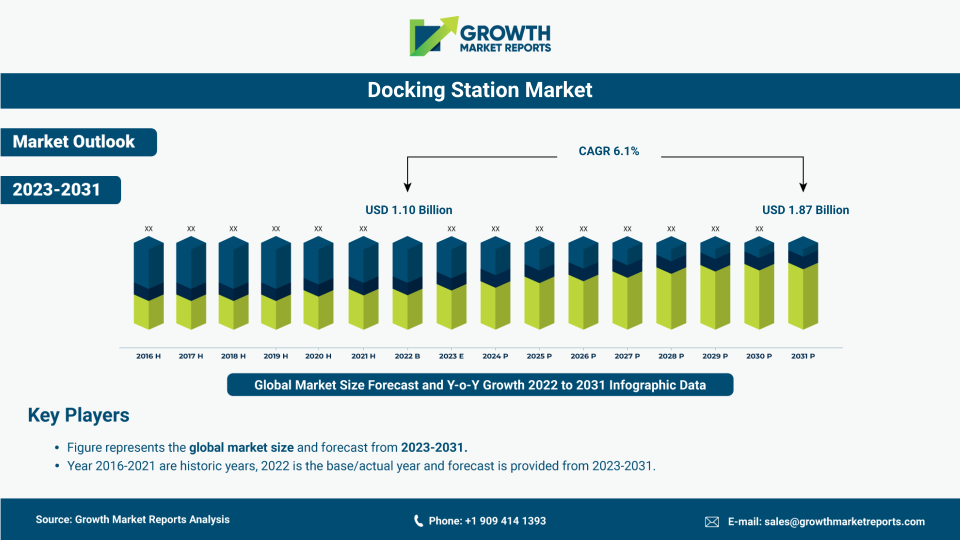
According to our latest research, the global Docking Station market size reached USD 8.43 billion in 2025, demonstrating robust expansion across both consumer and enterprise segments. The market is expected to grow at a CAGR of 6.2% from 2026 to 2034, reaching a forecasted value of USD 14.52 billion by 2034. This growth is primarily driven by the increasing adoption of flexible work environments, rising demand for multi-device connectivity, and the proliferation of advanced portable computing devices. The integration of new connectivity standards and the sustained momentum of hybrid work models are significantly boosting the global docking station market heading into the second half of the decade.
One of the primary growth factors for the docking station market is the ongoing transformation of workplace dynamics. The surge in remote and hybrid working arrangements has elevated the need for seamless device integration and connectivity solutions. Employees increasingly require the ability to transition effortlessly between home and office setups, necessitating reliable docking stations that can support multiple peripherals with minimal friction. Furthermore, the growing use of laptops and tablets as primary computing devices, replacing traditional desktops, is propelling demand for universal and high-performance docking stations. The ability of modern docking stations to deliver power, enable high-speed data transfer, and support multiple displays simultaneously is making them indispensable for professionals across industries in 2025 and beyond.
Technological advancements are another crucial driver for the docking station market. The rapid evolution of connectivity standards such as USB Type-C, Thunderbolt 4, and next-generation wireless protocols is enabling docking stations to offer faster data transfer rates, enhanced charging capabilities, and broader device compatibility. Manufacturers are innovating with compact, multi-functional designs that cater to the needs of both commercial and residential users. The growing prevalence of USB-C and Thunderbolt ports across new laptops and mobile devices has spurred development of docking stations that serve as universal hubs, supporting a wide range of brands and operating systems. This technological progression is also driving the integration of additional features such as embedded graphics, hardware security modules, and network connectivity, further expanding the market's addressable potential. Solutions like an advanced docking station display setup are also gaining popularity, combining peripheral management with high-resolution visual output in a single streamlined unit.
The expanding consumer electronics landscape, coupled with the rise of the Internet of Things, is also fueling market growth. As households and businesses adopt a wider array of connected devices, the need for centralized docking solutions becomes more pronounced. The ability to connect smartphones, tablets, external displays, storage devices, and audio equipment through a single docking station is highly attractive to users seeking convenience and efficiency. Additionally, the trend toward minimalistic and organized workspaces is encouraging adoption of docking stations that reduce cable clutter and streamline device management. The combination of these factors is expected to sustain strong growth momentum in the docking station market over the 2026-2034 forecast period.
The advent of innovative form factors such as the docking station and monitor stand combination is transforming how users interact with their devices. These solutions not only provide a stable ergonomic platform for monitors but also integrate multiple connectivity options, including USB-C ports, to facilitate seamless connections with laptops and other peripherals. This integration is particularly beneficial in modern workspaces where desk space is at a premium and users require a tidy, efficient setup. By consolidating cables and offering enhanced ergonomics, such combination products are becoming a popular choice among professionals seeking to optimize their work environment while minimizing desktop footprint.
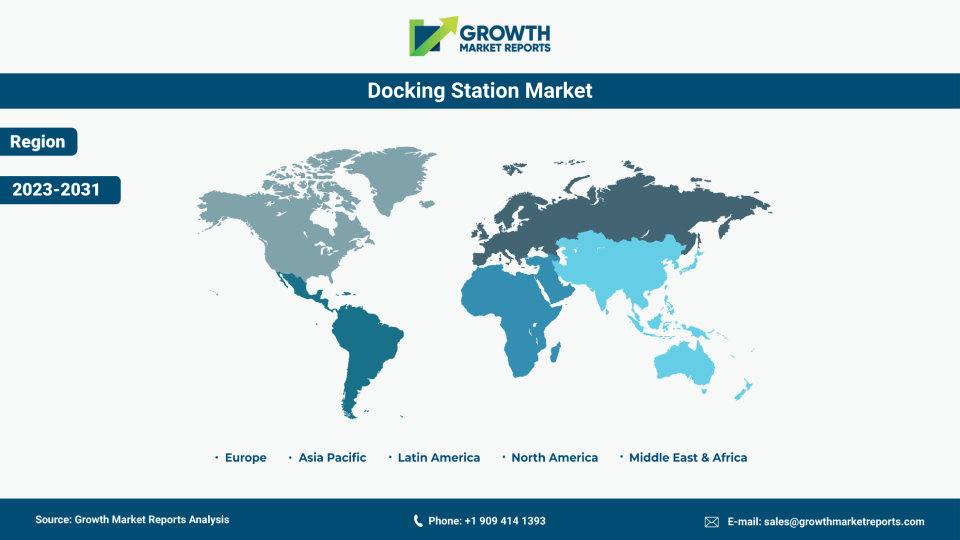
From a regional perspective, North America currently leads the docking station market with a share of approximately 34.2% in 2025, supported by high technology adoption rates, a large remote workforce, and significant investments in IT infrastructure. However, the Asia Pacific region is poised for the fastest growth at a projected CAGR of around 7.8% through 2034, driven by rapid digitalization, expanding enterprise sectors, and increasing consumer spending on electronics. Europe also holds a substantial share at roughly 21.8%, with strong demand from both corporate and residential segments. Meanwhile, Latin America and the Middle East and Africa are emerging as promising markets, supported by growing urbanization and rising adoption of modern workplace solutions. The regional landscape is expected to evolve dynamically as global work trends and technology adoption continue to shift.
The docking station market is segmented by product type into Laptop Docking Stations, Mobile Device Docking Stations, Universal Docking Stations, and Others. Laptop docking stations continue to dominate the segment with a market share of approximately 44.5% in 2025, reflecting the widespread use of laptops in commercial, educational, and government settings. Organizations are increasingly equipping employees with laptops to facilitate mobility and flexibility, which in turn drives demand for docking solutions that can seamlessly connect to multiple peripherals. Laptop docking stations are evolving rapidly, with manufacturers focusing on compact designs, enhanced compatibility, and support for high-resolution and multi-monitor display configurations essential for modern productivity environments.
The rise of high-performance connectivity in this segment is exemplified by the growing adoption of Thunderbolt-based docking solutions, which offer unparalleled speed and versatility for demanding workflows. Thunderbolt 4 technology, known for its high data transfer bandwidth and support for multiple high-resolution displays, is particularly appealing to creative professionals, engineers, and content creators. These docks enable users to connect a wide array of devices, from external storage arrays to advanced graphics hardware, all through a single cable. The ability to daisy-chain multiple peripherals further enhances the functionality of Thunderbolt docking stations, making them an ideal solution for complex computing environments. As more devices incorporate Thunderbolt ports, demand for these high-performance solutions is expected to grow strongly through 2034.
Mobile device docking stations, representing approximately 18.2% of the market in 2025, are witnessing steady growth due to the rising penetration of smartphones and tablets in professional and personal use cases. As mobile devices become more powerful and capable of handling full productivity tasks, users are seeking docking solutions that enable connection to external monitors, keyboards, and other peripherals. This trend is particularly evident among creative professionals, business travelers, and remote workers who require the flexibility to work from any location. Mobile docking stations are also being integrated with wireless charging capabilities and advanced security features, further enhancing their appeal to enterprise buyers.
Universal docking stations hold approximately 29.8% of the market in 2025 and are emerging as a critical growth segment, driven by the need for cross-platform compatibility and future-proofing of IT investments. These docking stations are designed to work with a wide range of devices regardless of brand or operating system, making them ideal for enterprises with heterogeneous device environments. Universal docking stations are gaining particularly strong traction in shared workspaces, educational institutions, and multi-user households where versatility and ease of use are paramount. The integration of advanced connectivity standards, including USB Type-C and Thunderbolt 4, has further bolstered the adoption of universal docking stations, enabling high-speed data transfer and comprehensive multi-display support. The market for DisplayLink-based docking stations is also expanding within this segment, as DisplayLink technology enables flexible multi-monitor setups over a single USB connection without requiring Thunderbolt hardware.
The "Others" category includes specialized docking stations designed for unique applications such as gaming consoles, point-of-sale systems, and industrial equipment. While this segment accounts for approximately 7.5% of the overall market, it offers significant growth potential in niche verticals. Docking stations tailored for industrial environments are engineered to withstand harsh conditions including extreme temperatures, dust, and vibration. Gaming docking stations are optimized for high-performance graphics and low-latency connectivity, catering to the needs of gamers and content creators. As the market continues to diversify, manufacturers are expected to explore new product categories to address emerging user requirements across sectors.
| Attributes | Details |
| Report Title | Docking Station Market Research Report 2025-2034 |
| By Product Type | Laptop Docking Stations, Mobile Device Docking Stations, Universal Docking Stations, Others |
| By Connectivity | Wired, Wireless |
| By Port Type | USB Type-C, Thunderbolt, USB 3.0, HDMI, DisplayPort, Others |
| By Application | Commercial, Residential, Industrial, Others |
| By Distribution Channel | Online, Offline |
| Regions Covered | North America, Europe, APAC, Latin America, MEA |
| Base Year | 2025 |
| Historic Data | 2019-2024 |
| Forecast Period | 2026-2034 |
| Number of Pages | 264 |
| Number of Tables & Figures | 277 |
| Customization Available | Yes, the report can be customized as per your need. |
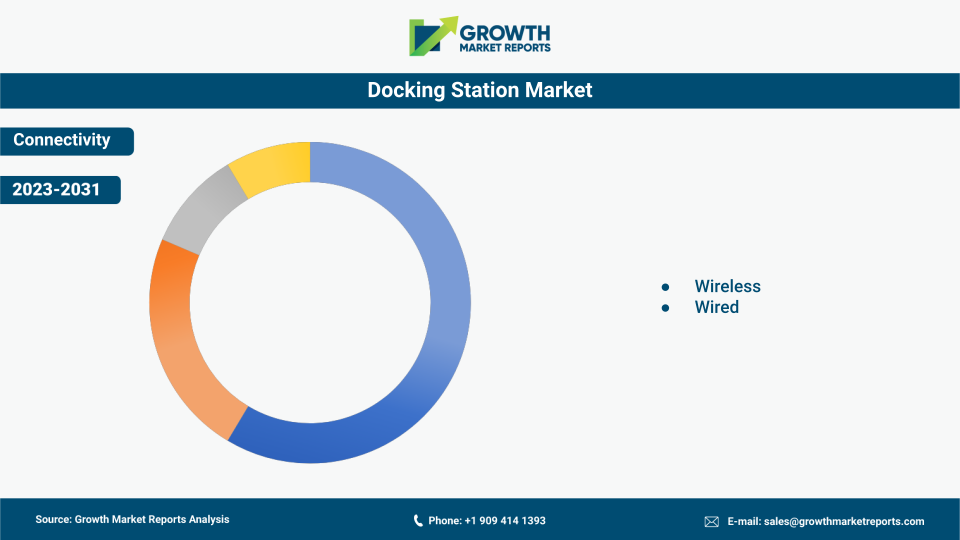
The docking station market is bifurcated by connectivity into Wired and Wireless solutions. Wired docking stations currently hold the largest market share in 2025, owing to their reliability, speed, and widespread compatibility across device categories. Enterprises and professionals prioritize wired docking stations for their stable connections, high data transfer rates, and ability to support multiple displays and peripherals simultaneously. The prevalence of USB Type-C, Thunderbolt 4, and HDMI interfaces in modern wired docking stations ensures compatibility with the latest laptops and devices. Additionally, wired solutions are favored in environments where security and uninterrupted connectivity are paramount, such as financial institutions, healthcare facilities, and government agencies.
Wireless docking stations are rapidly gaining traction in 2025, driven by the increasing adoption of Wi-Fi 6E and emerging Wi-Fi 7 technologies alongside growing demand for clutter-free workspaces. These solutions leverage advanced wireless protocols to connect devices without physical cables, offering greater flexibility and convenience for users who move frequently between workstations. Wireless docking stations are particularly popular in collaborative and dynamic work environments, including hot-desking offices and co-working spaces. Continued improvements in data transfer speeds and latency reduction are making wireless docking stations a genuinely competitive alternative to wired options for a growing range of applications.
The evolution of connectivity standards is playing a pivotal role in shaping the docking station landscape. As devices become thinner and more compact, the availability of traditional ports is diminishing, necessitating the use of docking stations to expand connectivity options. Manufacturers are responding by developing docking solutions that support the latest interfaces while maintaining backward compatibility with older peripherals. The convergence of wired and wireless technologies is also giving rise to hybrid docking stations that offer users the ability to switch between modes based on context, combining the security of a wired connection with the convenience of wireless operation.
Looking ahead through 2034, the adoption of wireless docking stations is expected to accelerate, particularly in the enterprise segment, as organizations seek to enhance workplace flexibility and support hot-desking and activity-based working initiatives. However, wired docking stations will continue to play a crucial role in scenarios demanding maximum performance, bandwidth, and data security. The coexistence of wired and wireless solutions will persist across the forecast period, with users and IT administrators selecting the most appropriate option based on their specific operational requirements.
Port type is a critical consideration in the docking station market, with key segments including USB Type-C, Thunderbolt, USB 3.0, HDMI, DisplayPort, and Others. USB Type-C has firmly established itself as the dominant port type in 2025, driven by its versatility, reversible design, and ability to support power delivery, high-speed data transfer, and video output through a single connector. The near-universal adoption of USB Type-C in modern laptops, tablets, and smartphones has propelled the demand for docking stations that leverage this interface. Manufacturers are increasingly focusing on USB Type-C docking solutions that offer broad cross-brand compatibility and streamlined connectivity for individual and enterprise users alike.
Thunderbolt ports, renowned for their exceptional data transfer speeds and support for multiple high-resolution displays, are gaining significant traction in premium docking station segments in 2025. Thunderbolt 4 docking stations are particularly favored by creative professionals, engineers, and content creators who require high-bandwidth connectivity for demanding applications including video editing, 3D rendering, and large-scale data workflows. The ability to daisy-chain multiple devices and peripherals further enhances the appeal of Thunderbolt docking stations. The growing ecosystem of Thunderbolt-enabled laptops from major manufacturers is broadening the addressable market for these high-performance solutions substantially. A comprehensive overview of the docking monitor segment highlights how tightly video output standards and docking station innovation are intertwined, with display performance increasingly central to purchasing decisions.
USB 3.0, while gradually being supplanted by newer standards, remains a significant port type due to its widespread presence in the large installed base of legacy devices and peripherals. Many users continue to rely on USB 3.0 ports in docking stations to connect older external storage, input devices, and accessories. HDMI and DisplayPort interfaces remain integral to docking stations, enabling connection to external monitors, projectors, and audio-visual systems. The inclusion of multiple video output options is a key differentiator for docking stations targeting business and multimedia applications where multi-monitor productivity is a priority.
The "Others" category encompasses a range of additional port types including Ethernet, audio jacks, SD card readers, and proprietary connectors. These ports enhance the functional breadth of docking stations, allowing users to connect a diverse array of devices and accessories from a single hub. As the ecosystem of connected devices continues to expand through 2034, docking stations offering comprehensive and future-ready port selections are becoming increasingly valuable to buyers seeking long-term investments. The trend toward modular and configurable docking solutions is also gaining momentum, enabling users and IT departments to tailor connectivity options to specific operational needs.
The application landscape for docking stations is segmented into Commercial, Residential, Industrial, and Others. The commercial segment accounts for the largest share of the market in 2025, driven by widespread adoption in offices, educational institutions, government organizations, and healthcare enterprises. Businesses are investing in docking solutions to enhance employee productivity, support flexible work arrangements, and streamline IT asset management. The ability to quickly connect and disconnect multiple devices, coupled with centralized charging and data transfer, makes docking stations an essential tool in modern workplaces. The commercial segment is also characterized by the adoption of advanced docking stations with integrated security features, remote management capabilities, and broad operating system support.
The residential segment is witnessing significant growth in 2025, fueled by the increasing penetration of consumer electronics and the continued prevalence of home offices established during and after the pandemic era. As more individuals work and study from home, demand for docking stations supporting laptops, tablets, and smartphones is on the rise. Residential users prioritize ease of use, compact design, and affordability when selecting docking solutions. Manufacturers are responding with plug-and-play docking stations that offer consumer-friendly setup experiences and support for popular personal devices. The integration of entertainment features such as audio output, multi-display support, and 4K video passthrough is further driving adoption in the residential segment.
Industrial applications represent a niche but steadily growing segment of the docking station market. In industrial environments, docking stations are used to connect ruggedized laptops, tablets, and specialized equipment to control systems, operational data networks, and diagnostic tools. These docking stations are engineered to withstand harsh conditions including extreme temperatures, dust, humidity, and vibration. The industrial segment values durability, long-term reliability, and compatibility with legacy operational technology systems. As industries embrace digital transformation, automation, and Industry 4.0 frameworks, the demand for robust docking solutions supporting mission-critical operations is expected to increase meaningfully through 2034.
The "Others" category includes applications in healthcare, retail, transportation, and hospitality. In healthcare, docking stations connect medical devices, patient monitoring systems, and data terminals, enabling efficient care delivery and records management. In retail and hospitality, docking stations facilitate point-of-sale systems, customer service terminals, and digital signage. The versatility of docking stations across such a broad range of use cases ensures that manufacturers have a diverse and resilient addressable market, and ongoing exploration of new verticals is expected to uncover additional growth opportunities through the forecast period.
The docking station market is segmented by distribution channel into Online and Offline channels. The online segment has experienced remarkable growth through 2025, driven by the continued expansion of e-commerce platforms and the deepening preference for digital purchasing among both consumers and businesses. Online channels offer the convenience of comprehensive product comparisons, detailed technical specifications, competitive pricing, and access to user reviews that empower buyers to make informed purchasing decisions. Leading online retailers and manufacturer direct-to-consumer websites host extensive product catalogs catering to every price point and use case. The online segment is particularly strong among tech-savvy consumers, small and medium businesses, and enterprise procurement teams that value efficiency and transparency.
Offline channels, including brick-and-mortar electronics stores, IT resellers, value-added resellers, and specialty retailers, continue to play a vital role in the docking station market in 2025. Many consumers prefer to evaluate docking stations in person, testing physical build quality and verifying peripheral compatibility before committing to a purchase. Enterprises and large organizations frequently rely on established offline channels for bulk procurement, volume licensing of firmware and management software, customized deployment solutions, and ongoing after-sales support. The offline segment is characterized by strong long-term relationships between manufacturers, distributors, and end-user organizations, which facilitates tailored solutions and priority service arrangements.
The interplay between online and offline channels is shaping the overall distribution strategy for docking station manufacturers. Many companies are adopting omnichannel approaches that integrate digital and physical touchpoints into a seamless buying experience. Customers may research products online, configure solutions through interactive tools, and then complete purchases through preferred offline partners, or vice versa. This hybrid model enables manufacturers to reach a broader audience, enhance customer engagement throughout the purchase journey, and optimize inventory management across channels. Growing investment in digital marketing, personalized product recommendations, and efficient last-mile logistics is enabling both established brands and emerging players to compete effectively.
Looking forward through 2034, the online segment is expected to outpace offline channels in terms of growth rate, driven by the ongoing global digital transformation and evolving consumer and enterprise purchasing behaviors. However, offline channels will remain important for specialized application sales, enterprise infrastructure projects, and high-touch customer support scenarios. The balance between online and offline distribution will continue to evolve as market dynamics, regional infrastructure maturity, and buyer preferences develop across different geographies.
A major opportunity for the docking station market lies in the ongoing digital transformation of workplaces and educational institutions. As organizations deepen their commitment to hybrid work models and remote collaboration infrastructure, demand for flexible and scalable connectivity solutions is set to rise meaningfully through 2034. Docking stations that offer universal compatibility, advanced hardware security, and remote IT management capabilities are well-positioned to capture this growing demand. The increasing adoption of USB Type-C and Thunderbolt 4 interfaces across the consumer electronics industry presents a significant product development opportunity, enabling manufacturers to create innovative docking solutions that serve a broad spectrum of devices and user profiles. The integration of smart features such as biometric authentication, IoT connectivity, and power usage monitoring can further differentiate products and open new revenue streams for forward-thinking manufacturers.
Another significant opportunity lies in the expansion of emerging markets, particularly across Asia Pacific, Latin America, and the Middle East and Africa. Rapid urbanization, rising disposable incomes, and accelerating investments in enterprise IT infrastructure are driving the adoption of advanced computing devices and accessories in these regions. Manufacturers can capitalize on this trend by offering affordable, high-quality docking stations tailored to the preferences and purchasing power of local consumers and businesses. Strategic partnerships with regional distributors, local retailers, and technology service providers can facilitate market entry and accelerate growth in these high-potential geographies. Furthermore, the growing corporate and regulatory focus on sustainability and energy efficiency presents an opportunity for manufacturers to develop eco-friendly docking solutions that meet emerging environmental standards and appeal to sustainability-conscious institutional buyers.
Despite these opportunities, the docking station market faces several meaningful challenges. The rapid pace of technological change can render existing product lines obsolete and necessitate continuous investment in research, development, and product refreshment cycles. Compatibility issues between docking stations and the diverse landscape of devices, operating systems, and connectivity standards can hinder adoption in enterprise environments with complex and heterogeneous IT ecosystems. Price sensitivity among consumers, particularly in emerging markets, may limit the penetration of premium docking solutions. Additionally, the increasing integration of ports and connectivity features directly into next-generation laptop and mobile device designs could, over time, reduce the perceived need for external docking stations in certain user segments. Manufacturers must navigate these challenges through persistent innovation, proactive customer education, competitive pricing strategies, and robust post-sale support programs to sustain long-term growth.
North America remains the largest regional market for docking stations, with an estimated market size of approximately USD 2.88 billion in 2025, representing a share of around 34.2%. The region's leadership is underpinned by high enterprise technology adoption rates, a large and established hybrid workforce, and significant ongoing investments in digital infrastructure across the United States and Canada. Businesses in this region are at the forefront of implementing flexible work policies and activity-based working models, driving sustained demand for advanced docking solutions that support multi-device connectivity and secure remote access. The presence of leading global technology companies, a mature distribution network, and strong consumer electronics spending further reinforce North America's market position. The region is expected to grow at a projected CAGR of approximately 5.1% through 2034.
The Asia Pacific region is poised for the fastest growth, with a market size of approximately USD 2.33 billion in 2025 representing a 27.6% share, and a projected CAGR of 7.8% over the 2026-2034 forecast period. Rapid urbanization, expanding enterprise sectors, and rising consumer spending on electronics are key drivers of market expansion in countries such as China, Japan, India, South Korea, and the broader Southeast Asian region. The accelerating adoption of digital learning platforms, remote work infrastructure, and smart home technologies is fueling demand for versatile docking solutions across multiple price tiers. Local manufacturers are introducing competitively priced and innovative products tailored to regional consumer preferences, while global players are increasing their investment in the region to capture share in this high-growth market.
Europe holds a significant share of the docking station market, with an estimated market size of approximately USD 1.84 billion in 2025, representing roughly 21.8% of global revenue. The region's growth is driven by strong demand from both corporate and residential segments, as well as robust enterprise investment in digital transformation initiatives. Countries such as Germany, the United Kingdom, France, and the Netherlands are leading adopters of advanced docking solutions, supported by a thriving technology ecosystem and a favorable regulatory environment. Europe's strong emphasis on sustainability, data security, and energy efficiency is influencing product development roadmaps and purchasing decisions across the region. Meanwhile, Latin America and the Middle East and Africa together account for approximately USD 1.38 billion in 2025, representing a combined share of 16.4%. These regions offer compelling growth potential as digitalization accelerates and urban professional populations expand their adoption of modern computing and connectivity solutions.
The global docking station market in 2025 is characterized by intense competition, with a diverse mix of established technology giants, specialized connectivity manufacturers, and agile emerging players vying for market share. The competitive landscape is shaped by continuous product innovation, rapid development cycles, and evolving customer preferences across commercial and consumer segments. Leading players are investing heavily in research and development to introduce docking stations featuring high-speed data transfer, multi-display support, integrated hardware security, wireless connectivity, and intelligent power management. The ability to offer universal compatibility and support for next-generation connectivity standards is a critical differentiator, particularly as enterprise customers seek future-proof solutions for heterogeneous device fleets.
Strategic partnerships and ecosystem collaborations are common in the docking station market, enabling manufacturers to expand distribution reach, co-develop complementary solutions, and access new customer segments. Many companies are executing omnichannel sales strategies that combine online and offline touchpoints to maximize market reach and provide seamless customer experiences. The rise of e-commerce and direct-to-consumer digital channels has enabled specialized manufacturers and emerging brands to compete effectively with established incumbents, particularly among tech-savvy individual consumers and small business buyers. Price competition is intense in the consumer segment, where value for money is a primary purchasing consideration, while enterprise buyers place greater emphasis on reliability, security, manageability, and total cost of ownership.
Customization and modularity are strengthening competitive differentiation, with manufacturers offering docking stations that can be configured and tailored to specific user needs and deployment environments. The integration of smart capabilities such as remote device management, biometric authentication, IoT telemetry, and adaptive power delivery is enabling companies to move beyond commodity hardware and capture premium pricing in targeted segments. Sustainability is also becoming a key competitive dimension, with leading players developing energy-efficient and responsibly manufactured docking solutions that satisfy corporate environmental commitments and emerging regulatory frameworks.
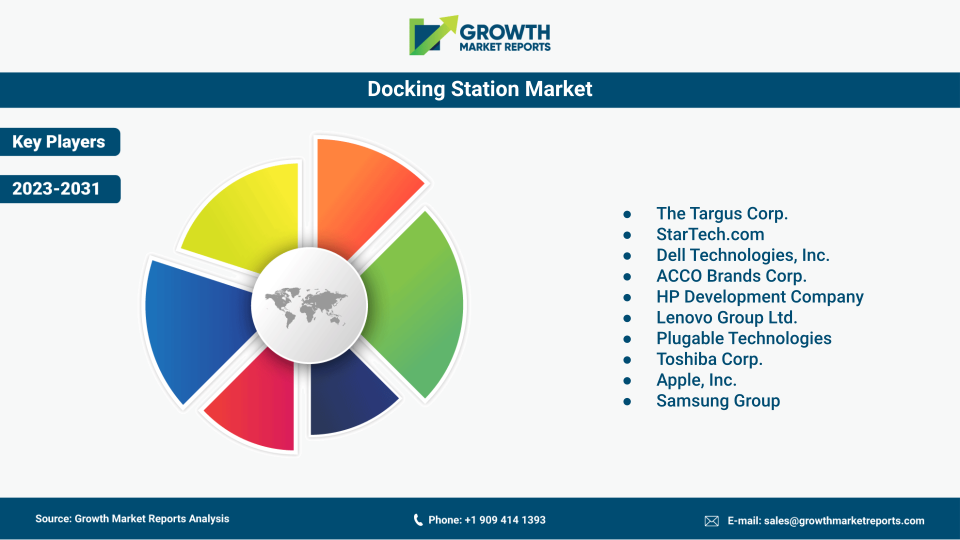
Major companies operating in the docking station market include Dell Technologies, HP Inc., Lenovo Group Limited, Targus Corporation, Plugable Technologies, Kensington Computer Products Group, StarTech.com, Toshiba Corporation, and Belkin International, among others. Dell Technologies is recognized for its comprehensive portfolio of enterprise-grade docking solutions featuring advanced security and management capabilities tightly integrated with its commercial laptop ecosystem. HP Inc. and Lenovo Group Limited are also leading players, offering broad ranges of docking stations optimized for their respective device ecosystems while maintaining compatibility with competing platforms. Targus Corporation and Kensington are well-regarded for their universal docking solutions catering to both business and consumer segments. Plugable Technologies and StarTech.com specialize in innovative high-performance connectivity products with broad compatibility. CalDigit and Anker Innovations have established strong positions in the premium consumer and prosumer segments with well-regarded Thunderbolt and USB-C docking solutions respectively. Apple Inc. and Microsoft Corporation round out the competitive picture with proprietary docking solutions optimized for their own device platforms and ecosystems.
These companies are continuously expanding their product portfolios, investing in next-generation connectivity technologies, and pursuing strategic partnerships to strengthen their competitive positions. The global docking station market is expected to remain highly dynamic through 2034, with ongoing innovation, evolving enterprise workplace strategies, and shifting consumer preferences collectively driving the next wave of growth.
The Docking Station market has been segmented on the basis of
The global docking station market features a competitive mix of major technology brands and specialized connectivity manufacturers. Leading companies include Dell Technologies, HP Inc., Lenovo Group Limited, Apple Inc., Microsoft Corporation, ASUStek Computer Inc., Acer Inc., Samsung Electronics Co., Ltd., Targus Corporation, Kensington Computer Products Group, CalDigit Inc., Plugable Technologies, StarTech.com, Belkin International, Anker Innovations, and SIIG Inc. These players compete on the basis of product innovation, compatibility breadth, pricing strategy, and distribution reach, with ongoing investment in research and development to address the demands of both enterprise and consumer segments.
Key opportunities include the accelerating adoption of hybrid work and flexible office models, the expansion of digital infrastructure in emerging markets across Asia Pacific, Latin America, and the Middle East and Africa, and the growing demand for sustainable and energy-efficient connectivity solutions. The integration of smart features such as remote management, biometric access, and IoT compatibility represents a significant product differentiation avenue. Primary challenges include rapid technology obsolescence requiring continuous product updates, compatibility complexities across diverse device ecosystems, price sensitivity in consumer and emerging markets, and the risk that future laptop designs may incorporate more native ports, potentially reducing reliance on external docking solutions.
Online channels have become the dominant distribution route for docking stations, offering consumers and businesses a wide product selection, transparent pricing, and convenient delivery. E-commerce platforms, manufacturer websites, and specialized online electronics retailers continue to capture a growing proportion of sales through 2034. Offline channels, including IT resellers, electronics superstores, and specialty retailers, remain important for enterprise bulk procurement, hands-on product evaluation, and after-sales support. Manufacturers are increasingly adopting omnichannel strategies that blend digital and physical touchpoints to maximize customer reach and satisfaction.
Commercial applications account for the largest share of docking station demand in 2025, as businesses deploy these solutions to support employee productivity, flexible workstation arrangements, and streamlined IT management. The residential segment is growing rapidly, propelled by the continued prevalence of home offices and the integration of consumer electronics into everyday life. Industrial applications represent a specialized but expanding niche, with ruggedized docking stations used in manufacturing, logistics, and field service environments. Additional applications span healthcare, retail point-of-sale, transportation, and hospitality, illustrating the broad versatility of modern docking solutions.
North America leads the global market with an estimated share of 34.2% in 2025, underpinned by high enterprise IT investment, a large hybrid workforce, and strong technology adoption across the United States and Canada. The Asia Pacific region is the fastest-growing market, projected to expand at a CAGR of approximately 7.8% through 2034, driven by rapid digitalization, surging enterprise activity, and rising consumer electronics spending in China, India, Japan, and South Korea. Europe holds a significant share of around 21.8%, while Latin America and the Middle East and Africa are emerging growth frontiers supported by advancing digital infrastructure.
USB Type-C is the most prevalent port type in 2025, widely adopted due to its versatility in supporting simultaneous power delivery, high-speed data transfer, and video output through a single reversible connector. Thunderbolt 4 ports are prominent in premium and professional-grade docking stations, offering exceptional bandwidth for multi-display setups and high-performance peripherals. HDMI and DisplayPort interfaces remain standard inclusions for video output, while USB 3.0 persists for compatibility with legacy devices. Additional ports such as Ethernet, SD card readers, and audio jacks continue to enhance the overall utility of modern docking solutions.
Wired docking stations continue to command the majority of market share in 2025, preferred for their reliable high-speed connections, broad peripheral support, and suitability for security-sensitive environments such as finance, healthcare, and government. Wireless docking stations are the faster-growing segment, increasingly adopted in hot-desking offices and collaborative spaces where cable-free flexibility is valued. Improvements in Wi-Fi 6E and emerging Wi-Fi 7 standards are narrowing the performance gap, and hybrid docking solutions that support both modes are gaining popularity across enterprise and consumer segments alike.
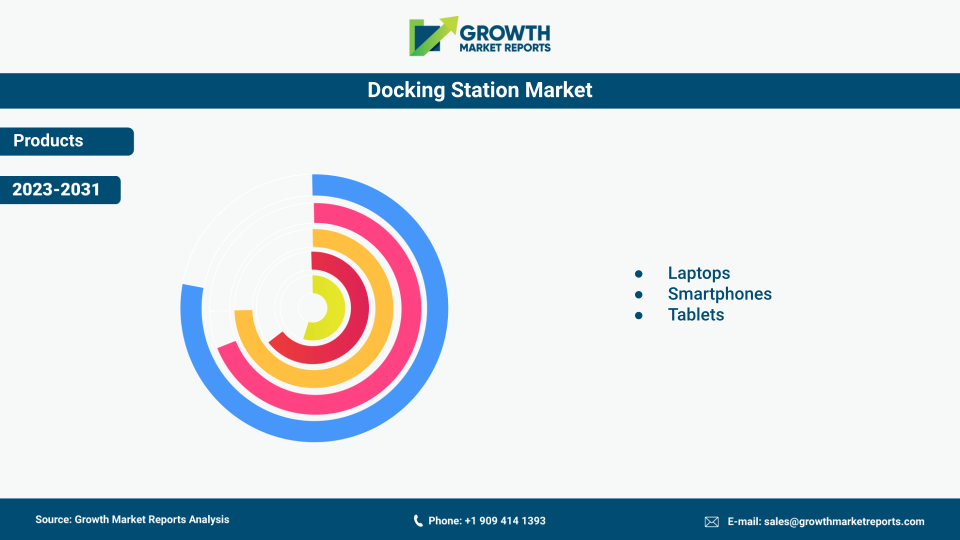
Laptop docking stations hold the largest share of the market at approximately 44.5% in 2025, reflecting the dominance of laptops as primary computing devices in both commercial and educational settings. Universal docking stations are the second-largest and fastest-growing sub-segment, accounting for around 29.8% of the market, driven by demand for cross-platform compatibility in enterprise and shared-workspace environments. Mobile device docking stations represent roughly 18.2% of the market and continue to gain traction as smartphones and tablets take on more productivity roles.
Key growth drivers include the widespread shift to hybrid and remote work arrangements, the replacement of desktop computers with laptops and tablets as primary productivity devices, and the rapid evolution of high-speed connectivity standards such as USB Type-C, Thunderbolt 4, and emerging wireless protocols. The expansion of the Internet of Things ecosystem, rising enterprise IT spending, and growing consumer awareness of ergonomic and organized workspace solutions are also important catalysts propelling the market forward through 2034.
The global docking station market was valued at USD 8.43 billion in 2025 and is projected to reach USD 14.52 billion by 2034, expanding at a compound annual growth rate of 6.2% over the 2026-2034 forecast period. This growth is fueled by the sustained adoption of hybrid work models, rising demand for multi-device connectivity, and the rapid proliferation of USB Type-C and Thunderbolt-enabled portable devices.