Distributed Power Generation Market Research Report 2033

Distributed Power Generation Market Research Report 2033

Segments - by Technology (Solar Photovoltaic, Wind Turbine, Reciprocating Engines, Fuel Cells, Microturbines, Others), by Application (Residential, Commercial, Industrial, Utility), by Power Rating (Up to 100 kW, 100 kW–1 MW, Above 1 MW), by End-User (Off-Grid, On-Grid)

https://growthmarketreports.com/Raksha
Author : Raksha Sharma
https://growthmarketreports.com/Vaibhav
Fact-checked by : V. Chandola
https://growthmarketreports.com/Shruti
Editor : Shruti Bhat

Upcoming | Report ID :EP-2550 | 5.0 Rating | 41 Reviews | 252 Pages | Format : Docx PDF

Report Description


Distributed Power Generation Market Outlook

As per our latest research, the global distributed power generation market size reached USD 94.7 billion in 2024, reflecting robust momentum driven by the proliferation of renewable energy sources and the decentralization of energy systems. The market is poised for sustained expansion, projected to grow at a CAGR of 10.4% from 2025 to 2033, and is forecasted to achieve a value of USD 233.1 billion by 2033. This remarkable growth trajectory is underpinned by increasing demand for reliable, flexible, and sustainable electricity generation solutions across both developed and emerging economies.

A major growth factor propelling the distributed power generation market is the accelerating transition toward renewable energy sources. The global energy landscape is rapidly shifting as governments and private sectors prioritize decarbonization to meet stringent climate goals. Distributed energy technologies such as solar photovoltaic (PV) systems, wind turbines, and fuel cells are increasingly favored for their ability to reduce greenhouse gas emissions, enhance energy security, and provide localized power solutions. Additionally, supportive policy frameworks, feed-in tariffs, and tax incentives are stimulating investments in distributed generation assets, particularly in regions with ambitious renewable targets. This transition is further bolstered by technological advancements that have significantly improved the efficiency, reliability, and affordability of distributed energy systems, making them an attractive option for a broad spectrum of end-users.

Another key driver is the growing need for energy resilience and grid stability. Distributed power generation systems play a crucial role in mitigating the risks associated with centralized grid failures, natural disasters, and cyber threats. By decentralizing energy production, these systems enhance the reliability of electricity supply, particularly in remote or underserved areas where grid connectivity is limited or unreliable. The integration of distributed generation with advanced energy storage solutions and smart grid technologies further enables real-time demand response, peak load management, and improved grid flexibility. This is especially pertinent as urbanization accelerates and electricity demand surges, necessitating innovative approaches to ensure uninterrupted power supply and efficient energy management.

The rising adoption of distributed power generation is also driven by the increasing electrification of various sectors, including transportation, industrial processes, and residential applications. As electric vehicles (EVs), smart appliances, and digital infrastructure become more prevalent, the demand for localized, scalable, and cost-effective power solutions is intensifying. Distributed generation offers significant advantages in terms of reducing transmission losses, optimizing energy consumption, and enabling consumers to actively participate in energy markets through net metering and peer-to-peer trading. These benefits are catalyzing the deployment of distributed energy resources across diverse settings, from individual households to large-scale industrial complexes, thereby fueling market growth.

From a regional perspective, Asia Pacific continues to dominate the distributed power generation market, accounting for the largest share in 2024. The region's rapid industrialization, urban expansion, and robust investments in renewable infrastructure are primary contributors to this leadership. North America and Europe also represent significant markets, driven by strong policy support, technological innovation, and a mature regulatory environment. Meanwhile, emerging economies in Latin America, the Middle East, and Africa are witnessing rising adoption rates as they strive to enhance energy access, reduce dependency on fossil fuels, and address grid reliability challenges. The interplay of these regional dynamics is shaping the global distributed power generation landscape and presenting lucrative opportunities for market participants.

Global Distributed Power Generation Industry Outlook

Technology Analysis

The distributed power generation market is characterized by a diverse array of technologies, each offering unique benefits and addressing specific energy needs. Solar photovoltaic (PV) systems have emerged as the most widely adopted technology, driven by declining module costs, ease of installation, and scalability. Residential, commercial, and utility-scale projects are increasingly leveraging solar PV to harness abundant solar resources, particularly in sun-rich regions. The integration of advanced inverters, tracking systems, and energy storage solutions is further enhancing the performance and reliability of solar installations. As governments worldwide implement ambitious solar targets and provide financial incentives, the adoption of solar PV is expected to accelerate, solidifying its position as a cornerstone of distributed generation.

Wind turbines represent another significant technology segment, particularly in regions with favorable wind conditions. Distributed wind systems are gaining traction for their ability to generate clean, cost-effective electricity at the point of use, reducing transmission losses and grid congestion. Technological advancements in turbine design, materials, and control systems have improved efficiency, reduced maintenance requirements, and expanded the viability of wind power in both urban and rural settings. Hybrid systems that combine wind with solar or other distributed resources are also being deployed to optimize energy output and enhance system resilience. The growing focus on community wind projects and microgrid applications is expected to further drive the adoption of distributed wind technologies.

Reciprocating engines and microturbines play a vital role in distributed power generation, particularly for backup power, cogeneration, and remote applications. These technologies offer high efficiency, fuel flexibility, and rapid start-up capabilities, making them suitable for critical infrastructure, industrial facilities, and off-grid locations. The ability to operate on a range of fuels, including natural gas, biogas, and liquid fuels, enhances their appeal in regions with diverse energy resources. Ongoing research and development efforts are focused on improving emissions performance, increasing operational efficiency, and reducing lifecycle costs, thereby expanding the application scope of reciprocating engines and microturbines in distributed generation.

Fuel cells are gaining prominence in the distributed power generation market, particularly for applications requiring high reliability, low emissions, and quiet operation. Fuel cell systems are being deployed in residential, commercial, and industrial settings, as well as for backup power and remote telecommunications infrastructure. Recent advancements in fuel cell technology, coupled with falling costs of hydrogen production, are making these systems increasingly competitive with conventional generation technologies. The growing emphasis on hydrogen as a clean energy carrier is expected to accelerate the adoption of fuel cells, particularly as part of integrated distributed energy systems and microgrids.

Other emerging technologies, such as combined heat and power (CHP) systems, biomass generators, and advanced energy storage solutions, are also contributing to the diversification and growth of the distributed power generation market. These technologies enable the efficient utilization of local energy resources, enhance system flexibility, and support the integration of intermittent renewables. As the market continues to evolve, technological innovation and cross-sector collaboration will be critical in unlocking new opportunities and addressing the unique challenges associated with distributed generation.

Report Scope

Attributes Details
Report Title Distributed Power Generation Market Research Report 2033
By Technology Solar Photovoltaic, Wind Turbine, Reciprocating Engines, Fuel Cells, Microturbines, Others
By Application Residential, Commercial, Industrial, Utility
By Power Rating Up to 100 kW, 100 kW–1 MW, Above 1 MW
By End-User Off-Grid, On-Grid
Regions Covered North America, Europe, APAC, Latin America, MEA
Base Year 2024
Historic Data 2018-2023
Forecast Period 2025-2033
Number of Pages 252
Number of Tables & Figures 395
Customization Available Yes, the report can be customized as per your need.

Application Analysis

The distributed power generation market serves a wide range of applications, with each segment exhibiting distinct characteristics and growth dynamics. The residential sector is witnessing rapid adoption of distributed energy systems, driven by rising electricity costs, increasing environmental awareness, and the desire for energy independence. Homeowners are investing in rooftop solar PV, small wind turbines, and residential fuel cells to reduce utility bills, lower carbon footprints, and enhance resilience against grid outages. The proliferation of smart home technologies and home energy management systems is further enabling consumers to optimize energy consumption and participate in emerging energy markets.

In the commercial sector, distributed power generation is being embraced by businesses seeking to improve operational efficiency, reduce energy costs, and demonstrate corporate sustainability. Commercial buildings, shopping centers, hotels, and data centers are deploying solar PV, combined heat and power systems, and backup generators to meet their energy needs, support critical operations, and comply with regulatory requirements. The ability to integrate distributed generation with building management systems and demand response programs is enabling commercial users to maximize energy savings and enhance grid stability.

The industrial segment represents a significant growth opportunity for distributed power generation, particularly in energy-intensive industries such as manufacturing, mining, and petrochemicals. Industrial facilities are leveraging distributed generation to enhance energy security, ensure uninterrupted production, and reduce reliance on centralized grids. Technologies such as reciprocating engines, microturbines, and fuel cells are being deployed for onsite power generation, cogeneration, and waste heat recovery, resulting in improved energy efficiency and reduced emissions. The integration of distributed generation with industrial automation and digitalization initiatives is further driving adoption in this segment.

The utility sector is increasingly adopting distributed power generation as part of efforts to modernize grid infrastructure, integrate renewable energy, and enhance service reliability. Utilities are deploying distributed energy resources (DERs) such as solar farms, community wind projects, and battery storage systems to support grid balancing, peak shaving, and ancillary services. The rise of virtual power plants and distributed energy resource management systems (DERMS) is enabling utilities to aggregate and optimize distributed assets, creating new revenue streams and operational efficiencies. As regulatory frameworks evolve to support distributed generation, utilities are expected to play a central role in driving market growth.

Power Rating Analysis

The distributed power generation market is segmented by power rating into up to 100 kW, 100 kW–1 MW, and above 1 MW, each catering to distinct application requirements and customer segments. Systems rated up to 100 kW are primarily deployed in residential and small commercial settings, where they provide localized power generation, backup capabilities, and grid support. These systems, including rooftop solar PV, small wind turbines, and micro-CHP units, are favored for their ease of installation, scalability, and ability to operate independently or in conjunction with the grid.

The 100 kW–1 MW segment serves a broad spectrum of commercial, industrial, and institutional applications, offering a balance between scalability, efficiency, and cost-effectiveness. Distributed generation systems in this range are commonly used for onsite power generation, combined heat and power applications, and microgrid integration. Technologies such as medium-sized solar arrays, wind turbines, and reciprocating engines are well-suited for this segment, providing reliable power supply, enhanced energy management, and the potential for grid services participation. The growing adoption of energy storage and digital control systems is further enhancing the value proposition of distributed generation in this power range.

Distributed generation systems rated above 1 MW are typically deployed in large commercial, industrial, and utility-scale applications, where they deliver substantial power output, grid support, and operational flexibility. These systems, including large wind turbines, multi-megawatt solar farms, and advanced fuel cell installations, play a critical role in supporting grid stability, integrating renewable energy, and meeting the energy needs of large consumers. The ability to configure these systems as part of hybrid or microgrid solutions is enabling greater resilience, efficiency, and cost savings for end-users. As demand for high-capacity distributed generation continues to rise, advancements in system design, integration, and management are expected to drive further growth in this segment.

End-User Analysis

The distributed power generation market is segmented by end-user into off-grid and on-grid applications, each with unique drivers and challenges. Off-grid distributed generation is critical for providing reliable electricity access in remote, rural, and underserved areas where grid connectivity is limited or nonexistent. Off-grid systems, including solar home systems, mini-grids, and standalone wind or biomass generators, enable communities to meet basic energy needs, support economic development, and improve quality of life. The deployment of off-grid distributed generation is often supported by government initiatives, international development programs, and innovative financing models that aim to address energy poverty and promote sustainable development.

On-grid distributed power generation is gaining momentum in urban and peri-urban areas, where it complements centralized grid infrastructure and enhances overall system resilience. On-grid systems, such as rooftop solar PV, commercial CHP units, and distributed wind turbines, are interconnected with the main grid, allowing for bidirectional energy flows, net metering, and grid services provision. The integration of distributed generation with smart grid technologies and demand response programs is enabling utilities and consumers to optimize energy consumption, reduce peak demand, and enhance grid stability. As regulatory frameworks evolve to support distributed energy resources, the adoption of on-grid distributed generation is expected to accelerate, particularly in regions with high renewable energy penetration and ambitious decarbonization targets.

Opportunities & Threats

The distributed power generation market presents significant opportunities for innovation, investment, and value creation across the energy value chain. One of the most promising opportunities lies in the integration of distributed generation with advanced energy storage, smart grid, and digital technologies. The convergence of these technologies enables real-time monitoring, predictive maintenance, and automated control of distributed assets, resulting in improved system efficiency, reliability, and cost savings. The rise of peer-to-peer energy trading platforms, virtual power plants, and demand response programs is creating new business models and revenue streams for market participants. Additionally, the growing emphasis on sustainability, energy independence, and climate resilience is driving demand for distributed generation solutions in both developed and emerging markets.

Another key opportunity is the expansion of distributed power generation in emerging economies, where rapid urbanization, population growth, and rising energy demand are creating a favorable environment for decentralized energy solutions. Governments and international organizations are increasingly supporting off-grid and mini-grid projects to address energy access challenges, reduce reliance on fossil fuels, and promote sustainable development. The availability of innovative financing mechanisms, such as pay-as-you-go models and green bonds, is facilitating the deployment of distributed generation systems in underserved regions. As technology costs continue to decline and business models evolve, the market is poised for significant growth in these high-potential regions.

Despite the numerous opportunities, the distributed power generation market faces several challenges and restrainers that could impact its growth trajectory. One of the primary challenges is the complexity of integrating distributed energy resources into existing grid infrastructure. Issues related to grid stability, voltage regulation, and bi-directional power flows require significant investments in grid modernization, advanced control systems, and regulatory reforms. Additionally, the variability and intermittency of renewable energy sources, such as solar and wind, necessitate the deployment of energy storage and demand response solutions to ensure reliable power supply. Regulatory uncertainty, permitting delays, and lack of standardized interconnection procedures can also hinder the widespread adoption of distributed generation, particularly in markets with evolving policy frameworks.

Regional Outlook

Asia Pacific remains the leading region in the distributed power generation market, accounting for approximately 37% of the global market value in 2024, which translates to around USD 35 billion. The region's dominance is driven by rapid industrialization, urban expansion, and robust investments in renewable energy infrastructure, particularly in China, India, Japan, and Southeast Asian countries. Government initiatives aimed at promoting clean energy, improving energy access, and reducing dependency on fossil fuels are catalyzing the deployment of distributed generation systems across residential, commercial, and industrial sectors. The ongoing development of smart grids, microgrids, and energy storage projects is further enhancing the region's leadership in distributed power generation.

North America is another significant market, with a market size of approximately USD 23.5 billion in 2024, representing about 25% of the global market. The region's growth is fueled by strong policy support, technological innovation, and a mature regulatory environment. The United States and Canada are at the forefront of distributed generation adoption, driven by ambitious renewable energy targets, favorable net metering policies, and extensive deployment of solar PV, wind, and CHP systems. The increasing focus on grid resilience, disaster preparedness, and decarbonization is expected to drive further investments in distributed power generation, with the market projected to grow at a CAGR of 9.8% through 2033.

Europe follows closely, contributing approximately USD 21.3 billion or 22.5% of the global market in 2024. The region is characterized by a strong commitment to sustainability, stringent emissions regulations, and innovative energy market designs. Countries such as Germany, the UK, France, and the Netherlands are leading the adoption of distributed generation technologies, supported by feed-in tariffs, green certificates, and robust grid infrastructure. The integration of distributed energy resources with smart grids, demand response programs, and virtual power plants is transforming the European energy landscape and creating new opportunities for market participants. Meanwhile, Latin America and the Middle East & Africa collectively account for the remaining market share, with growing investments in distributed generation aimed at enhancing energy access, supporting economic development, and diversifying energy portfolios.

Distributed Power Generation Market Statistics

Competitor Outlook

The distributed power generation market is highly competitive and fragmented, with a diverse mix of global conglomerates, regional players, and innovative startups vying for market share. The competitive landscape is shaped by rapid technological advancements, evolving customer preferences, and dynamic policy environments. Leading companies are investing heavily in research and development to enhance system efficiency, reliability, and integration capabilities, while also expanding their product portfolios to address the evolving needs of different market segments. Strategic partnerships, mergers and acquisitions, and joint ventures are common strategies employed by market participants to strengthen their market position, access new technologies, and expand their geographic footprint.

Innovation is a key differentiator in the distributed power generation market, with companies focusing on the development of advanced solar modules, high-efficiency wind turbines, next-generation fuel cells, and intelligent energy management systems. The integration of distributed generation with digital platforms, IoT-enabled devices, and predictive analytics is enabling market leaders to offer comprehensive solutions that optimize energy production, consumption, and grid interaction. Customer-centric business models, such as energy-as-a-service, leasing, and performance-based contracts, are gaining traction as companies seek to lower barriers to adoption and deliver greater value to end-users.

The market is also witnessing increased collaboration between technology providers, utilities, project developers, and financial institutions to accelerate the deployment of distributed generation systems. Public-private partnerships, government-backed initiatives, and international development programs are playing a pivotal role in driving market growth, particularly in emerging economies. As competition intensifies, companies are prioritizing sustainability, operational excellence, and customer engagement to differentiate themselves and capture new growth opportunities.

Some of the major companies operating in the distributed power generation market include Siemens AG, General Electric Company, Caterpillar Inc., Mitsubishi Electric Corporation, Schneider Electric SE, ABB Ltd., Capstone Turbine Corporation, Bloom Energy Corporation, Vestas Wind Systems A/S, and Canadian Solar Inc. These companies are at the forefront of technological innovation, offering a broad range of distributed generation solutions tailored to various applications and customer segments. Siemens AG and General Electric Company are renowned for their comprehensive portfolios spanning solar, wind, CHP, and energy management systems, while Caterpillar Inc. and Capstone Turbine Corporation are leaders in reciprocating engines and microturbines.

Bloom Energy Corporation is a pioneer in fuel cell technology, delivering high-efficiency, low-emission power solutions for commercial, industrial, and utility-scale applications. Vestas Wind Systems A/S and Canadian Solar Inc. are global leaders in wind and solar technologies, respectively, with a strong track record of project execution and technological innovation. Schneider Electric SE and ABB Ltd. are recognized for their expertise in grid integration, automation, and digitalization, enabling seamless integration of distributed generation assets into modern energy systems. As the market continues to evolve, these companies are expected to play a pivotal role in shaping the future of distributed power generation through continued innovation, strategic partnerships, and a relentless focus on customer value.

Key Players

  • Siemens AG
  • General Electric Company
  • Caterpillar Inc.
  • Cummins Inc.
  • Schneider Electric SE
  • ABB Ltd.
  • Mitsubishi Heavy Industries Ltd.
  • Rolls-Royce Holdings plc
  • Capstone Green Energy Corporation
  • Wärtsilä Corporation
  • E.ON SE
  • Vestas Wind Systems A/S
  • Suzlon Energy Limited
  • Bloom Energy Corporation
  • MAN Energy Solutions SE
  • Doosan Heavy Industries & Construction Co., Ltd.
  • Yanmar Co., Ltd.
  • MTU Onsite Energy (a Rolls-Royce Power Systems brand)
  • Siemens Gamesa Renewable Energy S.A.
  • Aggreko plc
Distributed Power Generation Market Overview

Segments

The Distributed Power Generation market has been segmented on the basis of

Technology

  • Solar Photovoltaic
  • Wind Turbine
  • Reciprocating Engines
  • Fuel Cells
  • Microturbines
  • Others

Application

  • Residential
  • Commercial
  • Industrial
  • Utility

Power Rating

  • Up to 100 kW
  • 100 kW–1 MW
  • Above 1 MW

End-User

  • Off-Grid
  • On-Grid

Competitive Landscape

The key players competing in the distributed power generation market are Caterpillar Inc.; Siemens AG; Ballard Power Systems Inc.; Ansaldo Energia SpA; and General Electric Co.
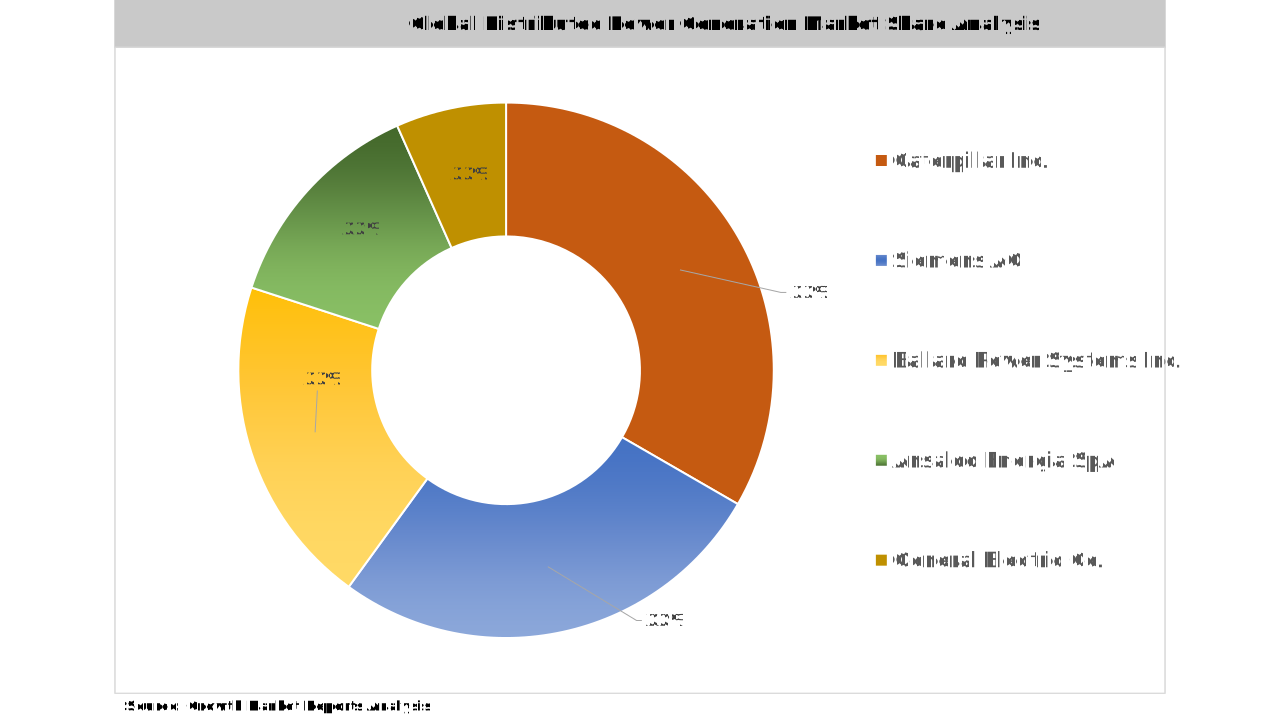

Distributed Power Generation Market By Key Players

Frequently Asked Questions

Opportunities include integrating distributed generation with energy storage and smart grids, expanding in emerging economies, developing peer-to-peer energy trading, and leveraging innovative financing models to increase adoption.

The market is segmented into systems up to 100 kW (mainly for residential and small commercial), 100 kW–1 MW (commercial, industrial, and institutional), and above 1 MW (large commercial, industrial, and utility-scale applications).

Leading companies include Siemens AG, General Electric Company, Caterpillar Inc., Schneider Electric SE, ABB Ltd., Capstone Turbine Corporation, Bloom Energy Corporation, Vestas Wind Systems A/S, and Canadian Solar Inc.

Key challenges include integrating distributed energy resources into existing grids, grid stability and voltage regulation issues, regulatory uncertainty, permitting delays, and the intermittency of renewable sources.

Major growth drivers include the transition to renewable energy, increasing demand for energy resilience and grid stability, electrification of various sectors, supportive government policies, and technological advancements.

Asia Pacific is the leading region, accounting for about 37% of the global market in 2024, followed by North America and Europe. Emerging markets in Latin America, the Middle East, and Africa are also experiencing rapid growth.

Distributed power generation is used in residential, commercial, industrial, and utility sectors for applications such as onsite power generation, backup power, cogeneration, microgrids, and grid support.

Key technologies include solar photovoltaic (PV) systems, wind turbines, reciprocating engines, fuel cells, microturbines, combined heat and power (CHP) systems, biomass generators, and advanced energy storage solutions.

The global distributed power generation market reached USD 94.7 billion in 2024 and is projected to grow at a CAGR of 10.4% from 2025 to 2033, reaching USD 233.1 billion by 2033.

Distributed power generation refers to the production of electricity from decentralized sources, such as solar panels, wind turbines, fuel cells, and microturbines, located close to the point of use rather than at large, centralized power plants.

Table Of Content

Chapter 1 Executive Summary
Chapter 2 Assumptions and Acronyms Used
Chapter 3 Research Methodology
Chapter 4 Distributed Power Generation Market Overview
   4.1 Introduction
      4.1.1 Market Taxonomy
      4.1.2 Market Definition
      4.1.3 Macro-Economic Factors Impacting the Market Growth
   4.2 Distributed Power Generation Market Dynamics
      4.2.1 Market Drivers
      4.2.2 Market Restraints
      4.2.3 Market Opportunity
   4.3 Distributed Power Generation Market - Supply Chain Analysis
      4.3.1 List of Key Suppliers
      4.3.2 List of Key Distributors
      4.3.3 List of Key Consumers
   4.4 Key Forces Shaping the Distributed Power Generation Market
      4.4.1 Bargaining Power of Suppliers
      4.4.2 Bargaining Power of Buyers
      4.4.3 Threat of Substitution
      4.4.4 Threat of New Entrants
      4.4.5 Competitive Rivalry
   4.5 Global Distributed Power Generation Market Size & Forecast, 2023-2032
      4.5.1 Distributed Power Generation Market Size and Y-o-Y Growth
      4.5.2 Distributed Power Generation Market Absolute $ Opportunity

Chapter 5 Global Distributed Power Generation Market Analysis and Forecast By Technology
   5.1 Introduction
      5.1.1 Key Market Trends & Growth Opportunities By Technology
      5.1.2 Basis Point Share (BPS) Analysis By Technology
      5.1.3 Absolute $ Opportunity Assessment By Technology
   5.2 Distributed Power Generation Market Size Forecast By Technology
      5.2.1 Solar Photovoltaic
      5.2.2 Wind Turbine
      5.2.3 Reciprocating Engines
      5.2.4 Fuel Cells
      5.2.5 Microturbines
      5.2.6 Others
   5.3 Market Attractiveness Analysis By Technology

Chapter 6 Global Distributed Power Generation Market Analysis and Forecast By Application
   6.1 Introduction
      6.1.1 Key Market Trends & Growth Opportunities By Application
      6.1.2 Basis Point Share (BPS) Analysis By Application
      6.1.3 Absolute $ Opportunity Assessment By Application
   6.2 Distributed Power Generation Market Size Forecast By Application
      6.2.1 Residential
      6.2.2 Commercial
      6.2.3 Industrial
      6.2.4 Utility
   6.3 Market Attractiveness Analysis By Application

Chapter 7 Global Distributed Power Generation Market Analysis and Forecast By Power Rating
   7.1 Introduction
      7.1.1 Key Market Trends & Growth Opportunities By Power Rating
      7.1.2 Basis Point Share (BPS) Analysis By Power Rating
      7.1.3 Absolute $ Opportunity Assessment By Power Rating
   7.2 Distributed Power Generation Market Size Forecast By Power Rating
      7.2.1 Up to 100 kW
      7.2.2 100 kW–1 MW
      7.2.3 Above 1 MW
   7.3 Market Attractiveness Analysis By Power Rating

Chapter 8 Global Distributed Power Generation Market Analysis and Forecast By End-User
   8.1 Introduction
      8.1.1 Key Market Trends & Growth Opportunities By End-User
      8.1.2 Basis Point Share (BPS) Analysis By End-User
      8.1.3 Absolute $ Opportunity Assessment By End-User
   8.2 Distributed Power Generation Market Size Forecast By End-User
      8.2.1 Off-Grid
      8.2.2 On-Grid
   8.3 Market Attractiveness Analysis By End-User

Chapter 9 Global Distributed Power Generation Market Analysis and Forecast by Region
   9.1 Introduction
      9.1.1 Key Market Trends & Growth Opportunities By Region
      9.1.2 Basis Point Share (BPS) Analysis By Region
      9.1.3 Absolute $ Opportunity Assessment By Region
   9.2 Distributed Power Generation Market Size Forecast By Region
      9.2.1 North America
      9.2.2 Europe
      9.2.3 Asia Pacific
      9.2.4 Latin America
      9.2.5 Middle East & Africa (MEA)
   9.3 Market Attractiveness Analysis By Region

Chapter 10 Coronavirus Disease (COVID-19) Impact 
   10.1 Introduction 
   10.2 Current & Future Impact Analysis 
   10.3 Economic Impact Analysis 
   10.4 Government Policies 
   10.5 Investment Scenario

Chapter 11 North America Distributed Power Generation Analysis and Forecast
   11.1 Introduction
   11.2 North America Distributed Power Generation Market Size Forecast by Country
      11.2.1 U.S.
      11.2.2 Canada
   11.3 Basis Point Share (BPS) Analysis by Country
   11.4 Absolute $ Opportunity Assessment by Country
   11.5 Market Attractiveness Analysis by Country
   11.6 North America Distributed Power Generation Market Size Forecast By Technology
      11.6.1 Solar Photovoltaic
      11.6.2 Wind Turbine
      11.6.3 Reciprocating Engines
      11.6.4 Fuel Cells
      11.6.5 Microturbines
      11.6.6 Others
   11.7 Basis Point Share (BPS) Analysis By Technology 
   11.8 Absolute $ Opportunity Assessment By Technology 
   11.9 Market Attractiveness Analysis By Technology
   11.10 North America Distributed Power Generation Market Size Forecast By Application
      11.10.1 Residential
      11.10.2 Commercial
      11.10.3 Industrial
      11.10.4 Utility
   11.11 Basis Point Share (BPS) Analysis By Application 
   11.12 Absolute $ Opportunity Assessment By Application 
   11.13 Market Attractiveness Analysis By Application
   11.14 North America Distributed Power Generation Market Size Forecast By Power Rating
      11.14.1 Up to 100 kW
      11.14.2 100 kW–1 MW
      11.14.3 Above 1 MW
   11.15 Basis Point Share (BPS) Analysis By Power Rating 
   11.16 Absolute $ Opportunity Assessment By Power Rating 
   11.17 Market Attractiveness Analysis By Power Rating
   11.18 North America Distributed Power Generation Market Size Forecast By End-User
      11.18.1 Off-Grid
      11.18.2 On-Grid
   11.19 Basis Point Share (BPS) Analysis By End-User 
   11.20 Absolute $ Opportunity Assessment By End-User 
   11.21 Market Attractiveness Analysis By End-User

Chapter 12 Europe Distributed Power Generation Analysis and Forecast
   12.1 Introduction
   12.2 Europe Distributed Power Generation Market Size Forecast by Country
      12.2.1 Germany
      12.2.2 France
      12.2.3 Italy
      12.2.4 U.K.
      12.2.5 Spain
      12.2.6 Russia
      12.2.7 Rest of Europe
   12.3 Basis Point Share (BPS) Analysis by Country
   12.4 Absolute $ Opportunity Assessment by Country
   12.5 Market Attractiveness Analysis by Country
   12.6 Europe Distributed Power Generation Market Size Forecast By Technology
      12.6.1 Solar Photovoltaic
      12.6.2 Wind Turbine
      12.6.3 Reciprocating Engines
      12.6.4 Fuel Cells
      12.6.5 Microturbines
      12.6.6 Others
   12.7 Basis Point Share (BPS) Analysis By Technology 
   12.8 Absolute $ Opportunity Assessment By Technology 
   12.9 Market Attractiveness Analysis By Technology
   12.10 Europe Distributed Power Generation Market Size Forecast By Application
      12.10.1 Residential
      12.10.2 Commercial
      12.10.3 Industrial
      12.10.4 Utility
   12.11 Basis Point Share (BPS) Analysis By Application 
   12.12 Absolute $ Opportunity Assessment By Application 
   12.13 Market Attractiveness Analysis By Application
   12.14 Europe Distributed Power Generation Market Size Forecast By Power Rating
      12.14.1 Up to 100 kW
      12.14.2 100 kW–1 MW
      12.14.3 Above 1 MW
   12.15 Basis Point Share (BPS) Analysis By Power Rating 
   12.16 Absolute $ Opportunity Assessment By Power Rating 
   12.17 Market Attractiveness Analysis By Power Rating
   12.18 Europe Distributed Power Generation Market Size Forecast By End-User
      12.18.1 Off-Grid
      12.18.2 On-Grid
   12.19 Basis Point Share (BPS) Analysis By End-User 
   12.20 Absolute $ Opportunity Assessment By End-User 
   12.21 Market Attractiveness Analysis By End-User

Chapter 13 Asia Pacific Distributed Power Generation Analysis and Forecast
   13.1 Introduction
   13.2 Asia Pacific Distributed Power Generation Market Size Forecast by Country
      13.2.1 China
      13.2.2 Japan
      13.2.3 South Korea
      13.2.4 India
      13.2.5 Australia
      13.2.6 South East Asia (SEA)
      13.2.7 Rest of Asia Pacific (APAC)
   13.3 Basis Point Share (BPS) Analysis by Country
   13.4 Absolute $ Opportunity Assessment by Country
   13.5 Market Attractiveness Analysis by Country
   13.6 Asia Pacific Distributed Power Generation Market Size Forecast By Technology
      13.6.1 Solar Photovoltaic
      13.6.2 Wind Turbine
      13.6.3 Reciprocating Engines
      13.6.4 Fuel Cells
      13.6.5 Microturbines
      13.6.6 Others
   13.7 Basis Point Share (BPS) Analysis By Technology 
   13.8 Absolute $ Opportunity Assessment By Technology 
   13.9 Market Attractiveness Analysis By Technology
   13.10 Asia Pacific Distributed Power Generation Market Size Forecast By Application
      13.10.1 Residential
      13.10.2 Commercial
      13.10.3 Industrial
      13.10.4 Utility
   13.11 Basis Point Share (BPS) Analysis By Application 
   13.12 Absolute $ Opportunity Assessment By Application 
   13.13 Market Attractiveness Analysis By Application
   13.14 Asia Pacific Distributed Power Generation Market Size Forecast By Power Rating
      13.14.1 Up to 100 kW
      13.14.2 100 kW–1 MW
      13.14.3 Above 1 MW
   13.15 Basis Point Share (BPS) Analysis By Power Rating 
   13.16 Absolute $ Opportunity Assessment By Power Rating 
   13.17 Market Attractiveness Analysis By Power Rating
   13.18 Asia Pacific Distributed Power Generation Market Size Forecast By End-User
      13.18.1 Off-Grid
      13.18.2 On-Grid
   13.19 Basis Point Share (BPS) Analysis By End-User 
   13.20 Absolute $ Opportunity Assessment By End-User 
   13.21 Market Attractiveness Analysis By End-User

Chapter 14 Latin America Distributed Power Generation Analysis and Forecast
   14.1 Introduction
   14.2 Latin America Distributed Power Generation Market Size Forecast by Country
      14.2.1 Brazil
      14.2.2 Mexico
      14.2.3 Rest of Latin America (LATAM)
   14.3 Basis Point Share (BPS) Analysis by Country
   14.4 Absolute $ Opportunity Assessment by Country
   14.5 Market Attractiveness Analysis by Country
   14.6 Latin America Distributed Power Generation Market Size Forecast By Technology
      14.6.1 Solar Photovoltaic
      14.6.2 Wind Turbine
      14.6.3 Reciprocating Engines
      14.6.4 Fuel Cells
      14.6.5 Microturbines
      14.6.6 Others
   14.7 Basis Point Share (BPS) Analysis By Technology 
   14.8 Absolute $ Opportunity Assessment By Technology 
   14.9 Market Attractiveness Analysis By Technology
   14.10 Latin America Distributed Power Generation Market Size Forecast By Application
      14.10.1 Residential
      14.10.2 Commercial
      14.10.3 Industrial
      14.10.4 Utility
   14.11 Basis Point Share (BPS) Analysis By Application 
   14.12 Absolute $ Opportunity Assessment By Application 
   14.13 Market Attractiveness Analysis By Application
   14.14 Latin America Distributed Power Generation Market Size Forecast By Power Rating
      14.14.1 Up to 100 kW
      14.14.2 100 kW–1 MW
      14.14.3 Above 1 MW
   14.15 Basis Point Share (BPS) Analysis By Power Rating 
   14.16 Absolute $ Opportunity Assessment By Power Rating 
   14.17 Market Attractiveness Analysis By Power Rating
   14.18 Latin America Distributed Power Generation Market Size Forecast By End-User
      14.18.1 Off-Grid
      14.18.2 On-Grid
   14.19 Basis Point Share (BPS) Analysis By End-User 
   14.20 Absolute $ Opportunity Assessment By End-User 
   14.21 Market Attractiveness Analysis By End-User

Chapter 15 Middle East & Africa (MEA) Distributed Power Generation Analysis and Forecast
   15.1 Introduction
   15.2 Middle East & Africa (MEA) Distributed Power Generation Market Size Forecast by Country
      15.2.1 Saudi Arabia
      15.2.2 South Africa
      15.2.3 UAE
      15.2.4 Rest of Middle East & Africa (MEA)
   15.3 Basis Point Share (BPS) Analysis by Country
   15.4 Absolute $ Opportunity Assessment by Country
   15.5 Market Attractiveness Analysis by Country
   15.6 Middle East & Africa (MEA) Distributed Power Generation Market Size Forecast By Technology
      15.6.1 Solar Photovoltaic
      15.6.2 Wind Turbine
      15.6.3 Reciprocating Engines
      15.6.4 Fuel Cells
      15.6.5 Microturbines
      15.6.6 Others
   15.7 Basis Point Share (BPS) Analysis By Technology 
   15.8 Absolute $ Opportunity Assessment By Technology 
   15.9 Market Attractiveness Analysis By Technology
   15.10 Middle East & Africa (MEA) Distributed Power Generation Market Size Forecast By Application
      15.10.1 Residential
      15.10.2 Commercial
      15.10.3 Industrial
      15.10.4 Utility
   15.11 Basis Point Share (BPS) Analysis By Application 
   15.12 Absolute $ Opportunity Assessment By Application 
   15.13 Market Attractiveness Analysis By Application
   15.14 Middle East & Africa (MEA) Distributed Power Generation Market Size Forecast By Power Rating
      15.14.1 Up to 100 kW
      15.14.2 100 kW–1 MW
      15.14.3 Above 1 MW
   15.15 Basis Point Share (BPS) Analysis By Power Rating 
   15.16 Absolute $ Opportunity Assessment By Power Rating 
   15.17 Market Attractiveness Analysis By Power Rating
   15.18 Middle East & Africa (MEA) Distributed Power Generation Market Size Forecast By End-User
      15.18.1 Off-Grid
      15.18.2 On-Grid
   15.19 Basis Point Share (BPS) Analysis By End-User 
   15.20 Absolute $ Opportunity Assessment By End-User 
   15.21 Market Attractiveness Analysis By End-User

Chapter 16 Competition Landscape 
   16.1 Distributed Power Generation Market: Competitive Dashboard
   16.2 Global Distributed Power Generation Market: Market Share Analysis, 2023
   16.3 Company Profiles (Details – Overview, Financials, Developments, Strategy) 
      16.3.1 Siemens AG
General Electric Company
Caterpillar Inc.
Cummins Inc.
Schneider Electric SE
ABB Ltd.
Mitsubishi Heavy Industries Ltd.
Rolls-Royce Holdings plc
Capstone Green Energy Corporation
Wärtsilä Corporation
E.ON SE
Vestas Wind Systems A/S
Suzlon Energy Limited
Bloom Energy Corporation
MAN Energy Solutions SE
Doosan Heavy Industries & Construction Co., Ltd.
Yanmar Co., Ltd.
MTU Onsite Energy (a Rolls-Royce Power Systems brand)
Siemens Gamesa Renewable Energy S.A.
Aggreko plc

Methodology

Our Clients

sinopec
Dassault Aviation
Microsoft
General Mills
The John Holland Group
FedEx Logistics
Siemens Healthcare
General Electric