Disaster Recovery Solutions Market Research Report 2033

Disaster Recovery Solutions Market Research Report 2033

Segments - by Component (Software, Hardware, Services), by Deployment Mode (On-Premises, Cloud), by Organization Size (Small and Medium Enterprises, Large Enterprises), by Application (Data Backup and Recovery, Real-Time Replication, Data Protection, Risk Management, Others), by End-User (BFSI, IT and Telecommunications, Healthcare, Government, Retail, Manufacturing, Others)

https://growthmarketreports.com/Raksha
Author : Raksha Sharma
https://growthmarketreports.com/Vaibhav
Fact-checked by : V. Chandola
https://growthmarketreports.com/Shruti
Editor : Shruti Bhat

Upcoming | Report ID :ICT-SE-3015 | 4.7 Rating | 59 Reviews | 289 Pages | Format : Docx PDF

Report Description


Disaster Recovery Solutions Market Outlook

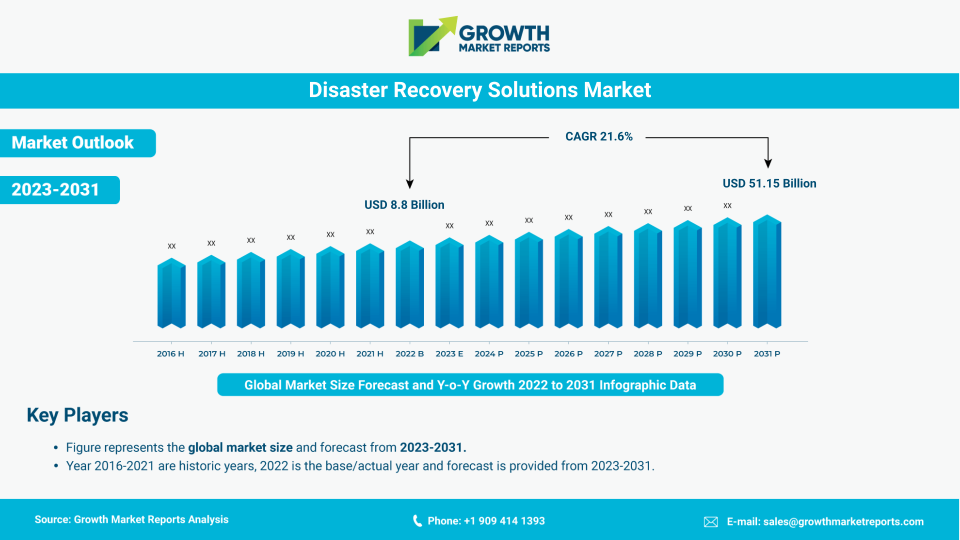
According to our latest research, the global disaster recovery solutions market size was valued at USD 21.7 billion in 2024, reflecting a robust and growing demand for comprehensive disaster recovery strategies across industries. The market is expected to expand at a CAGR of 12.3% from 2025 to 2033, reaching an estimated USD 61.2 billion by 2033. This significant growth is driven by the increasing frequency and severity of cyber threats, natural disasters, and system outages, which are compelling organizations to invest in resilient disaster recovery infrastructures. The marketÂ’s expansion is also fueled by regulatory compliance requirements and the rapid adoption of cloud-based solutions, as enterprises seek to safeguard critical data and ensure business continuity.

A primary driver for the disaster recovery solutions market is the escalating threat landscape, characterized by sophisticated cyberattacks, ransomware, and data breaches. Organizations across sectors are experiencing a surge in security incidents that threaten to disrupt operations and compromise sensitive information. As a result, companies are prioritizing investments in advanced disaster recovery solutions that offer robust data backup, rapid system restoration, and real-time replication capabilities. The growing reliance on digital infrastructure and the proliferation of connected devices have further amplified vulnerabilities, making disaster recovery an integral component of modern risk management strategies. This trend is particularly prominent among highly regulated industries such as BFSI, healthcare, and government, where data integrity and uptime are mission-critical.

Another significant growth factor is the increasing adoption of cloud-based disaster recovery solutions, which offer cost-effective scalability, flexibility, and ease of deployment. Cloud-based disaster recovery enables organizations to replicate and store data offsite, facilitating faster recovery times and minimizing downtime in the event of a disaster. The shift to hybrid and multi-cloud environments has further accelerated the demand for cloud-native disaster recovery tools, as enterprises seek seamless integration, centralized management, and enhanced automation. Additionally, the rise of remote work and distributed workforces has underscored the importance of ensuring uninterrupted access to applications and data, regardless of location. Vendors are responding by developing innovative solutions that leverage artificial intelligence and automation to streamline recovery processes and reduce human error.

Regulatory compliance and the evolving landscape of data privacy laws are also propelling market growth. Organizations are under mounting pressure to adhere to stringent regulatory frameworks such as GDPR, HIPAA, and PCI DSS, which mandate robust data protection and disaster recovery measures. Non-compliance can result in severe financial penalties and reputational damage, making disaster recovery solutions a strategic imperative. The increasing complexity of IT environments, driven by digital transformation initiatives, has heightened the need for comprehensive disaster recovery planning that encompasses not only data backup but also business process continuity, risk assessment, and incident response. As organizations strive to meet regulatory requirements and safeguard stakeholder trust, the demand for holistic disaster recovery solutions continues to rise.

As organizations increasingly adopt cloud-based solutions, the concept of Cross-Cloud Disaster Recovery is gaining traction. This approach involves leveraging multiple cloud platforms to enhance redundancy and resilience, ensuring that data and applications are protected across diverse environments. By utilizing multiple cloud providers, organizations can mitigate the risk of vendor lock-in and enhance their disaster recovery capabilities. Cross-Cloud Disaster Recovery enables seamless data replication and failover between clouds, providing a robust strategy to maintain business continuity in the face of disruptions. This approach is particularly beneficial for enterprises with complex IT infrastructures, as it allows for greater flexibility and scalability in disaster recovery planning.

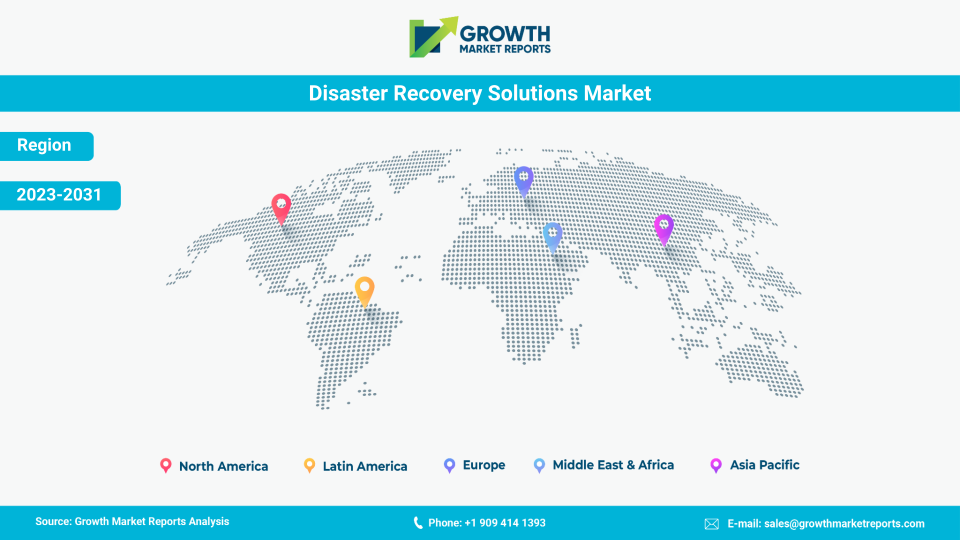
From a regional perspective, North America currently dominates the disaster recovery solutions market, accounting for the largest share in 2024, followed by Europe and the Asia Pacific region. The presence of leading technology vendors, high adoption rates of advanced IT infrastructure, and a strong focus on cybersecurity have contributed to the region's leadership position. However, the Asia Pacific market is poised for the fastest growth during the forecast period, fueled by rapid digitalization, increasing investments in cloud technologies, and rising awareness of disaster recovery best practices. Latin America and the Middle East & Africa are also witnessing steady growth, driven by government initiatives, expanding enterprise sectors, and the need to mitigate operational risks in volatile environments.

Global Disaster Recovery Solutions Industry Outlook

Component Analysis

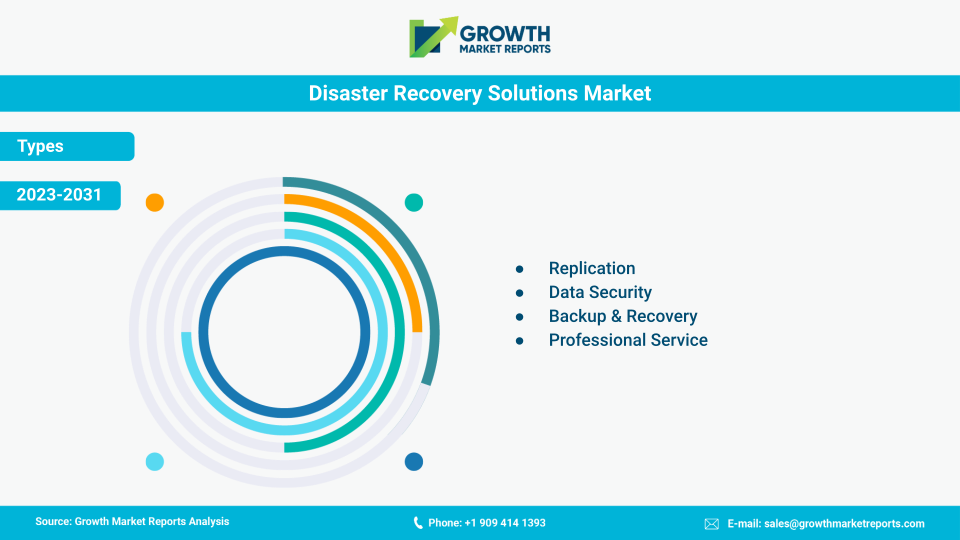
The disaster recovery solutions market is segmented by component into software, hardware, and services, each playing a pivotal role in ensuring organizational resilience. Software solutions represent the core of disaster recovery strategies, encompassing backup and replication software, disaster recovery orchestration, and management platforms. These solutions enable organizations to automate recovery processes, monitor system health, and ensure data integrity across hybrid environments. The increasing sophistication of cyber threats and the complexity of IT infrastructures have driven demand for advanced software tools that offer multi-layered protection and rapid recovery capabilities. Vendors are continuously innovating to integrate artificial intelligence, machine learning, and analytics into their offerings, enhancing threat detection, predictive maintenance, and automated failover.

Hardware components, while less prominent than software, remain critical for organizations that maintain on-premises data centers or hybrid environments. Hardware elements include backup servers, storage appliances, and networking devices that facilitate data replication and restoration. With the growing adoption of hyperconverged infrastructure and edge computing, the role of hardware in disaster recovery is evolving to support distributed architectures and real-time data processing. Enterprises are increasingly investing in robust, scalable hardware solutions that can withstand physical disasters such as fires, floods, and power outages, ensuring business continuity even in the face of catastrophic events. The integration of hardware with cloud-based platforms further enhances flexibility and resilience, enabling seamless data migration and recovery.

Services constitute a rapidly expanding segment, encompassing consulting, managed services, and support. As organizations grapple with the complexity of implementing and maintaining disaster recovery solutions, they are turning to specialized service providers for expertise in risk assessment, strategy development, and regulatory compliance. Managed disaster recovery services offer end-to-end solutions, including continuous monitoring, incident response, and recovery testing, freeing up internal resources and reducing operational burdens. The growing trend of outsourcing disaster recovery functions to third-party providers is driven by the need for 24/7 availability, rapid response times, and access to the latest technologies. Service providers are differentiating themselves through value-added offerings such as business continuity planning, training, and post-incident forensics.

The interplay between software, hardware, and services is shaping the future of the disaster recovery solutions market. Organizations are increasingly seeking integrated solutions that combine best-in-class software, resilient hardware, and expert services to create holistic disaster recovery ecosystems. Vendors are responding by forming strategic partnerships, developing interoperable platforms, and offering bundled solutions that address the full spectrum of disaster recovery needs. As the threat landscape evolves and regulatory demands intensify, the ability to deliver comprehensive, scalable, and adaptive solutions across all components will be a key differentiator in the competitive market.

Report Scope

Attributes Details
Report Title Disaster Recovery Solutions Market Research Report 2033
By Component Software, Hardware, Services
By Deployment Mode On-Premises, Cloud
By Organization Size Small and Medium Enterprises, Large Enterprises
By Application Data Backup and Recovery, Real-Time Replication, Data Protection, Risk Management, Others
By End-User BFSI, IT and Telecommunications, Healthcare, Government, Retail, Manufacturing, Others
Regions Covered North America, Europe, APAC, Latin America, MEA
Base Year 2024
Historic Data 2018-2023
Forecast Period 2025-2033
Number of Pages 289
Number of Tables & Figures 387
Customization Available Yes, the report can be customized as per your need.

Deployment Mode Analysis

Deployment mode is a critical consideration in the disaster recovery solutions market, with organizations choosing between on-premises and cloud-based solutions based on their unique requirements, risk profiles, and regulatory obligations. On-premises deployment remains a preferred choice for enterprises with stringent data sovereignty, security, and compliance needs. Industries such as government, BFSI, and healthcare often opt for on-premises solutions to maintain direct control over sensitive data and ensure adherence to sector-specific regulations. These deployments involve significant capital investment in infrastructure, ongoing maintenance, and dedicated IT personnel, but offer unparalleled control, customization, and security.

In contrast, cloud-based disaster recovery solutions are experiencing explosive growth, driven by their cost-effectiveness, scalability, and operational flexibility. Cloud deployment eliminates the need for substantial upfront investments in physical infrastructure, allowing organizations to leverage pay-as-you-go models and rapidly scale resources based on demand. Cloud-based solutions facilitate offsite data replication, automated failover, and faster recovery times, minimizing the impact of disasters on business operations. The integration of artificial intelligence, automation, and analytics further enhances the capabilities of cloud-based platforms, enabling proactive risk management and streamlined recovery processes.

Hybrid deployment models are gaining traction as organizations seek to balance the benefits of on-premises control with the agility of the cloud. Hybrid disaster recovery solutions enable enterprises to replicate critical data and applications to both on-premises and cloud environments, ensuring redundancy and minimizing single points of failure. This approach supports diverse workloads, accommodates regulatory requirements, and offers greater flexibility in resource allocation and recovery strategies. Vendors are investing in interoperable solutions that seamlessly integrate on-premises and cloud infrastructures, providing centralized management and unified visibility across environments.

The choice of deployment mode is influenced by factors such as organizational size, industry vertical, regulatory landscape, and the complexity of IT environments. Small and medium enterprises (SMEs) are increasingly embracing cloud-based disaster recovery to overcome resource constraints and access enterprise-grade capabilities without the overhead of managing physical infrastructure. Large enterprises, on the other hand, often adopt hybrid or on-premises deployments to address complex compliance requirements and maintain control over mission-critical data. As digital transformation accelerates and the threat landscape evolves, the demand for flexible, scalable, and secure deployment options will continue to shape the disaster recovery solutions market.

Organization Size Analysis

The disaster recovery solutions market is segmented by organization size into small and medium enterprises (SMEs) and large enterprises, each with distinct needs, challenges, and adoption patterns. SMEs are increasingly recognizing the importance of disaster recovery as cyberattacks, data breaches, and system outages become more prevalent and costly. However, limited budgets, resource constraints, and a lack of in-house expertise have historically hindered the adoption of comprehensive disaster recovery solutions among SMEs. The advent of cloud-based and managed services has democratized access to advanced disaster recovery capabilities, enabling SMEs to implement robust strategies without significant capital investment or operational complexity.

Large enterprises, with their extensive IT infrastructures, complex business processes, and stringent regulatory obligations, have long been at the forefront of disaster recovery innovation. These organizations invest heavily in multi-layered disaster recovery architectures that encompass on-premises, cloud, and hybrid deployments, ensuring redundancy, scalability, and rapid recovery in the event of a disaster. Large enterprises often require customized solutions that integrate seamlessly with existing systems, support diverse workloads, and provide granular control over data protection, replication, and restoration. The growing threat of ransomware and the increasing sophistication of cyberattacks have prompted large enterprises to enhance their disaster recovery strategies with artificial intelligence, automation, and real-time analytics.

The rising frequency of natural disasters and the global shift to remote and hybrid work models have further underscored the importance of disaster recovery for organizations of all sizes. SMEs are leveraging disaster recovery as a service (DRaaS) and managed services to access best-in-class technologies, expert support, and 24/7 monitoring, while large enterprises are investing in advanced orchestration, testing, and incident response capabilities to minimize downtime and data loss. The convergence of cloud, edge, and IoT technologies is creating new opportunities and challenges for both segments, as organizations seek to protect distributed assets and ensure business continuity across increasingly complex environments.

As regulatory pressures mount and the cost of downtime escalates, the disaster recovery solutions market is witnessing a convergence of needs between SMEs and large enterprises. Vendors are responding by offering scalable, modular solutions that can be tailored to the unique requirements of each segment, enabling organizations to start small and expand as their needs evolve. The ability to deliver cost-effective, flexible, and easy-to-manage solutions will be critical to capturing market share and driving growth in both the SME and large enterprise segments.

Application Analysis

The disaster recovery solutions market is segmented by application into data backup and recovery, real-time replication, data protection, risk management, and others, reflecting the diverse needs of organizations in safeguarding their digital assets. Data backup and recovery remains the cornerstone of disaster recovery strategies, enabling organizations to create secure copies of critical data and restore operations quickly in the event of data loss, corruption, or system failure. Advances in backup technologies, such as incremental backups, deduplication, and cloud integration, have enhanced the efficiency, speed, and reliability of data recovery processes, reducing downtime and minimizing the impact of disasters on business operations.

Real-time replication is gaining traction as organizations seek to minimize data loss and achieve near-zero recovery point objectives (RPOs). Real-time replication solutions continuously copy data and applications to offsite locations or cloud environments, ensuring that the most recent information is always available for restoration. This approach is particularly valuable for mission-critical workloads, financial transactions, and customer-facing applications, where even minimal data loss can have significant operational and financial consequences. The integration of real-time replication with automated failover and orchestration tools enables seamless switchover and rapid recovery, enhancing organizational resilience and business continuity.

Data protection encompasses a broad range of capabilities, including encryption, access controls, and threat detection, designed to safeguard data from unauthorized access, cyberattacks, and physical disasters. As the volume and value of data continue to grow, organizations are adopting multi-layered data protection strategies that combine preventive, detective, and corrective measures. Disaster recovery solutions are increasingly incorporating advanced security features, such as ransomware detection, immutable backups, and zero-trust architectures, to address evolving threats and regulatory requirements. The convergence of data protection and disaster recovery is blurring traditional boundaries, creating integrated solutions that provide end-to-end security and resilience.

Risk management is emerging as a critical application of disaster recovery solutions, as organizations seek to identify, assess, and mitigate operational risks associated with IT disruptions, cyber incidents, and natural disasters. Disaster recovery planning is an integral component of enterprise risk management frameworks, enabling organizations to quantify potential impacts, prioritize resources, and develop proactive mitigation strategies. Advanced analytics, simulation, and scenario modeling tools are being integrated into disaster recovery platforms, enabling organizations to evaluate risk exposure, test recovery plans, and optimize response strategies in real-time. The growing complexity of IT environments and the increasing interdependence of digital systems are driving demand for holistic risk management solutions that encompass disaster recovery, business continuity, and crisis management.

Other applications, such as compliance management, incident response, and business process continuity, are also gaining prominence as organizations recognize the strategic value of disaster recovery beyond mere data restoration. Vendors are expanding their solution portfolios to address these emerging needs, offering integrated platforms that support comprehensive disaster recovery planning, testing, and execution across diverse business functions. The ability to deliver application-centric, outcome-driven solutions will be a key differentiator in the evolving disaster recovery solutions market.

End-User Analysis

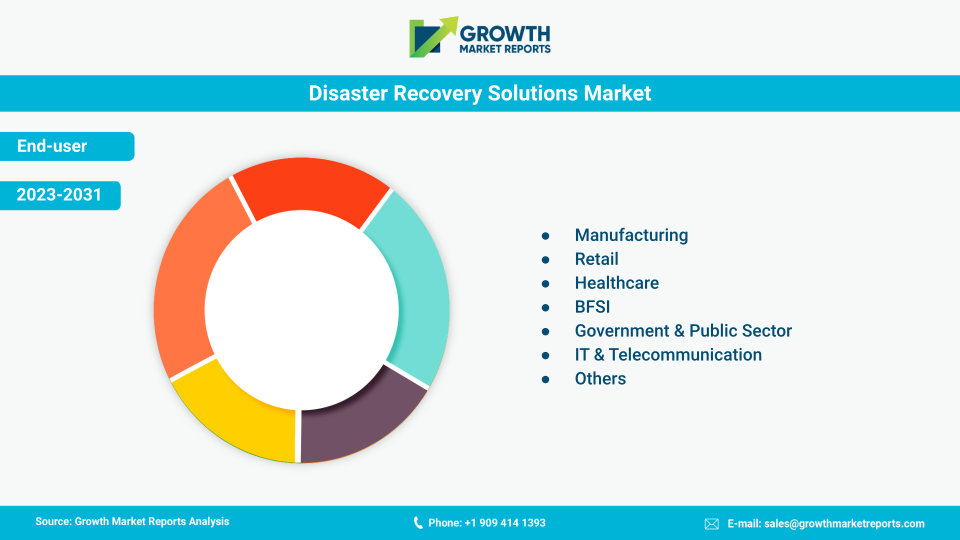
The disaster recovery solutions market serves a diverse array of end-users, including BFSI, IT and telecommunications, healthcare, government, retail, manufacturing, and others, each with unique requirements and challenges. The BFSI sector is a major adopter of disaster recovery solutions, driven by the need to protect sensitive financial data, ensure regulatory compliance, and maintain uninterrupted services in the face of cyber threats and system outages. Financial institutions are investing in advanced backup, replication, and risk management solutions to safeguard customer trust, prevent financial losses, and comply with stringent industry regulations such as PCI DSS and SOX.

The IT and telecommunications sector is another significant end-user, given its reliance on uninterrupted network connectivity, data availability, and application performance. Service providers are leveraging disaster recovery solutions to minimize downtime, protect customer data, and ensure seamless operations across distributed infrastructures. The proliferation of cloud computing, IoT, and 5G technologies has further increased the complexity of disaster recovery in this sector, necessitating scalable, automated, and real-time solutions that can adapt to dynamic workloads and evolving threat landscapes.

Healthcare organizations face unique disaster recovery challenges, as they must protect patient data, comply with regulations such as HIPAA, and ensure the availability of critical systems and applications. The increasing digitization of healthcare records, the rise of telemedicine, and the growing threat of ransomware attacks have heightened the importance of robust disaster recovery strategies in the healthcare sector. Providers are adopting integrated solutions that combine data backup, real-time replication, and advanced security features to safeguard patient privacy, maintain service continuity, and support regulatory compliance.

Government agencies are also major users of disaster recovery solutions, as they are responsible for protecting sensitive citizen data, maintaining public services, and ensuring national security. The increasing frequency of cyberattacks, natural disasters, and system outages has prompted governments to invest in resilient disaster recovery infrastructures, including cloud-based platforms, redundant data centers, and comprehensive risk management frameworks. Other sectors, such as retail and manufacturing, are leveraging disaster recovery solutions to protect transactional data, ensure supply chain continuity, and minimize the impact of operational disruptions on customer experience and revenue.

As digital transformation accelerates across industries, the demand for tailored disaster recovery solutions that address sector-specific risks, compliance requirements, and operational priorities is on the rise. Vendors are developing industry-focused offerings and forming strategic partnerships to deliver value-added solutions that meet the unique needs of each end-user segment. The ability to provide flexible, scalable, and integrated disaster recovery solutions will be critical to capturing market share and driving growth across diverse verticals.

Opportunities & Threats

The disaster recovery solutions market presents significant opportunities for growth and innovation, driven by the increasing complexity of IT environments, the proliferation of cyber threats, and the growing importance of regulatory compliance. One of the most promising opportunities lies in the continued adoption of cloud-based and disaster recovery as a service (DRaaS) models, which offer scalable, cost-effective solutions for organizations of all sizes. The integration of artificial intelligence, machine learning, and automation into disaster recovery platforms is enabling proactive risk management, rapid incident response, and continuous improvement of recovery processes. Vendors that can deliver intelligent, self-healing, and adaptive solutions are well-positioned to capture a larger share of the market.

Another significant opportunity is the expansion of disaster recovery solutions into emerging markets and underserved sectors. As digital transformation accelerates in regions such as Asia Pacific, Latin America, and the Middle East & Africa, organizations are seeking robust disaster recovery strategies to support business growth, mitigate operational risks, and comply with evolving regulatory requirements. The increasing adoption of IoT, edge computing, and hybrid cloud architectures is creating new demand for disaster recovery solutions that can protect distributed assets, enable real-time replication, and ensure business continuity across complex environments. Vendors that can offer flexible, modular, and industry-specific solutions will be well-positioned to capitalize on these emerging opportunities.

Despite the significant growth potential, the disaster recovery solutions market faces several restraining factors that could hinder adoption and market expansion. One of the primary challenges is the perceived complexity and cost of implementing comprehensive disaster recovery strategies, particularly among small and medium enterprises with limited resources. The integration of disaster recovery solutions with existing IT infrastructures, legacy systems, and diverse applications can be complex and time-consuming, requiring significant planning, expertise, and investment. Additionally, concerns about data privacy, security, and regulatory compliance in cloud-based deployments may deter some organizations from fully embracing cloud-native disaster recovery solutions. Vendors must address these challenges by offering simplified deployment models, transparent pricing, and robust security features to build trust and accelerate adoption.

Regional Outlook

The regional distribution of the disaster recovery solutions market highlights the varying levels of maturity, adoption, and growth potential across different geographies. North America remains the largest market, accounting for approximately USD 8.9 billion in 2024, driven by the presence of leading technology vendors, high rates of digital adoption, and a strong focus on cybersecurity. The region's advanced IT infrastructure, stringent regulatory environment, and high awareness of disaster recovery best practices have contributed to its leadership position. Key industries such as BFSI, healthcare, and government are major adopters, investing heavily in resilient disaster recovery strategies to protect critical data and ensure business continuity.

Europe holds the second-largest share of the disaster recovery solutions market, with a market size of around USD 6.2 billion in 2024. The region is characterized by a mature regulatory landscape, including GDPR and sector-specific compliance requirements, which drive demand for robust data protection and disaster recovery solutions. The increasing frequency of cyberattacks, natural disasters, and geopolitical risks has further heightened the importance of disaster recovery in Europe. Industries such as manufacturing, retail, and telecommunications are leading adopters, leveraging cloud-based and hybrid solutions to enhance resilience and minimize downtime. The European market is expected to grow at a steady CAGR of 11.8% through 2033.

The Asia Pacific region is poised for the fastest growth, with a market size of USD 4.1 billion in 2024 and a projected CAGR of 14.7% over the forecast period. Rapid digitalization, increasing investments in cloud technologies, and rising awareness of disaster recovery best practices are driving adoption across key markets such as China, India, Japan, and Australia. The expansion of the enterprise sector, government initiatives to enhance cybersecurity, and the growing threat of natural disasters are further fueling demand for disaster recovery solutions in the region. Latin America and the Middle East & Africa are also witnessing steady growth, with combined market sizes of approximately USD 2.5 billion in 2024, driven by expanding enterprise sectors, regulatory reforms, and the need to mitigate operational risks in volatile environments.

Disaster Recovery Solutions Market Statistics

Competitor Outlook

The disaster recovery solutions market is characterized by intense competition, rapid innovation, and a dynamic landscape of established players and emerging entrants. Leading vendors are continuously investing in research and development to enhance the capabilities, scalability, and security of their offerings. The market is witnessing a wave of consolidation, with major players acquiring niche providers to expand their solution portfolios, enter new markets, and strengthen their competitive positions. Strategic partnerships, alliances, and collaborations are also common, as vendors seek to deliver integrated, end-to-end solutions that address the full spectrum of disaster recovery needs.

Key competitive factors in the disaster recovery solutions market include product functionality, ease of deployment, scalability, security, and total cost of ownership. Vendors are differentiating themselves through the development of cloud-native platforms, AI-driven automation, and advanced analytics capabilities that enable proactive risk management and rapid recovery. The ability to offer flexible deployment models, seamless integration with existing IT environments, and comprehensive support services is critical to winning and retaining customers. As organizations increasingly demand tailored, industry-specific solutions, vendors are focusing on verticalization, offering customized features and compliance tools to meet the unique requirements of sectors such as BFSI, healthcare, and government.

The competitive landscape is further shaped by the entry of new players and the emergence of innovative startups, particularly in the areas of cloud-based disaster recovery, managed services, and cybersecurity. These entrants are challenging established vendors by offering agile, cost-effective solutions that leverage the latest technologies and address the evolving needs of modern enterprises. The market is also witnessing increased investment in artificial intelligence, machine learning, and automation, as vendors seek to enhance the intelligence, efficiency, and effectiveness of their disaster recovery platforms. The ability to deliver value-added services, such as continuous monitoring, incident response, and business continuity planning, is becoming a key differentiator in the crowded market.

Major companies operating in the disaster recovery solutions market include IBM Corporation, Microsoft Corporation, Amazon Web Services (AWS), VMware, Inc., Oracle Corporation, Veeam Software, Commvault Systems, Veritas Technologies, Unitrends, and Datto, Inc.. These companies are at the forefront of innovation, offering comprehensive solutions that encompass backup, replication, orchestration, and risk management across on-premises, cloud, and hybrid environments. IBM and Microsoft are known for their enterprise-grade platforms and extensive service portfolios, while AWS and VMware are leading providers of cloud-native disaster recovery solutions. Veeam, Commvault, and Veritas are recognized for their advanced backup and data protection technologies, catering to organizations of all sizes and industries.

In addition to these global leaders, a host of regional and specialized vendors are playing a vital role in the disaster recovery solutions market, offering tailored solutions, industry expertise, and localized support. The competitive landscape is expected to remain dynamic and highly innovative, as vendors continue to invest in emerging technologies, expand their global footprints, and respond to the evolving needs of organizations in an increasingly digital and risk-prone world.

Key Players

  • IBM Corporation
  • Microsoft Corporation
  • Amazon Web Services (AWS)
  • Sungard Availability Services
  • VMware, Inc.
  • Dell Technologies
  • Oracle Corporation
  • Acronis International GmbH
  • Zerto Ltd.
  • Veeam Software
  • Iron Mountain Incorporated
  • Fujitsu Limited
  • Cisco Systems, Inc.
  • Hewlett Packard Enterprise (HPE)
  • Commvault Systems, Inc.
  • Rackspace Technology
  • Unitrends Inc.
  • Datto, Inc.
  • TierPoint, LLC
  • Carbonite, Inc.
Disaster Recovery Solutions Market Overview

Segments

The Disaster Recovery Solutions market has been segmented on the basis of

Component

  • Software
  • Hardware
  • Services

Deployment Mode

  • On-Premises
  • Cloud

Organization Size

  • Small and Medium Enterprises
  • Large Enterprises

Application

  • Data Backup and Recovery
  • Real-Time Replication
  • Data Protection
  • Risk Management
  • Others

End-User

  • BFSI
  • IT and Telecommunications
  • Healthcare
  • Government
  • Retail
  • Manufacturing
  • Others

Competitive Landscape

Key players competing in the global disaster recovery solutions market are Microsoft Corp.; Unitrends; iland Internet Solutions; Sungard Availability Services; and IBM Corp. As part of their efforts to grow their client base and acquire a competitive advantage over competitors, manufacturers operating in the market are adopting various strategic initiatives, such as partnerships, collaborations, mergers & acquisitions, and new product development.
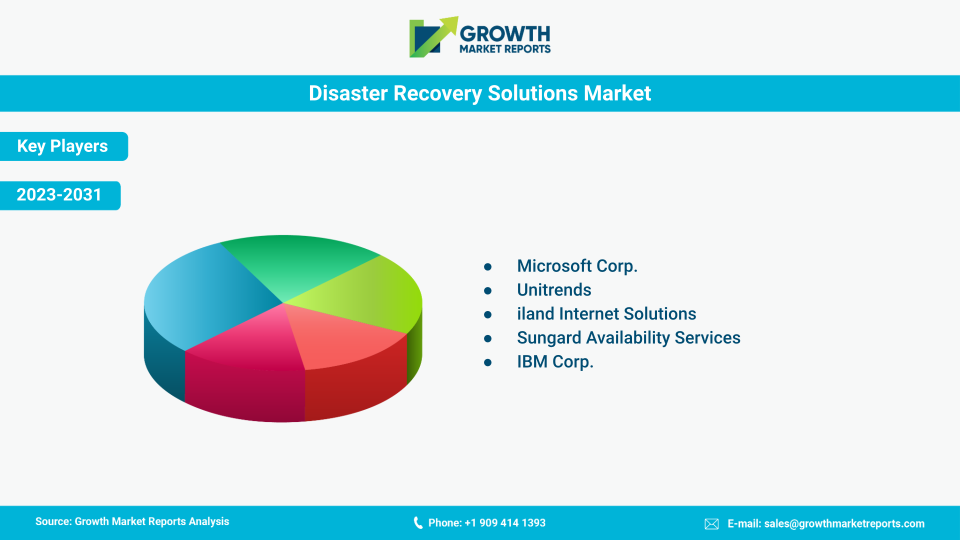

Disaster Recovery Solutions Market Key Players

Frequently Asked Questions

Trends include the integration of artificial intelligence and automation, the rise of disaster recovery as a service (DRaaS), adoption of hybrid and multi-cloud environments, and the development of industry-specific and modular solutions.

Key companies include IBM Corporation, Microsoft Corporation, Amazon Web Services (AWS), VMware, Oracle Corporation, Veeam Software, Commvault Systems, Veritas Technologies, Unitrends, and Datto, Inc.

North America is the largest market, followed by Europe and Asia Pacific. Asia Pacific is expected to see the fastest growth due to rapid digitalization and increased investments in cloud technologies.

Challenges include the perceived complexity and cost of implementation, integration with legacy systems, and concerns about data privacy and regulatory compliance, especially in cloud deployments.

Major end-users include BFSI, IT and telecommunications, healthcare, government, retail, and manufacturing, each with unique data protection and compliance requirements.

The market is segmented into software (backup, replication, orchestration), hardware (servers, storage, networking devices), and services (consulting, managed services, support).

Cloud-based disaster recovery offers cost-effective scalability, faster recovery times, and easier deployment, while on-premises solutions provide greater control, customization, and security, especially for organizations with strict compliance needs.

Disaster recovery solutions can be deployed on-premises, in the cloud, or through hybrid models that combine both approaches for greater flexibility and redundancy.

Key growth drivers include the rising frequency of cyber threats and natural disasters, increased regulatory compliance requirements, rapid adoption of cloud-based solutions, and the need for business continuity across industries.

The global disaster recovery solutions market was valued at USD 21.7 billion in 2024 and is expected to reach USD 61.2 billion by 2033, growing at a CAGR of 12.3% from 2025 to 2033.

Table Of Content

Chapter 1 Executive Summary
Chapter 2 Assumptions and Acronyms Used
Chapter 3 Research Methodology
Chapter 4 Disaster Recovery Solutions Market Overview
   4.1 Introduction
      4.1.1 Market Taxonomy
      4.1.2 Market Definition
      4.1.3 Macro-Economic Factors Impacting the Market Growth
   4.2 Disaster Recovery Solutions Market Dynamics
      4.2.1 Market Drivers
      4.2.2 Market Restraints
      4.2.3 Market Opportunity
   4.3 Disaster Recovery Solutions Market - Supply Chain Analysis
      4.3.1 List of Key Suppliers
      4.3.2 List of Key Distributors
      4.3.3 List of Key Consumers
   4.4 Key Forces Shaping the Disaster Recovery Solutions Market
      4.4.1 Bargaining Power of Suppliers
      4.4.2 Bargaining Power of Buyers
      4.4.3 Threat of Substitution
      4.4.4 Threat of New Entrants
      4.4.5 Competitive Rivalry
   4.5 Global Disaster Recovery Solutions Market Size & Forecast, 2023-2032
      4.5.1 Disaster Recovery Solutions Market Size and Y-o-Y Growth
      4.5.2 Disaster Recovery Solutions Market Absolute $ Opportunity

Chapter 5 Global Disaster Recovery Solutions Market Analysis and Forecast By Component
   5.1 Introduction
      5.1.1 Key Market Trends & Growth Opportunities By Component
      5.1.2 Basis Point Share (BPS) Analysis By Component
      5.1.3 Absolute $ Opportunity Assessment By Component
   5.2 Disaster Recovery Solutions Market Size Forecast By Component
      5.2.1 Software
      5.2.2 Hardware
      5.2.3 Services
   5.3 Market Attractiveness Analysis By Component

Chapter 6 Global Disaster Recovery Solutions Market Analysis and Forecast By Deployment Mode
   6.1 Introduction
      6.1.1 Key Market Trends & Growth Opportunities By Deployment Mode
      6.1.2 Basis Point Share (BPS) Analysis By Deployment Mode
      6.1.3 Absolute $ Opportunity Assessment By Deployment Mode
   6.2 Disaster Recovery Solutions Market Size Forecast By Deployment Mode
      6.2.1 On-Premises
      6.2.2 Cloud
   6.3 Market Attractiveness Analysis By Deployment Mode

Chapter 7 Global Disaster Recovery Solutions Market Analysis and Forecast By Organization Size
   7.1 Introduction
      7.1.1 Key Market Trends & Growth Opportunities By Organization Size
      7.1.2 Basis Point Share (BPS) Analysis By Organization Size
      7.1.3 Absolute $ Opportunity Assessment By Organization Size
   7.2 Disaster Recovery Solutions Market Size Forecast By Organization Size
      7.2.1 Small and Medium Enterprises
      7.2.2 Large Enterprises
   7.3 Market Attractiveness Analysis By Organization Size

Chapter 8 Global Disaster Recovery Solutions Market Analysis and Forecast By Application
   8.1 Introduction
      8.1.1 Key Market Trends & Growth Opportunities By Application
      8.1.2 Basis Point Share (BPS) Analysis By Application
      8.1.3 Absolute $ Opportunity Assessment By Application
   8.2 Disaster Recovery Solutions Market Size Forecast By Application
      8.2.1 Data Backup and Recovery
      8.2.2 Real-Time Replication
      8.2.3 Data Protection
      8.2.4 Risk Management
      8.2.5 Others
   8.3 Market Attractiveness Analysis By Application

Chapter 9 Global Disaster Recovery Solutions Market Analysis and Forecast By End-User
   9.1 Introduction
      9.1.1 Key Market Trends & Growth Opportunities By End-User
      9.1.2 Basis Point Share (BPS) Analysis By End-User
      9.1.3 Absolute $ Opportunity Assessment By End-User
   9.2 Disaster Recovery Solutions Market Size Forecast By End-User
      9.2.1 BFSI
      9.2.2 IT and Telecommunications
      9.2.3 Healthcare
      9.2.4 Government
      9.2.5 Retail
      9.2.6 Manufacturing
      9.2.7 Others
   9.3 Market Attractiveness Analysis By End-User

Chapter 10 Global Disaster Recovery Solutions Market Analysis and Forecast by Region
   10.1 Introduction
      10.1.1 Key Market Trends & Growth Opportunities By Region
      10.1.2 Basis Point Share (BPS) Analysis By Region
      10.1.3 Absolute $ Opportunity Assessment By Region
   10.2 Disaster Recovery Solutions Market Size Forecast By Region
      10.2.1 North America
      10.2.2 Europe
      10.2.3 Asia Pacific
      10.2.4 Latin America
      10.2.5 Middle East & Africa (MEA)
   10.3 Market Attractiveness Analysis By Region

Chapter 11 Coronavirus Disease (COVID-19) Impact 
   11.1 Introduction 
   11.2 Current & Future Impact Analysis 
   11.3 Economic Impact Analysis 
   11.4 Government Policies 
   11.5 Investment Scenario

Chapter 12 North America Disaster Recovery Solutions Analysis and Forecast
   12.1 Introduction
   12.2 North America Disaster Recovery Solutions Market Size Forecast by Country
      12.2.1 U.S.
      12.2.2 Canada
   12.3 Basis Point Share (BPS) Analysis by Country
   12.4 Absolute $ Opportunity Assessment by Country
   12.5 Market Attractiveness Analysis by Country
   12.6 North America Disaster Recovery Solutions Market Size Forecast By Component
      12.6.1 Software
      12.6.2 Hardware
      12.6.3 Services
   12.7 Basis Point Share (BPS) Analysis By Component 
   12.8 Absolute $ Opportunity Assessment By Component 
   12.9 Market Attractiveness Analysis By Component
   12.10 North America Disaster Recovery Solutions Market Size Forecast By Deployment Mode
      12.10.1 On-Premises
      12.10.2 Cloud
   12.11 Basis Point Share (BPS) Analysis By Deployment Mode 
   12.12 Absolute $ Opportunity Assessment By Deployment Mode 
   12.13 Market Attractiveness Analysis By Deployment Mode
   12.14 North America Disaster Recovery Solutions Market Size Forecast By Organization Size
      12.14.1 Small and Medium Enterprises
      12.14.2 Large Enterprises
   12.15 Basis Point Share (BPS) Analysis By Organization Size 
   12.16 Absolute $ Opportunity Assessment By Organization Size 
   12.17 Market Attractiveness Analysis By Organization Size
   12.18 North America Disaster Recovery Solutions Market Size Forecast By Application
      12.18.1 Data Backup and Recovery
      12.18.2 Real-Time Replication
      12.18.3 Data Protection
      12.18.4 Risk Management
      12.18.5 Others
   12.19 Basis Point Share (BPS) Analysis By Application 
   12.20 Absolute $ Opportunity Assessment By Application 
   12.21 Market Attractiveness Analysis By Application
   12.22 North America Disaster Recovery Solutions Market Size Forecast By End-User
      12.22.1 BFSI
      12.22.2 IT and Telecommunications
      12.22.3 Healthcare
      12.22.4 Government
      12.22.5 Retail
      12.22.6 Manufacturing
      12.22.7 Others
   12.23 Basis Point Share (BPS) Analysis By End-User 
   12.24 Absolute $ Opportunity Assessment By End-User 
   12.25 Market Attractiveness Analysis By End-User

Chapter 13 Europe Disaster Recovery Solutions Analysis and Forecast
   13.1 Introduction
   13.2 Europe Disaster Recovery Solutions Market Size Forecast by Country
      13.2.1 Germany
      13.2.2 France
      13.2.3 Italy
      13.2.4 U.K.
      13.2.5 Spain
      13.2.6 Russia
      13.2.7 Rest of Europe
   13.3 Basis Point Share (BPS) Analysis by Country
   13.4 Absolute $ Opportunity Assessment by Country
   13.5 Market Attractiveness Analysis by Country
   13.6 Europe Disaster Recovery Solutions Market Size Forecast By Component
      13.6.1 Software
      13.6.2 Hardware
      13.6.3 Services
   13.7 Basis Point Share (BPS) Analysis By Component 
   13.8 Absolute $ Opportunity Assessment By Component 
   13.9 Market Attractiveness Analysis By Component
   13.10 Europe Disaster Recovery Solutions Market Size Forecast By Deployment Mode
      13.10.1 On-Premises
      13.10.2 Cloud
   13.11 Basis Point Share (BPS) Analysis By Deployment Mode 
   13.12 Absolute $ Opportunity Assessment By Deployment Mode 
   13.13 Market Attractiveness Analysis By Deployment Mode
   13.14 Europe Disaster Recovery Solutions Market Size Forecast By Organization Size
      13.14.1 Small and Medium Enterprises
      13.14.2 Large Enterprises
   13.15 Basis Point Share (BPS) Analysis By Organization Size 
   13.16 Absolute $ Opportunity Assessment By Organization Size 
   13.17 Market Attractiveness Analysis By Organization Size
   13.18 Europe Disaster Recovery Solutions Market Size Forecast By Application
      13.18.1 Data Backup and Recovery
      13.18.2 Real-Time Replication
      13.18.3 Data Protection
      13.18.4 Risk Management
      13.18.5 Others
   13.19 Basis Point Share (BPS) Analysis By Application 
   13.20 Absolute $ Opportunity Assessment By Application 
   13.21 Market Attractiveness Analysis By Application
   13.22 Europe Disaster Recovery Solutions Market Size Forecast By End-User
      13.22.1 BFSI
      13.22.2 IT and Telecommunications
      13.22.3 Healthcare
      13.22.4 Government
      13.22.5 Retail
      13.22.6 Manufacturing
      13.22.7 Others
   13.23 Basis Point Share (BPS) Analysis By End-User 
   13.24 Absolute $ Opportunity Assessment By End-User 
   13.25 Market Attractiveness Analysis By End-User

Chapter 14 Asia Pacific Disaster Recovery Solutions Analysis and Forecast
   14.1 Introduction
   14.2 Asia Pacific Disaster Recovery Solutions Market Size Forecast by Country
      14.2.1 China
      14.2.2 Japan
      14.2.3 South Korea
      14.2.4 India
      14.2.5 Australia
      14.2.6 South East Asia (SEA)
      14.2.7 Rest of Asia Pacific (APAC)
   14.3 Basis Point Share (BPS) Analysis by Country
   14.4 Absolute $ Opportunity Assessment by Country
   14.5 Market Attractiveness Analysis by Country
   14.6 Asia Pacific Disaster Recovery Solutions Market Size Forecast By Component
      14.6.1 Software
      14.6.2 Hardware
      14.6.3 Services
   14.7 Basis Point Share (BPS) Analysis By Component 
   14.8 Absolute $ Opportunity Assessment By Component 
   14.9 Market Attractiveness Analysis By Component
   14.10 Asia Pacific Disaster Recovery Solutions Market Size Forecast By Deployment Mode
      14.10.1 On-Premises
      14.10.2 Cloud
   14.11 Basis Point Share (BPS) Analysis By Deployment Mode 
   14.12 Absolute $ Opportunity Assessment By Deployment Mode 
   14.13 Market Attractiveness Analysis By Deployment Mode
   14.14 Asia Pacific Disaster Recovery Solutions Market Size Forecast By Organization Size
      14.14.1 Small and Medium Enterprises
      14.14.2 Large Enterprises
   14.15 Basis Point Share (BPS) Analysis By Organization Size 
   14.16 Absolute $ Opportunity Assessment By Organization Size 
   14.17 Market Attractiveness Analysis By Organization Size
   14.18 Asia Pacific Disaster Recovery Solutions Market Size Forecast By Application
      14.18.1 Data Backup and Recovery
      14.18.2 Real-Time Replication
      14.18.3 Data Protection
      14.18.4 Risk Management
      14.18.5 Others
   14.19 Basis Point Share (BPS) Analysis By Application 
   14.20 Absolute $ Opportunity Assessment By Application 
   14.21 Market Attractiveness Analysis By Application
   14.22 Asia Pacific Disaster Recovery Solutions Market Size Forecast By End-User
      14.22.1 BFSI
      14.22.2 IT and Telecommunications
      14.22.3 Healthcare
      14.22.4 Government
      14.22.5 Retail
      14.22.6 Manufacturing
      14.22.7 Others
   14.23 Basis Point Share (BPS) Analysis By End-User 
   14.24 Absolute $ Opportunity Assessment By End-User 
   14.25 Market Attractiveness Analysis By End-User

Chapter 15 Latin America Disaster Recovery Solutions Analysis and Forecast
   15.1 Introduction
   15.2 Latin America Disaster Recovery Solutions Market Size Forecast by Country
      15.2.1 Brazil
      15.2.2 Mexico
      15.2.3 Rest of Latin America (LATAM)
   15.3 Basis Point Share (BPS) Analysis by Country
   15.4 Absolute $ Opportunity Assessment by Country
   15.5 Market Attractiveness Analysis by Country
   15.6 Latin America Disaster Recovery Solutions Market Size Forecast By Component
      15.6.1 Software
      15.6.2 Hardware
      15.6.3 Services
   15.7 Basis Point Share (BPS) Analysis By Component 
   15.8 Absolute $ Opportunity Assessment By Component 
   15.9 Market Attractiveness Analysis By Component
   15.10 Latin America Disaster Recovery Solutions Market Size Forecast By Deployment Mode
      15.10.1 On-Premises
      15.10.2 Cloud
   15.11 Basis Point Share (BPS) Analysis By Deployment Mode 
   15.12 Absolute $ Opportunity Assessment By Deployment Mode 
   15.13 Market Attractiveness Analysis By Deployment Mode
   15.14 Latin America Disaster Recovery Solutions Market Size Forecast By Organization Size
      15.14.1 Small and Medium Enterprises
      15.14.2 Large Enterprises
   15.15 Basis Point Share (BPS) Analysis By Organization Size 
   15.16 Absolute $ Opportunity Assessment By Organization Size 
   15.17 Market Attractiveness Analysis By Organization Size
   15.18 Latin America Disaster Recovery Solutions Market Size Forecast By Application
      15.18.1 Data Backup and Recovery
      15.18.2 Real-Time Replication
      15.18.3 Data Protection
      15.18.4 Risk Management
      15.18.5 Others
   15.19 Basis Point Share (BPS) Analysis By Application 
   15.20 Absolute $ Opportunity Assessment By Application 
   15.21 Market Attractiveness Analysis By Application
   15.22 Latin America Disaster Recovery Solutions Market Size Forecast By End-User
      15.22.1 BFSI
      15.22.2 IT and Telecommunications
      15.22.3 Healthcare
      15.22.4 Government
      15.22.5 Retail
      15.22.6 Manufacturing
      15.22.7 Others
   15.23 Basis Point Share (BPS) Analysis By End-User 
   15.24 Absolute $ Opportunity Assessment By End-User 
   15.25 Market Attractiveness Analysis By End-User

Chapter 16 Middle East & Africa (MEA) Disaster Recovery Solutions Analysis and Forecast
   16.1 Introduction
   16.2 Middle East & Africa (MEA) Disaster Recovery Solutions Market Size Forecast by Country
      16.2.1 Saudi Arabia
      16.2.2 South Africa
      16.2.3 UAE
      16.2.4 Rest of Middle East & Africa (MEA)
   16.3 Basis Point Share (BPS) Analysis by Country
   16.4 Absolute $ Opportunity Assessment by Country
   16.5 Market Attractiveness Analysis by Country
   16.6 Middle East & Africa (MEA) Disaster Recovery Solutions Market Size Forecast By Component
      16.6.1 Software
      16.6.2 Hardware
      16.6.3 Services
   16.7 Basis Point Share (BPS) Analysis By Component 
   16.8 Absolute $ Opportunity Assessment By Component 
   16.9 Market Attractiveness Analysis By Component
   16.10 Middle East & Africa (MEA) Disaster Recovery Solutions Market Size Forecast By Deployment Mode
      16.10.1 On-Premises
      16.10.2 Cloud
   16.11 Basis Point Share (BPS) Analysis By Deployment Mode 
   16.12 Absolute $ Opportunity Assessment By Deployment Mode 
   16.13 Market Attractiveness Analysis By Deployment Mode
   16.14 Middle East & Africa (MEA) Disaster Recovery Solutions Market Size Forecast By Organization Size
      16.14.1 Small and Medium Enterprises
      16.14.2 Large Enterprises
   16.15 Basis Point Share (BPS) Analysis By Organization Size 
   16.16 Absolute $ Opportunity Assessment By Organization Size 
   16.17 Market Attractiveness Analysis By Organization Size
   16.18 Middle East & Africa (MEA) Disaster Recovery Solutions Market Size Forecast By Application
      16.18.1 Data Backup and Recovery
      16.18.2 Real-Time Replication
      16.18.3 Data Protection
      16.18.4 Risk Management
      16.18.5 Others
   16.19 Basis Point Share (BPS) Analysis By Application 
   16.20 Absolute $ Opportunity Assessment By Application 
   16.21 Market Attractiveness Analysis By Application
   16.22 Middle East & Africa (MEA) Disaster Recovery Solutions Market Size Forecast By End-User
      16.22.1 BFSI
      16.22.2 IT and Telecommunications
      16.22.3 Healthcare
      16.22.4 Government
      16.22.5 Retail
      16.22.6 Manufacturing
      16.22.7 Others
   16.23 Basis Point Share (BPS) Analysis By End-User 
   16.24 Absolute $ Opportunity Assessment By End-User 
   16.25 Market Attractiveness Analysis By End-User

Chapter 17 Competition Landscape 
   17.1 Disaster Recovery Solutions Market: Competitive Dashboard
   17.2 Global Disaster Recovery Solutions Market: Market Share Analysis, 2023
   17.3 Company Profiles (Details – Overview, Financials, Developments, Strategy) 
      17.3.1 IBM Corporation
Microsoft Corporation
Amazon Web Services (AWS)
Sungard Availability Services
VMware, Inc.
Dell Technologies
Oracle Corporation
Acronis International GmbH
Zerto Ltd.
Veeam Software
Iron Mountain Incorporated
Fujitsu Limited
Cisco Systems, Inc.
Hewlett Packard Enterprise (HPE)
Commvault Systems, Inc.
Rackspace Technology
Unitrends Inc.
Datto, Inc.
TierPoint, LLC
Carbonite, Inc.

Methodology

Our Clients

The John Holland Group
Deloitte
Nestle SA
Honda Motor Co. Ltd.
Pfizer
Microsoft
Siemens Healthcare
General Electric