Direct Drive Wind Turbine Market Research Report 2033

Direct Drive Wind Turbine Market Research Report 2033

Segments - by Capacity (Less than 1 MW, 1–3 MW, Above 3 MW), by Application (Onshore, Offshore), by Rotor Diameter (Less than 60 m, 60–100 m, Above 100 m), by End-User (Utilities, Independent Power Producers, Others)

https://growthmarketreports.com/Raksha
Author : Raksha Sharma
https://growthmarketreports.com/Vaibhav
Fact-checked by : V. Chandola
https://growthmarketreports.com/Shruti
Editor : Shruti Bhat

Upcoming | Report ID :EP-2367 | 5.0 Rating | 55 Reviews | 295 Pages | Format : Docx PDF

Report Description


Direct Drive Wind Turbine Market Outlook

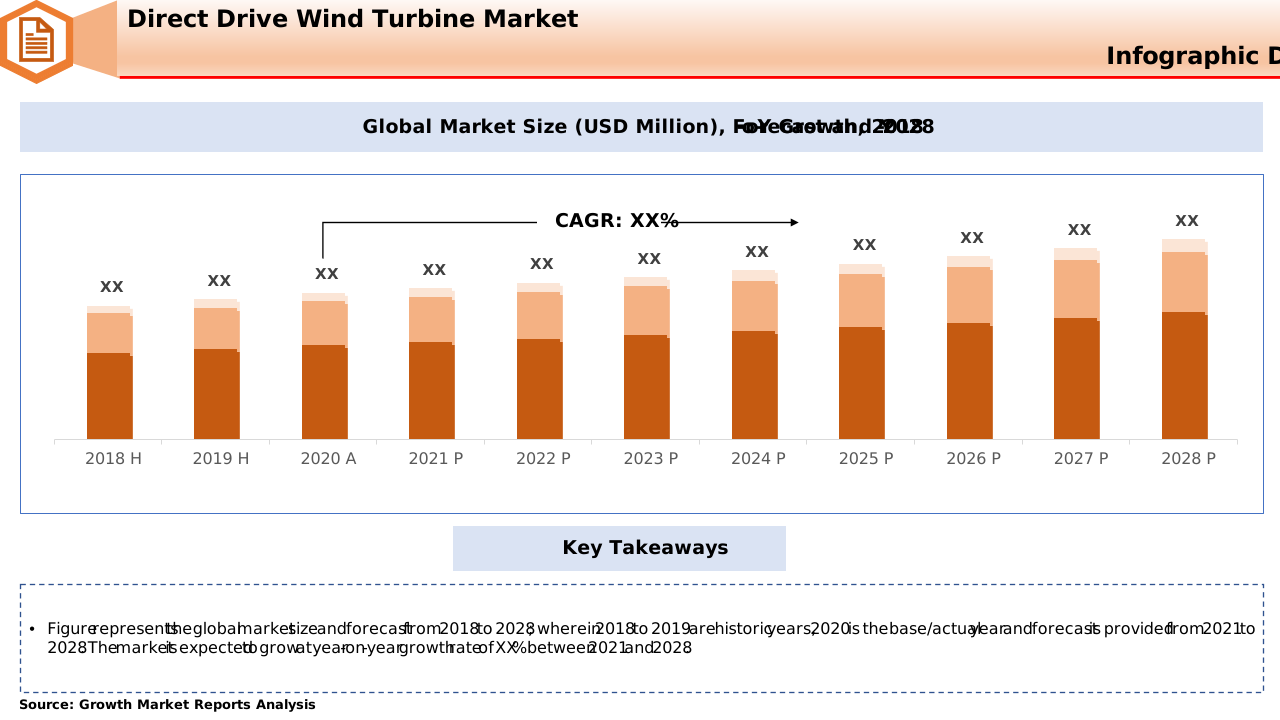
According to our latest research, the global direct drive wind turbine market size reached USD 16.2 billion in 2024, reflecting increasing adoption across both onshore and offshore wind installations. The market is expected to expand at a robust CAGR of 8.7% from 2025 to 2033, with the total market size projected to reach USD 34.2 billion by 2033. This remarkable growth trajectory is primarily attributed to the rising global demand for renewable energy, advancements in wind turbine technologies, and the strategic shift towards sustainable power generation solutions. As per our latest research, supportive government policies, grid modernization, and the urgent need to reduce carbon emissions are further propelling the adoption of direct drive wind turbines worldwide.

One of the primary growth factors for the direct drive wind turbine market is the increasing focus on operational efficiency and reliability in wind energy systems. Traditional geared wind turbines are often susceptible to mechanical failures and require intensive maintenance due to the presence of gearboxes. In contrast, direct drive wind turbines eliminate the need for gearboxes, resulting in fewer moving parts, reduced maintenance costs, and improved system reliability. These advantages significantly lower the total cost of ownership over the turbine’s lifespan, making direct drive systems particularly attractive for both utilities and independent power producers. The drive for higher efficiency and reduced downtime is especially critical as wind farms scale up in size and complexity, amplifying the importance of robust, low-maintenance technologies.

Another significant driver for the market is the global push towards decarbonization and the expansion of renewable energy portfolios. Governments across the world are setting ambitious renewable energy targets and offering incentives such as feed-in tariffs, tax credits, and renewable portfolio standards to accelerate the deployment of wind energy solutions. The direct drive wind turbine market is benefiting from these policies, as the technology aligns with the goals of maximizing energy yield and minimizing environmental impact. Furthermore, the growing number of offshore wind projects, where maintenance access is challenging and costly, has further heightened the demand for direct drive systems due to their superior reliability and lower operational risks.

Technological advancements in permanent magnet generators and power electronics have also played a pivotal role in boosting the adoption of direct drive wind turbines. Innovations in materials, such as high-performance magnets and lightweight composites, have enabled manufacturers to design larger, more efficient turbines with higher power outputs and improved grid compatibility. These advancements support the trend towards larger rotor diameters and higher-capacity installations, which are essential for optimizing energy capture in both onshore and offshore environments. The integration of digital monitoring and predictive maintenance tools further enhances the operational performance and lifespan of direct drive wind turbines, contributing to the overall growth of the market.

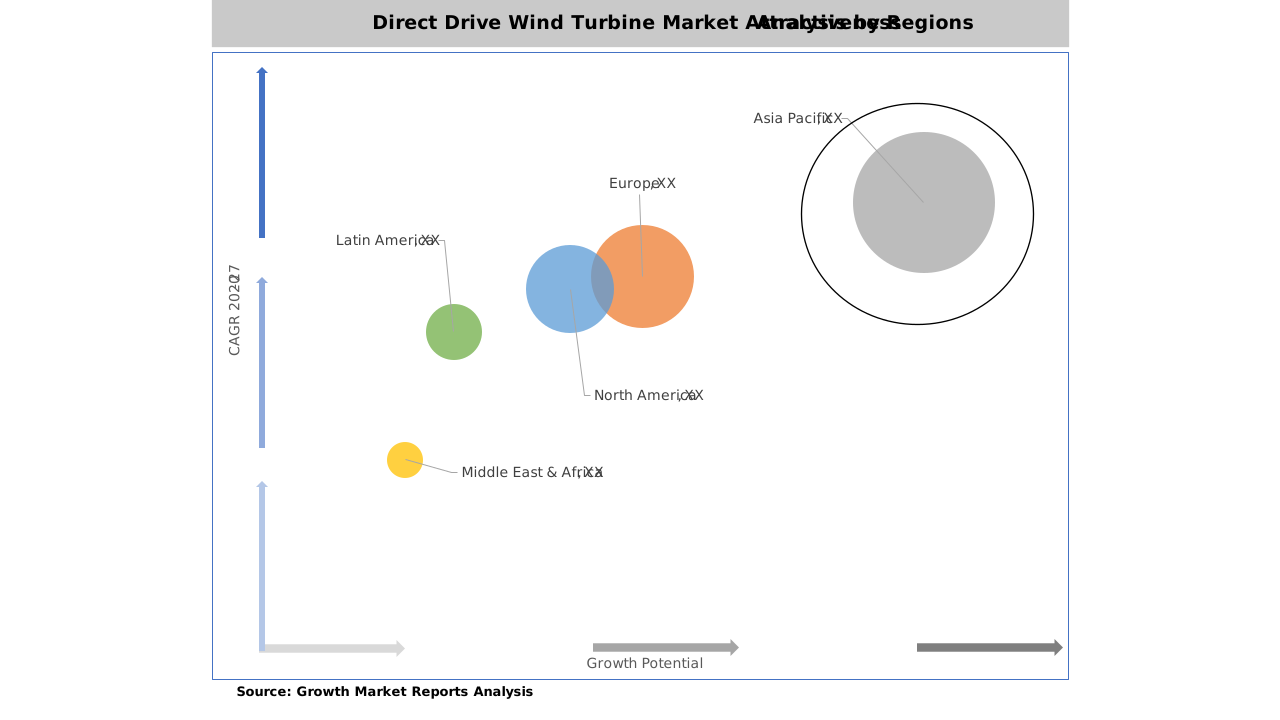
Regionally, the Asia Pacific region is leading the adoption of direct drive wind turbines, driven by large-scale renewable energy investments in China and India. Europe follows closely, with strong policy support and a mature offshore wind market, particularly in the United Kingdom, Germany, and the Netherlands. North America is also witnessing significant growth, fueled by the increasing competitiveness of wind energy and progressive state-level renewable energy mandates in the United States. Latin America and the Middle East & Africa are emerging as promising markets, supported by growing energy demand and favorable climatic conditions for wind power generation. The regional dynamics highlight the global shift towards cleaner energy sources and the critical role of direct drive wind turbines in this transition.

Global Direct Drive Wind Turbine Industry Outlook

Capacity Analysis

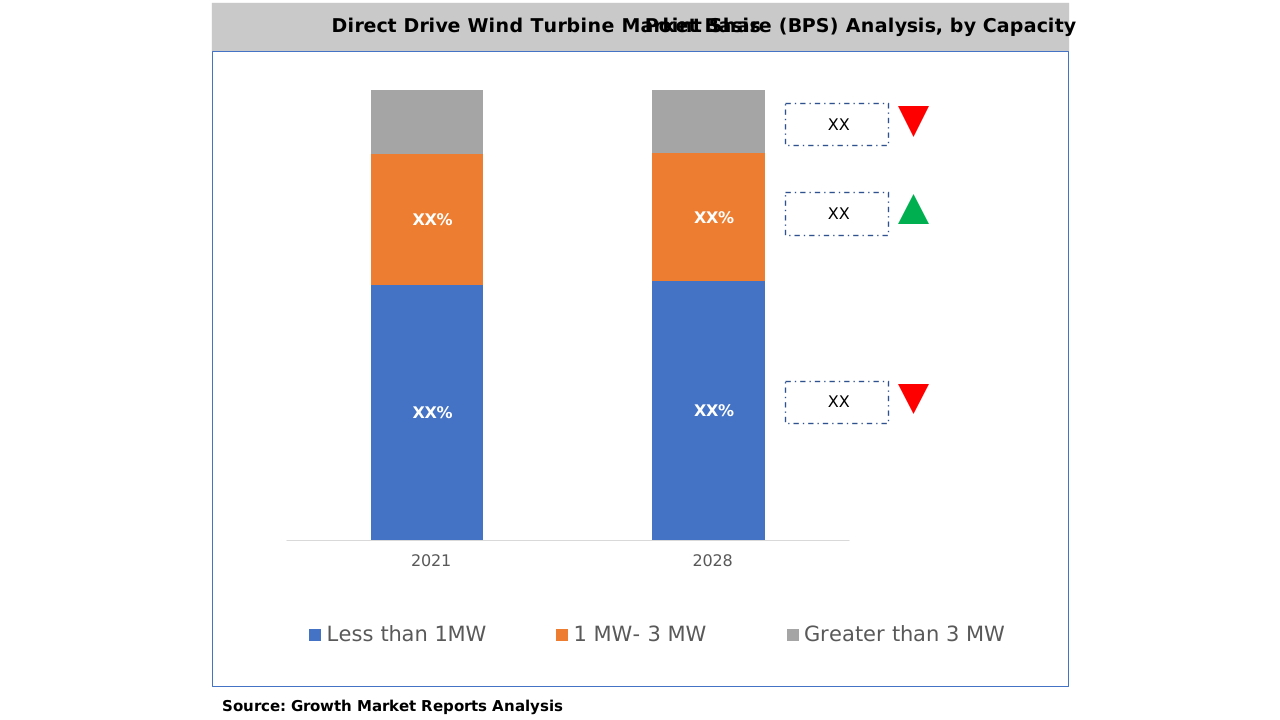
The capacity segment of the direct drive wind turbine market is categorized into Less than 1 MW, 1–3 MW, and Above 3 MW. Turbines with capacities of less than 1 MW are primarily deployed in small-scale, distributed wind applications, such as rural electrification projects and remote communities. These turbines are valued for their simple installation, minimal infrastructure requirements, and ability to operate in low-wind-speed environments. However, their market share remains relatively modest compared to larger capacity segments, as utility-scale wind farms increasingly favor higher-capacity turbines for greater energy output and economies of scale. Despite this, the less than 1 MW segment continues to serve niche markets where grid access is limited or decentralized power generation is prioritized.

The 1–3 MW capacity range represents a significant portion of the direct drive wind turbine market, as these turbines strike a balance between installation flexibility and energy production. This segment is widely adopted in both onshore and offshore wind projects, particularly in regions with moderate wind resources and grid infrastructure constraints. The 1–3 MW turbines are favored by independent power producers and utilities seeking reliable, medium-scale solutions that offer competitive levelized cost of energy (LCOE). Manufacturers in this segment are focusing on modular designs, ease of transport, and rapid deployment capabilities to address diverse project requirements and reduce installation timelines.

Turbines with capacities above 3 MW are dominating new installations, especially in large-scale onshore and offshore wind farms. This segment is witnessing substantial growth due to the industry’s shift towards higher power outputs for maximizing energy capture and improving project economics. Direct drive wind turbines above 3 MW are equipped with advanced permanent magnet generators and larger rotor diameters, enabling higher capacity factors and reduced cost per megawatt-hour. The segment is particularly prominent in offshore wind projects, where space constraints and high wind speeds favor the deployment of large, high-capacity machines. As a result, the above 3 MW segment is expected to register the highest CAGR during the forecast period, driven by ongoing technological advancements and the global trend towards utility-scale renewable energy projects.

Market participants are increasingly investing in research and development to enhance the efficiency and scalability of direct drive wind turbines across all capacity segments. Innovations in generator design, control systems, and grid integration are enabling manufacturers to offer customized solutions tailored to specific site conditions and regulatory requirements. The competitive landscape within the capacity segment is characterized by strategic collaborations, joint ventures, and technology licensing agreements aimed at expanding product portfolios and capturing emerging market opportunities. As the market evolves, the ability to offer a comprehensive range of capacity options will be a key differentiator for leading manufacturers.

Report Scope

Attributes Details
Report Title Direct Drive Wind Turbine Market Research Report 2033
By Capacity Less than 1 MW, 1–3 MW, Above 3 MW
By Application Onshore, Offshore
By Rotor Diameter Less than 60 m, 60–100 m, Above 100 m
By End-User Utilities, Independent Power Producers, Others
Regions Covered North America, Europe, APAC, Latin America, MEA
Base Year 2024
Historic Data 2018-2023
Forecast Period 2025-2033
Number of Pages 295
Number of Tables & Figures 327
Customization Available Yes, the report can be customized as per your need.

Application Analysis

The application segment of the direct drive wind turbine market is broadly divided into onshore and offshore installations. Onshore wind farms continue to account for the majority of global installations, owing to their relatively lower capital costs, established supply chains, and ease of access for maintenance activities. Direct drive wind turbines are increasingly favored in onshore applications due to their reduced maintenance requirements and enhanced reliability, which are critical for maximizing uptime and minimizing operational expenses. The onshore segment is witnessing steady growth, particularly in regions with abundant wind resources, supportive regulatory frameworks, and increasing demand for clean energy.

Offshore wind is emerging as a key growth area for the direct drive wind turbine market, driven by the need to tap into high-capacity wind resources located far from shorelines. Offshore wind projects present unique technical and logistical challenges, including harsh environmental conditions, complex installation processes, and limited access for routine maintenance. Direct drive technology addresses these challenges by offering robust, low-maintenance solutions that can withstand the demanding offshore environment. The absence of gearboxes in direct drive turbines significantly reduces the risk of mechanical failures and the associated costs of offshore maintenance, making them the preferred choice for large-scale offshore wind farms.

The rapid expansion of offshore wind capacity, particularly in Europe and Asia Pacific, is fueling demand for high-capacity direct drive turbines with advanced features such as remote monitoring, predictive maintenance, and grid-friendly power electronics. Governments in these regions are providing substantial financial incentives, streamlined permitting processes, and long-term power purchase agreements to accelerate offshore wind development. As a result, the offshore segment is expected to outpace onshore growth in terms of CAGR over the forecast period, contributing significantly to the overall market expansion.

Despite the higher initial capital investment required for offshore wind projects, the long-term benefits of direct drive wind turbines—including reduced maintenance costs, higher availability, and improved energy yield—are driving widespread adoption. The application segment is also witnessing increased interest in hybrid projects that combine onshore and offshore wind generation with other renewable energy sources such as solar and battery storage. These integrated solutions are enhancing grid stability, optimizing resource utilization, and supporting the transition to a low-carbon energy future.

Rotor Diameter Analysis

Rotor diameter is a critical design parameter in the direct drive wind turbine market, with segments classified as less than 60 m, 60–100 m, and above 100 m. Turbines with rotor diameters of less than 60 meters are typically deployed in small-scale, distributed wind applications and sites with limited space or lower wind speeds. While these turbines offer advantages in terms of compactness and ease of installation, their energy capture potential is inherently limited compared to larger rotor designs. Nevertheless, this segment continues to serve specific market niches, particularly in emerging economies and remote locations where grid connectivity and infrastructure development are ongoing challenges.

The 60–100 meter rotor diameter segment represents a significant share of the direct drive wind turbine market, as it encompasses a wide range of medium-scale turbines suitable for both onshore and offshore applications. These turbines strike a balance between energy capture, structural integrity, and cost-effectiveness, making them a popular choice for projects with moderate wind resources and space constraints. Manufacturers are continuously optimizing blade designs, materials, and aerodynamics to enhance performance and reduce noise emissions, thereby increasing the competitiveness of this segment in diverse market environments.

Turbines with rotor diameters above 100 meters are at the forefront of technological innovation in the wind energy sector, particularly in the context of large-scale, high-capacity installations. The trend towards larger rotor diameters is driven by the need to maximize energy yield, especially in low-wind-speed sites and offshore locations where land or sea area is at a premium. Direct drive wind turbines with rotors exceeding 100 meters offer significant advantages in terms of higher capacity factors, improved efficiency, and reduced cost per unit of electricity generated. This segment is experiencing rapid growth as developers seek to optimize project economics and meet stringent renewable energy targets.

The rotor diameter segment is also witnessing advancements in blade manufacturing technologies, such as the use of lightweight composites, modular blade designs, and automated production processes. These innovations are enabling the deployment of larger, more efficient rotors while minimizing transportation and installation challenges. As the industry moves towards even larger turbines, the ability to deliver reliable, high-performance direct drive systems with advanced rotor designs will be a key differentiator for market leaders.

End-User Analysis

The end-user segment of the direct drive wind turbine market is categorized into utilities, independent power producers (IPPs), and others. Utilities represent a dominant share of the market, as they are the primary developers and operators of large-scale wind farms integrated into national and regional power grids. Utilities are increasingly investing in direct drive wind turbines to enhance grid stability, meet renewable energy mandates, and reduce their carbon footprint. The scalability, reliability, and cost-effectiveness of direct drive technology make it an attractive option for utility-scale projects, particularly in markets with ambitious clean energy targets and supportive regulatory frameworks.

Independent power producers (IPPs) are also playing a crucial role in the growth of the direct drive wind turbine market. IPPs are typically private entities that develop, own, and operate wind projects, selling electricity to utilities or directly to end-users through power purchase agreements. The flexibility, modularity, and low maintenance requirements of direct drive wind turbines align well with the business models of IPPs, enabling them to optimize project returns and minimize operational risks. The increasing participation of IPPs in both onshore and offshore wind markets is driving competition, innovation, and the adoption of advanced turbine technologies.

The “others” category includes a diverse range of end-users such as commercial and industrial enterprises, community wind projects, and government agencies. These stakeholders are increasingly investing in direct drive wind turbines to achieve energy independence, reduce operating costs, and demonstrate environmental leadership. Community wind projects, in particular, are gaining traction in regions with supportive policies, local ownership models, and strong public engagement in renewable energy initiatives. The ability to customize direct drive wind turbine solutions to meet the unique needs of different end-users is contributing to the overall market expansion.

Manufacturers are responding to the evolving needs of end-users by offering a range of value-added services, including project financing, turnkey installation, remote monitoring, and predictive maintenance. These services are enhancing the value proposition of direct drive wind turbines and supporting long-term customer relationships. As the market matures, end-users are increasingly prioritizing lifecycle performance, total cost of ownership, and environmental impact in their procurement decisions, driving further innovation and differentiation among market players.

Opportunities & Threats

The direct drive wind turbine market presents a multitude of opportunities driven by the accelerating transition towards renewable energy and the global commitment to carbon neutrality. One of the most significant opportunities lies in the rapid expansion of offshore wind capacity, particularly in Europe and Asia Pacific. As countries set ambitious offshore wind targets and invest in large-scale projects, the demand for reliable, low-maintenance direct drive turbines is expected to surge. Additionally, advancements in digitalization, predictive analytics, and remote monitoring are enabling operators to optimize turbine performance, reduce downtime, and extend asset lifespans. The integration of direct drive wind turbines with energy storage solutions and hybrid renewable energy systems also represents a promising growth avenue, supporting grid stability and enabling greater penetration of variable renewable energy sources.

Another major opportunity is the increasing adoption of direct drive wind turbines in emerging markets, where rising energy demand, favorable wind resources, and supportive government policies are creating a conducive environment for renewable energy investments. Countries in Latin America, the Middle East, and Africa are actively seeking to diversify their energy mix, reduce reliance on fossil fuels, and harness their abundant wind potential. The scalability and adaptability of direct drive technology make it well-suited for deployment in diverse geographic and climatic conditions. Furthermore, ongoing research and development efforts aimed at reducing the cost of permanent magnets, improving generator efficiency, and enhancing blade manufacturing processes are expected to drive further market growth and competitiveness.

Despite these opportunities, the direct drive wind turbine market faces certain restraining factors that could impact its growth trajectory. One of the primary challenges is the relatively high initial capital investment required for direct drive systems, particularly in comparison to traditional geared turbines. The use of rare earth materials in permanent magnet generators can also pose supply chain risks and cost volatility, especially in the face of geopolitical uncertainties and fluctuating commodity prices. Additionally, the complexity of integrating large-scale wind projects into existing grid infrastructure, coupled with regulatory uncertainties and permitting delays, can hinder project development and deployment timelines. Addressing these challenges will require coordinated efforts from industry stakeholders, policymakers, and technology providers to ensure the sustainable growth of the direct drive wind turbine market.

Regional Outlook

The Asia Pacific region is the largest and fastest-growing market for direct drive wind turbines, accounting for approximately 41% of the global market share in 2024, with a market value of nearly USD 6.6 billion. China leads the region, driven by aggressive renewable energy targets, substantial investments in wind power infrastructure, and a robust domestic manufacturing ecosystem. India is also emerging as a key player, with increasing government support for wind energy projects and a growing focus on grid integration. The Asia Pacific market is expected to maintain a high CAGR throughout the forecast period, supported by favorable policies, expanding project pipelines, and the need to address rising electricity demand in urban and rural areas.

Europe represents the second-largest regional market, with a market size of USD 5.2 billion in 2024 and a strong presence of offshore wind installations. The region is home to several leading wind turbine manufacturers, advanced research and development centers, and a mature supply chain network. Countries such as the United Kingdom, Germany, Denmark, and the Netherlands are at the forefront of offshore wind deployment, leveraging direct drive technology to maximize energy yield and minimize maintenance costs in challenging marine environments. The European market is expected to grow at a steady CAGR, driven by stringent emissions reduction targets, supportive regulatory frameworks, and ongoing investments in grid modernization and interconnection.

North America, with a market value of USD 3.1 billion in 2024, is witnessing increasing adoption of direct drive wind turbines, particularly in the United States and Canada. The region benefits from abundant wind resources, progressive state-level renewable energy mandates, and a growing focus on energy security and decarbonization. The United States is leading the regional market, supported by federal tax incentives, declining technology costs, and a robust project development pipeline. Latin America and the Middle East & Africa collectively account for the remaining market share, with a combined value of USD 1.3 billion in 2024. These regions are experiencing growing interest in wind energy as a means to diversify energy sources, reduce greenhouse gas emissions, and support sustainable economic development. The regional outlook for the direct drive wind turbine market remains highly positive, with significant growth potential across all major geographic areas.

Direct Drive Wind Turbine Market Statistics

Competitor Outlook

The competitive landscape of the direct drive wind turbine market is characterized by intense rivalry among leading global manufacturers, continuous technological innovation, and strategic partnerships aimed at expanding market presence. Companies are investing heavily in research and development to enhance turbine efficiency, reliability, and scalability, with a particular focus on permanent magnet generator technology, advanced blade designs, and digital monitoring solutions. The market is also witnessing increased consolidation, as larger players acquire or partner with smaller firms to strengthen their product portfolios and gain access to emerging markets. The ability to offer comprehensive, end-to-end solutions—including project financing, installation, and after-sales services—is becoming a key differentiator in the increasingly competitive market environment.

Major players are actively pursuing international expansion strategies, leveraging their technological expertise and global supply chains to capture new growth opportunities. Strategic collaborations with utilities, independent power producers, and government agencies are enabling manufacturers to participate in large-scale wind projects and secure long-term contracts. The ongoing shift towards larger, higher-capacity turbines and offshore installations is driving further innovation, as companies strive to meet the evolving needs of project developers and end-users. Intellectual property protection, standardization, and compliance with international quality and safety standards are critical factors influencing competitive dynamics in the market.

The competitive landscape is also being shaped by the emergence of new entrants, particularly from Asia Pacific, who are leveraging cost advantages, local market knowledge, and government support to challenge established players. These companies are focusing on low-cost manufacturing, product customization, and rapid deployment capabilities to gain a foothold in both domestic and international markets. At the same time, established manufacturers are responding by expanding their local presence, investing in workforce development, and enhancing customer engagement through digital platforms and value-added services.

Some of the major companies operating in the direct drive wind turbine market include Siemens Gamesa Renewable Energy, Goldwind, Enercon, GE Renewable Energy, and Mingyang Smart Energy. Siemens Gamesa Renewable Energy is a global leader in offshore wind technology, renowned for its advanced direct drive turbines and extensive project portfolio. Goldwind, based in China, is a key player in both domestic and international markets, with a strong focus on permanent magnet direct drive technology. Enercon, headquartered in Germany, is recognized for its innovative direct drive designs, robust engineering, and commitment to sustainability. GE Renewable Energy is leveraging its global reach and technological expertise to deliver high-performance direct drive solutions for onshore and offshore applications. Mingyang Smart Energy is rapidly expanding its presence in the offshore wind sector, with a growing portfolio of large-capacity direct drive turbines.

These companies are continuously expanding their product offerings, investing in advanced manufacturing facilities, and forming strategic alliances to strengthen their market positions. The competitive landscape is expected to remain dynamic, with ongoing innovation, market entry by new players, and increasing emphasis on sustainability, digitalization, and customer-centric solutions shaping the future of the direct drive wind turbine market.

Key Players

  • Siemens Gamesa Renewable Energy
  • GE Renewable Energy
  • Goldwind
  • Enercon
  • Vestas
  • Mingyang Smart Energy
  • Suzlon Energy
  • Senvion
  • Nordex Group
  • Envision Energy
  • Shanghai Electric
  • Hitachi Energy
  • Doosan Heavy Industries & Construction
  • MHI Vestas Offshore Wind
  • XEMC Windpower
  • AVANTIS Energy Group
  • Leitwind
  • Inox Wind
  • Sinovel Wind Group
  • Wind World India
Direct Drive Wind Turbine Market Overview

Segments

The Direct Drive Wind Turbine market has been segmented on the basis of

Capacity

  • Less than 1 MW
  • 1–3 MW
  • Above 3 MW

Application

  • Onshore
  • Offshore

Rotor Diameter

  • Less than 60 m
  • 60–100 m
  • Above 100 m

End-User

  • Utilities
  • Independent Power Producers
  • Others

Competitive Landscape

The major players in the direct drive wind turbine market include ABB Ltd., Siemens Gamesa Renewable Energy SA, Rockwell Automation Inc, Bachmann electronic GmbH, Avantis Energy Group, Goldwind Science & Technology Co. Ltd., Emergya Wind Technologies B.V.

Companies are engaging in mergers, acquisitions and partnerships to expand their market share. Participants in the industry are expected to concentrate on the development of direct drive technologies that are more efficient, flexible, and reliable.
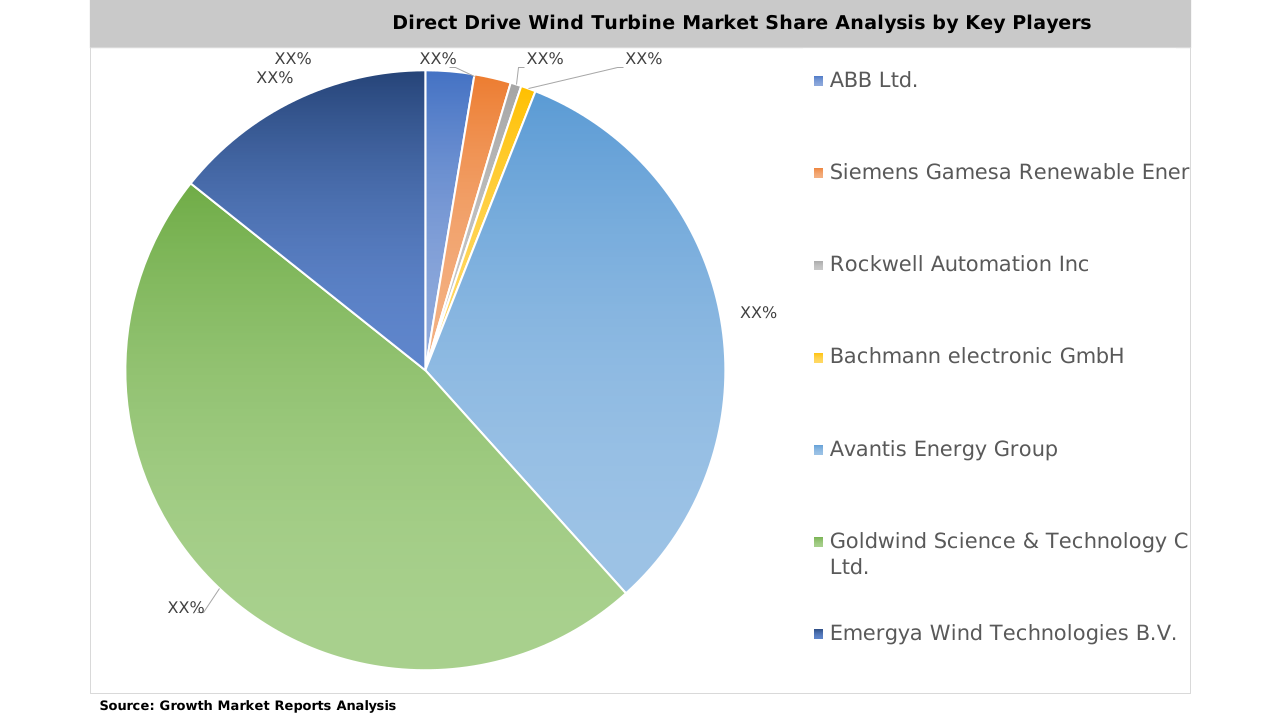

Direct Drive Wind Turbine Market keyplayers

Frequently Asked Questions

The report offers customization to meet specific client needs, including detailed analysis by capacity, application, rotor diameter, end-user, and region.

Challenges include high initial capital costs, reliance on rare earth materials for permanent magnets, supply chain risks, regulatory uncertainties, and complexities in integrating large-scale projects into existing grids.

Key companies include Siemens Gamesa Renewable Energy, GE Renewable Energy, Goldwind, Enercon, Mingyang Smart Energy, Vestas, Suzlon Energy, Senvion, Nordex Group, and Envision Energy.

Innovations in permanent magnet generators, lightweight composite materials, digital monitoring, and predictive maintenance tools are enabling larger, more efficient turbines with improved grid compatibility.

Direct drive turbines are favored offshore due to their high reliability, reduced maintenance needs, and ability to withstand harsh marine environments, which helps lower operational risks and costs.

The market is segmented into turbines with capacities less than 1 MW (for small-scale applications), 1–3 MW (widely used for both onshore and offshore projects), and above 3 MW (dominating large-scale and offshore installations).

Asia Pacific is the largest and fastest-growing market, led by China and India. Europe follows with a strong offshore wind market, and North America is also seeing significant growth, especially in the United States.

Key growth drivers include increasing demand for renewable energy, advancements in wind turbine technologies, supportive government policies, grid modernization, and the need to reduce carbon emissions.

The global direct drive wind turbine market reached USD 16.2 billion in 2024 and is expected to grow at a CAGR of 8.7% from 2025 to 2033, reaching USD 34.2 billion by 2033.

A direct drive wind turbine eliminates the need for a gearbox, connecting the rotor directly to the generator. This design reduces the number of moving parts, lowers maintenance costs, and improves reliability compared to traditional geared turbines, which are more prone to mechanical failures.

Table Of Content

Chapter 1 Executive Summary
Chapter 2 Assumptions and Acronyms Used
Chapter 3 Research Methodology
Chapter 4 Direct Drive Wind Turbine Market Overview
   4.1 Introduction
      4.1.1 Market Taxonomy
      4.1.2 Market Definition
      4.1.3 Macro-Economic Factors Impacting the Market Growth
   4.2 Direct Drive Wind Turbine Market Dynamics
      4.2.1 Market Drivers
      4.2.2 Market Restraints
      4.2.3 Market Opportunity
   4.3 Direct Drive Wind Turbine Market - Supply Chain Analysis
      4.3.1 List of Key Suppliers
      4.3.2 List of Key Distributors
      4.3.3 List of Key Consumers
   4.4 Key Forces Shaping the Direct Drive Wind Turbine Market
      4.4.1 Bargaining Power of Suppliers
      4.4.2 Bargaining Power of Buyers
      4.4.3 Threat of Substitution
      4.4.4 Threat of New Entrants
      4.4.5 Competitive Rivalry
   4.5 Global Direct Drive Wind Turbine Market Size & Forecast, 2023-2032
      4.5.1 Direct Drive Wind Turbine Market Size and Y-o-Y Growth
      4.5.2 Direct Drive Wind Turbine Market Absolute $ Opportunity

Chapter 5 Global Direct Drive Wind Turbine Market Analysis and Forecast By Capacity
   5.1 Introduction
      5.1.1 Key Market Trends & Growth Opportunities By Capacity
      5.1.2 Basis Point Share (BPS) Analysis By Capacity
      5.1.3 Absolute $ Opportunity Assessment By Capacity
   5.2 Direct Drive Wind Turbine Market Size Forecast By Capacity
      5.2.1 Less than 1 MW
      5.2.2 1–3 MW
      5.2.3 Above 3 MW
   5.3 Market Attractiveness Analysis By Capacity

Chapter 6 Global Direct Drive Wind Turbine Market Analysis and Forecast By Application
   6.1 Introduction
      6.1.1 Key Market Trends & Growth Opportunities By Application
      6.1.2 Basis Point Share (BPS) Analysis By Application
      6.1.3 Absolute $ Opportunity Assessment By Application
   6.2 Direct Drive Wind Turbine Market Size Forecast By Application
      6.2.1 Onshore
      6.2.2 Offshore
   6.3 Market Attractiveness Analysis By Application

Chapter 7 Global Direct Drive Wind Turbine Market Analysis and Forecast By Rotor Diameter
   7.1 Introduction
      7.1.1 Key Market Trends & Growth Opportunities By Rotor Diameter
      7.1.2 Basis Point Share (BPS) Analysis By Rotor Diameter
      7.1.3 Absolute $ Opportunity Assessment By Rotor Diameter
   7.2 Direct Drive Wind Turbine Market Size Forecast By Rotor Diameter
      7.2.1 Less than 60 m
      7.2.2 60–100 m
      7.2.3 Above 100 m
   7.3 Market Attractiveness Analysis By Rotor Diameter

Chapter 8 Global Direct Drive Wind Turbine Market Analysis and Forecast By End-User
   8.1 Introduction
      8.1.1 Key Market Trends & Growth Opportunities By End-User
      8.1.2 Basis Point Share (BPS) Analysis By End-User
      8.1.3 Absolute $ Opportunity Assessment By End-User
   8.2 Direct Drive Wind Turbine Market Size Forecast By End-User
      8.2.1 Utilities
      8.2.2 Independent Power Producers
      8.2.3 Others
   8.3 Market Attractiveness Analysis By End-User

Chapter 9 Global Direct Drive Wind Turbine Market Analysis and Forecast by Region
   9.1 Introduction
      9.1.1 Key Market Trends & Growth Opportunities By Region
      9.1.2 Basis Point Share (BPS) Analysis By Region
      9.1.3 Absolute $ Opportunity Assessment By Region
   9.2 Direct Drive Wind Turbine Market Size Forecast By Region
      9.2.1 North America
      9.2.2 Europe
      9.2.3 Asia Pacific
      9.2.4 Latin America
      9.2.5 Middle East & Africa (MEA)
   9.3 Market Attractiveness Analysis By Region

Chapter 10 Coronavirus Disease (COVID-19) Impact 
   10.1 Introduction 
   10.2 Current & Future Impact Analysis 
   10.3 Economic Impact Analysis 
   10.4 Government Policies 
   10.5 Investment Scenario

Chapter 11 North America Direct Drive Wind Turbine Analysis and Forecast
   11.1 Introduction
   11.2 North America Direct Drive Wind Turbine Market Size Forecast by Country
      11.2.1 U.S.
      11.2.2 Canada
   11.3 Basis Point Share (BPS) Analysis by Country
   11.4 Absolute $ Opportunity Assessment by Country
   11.5 Market Attractiveness Analysis by Country
   11.6 North America Direct Drive Wind Turbine Market Size Forecast By Capacity
      11.6.1 Less than 1 MW
      11.6.2 1–3 MW
      11.6.3 Above 3 MW
   11.7 Basis Point Share (BPS) Analysis By Capacity 
   11.8 Absolute $ Opportunity Assessment By Capacity 
   11.9 Market Attractiveness Analysis By Capacity
   11.10 North America Direct Drive Wind Turbine Market Size Forecast By Application
      11.10.1 Onshore
      11.10.2 Offshore
   11.11 Basis Point Share (BPS) Analysis By Application 
   11.12 Absolute $ Opportunity Assessment By Application 
   11.13 Market Attractiveness Analysis By Application
   11.14 North America Direct Drive Wind Turbine Market Size Forecast By Rotor Diameter
      11.14.1 Less than 60 m
      11.14.2 60–100 m
      11.14.3 Above 100 m
   11.15 Basis Point Share (BPS) Analysis By Rotor Diameter 
   11.16 Absolute $ Opportunity Assessment By Rotor Diameter 
   11.17 Market Attractiveness Analysis By Rotor Diameter
   11.18 North America Direct Drive Wind Turbine Market Size Forecast By End-User
      11.18.1 Utilities
      11.18.2 Independent Power Producers
      11.18.3 Others
   11.19 Basis Point Share (BPS) Analysis By End-User 
   11.20 Absolute $ Opportunity Assessment By End-User 
   11.21 Market Attractiveness Analysis By End-User

Chapter 12 Europe Direct Drive Wind Turbine Analysis and Forecast
   12.1 Introduction
   12.2 Europe Direct Drive Wind Turbine Market Size Forecast by Country
      12.2.1 Germany
      12.2.2 France
      12.2.3 Italy
      12.2.4 U.K.
      12.2.5 Spain
      12.2.6 Russia
      12.2.7 Rest of Europe
   12.3 Basis Point Share (BPS) Analysis by Country
   12.4 Absolute $ Opportunity Assessment by Country
   12.5 Market Attractiveness Analysis by Country
   12.6 Europe Direct Drive Wind Turbine Market Size Forecast By Capacity
      12.6.1 Less than 1 MW
      12.6.2 1–3 MW
      12.6.3 Above 3 MW
   12.7 Basis Point Share (BPS) Analysis By Capacity 
   12.8 Absolute $ Opportunity Assessment By Capacity 
   12.9 Market Attractiveness Analysis By Capacity
   12.10 Europe Direct Drive Wind Turbine Market Size Forecast By Application
      12.10.1 Onshore
      12.10.2 Offshore
   12.11 Basis Point Share (BPS) Analysis By Application 
   12.12 Absolute $ Opportunity Assessment By Application 
   12.13 Market Attractiveness Analysis By Application
   12.14 Europe Direct Drive Wind Turbine Market Size Forecast By Rotor Diameter
      12.14.1 Less than 60 m
      12.14.2 60–100 m
      12.14.3 Above 100 m
   12.15 Basis Point Share (BPS) Analysis By Rotor Diameter 
   12.16 Absolute $ Opportunity Assessment By Rotor Diameter 
   12.17 Market Attractiveness Analysis By Rotor Diameter
   12.18 Europe Direct Drive Wind Turbine Market Size Forecast By End-User
      12.18.1 Utilities
      12.18.2 Independent Power Producers
      12.18.3 Others
   12.19 Basis Point Share (BPS) Analysis By End-User 
   12.20 Absolute $ Opportunity Assessment By End-User 
   12.21 Market Attractiveness Analysis By End-User

Chapter 13 Asia Pacific Direct Drive Wind Turbine Analysis and Forecast
   13.1 Introduction
   13.2 Asia Pacific Direct Drive Wind Turbine Market Size Forecast by Country
      13.2.1 China
      13.2.2 Japan
      13.2.3 South Korea
      13.2.4 India
      13.2.5 Australia
      13.2.6 South East Asia (SEA)
      13.2.7 Rest of Asia Pacific (APAC)
   13.3 Basis Point Share (BPS) Analysis by Country
   13.4 Absolute $ Opportunity Assessment by Country
   13.5 Market Attractiveness Analysis by Country
   13.6 Asia Pacific Direct Drive Wind Turbine Market Size Forecast By Capacity
      13.6.1 Less than 1 MW
      13.6.2 1–3 MW
      13.6.3 Above 3 MW
   13.7 Basis Point Share (BPS) Analysis By Capacity 
   13.8 Absolute $ Opportunity Assessment By Capacity 
   13.9 Market Attractiveness Analysis By Capacity
   13.10 Asia Pacific Direct Drive Wind Turbine Market Size Forecast By Application
      13.10.1 Onshore
      13.10.2 Offshore
   13.11 Basis Point Share (BPS) Analysis By Application 
   13.12 Absolute $ Opportunity Assessment By Application 
   13.13 Market Attractiveness Analysis By Application
   13.14 Asia Pacific Direct Drive Wind Turbine Market Size Forecast By Rotor Diameter
      13.14.1 Less than 60 m
      13.14.2 60–100 m
      13.14.3 Above 100 m
   13.15 Basis Point Share (BPS) Analysis By Rotor Diameter 
   13.16 Absolute $ Opportunity Assessment By Rotor Diameter 
   13.17 Market Attractiveness Analysis By Rotor Diameter
   13.18 Asia Pacific Direct Drive Wind Turbine Market Size Forecast By End-User
      13.18.1 Utilities
      13.18.2 Independent Power Producers
      13.18.3 Others
   13.19 Basis Point Share (BPS) Analysis By End-User 
   13.20 Absolute $ Opportunity Assessment By End-User 
   13.21 Market Attractiveness Analysis By End-User

Chapter 14 Latin America Direct Drive Wind Turbine Analysis and Forecast
   14.1 Introduction
   14.2 Latin America Direct Drive Wind Turbine Market Size Forecast by Country
      14.2.1 Brazil
      14.2.2 Mexico
      14.2.3 Rest of Latin America (LATAM)
   14.3 Basis Point Share (BPS) Analysis by Country
   14.4 Absolute $ Opportunity Assessment by Country
   14.5 Market Attractiveness Analysis by Country
   14.6 Latin America Direct Drive Wind Turbine Market Size Forecast By Capacity
      14.6.1 Less than 1 MW
      14.6.2 1–3 MW
      14.6.3 Above 3 MW
   14.7 Basis Point Share (BPS) Analysis By Capacity 
   14.8 Absolute $ Opportunity Assessment By Capacity 
   14.9 Market Attractiveness Analysis By Capacity
   14.10 Latin America Direct Drive Wind Turbine Market Size Forecast By Application
      14.10.1 Onshore
      14.10.2 Offshore
   14.11 Basis Point Share (BPS) Analysis By Application 
   14.12 Absolute $ Opportunity Assessment By Application 
   14.13 Market Attractiveness Analysis By Application
   14.14 Latin America Direct Drive Wind Turbine Market Size Forecast By Rotor Diameter
      14.14.1 Less than 60 m
      14.14.2 60–100 m
      14.14.3 Above 100 m
   14.15 Basis Point Share (BPS) Analysis By Rotor Diameter 
   14.16 Absolute $ Opportunity Assessment By Rotor Diameter 
   14.17 Market Attractiveness Analysis By Rotor Diameter
   14.18 Latin America Direct Drive Wind Turbine Market Size Forecast By End-User
      14.18.1 Utilities
      14.18.2 Independent Power Producers
      14.18.3 Others
   14.19 Basis Point Share (BPS) Analysis By End-User 
   14.20 Absolute $ Opportunity Assessment By End-User 
   14.21 Market Attractiveness Analysis By End-User

Chapter 15 Middle East & Africa (MEA) Direct Drive Wind Turbine Analysis and Forecast
   15.1 Introduction
   15.2 Middle East & Africa (MEA) Direct Drive Wind Turbine Market Size Forecast by Country
      15.2.1 Saudi Arabia
      15.2.2 South Africa
      15.2.3 UAE
      15.2.4 Rest of Middle East & Africa (MEA)
   15.3 Basis Point Share (BPS) Analysis by Country
   15.4 Absolute $ Opportunity Assessment by Country
   15.5 Market Attractiveness Analysis by Country
   15.6 Middle East & Africa (MEA) Direct Drive Wind Turbine Market Size Forecast By Capacity
      15.6.1 Less than 1 MW
      15.6.2 1–3 MW
      15.6.3 Above 3 MW
   15.7 Basis Point Share (BPS) Analysis By Capacity 
   15.8 Absolute $ Opportunity Assessment By Capacity 
   15.9 Market Attractiveness Analysis By Capacity
   15.10 Middle East & Africa (MEA) Direct Drive Wind Turbine Market Size Forecast By Application
      15.10.1 Onshore
      15.10.2 Offshore
   15.11 Basis Point Share (BPS) Analysis By Application 
   15.12 Absolute $ Opportunity Assessment By Application 
   15.13 Market Attractiveness Analysis By Application
   15.14 Middle East & Africa (MEA) Direct Drive Wind Turbine Market Size Forecast By Rotor Diameter
      15.14.1 Less than 60 m
      15.14.2 60–100 m
      15.14.3 Above 100 m
   15.15 Basis Point Share (BPS) Analysis By Rotor Diameter 
   15.16 Absolute $ Opportunity Assessment By Rotor Diameter 
   15.17 Market Attractiveness Analysis By Rotor Diameter
   15.18 Middle East & Africa (MEA) Direct Drive Wind Turbine Market Size Forecast By End-User
      15.18.1 Utilities
      15.18.2 Independent Power Producers
      15.18.3 Others
   15.19 Basis Point Share (BPS) Analysis By End-User 
   15.20 Absolute $ Opportunity Assessment By End-User 
   15.21 Market Attractiveness Analysis By End-User

Chapter 16 Competition Landscape 
   16.1 Direct Drive Wind Turbine Market: Competitive Dashboard
   16.2 Global Direct Drive Wind Turbine Market: Market Share Analysis, 2023
   16.3 Company Profiles (Details – Overview, Financials, Developments, Strategy) 
      16.3.1 Siemens Gamesa Renewable Energy
GE Renewable Energy
Goldwind
Enercon
Vestas
Mingyang Smart Energy
Suzlon Energy
Senvion
Nordex Group
Envision Energy
Shanghai Electric
Hitachi Energy
Doosan Heavy Industries & Construction
MHI Vestas Offshore Wind
XEMC Windpower
AVANTIS Energy Group
Leitwind
Inox Wind
Sinovel Wind Group
Wind World India

Methodology

Our Clients

The John Holland Group
Honda Motor Co. Ltd.
Dassault Aviation
General Mills
Microsoft
Pfizer
Siemens Healthcare
sinopec