Segments - by Ad Format (In-Stream Ads, Out-Stream Ads, Interactive Video Ads, Shoppable Video Ads, Others), by Platform (Mobile, Desktop, Connected TV, Others), by End-User (Retail, Automotive, BFSI, Media & Entertainment, Healthcare, Travel & Hospitality, Others), by Deployment Mode (Programmatic, Non-Programmatic)
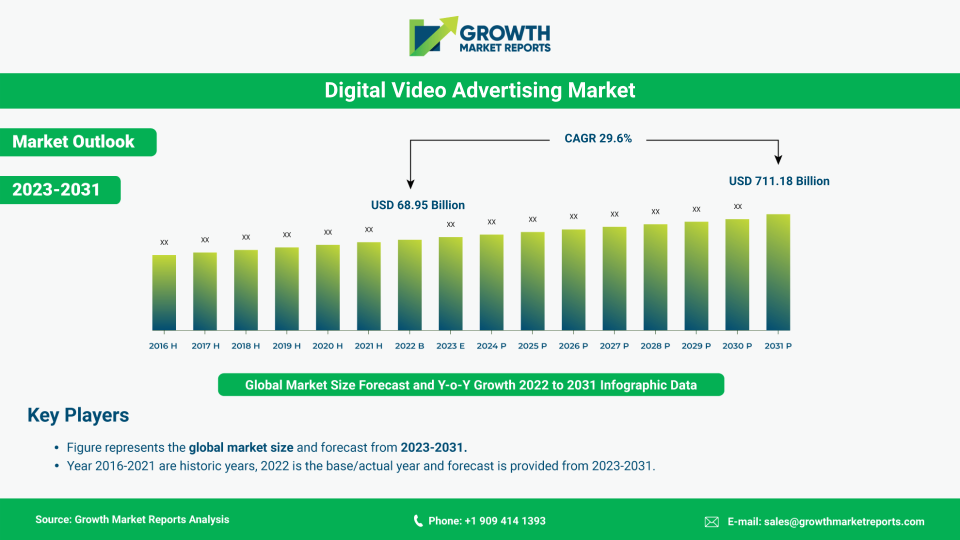
According to our latest research, the global digital video advertising market size reached USD 64.3 billion in 2024, reflecting robust adoption across industries and digital platforms. The market is expected to expand at a compound annual growth rate (CAGR) of 15.8% from 2025 to 2033, reaching a forecasted value of USD 196.1 billion by 2033. This remarkable growth trajectory is primarily driven by the proliferation of high-speed internet, increased smartphone penetration, and the rising shift of advertisers toward digital channels to engage audiences more efficiently.
A key growth factor for the digital video advertising market is the escalating consumption of online video content, fueled by the widespread adoption of streaming services and social media platforms. As consumers increasingly favor video over other content formats, advertisers are allocating larger portions of their budgets to digital video campaigns. The rise of short-form video content, live streaming, and interactive video formats has further intensified this trend, enabling brands to connect with audiences in more immersive and engaging ways. Additionally, advancements in data analytics and audience targeting have empowered advertisers to deliver highly personalized video ads, maximizing campaign effectiveness and return on investment.
Another significant driver is the evolution of programmatic advertising technologies, which have revolutionized the way video ads are bought and sold. Programmatic platforms leverage artificial intelligence and machine learning to automate the ad buying process, optimize targeting, and enhance real-time bidding efficiency. This has resulted in improved transparency, reduced costs, and increased scalability for advertisers. The integration of shoppable video ads and interactive formats has also opened new avenues for direct consumer engagement and conversion, making digital video advertising an indispensable tool for performance-driven marketing strategies.
The rapid expansion of connected TV (CTV) and over-the-top (OTT) platforms has further catalyzed the growth of the digital video advertising market. With more households cutting the cord and shifting to streaming services, advertisers are capitalizing on the opportunity to reach audiences on large screens in a non-linear, on-demand environment. CTV offers advanced targeting capabilities and access to premium inventory, attracting both brand and performance marketers. The convergence of TV and digital channels has blurred traditional boundaries, enabling seamless cross-platform video campaigns that drive higher engagement and measurable results.
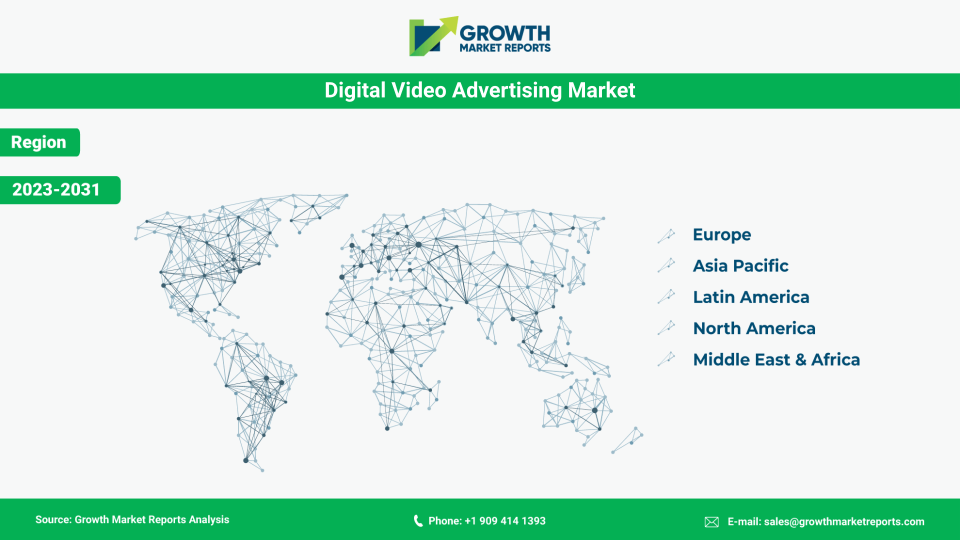
From a regional perspective, North America continues to dominate the digital video advertising market, accounting for the largest revenue share in 2024. However, Asia Pacific is experiencing the fastest growth, driven by surging internet adoption, increasing smartphone usage, and the rapid digital transformation of emerging economies such as India, China, and Southeast Asian countries. Europe and Latin America are also witnessing steady growth, supported by expanding broadband infrastructure and the growing popularity of digital entertainment. The Middle East & Africa region, while still nascent, is showing promising potential as digital connectivity improves and advertisers recognize the value of video-based engagement.
Contextual Video Advertising is emerging as a pivotal strategy in the digital video advertising landscape. This approach leverages the context of the content being consumed by the audience to deliver highly relevant and timely video advertisements. By analyzing the surrounding content, such as the topic of a webpage or the nature of a video, advertisers can tailor their messages to align with the viewer's current interests and needs. This method not only enhances the viewer experience by making ads less intrusive but also increases the likelihood of engagement and conversion. As consumers become more discerning and demand more personalized experiences, contextual video advertising offers a way to meet these expectations while optimizing ad spend efficiency. The integration of contextual insights with advanced targeting technologies is setting new standards for precision in digital advertising, making it an indispensable tool for marketers aiming to maximize their impact in a crowded digital space.
The digital video advertising market is segmented by ad format, including in-stream ads, out-stream ads, interactive video ads, shoppable video ads, and others. In-stream ads, which play before, during, or after video content, remain the most dominant format in 2024, accounting for the largest share of market revenue. Their success is attributed to their seamless integration within the userÂ’s viewing experience, which leads to higher completion rates and improved brand recall. Brands leverage in-stream ads on platforms like YouTube, Facebook, and connected TV apps to reach vast audiences with targeted messaging, capitalizing on the high engagement rates associated with video content consumption.
Out-stream ads are gaining traction as publishers seek to monetize video inventory beyond traditional video players. These ads appear in non-video environments, such as within articles or social feeds, and automatically play when they come into view. Out-stream formats offer advertisers expanded reach across web and mobile environments, allowing them to engage users who may not be actively seeking video content. The non-intrusive nature of out-stream ads and their adaptability to various contexts make them an attractive option for brands aiming to increase visibility without disrupting the user experience.
Interactive video ads represent a rapidly growing segment within the digital video advertising market. These formats enable viewers to engage directly with the ad content by clicking, swiping, or making choices that influence the narrative. Interactive ads drive higher engagement and dwell times, providing valuable data on user preferences and behaviors. Brands in sectors such as retail, automotive, and entertainment are increasingly adopting interactive video ads to create memorable experiences, encourage participation, and drive actions such as product exploration or lead generation.
Shoppable video ads are transforming the way consumers discover and purchase products online. By embedding clickable elements within video content, these ads allow viewers to shop directly from the ad itself, streamlining the path to purchase. Shoppable video ads are particularly effective in retail and fashion, where visual storytelling and instant gratification play critical roles in influencing buying decisions. The ability to measure conversion rates and attribute sales directly to video campaigns is driving increased investment in this format, further fueling the growth of the digital video advertising market.
Other ad formats, including vertical video ads, bumper ads, and 360-degree video ads, are also contributing to market expansion. These formats cater to evolving consumer preferences and device usage patterns, enabling brands to deliver tailored experiences across different platforms and screen sizes. As technology continues to advance, the digital video advertising market is expected to witness further innovation in ad formats, enhancing both user engagement and advertiser ROI.
| Attributes | Details |
| Report Title | Digital Video Advertising Market Research Report 2033 |
| By Ad Format | In-Stream Ads, Out-Stream Ads, Interactive Video Ads, Shoppable Video Ads, Others |
| By Platform | Mobile, Desktop, Connected TV, Others |
| By End-User | Retail, Automotive, BFSI, Media & Entertainment, Healthcare, Travel & Hospitality, Others |
| By Deployment Mode | Programmatic, Non-Programmatic |
| Regions Covered | North America, Europe, APAC, Latin America, MEA |
| Base Year | 2024 |
| Historic Data | 2018-2023 |
| Forecast Period | 2025-2033 |
| Number of Pages | 278 |
| Number of Tables & Figures | 346 |
| Customization Available | Yes, the report can be customized as per your need. |
The digital video advertising market is segmented by platform into mobile, desktop, connected TV, and others. Mobile platforms account for the largest share of digital video ad impressions and spending in 2024, reflecting the ubiquity of smartphones and the shift towards mobile-first content consumption. Advertisers are prioritizing mobile-optimized video campaigns to capture the attention of on-the-go audiences, leveraging features such as vertical video, autoplay, and location-based targeting. Social media platforms like Instagram, TikTok, and Snapchat have become key battlegrounds for mobile video advertising, offering innovative formats and robust targeting capabilities.
Desktop platforms, while experiencing slower growth compared to mobile, continue to play a significant role in the digital video advertising ecosystem. Desktop video ads are favored for longer-form content, professional environments, and high-value B2B campaigns. The larger screen size and immersive viewing experience contribute to higher engagement rates, particularly for educational, financial, and technology-related content. Desktop platforms also provide advanced analytics and measurement tools, enabling advertisers to optimize campaign performance and maximize ROI.
Connected TV (CTV) is emerging as one of the fastest-growing platforms within the digital video advertising market, driven by the cord-cutting trend and the rise of streaming services such as Netflix, Hulu, and Disney+. CTV offers advertisers access to premium inventory and the ability to reach audiences in a lean-back, living room environment. The integration of programmatic technologies with CTV inventory has enabled precise targeting, frequency capping, and real-time optimization, making it a highly attractive channel for both brand and performance marketers. As CTV penetration continues to rise globally, it is expected to capture an increasing share of digital video ad budgets.
Other platforms, including gaming consoles, digital out-of-home (DOOH) screens, and emerging devices, are also contributing to the diversification of the digital video advertising landscape. Advertisers are exploring new touchpoints to engage consumers across their digital journeys, leveraging cross-device targeting and sequential storytelling to deliver cohesive brand messages. The proliferation of platforms and devices has increased the complexity of campaign management, prompting the adoption of unified measurement and attribution solutions to track performance across channels.
The convergence of platforms is driving the need for omnichannel strategies that deliver consistent and personalized video experiences. Advertisers are investing in creative optimization and dynamic ad insertion to tailor content to the unique characteristics of each platform, ensuring maximum impact and relevance. As consumer behavior continues to evolve, the digital video advertising market will increasingly prioritize platform-agnostic approaches that leverage data, technology, and creativity to drive results.
The digital video advertising market serves a diverse range of end-users, including retail, automotive, BFSI (banking, financial services, and insurance), media & entertainment, healthcare, travel & hospitality, and others. The retail sector is the largest end-user in 2024, leveraging digital video ads to drive brand awareness, product discovery, and direct sales. Retailers are increasingly adopting shoppable and interactive video formats to engage consumers, showcase products, and facilitate seamless transactions. The ability to track conversions and attribute sales to specific video campaigns has made digital video advertising a cornerstone of omnichannel retail strategies.
The automotive industry is another major contributor to the digital video advertising market, using video content to showcase vehicle features, demonstrate performance, and build emotional connections with potential buyers. Automotive brands are investing in high-impact video campaigns across platforms such as YouTube, connected TV, and social media to reach audiences at different stages of the purchase journey. Interactive and 360-degree video ads are particularly effective in this sector, allowing consumers to explore vehicles in detail and personalize their experiences.
BFSI organizations are leveraging digital video advertising to educate consumers, build trust, and promote financial products and services. Video ads are used to simplify complex concepts, highlight customer testimonials, and drive lead generation for banking, insurance, and investment offerings. The ability to target specific demographics and measure engagement metrics has made video advertising an essential tool for BFSI marketers seeking to differentiate their brands and drive customer acquisition.
Media & entertainment companies are at the forefront of digital video advertising innovation, using video ads to promote new releases, drive subscriptions, and monetize content. Streaming platforms, publishers, and broadcasters are increasingly adopting programmatic technologies to optimize ad delivery and maximize revenue. The integration of branded content, influencer collaborations, and native video ads has further enhanced audience engagement and advertiser value in this sector.
Other end-users, including healthcare, travel & hospitality, and education, are also embracing digital video advertising to reach and engage target audiences. Healthcare providers use video ads to promote wellness programs, share patient stories, and raise awareness of medical services. Travel and hospitality brands leverage immersive video content to inspire bookings and showcase destinations, while educational institutions use video ads to attract students and promote online courses. As more industries recognize the power of video to inform, persuade, and convert, the digital video advertising market is poised for continued expansion.
The digital video advertising market is segmented by deployment mode into programmatic and non-programmatic channels. Programmatic advertising has emerged as the dominant deployment mode in 2024, accounting for the majority of digital video ad spend. Programmatic platforms automate the buying, placement, and optimization of video ads using real-time data and artificial intelligence, enabling advertisers to reach the right audience at the right time with minimal manual intervention. The efficiency, scalability, and transparency offered by programmatic technologies have made them the preferred choice for advertisers seeking to maximize ROI and streamline campaign management.
Programmatic video advertising is characterized by advanced targeting capabilities, including demographic, behavioral, contextual, and geographic segmentation. Advertisers can leverage first-party and third-party data to create highly personalized video campaigns, optimizing creative assets and bidding strategies in real time. The integration of programmatic technologies with connected TV, mobile, and desktop platforms has enabled seamless cross-channel activation, driving higher engagement and conversion rates. As programmatic adoption continues to grow, the digital video advertising market is witnessing increased investment in data management platforms, demand-side platforms, and analytics solutions.
Non-programmatic deployment, which includes direct and manual ad placements, remains relevant for certain campaigns and premium inventory. Brands and agencies may opt for non-programmatic channels to secure guaranteed placements, maintain creative control, or access exclusive publisher partnerships. Non-programmatic buying is often favored for high-impact sponsorships, branded content integrations, and custom video experiences that require close collaboration between advertisers and publishers. While non-programmatic channels represent a smaller share of the market, they continue to play a vital role in delivering unique and tailored video advertising solutions.
The coexistence of programmatic and non-programmatic deployment modes reflects the diverse needs and objectives of advertisers in the digital video advertising market. As technology evolves and measurement standards improve, the boundaries between these modes are becoming increasingly blurred. Hybrid approaches that combine the efficiency of programmatic with the creativity and customization of direct buying are gaining popularity, enabling brands to achieve both scale and differentiation. The ongoing evolution of deployment modes is expected to drive further innovation and growth in the digital video advertising market.
Looking ahead, the continued advancement of artificial intelligence, machine learning, and blockchain technologies is set to transform the deployment of digital video ads. Advertisers are exploring new ways to enhance targeting accuracy, improve ad verification, and combat fraud, ensuring that video campaigns deliver maximum value in an increasingly complex and competitive landscape. The digital video advertising market will continue to prioritize transparency, accountability, and performance optimization across all deployment modes.
The digital video advertising market presents significant opportunities for growth and innovation, driven by the ongoing digital transformation of businesses and the increasing demand for immersive brand experiences. One of the most promising opportunities lies in the integration of advanced data analytics and artificial intelligence to enhance audience targeting and campaign optimization. By leveraging machine learning algorithms, advertisers can analyze vast amounts of consumer data to identify high-value segments, predict user behavior, and deliver personalized video ads that resonate with individual preferences. This data-driven approach not only improves ad relevance and engagement but also enables advertisers to achieve higher conversion rates and maximize return on investment.
Another key opportunity in the digital video advertising market is the expansion of cross-platform and omnichannel strategies. As consumers engage with content across multiple devices and touchpoints, advertisers are increasingly adopting holistic approaches that deliver consistent and cohesive video experiences. The rise of connected TV, digital out-of-home, and emerging platforms such as augmented reality and virtual reality presents new avenues for brand storytelling and audience engagement. By integrating video campaigns across channels and leveraging unified measurement solutions, advertisers can optimize reach, frequency, and impact, driving sustained growth in the digital video advertising market.
Despite the numerous opportunities, the digital video advertising market faces several restraining factors, with ad fraud and viewability challenges being among the most significant. The proliferation of invalid traffic, bots, and fraudulent practices undermines advertiser trust and erodes the effectiveness of video campaigns. Ensuring ad viewability, brand safety, and transparency remains a top priority for industry stakeholders. Advertisers are investing in ad verification technologies, third-party measurement solutions, and supply chain transparency initiatives to mitigate these risks and protect their investments. Addressing these challenges is critical to sustaining long-term growth and maintaining the integrity of the digital video advertising ecosystem.
North America leads the digital video advertising market, accounting for the largest share of global revenue in 2024, with an estimated market size of USD 23.8 billion. The region's dominance is attributed to the high penetration of digital devices, advanced advertising infrastructure, and the presence of major technology players. The United States, in particular, is at the forefront of innovation in programmatic video advertising, connected TV, and data-driven targeting. Marketers in North America are early adopters of emerging formats and platforms, driving continuous growth and setting industry benchmarks for creativity and effectiveness.
Asia Pacific is the fastest-growing region in the digital video advertising market, with a projected CAGR of 19.2% from 2025 to 2033. The region's market size reached USD 16.7 billion in 2024, fueled by rapid internet adoption, increasing smartphone usage, and the expansion of digital entertainment platforms. China, India, Japan, and Southeast Asian countries are witnessing exponential growth in online video consumption, prompting advertisers to allocate larger budgets to digital video campaigns. Localized content, mobile-first strategies, and the rise of social commerce are key drivers of market expansion in Asia Pacific, positioning the region as a major growth engine for the global digital video advertising market.
Europe holds a significant share of the digital video advertising market, with a market size of USD 12.9 billion in 2024. The region benefits from a mature digital ecosystem, widespread broadband access, and strong adoption of programmatic technologies. The United Kingdom, Germany, and France are leading markets, characterized by high levels of digital media consumption and sophisticated audience targeting capabilities. Latin America and the Middle East & Africa regions, while smaller in market size, are experiencing steady growth as digital infrastructure improves and advertisers recognize the value of video-based engagement. Latin America's market size stood at USD 6.3 billion, and the Middle East & Africa reached USD 4.6 billion in 2024, with both regions expected to see accelerated growth in the coming years.
The digital video advertising market is highly competitive, characterized by the presence of global technology giants, specialized ad tech companies, media agencies, and innovative startups. The competitive landscape is shaped by continuous technological advancements, evolving consumer preferences, and the increasing demand for data-driven and personalized advertising solutions. Leading players are investing heavily in research and development to enhance their platforms, expand their service offerings, and strengthen their market positions. Strategic partnerships, mergers, and acquisitions are common as companies seek to gain access to new technologies, audiences, and markets.
A key aspect of competition in the digital video advertising market is the ability to deliver superior targeting, measurement, and optimization capabilities. Companies are differentiating themselves by offering advanced analytics, real-time bidding, dynamic creative optimization, and cross-platform campaign management. The integration of artificial intelligence, machine learning, and blockchain technologies is enabling advertisers to achieve higher levels of efficiency, transparency, and accountability. As privacy regulations and consumer expectations evolve, market leaders are prioritizing data security, consent management, and ethical advertising practices to maintain trust and compliance.
The rise of connected TV, programmatic advertising, and interactive video formats has intensified competition among technology providers, publishers, and agencies. Companies are vying for premium inventory, exclusive partnerships, and innovative ad formats that deliver measurable results for advertisers. The ability to offer seamless cross-channel activation, unified measurement, and actionable insights is increasingly becoming a key differentiator in the market. As the digital video advertising landscape continues to evolve, companies that can adapt quickly to changing trends and deliver value-added solutions will be best positioned for long-term success.
Major companies operating in the digital video advertising market include Google (YouTube), Meta (Facebook and Instagram), Amazon Advertising, The Trade Desk, Adobe, Roku, Verizon Media, Magnite, PubMatic, and Innovid. Google dominates the market with its extensive ad network, advanced targeting capabilities, and integration with YouTube, the worldÂ’s largest video-sharing platform. Meta leverages its massive user base and sophisticated ad products to deliver highly personalized video campaigns across Facebook, Instagram, and Messenger. Amazon Advertising is rapidly expanding its video ad offerings, capitalizing on its e-commerce ecosystem and streaming services such as Prime Video and Freevee.
The Trade Desk is a leading independent demand-side platform, known for its programmatic video advertising solutions and cross-device targeting capabilities. Adobe offers a comprehensive suite of digital marketing tools, including video ad management, creative optimization, and analytics. Roku has established itself as a major player in the connected TV advertising space, providing access to premium streaming inventory and advanced audience targeting. Verizon Media, Magnite, and PubMatic are prominent supply-side platforms, enabling publishers to monetize video inventory and maximize yield. Innovid specializes in interactive and data-driven video ad solutions, helping brands create engaging and measurable campaigns.
These companies are continuously innovating to stay ahead in the dynamic digital video advertising market. Key strategies include expanding programmatic capabilities, enhancing creative personalization, investing in artificial intelligence, and forging strategic partnerships with content creators, publishers, and technology providers. As the market evolves, collaboration and innovation will be critical to capturing new opportunities and addressing emerging challenges, ensuring sustained growth and leadership in the global digital video advertising market.
The Digital Video Advertising market has been segmented on the basis of
Some of the key players competing in the market are PubMatic Inc., Conversant LLC, Longtail Ad Solutions Inc., Tremor International Ltd., Verizon Media, Viant Technology LLC, Buzzfeed Inc., and Vice Media group. Many of these players are actively engaged in the adoption of several market strategies such as mergers, product launches, collaborations, and capacity expansion to enhance their market share. For instance, PubMatic Inc. launched supply side platforms (SSP) to facilitate low-cost advertisement versions in 2019.

Future trends include increased use of artificial intelligence and machine learning for targeting and optimization, growth in interactive and shoppable video formats, and a focus on cross-platform and omnichannel strategies.
Major players include Google (YouTube), Meta (Facebook, Instagram), Amazon Advertising, The Trade Desk, Adobe, Roku, Verizon Media, Magnite, PubMatic, and Innovid.
Asia Pacific is the fastest-growing region, driven by rapid internet adoption and smartphone usage, while North America remains the largest market by revenue.
Major challenges include ad fraud, viewability issues, and the need for greater transparency and brand safety. Advertisers are investing in verification and measurement solutions to address these concerns.
Programmatic advertising has become the dominant deployment mode, automating ad buying and optimization, enabling advanced targeting, and increasing efficiency and transparency for advertisers.
Retail is the largest end-user, with significant adoption also seen in automotive, BFSI (banking, financial services, and insurance), media & entertainment, healthcare, and travel & hospitality.
Mobile platforms account for the largest share of digital video ad impressions and spending, followed by desktop and the rapidly growing connected TV (CTV) segment.
In-stream ads are the most dominant format, followed by out-stream ads, interactive video ads, shoppable video ads, and others such as vertical and bumper ads.
Key growth drivers include increased online video consumption, widespread adoption of streaming services and social media, advancements in data analytics and targeting, and the evolution of programmatic advertising technologies.
As of 2024, the global digital video advertising market reached USD 64.3 billion, with strong growth expected through 2033.