Segments - by Component (Hardware, Software, Services), by Type (Computer Forensics, Network Forensics, Mobile Device Forensics, Cloud Forensics, Database Forensics), by Application (Law Enforcement, Government and Defense, Banking, Financial Services and Insurance (BFSI), Healthcare, IT and Telecommunications, Retail, Others), by Deployment Mode (On-Premises, Cloud)
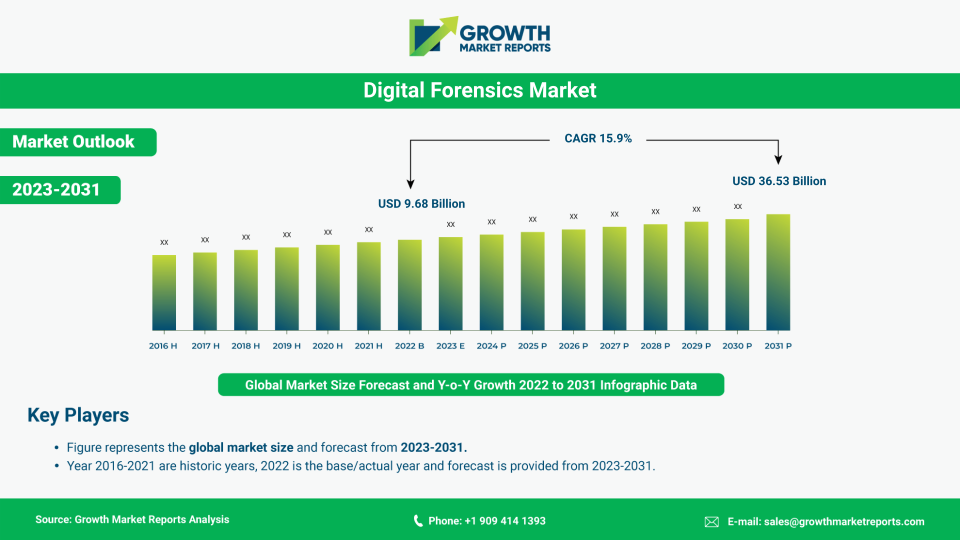
According to our latest research, the global digital forensics market size reached USD 8.7 billion in 2024. The sector is experiencing robust expansion, driven by the escalating sophistication of cyber threats, with a recorded compound annual growth rate (CAGR) of 11.2% from 2025 to 2033. By the end of 2033, the market is projected to attain a value of USD 22.7 billion. This significant growth trajectory is underpinned by the increasing digitization of business operations, the proliferation of connected devices, and the mounting need for advanced investigative solutions to combat cybercrime. As per our latest research, the digital forensics market is poised for sustained momentum, fueled by technological advancements and the critical importance of cybersecurity across multiple sectors.
The primary growth factor for the digital forensics market is the exponential rise in cybercrime incidents and the sophistication of cyberattacks targeting enterprises, government agencies, and individuals. As organizations digitize their operations and store sensitive information online, the attack surface for malicious actors widens, necessitating advanced digital forensic tools and services to investigate breaches, trace digital footprints, and support legal proceedings. Furthermore, regulatory mandates such as GDPR, HIPAA, and other data protection frameworks are compelling organizations to implement robust digital forensic capabilities to ensure compliance and accountability. The increasing frequency of ransomware attacks, data breaches, and identity thefts has made digital forensics indispensable for both reactive investigations and proactive threat mitigation, driving consistent demand across all industry verticals.
Another significant growth driver is the rapid technological evolution, particularly in the domains of cloud computing, mobile devices, and the Internet of Things (IoT). The diversification of endpoints and the complexity of digital environments have made traditional forensic techniques inadequate, propelling investments in specialized hardware, software, and services tailored to modern digital ecosystems. The emergence of cloud forensics, mobile device forensics, and network forensics is enabling organizations to adapt to evolving threat landscapes and investigate incidents with greater speed and accuracy. Additionally, the integration of artificial intelligence (AI) and machine learning (ML) in digital forensic tools is enhancing the efficiency of evidence collection, analysis, and reporting, further amplifying market growth.
The growing awareness of the importance of digital evidence in legal and regulatory contexts is also a pivotal factor fueling the expansion of the digital forensics market. Law enforcement agencies, government bodies, and corporate legal departments are increasingly relying on digital forensics to uncover, preserve, and present electronic evidence in court. This trend is especially pronounced in sectors such as banking, financial services and insurance (BFSI), healthcare, and retail, where the integrity of digital evidence is paramount for prosecuting cybercriminals and ensuring regulatory compliance. The adoption of digital forensics is also being accelerated by the rising prevalence of insider threats, intellectual property theft, and corporate espionage, which necessitate comprehensive investigative capabilities to protect organizational assets and reputation.
The integration of Digital Forensics AI is revolutionizing the way investigations are conducted, offering unprecedented capabilities in data analysis and evidence gathering. By leveraging AI, digital forensic tools can now sift through vast amounts of data with remarkable speed and accuracy, identifying patterns and anomalies that might be missed by human investigators. This technological advancement not only enhances the efficiency of forensic processes but also significantly reduces the time required to reach actionable conclusions. As cyber threats become more sophisticated, the ability of AI to adapt and learn from new data sets makes it an invaluable asset in the ongoing battle against cybercrime. The synergy between AI and digital forensics is poised to redefine the landscape, providing organizations with powerful tools to protect their digital assets and ensure compliance with regulatory standards.
From a regional perspective, North America continues to dominate the digital forensics market, accounting for the largest market share due to the presence of leading technology providers, a mature cybersecurity ecosystem, and stringent regulatory requirements. However, the Asia Pacific region is witnessing the fastest growth, driven by the rapid digital transformation of emerging economies, increasing cybercrime rates, and heightened investments in cybersecurity infrastructure. Europe also represents a significant market, supported by robust data protection laws and the growing adoption of digital forensics in law enforcement and corporate sectors. The Middle East & Africa and Latin America are gradually catching up, with governments and enterprises recognizing the critical need for advanced digital forensic solutions to address the evolving threat landscape.
The digital forensics market is segmented by component into hardware, software, and services, each playing a vital role in the overall ecosystem. Hardware solutions encompass forensic workstations, data acquisition devices, and specialized tools for extracting and preserving digital evidence from various devices. The hardware segment remains foundational, as the increasing complexity of digital environments necessitates advanced devices capable of handling large volumes of data and supporting diverse investigative needs. The demand for high-performance forensic hardware is particularly pronounced in law enforcement and government agencies, where the timely and accurate acquisition of evidence is critical for successful investigations. As digital devices proliferate, the need for scalable and interoperable hardware solutions continues to grow, driving innovation and investment in this segment.
Software solutions form the core of digital forensic investigations, enabling the analysis, visualization, and reporting of digital evidence. The software segment is characterized by a dynamic landscape of tools designed for computer forensics, mobile device forensics, network forensics, and cloud forensics. These solutions are increasingly leveraging artificial intelligence and machine learning to automate evidence analysis, detect anomalies, and generate actionable insights with minimal manual intervention. The integration of advanced analytics, data mining, and visualization capabilities is enhancing the effectiveness of forensic investigations, allowing investigators to uncover hidden patterns and reconstruct digital events with greater accuracy. As cyber threats evolve, the demand for comprehensive and adaptable forensic software is expected to surge, making this segment one of the most rapidly growing in the market.
Services constitute a crucial component of the digital forensics market, encompassing consulting, training, incident response, and managed forensic services. Organizations often lack the in-house expertise required to conduct complex digital investigations, prompting them to seek external support from specialized service providers. These services not only facilitate the acquisition and analysis of digital evidence but also help organizations develop robust incident response plans, conduct forensic readiness assessments, and ensure regulatory compliance. The growing trend of outsourcing forensic investigations to third-party experts is particularly evident among small and medium enterprises (SMEs), which may not have the resources to maintain dedicated forensic teams. As the threat landscape becomes more sophisticated, the demand for end-to-end forensic services, including post-incident remediation and litigation support, is expected to rise significantly.
The interplay between hardware, software, and services is driving a holistic approach to digital forensics, where integrated solutions are increasingly favored over standalone products. Vendors are focusing on developing interoperable platforms that seamlessly combine forensic hardware, software, and services to deliver comprehensive investigative capabilities. This trend is particularly relevant in large-scale investigations involving multiple data sources and complex digital environments. The ability to offer end-to-end solutions that encompass evidence acquisition, analysis, reporting, and legal support is becoming a key differentiator for vendors in the highly competitive digital forensics market. As organizations prioritize efficiency, scalability, and compliance, the demand for integrated component solutions is expected to accelerate further.
Endpoint Forensics is becoming increasingly critical as organizations face a growing array of cyber threats targeting individual devices within their networks. This specialized area of digital forensics focuses on the investigation of endpoints such as computers, mobile devices, and IoT gadgets, which are often the entry points for cyberattacks. By analyzing data from these endpoints, forensic experts can trace the origins of an attack, understand the methods used by cybercriminals, and identify compromised systems. The importance of endpoint forensics is underscored by the rise in remote work and the proliferation of personal devices used for business purposes, which have expanded the attack surface for malicious actors. As a result, organizations are investing in advanced endpoint forensic solutions to enhance their security posture and respond swiftly to incidents.
| Attributes | Details |
| Report Title | Digital Forensics Market Research Report 2033 |
| By Component | Hardware, Software, Services |
| By Type | Computer Forensics, Network Forensics, Mobile Device Forensics, Cloud Forensics, Database Forensics |
| By Application | Law Enforcement, Government and Defense, Banking, Financial Services and Insurance (BFSI), Healthcare, IT and Telecommunications, Retail, Others |
| By Deployment Mode | On-Premises, Cloud |
| Regions Covered | North America, Europe, APAC, Latin America, MEA |
| Base Year | 2024 |
| Historic Data | 2018-2023 |
| Forecast Period | 2025-2033 |
| Number of Pages | 285 |
| Number of Tables & Figures | 269 |
| Customization Available | Yes, the report can be customized as per your need. |
The digital forensics market is categorized by type into computer forensics, network forensics, mobile device forensics, cloud forensics, and database forensics, each addressing distinct investigative challenges. Computer forensics remains the most established segment, focusing on the identification, preservation, and analysis of evidence from computers, laptops, and storage devices. This segment is critical for investigating data breaches, intellectual property theft, and cyber fraud, as it enables forensic experts to recover deleted files, analyze system logs, and reconstruct user activities. The continuous evolution of operating systems, encryption technologies, and anti-forensic techniques necessitates ongoing innovation in computer forensic tools and methodologies, ensuring their relevance in an ever-changing threat landscape.
Network forensics is gaining prominence as organizations increasingly rely on interconnected digital infrastructures, exposing them to sophisticated network-based attacks. This segment involves the monitoring, capture, and analysis of network traffic to detect intrusions, trace malicious activities, and support incident response efforts. Network forensics is essential for identifying advanced persistent threats (APTs), distributed denial-of-service (DDoS) attacks, and data exfiltration attempts, providing organizations with actionable intelligence to mitigate risks and strengthen their security posture. The integration of real-time monitoring, deep packet inspection, and anomaly detection capabilities is enhancing the effectiveness of network forensic solutions, making them indispensable for modern cybersecurity operations.
Mobile device forensics has emerged as a critical focus area, reflecting the widespread adoption of smartphones, tablets, and other portable devices in both personal and professional contexts. This segment addresses the unique challenges associated with extracting, analyzing, and preserving data from mobile devices, including text messages, call logs, application data, and geolocation information. The proliferation of encrypted messaging apps, cloud-based storage, and device-level security features has made mobile device forensics increasingly complex, driving demand for specialized tools and expertise. Law enforcement agencies, in particular, rely on mobile device forensics to investigate criminal activities, gather evidence, and support prosecutions in cases involving digital communications.
Cloud forensics is rapidly gaining traction as organizations migrate their operations and data to cloud environments, introducing new investigative challenges related to data ownership, jurisdiction, and access controls. This segment focuses on the identification, acquisition, and analysis of digital evidence stored in cloud platforms, including public, private, and hybrid clouds. Cloud forensics solutions are designed to address the unique characteristics of cloud architectures, such as multi-tenancy, distributed storage, and dynamic resource allocation. The growing adoption of cloud-based services across industries is driving investments in cloud forensic tools and expertise, enabling organizations to investigate incidents, ensure compliance, and safeguard sensitive data in virtualized environments.
Database forensics, though a niche segment, plays a crucial role in investigating data breaches, insider threats, and unauthorized access to sensitive information stored in databases. This type involves the examination of database logs, queries, and transactions to reconstruct events, identify malicious activities, and support legal proceedings. Database forensic tools are increasingly being integrated with broader digital forensic platforms, enabling organizations to conduct comprehensive investigations that span multiple data sources. As data breaches become more frequent and sophisticated, the importance of database forensics in protecting organizational assets and ensuring regulatory compliance is set to grow.
The application landscape of the digital forensics market is diverse, encompassing law enforcement, government and defense, banking, financial services and insurance (BFSI), healthcare, IT and telecommunications, retail, and other sectors. Law enforcement agencies represent the largest application segment, leveraging digital forensics to investigate cybercrimes, gather digital evidence, and support prosecutions. The increasing prevalence of technology-enabled crimes, such as online fraud, cyberbullying, and identity theft, is driving law enforcement agencies to invest in advanced forensic tools and training. Digital forensics is now an integral part of criminal investigations, enabling agencies to recover deleted data, analyze digital communications, and reconstruct criminal activities with unprecedented accuracy.
Government and defense organizations are also significant adopters of digital forensics, utilizing these solutions to safeguard national security, protect critical infrastructure, and counter cyber espionage. The growing threat of state-sponsored cyberattacks, terrorism, and information warfare has made digital forensics a strategic priority for defense agencies worldwide. These organizations require highly specialized forensic capabilities to investigate complex cyber incidents, attribute attacks to specific actors, and support intelligence operations. The integration of digital forensics with broader cybersecurity and intelligence frameworks is enhancing the ability of government and defense agencies to respond to emerging threats and maintain a robust security posture.
The BFSI sector is increasingly relying on digital forensics to detect and investigate financial crimes, such as fraud, money laundering, and insider trading. The digitization of banking services and the proliferation of online transactions have created new opportunities for cybercriminals, necessitating advanced forensic solutions to protect customer data, ensure regulatory compliance, and maintain trust. Digital forensics enables financial institutions to trace unauthorized transactions, analyze suspicious activities, and collaborate with law enforcement agencies to prosecute offenders. The growing adoption of digital forensics in the BFSI sector is also driven by stringent regulatory requirements, such as anti-money laundering (AML) and know-your-customer (KYC) mandates, which demand comprehensive investigative capabilities.
Healthcare organizations are embracing digital forensics to protect sensitive patient data, investigate data breaches, and comply with healthcare regulations such as HIPAA. The increasing digitization of medical records, the adoption of telemedicine, and the use of connected medical devices have expanded the attack surface for cyber threats in the healthcare sector. Digital forensics solutions enable healthcare providers to investigate incidents, recover compromised data, and implement corrective measures to prevent future breaches. The importance of digital forensics in healthcare is further underscored by the growing threat of ransomware attacks targeting hospitals and healthcare systems, which can have severe consequences for patient safety and operational continuity.
The IT and telecommunications sector, along with retail and other industries, are also significant users of digital forensics, driven by the need to protect intellectual property, investigate data leaks, and maintain regulatory compliance. As organizations across all sectors embrace digital transformation, the demand for digital forensic solutions is expected to rise, making it a critical enabler of cybersecurity and risk management strategies.
The deployment mode segment of the digital forensics market is divided into on-premises and cloud-based solutions, each offering distinct advantages and addressing specific organizational needs. On-premises deployment remains the preferred choice for organizations with stringent security requirements, regulatory constraints, and the need for complete control over forensic data and processes. This deployment mode is particularly prevalent among government agencies, defense organizations, and large enterprises handling sensitive information. On-premises solutions offer enhanced data privacy, reduced risk of unauthorized access, and greater customization capabilities, making them well-suited for high-security environments. However, the high upfront costs and ongoing maintenance requirements associated with on-premises deployments can be a barrier for some organizations, especially small and medium enterprises.
Cloud-based deployment is gaining significant traction in the digital forensics market, driven by the increasing adoption of cloud computing across industries and the need for scalable, cost-effective solutions. Cloud-based forensic tools offer several advantages, including remote accessibility, rapid deployment, and the ability to scale resources on demand. These solutions are particularly attractive to organizations with distributed workforces, limited IT infrastructure, or the need to support multiple investigative teams across different locations. Cloud-based deployment also enables seamless collaboration, real-time data sharing, and centralized management of forensic investigations, enhancing operational efficiency and reducing time-to-resolution.
The shift towards cloud-based digital forensics is further accelerated by the growing complexity of modern IT environments, where data is increasingly stored and processed in virtualized, distributed, and hybrid infrastructures. Cloud-based forensic solutions are designed to address the unique challenges associated with investigating incidents in cloud environments, such as multi-tenancy, dynamic resource allocation, and cross-jurisdictional data access. As organizations continue to migrate their operations to the cloud, the demand for cloud-native forensic tools and expertise is expected to rise, driving innovation and competition in this segment.
Despite the growing popularity of cloud-based deployment, concerns related to data security, privacy, and regulatory compliance remain significant considerations for organizations evaluating deployment options. The choice between on-premises and cloud-based solutions often depends on the specific needs, risk tolerance, and regulatory obligations of each organization. Vendors are increasingly offering hybrid deployment models that combine the benefits of both approaches, enabling organizations to leverage the scalability and flexibility of the cloud while maintaining control over sensitive forensic data. This trend is expected to shape the future of the digital forensics market, as organizations seek to balance security, efficiency, and cost-effectiveness in their investigative operations.
The digital forensics market presents substantial opportunities for growth and innovation, driven by the increasing complexity of cyber threats and the expanding scope of digital investigations. The rapid adoption of emerging technologies such as artificial intelligence, machine learning, and big data analytics is transforming the digital forensics landscape, enabling investigators to process vast amounts of data, identify hidden patterns, and generate actionable insights with unprecedented speed and accuracy. The integration of automation and advanced analytics is reducing the time and resources required for forensic investigations, making digital forensics more accessible and cost-effective for organizations of all sizes. Additionally, the growing demand for digital forensics in emerging sectors such as IoT, industrial control systems, and blockchain is creating new avenues for market expansion and differentiation.
Another significant opportunity lies in the increasing emphasis on proactive threat detection and forensic readiness, as organizations recognize the importance of preparing for potential incidents before they occur. The adoption of forensic readiness programs, which involve the implementation of policies, procedures, and technologies to facilitate rapid and effective investigations, is gaining traction across industries. This proactive approach not only enhances an organization's ability to respond to incidents but also supports regulatory compliance, risk management, and business continuity objectives. The growing awareness of the legal and financial implications of data breaches is prompting organizations to invest in digital forensics as a strategic component of their cybersecurity frameworks, driving sustained demand for advanced solutions and services.
Despite these opportunities, the digital forensics market faces several challenges and restraining factors that could impact its growth trajectory. One of the primary restrainers is the shortage of skilled forensic professionals capable of conducting complex investigations and interpreting digital evidence. The rapidly evolving threat landscape, coupled with the increasing sophistication of cyberattacks, is outpacing the availability of qualified talent, leading to a skills gap that can hinder the effectiveness of forensic operations. Additionally, concerns related to data privacy, legal admissibility of digital evidence, and cross-border data access pose significant challenges for organizations conducting forensic investigations, particularly in highly regulated industries and jurisdictions. Addressing these challenges will require continued investment in workforce development, regulatory harmonization, and the adoption of best practices in digital forensics.
The regional analysis of the digital forensics market reveals significant variations in market size, growth rates, and adoption patterns across different geographies. North America remains the largest market, accounting for approximately USD 3.9 billion in 2024. The region's dominance is attributed to the presence of leading technology vendors, a mature cybersecurity ecosystem, and stringent regulatory frameworks that mandate the use of digital forensics in both public and private sectors. The United States, in particular, is a key driver of market growth, with law enforcement agencies, government bodies, and large enterprises investing heavily in advanced forensic solutions to combat the rising tide of cyber threats. Canada is also witnessing steady growth, supported by increasing awareness of cybersecurity risks and the adoption of digital forensics in critical infrastructure sectors.
Asia Pacific is the fastest-growing region in the digital forensics market, with a projected CAGR of 13.8% from 2025 to 2033. The market size in Asia Pacific was estimated at USD 1.8 billion in 2024, and is expected to reach USD 5.8 billion by 2033. The rapid digital transformation of economies such as China, India, Japan, and South Korea is driving the adoption of digital forensics across multiple sectors, including government, BFSI, healthcare, and telecommunications. The increasing incidence of cybercrime, coupled with government initiatives to enhance cybersecurity infrastructure, is fueling demand for advanced forensic tools and expertise. The region's large and diverse population, combined with the proliferation of connected devices and digital services, is creating new challenges and opportunities for digital forensics vendors.
Europe represents a significant market for digital forensics, with a market size of USD 2.1 billion in 2024. The region's growth is supported by robust data protection laws, such as the General Data Protection Regulation (GDPR), and the increasing adoption of digital forensics in law enforcement, government, and corporate sectors. Countries such as the United Kingdom, Germany, and France are leading the way in terms of investment and innovation, driven by the need to address evolving cyber threats and ensure regulatory compliance. The Middle East & Africa and Latin America are emerging markets, with growing awareness of cybersecurity risks and increasing investments in digital forensics solutions. While these regions currently account for a smaller share of the global market, they offer significant long-term growth potential as digital transformation accelerates and cybersecurity becomes a strategic priority for governments and enterprises alike.
The digital forensics market is characterized by intense competition, with a diverse array of players ranging from established technology giants to innovative startups. The competitive landscape is shaped by rapid technological advancements, evolving customer requirements, and the need for integrated, scalable, and user-friendly solutions. Vendors are increasingly focusing on the development of end-to-end digital forensics platforms that combine hardware, software, and services to deliver comprehensive investigative capabilities. The ability to offer advanced analytics, automation, and cloud-native features is emerging as a key differentiator in the market, as organizations seek to enhance the efficiency and effectiveness of their forensic operations.
Strategic partnerships, mergers and acquisitions, and product innovation are common strategies employed by leading vendors to strengthen their market position and expand their customer base. Collaboration with law enforcement agencies, government bodies, and industry associations is also playing a critical role in driving the adoption of digital forensics solutions and shaping industry standards. As the market matures, vendors are placing greater emphasis on customer education, training, and support services to address the skills gap and ensure the successful implementation of forensic solutions. The growing importance of regulatory compliance and data privacy is prompting vendors to incorporate robust security features and legal admissibility considerations into their offerings, further enhancing their value proposition.
The competitive landscape is also witnessing the entry of niche players specializing in emerging areas such as cloud forensics, IoT forensics, and AI-driven analytics. These companies are leveraging their agility and domain expertise to address specific customer needs and capitalize on new market opportunities. At the same time, established vendors are investing in research and development to stay ahead of the curve and maintain their leadership position. The ongoing convergence of digital forensics with broader cybersecurity and risk management frameworks is creating new opportunities for collaboration and innovation, as vendors seek to deliver holistic solutions that address the full spectrum of investigative and compliance requirements.
Some of the major companies operating in the digital forensics market include AccessData Group (now part of Exterro), Guidance Software (acquired by OpenText), Magnet Forensics, Cellebrite, FTK (Forensic Toolkit), Paraben Corporation, LogRhythm, FireEye, and IBM Security. These companies are recognized for their comprehensive product portfolios, global reach, and strong customer relationships. For instance, Cellebrite is renowned for its expertise in mobile device forensics, serving law enforcement agencies and government clients worldwide. Magnet Forensics is known for its innovative software solutions that streamline digital investigations and support a wide range of data sources. OpenText, through its acquisition of Guidance Software, offers a broad suite of forensic tools and services tailored to enterprise and government customers.
Other notable players include Nuix, MSAB, Digital Detective Group, and Oxygen Forensics, each bringing unique capabilities and specialized expertise to the market. These companies are continuously enhancing their offerings through product innovation, strategic partnerships, and investments in research and development. As the digital forensics market continues to evolve, the competitive landscape is expected to remain dynamic, with ongoing consolidation, new entrants, and the emergence of disruptive technologies shaping the future of the industry.
The Digital Forensics market has been segmented on the basis of
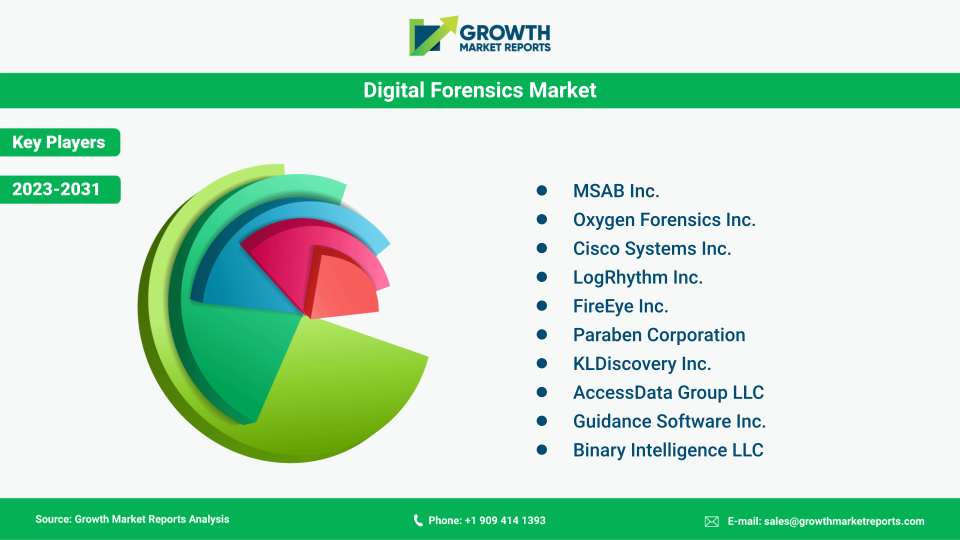
Key players competing in the global digital forensics market include MSAB Inc.; Oxygen Forensics Inc.; Cisco Systems Inc.; LogRhythm Inc.; FireEye Inc.; Paraben Corporation; KLDiscovery Inc.; AccessData Group LLC; Guidance Software Inc.; Binary Intelligence LLC; and IBM Corporation. Some of these players are adopting several market strategies including acquisitions, mergers, collaborations, partnerships, capacity expansion, and product launches to increase their market shares.
AI and machine learning are increasingly integrated into digital forensic tools, automating evidence analysis, detecting anomalies, and generating actionable insights, which enhances investigation speed and accuracy.
Major players include Cellebrite, Magnet Forensics, OpenText (EnCase), AccessData (Exterro), MSAB, Paraben Corporation, FTK, Kroll, Nuix, LogRhythm, FireEye (Trellix), Guidance Software, CybSafe, Oxygen Forensics, CISCO Systems, IBM Corporation, and others.
Key challenges include a shortage of skilled forensic professionals, concerns over data privacy and legal admissibility, and complexities related to cross-border data access and regulatory compliance.
Digital forensics solutions can be deployed on-premises for greater control and security, or via the cloud for scalability, remote access, and cost-effectiveness. Hybrid models are also emerging to combine the benefits of both.
Major application sectors include law enforcement, government and defense, banking, financial services and insurance (BFSI), healthcare, IT and telecommunications, and retail.
The main types include computer forensics, network forensics, mobile device forensics, cloud forensics, and database forensics, each addressing specific investigative needs and challenges.
The market is segmented into hardware (forensic workstations, data acquisition devices), software (forensics analysis, visualization, reporting tools), and services (consulting, incident response, managed forensic services).
North America holds the largest market share due to its mature cybersecurity ecosystem and stringent regulations, while Asia Pacific is the fastest-growing region, driven by rapid digital transformation and increasing cybercrime rates.
Key growth drivers include the rising sophistication of cyber threats, increasing digitization of business operations, proliferation of connected devices, regulatory mandates like GDPR and HIPAA, and the need for advanced investigative solutions to combat cybercrime.
The global digital forensics market is expected to reach USD 22.7 billion by 2033, growing at a CAGR of 11.2% from 2025 to 2033.