Digestive Enzyme Supplements Market Research Report 2033

Digestive Enzyme Supplements Market Research Report 2033

Segments - by Product Type (Plant-based, Animal-based, Microbial-based), by Application (Indigestion, Lactose Intolerance, Sports Nutrition, Others), by Form (Tablets, Capsules, Powders, Liquids, Others), by Distribution Channel (Online Stores, Pharmacies/Drug Stores, Supermarkets/Hypermarkets, Others), by End-User (Adults, Children, Geriatric)

https://growthmarketreports.com/Anuradha
Author : Anuradha B. More
https://growthmarketreports.com/Vaibhav
Fact-checked by : Vaibhav Chandola
https://growthmarketreports.com/Shruti
Editor : Shruti Bhat

Upcoming | Report ID :FB-4892 | 5.0 Rating | 80 Reviews | 273 Pages | Format : Docx PDF

Report Description


Digestive Enzyme Supplements Market Outlook

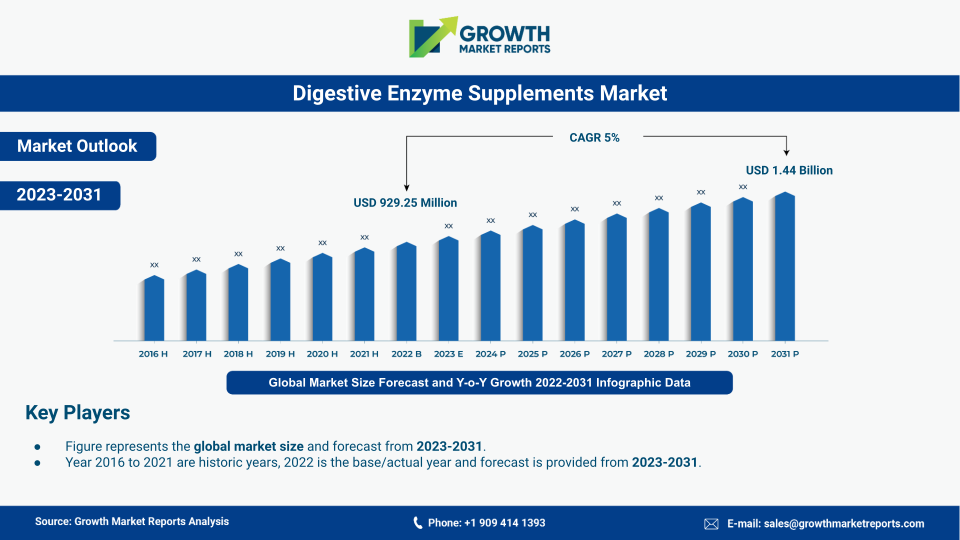
According to our latest research, the global digestive enzyme supplements market size in 2024 is valued at USD 1.82 billion. Driven by increasing consumer awareness and a rising prevalence of digestive disorders, the market is witnessing robust growth. The market is projected to expand at a CAGR of 7.1% from 2025 to 2033, reaching a forecasted value of USD 3.37 billion by the end of 2033. This growth trajectory is underpinned by factors such as lifestyle changes, dietary habits, and a surge in demand for preventive healthcare solutions, as per our latest research findings.

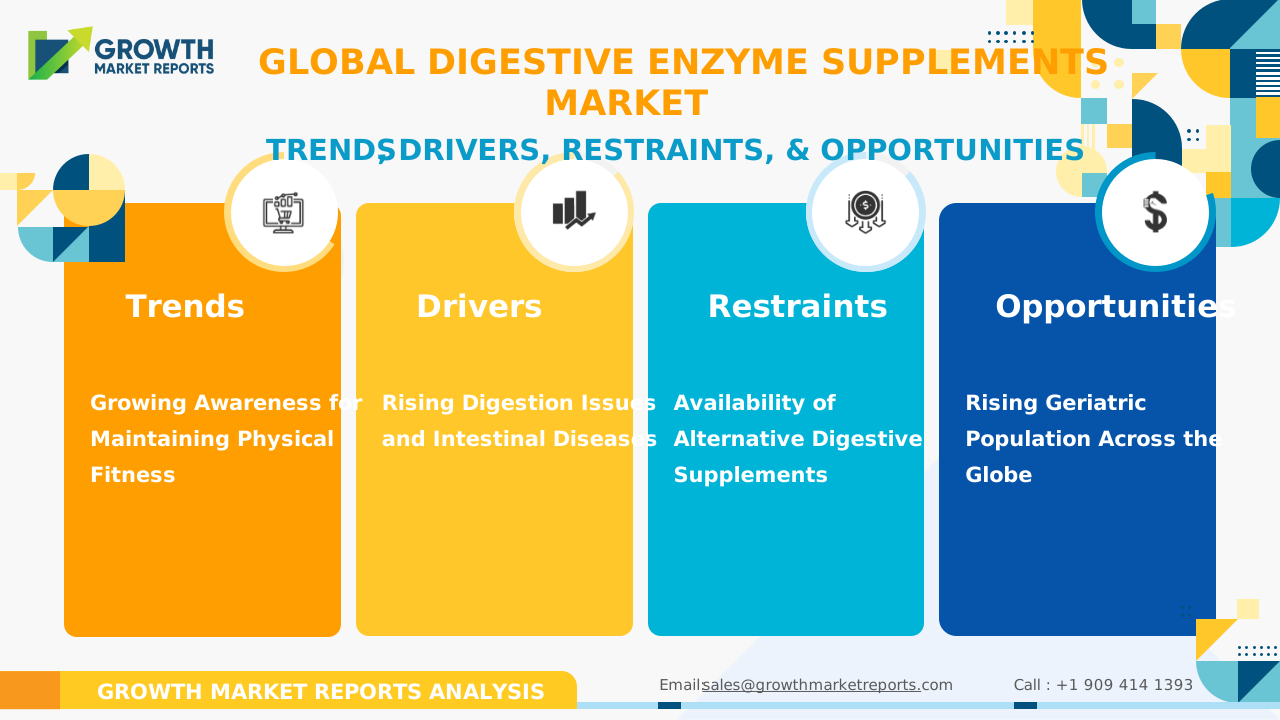
One of the primary growth factors propelling the digestive enzyme supplements market is the escalating incidence of gastrointestinal ailments worldwide. With the modern lifestyle marked by irregular eating habits, increased consumption of processed foods, and heightened stress levels, digestive health issues such as indigestion, bloating, and irritable bowel syndrome have become increasingly common. As a result, consumers are proactively seeking solutions to enhance their digestive well-being, thereby boosting the adoption of digestive enzyme supplements. Furthermore, the growing geriatric population, which is more susceptible to digestive inefficiencies due to age-related decline in enzyme production, is contributing significantly to market expansion. The rising awareness about the role of digestive enzymes in nutrient absorption and overall health is also fostering the demand for these supplements.

Another notable driver is the surge in lactose intolerance and food sensitivities across diverse demographics. The prevalence of lactose intolerance, particularly in regions like Asia Pacific and Africa, has led to a heightened demand for enzyme supplements that aid in the digestion of dairy products. Additionally, the sports nutrition segment is witnessing increased uptake of digestive enzyme supplements among athletes and fitness enthusiasts who require efficient nutrient absorption for optimal performance and recovery. The trend towards preventive healthcare and the growing popularity of dietary supplements as an integral part of daily wellness routines are further amplifying the marketÂ’s growth. Manufacturers are innovating with specialized formulations targeting specific digestive issues, which is broadening the consumer base and fueling market expansion.

Technological advancements in supplement formulation and delivery mechanisms are also playing a crucial role in shaping the digestive enzyme supplements market. Innovations such as enteric-coated capsules, which ensure the targeted release of enzymes in the intestine, and the development of plant-based and allergen-free formulations, are attracting health-conscious consumers. The proliferation of e-commerce platforms and online pharmacies has made these products more accessible, thereby expanding market reach. Strategic partnerships between supplement manufacturers and healthcare professionals are enhancing consumer trust and driving product adoption. Moreover, increasing investments in research and development are resulting in the launch of advanced products with improved efficacy and safety profiles, thereby sustaining the marketÂ’s upward trajectory.

In recent years, the demand for Digestive Enzymes for Pets has seen a notable increase, paralleling the trends observed in human digestive health. As pet owners become more aware of the digestive issues that can affect their furry companions, they are turning to enzyme supplements to enhance their pets' digestive efficiency and overall well-being. These supplements are particularly beneficial for pets with specific dietary needs or those experiencing digestive discomfort due to age or dietary changes. The market for pet digestive enzymes is expanding, with formulations tailored to different species and health conditions, ensuring that pets receive the necessary support for optimal nutrient absorption and digestive health.

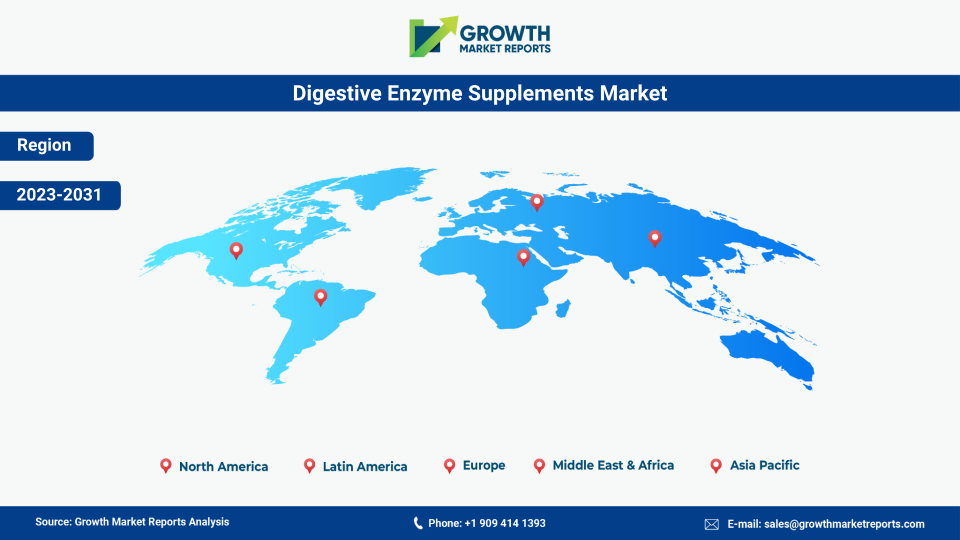
Regionally, North America continues to dominate the digestive enzyme supplements market, accounting for the largest share in 2024. This can be attributed to high consumer awareness, a well-established dietary supplement industry, and a significant prevalence of digestive disorders. However, the Asia Pacific region is emerging as the fastest-growing market, driven by rising disposable incomes, changing dietary patterns, and a growing focus on preventive healthcare. Europe also holds a substantial market share, supported by a robust healthcare infrastructure and increasing adoption of dietary supplements among the aging population. Latin America and the Middle East & Africa are witnessing gradual growth, fueled by improving healthcare access and rising awareness about digestive health. The regional landscape is expected to evolve further as market penetration deepens and consumer education initiatives gain momentum.

Global Digestive Enzyme Supplements Industry Outlook

Product Type Analysis

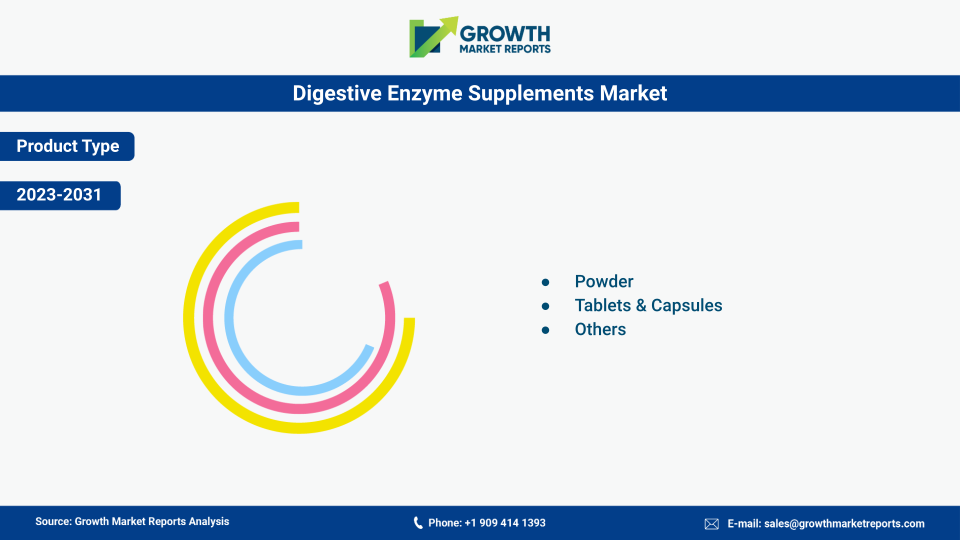
The digestive enzyme supplements market is segmented by product type into plant-based, animal-based, and microbial-based enzyme supplements. Plant-based digestive enzyme supplements are witnessing significant traction due to the rising popularity of vegan and vegetarian lifestyles. These supplements, typically derived from sources such as pineapple (bromelain) and papaya (papain), appeal to consumers seeking natural and allergen-free options. The increasing prevalence of food allergies and sensitivities has further propelled the demand for plant-based alternatives, as they are often perceived as gentler on the digestive system. Additionally, plant-based enzymes are gaining favor among environmentally conscious consumers, as their production is associated with a lower carbon footprint compared to animal-based products. Manufacturers are responding to this trend by expanding their product portfolios to include a diverse range of plant-derived enzyme blends targeting various digestive concerns.

Animal-based digestive enzyme supplements, primarily sourced from pancreatin, pepsin, and trypsin, continue to hold a significant share of the market. These supplements are recognized for their high potency and efficacy in addressing severe digestive insufficiencies, especially in clinical settings. Animal-based enzymes are commonly recommended for individuals with conditions such as exocrine pancreatic insufficiency and cystic fibrosis, where endogenous enzyme production is compromised. Despite their proven effectiveness, the adoption of animal-based supplements is somewhat constrained by concerns related to dietary restrictions, religious beliefs, and the risk of allergenicity. Nevertheless, ongoing advancements in purification techniques and quality control are enhancing the safety and acceptability of these products among a broader consumer base.

Microbial-based digestive enzyme supplements are rapidly gaining momentum, driven by technological innovations in biotechnology and fermentation processes. These supplements, derived from fungal or bacterial sources, offer several advantages, including high stability, broad substrate specificity, and suitability for individuals with dietary restrictions. Microbial enzymes such as amylase, protease, and lipase are increasingly being incorporated into multi-enzyme formulations to provide comprehensive digestive support. The scalability and cost-effectiveness of microbial enzyme production are encouraging manufacturers to invest in research and development, leading to the introduction of advanced products with enhanced bioavailability and targeted delivery. As consumer awareness about the benefits of microbial enzymes grows, this segment is expected to witness robust expansion during the forecast period.

The competitive landscape within the product type segment is marked by continuous innovation and product differentiation. Companies are leveraging scientific research to develop enzyme blends tailored to specific digestive issues, such as gluten intolerance and lactose malabsorption. The growing trend towards clean-label and non-GMO products is influencing formulation strategies, with manufacturers emphasizing transparency and traceability in sourcing raw materials. Strategic collaborations with healthcare professionals and nutritionists are also strengthening market positioning by enhancing consumer trust and driving product recommendations. As the demand for personalized nutrition continues to rise, the product type segment is poised for sustained growth, with plant-based and microbial-based supplements expected to outpace traditional animal-based products in the coming years.

Report Scope

Attributes Details
Report Title Digestive Enzyme Supplements Market Research Report 2033
By Product Type Plant-based, Animal-based, Microbial-based
By Application Indigestion, Lactose Intolerance, Sports Nutrition, Others
By Form Tablets, Capsules, Powders, Liquids, Others
By Distribution Channel Online Stores, Pharmacies/Drug Stores, Supermarkets/Hypermarkets, Others
By End-User Adults, Children, Geriatric
Regions Covered North America, Europe, APAC, Latin America, MEA
Base Year 2024
Historic Data 2018-2023
Forecast Period 2025-2033
Number of Pages 273
Number of Tables & Figures 265
Customization Available Yes, the report can be customized as per your need.

Application Analysis

The application segment of the digestive enzyme supplements market encompasses indigestion, lactose intolerance, sports nutrition, and other specialized uses. Indigestion remains the leading application, accounting for a substantial portion of market demand. The increasing prevalence of functional gastrointestinal disorders, such as dyspepsia and bloating, is driving consumers to seek effective solutions for digestive discomfort. Digestive enzyme supplements are widely recognized for their ability to enhance the breakdown and absorption of macronutrients, thereby alleviating symptoms of indigestion. Healthcare professionals are increasingly recommending enzyme supplementation as an adjunct therapy for patients with chronic digestive issues, further bolstering market growth in this segment. The availability of multi-enzyme formulations targeting common digestive complaints has made these products a staple in the daily wellness routines of health-conscious consumers.

Lactose intolerance represents another key application area, particularly in regions with high prevalence rates, such as Asia Pacific and Africa. The inability to digest lactose due to lactase deficiency leads to gastrointestinal symptoms upon dairy consumption, prompting affected individuals to seek enzymatic solutions. Lactase supplements have emerged as an effective and convenient remedy, enabling lactose-intolerant consumers to enjoy dairy products without discomfort. The increasing inclusion of lactase enzymes in functional foods and beverages is also expanding the marketÂ’s reach. Manufacturers are capitalizing on this trend by offering a wide range of lactose-digesting supplements in various forms, including chewable tablets and flavored powders, to cater to diverse consumer preferences.

The sports nutrition segment is experiencing rapid growth, fueled by rising participation in fitness activities and the growing emphasis on performance optimization. Athletes and fitness enthusiasts often require higher protein and nutrient intake to support muscle recovery and endurance. Digestive enzyme supplements, particularly those containing proteases and lipases, are increasingly being incorporated into sports nutrition regimens to enhance protein digestion, reduce gastrointestinal discomfort, and improve nutrient bioavailability. The trend towards personalized nutrition and the integration of enzyme supplements into protein shakes and meal replacements are further driving demand in this segment. Manufacturers are responding by developing specialized formulations tailored to the unique digestive needs of active individuals.

Beyond the primary applications, digestive enzyme supplements are also being utilized for other specialized purposes, such as managing gluten intolerance, supporting bariatric surgery recovery, and addressing pediatric digestive issues. The growing body of clinical evidence supporting the efficacy of enzyme supplementation in various health conditions is expanding the scope of applications. As consumer awareness about the multifaceted benefits of digestive enzymes increases, the application segment is expected to witness continued diversification. Strategic marketing initiatives and educational campaigns are playing a pivotal role in driving adoption across a broader spectrum of use cases.

Form Analysis

The form segment of the digestive enzyme supplements market includes tablets, capsules, powders, liquids, and other innovative delivery formats. Tablets and capsules continue to dominate the market, owing to their convenience, precise dosing, and widespread consumer acceptance. These forms are preferred for their portability and ease of administration, making them suitable for on-the-go consumption. Advances in tablet and capsule technology, such as enteric coating and sustained-release formulations, are enhancing the efficacy and bioavailability of digestive enzymes. Manufacturers are focusing on improving the palatability and shelf stability of these products to cater to the evolving preferences of health-conscious consumers. The availability of vegetarian and allergen-free capsules is further expanding the consumer base, particularly among individuals with dietary restrictions.

Powdered digestive enzyme supplements are gaining popularity, especially among consumers seeking customizable dosing and versatile usage options. Powders can be easily mixed with water, smoothies, or food, offering flexibility in consumption. This form is particularly favored in the sports nutrition segment, where athletes incorporate enzyme powders into their pre- and post-workout shakes for enhanced nutrient absorption. The rising trend of personalized nutrition is also driving demand for powdered supplements, as they allow users to adjust dosages based on individual needs. Manufacturers are innovating with flavored and unflavored options to cater to diverse taste preferences, further boosting market growth in this segment.

Liquid digestive enzyme supplements are witnessing steady growth, driven by their rapid absorption and suitability for individuals with swallowing difficulties, such as children and the elderly. Liquid formulations are often preferred for pediatric and geriatric use, as they can be easily administered and absorbed. The development of palatable and sugar-free liquid enzyme supplements is enhancing their appeal among health-conscious consumers. Additionally, liquid forms are being incorporated into functional beverages and ready-to-drink products, expanding their market reach. Manufacturers are investing in research to improve the stability and efficacy of liquid enzyme formulations, ensuring consistent performance and consumer satisfaction.

The form segment is characterized by ongoing innovation and product diversification. Companies are exploring novel delivery mechanisms, such as chewable gummies, effervescent tablets, and orally disintegrating strips, to enhance user experience and compliance. The growing demand for clean-label and natural formulations is influencing product development, with manufacturers emphasizing the use of non-GMO ingredients and minimal additives. Strategic collaborations with packaging companies are enabling the introduction of user-friendly and sustainable packaging solutions, further enhancing product appeal. As consumer preferences continue to evolve, the form segment is expected to witness sustained innovation and growth.

Distribution Channel Analysis

The distribution channel segment of the digestive enzyme supplements market comprises online stores, pharmacies/drug stores, supermarkets/hypermarkets, and other retail outlets. Online stores have emerged as the fastest-growing distribution channel, driven by the proliferation of e-commerce platforms and the increasing preference for convenient shopping experiences. The availability of a wide range of products, detailed product information, and customer reviews are empowering consumers to make informed purchasing decisions. The COVID-19 pandemic has further accelerated the shift towards online channels, as consumers increasingly opt for contactless shopping and home delivery. Manufacturers are leveraging digital marketing strategies and partnering with leading e-commerce platforms to enhance product visibility and reach a broader audience.

Pharmacies and drug stores continue to play a pivotal role in the distribution of digestive enzyme supplements, particularly for consumers seeking professional guidance and trusted brands. Pharmacists and healthcare professionals often recommend enzyme supplements to individuals with specific digestive health concerns, enhancing consumer confidence and driving product adoption. The presence of well-established pharmacy chains and the availability of a diverse product range contribute to the sustained growth of this channel. Manufacturers are investing in educational initiatives and in-store promotions to strengthen their presence in pharmacies and build brand loyalty among health-conscious consumers.

Supermarkets and hypermarkets are also significant distribution channels, offering consumers the convenience of purchasing digestive enzyme supplements alongside their regular grocery shopping. The increasing shelf space allocated to dietary supplements in retail stores reflects the growing mainstream acceptance of these products. Supermarkets and hypermarkets are particularly popular among price-sensitive consumers, as they often offer competitive pricing and promotional discounts. Manufacturers are collaborating with retail chains to optimize product placement and enhance in-store visibility, thereby driving impulse purchases and expanding market reach.

Other distribution channels, such as specialty health stores, wellness centers, and direct sales, are also contributing to market growth. These channels cater to niche consumer segments seeking personalized recommendations and premium products. The rise of subscription-based models and direct-to-consumer sales is enabling manufacturers to build long-term relationships with customers and gather valuable insights into consumer preferences. As the distribution landscape continues to evolve, companies are adopting omnichannel strategies to provide a seamless and integrated shopping experience across online and offline platforms.

End-User Analysis

The end-user segment of the digestive enzyme supplements market is categorized into adults, children, and geriatric populations. Adults constitute the largest end-user group, driven by the high prevalence of lifestyle-related digestive disorders and the growing emphasis on preventive healthcare. Busy work schedules, irregular eating habits, and increased consumption of processed foods have contributed to a rise in digestive complaints among adults. Digestive enzyme supplements are increasingly being incorporated into daily wellness routines to alleviate symptoms such as bloating, indigestion, and food intolerances. The availability of targeted formulations addressing specific adult needs, such as gluten intolerance and sports nutrition, is further fueling demand in this segment.

Children represent a growing end-user segment, as pediatric digestive health issues, including lactose intolerance and enzyme deficiencies, are becoming more widely recognized. Parents are increasingly seeking safe and effective solutions to support their childrenÂ’s digestive well-being and overall growth. Pediatric enzyme supplements, available in child-friendly forms such as chewable tablets and flavored liquids, are gaining popularity due to their ease of administration and palatability. Manufacturers are focusing on developing formulations with appropriate dosages and minimal additives to ensure safety and efficacy for young users. Educational campaigns and pediatrician endorsements are playing a crucial role in driving adoption among parents.

The geriatric population is another key end-user group, as aging is often associated with a decline in endogenous enzyme production and an increased risk of digestive inefficiencies. Elderly individuals frequently experience symptoms such as malabsorption, constipation, and nutrient deficiencies, which can be alleviated with enzyme supplementation. The growing emphasis on healthy aging and the desire to maintain an active lifestyle are prompting seniors to adopt digestive enzyme supplements as part of their daily regimen. Manufacturers are developing specialized formulations tailored to the unique needs of the elderly, such as easy-to-swallow capsules and sugar-free liquids. The increasing availability of educational resources and healthcare professional recommendations is further supporting market growth in this segment.

The end-user segment is characterized by a growing demand for personalized and targeted solutions. Companies are investing in research to develop age- and condition-specific enzyme blends that address the unique digestive challenges faced by different demographic groups. The integration of advanced diagnostic tools and personalized nutrition platforms is enabling consumers to make informed choices about enzyme supplementation. As awareness about the importance of digestive health continues to rise across all age groups, the end-user segment is expected to witness sustained expansion and diversification.

Opportunities & Threats

The digestive enzyme supplements market presents significant opportunities for innovation and expansion. One of the most promising avenues is the development of personalized enzyme formulations tailored to individual digestive profiles and health needs. Advances in nutrigenomics and microbiome research are enabling manufacturers to create customized supplements that offer targeted support for specific digestive issues. The integration of artificial intelligence and digital health platforms is facilitating personalized recommendations and real-time monitoring of digestive health, enhancing consumer engagement and compliance. Additionally, the growing trend towards preventive healthcare and holistic wellness is creating new opportunities for cross-industry collaborations, such as partnerships with fitness centers, wellness retreats, and telehealth platforms. As consumers become increasingly proactive about their health, the demand for innovative and personalized digestive enzyme supplements is expected to surge.

Another significant opportunity lies in the expansion into emerging markets, particularly in Asia Pacific, Latin America, and the Middle East & Africa. Rising disposable incomes, urbanization, and changing dietary patterns are driving demand for digestive health solutions in these regions. The increasing prevalence of digestive disorders, coupled with improving healthcare infrastructure and growing consumer awareness, is creating a fertile ground for market entry and expansion. Companies can capitalize on these opportunities by investing in localized product development, culturally relevant marketing strategies, and strategic partnerships with regional distributors. The adoption of digital marketing and e-commerce platforms is further enabling companies to reach underserved populations and build brand loyalty in emerging markets.

Despite the favorable growth outlook, the digestive enzyme supplements market faces several restraining factors. Stringent regulatory requirements and quality control standards pose significant challenges for manufacturers, particularly in terms of product safety, efficacy, and labeling. Variability in regulatory frameworks across different regions can complicate market entry and increase compliance costs. Additionally, the presence of counterfeit and substandard products in the market undermines consumer trust and poses health risks. Educating consumers about the benefits and proper use of digestive enzyme supplements is essential to overcome skepticism and ensure sustained market growth. Companies must prioritize transparency, rigorous testing, and adherence to regulatory guidelines to maintain product integrity and safeguard consumer health.

Regional Outlook

The regional analysis of the digestive enzyme supplements market reveals distinct trends and growth patterns across key geographies. North America remains the dominant market, accounting for approximately 38% of the global market share in 2024, with a market size of nearly USD 691 million. The regionÂ’s leadership is attributed to high consumer awareness, a well-established dietary supplement industry, and a significant prevalence of digestive disorders. The United States, in particular, is a major contributor, driven by a robust healthcare infrastructure, widespread adoption of preventive healthcare practices, and a strong presence of leading market players. The market in North America is projected to grow at a steady CAGR of around 6.5% through 2033, supported by ongoing innovation and increasing consumer demand for natural and personalized health solutions.

In Europe, the digestive enzyme supplements market is characterized by a growing aging population, rising incidence of digestive health issues, and increasing adoption of dietary supplements. The region accounted for approximately 27% of the global market in 2024, with a market size of about USD 491 million. Countries such as Germany, the United Kingdom, and France are leading the market, driven by strong consumer awareness and supportive regulatory frameworks. The trend towards clean-label and plant-based supplements is particularly pronounced in Europe, influencing product development and marketing strategies. The market is expected to witness moderate growth, with a focus on innovation and the introduction of specialized formulations targeting specific digestive concerns.

The Asia Pacific region is emerging as the fastest-growing market for digestive enzyme supplements, with a projected CAGR of 9.2% from 2025 to 2033. The market size in Asia Pacific reached approximately USD 401 million in 2024, accounting for about 22% of the global market. Rapid urbanization, rising disposable incomes, and changing dietary habits are driving demand for digestive health solutions in countries such as China, India, and Japan. The high prevalence of lactose intolerance and increasing consumer awareness about the benefits of enzyme supplementation are further fueling market growth. Companies are investing in localized product development and culturally relevant marketing strategies to capture the growing consumer base in this region. The market outlook for Asia Pacific remains highly optimistic, with significant opportunities for expansion and innovation.

Digestive Enzyme Supplements Market Statistics

Competitor Outlook

The competitive landscape of the digestive enzyme supplements market is characterized by the presence of both established multinational corporations and emerging players, all vying for market share through innovation, product differentiation, and strategic partnerships. Leading companies are investing heavily in research and development to introduce advanced enzyme formulations with improved efficacy, stability, and targeted delivery mechanisms. The focus on clean-label, allergen-free, and plant-based products is reshaping the competitive dynamics, as consumers increasingly prioritize transparency and sustainability in their purchasing decisions. Companies are also leveraging digital marketing, influencer collaborations, and educational campaigns to enhance brand visibility and engage with health-conscious consumers.

Strategic collaborations and mergers & acquisitions are common in the digestive enzyme supplements market, as companies seek to expand their product portfolios, enter new markets, and strengthen their distribution networks. Partnerships with healthcare professionals, nutritionists, and fitness centers are enhancing product credibility and driving recommendations. The integration of personalized nutrition platforms and digital health tools is enabling companies to offer tailored solutions and gather valuable consumer insights. The competitive landscape is further intensified by the entry of new players specializing in niche segments, such as pediatric and sports nutrition enzyme supplements, driving innovation and expanding the range of available products.

Despite the intense competition, leading companies are differentiating themselves through robust quality control measures, adherence to regulatory standards, and a commitment to scientific validation. The emphasis on clinical trials and evidence-based marketing is enhancing consumer trust and supporting product adoption. Companies are also focusing on sustainable sourcing, eco-friendly packaging, and corporate social responsibility initiatives to align with evolving consumer values. The ability to adapt to changing market trends, respond to consumer feedback, and anticipate future health needs will be critical for sustained success in this dynamic market.

Some of the major companies operating in the digestive enzyme supplements market include Garden of Life LLC, Enzymedica Inc., NOW Foods, NutraBio Labs Inc., Amway Corporation, Integrative Therapeutics LLC, Douglas Laboratories, and Twinlab Corporation. Garden of Life LLC is renowned for its organic and plant-based enzyme supplements, catering to the growing demand for clean-label products. Enzymedica Inc. is a leader in innovation, offering a wide range of targeted enzyme blends for specific digestive concerns. NOW Foods has established a strong presence through its extensive distribution network and commitment to quality and affordability. NutraBio Labs Inc. is recognized for its transparent labeling and high-potency formulations, appealing to fitness enthusiasts and athletes. Amway Corporation leverages its global reach and direct sales model to offer a diverse portfolio of enzyme supplements. Integrative Therapeutics LLC and Douglas Laboratories focus on science-backed formulations recommended by healthcare professionals, while Twinlab Corporation is known for its legacy of quality and consumer trust.

These companies are continuously expanding their product offerings, investing in research and development, and adopting sustainable practices to stay ahead in the competitive landscape. The ongoing evolution of consumer preferences, regulatory requirements, and technological advancements will continue to shape the strategies and success of market participants. As the digestive enzyme supplements market continues to grow, companies that prioritize innovation, quality, and consumer engagement will be well-positioned to capitalize on emerging opportunities and drive long-term growth.

Key Players

  • Abbott Laboratories
  • Amway Corporation
  • Biotics Research Corporation
  • Country Life LLC
  • Douglas Laboratories
  • Enzymedica Inc.
  • Garden of Life LLC
  • Integrative Therapeutics LLC
  • Klaire Labs
  • Matsun Nutrition
  • Metagenics Inc.
  • NOW Foods
  • Nestlé Health Science
  • Novozymes A/S
  • Pure Encapsulations LLC
  • Rainbow Light Nutritional Systems
  • Thorne Research Inc.
  • Twinlab Corporation
  • Vital Nutrients
  • Zenwise Health
Digestive Enzyme Supplements Market Overview

Segments

The Digestive Enzyme Supplements market has been segmented on the basis of

Product Type

  • Plant-based
  • Animal-based
  • Microbial-based

Application

  • Indigestion
  • Lactose Intolerance
  • Sports Nutrition
  • Others

Form

  • Tablets
  • Capsules
  • Powders
  • Liquids
  • Others

Distribution Channel

  • Online Stores
  • Pharmacies/Drug Stores
  • Supermarkets/Hypermarkets
  • Others

End-User

  • Adults
  • Children
  • Geriatric

Competitive Landscape

The competitive landscape of the global digestive enzyme supplements market report provides key insights into the growth strategies and development initiatives implemented by the key players in the market.

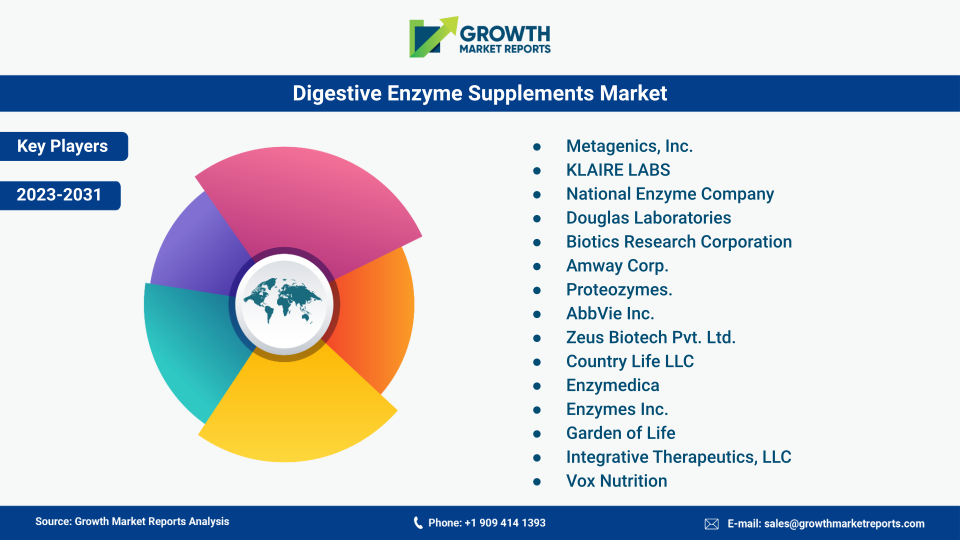
Key players competing in the global digestive enzyme supplements market share are Metagenics, Inc.; KLAIRE LABS; National Enzyme Company; Douglas Laboratories; Biotics Research Corporation; Amway Corp.; Proteozymes.; AbbVie Inc.; Zeus Biotech Pvt. Ltd.; Country Life LLC; Enzymedica; Enzymes Inc.; Garden of Life; Integrative Therapeutics, LLC; Vox Nutrition; Nestle; Amano Enzyme Inc.; Advanced Enzyme Technologies; Danone India; XYMOGEN; Abbott; Johnson & Johnson Private Limited; and ADM.

Some of these major companies adopted various business development strategies including mergers, acquisitions, partnerships, collaboration, product launches, and production capacity expansion to expand their consumer base and enhance their market share.

  • On 28 Nov 2022, Amano Enzyme, Inc., a leading Japanese specialty enzyme manufacturer, announced that it has established the company’s new hub for Europe, Middle East, and Africa (EMEA) at Milton Park. a science, technology, and business community platform in Oxfordshire, United Kingdom. Amano uses its manufactured enzymes to boost the digestion, flavor, texture, color, and other nutritional profiles of food products. The new hub is expected to aid the company in better serving its growing customer base.

  • On 26 May 2021, Vox Nutrition announced the completion of a new larger building facility in Oklahoma City, the capital of the U.S. state of Oklahoma. The new contract manufacturing facility is built on 65,000 square foot space, enabling the company to better serve its customers. The new facility is expected to enable Vox nutrition to provide customers with fast turnaround times and a larger capacity for fulfilling custom requirements moving forward.

Digestive Enzyme Supplements Market Key Players

Frequently Asked Questions

Some of the key players in the global digestive enzyme supplements market are Metagenics, Inc.; KLAIRE LABS; National Enzyme Company; Douglas Laboratories; Biotics Research Corporation; Amway Corp.; Proteozymes.; and AbbVie Inc.

The market growth is attributed to rising health awareness about digestive system health and rising consumer demand for dietary supplements.

The animal origin segment held the largest share of the market in 2021 and is expected to continue generating the highest revenue during the forecast period.

The global digestive enzyme supplements market size was USD 885 Mn in 2021 and is likely to reach USD 1500 Mn by 2030, expanding at a compound annual growth rate of 5% during 2022–2030.

Table Of Content

Chapter 1 Executive Summary
Chapter 2 Assumptions and Acronyms Used
Chapter 3 Research Methodology
Chapter 4 Digestive Enzyme Supplements Market Overview
   4.1 Introduction
      4.1.1 Market Taxonomy
      4.1.2 Market Definition
      4.1.3 Macro-Economic Factors Impacting the Market Growth
   4.2 Digestive Enzyme Supplements Market Dynamics
      4.2.1 Market Drivers
      4.2.2 Market Restraints
      4.2.3 Market Opportunity
   4.3 Digestive Enzyme Supplements Market - Supply Chain Analysis
      4.3.1 List of Key Suppliers
      4.3.2 List of Key Distributors
      4.3.3 List of Key Consumers
   4.4 Key Forces Shaping the Digestive Enzyme Supplements Market
      4.4.1 Bargaining Power of Suppliers
      4.4.2 Bargaining Power of Buyers
      4.4.3 Threat of Substitution
      4.4.4 Threat of New Entrants
      4.4.5 Competitive Rivalry
   4.5 Global Digestive Enzyme Supplements Market Size & Forecast, 2023-2032
      4.5.1 Digestive Enzyme Supplements Market Size and Y-o-Y Growth
      4.5.2 Digestive Enzyme Supplements Market Absolute $ Opportunity

Chapter 5 Global Digestive Enzyme Supplements Market Analysis and Forecast By Product Type
   5.1 Introduction
      5.1.1 Key Market Trends & Growth Opportunities By Product Type
      5.1.2 Basis Point Share (BPS) Analysis By Product Type
      5.1.3 Absolute $ Opportunity Assessment By Product Type
   5.2 Digestive Enzyme Supplements Market Size Forecast By Product Type
      5.2.1 Plant-based
      5.2.2 Animal-based
      5.2.3 Microbial-based
   5.3 Market Attractiveness Analysis By Product Type

Chapter 6 Global Digestive Enzyme Supplements Market Analysis and Forecast By Application
   6.1 Introduction
      6.1.1 Key Market Trends & Growth Opportunities By Application
      6.1.2 Basis Point Share (BPS) Analysis By Application
      6.1.3 Absolute $ Opportunity Assessment By Application
   6.2 Digestive Enzyme Supplements Market Size Forecast By Application
      6.2.1 Indigestion
      6.2.2 Lactose Intolerance
      6.2.3 Sports Nutrition
      6.2.4 Others
   6.3 Market Attractiveness Analysis By Application

Chapter 7 Global Digestive Enzyme Supplements Market Analysis and Forecast By Form
   7.1 Introduction
      7.1.1 Key Market Trends & Growth Opportunities By Form
      7.1.2 Basis Point Share (BPS) Analysis By Form
      7.1.3 Absolute $ Opportunity Assessment By Form
   7.2 Digestive Enzyme Supplements Market Size Forecast By Form
      7.2.1 Tablets
      7.2.2 Capsules
      7.2.3 Powders
      7.2.4 Liquids
      7.2.5 Others
   7.3 Market Attractiveness Analysis By Form

Chapter 8 Global Digestive Enzyme Supplements Market Analysis and Forecast By Distribution Channel
   8.1 Introduction
      8.1.1 Key Market Trends & Growth Opportunities By Distribution Channel
      8.1.2 Basis Point Share (BPS) Analysis By Distribution Channel
      8.1.3 Absolute $ Opportunity Assessment By Distribution Channel
   8.2 Digestive Enzyme Supplements Market Size Forecast By Distribution Channel
      8.2.1 Online Stores
      8.2.2 Pharmacies/Drug Stores
      8.2.3 Supermarkets/Hypermarkets
      8.2.4 Others
   8.3 Market Attractiveness Analysis By Distribution Channel

Chapter 9 Global Digestive Enzyme Supplements Market Analysis and Forecast By End-User
   9.1 Introduction
      9.1.1 Key Market Trends & Growth Opportunities By End-User
      9.1.2 Basis Point Share (BPS) Analysis By End-User
      9.1.3 Absolute $ Opportunity Assessment By End-User
   9.2 Digestive Enzyme Supplements Market Size Forecast By End-User
      9.2.1 Adults
      9.2.2 Children
      9.2.3 Geriatric
   9.3 Market Attractiveness Analysis By End-User

Chapter 10 Global Digestive Enzyme Supplements Market Analysis and Forecast by Region
   10.1 Introduction
      10.1.1 Key Market Trends & Growth Opportunities By Region
      10.1.2 Basis Point Share (BPS) Analysis By Region
      10.1.3 Absolute $ Opportunity Assessment By Region
   10.2 Digestive Enzyme Supplements Market Size Forecast By Region
      10.2.1 North America
      10.2.2 Europe
      10.2.3 Asia Pacific
      10.2.4 Latin America
      10.2.5 Middle East & Africa (MEA)
   10.3 Market Attractiveness Analysis By Region

Chapter 11 Coronavirus Disease (COVID-19) Impact 
   11.1 Introduction 
   11.2 Current & Future Impact Analysis 
   11.3 Economic Impact Analysis 
   11.4 Government Policies 
   11.5 Investment Scenario

Chapter 12 North America Digestive Enzyme Supplements Analysis and Forecast
   12.1 Introduction
   12.2 North America Digestive Enzyme Supplements Market Size Forecast by Country
      12.2.1 U.S.
      12.2.2 Canada
   12.3 Basis Point Share (BPS) Analysis by Country
   12.4 Absolute $ Opportunity Assessment by Country
   12.5 Market Attractiveness Analysis by Country
   12.6 North America Digestive Enzyme Supplements Market Size Forecast By Product Type
      12.6.1 Plant-based
      12.6.2 Animal-based
      12.6.3 Microbial-based
   12.7 Basis Point Share (BPS) Analysis By Product Type 
   12.8 Absolute $ Opportunity Assessment By Product Type 
   12.9 Market Attractiveness Analysis By Product Type
   12.10 North America Digestive Enzyme Supplements Market Size Forecast By Application
      12.10.1 Indigestion
      12.10.2 Lactose Intolerance
      12.10.3 Sports Nutrition
      12.10.4 Others
   12.11 Basis Point Share (BPS) Analysis By Application 
   12.12 Absolute $ Opportunity Assessment By Application 
   12.13 Market Attractiveness Analysis By Application
   12.14 North America Digestive Enzyme Supplements Market Size Forecast By Form
      12.14.1 Tablets
      12.14.2 Capsules
      12.14.3 Powders
      12.14.4 Liquids
      12.14.5 Others
   12.15 Basis Point Share (BPS) Analysis By Form 
   12.16 Absolute $ Opportunity Assessment By Form 
   12.17 Market Attractiveness Analysis By Form
   12.18 North America Digestive Enzyme Supplements Market Size Forecast By Distribution Channel
      12.18.1 Online Stores
      12.18.2 Pharmacies/Drug Stores
      12.18.3 Supermarkets/Hypermarkets
      12.18.4 Others
   12.19 Basis Point Share (BPS) Analysis By Distribution Channel 
   12.20 Absolute $ Opportunity Assessment By Distribution Channel 
   12.21 Market Attractiveness Analysis By Distribution Channel
   12.22 North America Digestive Enzyme Supplements Market Size Forecast By End-User
      12.22.1 Adults
      12.22.2 Children
      12.22.3 Geriatric
   12.23 Basis Point Share (BPS) Analysis By End-User 
   12.24 Absolute $ Opportunity Assessment By End-User 
   12.25 Market Attractiveness Analysis By End-User

Chapter 13 Europe Digestive Enzyme Supplements Analysis and Forecast
   13.1 Introduction
   13.2 Europe Digestive Enzyme Supplements Market Size Forecast by Country
      13.2.1 Germany
      13.2.2 France
      13.2.3 Italy
      13.2.4 U.K.
      13.2.5 Spain
      13.2.6 Russia
      13.2.7 Rest of Europe
   13.3 Basis Point Share (BPS) Analysis by Country
   13.4 Absolute $ Opportunity Assessment by Country
   13.5 Market Attractiveness Analysis by Country
   13.6 Europe Digestive Enzyme Supplements Market Size Forecast By Product Type
      13.6.1 Plant-based
      13.6.2 Animal-based
      13.6.3 Microbial-based
   13.7 Basis Point Share (BPS) Analysis By Product Type 
   13.8 Absolute $ Opportunity Assessment By Product Type 
   13.9 Market Attractiveness Analysis By Product Type
   13.10 Europe Digestive Enzyme Supplements Market Size Forecast By Application
      13.10.1 Indigestion
      13.10.2 Lactose Intolerance
      13.10.3 Sports Nutrition
      13.10.4 Others
   13.11 Basis Point Share (BPS) Analysis By Application 
   13.12 Absolute $ Opportunity Assessment By Application 
   13.13 Market Attractiveness Analysis By Application
   13.14 Europe Digestive Enzyme Supplements Market Size Forecast By Form
      13.14.1 Tablets
      13.14.2 Capsules
      13.14.3 Powders
      13.14.4 Liquids
      13.14.5 Others
   13.15 Basis Point Share (BPS) Analysis By Form 
   13.16 Absolute $ Opportunity Assessment By Form 
   13.17 Market Attractiveness Analysis By Form
   13.18 Europe Digestive Enzyme Supplements Market Size Forecast By Distribution Channel
      13.18.1 Online Stores
      13.18.2 Pharmacies/Drug Stores
      13.18.3 Supermarkets/Hypermarkets
      13.18.4 Others
   13.19 Basis Point Share (BPS) Analysis By Distribution Channel 
   13.20 Absolute $ Opportunity Assessment By Distribution Channel 
   13.21 Market Attractiveness Analysis By Distribution Channel
   13.22 Europe Digestive Enzyme Supplements Market Size Forecast By End-User
      13.22.1 Adults
      13.22.2 Children
      13.22.3 Geriatric
   13.23 Basis Point Share (BPS) Analysis By End-User 
   13.24 Absolute $ Opportunity Assessment By End-User 
   13.25 Market Attractiveness Analysis By End-User

Chapter 14 Asia Pacific Digestive Enzyme Supplements Analysis and Forecast
   14.1 Introduction
   14.2 Asia Pacific Digestive Enzyme Supplements Market Size Forecast by Country
      14.2.1 China
      14.2.2 Japan
      14.2.3 South Korea
      14.2.4 India
      14.2.5 Australia
      14.2.6 South East Asia (SEA)
      14.2.7 Rest of Asia Pacific (APAC)
   14.3 Basis Point Share (BPS) Analysis by Country
   14.4 Absolute $ Opportunity Assessment by Country
   14.5 Market Attractiveness Analysis by Country
   14.6 Asia Pacific Digestive Enzyme Supplements Market Size Forecast By Product Type
      14.6.1 Plant-based
      14.6.2 Animal-based
      14.6.3 Microbial-based
   14.7 Basis Point Share (BPS) Analysis By Product Type 
   14.8 Absolute $ Opportunity Assessment By Product Type 
   14.9 Market Attractiveness Analysis By Product Type
   14.10 Asia Pacific Digestive Enzyme Supplements Market Size Forecast By Application
      14.10.1 Indigestion
      14.10.2 Lactose Intolerance
      14.10.3 Sports Nutrition
      14.10.4 Others
   14.11 Basis Point Share (BPS) Analysis By Application 
   14.12 Absolute $ Opportunity Assessment By Application 
   14.13 Market Attractiveness Analysis By Application
   14.14 Asia Pacific Digestive Enzyme Supplements Market Size Forecast By Form
      14.14.1 Tablets
      14.14.2 Capsules
      14.14.3 Powders
      14.14.4 Liquids
      14.14.5 Others
   14.15 Basis Point Share (BPS) Analysis By Form 
   14.16 Absolute $ Opportunity Assessment By Form 
   14.17 Market Attractiveness Analysis By Form
   14.18 Asia Pacific Digestive Enzyme Supplements Market Size Forecast By Distribution Channel
      14.18.1 Online Stores
      14.18.2 Pharmacies/Drug Stores
      14.18.3 Supermarkets/Hypermarkets
      14.18.4 Others
   14.19 Basis Point Share (BPS) Analysis By Distribution Channel 
   14.20 Absolute $ Opportunity Assessment By Distribution Channel 
   14.21 Market Attractiveness Analysis By Distribution Channel
   14.22 Asia Pacific Digestive Enzyme Supplements Market Size Forecast By End-User
      14.22.1 Adults
      14.22.2 Children
      14.22.3 Geriatric
   14.23 Basis Point Share (BPS) Analysis By End-User 
   14.24 Absolute $ Opportunity Assessment By End-User 
   14.25 Market Attractiveness Analysis By End-User

Chapter 15 Latin America Digestive Enzyme Supplements Analysis and Forecast
   15.1 Introduction
   15.2 Latin America Digestive Enzyme Supplements Market Size Forecast by Country
      15.2.1 Brazil
      15.2.2 Mexico
      15.2.3 Rest of Latin America (LATAM)
   15.3 Basis Point Share (BPS) Analysis by Country
   15.4 Absolute $ Opportunity Assessment by Country
   15.5 Market Attractiveness Analysis by Country
   15.6 Latin America Digestive Enzyme Supplements Market Size Forecast By Product Type
      15.6.1 Plant-based
      15.6.2 Animal-based
      15.6.3 Microbial-based
   15.7 Basis Point Share (BPS) Analysis By Product Type 
   15.8 Absolute $ Opportunity Assessment By Product Type 
   15.9 Market Attractiveness Analysis By Product Type
   15.10 Latin America Digestive Enzyme Supplements Market Size Forecast By Application
      15.10.1 Indigestion
      15.10.2 Lactose Intolerance
      15.10.3 Sports Nutrition
      15.10.4 Others
   15.11 Basis Point Share (BPS) Analysis By Application 
   15.12 Absolute $ Opportunity Assessment By Application 
   15.13 Market Attractiveness Analysis By Application
   15.14 Latin America Digestive Enzyme Supplements Market Size Forecast By Form
      15.14.1 Tablets
      15.14.2 Capsules
      15.14.3 Powders
      15.14.4 Liquids
      15.14.5 Others
   15.15 Basis Point Share (BPS) Analysis By Form 
   15.16 Absolute $ Opportunity Assessment By Form 
   15.17 Market Attractiveness Analysis By Form
   15.18 Latin America Digestive Enzyme Supplements Market Size Forecast By Distribution Channel
      15.18.1 Online Stores
      15.18.2 Pharmacies/Drug Stores
      15.18.3 Supermarkets/Hypermarkets
      15.18.4 Others
   15.19 Basis Point Share (BPS) Analysis By Distribution Channel 
   15.20 Absolute $ Opportunity Assessment By Distribution Channel 
   15.21 Market Attractiveness Analysis By Distribution Channel
   15.22 Latin America Digestive Enzyme Supplements Market Size Forecast By End-User
      15.22.1 Adults
      15.22.2 Children
      15.22.3 Geriatric
   15.23 Basis Point Share (BPS) Analysis By End-User 
   15.24 Absolute $ Opportunity Assessment By End-User 
   15.25 Market Attractiveness Analysis By End-User

Chapter 16 Middle East & Africa (MEA) Digestive Enzyme Supplements Analysis and Forecast
   16.1 Introduction
   16.2 Middle East & Africa (MEA) Digestive Enzyme Supplements Market Size Forecast by Country
      16.2.1 Saudi Arabia
      16.2.2 South Africa
      16.2.3 UAE
      16.2.4 Rest of Middle East & Africa (MEA)
   16.3 Basis Point Share (BPS) Analysis by Country
   16.4 Absolute $ Opportunity Assessment by Country
   16.5 Market Attractiveness Analysis by Country
   16.6 Middle East & Africa (MEA) Digestive Enzyme Supplements Market Size Forecast By Product Type
      16.6.1 Plant-based
      16.6.2 Animal-based
      16.6.3 Microbial-based
   16.7 Basis Point Share (BPS) Analysis By Product Type 
   16.8 Absolute $ Opportunity Assessment By Product Type 
   16.9 Market Attractiveness Analysis By Product Type
   16.10 Middle East & Africa (MEA) Digestive Enzyme Supplements Market Size Forecast By Application
      16.10.1 Indigestion
      16.10.2 Lactose Intolerance
      16.10.3 Sports Nutrition
      16.10.4 Others
   16.11 Basis Point Share (BPS) Analysis By Application 
   16.12 Absolute $ Opportunity Assessment By Application 
   16.13 Market Attractiveness Analysis By Application
   16.14 Middle East & Africa (MEA) Digestive Enzyme Supplements Market Size Forecast By Form
      16.14.1 Tablets
      16.14.2 Capsules
      16.14.3 Powders
      16.14.4 Liquids
      16.14.5 Others
   16.15 Basis Point Share (BPS) Analysis By Form 
   16.16 Absolute $ Opportunity Assessment By Form 
   16.17 Market Attractiveness Analysis By Form
   16.18 Middle East & Africa (MEA) Digestive Enzyme Supplements Market Size Forecast By Distribution Channel
      16.18.1 Online Stores
      16.18.2 Pharmacies/Drug Stores
      16.18.3 Supermarkets/Hypermarkets
      16.18.4 Others
   16.19 Basis Point Share (BPS) Analysis By Distribution Channel 
   16.20 Absolute $ Opportunity Assessment By Distribution Channel 
   16.21 Market Attractiveness Analysis By Distribution Channel
   16.22 Middle East & Africa (MEA) Digestive Enzyme Supplements Market Size Forecast By End-User
      16.22.1 Adults
      16.22.2 Children
      16.22.3 Geriatric
   16.23 Basis Point Share (BPS) Analysis By End-User 
   16.24 Absolute $ Opportunity Assessment By End-User 
   16.25 Market Attractiveness Analysis By End-User

Chapter 17 Competition Landscape 
   17.1 Digestive Enzyme Supplements Market: Competitive Dashboard
   17.2 Global Digestive Enzyme Supplements Market: Market Share Analysis, 2023
   17.3 Company Profiles (Details – Overview, Financials, Developments, Strategy) 
      17.3.1 Abbott Laboratories
Amway Corporation
Biotics Research Corporation
Country Life LLC
Douglas Laboratories
Enzymedica Inc.
Garden of Life LLC
Integrative Therapeutics LLC
Klaire Labs
Matsun Nutrition
Metagenics Inc.
NOW Foods
Nestlé Health Science
Novozymes A/S
Pure Encapsulations LLC
Rainbow Light Nutritional Systems
Thorne Research Inc.
Twinlab Corporation
Vital Nutrients
Zenwise Health

Methodology

Our Clients

General Electric
Microsoft
Nestle SA
Siemens Healthcare
Honda Motor Co. Ltd.
Dassault Aviation
Deloitte
FedEx Logistics