Diamond Powder Market Research Report 2033

Diamond Powder Market Research Report 2033

Segments - by Product Type (Synthetic Diamond Powder, Natural Diamond Powder), by Application (Abrasives, Polishing, Cutting Tools, Electronics, Jewelry, Others), by Grade (Industrial Grade, Gem Quality), by Distribution Channel (Direct Sales, Distributors, Online Retail), by End-User (Automotive, Electronics, Healthcare, Construction, Jewelry, Others)

https://growthmarketreports.com/Raksha
Author : Raksha Sharma
https://growthmarketreports.com/Vaibhav
Fact-checked by : V. Chandola
https://growthmarketreports.com/Shruti
Editor : Shruti Bhat

Upcoming | Report ID :MC-2485 | 4.7 Rating | 7 Reviews | 280 Pages | Format : Docx PDF

Report Description


Diamond Powder Market Outlook

According to our latest research, the global diamond powder market size reached USD 1.52 billion in 2024, with a robust growth trajectory supported by a CAGR of 6.8% through the forecast period. By 2033, the market is anticipated to attain a value of USD 2.89 billion. The key growth factor propelling this market is the rising demand for high-precision abrasives and polishing compounds across diverse industries, notably in electronics, automotive, and advanced manufacturing sectors. As per the latest research, the diamond powder market is experiencing dynamic expansion, driven by technological advancements, increased industrial automation, and the growing adoption of synthetic diamond products.

One of the primary growth drivers for the diamond powder market is the expanding application base in precision machining and advanced manufacturing processes. The unique hardness and thermal conductivity properties of diamond powder make it indispensable for producing high-performance abrasives, polishing agents, and cutting tools. The proliferation of electronics manufacturing, particularly in Asia Pacific, and the global shift toward miniaturization of electronic components have significantly increased the consumption of diamond powder for wafer slicing, semiconductor processing, and lens polishing. Furthermore, the automotive sector’s ongoing emphasis on lightweight materials and enhanced surface finishing has fueled the adoption of diamond-based abrasives, ensuring consistent demand over the coming years.

Technological advancements in synthetic diamond production have been a pivotal factor in shaping the diamond powder market landscape. The development of cost-effective high-pressure, high-temperature (HPHT) and chemical vapor deposition (CVD) techniques has enabled large-scale manufacturing of synthetic diamond powder with tailored properties for specific industrial applications. This has not only improved product quality and consistency but also lowered the overall cost, making diamond powder more accessible for a broader range of end-users. The increasing preference for synthetic diamond powder over natural alternatives is expected to continue, given its superior purity, uniformity, and customizability, further accelerating market growth.

Sustainability and environmental considerations are also influencing the diamond powder market. As industries face mounting pressure to adopt eco-friendly manufacturing practices, synthetic diamond powder offers a more sustainable alternative to natural diamond mining, which is often associated with significant environmental and ethical concerns. The ability to produce synthetic diamond powder with minimal environmental impact aligns with the growing trend of green manufacturing and responsible sourcing, thereby attracting investments from key stakeholders. Additionally, regulatory support for sustainable industrial practices and the integration of advanced recycling technologies are expected to further stimulate market expansion in the forecast period.

Regionally, Asia Pacific dominates the diamond powder market, accounting for over 45% of global revenue in 2024, followed by North America and Europe. The region’s leadership is underpinned by the presence of major electronics and automotive manufacturing hubs, particularly in China, Japan, and South Korea. North America and Europe also exhibit strong growth, driven by technological innovation and the adoption of advanced manufacturing processes. Meanwhile, emerging markets in Latin America and the Middle East & Africa are witnessing gradual growth, supported by infrastructure development and industrialization initiatives. The regional outlook for the diamond powder market remains positive, with Asia Pacific expected to maintain its leadership through 2033 due to sustained industrial investments and robust demand from end-user industries.

Global Diamond Powder Industry Outlook

Product Type Analysis

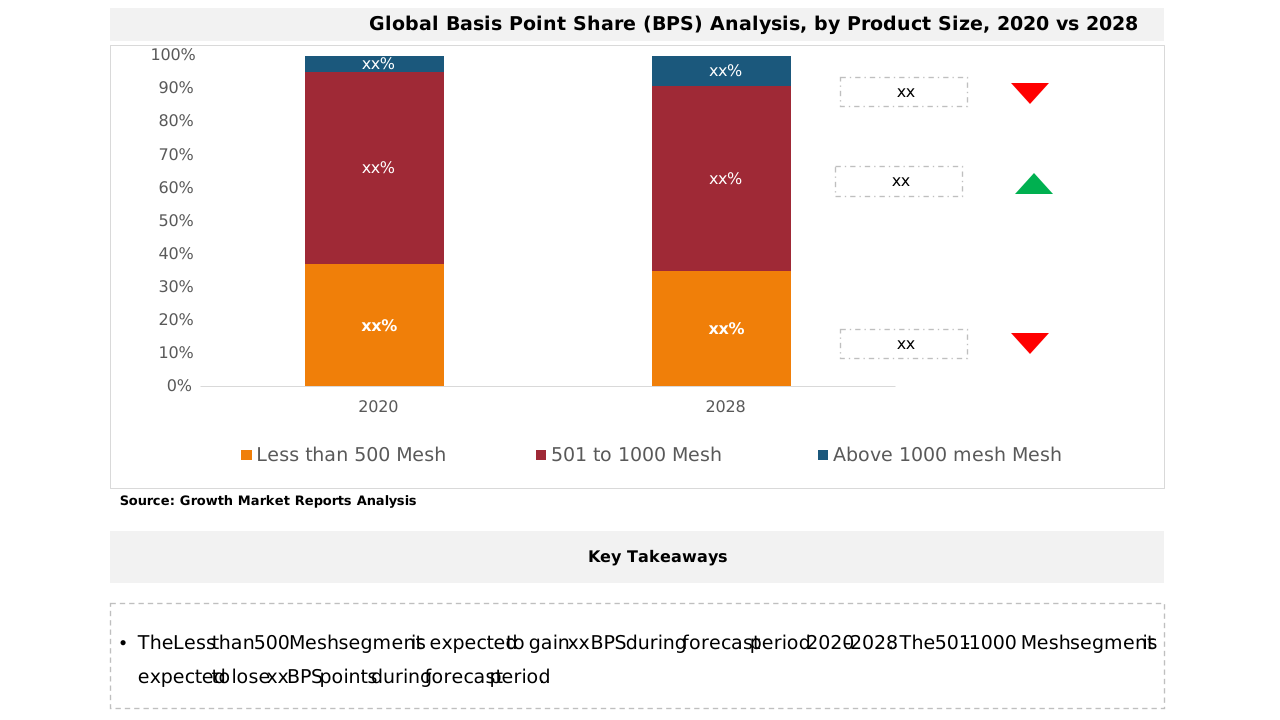
The product type segment of the diamond powder market is primarily divided into synthetic diamond powder and natural diamond powder. Synthetic diamond powder holds the dominant share, accounting for over 70% of the global market in 2024. This dominance is attributed to the ability to manufacture synthetic diamonds with precise specifications, uniform particle size distribution, and consistent quality, which are critical for industrial applications. Synthetic diamond powder’s cost-effectiveness and scalability have made it the preferred choice for high-volume end-users in the abrasives, electronics, and cutting tools sectors. Technological improvements in HPHT and CVD processes have further reinforced the market position of synthetic diamond powder, enabling manufacturers to cater to increasingly sophisticated industrial requirements.

Natural diamond powder, while holding a smaller market share, continues to be valued for its unique crystalline structure and superior hardness. It is primarily used in specialized applications where natural properties such as exceptional thermal conductivity and optical clarity are required. However, the high cost and limited availability of natural diamond powder have restricted its widespread adoption, particularly in cost-sensitive industries. The ongoing trend toward synthetic alternatives is expected to further constrain the growth of the natural diamond powder sub-segment, although niche markets such as high-end jewelry polishing and precision optics may continue to generate stable demand.

The competitive dynamics within the product type segment are shaped by the growing preference for synthetic diamond powder due to its customizable properties and environmental advantages. Synthetic diamond production processes allow for the creation of products with specific particle sizes, shapes, and purity levels, catering to the evolving needs of the electronics, automotive, and healthcare industries. This flexibility has positioned synthetic diamond powder as the go-to solution for emerging applications such as microelectronics, medical device manufacturing, and advanced composite materials, thereby driving segment growth.

Looking ahead, the product type segment is likely to witness further innovation, with manufacturers focusing on developing next-generation synthetic diamond powders with enhanced performance characteristics. Research and development efforts are being directed toward improving the efficiency of diamond synthesis, reducing production costs, and minimizing environmental impact. As industries continue to prioritize high-precision manufacturing and sustainable sourcing, the synthetic diamond powder sub-segment is expected to maintain its growth momentum, while the natural diamond powder segment will likely remain confined to specialized, high-value applications.

Report Scope

Attributes Details
Report Title Diamond Powder Market Research Report 2033
By Product Type Synthetic Diamond Powder, Natural Diamond Powder
By Application Abrasives, Polishing, Cutting Tools, Electronics, Jewelry, Others
By Grade Industrial Grade, Gem Quality
By Distribution Channel Direct Sales, Distributors, Online Retail
By End-User Automotive, Electronics, Healthcare, Construction, Jewelry, Others
Regions Covered North America, Europe, APAC, Latin America, MEA
Base Year 2024
Historic Data 2018-2023
Forecast Period 2025-2033
Number of Pages 280
Number of Tables & Figures 383
Customization Available Yes, the report can be customized as per your need.

Application Analysis

The application segment of the diamond powder market encompasses a wide array of industrial uses, with abrasives and polishing emerging as the leading applications. In 2024, abrasives accounted for over 40% of total market revenue, driven by the extensive use of diamond powder in grinding, cutting, and surface finishing operations across manufacturing, automotive, and construction industries. The unparalleled hardness of diamond powder enables superior material removal rates, longer tool life, and improved surface finish, making it indispensable in high-precision machining and finishing processes. The ongoing trend toward automation and digital manufacturing is further accelerating the adoption of diamond-based abrasives in advanced production environments.

Polishing applications represent another significant segment, particularly in the electronics and jewelry industries. Diamond powder is widely used for polishing semiconductor wafers, optical lenses, gemstones, and high-value metals, owing to its ability to achieve ultra-smooth surfaces and precise dimensional tolerances. The miniaturization of electronic components and the demand for flawless finishes in high-end jewelry have led to increased consumption of diamond powder for polishing purposes. Innovations in polishing formulations and the development of slurry-based systems have further enhanced the efficiency and effectiveness of diamond powder in achieving superior surface quality.

The use of diamond powder in cutting tools and electronics is also witnessing strong growth, supported by the rising demand for high-performance cutting, drilling, and sawing solutions in construction, mining, and electronics manufacturing. Diamond-coated and diamond-impregnated tools offer unmatched durability and precision, enabling efficient processing of hard and brittle materials such as ceramics, glass, and advanced composites. In the electronics sector, diamond powder is integral to wafer dicing, chip packaging, and microfabrication processes, where precision and reliability are paramount. The increasing complexity of electronic devices and the shift toward 5G and IoT technologies are expected to further drive the adoption of diamond powder in these applications.

Other notable applications of diamond powder include its use in the healthcare sector for surgical instruments and dental tools, as well as in specialty coatings and advanced materials development. The versatility of diamond powder, coupled with ongoing innovations in application technologies, is expanding its utility across new and emerging industries. As end-users continue to demand higher performance, efficiency, and sustainability, the application segment of the diamond powder market is poised for sustained growth, with abrasives, polishing, and cutting tools expected to remain the primary revenue generators through 2033.

Grade Analysis

The grade segment of the diamond powder market is categorized into industrial grade and gem quality diamond powder. Industrial grade diamond powder dominates the market, accounting for approximately 85% of global consumption in 2024. This dominance is due to the extensive use of industrial grade diamond powder in manufacturing, construction, electronics, and automotive applications, where high hardness, wear resistance, and cost-effectiveness are critical. Industrial grade diamond powder is typically produced using synthetic methods, ensuring consistent quality and performance tailored to specific industrial requirements. The ongoing expansion of the manufacturing and electronics sectors, particularly in emerging economies, is expected to sustain the growth of the industrial grade segment.

Gem quality diamond powder, while representing a smaller share of the market, plays a crucial role in high-value applications such as jewelry polishing, gemstone finishing, and luxury watchmaking. The superior clarity, brilliance, and optical properties of gem quality diamond powder make it ideal for achieving flawless finishes and enhancing the visual appeal of precious stones and luxury items. However, the high cost and limited availability of gem quality diamond powder restrict its widespread adoption, confining its use to specialized, high-end applications. The segment is expected to maintain steady growth, driven by the continued demand for premium jewelry and luxury goods in mature markets.

The distinction between industrial grade and gem quality diamond powder is becoming increasingly important as end-users seek tailored solutions for specific applications. Manufacturers are investing in advanced sorting, grading, and quality control technologies to ensure that diamond powder products meet the stringent requirements of both industrial and luxury markets. This focus on quality differentiation is enabling suppliers to cater to diverse customer needs, from high-volume industrial operations to bespoke jewelry manufacturing.

Looking forward, the grade segment is likely to witness further segmentation as new applications emerge and customer expectations evolve. The development of hybrid diamond powders with enhanced properties, such as improved thermal stability, increased toughness, and reduced environmental impact, is expected to create new opportunities for both industrial and gem quality segments. As industries continue to prioritize performance, efficiency, and sustainability, the grade segment will remain a key focus area for innovation and investment in the diamond powder market.

Distribution Channel Analysis

The distribution channel segment of the diamond powder market includes direct sales, distributors, and online retail. Direct sales continue to be the predominant channel, accounting for over 60% of market revenue in 2024. This dominance is attributed to the complex and technical nature of diamond powder products, which often require customized solutions, technical support, and close collaboration between suppliers and end-users. Direct sales channels enable manufacturers to build strong relationships with key customers, provide tailored product offerings, and ensure timely delivery and after-sales service, which are critical for maintaining customer loyalty and market share in high-value industrial segments.

Distributors play a vital role in expanding market reach, particularly in regions with fragmented industrial sectors and diverse customer bases. By leveraging their extensive networks, distributors facilitate the efficient distribution of diamond powder products to small and medium-sized enterprises, as well as niche market segments. The distributor channel is particularly important in emerging markets, where local expertise, market knowledge, and logistical capabilities are essential for successful market penetration. Strategic partnerships between manufacturers and distributors are expected to continue, enabling broader market coverage and enhanced customer service.

Online retail is emerging as a significant distribution channel, driven by the digitalization of procurement processes and the increasing adoption of e-commerce platforms across industries. While online sales currently represent a smaller share of the market, they are growing rapidly, particularly among small and medium-sized enterprises seeking convenient access to diamond powder products. Online platforms offer a wide range of products, competitive pricing, and streamlined purchasing processes, making them an attractive option for cost-sensitive customers and new market entrants. The integration of digital marketing, virtual product demonstrations, and online customer support is further enhancing the appeal of online retail channels.

The distribution channel landscape is evolving in response to changing customer preferences, technological advancements, and the growing importance of supply chain efficiency. Manufacturers are increasingly adopting omnichannel strategies, combining direct sales, distributor partnerships, and online platforms to maximize market reach and customer engagement. The ongoing digital transformation of the industrial sector is expected to accelerate the growth of online retail channels, while direct sales and distributor networks will remain essential for serving high-value and technically demanding applications.

End-User Analysis

The end-user segment of the diamond powder market is highly diversified, with automotive, electronics, healthcare, construction, and jewelry representing the primary industries driving demand. The automotive sector accounted for approximately 28% of global market revenue in 2024, driven by the widespread use of diamond powder in grinding, polishing, and finishing operations for engine components, transmission systems, and body panels. The ongoing shift toward electric vehicles and lightweight materials is expected to further increase the demand for high-performance abrasives and cutting tools, reinforcing the automotive sector’s position as a key end-user.

The electronics industry is another major end-user, leveraging diamond powder for semiconductor wafer slicing, chip packaging, and microelectronics fabrication. The miniaturization of electronic devices, coupled with the demand for higher precision and reliability, has led to increased consumption of diamond powder in advanced manufacturing processes. The rapid expansion of the semiconductor and consumer electronics markets, particularly in Asia Pacific, is expected to drive sustained growth in this segment through 2033.

Healthcare applications of diamond powder are gaining traction, particularly in the production of surgical instruments, dental tools, and medical devices requiring high precision and durability. The unique properties of diamond powder, including biocompatibility and wear resistance, make it ideal for use in minimally invasive surgical instruments and advanced diagnostic equipment. The growing focus on medical innovation, coupled with rising healthcare expenditure in developed and emerging markets, is expected to support the continued growth of the healthcare end-user segment.

Construction and jewelry also represent significant end-user segments, with diamond powder being used for cutting, drilling, and polishing hard materials such as concrete, stone, and precious gemstones. The construction sector’s demand is driven by infrastructure development, urbanization, and the need for high-performance tools, while the jewelry industry relies on diamond powder for achieving superior finishes and enhancing the visual appeal of luxury items. Other emerging end-users include aerospace, renewable energy, and advanced materials manufacturing, reflecting the expanding application base of diamond powder across diverse industries.

Opportunities & Threats

The diamond powder market presents substantial opportunities for growth, driven by the ongoing expansion of advanced manufacturing sectors and the increasing adoption of precision machining technologies. The rise of Industry 4.0, automation, and digital manufacturing is creating new avenues for the use of diamond powder in high-precision applications, such as microelectronics, medical devices, and advanced composites. The development of next-generation synthetic diamond powders with enhanced properties, such as improved thermal stability, increased toughness, and reduced environmental impact, is expected to open new markets and drive product innovation. Additionally, the growing emphasis on sustainability and responsible sourcing is creating opportunities for manufacturers to differentiate their offerings and capture value in emerging green manufacturing markets.

Another significant opportunity lies in the expansion of distribution channels through digitalization and e-commerce. The increasing adoption of online procurement platforms, virtual product demonstrations, and digital marketing strategies is enabling manufacturers to reach new customer segments, streamline sales processes, and enhance customer engagement. Strategic partnerships, mergers, and acquisitions are also expected to play a key role in driving market consolidation, expanding product portfolios, and strengthening competitive positioning. As industries continue to prioritize efficiency, quality, and sustainability, the diamond powder market is well-positioned to capitalize on evolving customer needs and technological advancements.

Despite the positive outlook, the diamond powder market faces several restraining factors, including price volatility, supply chain disruptions, and regulatory challenges. The high cost of raw materials, particularly for natural diamond powder, and fluctuations in synthetic diamond production costs can impact profitability and market stability. Supply chain disruptions, such as those caused by geopolitical tensions, trade restrictions, or natural disasters, can lead to delays, increased costs, and reduced availability of diamond powder products. Additionally, stringent environmental regulations and ethical concerns related to diamond mining and synthetic production processes may pose compliance challenges for manufacturers, necessitating ongoing investments in sustainable practices and transparent sourcing.

Regional Outlook

The Asia Pacific region continues to dominate the global diamond powder market, accounting for approximately USD 684 million in revenue in 2024, representing more than 45% of the global market. The region’s leadership is driven by the presence of major manufacturing hubs in China, Japan, South Korea, and India, which are leading producers and consumers of diamond powder for electronics, automotive, and construction industries. The rapid industrialization, infrastructure development, and increasing investments in advanced manufacturing technologies are expected to sustain Asia Pacific’s dominance through 2033, with a projected CAGR of 7.3% for the region.

North America is the second-largest market, with revenues reaching USD 370 million in 2024. The region benefits from strong technological innovation, a well-established industrial base, and significant investments in research and development. The United States, in particular, is a key consumer of diamond powder for advanced manufacturing, healthcare, and electronics applications. The ongoing trend toward reshoring of manufacturing activities and the adoption of Industry 4.0 technologies are expected to drive further growth in the North American market, supported by a robust regulatory framework and a focus on sustainable industrial practices.

Europe follows closely, with market revenues of USD 310 million in 2024. The region is characterized by its advanced manufacturing capabilities, high standards of quality, and strong emphasis on sustainability and innovation. Key markets such as Germany, France, and the United Kingdom are driving demand for diamond powder in automotive, aerospace, and precision engineering applications. The European diamond powder market is expected to grow steadily, supported by ongoing investments in research, technological innovation, and the adoption of green manufacturing practices. Meanwhile, Latin America and the Middle East & Africa are emerging as growth markets, with revenues of USD 95 million and USD 61 million respectively in 2024, driven by infrastructure development, industrialization, and increasing demand for high-performance materials.

Diamond Powder Market Statistics

Competitor Outlook

The diamond powder market is characterized by intense competition, with a mix of global industry leaders and regional players vying for market share. The competitive landscape is shaped by continuous innovation, technological advancements, and the ability to deliver high-quality, customized products tailored to specific end-user requirements. Leading companies are investing heavily in research and development to enhance product performance, reduce production costs, and minimize environmental impact. Strategic partnerships, mergers, and acquisitions are common strategies employed by market participants to expand their product portfolios, strengthen distribution networks, and enter new geographic markets.

Product differentiation and quality assurance are critical factors influencing competitive positioning in the diamond powder market. Manufacturers are focusing on developing next-generation synthetic diamond powders with improved hardness, thermal stability, and purity to meet the evolving needs of advanced manufacturing, electronics, and healthcare industries. The ability to provide technical support, application expertise, and value-added services is also emerging as a key differentiator, enabling companies to build long-term relationships with high-value customers and maintain a competitive edge in the market.

The growing emphasis on sustainability and responsible sourcing is prompting leading players to adopt eco-friendly production processes, transparent supply chains, and ethical sourcing practices. Companies that can demonstrate a commitment to environmental stewardship and social responsibility are increasingly favored by customers, regulators, and investors. The integration of digital technologies, such as online sales platforms, virtual product demonstrations, and data-driven customer engagement, is further enhancing the competitive dynamics of the market, enabling manufacturers to reach new customer segments and improve operational efficiency.

Major companies operating in the global diamond powder market include Element Six (De Beers Group), ILJIN Diamond Co., Ltd., Saint-Gobain S.A., Hyperion Materials & Technologies, Zhengzhou Sino-Crystal Diamond Co., Ltd., Henan Huanghe Whirlwind Co., Ltd., Sandvik AB, and Advanced Abrasives Corporation. These companies are recognized for their strong technological capabilities, extensive product portfolios, and global distribution networks. Element Six, a subsidiary of De Beers Group, is a pioneer in synthetic diamond production and is known for its focus on innovation and sustainability. ILJIN Diamond Co., Ltd. and Zhengzhou Sino-Crystal Diamond Co., Ltd. are leading players in the Asia Pacific region, leveraging advanced manufacturing technologies and strong regional presence to drive growth.

Saint-Gobain S.A. and Hyperion Materials & Technologies are prominent players in Europe and North America, known for their commitment to quality, innovation, and customer service. Henan Huanghe Whirlwind Co., Ltd. and Sandvik AB have established themselves as key suppliers of diamond powder for industrial applications, with a focus on expanding their global footprint through strategic partnerships and acquisitions. Advanced Abrasives Corporation specializes in high-precision diamond powders for electronics and advanced manufacturing applications, catering to the evolving needs of the industry. As competition intensifies, these companies are expected to continue investing in research, technology, and customer engagement to maintain their leadership positions in the dynamic global diamond powder market.

Key Players

  • Element Six
  • Sandvik AB
  • ILJIN Diamond Co., Ltd.
  • Zhengzhou Sino-Crystal Diamond Co., Ltd.
  • Henan Huanghe Whirlwind Co., Ltd.
  • Hyperion Materials & Technologies
  • Saint-Gobain Abrasives
  • Advanced Abrasives Corporation
  • Sumitomo Electric Industries, Ltd.
  • CR GEMS Diamond
  • JINQU Superhard
  • Anhui HongJing New Material Co., Ltd.
  • Zhengzhou New Asia Superhard Material Composite Co., Ltd.
  • Microdiamant AG
  • Lapmaster Wolters
  • Van Moppes SA
  • Henan Yalong Superhard Materials Co., Ltd.
  • Beijing Worldia Diamond Tools Co., Ltd.
  • Scio Diamond Technology Corporation
  • Adamas One Corp.
Diamond Powder Market Overview

Segments

The Diamond Powder market has been segmented on the basis of

Product Type

  • Synthetic Diamond Powder
  • Natural Diamond Powder

Application

  • Abrasives
  • Polishing
  • Cutting Tools
  • Electronics
  • Jewelry
  • Others

Grade

  • Industrial Grade
  • Gem Quality

Distribution Channel

  • Direct Sales
  • Distributors
  • Online Retail

End-User

  • Automotive
  • Electronics
  • Healthcare
  • Construction
  • Jewelry
  • Others

Competitive Landscape

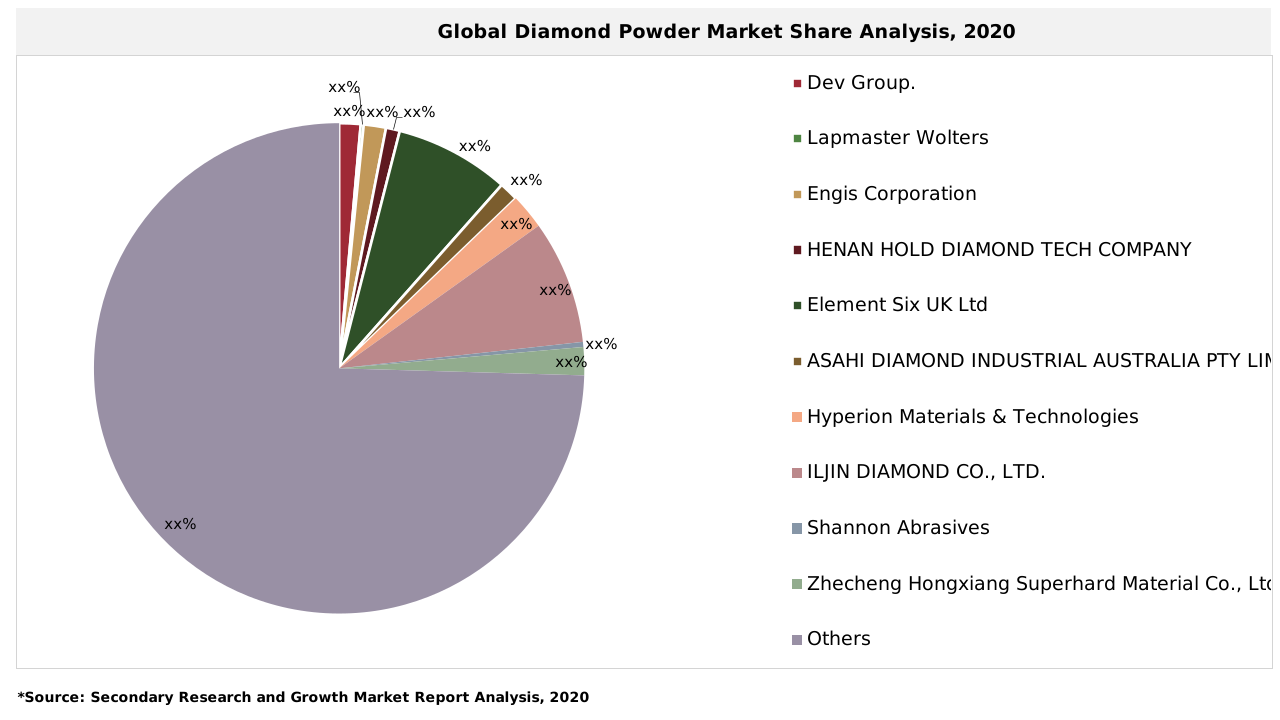
  • Top players in the market include ILJIN DIAMOND CO., LTD., Element Six UK Ltd, Hyperion Materials & Technologies, Zhecheng Hongxiang Superhard Material Co., Ltd, Engis Corporation, Dev Group. These companies are considered as key manufacturers of diamond powder based on their revenue, research development (R&D) activities, product offerings, regional presence, and supply chain management system.
  • The players are adopting key strategies such as acquisition, collaborations, and geographical expansion where potential opportunity for the Diamond Powder market.

Diamond Powder Market by key players

Frequently Asked Questions

Major manufacturers include, Dev Group., Lapmaster Wolters, Engis Corporation, HENAN HOLD DIAMOND TECH COMPANY, Element Six UK Ltd, ASAHI DIAMOND INDUSTRIAL AUSTRALIA PTY LIMITED, Hyperion Materials & Technologies, ILJIN DIAMOND CO., LTD., Shannon Abrasives, Zhecheng Hongxiang Superhard Material Co., Ltd, Tomei Diamond Co. Ltd. and others.

Factors such as Diamond Industry, Abrasive Market, GDP, Political Scenario, and Mining Industry are analyzed in the final report.

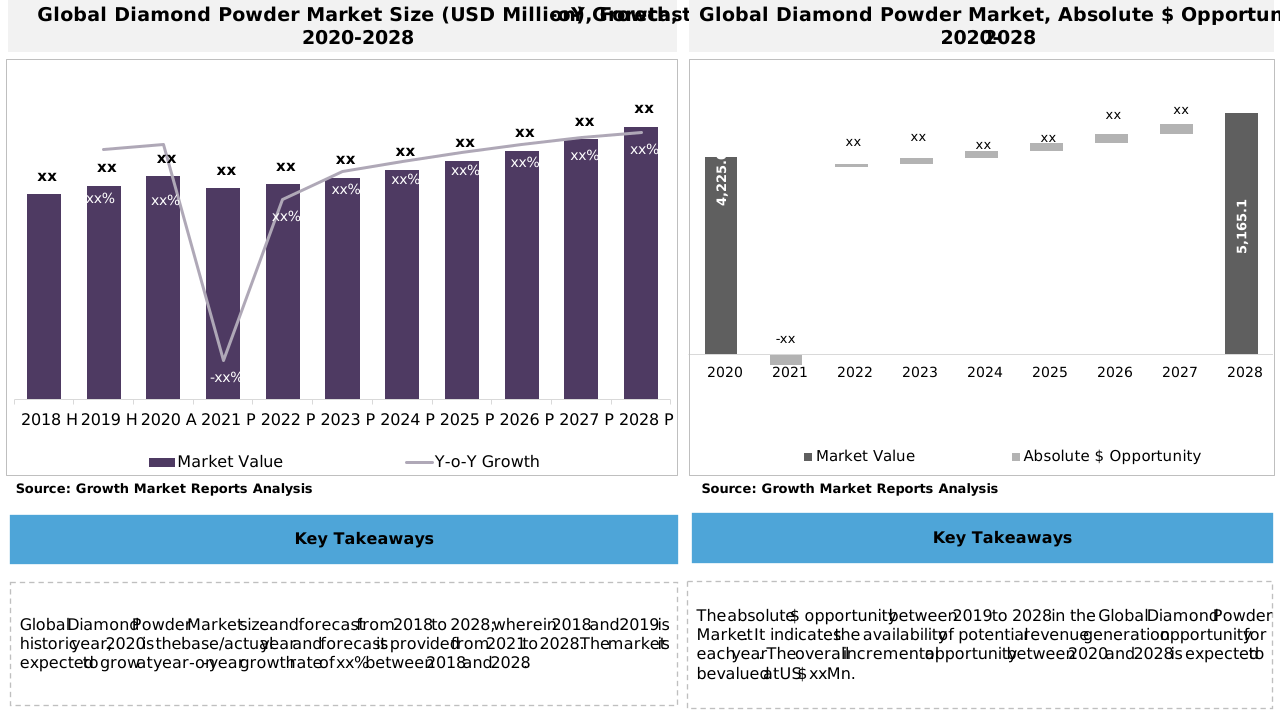
The base year considered for the global Diamond Powder market report is 2020. The complete analysis period is 2018 to 2028, wherein, 2018, and 2019 are the historic years, and the forecast is provided from 2021 to 2028.

The market is expected to slight decrease in growth between 2019 and 2020 owing to the COVID 19 pandemic on the Diamond Powder market.

Factors such as competitive strength and market positioning are key areas considered while selecting top companies to be profiled.

Electronics industry, automotive industry, aerospace, pharmaceutical industry, cosmetics, and others are the major end-user of the Diamond Powder.

Increasing Usage of Diamond Powder in Various Industries, Polishing of Diamond Powder on Tools, Increasing Usage of Abrasives, Increasing Demand for Synthetic Diamond Powder fuels demand are the factors expected to drive the market growth during forecast period.

In addition to market size (in US$ Million), Company Market Share (in % for base year 2020), pricing analysis, production process outlook, and regulatory landscape.

According to this Growth Market Reports report, the Diamond Powder market is likely to register a CAGR of 4.8% during forecast period 2020-2028, with an anticipated valuation of USD 375.4 million by the end of the 2028.

Additional company profiles can be provided on request

Table Of Content

Chapter 1 Executive Summary
Chapter 2 Assumptions and Acronyms Used
Chapter 3 Research Methodology
Chapter 4 Diamond Powder Market Overview
   4.1 Introduction
      4.1.1 Market Taxonomy
      4.1.2 Market Definition
      4.1.3 Macro-Economic Factors Impacting the Market Growth
   4.2 Diamond Powder Market Dynamics
      4.2.1 Market Drivers
      4.2.2 Market Restraints
      4.2.3 Market Opportunity
   4.3 Diamond Powder Market - Supply Chain Analysis
      4.3.1 List of Key Suppliers
      4.3.2 List of Key Distributors
      4.3.3 List of Key Consumers
   4.4 Key Forces Shaping the Diamond Powder Market
      4.4.1 Bargaining Power of Suppliers
      4.4.2 Bargaining Power of Buyers
      4.4.3 Threat of Substitution
      4.4.4 Threat of New Entrants
      4.4.5 Competitive Rivalry
   4.5 Global Diamond Powder Market Size & Forecast, 2023-2032
      4.5.1 Diamond Powder Market Size and Y-o-Y Growth
      4.5.2 Diamond Powder Market Absolute $ Opportunity

Chapter 5 Global Diamond Powder Market Analysis and Forecast By Product Type
   5.1 Introduction
      5.1.1 Key Market Trends & Growth Opportunities By Product Type
      5.1.2 Basis Point Share (BPS) Analysis By Product Type
      5.1.3 Absolute $ Opportunity Assessment By Product Type
   5.2 Diamond Powder Market Size Forecast By Product Type
      5.2.1 Synthetic Diamond Powder
      5.2.2 Natural Diamond Powder
   5.3 Market Attractiveness Analysis By Product Type

Chapter 6 Global Diamond Powder Market Analysis and Forecast By Application
   6.1 Introduction
      6.1.1 Key Market Trends & Growth Opportunities By Application
      6.1.2 Basis Point Share (BPS) Analysis By Application
      6.1.3 Absolute $ Opportunity Assessment By Application
   6.2 Diamond Powder Market Size Forecast By Application
      6.2.1 Abrasives
      6.2.2 Polishing
      6.2.3 Cutting Tools
      6.2.4 Electronics
      6.2.5 Jewelry
      6.2.6 Others
   6.3 Market Attractiveness Analysis By Application

Chapter 7 Global Diamond Powder Market Analysis and Forecast By Grade
   7.1 Introduction
      7.1.1 Key Market Trends & Growth Opportunities By Grade
      7.1.2 Basis Point Share (BPS) Analysis By Grade
      7.1.3 Absolute $ Opportunity Assessment By Grade
   7.2 Diamond Powder Market Size Forecast By Grade
      7.2.1 Industrial Grade
      7.2.2 Gem Quality
   7.3 Market Attractiveness Analysis By Grade

Chapter 8 Global Diamond Powder Market Analysis and Forecast By Distribution Channel
   8.1 Introduction
      8.1.1 Key Market Trends & Growth Opportunities By Distribution Channel
      8.1.2 Basis Point Share (BPS) Analysis By Distribution Channel
      8.1.3 Absolute $ Opportunity Assessment By Distribution Channel
   8.2 Diamond Powder Market Size Forecast By Distribution Channel
      8.2.1 Direct Sales
      8.2.2 Distributors
      8.2.3 Online Retail
   8.3 Market Attractiveness Analysis By Distribution Channel

Chapter 9 Global Diamond Powder Market Analysis and Forecast By End-User
   9.1 Introduction
      9.1.1 Key Market Trends & Growth Opportunities By End-User
      9.1.2 Basis Point Share (BPS) Analysis By End-User
      9.1.3 Absolute $ Opportunity Assessment By End-User
   9.2 Diamond Powder Market Size Forecast By End-User
      9.2.1 Automotive
      9.2.2 Electronics
      9.2.3 Healthcare
      9.2.4 Construction
      9.2.5 Jewelry
      9.2.6 Others
   9.3 Market Attractiveness Analysis By End-User

Chapter 10 Global Diamond Powder Market Analysis and Forecast by Region
   10.1 Introduction
      10.1.1 Key Market Trends & Growth Opportunities By Region
      10.1.2 Basis Point Share (BPS) Analysis By Region
      10.1.3 Absolute $ Opportunity Assessment By Region
   10.2 Diamond Powder Market Size Forecast By Region
      10.2.1 North America
      10.2.2 Europe
      10.2.3 Asia Pacific
      10.2.4 Latin America
      10.2.5 Middle East & Africa (MEA)
   10.3 Market Attractiveness Analysis By Region

Chapter 11 Coronavirus Disease (COVID-19) Impact 
   11.1 Introduction 
   11.2 Current & Future Impact Analysis 
   11.3 Economic Impact Analysis 
   11.4 Government Policies 
   11.5 Investment Scenario

Chapter 12 North America Diamond Powder Analysis and Forecast
   12.1 Introduction
   12.2 North America Diamond Powder Market Size Forecast by Country
      12.2.1 U.S.
      12.2.2 Canada
   12.3 Basis Point Share (BPS) Analysis by Country
   12.4 Absolute $ Opportunity Assessment by Country
   12.5 Market Attractiveness Analysis by Country
   12.6 North America Diamond Powder Market Size Forecast By Product Type
      12.6.1 Synthetic Diamond Powder
      12.6.2 Natural Diamond Powder
   12.7 Basis Point Share (BPS) Analysis By Product Type 
   12.8 Absolute $ Opportunity Assessment By Product Type 
   12.9 Market Attractiveness Analysis By Product Type
   12.10 North America Diamond Powder Market Size Forecast By Application
      12.10.1 Abrasives
      12.10.2 Polishing
      12.10.3 Cutting Tools
      12.10.4 Electronics
      12.10.5 Jewelry
      12.10.6 Others
   12.11 Basis Point Share (BPS) Analysis By Application 
   12.12 Absolute $ Opportunity Assessment By Application 
   12.13 Market Attractiveness Analysis By Application
   12.14 North America Diamond Powder Market Size Forecast By Grade
      12.14.1 Industrial Grade
      12.14.2 Gem Quality
   12.15 Basis Point Share (BPS) Analysis By Grade 
   12.16 Absolute $ Opportunity Assessment By Grade 
   12.17 Market Attractiveness Analysis By Grade
   12.18 North America Diamond Powder Market Size Forecast By Distribution Channel
      12.18.1 Direct Sales
      12.18.2 Distributors
      12.18.3 Online Retail
   12.19 Basis Point Share (BPS) Analysis By Distribution Channel 
   12.20 Absolute $ Opportunity Assessment By Distribution Channel 
   12.21 Market Attractiveness Analysis By Distribution Channel
   12.22 North America Diamond Powder Market Size Forecast By End-User
      12.22.1 Automotive
      12.22.2 Electronics
      12.22.3 Healthcare
      12.22.4 Construction
      12.22.5 Jewelry
      12.22.6 Others
   12.23 Basis Point Share (BPS) Analysis By End-User 
   12.24 Absolute $ Opportunity Assessment By End-User 
   12.25 Market Attractiveness Analysis By End-User

Chapter 13 Europe Diamond Powder Analysis and Forecast
   13.1 Introduction
   13.2 Europe Diamond Powder Market Size Forecast by Country
      13.2.1 Germany
      13.2.2 France
      13.2.3 Italy
      13.2.4 U.K.
      13.2.5 Spain
      13.2.6 Russia
      13.2.7 Rest of Europe
   13.3 Basis Point Share (BPS) Analysis by Country
   13.4 Absolute $ Opportunity Assessment by Country
   13.5 Market Attractiveness Analysis by Country
   13.6 Europe Diamond Powder Market Size Forecast By Product Type
      13.6.1 Synthetic Diamond Powder
      13.6.2 Natural Diamond Powder
   13.7 Basis Point Share (BPS) Analysis By Product Type 
   13.8 Absolute $ Opportunity Assessment By Product Type 
   13.9 Market Attractiveness Analysis By Product Type
   13.10 Europe Diamond Powder Market Size Forecast By Application
      13.10.1 Abrasives
      13.10.2 Polishing
      13.10.3 Cutting Tools
      13.10.4 Electronics
      13.10.5 Jewelry
      13.10.6 Others
   13.11 Basis Point Share (BPS) Analysis By Application 
   13.12 Absolute $ Opportunity Assessment By Application 
   13.13 Market Attractiveness Analysis By Application
   13.14 Europe Diamond Powder Market Size Forecast By Grade
      13.14.1 Industrial Grade
      13.14.2 Gem Quality
   13.15 Basis Point Share (BPS) Analysis By Grade 
   13.16 Absolute $ Opportunity Assessment By Grade 
   13.17 Market Attractiveness Analysis By Grade
   13.18 Europe Diamond Powder Market Size Forecast By Distribution Channel
      13.18.1 Direct Sales
      13.18.2 Distributors
      13.18.3 Online Retail
   13.19 Basis Point Share (BPS) Analysis By Distribution Channel 
   13.20 Absolute $ Opportunity Assessment By Distribution Channel 
   13.21 Market Attractiveness Analysis By Distribution Channel
   13.22 Europe Diamond Powder Market Size Forecast By End-User
      13.22.1 Automotive
      13.22.2 Electronics
      13.22.3 Healthcare
      13.22.4 Construction
      13.22.5 Jewelry
      13.22.6 Others
   13.23 Basis Point Share (BPS) Analysis By End-User 
   13.24 Absolute $ Opportunity Assessment By End-User 
   13.25 Market Attractiveness Analysis By End-User

Chapter 14 Asia Pacific Diamond Powder Analysis and Forecast
   14.1 Introduction
   14.2 Asia Pacific Diamond Powder Market Size Forecast by Country
      14.2.1 China
      14.2.2 Japan
      14.2.3 South Korea
      14.2.4 India
      14.2.5 Australia
      14.2.6 South East Asia (SEA)
      14.2.7 Rest of Asia Pacific (APAC)
   14.3 Basis Point Share (BPS) Analysis by Country
   14.4 Absolute $ Opportunity Assessment by Country
   14.5 Market Attractiveness Analysis by Country
   14.6 Asia Pacific Diamond Powder Market Size Forecast By Product Type
      14.6.1 Synthetic Diamond Powder
      14.6.2 Natural Diamond Powder
   14.7 Basis Point Share (BPS) Analysis By Product Type 
   14.8 Absolute $ Opportunity Assessment By Product Type 
   14.9 Market Attractiveness Analysis By Product Type
   14.10 Asia Pacific Diamond Powder Market Size Forecast By Application
      14.10.1 Abrasives
      14.10.2 Polishing
      14.10.3 Cutting Tools
      14.10.4 Electronics
      14.10.5 Jewelry
      14.10.6 Others
   14.11 Basis Point Share (BPS) Analysis By Application 
   14.12 Absolute $ Opportunity Assessment By Application 
   14.13 Market Attractiveness Analysis By Application
   14.14 Asia Pacific Diamond Powder Market Size Forecast By Grade
      14.14.1 Industrial Grade
      14.14.2 Gem Quality
   14.15 Basis Point Share (BPS) Analysis By Grade 
   14.16 Absolute $ Opportunity Assessment By Grade 
   14.17 Market Attractiveness Analysis By Grade
   14.18 Asia Pacific Diamond Powder Market Size Forecast By Distribution Channel
      14.18.1 Direct Sales
      14.18.2 Distributors
      14.18.3 Online Retail
   14.19 Basis Point Share (BPS) Analysis By Distribution Channel 
   14.20 Absolute $ Opportunity Assessment By Distribution Channel 
   14.21 Market Attractiveness Analysis By Distribution Channel
   14.22 Asia Pacific Diamond Powder Market Size Forecast By End-User
      14.22.1 Automotive
      14.22.2 Electronics
      14.22.3 Healthcare
      14.22.4 Construction
      14.22.5 Jewelry
      14.22.6 Others
   14.23 Basis Point Share (BPS) Analysis By End-User 
   14.24 Absolute $ Opportunity Assessment By End-User 
   14.25 Market Attractiveness Analysis By End-User

Chapter 15 Latin America Diamond Powder Analysis and Forecast
   15.1 Introduction
   15.2 Latin America Diamond Powder Market Size Forecast by Country
      15.2.1 Brazil
      15.2.2 Mexico
      15.2.3 Rest of Latin America (LATAM)
   15.3 Basis Point Share (BPS) Analysis by Country
   15.4 Absolute $ Opportunity Assessment by Country
   15.5 Market Attractiveness Analysis by Country
   15.6 Latin America Diamond Powder Market Size Forecast By Product Type
      15.6.1 Synthetic Diamond Powder
      15.6.2 Natural Diamond Powder
   15.7 Basis Point Share (BPS) Analysis By Product Type 
   15.8 Absolute $ Opportunity Assessment By Product Type 
   15.9 Market Attractiveness Analysis By Product Type
   15.10 Latin America Diamond Powder Market Size Forecast By Application
      15.10.1 Abrasives
      15.10.2 Polishing
      15.10.3 Cutting Tools
      15.10.4 Electronics
      15.10.5 Jewelry
      15.10.6 Others
   15.11 Basis Point Share (BPS) Analysis By Application 
   15.12 Absolute $ Opportunity Assessment By Application 
   15.13 Market Attractiveness Analysis By Application
   15.14 Latin America Diamond Powder Market Size Forecast By Grade
      15.14.1 Industrial Grade
      15.14.2 Gem Quality
   15.15 Basis Point Share (BPS) Analysis By Grade 
   15.16 Absolute $ Opportunity Assessment By Grade 
   15.17 Market Attractiveness Analysis By Grade
   15.18 Latin America Diamond Powder Market Size Forecast By Distribution Channel
      15.18.1 Direct Sales
      15.18.2 Distributors
      15.18.3 Online Retail
   15.19 Basis Point Share (BPS) Analysis By Distribution Channel 
   15.20 Absolute $ Opportunity Assessment By Distribution Channel 
   15.21 Market Attractiveness Analysis By Distribution Channel
   15.22 Latin America Diamond Powder Market Size Forecast By End-User
      15.22.1 Automotive
      15.22.2 Electronics
      15.22.3 Healthcare
      15.22.4 Construction
      15.22.5 Jewelry
      15.22.6 Others
   15.23 Basis Point Share (BPS) Analysis By End-User 
   15.24 Absolute $ Opportunity Assessment By End-User 
   15.25 Market Attractiveness Analysis By End-User

Chapter 16 Middle East & Africa (MEA) Diamond Powder Analysis and Forecast
   16.1 Introduction
   16.2 Middle East & Africa (MEA) Diamond Powder Market Size Forecast by Country
      16.2.1 Saudi Arabia
      16.2.2 South Africa
      16.2.3 UAE
      16.2.4 Rest of Middle East & Africa (MEA)
   16.3 Basis Point Share (BPS) Analysis by Country
   16.4 Absolute $ Opportunity Assessment by Country
   16.5 Market Attractiveness Analysis by Country
   16.6 Middle East & Africa (MEA) Diamond Powder Market Size Forecast By Product Type
      16.6.1 Synthetic Diamond Powder
      16.6.2 Natural Diamond Powder
   16.7 Basis Point Share (BPS) Analysis By Product Type 
   16.8 Absolute $ Opportunity Assessment By Product Type 
   16.9 Market Attractiveness Analysis By Product Type
   16.10 Middle East & Africa (MEA) Diamond Powder Market Size Forecast By Application
      16.10.1 Abrasives
      16.10.2 Polishing
      16.10.3 Cutting Tools
      16.10.4 Electronics
      16.10.5 Jewelry
      16.10.6 Others
   16.11 Basis Point Share (BPS) Analysis By Application 
   16.12 Absolute $ Opportunity Assessment By Application 
   16.13 Market Attractiveness Analysis By Application
   16.14 Middle East & Africa (MEA) Diamond Powder Market Size Forecast By Grade
      16.14.1 Industrial Grade
      16.14.2 Gem Quality
   16.15 Basis Point Share (BPS) Analysis By Grade 
   16.16 Absolute $ Opportunity Assessment By Grade 
   16.17 Market Attractiveness Analysis By Grade
   16.18 Middle East & Africa (MEA) Diamond Powder Market Size Forecast By Distribution Channel
      16.18.1 Direct Sales
      16.18.2 Distributors
      16.18.3 Online Retail
   16.19 Basis Point Share (BPS) Analysis By Distribution Channel 
   16.20 Absolute $ Opportunity Assessment By Distribution Channel 
   16.21 Market Attractiveness Analysis By Distribution Channel
   16.22 Middle East & Africa (MEA) Diamond Powder Market Size Forecast By End-User
      16.22.1 Automotive
      16.22.2 Electronics
      16.22.3 Healthcare
      16.22.4 Construction
      16.22.5 Jewelry
      16.22.6 Others
   16.23 Basis Point Share (BPS) Analysis By End-User 
   16.24 Absolute $ Opportunity Assessment By End-User 
   16.25 Market Attractiveness Analysis By End-User

Chapter 17 Competition Landscape 
   17.1 Diamond Powder Market: Competitive Dashboard
   17.2 Global Diamond Powder Market: Market Share Analysis, 2023
   17.3 Company Profiles (Details – Overview, Financials, Developments, Strategy) 
      17.3.1 Element Six
Sandvik AB
ILJIN Diamond Co., Ltd.
Zhengzhou Sino-Crystal Diamond Co., Ltd.
Henan Huanghe Whirlwind Co., Ltd.
Hyperion Materials & Technologies
Saint-Gobain Abrasives
Advanced Abrasives Corporation
Sumitomo Electric Industries, Ltd.
CR GEMS Diamond
JINQU Superhard
Anhui HongJing New Material Co., Ltd.
Zhengzhou New Asia Superhard Material Composite Co., Ltd.
Microdiamant AG
Lapmaster Wolters
Van Moppes SA
Henan Yalong Superhard Materials Co., Ltd.
Beijing Worldia Diamond Tools Co., Ltd.
Scio Diamond Technology Corporation
Adamas One Corp.

Methodology

Our Clients

Siemens Healthcare
Microsoft
General Mills
General Electric
FedEx Logistics
Nestle SA
Pfizer
sinopec