Detox Tea Market Research Report 2033

Detox Tea Market Research Report 2033

Segments - by Product Type (Green Tea, Herbal Tea, Oolong Tea, Black Tea, Others), by Form (Tea Bags, Loose Leaf, Powder, Ready-to-Drink), by Distribution Channel (Supermarkets/Hypermarkets, Online Stores, Specialty Stores, Convenience Stores, Others), by Application (Weight Management, Digestive Health, Liver Detoxification, Others)

https://growthmarketreports.com/Anuradha
Author : Anuradha B. More
https://growthmarketreports.com/Vaibhav
Fact-checked by : Vaibhav Chandola
https://growthmarketreports.com/Shruti
Editor : Shruti Bhat

Upcoming | Report ID :FB-1557 | 4.5 Rating | 67 Reviews | 265 Pages | Format : Docx PDF

Report Description


Detox Tea Market Outlook

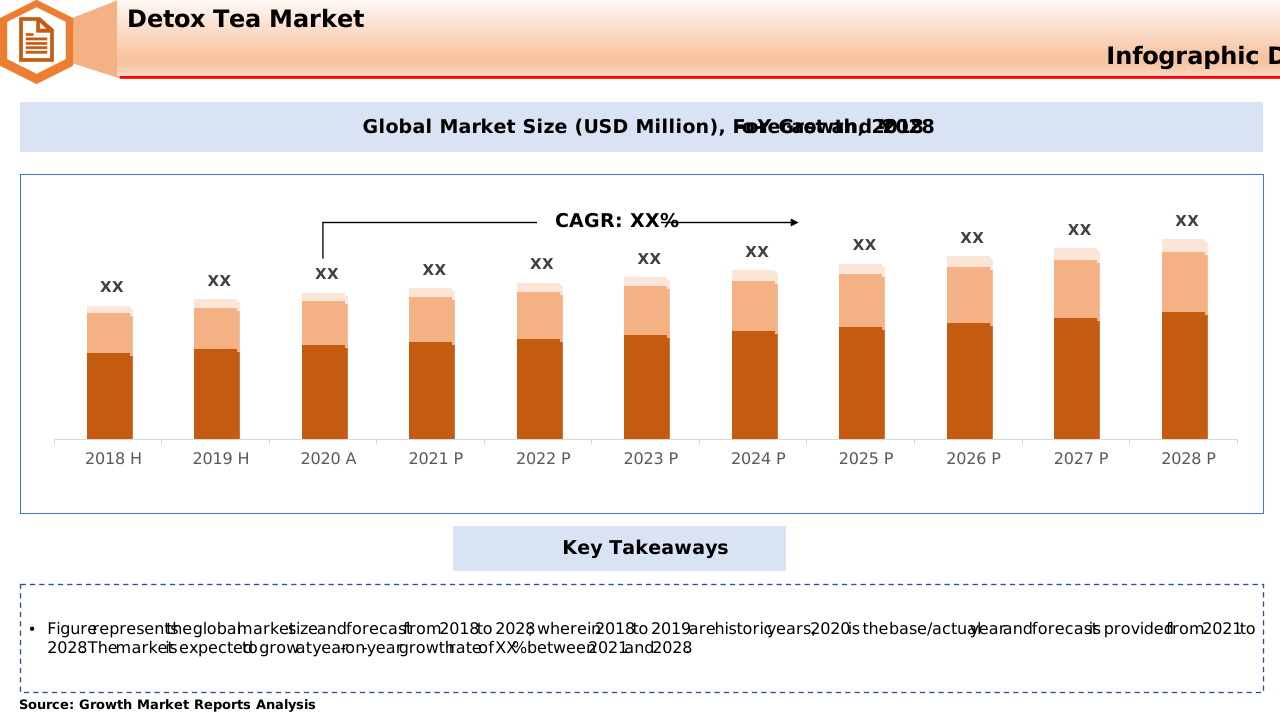
According to our latest research, the global detox tea market size reached USD 2.41 billion in 2024, reflecting a robust growth trajectory driven by increasing health consciousness and consumer demand for natural wellness solutions. The market is projected to expand at a CAGR of 7.2% from 2025 to 2033, reaching an estimated USD 4.53 billion by 2033. This impressive growth is underpinned by rising consumer inclination toward weight management, digestive health, and toxin elimination, with a pronounced shift towards herbal and natural product offerings as part of daily routines.

One of the most significant growth factors for the detox tea market is the surge in global health awareness, particularly concerning preventive healthcare and holistic well-being. Consumers are increasingly seeking natural alternatives to pharmaceutical products, and detox teas, rich in antioxidants and herbal extracts, have emerged as a preferred choice. The proliferation of lifestyle-related diseases, such as obesity, metabolic syndrome, and digestive disorders, has further fueled the demand for detox teas. The trend is especially prominent among urban populations, where sedentary lifestyles and unhealthy eating habits are prevalent, thereby driving the adoption of detox teas as a convenient and natural solution for maintaining health and vitality.

Another crucial driver is the rapid innovation in product formulations and the expansion of product portfolios by leading manufacturers. Companies are leveraging traditional herbal knowledge and integrating it with modern scientific research to develop blends targeting specific health concerns, such as liver detoxification, immune support, and digestive health. The introduction of flavored detox teas, organic and non-GMO variants, and ready-to-drink formats has broadened consumer appeal, catering to diverse preferences and lifestyles. Additionally, aggressive marketing campaigns, celebrity endorsements, and social media influence have significantly contributed to raising awareness about the benefits of detox teas, particularly among millennials and Generation Z, who are more inclined toward functional beverages.

The evolving retail landscape and the rise of e-commerce platforms have also played a pivotal role in market expansion. The convenience of online shopping, coupled with the availability of a wide array of detox tea products, has made it easier for consumers to access and explore new brands and formulations. Furthermore, the increasing presence of detox teas in supermarkets, hypermarkets, specialty stores, and health food outlets has enhanced product visibility and accessibility. This omnichannel distribution strategy has enabled brands to reach a broader audience and respond swiftly to changing consumer preferences, further propelling market growth.

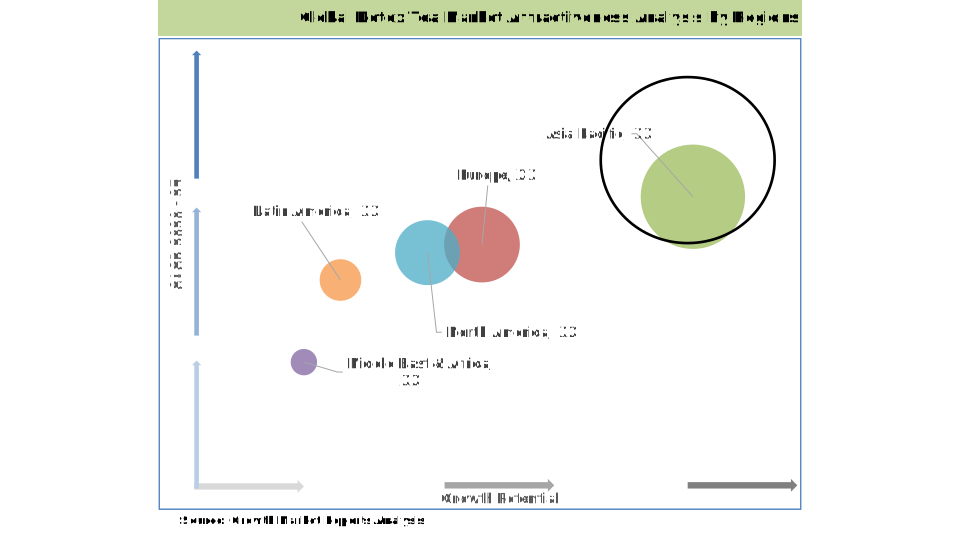
Regionally, Asia Pacific continues to dominate the detox tea market, owing to its deep-rooted tea culture and the widespread use of herbal remedies in traditional medicine. North America and Europe are also witnessing significant growth, driven by rising health consciousness and the popularity of wellness trends. Latin America and the Middle East & Africa, while smaller in market share, are emerging as promising regions due to increasing disposable incomes and growing awareness of health and wellness products. The regional dynamics are shaped by cultural preferences, regulatory frameworks, and the pace of urbanization, all of which influence consumption patterns and market opportunities.

Global Detox Tea Industry Outlook

Product Type Analysis

The detox tea market is segmented by product type into Green Tea, Herbal Tea, Oolong Tea, Black Tea, and Others. Among these, herbal tea holds the largest market share due to its wide-ranging health benefits and the growing preference for caffeine-free options. Herbal detox teas, often infused with ingredients such as dandelion, ginger, and milk thistle, are highly sought after for their purported liver-cleansing and digestive properties. Consumers are increasingly drawn to these blends for their natural, plant-based ingredients, which align with the global trend toward clean-label products. The longstanding tradition of herbal medicine in Asia, coupled with the endorsement of herbal teas by health practitioners, has further cemented their popularity.

Green tea is another prominent segment, favored for its high antioxidant content and well-documented benefits in supporting metabolism and weight management. The catechins present in green tea are widely recognized for their role in boosting fat oxidation and improving cardiovascular health, making green tea-based detox blends a staple among fitness enthusiasts and health-conscious consumers. The versatility of green tea, which can be blended with various herbs and flavors, has allowed manufacturers to innovate and capture a broader market segment.

Oolong tea and black tea segments, while smaller in comparison, are experiencing steady growth. Oolong tea, known for its unique fermentation process and balanced flavor profile, is gaining traction among consumers seeking both detoxification and a rich, aromatic beverage. Black tea, traditionally consumed in many cultures, is being reimagined in detox blends with added botanicals to enhance its health benefits. The “Others” category, which includes white tea and specialty blends, is also expanding as consumers seek novel flavors and unique health benefits.

Product innovation remains a key differentiator in this segment, with brands introducing premium, organic, and exotic blends to cater to evolving consumer tastes. The increasing demand for sustainable sourcing and ethical production practices is also influencing product development, with many companies emphasizing traceability and eco-friendly packaging. As consumers become more discerning, the ability to offer high-quality, efficacious, and responsibly sourced detox teas will be critical to gaining a competitive edge in the global market.

Report Scope

Attributes Details
Report Title Detox Tea Market Research Report 2033
By Product Type Green Tea, Herbal Tea, Oolong Tea, Black Tea, Others
By Form Tea Bags, Loose Leaf, Powder, Ready-to-Drink
By Distribution Channel Supermarkets/Hypermarkets, Online Stores, Specialty Stores, Convenience Stores, Others
By Application Weight Management, Digestive Health, Liver Detoxification, Others
Regions Covered North America, Europe, APAC, Latin America, MEA
Base Year 2024
Historic Data 2018-2023
Forecast Period 2025-2033
Number of Pages 265
Number of Tables & Figures 256
Customization Available Yes, the report can be customized as per your need.

Form Analysis

The detox tea market is further segmented by form into Tea Bags, Loose Leaf, Powder, and Ready-to-Drink variants. Tea bags represent the most popular format, accounting for a significant share of the market due to their convenience, portability, and ease of use. Busy lifestyles and the demand for on-the-go wellness solutions have made tea bags the preferred choice for many consumers. Brands are focusing on enhancing the quality of tea bags by using biodegradable materials and incorporating innovative packaging designs that preserve freshness and flavor.

The loose leaf segment appeals to traditional tea drinkers and connoisseurs who value the superior taste and aroma that loose leaves offer. This format allows for customization, as consumers can adjust the strength and blend of their tea according to personal preference. Loose leaf detox teas are often marketed as premium products, targeting a niche but growing segment of health-conscious consumers willing to invest in high-quality wellness beverages. The rise of specialty tea shops and online platforms has further facilitated the growth of this segment by providing access to a wide variety of loose leaf detox teas from around the world.

Powdered detox teas are gaining momentum, particularly among fitness enthusiasts and individuals seeking quick, hassle-free preparation. These products are typically formulated to dissolve easily in water, making them suitable for busy lifestyles and travel. The powdered format also allows for the inclusion of additional functional ingredients, such as superfoods, vitamins, and minerals, enhancing the health benefits and appeal of detox teas. Manufacturers are leveraging this trend by introducing innovative powdered blends that cater to specific health needs, such as energy boosting, immunity support, and digestive health.

The ready-to-drink (RTD) segment, while currently smaller, is experiencing rapid growth driven by the broader trend toward convenience and functional beverages. RTD detox teas offer a grab-and-go solution for consumers seeking immediate health benefits without the need for brewing or preparation. This segment is particularly popular among younger demographics and urban dwellers who prioritize convenience and are open to trying new beverage formats. The increasing availability of RTD detox teas in retail outlets and vending machines, coupled with attractive packaging and marketing campaigns, is expected to drive further growth in this segment.

Distribution Channel Analysis

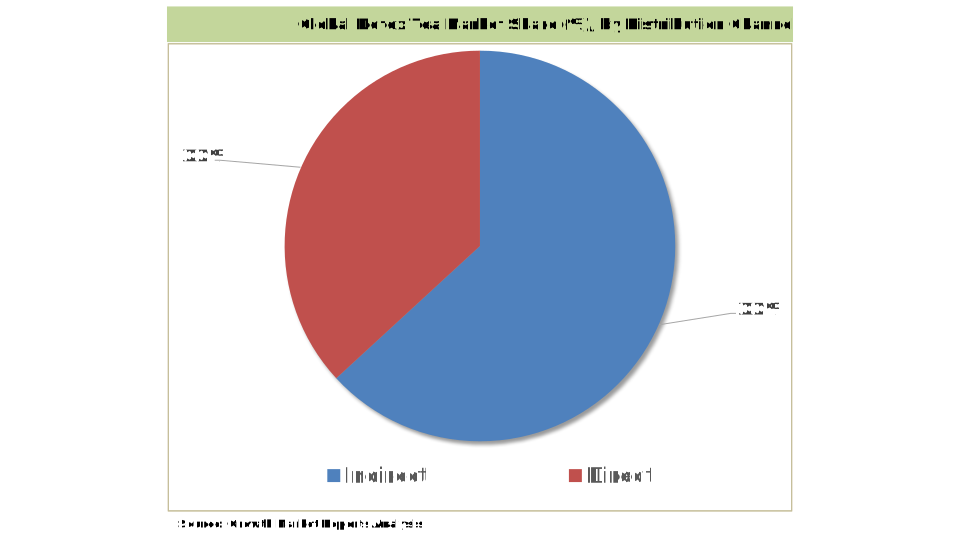
Distribution channels play a crucial role in shaping the growth trajectory of the detox tea market. Supermarkets and hypermarkets remain the dominant distribution channel, accounting for the largest market share due to their wide reach, product variety, and the convenience they offer to consumers. These retail formats provide an opportunity for brands to showcase their products alongside other health and wellness offerings, increasing visibility and encouraging impulse purchases. The strategic placement of detox teas in health food aisles and wellness sections has further enhanced their accessibility to a broad consumer base.

Online stores have emerged as a significant growth driver, particularly in the wake of the global shift toward e-commerce and digital shopping. The convenience of browsing and purchasing from a wide selection of detox teas online, coupled with detailed product information and customer reviews, has empowered consumers to make informed choices. Leading e-commerce platforms and brand-owned websites offer subscription services, discounts, and personalized recommendations, fostering brand loyalty and repeat purchases. The ability to reach consumers in remote and underserved regions has also contributed to the expansion of the online channel.

Specialty stores, including health food stores, organic shops, and wellness boutiques, cater to a niche audience seeking premium and specialty detox teas. These outlets often offer curated selections of high-quality, organic, and artisanal blends, appealing to discerning consumers who prioritize quality and authenticity. The personalized service and expert guidance provided by specialty stores enhance the overall shopping experience, making them a preferred destination for health-conscious buyers.

Convenience stores and “others” (such as direct-to-consumer channels and vending machines) also contribute to market growth by providing easy access to detox teas for consumers on the go. Convenience stores, in particular, benefit from high foot traffic and the impulse-driven nature of beverage purchases. The increasing presence of detox tea products in these outlets, often in single-serve or RTD formats, has expanded their reach to a wider audience, including commuters and busy professionals.

Application Analysis

The detox tea market is segmented by application into Weight Management, Digestive Health, Liver Detoxification, and Others. Weight management remains the primary application, accounting for the largest share of the market. The global rise in obesity and related health concerns has led consumers to seek natural, non-invasive solutions for weight loss and maintenance. Detox teas are widely marketed for their ability to boost metabolism, suppress appetite, and promote fat oxidation, making them a popular choice among individuals pursuing weight loss goals. The effectiveness of detox teas in supporting weight management is often amplified by the inclusion of ingredients such as green tea extract, Garcinia Cambogia, and dandelion root.

Digestive health is another key application, driven by the increasing prevalence of digestive disorders and the growing awareness of gut health’s impact on overall well-being. Detox teas formulated with ingredients like ginger, peppermint, and fennel are known to aid digestion, reduce bloating, and alleviate gastrointestinal discomfort. Consumers are increasingly prioritizing digestive health as part of their wellness routines, and detox teas offer a natural and convenient way to support this aspect of health.

Liver detoxification is gaining traction as consumers become more aware of the importance of liver health in maintaining overall wellness. Detox teas containing milk thistle, turmeric, and other liver-supportive herbs are marketed for their ability to promote liver function, enhance toxin elimination, and support the body’s natural detoxification processes. The growing incidence of liver-related health issues, often linked to poor diet and lifestyle choices, has heightened the demand for products targeting liver health.

The “Others” category includes applications such as immune support, skin health, and stress relief, reflecting the expanding scope of detox teas beyond traditional cleansing and weight loss. As consumers seek holistic wellness solutions, manufacturers are developing multifunctional detox tea blends that address a range of health concerns. The integration of adaptogens, superfoods, and vitamins into detox tea formulations is further broadening the appeal and utility of these products.

Opportunities & Threats

The detox tea market presents numerous opportunities for growth and innovation, particularly in the realm of product development and diversification. The rising demand for organic, non-GMO, and sustainably sourced detox teas offers significant potential for brands to differentiate themselves and capture environmentally conscious consumers. The integration of functional ingredients, such as probiotics, adaptogens, and superfoods, into detox tea formulations can enhance health benefits and appeal to a broader audience. Additionally, the growing popularity of personalized nutrition and wellness presents an opportunity for brands to offer customized detox tea blends tailored to individual health goals and preferences. Expanding into emerging markets, where health awareness is on the rise and disposable incomes are increasing, can further drive market growth.

Digital transformation and the proliferation of e-commerce platforms also present significant opportunities for market expansion. Brands can leverage digital marketing, influencer collaborations, and social media engagement to reach and educate consumers about the benefits of detox teas. The use of data analytics and artificial intelligence to understand consumer preferences and predict trends can inform product development and marketing strategies, enabling brands to stay ahead of the competition. Collaborations with health practitioners, nutritionists, and wellness influencers can enhance credibility and drive consumer trust, further boosting sales and market penetration.

However, the market also faces certain restraints and threats that could hinder growth. The lack of standardized regulations and quality control in the detox tea industry raises concerns about product safety, efficacy, and labeling accuracy. Instances of misleading claims and the presence of potentially harmful ingredients in some detox tea products have led to increased scrutiny by regulatory authorities and consumer advocacy groups. Negative publicity and legal challenges could erode consumer trust and dampen market growth. Additionally, intense competition and price wars among brands could pressure profit margins and limit the ability to invest in innovation and quality improvement.

Regional Outlook

The regional distribution of the detox tea market reflects varying levels of market maturity, consumer awareness, and cultural preferences. Asia Pacific dominates the market, accounting for approximately 38% of the global market share in 2024, with a market value of around USD 0.92 billion. The region’s leadership is attributed to its rich tea heritage, widespread use of herbal remedies, and the presence of major tea-producing countries such as China, India, and Japan. The strong cultural association with tea consumption, coupled with the growing adoption of Western wellness trends, has driven robust demand for detox teas in both urban and rural areas. The Asia Pacific market is expected to maintain a healthy CAGR of 7.6% through 2033.

North America is the second-largest market, with a value of USD 0.68 billion in 2024, representing 28% of the global market. The region’s growth is fueled by rising health consciousness, the popularity of functional beverages, and the influence of celebrity endorsements and social media trends. Consumers in the United States and Canada are increasingly seeking natural and organic products, driving demand for detox teas with clean labels and transparent ingredient sourcing. The region also benefits from a well-established retail infrastructure and a high level of digital engagement, facilitating the growth of both offline and online sales channels.

Europe holds a significant share of the market, valued at USD 0.52 billion in 2024, or 22% of the global total. The region’s market dynamics are shaped by a strong tradition of herbal teas, increasing health awareness, and the growing adoption of preventive healthcare practices. Countries such as Germany, the United Kingdom, and France are key contributors to market growth, with consumers demonstrating a preference for organic and specialty detox teas. The European market is characterized by stringent regulatory standards, which have prompted manufacturers to prioritize quality, safety, and transparency in product offerings.

Detox Tea Market Statistics

Competitor Outlook

The global detox tea market is highly competitive, characterized by the presence of both established multinational brands and emerging local players. The competitive landscape is shaped by factors such as product innovation, brand reputation, pricing strategies, and distribution networks. Leading companies are investing heavily in research and development to create unique, efficacious, and appealing detox tea blends that cater to evolving consumer preferences. The ability to offer organic, non-GMO, and sustainably sourced products is increasingly viewed as a key differentiator in the market, as consumers become more discerning and environmentally conscious.

Marketing and branding play a pivotal role in shaping competitive dynamics, with companies leveraging celebrity endorsements, influencer partnerships, and social media campaigns to build brand awareness and loyalty. The use of attractive packaging, engaging storytelling, and educational content has become essential in capturing consumer attention and fostering trust. Additionally, strategic collaborations with health practitioners, nutritionists, and wellness experts have helped brands enhance credibility and expand their reach to new consumer segments.

Distribution strategies are also a critical component of competitive success, with leading brands adopting an omnichannel approach to maximize market penetration. The expansion of e-commerce platforms has enabled companies to reach a global audience and offer personalized shopping experiences, while the continued presence in brick-and-mortar stores ensures visibility and accessibility. Price competitiveness, promotional offers, and loyalty programs are commonly employed to attract and retain customers in an increasingly crowded marketplace.

Among the major players in the detox tea market are Traditional Medicinals, Yogi Tea, Pukka Herbs, Celestial Seasonings, and The Republic of Tea. Traditional Medicinals is renowned for its extensive range of organic and herbal detox teas, with a focus on sustainability and ethical sourcing. Yogi Tea has built a strong reputation for its unique blends and holistic wellness approach, incorporating Ayurvedic principles and high-quality ingredients. Pukka Herbs is recognized for its organic and ethically sourced teas, with a strong emphasis on environmental stewardship and social responsibility. Celestial Seasonings offers a diverse portfolio of wellness teas, including detox blends formulated with natural herbs and botanicals. The Republic of Tea is known for its premium loose leaf and bagged teas, catering to discerning consumers seeking high-quality, innovative blends.

These companies are continuously investing in product development, sustainability initiatives, and consumer engagement to maintain their competitive edge. The focus on transparency, quality assurance, and customer education has helped leading brands build lasting relationships with consumers and navigate the challenges of an evolving market landscape. As the detox tea market continues to expand, the ability to adapt to changing consumer needs, regulatory requirements, and technological advancements will be crucial for sustained growth and success.

Key Players

  • Traditional Medicinals
  • Yogi Tea
  • Pukka Herbs
  • Celestial Seasonings
  • Teatox
  • Triple Leaf Tea
  • Guangzhou Runming Tea Co., Ltd.
  • Unilever (Lipton)
  • The Republic of Tea
  • Herbalife Nutrition
  • Fit Tea
  • Buddha Teas
  • Baetea
  • MateFit
  • Green Rootz
  • Hyleys Tea
  • Twinings
  • Vahdam Teas
  • Teami Blends
  • Dr. Stuart’s Teas
Detox Tea Market Overview

Segments

The Detox Tea market has been segmented on the basis of

Product Type

  • Green Tea
  • Herbal Tea
  • Oolong Tea
  • Black Tea
  • Others

Form

  • Tea Bags
  • Loose Leaf
  • Powder
  • Ready-to-Drink

Distribution Channel

  • Supermarkets/Hypermarkets
  • Online Stores
  • Specialty Stores
  • Convenience Stores
  • Others

Application

  • Weight Management
  • Digestive Health
  • Liver Detoxification
  • Others

Competitive Landscape

Key players operating in the global detox tea market includes Traditional Medicin, Yogi Products, Pukka Herbs, Teatulia Tea, R.Twinings, Celestial Seasonings, Granum, Unilever.
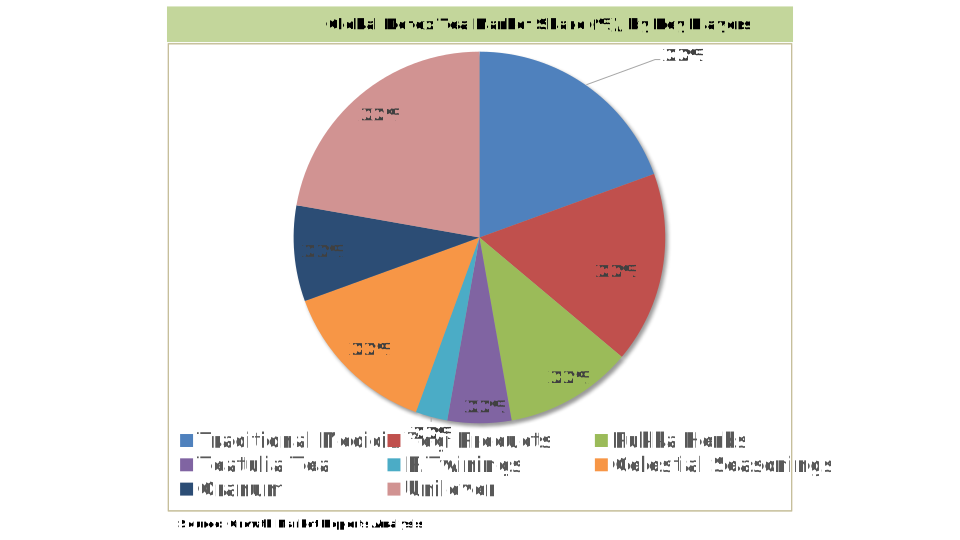

Global Detox Tea Market Key Players

Frequently Asked Questions

Challenges include lack of standardized regulations, concerns about product safety and labeling, misleading claims, intense competition, and pressure on profit margins.

Major brands include Traditional Medicinals, Yogi Tea, Pukka Herbs, Celestial Seasonings, The Republic of Tea, Unilever (Lipton), Herbalife Nutrition, and several others.

Trends include demand for organic and sustainably sourced teas, integration of functional ingredients like probiotics and adaptogens, personalized blends, and expansion into emerging markets.

Detox teas are sold through supermarkets/hypermarkets, online stores, specialty stores, convenience stores, and direct-to-consumer channels, with supermarkets and online stores being the most prominent.

Detox teas are mainly used for weight management, digestive health, and liver detoxification. Other applications include immune support, skin health, and stress relief.

Detox teas are available in tea bags, loose leaf, powder, and ready-to-drink (RTD) formats, with tea bags being the most popular due to convenience.

Herbal tea holds the largest market share, followed by green tea, oolong tea, black tea, and specialty blends. Herbal teas are especially popular for their caffeine-free and plant-based ingredients.

Asia Pacific leads the detox tea market due to its strong tea culture and use of herbal remedies, followed by North America and Europe, which are also experiencing significant growth.

Key growth drivers include increasing health consciousness, demand for natural wellness solutions, rising cases of lifestyle-related diseases, and innovation in herbal and organic detox tea products.

As of 2024, the global detox tea market size reached USD 2.41 billion, with projections to grow to USD 4.53 billion by 2033.

Table Of Content

Chapter 1 Executive Summary
Chapter 2 Assumptions and Acronyms Used
Chapter 3 Research Methodology
Chapter 4 Detox Tea Market Overview
   4.1 Introduction
      4.1.1 Market Taxonomy
      4.1.2 Market Definition
      4.1.3 Macro-Economic Factors Impacting the Market Growth
   4.2 Detox Tea Market Dynamics
      4.2.1 Market Drivers
      4.2.2 Market Restraints
      4.2.3 Market Opportunity
   4.3 Detox Tea Market - Supply Chain Analysis
      4.3.1 List of Key Suppliers
      4.3.2 List of Key Distributors
      4.3.3 List of Key Consumers
   4.4 Key Forces Shaping the Detox Tea Market
      4.4.1 Bargaining Power of Suppliers
      4.4.2 Bargaining Power of Buyers
      4.4.3 Threat of Substitution
      4.4.4 Threat of New Entrants
      4.4.5 Competitive Rivalry
   4.5 Global Detox Tea Market Size & Forecast, 2023-2032
      4.5.1 Detox Tea Market Size and Y-o-Y Growth
      4.5.2 Detox Tea Market Absolute $ Opportunity

Chapter 5 Global Detox Tea Market Analysis and Forecast By Product Type
   5.1 Introduction
      5.1.1 Key Market Trends & Growth Opportunities By Product Type
      5.1.2 Basis Point Share (BPS) Analysis By Product Type
      5.1.3 Absolute $ Opportunity Assessment By Product Type
   5.2 Detox Tea Market Size Forecast By Product Type
      5.2.1 Green Tea
      5.2.2 Herbal Tea
      5.2.3 Oolong Tea
      5.2.4 Black Tea
      5.2.5 Others
   5.3 Market Attractiveness Analysis By Product Type

Chapter 6 Global Detox Tea Market Analysis and Forecast By Form
   6.1 Introduction
      6.1.1 Key Market Trends & Growth Opportunities By Form
      6.1.2 Basis Point Share (BPS) Analysis By Form
      6.1.3 Absolute $ Opportunity Assessment By Form
   6.2 Detox Tea Market Size Forecast By Form
      6.2.1 Tea Bags
      6.2.2 Loose Leaf
      6.2.3 Powder
      6.2.4 Ready-to-Drink
   6.3 Market Attractiveness Analysis By Form

Chapter 7 Global Detox Tea Market Analysis and Forecast By Distribution Channel
   7.1 Introduction
      7.1.1 Key Market Trends & Growth Opportunities By Distribution Channel
      7.1.2 Basis Point Share (BPS) Analysis By Distribution Channel
      7.1.3 Absolute $ Opportunity Assessment By Distribution Channel
   7.2 Detox Tea Market Size Forecast By Distribution Channel
      7.2.1 Supermarkets/Hypermarkets
      7.2.2 Online Stores
      7.2.3 Specialty Stores
      7.2.4 Convenience Stores
      7.2.5 Others
   7.3 Market Attractiveness Analysis By Distribution Channel

Chapter 8 Global Detox Tea Market Analysis and Forecast By Application
   8.1 Introduction
      8.1.1 Key Market Trends & Growth Opportunities By Application
      8.1.2 Basis Point Share (BPS) Analysis By Application
      8.1.3 Absolute $ Opportunity Assessment By Application
   8.2 Detox Tea Market Size Forecast By Application
      8.2.1 Weight Management
      8.2.2 Digestive Health
      8.2.3 Liver Detoxification
      8.2.4 Others
   8.3 Market Attractiveness Analysis By Application

Chapter 9 Global Detox Tea Market Analysis and Forecast by Region
   9.1 Introduction
      9.1.1 Key Market Trends & Growth Opportunities By Region
      9.1.2 Basis Point Share (BPS) Analysis By Region
      9.1.3 Absolute $ Opportunity Assessment By Region
   9.2 Detox Tea Market Size Forecast By Region
      9.2.1 North America
      9.2.2 Europe
      9.2.3 Asia Pacific
      9.2.4 Latin America
      9.2.5 Middle East & Africa (MEA)
   9.3 Market Attractiveness Analysis By Region

Chapter 10 Coronavirus Disease (COVID-19) Impact 
   10.1 Introduction 
   10.2 Current & Future Impact Analysis 
   10.3 Economic Impact Analysis 
   10.4 Government Policies 
   10.5 Investment Scenario

Chapter 11 North America Detox Tea Analysis and Forecast
   11.1 Introduction
   11.2 North America Detox Tea Market Size Forecast by Country
      11.2.1 U.S.
      11.2.2 Canada
   11.3 Basis Point Share (BPS) Analysis by Country
   11.4 Absolute $ Opportunity Assessment by Country
   11.5 Market Attractiveness Analysis by Country
   11.6 North America Detox Tea Market Size Forecast By Product Type
      11.6.1 Green Tea
      11.6.2 Herbal Tea
      11.6.3 Oolong Tea
      11.6.4 Black Tea
      11.6.5 Others
   11.7 Basis Point Share (BPS) Analysis By Product Type 
   11.8 Absolute $ Opportunity Assessment By Product Type 
   11.9 Market Attractiveness Analysis By Product Type
   11.10 North America Detox Tea Market Size Forecast By Form
      11.10.1 Tea Bags
      11.10.2 Loose Leaf
      11.10.3 Powder
      11.10.4 Ready-to-Drink
   11.11 Basis Point Share (BPS) Analysis By Form 
   11.12 Absolute $ Opportunity Assessment By Form 
   11.13 Market Attractiveness Analysis By Form
   11.14 North America Detox Tea Market Size Forecast By Distribution Channel
      11.14.1 Supermarkets/Hypermarkets
      11.14.2 Online Stores
      11.14.3 Specialty Stores
      11.14.4 Convenience Stores
      11.14.5 Others
   11.15 Basis Point Share (BPS) Analysis By Distribution Channel 
   11.16 Absolute $ Opportunity Assessment By Distribution Channel 
   11.17 Market Attractiveness Analysis By Distribution Channel
   11.18 North America Detox Tea Market Size Forecast By Application
      11.18.1 Weight Management
      11.18.2 Digestive Health
      11.18.3 Liver Detoxification
      11.18.4 Others
   11.19 Basis Point Share (BPS) Analysis By Application 
   11.20 Absolute $ Opportunity Assessment By Application 
   11.21 Market Attractiveness Analysis By Application

Chapter 12 Europe Detox Tea Analysis and Forecast
   12.1 Introduction
   12.2 Europe Detox Tea Market Size Forecast by Country
      12.2.1 Germany
      12.2.2 France
      12.2.3 Italy
      12.2.4 U.K.
      12.2.5 Spain
      12.2.6 Russia
      12.2.7 Rest of Europe
   12.3 Basis Point Share (BPS) Analysis by Country
   12.4 Absolute $ Opportunity Assessment by Country
   12.5 Market Attractiveness Analysis by Country
   12.6 Europe Detox Tea Market Size Forecast By Product Type
      12.6.1 Green Tea
      12.6.2 Herbal Tea
      12.6.3 Oolong Tea
      12.6.4 Black Tea
      12.6.5 Others
   12.7 Basis Point Share (BPS) Analysis By Product Type 
   12.8 Absolute $ Opportunity Assessment By Product Type 
   12.9 Market Attractiveness Analysis By Product Type
   12.10 Europe Detox Tea Market Size Forecast By Form
      12.10.1 Tea Bags
      12.10.2 Loose Leaf
      12.10.3 Powder
      12.10.4 Ready-to-Drink
   12.11 Basis Point Share (BPS) Analysis By Form 
   12.12 Absolute $ Opportunity Assessment By Form 
   12.13 Market Attractiveness Analysis By Form
   12.14 Europe Detox Tea Market Size Forecast By Distribution Channel
      12.14.1 Supermarkets/Hypermarkets
      12.14.2 Online Stores
      12.14.3 Specialty Stores
      12.14.4 Convenience Stores
      12.14.5 Others
   12.15 Basis Point Share (BPS) Analysis By Distribution Channel 
   12.16 Absolute $ Opportunity Assessment By Distribution Channel 
   12.17 Market Attractiveness Analysis By Distribution Channel
   12.18 Europe Detox Tea Market Size Forecast By Application
      12.18.1 Weight Management
      12.18.2 Digestive Health
      12.18.3 Liver Detoxification
      12.18.4 Others
   12.19 Basis Point Share (BPS) Analysis By Application 
   12.20 Absolute $ Opportunity Assessment By Application 
   12.21 Market Attractiveness Analysis By Application

Chapter 13 Asia Pacific Detox Tea Analysis and Forecast
   13.1 Introduction
   13.2 Asia Pacific Detox Tea Market Size Forecast by Country
      13.2.1 China
      13.2.2 Japan
      13.2.3 South Korea
      13.2.4 India
      13.2.5 Australia
      13.2.6 South East Asia (SEA)
      13.2.7 Rest of Asia Pacific (APAC)
   13.3 Basis Point Share (BPS) Analysis by Country
   13.4 Absolute $ Opportunity Assessment by Country
   13.5 Market Attractiveness Analysis by Country
   13.6 Asia Pacific Detox Tea Market Size Forecast By Product Type
      13.6.1 Green Tea
      13.6.2 Herbal Tea
      13.6.3 Oolong Tea
      13.6.4 Black Tea
      13.6.5 Others
   13.7 Basis Point Share (BPS) Analysis By Product Type 
   13.8 Absolute $ Opportunity Assessment By Product Type 
   13.9 Market Attractiveness Analysis By Product Type
   13.10 Asia Pacific Detox Tea Market Size Forecast By Form
      13.10.1 Tea Bags
      13.10.2 Loose Leaf
      13.10.3 Powder
      13.10.4 Ready-to-Drink
   13.11 Basis Point Share (BPS) Analysis By Form 
   13.12 Absolute $ Opportunity Assessment By Form 
   13.13 Market Attractiveness Analysis By Form
   13.14 Asia Pacific Detox Tea Market Size Forecast By Distribution Channel
      13.14.1 Supermarkets/Hypermarkets
      13.14.2 Online Stores
      13.14.3 Specialty Stores
      13.14.4 Convenience Stores
      13.14.5 Others
   13.15 Basis Point Share (BPS) Analysis By Distribution Channel 
   13.16 Absolute $ Opportunity Assessment By Distribution Channel 
   13.17 Market Attractiveness Analysis By Distribution Channel
   13.18 Asia Pacific Detox Tea Market Size Forecast By Application
      13.18.1 Weight Management
      13.18.2 Digestive Health
      13.18.3 Liver Detoxification
      13.18.4 Others
   13.19 Basis Point Share (BPS) Analysis By Application 
   13.20 Absolute $ Opportunity Assessment By Application 
   13.21 Market Attractiveness Analysis By Application

Chapter 14 Latin America Detox Tea Analysis and Forecast
   14.1 Introduction
   14.2 Latin America Detox Tea Market Size Forecast by Country
      14.2.1 Brazil
      14.2.2 Mexico
      14.2.3 Rest of Latin America (LATAM)
   14.3 Basis Point Share (BPS) Analysis by Country
   14.4 Absolute $ Opportunity Assessment by Country
   14.5 Market Attractiveness Analysis by Country
   14.6 Latin America Detox Tea Market Size Forecast By Product Type
      14.6.1 Green Tea
      14.6.2 Herbal Tea
      14.6.3 Oolong Tea
      14.6.4 Black Tea
      14.6.5 Others
   14.7 Basis Point Share (BPS) Analysis By Product Type 
   14.8 Absolute $ Opportunity Assessment By Product Type 
   14.9 Market Attractiveness Analysis By Product Type
   14.10 Latin America Detox Tea Market Size Forecast By Form
      14.10.1 Tea Bags
      14.10.2 Loose Leaf
      14.10.3 Powder
      14.10.4 Ready-to-Drink
   14.11 Basis Point Share (BPS) Analysis By Form 
   14.12 Absolute $ Opportunity Assessment By Form 
   14.13 Market Attractiveness Analysis By Form
   14.14 Latin America Detox Tea Market Size Forecast By Distribution Channel
      14.14.1 Supermarkets/Hypermarkets
      14.14.2 Online Stores
      14.14.3 Specialty Stores
      14.14.4 Convenience Stores
      14.14.5 Others
   14.15 Basis Point Share (BPS) Analysis By Distribution Channel 
   14.16 Absolute $ Opportunity Assessment By Distribution Channel 
   14.17 Market Attractiveness Analysis By Distribution Channel
   14.18 Latin America Detox Tea Market Size Forecast By Application
      14.18.1 Weight Management
      14.18.2 Digestive Health
      14.18.3 Liver Detoxification
      14.18.4 Others
   14.19 Basis Point Share (BPS) Analysis By Application 
   14.20 Absolute $ Opportunity Assessment By Application 
   14.21 Market Attractiveness Analysis By Application

Chapter 15 Middle East & Africa (MEA) Detox Tea Analysis and Forecast
   15.1 Introduction
   15.2 Middle East & Africa (MEA) Detox Tea Market Size Forecast by Country
      15.2.1 Saudi Arabia
      15.2.2 South Africa
      15.2.3 UAE
      15.2.4 Rest of Middle East & Africa (MEA)
   15.3 Basis Point Share (BPS) Analysis by Country
   15.4 Absolute $ Opportunity Assessment by Country
   15.5 Market Attractiveness Analysis by Country
   15.6 Middle East & Africa (MEA) Detox Tea Market Size Forecast By Product Type
      15.6.1 Green Tea
      15.6.2 Herbal Tea
      15.6.3 Oolong Tea
      15.6.4 Black Tea
      15.6.5 Others
   15.7 Basis Point Share (BPS) Analysis By Product Type 
   15.8 Absolute $ Opportunity Assessment By Product Type 
   15.9 Market Attractiveness Analysis By Product Type
   15.10 Middle East & Africa (MEA) Detox Tea Market Size Forecast By Form
      15.10.1 Tea Bags
      15.10.2 Loose Leaf
      15.10.3 Powder
      15.10.4 Ready-to-Drink
   15.11 Basis Point Share (BPS) Analysis By Form 
   15.12 Absolute $ Opportunity Assessment By Form 
   15.13 Market Attractiveness Analysis By Form
   15.14 Middle East & Africa (MEA) Detox Tea Market Size Forecast By Distribution Channel
      15.14.1 Supermarkets/Hypermarkets
      15.14.2 Online Stores
      15.14.3 Specialty Stores
      15.14.4 Convenience Stores
      15.14.5 Others
   15.15 Basis Point Share (BPS) Analysis By Distribution Channel 
   15.16 Absolute $ Opportunity Assessment By Distribution Channel 
   15.17 Market Attractiveness Analysis By Distribution Channel
   15.18 Middle East & Africa (MEA) Detox Tea Market Size Forecast By Application
      15.18.1 Weight Management
      15.18.2 Digestive Health
      15.18.3 Liver Detoxification
      15.18.4 Others
   15.19 Basis Point Share (BPS) Analysis By Application 
   15.20 Absolute $ Opportunity Assessment By Application 
   15.21 Market Attractiveness Analysis By Application

Chapter 16 Competition Landscape 
   16.1 Detox Tea Market: Competitive Dashboard
   16.2 Global Detox Tea Market: Market Share Analysis, 2023
   16.3 Company Profiles (Details – Overview, Financials, Developments, Strategy) 
      16.3.1 Traditional Medicinals
Yogi Tea
Pukka Herbs
Celestial Seasonings
Teatox
Triple Leaf Tea
Guangzhou Runming Tea Co., Ltd.
Unilever (Lipton)
The Republic of Tea
Herbalife Nutrition
Fit Tea
Buddha Teas
Baetea
MateFit
Green Rootz
Hyleys Tea
Twinings
Vahdam Teas
Teami Blends
Dr. Stuart’s Teas

Methodology

Our Clients

Pfizer
General Electric
Microsoft
FedEx Logistics
The John Holland Group
sinopec
Honda Motor Co. Ltd.
Siemens Healthcare