Segments - by Service Type (Design and Consulting, Installation and Deployment, Maintenance and Support, Managed Services, Training and Development), by End-User (BFSI, IT and Telecommunications, Healthcare, Government, Retail, Energy, Manufacturing, Others), by Data Center Type (Enterprise Data Centers, Colocation Data Centers, Cloud Data Centers, Edge Data Centers), by Organization Size (Small and Medium Enterprises, Large Enterprises)
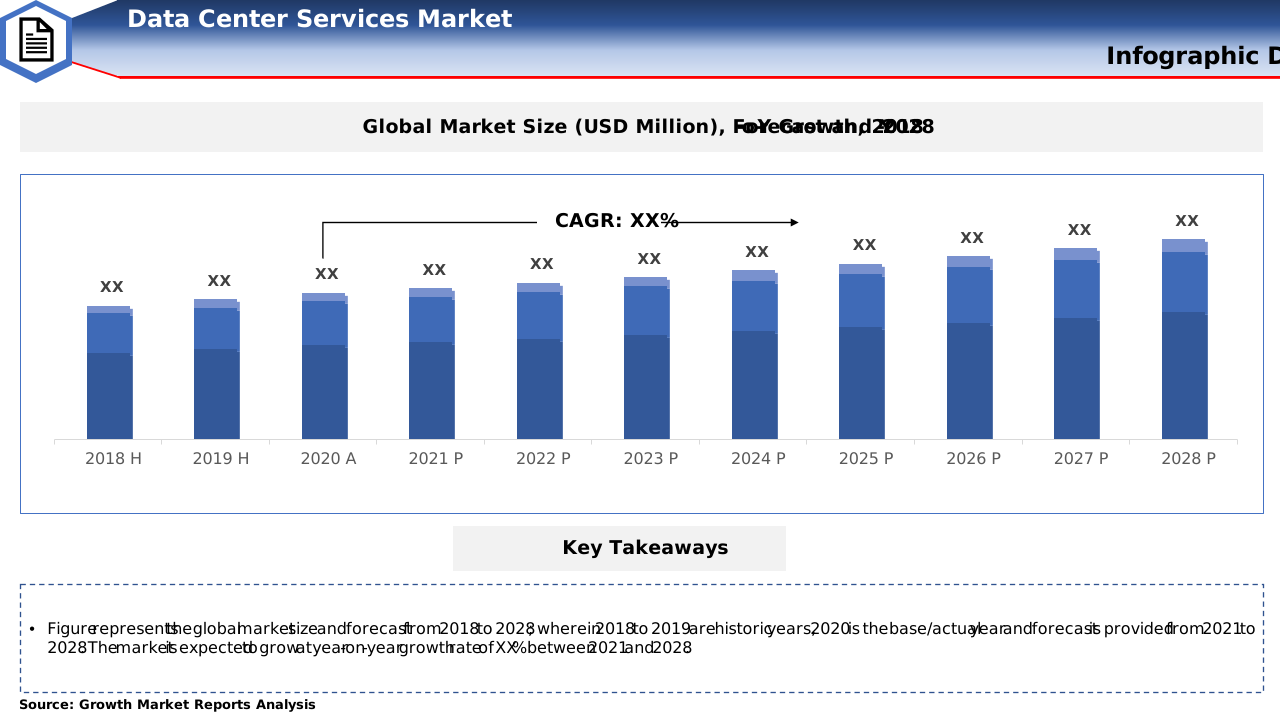
According to our latest research, the global data center services market size reached USD 74.8 billion in 2024, demonstrating robust growth driven by increasing digital transformation initiatives and surging demand for cloud computing solutions. The market is forecasted to expand at a CAGR of 13.2% from 2025 to 2033, projecting a value of USD 221.4 billion by 2033. This strong growth trajectory is largely attributed to the proliferation of data-intensive applications, rising adoption of hybrid IT infrastructure, and the escalating need for scalable, secure, and energy-efficient data management solutions across industries.
One of the primary growth factors fueling the data center services market is the exponential rise in data generation from diverse sources, including IoT devices, social media platforms, and enterprise applications. Organizations across sectors are increasingly relying on data-driven insights to enhance operational efficiency, customer engagement, and decision-making processes. As a result, there is a surging demand for advanced data center services that can support high-performance computing, robust storage capabilities, and seamless data integration. Additionally, the growing adoption of emerging technologies such as artificial intelligence, machine learning, and big data analytics further amplifies the need for scalable and flexible data center infrastructures, propelling market expansion.
The migration to cloud-based solutions and the proliferation of edge computing are also significant drivers in the data center services market. Enterprises are increasingly moving their workloads to cloud environments to leverage benefits such as cost efficiency, scalability, and remote accessibility. This shift necessitates sophisticated data center services, including managed and hybrid cloud services, to ensure seamless migration, integration, and ongoing management of cloud resources. Furthermore, the rise of edge computing, driven by the need to process data closer to the source, is prompting investments in edge data centers and associated services, thereby opening new avenues for market growth.
Another crucial factor contributing to the expansion of the data center services market is the heightened focus on data security, regulatory compliance, and sustainability. With the increasing frequency and sophistication of cyber threats, organizations are prioritizing secure data storage and management solutions. Data center service providers are responding by offering advanced security features, compliance management, and energy-efficient infrastructure to meet the evolving needs of clients. Additionally, the growing emphasis on sustainability and green data centers is driving innovation in energy management, cooling solutions, and renewable energy integration, further bolstering the market's growth prospects.
Data Center Project Services are becoming increasingly vital as organizations undertake large-scale IT infrastructure projects. These services encompass a comprehensive range of offerings, including project management, planning, and execution, ensuring that data center projects are delivered on time and within budget. With the growing complexity of data center environments, businesses are seeking expert guidance to navigate the challenges of design, construction, and integration. Data Center Project Services providers are leveraging their expertise to deliver customized solutions that align with the unique needs of each client, from initial concept to final implementation. This approach not only enhances project outcomes but also ensures that data centers are optimized for performance, efficiency, and sustainability.
From a regional perspective, North America continues to dominate the data center services market due to the presence of major technology players, rapid digitalization, and substantial investments in cloud infrastructure. However, Asia Pacific is emerging as the fastest-growing region, fueled by burgeoning digital economies, increasing internet penetration, and government initiatives to promote digital transformation. Europe also holds a significant share, driven by stringent data protection regulations and the rise of smart city projects. Meanwhile, Latin America and the Middle East & Africa are witnessing steady growth as enterprises in these regions increasingly adopt cloud and data center solutions to support their digital agendas.
The data center services market is segmented by service type into design and consulting, installation and deployment, maintenance and support, managed services, and training and development. Design and consulting services are pivotal in the initial stages of data center projects, providing organizations with expert guidance on infrastructure planning, architecture, and compliance requirements. The growing complexity of data center environments, driven by the integration of hybrid and multi-cloud solutions, is increasing the demand for specialized consulting services. These services help businesses optimize their data center designs for performance, scalability, and sustainability, ensuring that investments align with long-term business objectives and regulatory standards.
Data Center Design Services play a crucial role in shaping the future of IT infrastructure by providing tailored solutions that meet the specific needs of organizations. As the demand for scalable and efficient data centers grows, these services focus on creating designs that maximize space utilization, energy efficiency, and operational flexibility. Data Center Design Services providers work closely with clients to understand their business objectives and technical requirements, ensuring that the final design supports their long-term goals. By incorporating the latest technologies and best practices, these services help organizations build data centers that are not only robust and secure but also adaptable to future advancements in technology and business needs.
Installation and deployment services play a critical role in the successful implementation of data center infrastructure. As organizations seek to accelerate digital transformation, there is a heightened demand for efficient and timely deployment of servers, storage, networking equipment, and security systems. Service providers are leveraging automation, modular solutions, and advanced project management methodologies to streamline installation processes and minimize downtime. The trend towards rapid deployment is particularly pronounced in industries with dynamic workloads and evolving IT requirements, such as e-commerce, financial services, and healthcare.
Maintenance and support services are essential for ensuring the ongoing reliability, performance, and security of data center operations. These services encompass routine monitoring, hardware and software upgrades, troubleshooting, and incident management. The increasing complexity of data center environments, coupled with the need for 24/7 uptime, is driving demand for proactive and predictive maintenance solutions. Service providers are leveraging artificial intelligence and machine learning to enhance monitoring capabilities, enabling real-time detection of potential issues and minimizing the risk of service disruptions.
Data Center Risk Assessment Services are essential for identifying and mitigating potential risks that could impact the performance and security of data centers. These services involve a thorough evaluation of data center infrastructure, processes, and policies to uncover vulnerabilities and areas for improvement. By conducting comprehensive risk assessments, service providers help organizations develop strategies to enhance resilience and ensure business continuity. Data Center Risk Assessment Services also play a critical role in compliance management, helping businesses adhere to industry standards and regulatory requirements. As cyber threats and operational challenges continue to evolve, these services provide a proactive approach to safeguarding data center operations and protecting valuable assets.
Managed services represent a rapidly growing segment within the data center services market. As organizations focus on core business activities, there is a growing trend towards outsourcing data center management to specialized service providers. Managed services encompass a wide range of offerings, including infrastructure management, security, backup and disaster recovery, and performance optimization. The adoption of managed services enables enterprises to reduce operational costs, enhance security, and ensure compliance with industry regulations. Additionally, the rise of hybrid and multi-cloud environments is driving demand for managed services that can seamlessly integrate and manage diverse IT ecosystems.
Training and development services are gaining importance as organizations strive to upskill their IT teams and keep pace with rapidly evolving technologies. Data center service providers are offering comprehensive training programs covering topics such as cloud computing, cybersecurity, virtualization, and data center operations. These programs are designed to equip IT professionals with the knowledge and skills needed to manage modern data center environments effectively. The emphasis on continuous learning and professional development is expected to drive sustained demand for training and development services in the coming years.
| Attributes | Details |
| Report Title | Data Center Services Market Research Report 2033 |
| By Service Type | Design and Consulting, Installation and Deployment, Maintenance and Support, Managed Services, Training and Development |
| By End-User | BFSI, IT and Telecommunications, Healthcare, Government, Retail, Energy, Manufacturing, Others |
| By Data Center Type | Enterprise Data Centers, Colocation Data Centers, Cloud Data Centers, Edge Data Centers |
| By Organization Size | Small and Medium Enterprises, Large Enterprises |
| Regions Covered | North America, Europe, APAC, Latin America, MEA |
| Base Year | 2024 |
| Historic Data | 2018-2023 |
| Forecast Period | 2025-2033 |
| Number of Pages | 280 |
| Number of Tables & Figures | 312 |
| Customization Available | Yes, the report can be customized as per your need. |
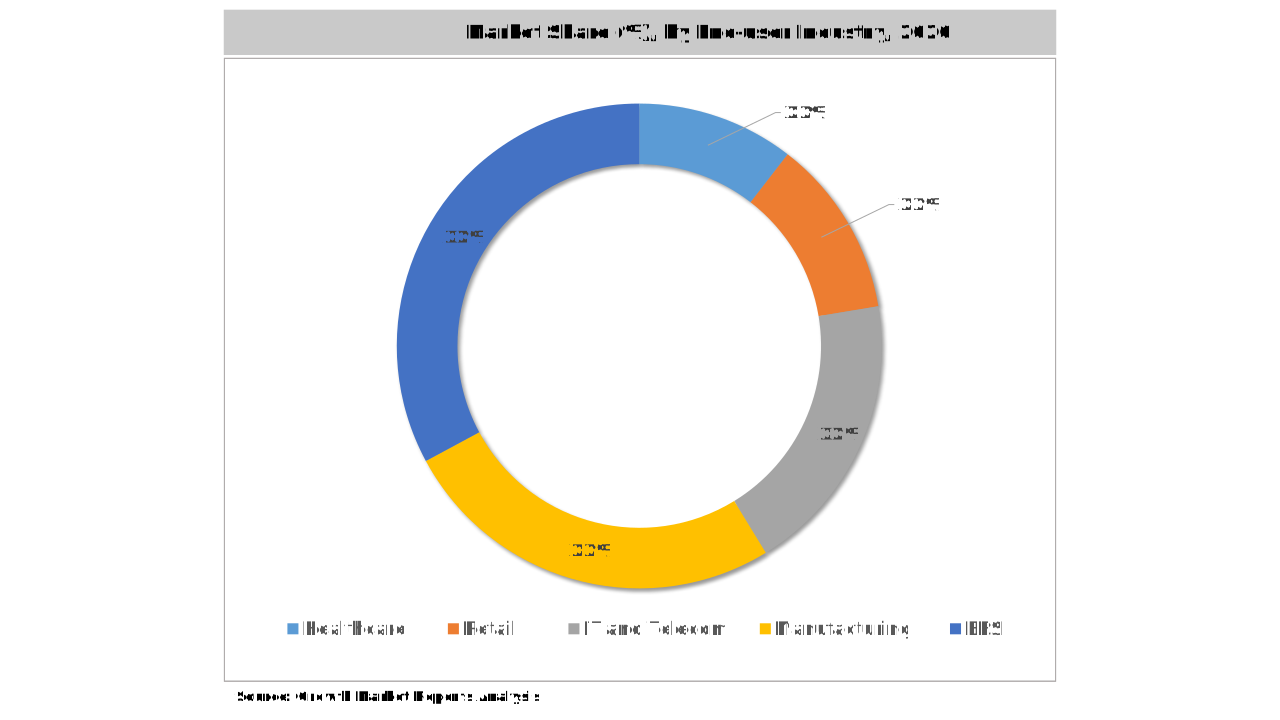
The data center services market caters to a diverse range of end-users, including BFSI, IT and telecommunications, healthcare, government, retail, energy, manufacturing, and others. The BFSI sector is a major contributor to market growth, driven by the need for secure, compliant, and high-performance data management solutions. Financial institutions rely on data center services to support digital banking, real-time transaction processing, fraud detection, and regulatory compliance. The increasing adoption of fintech solutions and the shift towards digital payment platforms are further accelerating demand for advanced data center services in the BFSI sector.
In the IT and telecommunications segment, the rapid proliferation of digital services, cloud computing, and 5G networks is fueling demand for scalable and resilient data center infrastructures. Telecom operators and IT service providers are investing heavily in data center services to support the growing volume of data traffic, enable real-time communication, and deliver high-quality digital experiences to customers. The emergence of edge computing and the deployment of distributed data centers are also shaping the market landscape in this segment.
The healthcare sector is witnessing significant growth in the adoption of data center services, driven by the digitization of patient records, telemedicine, and the integration of advanced analytics in clinical workflows. Healthcare organizations require secure, compliant, and high-availability data center solutions to manage sensitive patient data, support remote care delivery, and facilitate medical research. The increasing focus on data privacy and regulatory compliance, such as HIPAA in the United States and GDPR in Europe, is further driving demand for specialized data center services in the healthcare industry.
Government and public sector organizations are leveraging data center services to modernize their IT infrastructure, enhance service delivery, and improve data security. The growing emphasis on e-governance, smart city initiatives, and digital public services is driving investments in robust data center solutions. Governments are also prioritizing data sovereignty and local data storage, leading to increased demand for region-specific data center services and compliance management solutions.
Other key end-user segments, including retail, energy, and manufacturing, are increasingly adopting data center services to support digital transformation initiatives, optimize supply chain operations, and enhance customer experiences. Retailers are leveraging data center services to manage omnichannel operations, personalized marketing, and real-time inventory management. The energy and manufacturing sectors are utilizing data center solutions to enable predictive maintenance, process automation, and IoT integration, further expanding the market's scope and growth potential.
The data center services market is segmented by data center type into enterprise data centers, colocation data centers, cloud data centers, and edge data centers. Enterprise data centers are owned and operated by individual organizations to support their specific business needs. These data centers offer high levels of customization, security, and control, making them ideal for organizations with stringent data privacy and compliance requirements. However, the high capital and operational expenditures associated with enterprise data centers are prompting many businesses to explore alternative models, such as colocation and cloud-based solutions.
Colocation data centers are gaining popularity as organizations seek to reduce infrastructure costs and improve scalability. In this model, businesses lease space, power, and cooling in third-party data centers while retaining control over their own hardware and software. Colocation services offer significant benefits, including cost savings, enhanced security, and access to state-of-the-art facilities. The growing demand for disaster recovery, business continuity, and geographic redundancy is further driving the adoption of colocation data centers across industries.
Cloud data centers represent a transformative force in the data center services market, enabling organizations to leverage on-demand computing resources, flexible scalability, and pay-as-you-go pricing models. Cloud data centers support a wide range of applications, from enterprise resource planning to artificial intelligence and machine learning workloads. The rapid adoption of public, private, and hybrid cloud solutions is fueling demand for cloud data center services, as businesses seek to optimize their IT operations, reduce costs, and accelerate innovation. Major cloud service providers are continuously expanding their global data center footprints to meet the growing needs of enterprise customers.
Edge data centers are emerging as a critical component of modern IT infrastructure, driven by the need to process data closer to the source and reduce latency. Edge data centers support real-time applications such as IoT, autonomous vehicles, and smart cities, enabling faster data processing and improved user experiences. The proliferation of connected devices and the rise of latency-sensitive applications are prompting investments in edge data center services, particularly in sectors such as manufacturing, healthcare, and telecommunications. Service providers are developing innovative solutions to optimize edge data center deployments, enhance security, and ensure seamless integration with core and cloud data centers.
The evolution of data center types is reshaping the competitive landscape of the data center services market. Organizations are increasingly adopting hybrid and multi-cloud strategies, leveraging a mix of enterprise, colocation, cloud, and edge data centers to meet their diverse business needs. This trend is driving demand for integrated data center services that can support seamless interoperability, centralized management, and end-to-end security across heterogeneous IT environments. As the market continues to evolve, service providers are focusing on innovation, flexibility, and customer-centric solutions to maintain a competitive edge.
The data center services market is segmented by organization size into small and medium enterprises (SMEs) and large enterprises. Large enterprises represent the dominant segment, accounting for a significant share of market revenue. These organizations typically have complex IT infrastructures, large-scale data processing needs, and stringent security and compliance requirements. Large enterprises are investing heavily in advanced data center services to support digital transformation initiatives, enhance business agility, and maintain competitive advantage. The adoption of hybrid and multi-cloud strategies is particularly pronounced among large enterprises, driving demand for integrated and scalable data center solutions.
Small and medium enterprises (SMEs) are increasingly recognizing the benefits of data center services in improving operational efficiency, reducing IT costs, and enabling business growth. SMEs often face resource constraints and lack in-house IT expertise, making them ideal candidates for managed and cloud-based data center services. The availability of flexible pricing models, scalable solutions, and comprehensive support services is driving adoption among SMEs across industries. Service providers are tailoring their offerings to meet the unique needs of SMEs, focusing on simplicity, affordability, and ease of deployment.
The growing emphasis on digitalization and cloud adoption is leveling the playing field for SMEs, enabling them to access advanced IT infrastructure and services previously available only to large enterprises. SMEs are leveraging data center services to support e-commerce operations, customer relationship management, and data analytics, driving business innovation and market expansion. The increasing availability of localized data center services and government initiatives to support SME digitalization are further boosting market growth in this segment.
Despite the growth opportunities, SMEs face challenges related to data security, regulatory compliance, and integration with legacy systems. Service providers are addressing these challenges by offering comprehensive security solutions, compliance management services, and integration support. The focus on customer education and training is also helping SMEs navigate the complexities of modern data center environments and maximize the value of their investments.
Overall, the organization size segment highlights the diverse needs and priorities of different business segments in the data center services market. While large enterprises drive demand for advanced, customizable, and integrated solutions, SMEs are fueling growth in managed and cloud-based services. The ability of service providers to address the unique requirements of both segments will be critical to sustaining long-term market growth and competitiveness.
The data center services market presents significant opportunities for growth and innovation, driven by the rapid adoption of digital technologies, increasing data volumes, and the evolution of IT infrastructure. One of the most promising opportunities lies in the integration of artificial intelligence and machine learning into data center operations. AI-powered solutions can enhance predictive maintenance, optimize energy consumption, and improve resource allocation, resulting in increased efficiency and reduced operational costs. Service providers that invest in AI-driven data center management tools are well-positioned to differentiate themselves and capture a larger share of the market.
Another major opportunity is the growing demand for sustainable and energy-efficient data center solutions. As organizations and governments place greater emphasis on environmental responsibility, there is increasing interest in green data centers that utilize renewable energy sources, advanced cooling technologies, and energy-efficient hardware. Service providers that prioritize sustainability and offer eco-friendly data center services can attract environmentally conscious clients and comply with evolving regulatory requirements. The adoption of circular economy principles, such as equipment recycling and waste reduction, further enhances the market's growth prospects.
Despite the favorable outlook, the data center services market faces several restraining factors, the most notable of which is the increasing complexity of regulatory compliance and data privacy requirements. Organizations operating in multiple jurisdictions must navigate a complex web of data protection laws, industry standards, and security protocols. Non-compliance can result in severe financial penalties, reputational damage, and loss of customer trust. Service providers must invest in robust compliance management solutions, continuous monitoring, and employee training to mitigate these risks and ensure the security and integrity of client data.
North America remains the largest regional market for data center services, accounting for approximately 38% of global revenue in 2024, or about USD 28.4 billion. The regionÂ’s dominance is fueled by the presence of leading technology companies, high adoption rates of cloud computing, and significant investments in IT infrastructure modernization. The United States, in particular, is a hub for data center innovation, with ongoing investments in hyperscale data centers, edge computing, and advanced cybersecurity solutions. Canada is also witnessing steady growth, driven by government initiatives to promote digital transformation and the expansion of cloud services across industries.
Asia Pacific is the fastest-growing region in the data center services market, with a projected CAGR of 16.5% from 2025 to 2033. The region accounted for approximately 27% of global market revenue in 2024, or about USD 20.2 billion. Rapid digitalization, increasing internet penetration, and the rise of digital economies in countries such as China, India, Japan, and Singapore are driving demand for advanced data center services. Government initiatives to promote smart cities, e-governance, and digital infrastructure are further accelerating market growth. The proliferation of cloud service providers and the expansion of data center footprints in the region are expected to sustain high growth rates in the coming years.
Europe holds a significant share of the global data center services market, accounting for around 22% of revenue in 2024, or approximately USD 16.5 billion. The region is characterized by stringent data protection regulations, such as the General Data Protection Regulation (GDPR), which drive demand for secure and compliant data center solutions. The increasing adoption of cloud computing, the growth of smart city projects, and investments in digital infrastructure are supporting market expansion. Germany, the United Kingdom, and the Netherlands are among the leading markets in Europe, with a strong focus on innovation, sustainability, and energy efficiency in data center operations.
The data center services market is highly competitive, characterized by the presence of global technology giants, specialized service providers, and emerging startups. The competitive landscape is shaped by continuous innovation, strategic partnerships, and mergers and acquisitions aimed at expanding service portfolios and geographic reach. Leading players are investing heavily in research and development to differentiate their offerings, enhance operational efficiency, and address evolving customer needs. The focus on sustainability, security, and compliance is also driving competition, as service providers strive to meet the increasing expectations of enterprise clients and regulatory authorities.
Major companies in the data center services market are leveraging their global presence, extensive infrastructure, and technological expertise to maintain a competitive edge. These players offer a comprehensive range of services, including design and consulting, installation and deployment, managed services, and training and development. The ability to provide end-to-end solutions, integrate emerging technologies, and support hybrid and multi-cloud environments is a key differentiator in the market. Additionally, companies are expanding their data center footprints, particularly in high-growth regions such as Asia Pacific and Latin America, to capitalize on new business opportunities and strengthen their market position.
Strategic collaborations and partnerships are playing a crucial role in the competitive dynamics of the data center services market. Service providers are forming alliances with cloud service providers, hardware vendors, and system integrators to deliver integrated solutions and enhance customer value. These partnerships enable companies to offer comprehensive services, streamline operations, and accelerate time-to-market for new solutions. The emphasis on customer-centricity, customization, and flexibility is driving service innovation and fostering long-term client relationships.
Some of the major companies operating in the data center services market include IBM Corporation, Microsoft Corporation, Amazon Web Services (AWS), Google LLC, Equinix Inc., NTT Communications, Digital Realty Trust Inc., Hewlett Packard Enterprise (HPE), Cisco Systems Inc., and Fujitsu Ltd. IBM is renowned for its expertise in hybrid cloud and AI-driven data center solutions, while Microsoft and AWS are leading providers of cloud-based data center services with extensive global infrastructure. Equinix and Digital Realty are prominent players in the colocation and interconnection services segment, offering state-of-the-art facilities and global reach. NTT Communications and Fujitsu are expanding their presence in Asia Pacific, leveraging their technological capabilities and regional expertise.
Other notable players include Atos, Capgemini, HCL Technologies, Tata Communications, and Cyxtera Technologies, each offering specialized data center services tailored to specific industry needs. These companies are focusing on innovation, sustainability, and customer engagement to differentiate themselves in a crowded market. The competitive outlook for the data center services market remains dynamic, with ongoing investments in technology, infrastructure, and talent expected to drive continued growth and transformation in the years ahead.
The Data Center Services market has been segmented on the basis of
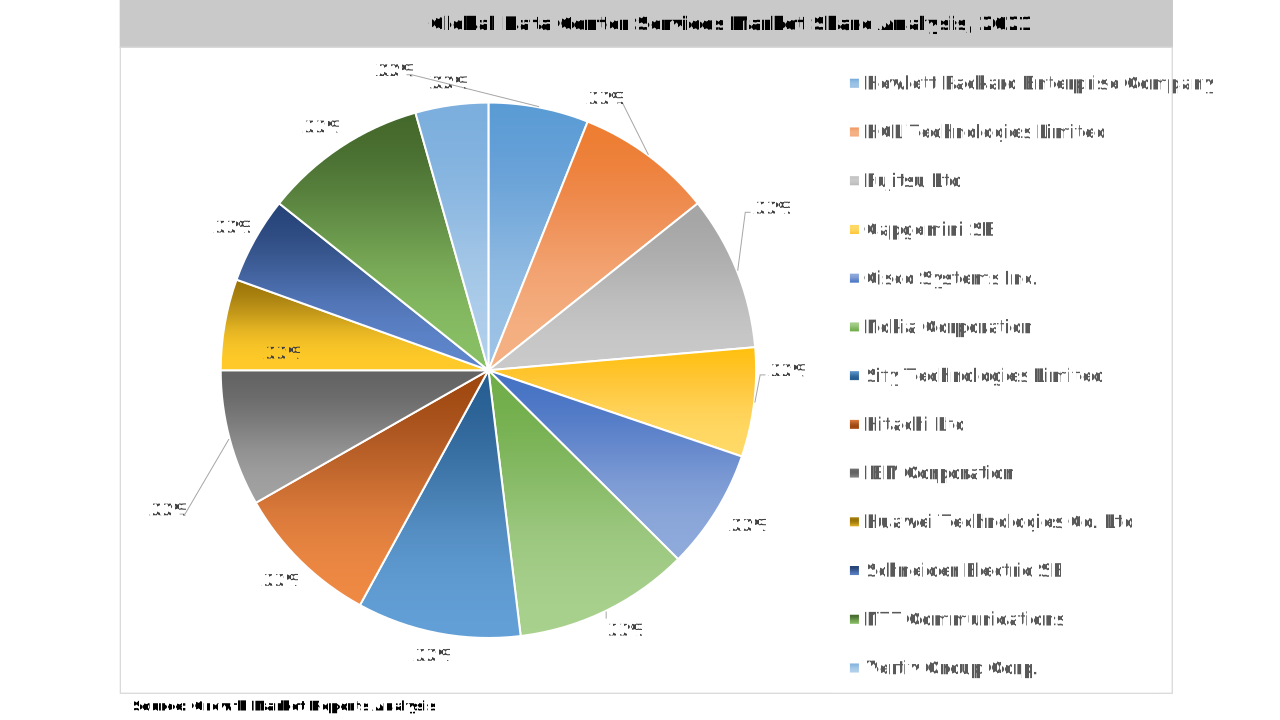
Key players competing in the data center services market include Hewlett Packard Enterprise Company, HCL Technologies Limited, Fujitsu Ltd, Capgemini SE, Cisco Systems Inc., Nokia Corporation, Sify Technologies Limited, Hitachi Ltd, IBM Corporation, Huawei Technologies Co. Ltd, Schneider Electric SE, NTT Communications, and Vertiv Group Corp.
Some of these players are using several market strategies such as acquisitions, merger, collaborations, partnerships, capacity expansion, and product launches to enhance their market shares.
There is a growing emphasis on green data centers, renewable energy integration, advanced cooling technologies, and energy-efficient hardware to meet environmental goals and regulatory requirements.
Key players include Equinix, Digital Realty, NTT Communications, Amazon Web Services (AWS), Microsoft Azure, Google Cloud, IBM, Oracle, CyrusOne, Iron Mountain, KDDI Corporation, Telehouse, Global Switch, Colt Data Centre Services, Cyxtera Technologies, QTS Realty Trust, Rackspace Technology, and Tata Communications.
Opportunities include AI and machine learning integration, sustainable and energy-efficient solutions, and green data centers. Challenges include regulatory compliance, data privacy, and the complexity of managing diverse IT environments.
SMEs benefit from improved operational efficiency, reduced IT costs, access to advanced IT infrastructure, and flexible, scalable solutions tailored to their needs.
The market is segmented into enterprise data centers, colocation data centers, cloud data centers, and edge data centers.
Major end-users include BFSI, IT and telecommunications, healthcare, government, retail, energy, manufacturing, and others.
Service types include design and consulting, installation and deployment, maintenance and support, managed services, and training and development.
North America dominates the market, accounting for about 38% of global revenue in 2024, followed by Asia Pacific as the fastest-growing region and Europe with a significant market share.
Key growth drivers include increasing digital transformation, rising demand for cloud computing, proliferation of data-intensive applications, adoption of hybrid IT infrastructure, and the need for scalable, secure, and energy-efficient data management solutions.
The global data center services market reached USD 74.8 billion in 2024 and is forecasted to grow at a CAGR of 13.2% from 2025 to 2033, reaching USD 221.4 billion by 2033.