Dairy Ingredients Market Research Report 2033

Dairy Ingredients Market Research Report 2033

Segments - by Product Type (Milk Powders, Whey Ingredients, Milk Protein Concentrates, Casein and Caseinates, Lactose and Derivatives, Others), by Application (Bakery and Confectionery, Dairy Products, Infant Milk Formula, Sports and Clinical Nutrition, Convenience Foods, Others), by Source (Milk, Whey), by Form (Powder, Liquid)

https://growthmarketreports.com/Anuradha
Author : Anuradha B. More
https://growthmarketreports.com/Vaibhav
Fact-checked by : Vaibhav Chandola
https://growthmarketreports.com/Shruti
Editor : Shruti Bhat

Upcoming | Report ID :FB-3861 | 4.0 Rating | 5 Reviews | 285 Pages | Format : Docx PDF

Report Description


Dairy Ingredients Market Outlook

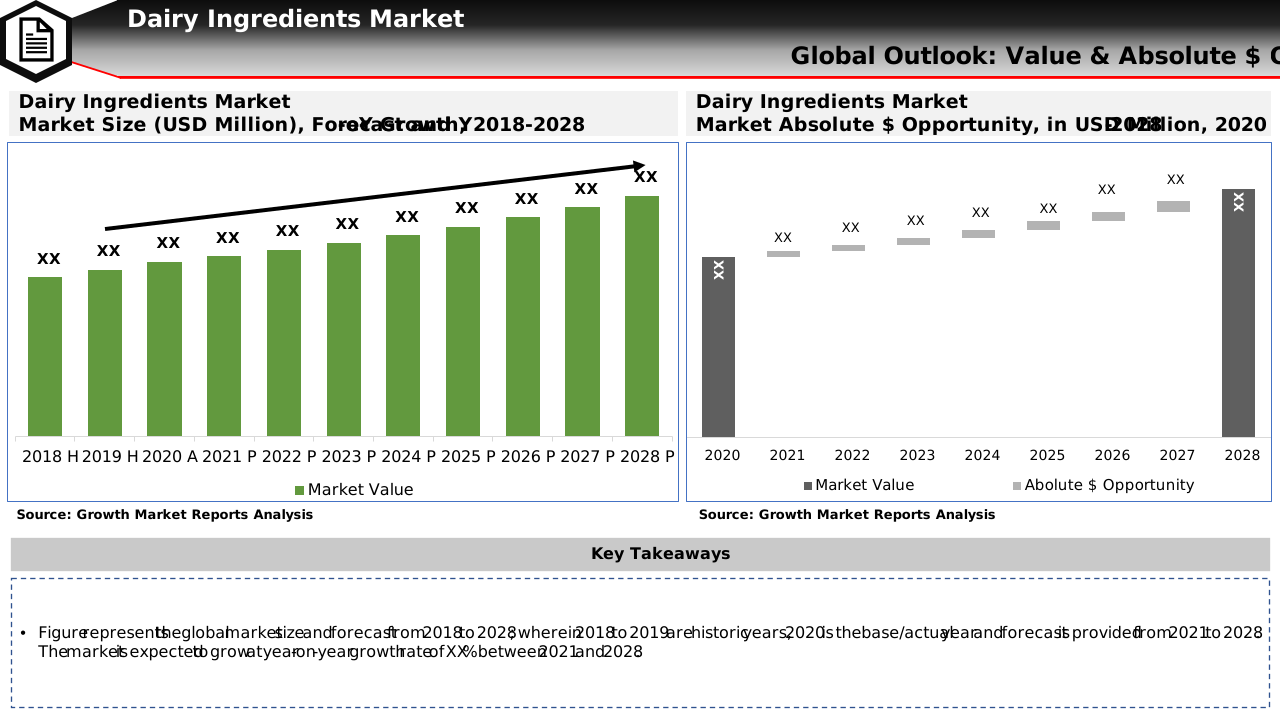
According to our latest research, the global dairy ingredients market size reached USD 68.7 billion in 2024, reflecting robust demand across diverse food and beverage sectors. The market is experiencing steady expansion with a compounded annual growth rate (CAGR) of 5.4% from 2025 to 2033. By the end of 2033, the market is projected to attain a value of USD 110.1 billion, driven by evolving consumer dietary preferences, increased consumption of protein-rich foods, and the rising incorporation of dairy derivatives in functional foods and beverages. As per our latest research, the marketÂ’s growth is further propelled by innovation in dairy processing technologies and the expansion of end-use applications across global markets.

One of the primary growth factors for the dairy ingredients market is the surging global demand for high-protein and functional foods. Consumers are becoming increasingly health-conscious, seeking products that offer not only nutritional benefits but also convenience and versatility. Dairy ingredients such as whey protein concentrates, casein, and milk powders are integral to the formulation of products targeting sports nutrition, clinical nutrition, and weight management. This shift is particularly pronounced in developed economies, where consumers are more aware of the health implications of their dietary choices. The food industry is responding by innovating with dairy-derived ingredients, integrating them into a wide variety of products ranging from beverages to meal replacements, thus fueling consistent market growth.

Another significant driver is the rapid expansion of the food processing industry, especially in emerging markets. The bakery and confectionery sectors, in particular, have witnessed a surge in the use of dairy ingredients due to their functional properties such as emulsification, water binding, and flavor enhancement. Dairy derivatives are increasingly replacing traditional ingredients to improve product shelf life, texture, and nutritional profile. Furthermore, the rising urbanization and growing middle-class population in regions like Asia Pacific are creating substantial opportunities for market players to introduce value-added dairy ingredients in convenience foods and ready-to-eat meals. The versatility of dairy ingredients in catering to both traditional and modern culinary applications continues to underpin the marketÂ’s positive trajectory.

Technological advancements in dairy processing have also played a key role in shaping the market landscape. Innovations in membrane filtration, enzymatic processing, and spray drying have enabled manufacturers to develop high-purity dairy ingredients with tailored functionalities and improved solubility. These advancements have not only enhanced the quality and safety of dairy derivatives but have also allowed for the customization of ingredients to meet specific application requirements in infant nutrition, sports supplements, and medical foods. The ability to produce lactose-free, low-fat, and fortified dairy ingredients is particularly appealing to consumers with specific dietary needs, further broadening the marketÂ’s appeal and driving sustained demand across multiple end-user industries.

Cultured Dairy Ingredients are becoming increasingly significant in the global dairy ingredients market. These ingredients, which include yogurt cultures and probiotic strains, are gaining traction due to their health benefits and functional properties. The rising consumer preference for gut health and immune support has spurred innovation in cultured dairy products. Manufacturers are leveraging these ingredients to create products that not only offer nutritional benefits but also cater to the growing demand for functional foods. The integration of cultured dairy ingredients into various food applications, such as smoothies, snacks, and meal replacements, is expected to drive market growth and offer new opportunities for product differentiation.

Regionally, Asia Pacific stands out as a major growth hub for the dairy ingredients market, driven by rising disposable incomes, dietary westernization, and the expanding presence of international dairy brands. North America and Europe continue to dominate in terms of technological innovation and high per capita consumption of dairy products, while Latin America and the Middle East & Africa are witnessing gradual market development supported by increasing investments in dairy processing infrastructure. The regional dynamics are characterized by diverse consumer preferences, regulatory frameworks, and supply chain complexities, all of which influence the strategic decisions of market participants and the overall competitive landscape.

Global Dairy Ingredients Industry Outlook

Product Type Analysis

The product type segment in the dairy ingredients market encompasses a diverse range of offerings, including milk powders, whey ingredients, milk protein concentrates, casein and caseinates, lactose and derivatives, among others. Milk powders represent one of the most widely used dairy ingredients due to their extended shelf life, ease of transportation, and versatility in food processing. These powders are extensively utilized in bakery, confectionery, and infant formula applications, where they serve as a source of essential nutrients and enhance product texture and flavor. The growing demand for convenience foods and the increasing popularity of powdered beverages have further propelled the adoption of milk powders across global markets.

Whey ingredients have gained significant traction, particularly in the sports and clinical nutrition segments. Whey protein concentrates and isolates are lauded for their high biological value and rapid digestibility, making them ideal for muscle recovery and weight management products. The proliferation of fitness culture and the rising prevalence of lifestyle-related health conditions have spurred the demand for whey-based supplements and fortified foods. Additionally, advancements in whey processing technologies have enabled the production of specialized ingredients with reduced lactose content and improved functional properties, catering to lactose-intolerant consumers and specialized dietary needs.

Milk protein concentrates and caseinates are increasingly being used in dairy and non-dairy applications owing to their superior emulsification, water retention, and gelling capabilities. These ingredients are particularly valued in the production of cheese, yogurts, and protein bars, where they contribute to product stability and mouthfeel. The trend toward high-protein diets and the growing popularity of clean label products have driven manufacturers to incorporate milk protein concentrates and caseinates into a wide array of food formulations. The ability to customize protein content and functionality has made these ingredients indispensable in the formulation of premium and specialty food products.

The lactose and derivatives segment caters to both the food and pharmaceutical industries, serving as a key excipient in drug formulations and as a sweetener or bulking agent in processed foods. The demand for lactose-free and reduced-lactose products is rising, particularly among health-conscious consumers and those with lactose intolerance. Manufacturers are responding by developing innovative lactose derivatives with enhanced solubility and reduced allergenicity. The ongoing research and development efforts in this segment are expected to yield novel ingredients that address emerging consumer preferences and regulatory requirements, further expanding the market potential for lactose and its derivatives.

Other dairy ingredients, such as specialty proteins and bioactive peptides, are also gaining prominence due to their functional and nutritional attributes. These ingredients are being explored for their potential health benefits, including immune support, digestive health, and satiety enhancement. The integration of bioactive dairy ingredients into functional foods, beverages, and nutraceuticals is anticipated to open new avenues for market growth, particularly as consumers seek products that offer targeted health benefits beyond basic nutrition. The product type segment, therefore, remains highly dynamic, with continuous innovation and diversification shaping the future trajectory of the global dairy ingredients market.

Report Scope

Attributes Details
Report Title Dairy Ingredients Market Research Report 2033
By Product Type Milk Powders, Whey Ingredients, Milk Protein Concentrates, Casein and Caseinates, Lactose and Derivatives, Others
By Application Bakery and Confectionery, Dairy Products, Infant Milk Formula, Sports and Clinical Nutrition, Convenience Foods, Others
By Source Milk, Whey
By Form Powder, Liquid
Regions Covered North America, Europe, APAC, Latin America, MEA
Base Year 2024
Historic Data 2018-2023
Forecast Period 2025-2033
Number of Pages 285
Number of Tables & Figures 352
Customization Available Yes, the report can be customized as per your need.

Application Analysis

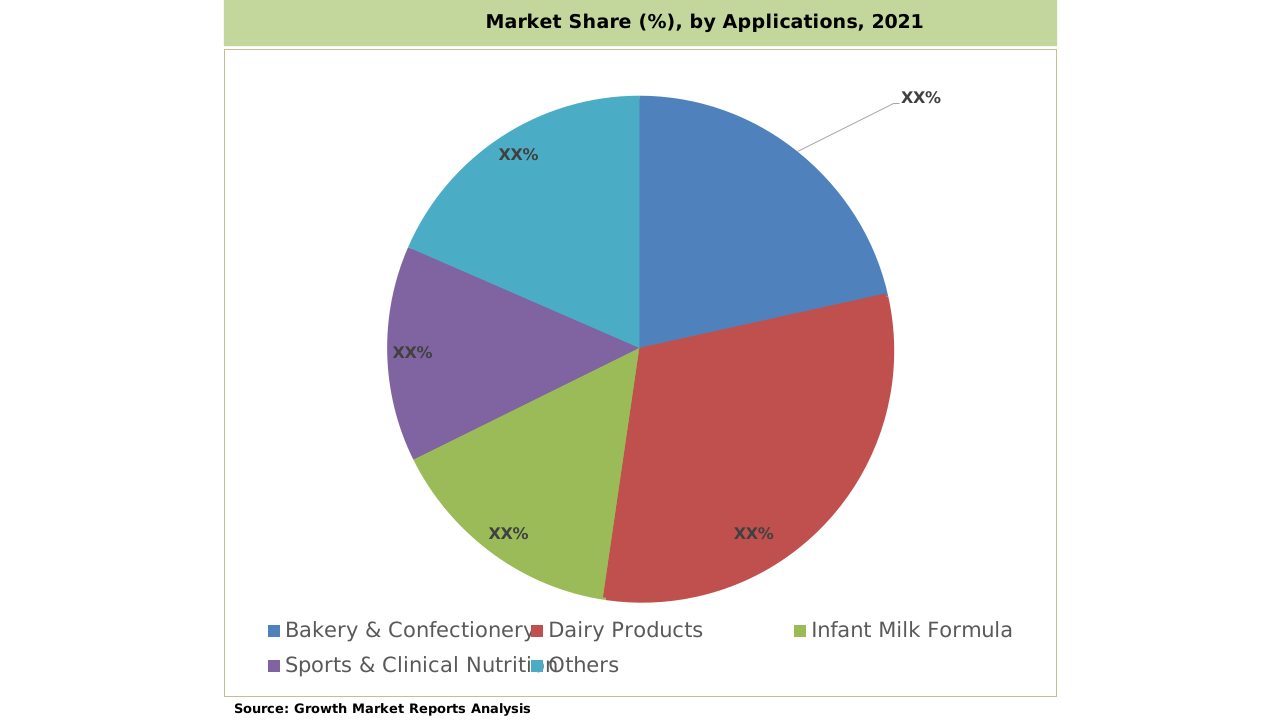
The application segment of the dairy ingredients market is characterized by its broad spectrum of end-use industries, including bakery and confectionery, dairy products, infant milk formula, sports and clinical nutrition, convenience foods, and others. The bakery and confectionery sector represents a significant share of the market, leveraging dairy ingredients for their emulsifying, texturizing, and flavor-enhancing properties. Dairy derivatives are integral to the production of cakes, pastries, chocolates, and ice creams, where they contribute to product consistency, richness, and shelf life. The trend toward premium and artisanal baked goods has further increased the demand for high-quality dairy ingredients, as consumers seek indulgent yet wholesome food experiences.

Dairy products such as cheese, yogurt, and butter continue to be major consumers of dairy ingredients, with manufacturers focusing on innovation to cater to evolving consumer tastes and dietary preferences. The growing popularity of probiotic and fortified dairy products has fueled the use of specialized ingredients such as milk protein concentrates and bioactive peptides. In addition, the demand for low-fat, lactose-free, and plant-based dairy alternatives is prompting manufacturers to develop novel ingredients that replicate the sensory and functional attributes of traditional dairy products. This segment remains highly competitive, with continuous product development and differentiation strategies driving market growth.

The infant milk formula segment is another critical application area, driven by rising birth rates, increasing female workforce participation, and growing awareness of infant nutrition. Dairy ingredients are essential in the formulation of infant formulas, providing vital proteins, carbohydrates, and micronutrients required for healthy growth and development. Stringent regulatory standards and the need for precise nutritional composition have led to the adoption of advanced dairy ingredients with enhanced safety and quality profiles. The expansion of the infant nutrition market, particularly in emerging economies, is expected to sustain strong demand for dairy-derived ingredients over the forecast period.

Sports and clinical nutrition is a rapidly expanding application segment, fueled by the increasing prevalence of fitness-oriented lifestyles and the rising incidence of chronic diseases. Dairy proteins, especially whey and casein, are widely used in nutritional supplements, meal replacements, and medical foods due to their high digestibility and amino acid profile. The demand for functional foods that support muscle recovery, weight management, and overall wellness is driving innovation in this segment. Manufacturers are developing specialized dairy ingredients tailored to the specific needs of athletes, elderly individuals, and patients with medical conditions, thereby broadening the scope of applications and market reach.

The convenience foods segment is witnessing robust growth, supported by changing consumer lifestyles, urbanization, and the increasing demand for ready-to-eat and on-the-go food products. Dairy ingredients play a crucial role in enhancing the taste, texture, and nutritional value of convenience foods such as soups, sauces, snacks, and meal kits. The ability to deliver consistent quality and functionality under varying processing conditions makes dairy derivatives highly attractive to food manufacturers. As the market for convenience foods continues to expand, the demand for versatile and high-performance dairy ingredients is expected to remain strong, further driving market growth across diverse application areas.

Source Analysis

The source segment of the dairy ingredients market is primarily divided into milk and whey, each offering distinct functional and nutritional properties that cater to specific end-use applications. Milk-based ingredients are widely used in the formulation of a variety of food and beverage products due to their balanced composition of proteins, fats, and carbohydrates. These ingredients are valued for their ability to enhance the texture, mouthfeel, and nutritional profile of products such as baked goods, dairy desserts, infant formula, and beverages. The versatility of milk-derived ingredients, coupled with their widespread availability, has made them a staple in both traditional and modern food processing industries.

Whey-based ingredients have gained significant prominence in recent years, particularly in the sports nutrition and clinical nutrition segments. Whey proteins are recognized for their high biological value, rapid absorption, and superior amino acid profile, making them ideal for muscle recovery and growth. The increasing popularity of high-protein diets and the growing awareness of the health benefits associated with whey proteins have spurred demand in this segment. Additionally, advancements in whey processing technologies have enabled the development of specialized ingredients such as whey protein isolates, hydrolysates, and bioactive peptides, catering to a wide range of functional and nutritional requirements.

The choice between milk and whey as a source of dairy ingredients is often dictated by the specific application and desired product attributes. For instance, milk-based ingredients are preferred in applications where creaminess, stability, and mild flavor are important, such as in ice creams, yogurts, and bakery products. In contrast, whey-based ingredients are favored in products targeting health-conscious consumers, athletes, and individuals with special dietary needs. The ability to tailor the composition and functionality of dairy ingredients based on the source is a key factor driving innovation and product development in the market.

Sustainability considerations are also influencing sourcing decisions in the dairy ingredients market. The efficient utilization of milk and whey streams helps minimize waste and improve the overall sustainability of dairy processing operations. Manufacturers are increasingly adopting eco-friendly practices and investing in technologies that enable the valorization of by-products such as whey, transforming them into high-value ingredients for food, feed, and pharmaceutical applications. The focus on sustainable sourcing and production practices is expected to gain further momentum as consumers and regulators place greater emphasis on environmental responsibility in the food industry.

The ongoing research and development efforts aimed at optimizing the extraction and processing of milk and whey ingredients are anticipated to yield novel products with enhanced functionality and nutritional benefits. The ability to produce dairy ingredients with specific health-promoting properties, such as prebiotic activity, immune support, and reduced allergenicity, is expected to open new avenues for market growth. The source segment, therefore, remains a critical determinant of product innovation, quality, and market differentiation in the global dairy ingredients market.

Form Analysis

The form segment of the dairy ingredients market is broadly categorized into powder and liquid forms, each offering unique advantages and catering to different application requirements. Powdered dairy ingredients are the most widely used form due to their extended shelf life, ease of storage and transportation, and versatility in food processing. These ingredients are extensively utilized in the production of bakery products, confectionery, infant formula, sports nutrition supplements, and convenience foods. The ability to reconstitute powdered dairy ingredients into liquid form as needed makes them highly attractive to manufacturers seeking flexibility and cost-efficiency in their operations.

Liquid dairy ingredients, on the other hand, are preferred in applications where immediate use and minimal processing are required. These ingredients are commonly used in the production of fresh dairy products such as yogurts, cheeses, and beverages, where they contribute to product freshness, flavor, and texture. The use of liquid dairy ingredients is particularly prevalent in regions with well-established cold chain infrastructure and high demand for fresh and perishable food products. However, the shorter shelf life and higher transportation costs associated with liquid forms can pose challenges, especially in markets with limited logistics capabilities.

The choice between powder and liquid forms is often influenced by factors such as product formulation, processing requirements, and target market preferences. Powdered dairy ingredients are favored for their convenience, stability, and ease of handling, making them suitable for large-scale food manufacturing and distribution. Liquid forms, while offering superior sensory attributes, are more suitable for niche applications and markets where freshness and quality are paramount. The ability to offer both powder and liquid forms allows manufacturers to cater to a broader range of customer needs and application scenarios, enhancing their competitive advantage in the market.

Technological advancements in drying and concentration processes have significantly improved the quality and functionality of powdered dairy ingredients. Innovations such as spray drying, freeze drying, and membrane filtration have enabled the production of high-purity powders with enhanced solubility, dispersibility, and nutritional value. These advancements have expanded the application scope of powdered dairy ingredients, enabling their use in specialized products such as medical foods, nutraceuticals, and dietary supplements. The ongoing investment in processing technologies is expected to further enhance the performance and marketability of both powder and liquid dairy ingredients.

Sustainability and cost considerations are also shaping the form segment of the dairy ingredients market. The production and transportation of powdered ingredients are generally more resource-efficient, resulting in lower carbon footprints and reduced food waste. Manufacturers are increasingly adopting sustainable packaging and logistics solutions to minimize environmental impact and meet the growing demand for eco-friendly products. The form segment, therefore, plays a pivotal role in determining the market reach, operational efficiency, and sustainability credentials of dairy ingredient manufacturers globally.

Opportunities & Threats

The dairy ingredients market presents a multitude of growth opportunities, particularly in the realm of functional and health-oriented foods. The increasing consumer focus on wellness, preventive healthcare, and active lifestyles is driving demand for dairy ingredients with added health benefits, such as probiotics, bioactive peptides, and fortified proteins. Manufacturers have the opportunity to capitalize on this trend by developing innovative products that address specific health concerns, such as digestive health, immune support, and weight management. The expansion of e-commerce and direct-to-consumer channels is also enabling market players to reach a broader audience and offer personalized nutrition solutions, further enhancing market penetration and growth prospects.

Emerging markets, particularly in Asia Pacific and Latin America, offer significant untapped potential for dairy ingredient manufacturers. The rising disposable incomes, urbanization, and changing dietary habits in these regions are creating new demand for value-added dairy products and ingredients. Strategic investments in local production facilities, supply chain optimization, and product localization can help companies establish a strong foothold in these high-growth markets. Additionally, the increasing adoption of clean label, organic, and sustainable ingredients presents an opportunity for manufacturers to differentiate their offerings and cater to the evolving preferences of health-conscious and environmentally aware consumers.

Despite the numerous opportunities, the dairy ingredients market faces certain restraining factors, most notably the volatility in raw milk prices and supply chain disruptions. Fluctuations in milk production due to seasonal variations, feed costs, and environmental factors can impact the availability and pricing of dairy ingredients, posing challenges for manufacturers in terms of cost management and profitability. Additionally, the growing prevalence of lactose intolerance, milk allergies, and the rising popularity of plant-based alternatives are exerting competitive pressure on the market. Regulatory complexities related to food safety, labeling, and international trade further add to the operational challenges faced by market participants, necessitating continuous adaptation and innovation to sustain growth.

Regional Outlook

The regional landscape of the dairy ingredients market is marked by distinct consumption patterns, regulatory environments, and market maturity levels. Asia Pacific leads the global market with a market size of USD 23.4 billion in 2024, driven by rapid urbanization, rising incomes, and the growing adoption of Western dietary habits. China, India, and Southeast Asian countries are witnessing significant investments in dairy processing infrastructure, supported by favorable government policies and increasing consumer awareness of the nutritional benefits of dairy products. The region is expected to register the fastest CAGR of 6.8% during the forecast period, fueled by expanding middle-class populations and the proliferation of modern retail channels.

North America remains a mature but highly innovative market, valued at USD 18.1 billion in 2024. The region benefits from a well-established dairy industry, advanced processing technologies, and high per capita consumption of dairy products. The demand for high-protein, functional, and clean label ingredients is particularly strong, driven by health-conscious consumers and the popularity of sports nutrition and wellness products. The presence of leading dairy ingredient manufacturers and a robust regulatory framework further support market stability and growth. However, the market faces challenges from the increasing popularity of plant-based alternatives and shifting consumer preferences toward non-dairy options.

Europe holds a significant share of the global dairy ingredients market, with a market size of USD 16.7 billion in 2024. The region is characterized by a strong tradition of dairy consumption, stringent quality standards, and a focus on sustainability and innovation. European manufacturers are at the forefront of developing specialty and value-added dairy ingredients, catering to both domestic and international markets. The emphasis on organic, non-GMO, and traceable ingredients aligns with the evolving preferences of European consumers. Meanwhile, Latin America and the Middle East & Africa are emerging as promising markets, collectively accounting for USD 10.5 billion in 2024. These regions are benefiting from increasing investments in dairy production, rising health awareness, and the gradual adoption of Western dietary patterns. Overall, the regional outlook for the dairy ingredients market is positive, with growth opportunities driven by demographic shifts, economic development, and evolving consumer preferences across global markets.

Dairy Ingredients Market Statistics

Competitor Outlook

The dairy ingredients market is characterized by intense competition, with a mix of multinational corporations, regional players, and specialized ingredient manufacturers vying for market share. The competitive landscape is shaped by factors such as product innovation, quality, pricing strategies, and supply chain efficiency. Leading companies are investing heavily in research and development to create differentiated products that cater to specific consumer needs, such as lactose-free, organic, and fortified dairy ingredients. The ability to offer customized solutions and value-added services is a key differentiator in this highly dynamic market, enabling companies to build strong relationships with food manufacturers and end-users.

Strategic partnerships, mergers, and acquisitions are common strategies employed by market participants to expand their product portfolios, enhance technological capabilities, and strengthen their global footprint. Companies are increasingly focusing on expanding their presence in high-growth regions such as Asia Pacific and Latin America, where rising consumer demand and favorable market conditions offer significant growth potential. Investments in production capacity, distribution networks, and sustainable sourcing practices are also critical to maintaining a competitive edge in the market. The integration of digital technologies and data analytics is enabling companies to optimize operations, improve product quality, and respond more effectively to changing market trends.

Sustainability and corporate social responsibility are becoming increasingly important in shaping the competitive landscape of the dairy ingredients market. Companies are adopting eco-friendly production processes, investing in renewable energy, and implementing traceability systems to ensure the ethical sourcing of raw materials. The ability to demonstrate a commitment to sustainability and transparency is becoming a key factor in attracting environmentally conscious consumers and meeting regulatory requirements. As the market continues to evolve, companies that can balance innovation, quality, and sustainability are likely to emerge as leaders in the global dairy ingredients industry.

Major players in the dairy ingredients market include Arla Foods Ingredients Group P/S, Fonterra Co-operative Group Limited, FrieslandCampina Ingredients, Glanbia plc, Kerry Group plc, Lactalis Ingredients, Saputo Inc., Agropur Cooperative, Hilmar Ingredients, and Dairy Farmers of America Inc. These companies are recognized for their extensive product portfolios, global reach, and strong focus on research and development. For instance, Arla Foods Ingredients Group P/S is renowned for its innovation in whey-based ingredients and its commitment to sustainability. Fonterra Co-operative Group Limited leverages its robust supply chain and advanced processing technologies to deliver high-quality dairy ingredients to customers worldwide.

FrieslandCampina Ingredients and Glanbia plc are leading providers of functional and nutritional dairy ingredients, catering to a wide range of applications in the food, beverage, and nutrition sectors. Kerry Group plc is known for its expertise in developing customized ingredient solutions and its strong focus on clean label and natural products. Lactalis Ingredients and Saputo Inc. have established themselves as key suppliers of milk powders, proteins, and specialty dairy ingredients, serving both domestic and international markets. Agropur Cooperative and Hilmar Ingredients are recognized for their leadership in the production of high-quality whey proteins and their commitment to innovation and customer service. Dairy Farmers of America Inc. is a major player in the North American market, offering a comprehensive range of dairy ingredients and leveraging its cooperative structure to ensure a reliable supply of raw materials.

The competitive outlook for the dairy ingredients market is expected to remain dynamic, with companies focusing on product innovation, sustainability, and strategic expansion to capture emerging opportunities and address evolving consumer needs. The ability to anticipate market trends, invest in cutting-edge technologies, and build strong customer relationships will be critical to sustaining long-term growth and profitability in this highly competitive industry.

Key Players

  • Arla Foods amba
  • Fonterra Co-operative Group Limited
  • Royal FrieslandCampina N.V.
  • Lactalis Group
  • Glanbia plc
  • Saputo Inc.
  • Kerry Group plc
  • DMK Group
  • Agropur Dairy Cooperative
  • Müller Group
  • Dean Foods Company
  • Valio Ltd.
  • Mead Johnson Nutrition Company
  • Ingredia SA
  • Hilmar Cheese Company, Inc.
  • FrieslandCampina Domo
  • Amul (Gujarat Cooperative Milk Marketing Federation)
  • Sodiaal Group
  • Milk Specialties Global
  • Westland Milk Products
Dairy Ingredients Market Overview

Segments

The Dairy Ingredients market has been segmented on the basis of

Product Type

  • Milk Powders
  • Whey Ingredients
  • Milk Protein Concentrates
  • Casein and Caseinates
  • Lactose and Derivatives
  • Others

Application

  • Bakery and Confectionery
  • Dairy Products
  • Infant Milk Formula
  • Sports and Clinical Nutrition
  • Convenience Foods
  • Others

Source

  • Milk
  • Whey

Form

  • Powder
  • Liquid

Competitive Landscape

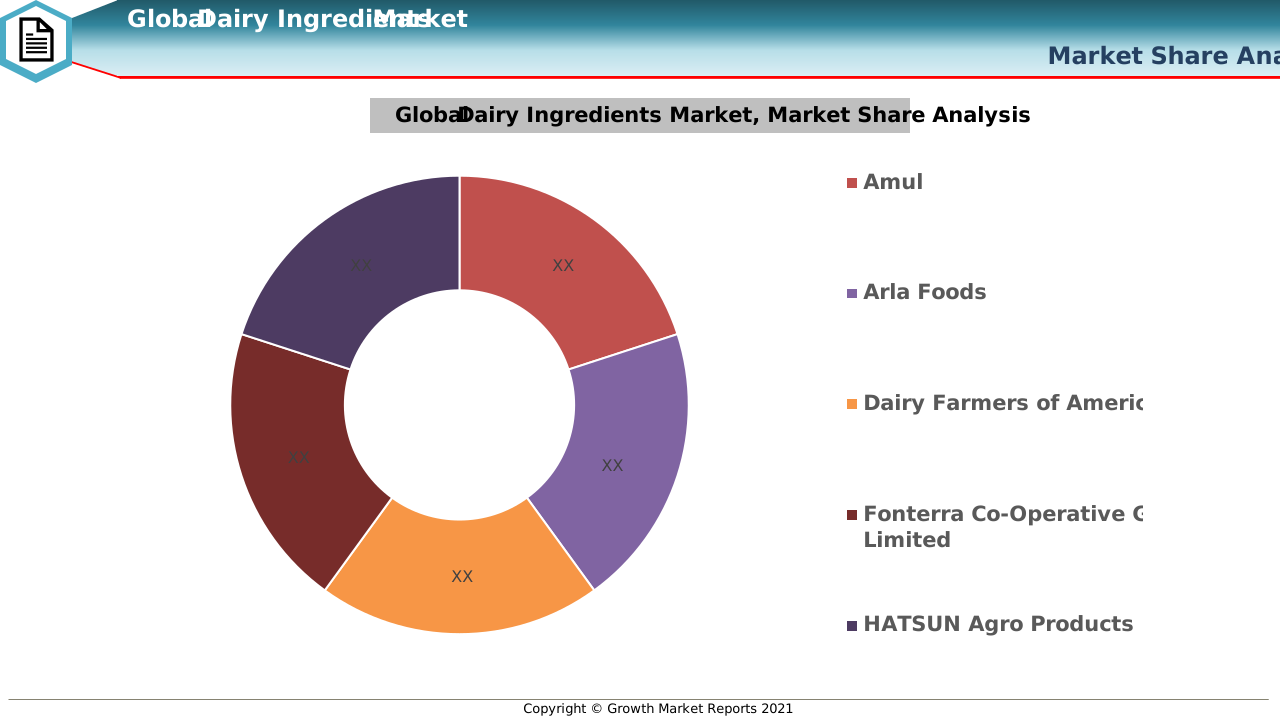
Key players competing in the global dairy ingredients market include Amul.; Arla Foods.; Dairy Farmers of America.; Fonterra Co-Operative Group Limited.; HATSUN Agro Products. Some of these players are adopting various strategies, such as partnerships, acquisitions, and product launches, to gain a larger share in the market.
Recent Developments

  • FrieslandCampina announced a collaboration with United Dairymen of Arizona (UDA) in October 2019, mostly for dairy components. The firms expect to manufacture 10 metric tonnes of lactoferrin per year as a result of their collaboration. ​

Dairy Ingredients Market By Key Players

Frequently Asked Questions

Major challenges include raw milk price volatility, supply chain disruptions, increasing prevalence of lactose intolerance, competition from plant-based alternatives, and regulatory complexities.

Key players include Arla Foods Ingredients Group, Fonterra Co-operative Group, FrieslandCampina Ingredients, Glanbia plc, Kerry Group, Lactalis Ingredients, Saputo Inc., Agropur Cooperative, Hilmar Ingredients, and Dairy Farmers of America.

Dairy ingredients are available in powder and liquid forms. Powdered ingredients offer longer shelf life and versatility, while liquid forms are used for freshness and immediate processing.

Milk-based ingredients are valued for their balanced composition and are used in products like baked goods and infant formula, while whey-based ingredients are popular in sports and clinical nutrition due to their high protein content and rapid absorption.

Dairy ingredients are widely used in bakery and confectionery, dairy products, infant milk formula, sports and clinical nutrition, and convenience foods.

Major product types include milk powders, whey ingredients, milk protein concentrates, casein and caseinates, lactose and derivatives, and specialty proteins.

Asia Pacific is the fastest-growing region, while North America and Europe are mature markets with high per capita consumption and technological innovation. Latin America and the Middle East & Africa are emerging markets with growing investments in dairy processing.

Key growth drivers include rising demand for high-protein and functional foods, innovation in dairy processing technologies, increased consumption of protein-rich diets, and the expansion of end-use applications in food and beverage sectors.

The dairy ingredients market is expected to grow at a compounded annual growth rate (CAGR) of 5.4% from 2025 to 2033.

As of 2024, the global dairy ingredients market size reached USD 68.7 billion, with steady growth projected through 2033.

Table Of Content

Chapter 1 Executive Summary
Chapter 2 Assumptions and Acronyms Used
Chapter 3 Research Methodology
Chapter 4 Dairy Ingredients Market Overview
   4.1 Introduction
      4.1.1 Market Taxonomy
      4.1.2 Market Definition
      4.1.3 Macro-Economic Factors Impacting the Market Growth
   4.2 Dairy Ingredients Market Dynamics
      4.2.1 Market Drivers
      4.2.2 Market Restraints
      4.2.3 Market Opportunity
   4.3 Dairy Ingredients Market - Supply Chain Analysis
      4.3.1 List of Key Suppliers
      4.3.2 List of Key Distributors
      4.3.3 List of Key Consumers
   4.4 Key Forces Shaping the Dairy Ingredients Market
      4.4.1 Bargaining Power of Suppliers
      4.4.2 Bargaining Power of Buyers
      4.4.3 Threat of Substitution
      4.4.4 Threat of New Entrants
      4.4.5 Competitive Rivalry
   4.5 Global Dairy Ingredients Market Size & Forecast, 2023-2032
      4.5.1 Dairy Ingredients Market Size and Y-o-Y Growth
      4.5.2 Dairy Ingredients Market Absolute $ Opportunity

Chapter 5 Global Dairy Ingredients Market Analysis and Forecast By Product Type
   5.1 Introduction
      5.1.1 Key Market Trends & Growth Opportunities By Product Type
      5.1.2 Basis Point Share (BPS) Analysis By Product Type
      5.1.3 Absolute $ Opportunity Assessment By Product Type
   5.2 Dairy Ingredients Market Size Forecast By Product Type
      5.2.1 Milk Powders
      5.2.2 Whey Ingredients
      5.2.3 Milk Protein Concentrates
      5.2.4 Casein and Caseinates
      5.2.5 Lactose and Derivatives
      5.2.6 Others
   5.3 Market Attractiveness Analysis By Product Type

Chapter 6 Global Dairy Ingredients Market Analysis and Forecast By Application
   6.1 Introduction
      6.1.1 Key Market Trends & Growth Opportunities By Application
      6.1.2 Basis Point Share (BPS) Analysis By Application
      6.1.3 Absolute $ Opportunity Assessment By Application
   6.2 Dairy Ingredients Market Size Forecast By Application
      6.2.1 Bakery and Confectionery
      6.2.2 Dairy Products
      6.2.3 Infant Milk Formula
      6.2.4 Sports and Clinical Nutrition
      6.2.5 Convenience Foods
      6.2.6 Others
   6.3 Market Attractiveness Analysis By Application

Chapter 7 Global Dairy Ingredients Market Analysis and Forecast By Source
   7.1 Introduction
      7.1.1 Key Market Trends & Growth Opportunities By Source
      7.1.2 Basis Point Share (BPS) Analysis By Source
      7.1.3 Absolute $ Opportunity Assessment By Source
   7.2 Dairy Ingredients Market Size Forecast By Source
      7.2.1 Milk
      7.2.2 Whey
   7.3 Market Attractiveness Analysis By Source

Chapter 8 Global Dairy Ingredients Market Analysis and Forecast By Form
   8.1 Introduction
      8.1.1 Key Market Trends & Growth Opportunities By Form
      8.1.2 Basis Point Share (BPS) Analysis By Form
      8.1.3 Absolute $ Opportunity Assessment By Form
   8.2 Dairy Ingredients Market Size Forecast By Form
      8.2.1 Powder
      8.2.2 Liquid
   8.3 Market Attractiveness Analysis By Form

Chapter 9 Global Dairy Ingredients Market Analysis and Forecast by Region
   9.1 Introduction
      9.1.1 Key Market Trends & Growth Opportunities By Region
      9.1.2 Basis Point Share (BPS) Analysis By Region
      9.1.3 Absolute $ Opportunity Assessment By Region
   9.2 Dairy Ingredients Market Size Forecast By Region
      9.2.1 North America
      9.2.2 Europe
      9.2.3 Asia Pacific
      9.2.4 Latin America
      9.2.5 Middle East & Africa (MEA)
   9.3 Market Attractiveness Analysis By Region

Chapter 10 Coronavirus Disease (COVID-19) Impact 
   10.1 Introduction 
   10.2 Current & Future Impact Analysis 
   10.3 Economic Impact Analysis 
   10.4 Government Policies 
   10.5 Investment Scenario

Chapter 11 North America Dairy Ingredients Analysis and Forecast
   11.1 Introduction
   11.2 North America Dairy Ingredients Market Size Forecast by Country
      11.2.1 U.S.
      11.2.2 Canada
   11.3 Basis Point Share (BPS) Analysis by Country
   11.4 Absolute $ Opportunity Assessment by Country
   11.5 Market Attractiveness Analysis by Country
   11.6 North America Dairy Ingredients Market Size Forecast By Product Type
      11.6.1 Milk Powders
      11.6.2 Whey Ingredients
      11.6.3 Milk Protein Concentrates
      11.6.4 Casein and Caseinates
      11.6.5 Lactose and Derivatives
      11.6.6 Others
   11.7 Basis Point Share (BPS) Analysis By Product Type 
   11.8 Absolute $ Opportunity Assessment By Product Type 
   11.9 Market Attractiveness Analysis By Product Type
   11.10 North America Dairy Ingredients Market Size Forecast By Application
      11.10.1 Bakery and Confectionery
      11.10.2 Dairy Products
      11.10.3 Infant Milk Formula
      11.10.4 Sports and Clinical Nutrition
      11.10.5 Convenience Foods
      11.10.6 Others
   11.11 Basis Point Share (BPS) Analysis By Application 
   11.12 Absolute $ Opportunity Assessment By Application 
   11.13 Market Attractiveness Analysis By Application
   11.14 North America Dairy Ingredients Market Size Forecast By Source
      11.14.1 Milk
      11.14.2 Whey
   11.15 Basis Point Share (BPS) Analysis By Source 
   11.16 Absolute $ Opportunity Assessment By Source 
   11.17 Market Attractiveness Analysis By Source
   11.18 North America Dairy Ingredients Market Size Forecast By Form
      11.18.1 Powder
      11.18.2 Liquid
   11.19 Basis Point Share (BPS) Analysis By Form 
   11.20 Absolute $ Opportunity Assessment By Form 
   11.21 Market Attractiveness Analysis By Form

Chapter 12 Europe Dairy Ingredients Analysis and Forecast
   12.1 Introduction
   12.2 Europe Dairy Ingredients Market Size Forecast by Country
      12.2.1 Germany
      12.2.2 France
      12.2.3 Italy
      12.2.4 U.K.
      12.2.5 Spain
      12.2.6 Russia
      12.2.7 Rest of Europe
   12.3 Basis Point Share (BPS) Analysis by Country
   12.4 Absolute $ Opportunity Assessment by Country
   12.5 Market Attractiveness Analysis by Country
   12.6 Europe Dairy Ingredients Market Size Forecast By Product Type
      12.6.1 Milk Powders
      12.6.2 Whey Ingredients
      12.6.3 Milk Protein Concentrates
      12.6.4 Casein and Caseinates
      12.6.5 Lactose and Derivatives
      12.6.6 Others
   12.7 Basis Point Share (BPS) Analysis By Product Type 
   12.8 Absolute $ Opportunity Assessment By Product Type 
   12.9 Market Attractiveness Analysis By Product Type
   12.10 Europe Dairy Ingredients Market Size Forecast By Application
      12.10.1 Bakery and Confectionery
      12.10.2 Dairy Products
      12.10.3 Infant Milk Formula
      12.10.4 Sports and Clinical Nutrition
      12.10.5 Convenience Foods
      12.10.6 Others
   12.11 Basis Point Share (BPS) Analysis By Application 
   12.12 Absolute $ Opportunity Assessment By Application 
   12.13 Market Attractiveness Analysis By Application
   12.14 Europe Dairy Ingredients Market Size Forecast By Source
      12.14.1 Milk
      12.14.2 Whey
   12.15 Basis Point Share (BPS) Analysis By Source 
   12.16 Absolute $ Opportunity Assessment By Source 
   12.17 Market Attractiveness Analysis By Source
   12.18 Europe Dairy Ingredients Market Size Forecast By Form
      12.18.1 Powder
      12.18.2 Liquid
   12.19 Basis Point Share (BPS) Analysis By Form 
   12.20 Absolute $ Opportunity Assessment By Form 
   12.21 Market Attractiveness Analysis By Form

Chapter 13 Asia Pacific Dairy Ingredients Analysis and Forecast
   13.1 Introduction
   13.2 Asia Pacific Dairy Ingredients Market Size Forecast by Country
      13.2.1 China
      13.2.2 Japan
      13.2.3 South Korea
      13.2.4 India
      13.2.5 Australia
      13.2.6 South East Asia (SEA)
      13.2.7 Rest of Asia Pacific (APAC)
   13.3 Basis Point Share (BPS) Analysis by Country
   13.4 Absolute $ Opportunity Assessment by Country
   13.5 Market Attractiveness Analysis by Country
   13.6 Asia Pacific Dairy Ingredients Market Size Forecast By Product Type
      13.6.1 Milk Powders
      13.6.2 Whey Ingredients
      13.6.3 Milk Protein Concentrates
      13.6.4 Casein and Caseinates
      13.6.5 Lactose and Derivatives
      13.6.6 Others
   13.7 Basis Point Share (BPS) Analysis By Product Type 
   13.8 Absolute $ Opportunity Assessment By Product Type 
   13.9 Market Attractiveness Analysis By Product Type
   13.10 Asia Pacific Dairy Ingredients Market Size Forecast By Application
      13.10.1 Bakery and Confectionery
      13.10.2 Dairy Products
      13.10.3 Infant Milk Formula
      13.10.4 Sports and Clinical Nutrition
      13.10.5 Convenience Foods
      13.10.6 Others
   13.11 Basis Point Share (BPS) Analysis By Application 
   13.12 Absolute $ Opportunity Assessment By Application 
   13.13 Market Attractiveness Analysis By Application
   13.14 Asia Pacific Dairy Ingredients Market Size Forecast By Source
      13.14.1 Milk
      13.14.2 Whey
   13.15 Basis Point Share (BPS) Analysis By Source 
   13.16 Absolute $ Opportunity Assessment By Source 
   13.17 Market Attractiveness Analysis By Source
   13.18 Asia Pacific Dairy Ingredients Market Size Forecast By Form
      13.18.1 Powder
      13.18.2 Liquid
   13.19 Basis Point Share (BPS) Analysis By Form 
   13.20 Absolute $ Opportunity Assessment By Form 
   13.21 Market Attractiveness Analysis By Form

Chapter 14 Latin America Dairy Ingredients Analysis and Forecast
   14.1 Introduction
   14.2 Latin America Dairy Ingredients Market Size Forecast by Country
      14.2.1 Brazil
      14.2.2 Mexico
      14.2.3 Rest of Latin America (LATAM)
   14.3 Basis Point Share (BPS) Analysis by Country
   14.4 Absolute $ Opportunity Assessment by Country
   14.5 Market Attractiveness Analysis by Country
   14.6 Latin America Dairy Ingredients Market Size Forecast By Product Type
      14.6.1 Milk Powders
      14.6.2 Whey Ingredients
      14.6.3 Milk Protein Concentrates
      14.6.4 Casein and Caseinates
      14.6.5 Lactose and Derivatives
      14.6.6 Others
   14.7 Basis Point Share (BPS) Analysis By Product Type 
   14.8 Absolute $ Opportunity Assessment By Product Type 
   14.9 Market Attractiveness Analysis By Product Type
   14.10 Latin America Dairy Ingredients Market Size Forecast By Application
      14.10.1 Bakery and Confectionery
      14.10.2 Dairy Products
      14.10.3 Infant Milk Formula
      14.10.4 Sports and Clinical Nutrition
      14.10.5 Convenience Foods
      14.10.6 Others
   14.11 Basis Point Share (BPS) Analysis By Application 
   14.12 Absolute $ Opportunity Assessment By Application 
   14.13 Market Attractiveness Analysis By Application
   14.14 Latin America Dairy Ingredients Market Size Forecast By Source
      14.14.1 Milk
      14.14.2 Whey
   14.15 Basis Point Share (BPS) Analysis By Source 
   14.16 Absolute $ Opportunity Assessment By Source 
   14.17 Market Attractiveness Analysis By Source
   14.18 Latin America Dairy Ingredients Market Size Forecast By Form
      14.18.1 Powder
      14.18.2 Liquid
   14.19 Basis Point Share (BPS) Analysis By Form 
   14.20 Absolute $ Opportunity Assessment By Form 
   14.21 Market Attractiveness Analysis By Form

Chapter 15 Middle East & Africa (MEA) Dairy Ingredients Analysis and Forecast
   15.1 Introduction
   15.2 Middle East & Africa (MEA) Dairy Ingredients Market Size Forecast by Country
      15.2.1 Saudi Arabia
      15.2.2 South Africa
      15.2.3 UAE
      15.2.4 Rest of Middle East & Africa (MEA)
   15.3 Basis Point Share (BPS) Analysis by Country
   15.4 Absolute $ Opportunity Assessment by Country
   15.5 Market Attractiveness Analysis by Country
   15.6 Middle East & Africa (MEA) Dairy Ingredients Market Size Forecast By Product Type
      15.6.1 Milk Powders
      15.6.2 Whey Ingredients
      15.6.3 Milk Protein Concentrates
      15.6.4 Casein and Caseinates
      15.6.5 Lactose and Derivatives
      15.6.6 Others
   15.7 Basis Point Share (BPS) Analysis By Product Type 
   15.8 Absolute $ Opportunity Assessment By Product Type 
   15.9 Market Attractiveness Analysis By Product Type
   15.10 Middle East & Africa (MEA) Dairy Ingredients Market Size Forecast By Application
      15.10.1 Bakery and Confectionery
      15.10.2 Dairy Products
      15.10.3 Infant Milk Formula
      15.10.4 Sports and Clinical Nutrition
      15.10.5 Convenience Foods
      15.10.6 Others
   15.11 Basis Point Share (BPS) Analysis By Application 
   15.12 Absolute $ Opportunity Assessment By Application 
   15.13 Market Attractiveness Analysis By Application
   15.14 Middle East & Africa (MEA) Dairy Ingredients Market Size Forecast By Source
      15.14.1 Milk
      15.14.2 Whey
   15.15 Basis Point Share (BPS) Analysis By Source 
   15.16 Absolute $ Opportunity Assessment By Source 
   15.17 Market Attractiveness Analysis By Source
   15.18 Middle East & Africa (MEA) Dairy Ingredients Market Size Forecast By Form
      15.18.1 Powder
      15.18.2 Liquid
   15.19 Basis Point Share (BPS) Analysis By Form 
   15.20 Absolute $ Opportunity Assessment By Form 
   15.21 Market Attractiveness Analysis By Form

Chapter 16 Competition Landscape 
   16.1 Dairy Ingredients Market: Competitive Dashboard
   16.2 Global Dairy Ingredients Market: Market Share Analysis, 2023
   16.3 Company Profiles (Details – Overview, Financials, Developments, Strategy) 
      16.3.1 Arla Foods amba
Fonterra Co-operative Group Limited
Royal FrieslandCampina N.V.
Lactalis Group
Glanbia plc
Saputo Inc.
Kerry Group plc
DMK Group
Agropur Dairy Cooperative
Müller Group
Dean Foods Company
Valio Ltd.
Mead Johnson Nutrition Company
Ingredia SA
Hilmar Cheese Company, Inc.
FrieslandCampina Domo
Amul (Gujarat Cooperative Milk Marketing Federation)
Sodiaal Group
Milk Specialties Global
Westland Milk Products

Methodology

Our Clients

Siemens Healthcare
Microsoft
FedEx Logistics
sinopec
Dassault Aviation
The John Holland Group
Nestle SA
Deloitte