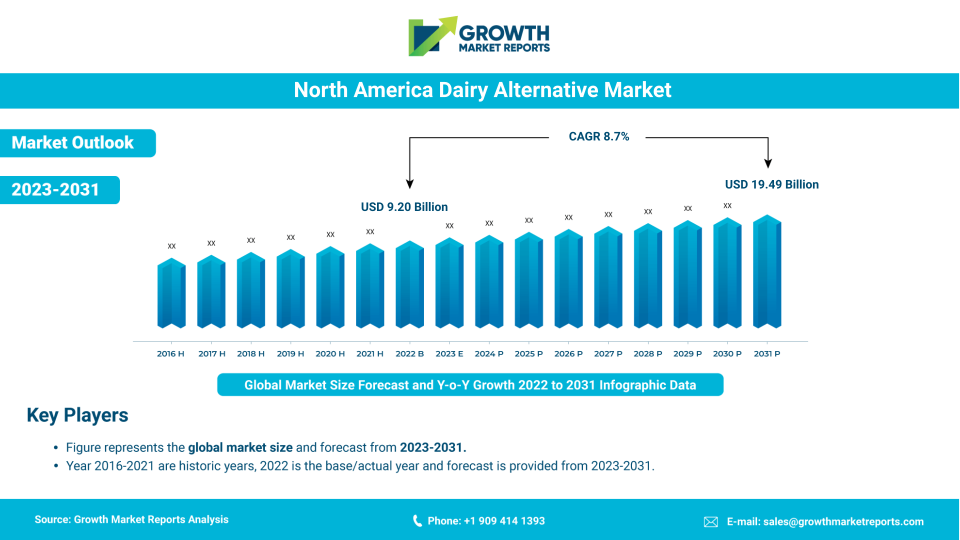
Dairy Alternative Market Research Report 2033

Dairy Alternative Market Research Report 2033

Segments - by Product Type (Soy Milk, Almond Milk, Coconut Milk, Rice Milk, Oat Milk, Hemp Milk, Others), by Formulation (Plain, Flavored), by Application (Food, Beverages, Nutritional Products, Others), by Distribution Channel (Supermarkets/Hypermarkets, Convenience Stores, Online Retail, Specialty Stores, Others)

https://growthmarketreports.com/Anuradha
Author : Anuradha B. More
https://growthmarketreports.com/Vaibhav
Fact-checked by : Vaibhav Chandola
https://growthmarketreports.com/Shruti
Editor : Shruti Bhat

Upcoming | Report ID :FB-3096 | 4.0 Rating | 28 Reviews | 272 Pages | Format : Docx PDF

Report Description


Dairy Alternatives Market Outlook

According to our latest research, the global dairy alternatives market size reached USD 29.7 billion in 2024, with a robust compound annual growth rate (CAGR) of 11.2% from 2025 to 2033. The market is projected to achieve a value of USD 76.7 billion by 2033, driven primarily by increasing consumer awareness of health, rising lactose intolerance, and a significant shift towards plant-based diets. The dairy alternatives market is experiencing strong momentum, supported by both demand-side and supply-side drivers, as consumers globally seek healthier, sustainable, and ethical food options.

One of the primary growth factors for the dairy alternatives market is the escalating prevalence of lactose intolerance and dairy allergies worldwide. As per the latest data, nearly 65% of the global population experiences some degree of lactose malabsorption, leading to a surge in demand for non-dairy milk and related products. This medical necessity, combined with growing awareness about the potential health risks associated with excessive dairy consumption—such as increased cholesterol and saturated fat intake—has prompted consumers to explore plant-based alternatives. Furthermore, the increasing availability of fortified dairy alternatives, which are enriched with calcium, vitamin D, and other essential nutrients, has helped bridge the nutritional gap, making these products more appealing to health-conscious individuals and families.

The evolving consumer preference towards ethical and sustainable food choices is another critical factor fueling the growth of the dairy alternatives market. Environmental concerns associated with traditional dairy farming, including high water usage, greenhouse gas emissions, and land degradation, have led many consumers to seek out plant-based options. Major brands are capitalizing on this trend by launching innovative products that cater to diverse tastes and dietary requirements. The proliferation of veganism and flexitarian diets, particularly among millennials and Gen Z, has further accelerated market expansion. Additionally, the increasing presence of dairy alternatives in mainstream retail channels and foodservice outlets has made these products more accessible, supporting broader market penetration.

Technological advancements in food processing and ingredient sourcing have also played a pivotal role in shaping the dairy alternatives market landscape. Manufacturers are leveraging cutting-edge technologies to enhance the texture, taste, and nutritional profile of plant-based milk and related products, thereby narrowing the sensory gap between dairy and non-dairy options. The expansion of product portfolios to include a wide range of flavors, formulations, and applications—such as yogurts, cheeses, creamers, and desserts—has contributed to sustained market growth. Moreover, strategic collaborations and investments in research and development have facilitated the introduction of novel ingredients, such as pea protein and hemp, further diversifying consumer choices and driving market competitiveness.

From a regional perspective, Asia Pacific remains the largest and fastest-growing market for dairy alternatives, accounting for a significant share of global consumption. The region's growth is underpinned by a large lactose-intolerant population, rising disposable incomes, and increasing urbanization. North America and Europe are also witnessing substantial growth, supported by strong consumer advocacy for plant-based diets and favorable regulatory frameworks. Latin America and the Middle East & Africa are emerging as promising markets, driven by changing dietary patterns and the proliferation of international brands. Overall, the global dairy alternatives market is poised for sustained expansion, driven by a confluence of health, environmental, and technological factors.

Global Dairy Alternative Industry Outlook

Product Type Analysis

The dairy alternatives market is segmented by product type into soy milk, almond milk, coconut milk, rice milk, oat milk, hemp milk, and others. Among these, soy milk has historically held the largest market share due to its high protein content, affordability, and early market entry. Soy milk is widely recognized for its close nutritional profile to cow’s milk, making it a preferred choice for consumers seeking a direct replacement. However, concerns over genetically modified organisms (GMOs) and soy allergies have tempered its growth in recent years. Nevertheless, manufacturers are addressing these concerns by offering non-GMO and organic variants, ensuring continued demand in both traditional and emerging markets.

Almond milk has rapidly gained popularity and is now one of the fastest-growing segments within the dairy alternatives market. Its mild flavor, low calorie content, and suitability for a variety of culinary applications have contributed to its widespread adoption. The rise of almond milk is particularly pronounced in North America and Europe, where consumers are increasingly seeking low-sugar and low-fat alternatives to dairy. However, environmental concerns related to water usage in almond cultivation have prompted some brands to pursue more sustainable sourcing and production practices. Despite these challenges, the segment continues to benefit from ongoing product innovation, such as the introduction of barista blends and fortified versions.

Oat milk has emerged as a major disruptor in the dairy alternatives market, driven by its creamy texture, naturally sweet taste, and strong sustainability credentials. Oat milk is particularly favored in coffee shops and foodservice outlets, where its frothing capabilities make it an ideal choice for lattes and specialty beverages. The segment has witnessed exponential growth in recent years, outpacing many traditional plant-based milks in key markets. Manufacturers are responding to this demand by expanding their oat milk product lines to include flavored, organic, and gluten-free options, thereby appealing to a broader consumer base. The rapid expansion of oat milk is also supported by increased marketing efforts and high-profile partnerships with major coffee chains.

Other product types, such as coconut milk, rice milk, and hemp milk, cater to specific consumer preferences and dietary needs. Coconut milk is valued for its rich, creamy texture and is commonly used in cooking and baking, particularly in Asian and tropical cuisines. Rice milk, with its hypoallergenic properties, is suitable for consumers with multiple food allergies, while hemp milk offers a unique nutritional profile rich in omega-3 fatty acids. These niche segments, though smaller in market share, are experiencing steady growth as manufacturers continue to innovate and diversify their offerings. Collectively, the product type segment remains highly dynamic, reflecting the evolving tastes and preferences of global consumers.

Report Scope

Attributes Details
Report Title Dairy Alternative Market Research Report 2033
By Product Type Soy Milk, Almond Milk, Coconut Milk, Rice Milk, Oat Milk, Hemp Milk, Others
By Formulation Plain, Flavored
By Application Food, Beverages, Nutritional Products, Others
By Distribution Channel Supermarkets/Hypermarkets, Convenience Stores, Online Retail, Specialty Stores, Others
Regions Covered North America, Europe, APAC, Latin America, MEA
Base Year 2024
Historic Data 2018-2023
Forecast Period 2025-2033
Number of Pages 272
Number of Tables & Figures 303
Customization Available Yes, the report can be customized as per your need.

Formulation Analysis

The formulation segment of the dairy alternatives market is bifurcated into plain and flavored variants. Plain dairy alternatives, which include unsweetened and minimally processed options, are favored by health-conscious consumers who seek to minimize added sugars and artificial ingredients. This segment is particularly popular among individuals with dietary restrictions, such as diabetics and those following clean-label diets. The demand for plain formulations is also driven by their versatility in culinary applications, as they can be used in both sweet and savory dishes without altering the intended flavor profile. Manufacturers are responding to this trend by offering a wide range of unsweetened and organic products, often fortified with essential vitamins and minerals to enhance their nutritional value.

Flavored dairy alternatives represent a significant growth opportunity within the market, as consumers increasingly seek variety and indulgence in their food and beverage choices. Popular flavors include vanilla, chocolate, strawberry, and coffee, with seasonal and limited-edition offerings further driving consumer interest. The flavored segment is particularly appealing to younger demographics and families with children, who prioritize taste and convenience. Manufacturers are leveraging natural flavors and sweeteners to cater to health-conscious consumers while maintaining the sensory appeal of their products. The proliferation of flavored dairy alternatives in ready-to-drink formats has also contributed to the segment’s rapid expansion, particularly in the on-the-go and convenience food markets.

Innovation in formulation is a key driver of growth in the dairy alternatives market, with manufacturers investing heavily in research and development to improve taste, texture, and nutritional content. Advances in food science have enabled the creation of dairy alternatives that closely mimic the sensory attributes of traditional dairy products, thereby enhancing consumer acceptance. Functional formulations, which incorporate added protein, fiber, probiotics, and other health-promoting ingredients, are gaining traction among health-focused consumers. These value-added products command premium pricing and help differentiate brands in an increasingly competitive marketplace.

The balance between plain and flavored formulations is expected to remain dynamic, as consumer preferences continue to evolve. While plain variants are likely to maintain strong demand among core health-conscious segments, flavored options will drive incremental growth by appealing to a broader audience. Manufacturers are also exploring hybrid formulations that combine the benefits of both segments, such as lightly flavored or reduced-sugar options. Overall, the formulation segment plays a critical role in shaping the product landscape and influencing purchasing decisions in the dairy alternatives market.

Application Analysis

Dairy alternatives find application across a diverse range of food, beverages, nutritional products, and other categories. In the food segment, dairy alternatives are increasingly used in the production of plant-based yogurts, cheeses, ice creams, and desserts. The rising popularity of vegan and flexitarian diets has driven demand for these products, as consumers seek alternatives to traditional dairy-based foods. Manufacturers are investing in product development to improve the taste, texture, and nutritional profile of plant-based food products, thereby enhancing their appeal to mainstream consumers. The food application segment is also benefiting from the growing trend of home cooking and baking, as consumers experiment with dairy alternatives in their recipes.

The beverages segment represents the largest application area for dairy alternatives, accounting for a significant share of global consumption. Plant-based milks, creamers, and ready-to-drink beverages are widely consumed as direct replacements for cow’s milk in coffee, tea, smoothies, and breakfast cereals. The segment is characterized by rapid product innovation, with manufacturers introducing new flavors, functional ingredients, and convenient packaging formats to meet evolving consumer needs. The growing prevalence of lactose intolerance and milk allergies, coupled with the increasing adoption of plant-based diets, has fueled demand for dairy alternative beverages in both retail and foodservice channels.

Nutritional products, including meal replacements, protein shakes, and fortified supplements, represent a high-growth segment within the dairy alternatives market. These products are particularly popular among athletes, fitness enthusiasts, and individuals with specific dietary requirements. The incorporation of plant-based proteins, vitamins, minerals, and functional ingredients has enabled manufacturers to position dairy alternatives as premium, health-promoting products. The segment is also benefiting from the broader trend towards personalized nutrition, as consumers seek products tailored to their individual health goals and preferences.

Other applications of dairy alternatives include their use in infant formulas, confectionery, and culinary products. The growing demand for allergen-free and hypoallergenic options in these categories has prompted manufacturers to develop specialized formulations that cater to sensitive populations. The versatility of dairy alternatives, combined with ongoing innovation and product diversification, is expected to drive sustained growth across all application segments. As consumer awareness of the benefits of plant-based diets continues to rise, the application landscape for dairy alternatives will become increasingly varied and dynamic.

Distribution Channel Analysis

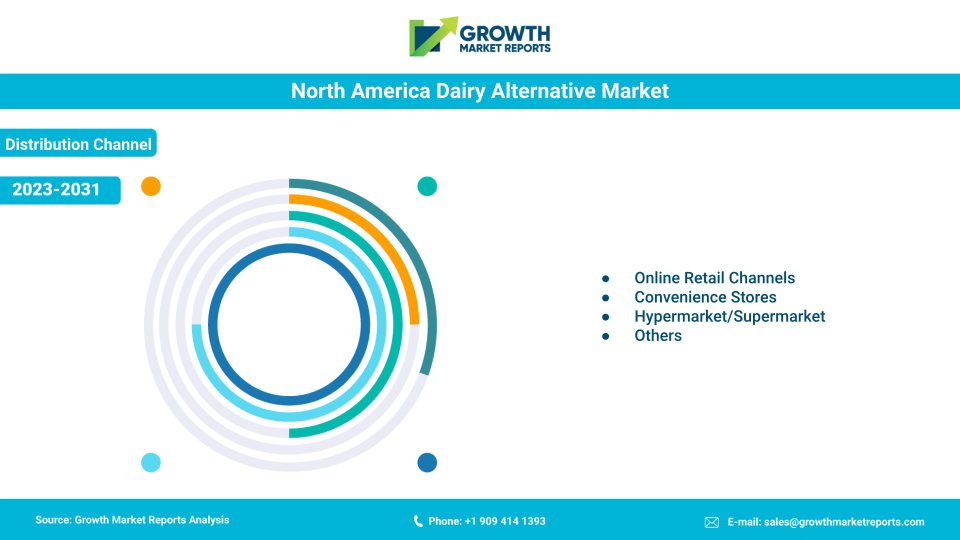
The distribution channel segment of the dairy alternatives market includes supermarkets/hypermarkets, convenience stores, online retail, specialty stores, and others. Supermarkets and hypermarkets remain the dominant distribution channels, accounting for the largest share of global sales. These outlets offer consumers a wide variety of dairy alternative products, often at competitive prices, and benefit from high foot traffic and extensive shelf space. The presence of dedicated plant-based sections and prominent in-store promotions has further boosted the visibility and accessibility of dairy alternatives in these channels. Retailers are also partnering with leading brands to offer exclusive product lines and limited-edition flavors, enhancing the overall shopping experience.

Convenience stores play a crucial role in driving impulse purchases and catering to on-the-go consumers. The increasing availability of single-serve and ready-to-drink dairy alternative beverages in convenience stores has contributed to segment growth, particularly among urban populations. These outlets are also expanding their product assortments to include a wider range of plant-based options, reflecting changing consumer preferences and dietary trends. The convenience store segment is expected to witness steady growth, supported by ongoing urbanization and the rising demand for convenient, healthy food and beverage options.

Online retail is emerging as a significant growth driver in the dairy alternatives market, fueled by the rapid expansion of e-commerce platforms and changing consumer shopping habits. The convenience of home delivery, coupled with access to a broader range of products and brands, has made online retail an attractive option for consumers seeking dairy alternatives. Manufacturers are leveraging digital marketing and direct-to-consumer sales channels to engage with customers, gather feedback, and introduce new products. The online segment is also benefiting from the growing popularity of subscription services and personalized product recommendations, which enhance customer loyalty and drive repeat purchases.

Specialty stores, including health food stores and organic markets, cater to niche consumer segments seeking premium, high-quality, and organic dairy alternatives. These outlets often offer exclusive products and personalized service, attracting health-conscious and environmentally aware consumers. The specialty store segment is characterized by higher price points and a focus on product education, with staff often providing detailed information on ingredients, sourcing, and nutritional benefits. As the dairy alternatives market continues to evolve, the distribution channel landscape will become increasingly diverse, with each channel playing a unique role in shaping consumer purchasing behavior.

Opportunities & Threats

The dairy alternatives market presents significant opportunities for growth and innovation, driven by evolving consumer preferences and advancements in food technology. One of the most promising opportunities lies in the development of new product formulations that closely mimic the taste, texture, and nutritional profile of traditional dairy products. Manufacturers are investing heavily in research and development to create plant-based alternatives that appeal to mainstream consumers, including those who may not follow a strictly vegan or lactose-free diet. The expansion of product portfolios to include a wider range of flavors, functional ingredients, and value-added features is expected to drive incremental growth and enhance brand differentiation in a competitive marketplace.

Another key opportunity for market players is the expansion into emerging markets, where rising disposable incomes, increasing urbanization, and changing dietary patterns are driving demand for dairy alternatives. Asia Pacific, Latin America, and the Middle East & Africa represent untapped growth potential, particularly as consumers in these regions become more health-conscious and seek alternatives to traditional dairy products. Strategic partnerships with local distributors, retailers, and foodservice providers can help manufacturers navigate regulatory challenges, adapt to local tastes, and establish a strong market presence. Additionally, the growing popularity of e-commerce and direct-to-consumer sales channels offers new avenues for reaching and engaging with a broader customer base.

Despite the numerous opportunities, the dairy alternatives market faces several challenges and threats that could impact future growth. One of the primary restraining factors is the relatively high cost of production and retail pricing for plant-based dairy alternatives compared to conventional dairy products. This price premium can be a barrier to adoption, particularly in price-sensitive markets and among lower-income consumers. Additionally, supply chain disruptions, fluctuations in the availability and cost of key raw materials, and regulatory uncertainties related to labeling and marketing claims pose ongoing risks to market stability. Addressing these challenges will require continued investment in supply chain optimization, cost reduction strategies, and transparent communication with consumers.

Regional Outlook

Asia Pacific dominates the global dairy alternatives market, accounting for approximately 37% of total market revenue in 2024, equating to roughly USD 11.0 billion. The region's leadership is driven by a high prevalence of lactose intolerance, increasing health awareness, and the rapid urbanization of major economies such as China, India, and Japan. The rising middle class and growing disposable incomes have further fueled demand for premium and functional dairy alternatives. Local and international brands are expanding their presence in the region, introducing innovative products tailored to local tastes and preferences. The Asia Pacific market is forecasted to grow at a strong CAGR of 12.8% through 2033, outpacing other regions and solidifying its position as a key growth engine for the global industry.

North America is the second-largest market, with a market size of approximately USD 8.5 billion in 2024, driven by increasing consumer adoption of plant-based diets, a well-established retail infrastructure, and strong advocacy for animal welfare and environmental sustainability. The United States and Canada are at the forefront of product innovation, with a wide array of dairy alternative products available across supermarkets, specialty stores, and online platforms. The region's growth is further supported by favorable regulatory frameworks and proactive marketing campaigns by leading brands. North America is expected to maintain steady growth, with a projected CAGR of 10.4% over the forecast period, as consumers continue to prioritize health and sustainability in their purchasing decisions.

Europe holds a significant share of the global dairy alternatives market, with a market size of USD 7.2 billion in 2024. The region is characterized by a high level of consumer awareness, stringent food safety regulations, and a strong focus on sustainability. Countries such as Germany, the United Kingdom, France, and the Netherlands are leading the adoption of dairy alternatives, supported by robust retail networks and a growing number of vegan and flexitarian consumers. The European market is also witnessing increased investment in research and development, with manufacturers introducing innovative products that cater to local tastes and dietary preferences. Latin America and the Middle East & Africa, while currently smaller in market size, are emerging as promising markets, with combined revenues of USD 3.0 billion in 2024 and strong growth potential driven by changing consumer preferences and expanding distribution networks.

Dairy Alternative Market Statistics

Competitor Outlook

The competitive landscape of the dairy alternatives market is characterized by intense rivalry among both multinational corporations and emerging startups. Leading players are leveraging their extensive distribution networks, strong brand recognition, and robust research and development capabilities to maintain a competitive edge. The market is highly dynamic, with frequent product launches, strategic partnerships, and mergers and acquisitions shaping the competitive environment. Companies are increasingly focusing on sustainability, clean-label ingredients, and functional benefits to differentiate their offerings and appeal to health-conscious consumers. The entry of new players, particularly in the premium and niche segments, has intensified competition and spurred innovation across the industry.

Product innovation remains a key competitive strategy, with manufacturers investing in the development of new flavors, formulations, and packaging formats to meet evolving consumer preferences. The introduction of fortified and functional dairy alternatives, such as high-protein, low-sugar, and probiotic-enriched products, has enabled brands to capture a larger share of the health and wellness market. Companies are also expanding their product portfolios to include a wider range of plant-based alternatives, such as yogurts, cheeses, ice creams, and creamers, thereby broadening their appeal to mainstream and niche consumer segments. Strategic collaborations with retailers, foodservice providers, and ingredient suppliers have further enhanced market reach and operational efficiency.

Sustainability and ethical sourcing are increasingly important differentiators in the dairy alternatives market, with consumers placing greater emphasis on environmental impact and social responsibility. Leading brands are adopting transparent sourcing practices, reducing their carbon footprint, and investing in eco-friendly packaging solutions to align with consumer values. Marketing and branding efforts are focused on communicating the health, environmental, and ethical benefits of dairy alternatives, thereby fostering brand loyalty and driving repeat purchases. The growing influence of digital and social media platforms has also enabled companies to engage directly with consumers, gather feedback, and build strong brand communities.

Key players in the dairy alternatives market include Danone S.A., Blue Diamond Growers, The Hain Celestial Group, Inc., SunOpta Inc., Oatly AB, Califia Farms, Ripple Foods, Earth’s Own Food Company, and Vitasoy International Holdings Ltd. Danone S.A., through its Alpro and Silk brands, is a global leader, offering a comprehensive portfolio of plant-based dairy alternatives across multiple product categories and regions. Blue Diamond Growers dominates the almond milk segment, leveraging its expertise in almond sourcing and processing to deliver high-quality, innovative products. Oatly AB has emerged as a market disruptor, particularly in the oat milk segment, with a strong focus on sustainability and brand differentiation. Califia Farms and Ripple Foods are recognized for their commitment to clean-label ingredients, functional benefits, and premium positioning, catering to health-conscious and environmentally aware consumers.

The Hain Celestial Group, Inc. and SunOpta Inc. are prominent players in the organic and natural foods segment, offering a wide range of dairy alternatives that appeal to consumers seeking clean-label and non-GMO products. Earth’s Own Food Company and Vitasoy International Holdings Ltd. have a strong presence in the Asia Pacific region, capitalizing on local market knowledge and consumer insights to drive growth. These companies are continuously investing in research and development, marketing, and sustainability initiatives to strengthen their market position and capture emerging opportunities. The competitive landscape is expected to remain dynamic, with ongoing innovation and strategic initiatives shaping the future of the dairy alternatives market.

Key Players

  • Danone
  • Nestlé S.A.
  • Blue Diamond Growers
  • The Hain Celestial Group, Inc.
  • SunOpta Inc.
  • Oatly Group AB
  • Califia Farms
  • Eden Foods, Inc.
  • Earth’s Own Food Company Inc.
  • Ripple Foods
  • Vitasoy International Holdings Limited
  • Valio Ltd.
  • Daiya Foods Inc.
  • Good Karma Foods, Inc.
  • Miyoko’s Creamery
  • Tofutti Brands Inc.
  • Kikkoman Corporation
  • Elmhurst 1925
  • Alpro (a Danone brand)
  • Silk (a Danone brand)
Dairy Alternative Market Overview

Segments

The Dairy Alternative market has been segmented on the basis of

Product Type

  • Soy Milk
  • Almond Milk
  • Coconut Milk
  • Rice Milk
  • Oat Milk
  • Hemp Milk
  • Others

Formulation

  • Plain
  • Flavored

Application

  • Food
  • Beverages
  • Nutritional Products
  • Others

Distribution Channel

  • Supermarkets/Hypermarkets
  • Convenience Stores
  • Online Retail
  • Specialty Stores
  • Others

Competitive Landscape

Key players competing in North America dairy alternative market include SunOpta Inc.; Blue Diamond Growers; Earth’s Own Food Company; Dean Food Company; Groupe DANONE.

Some of these players are targeting on business strategies such as mergers, acquisitions, partnerships, collaborations, capacity expansion, and product launches to increase their market shares. For instance

  • In February 2021, Groupe DANONE announced that they have entered into an purchase agreement with Earth Island the maker of follow your heart brand the pioneers in plant based food to acquire 100% share.

  • In July 2021, Groupe DANONE plans to offer a new plant based milk alternative with improved taste and texture.
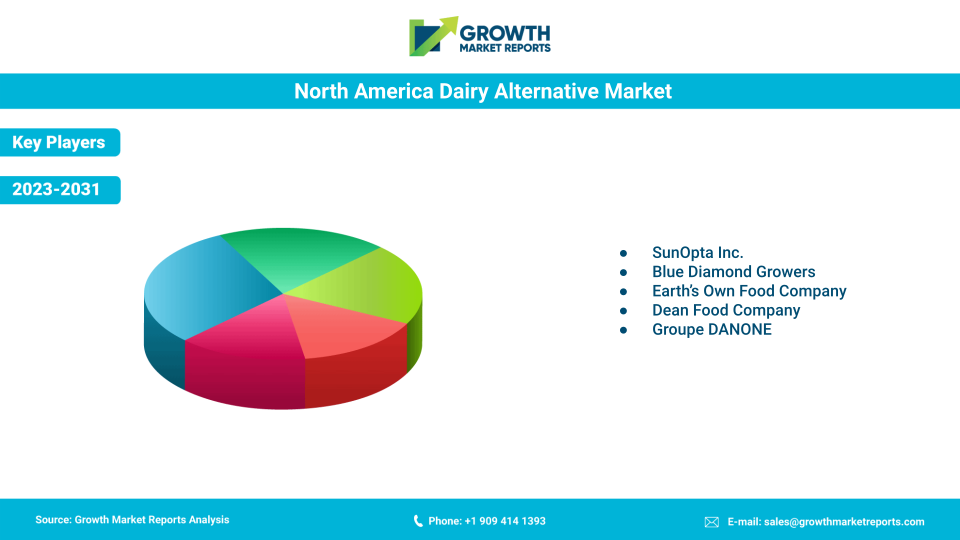

North America Dairy Alternative Market Key Players

Frequently Asked Questions

Sustainability is a major factor, with brands focusing on eco-friendly packaging, ethical sourcing, and reducing environmental impact to meet consumer demand for responsible and ethical food choices.

Major players include Danone S.A. (Alpro, Silk), Blue Diamond Growers, The Hain Celestial Group, SunOpta Inc., Oatly AB, Califia Farms, Ripple Foods, Earth’s Own Food Company, and Vitasoy International Holdings Ltd.

Opportunities include product innovation, expansion into emerging markets, and growth in online retail. Challenges include higher production and retail costs compared to dairy, supply chain disruptions, and regulatory uncertainties.

Asia Pacific is the largest and fastest-growing region, driven by high lactose intolerance rates and urbanization. North America and Europe also have significant market shares due to strong consumer advocacy for plant-based diets and favorable regulations.

Dairy alternatives are sold through supermarkets/hypermarkets, convenience stores, online retail platforms, and specialty stores. Supermarkets/hypermarkets dominate, but online retail is rapidly growing due to the convenience and variety it offers.

Dairy alternatives are widely used in beverages (such as plant-based milks and creamers), food products (like yogurts, cheeses, and desserts), nutritional products (including protein shakes and meal replacements), and other categories like infant formulas and confectionery.

Dairy alternatives are available in plain and flavored formulations. Trends include the rise of unsweetened and organic options, as well as flavored varieties like vanilla, chocolate, and coffee. Functional formulations with added protein, fiber, and probiotics are also gaining popularity.

Popular product types include soy milk, almond milk, oat milk, coconut milk, rice milk, and hemp milk. Soy milk leads due to its high protein content, while almond and oat milk are rapidly gaining market share.

Key growth drivers include rising consumer awareness of health, increasing prevalence of lactose intolerance and dairy allergies, a shift toward plant-based diets, and growing concerns over environmental sustainability.

The global dairy alternatives market reached USD 29.7 billion in 2024 and is projected to grow at a CAGR of 11.2% from 2025 to 2033, reaching USD 76.7 billion by 2033.

Table Of Content

Chapter 1 Executive Summary
Chapter 2 Assumptions and Acronyms Used
Chapter 3 Research Methodology
Chapter 4 Dairy Alternative Market Overview
   4.1 Introduction
      4.1.1 Market Taxonomy
      4.1.2 Market Definition
      4.1.3 Macro-Economic Factors Impacting the Market Growth
   4.2 Dairy Alternative Market Dynamics
      4.2.1 Market Drivers
      4.2.2 Market Restraints
      4.2.3 Market Opportunity
   4.3 Dairy Alternative Market - Supply Chain Analysis
      4.3.1 List of Key Suppliers
      4.3.2 List of Key Distributors
      4.3.3 List of Key Consumers
   4.4 Key Forces Shaping the Dairy Alternative Market
      4.4.1 Bargaining Power of Suppliers
      4.4.2 Bargaining Power of Buyers
      4.4.3 Threat of Substitution
      4.4.4 Threat of New Entrants
      4.4.5 Competitive Rivalry
   4.5 Global Dairy Alternative Market Size & Forecast, 2023-2032
      4.5.1 Dairy Alternative Market Size and Y-o-Y Growth
      4.5.2 Dairy Alternative Market Absolute $ Opportunity

Chapter 5 Global Dairy Alternative Market Analysis and Forecast By Product Type
   5.1 Introduction
      5.1.1 Key Market Trends & Growth Opportunities By Product Type
      5.1.2 Basis Point Share (BPS) Analysis By Product Type
      5.1.3 Absolute $ Opportunity Assessment By Product Type
   5.2 Dairy Alternative Market Size Forecast By Product Type
      5.2.1 Soy Milk
      5.2.2 Almond Milk
      5.2.3 Coconut Milk
      5.2.4 Rice Milk
      5.2.5 Oat Milk
      5.2.6 Hemp Milk
      5.2.7 Others
   5.3 Market Attractiveness Analysis By Product Type

Chapter 6 Global Dairy Alternative Market Analysis and Forecast By Formulation
   6.1 Introduction
      6.1.1 Key Market Trends & Growth Opportunities By Formulation
      6.1.2 Basis Point Share (BPS) Analysis By Formulation
      6.1.3 Absolute $ Opportunity Assessment By Formulation
   6.2 Dairy Alternative Market Size Forecast By Formulation
      6.2.1 Plain
      6.2.2 Flavored
   6.3 Market Attractiveness Analysis By Formulation

Chapter 7 Global Dairy Alternative Market Analysis and Forecast By Application
   7.1 Introduction
      7.1.1 Key Market Trends & Growth Opportunities By Application
      7.1.2 Basis Point Share (BPS) Analysis By Application
      7.1.3 Absolute $ Opportunity Assessment By Application
   7.2 Dairy Alternative Market Size Forecast By Application
      7.2.1 Food
      7.2.2 Beverages
      7.2.3 Nutritional Products
      7.2.4 Others
   7.3 Market Attractiveness Analysis By Application

Chapter 8 Global Dairy Alternative Market Analysis and Forecast By Distribution Channel
   8.1 Introduction
      8.1.1 Key Market Trends & Growth Opportunities By Distribution Channel
      8.1.2 Basis Point Share (BPS) Analysis By Distribution Channel
      8.1.3 Absolute $ Opportunity Assessment By Distribution Channel
   8.2 Dairy Alternative Market Size Forecast By Distribution Channel
      8.2.1 Supermarkets/Hypermarkets
      8.2.2 Convenience Stores
      8.2.3 Online Retail
      8.2.4 Specialty Stores
      8.2.5 Others
   8.3 Market Attractiveness Analysis By Distribution Channel

Chapter 9 Global Dairy Alternative Market Analysis and Forecast by Region
   9.1 Introduction
      9.1.1 Key Market Trends & Growth Opportunities By Region
      9.1.2 Basis Point Share (BPS) Analysis By Region
      9.1.3 Absolute $ Opportunity Assessment By Region
   9.2 Dairy Alternative Market Size Forecast By Region
      9.2.1 North America
      9.2.2 Europe
      9.2.3 Asia Pacific
      9.2.4 Latin America
      9.2.5 Middle East & Africa (MEA)
   9.3 Market Attractiveness Analysis By Region

Chapter 10 Coronavirus Disease (COVID-19) Impact 
   10.1 Introduction 
   10.2 Current & Future Impact Analysis 
   10.3 Economic Impact Analysis 
   10.4 Government Policies 
   10.5 Investment Scenario

Chapter 11 North America Dairy Alternative Analysis and Forecast
   11.1 Introduction
   11.2 North America Dairy Alternative Market Size Forecast by Country
      11.2.1 U.S.
      11.2.2 Canada
   11.3 Basis Point Share (BPS) Analysis by Country
   11.4 Absolute $ Opportunity Assessment by Country
   11.5 Market Attractiveness Analysis by Country
   11.6 North America Dairy Alternative Market Size Forecast By Product Type
      11.6.1 Soy Milk
      11.6.2 Almond Milk
      11.6.3 Coconut Milk
      11.6.4 Rice Milk
      11.6.5 Oat Milk
      11.6.6 Hemp Milk
      11.6.7 Others
   11.7 Basis Point Share (BPS) Analysis By Product Type 
   11.8 Absolute $ Opportunity Assessment By Product Type 
   11.9 Market Attractiveness Analysis By Product Type
   11.10 North America Dairy Alternative Market Size Forecast By Formulation
      11.10.1 Plain
      11.10.2 Flavored
   11.11 Basis Point Share (BPS) Analysis By Formulation 
   11.12 Absolute $ Opportunity Assessment By Formulation 
   11.13 Market Attractiveness Analysis By Formulation
   11.14 North America Dairy Alternative Market Size Forecast By Application
      11.14.1 Food
      11.14.2 Beverages
      11.14.3 Nutritional Products
      11.14.4 Others
   11.15 Basis Point Share (BPS) Analysis By Application 
   11.16 Absolute $ Opportunity Assessment By Application 
   11.17 Market Attractiveness Analysis By Application
   11.18 North America Dairy Alternative Market Size Forecast By Distribution Channel
      11.18.1 Supermarkets/Hypermarkets
      11.18.2 Convenience Stores
      11.18.3 Online Retail
      11.18.4 Specialty Stores
      11.18.5 Others
   11.19 Basis Point Share (BPS) Analysis By Distribution Channel 
   11.20 Absolute $ Opportunity Assessment By Distribution Channel 
   11.21 Market Attractiveness Analysis By Distribution Channel

Chapter 12 Europe Dairy Alternative Analysis and Forecast
   12.1 Introduction
   12.2 Europe Dairy Alternative Market Size Forecast by Country
      12.2.1 Germany
      12.2.2 France
      12.2.3 Italy
      12.2.4 U.K.
      12.2.5 Spain
      12.2.6 Russia
      12.2.7 Rest of Europe
   12.3 Basis Point Share (BPS) Analysis by Country
   12.4 Absolute $ Opportunity Assessment by Country
   12.5 Market Attractiveness Analysis by Country
   12.6 Europe Dairy Alternative Market Size Forecast By Product Type
      12.6.1 Soy Milk
      12.6.2 Almond Milk
      12.6.3 Coconut Milk
      12.6.4 Rice Milk
      12.6.5 Oat Milk
      12.6.6 Hemp Milk
      12.6.7 Others
   12.7 Basis Point Share (BPS) Analysis By Product Type 
   12.8 Absolute $ Opportunity Assessment By Product Type 
   12.9 Market Attractiveness Analysis By Product Type
   12.10 Europe Dairy Alternative Market Size Forecast By Formulation
      12.10.1 Plain
      12.10.2 Flavored
   12.11 Basis Point Share (BPS) Analysis By Formulation 
   12.12 Absolute $ Opportunity Assessment By Formulation 
   12.13 Market Attractiveness Analysis By Formulation
   12.14 Europe Dairy Alternative Market Size Forecast By Application
      12.14.1 Food
      12.14.2 Beverages
      12.14.3 Nutritional Products
      12.14.4 Others
   12.15 Basis Point Share (BPS) Analysis By Application 
   12.16 Absolute $ Opportunity Assessment By Application 
   12.17 Market Attractiveness Analysis By Application
   12.18 Europe Dairy Alternative Market Size Forecast By Distribution Channel
      12.18.1 Supermarkets/Hypermarkets
      12.18.2 Convenience Stores
      12.18.3 Online Retail
      12.18.4 Specialty Stores
      12.18.5 Others
   12.19 Basis Point Share (BPS) Analysis By Distribution Channel 
   12.20 Absolute $ Opportunity Assessment By Distribution Channel 
   12.21 Market Attractiveness Analysis By Distribution Channel

Chapter 13 Asia Pacific Dairy Alternative Analysis and Forecast
   13.1 Introduction
   13.2 Asia Pacific Dairy Alternative Market Size Forecast by Country
      13.2.1 China
      13.2.2 Japan
      13.2.3 South Korea
      13.2.4 India
      13.2.5 Australia
      13.2.6 South East Asia (SEA)
      13.2.7 Rest of Asia Pacific (APAC)
   13.3 Basis Point Share (BPS) Analysis by Country
   13.4 Absolute $ Opportunity Assessment by Country
   13.5 Market Attractiveness Analysis by Country
   13.6 Asia Pacific Dairy Alternative Market Size Forecast By Product Type
      13.6.1 Soy Milk
      13.6.2 Almond Milk
      13.6.3 Coconut Milk
      13.6.4 Rice Milk
      13.6.5 Oat Milk
      13.6.6 Hemp Milk
      13.6.7 Others
   13.7 Basis Point Share (BPS) Analysis By Product Type 
   13.8 Absolute $ Opportunity Assessment By Product Type 
   13.9 Market Attractiveness Analysis By Product Type
   13.10 Asia Pacific Dairy Alternative Market Size Forecast By Formulation
      13.10.1 Plain
      13.10.2 Flavored
   13.11 Basis Point Share (BPS) Analysis By Formulation 
   13.12 Absolute $ Opportunity Assessment By Formulation 
   13.13 Market Attractiveness Analysis By Formulation
   13.14 Asia Pacific Dairy Alternative Market Size Forecast By Application
      13.14.1 Food
      13.14.2 Beverages
      13.14.3 Nutritional Products
      13.14.4 Others
   13.15 Basis Point Share (BPS) Analysis By Application 
   13.16 Absolute $ Opportunity Assessment By Application 
   13.17 Market Attractiveness Analysis By Application
   13.18 Asia Pacific Dairy Alternative Market Size Forecast By Distribution Channel
      13.18.1 Supermarkets/Hypermarkets
      13.18.2 Convenience Stores
      13.18.3 Online Retail
      13.18.4 Specialty Stores
      13.18.5 Others
   13.19 Basis Point Share (BPS) Analysis By Distribution Channel 
   13.20 Absolute $ Opportunity Assessment By Distribution Channel 
   13.21 Market Attractiveness Analysis By Distribution Channel

Chapter 14 Latin America Dairy Alternative Analysis and Forecast
   14.1 Introduction
   14.2 Latin America Dairy Alternative Market Size Forecast by Country
      14.2.1 Brazil
      14.2.2 Mexico
      14.2.3 Rest of Latin America (LATAM)
   14.3 Basis Point Share (BPS) Analysis by Country
   14.4 Absolute $ Opportunity Assessment by Country
   14.5 Market Attractiveness Analysis by Country
   14.6 Latin America Dairy Alternative Market Size Forecast By Product Type
      14.6.1 Soy Milk
      14.6.2 Almond Milk
      14.6.3 Coconut Milk
      14.6.4 Rice Milk
      14.6.5 Oat Milk
      14.6.6 Hemp Milk
      14.6.7 Others
   14.7 Basis Point Share (BPS) Analysis By Product Type 
   14.8 Absolute $ Opportunity Assessment By Product Type 
   14.9 Market Attractiveness Analysis By Product Type
   14.10 Latin America Dairy Alternative Market Size Forecast By Formulation
      14.10.1 Plain
      14.10.2 Flavored
   14.11 Basis Point Share (BPS) Analysis By Formulation 
   14.12 Absolute $ Opportunity Assessment By Formulation 
   14.13 Market Attractiveness Analysis By Formulation
   14.14 Latin America Dairy Alternative Market Size Forecast By Application
      14.14.1 Food
      14.14.2 Beverages
      14.14.3 Nutritional Products
      14.14.4 Others
   14.15 Basis Point Share (BPS) Analysis By Application 
   14.16 Absolute $ Opportunity Assessment By Application 
   14.17 Market Attractiveness Analysis By Application
   14.18 Latin America Dairy Alternative Market Size Forecast By Distribution Channel
      14.18.1 Supermarkets/Hypermarkets
      14.18.2 Convenience Stores
      14.18.3 Online Retail
      14.18.4 Specialty Stores
      14.18.5 Others
   14.19 Basis Point Share (BPS) Analysis By Distribution Channel 
   14.20 Absolute $ Opportunity Assessment By Distribution Channel 
   14.21 Market Attractiveness Analysis By Distribution Channel

Chapter 15 Middle East & Africa (MEA) Dairy Alternative Analysis and Forecast
   15.1 Introduction
   15.2 Middle East & Africa (MEA) Dairy Alternative Market Size Forecast by Country
      15.2.1 Saudi Arabia
      15.2.2 South Africa
      15.2.3 UAE
      15.2.4 Rest of Middle East & Africa (MEA)
   15.3 Basis Point Share (BPS) Analysis by Country
   15.4 Absolute $ Opportunity Assessment by Country
   15.5 Market Attractiveness Analysis by Country
   15.6 Middle East & Africa (MEA) Dairy Alternative Market Size Forecast By Product Type
      15.6.1 Soy Milk
      15.6.2 Almond Milk
      15.6.3 Coconut Milk
      15.6.4 Rice Milk
      15.6.5 Oat Milk
      15.6.6 Hemp Milk
      15.6.7 Others
   15.7 Basis Point Share (BPS) Analysis By Product Type 
   15.8 Absolute $ Opportunity Assessment By Product Type 
   15.9 Market Attractiveness Analysis By Product Type
   15.10 Middle East & Africa (MEA) Dairy Alternative Market Size Forecast By Formulation
      15.10.1 Plain
      15.10.2 Flavored
   15.11 Basis Point Share (BPS) Analysis By Formulation 
   15.12 Absolute $ Opportunity Assessment By Formulation 
   15.13 Market Attractiveness Analysis By Formulation
   15.14 Middle East & Africa (MEA) Dairy Alternative Market Size Forecast By Application
      15.14.1 Food
      15.14.2 Beverages
      15.14.3 Nutritional Products
      15.14.4 Others
   15.15 Basis Point Share (BPS) Analysis By Application 
   15.16 Absolute $ Opportunity Assessment By Application 
   15.17 Market Attractiveness Analysis By Application
   15.18 Middle East & Africa (MEA) Dairy Alternative Market Size Forecast By Distribution Channel
      15.18.1 Supermarkets/Hypermarkets
      15.18.2 Convenience Stores
      15.18.3 Online Retail
      15.18.4 Specialty Stores
      15.18.5 Others
   15.19 Basis Point Share (BPS) Analysis By Distribution Channel 
   15.20 Absolute $ Opportunity Assessment By Distribution Channel 
   15.21 Market Attractiveness Analysis By Distribution Channel

Chapter 16 Competition Landscape 
   16.1 Dairy Alternative Market: Competitive Dashboard
   16.2 Global Dairy Alternative Market: Market Share Analysis, 2023
   16.3 Company Profiles (Details – Overview, Financials, Developments, Strategy) 
      16.3.1 Danone
Nestlé S.A.
Blue Diamond Growers
The Hain Celestial Group, Inc.
SunOpta Inc.
Oatly Group AB
Califia Farms
Eden Foods, Inc.
Earth’s Own Food Company Inc.
Ripple Foods
Vitasoy International Holdings Limited
Valio Ltd.
Daiya Foods Inc.
Good Karma Foods, Inc.
Miyoko’s Creamery
Tofutti Brands Inc.
Kikkoman Corporation
Elmhurst 1925
Alpro (a Danone brand)
Silk (a Danone brand)

Methodology

Our Clients

Dassault Aviation
Deloitte
Microsoft
Nestle SA
General Electric
Siemens Healthcare
FedEx Logistics
The John Holland Group