Crystal Oscillator Market Research Report 2033

Crystal Oscillator Market Research Report 2033

Segments - by Type (Surface Mount, Through-Hole), by Crystal Cut (AT Cut, BT Cut, SC Cut, Others), by Mounting Scheme (Surface Mount Technology, Through-Hole Technology), by Application (Consumer Electronics, Automotive, Industrial, Telecommunications, Military & Aerospace, Healthcare, Others), by End-User (Consumer Electronics, Automotive, Industrial, Telecommunications, Military & Aerospace, Healthcare, Others)

https://growthmarketreports.com/Raksha
Author : Raksha Sharma
https://growthmarketreports.com/Vaibhav
Fact-checked by : V. Chandola
https://growthmarketreports.com/Shruti
Editor : Shruti Bhat

Upcoming | Report ID :ICT-SE-1573 | 4.3 Rating | 75 Reviews | 300 Pages | Format : Docx PDF

Report Description


Crystal Oscillator Market Outlook

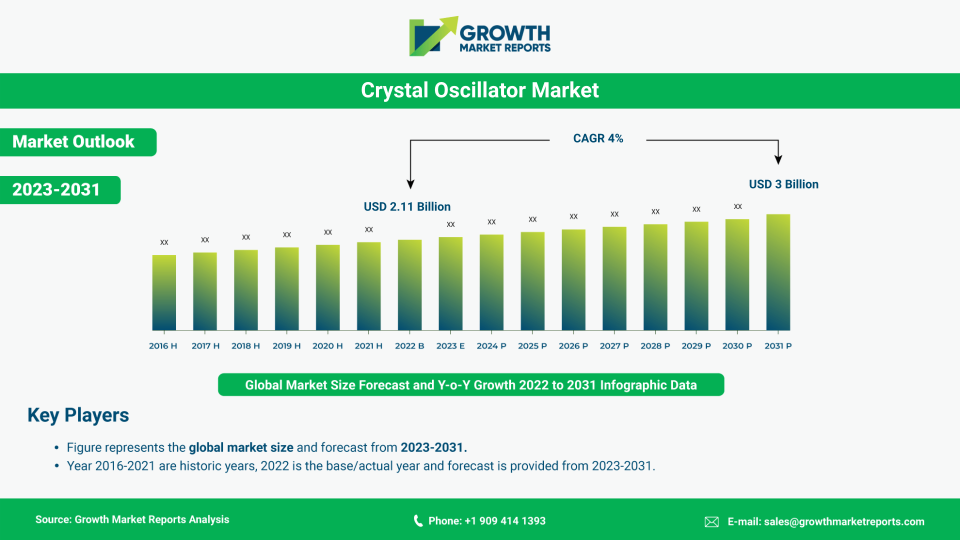
According to our latest research, the global crystal oscillator market size in 2024 stands at USD 2.91 billion, demonstrating robust expansion driven by the increasing demand for high-precision frequency control solutions across various end-user industries. The market is projected to grow at a CAGR of 4.7% from 2025 to 2033, reaching a forecasted value of USD 4.43 billion by 2033. This growth is primarily attributed to advancements in wireless communication technologies, the proliferation of consumer electronics, and the rising adoption of automotive electronics worldwide.

One of the primary growth factors fueling the crystal oscillator market is the surging demand for consumer electronics, such as smartphones, tablets, wearables, and smart home devices. These electronic devices require precise timing and frequency control, which crystal oscillators provide. As innovation in consumer electronics continues, with features such as 5G connectivity and IoT integration becoming standard, the need for reliable and miniaturized crystal oscillators increases significantly. Furthermore, the shift towards more power-efficient and compact devices has led to the development and adoption of surface mount technology (SMT) crystal oscillators, which offer higher integration and improved performance in limited space. The ongoing evolution of smart devices and the growing trend of digitalization across households globally are expected to further accelerate the demand for crystal oscillators in the coming years.

Another significant driver for the crystal oscillator market is the rapid growth of the automotive and industrial sectors. Modern vehicles are equipped with advanced driver-assistance systems (ADAS), infotainment systems, and electronic control units (ECUs), all of which require precise timing components for optimal performance. The increasing adoption of electric vehicles (EVs) and autonomous driving technologies has further boosted the use of crystal oscillators in automotive applications. Similarly, the industrial automation sector relies heavily on crystal oscillators for process control, robotics, and industrial IoT devices, where reliability and accuracy are critical. The integration of Industry 4.0 concepts and the expansion of smart manufacturing facilities worldwide are expected to create substantial opportunities for the crystal oscillator market during the forecast period.

The telecommunications industry also plays a pivotal role in the growth of the crystal oscillator market. With the ongoing rollout of 5G networks and the expansion of high-speed broadband infrastructure, there is an escalating demand for stable and precise frequency sources in network equipment, base stations, and data centers. Crystal oscillators are integral to maintaining synchronization and ensuring seamless data transmission in these applications. The increasing volume of data traffic, the emergence of edge computing, and the proliferation of connected devices in both enterprise and consumer domains are anticipated to further enhance the adoption of crystal oscillators in telecommunications.

From a regional perspective, Asia Pacific holds the largest share in the global crystal oscillator market, driven by the presence of major electronics manufacturing hubs in countries such as China, Japan, South Korea, and Taiwan. The region benefits from a strong supply chain, abundant raw materials, and a skilled workforce, making it a key contributor to market growth. North America and Europe also represent significant markets, supported by technological advancements, high R&D investments, and the presence of leading automotive and industrial players. Meanwhile, emerging markets in Latin America and the Middle East & Africa are witnessing gradual growth, propelled by increasing investments in telecommunications infrastructure and industrial automation.

In the realm of cutting-edge technology, the Piezoelectric Spintronic Oscillator is emerging as a revolutionary component that could redefine frequency control solutions. This innovative oscillator combines the principles of piezoelectricity and spintronics to achieve unprecedented levels of precision and efficiency. By leveraging the unique properties of spintronic materials, these oscillators offer enhanced frequency stability and reduced power consumption, making them ideal for next-generation electronic devices. The integration of piezoelectric spintronic oscillators into consumer electronics, telecommunications, and automotive applications is expected to drive significant advancements in device performance and energy efficiency. As the demand for more sophisticated and reliable frequency control solutions grows, the adoption of piezoelectric spintronic oscillators is poised to transform the landscape of the crystal oscillator market.

Global Crystal Oscillator Industry Outlook

Type Analysis

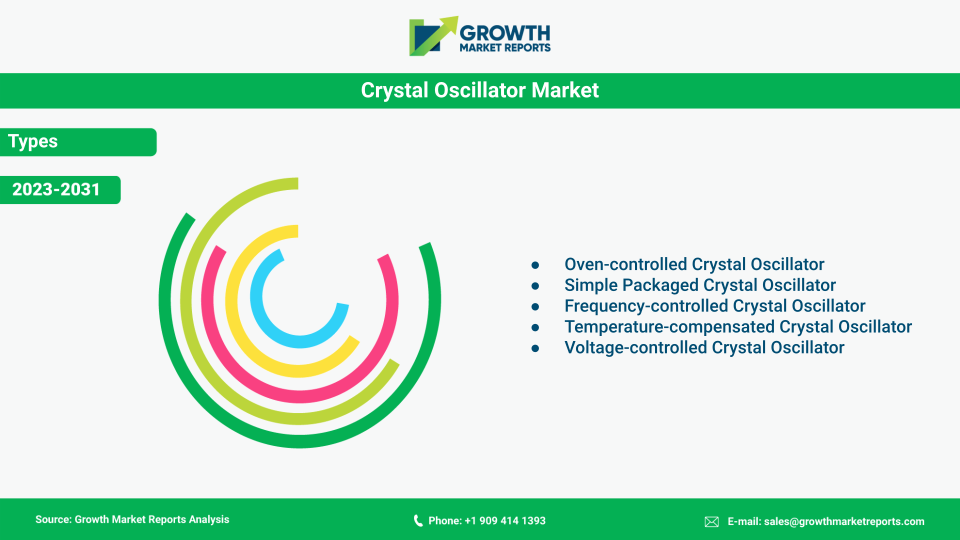
The crystal oscillator market by type is primarily segmented into surface mount and through-hole oscillators. Surface mount crystal oscillators have gained significant traction in recent years due to their compact size, ease of integration, and suitability for automated manufacturing processes. The widespread adoption of surface mount technology (SMT) in the electronics industry has propelled demand for SMT crystal oscillators, especially in applications where miniaturization and high-density circuit boards are essential. These oscillators offer enhanced electrical performance, improved signal integrity, and better resistance to vibrations, making them ideal for use in mobile devices, wearables, and automotive electronics. The trend towards smaller, lighter, and more power-efficient electronic products is expected to continue driving the growth of the surface mount segment throughout the forecast period.

Through-hole crystal oscillators, while gradually being replaced by SMT variants in many applications, still hold a significant share in the market, particularly in industrial and military sectors. These oscillators are valued for their mechanical robustness, reliable performance under harsh environmental conditions, and ease of replacement during maintenance or repair. Through-hole oscillators are commonly used in applications where durability and longevity are prioritized over miniaturization, such as industrial automation equipment, aerospace systems, and legacy electronic devices. Despite the shift towards SMT, the through-hole segment is expected to maintain steady demand due to its continued relevance in specialized applications.

The choice between surface mount and through-hole types often depends on the specific requirements of the end application. For instance, consumer electronics and telecommunications equipment typically favor SMT oscillators for their space-saving benefits, while industrial and military applications may opt for through-hole variants for their ruggedness and reliability. Manufacturers are also focusing on developing hybrid solutions that combine the advantages of both types, catering to the evolving needs of diverse industries. The ongoing advancements in packaging technologies and the increasing adoption of automation in electronics manufacturing are likely to further influence the dynamics of the type segment.

Market players are investing heavily in research and development to enhance the performance characteristics of both surface mount and through-hole crystal oscillators. Innovations such as ultra-low phase noise, high-frequency stability, and extended temperature range operation are being introduced to meet the stringent demands of next-generation applications. Additionally, efforts to reduce manufacturing costs and improve supply chain efficiency are expected to make these oscillators more accessible to a broader range of customers, thereby supporting overall market growth.

Report Scope

Attributes Details
Report Title Crystal Oscillator Market Research Report 2033
By Type Surface Mount, Through-Hole
By Crystal Cut AT Cut, BT Cut, SC Cut, Others
By Mounting Scheme Surface Mount Technology, Through-Hole Technology
By Application Consumer Electronics, Automotive, Industrial, Telecommunications, Military & Aerospace, Healthcare, Others
By End-User Consumer Electronics, Automotive, Industrial, Telecommunications, Military & Aerospace, Healthcare, Others
Regions Covered North America, Europe, APAC, Latin America, MEA
Base Year 2024
Historic Data 2018-2023
Forecast Period 2025-2033
Number of Pages 300
Number of Tables & Figures 325
Customization Available Yes, the report can be customized as per your need.

Crystal Cut Analysis

The crystal oscillator market by crystal cut is categorized into AT cut, BT cut, SC cut, and others. Among these, the AT cut segment dominates the market due to its excellent frequency stability, low temperature coefficient, and suitability for a wide range of frequencies. AT cut oscillators are extensively used in consumer electronics, telecommunications, and industrial applications, where precise timing and frequency control are essential. The inherent properties of AT cut crystals, such as their ability to operate over a broad temperature range and deliver high performance in compact form factors, make them the preferred choice for most commercial applications. As the demand for high-frequency and miniaturized electronic devices continues to rise, the AT cut segment is expected to maintain its leading position in the market.

BT cut crystal oscillators are primarily utilized in applications that require operation at higher frequencies, typically above 1 MHz. These oscillators offer good frequency stability and are less sensitive to mechanical stress compared to AT cut crystals. BT cut oscillators are commonly found in radio frequency (RF) and microwave applications, as well as in certain industrial and scientific instruments. Although their market share is smaller compared to AT cut oscillators, the growing adoption of advanced communication systems and the increasing demand for high-frequency components are expected to drive steady growth in the BT cut segment.

SC cut crystal oscillators are known for their superior performance in terms of frequency stability and resistance to external influences such as temperature fluctuations and mechanical vibrations. These characteristics make SC cut oscillators ideal for use in precision timing applications, including aerospace, defense, and high-end industrial equipment. The SC cut segment, while relatively niche, is witnessing increased demand from sectors that require ultra-stable frequency sources for mission-critical operations. As technological advancements continue to push the boundaries of frequency control, the adoption of SC cut oscillators is expected to grow, particularly in high-reliability and high-precision environments.

Other crystal cuts, such as X cut and Y cut, are used in specialized applications where unique frequency or temperature characteristics are required. While these segments represent a smaller portion of the overall market, they play a crucial role in addressing specific industry needs. Manufacturers are continually exploring new crystal cutting techniques and materials to enhance the performance and reliability of oscillators, ensuring that they can meet the evolving demands of emerging applications in telecommunications, healthcare, and scientific research.

The Precision Oscillator segment is witnessing a surge in demand, driven by the need for ultra-stable frequency sources in high-precision applications. Precision oscillators are characterized by their exceptional frequency stability, low phase noise, and ability to operate over a wide temperature range. These attributes make them indispensable in industries such as telecommunications, aerospace, and scientific research, where accurate timing is paramount. The development of precision oscillators with advanced features, such as temperature-compensated and oven-controlled designs, is enabling their use in increasingly complex and demanding environments. As technological advancements continue to push the boundaries of frequency control, the precision oscillator market is poised for significant growth, offering enhanced performance and reliability to a wide array of applications.

Mounting Scheme Analysis

The mounting scheme segment of the crystal oscillator market is divided into surface mount technology (SMT) and through-hole technology. Surface mount technology has revolutionized the electronics manufacturing industry by enabling the production of smaller, lighter, and more complex electronic assemblies. SMT crystal oscillators are favored for their compatibility with automated assembly processes, which significantly reduces manufacturing time and costs. The ability to mount components directly onto the surface of printed circuit boards (PCBs) allows for higher component density and improved electrical performance. SMT oscillators are extensively used in high-volume applications such as consumer electronics, telecommunications equipment, and automotive electronics, where space and weight constraints are critical considerations.

Through-hole technology, on the other hand, involves inserting component leads through holes in the PCB and soldering them on the opposite side. While this method is less conducive to miniaturization, it offers superior mechanical strength and reliability, making it suitable for applications that require robust performance under challenging conditions. Through-hole crystal oscillators are commonly used in industrial automation, aerospace, and military applications, where exposure to vibration, shock, and extreme temperatures is common. Despite the growing preference for SMT, through-hole technology remains relevant in specific use cases where durability and ease of maintenance are paramount.

The choice of mounting scheme often depends on the end-user's priorities, such as cost, performance, and environmental considerations. Manufacturers are increasingly offering a wide range of mounting options to cater to the diverse needs of their customers. The trend towards miniaturization and the increasing complexity of electronic devices are expected to drive further adoption of SMT in the coming years. However, the enduring demand for through-hole technology in critical applications ensures that both mounting schemes will continue to coexist in the market.

Advancements in PCB design and assembly processes are also influencing the dynamics of the mounting scheme segment. The integration of mixed-technology PCBs, which combine SMT and through-hole components, is becoming more common in complex electronic systems. This approach allows manufacturers to leverage the benefits of both mounting schemes, optimizing performance, reliability, and manufacturability. As the requirements of end-user industries continue to evolve, the mounting scheme segment is expected to witness ongoing innovation and diversification.

Application Analysis

The crystal oscillator market finds applications across a diverse range of industries, including consumer electronics, automotive, industrial, telecommunications, military and aerospace, healthcare, and others. Consumer electronics represent the largest application segment, driven by the proliferation of smartphones, tablets, laptops, wearables, and smart home devices. The need for precise timing and frequency control in these devices is critical for ensuring seamless operation, synchronization, and communication. The rapid pace of innovation in the consumer electronics sector, coupled with the growing adoption of IoT-enabled devices, is expected to sustain strong demand for crystal oscillators in this segment.

The automotive industry is another major application area for crystal oscillators, particularly with the rise of advanced driver-assistance systems (ADAS), infotainment systems, and electronic control units (ECUs). As vehicles become increasingly connected and autonomous, the demand for reliable and high-performance timing solutions is growing. Crystal oscillators play a vital role in ensuring the accurate operation of safety-critical systems, navigation, and communication modules. The shift towards electric vehicles (EVs) and the integration of smart technologies in automotive design are expected to further boost the adoption of crystal oscillators in this sector.

Industrial applications, including automation, robotics, process control, and industrial IoT, also contribute significantly to the crystal oscillator market. These environments require robust and reliable timing components that can withstand harsh operating conditions and deliver consistent performance. The ongoing digital transformation of manufacturing processes, driven by Industry 4.0 initiatives, is creating new opportunities for crystal oscillator manufacturers. The demand for high-precision and durable oscillators in industrial settings is expected to remain strong throughout the forecast period.

Telecommunications is a key application segment, with crystal oscillators being essential for maintaining synchronization in network equipment, base stations, and data centers. The rollout of 5G networks, expansion of broadband infrastructure, and increasing data traffic are driving demand for high-frequency and ultra-stable oscillators. Military and aerospace applications require crystal oscillators with exceptional reliability, frequency stability, and resistance to extreme environmental conditions. These oscillators are used in radar systems, navigation, communication, and electronic warfare equipment. Healthcare applications, such as medical imaging, diagnostics, and monitoring devices, also rely on crystal oscillators for accurate timing and signal processing. The diverse range of applications underscores the critical role of crystal oscillators in modern technology.

End-User Analysis

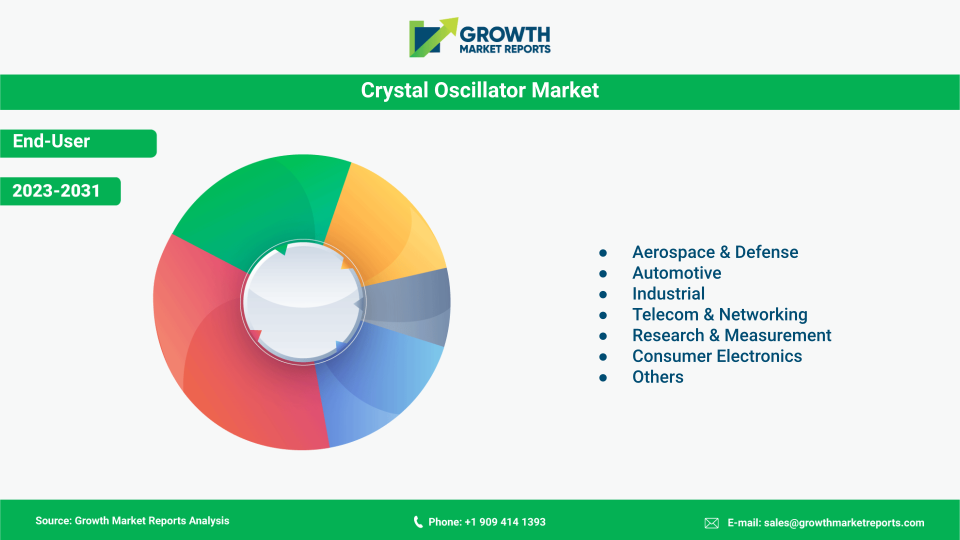
The crystal oscillator market by end-user mirrors the application segment, with consumer electronics, automotive, industrial, telecommunications, military and aerospace, healthcare, and others constituting the primary categories. Consumer electronics manufacturers are the largest end-users of crystal oscillators, driven by the continuous introduction of new devices and features that require precise timing solutions. The competitive nature of the consumer electronics market compels manufacturers to seek high-performance, cost-effective, and miniaturized oscillators that can be seamlessly integrated into their products.

Automotive manufacturers are increasingly relying on crystal oscillators to support the growing complexity of vehicle electronics. The integration of advanced safety features, connectivity solutions, and autonomous driving capabilities necessitates the use of highly reliable timing components. Automotive OEMs and Tier-1 suppliers are collaborating closely with oscillator manufacturers to develop customized solutions that meet the stringent requirements of the automotive industry, including resistance to temperature extremes, vibrations, and electromagnetic interference.

Industrial end-users, including manufacturers of automation equipment, robotics, and control systems, represent a significant market for crystal oscillators. These industries demand oscillators that can deliver consistent performance in challenging environments, withstanding factors such as dust, moisture, and mechanical stress. The trend towards smart factories and the adoption of industrial IoT technologies are expected to drive further growth in this segment, as manufacturers seek to enhance productivity, efficiency, and reliability.

Telecommunications companies, including network equipment providers and service operators, are major end-users of crystal oscillators. The need for synchronized data transmission, low phase noise, and high-frequency stability makes oscillators indispensable in telecommunications infrastructure. Military and aerospace end-users require oscillators with the highest levels of reliability and performance, often operating in mission-critical applications where failure is not an option. Healthcare providers and medical device manufacturers also rely on crystal oscillators for accurate timing in diagnostic and monitoring equipment. The diverse end-user landscape highlights the versatility and indispensable nature of crystal oscillators in modern technology ecosystems.

Opportunities & Threats

The crystal oscillator market presents several promising opportunities for growth and innovation. One of the most significant opportunities lies in the ongoing development of 5G and next-generation wireless communication technologies. As the deployment of 5G networks accelerates globally, the demand for high-frequency, ultra-stable, and low phase noise oscillators is expected to surge. Manufacturers that can deliver advanced solutions tailored to the unique requirements of 5G infrastructure, such as small cell base stations and edge computing nodes, are well-positioned to capitalize on this trend. Additionally, the proliferation of IoT devices across various industries presents a vast market for miniaturized and energy-efficient crystal oscillators. The integration of oscillators into wearable devices, smart sensors, and connected appliances offers significant growth potential for market players.

Another key opportunity is the increasing adoption of automotive electronics and the transition towards electric and autonomous vehicles. The complexity of modern vehicles, coupled with the need for enhanced safety, connectivity, and infotainment features, is driving demand for high-performance timing solutions. Crystal oscillator manufacturers can leverage this trend by developing automotive-grade oscillators that meet stringent industry standards for reliability, temperature stability, and electromagnetic compatibility. Furthermore, advancements in healthcare technology, such as remote monitoring, telemedicine, and medical imaging, are creating new avenues for oscillator applications. The growing emphasis on precision and reliability in medical devices underscores the importance of high-quality crystal oscillators in this sector.

Despite the positive outlook, the crystal oscillator market faces certain restraining factors and threats that could impact its growth trajectory. One of the main challenges is the increasing competition from alternative timing technologies, such as MEMS (Micro-Electro-Mechanical Systems) oscillators. MEMS oscillators offer advantages in terms of size, power consumption, and resistance to environmental factors, and are gaining traction in some applications traditionally dominated by crystal oscillators. Additionally, fluctuations in the supply of raw materials, such as quartz, and the complexities associated with the manufacturing process can lead to supply chain disruptions and cost pressures. Market players must continuously innovate and differentiate their products to maintain a competitive edge and address the evolving needs of end-users.

Regional Outlook

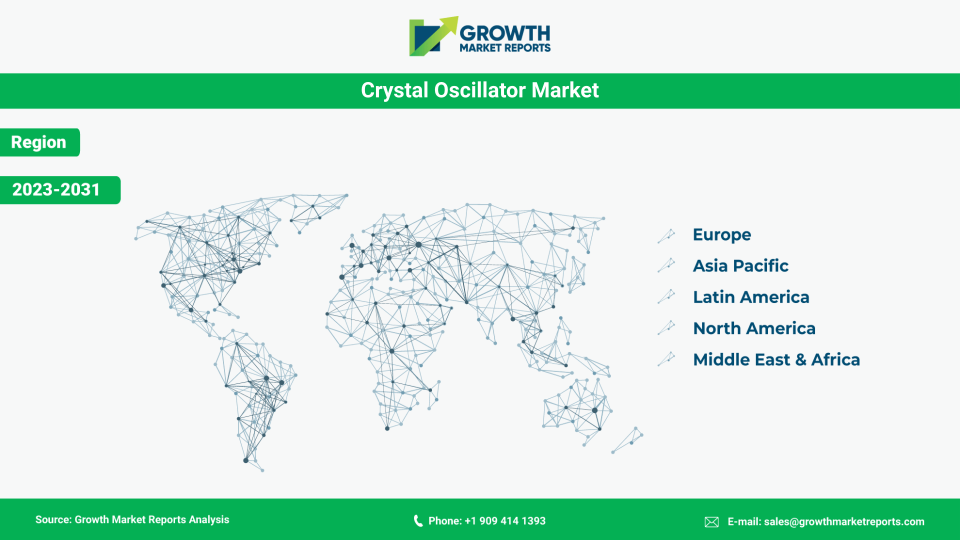
The Asia Pacific region dominates the global crystal oscillator market, accounting for approximately 46% of the total market value in 2024, which translates to around USD 1.34 billion. This dominance is primarily driven by the presence of major electronics manufacturing hubs in countries such as China, Japan, South Korea, and Taiwan. The region benefits from a robust supply chain, access to raw materials, and a skilled workforce, making it a preferred location for both manufacturing and consumption of crystal oscillators. The rapid growth of consumer electronics, automotive, and telecommunications industries in Asia Pacific is expected to sustain strong demand for crystal oscillators in the coming years. The region is projected to register a CAGR of 5.1% during the forecast period, outpacing other regions in terms of growth rate.

North America is the second-largest market for crystal oscillators, with a market value of approximately USD 780 million in 2024. The region is characterized by a high level of technological innovation, significant R&D investments, and the presence of leading players in the automotive, aerospace, and telecommunications sectors. The United States, in particular, is a major contributor to market growth, driven by the adoption of advanced technologies in defense, industrial automation, and healthcare. The increasing focus on 5G deployment, smart infrastructure, and autonomous vehicles is expected to further boost demand for crystal oscillators in North America. Europe follows closely, with a market value of around USD 610 million, supported by strong industrial and automotive sectors, as well as a growing emphasis on smart manufacturing and IoT adoption.

Latin America and the Middle East & Africa collectively account for a smaller share of the global crystal oscillator market, with a combined value of approximately USD 180 million in 2024. These regions are witnessing gradual growth, driven by increasing investments in telecommunications infrastructure, industrial automation, and consumer electronics. While the pace of adoption is slower compared to Asia Pacific and North America, the untapped potential in these emerging markets presents opportunities for market expansion. As economic conditions improve and digital transformation initiatives gain momentum, the demand for crystal oscillators in Latin America and the Middle East & Africa is expected to rise steadily over the forecast period.

Crystal Oscillator Market Statistics

Competitor Outlook

The global crystal oscillator market is characterized by intense competition, with numerous established players and a growing number of new entrants striving to capture market share. The competitive landscape is shaped by factors such as product innovation, technological advancements, pricing strategies, and the ability to cater to diverse end-user requirements. Leading companies are investing heavily in research and development to enhance the performance, reliability, and miniaturization of their oscillator products. The focus on developing application-specific solutions and expanding product portfolios has become a key strategy for maintaining a competitive edge in the market. Strategic collaborations, mergers, and acquisitions are also prevalent, enabling companies to strengthen their market position and expand their global footprint.

Innovation remains a critical differentiator in the crystal oscillator market, with manufacturers continuously introducing new products that offer improved frequency stability, lower power consumption, and enhanced resistance to environmental factors. The integration of advanced packaging technologies, such as chip-scale packaging and system-in-package solutions, is enabling the development of smaller and more efficient oscillators. Companies are also leveraging digital technologies and automation to optimize manufacturing processes and reduce production costs. The ability to offer customized solutions tailored to the specific needs of end-users is increasingly important, particularly in high-growth sectors such as automotive, telecommunications, and healthcare.

The market is also witnessing the emergence of regional players, particularly in Asia Pacific, who are leveraging their proximity to major electronics manufacturing hubs and cost advantages to compete effectively with global giants. These players are focusing on expanding their product offerings, improving quality standards, and establishing strong distribution networks to capture a larger share of the market. The presence of a large number of small and medium-sized enterprises (SMEs) adds to the competitive intensity, as these companies often specialize in niche applications and offer highly customized solutions to their customers.

Some of the major companies operating in the global crystal oscillator market include Seiko Epson Corporation, TXC Corporation, Nihon Dempa Kogyo Co., Ltd. (NDK), Kyocera Corporation, Murata Manufacturing Co., Ltd., SiTime Corporation, Rakon Limited, Daishinku Corp. (KDS), Microchip Technology Inc., and CTS Corporation. Seiko Epson Corporation and TXC Corporation are recognized for their extensive product portfolios and strong presence in both consumer and industrial markets. Nihon Dempa Kogyo Co., Ltd. (NDK) and Kyocera Corporation are known for their technological expertise and focus on high-reliability oscillators for automotive and aerospace applications. Murata Manufacturing Co., Ltd. and SiTime Corporation are at the forefront of innovation, with a strong emphasis on MEMS-based and ultra-miniaturized oscillators. Rakon Limited and Daishinku Corp. (KDS) have established themselves as key players in the telecommunications and industrial segments, while Microchip Technology Inc. and CTS Corporation are noted for their broad range of timing solutions catering to diverse end-user requirements.

These companies are continuously striving to enhance their market position through product innovation, strategic partnerships, and expansion into emerging markets. The ability to respond quickly to changing customer needs, maintain high quality standards, and offer competitive pricing will be crucial for sustaining growth in the highly competitive crystal oscillator market. As technological advancements continue to reshape the landscape, companies that can effectively leverage their expertise, resources, and global reach are expected to emerge as leaders in the industry.

Key Players

  • Seiko Epson Corporation
  • TXC Corporation
  • Kyocera Corporation
  • NDK (Nihon Dempa Kogyo Co., Ltd.)
  • Murata Manufacturing Co., Ltd.
  • Siward Crystal Technology Co., Ltd.
  • Rakon Limited
  • Daishinku Corp. (KDS)
  • Taitien Electronics Co., Ltd.
  • Hosonic Electronic Co., Ltd.
  • IQD Frequency Products Ltd.
  • Microchip Technology Inc.
  • CTS Corporation
  • Abracon LLC
  • Jauch Quartz GmbH
  • River Eletec Corporation
  • Pletronics Inc.
  • Bliley Technologies, Inc.
  • Vishay Intertechnology, Inc.
  • Fox Electronics (A Dover Company)
Crystal Oscillator Market Overview

Segments

The Crystal Oscillator market has been segmented on the basis of

Type

  • Surface Mount
  • Through-Hole

Crystal Cut

  • AT Cut
  • BT Cut
  • SC Cut
  • Others

Mounting Scheme

  • Surface Mount Technology
  • Through-Hole Technology

Application

  • Consumer Electronics
  • Automotive
  • Industrial
  • Telecommunications
  • Military & Aerospace
  • Healthcare
  • Others

End-User

  • Consumer Electronics
  • Automotive
  • Industrial
  • Telecommunications
  • Military & Aerospace
  • Healthcare
  • Others

Competitive Landscape

Key players competing in the crystal oscillator market include Nihon Dempa Kogyo (NDK) Co. Ltd.; Siward Crystal Technology Co., Ltd.; SiTime Corp.; Vectron International Inc.; Kyocera Corp.; Murata Manufacturing Co., Ltd.; Seiko Epson Corp.; Rakon Ltd; TXC Corp.; Daishinku Corp.; and Hosonic Electronic Co. Ltd.

Some of these players are using several market strategies such as acquisitions, merger, collaborations, partnerships, capacity expansion, and product launches to enhance their market shares and raise their production line of the business in the coming years.
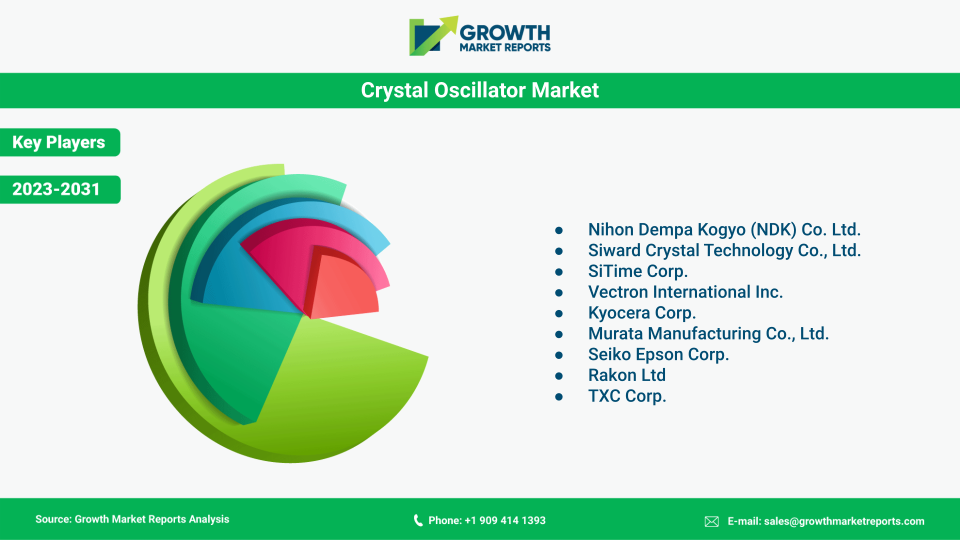

Global Crystal Oscillator Market Key Players

Frequently Asked Questions

Opportunities include the expansion of 5G and IoT technologies, increased adoption in automotive electronics (especially EVs and autonomous vehicles), and growing demand in healthcare and industrial automation sectors.

Key players include Seiko Epson Corporation, TXC Corporation, Nihon Dempa Kogyo Co., Ltd. (NDK), Kyocera Corporation, Murata Manufacturing Co., Ltd., SiTime Corporation, Rakon Limited, Daishinku Corp. (KDS), Microchip Technology Inc., and CTS Corporation.

Major challenges include competition from alternative timing technologies such as MEMS oscillators, supply chain disruptions, and raw material price fluctuations.

SMT is driving market growth by enabling the production of smaller, lighter, and more integrated electronic devices, especially in high-volume sectors like consumer electronics, automotive, and telecommunications.

AT cut crystals are most commonly used due to their excellent frequency stability, low temperature coefficient, and suitability for a wide range of frequencies, making them ideal for consumer electronics and telecommunications.

Crystal oscillators are widely used in consumer electronics, automotive, industrial automation, telecommunications, military and aerospace, and healthcare devices for precise timing and frequency control.

The main types are surface mount and through-hole crystal oscillators. Surface mount oscillators are favored for compact, automated applications, while through-hole oscillators are valued for their robustness in industrial and military uses.

Asia Pacific dominates the crystal oscillator market, accounting for approximately 46% of the total market value in 2024, driven by major electronics manufacturing hubs in China, Japan, South Korea, and Taiwan.

Key growth drivers include the rising demand for consumer electronics, advancements in wireless communication technologies, increased adoption of automotive electronics, and the proliferation of IoT and 5G networks.

As of 2024, the global crystal oscillator market is valued at USD 2.91 billion, with projections to reach USD 4.43 billion by 2033.

Table Of Content

Chapter 1 Executive Summary
Chapter 2 Assumptions and Acronyms Used
Chapter 3 Research Methodology
Chapter 4 Crystal Oscillator Market Overview
   4.1 Introduction
      4.1.1 Market Taxonomy
      4.1.2 Market Definition
      4.1.3 Macro-Economic Factors Impacting the Market Growth
   4.2 Crystal Oscillator Market Dynamics
      4.2.1 Market Drivers
      4.2.2 Market Restraints
      4.2.3 Market Opportunity
   4.3 Crystal Oscillator Market - Supply Chain Analysis
      4.3.1 List of Key Suppliers
      4.3.2 List of Key Distributors
      4.3.3 List of Key Consumers
   4.4 Key Forces Shaping the Crystal Oscillator Market
      4.4.1 Bargaining Power of Suppliers
      4.4.2 Bargaining Power of Buyers
      4.4.3 Threat of Substitution
      4.4.4 Threat of New Entrants
      4.4.5 Competitive Rivalry
   4.5 Global Crystal Oscillator Market Size & Forecast, 2023-2032
      4.5.1 Crystal Oscillator Market Size and Y-o-Y Growth
      4.5.2 Crystal Oscillator Market Absolute $ Opportunity

Chapter 5 Global Crystal Oscillator Market Analysis and Forecast By Type
   5.1 Introduction
      5.1.1 Key Market Trends & Growth Opportunities By Type
      5.1.2 Basis Point Share (BPS) Analysis By Type
      5.1.3 Absolute $ Opportunity Assessment By Type
   5.2 Crystal Oscillator Market Size Forecast By Type
      5.2.1 Surface Mount
      5.2.2 Through-Hole
   5.3 Market Attractiveness Analysis By Type

Chapter 6 Global Crystal Oscillator Market Analysis and Forecast By Crystal Cut
   6.1 Introduction
      6.1.1 Key Market Trends & Growth Opportunities By Crystal Cut
      6.1.2 Basis Point Share (BPS) Analysis By Crystal Cut
      6.1.3 Absolute $ Opportunity Assessment By Crystal Cut
   6.2 Crystal Oscillator Market Size Forecast By Crystal Cut
      6.2.1 AT Cut
      6.2.2 BT Cut
      6.2.3 SC Cut
      6.2.4 Others
   6.3 Market Attractiveness Analysis By Crystal Cut

Chapter 7 Global Crystal Oscillator Market Analysis and Forecast By Mounting Scheme
   7.1 Introduction
      7.1.1 Key Market Trends & Growth Opportunities By Mounting Scheme
      7.1.2 Basis Point Share (BPS) Analysis By Mounting Scheme
      7.1.3 Absolute $ Opportunity Assessment By Mounting Scheme
   7.2 Crystal Oscillator Market Size Forecast By Mounting Scheme
      7.2.1 Surface Mount Technology
      7.2.2 Through-Hole Technology
   7.3 Market Attractiveness Analysis By Mounting Scheme

Chapter 8 Global Crystal Oscillator Market Analysis and Forecast By Application
   8.1 Introduction
      8.1.1 Key Market Trends & Growth Opportunities By Application
      8.1.2 Basis Point Share (BPS) Analysis By Application
      8.1.3 Absolute $ Opportunity Assessment By Application
   8.2 Crystal Oscillator Market Size Forecast By Application
      8.2.1 Consumer Electronics
      8.2.2 Automotive
      8.2.3 Industrial
      8.2.4 Telecommunications
      8.2.5 Military & Aerospace
      8.2.6 Healthcare
      8.2.7 Others
   8.3 Market Attractiveness Analysis By Application

Chapter 9 Global Crystal Oscillator Market Analysis and Forecast By End-User
   9.1 Introduction
      9.1.1 Key Market Trends & Growth Opportunities By End-User
      9.1.2 Basis Point Share (BPS) Analysis By End-User
      9.1.3 Absolute $ Opportunity Assessment By End-User
   9.2 Crystal Oscillator Market Size Forecast By End-User
      9.2.1 Consumer Electronics
      9.2.2 Automotive
      9.2.3 Industrial
      9.2.4 Telecommunications
      9.2.5 Military & Aerospace
      9.2.6 Healthcare
      9.2.7 Others
   9.3 Market Attractiveness Analysis By End-User

Chapter 10 Global Crystal Oscillator Market Analysis and Forecast by Region
   10.1 Introduction
      10.1.1 Key Market Trends & Growth Opportunities By Region
      10.1.2 Basis Point Share (BPS) Analysis By Region
      10.1.3 Absolute $ Opportunity Assessment By Region
   10.2 Crystal Oscillator Market Size Forecast By Region
      10.2.1 North America
      10.2.2 Europe
      10.2.3 Asia Pacific
      10.2.4 Latin America
      10.2.5 Middle East & Africa (MEA)
   10.3 Market Attractiveness Analysis By Region

Chapter 11 Coronavirus Disease (COVID-19) Impact 
   11.1 Introduction 
   11.2 Current & Future Impact Analysis 
   11.3 Economic Impact Analysis 
   11.4 Government Policies 
   11.5 Investment Scenario

Chapter 12 North America Crystal Oscillator Analysis and Forecast
   12.1 Introduction
   12.2 North America Crystal Oscillator Market Size Forecast by Country
      12.2.1 U.S.
      12.2.2 Canada
   12.3 Basis Point Share (BPS) Analysis by Country
   12.4 Absolute $ Opportunity Assessment by Country
   12.5 Market Attractiveness Analysis by Country
   12.6 North America Crystal Oscillator Market Size Forecast By Type
      12.6.1 Surface Mount
      12.6.2 Through-Hole
   12.7 Basis Point Share (BPS) Analysis By Type 
   12.8 Absolute $ Opportunity Assessment By Type 
   12.9 Market Attractiveness Analysis By Type
   12.10 North America Crystal Oscillator Market Size Forecast By Crystal Cut
      12.10.1 AT Cut
      12.10.2 BT Cut
      12.10.3 SC Cut
      12.10.4 Others
   12.11 Basis Point Share (BPS) Analysis By Crystal Cut 
   12.12 Absolute $ Opportunity Assessment By Crystal Cut 
   12.13 Market Attractiveness Analysis By Crystal Cut
   12.14 North America Crystal Oscillator Market Size Forecast By Mounting Scheme
      12.14.1 Surface Mount Technology
      12.14.2 Through-Hole Technology
   12.15 Basis Point Share (BPS) Analysis By Mounting Scheme 
   12.16 Absolute $ Opportunity Assessment By Mounting Scheme 
   12.17 Market Attractiveness Analysis By Mounting Scheme
   12.18 North America Crystal Oscillator Market Size Forecast By Application
      12.18.1 Consumer Electronics
      12.18.2 Automotive
      12.18.3 Industrial
      12.18.4 Telecommunications
      12.18.5 Military & Aerospace
      12.18.6 Healthcare
      12.18.7 Others
   12.19 Basis Point Share (BPS) Analysis By Application 
   12.20 Absolute $ Opportunity Assessment By Application 
   12.21 Market Attractiveness Analysis By Application
   12.22 North America Crystal Oscillator Market Size Forecast By End-User
      12.22.1 Consumer Electronics
      12.22.2 Automotive
      12.22.3 Industrial
      12.22.4 Telecommunications
      12.22.5 Military & Aerospace
      12.22.6 Healthcare
      12.22.7 Others
   12.23 Basis Point Share (BPS) Analysis By End-User 
   12.24 Absolute $ Opportunity Assessment By End-User 
   12.25 Market Attractiveness Analysis By End-User

Chapter 13 Europe Crystal Oscillator Analysis and Forecast
   13.1 Introduction
   13.2 Europe Crystal Oscillator Market Size Forecast by Country
      13.2.1 Germany
      13.2.2 France
      13.2.3 Italy
      13.2.4 U.K.
      13.2.5 Spain
      13.2.6 Russia
      13.2.7 Rest of Europe
   13.3 Basis Point Share (BPS) Analysis by Country
   13.4 Absolute $ Opportunity Assessment by Country
   13.5 Market Attractiveness Analysis by Country
   13.6 Europe Crystal Oscillator Market Size Forecast By Type
      13.6.1 Surface Mount
      13.6.2 Through-Hole
   13.7 Basis Point Share (BPS) Analysis By Type 
   13.8 Absolute $ Opportunity Assessment By Type 
   13.9 Market Attractiveness Analysis By Type
   13.10 Europe Crystal Oscillator Market Size Forecast By Crystal Cut
      13.10.1 AT Cut
      13.10.2 BT Cut
      13.10.3 SC Cut
      13.10.4 Others
   13.11 Basis Point Share (BPS) Analysis By Crystal Cut 
   13.12 Absolute $ Opportunity Assessment By Crystal Cut 
   13.13 Market Attractiveness Analysis By Crystal Cut
   13.14 Europe Crystal Oscillator Market Size Forecast By Mounting Scheme
      13.14.1 Surface Mount Technology
      13.14.2 Through-Hole Technology
   13.15 Basis Point Share (BPS) Analysis By Mounting Scheme 
   13.16 Absolute $ Opportunity Assessment By Mounting Scheme 
   13.17 Market Attractiveness Analysis By Mounting Scheme
   13.18 Europe Crystal Oscillator Market Size Forecast By Application
      13.18.1 Consumer Electronics
      13.18.2 Automotive
      13.18.3 Industrial
      13.18.4 Telecommunications
      13.18.5 Military & Aerospace
      13.18.6 Healthcare
      13.18.7 Others
   13.19 Basis Point Share (BPS) Analysis By Application 
   13.20 Absolute $ Opportunity Assessment By Application 
   13.21 Market Attractiveness Analysis By Application
   13.22 Europe Crystal Oscillator Market Size Forecast By End-User
      13.22.1 Consumer Electronics
      13.22.2 Automotive
      13.22.3 Industrial
      13.22.4 Telecommunications
      13.22.5 Military & Aerospace
      13.22.6 Healthcare
      13.22.7 Others
   13.23 Basis Point Share (BPS) Analysis By End-User 
   13.24 Absolute $ Opportunity Assessment By End-User 
   13.25 Market Attractiveness Analysis By End-User

Chapter 14 Asia Pacific Crystal Oscillator Analysis and Forecast
   14.1 Introduction
   14.2 Asia Pacific Crystal Oscillator Market Size Forecast by Country
      14.2.1 China
      14.2.2 Japan
      14.2.3 South Korea
      14.2.4 India
      14.2.5 Australia
      14.2.6 South East Asia (SEA)
      14.2.7 Rest of Asia Pacific (APAC)
   14.3 Basis Point Share (BPS) Analysis by Country
   14.4 Absolute $ Opportunity Assessment by Country
   14.5 Market Attractiveness Analysis by Country
   14.6 Asia Pacific Crystal Oscillator Market Size Forecast By Type
      14.6.1 Surface Mount
      14.6.2 Through-Hole
   14.7 Basis Point Share (BPS) Analysis By Type 
   14.8 Absolute $ Opportunity Assessment By Type 
   14.9 Market Attractiveness Analysis By Type
   14.10 Asia Pacific Crystal Oscillator Market Size Forecast By Crystal Cut
      14.10.1 AT Cut
      14.10.2 BT Cut
      14.10.3 SC Cut
      14.10.4 Others
   14.11 Basis Point Share (BPS) Analysis By Crystal Cut 
   14.12 Absolute $ Opportunity Assessment By Crystal Cut 
   14.13 Market Attractiveness Analysis By Crystal Cut
   14.14 Asia Pacific Crystal Oscillator Market Size Forecast By Mounting Scheme
      14.14.1 Surface Mount Technology
      14.14.2 Through-Hole Technology
   14.15 Basis Point Share (BPS) Analysis By Mounting Scheme 
   14.16 Absolute $ Opportunity Assessment By Mounting Scheme 
   14.17 Market Attractiveness Analysis By Mounting Scheme
   14.18 Asia Pacific Crystal Oscillator Market Size Forecast By Application
      14.18.1 Consumer Electronics
      14.18.2 Automotive
      14.18.3 Industrial
      14.18.4 Telecommunications
      14.18.5 Military & Aerospace
      14.18.6 Healthcare
      14.18.7 Others
   14.19 Basis Point Share (BPS) Analysis By Application 
   14.20 Absolute $ Opportunity Assessment By Application 
   14.21 Market Attractiveness Analysis By Application
   14.22 Asia Pacific Crystal Oscillator Market Size Forecast By End-User
      14.22.1 Consumer Electronics
      14.22.2 Automotive
      14.22.3 Industrial
      14.22.4 Telecommunications
      14.22.5 Military & Aerospace
      14.22.6 Healthcare
      14.22.7 Others
   14.23 Basis Point Share (BPS) Analysis By End-User 
   14.24 Absolute $ Opportunity Assessment By End-User 
   14.25 Market Attractiveness Analysis By End-User

Chapter 15 Latin America Crystal Oscillator Analysis and Forecast
   15.1 Introduction
   15.2 Latin America Crystal Oscillator Market Size Forecast by Country
      15.2.1 Brazil
      15.2.2 Mexico
      15.2.3 Rest of Latin America (LATAM)
   15.3 Basis Point Share (BPS) Analysis by Country
   15.4 Absolute $ Opportunity Assessment by Country
   15.5 Market Attractiveness Analysis by Country
   15.6 Latin America Crystal Oscillator Market Size Forecast By Type
      15.6.1 Surface Mount
      15.6.2 Through-Hole
   15.7 Basis Point Share (BPS) Analysis By Type 
   15.8 Absolute $ Opportunity Assessment By Type 
   15.9 Market Attractiveness Analysis By Type
   15.10 Latin America Crystal Oscillator Market Size Forecast By Crystal Cut
      15.10.1 AT Cut
      15.10.2 BT Cut
      15.10.3 SC Cut
      15.10.4 Others
   15.11 Basis Point Share (BPS) Analysis By Crystal Cut 
   15.12 Absolute $ Opportunity Assessment By Crystal Cut 
   15.13 Market Attractiveness Analysis By Crystal Cut
   15.14 Latin America Crystal Oscillator Market Size Forecast By Mounting Scheme
      15.14.1 Surface Mount Technology
      15.14.2 Through-Hole Technology
   15.15 Basis Point Share (BPS) Analysis By Mounting Scheme 
   15.16 Absolute $ Opportunity Assessment By Mounting Scheme 
   15.17 Market Attractiveness Analysis By Mounting Scheme
   15.18 Latin America Crystal Oscillator Market Size Forecast By Application
      15.18.1 Consumer Electronics
      15.18.2 Automotive
      15.18.3 Industrial
      15.18.4 Telecommunications
      15.18.5 Military & Aerospace
      15.18.6 Healthcare
      15.18.7 Others
   15.19 Basis Point Share (BPS) Analysis By Application 
   15.20 Absolute $ Opportunity Assessment By Application 
   15.21 Market Attractiveness Analysis By Application
   15.22 Latin America Crystal Oscillator Market Size Forecast By End-User
      15.22.1 Consumer Electronics
      15.22.2 Automotive
      15.22.3 Industrial
      15.22.4 Telecommunications
      15.22.5 Military & Aerospace
      15.22.6 Healthcare
      15.22.7 Others
   15.23 Basis Point Share (BPS) Analysis By End-User 
   15.24 Absolute $ Opportunity Assessment By End-User 
   15.25 Market Attractiveness Analysis By End-User

Chapter 16 Middle East & Africa (MEA) Crystal Oscillator Analysis and Forecast
   16.1 Introduction
   16.2 Middle East & Africa (MEA) Crystal Oscillator Market Size Forecast by Country
      16.2.1 Saudi Arabia
      16.2.2 South Africa
      16.2.3 UAE
      16.2.4 Rest of Middle East & Africa (MEA)
   16.3 Basis Point Share (BPS) Analysis by Country
   16.4 Absolute $ Opportunity Assessment by Country
   16.5 Market Attractiveness Analysis by Country
   16.6 Middle East & Africa (MEA) Crystal Oscillator Market Size Forecast By Type
      16.6.1 Surface Mount
      16.6.2 Through-Hole
   16.7 Basis Point Share (BPS) Analysis By Type 
   16.8 Absolute $ Opportunity Assessment By Type 
   16.9 Market Attractiveness Analysis By Type
   16.10 Middle East & Africa (MEA) Crystal Oscillator Market Size Forecast By Crystal Cut
      16.10.1 AT Cut
      16.10.2 BT Cut
      16.10.3 SC Cut
      16.10.4 Others
   16.11 Basis Point Share (BPS) Analysis By Crystal Cut 
   16.12 Absolute $ Opportunity Assessment By Crystal Cut 
   16.13 Market Attractiveness Analysis By Crystal Cut
   16.14 Middle East & Africa (MEA) Crystal Oscillator Market Size Forecast By Mounting Scheme
      16.14.1 Surface Mount Technology
      16.14.2 Through-Hole Technology
   16.15 Basis Point Share (BPS) Analysis By Mounting Scheme 
   16.16 Absolute $ Opportunity Assessment By Mounting Scheme 
   16.17 Market Attractiveness Analysis By Mounting Scheme
   16.18 Middle East & Africa (MEA) Crystal Oscillator Market Size Forecast By Application
      16.18.1 Consumer Electronics
      16.18.2 Automotive
      16.18.3 Industrial
      16.18.4 Telecommunications
      16.18.5 Military & Aerospace
      16.18.6 Healthcare
      16.18.7 Others
   16.19 Basis Point Share (BPS) Analysis By Application 
   16.20 Absolute $ Opportunity Assessment By Application 
   16.21 Market Attractiveness Analysis By Application
   16.22 Middle East & Africa (MEA) Crystal Oscillator Market Size Forecast By End-User
      16.22.1 Consumer Electronics
      16.22.2 Automotive
      16.22.3 Industrial
      16.22.4 Telecommunications
      16.22.5 Military & Aerospace
      16.22.6 Healthcare
      16.22.7 Others
   16.23 Basis Point Share (BPS) Analysis By End-User 
   16.24 Absolute $ Opportunity Assessment By End-User 
   16.25 Market Attractiveness Analysis By End-User

Chapter 17 Competition Landscape 
   17.1 Crystal Oscillator Market: Competitive Dashboard
   17.2 Global Crystal Oscillator Market: Market Share Analysis, 2023
   17.3 Company Profiles (Details – Overview, Financials, Developments, Strategy) 
      17.3.1 Seiko Epson Corporation
TXC Corporation
Kyocera Corporation
NDK (Nihon Dempa Kogyo Co., Ltd.)
Murata Manufacturing Co., Ltd.
Siward Crystal Technology Co., Ltd.
Rakon Limited
Daishinku Corp. (KDS)
Taitien Electronics Co., Ltd.
Hosonic Electronic Co., Ltd.
IQD Frequency Products Ltd.
Microchip Technology Inc.
CTS Corporation
Abracon LLC
Jauch Quartz GmbH
River Eletec Corporation
Pletronics Inc.
Bliley Technologies, Inc.
Vishay Intertechnology, Inc.
Fox Electronics (A Dover Company)

Methodology

Our Clients

Microsoft
General Mills
The John Holland Group
Nestle SA
Honda Motor Co. Ltd.
Dassault Aviation
sinopec
Pfizer