Cosmetic & Perfumery Glass Bottle Packaging Market 2034

Cosmetic & Perfumery Glass Bottle Packaging Market 2034

Segments - by Product Type (Perfume Bottles, Cosmetic Bottles, Nail Polish Bottles, Others), by Capacity (Less than 50 ml, 50-150 ml, Above 150 ml), by Application (Skincare, Haircare, Fragrances, Makeup, Others), by Distribution Channel (Online Retail, Offline Retail, Specialty Stores, Others), by End-User (Personal Care, Professional/Salon, Others)

https://growthmarketreports.com/Raksha
Author : Raksha Sharma
https://growthmarketreports.com/Vaibhav
Fact-checked by : V. Chandola
https://growthmarketreports.com/Shruti
Editor : Shruti Bhat

Last Updated : Jun, 2026 | Report ID :MC-2650 | 4.7 Rating | 46 Reviews | 275 Pages | Format : Docx PDF

Report Description

This report is updated with the latest market data and insights as of June 2026. Base year: 2025  |  Forecast period: 2026-2034


Cosmetic & Perfumery Glass Bottle Packaging Market Outlook

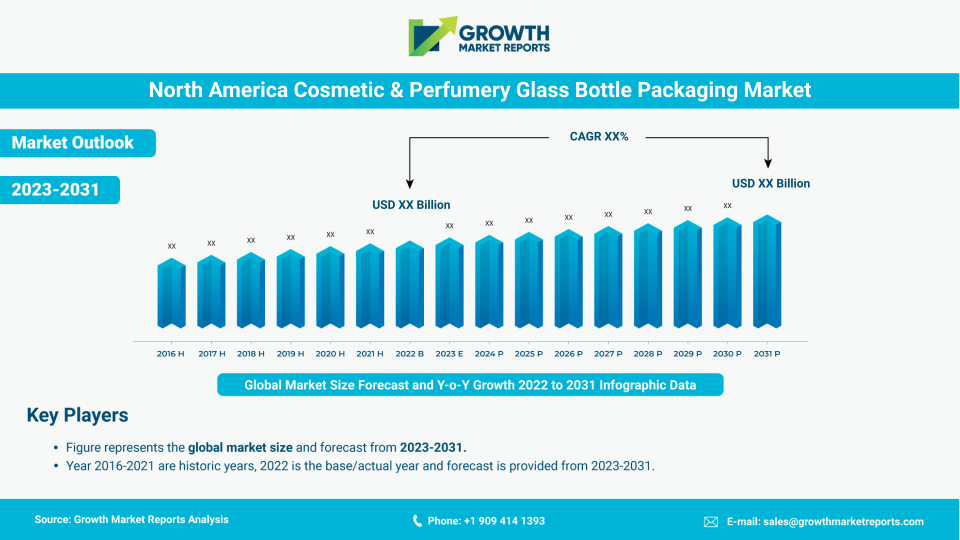
According to our latest research, the global Cosmetic & Perfumery Glass Bottle Packaging market size is valued at USD 6.14 billion in 2025, with a robust compound annual growth rate (CAGR) of 5.6% projected from 2026 to 2034. By the end of 2034, the market is forecasted to reach USD 10.05 billion. This growth is primarily fueled by the rising demand for premium packaging in the cosmetics and perfumery industries, driven by increasing consumer spending on beauty and personal care products, as well as a growing preference for sustainable and recyclable packaging solutions.

Global Cosmetic & Perfumery Glass Bottle Packaging Market Size Forecast 2025-2034, USD Billion

The Cosmetic & Perfumery Glass Bottle Packaging market is experiencing significant momentum in 2025 due to the escalating consumer preference for luxury and eco-friendly packaging. Glass bottles are widely regarded as a premium packaging choice, offering not only an aesthetic appeal but also superior protective qualities for sensitive cosmetic and fragrance formulations. The increasing awareness among consumers regarding the environmental impact of plastic packaging has led to a pronounced shift towards glass, which is 100% recyclable and does not leach harmful chemicals. Moreover, the proliferation of high-end brands and the surge in product launches in the beauty and personal care sector have further intensified the demand for customized and innovative glass packaging solutions. Brands are leveraging unique shapes, decorative techniques, and personalization to enhance shelf presence and brand identity, directly contributing to the market's expansion. The broader landscape of cosmetic and perfume bottle packaging continues to evolve rapidly as sustainability and premiumization converge.

A critical growth factor for the Cosmetic & Perfumery Glass Bottle Packaging market is the rising influence of social media and digital marketing in shaping consumer perceptions and preferences. The visual appeal of glass bottles, often showcased in influencer-led campaigns and digital advertisements, has become a key differentiator for brands aiming to capture the attention of millennial and Gen Z consumers. As e-commerce continues to surge, especially in emerging markets, the need for robust, tamper-evident, and aesthetically pleasing packaging has become paramount. Glass bottles, with their ability to preserve product integrity and enhance perceived value, are increasingly favored by both established and indie brands. Furthermore, advancements in glass manufacturing technologies, such as lightweighting and improved decoration techniques, are enabling manufacturers to offer cost-effective and sustainable solutions without compromising on quality or design. The growing role of cosmetic packaging machinery in automating and refining glass bottle production is also contributing to greater efficiency and design flexibility across the supply chain.

Sustainability trends and regulatory pressures are also propelling the Cosmetic & Perfumery Glass Bottle Packaging market forward. Governments and regulatory bodies across the globe are implementing stricter guidelines to reduce plastic waste and promote the use of recyclable materials in packaging. This has encouraged cosmetic and perfumery brands to adopt glass packaging as part of their sustainability initiatives. Additionally, consumers are becoming more conscious of their purchasing decisions, favoring brands that demonstrate environmental responsibility. The integration of recycled glass, eco-friendly inks, and biodegradable closures is becoming increasingly common, further bolstering market growth. The push towards circular economy models and closed-loop recycling systems is expected to create new opportunities for innovation and collaboration among packaging manufacturers, brands, and recyclers.

The role of packaging in the overall consumer experience cannot be overstated. The intricate designs and luxurious feel of glass bottles often serve as a direct reflection of the brand's identity and values. As consumers increasingly seek products that align with their personal aesthetics and ethical standards, the demand for innovative and sustainable packaging solutions continues to rise. Brands are now focusing on creating packaging that not only protects the product but also enhances its visual appeal, making it a key component of their marketing strategy. This trend is particularly evident in the cosmetics and perfumery sectors, where packaging is often as important as the product itself. Advances in cosmetics and personal care packaging equipment are enabling more precise, decorative, and sustainable glass bottle production at scale.

Regionally, the Cosmetic & Perfumery Glass Bottle Packaging market exhibits varied growth patterns, with Asia Pacific leading the charge due to its burgeoning middle-class population, rising disposable incomes, and rapid urbanization. North America and Europe remain significant markets, driven by established beauty and fragrance industries and strong consumer demand for premium and sustainable packaging. The Middle East & Africa and Latin America are witnessing increasing adoption of glass packaging, supported by expanding retail networks and growing awareness of product quality and safety. Each region presents unique opportunities and challenges, influenced by local consumer preferences, regulatory environments, and economic conditions, making regional strategies a critical component of market success.

Product Type Analysis

The Product Type segment of the Cosmetic & Perfumery Glass Bottle Packaging market encompasses perfume bottles, cosmetic bottles, nail polish bottles, and other specialized containers. Perfume bottles hold the largest share of the market at approximately 38.5% in 2025, driven by the high value and premium positioning of fragrances in the beauty industry. These bottles are often intricately designed to reflect brand identity and enhance the consumer experience. The demand for unique shapes, decorative finishes, and custom closures is particularly strong in this segment, as brands seek to differentiate their offerings in a crowded marketplace. Cosmetic bottles, used for skincare, serums, and lotions, account for around 34.2% of the segment and are witnessing robust growth, propelled by the increasing popularity of high-end skincare routines and the proliferation of new product launches targeting diverse skin concerns.

Cosmetic & Perfumery Glass Bottle Packaging Market Share by Product Type 2025

Nail polish bottles represent a dynamic sub-segment at approximately 15.8% of the product type mix, characterized by frequent innovation in design and functionality. The rise of DIY beauty trends and the growing popularity of nail art have led to increased demand for miniaturized, portable, and visually appealing glass bottles. Manufacturers are focusing on developing ergonomic designs that facilitate easy application and minimize product wastage. Other product types, including bottles for essential oils, roll-ons, and specialty treatments, cater to niche markets at around 11.5% but are gaining traction as consumers seek personalized and holistic beauty solutions. The versatility of glass as a packaging material allows for a wide range of shapes, sizes, and decorative options, enabling brands to cater to diverse consumer preferences and market segments. Innovations in single-portion cosmetic packaging formats are also influencing how brands approach miniature and travel-sized glass bottle design.

Customization and innovation are key trends shaping the Product Type segment in 2025 and beyond. Brands are increasingly investing in bespoke packaging solutions that incorporate unique shapes, colors, and decorative techniques such as embossing, frosting, and metallization. These features not only enhance the visual appeal of the product but also communicate brand values and create an emotional connection with consumers. The use of limited-edition packaging and collaborations with artists and designers is on the rise, further driving demand for specialized glass bottles. As competition intensifies, packaging has become a critical tool for brand differentiation and consumer engagement in the cosmetic and perfumery sectors.

Sustainability considerations are influencing product design and material selection within this segment. Brands are exploring the use of recycled glass, lightweight designs, and eco-friendly coatings to reduce the environmental impact of their packaging. The adoption of refillable and reusable glass bottles is gaining momentum, particularly in the premium and luxury segments, as consumers seek to minimize waste and support sustainable practices. These trends are expected to shape the future of product development in the Cosmetic & Perfumery Glass Bottle Packaging market, driving innovation and fostering collaboration between packaging manufacturers, brands, and consumers throughout the 2026-2034 forecast period.

Report Scope

Attributes Details
Report Title Cosmetic & Perfumery Glass Bottle Packaging Market Research Report 2034
By Product Type Perfume Bottles, Cosmetic Bottles, Nail Polish Bottles, Others
By Capacity Less than 50 ml, 50-150 ml, Above 150 ml
By Application Skincare, Haircare, Fragrances, Makeup, Others
By Distribution Channel Online Retail, Offline Retail, Specialty Stores, Others
By End-User Personal Care, Professional/Salon, Others
Regions Covered North America, Europe, APAC, Latin America, MEA
Base Year 2025
Historic Data 2019-2024
Forecast Period 2026-2034
Number of Pages 275
Number of Tables & Figures 363
Customization Available Yes, the report can be customized as per your need.

Capacity Analysis

The Capacity segment in the Cosmetic & Perfumery Glass Bottle Packaging market is divided into less than 50 ml, 50-150 ml, and above 150 ml. The less than 50 ml category is particularly prominent in the fragrance sector, where miniature and travel-sized bottles are highly sought after. These small-capacity bottles cater to consumers who prefer portability, sampling, and gifting options. The trend towards personalization and exclusivity is driving demand for limited-edition miniatures and collectible sets. As of 2025, this segment benefits from the strong gifting culture that has re-emerged post-pandemic, with beauty brands launching curated miniature sets across online and specialty retail channels. Manufacturers are focusing on producing high-quality, durable, and aesthetically pleasing small bottles that offer the same level of protection and visual appeal as larger containers.

The 50-150 ml segment is the largest and most versatile category, encompassing a wide range of applications across skincare, haircare, and makeup. This capacity range is favored by both consumers and brands due to its balance between convenience, usability, and product longevity. Bottles in this segment are often designed with functional features such as pumps, droppers, and airless dispensers to enhance user experience and preserve product efficacy. The increasing demand for premium skincare and haircare products, coupled with the growing trend of multi-step beauty routines, is fueling the growth of this segment in 2025. Brands are leveraging innovative designs and decorative techniques to create distinctive packaging that stands out on retail shelves and digital platforms alike.

Bottles with a capacity above 150 ml are primarily used for professional and salon applications, as well as bulk packaging for value-oriented consumers. These larger bottles are designed to accommodate high-volume usage and are often equipped with robust closures and dispensing mechanisms to ensure product safety and ease of use. The demand for larger-capacity bottles is also driven by the rising popularity of family-sized and multipurpose beauty products. Manufacturers are exploring lightweighting techniques and the use of recycled glass to reduce material costs and environmental impact, while maintaining the durability and premium feel associated with glass packaging.

Capacity selection is a critical factor influencing consumer purchasing decisions and brand positioning. Smaller bottles are often associated with luxury, exclusivity, and portability, while larger bottles convey value and practicality. Brands are increasingly offering a variety of sizes to cater to different consumer needs and usage occasions. The growing emphasis on sustainability is also prompting brands to develop refillable and reusable packaging solutions across all capacity segments, enabling consumers to reduce waste and support circular economy initiatives throughout the 2026-2034 forecast window.

Application Analysis

The Application segment of the Cosmetic & Perfumery Glass Bottle Packaging market covers skincare, haircare, fragrances, makeup, and other beauty-related categories. Skincare is a dominant application, accounting for a significant share of the market in 2025 due to the increasing demand for serums, oils, and specialty treatments packaged in glass bottles. The premium positioning of many skincare products, coupled with the need to protect sensitive formulations from light and air, makes glass an ideal packaging material. Brands are leveraging the transparency and elegance of glass to communicate product purity and efficacy, while also incorporating functional features such as droppers and airless pumps to enhance convenience and user experience.

Haircare is another rapidly growing application, driven by the rising popularity of oils, serums, and scalp treatments that require protective and aesthetically pleasing packaging. Glass bottles are favored for their ability to preserve the integrity of active ingredients and prevent contamination. The trend towards clean and natural beauty products is further boosting demand for glass packaging in the haircare segment, as consumers seek products free from harmful chemicals and packaged in eco-friendly materials. Manufacturers are responding by developing innovative bottle designs and closures that cater to the specific needs of haircare formulations and application methods.

Fragrances represent a cornerstone of the Cosmetic & Perfumery Glass Bottle Packaging market, with glass bottles serving as both functional containers and symbols of luxury and sophistication. The design and craftsmanship of fragrance bottles play a crucial role in shaping brand identity and influencing consumer purchasing decisions. Brands invest heavily in creating unique, collectible, and artistically inspired bottles that enhance the overall sensory experience of the product. The growing popularity of niche and artisanal fragrances is driving demand for bespoke and limited-edition glass packaging, and this trend is expected to remain strong throughout the 2026-2034 forecast period. Packaging for specialty ampoules and treatment vials is also gaining relevance, with advances in ampoules packaging informing new design directions for concentrated beauty serums.

Makeup and other beauty applications, including nail care, essential oils, and specialty treatments, also contribute to the growth of the market. Glass bottles are increasingly used for liquid foundations, highlighters, and other premium makeup products that require protection from light and air. The versatility of glass allows for a wide range of shapes, sizes, and decorative options, enabling brands to create visually striking packaging that appeals to diverse consumer preferences. As the beauty industry continues to innovate and diversify in 2025 and beyond, the application scope for glass bottle packaging is expected to expand, creating new opportunities for manufacturers and brands.

Distribution Channel Analysis

The Distribution Channel segment in the Cosmetic & Perfumery Glass Bottle Packaging market includes online retail, offline retail, specialty stores, and other channels. Online retail has emerged as a major growth driver, fueled by the rapid expansion of e-commerce platforms and the increasing digitalization of the beauty industry. Consumers are increasingly purchasing cosmetics and fragrances online, attracted by the convenience, variety, and competitive pricing offered by digital channels. This shift has prompted brands to invest in packaging that not only protects products during transit but also enhances the unboxing experience and reinforces brand identity. Glass bottles, with their premium look and feel, are well-suited for e-commerce, as they help convey product quality and value in a virtual environment.

Offline retail, including department stores, supermarkets, and drugstores, remains a significant distribution channel for cosmetic and perfumery products as of 2025. Physical retail environments offer consumers the opportunity to experience products firsthand, test fragrances, and assess packaging quality. Glass bottles play a crucial role in creating an impactful shelf presence and attracting consumer attention in-store. Brands are leveraging eye-catching designs, unique shapes, and decorative finishes to differentiate their products and drive impulse purchases. The resurgence of experiential retail and the integration of digital technologies in physical stores are further enhancing the role of packaging in the consumer journey.

Specialty stores, including beauty boutiques, perfumeries, and salon retailers, cater to discerning consumers seeking personalized service and exclusive product offerings. These channels often feature high-end and niche brands that prioritize premium packaging as a key element of their value proposition. Glass bottles are favored for their ability to convey luxury, sophistication, and craftsmanship, making them the packaging material of choice for specialty retailers. The growing popularity of indie and artisanal brands is driving demand for unique and customizable glass packaging solutions in this segment.

Other distribution channels, such as direct-to-consumer (DTC) brands, subscription boxes, and pop-up stores, are gaining traction as brands seek to engage consumers through innovative and immersive experiences. The rise of DTC models is enabling brands to control the entire customer journey, from packaging design to delivery, and to experiment with sustainable and minimalist packaging concepts. Glass bottles are increasingly used in these channels to reinforce brand values, enhance product storytelling, and create memorable unboxing moments. As distribution channels continue to evolve through the 2026-2034 forecast period, packaging will remain a critical factor in shaping consumer perceptions and driving brand loyalty.

End-User Analysis

The End-User segment of the Cosmetic & Perfumery Glass Bottle Packaging market is categorized into personal care, professional/salon, and others. Personal care is the largest end-user segment in 2025, driven by the widespread use of glass bottles in everyday skincare, haircare, and fragrance products. Consumers are increasingly seeking high-quality, sustainable, and visually appealing packaging that enhances their beauty routines and aligns with their values. Glass bottles are favored for their ability to preserve product integrity, prevent contamination, and convey a sense of luxury and sophistication. The growing emphasis on self-care and wellness is further boosting demand for premium packaging in the personal care segment.

Professional and salon end-users represent a significant and growing market for glass bottle packaging. Salons and spas require durable, functional, and aesthetically pleasing packaging for a wide range of products, including hair treatments, facial serums, and essential oils. Glass bottles are preferred for their ability to maintain product freshness, withstand frequent handling, and create a premium ambiance in professional settings. The trend towards personalized and experiential beauty services is driving demand for customized and branded glass packaging solutions in the salon segment. Manufacturers are responding by offering a variety of shapes, sizes, and decorative options tailored to the unique needs of professional users.

Other end-users, such as hotels, wellness centers, and specialty retailers, are also contributing to the growth of the Cosmetic & Perfumery Glass Bottle Packaging market. These segments often require bespoke packaging solutions that reflect their brand identity and enhance the overall customer experience. Glass bottles are increasingly used for amenities, gift sets, and exclusive product lines, offering a touch of elegance and refinement. The growing popularity of wellness tourism and the expansion of luxury hospitality brands are creating new opportunities for glass packaging manufacturers to collaborate with end-users and develop innovative solutions that meet the evolving needs of the market through 2034.

End-user preferences and requirements play a critical role in shaping packaging trends and driving innovation in the market. Brands and manufacturers must stay attuned to the evolving needs of personal care, professional, and other end-users, offering solutions that combine functionality, sustainability, and aesthetic appeal. As the beauty and wellness industries continue to evolve, the demand for high-quality, customizable, and eco-friendly glass bottle packaging is expected to remain strong across all end-user segments throughout the forecast period.

Opportunities & Threats

The Cosmetic & Perfumery Glass Bottle Packaging market is ripe with opportunities in 2025, particularly in the areas of sustainability, customization, and digital transformation. The growing consumer preference for eco-friendly packaging presents a significant opportunity for manufacturers to develop innovative solutions using recycled glass, biodegradable closures, and minimalistic designs. Brands that prioritize sustainability and transparency in their packaging are likely to gain a competitive edge and attract environmentally conscious consumers. Additionally, the rise of digital and social media marketing is creating new avenues for brands to engage consumers through visually appealing and shareable packaging designs. The integration of smart packaging technologies, such as QR codes and NFC tags, offers opportunities to enhance consumer interaction, provide product information, and drive brand loyalty.

Customization and personalization are emerging as key growth drivers, as consumers seek unique and exclusive products that reflect their individual style and preferences. The ability to offer bespoke packaging solutions, limited-edition designs, and collaborative collections presents significant opportunities for brands to differentiate themselves and create lasting emotional connections with consumers. The expansion of e-commerce and direct-to-consumer channels is also opening up new markets and distribution opportunities for glass bottle packaging manufacturers. As brands seek to enhance the unboxing experience and build strong online identities, the demand for premium and innovative packaging is expected to rise steadily from 2026 through 2034.

Despite the numerous opportunities, the market faces certain restraints and threats, including the higher cost of glass packaging compared to plastic alternatives. Glass bottles are heavier and more fragile, leading to higher transportation and handling costs, as well as increased risk of breakage. These factors can pose challenges for brands operating in highly competitive and price-sensitive markets. Additionally, the energy-intensive nature of glass manufacturing and recycling processes can offset some of the environmental benefits, particularly in regions with limited access to sustainable energy sources. Regulatory compliance, supply chain disruptions, and fluctuations in raw material prices are other factors that can impact market growth and profitability through the forecast period.

Regional Outlook

The Asia Pacific region dominates the Cosmetic & Perfumery Glass Bottle Packaging market, accounting for approximately 38.2% of the global market share in 2025, equivalent to around USD 2.35 billion. This region's growth is driven by a rapidly expanding middle class, increasing disposable incomes, and a burgeoning beauty and personal care industry. Countries such as China, Japan, South Korea, and India are witnessing a surge in demand for premium and sustainable packaging solutions, fueled by changing consumer lifestyles, urbanization, and the influence of global beauty trends. The proliferation of local and international brands, coupled with the rise of e-commerce, is further accelerating market growth in the region, and Asia Pacific is expected to maintain its leadership position through 2034.

Cosmetic & Perfumery Glass Bottle Packaging Market Regional Share 2025

North America holds the second-largest share of the market, valued at around USD 1.40 billion in 2025, driven by a mature beauty industry, strong consumer demand for luxury and eco-friendly products, and a high level of innovation in packaging design and materials. The United States is the largest market in the region, supported by a robust retail infrastructure, a large base of beauty-conscious consumers, and the presence of leading cosmetic and fragrance brands. The trend towards clean beauty and sustainability is particularly pronounced in North America, with consumers actively seeking products packaged in recyclable and reusable materials. The region is expected to maintain a steady CAGR of approximately 5.1% through 2034.

Europe is another key market, with a market size of approximately USD 1.15 billion in 2025. The region is characterized by a strong tradition of perfumery and cosmetics, a highly regulated packaging environment, and a discerning consumer base that values quality, design, and sustainability. Countries such as France, Germany, Italy, and the United Kingdom are at the forefront of packaging innovation, with a focus on premiumization and eco-friendly solutions. The demand for artisanal and niche beauty products is driving growth in the glass bottle packaging segment, as brands seek to differentiate themselves in a competitive market. The region is also witnessing increased investment in recycling infrastructure and circular economy initiatives, supporting the adoption of sustainable packaging practices. Latin America and the Middle East & Africa together represent approximately 20.3% of global market value in 2025 and are forecast to grow at above-average rates through 2034, supported by expanding retail networks, rising disposable incomes, and growing consumer awareness of product quality and safety.

Competitor Outlook

The Cosmetic & Perfumery Glass Bottle Packaging market is highly competitive, characterized by the presence of both global and regional players vying for market share through innovation, quality, and sustainability. Leading manufacturers are investing in advanced production technologies, automation, and digitalization to enhance efficiency, reduce costs, and improve product quality. The ability to offer customized, high-quality, and eco-friendly packaging solutions is a key differentiator in the market, enabling companies to cater to the evolving needs of brands and consumers in 2025. Strategic partnerships, mergers and acquisitions, and collaborations with beauty brands are common strategies employed by market players to expand their product portfolios and geographic reach.

Innovation is at the heart of the competitive landscape, with companies focusing on developing lightweight, durable, and aesthetically pleasing glass bottles that meet the functional and design requirements of cosmetic and perfumery brands. Decorative techniques such as embossing, frosting, metallization, and digital printing are being leveraged to create unique and impactful packaging solutions. Manufacturers are also exploring the use of recycled glass, eco-friendly coatings, and biodegradable closures to align with sustainability trends and regulatory requirements. The ability to deliver short lead times, flexible production runs, and responsive customer service is increasingly important in a fast-paced and dynamic market environment projected to reach USD 10.05 billion by 2034.

The market is witnessing the emergence of niche and artisanal packaging providers that specialize in bespoke and limited-edition glass bottles for high-end and indie brands. These companies often collaborate with artists, designers, and luxury brands to create collectible and visually striking packaging that enhances brand storytelling and consumer engagement. The rise of e-commerce and direct-to-consumer brands is also creating opportunities for agile and innovative packaging manufacturers to cater to the needs of digitally native brands seeking to differentiate themselves through packaging.

Major companies operating in the Cosmetic & Perfumery Glass Bottle Packaging market include Gerresheimer AG, Verescence, SGD Pharma, Bormioli Luigi S.p.A., Saverglass Group, Stoelzle Glass Group, Pochet Group, and HEINZ-GLAS GmbH & Co. KGaA. Gerresheimer AG is renowned for its focus on innovation and sustainability, offering a wide range of high-quality glass bottles for the beauty and personal care industry. Verescence is a global leader in luxury glass packaging, known for its expertise in design, decoration, and eco-friendly solutions. SGD Pharma specializes in pharmaceutical and cosmetic glass packaging, with a strong emphasis on quality and regulatory compliance. Pochet Group is a major player serving prestige beauty brands worldwide, offering customized and technically advanced packaging solutions.

Bormioli Luigi S.p.A. and Saverglass Group are recognized for their craftsmanship and expertise in premium and artisanal glass bottle manufacturing, catering to luxury and niche brands. Stoelzle Glass Group is a leading European manufacturer with a strong focus on innovation, quality, and sustainability. HEINZ-GLAS GmbH & Co. KGaA is known for its commitment to environmental responsibility and its ability to deliver bespoke packaging solutions for high-end cosmetic and perfumery brands. Additional significant players include Vitro Packaging, Zignago Vetro S.p.A., Baralan Group, Ardagh Group, Stölzle-Oberglas GmbH, HCP Packaging, Beatson Clark, Allied Glass Containers Ltd., Shandong Huapeng Glass Co., Ltd., and Yantai Changyu Glass Co., Ltd. These companies are continually investing in research and development, sustainability initiatives, and strategic partnerships to strengthen their market position and drive long-term growth through 2034.

Overall, the competitive landscape of the Cosmetic & Perfumery Glass Bottle Packaging market is shaped by a relentless focus on innovation, sustainability, and customer-centricity. As consumer preferences and regulatory requirements continue to evolve through the 2026-2034 forecast period, companies that can anticipate and respond to market trends, deliver exceptional quality, and foster strong relationships with brands and consumers will be well-positioned to succeed in this dynamic and growing market.

Key Players

  • Gerresheimer AG
  • Verescence
  • Pochet Group
  • HEINZ-GLAS GmbH & Co. KGaA
  • Stoelzle Glass Group
  • Bormioli Luigi S.p.A.
  • Saverglass Group
  • SGD Pharma
  • Vitro Packaging
  • Zignago Vetro S.p.A.
  • Baralan Group
  • Ardagh Group
  • Stölzle-Oberglas GmbH
  • Shandong Huapeng Glass Co., Ltd.
  • Allied Glass Containers Ltd.
  • HCP Packaging
  • Beatson Clark
  • Yantai Changyu Glass Co., Ltd.

Segments

The Cosmetic & Perfumery Glass Bottle Packaging market has been segmented on the basis of

Product Type

  • Perfume Bottles
  • Cosmetic Bottles
  • Nail Polish Bottles
  • Others

Capacity

  • Less than 50 ml
  • 50-150 ml
  • Above 150 ml

Application

  • Skincare
  • Haircare
  • Fragrances
  • Makeup
  • Others

Distribution Channel

  • Online Retail
  • Offline Retail
  • Specialty Stores
  • Others

End-User

  • Personal Care
  • Professional/Salon
  • Others

Frequently Asked Questions

Key challenges include the higher cost and weight of glass versus plastic alternatives, which elevates transportation and logistics expenses. Glass fragility increases breakage risk, particularly in e-commerce fulfillment. The energy-intensive nature of glass manufacturing and recycling can partially offset environmental benefits in regions reliant on carbon-heavy energy grids. Supply chain disruptions, raw material price volatility, and the need for ongoing capital investment in advanced manufacturing and decoration technologies also present ongoing challenges for market participants.

Leading companies in the market include Gerresheimer AG, Verescence, Pochet Group, HEINZ-GLAS GmbH & Co. KGaA, Stoelzle Glass Group, Bormioli Luigi S.p.A., Saverglass Group, SGD Pharma, Vitro Packaging, Zignago Vetro S.p.A., Baralan Group, Ardagh Group, and Stölzle-Oberglas GmbH, among others. These players compete on innovation, sustainability credentials, decoration capabilities, and the ability to offer bespoke and high-volume glass packaging solutions.

Online retail has emerged as one of the fastest-growing distribution channels, driven by the accelerating digitalization of beauty commerce and the rise of direct-to-consumer brand models. Offline retail, including department stores and supermarkets, remains significant for in-store sensory experiences. Specialty stores and beauty boutiques are particularly important for premium and niche segments where packaging quality and brand storytelling play a decisive role in consumer choice.

The primary applications include skincare (serums, oils, and specialty treatments), fragrances, haircare (oils and scalp treatments), makeup (foundations and highlighters), and other niche beauty and wellness products such as essential oils and roll-ons. Skincare and fragrances are the two dominant application segments, together accounting for a majority of market revenue in 2025.

Sustainability is a central force reshaping the market. Brands are adopting recycled glass content, lightweight bottle designs, eco-friendly decorative coatings, and biodegradable closures to reduce their environmental footprint. Refillable glass bottle programs are gaining traction in the luxury and premium segments. Regulatory frameworks across Europe, North America, and Asia Pacific are reinforcing these shifts by mandating higher recycled content and reducing single-use plastic reliance, creating structural long-term demand for glass alternatives.

The primary product types are perfume bottles, cosmetic bottles, nail polish bottles, and other specialty containers. Perfume bottles command the largest share at approximately 38.5% in 2025, followed by cosmetic bottles at 34.2%, nail polish bottles at 15.8%, and other specialty containers at 11.5%.

Asia Pacific leads the global market with approximately 38.2% share in 2025, supported by booming beauty industries in China, South Korea, Japan, and India. North America holds the second-largest share at around 22.8%, driven by strong luxury and clean beauty demand. Europe accounts for approximately 18.7%, underpinned by its rich tradition in perfumery and premium cosmetics.

Key growth drivers include rising consumer preference for sustainable and recyclable packaging, the premiumization of beauty and fragrance products, rapid expansion of e-commerce retail, growing middle-class populations in Asia Pacific, stricter global regulations on single-use plastics, and increasing investment by beauty brands in bespoke and limited-edition glass packaging to strengthen brand identity.

The Cosmetic & Perfumery Glass Bottle Packaging market is projected to grow at a robust CAGR of 5.6% over the forecast period from 2026 to 2034, reaching an estimated USD 10.05 billion by the end of 2034. This growth reflects sustained premiumization trends, expanding e-commerce channels, and increasing regulatory support for recyclable packaging materials globally.

According to our latest research, the global Cosmetic & Perfumery Glass Bottle Packaging market is valued at USD 6.14 billion in 2025, reflecting steady growth driven by rising consumer demand for premium, sustainable, and aesthetically distinctive packaging across the beauty and personal care industries.

Table Of Content

Chapter 1 Executive Summary
Chapter 2 Assumptions and Acronyms Used
Chapter 3 Research Methodology
Chapter 4 Cosmetic & Perfumery Glass Bottle Packaging Market Overview
   4.1 Introduction
      4.1.1 Market Taxonomy
      4.1.2 Market Definition
      4.1.3 Macro-Economic Factors Impacting the Market Growth
   4.2 Cosmetic & Perfumery Glass Bottle Packaging Market Dynamics
      4.2.1 Market Drivers
      4.2.2 Market Restraints
      4.2.3 Market Opportunity
   4.3 Cosmetic & Perfumery Glass Bottle Packaging Market - Supply Chain Analysis
      4.3.1 List of Key Suppliers
      4.3.2 List of Key Distributors
      4.3.3 List of Key Consumers
   4.4 Key Forces Shaping the Cosmetic & Perfumery Glass Bottle Packaging Market
      4.4.1 Bargaining Power of Suppliers
      4.4.2 Bargaining Power of Buyers
      4.4.3 Threat of Substitution
      4.4.4 Threat of New Entrants
      4.4.5 Competitive Rivalry
   4.5 Global Cosmetic & Perfumery Glass Bottle Packaging Market Size & Forecast, 2023-2032
      4.5.1 Cosmetic & Perfumery Glass Bottle Packaging Market Size and Y-o-Y Growth
      4.5.2 Cosmetic & Perfumery Glass Bottle Packaging Market Absolute $ Opportunity

Chapter 5 Global Cosmetic & Perfumery Glass Bottle Packaging Market Analysis and Forecast By Product Type
   5.1 Introduction
      5.1.1 Key Market Trends & Growth Opportunities By Product Type
      5.1.2 Basis Point Share (BPS) Analysis By Product Type
      5.1.3 Absolute $ Opportunity Assessment By Product Type
   5.2 Cosmetic & Perfumery Glass Bottle Packaging Market Size Forecast By Product Type
      5.2.1 Perfume Bottles
      5.2.2 Cosmetic Bottles
      5.2.3 Nail Polish Bottles
      5.2.4 Others
   5.3 Market Attractiveness Analysis By Product Type

Chapter 6 Global Cosmetic & Perfumery Glass Bottle Packaging Market Analysis and Forecast By Capacity
   6.1 Introduction
      6.1.1 Key Market Trends & Growth Opportunities By Capacity
      6.1.2 Basis Point Share (BPS) Analysis By Capacity
      6.1.3 Absolute $ Opportunity Assessment By Capacity
   6.2 Cosmetic & Perfumery Glass Bottle Packaging Market Size Forecast By Capacity
      6.2.1 Less than 50 ml
      6.2.2 50-150 ml
      6.2.3 Above 150 ml
   6.3 Market Attractiveness Analysis By Capacity

Chapter 7 Global Cosmetic & Perfumery Glass Bottle Packaging Market Analysis and Forecast By Application
   7.1 Introduction
      7.1.1 Key Market Trends & Growth Opportunities By Application
      7.1.2 Basis Point Share (BPS) Analysis By Application
      7.1.3 Absolute $ Opportunity Assessment By Application
   7.2 Cosmetic & Perfumery Glass Bottle Packaging Market Size Forecast By Application
      7.2.1 Skincare
      7.2.2 Haircare
      7.2.3 Fragrances
      7.2.4 Makeup
      7.2.5 Others
   7.3 Market Attractiveness Analysis By Application

Chapter 8 Global Cosmetic & Perfumery Glass Bottle Packaging Market Analysis and Forecast By Distribution Channel
   8.1 Introduction
      8.1.1 Key Market Trends & Growth Opportunities By Distribution Channel
      8.1.2 Basis Point Share (BPS) Analysis By Distribution Channel
      8.1.3 Absolute $ Opportunity Assessment By Distribution Channel
   8.2 Cosmetic & Perfumery Glass Bottle Packaging Market Size Forecast By Distribution Channel
      8.2.1 Online Retail
      8.2.2 Offline Retail
      8.2.3 Specialty Stores
      8.2.4 Others
   8.3 Market Attractiveness Analysis By Distribution Channel

Chapter 9 Global Cosmetic & Perfumery Glass Bottle Packaging Market Analysis and Forecast By End-User
   9.1 Introduction
      9.1.1 Key Market Trends & Growth Opportunities By End-User
      9.1.2 Basis Point Share (BPS) Analysis By End-User
      9.1.3 Absolute $ Opportunity Assessment By End-User
   9.2 Cosmetic & Perfumery Glass Bottle Packaging Market Size Forecast By End-User
      9.2.1 Personal Care
      9.2.2 Professional/Salon
      9.2.3 Others
   9.3 Market Attractiveness Analysis By End-User

Chapter 10 Global Cosmetic & Perfumery Glass Bottle Packaging Market Analysis and Forecast by Region
   10.1 Introduction
      10.1.1 Key Market Trends & Growth Opportunities By Region
      10.1.2 Basis Point Share (BPS) Analysis By Region
      10.1.3 Absolute $ Opportunity Assessment By Region
   10.2 Cosmetic & Perfumery Glass Bottle Packaging Market Size Forecast By Region
      10.2.1 North America
      10.2.2 Europe
      10.2.3 Asia Pacific
      10.2.4 Latin America
      10.2.5 Middle East & Africa (MEA)
   10.3 Market Attractiveness Analysis By Region

Chapter 11 Coronavirus Disease (COVID-19) Impact 
   11.1 Introduction 
   11.2 Current & Future Impact Analysis 
   11.3 Economic Impact Analysis 
   11.4 Government Policies 
   11.5 Investment Scenario

Chapter 12 North America Cosmetic & Perfumery Glass Bottle Packaging Analysis and Forecast
   12.1 Introduction
   12.2 North America Cosmetic & Perfumery Glass Bottle Packaging Market Size Forecast by Country
      12.2.1 U.S.
      12.2.2 Canada
   12.3 Basis Point Share (BPS) Analysis by Country
   12.4 Absolute $ Opportunity Assessment by Country
   12.5 Market Attractiveness Analysis by Country
   12.6 North America Cosmetic & Perfumery Glass Bottle Packaging Market Size Forecast By Product Type
      12.6.1 Perfume Bottles
      12.6.2 Cosmetic Bottles
      12.6.3 Nail Polish Bottles
      12.6.4 Others
   12.7 Basis Point Share (BPS) Analysis By Product Type 
   12.8 Absolute $ Opportunity Assessment By Product Type 
   12.9 Market Attractiveness Analysis By Product Type
   12.10 North America Cosmetic & Perfumery Glass Bottle Packaging Market Size Forecast By Capacity
      12.10.1 Less than 50 ml
      12.10.2 50-150 ml
      12.10.3 Above 150 ml
   12.11 Basis Point Share (BPS) Analysis By Capacity 
   12.12 Absolute $ Opportunity Assessment By Capacity 
   12.13 Market Attractiveness Analysis By Capacity
   12.14 North America Cosmetic & Perfumery Glass Bottle Packaging Market Size Forecast By Application
      12.14.1 Skincare
      12.14.2 Haircare
      12.14.3 Fragrances
      12.14.4 Makeup
      12.14.5 Others
   12.15 Basis Point Share (BPS) Analysis By Application 
   12.16 Absolute $ Opportunity Assessment By Application 
   12.17 Market Attractiveness Analysis By Application
   12.18 North America Cosmetic & Perfumery Glass Bottle Packaging Market Size Forecast By Distribution Channel
      12.18.1 Online Retail
      12.18.2 Offline Retail
      12.18.3 Specialty Stores
      12.18.4 Others
   12.19 Basis Point Share (BPS) Analysis By Distribution Channel 
   12.20 Absolute $ Opportunity Assessment By Distribution Channel 
   12.21 Market Attractiveness Analysis By Distribution Channel
   12.22 North America Cosmetic & Perfumery Glass Bottle Packaging Market Size Forecast By End-User
      12.22.1 Personal Care
      12.22.2 Professional/Salon
      12.22.3 Others
   12.23 Basis Point Share (BPS) Analysis By End-User 
   12.24 Absolute $ Opportunity Assessment By End-User 
   12.25 Market Attractiveness Analysis By End-User

Chapter 13 Europe Cosmetic & Perfumery Glass Bottle Packaging Analysis and Forecast
   13.1 Introduction
   13.2 Europe Cosmetic & Perfumery Glass Bottle Packaging Market Size Forecast by Country
      13.2.1 Germany
      13.2.2 France
      13.2.3 Italy
      13.2.4 U.K.
      13.2.5 Spain
      13.2.6 Russia
      13.2.7 Rest of Europe
   13.3 Basis Point Share (BPS) Analysis by Country
   13.4 Absolute $ Opportunity Assessment by Country
   13.5 Market Attractiveness Analysis by Country
   13.6 Europe Cosmetic & Perfumery Glass Bottle Packaging Market Size Forecast By Product Type
      13.6.1 Perfume Bottles
      13.6.2 Cosmetic Bottles
      13.6.3 Nail Polish Bottles
      13.6.4 Others
   13.7 Basis Point Share (BPS) Analysis By Product Type 
   13.8 Absolute $ Opportunity Assessment By Product Type 
   13.9 Market Attractiveness Analysis By Product Type
   13.10 Europe Cosmetic & Perfumery Glass Bottle Packaging Market Size Forecast By Capacity
      13.10.1 Less than 50 ml
      13.10.2 50-150 ml
      13.10.3 Above 150 ml
   13.11 Basis Point Share (BPS) Analysis By Capacity 
   13.12 Absolute $ Opportunity Assessment By Capacity 
   13.13 Market Attractiveness Analysis By Capacity
   13.14 Europe Cosmetic & Perfumery Glass Bottle Packaging Market Size Forecast By Application
      13.14.1 Skincare
      13.14.2 Haircare
      13.14.3 Fragrances
      13.14.4 Makeup
      13.14.5 Others
   13.15 Basis Point Share (BPS) Analysis By Application 
   13.16 Absolute $ Opportunity Assessment By Application 
   13.17 Market Attractiveness Analysis By Application
   13.18 Europe Cosmetic & Perfumery Glass Bottle Packaging Market Size Forecast By Distribution Channel
      13.18.1 Online Retail
      13.18.2 Offline Retail
      13.18.3 Specialty Stores
      13.18.4 Others
   13.19 Basis Point Share (BPS) Analysis By Distribution Channel 
   13.20 Absolute $ Opportunity Assessment By Distribution Channel 
   13.21 Market Attractiveness Analysis By Distribution Channel
   13.22 Europe Cosmetic & Perfumery Glass Bottle Packaging Market Size Forecast By End-User
      13.22.1 Personal Care
      13.22.2 Professional/Salon
      13.22.3 Others
   13.23 Basis Point Share (BPS) Analysis By End-User 
   13.24 Absolute $ Opportunity Assessment By End-User 
   13.25 Market Attractiveness Analysis By End-User

Chapter 14 Asia Pacific Cosmetic & Perfumery Glass Bottle Packaging Analysis and Forecast
   14.1 Introduction
   14.2 Asia Pacific Cosmetic & Perfumery Glass Bottle Packaging Market Size Forecast by Country
      14.2.1 China
      14.2.2 Japan
      14.2.3 South Korea
      14.2.4 India
      14.2.5 Australia
      14.2.6 South East Asia (SEA)
      14.2.7 Rest of Asia Pacific (APAC)
   14.3 Basis Point Share (BPS) Analysis by Country
   14.4 Absolute $ Opportunity Assessment by Country
   14.5 Market Attractiveness Analysis by Country
   14.6 Asia Pacific Cosmetic & Perfumery Glass Bottle Packaging Market Size Forecast By Product Type
      14.6.1 Perfume Bottles
      14.6.2 Cosmetic Bottles
      14.6.3 Nail Polish Bottles
      14.6.4 Others
   14.7 Basis Point Share (BPS) Analysis By Product Type 
   14.8 Absolute $ Opportunity Assessment By Product Type 
   14.9 Market Attractiveness Analysis By Product Type
   14.10 Asia Pacific Cosmetic & Perfumery Glass Bottle Packaging Market Size Forecast By Capacity
      14.10.1 Less than 50 ml
      14.10.2 50-150 ml
      14.10.3 Above 150 ml
   14.11 Basis Point Share (BPS) Analysis By Capacity 
   14.12 Absolute $ Opportunity Assessment By Capacity 
   14.13 Market Attractiveness Analysis By Capacity
   14.14 Asia Pacific Cosmetic & Perfumery Glass Bottle Packaging Market Size Forecast By Application
      14.14.1 Skincare
      14.14.2 Haircare
      14.14.3 Fragrances
      14.14.4 Makeup
      14.14.5 Others
   14.15 Basis Point Share (BPS) Analysis By Application 
   14.16 Absolute $ Opportunity Assessment By Application 
   14.17 Market Attractiveness Analysis By Application
   14.18 Asia Pacific Cosmetic & Perfumery Glass Bottle Packaging Market Size Forecast By Distribution Channel
      14.18.1 Online Retail
      14.18.2 Offline Retail
      14.18.3 Specialty Stores
      14.18.4 Others
   14.19 Basis Point Share (BPS) Analysis By Distribution Channel 
   14.20 Absolute $ Opportunity Assessment By Distribution Channel 
   14.21 Market Attractiveness Analysis By Distribution Channel
   14.22 Asia Pacific Cosmetic & Perfumery Glass Bottle Packaging Market Size Forecast By End-User
      14.22.1 Personal Care
      14.22.2 Professional/Salon
      14.22.3 Others
   14.23 Basis Point Share (BPS) Analysis By End-User 
   14.24 Absolute $ Opportunity Assessment By End-User 
   14.25 Market Attractiveness Analysis By End-User

Chapter 15 Latin America Cosmetic & Perfumery Glass Bottle Packaging Analysis and Forecast
   15.1 Introduction
   15.2 Latin America Cosmetic & Perfumery Glass Bottle Packaging Market Size Forecast by Country
      15.2.1 Brazil
      15.2.2 Mexico
      15.2.3 Rest of Latin America (LATAM)
   15.3 Basis Point Share (BPS) Analysis by Country
   15.4 Absolute $ Opportunity Assessment by Country
   15.5 Market Attractiveness Analysis by Country
   15.6 Latin America Cosmetic & Perfumery Glass Bottle Packaging Market Size Forecast By Product Type
      15.6.1 Perfume Bottles
      15.6.2 Cosmetic Bottles
      15.6.3 Nail Polish Bottles
      15.6.4 Others
   15.7 Basis Point Share (BPS) Analysis By Product Type 
   15.8 Absolute $ Opportunity Assessment By Product Type 
   15.9 Market Attractiveness Analysis By Product Type
   15.10 Latin America Cosmetic & Perfumery Glass Bottle Packaging Market Size Forecast By Capacity
      15.10.1 Less than 50 ml
      15.10.2 50-150 ml
      15.10.3 Above 150 ml
   15.11 Basis Point Share (BPS) Analysis By Capacity 
   15.12 Absolute $ Opportunity Assessment By Capacity 
   15.13 Market Attractiveness Analysis By Capacity
   15.14 Latin America Cosmetic & Perfumery Glass Bottle Packaging Market Size Forecast By Application
      15.14.1 Skincare
      15.14.2 Haircare
      15.14.3 Fragrances
      15.14.4 Makeup
      15.14.5 Others
   15.15 Basis Point Share (BPS) Analysis By Application 
   15.16 Absolute $ Opportunity Assessment By Application 
   15.17 Market Attractiveness Analysis By Application
   15.18 Latin America Cosmetic & Perfumery Glass Bottle Packaging Market Size Forecast By Distribution Channel
      15.18.1 Online Retail
      15.18.2 Offline Retail
      15.18.3 Specialty Stores
      15.18.4 Others
   15.19 Basis Point Share (BPS) Analysis By Distribution Channel 
   15.20 Absolute $ Opportunity Assessment By Distribution Channel 
   15.21 Market Attractiveness Analysis By Distribution Channel
   15.22 Latin America Cosmetic & Perfumery Glass Bottle Packaging Market Size Forecast By End-User
      15.22.1 Personal Care
      15.22.2 Professional/Salon
      15.22.3 Others
   15.23 Basis Point Share (BPS) Analysis By End-User 
   15.24 Absolute $ Opportunity Assessment By End-User 
   15.25 Market Attractiveness Analysis By End-User

Chapter 16 Middle East & Africa (MEA) Cosmetic & Perfumery Glass Bottle Packaging Analysis and Forecast
   16.1 Introduction
   16.2 Middle East & Africa (MEA) Cosmetic & Perfumery Glass Bottle Packaging Market Size Forecast by Country
      16.2.1 Saudi Arabia
      16.2.2 South Africa
      16.2.3 UAE
      16.2.4 Rest of Middle East & Africa (MEA)
   16.3 Basis Point Share (BPS) Analysis by Country
   16.4 Absolute $ Opportunity Assessment by Country
   16.5 Market Attractiveness Analysis by Country
   16.6 Middle East & Africa (MEA) Cosmetic & Perfumery Glass Bottle Packaging Market Size Forecast By Product Type
      16.6.1 Perfume Bottles
      16.6.2 Cosmetic Bottles
      16.6.3 Nail Polish Bottles
      16.6.4 Others
   16.7 Basis Point Share (BPS) Analysis By Product Type 
   16.8 Absolute $ Opportunity Assessment By Product Type 
   16.9 Market Attractiveness Analysis By Product Type
   16.10 Middle East & Africa (MEA) Cosmetic & Perfumery Glass Bottle Packaging Market Size Forecast By Capacity
      16.10.1 Less than 50 ml
      16.10.2 50-150 ml
      16.10.3 Above 150 ml
   16.11 Basis Point Share (BPS) Analysis By Capacity 
   16.12 Absolute $ Opportunity Assessment By Capacity 
   16.13 Market Attractiveness Analysis By Capacity
   16.14 Middle East & Africa (MEA) Cosmetic & Perfumery Glass Bottle Packaging Market Size Forecast By Application
      16.14.1 Skincare
      16.14.2 Haircare
      16.14.3 Fragrances
      16.14.4 Makeup
      16.14.5 Others
   16.15 Basis Point Share (BPS) Analysis By Application 
   16.16 Absolute $ Opportunity Assessment By Application 
   16.17 Market Attractiveness Analysis By Application
   16.18 Middle East & Africa (MEA) Cosmetic & Perfumery Glass Bottle Packaging Market Size Forecast By Distribution Channel
      16.18.1 Online Retail
      16.18.2 Offline Retail
      16.18.3 Specialty Stores
      16.18.4 Others
   16.19 Basis Point Share (BPS) Analysis By Distribution Channel 
   16.20 Absolute $ Opportunity Assessment By Distribution Channel 
   16.21 Market Attractiveness Analysis By Distribution Channel
   16.22 Middle East & Africa (MEA) Cosmetic & Perfumery Glass Bottle Packaging Market Size Forecast By End-User
      16.22.1 Personal Care
      16.22.2 Professional/Salon
      16.22.3 Others
   16.23 Basis Point Share (BPS) Analysis By End-User 
   16.24 Absolute $ Opportunity Assessment By End-User 
   16.25 Market Attractiveness Analysis By End-User

Chapter 17 Competition Landscape 
   17.1 Cosmetic & Perfumery Glass Bottle Packaging Market: Competitive Dashboard
   17.2 Global Cosmetic & Perfumery Glass Bottle Packaging Market: Market Share Analysis, 2023
   17.3 Company Profiles (Details – Overview, Financials, Developments, Strategy) 
      17.3.1 Gerresheimer AG
      17.3.2 Verescence
      17.3.3 Pochet Group
      17.3.4 HEINZ-GLAS GmbH & Co. KGaA
      17.3.5 Stoelzle Glass Group
      17.3.6 Bormioli Luigi S.p.A.
      17.3.7 Saverglass Group
      17.3.8 SGD Pharma
      17.3.9 Vitro Packaging
      17.3.10 Zignago Vetro S.p.A.
      17.3.11 Baralan Group
      17.3.12 Ardagh Group
      17.3.13 Stölzle-Oberglas GmbH
      17.3.14 Shandong Huapeng Glass Co., Ltd.
      17.3.15 Allied Glass Containers Ltd.
      17.3.16 HCP Packaging
      17.3.17 Beatson Clark
      17.3.18 Yantai Changyu Glass Co., Ltd.

Methodology

Our Clients

General Electric
General Mills
Nestle SA
sinopec
The John Holland Group
Dassault Aviation
Microsoft
Honda Motor Co. Ltd.