Cosmeceuticals Market Research Report 2033

Cosmeceuticals Market Research Report 2033

Segments - by Product Type (Skin Care, Hair Care, Oral Care, Others), by Active Ingredient (Antioxidants, Peptides, Retinoids, Botanicals, Others), by Distribution Channel (Pharmacy/Drug Stores, Supermarkets/Hypermarkets, Online Stores, Specialty Stores, Others), by End User (Men, Women, Unisex)

https://growthmarketreports.com/Debadatta
Author : Debadatta Patel
https://growthmarketreports.com/Vaibhav
Fact-checked by : V. Chandola
https://growthmarketreports.com/Shruti
Editor : Shruti Bhat

Upcoming | Report ID :CG-1132 | 4.8 Rating | 25 Reviews | 275 Pages | Format : Docx PDF

Report Description


Cosmeceuticals Market Outlook

According to our latest research, the global cosmeceuticals market size stood at USD 71.4 billion in 2024, exhibiting a robust growth trajectory. The market is anticipated to expand at a CAGR of 8.7% during the forecast period, reaching an estimated USD 148.8 billion by 2033. This impressive growth is primarily driven by increasing consumer awareness regarding the benefits of active ingredients in personal care products, a rising demand for multifunctional beauty solutions, and the continuous innovation in product formulations. As per our latest analysis, the cosmeceuticals industry is witnessing a significant transformation, propelled by evolving consumer preferences, technological advancements, and an expanding base of health-conscious individuals worldwide.

One of the primary growth factors fueling the cosmeceuticals market is the growing consumer inclination towards preventive skincare and anti-aging solutions. With the global population aging rapidly, particularly in developed economies, there is a heightened focus on maintaining youthful skin and overall appearance. Consumers are increasingly seeking products that offer both cosmetic and therapeutic benefits, driving demand for cosmeceuticals enriched with active ingredients like antioxidants, peptides, and retinoids. Additionally, the proliferation of social media and beauty influencers has amplified awareness about new product launches and their efficacies, encouraging consumers to invest in advanced personal care regimes. This trend is further supported by the growing disposable incomes in emerging markets, which enables a larger segment of the population to access premium skincare and hair care solutions.

Another significant driver for the cosmeceuticals market is the surge in research and development activities by leading industry players. Companies are investing heavily in the formulation of innovative products that promise enhanced efficacy and safety profiles. The integration of biotechnology, nanotechnology, and advanced delivery systems has revolutionized the development of cosmeceutical products, making them more effective and appealing to consumers. This wave of innovation is not limited to product formulations but also extends to packaging and sustainability, with brands increasingly adopting eco-friendly packaging solutions and clean-label ingredients. The increased regulatory scrutiny and consumer demand for transparency have also prompted manufacturers to focus on clinically validated ingredients, further boosting market credibility and growth.

The rise of e-commerce and digital retailing has played a pivotal role in expanding the reach of cosmeceutical products. Online platforms have made it easier for consumers to access a wide range of products, compare formulations, and make informed purchasing decisions. The convenience offered by online shopping, coupled with the availability of detailed product information and reviews, has significantly contributed to market growth. Moreover, the COVID-19 pandemic accelerated digital adoption, prompting even traditional retailers to strengthen their online presence. This shift has enabled brands to engage directly with consumers, offer personalized recommendations, and foster brand loyalty, thereby driving sales and market expansion.

From a regional perspective, Asia Pacific is emerging as a dominant force in the global cosmeceuticals market, driven by a large and youthful consumer base, rapid urbanization, and increasing beauty consciousness. Countries such as China, Japan, South Korea, and India are witnessing robust demand for advanced skincare and hair care products. North America and Europe continue to be significant markets, characterized by high consumer spending, strong presence of leading brands, and a well-established distribution network. Meanwhile, the Middle East & Africa and Latin America are experiencing steady growth, supported by rising disposable incomes and a growing awareness of premium personal care products. Overall, the global cosmeceuticals market is poised for sustained expansion, underpinned by dynamic consumer trends and continuous innovation.

Global Cosmeceuticals Industry Outlook

Product Type Analysis

The cosmeceuticals market is segmented by product type into skincare, hair care, oral care, and others, each demonstrating unique growth patterns and consumer preferences. Skincare products account for the largest share of the market, driven by escalating demand for anti-aging, sun protection, and skin-brightening solutions. The proliferation of serums, creams, and lotions infused with potent active ingredients has resonated with consumers seeking visible and long-lasting results. The rise in skin-related concerns, such as hyperpigmentation, acne, and sensitivity, has further fueled the adoption of targeted skincare cosmeceuticals. Additionally, the growing trend of gender-neutral and personalized skincare products is expanding the consumer base, making skincare the most lucrative segment in the cosmeceuticals landscape.

Hair care cosmeceuticals represent another significant segment, experiencing robust growth due to increasing incidences of hair loss, scalp disorders, and damage caused by environmental stressors. Consumers are increasingly opting for shampoos, conditioners, serums, and masks formulated with bioactive compounds that promote hair growth, strengthen follicles, and restore scalp health. The influence of fashion trends and changing lifestyles has also led to greater experimentation with hair colors and treatments, driving demand for protective and reparative hair care products. Furthermore, the rise of clean beauty and sulfate-free formulations is reshaping the hair care cosmeceuticals market, with brands emphasizing natural and clinically proven ingredients.

Oral care cosmeceuticals are gaining traction as consumers become more conscious of holistic personal care and oral aesthetics. Products such as whitening toothpastes, mouthwashes, and enamel-strengthening formulations are increasingly incorporating active ingredients like enzymes, fluoride, and botanical extracts. The emphasis on oral hygiene and the desire for brighter smiles are propelling innovation in this segment, with manufacturers introducing products that address sensitivity, gum health, and breath freshness. The oral care segment is also benefiting from rising awareness campaigns and endorsements by dental professionals, which are educating consumers about the advantages of advanced cosmeceutical oral care products.

The “others” category within product type includes niche segments such as body care, nail care, and eye care cosmeceuticals. These products are witnessing growing demand as consumers look for comprehensive beauty solutions that extend beyond traditional skincare and hair care. Body lotions, firming creams, cuticle oils, and eye serums are increasingly being formulated with active ingredients that deliver targeted benefits. The expansion of wellness and self-care trends is further driving the adoption of these products, as consumers seek holistic approaches to beauty and personal care. Collectively, the diverse range of product types within the cosmeceuticals market ensures sustained growth and innovation across multiple consumer segments.

Report Scope

Attributes Details
Report Title Cosmeceuticals Market Research Report 2033
By Product Type Skin Care, Hair Care, Oral Care, Others
By Active Ingredient Antioxidants, Peptides, Retinoids, Botanicals, Others
By Distribution Channel Pharmacy/Drug Stores, Supermarkets/Hypermarkets, Online Stores, Specialty Stores, Others
By End User Men, Women, Unisex
Regions Covered North America, Europe, APAC, Latin America, MEA
Base Year 2024
Historic Data 2018-2023
Forecast Period 2025-2033
Number of Pages 275
Number of Tables & Figures 351
Customization Available Yes, the report can be customized as per your need.

Active Ingredient Analysis

Active ingredients are at the core of cosmeceutical efficacy, with antioxidants, peptides, retinoids, botanicals, and others forming the backbone of product innovation. Antioxidants, such as vitamin C, vitamin E, and coenzyme Q10, are widely incorporated in formulations due to their ability to neutralize free radicals and protect the skin from environmental damage. The demand for antioxidant-rich products is fueled by increasing awareness of their role in preventing premature aging and enhancing skin radiance. Brands are leveraging advanced delivery systems to improve the stability and penetration of antioxidants, ensuring optimal results for consumers seeking preventive and corrective skincare solutions.

Peptides have emerged as a transformative ingredient in the cosmeceuticals market, renowned for their ability to stimulate collagen production and promote skin repair. Products containing peptides are highly sought after for their anti-aging and firming properties, making them a staple in premium skincare and hair care formulations. The versatility of peptides allows for their integration into a wide range of products, including serums, creams, and masks. Continuous research and development in peptide technology are yielding novel compounds with enhanced bioactivity, further strengthening the position of peptides as a key driver of cosmeceutical innovation.

Retinoids, particularly retinol and its derivatives, are considered gold-standard ingredients for addressing a variety of skin concerns, including fine lines, wrinkles, and acne. The efficacy of retinoids in promoting cell turnover and improving skin texture has made them a popular choice among dermatologists and consumers alike. However, the potential for irritation and sensitivity has led to the development of gentler formulations and encapsulation technologies, broadening the appeal of retinoid-based cosmeceuticals. The ongoing quest for effective yet tolerable retinoid alternatives is spurring research into new molecules and delivery systems, ensuring sustained growth in this segment.

Botanicals, encompassing plant extracts, essential oils, and herbal compounds, are gaining prominence in the cosmeceuticals market due to the rising demand for natural and clean-label products. Consumers are increasingly gravitating towards formulations that harness the therapeutic properties of botanicals, perceived as safe and environmentally friendly. The integration of traditional herbal remedies with modern scientific validation is leading to the creation of innovative products that cater to diverse skin and hair care needs. The popularity of botanicals is also driving brands to invest in sustainable sourcing and ethical practices, enhancing their appeal to eco-conscious consumers.

The “others” category includes a range of emerging active ingredients, such as hyaluronic acid, niacinamide, ceramides, and probiotics, which are being incorporated into cosmeceutical formulations to address specific concerns. These ingredients offer targeted benefits, such as hydration, barrier repair, and microbiome balance, contributing to the diversification of product offerings. The continuous exploration of new actives and the combination of multiple ingredients in synergistic formulations are propelling the evolution of the cosmeceuticals market, ensuring that consumers have access to cutting-edge solutions tailored to their unique needs.

Distribution Channel Analysis

The distribution landscape of the cosmeceuticals market is characterized by a diverse array of channels, including pharmacy/drug stores, supermarkets/hypermarkets, online stores, specialty stores, and others. Pharmacy and drug stores have traditionally been the primary distribution channel for cosmeceutical products, owing to the trust associated with pharmacist recommendations and the availability of medically endorsed brands. These outlets cater to consumers seeking clinically validated and dermatologist-recommended products, particularly for sensitive or problematic skin and hair conditions. The presence of knowledgeable staff and the ability to provide personalized advice further enhance the appeal of pharmacy/drug stores as a preferred channel for cosmeceutical purchases.

Supermarkets and hypermarkets have emerged as significant players in the cosmeceuticals distribution network, offering consumers the convenience of one-stop shopping and a wide assortment of products. The increasing shelf space allocated to premium personal care brands and the availability of promotional offers have made these outlets attractive to a broad consumer base. The visibility and accessibility of cosmeceutical products in supermarkets/hypermarkets are driving impulse purchases and expanding market reach, particularly in urban and suburban areas. The trend towards health and wellness sections within these stores is further boosting the prominence of cosmeceuticals among mainstream consumers.

Online stores have revolutionized the cosmeceuticals market by providing consumers with unparalleled access to a vast range of products, detailed information, and peer reviews. The rapid growth of e-commerce platforms has democratized access to premium and niche cosmeceutical brands, enabling consumers to make informed choices based on their specific needs and preferences. The convenience of home delivery, secure payment options, and personalized recommendations are key factors driving the adoption of online channels. The COVID-19 pandemic accelerated the shift towards digital retailing, prompting both established brands and new entrants to invest in robust online strategies, including direct-to-consumer models and subscription services.

Specialty stores, including beauty boutiques and exclusive brand outlets, cater to discerning consumers seeking curated product selections and expert guidance. These stores focus on providing a personalized shopping experience, often supported by trained beauty consultants and in-store demonstrations. The emphasis on experiential retail and the ability to sample products before purchase are significant advantages of specialty stores, particularly for high-involvement categories such as skincare and anti-aging solutions. The growing trend of pop-up stores and brand activations in premium locations is further enhancing the visibility and desirability of cosmeceutical products.

Other distribution channels, such as direct selling, salons, and spas, play a complementary role in the cosmeceuticals market. These outlets offer professional-grade products and treatments, often accompanied by expert advice and customized regimens. The integration of cosmeceutical products into salon and spa services is driving consumer trust and encouraging trial, particularly for high-efficacy formulations. The diversification of distribution channels ensures that cosmeceutical products are accessible to a wide range of consumers, supporting sustained market growth and brand differentiation.

End User Analysis

The cosmeceuticals market serves a diverse end-user base, segmented into men, women, and unisex categories, each exhibiting distinct preferences and consumption patterns. Women represent the largest end-user segment, driven by a strong emphasis on skincare, anti-aging, and beauty enhancement. The increasing participation of women in the workforce, coupled with rising disposable incomes, has amplified their spending on premium personal care products. Women are also more likely to seek out products with clinically validated ingredients and visible benefits, making them a key target demographic for cosmeceutical brands. The proliferation of women-centric marketing campaigns and product lines further underscores the significance of this segment in driving overall market growth.

Men are emerging as a rapidly growing end-user segment in the cosmeceuticals market, fueled by changing societal norms and increasing awareness of personal grooming. The traditional notion that skincare and beauty are primarily female domains is being challenged by a new generation of male consumers who prioritize appearance and self-care. Men are seeking products that address specific concerns such as acne, aging, and hair loss, leading to the development of tailored formulations and dedicated product lines. The rise of male influencers and targeted advertising campaigns is further normalizing the use of cosmeceuticals among men, contributing to the expansion of this segment.

The unisex category is gaining traction as brands recognize the need for inclusive and gender-neutral product offerings. Consumers are increasingly seeking products that cater to universal concerns, such as hydration, sun protection, and environmental defense, regardless of gender. The shift towards unisex formulations is driven by the desire for simplicity, convenience, and shared usage within households. Brands are responding by launching minimalist and multifunctional products that appeal to a broad audience, blurring the lines between traditional gender categories. The unisex segment is expected to witness significant growth as societal attitudes towards beauty and self-care continue to evolve.

The diverse end-user landscape of the cosmeceuticals market presents both opportunities and challenges for manufacturers. Brands must balance the need for targeted solutions with the growing demand for inclusivity and personalization. The ability to cater to specific demographic segments while maintaining broad appeal will be a key determinant of success in the competitive cosmeceuticals market. Continuous consumer research, product innovation, and adaptive marketing strategies are essential for capturing and retaining the loyalty of diverse end-user groups.

Opportunities & Threats

The cosmeceuticals market presents a plethora of opportunities for growth and innovation, driven by shifting consumer preferences and technological advancements. The increasing demand for natural and organic cosmeceuticals offers significant potential for brands to differentiate themselves through clean-label formulations and sustainable practices. As consumers become more conscious of ingredient safety and environmental impact, there is a growing market for products that are free from harmful chemicals, cruelty-free, and packaged in eco-friendly materials. Brands that invest in transparent sourcing, ethical manufacturing, and third-party certifications are well-positioned to capture the loyalty of environmentally conscious consumers. Additionally, the integration of digital technologies, such as artificial intelligence and augmented reality, is enabling personalized product recommendations and virtual consultations, enhancing the consumer experience and driving sales.

Another key opportunity lies in the expansion of the cosmeceuticals market into emerging economies, where rising disposable incomes, urbanization, and increasing beauty consciousness are creating new avenues for growth. Countries in Asia Pacific, Latin America, and the Middle East & Africa are witnessing a surge in demand for premium personal care products, supported by a growing middle class and greater access to global brands. Strategic partnerships, localized product offerings, and culturally relevant marketing campaigns can help brands establish a strong foothold in these high-potential markets. Furthermore, the growing trend of wellness and holistic health is opening up opportunities for cosmeceutical products that address both aesthetic and therapeutic needs, such as stress relief, sleep enhancement, and skin barrier repair.

Despite the promising outlook, the cosmeceuticals market faces several restraining factors, chief among them being regulatory challenges and the risk of product claims scrutiny. The lack of standardized regulations governing cosmeceuticals across different regions can create confusion among consumers and hinder market growth. Stringent regulatory requirements for product safety, efficacy, and labeling can increase compliance costs and delay product launches. Additionally, the proliferation of counterfeit and substandard products in the market poses a threat to consumer trust and brand reputation. Companies must invest in rigorous quality control, transparent communication, and consumer education to mitigate these risks and ensure long-term success.

Regional Outlook

The Asia Pacific region dominates the global cosmeceuticals market, accounting for the largest revenue share in 2024 with a market size of approximately USD 28.6 billion. This region is projected to maintain its leadership position, expanding at a CAGR of 10.2% through 2033. The rapid urbanization, rising disposable incomes, and a strong cultural emphasis on beauty and skincare are key factors driving market growth in countries such as China, Japan, South Korea, and India. The region’s vibrant e-commerce ecosystem and the influence of K-beauty and J-beauty trends have further accelerated the adoption of advanced cosmeceutical products among a tech-savvy and youthful consumer base.

North America holds the second-largest share of the global cosmeceuticals market, with a market value of USD 18.7 billion in 2024. The region is characterized by high consumer awareness, a strong presence of leading brands, and a well-established distribution network. The United States is the primary contributor, driven by a culture of innovation, high healthcare expenditure, and a growing preference for dermatologist-recommended products. The increasing prevalence of skin disorders, coupled with a rising interest in preventive healthcare, is fueling demand for cosmeceutical solutions. Canada and Mexico are also witnessing steady growth, supported by expanding retail infrastructure and increasing adoption of premium personal care products.

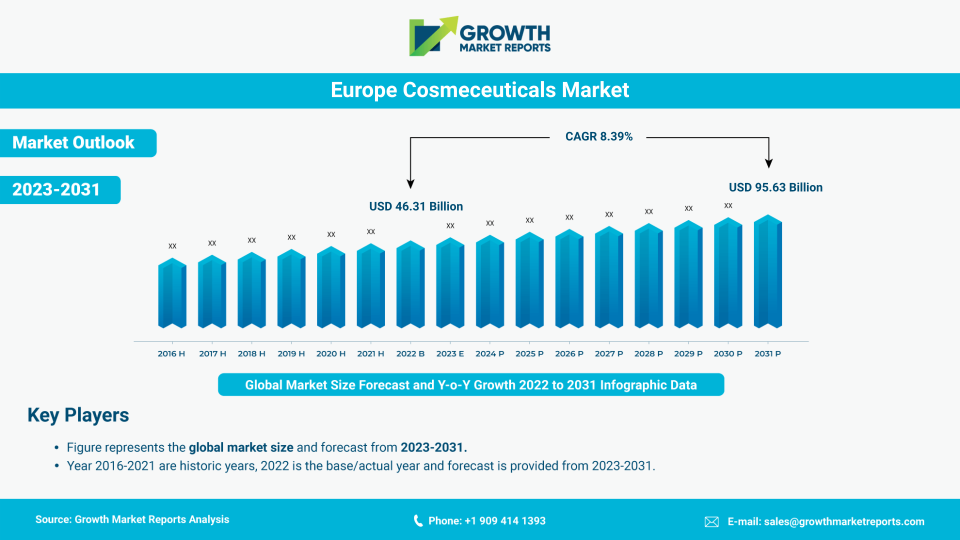
Europe represents a mature yet dynamic market for cosmeceuticals, with a market size of USD 14.2 billion in 2024. The region is renowned for its stringent regulatory standards, which have fostered consumer trust and encouraged the development of high-quality products. Key markets such as Germany, France, the United Kingdom, and Italy are at the forefront of innovation, with a strong emphasis on natural and organic formulations. The growing aging population and the popularity of wellness and spa culture are further driving demand for advanced cosmeceutical products. Latin America and the Middle East & Africa, with market sizes of USD 5.3 billion and USD 4.6 billion respectively in 2024, are emerging as promising markets, supported by rising consumer awareness and increasing investments by global and regional players.

Cosmeceuticals Market Statistics

Competitor Outlook

The global cosmeceuticals market is highly competitive, with a mix of established multinational corporations, regional players, and innovative start-ups vying for market share. The competitive landscape is characterized by continuous product innovation, aggressive marketing strategies, and a strong focus on research and development. Leading companies are investing in advanced formulation technologies, clinical trials, and consumer education to differentiate their offerings and build brand loyalty. The entry of new players and the proliferation of direct-to-consumer brands have intensified competition, prompting incumbents to adopt agile and customer-centric approaches. Collaborations, mergers, and acquisitions are common strategies employed to expand product portfolios, enhance distribution networks, and access new markets.

Brand reputation and consumer trust are critical success factors in the cosmeceuticals market, given the emphasis on product safety, efficacy, and transparency. Companies are increasingly leveraging digital platforms to engage with consumers, gather feedback, and tailor their marketing messages. The rise of influencer marketing and social media campaigns has enabled brands to reach a wider audience and drive product adoption, particularly among younger consumers. Sustainability and ethical practices are also emerging as key differentiators, with brands that prioritize clean-label ingredients, cruelty-free testing, and eco-friendly packaging gaining a competitive edge.

The market is witnessing a growing trend of personalization, with companies offering customized solutions based on individual skin and hair profiles. Advanced data analytics, artificial intelligence, and genetic testing are being integrated into product development and marketing strategies, enabling brands to deliver targeted and effective cosmeceutical solutions. The ability to adapt to evolving consumer preferences, regulatory requirements, and technological advancements will be crucial for companies seeking to sustain their leadership in the dynamic cosmeceuticals market.

Major companies operating in the global cosmeceuticals market include L'Oréal S.A., Procter & Gamble Co., Estée Lauder Companies Inc., Johnson & Johnson, Unilever PLC, Shiseido Company, Limited, Beiersdorf AG, Amorepacific Corporation, Allergan plc, and Avon Products, Inc. L'Oréal S.A. is recognized for its extensive research capabilities and diverse product portfolio, spanning skincare, hair care, and anti-aging solutions. Estée Lauder Companies Inc. is renowned for its premium brands and focus on innovation, while Johnson & Johnson leverages its pharmaceutical expertise to offer clinically validated cosmeceutical products. Unilever PLC and Procter & Gamble Co. are global leaders with a strong presence in both mass-market and premium segments, supported by robust distribution networks and marketing prowess. Shiseido Company, Limited and Amorepacific Corporation are leading players in the Asia Pacific region, known for their focus on natural ingredients and advanced formulations.

Other notable players include Beiersdorf AG, which emphasizes dermatological research and sustainability, and Allergan plc, a key player in the medical aesthetics segment. Avon Products, Inc. has a strong direct-selling model and a loyal customer base, particularly in emerging markets. These companies are continuously expanding their product lines, investing in digital transformation, and exploring new markets to maintain their competitive edge. The dynamic and fragmented nature of the cosmeceuticals market ensures that innovation, agility, and consumer-centricity will remain the cornerstones of success for both established and emerging players.

Key Players

  • L'Oréal S.A.
  • Procter & Gamble Co.
  • Estée Lauder Companies Inc.
  • Unilever PLC
  • Shiseido Company, Limited
  • Johnson & Johnson
  • Beiersdorf AG
  • Allergan plc
  • Avon Products, Inc.
  • Amorepacific Corporation
  • Galderma S.A.
  • Kao Corporation
  • Mary Kay Inc.
  • Revlon, Inc.
  • Coty Inc.
  • Clarins Group
  • Elizabeth Arden, Inc.
  • Pierre Fabre Group
  • Murad LLC
  • SkinCeuticals (L'Oréal Group)
Cosmeceuticals Market Overview

Segments

The Cosmeceuticals market has been segmented on the basis of

Product Type

  • Skin Care
  • Hair Care
  • Oral Care
  • Others

Active Ingredient

  • Antioxidants
  • Peptides
  • Retinoids
  • Botanicals
  • Others

Distribution Channel

  • Pharmacy/Drug Stores
  • Supermarkets/Hypermarkets
  • Online Stores
  • Specialty Stores
  • Others

End User

  • Men
  • Women
  • Unisex

Competitive Landscape

Key players competing in the Europe cosmeceuticals market includes Bayer AG, Shiseido Co. Ltd, L’oreal SA, Procter and Gamble, Unilever PLC, Avon, Johnson and Johnson, Beiersdorf, Merz Pharma, and Estee Lauder

Some of these players are using several market strategies such as acquisitions, merger, collaborations, partnerships, capacity expansion, and product launches to enhance their market shares and to generate revenue and rise their production line of the business in the coming year.
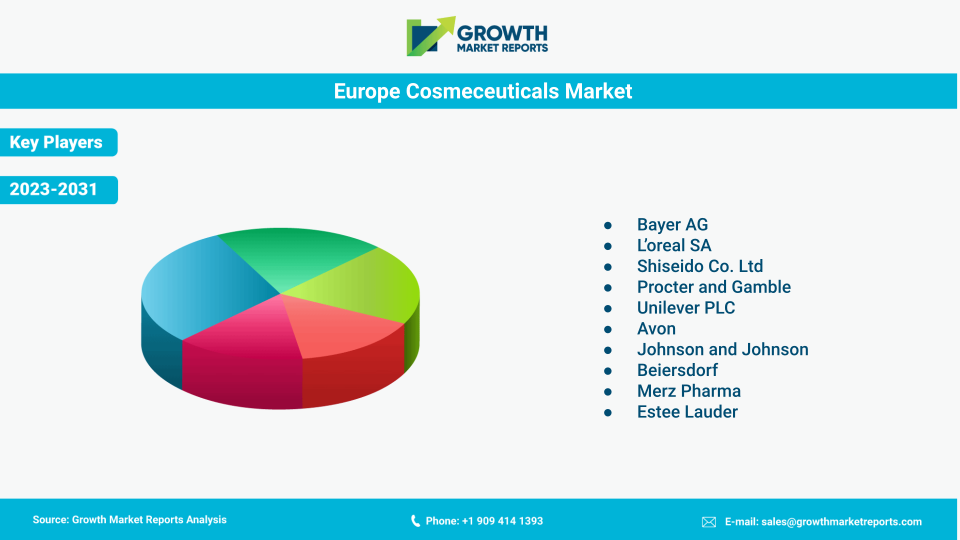

Europe Cosmeceuticals Market Key Players

Frequently Asked Questions

Top companies include L'Oréal S.A., Procter & Gamble Co., Estée Lauder Companies Inc., Unilever PLC, Shiseido Company, Limited, Johnson & Johnson, Beiersdorf AG, Allergan plc, Avon Products, Inc., and Amorepacific Corporation.

Challenges include regulatory complexities, risk of product claims scrutiny, the presence of counterfeit products, and the need for rigorous quality control and consumer education.

Major trends include the demand for natural and organic products, clean-label and sustainable formulations, digital transformation (AI, AR, e-commerce), personalization, and expansion into emerging markets.

The main end users are women, men, and unisex consumers. Women represent the largest segment, but the market for men and unisex products is rapidly growing.

Cosmeceuticals are distributed through pharmacy/drug stores, supermarkets/hypermarkets, online stores, specialty stores, direct selling, salons, and spas.

Asia Pacific is the largest and fastest-growing region, followed by North America and Europe. Latin America and the Middle East & Africa are also experiencing steady growth.

The most popular active ingredients include antioxidants (like vitamin C and E), peptides, retinoids, botanicals, hyaluronic acid, niacinamide, ceramides, and probiotics.

Skincare products hold the largest share of the cosmeceuticals market, followed by hair care, oral care, and other segments such as body care, nail care, and eye care.

Key growth drivers include increasing consumer awareness of active ingredients, demand for multifunctional beauty solutions, technological advancements in product formulations, rising disposable incomes, and the influence of social media and beauty influencers.

The global cosmeceuticals market was valued at USD 71.4 billion in 2024 and is expected to reach approximately USD 148.8 billion by 2033, growing at a CAGR of 8.7% during the forecast period.

Table Of Content

Chapter 1 Executive Summary
Chapter 2 Assumptions and Acronyms Used
Chapter 3 Research Methodology
Chapter 4 Cosmeceuticals Market Overview
   4.1 Introduction
      4.1.1 Market Taxonomy
      4.1.2 Market Definition
      4.1.3 Macro-Economic Factors Impacting the Market Growth
   4.2 Cosmeceuticals Market Dynamics
      4.2.1 Market Drivers
      4.2.2 Market Restraints
      4.2.3 Market Opportunity
   4.3 Cosmeceuticals Market - Supply Chain Analysis
      4.3.1 List of Key Suppliers
      4.3.2 List of Key Distributors
      4.3.3 List of Key Consumers
   4.4 Key Forces Shaping the Cosmeceuticals Market
      4.4.1 Bargaining Power of Suppliers
      4.4.2 Bargaining Power of Buyers
      4.4.3 Threat of Substitution
      4.4.4 Threat of New Entrants
      4.4.5 Competitive Rivalry
   4.5 Global Cosmeceuticals Market Size & Forecast, 2023-2032
      4.5.1 Cosmeceuticals Market Size and Y-o-Y Growth
      4.5.2 Cosmeceuticals Market Absolute $ Opportunity

Chapter 5 Global Cosmeceuticals Market Analysis and Forecast By Product Type
   5.1 Introduction
      5.1.1 Key Market Trends & Growth Opportunities By Product Type
      5.1.2 Basis Point Share (BPS) Analysis By Product Type
      5.1.3 Absolute $ Opportunity Assessment By Product Type
   5.2 Cosmeceuticals Market Size Forecast By Product Type
      5.2.1 Skin Care
      5.2.2 Hair Care
      5.2.3 Oral Care
      5.2.4 Others
   5.3 Market Attractiveness Analysis By Product Type

Chapter 6 Global Cosmeceuticals Market Analysis and Forecast By Active Ingredient
   6.1 Introduction
      6.1.1 Key Market Trends & Growth Opportunities By Active Ingredient
      6.1.2 Basis Point Share (BPS) Analysis By Active Ingredient
      6.1.3 Absolute $ Opportunity Assessment By Active Ingredient
   6.2 Cosmeceuticals Market Size Forecast By Active Ingredient
      6.2.1 Antioxidants
      6.2.2 Peptides
      6.2.3 Retinoids
      6.2.4 Botanicals
      6.2.5 Others
   6.3 Market Attractiveness Analysis By Active Ingredient

Chapter 7 Global Cosmeceuticals Market Analysis and Forecast By Distribution Channel
   7.1 Introduction
      7.1.1 Key Market Trends & Growth Opportunities By Distribution Channel
      7.1.2 Basis Point Share (BPS) Analysis By Distribution Channel
      7.1.3 Absolute $ Opportunity Assessment By Distribution Channel
   7.2 Cosmeceuticals Market Size Forecast By Distribution Channel
      7.2.1 Pharmacy/Drug Stores
      7.2.2 Supermarkets/Hypermarkets
      7.2.3 Online Stores
      7.2.4 Specialty Stores
      7.2.5 Others
   7.3 Market Attractiveness Analysis By Distribution Channel

Chapter 8 Global Cosmeceuticals Market Analysis and Forecast By End User
   8.1 Introduction
      8.1.1 Key Market Trends & Growth Opportunities By End User
      8.1.2 Basis Point Share (BPS) Analysis By End User
      8.1.3 Absolute $ Opportunity Assessment By End User
   8.2 Cosmeceuticals Market Size Forecast By End User
      8.2.1 Men
      8.2.2 Women
      8.2.3 Unisex
   8.3 Market Attractiveness Analysis By End User

Chapter 9 Global Cosmeceuticals Market Analysis and Forecast by Region
   9.1 Introduction
      9.1.1 Key Market Trends & Growth Opportunities By Region
      9.1.2 Basis Point Share (BPS) Analysis By Region
      9.1.3 Absolute $ Opportunity Assessment By Region
   9.2 Cosmeceuticals Market Size Forecast By Region
      9.2.1 North America
      9.2.2 Europe
      9.2.3 Asia Pacific
      9.2.4 Latin America
      9.2.5 Middle East & Africa (MEA)
   9.3 Market Attractiveness Analysis By Region

Chapter 10 Coronavirus Disease (COVID-19) Impact 
   10.1 Introduction 
   10.2 Current & Future Impact Analysis 
   10.3 Economic Impact Analysis 
   10.4 Government Policies 
   10.5 Investment Scenario

Chapter 11 North America Cosmeceuticals Analysis and Forecast
   11.1 Introduction
   11.2 North America Cosmeceuticals Market Size Forecast by Country
      11.2.1 U.S.
      11.2.2 Canada
   11.3 Basis Point Share (BPS) Analysis by Country
   11.4 Absolute $ Opportunity Assessment by Country
   11.5 Market Attractiveness Analysis by Country
   11.6 North America Cosmeceuticals Market Size Forecast By Product Type
      11.6.1 Skin Care
      11.6.2 Hair Care
      11.6.3 Oral Care
      11.6.4 Others
   11.7 Basis Point Share (BPS) Analysis By Product Type 
   11.8 Absolute $ Opportunity Assessment By Product Type 
   11.9 Market Attractiveness Analysis By Product Type
   11.10 North America Cosmeceuticals Market Size Forecast By Active Ingredient
      11.10.1 Antioxidants
      11.10.2 Peptides
      11.10.3 Retinoids
      11.10.4 Botanicals
      11.10.5 Others
   11.11 Basis Point Share (BPS) Analysis By Active Ingredient 
   11.12 Absolute $ Opportunity Assessment By Active Ingredient 
   11.13 Market Attractiveness Analysis By Active Ingredient
   11.14 North America Cosmeceuticals Market Size Forecast By Distribution Channel
      11.14.1 Pharmacy/Drug Stores
      11.14.2 Supermarkets/Hypermarkets
      11.14.3 Online Stores
      11.14.4 Specialty Stores
      11.14.5 Others
   11.15 Basis Point Share (BPS) Analysis By Distribution Channel 
   11.16 Absolute $ Opportunity Assessment By Distribution Channel 
   11.17 Market Attractiveness Analysis By Distribution Channel
   11.18 North America Cosmeceuticals Market Size Forecast By End User
      11.18.1 Men
      11.18.2 Women
      11.18.3 Unisex
   11.19 Basis Point Share (BPS) Analysis By End User 
   11.20 Absolute $ Opportunity Assessment By End User 
   11.21 Market Attractiveness Analysis By End User

Chapter 12 Europe Cosmeceuticals Analysis and Forecast
   12.1 Introduction
   12.2 Europe Cosmeceuticals Market Size Forecast by Country
      12.2.1 Germany
      12.2.2 France
      12.2.3 Italy
      12.2.4 U.K.
      12.2.5 Spain
      12.2.6 Russia
      12.2.7 Rest of Europe
   12.3 Basis Point Share (BPS) Analysis by Country
   12.4 Absolute $ Opportunity Assessment by Country
   12.5 Market Attractiveness Analysis by Country
   12.6 Europe Cosmeceuticals Market Size Forecast By Product Type
      12.6.1 Skin Care
      12.6.2 Hair Care
      12.6.3 Oral Care
      12.6.4 Others
   12.7 Basis Point Share (BPS) Analysis By Product Type 
   12.8 Absolute $ Opportunity Assessment By Product Type 
   12.9 Market Attractiveness Analysis By Product Type
   12.10 Europe Cosmeceuticals Market Size Forecast By Active Ingredient
      12.10.1 Antioxidants
      12.10.2 Peptides
      12.10.3 Retinoids
      12.10.4 Botanicals
      12.10.5 Others
   12.11 Basis Point Share (BPS) Analysis By Active Ingredient 
   12.12 Absolute $ Opportunity Assessment By Active Ingredient 
   12.13 Market Attractiveness Analysis By Active Ingredient
   12.14 Europe Cosmeceuticals Market Size Forecast By Distribution Channel
      12.14.1 Pharmacy/Drug Stores
      12.14.2 Supermarkets/Hypermarkets
      12.14.3 Online Stores
      12.14.4 Specialty Stores
      12.14.5 Others
   12.15 Basis Point Share (BPS) Analysis By Distribution Channel 
   12.16 Absolute $ Opportunity Assessment By Distribution Channel 
   12.17 Market Attractiveness Analysis By Distribution Channel
   12.18 Europe Cosmeceuticals Market Size Forecast By End User
      12.18.1 Men
      12.18.2 Women
      12.18.3 Unisex
   12.19 Basis Point Share (BPS) Analysis By End User 
   12.20 Absolute $ Opportunity Assessment By End User 
   12.21 Market Attractiveness Analysis By End User

Chapter 13 Asia Pacific Cosmeceuticals Analysis and Forecast
   13.1 Introduction
   13.2 Asia Pacific Cosmeceuticals Market Size Forecast by Country
      13.2.1 China
      13.2.2 Japan
      13.2.3 South Korea
      13.2.4 India
      13.2.5 Australia
      13.2.6 South East Asia (SEA)
      13.2.7 Rest of Asia Pacific (APAC)
   13.3 Basis Point Share (BPS) Analysis by Country
   13.4 Absolute $ Opportunity Assessment by Country
   13.5 Market Attractiveness Analysis by Country
   13.6 Asia Pacific Cosmeceuticals Market Size Forecast By Product Type
      13.6.1 Skin Care
      13.6.2 Hair Care
      13.6.3 Oral Care
      13.6.4 Others
   13.7 Basis Point Share (BPS) Analysis By Product Type 
   13.8 Absolute $ Opportunity Assessment By Product Type 
   13.9 Market Attractiveness Analysis By Product Type
   13.10 Asia Pacific Cosmeceuticals Market Size Forecast By Active Ingredient
      13.10.1 Antioxidants
      13.10.2 Peptides
      13.10.3 Retinoids
      13.10.4 Botanicals
      13.10.5 Others
   13.11 Basis Point Share (BPS) Analysis By Active Ingredient 
   13.12 Absolute $ Opportunity Assessment By Active Ingredient 
   13.13 Market Attractiveness Analysis By Active Ingredient
   13.14 Asia Pacific Cosmeceuticals Market Size Forecast By Distribution Channel
      13.14.1 Pharmacy/Drug Stores
      13.14.2 Supermarkets/Hypermarkets
      13.14.3 Online Stores
      13.14.4 Specialty Stores
      13.14.5 Others
   13.15 Basis Point Share (BPS) Analysis By Distribution Channel 
   13.16 Absolute $ Opportunity Assessment By Distribution Channel 
   13.17 Market Attractiveness Analysis By Distribution Channel
   13.18 Asia Pacific Cosmeceuticals Market Size Forecast By End User
      13.18.1 Men
      13.18.2 Women
      13.18.3 Unisex
   13.19 Basis Point Share (BPS) Analysis By End User 
   13.20 Absolute $ Opportunity Assessment By End User 
   13.21 Market Attractiveness Analysis By End User

Chapter 14 Latin America Cosmeceuticals Analysis and Forecast
   14.1 Introduction
   14.2 Latin America Cosmeceuticals Market Size Forecast by Country
      14.2.1 Brazil
      14.2.2 Mexico
      14.2.3 Rest of Latin America (LATAM)
   14.3 Basis Point Share (BPS) Analysis by Country
   14.4 Absolute $ Opportunity Assessment by Country
   14.5 Market Attractiveness Analysis by Country
   14.6 Latin America Cosmeceuticals Market Size Forecast By Product Type
      14.6.1 Skin Care
      14.6.2 Hair Care
      14.6.3 Oral Care
      14.6.4 Others
   14.7 Basis Point Share (BPS) Analysis By Product Type 
   14.8 Absolute $ Opportunity Assessment By Product Type 
   14.9 Market Attractiveness Analysis By Product Type
   14.10 Latin America Cosmeceuticals Market Size Forecast By Active Ingredient
      14.10.1 Antioxidants
      14.10.2 Peptides
      14.10.3 Retinoids
      14.10.4 Botanicals
      14.10.5 Others
   14.11 Basis Point Share (BPS) Analysis By Active Ingredient 
   14.12 Absolute $ Opportunity Assessment By Active Ingredient 
   14.13 Market Attractiveness Analysis By Active Ingredient
   14.14 Latin America Cosmeceuticals Market Size Forecast By Distribution Channel
      14.14.1 Pharmacy/Drug Stores
      14.14.2 Supermarkets/Hypermarkets
      14.14.3 Online Stores
      14.14.4 Specialty Stores
      14.14.5 Others
   14.15 Basis Point Share (BPS) Analysis By Distribution Channel 
   14.16 Absolute $ Opportunity Assessment By Distribution Channel 
   14.17 Market Attractiveness Analysis By Distribution Channel
   14.18 Latin America Cosmeceuticals Market Size Forecast By End User
      14.18.1 Men
      14.18.2 Women
      14.18.3 Unisex
   14.19 Basis Point Share (BPS) Analysis By End User 
   14.20 Absolute $ Opportunity Assessment By End User 
   14.21 Market Attractiveness Analysis By End User

Chapter 15 Middle East & Africa (MEA) Cosmeceuticals Analysis and Forecast
   15.1 Introduction
   15.2 Middle East & Africa (MEA) Cosmeceuticals Market Size Forecast by Country
      15.2.1 Saudi Arabia
      15.2.2 South Africa
      15.2.3 UAE
      15.2.4 Rest of Middle East & Africa (MEA)
   15.3 Basis Point Share (BPS) Analysis by Country
   15.4 Absolute $ Opportunity Assessment by Country
   15.5 Market Attractiveness Analysis by Country
   15.6 Middle East & Africa (MEA) Cosmeceuticals Market Size Forecast By Product Type
      15.6.1 Skin Care
      15.6.2 Hair Care
      15.6.3 Oral Care
      15.6.4 Others
   15.7 Basis Point Share (BPS) Analysis By Product Type 
   15.8 Absolute $ Opportunity Assessment By Product Type 
   15.9 Market Attractiveness Analysis By Product Type
   15.10 Middle East & Africa (MEA) Cosmeceuticals Market Size Forecast By Active Ingredient
      15.10.1 Antioxidants
      15.10.2 Peptides
      15.10.3 Retinoids
      15.10.4 Botanicals
      15.10.5 Others
   15.11 Basis Point Share (BPS) Analysis By Active Ingredient 
   15.12 Absolute $ Opportunity Assessment By Active Ingredient 
   15.13 Market Attractiveness Analysis By Active Ingredient
   15.14 Middle East & Africa (MEA) Cosmeceuticals Market Size Forecast By Distribution Channel
      15.14.1 Pharmacy/Drug Stores
      15.14.2 Supermarkets/Hypermarkets
      15.14.3 Online Stores
      15.14.4 Specialty Stores
      15.14.5 Others
   15.15 Basis Point Share (BPS) Analysis By Distribution Channel 
   15.16 Absolute $ Opportunity Assessment By Distribution Channel 
   15.17 Market Attractiveness Analysis By Distribution Channel
   15.18 Middle East & Africa (MEA) Cosmeceuticals Market Size Forecast By End User
      15.18.1 Men
      15.18.2 Women
      15.18.3 Unisex
   15.19 Basis Point Share (BPS) Analysis By End User 
   15.20 Absolute $ Opportunity Assessment By End User 
   15.21 Market Attractiveness Analysis By End User

Chapter 16 Competition Landscape 
   16.1 Cosmeceuticals Market: Competitive Dashboard
   16.2 Global Cosmeceuticals Market: Market Share Analysis, 2023
   16.3 Company Profiles (Details – Overview, Financials, Developments, Strategy) 
      16.3.1 L'Oréal S.A.
Procter & Gamble Co.
Estée Lauder Companies Inc.
Unilever PLC
Shiseido Company, Limited
Johnson & Johnson
Beiersdorf AG
Allergan plc
Avon Products, Inc.
Amorepacific Corporation
Galderma S.A.
Kao Corporation
Mary Kay Inc.
Revlon, Inc.
Coty Inc.
Clarins Group
Elizabeth Arden, Inc.
Pierre Fabre Group
Murad LLC
SkinCeuticals (L'Oréal Group)

Methodology

Our Clients

General Mills
The John Holland Group
Siemens Healthcare
General Electric
Nestle SA
Deloitte
Dassault Aviation
FedEx Logistics