Convergent Billing Market Research Report 2033

Convergent Billing Market Research Report 2033

Segments - by Component (Solution, Services), by Deployment Mode (On-Premises, Cloud), by Organization Size (Small and Medium Enterprises, Large Enterprises), by End-User (Telecom Operators, Internet Service Providers, Utilities, Others)

https://growthmarketreports.com/Raksha
Author : Raksha Sharma
https://growthmarketreports.com/Vaibhav
Fact-checked by : V. Chandola
https://growthmarketreports.com/Shruti
Editor : Shruti Bhat

Upcoming | Report ID :ICT-SE-2801 | 4.5 Rating | 94 Reviews | 290 Pages | Format : Docx PDF

Report Description


Convergent Billing Market Outlook

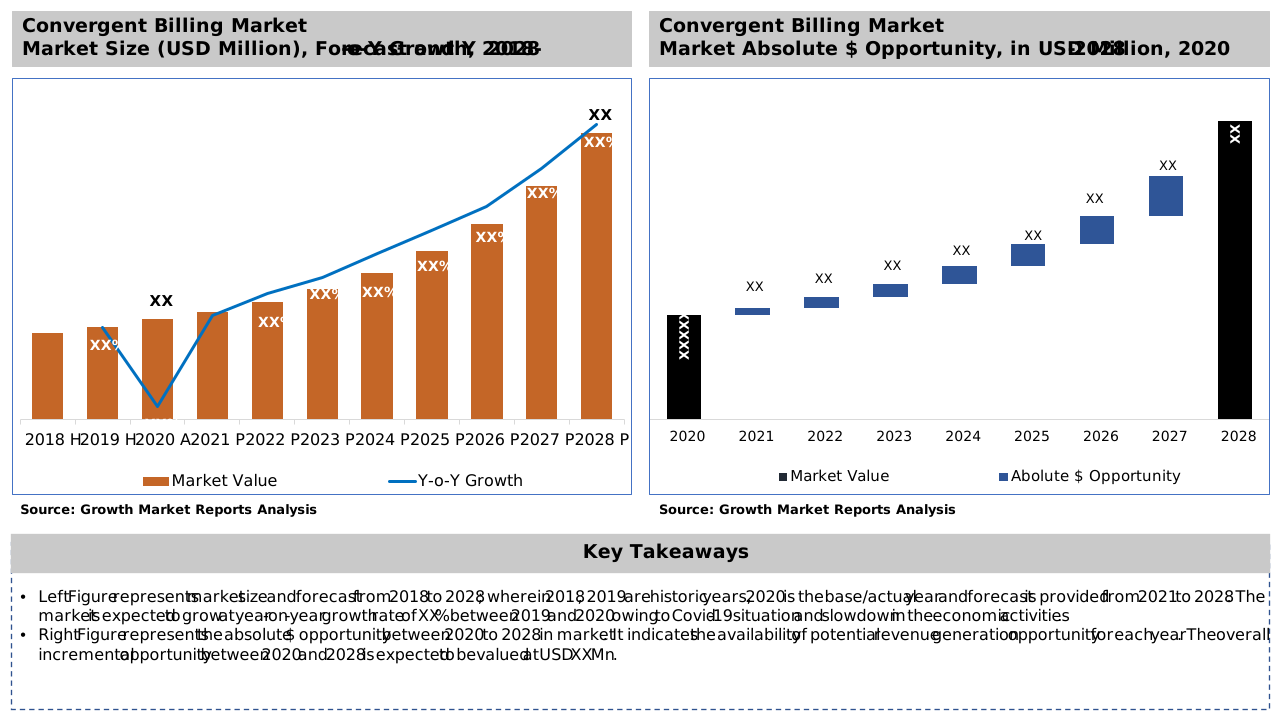
According to our latest research, the global convergent billing market size reached USD 18.2 billion in 2024, reflecting the growing need for unified billing solutions across telecom and utility sectors. The market is expected to expand at a robust CAGR of 16.1% during the forecast period, reaching a projected value of USD 41.6 billion by 2033. This remarkable growth trajectory is driven by the increasing demand for seamless customer experience, the proliferation of digital services, and the ongoing digital transformation initiatives across industries, particularly in telecom and utilities. As per our latest research, the market’s expansion is further catalyzed by the adoption of advanced technologies such as cloud computing and artificial intelligence, which are streamlining billing processes and enabling real-time customer engagement.

A primary growth factor fueling the convergent billing market is the rising complexity of service offerings among telecom operators and internet service providers. As these companies diversify their portfolios to include voice, data, video, and value-added services, traditional billing systems are proving inadequate. The adoption of convergent billing systems enables providers to consolidate multiple services onto a single bill, thereby improving operational efficiency and enhancing customer satisfaction. This integrated approach not only reduces revenue leakage but also supports flexible pricing models and promotions, which are increasingly important in today’s highly competitive digital economy. The convergence of billing platforms is also facilitating the rapid rollout of new digital services, including IoT-based offerings and 5G-enabled solutions, which require agile and scalable billing infrastructure.

Another significant driver of the convergent billing market is the ongoing digital transformation across utilities and other service sectors. Utilities, including electricity, water, and gas providers, are increasingly adopting convergent billing solutions to streamline operations and offer bundled services to their customers. The need for real-time billing, accurate metering, and transparent invoicing is pushing these sectors to invest in advanced billing platforms. Furthermore, regulatory mandates for improved billing transparency and customer-centricity are compelling organizations to upgrade their legacy systems. The integration of convergent billing systems with CRM and ERP platforms is also enhancing data analytics capabilities, enabling providers to deliver personalized services and targeted marketing campaigns, which further boosts customer loyalty and revenue streams.

Technological advancements are playing a pivotal role in shaping the convergent billing market landscape. The emergence of cloud-based billing solutions is enabling organizations to achieve greater scalability, flexibility, and cost-efficiency. Cloud deployment not only reduces the need for significant upfront capital investment but also accelerates the time-to-market for new services. Artificial intelligence and machine learning are being leveraged to automate billing processes, detect anomalies, and predict customer behavior, thereby improving operational accuracy and reducing manual intervention. Additionally, the integration of convergent billing systems with self-service portals and mobile apps is empowering customers with greater control over their accounts, leading to improved customer retention rates.

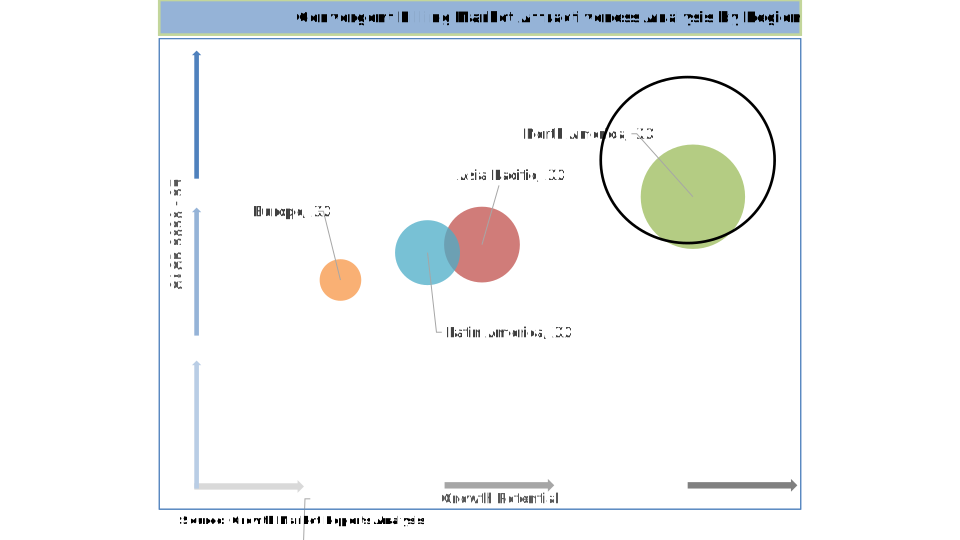
From a regional perspective, Asia Pacific is emerging as the fastest-growing market for convergent billing solutions, driven by the rapid expansion of telecom infrastructure and the increasing adoption of digital services. North America remains the largest market, supported by high technology penetration and the presence of leading industry players. Europe is witnessing steady growth, propelled by regulatory compliance requirements and the modernization of legacy billing systems. Latin America and the Middle East & Africa are also showing promising potential, as service providers in these regions invest in digital transformation to address rising customer expectations and competitive pressures. The global convergent billing market is thus characterized by dynamic regional trends, with each geography presenting unique opportunities and challenges for market participants.

Global Convergent Billing Industry Outlook

Component Analysis

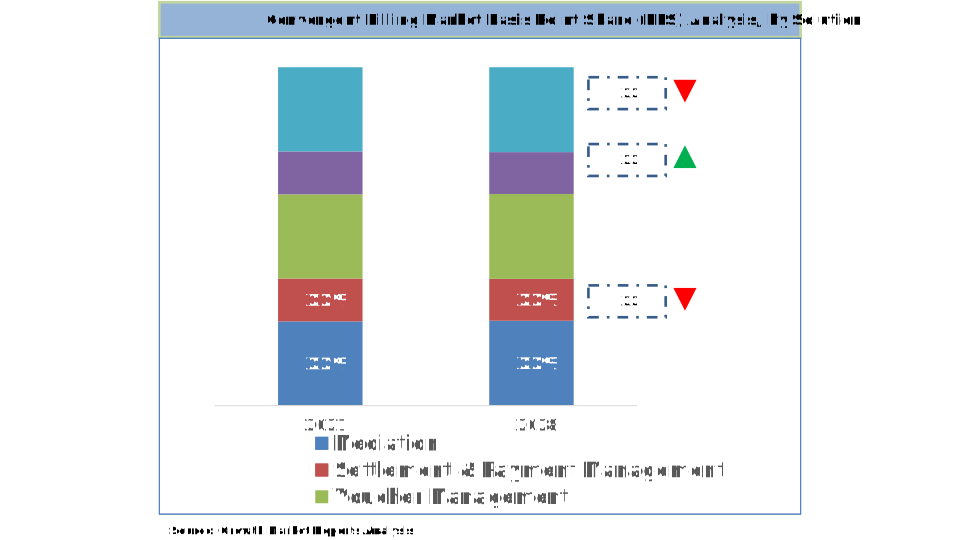
The convergent billing market is segmented by component into solution and services. The solution segment currently dominates the market, accounting for the largest share in 2024, as organizations prioritize the deployment of robust, scalable, and feature-rich billing platforms. These solutions offer comprehensive functionalities, including real-time billing, customer management, and revenue assurance, which are essential for supporting the complex needs of modern service providers. The increasing demand for integrated platforms that can handle multiple services and payment methods is driving the adoption of advanced convergent billing solutions. Vendors are continuously enhancing their offerings with new features such as AI-driven analytics, automated dispute management, and seamless integration with third-party systems, further fueling market growth.

The services segment, encompassing consulting, implementation, and support services, is also witnessing significant growth as organizations seek expert guidance to optimize their billing operations. Service providers play a critical role in assisting companies with the customization, integration, and maintenance of convergent billing systems. As the complexity of billing environments increases, the demand for professional services to ensure smooth migration from legacy systems and to provide ongoing technical support is rising. Managed services, in particular, are gaining traction among small and medium enterprises that lack the in-house expertise to manage sophisticated billing platforms. This trend is expected to continue as organizations increasingly focus on their core competencies and outsource non-core functions to specialized service providers.

A notable trend within the component segment is the growing preference for modular and scalable solutions that can be tailored to the specific needs of different industries and organizational sizes. Solution providers are offering customizable modules for customer relationship management, revenue management, fraud detection, and reporting, allowing organizations to select and deploy functionalities that align with their business objectives. This modular approach not only reduces implementation complexity but also enables organizations to scale their billing systems in line with business growth and evolving market requirements. The flexibility offered by such solutions is particularly valuable for telecom operators and utilities that operate in highly dynamic and competitive environments.

Furthermore, the integration of convergent billing solutions with emerging technologies such as blockchain and IoT is opening up new avenues for innovation. Blockchain-enabled billing systems offer enhanced security, transparency, and auditability, which are crucial for industries with stringent regulatory requirements. IoT integration, on the other hand, enables real-time metering and usage-based billing, supporting the proliferation of smart services in utilities and telecommunications. Solution providers are investing heavily in research and development to incorporate these advanced technologies into their offerings, ensuring that their platforms remain at the forefront of industry innovation and continue to deliver value to customers.

Report Scope

Attributes Details
Report Title Convergent Billing Market Research Report 2033
By Component Solution, Services
By Deployment Mode On-Premises, Cloud
By Organization Size Small and Medium Enterprises, Large Enterprises
By End-User Telecom Operators, Internet Service Providers, Utilities, Others
Regions Covered North America, Europe, APAC, Latin America, MEA
Base Year 2024
Historic Data 2018-2023
Forecast Period 2025-2033
Number of Pages 290
Number of Tables & Figures 386
Customization Available Yes, the report can be customized as per your need.

Deployment Mode Analysis

The deployment mode segment of the convergent billing market is bifurcated into on-premises and cloud deployment. On-premises deployment has traditionally held a significant share, especially among large enterprises and organizations with stringent data security and compliance requirements. These organizations prefer to maintain direct control over their billing infrastructure, ensuring that sensitive customer and financial data is securely managed within their own data centers. On-premises solutions offer high levels of customization and integration with existing IT systems, which is particularly important for organizations with complex operational environments. However, the high upfront capital investment and ongoing maintenance costs associated with on-premises deployment are prompting many organizations to explore alternative deployment models.

The cloud deployment segment is experiencing rapid growth, driven by the increasing adoption of Software-as-a-Service (SaaS) models and the need for scalable, flexible, and cost-effective billing solutions. Cloud-based convergent billing platforms offer numerous advantages, including lower total cost of ownership, faster implementation times, and the ability to scale resources on demand. Organizations can leverage cloud solutions to quickly roll out new services, respond to changing market conditions, and support remote workforces. The pay-as-you-go pricing model of cloud services is particularly attractive to small and medium enterprises, enabling them to access advanced billing functionalities without significant upfront investment. The growing availability of secure, compliant cloud infrastructure is further accelerating the shift towards cloud deployment in the convergent billing market.

Hybrid deployment models are also emerging as a viable option for organizations seeking to balance the benefits of on-premises and cloud solutions. Hybrid models allow organizations to retain sensitive data and critical applications on-premises while leveraging the scalability and flexibility of the cloud for less sensitive workloads. This approach is particularly relevant for organizations operating in highly regulated industries or regions with strict data sovereignty requirements. Solution providers are responding to this trend by offering flexible deployment options and seamless integration capabilities, enabling organizations to adopt a deployment strategy that aligns with their business needs and regulatory obligations.

The increasing prevalence of cloud-native convergent billing solutions is transforming the way organizations approach billing operations. Cloud-native platforms are designed to take full advantage of cloud infrastructure, offering enhanced performance, resilience, and scalability. These platforms support microservices architectures, containerization, and API-driven integration, enabling organizations to rapidly innovate and deliver new services to market. The adoption of cloud-native convergent billing solutions is expected to accelerate as organizations seek to modernize their IT environments and capitalize on the benefits of digital transformation. Vendors are investing in the development of cloud-native capabilities to meet the evolving needs of their customers and maintain a competitive edge in the market.

Organization Size Analysis

The convergent billing market is segmented by organization size into small and medium enterprises (SMEs) and large enterprises. Large enterprises currently represent the dominant segment, accounting for a substantial share of the market in 2024. These organizations typically have complex billing requirements, high transaction volumes, and diverse service portfolios, necessitating the deployment of sophisticated convergent billing platforms. Large enterprises are also more likely to invest in advanced features such as real-time analytics, automated revenue assurance, and integrated customer management, which are essential for maintaining a competitive edge in dynamic markets. The ability to support multi-country operations, multiple currencies, and regulatory compliance further drives the adoption of convergent billing solutions among large enterprises.

Small and medium enterprises are increasingly recognizing the benefits of convergent billing solutions as they seek to enhance operational efficiency, reduce costs, and deliver superior customer experiences. The availability of cloud-based and modular billing platforms is lowering the barriers to entry for SMEs, enabling them to access advanced functionalities without significant upfront investment. SMEs are leveraging convergent billing systems to streamline their billing processes, minimize revenue leakage, and support the launch of new services. The pay-as-you-go pricing model and the availability of managed services are particularly attractive to SMEs, allowing them to focus on their core business while outsourcing non-core functions to specialized providers.

A key trend within the organization size segment is the growing emphasis on scalability and flexibility. Both large enterprises and SMEs are seeking billing solutions that can adapt to changing business needs, support business growth, and accommodate evolving regulatory requirements. Solution providers are responding by offering flexible deployment options, customizable modules, and seamless integration capabilities, enabling organizations of all sizes to tailor their billing systems to their specific needs. The ability to scale resources up or down in response to market demand is particularly valuable in industries characterized by rapid innovation and frequent changes in service offerings.

The convergence of billing systems is also enabling organizations to deliver more personalized and customer-centric services. By consolidating customer data and transaction histories across multiple services, organizations can gain deeper insights into customer behavior and preferences. This information can be used to develop targeted marketing campaigns, personalized promotions, and loyalty programs, enhancing customer engagement and driving revenue growth. The ability to deliver a seamless and integrated customer experience is becoming a key differentiator for organizations of all sizes, further driving the adoption of convergent billing solutions.

End-User Analysis

The end-user segment of the convergent billing market comprises telecom operators, internet service providers (ISPs), utilities, and others. Telecom operators represent the largest end-user segment, driven by the need to manage complex service portfolios, high transaction volumes, and diverse customer bases. The transition to 5G networks, the proliferation of IoT devices, and the increasing demand for bundled services are compelling telecom operators to invest in advanced convergent billing platforms. These systems enable telecom operators to consolidate billing for voice, data, video, and value-added services, improve revenue assurance, and deliver a seamless customer experience. The ability to support real-time billing, flexible pricing models, and integrated customer management is critical for telecom operators seeking to maintain a competitive edge in rapidly evolving markets.

Internet service providers are also significant adopters of convergent billing solutions, as they seek to streamline billing operations, reduce costs, and deliver value-added services to their customers. ISPs are increasingly offering bundled services, including internet, television, and telephony, which require integrated billing platforms capable of handling multiple service types and payment methods. The adoption of convergent billing systems enables ISPs to improve operational efficiency, minimize revenue leakage, and support the rollout of new digital services. The growing demand for high-speed internet and the expansion of fiber optic networks are further driving the adoption of convergent billing solutions among ISPs.

Utilities, including electricity, water, and gas providers, are increasingly adopting convergent billing platforms to enhance billing accuracy, improve customer service, and support the rollout of smart metering and IoT-based services. The need for real-time metering, usage-based billing, and transparent invoicing is driving utilities to modernize their billing infrastructure. Convergent billing systems enable utilities to consolidate billing for multiple services, offer flexible payment options, and deliver personalized customer experiences. Regulatory mandates for improved billing transparency and customer-centricity are also compelling utilities to invest in advanced billing solutions.

The "others" segment includes a diverse range of service providers, such as cable operators, content providers, and managed service providers, who are increasingly adopting convergent billing solutions to support the delivery of bundled and value-added services. The ability to support multiple business models, integrate with third-party platforms, and deliver a seamless customer experience is driving the adoption of convergent billing systems across this segment. As the digital economy continues to evolve, the range of end-users adopting convergent billing solutions is expected to expand, creating new opportunities for market participants.

Opportunities & Threats

The convergent billing market presents significant opportunities for innovation and growth, particularly as organizations across industries embrace digital transformation. The ongoing rollout of 5G networks, the proliferation of IoT devices, and the increasing demand for bundled and value-added services are creating new use cases for convergent billing solutions. Vendors have the opportunity to develop advanced billing platforms that leverage artificial intelligence, machine learning, and blockchain technology to deliver enhanced functionality, security, and customer experience. The growing demand for cloud-based and modular billing solutions is also creating opportunities for vendors to expand their offerings and reach new customer segments, particularly among small and medium enterprises.

Another major opportunity lies in the integration of convergent billing systems with advanced analytics and customer relationship management platforms. By leveraging data analytics, organizations can gain deeper insights into customer behavior, identify revenue opportunities, and develop targeted marketing campaigns. The ability to deliver personalized services and promotions is becoming a key differentiator in highly competitive markets, driving demand for integrated billing and analytics solutions. Vendors that can offer seamless integration with third-party platforms, support for emerging business models, and flexible deployment options are well-positioned to capitalize on the growing demand for convergent billing solutions.

Despite the numerous opportunities, the convergent billing market also faces several challenges and restrainers. One of the primary challenges is the complexity and cost of migrating from legacy billing systems to modern convergent platforms. Organizations often face significant technical, operational, and organizational hurdles during the migration process, including data integration, system compatibility, and staff training. The high upfront investment required for deploying advanced billing solutions can be a barrier for small and medium enterprises, particularly in regions with limited access to capital. Additionally, concerns around data security, privacy, and regulatory compliance are prompting organizations to exercise caution when adopting cloud-based billing solutions. Vendors must address these challenges by offering robust migration support, flexible pricing models, and comprehensive security features to ensure the successful adoption of convergent billing platforms.

Regional Outlook

The convergent billing market exhibits distinct regional trends, with each geography presenting unique opportunities and challenges. North America leads the market, accounting for approximately USD 6.7 billion in 2024, driven by high technology adoption, advanced telecom infrastructure, and the presence of leading industry players. The region’s focus on digital transformation, regulatory compliance, and customer-centricity is fueling the demand for advanced convergent billing solutions. The United States and Canada are at the forefront of innovation, with telecom operators and utilities investing heavily in modernizing their billing platforms to support new service offerings and enhance customer experience.

Asia Pacific is the fastest-growing region in the convergent billing market, with a projected CAGR of 18.7% during the forecast period. The market size in Asia Pacific reached USD 4.2 billion in 2024, driven by rapid urbanization, expanding telecom networks, and the increasing adoption of digital services. Countries such as China, India, Japan, and South Korea are witnessing significant investments in telecom infrastructure, smart cities, and digital transformation initiatives. The growing demand for bundled services, mobile payments, and IoT-based solutions is creating new opportunities for convergent billing vendors in the region. Local service providers are also partnering with global vendors to leverage advanced billing technologies and accelerate the rollout of new services.

Europe represents a mature market for convergent billing solutions, with a market size of USD 3.8 billion in 2024. The region’s focus on regulatory compliance, data privacy, and customer-centricity is driving the adoption of advanced billing platforms. Telecom operators and utilities in Europe are modernizing their billing systems to comply with GDPR and other regulatory requirements, improve operational efficiency, and deliver personalized services. The Middle East & Africa and Latin America are emerging markets, with combined market sizes of USD 3.5 billion in 2024. These regions are experiencing increased investments in telecom infrastructure, digital services, and smart utilities, creating new growth opportunities for convergent billing vendors. The evolving regulatory landscape, rising customer expectations, and the need for digital transformation are expected to drive continued growth in these regions.

Convergent Billing Market Statistics

Competitor Outlook

The convergent billing market is characterized by intense competition, with a diverse array of global and regional players vying for market share. The competitive landscape is shaped by continuous innovation, strategic partnerships, and the ongoing evolution of technology. Leading vendors are investing heavily in research and development to enhance the functionality, scalability, and security of their billing platforms. The market is witnessing a wave of consolidation as established players acquire niche vendors to expand their product portfolios and strengthen their market presence. The ability to offer end-to-end solutions, seamless integration with third-party systems, and robust customer support is becoming a key differentiator in the market.

Major players in the convergent billing market are also focusing on expanding their global footprint through strategic alliances and partnerships. By collaborating with telecom operators, utilities, and technology providers, vendors are able to access new markets, leverage local expertise, and accelerate the adoption of their solutions. The growing demand for cloud-based and modular billing platforms is prompting vendors to develop flexible deployment options and offer managed services to cater to the diverse needs of their customers. The competitive landscape is further shaped by the entry of new players offering innovative solutions based on emerging technologies such as AI, blockchain, and IoT.

Customer-centricity is at the core of competitive strategies in the convergent billing market. Vendors are prioritizing the development of platforms that deliver seamless and personalized customer experiences, support real-time billing, and enable flexible pricing models. The ability to provide advanced analytics, automated revenue assurance, and integrated customer management is becoming increasingly important as organizations seek to differentiate themselves in crowded markets. Vendors are also investing in comprehensive training, support, and professional services to ensure the successful implementation and adoption of their solutions.

Some of the major companies operating in the convergent billing market include Amdocs, Huawei Technologies, Oracle Corporation, SAP SE, Ericsson, Comarch SA, CSG Systems International, Netcracker Technology, Cerillion, and Sterlite Technologies. Amdocs is renowned for its comprehensive suite of billing and customer management solutions, serving leading telecom operators worldwide. Huawei Technologies offers advanced convergent billing platforms with a focus on scalability, security, and integration capabilities. Oracle Corporation and SAP SE are leveraging their expertise in enterprise software to deliver robust and flexible billing solutions for telecom and utility sectors. Ericsson and Netcracker Technology are recognized for their innovative cloud-based billing platforms and strong industry partnerships. Comarch SA, CSG Systems International, and Cerillion are notable for their focus on modular and customizable billing solutions, catering to the diverse needs of organizations across industries. Sterlite Technologies is expanding its presence in emerging markets, offering end-to-end billing and network management solutions for telecom operators and utilities.

These companies are continuously enhancing their product offerings through investments in R&D, strategic acquisitions, and partnerships with technology providers. The focus on integrating advanced technologies such as AI, machine learning, and blockchain into billing platforms is enabling these vendors to deliver enhanced functionality, security, and customer experience. As the convergent billing market continues to evolve, the ability to innovate, adapt to changing customer needs, and deliver value-added services will remain critical for maintaining a competitive edge. The market is expected to witness further consolidation and the emergence of new players as organizations across industries embrace digital transformation and seek advanced billing solutions to support their growth and innovation objectives.

Key Players

  • Amdocs
  • Ericsson
  • Huawei
  • Nokia
  • Oracle
  • Comarch
  • Netcracker Technology
  • SAP
  • Cognizant
  • CSG International
  • Cerillion
  • Openet (Amdocs)
  • Sterlite Technologies
  • Optiva
  • Redknee Solutions
  • AsiaInfo Technologies
  • Fujitsu
  • Mahindra Comviva
  • Tecnotree
  • BearingPoint
Convergent Billing Market Overview

Segments

The Convergent Billing market has been segmented on the basis of

Component

  • Solution
  • Services

Deployment Mode

  • On-Premises
  • Cloud

Organization Size

  • Small and Medium Enterprises
  • Large Enterprises

End-User

  • Telecom Operators
  • Internet Service Providers
  • Utilities
  • Others

Competitive Landscape

Key players competing in the global convergent billing market are Elitecore Technologies Pvt. Ltd.; SAP SE; Redknee Solutions Inc.; AMDOCS; ALE International; Huawei Technologies Co. Ltd.; and IBM Corp. As part of their efforts to grow their client base and acquire a competitive advantage over competitors, manufacturers operating in the market are adopting various strategic initiatives such as partnerships, collaborations, mergers & acquisitions, and new product development.


Convergent Billing Market keyplayers

Frequently Asked Questions

SMEs benefit from cloud-based and modular convergent billing platforms by accessing advanced functionalities without significant upfront investment. These solutions help SMEs streamline billing processes, reduce costs, minimize revenue leakage, and support the launch of new services, often through pay-as-you-go pricing and managed services.

Convergent billing solutions can be deployed on-premises, in the cloud, or using hybrid models. On-premises deployment offers high customization and security, while cloud deployment provides scalability and cost-efficiency. Hybrid models combine the benefits of both, allowing sensitive data to remain on-premises while leveraging cloud scalability.

Key players include Amdocs, Ericsson, Huawei, Nokia, Oracle, Comarch, Netcracker Technology, SAP, Cognizant, CSG International, Cerillion, Openet (Amdocs), Sterlite Technologies, Optiva, Redknee Solutions, AsiaInfo Technologies, Fujitsu, Mahindra Comviva, Tecnotree, and BearingPoint.

Major challenges include the complexity and cost of migrating from legacy systems, data integration issues, system compatibility, staff training, high upfront investment, and concerns around data security, privacy, and regulatory compliance.

North America is the largest market due to high technology adoption and advanced telecom infrastructure. Asia Pacific is the fastest-growing region, driven by rapid urbanization, expanding telecom networks, and digital transformation. Europe, Latin America, and the Middle East & Africa are also experiencing steady growth.

Cloud deployment is rapidly gaining traction due to its scalability, flexibility, lower total cost of ownership, and faster implementation times. It enables organizations to quickly roll out new services, support remote workforces, and access advanced billing functionalities without significant upfront investment.

Key technological trends include the adoption of cloud-based billing solutions, integration of artificial intelligence and machine learning for process automation and analytics, blockchain for enhanced security and transparency, and IoT integration for real-time metering and usage-based billing.

Telecom operators, internet service providers (ISPs), and utilities (including electricity, water, and gas providers) are the primary industries driving the adoption of convergent billing solutions, due to their need for real-time billing, accurate metering, and seamless customer experiences.

The global convergent billing market is expected to grow from USD 18.2 billion in 2024 to USD 41.6 billion by 2033, registering a robust CAGR of 16.1% during the forecast period.

Convergent billing is a unified billing solution that consolidates multiple services—such as voice, data, video, and value-added services—onto a single bill. It is crucial for telecom and utility sectors because it streamlines operations, improves customer experience, reduces revenue leakage, and supports flexible pricing models in today’s competitive digital economy.

Table Of Content

Chapter 1 Executive Summary
Chapter 2 Assumptions and Acronyms Used
Chapter 3 Research Methodology
Chapter 4 Convergent Billing Market Overview
   4.1 Introduction
      4.1.1 Market Taxonomy
      4.1.2 Market Definition
      4.1.3 Macro-Economic Factors Impacting the Market Growth
   4.2 Convergent Billing Market Dynamics
      4.2.1 Market Drivers
      4.2.2 Market Restraints
      4.2.3 Market Opportunity
   4.3 Convergent Billing Market - Supply Chain Analysis
      4.3.1 List of Key Suppliers
      4.3.2 List of Key Distributors
      4.3.3 List of Key Consumers
   4.4 Key Forces Shaping the Convergent Billing Market
      4.4.1 Bargaining Power of Suppliers
      4.4.2 Bargaining Power of Buyers
      4.4.3 Threat of Substitution
      4.4.4 Threat of New Entrants
      4.4.5 Competitive Rivalry
   4.5 Global Convergent Billing Market Size & Forecast, 2023-2032
      4.5.1 Convergent Billing Market Size and Y-o-Y Growth
      4.5.2 Convergent Billing Market Absolute $ Opportunity

Chapter 5 Global Convergent Billing Market Analysis and Forecast By Component
   5.1 Introduction
      5.1.1 Key Market Trends & Growth Opportunities By Component
      5.1.2 Basis Point Share (BPS) Analysis By Component
      5.1.3 Absolute $ Opportunity Assessment By Component
   5.2 Convergent Billing Market Size Forecast By Component
      5.2.1 Solution
      5.2.2 Services
   5.3 Market Attractiveness Analysis By Component

Chapter 6 Global Convergent Billing Market Analysis and Forecast By Deployment Mode
   6.1 Introduction
      6.1.1 Key Market Trends & Growth Opportunities By Deployment Mode
      6.1.2 Basis Point Share (BPS) Analysis By Deployment Mode
      6.1.3 Absolute $ Opportunity Assessment By Deployment Mode
   6.2 Convergent Billing Market Size Forecast By Deployment Mode
      6.2.1 On-Premises
      6.2.2 Cloud
   6.3 Market Attractiveness Analysis By Deployment Mode

Chapter 7 Global Convergent Billing Market Analysis and Forecast By Organization Size
   7.1 Introduction
      7.1.1 Key Market Trends & Growth Opportunities By Organization Size
      7.1.2 Basis Point Share (BPS) Analysis By Organization Size
      7.1.3 Absolute $ Opportunity Assessment By Organization Size
   7.2 Convergent Billing Market Size Forecast By Organization Size
      7.2.1 Small and Medium Enterprises
      7.2.2 Large Enterprises
   7.3 Market Attractiveness Analysis By Organization Size

Chapter 8 Global Convergent Billing Market Analysis and Forecast By End-User
   8.1 Introduction
      8.1.1 Key Market Trends & Growth Opportunities By End-User
      8.1.2 Basis Point Share (BPS) Analysis By End-User
      8.1.3 Absolute $ Opportunity Assessment By End-User
   8.2 Convergent Billing Market Size Forecast By End-User
      8.2.1 Telecom Operators
      8.2.2 Internet Service Providers
      8.2.3 Utilities
      8.2.4 Others
   8.3 Market Attractiveness Analysis By End-User

Chapter 9 Global Convergent Billing Market Analysis and Forecast by Region
   9.1 Introduction
      9.1.1 Key Market Trends & Growth Opportunities By Region
      9.1.2 Basis Point Share (BPS) Analysis By Region
      9.1.3 Absolute $ Opportunity Assessment By Region
   9.2 Convergent Billing Market Size Forecast By Region
      9.2.1 North America
      9.2.2 Europe
      9.2.3 Asia Pacific
      9.2.4 Latin America
      9.2.5 Middle East & Africa (MEA)
   9.3 Market Attractiveness Analysis By Region

Chapter 10 Coronavirus Disease (COVID-19) Impact 
   10.1 Introduction 
   10.2 Current & Future Impact Analysis 
   10.3 Economic Impact Analysis 
   10.4 Government Policies 
   10.5 Investment Scenario

Chapter 11 North America Convergent Billing Analysis and Forecast
   11.1 Introduction
   11.2 North America Convergent Billing Market Size Forecast by Country
      11.2.1 U.S.
      11.2.2 Canada
   11.3 Basis Point Share (BPS) Analysis by Country
   11.4 Absolute $ Opportunity Assessment by Country
   11.5 Market Attractiveness Analysis by Country
   11.6 North America Convergent Billing Market Size Forecast By Component
      11.6.1 Solution
      11.6.2 Services
   11.7 Basis Point Share (BPS) Analysis By Component 
   11.8 Absolute $ Opportunity Assessment By Component 
   11.9 Market Attractiveness Analysis By Component
   11.10 North America Convergent Billing Market Size Forecast By Deployment Mode
      11.10.1 On-Premises
      11.10.2 Cloud
   11.11 Basis Point Share (BPS) Analysis By Deployment Mode 
   11.12 Absolute $ Opportunity Assessment By Deployment Mode 
   11.13 Market Attractiveness Analysis By Deployment Mode
   11.14 North America Convergent Billing Market Size Forecast By Organization Size
      11.14.1 Small and Medium Enterprises
      11.14.2 Large Enterprises
   11.15 Basis Point Share (BPS) Analysis By Organization Size 
   11.16 Absolute $ Opportunity Assessment By Organization Size 
   11.17 Market Attractiveness Analysis By Organization Size
   11.18 North America Convergent Billing Market Size Forecast By End-User
      11.18.1 Telecom Operators
      11.18.2 Internet Service Providers
      11.18.3 Utilities
      11.18.4 Others
   11.19 Basis Point Share (BPS) Analysis By End-User 
   11.20 Absolute $ Opportunity Assessment By End-User 
   11.21 Market Attractiveness Analysis By End-User

Chapter 12 Europe Convergent Billing Analysis and Forecast
   12.1 Introduction
   12.2 Europe Convergent Billing Market Size Forecast by Country
      12.2.1 Germany
      12.2.2 France
      12.2.3 Italy
      12.2.4 U.K.
      12.2.5 Spain
      12.2.6 Russia
      12.2.7 Rest of Europe
   12.3 Basis Point Share (BPS) Analysis by Country
   12.4 Absolute $ Opportunity Assessment by Country
   12.5 Market Attractiveness Analysis by Country
   12.6 Europe Convergent Billing Market Size Forecast By Component
      12.6.1 Solution
      12.6.2 Services
   12.7 Basis Point Share (BPS) Analysis By Component 
   12.8 Absolute $ Opportunity Assessment By Component 
   12.9 Market Attractiveness Analysis By Component
   12.10 Europe Convergent Billing Market Size Forecast By Deployment Mode
      12.10.1 On-Premises
      12.10.2 Cloud
   12.11 Basis Point Share (BPS) Analysis By Deployment Mode 
   12.12 Absolute $ Opportunity Assessment By Deployment Mode 
   12.13 Market Attractiveness Analysis By Deployment Mode
   12.14 Europe Convergent Billing Market Size Forecast By Organization Size
      12.14.1 Small and Medium Enterprises
      12.14.2 Large Enterprises
   12.15 Basis Point Share (BPS) Analysis By Organization Size 
   12.16 Absolute $ Opportunity Assessment By Organization Size 
   12.17 Market Attractiveness Analysis By Organization Size
   12.18 Europe Convergent Billing Market Size Forecast By End-User
      12.18.1 Telecom Operators
      12.18.2 Internet Service Providers
      12.18.3 Utilities
      12.18.4 Others
   12.19 Basis Point Share (BPS) Analysis By End-User 
   12.20 Absolute $ Opportunity Assessment By End-User 
   12.21 Market Attractiveness Analysis By End-User

Chapter 13 Asia Pacific Convergent Billing Analysis and Forecast
   13.1 Introduction
   13.2 Asia Pacific Convergent Billing Market Size Forecast by Country
      13.2.1 China
      13.2.2 Japan
      13.2.3 South Korea
      13.2.4 India
      13.2.5 Australia
      13.2.6 South East Asia (SEA)
      13.2.7 Rest of Asia Pacific (APAC)
   13.3 Basis Point Share (BPS) Analysis by Country
   13.4 Absolute $ Opportunity Assessment by Country
   13.5 Market Attractiveness Analysis by Country
   13.6 Asia Pacific Convergent Billing Market Size Forecast By Component
      13.6.1 Solution
      13.6.2 Services
   13.7 Basis Point Share (BPS) Analysis By Component 
   13.8 Absolute $ Opportunity Assessment By Component 
   13.9 Market Attractiveness Analysis By Component
   13.10 Asia Pacific Convergent Billing Market Size Forecast By Deployment Mode
      13.10.1 On-Premises
      13.10.2 Cloud
   13.11 Basis Point Share (BPS) Analysis By Deployment Mode 
   13.12 Absolute $ Opportunity Assessment By Deployment Mode 
   13.13 Market Attractiveness Analysis By Deployment Mode
   13.14 Asia Pacific Convergent Billing Market Size Forecast By Organization Size
      13.14.1 Small and Medium Enterprises
      13.14.2 Large Enterprises
   13.15 Basis Point Share (BPS) Analysis By Organization Size 
   13.16 Absolute $ Opportunity Assessment By Organization Size 
   13.17 Market Attractiveness Analysis By Organization Size
   13.18 Asia Pacific Convergent Billing Market Size Forecast By End-User
      13.18.1 Telecom Operators
      13.18.2 Internet Service Providers
      13.18.3 Utilities
      13.18.4 Others
   13.19 Basis Point Share (BPS) Analysis By End-User 
   13.20 Absolute $ Opportunity Assessment By End-User 
   13.21 Market Attractiveness Analysis By End-User

Chapter 14 Latin America Convergent Billing Analysis and Forecast
   14.1 Introduction
   14.2 Latin America Convergent Billing Market Size Forecast by Country
      14.2.1 Brazil
      14.2.2 Mexico
      14.2.3 Rest of Latin America (LATAM)
   14.3 Basis Point Share (BPS) Analysis by Country
   14.4 Absolute $ Opportunity Assessment by Country
   14.5 Market Attractiveness Analysis by Country
   14.6 Latin America Convergent Billing Market Size Forecast By Component
      14.6.1 Solution
      14.6.2 Services
   14.7 Basis Point Share (BPS) Analysis By Component 
   14.8 Absolute $ Opportunity Assessment By Component 
   14.9 Market Attractiveness Analysis By Component
   14.10 Latin America Convergent Billing Market Size Forecast By Deployment Mode
      14.10.1 On-Premises
      14.10.2 Cloud
   14.11 Basis Point Share (BPS) Analysis By Deployment Mode 
   14.12 Absolute $ Opportunity Assessment By Deployment Mode 
   14.13 Market Attractiveness Analysis By Deployment Mode
   14.14 Latin America Convergent Billing Market Size Forecast By Organization Size
      14.14.1 Small and Medium Enterprises
      14.14.2 Large Enterprises
   14.15 Basis Point Share (BPS) Analysis By Organization Size 
   14.16 Absolute $ Opportunity Assessment By Organization Size 
   14.17 Market Attractiveness Analysis By Organization Size
   14.18 Latin America Convergent Billing Market Size Forecast By End-User
      14.18.1 Telecom Operators
      14.18.2 Internet Service Providers
      14.18.3 Utilities
      14.18.4 Others
   14.19 Basis Point Share (BPS) Analysis By End-User 
   14.20 Absolute $ Opportunity Assessment By End-User 
   14.21 Market Attractiveness Analysis By End-User

Chapter 15 Middle East & Africa (MEA) Convergent Billing Analysis and Forecast
   15.1 Introduction
   15.2 Middle East & Africa (MEA) Convergent Billing Market Size Forecast by Country
      15.2.1 Saudi Arabia
      15.2.2 South Africa
      15.2.3 UAE
      15.2.4 Rest of Middle East & Africa (MEA)
   15.3 Basis Point Share (BPS) Analysis by Country
   15.4 Absolute $ Opportunity Assessment by Country
   15.5 Market Attractiveness Analysis by Country
   15.6 Middle East & Africa (MEA) Convergent Billing Market Size Forecast By Component
      15.6.1 Solution
      15.6.2 Services
   15.7 Basis Point Share (BPS) Analysis By Component 
   15.8 Absolute $ Opportunity Assessment By Component 
   15.9 Market Attractiveness Analysis By Component
   15.10 Middle East & Africa (MEA) Convergent Billing Market Size Forecast By Deployment Mode
      15.10.1 On-Premises
      15.10.2 Cloud
   15.11 Basis Point Share (BPS) Analysis By Deployment Mode 
   15.12 Absolute $ Opportunity Assessment By Deployment Mode 
   15.13 Market Attractiveness Analysis By Deployment Mode
   15.14 Middle East & Africa (MEA) Convergent Billing Market Size Forecast By Organization Size
      15.14.1 Small and Medium Enterprises
      15.14.2 Large Enterprises
   15.15 Basis Point Share (BPS) Analysis By Organization Size 
   15.16 Absolute $ Opportunity Assessment By Organization Size 
   15.17 Market Attractiveness Analysis By Organization Size
   15.18 Middle East & Africa (MEA) Convergent Billing Market Size Forecast By End-User
      15.18.1 Telecom Operators
      15.18.2 Internet Service Providers
      15.18.3 Utilities
      15.18.4 Others
   15.19 Basis Point Share (BPS) Analysis By End-User 
   15.20 Absolute $ Opportunity Assessment By End-User 
   15.21 Market Attractiveness Analysis By End-User

Chapter 16 Competition Landscape 
   16.1 Convergent Billing Market: Competitive Dashboard
   16.2 Global Convergent Billing Market: Market Share Analysis, 2023
   16.3 Company Profiles (Details – Overview, Financials, Developments, Strategy) 
      16.3.1 Amdocs
Ericsson
Huawei
Nokia
Oracle
Comarch
Netcracker Technology
SAP
Cognizant
CSG International
Cerillion
Openet (Amdocs)
Sterlite Technologies
Optiva
Redknee Solutions
AsiaInfo Technologies
Fujitsu
Mahindra Comviva
Tecnotree
BearingPoint

Methodology

Our Clients

FedEx Logistics
Pfizer
Microsoft
General Mills
The John Holland Group
sinopec
Nestle SA
Siemens Healthcare