Segments - by Product Type (Solvent-Based, Water-Based, Others), by Application (Woodworking, Automotive, Construction, Footwear and Leather, Packaging, Others), by End-User (Industrial, Commercial, Residential, Others), by Distribution Channel (Direct Sales, Retail Stores, Online Stores, Others)
According to our latest research, the global contact adhesive market size reached USD 5.43 billion in 2024, driven by robust demand across construction, automotive, and woodworking sectors. The market is expected to grow at a CAGR of 5.7% during the forecast period, reaching approximately USD 8.72 billion by 2033. This growth is underpinned by rising investments in infrastructure, increasing adoption of advanced adhesive technologies, and expanding applications in end-use industries. The market’s upward trajectory is further supported by innovations in eco-friendly adhesive formulations and the shift towards sustainable construction materials, as per our latest research findings.
A fundamental growth driver for the contact adhesive market is the surging demand from the construction and woodworking segments. Rapid urbanization, especially in emerging economies, is fueling infrastructure development, leading to increased consumption of contact adhesives for flooring, paneling, and interior applications. Furthermore, the trend towards modular construction and prefabricated structures requires adhesives that provide strong, durable bonds across various substrates. The versatility of contact adhesives, which can bond dissimilar materials such as wood, metal, and laminates, makes them an indispensable solution in these industries. Additionally, the growing focus on aesthetic interiors and customized furniture is propelling the use of high-performance adhesives, further stimulating market growth.
Another significant factor influencing the contact adhesive market is the automotive industry’s ongoing evolution. With the automotive sector striving for lightweighting and enhanced fuel efficiency, manufacturers are increasingly adopting contact adhesives for bonding interior trims, headliners, and other components. These adhesives offer benefits such as quick setting times, resistance to temperature fluctuations, and compatibility with a range of substrates, supporting the production of advanced vehicle designs. The rise of electric vehicles and the integration of new materials, such as composites and lightweight metals, are also contributing to the growing use of contact adhesives, as they enable seamless assembly while maintaining structural integrity and safety standards.
Sustainability trends are shaping the future of the contact adhesive market, with manufacturers investing in the development of low-VOC and water-based formulations. Stringent environmental regulations in North America and Europe are compelling industry players to innovate and offer products with reduced emissions and improved safety profiles. This shift is not only helping companies comply with regulatory standards but also meeting the preferences of environmentally conscious consumers and businesses. Moreover, the adoption of green building certifications and eco-labels is further boosting the demand for sustainable adhesives, creating new growth avenues for market participants who prioritize environmental stewardship.
Regionally, the Asia Pacific market dominates the global landscape, accounting for the largest share due to rapid industrialization, urban expansion, and a burgeoning manufacturing sector. China and India are at the forefront, supported by government initiatives to boost infrastructure and housing. North America and Europe follow, driven by technological advancements, a strong automotive base, and increasing renovation activities. Meanwhile, Latin America and the Middle East & Africa are witnessing steady growth, propelled by investments in commercial and residential construction projects. Regional disparities in regulatory frameworks and raw material availability continue to influence market dynamics, making localized strategies essential for sustained growth.
The contact adhesive market is segmented by product type into solvent-based, water-based, and other formulations, each catering to distinct application requirements and regulatory landscapes. Solvent-based adhesives have traditionally held a significant share due to their superior bonding strength, fast setting times, and versatility across a variety of substrates. These adhesives are particularly favored in industrial applications where immediate adhesion and high durability are critical. However, the use of volatile organic compounds (VOCs) in solvent-based products has raised environmental and health concerns, prompting regulatory scrutiny and encouraging manufacturers to invest in safer alternatives.
Water-based contact adhesives are experiencing robust growth, driven by increasing environmental awareness and stringent VOC regulations, especially in developed regions like North America and Europe. These adhesives offer the advantage of lower toxicity, reduced emissions, and safer handling, making them suitable for applications in residential and commercial settings. Technological advancements have significantly improved the performance of water-based adhesives, enabling them to match or even surpass the capabilities of traditional solvent-based products in certain applications. As sustainability becomes a central theme in construction and manufacturing, the adoption of water-based contact adhesives is expected to accelerate.
Other formulations, including reactive and hot-melt contact adhesives, are gaining traction in niche applications that require specialized performance characteristics such as high heat resistance, chemical stability, or rapid curing. Reactive adhesives, for instance, are increasingly used in high-end automotive and electronic applications where durability and resistance to harsh conditions are paramount. Hot-melt adhesives, on the other hand, are valued for their fast processing speeds and suitability for automated assembly lines. The continuous evolution of these specialty products is expanding the scope of contact adhesives, allowing manufacturers to address emerging needs in advanced manufacturing and high-performance engineering sectors.
The competitive landscape within the product type segment is characterized by ongoing innovation, with leading players investing in research and development to enhance the performance, safety, and sustainability of their adhesive offerings. The introduction of bio-based and hybrid formulations is a notable trend, as companies seek to differentiate their products and comply with evolving regulatory standards. As end-users become more discerning about the environmental impact and operational efficiency of adhesives, the market is witnessing a gradual shift from traditional solvent-based products to greener, more sustainable alternatives. This transition is expected to reshape the product mix and drive long-term growth for the contact adhesive market.
| Attributes | Details |
| Report Title | Contact Adhesive Market Research Report 2033 |
| By Product Type | Solvent-Based, Water-Based, Others |
| By Application | Woodworking, Automotive, Construction, Footwear and Leather, Packaging, Others |
| By End-User | Industrial, Commercial, Residential, Others |
| By Distribution Channel | Direct Sales, Retail Stores, Online Stores, Others |
| Regions Covered | North America, Europe, APAC, Latin America, MEA |
| Base Year | 2024 |
| Historic Data | 2018-2023 |
| Forecast Period | 2025-2033 |
| Number of Pages | 293 |
| Number of Tables & Figures | 325 |
| Customization Available | Yes, the report can be customized as per your need. |
The application segment of the contact adhesive market is diverse, encompassing woodworking, automotive, construction, footwear and leather, packaging, and other industries. Woodworking remains a dominant application area, leveraging the adhesive’s strong bonding capabilities for laminates, veneers, and furniture assembly. The rise in custom furniture demand, coupled with the trend towards modular interiors, has amplified the use of contact adhesives in this segment. Manufacturers are increasingly seeking adhesive solutions that provide both strength and flexibility, enabling the creation of innovative designs and durable products. The woodworking segment is also benefiting from the adoption of eco-friendly adhesives, as consumers and businesses prioritize sustainability in material choices.
In the automotive industry, contact adhesives play a crucial role in assembling interior and exterior components, including seat covers, dashboards, and insulation panels. The push for lightweight vehicles and the integration of advanced materials have heightened the need for adhesives that offer robust performance while accommodating design complexities. Contact adhesives are valued for their ability to bond a wide range of substrates, from plastics and metals to fabrics and foams. The ongoing shift towards electric vehicles and the adoption of new manufacturing techniques are expected to further drive adhesive consumption in this sector, as automakers seek solutions that enhance efficiency, safety, and aesthetics.
The construction segment is another key driver of contact adhesive demand, particularly in applications such as flooring, wall coverings, roofing, and insulation. The growth of urban infrastructure, coupled with rising renovation and remodeling activities, is fueling adhesive consumption in both residential and commercial projects. Contact adhesives are preferred for their ease of application, quick setting times, and compatibility with modern construction materials. The increasing emphasis on energy-efficient buildings and green certifications is also influencing adhesive selection, with builders opting for low-VOC and sustainable products to meet regulatory and market expectations.
Other application areas, such as footwear and leather, as well as packaging, are witnessing steady growth as manufacturers seek reliable and efficient bonding solutions. In the footwear and leather industry, contact adhesives are essential for assembling shoe components, ensuring durability and comfort. Packaging applications, particularly in specialty and high-value segments, are adopting adhesives that offer superior bonding and resistance to environmental factors. The expansion of e-commerce and the demand for innovative packaging designs are further contributing to adhesive market growth. As industries continue to evolve, the versatility and adaptability of contact adhesives position them as a preferred choice across a broad spectrum of applications.
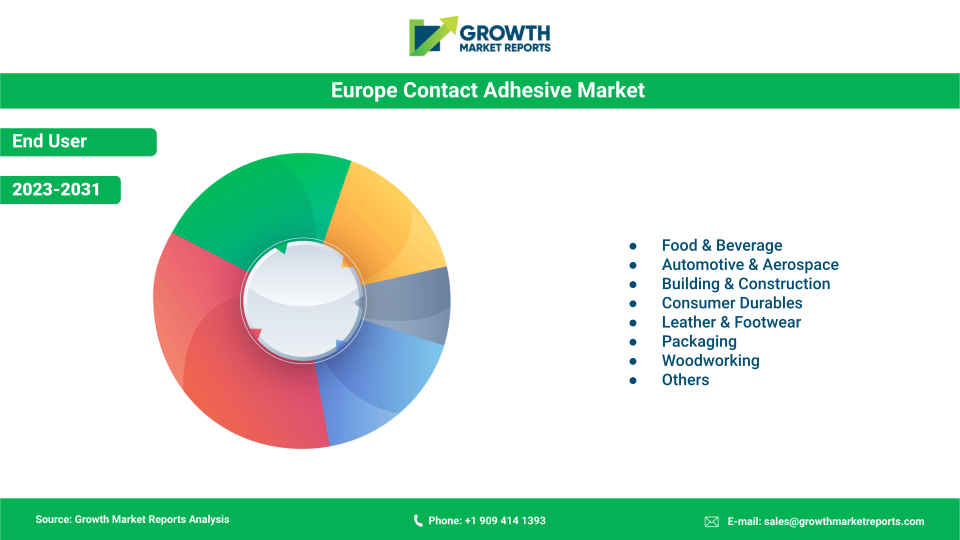
The contact adhesive market serves a wide range of end-users, including industrial, commercial, residential, and other sectors. Industrial end-users represent the largest segment, driven by the extensive use of adhesives in manufacturing, assembly, and maintenance operations. Industries such as automotive, electronics, and furniture manufacturing rely on contact adhesives for their ability to deliver strong, durable bonds with minimal curing times. The need for process efficiency, cost reduction, and product reliability is prompting industrial users to invest in advanced adhesive technologies that enhance operational performance and support large-scale production.
Commercial end-users, encompassing businesses in retail, hospitality, and offices, are increasingly adopting contact adhesives for interior fit-outs, furniture installation, and maintenance activities. The trend towards open-plan workspaces, collaborative environments, and customized interiors is boosting demand for adhesives that offer flexibility and ease of use. Commercial projects often require quick turnaround times and minimal disruption, making contact adhesives an ideal solution for fast, efficient installations. The growing focus on workplace aesthetics and functionality is also influencing adhesive selection, with businesses seeking products that deliver both performance and design versatility.
The residential sector is experiencing a surge in contact adhesive usage, fueled by rising home improvement and renovation activities. Homeowners are increasingly undertaking DIY projects and seeking adhesive solutions for flooring, paneling, cabinetry, and decorative applications. The availability of user-friendly, low-odor, and environmentally safe adhesives is encouraging adoption in residential settings. Additionally, the trend towards smart homes and sustainable living is driving demand for adhesives that are compatible with modern building materials and meet stringent environmental standards. The residential segment is expected to witness continued growth as consumers prioritize convenience, safety, and sustainability in their home improvement choices.
Other end-users, including the packaging, footwear, and specialty manufacturing sectors, are leveraging contact adhesives for their unique bonding requirements. These industries demand adhesives that can withstand varying environmental conditions, provide long-lasting performance, and support innovative product designs. As the market evolves, end-users are increasingly seeking customized adhesive solutions that address specific operational challenges and regulatory requirements. Manufacturers are responding by offering tailored products and technical support, strengthening their value proposition and fostering long-term partnerships with key customers.
The distribution channel landscape for the contact adhesive market is segmented into direct sales, retail stores, online stores, and other channels, each playing a pivotal role in reaching diverse customer bases. Direct sales channels are particularly prominent among industrial and commercial users who require large volumes and customized solutions. Manufacturers often establish long-term relationships with key clients, providing technical support, product training, and after-sales services to ensure optimal adhesive performance. The direct sales model enables better control over pricing, product quality, and customer engagement, contributing to higher customer satisfaction and brand loyalty.
Retail stores, including hardware outlets and specialty adhesive shops, cater primarily to the residential and small business segments. These outlets offer a wide range of adhesive products, enabling customers to compare brands, formulations, and packaging options. The convenience of in-person shopping, coupled with the availability of expert advice, makes retail stores a preferred choice for DIY enthusiasts and small contractors. Retailers often collaborate with manufacturers to promote new products, conduct demonstrations, and offer promotional discounts, driving product visibility and market penetration.
Online stores are rapidly gaining traction as digitalization transforms purchasing behaviors across industries. E-commerce platforms offer a convenient and efficient way for customers to access a broad array of adhesive products, compare prices, and read user reviews. The rise of online marketplaces has democratized access to specialty adhesives, enabling small businesses and individual consumers to source products that were previously limited to industrial channels. Manufacturers are increasingly investing in digital marketing, user-friendly websites, and online support services to enhance the online shopping experience and capture a larger share of this growing channel.
Other distribution channels, such as wholesale distributors and third-party logistics providers, play a crucial role in ensuring timely product availability and efficient supply chain management. These intermediaries bridge the gap between manufacturers and end-users, particularly in regions with fragmented markets or limited infrastructure. The integration of advanced logistics technologies and inventory management systems is enabling distributors to offer faster delivery, real-time tracking, and value-added services, further strengthening their position in the contact adhesive supply chain. As the market continues to evolve, a multi-channel distribution strategy is becoming essential for manufacturers seeking to maximize reach and responsiveness.
The contact adhesive market presents significant opportunities for growth, driven by the increasing adoption of sustainable and eco-friendly adhesive solutions. With regulatory bodies worldwide imposing stricter limits on VOC emissions and hazardous substances, manufacturers are investing in the development of water-based, low-VOC, and bio-based adhesives. These innovative products not only help companies comply with regulatory requirements but also appeal to environmentally conscious consumers and businesses. The trend towards green building certifications and sustainable manufacturing practices is creating new market segments and driving demand for advanced adhesive technologies. Companies that prioritize sustainability, invest in R&D, and align their product portfolios with evolving environmental standards are well-positioned to capitalize on these emerging opportunities.
Technological advancements and the integration of digital solutions are opening up additional growth avenues for the contact adhesive market. The adoption of smart manufacturing, automation, and advanced material science is enabling manufacturers to develop adhesives with enhanced performance characteristics, such as improved heat resistance, faster curing times, and compatibility with a broader range of substrates. The rise of Industry 4.0 and the Internet of Things (IoT) is also facilitating real-time monitoring and quality control in adhesive application processes, reducing waste and improving efficiency. Furthermore, the expansion of e-commerce and digital marketing is enabling companies to reach new customer segments, streamline distribution, and offer personalized solutions, driving market expansion and competitive differentiation.
Despite the positive outlook, the contact adhesive market faces several restraining factors, most notably the volatility in raw material prices and supply chain disruptions. The production of adhesives relies heavily on petrochemical derivatives and specialty chemicals, which are subject to fluctuations in global oil prices and geopolitical tensions. Supply chain disruptions, such as transportation delays, trade restrictions, and shortages of key inputs, can impact production schedules, increase costs, and reduce profit margins. Additionally, the growing competition from alternative bonding technologies, such as mechanical fasteners and advanced tapes, poses a threat to market growth. Manufacturers must proactively manage supply chain risks, invest in alternative raw material sources, and continuously innovate to maintain their competitive edge in a dynamic market environment.
The Asia Pacific region dominates the global contact adhesive market, accounting for an estimated 47% share of the total market value in 2024, equivalent to approximately USD 2.55 billion. This dominance is attributed to rapid industrialization, urbanization, and the expansion of manufacturing sectors in countries such as China, India, and Southeast Asian nations. The region’s construction boom, coupled with growing automotive and furniture manufacturing, is driving robust demand for contact adhesives. Government initiatives to promote affordable housing, infrastructure development, and smart cities are further bolstering market growth. The Asia Pacific market is expected to maintain a strong growth trajectory, supported by a projected CAGR of 6.2% through 2033.
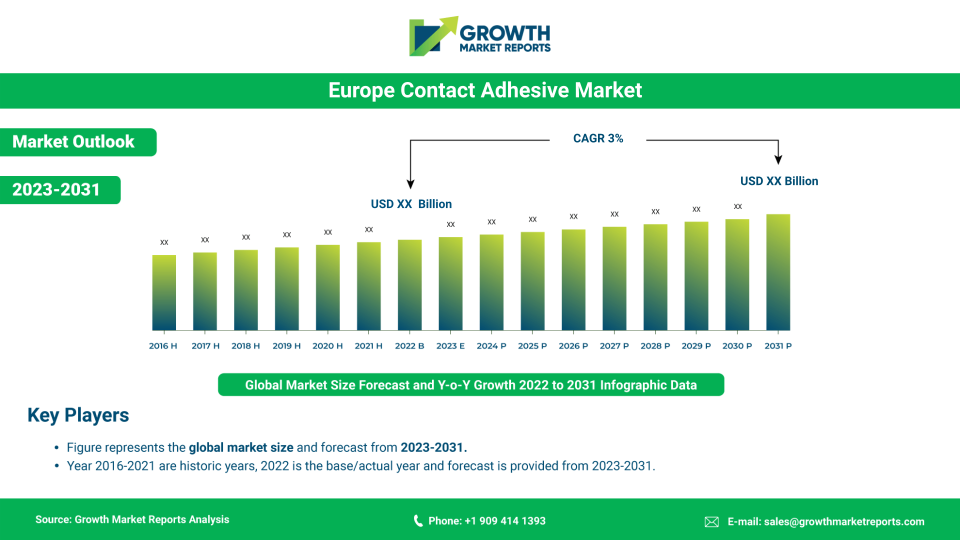
North America and Europe collectively represent a significant portion of the global contact adhesive market, with North America accounting for around 22% and Europe for 18% of the market value in 2024. In North America, the market is driven by technological innovation, a strong automotive sector, and increasing renovation activities in the residential and commercial segments. The region’s focus on sustainability and regulatory compliance is accelerating the adoption of low-VOC and water-based adhesives. Europe, meanwhile, is characterized by stringent environmental regulations, high standards for building materials, and a mature manufacturing base. The emphasis on green building certifications and energy efficiency is shaping adhesive preferences, with manufacturers investing in eco-friendly solutions to meet market demands.
Latin America and the Middle East & Africa (MEA) are emerging as promising markets for contact adhesives, albeit from a smaller base. Latin America, with a market share of approximately 8%, is witnessing growth driven by infrastructure development, urbanization, and the expansion of the automotive and footwear industries. The MEA region, accounting for around 5% of the global market, is benefiting from investments in construction, tourism, and industrialization. Both regions face challenges related to economic volatility, regulatory disparities, and supply chain constraints, but ongoing investments in infrastructure and manufacturing are expected to support steady market growth in the coming years.
The global contact adhesive market is highly competitive, with a diverse mix of multinational corporations and regional players vying for market share. Leading companies are focusing on product innovation, sustainability, and strategic partnerships to differentiate themselves in a crowded marketplace. The competitive landscape is characterized by continuous investment in research and development, aimed at enhancing adhesive performance, reducing environmental impact, and expanding application possibilities. Companies are also leveraging digital technologies, advanced manufacturing processes, and customer-centric solutions to strengthen their market positions and respond to evolving end-user needs.
Mergers and acquisitions are a common strategy among major players seeking to expand their product portfolios, enter new geographic markets, and achieve operational efficiencies. Strategic collaborations with raw material suppliers, distributors, and end-users are enabling companies to optimize supply chains, reduce costs, and accelerate innovation. The competitive intensity is further heightened by the entry of niche players specializing in eco-friendly and high-performance adhesives, challenging established brands and fostering a culture of continuous improvement. As regulatory standards evolve and customer preferences shift towards sustainability, companies that can adapt quickly and offer differentiated solutions are likely to capture greater market share.
Brand reputation, product quality, and customer service are critical differentiators in the contact adhesive market. Leading companies invest heavily in marketing, technical support, and training programs to build strong relationships with distributors, contractors, and end-users. The ability to provide customized solutions, technical expertise, and after-sales support is increasingly important in retaining customer loyalty and driving repeat business. As the market becomes more globalized, companies are also focusing on localization strategies, adapting products and services to meet the unique needs of regional markets and regulatory environments.
Several major companies dominate the contact adhesive market, including Henkel AG & Co. KGaA, 3M Company, H.B. Fuller Company, Sika AG, and Pidilite Industries Limited. Henkel is renowned for its broad portfolio of adhesive technologies and strong presence in industrial and consumer markets worldwide. 3M is a global leader in innovation, offering advanced adhesive solutions for automotive, construction, and electronics applications. H.B. Fuller focuses on sustainable and high-performance adhesives, serving diverse end-use industries with a commitment to environmental responsibility. Sika AG is recognized for its expertise in construction and industrial adhesives, while Pidilite is a dominant player in the Asia Pacific region, known for its popular consumer brands and focus on emerging markets. These companies, along with a host of regional players and specialty manufacturers, are shaping the future of the contact adhesive market through innovation, sustainability, and customer-centric strategies.
The Contact Adhesive market has been segmented on the basis of
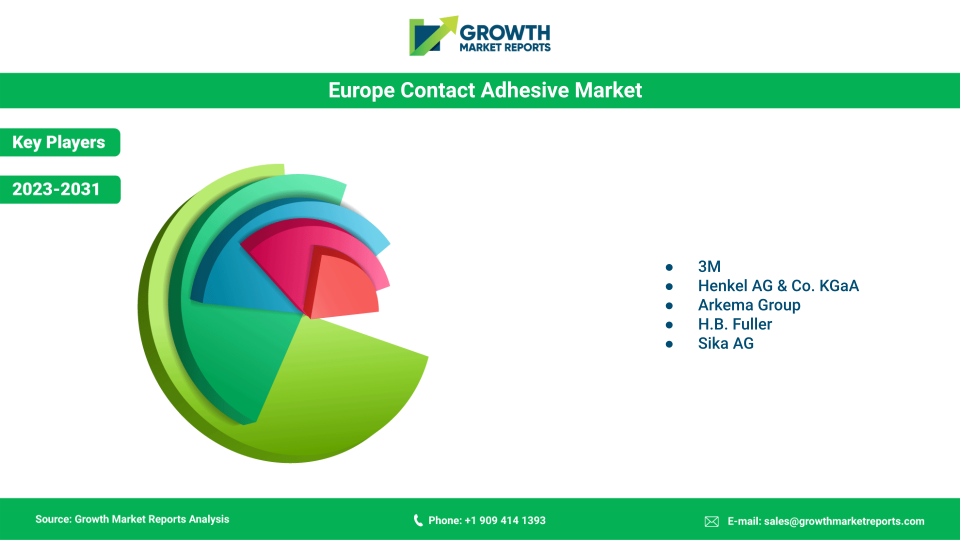
Key players competing in the Europe contact adhesive market include 3M, Henkel AG & Co. KGaA, Arkema Group, H.B. Fuller, and Sika AG.
Challenges include raw material price volatility, supply chain disruptions, regulatory compliance, and competition from alternative bonding technologies like tapes and mechanical fasteners.
Contact adhesives are distributed through direct sales, retail stores, online stores, and other channels such as wholesale distributors and third-party logistics providers.
Major companies include Henkel AG & Co. KGaA, 3M Company, H.B. Fuller Company, Sika AG, Pidilite Industries Limited, Bostik SA, Dow Inc., Avery Dennison Corporation, and others.
Key drivers include rapid urbanization, infrastructure development, increased demand from automotive and woodworking industries, and innovations in eco-friendly adhesive technologies.
The Asia Pacific region dominates the market, accounting for about 47% of the global market value in 2024, led by China and India.
Sustainability trends are driving the development and adoption of low-VOC, water-based, and bio-based adhesives, especially in regions with strict environmental regulations like North America and Europe.
The market is segmented into solvent-based, water-based, and other formulations such as reactive and hot-melt contact adhesives.
Major end-users include the construction, automotive, woodworking, footwear and leather, packaging, industrial, commercial, and residential sectors.
The contact adhesive market is expected to grow at a CAGR of 5.7% from 2025 to 2033, reaching approximately USD 8.72 billion by 2033.
As of 2024, the global contact adhesive market size reached USD 5.43 billion, driven by strong demand in construction, automotive, and woodworking sectors.