Segments - by Product Type (PTZ Cameras, Fixed Cameras, Integrated Cameras, Others), by Resolution (HD, Full HD, 4K, Others), by Connectivity (Wired, Wireless), by Application (Corporate, Education, Government, Healthcare, Others), by Distribution Channel (Online, Offline), by End-User (Small and Medium Enterprises, Large Enterprises)
According to our latest research, the global conference camera market size reached USD 2.9 billion in 2024, with a robust year-on-year expansion propelled by the increasing adoption of hybrid and remote work models. The market is projected to grow at a CAGR of 10.4% during the forecast period, achieving a value of USD 7.1 billion by 2033. This remarkable growth is primarily driven by rising demand for high-quality video conferencing solutions across diverse sectors, as organizations worldwide prioritize seamless and effective communication in both in-person and virtual environments.
A key growth factor for the conference camera market is the accelerated digital transformation witnessed across corporate and educational sectors. The proliferation of remote work and distance learning, particularly following the COVID-19 pandemic, has fundamentally reshaped communication norms. Enterprises and institutions are increasingly investing in advanced conference camera systems to ensure uninterrupted collaboration and engagement among geographically dispersed teams and students. This trend is further supported by the integration of artificial intelligence and machine learning technologies into camera systems, offering features such as auto-framing, noise reduction, and facial recognition, which enhance user experience and meeting productivity.
Another significant driver is the rapid advancement in camera resolution and connectivity options. The shift from traditional HD and Full HD cameras to 4K conference cameras is gaining momentum, as organizations seek superior image clarity and immersive video experiences. Additionally, the emergence of wireless connectivity solutions has revolutionized the deployment and scalability of conference camera systems, enabling flexible installations and reducing infrastructure costs. The growing prevalence of unified communication platforms, such as Zoom, Microsoft Teams, and Google Meet, is also fueling demand for compatible and high-performance camera solutions, further expanding the market's scope.
The healthcare and government sectors are also contributing substantially to the growth of the conference camera market. Telemedicine, virtual patient consultations, and online training programs require reliable and secure video communication tools, prompting healthcare providers to upgrade their camera infrastructure. Similarly, government agencies are leveraging conference cameras for remote meetings, public service delivery, and virtual collaborations, ensuring continuity of operations in a rapidly evolving digital landscape. The increasing emphasis on data security and privacy, coupled with regulatory compliance requirements, is driving the adoption of advanced and secure conference camera systems in these sectors.
Regionally, North America continues to dominate the conference camera market, owing to the early adoption of cutting-edge communication technologies and the presence of major industry players. However, Asia Pacific is emerging as the fastest-growing region, propelled by the rapid digitalization of businesses, expanding IT infrastructure, and the proliferation of start-ups. Europe also demonstrates significant growth potential, supported by strong investments in education technology and hybrid workplace solutions. The Middle East & Africa and Latin America are witnessing steady growth, driven by increasing awareness of the benefits of video conferencing and rising government initiatives to enhance digital connectivity.
The product type segment of the conference camera market comprises PTZ (pan-tilt-zoom) cameras, fixed cameras, integrated cameras, and other specialized variants. PTZ cameras remain a preferred choice for large conference rooms and auditoriums due to their dynamic range of motion and ability to capture multiple angles seamlessly. These cameras are particularly valued in environments where a single device must cover a broad area or follow speakers as they move, making them ideal for boardrooms, lecture halls, and hybrid events. The integration of AI-powered tracking and auto-framing features has further elevated the appeal of PTZ cameras, enabling them to deliver professional-grade video output with minimal manual intervention.
Fixed cameras, on the other hand, cater to smaller meeting spaces and huddle rooms where a static field of view is sufficient. Their simplicity, cost-effectiveness, and ease of installation make them popular among small and medium enterprises (SMEs) and educational institutions. While they may lack the flexibility of PTZ models, modern fixed cameras are equipped with high-resolution sensors and advanced microphones, ensuring clear visuals and audio for collaborative sessions. The ongoing miniaturization of camera components and reduction in power consumption have also contributed to the widespread adoption of fixed cameras in compact office settings.
Integrated cameras represent another important sub-segment, often found in all-in-one video conferencing solutions. These devices combine cameras, microphones, and speakers into a single unit, streamlining the setup process and reducing compatibility issues. Integrated cameras are particularly suited for organizations seeking plug-and-play solutions that can be rapidly deployed across multiple locations. Their compact design and user-friendly interfaces have made them a staple in modern conference rooms, especially as businesses prioritize simplicity and operational efficiency in their IT investments.
Other specialized conference cameras, such as 360-degree cameras and those designed for immersive telepresence, are gaining traction in niche applications. These cameras offer panoramic views and enhanced spatial audio, catering to organizations that require a more engaging and interactive meeting experience. Innovations in lens technology, sensor sensitivity, and image processing are continuously expanding the capabilities of these specialized cameras, positioning them as valuable tools for high-impact presentations, virtual events, and collaborative workshops.
| Attributes | Details |
| Report Title | Conference Camera Market Research Report 2033 |
| By Product Type | PTZ Cameras, Fixed Cameras, Integrated Cameras, Others |
| By Resolution | HD, Full HD, 4K, Others |
| By Connectivity | Wired, Wireless |
| By Application | Corporate, Education, Government, Healthcare, Others |
| By Distribution Channel | Online, Offline |
| By End-User | Small and Medium Enterprises, Large Enterprises |
| Regions Covered | North America, Europe, APAC, Latin America, MEA |
| Base Year | 2024 |
| Historic Data | 2018-2023 |
| Forecast Period | 2025-2033 |
| Number of Pages | 253 |
| Number of Tables & Figures | 259 |
| Customization Available | Yes, the report can be customized as per your need. |
The resolution segment of the conference camera market encompasses HD, Full HD, 4K, and other emerging formats. HD cameras have long been the industry standard, offering a balance between affordability and satisfactory image quality. However, as user expectations evolve and the importance of crystal-clear video increases, there is a marked shift towards Full HD and 4K cameras. Full HD cameras provide enhanced detail and color accuracy, making them suitable for most professional environments where visual clarity is paramount. The widespread availability of high-speed internet and improved compression algorithms has also facilitated the adoption of higher-resolution cameras without compromising on streaming performance.
The transition to 4K conference cameras is one of the most significant trends shaping the market. 4K cameras deliver ultra-high-definition video, offering four times the resolution of Full HD. This leap in image quality is particularly beneficial for large conference rooms, auditoriums, and hybrid events, where participants require lifelike visuals and the ability to discern fine details. The falling cost of 4K camera components and the growing ecosystem of 4K-compatible displays and conferencing platforms are accelerating this transition, making advanced video technology accessible to a wider range of organizations.
While HD and Full HD cameras continue to dominate in cost-sensitive markets and small-scale applications, there is a growing demand for cameras that support adaptive resolution. These devices can automatically adjust their output based on network bandwidth and device capabilities, ensuring a smooth and uninterrupted video experience. Such flexibility is especially important in regions with varying levels of internet infrastructure, enabling organizations to maintain high-quality communication regardless of technical constraints.
Other emerging resolution formats, such as 8K and HDR-enabled cameras, are beginning to make inroads into the market, albeit at a slower pace. These ultra-premium solutions are primarily targeted at high-end corporate environments, broadcast studios, and specialized applications where visual fidelity is non-negotiable. As the technology matures and costs decrease, it is expected that higher-resolution cameras will become increasingly mainstream, further enhancing the overall quality and effectiveness of video conferencing solutions.
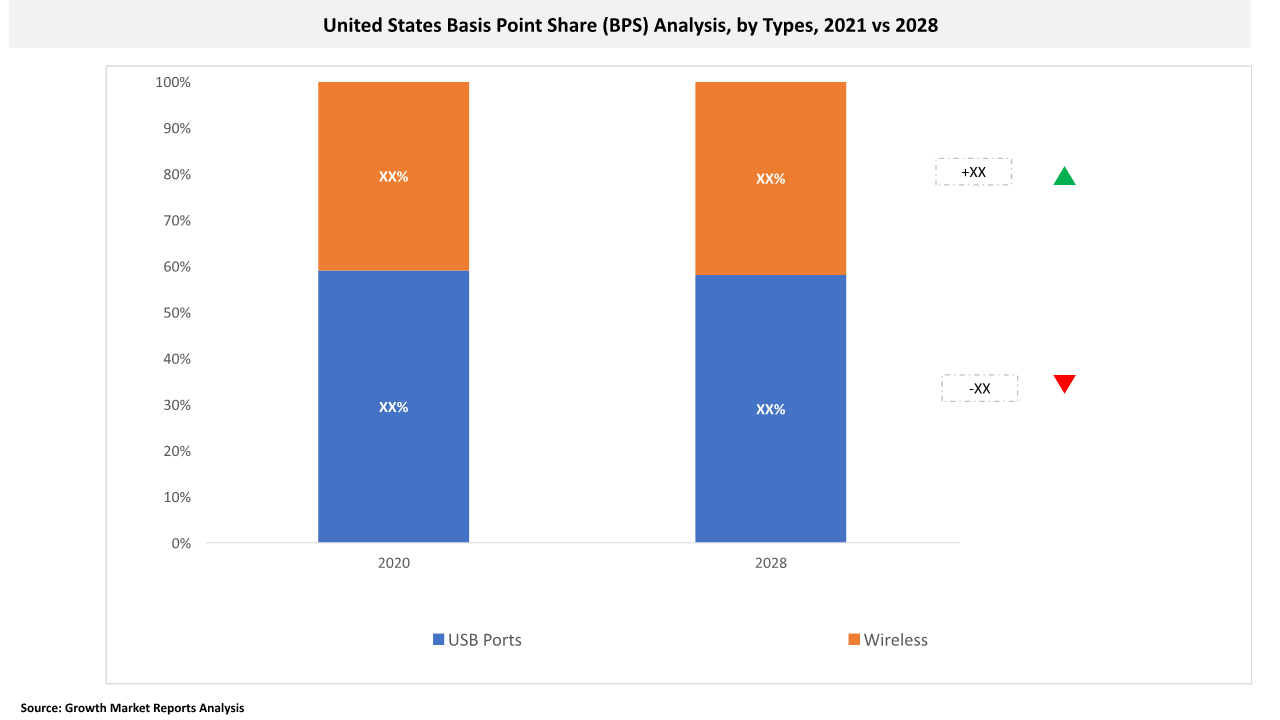
Connectivity is a critical segment in the conference camera market, with options broadly categorized into wired and wireless solutions. Wired cameras, typically connected via USB, HDMI, or Ethernet, have traditionally dominated the market due to their reliability, stable data transmission, and ease of integration with existing AV infrastructure. These cameras are often preferred in corporate boardrooms, educational institutions, and government facilities where uninterrupted connectivity and security are paramount. The proliferation of plug-and-play USB cameras has also contributed to the widespread adoption of wired solutions among small and medium enterprises seeking hassle-free installations.
However, the demand for wireless conference cameras is rising rapidly, driven by the need for flexibility, mobility, and ease of deployment. Wireless cameras eliminate the constraints of physical cabling, enabling organizations to reconfigure meeting spaces and scale their video conferencing capabilities with minimal effort. Advances in Wi-Fi, Bluetooth, and proprietary wireless protocols have significantly improved the performance and reliability of wireless cameras, making them viable alternatives to traditional wired systems. These cameras are particularly advantageous in collaborative workspaces, co-working hubs, and multipurpose venues where adaptability is crucial.
The integration of wireless cameras with cloud-based conferencing platforms and unified communication solutions is further enhancing their appeal. Organizations can now manage, monitor, and update their camera systems remotely, reducing the burden on IT teams and ensuring seamless operation across multiple locations. Additionally, the emergence of battery-powered and solar-powered wireless cameras is expanding the market's reach into outdoor and temporary installations, such as event venues and remote offices.
Despite the growing popularity of wireless solutions, concerns regarding data security, signal interference, and network congestion remain important considerations for end-users. Manufacturers are addressing these challenges by incorporating robust encryption protocols, advanced error correction, and adaptive frequency management into their wireless camera offerings. As these technologies continue to evolve, it is anticipated that wireless conference cameras will achieve parity with their wired counterparts in terms of performance, reliability, and security, further driving market growth.
The application segment of the conference camera market is highly diverse, encompassing corporate, education, government, healthcare, and other sectors. The corporate segment remains the largest and most dynamic, accounting for a significant share of global demand. As businesses embrace hybrid work models and global collaboration, the need for high-quality video conferencing solutions has become a strategic priority. Conference cameras are now integral to daily operations, enabling virtual meetings, client presentations, and cross-functional teamwork. The integration of cameras with enterprise resource planning (ERP) and customer relationship management (CRM) platforms is further enhancing their value proposition, streamlining communication and decision-making processes.
The education sector is experiencing a profound transformation, with conference cameras playing a pivotal role in enabling remote and blended learning environments. Educational institutions are leveraging these cameras to deliver live lectures, facilitate interactive discussions, and conduct virtual assessments. The growing adoption of e-learning platforms and digital classrooms is driving demand for cameras that offer high-resolution video, wide-angle lenses, and advanced audio capabilities. Additionally, specialized cameras designed for lecture capture and distance education are gaining traction, supporting educators in creating engaging and accessible learning experiences for students worldwide.
Government agencies are increasingly relying on conference cameras to support remote governance, public service delivery, and crisis management. The ability to conduct secure and reliable virtual meetings is critical for maintaining operational continuity and ensuring timely decision-making. Conference cameras equipped with advanced encryption, facial recognition, and access control features are in high demand within this segment, addressing the unique security and compliance requirements of government organizations. The adoption of video conferencing technology is also facilitating inter-agency collaboration and public engagement, enhancing transparency and accountability in governance.
The healthcare sector represents another significant application area, with conference cameras enabling telemedicine, virtual consultations, and remote training. Hospitals, clinics, and healthcare providers are investing in high-definition camera systems to ensure clear and accurate visual communication between patients and practitioners. The integration of cameras with electronic health records (EHR) and telehealth platforms is streamlining clinical workflows and improving patient outcomes. As telemedicine becomes increasingly mainstream, the demand for specialized medical-grade conference cameras with features such as low-light performance, high color accuracy, and secure data transmission is expected to rise.
The distribution channel segment of the conference camera market is bifurcated into online and offline channels, each playing a distinct role in shaping market dynamics. Online channels, including e-commerce platforms and direct-to-consumer websites, have witnessed exponential growth in recent years. The convenience of online shopping, coupled with the ability to compare products, read reviews, and access detailed specifications, has made this channel increasingly popular among both individual consumers and enterprise buyers. The COVID-19 pandemic further accelerated this trend, as restrictions on physical retail prompted organizations to shift their procurement processes online.
Manufacturers and distributors are leveraging online channels to reach a global audience, reduce overhead costs, and offer personalized promotions. The integration of advanced analytics, artificial intelligence, and customer relationship management tools is enabling online retailers to deliver targeted marketing campaigns and enhance the overall shopping experience. Additionally, the availability of flexible payment options, rapid delivery services, and comprehensive after-sales support is driving customer loyalty and repeat purchases in the online segment.
Offline channels, comprising brick-and-mortar stores, specialty electronics retailers, and value-added resellers, continue to play a vital role, particularly in regions with limited internet penetration or strong preferences for in-person interactions. Offline channels offer the advantage of hands-on product demonstrations, personalized consultations, and immediate access to technical support. This is especially important for enterprise clients and government agencies, who often require customized solutions and on-site installation services.
The synergy between online and offline channels is giving rise to omnichannel distribution strategies, enabling manufacturers to provide a seamless and integrated customer experience. By combining the strengths of both channels, companies can cater to diverse customer preferences, maximize market reach, and optimize inventory management. As the conference camera market continues to evolve, the ability to deliver consistent and high-quality service across all touchpoints will be a key differentiator for leading brands.
The end-user segment of the conference camera market is segmented into small and medium enterprises (SMEs) and large enterprises, each exhibiting distinct purchasing behaviors and technological requirements. SMEs represent a rapidly growing segment, driven by the democratization of video conferencing technology and the availability of affordable camera solutions. These organizations are increasingly recognizing the value of video communication in enhancing productivity, fostering collaboration, and engaging with clients and partners. The shift towards cloud-based conferencing platforms and plug-and-play camera systems is enabling SMEs to deploy high-quality video solutions without significant capital investment or IT expertise.
Large enterprises, on the other hand, have more complex requirements, often involving the integration of conference cameras with existing AV infrastructure, unified communication platforms, and enterprise security protocols. These organizations prioritize scalability, reliability, and advanced feature sets, such as AI-powered analytics, multi-camera support, and seamless interoperability with other collaboration tools. The adoption of hybrid work models and global expansion strategies is further driving demand for enterprise-grade camera systems that can support large-scale deployments across multiple locations.
The increasing emphasis on employee experience and workplace flexibility is influencing purchasing decisions among both SMEs and large enterprises. Organizations are investing in conference cameras that offer intuitive user interfaces, remote management capabilities, and advanced audio-visual enhancements. The ability to deliver consistent and high-quality video experiences, regardless of physical location or device, is becoming a critical success factor in attracting and retaining top talent.
As the conference camera market continues to mature, end-users are placing greater emphasis on total cost of ownership, ease of integration, and long-term support. Manufacturers are responding by offering flexible pricing models, extended warranties, and comprehensive service packages, ensuring that customers receive maximum value from their investments. The ongoing convergence of video conferencing technology with broader digital transformation initiatives is expected to further expand the market's reach and impact in the coming years.
The conference camera market presents a wealth of opportunities for innovation, growth, and value creation. The ongoing evolution of artificial intelligence, machine learning, and computer vision technologies is unlocking new possibilities for camera systems, enabling features such as real-time transcription, emotion detection, and automatic content sharing. These advancements are enhancing the user experience, improving meeting productivity, and driving adoption across diverse sectors. The rise of smart offices, digital classrooms, and telehealth services is creating new application areas for conference cameras, expanding the market's addressable scope and attracting investment from technology providers and venture capitalists.
Another significant opportunity lies in the integration of conference cameras with emerging collaboration platforms, such as augmented reality (AR) and virtual reality (VR). These technologies have the potential to transform remote communication, enabling immersive and interactive meeting experiences that transcend traditional video conferencing. The development of open standards and interoperability frameworks is facilitating seamless integration between camera systems and a wide range of software solutions, fostering innovation and reducing barriers to entry for new market entrants. Additionally, the growing focus on sustainability and energy efficiency is driving demand for eco-friendly camera solutions, creating opportunities for manufacturers to differentiate their offerings and capture environmentally conscious customers.
Despite the positive outlook, the conference camera market faces several restraining factors that could impact its growth trajectory. Chief among these is the issue of data security and privacy, as organizations become increasingly concerned about the potential risks associated with video communication. High-profile data breaches, unauthorized access, and regulatory compliance challenges are prompting end-users to scrutinize the security features of camera systems and demand robust encryption, access controls, and audit trails. Manufacturers must invest in ongoing research and development to address these concerns and maintain customer trust, as failure to do so could result in reputational damage and lost market share.
North America remains the dominant region in the conference camera market, accounting for approximately 38% of the global market size, or USD 1.1 billion in 2024. The region's leadership is underpinned by the early adoption of advanced communication technologies, a strong presence of multinational corporations, and a robust ecosystem of technology providers. The United States, in particular, is a major contributor, driven by the widespread implementation of hybrid work models, digital classrooms, and telehealth solutions. The region's mature IT infrastructure and high levels of digital literacy further support the rapid deployment and scaling of conference camera systems.
Asia Pacific is emerging as the fastest-growing region, with a projected CAGR of 13.2% during the forecast period. The market size in Asia Pacific reached USD 700 million in 2024, driven by rapid urbanization, expanding broadband connectivity, and the proliferation of start-ups and SMEs. Countries such as China, India, Japan, and South Korea are at the forefront of this growth, investing heavily in digital transformation initiatives and modernizing their communication infrastructure. The increasing adoption of e-learning, telemedicine, and remote work solutions is fueling demand for high-quality conference cameras, positioning Asia Pacific as a key growth engine for the global market.
Europe represents a significant and steadily growing market, with a value of USD 650 million in 2024, accounting for approximately 22% of the global market. The region's growth is supported by strong investments in education technology, hybrid workplace solutions, and government-led digital initiatives. Countries such as Germany, the United Kingdom, and France are leading the adoption of conference cameras, leveraging them to enhance productivity, collaboration, and public service delivery. The Middle East & Africa and Latin America collectively account for the remaining share, with market sizes of USD 300 million and USD 150 million respectively. These regions are witnessing steady growth as organizations recognize the value of video communication in driving operational efficiency and expanding market reach.
The conference camera market is characterized by intense competition, rapid technological innovation, and a diverse array of players ranging from established multinational corporations to agile start-ups. The competitive landscape is shaped by ongoing investments in research and development, strategic partnerships, and mergers and acquisitions aimed at expanding product portfolios and strengthening market presence. Leading companies are focusing on the integration of advanced features, such as AI-powered analytics, 4K resolution, and wireless connectivity, to differentiate their offerings and capture emerging opportunities in the market.
Price competitiveness, product reliability, and brand reputation are critical success factors in the conference camera market. Manufacturers are leveraging economies of scale, global distribution networks, and customer-centric service models to maintain a competitive edge. The ability to deliver end-to-end solutions, encompassing hardware, software, and support services, is becoming increasingly important as organizations seek integrated and hassle-free video conferencing experiences. Additionally, companies are investing in sustainability initiatives, such as eco-friendly packaging and energy-efficient designs, to appeal to environmentally conscious customers and comply with evolving regulatory requirements.
The market is witnessing a wave of innovation, with new entrants introducing disruptive technologies and business models. Start-ups and niche players are capitalizing on emerging trends, such as immersive telepresence, AR/VR integration, and cloud-based management platforms, to carve out unique value propositions and challenge established incumbents. Collaborations with software providers, system integrators, and telecommunications companies are enabling manufacturers to expand their reach and enhance the interoperability of their camera systems with a wide range of collaboration tools and platforms.
Major companies operating in the conference camera market include Logitech International S.A., Cisco Systems, Inc., Poly (formerly Plantronics and Polycom), Sony Corporation, Aver Information Inc., Huddly AS, Owl Labs Inc., and Panasonic Corporation. Logitech is renowned for its broad portfolio of USB and wireless conference cameras, catering to both SMEs and large enterprises. Cisco Systems leverages its expertise in networking and unified communications to offer integrated video conferencing solutions with advanced security features. Poly is recognized for its high-quality PTZ and integrated cameras, designed for professional and enterprise environments. Sony and Panasonic bring their imaging and AV expertise to the market, delivering premium cameras with superior optics and image processing capabilities. Aver, Huddly, and Owl Labs are notable for their innovative designs and AI-powered features, targeting niche segments such as education, huddle rooms, and immersive collaboration experiences.
These companies are continuously expanding their product offerings, investing in R&D, and forming strategic alliances to stay ahead in a rapidly evolving market. The competitive landscape is expected to remain dynamic, with ongoing technological advancements, shifting customer preferences, and the emergence of new use cases driving further innovation and market expansion.
The Conference Camera market has been segmented on the basis of
Manufacturers operating in the global conference camera market include Key players operating in the United States conference camera market include Logitech, AVer Information Inc., Lumens, AViPAS, Inc., MINRRAY, Huawei Technologies Co., Ltd., Marshall Electronics, Inc., Atlona Inc. a Panduit Company, LEGRAND AV INC., ZTE Corporation, Cisco, Plantronics, Inc., BirdDog - NDI. These companies are considered as key developers of conference camera market, based on their revenue, research & development (R&D) activities, presence, and supply chain management system.
These companies are considered as key developers of conference camera market, based on their revenue, research & development (R&D) activities, presence, and supply chain management system. These companies are considered as key developers of conference camera based on their revenue, research & development (R&D) activities, presence, and value chain management system. Market Players are pursuing key strategies such as acquisitions, collaborations, and geographic expansion where a potential opportunity arises for the conference camera market.
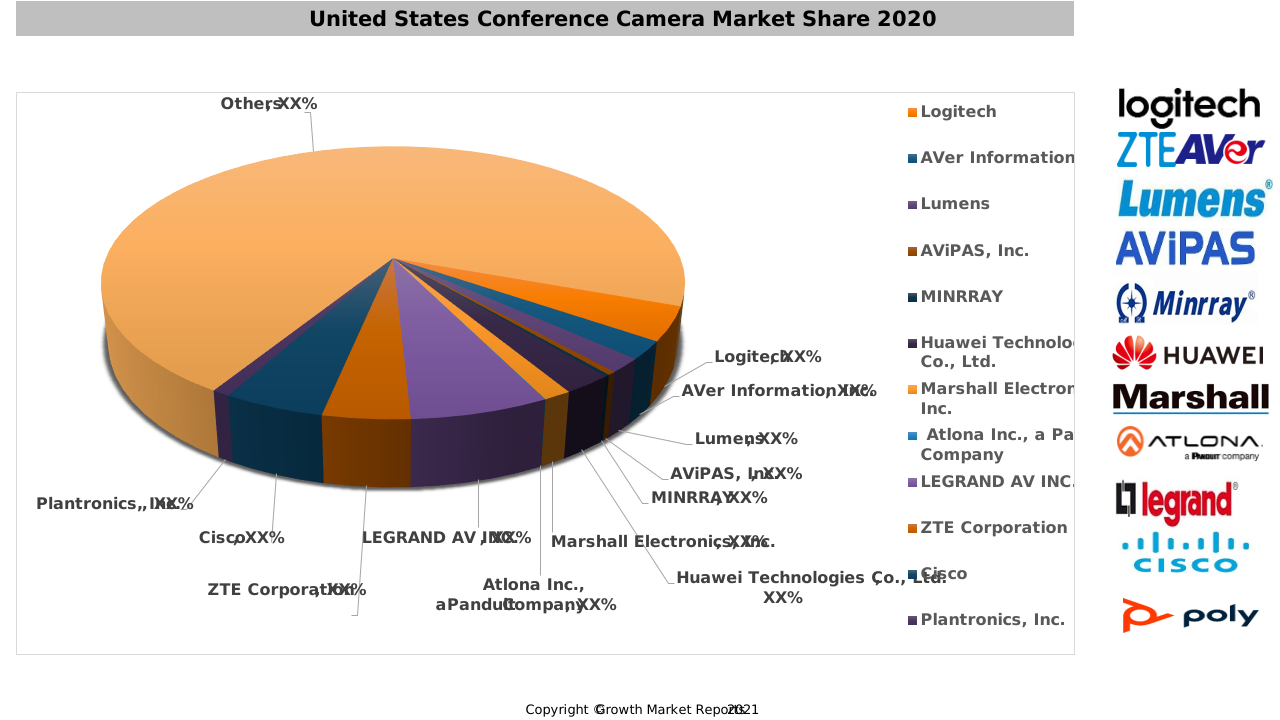
Major Manufacturers include, LEGRAND AV INC., ZTE Corporation, and Cisco Corporation, Logitech, Huawei Technologies Co., Ltd.
Factors such as R&D Industry, Demand, Product Development, Global Competition, Technological Advancement, and IT Industry Growth are analyzed in the final report.
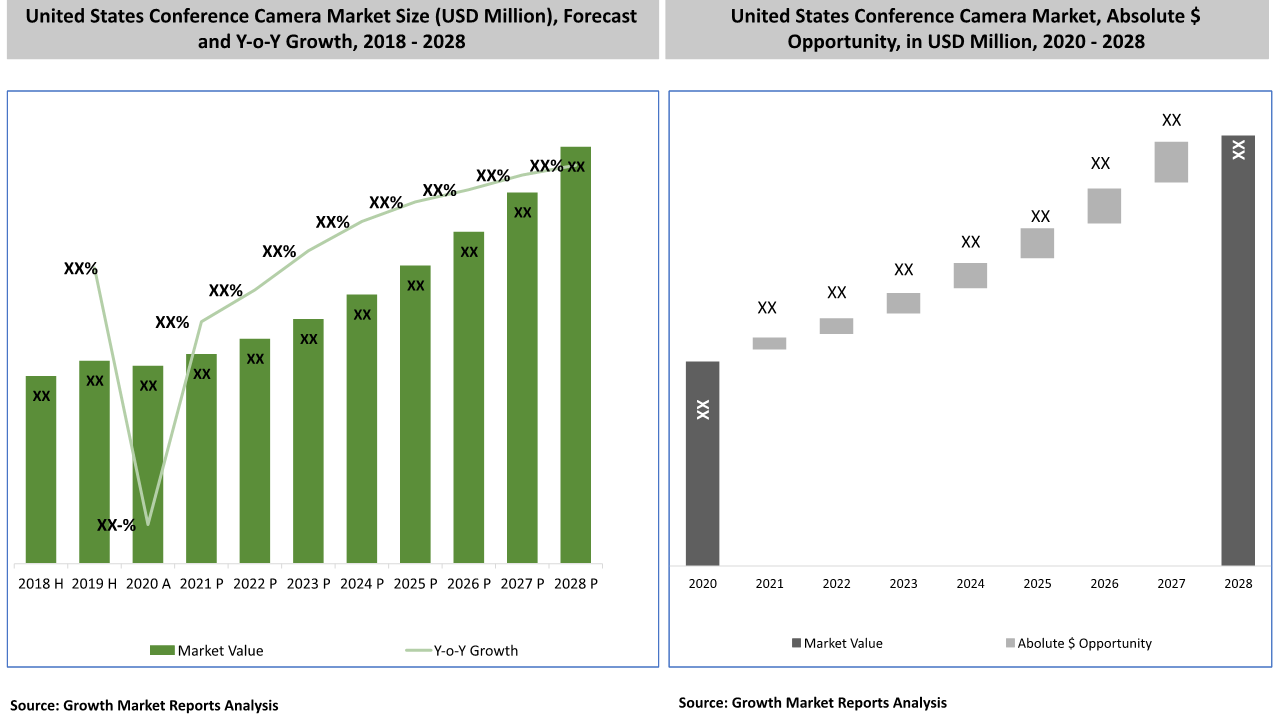
The base year considered for the global Conference camera market report is 2020. The complete analysis period is 2018 to 2028, wherein, 2018, and 2019 are the historic years, and the forecast is provided from 2021 to 2028.
Enterprise/corporate are the major end-users of conference camera.
The market is expected to experience negative impact in 2019 and 2020 owing to the COVID 19 pandemic impact on the Conference camera market.
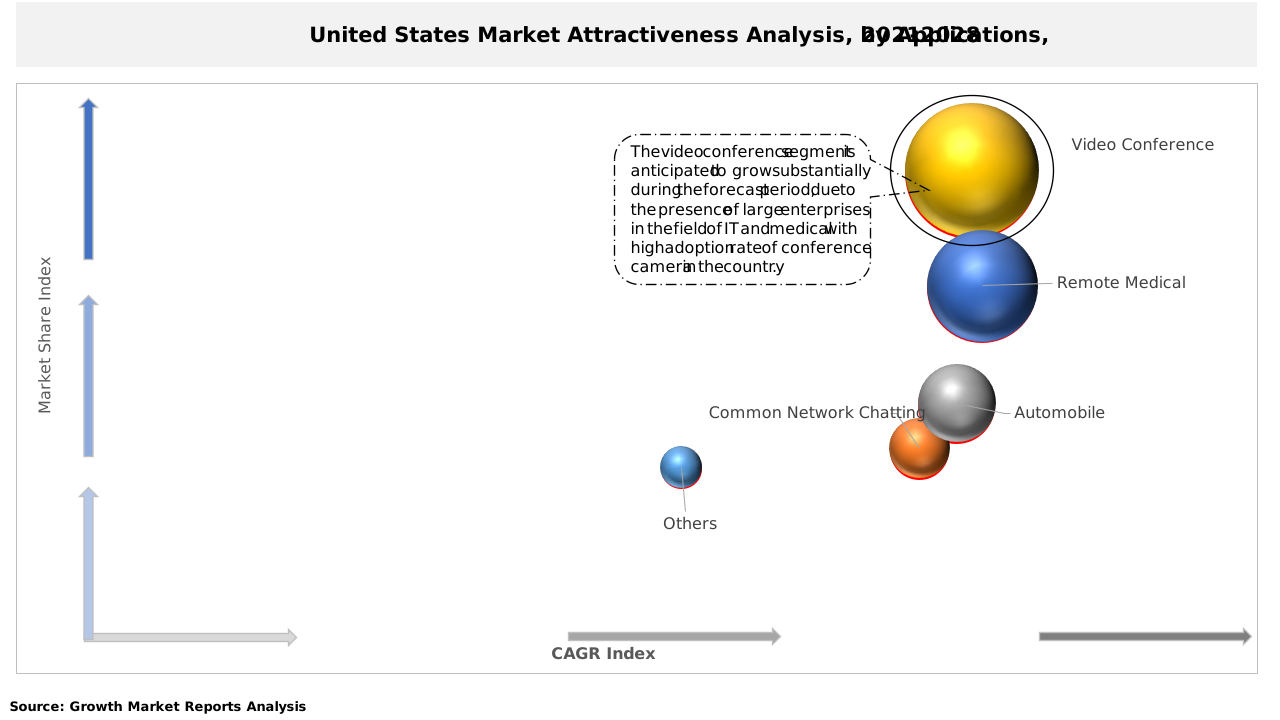
Growing demand for video banking solution processes and expansion of IT infrastructure in the healthcare sector for online consulting are the factors expected to drive the market growth during forecast period.
Factors such as competitive strength and market positioning are key areas considered while selecting top companies to be profiled.
In addition to market size (in US$ Million), Company Market Share (in % for base year 2020), company revenue analysis in end-use verticals and applications and technological landscape.
According to this Growth Market Reports report, the Conference camera market is likely to register a CAGR of 10.3% during forecast period 2020-2028, with an anticipated valuation of USD 663.3 million by the end of the 2028.
Additional company profiles can be provided on request