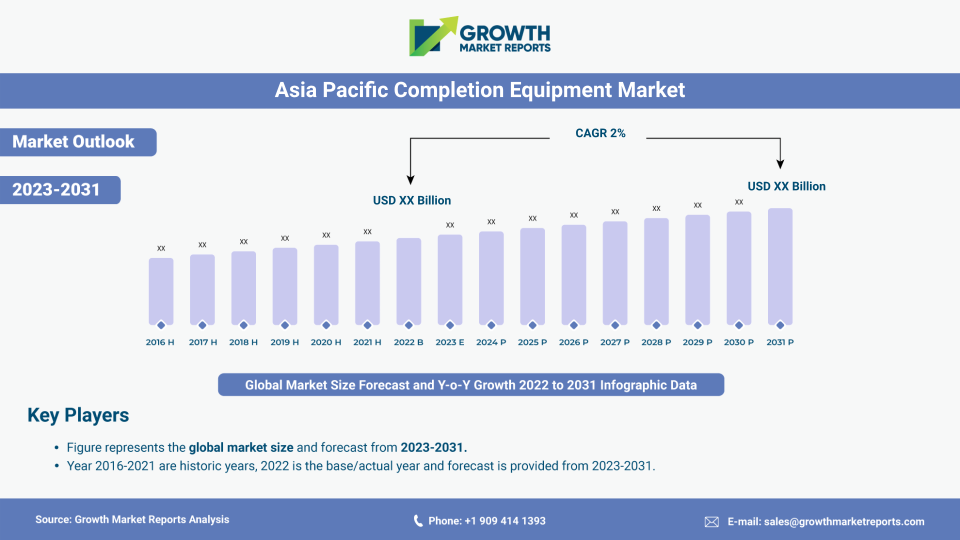
Completion Equipment Market Research Report 2033

Completion Equipment Market Research Report 2033

Segments - by Product Type (Packers, Sand Control Tools, Multistage Fracturing Tools, Liner Hangers, Valves, Others), by Application (Onshore, Offshore), by Well Type (Horizontal Wells, Vertical Wells), by Operation (Cased Hole, Open Hole)

https://growthmarketreports.com/Raksha
Author : Raksha Sharma
https://growthmarketreports.com/Vaibhav
Fact-checked by : V. Chandola
https://growthmarketreports.com/Shruti
Editor : Shruti Bhat

Upcoming | Report ID :EP-1834 | 4.2 Rating | 21 Reviews | 268 Pages | Format : Docx PDF

Report Description


Completion Equipment Market Outlook

As per our latest research, the global Completion Equipment market size reached USD 5.8 billion in 2024, driven by robust investments in oil and gas exploration and production activities worldwide. The market is projected to grow at a CAGR of 6.1% from 2025 to 2033, reaching a forecasted value of USD 9.7 billion by 2033. This growth is primarily fueled by the rising demand for energy, technological advancements in drilling and completion techniques, and the increasing complexity of well architectures, which collectively necessitate advanced completion equipment solutions.

The primary growth driver for the Completion Equipment market is the sustained expansion of oil and gas exploration and production activities, especially in unconventional reserves such as shale and tight oil formations. As global energy consumption continues to climb, oil and gas companies are compelled to maximize hydrocarbon recovery from both mature fields and new discoveries. This has led to a surge in demand for sophisticated completion equipment that enhances well productivity, optimizes reservoir management, and ensures operational efficiency. Furthermore, the shift towards horizontal and multistage fracturing wells, particularly in North America and the Middle East, has accelerated the adoption of innovative completion tools like packers, sand control systems, and multistage fracturing equipment.

Technological advancements play a pivotal role in shaping the Completion Equipment market. The industry is witnessing significant investments in research and development aimed at improving the reliability, durability, and automation of completion tools. Smart completion systems, which integrate real-time monitoring and control capabilities, are gaining traction as operators seek to enhance reservoir understanding and optimize production strategies. The development of advanced materials and digital technologies has also contributed to the creation of high-performance equipment capable of withstanding harsh downhole conditions, thereby reducing maintenance costs and downtime. This technological evolution is expected to further drive market growth by enabling operators to tackle increasingly complex well environments.

Another critical growth factor is the increasing focus on operational efficiency and cost optimization in the oil and gas sector. With fluctuating crude oil prices and heightened competition, operators are under pressure to deliver higher returns on investment while minimizing operational risks. Completion equipment manufacturers are responding by offering integrated solutions that streamline well completion processes, reduce non-productive time, and improve overall well integrity. The growing adoption of modular and standardized equipment designs also allows for faster deployment and easier maintenance, making them particularly attractive for both onshore and offshore applications. These trends collectively contribute to the sustained growth trajectory of the Completion Equipment market.

Oilfield Equipment plays a crucial role in the Completion Equipment market, providing the necessary tools and machinery for efficient drilling and extraction processes. As the demand for energy continues to rise, the need for advanced oilfield equipment becomes more pronounced. These tools are designed to withstand harsh environmental conditions and ensure the safety and efficiency of drilling operations. The integration of cutting-edge technologies in oilfield equipment, such as automation and real-time monitoring systems, is enhancing operational capabilities and reducing downtime. This technological evolution is pivotal in meeting the growing energy demands while maintaining cost-effectiveness and operational safety.

From a regional perspective, North America continues to dominate the Completion Equipment market due to its leadership in unconventional oil and gas production, particularly in the United States and Canada. The region benefits from a mature oilfield services ecosystem, significant investments in shale developments, and a favorable regulatory environment that encourages technological innovation. Meanwhile, the Middle East and Asia Pacific regions are witnessing rapid growth, driven by expanding exploration activities and infrastructure investments. Europe and Latin America also present promising opportunities, especially with ongoing efforts to enhance energy security and exploit new offshore reserves. Each region presents unique market dynamics, regulatory challenges, and growth opportunities, making regional analysis a crucial component of strategic planning in the completion equipment sector.

Global Completion Equipment Industry Outlook

Product Type Analysis

The Completion Equipment market is segmented by product type, which includes packers, sand control tools, multistage fracturing tools, liner hangers, valves, and others. Packers represent a significant share of the market due to their critical role in isolating different zones within a wellbore, thereby enabling selective production and efficient reservoir management. The increasing complexity of well architectures, especially in horizontal and multilateral wells, has driven the demand for advanced packer systems that offer enhanced sealing capabilities and reliability under high-pressure and high-temperature conditions. Leading manufacturers are investing in the development of intelligent packers that can be remotely operated and monitored, further enhancing operational flexibility and safety.

Bottom Hole Assembly Equipment is integral to the success of drilling operations, particularly in complex well architectures. This equipment is responsible for the precise control and direction of the drilling process, ensuring that the wellbore is accurately navigated to reach the desired reservoir. The development of advanced bottom hole assembly tools, including rotary steerable systems and measurement-while-drilling technologies, has significantly improved drilling efficiency and accuracy. As operators continue to explore deeper and more challenging reservoirs, the demand for sophisticated bottom hole assembly equipment is expected to grow, driving innovation and competition in this segment of the market.

Sand control tools are another vital segment within the Completion Equipment market, particularly in regions with unconsolidated formations prone to sand production. These tools, which include gravel packs, screens, and filters, are essential for preventing sand ingress into the wellbore, thereby protecting downhole equipment and maintaining production rates. The growing adoption of sand control solutions in mature fields and offshore environments has contributed to the steady growth of this segment. Technological advancements, such as expandable sand screens and autonomous inflow control devices, are further expanding the application scope of sand control tools, enabling operators to address challenging reservoir conditions more effectively.

Multistage fracturing tools have gained significant traction in the Completion Equipment market, especially with the proliferation of hydraulic fracturing in shale plays across North America and other regions. These tools enable the sequential stimulation of multiple zones within a single wellbore, maximizing reservoir contact and hydrocarbon recovery. The demand for reliable and efficient multistage fracturing systems has spurred innovation in tool design, materials, and deployment techniques. As operators increasingly target deeper and more complex reservoirs, the need for robust and adaptable multistage fracturing equipment is expected to remain strong, driving further growth in this segment.

Hydraulic Fracturing Fluid End Equipment is critical in the process of hydraulic fracturing, which is widely used to enhance oil and gas production from shale formations. This equipment is designed to withstand the high pressures and abrasive conditions associated with fracturing operations, ensuring the efficient delivery of fracturing fluids into the wellbore. The ongoing advancements in fluid end technology, such as improved materials and design innovations, are enhancing the durability and performance of these components. As hydraulic fracturing continues to be a key driver of production in unconventional resources, the demand for reliable and high-performance fluid end equipment is set to increase, supporting the overall growth of the Completion Equipment market.

Liner hangers and valves also play a crucial role in the Completion Equipment market. Liner hangers are essential for supporting casing strings and facilitating the installation of liners in challenging well conditions, particularly in extended-reach and deepwater wells. The development of high-capacity and hydraulically actuated liner hanger systems has improved operational efficiency and reliability, making them indispensable in modern well completions. Valves, on the other hand, are critical for controlling flow, managing pressure, and ensuring well integrity throughout the lifecycle of a well. The integration of smart valve technologies and real-time monitoring capabilities is transforming the functionality and value proposition of these components, further enhancing their market potential.

The "others" category includes a range of specialized completion tools such as swellable packers, inflow control devices, and subsurface safety valves. These products cater to niche applications and specific operational requirements, offering customized solutions for unique well challenges. The growing emphasis on well integrity, safety, and environmental protection is driving the adoption of these specialized tools, particularly in offshore and high-risk environments. As the complexity of well completions continues to increase, the demand for innovative and tailored completion equipment solutions is expected to rise, supporting the overall growth of the product type segment in the Completion Equipment market.

Report Scope

Attributes Details
Report Title Completion Equipment Market Research Report 2033
By Product Type Packers, Sand Control Tools, Multistage Fracturing Tools, Liner Hangers, Valves, Others
By Application Onshore, Offshore
By Well Type Horizontal Wells, Vertical Wells
By Operation Cased Hole, Open Hole
Regions Covered North America, Europe, APAC, Latin America, MEA
Base Year 2024
Historic Data 2018-2023
Forecast Period 2025-2033
Number of Pages 268
Number of Tables & Figures 343
Customization Available Yes, the report can be customized as per your need.

Application Analysis

The Completion Equipment market is broadly segmented by application into onshore and offshore operations, each presenting distinct challenges and opportunities. Onshore applications account for a substantial share of the market, driven by the extensive presence of conventional and unconventional oil and gas fields in regions such as North America, the Middle East, and Russia. The relative ease of access, lower operational costs, and the availability of infrastructure make onshore fields particularly attractive for exploration and production activities. Completion equipment used in onshore applications is typically designed for versatility, cost-effectiveness, and ease of deployment, catering to a wide range of well types and reservoir conditions.

Offshore applications, while representing a smaller share of the Completion Equipment market, are characterized by higher complexity, greater technical challenges, and substantial capital investments. Offshore wells, particularly those in deepwater and ultra-deepwater environments, require advanced completion equipment capable of withstanding extreme pressures, temperatures, and corrosive conditions. The adoption of subsea completion systems, intelligent well technologies, and remotely operated tools is increasing as operators seek to maximize recovery and minimize operational risks in offshore fields. The ongoing development of new offshore reserves, particularly in regions such as the North Sea, West Africa, and Southeast Asia, is expected to drive significant growth in the offshore segment over the forecast period.

The distinction between onshore and offshore applications also influences the selection and deployment of completion equipment. Onshore wells often prioritize cost optimization and rapid deployment, with a focus on modular and standardized equipment designs. In contrast, offshore wells demand highly customized and robust solutions that can be integrated with complex subsea infrastructure and controlled remotely from surface facilities. This divergence in operational requirements has led to the development of specialized product lines and service offerings tailored to the unique needs of each application segment, further fueling innovation and competition within the Completion Equipment market.

Moreover, the increasing adoption of digital technologies and data analytics is transforming both onshore and offshore completion operations. Real-time monitoring, predictive maintenance, and automated control systems are enabling operators to optimize equipment performance, reduce downtime, and enhance safety across a variety of operating environments. The integration of digital solutions is particularly valuable in offshore applications, where accessibility is limited and operational risks are higher. As digital transformation continues to reshape the oil and gas industry, the demand for smart and connected completion equipment is expected to grow, driving further differentiation and value creation in the market.

The interplay between onshore and offshore applications also has significant implications for market dynamics, competitive strategies, and regulatory compliance. While onshore markets are often characterized by intense price competition and rapid technology adoption, offshore markets tend to prioritize reliability, safety, and long-term performance. This duality creates opportunities for equipment manufacturers and service providers to diversify their product portfolios, expand their geographic reach, and tailor their offerings to the specific needs of different customer segments. As the global energy landscape continues to evolve, the balance between onshore and offshore applications will remain a key determinant of growth and innovation in the Completion Equipment market.

Well Type Analysis

The segmentation of the Completion Equipment market by well type includes horizontal wells and vertical wells, each representing distinct operational paradigms and equipment requirements. Horizontal wells have gained significant prominence over the past decade, particularly in the development of unconventional resources such as shale and tight oil formations. The ability to maximize reservoir contact and enhance hydrocarbon recovery has made horizontal drilling a preferred technique in many regions, especially North America. Completion equipment designed for horizontal wells must accommodate complex well trajectories, multiple pay zones, and advanced stimulation techniques, driving demand for innovative and adaptable tools.

Vertical wells, while representing a more traditional approach to oil and gas extraction, continue to play a vital role in the Completion Equipment market, particularly in conventional fields and regions with well-established production infrastructure. Vertical well completions typically require less complex equipment and are often associated with lower operational costs and faster deployment times. However, the increasing focus on maximizing production efficiency and extending the productive life of mature fields is driving the adoption of advanced completion technologies even in vertical well applications. This includes the use of intelligent packers, sand control devices, and real-time monitoring systems to optimize reservoir management and reduce maintenance requirements.

The shift towards horizontal drilling has had a profound impact on the design and functionality of completion equipment. Tools such as multistage fracturing systems, expandable liners, and zonal isolation devices have been specifically developed to address the unique challenges posed by horizontal wells. These innovations enable operators to perform targeted stimulations, manage fluid flow, and enhance well integrity across extended horizontal sections. As the complexity of horizontal wells continues to increase, the demand for high-performance and reliable completion equipment is expected to remain strong, supporting sustained growth in this segment of the Completion Equipment market.

Despite the growing prevalence of horizontal wells, vertical wells continue to offer significant opportunities for completion equipment providers. Many mature oil and gas fields around the world are characterized by vertical well architectures, presenting ongoing demand for equipment upgrades, workover operations, and enhanced recovery techniques. The integration of digital technologies and automation is also transforming vertical well completions, enabling operators to monitor well performance in real time, optimize production strategies, and extend asset life. This convergence of traditional and advanced technologies is creating new avenues for innovation and value creation in the vertical well segment.

The relative share of horizontal and vertical wells in the Completion Equipment market varies by region, reservoir type, and operator strategy. North America, for example, is dominated by horizontal drilling, while many regions in the Middle East, Asia Pacific, and Latin America continue to rely heavily on vertical well architectures. This diversity in well types underscores the importance of a flexible and comprehensive product portfolio for equipment manufacturers, enabling them to address a wide range of operational requirements and capture growth opportunities across different market segments.

Operation Analysis

The Completion Equipment market is further segmented by operation type, which includes cased hole and open hole completions. Cased hole completions involve the installation of a casing string throughout the wellbore, followed by cementing and perforating to enable controlled production from the reservoir. This approach is widely used in both conventional and unconventional wells due to its ability to provide wellbore stability, zonal isolation, and enhanced well integrity. Completion equipment designed for cased hole operations includes packers, perforating guns, flow control devices, and safety valves, all of which are critical for managing reservoir access and optimizing production rates.

Open hole completions, in contrast, involve the installation of completion equipment directly into the uncased portion of the wellbore, allowing for direct contact with the reservoir. This approach is often preferred in certain geological settings, such as unconsolidated formations or reservoirs with high permeability, where maintaining natural reservoir connectivity is essential. Open hole completion equipment includes expandable screens, gravel packs, and inflow control devices, which are designed to prevent formation damage, control sand production, and maximize hydrocarbon recovery. The adoption of open hole completions is increasing in regions with challenging reservoir conditions, driving demand for specialized and high-performance equipment solutions.

The choice between cased hole and open hole completions is influenced by a variety of factors, including reservoir characteristics, well objectives, operational risks, and regulatory requirements. Cased hole completions are generally favored in environments where wellbore stability and zonal isolation are paramount, while open hole completions are preferred in scenarios where maximizing reservoir contact and minimizing formation damage are critical. This dichotomy has led to the development of a diverse range of completion equipment, each tailored to the specific demands of different operational contexts within the Completion Equipment market.

Technological advancements are also reshaping the landscape of both cased hole and open hole completions. The integration of real-time monitoring and control systems, advanced materials, and digital analytics is enabling operators to optimize equipment performance, enhance well integrity, and reduce operational risks. For example, intelligent completion systems can provide real-time data on downhole conditions, enabling proactive decision-making and minimizing non-productive time. These innovations are particularly valuable in complex and high-risk environments, such as deepwater or high-pressure wells, where operational efficiency and safety are paramount.

The ongoing trend towards more complex and challenging well environments is expected to drive continued growth and innovation in both cased hole and open hole completion segments. Equipment manufacturers and service providers are increasingly focusing on developing integrated solutions that combine the best attributes of both approaches, offering enhanced flexibility, reliability, and performance. As the oil and gas industry continues to evolve, the ability to deliver tailored and high-value completion equipment solutions will be a key differentiator in the competitive landscape of the Completion Equipment market.

Opportunities & Threats

The Completion Equipment market presents a wealth of opportunities for growth and innovation, particularly as the oil and gas industry continues to evolve in response to changing market dynamics, technological advancements, and environmental considerations. One significant opportunity lies in the increasing adoption of digital technologies and automation across the well completion process. The integration of real-time monitoring, predictive analytics, and remote control capabilities is enabling operators to optimize equipment performance, enhance well integrity, and reduce operational risks. This digital transformation is creating new avenues for value creation, differentiation, and competitive advantage for equipment manufacturers and service providers.

Another major opportunity in the Completion Equipment market is the expansion of exploration and production activities in emerging markets and frontier regions. As global energy demand continues to rise, operators are increasingly targeting untapped reserves in regions such as Africa, Southeast Asia, and Latin America. These markets offer significant growth potential for completion equipment providers, particularly those capable of delivering innovative, reliable, and cost-effective solutions tailored to the unique challenges of each region. Strategic partnerships, local content initiatives, and investments in regional infrastructure are expected to play a crucial role in capturing these opportunities and driving long-term market growth.

Despite these opportunities, the Completion Equipment market faces several restraining factors that could impact its growth trajectory. One of the primary challenges is the volatility of crude oil prices, which directly influences investment decisions in exploration and production activities. Periods of low oil prices can lead to reduced capital expenditures, project delays, and increased price competition among equipment suppliers. Additionally, the growing emphasis on environmental sustainability and regulatory compliance is placing greater pressure on operators to adopt cleaner and more efficient technologies, which may require significant investments in research, development, and product innovation. Navigating these challenges will require a balanced approach that combines operational excellence, technological leadership, and strategic agility.

Regional Outlook

North America remains the largest regional market for Completion Equipment, accounting for approximately USD 2.4 billion in 2024. The region's dominance is underpinned by its leadership in unconventional oil and gas production, particularly in the United States' shale plays such as the Permian Basin, Eagle Ford, and Bakken. The widespread adoption of horizontal drilling and multistage hydraulic fracturing techniques has driven significant demand for advanced completion equipment, including packers, fracturing tools, and smart completion systems. The region is also characterized by a mature oilfield services sector, a favorable regulatory environment, and a strong focus on technological innovation, all of which contribute to its continued growth and market leadership.

The Middle East and Asia Pacific regions collectively represent a significant share of the Completion Equipment market, with annual revenues estimated at USD 1.7 billion and USD 1.1 billion respectively in 2024. The Middle East benefits from its vast reserves of conventional oil and gas, ongoing investments in upstream infrastructure, and a strategic focus on enhancing production efficiency and reservoir management. The region is witnessing increased adoption of advanced completion technologies, particularly in challenging offshore and deepwater environments. Asia Pacific, on the other hand, is experiencing rapid growth driven by expanding exploration activities in countries such as China, India, and Australia. The region's diverse geological settings and growing energy demand are creating opportunities for both conventional and unconventional completion equipment solutions.

Europe and Latin America, with market sizes of approximately USD 0.4 billion and USD 0.2 billion respectively in 2024, present unique growth opportunities and challenges. Europe is characterized by its focus on offshore developments, particularly in the North Sea and the Eastern Mediterranean, where advanced completion equipment is essential for maximizing recovery and ensuring operational safety. The region is also at the forefront of digital transformation and environmental sustainability initiatives, driving demand for smart and eco-friendly equipment solutions. Latin America, led by countries such as Brazil, Argentina, and Mexico, is witnessing renewed interest in both onshore and offshore exploration, supported by regulatory reforms and increased foreign investment. The region is expected to register a robust CAGR of 7.2% through 2033, outpacing the global average and highlighting its potential as a key growth engine for the Completion Equipment market.

Completion Equipment Market Statistics

Competitor Outlook

The Completion Equipment market is characterized by intense competition, technological innovation, and a dynamic landscape of established players and emerging entrants. Leading companies compete on the basis of product quality, technological capabilities, service offerings, and global reach. The market is witnessing a trend towards consolidation, with major players acquiring smaller companies to expand their product portfolios, enhance their technological capabilities, and strengthen their presence in key regional markets. Strategic collaborations, joint ventures, and long-term service agreements are also common, enabling companies to leverage complementary strengths and deliver integrated solutions to their customers.

Innovation is a key differentiator in the Completion Equipment market, with companies investing heavily in research and development to stay ahead of evolving customer needs and regulatory requirements. The development of smart completion systems, advanced materials, and digital solutions is enabling equipment providers to offer enhanced performance, reliability, and value to their clients. The ability to deliver customized and scalable solutions that address specific well challenges is increasingly important, particularly as operators seek to optimize production efficiency and minimize operational risks in complex and high-cost environments.

The competitive landscape is further shaped by the increasing importance of sustainability and environmental stewardship. Companies are under growing pressure to develop equipment and solutions that minimize environmental impact, reduce emissions, and enhance operational safety. This has led to the emergence of new business models, such as equipment leasing, performance-based contracts, and digital-enabled services, which offer greater flexibility and value to customers while supporting sustainability goals. The integration of digital technologies, such as real-time monitoring, predictive analytics, and remote operations, is also transforming the competitive dynamics of the market, enabling companies to differentiate themselves and capture new growth opportunities.

Among the major players in the Completion Equipment market are Schlumberger Limited, Halliburton Company, Baker Hughes Company, Weatherford International plc, and NOV Inc. Schlumberger is renowned for its comprehensive portfolio of completion equipment and services, as well as its leadership in digital transformation and innovation. Halliburton is a global leader in well completion technologies, offering a wide range of products and integrated solutions for both onshore and offshore applications. Baker Hughes is recognized for its expertise in advanced completion systems, intelligent well technologies, and sustainable solutions. Weatherford International is known for its focus on well integrity, safety, and environmental performance, while NOV Inc. specializes in the design and manufacture of high-performance completion tools and equipment.

Other notable companies in the Completion Equipment market include Superior Energy Services, Tenaris S.A., Packers Plus Energy Services Inc., and Welltec A/S, each offering specialized products and services tailored to specific market segments and customer needs. These companies are actively investing in research and development, expanding their global footprint, and forging strategic partnerships to enhance their competitive position. As the market continues to evolve, the ability to innovate, adapt to changing customer requirements, and deliver high-value solutions will be critical for sustained success in the highly competitive Completion Equipment market.

Key Players

  • Schlumberger Limited
  • Halliburton Company
  • Baker Hughes Company
  • Weatherford International plc
  • National Oilwell Varco, Inc.
  • TechnipFMC plc
  • Superior Energy Services, Inc.
  • Welltec A/S
  • Oceaneering International, Inc.
  • Trican Well Service Ltd.
  • TAM International, Inc.
  • Nine Energy Service, Inc.
  • Packers Plus Energy Services Inc.
  • Forum Energy Technologies, Inc.
  • Expro Group
  • Core Laboratories N.V.
  • Tetra Technologies, Inc.
  • RPC, Inc.
  • Calfrac Well Services Ltd.
  • Dril-Quip, Inc.
Completion Equipment Market Overview

Segments

The Completion Equipment market has been segmented on the basis of

Product Type

  • Packers
  • Sand Control Tools
  • Multistage Fracturing Tools
  • Liner Hangers
  • Valves
  • Others

Application

  • Onshore
  • Offshore

Well Type

  • Horizontal Wells
  • Vertical Wells

Operation

  • Cased Hole
  • Open Hole

Competitive Landscape

Key players competing in the Asia Pacific completion equipment market include China Oilfield Services Ltd; Schoeller-Bleckmann Oilfield Equipment AG; Weir Group PLC; Trican Well Services Ltd; Baker Hughes Company; Weatherford International plc.; FTS International Inc; National-Oilwell Varco, Inc.; Welltec A/S; Schlumberger Ltd; and Superior Energy Services, Inc. 

Some of these players are using several market strategies such as acquisitions, merger, collaborations, partnerships, capacity expansion, and product launches to enhance their market shares and to generate revenue and raise their production line of the business in the coming years.
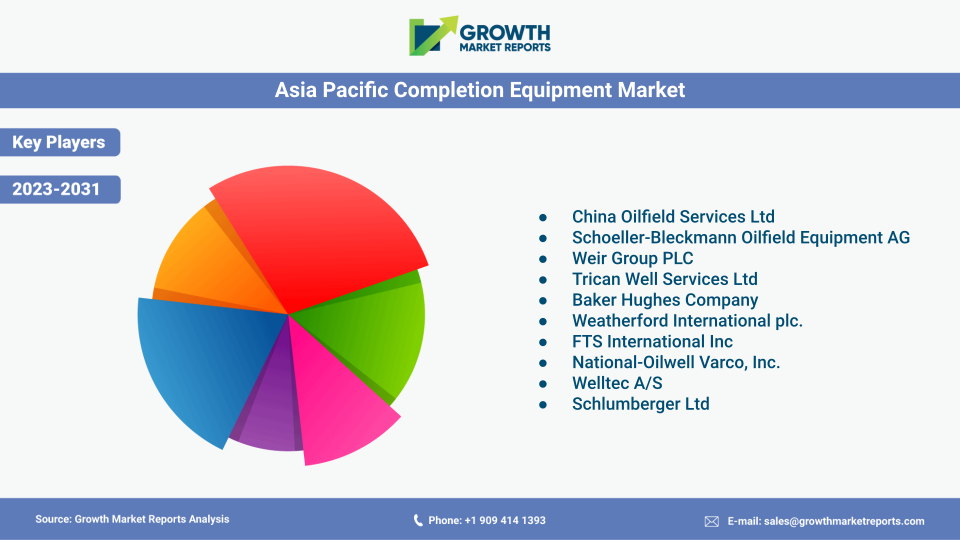

Asia Pacific Completion Equipment Market Key Players

Frequently Asked Questions

Opportunities include digital transformation, expansion in emerging markets, and increased demand for smart equipment. Challenges involve oil price volatility, regulatory compliance, and the need for sustainable and efficient technologies.

Major players include Schlumberger Limited, Halliburton Company, Baker Hughes Company, Weatherford International plc, NOV Inc., TechnipFMC plc, Superior Energy Services, Welltec A/S, and others.

Technological advancements include smart completion systems with real-time monitoring, advanced materials for durability, digital analytics, automation, and intelligent well technologies that enhance operational efficiency and safety.

Cased hole completions involve installing casing and cementing the wellbore, providing stability and zonal isolation. Open hole completions install equipment directly into the uncased wellbore, maximizing reservoir contact and are preferred in certain geological settings.

Horizontal wells are preferred for unconventional resources and require advanced, adaptable equipment for complex trajectories. Vertical wells are common in conventional fields and typically use less complex equipment, but are increasingly adopting advanced technologies for efficiency.

The market is segmented by application into onshore and offshore operations. Onshore applications dominate due to lower costs and infrastructure availability, while offshore applications require advanced equipment for complex and high-risk environments.

The market is segmented by product type into packers, sand control tools, multistage fracturing tools, liner hangers, valves, and others such as swellable packers and inflow control devices.

North America leads the Completion Equipment market, followed by the Middle East, Asia Pacific, Europe, and Latin America. North America’s dominance is due to its leadership in unconventional oil and gas production, especially in the United States and Canada.

Key drivers include rising energy demand, robust investments in oil and gas exploration and production, technological advancements in drilling and completion techniques, and increasing complexity of well architectures.

The global Completion Equipment market reached USD 5.8 billion in 2024 and is projected to grow at a CAGR of 6.1% from 2025 to 2033, reaching USD 9.7 billion by 2033.

Table Of Content

Chapter 1 Executive Summary
Chapter 2 Assumptions and Acronyms Used
Chapter 3 Research Methodology
Chapter 4 Completion Equipment Market Overview
   4.1 Introduction
      4.1.1 Market Taxonomy
      4.1.2 Market Definition
      4.1.3 Macro-Economic Factors Impacting the Market Growth
   4.2 Completion Equipment Market Dynamics
      4.2.1 Market Drivers
      4.2.2 Market Restraints
      4.2.3 Market Opportunity
   4.3 Completion Equipment Market - Supply Chain Analysis
      4.3.1 List of Key Suppliers
      4.3.2 List of Key Distributors
      4.3.3 List of Key Consumers
   4.4 Key Forces Shaping the Completion Equipment Market
      4.4.1 Bargaining Power of Suppliers
      4.4.2 Bargaining Power of Buyers
      4.4.3 Threat of Substitution
      4.4.4 Threat of New Entrants
      4.4.5 Competitive Rivalry
   4.5 Global Completion Equipment Market Size & Forecast, 2023-2032
      4.5.1 Completion Equipment Market Size and Y-o-Y Growth
      4.5.2 Completion Equipment Market Absolute $ Opportunity

Chapter 5 Global Completion Equipment Market Analysis and Forecast By Product Type
   5.1 Introduction
      5.1.1 Key Market Trends & Growth Opportunities By Product Type
      5.1.2 Basis Point Share (BPS) Analysis By Product Type
      5.1.3 Absolute $ Opportunity Assessment By Product Type
   5.2 Completion Equipment Market Size Forecast By Product Type
      5.2.1 Packers
      5.2.2 Sand Control Tools
      5.2.3 Multistage Fracturing Tools
      5.2.4 Liner Hangers
      5.2.5 Valves
      5.2.6 Others
   5.3 Market Attractiveness Analysis By Product Type

Chapter 6 Global Completion Equipment Market Analysis and Forecast By Application
   6.1 Introduction
      6.1.1 Key Market Trends & Growth Opportunities By Application
      6.1.2 Basis Point Share (BPS) Analysis By Application
      6.1.3 Absolute $ Opportunity Assessment By Application
   6.2 Completion Equipment Market Size Forecast By Application
      6.2.1 Onshore
      6.2.2 Offshore
   6.3 Market Attractiveness Analysis By Application

Chapter 7 Global Completion Equipment Market Analysis and Forecast By Well Type
   7.1 Introduction
      7.1.1 Key Market Trends & Growth Opportunities By Well Type
      7.1.2 Basis Point Share (BPS) Analysis By Well Type
      7.1.3 Absolute $ Opportunity Assessment By Well Type
   7.2 Completion Equipment Market Size Forecast By Well Type
      7.2.1 Horizontal Wells
      7.2.2 Vertical Wells
   7.3 Market Attractiveness Analysis By Well Type

Chapter 8 Global Completion Equipment Market Analysis and Forecast By Operation
   8.1 Introduction
      8.1.1 Key Market Trends & Growth Opportunities By Operation
      8.1.2 Basis Point Share (BPS) Analysis By Operation
      8.1.3 Absolute $ Opportunity Assessment By Operation
   8.2 Completion Equipment Market Size Forecast By Operation
      8.2.1 Cased Hole
      8.2.2 Open Hole
   8.3 Market Attractiveness Analysis By Operation

Chapter 9 Global Completion Equipment Market Analysis and Forecast by Region
   9.1 Introduction
      9.1.1 Key Market Trends & Growth Opportunities By Region
      9.1.2 Basis Point Share (BPS) Analysis By Region
      9.1.3 Absolute $ Opportunity Assessment By Region
   9.2 Completion Equipment Market Size Forecast By Region
      9.2.1 North America
      9.2.2 Europe
      9.2.3 Asia Pacific
      9.2.4 Latin America
      9.2.5 Middle East & Africa (MEA)
   9.3 Market Attractiveness Analysis By Region

Chapter 10 Coronavirus Disease (COVID-19) Impact 
   10.1 Introduction 
   10.2 Current & Future Impact Analysis 
   10.3 Economic Impact Analysis 
   10.4 Government Policies 
   10.5 Investment Scenario

Chapter 11 North America Completion Equipment Analysis and Forecast
   11.1 Introduction
   11.2 North America Completion Equipment Market Size Forecast by Country
      11.2.1 U.S.
      11.2.2 Canada
   11.3 Basis Point Share (BPS) Analysis by Country
   11.4 Absolute $ Opportunity Assessment by Country
   11.5 Market Attractiveness Analysis by Country
   11.6 North America Completion Equipment Market Size Forecast By Product Type
      11.6.1 Packers
      11.6.2 Sand Control Tools
      11.6.3 Multistage Fracturing Tools
      11.6.4 Liner Hangers
      11.6.5 Valves
      11.6.6 Others
   11.7 Basis Point Share (BPS) Analysis By Product Type 
   11.8 Absolute $ Opportunity Assessment By Product Type 
   11.9 Market Attractiveness Analysis By Product Type
   11.10 North America Completion Equipment Market Size Forecast By Application
      11.10.1 Onshore
      11.10.2 Offshore
   11.11 Basis Point Share (BPS) Analysis By Application 
   11.12 Absolute $ Opportunity Assessment By Application 
   11.13 Market Attractiveness Analysis By Application
   11.14 North America Completion Equipment Market Size Forecast By Well Type
      11.14.1 Horizontal Wells
      11.14.2 Vertical Wells
   11.15 Basis Point Share (BPS) Analysis By Well Type 
   11.16 Absolute $ Opportunity Assessment By Well Type 
   11.17 Market Attractiveness Analysis By Well Type
   11.18 North America Completion Equipment Market Size Forecast By Operation
      11.18.1 Cased Hole
      11.18.2 Open Hole
   11.19 Basis Point Share (BPS) Analysis By Operation 
   11.20 Absolute $ Opportunity Assessment By Operation 
   11.21 Market Attractiveness Analysis By Operation

Chapter 12 Europe Completion Equipment Analysis and Forecast
   12.1 Introduction
   12.2 Europe Completion Equipment Market Size Forecast by Country
      12.2.1 Germany
      12.2.2 France
      12.2.3 Italy
      12.2.4 U.K.
      12.2.5 Spain
      12.2.6 Russia
      12.2.7 Rest of Europe
   12.3 Basis Point Share (BPS) Analysis by Country
   12.4 Absolute $ Opportunity Assessment by Country
   12.5 Market Attractiveness Analysis by Country
   12.6 Europe Completion Equipment Market Size Forecast By Product Type
      12.6.1 Packers
      12.6.2 Sand Control Tools
      12.6.3 Multistage Fracturing Tools
      12.6.4 Liner Hangers
      12.6.5 Valves
      12.6.6 Others
   12.7 Basis Point Share (BPS) Analysis By Product Type 
   12.8 Absolute $ Opportunity Assessment By Product Type 
   12.9 Market Attractiveness Analysis By Product Type
   12.10 Europe Completion Equipment Market Size Forecast By Application
      12.10.1 Onshore
      12.10.2 Offshore
   12.11 Basis Point Share (BPS) Analysis By Application 
   12.12 Absolute $ Opportunity Assessment By Application 
   12.13 Market Attractiveness Analysis By Application
   12.14 Europe Completion Equipment Market Size Forecast By Well Type
      12.14.1 Horizontal Wells
      12.14.2 Vertical Wells
   12.15 Basis Point Share (BPS) Analysis By Well Type 
   12.16 Absolute $ Opportunity Assessment By Well Type 
   12.17 Market Attractiveness Analysis By Well Type
   12.18 Europe Completion Equipment Market Size Forecast By Operation
      12.18.1 Cased Hole
      12.18.2 Open Hole
   12.19 Basis Point Share (BPS) Analysis By Operation 
   12.20 Absolute $ Opportunity Assessment By Operation 
   12.21 Market Attractiveness Analysis By Operation

Chapter 13 Asia Pacific Completion Equipment Analysis and Forecast
   13.1 Introduction
   13.2 Asia Pacific Completion Equipment Market Size Forecast by Country
      13.2.1 China
      13.2.2 Japan
      13.2.3 South Korea
      13.2.4 India
      13.2.5 Australia
      13.2.6 South East Asia (SEA)
      13.2.7 Rest of Asia Pacific (APAC)
   13.3 Basis Point Share (BPS) Analysis by Country
   13.4 Absolute $ Opportunity Assessment by Country
   13.5 Market Attractiveness Analysis by Country
   13.6 Asia Pacific Completion Equipment Market Size Forecast By Product Type
      13.6.1 Packers
      13.6.2 Sand Control Tools
      13.6.3 Multistage Fracturing Tools
      13.6.4 Liner Hangers
      13.6.5 Valves
      13.6.6 Others
   13.7 Basis Point Share (BPS) Analysis By Product Type 
   13.8 Absolute $ Opportunity Assessment By Product Type 
   13.9 Market Attractiveness Analysis By Product Type
   13.10 Asia Pacific Completion Equipment Market Size Forecast By Application
      13.10.1 Onshore
      13.10.2 Offshore
   13.11 Basis Point Share (BPS) Analysis By Application 
   13.12 Absolute $ Opportunity Assessment By Application 
   13.13 Market Attractiveness Analysis By Application
   13.14 Asia Pacific Completion Equipment Market Size Forecast By Well Type
      13.14.1 Horizontal Wells
      13.14.2 Vertical Wells
   13.15 Basis Point Share (BPS) Analysis By Well Type 
   13.16 Absolute $ Opportunity Assessment By Well Type 
   13.17 Market Attractiveness Analysis By Well Type
   13.18 Asia Pacific Completion Equipment Market Size Forecast By Operation
      13.18.1 Cased Hole
      13.18.2 Open Hole
   13.19 Basis Point Share (BPS) Analysis By Operation 
   13.20 Absolute $ Opportunity Assessment By Operation 
   13.21 Market Attractiveness Analysis By Operation

Chapter 14 Latin America Completion Equipment Analysis and Forecast
   14.1 Introduction
   14.2 Latin America Completion Equipment Market Size Forecast by Country
      14.2.1 Brazil
      14.2.2 Mexico
      14.2.3 Rest of Latin America (LATAM)
   14.3 Basis Point Share (BPS) Analysis by Country
   14.4 Absolute $ Opportunity Assessment by Country
   14.5 Market Attractiveness Analysis by Country
   14.6 Latin America Completion Equipment Market Size Forecast By Product Type
      14.6.1 Packers
      14.6.2 Sand Control Tools
      14.6.3 Multistage Fracturing Tools
      14.6.4 Liner Hangers
      14.6.5 Valves
      14.6.6 Others
   14.7 Basis Point Share (BPS) Analysis By Product Type 
   14.8 Absolute $ Opportunity Assessment By Product Type 
   14.9 Market Attractiveness Analysis By Product Type
   14.10 Latin America Completion Equipment Market Size Forecast By Application
      14.10.1 Onshore
      14.10.2 Offshore
   14.11 Basis Point Share (BPS) Analysis By Application 
   14.12 Absolute $ Opportunity Assessment By Application 
   14.13 Market Attractiveness Analysis By Application
   14.14 Latin America Completion Equipment Market Size Forecast By Well Type
      14.14.1 Horizontal Wells
      14.14.2 Vertical Wells
   14.15 Basis Point Share (BPS) Analysis By Well Type 
   14.16 Absolute $ Opportunity Assessment By Well Type 
   14.17 Market Attractiveness Analysis By Well Type
   14.18 Latin America Completion Equipment Market Size Forecast By Operation
      14.18.1 Cased Hole
      14.18.2 Open Hole
   14.19 Basis Point Share (BPS) Analysis By Operation 
   14.20 Absolute $ Opportunity Assessment By Operation 
   14.21 Market Attractiveness Analysis By Operation

Chapter 15 Middle East & Africa (MEA) Completion Equipment Analysis and Forecast
   15.1 Introduction
   15.2 Middle East & Africa (MEA) Completion Equipment Market Size Forecast by Country
      15.2.1 Saudi Arabia
      15.2.2 South Africa
      15.2.3 UAE
      15.2.4 Rest of Middle East & Africa (MEA)
   15.3 Basis Point Share (BPS) Analysis by Country
   15.4 Absolute $ Opportunity Assessment by Country
   15.5 Market Attractiveness Analysis by Country
   15.6 Middle East & Africa (MEA) Completion Equipment Market Size Forecast By Product Type
      15.6.1 Packers
      15.6.2 Sand Control Tools
      15.6.3 Multistage Fracturing Tools
      15.6.4 Liner Hangers
      15.6.5 Valves
      15.6.6 Others
   15.7 Basis Point Share (BPS) Analysis By Product Type 
   15.8 Absolute $ Opportunity Assessment By Product Type 
   15.9 Market Attractiveness Analysis By Product Type
   15.10 Middle East & Africa (MEA) Completion Equipment Market Size Forecast By Application
      15.10.1 Onshore
      15.10.2 Offshore
   15.11 Basis Point Share (BPS) Analysis By Application 
   15.12 Absolute $ Opportunity Assessment By Application 
   15.13 Market Attractiveness Analysis By Application
   15.14 Middle East & Africa (MEA) Completion Equipment Market Size Forecast By Well Type
      15.14.1 Horizontal Wells
      15.14.2 Vertical Wells
   15.15 Basis Point Share (BPS) Analysis By Well Type 
   15.16 Absolute $ Opportunity Assessment By Well Type 
   15.17 Market Attractiveness Analysis By Well Type
   15.18 Middle East & Africa (MEA) Completion Equipment Market Size Forecast By Operation
      15.18.1 Cased Hole
      15.18.2 Open Hole
   15.19 Basis Point Share (BPS) Analysis By Operation 
   15.20 Absolute $ Opportunity Assessment By Operation 
   15.21 Market Attractiveness Analysis By Operation

Chapter 16 Competition Landscape 
   16.1 Completion Equipment Market: Competitive Dashboard
   16.2 Global Completion Equipment Market: Market Share Analysis, 2023
   16.3 Company Profiles (Details – Overview, Financials, Developments, Strategy) 
      16.3.1 Schlumberger Limited
Halliburton Company
Baker Hughes Company
Weatherford International plc
National Oilwell Varco, Inc.
TechnipFMC plc
Superior Energy Services, Inc.
Welltec A/S
Oceaneering International, Inc.
Trican Well Service Ltd.
TAM International, Inc.
Nine Energy Service, Inc.
Packers Plus Energy Services Inc.
Forum Energy Technologies, Inc.
Expro Group
Core Laboratories N.V.
Tetra Technologies, Inc.
RPC, Inc.
Calfrac Well Services Ltd.
Dril-Quip, Inc.

Methodology

Our Clients

The John Holland Group
FedEx Logistics
Siemens Healthcare
Microsoft
Dassault Aviation
Deloitte
Pfizer
General Mills