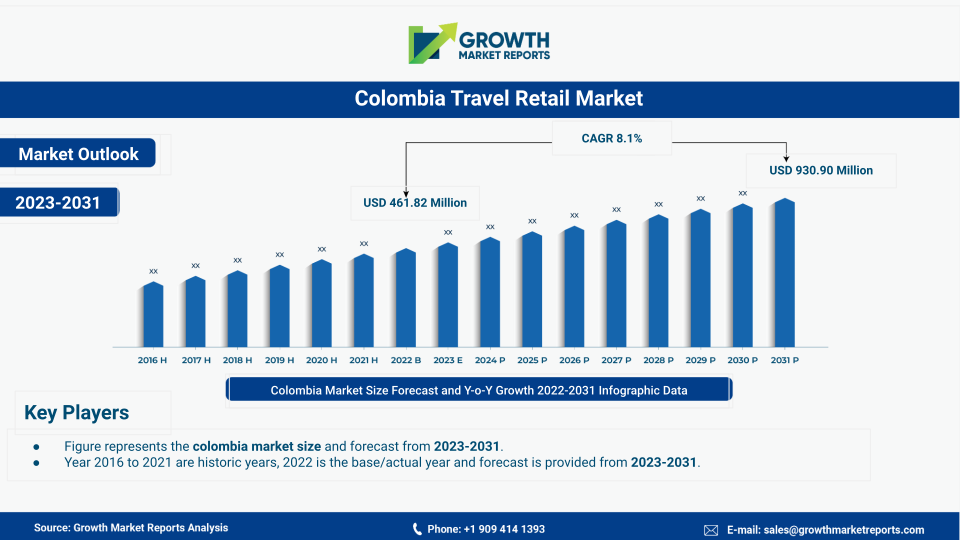
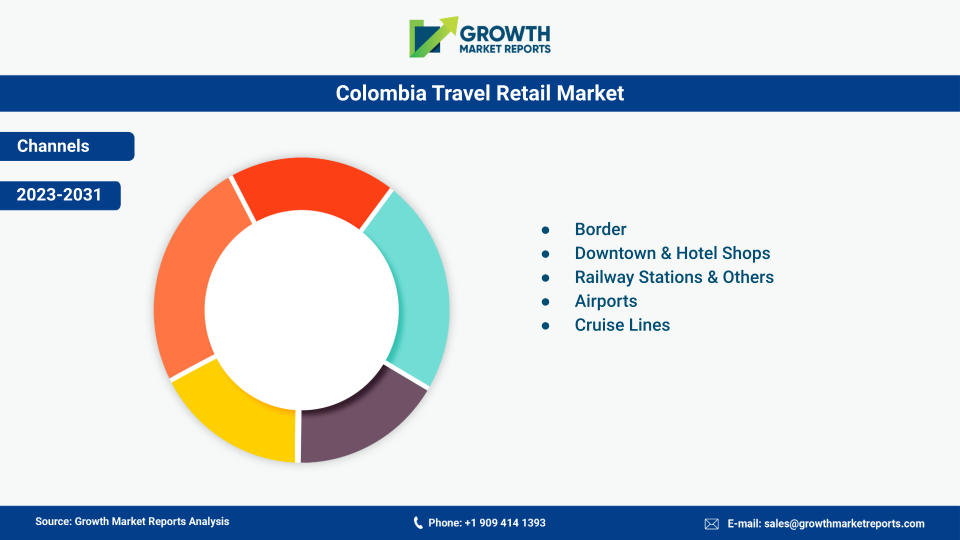
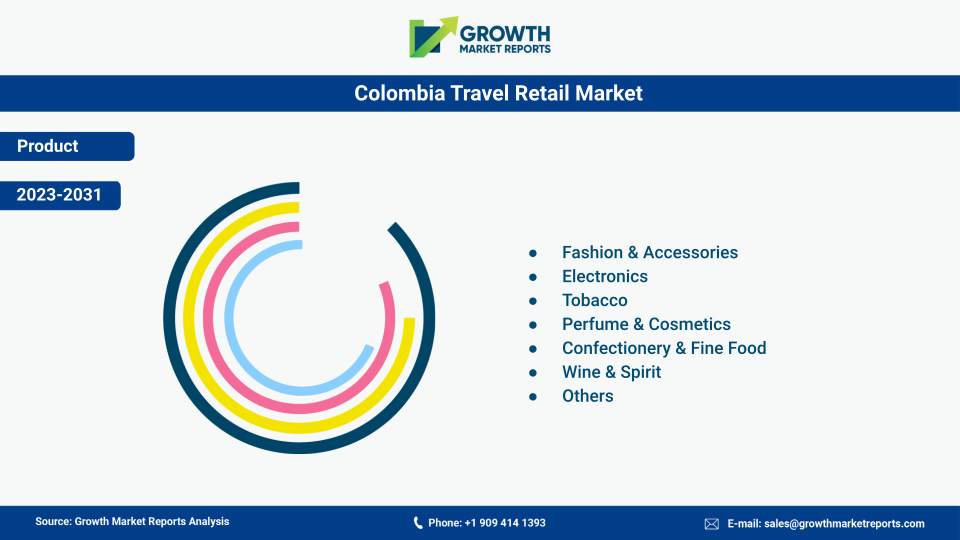
Travel Retail Market Research Report 2033

Travel Retail Market Research Report 2033

Segments - by Product Type (Perfumes & Cosmetics, Wine & Spirits, Tobacco Products, Fashion & Accessories, Electronics, Food & Confectionery, Others), by Channel (Airports, Airlines, Ferries & Cruise Lines, Border, Downtown & Hotel Shops), by End User (Men, Women, Children)

https://growthmarketreports.com/Debadatta
Author : Debadatta Patel
https://growthmarketreports.com/Vaibhav
Fact-checked by : V. Chandola
https://growthmarketreports.com/Shruti
Editor : Shruti Bhat

Upcoming | Report ID :CG-3532 | 4.5 Rating | 84 Reviews | 251 Pages | Format : Docx PDF

Report Description


Travel Retail Market Outlook

According to our latest research, the global travel retail market size reached USD 80.3 billion in 2024, reflecting the sectorÂ’s robust recovery post-pandemic and renewed momentum in international travel and tourism. The market is expected to grow at a CAGR of 8.1% from 2025 to 2033, with the total value forecasted to reach USD 154.6 billion by 2033. This growth is primarily driven by rising disposable incomes, increasing global air passenger traffic, and evolving consumer preferences for premium and luxury products in transit environments. As per our latest analysis, the travel retail sector is capitalizing on technological advancements and experiential retailing, which are further propelling the marketÂ’s expansion worldwide.

One of the primary growth factors for the travel retail market is the significant increase in international passenger traffic, particularly through airports, which serve as the dominant channel for travel retail sales. As global economies continue to recover from the disruptions caused by the COVID-19 pandemic, there has been a marked resurgence in both business and leisure travel. The proliferation of low-cost carriers and the expansion of airport infrastructure in emerging markets have contributed to higher footfall in travel retail outlets. Moreover, the growing middle-class population in Asia Pacific and the Middle East, coupled with rising disposable incomes, has led to greater demand for premium and luxury goods, further fueling market growth. The convenience and exclusivity of duty-free shopping, combined with attractive pricing and unique product offerings, continue to entice travelers to make purchases during transit.

Another significant driver for the travel retail market is the strategic focus on personalization and digital integration within retail environments. Leading retailers are leveraging advanced technologies such as artificial intelligence, augmented reality, and data analytics to enhance the customer shopping experience. Personalized promotions, loyalty programs, and seamless omnichannel experiences have become integral to attracting and retaining customers. The integration of mobile payment solutions and digital kiosks has streamlined the purchase process, making it easier for travelers to shop on-the-go. Furthermore, collaborations between brands and travel retail operators have resulted in exclusive product launches and limited-edition collections, which help to create a sense of urgency and exclusivity, thereby boosting sales.

The evolving preferences of consumers, especially millennials and Generation Z travelers, are reshaping the landscape of travel retail. These demographics are characterized by a strong inclination towards experiential shopping, sustainability, and ethical consumption. As a result, travel retailers are increasingly curating their product assortments to include eco-friendly, organic, and locally sourced products. The emphasis on providing immersive and interactive experiences, such as in-store demonstrations, virtual try-ons, and pop-up events, has become a key differentiator. Additionally, the rise of social media and influencer marketing has amplified the visibility of travel retail offerings, encouraging impulse purchases and enhancing brand loyalty among younger travelers.

Airport Duty-Free Retail has become a cornerstone of the travel retail market, offering travelers a unique shopping experience that combines convenience with exclusivity. As airports continue to evolve into sophisticated retail hubs, the duty-free segment plays a crucial role in attracting international passengers. The allure of tax-free shopping, coupled with a wide range of premium and luxury products, makes airport duty-free stores a preferred destination for travelers looking to make the most of their time in transit. Retailers are increasingly focusing on enhancing the customer experience by integrating digital technologies, offering personalized services, and curating exclusive product assortments that cater to the diverse preferences of global travelers.

From a regional perspective, Asia Pacific continues to lead the travel retail market, accounting for the largest share of global sales. This dominance is attributed to the regionÂ’s booming tourism industry, rapid urbanization, and the expansion of international airports in countries such as China, Japan, South Korea, and Singapore. Europe and North America also represent significant markets, driven by established travel hubs and a high propensity for luxury shopping among international travelers. The Middle East, particularly the United Arab Emirates, has emerged as a key player, leveraging its strategic geographic location and world-class airport infrastructure to attract transit passengers. Latin America and Africa, while currently smaller markets, are expected to witness accelerated growth in the coming years due to increasing air connectivity and tourism investments.

Global Travel Retail Industry Outlook

Product Type Analysis

The travel retail market is segmented by product type into perfumes & cosmetics, wine & spirits, tobacco products, fashion & accessories, electronics, food & confectionery, and others. Among these, perfumes & cosmetics continue to dominate sales, accounting for a substantial share of the market. The allure of premium and luxury brands, combined with exclusive travel retail editions and attractive pricing due to duty-free exemptions, has made perfumes and cosmetics the preferred choice for travelers. Leading brands collaborate with retailers to launch limited-edition products and travel-exclusive sets, which are highly sought after by international passengers. The emphasis on personalized beauty consultations and in-store experiences further enhances consumer engagement, driving higher conversion rates in this segment.

Wine & spirits represent another significant segment within the travel retail market, benefiting from the growing trend of gifting and the appeal of exclusive labels and rare collections. Travelers often seek unique and premium alcoholic beverages that are not readily available in domestic markets, making travel retail outlets a prime destination for such purchases. Innovative packaging, curated tasting sessions, and knowledgeable staff contribute to the overall shopping experience, encouraging travelers to explore and indulge in high-value purchases. The segmentÂ’s growth is also supported by the relaxation of regulations in certain regions, allowing higher duty-free allowances for alcohol purchases.

Duty Free Retail continues to be a significant driver of growth within the travel retail market, providing travelers with access to a diverse array of products at competitive prices. This segment is characterized by its ability to offer exclusive items and limited-edition collections that are not available in domestic markets, creating a sense of urgency and desirability among consumers. Duty-free retailers are leveraging strategic partnerships with leading brands to curate unique shopping experiences that resonate with international travelers. By focusing on sustainability, innovation, and customer engagement, duty-free retail is well-positioned to capitalize on the increasing demand for premium and luxury goods in transit environments.

The tobacco products segment, while facing increasing regulatory scrutiny and health-related concerns, continues to maintain a notable presence in travel retail, particularly in regions where duty-free pricing offers significant savings. However, the segment is gradually evolving, with a shift towards alternative nicotine products such as e-cigarettes and heated tobacco devices. Travel retail operators are adapting their product assortments to cater to changing consumer preferences and comply with evolving regulations, ensuring continued relevance in this segment. The focus on responsible marketing and adherence to age verification protocols remains paramount.

Fashion & accessories and electronics are also prominent categories within the travel retail market. Fashion and accessories benefit from the aspirational appeal of luxury brands, with travelers often making impulse purchases of designer handbags, watches, and sunglasses. Exclusive collaborations and pop-up boutiques add to the allure of this segment. The electronics category, on the other hand, is driven by the demand for travel essentials such as headphones, cameras, and portable devices. Retailers offer competitive pricing and the latest product innovations, making travel retail outlets a convenient option for tech-savvy travelers. The food & confectionery segment, characterized by premium chocolates, gourmet snacks, and regional specialties, appeals to both gifting and self-consumption, further diversifying the product mix in travel retail.

Report Scope

Attributes Details
Report Title Travel Retail Market Research Report 2033
By Product Type Perfumes & Cosmetics, Wine & Spirits, Tobacco Products, Fashion & Accessories, Electronics, Food & Confectionery, Others
By Channel Airports, Airlines, Ferries & Cruise Lines, Border, Downtown & Hotel Shops
By End User Men, Women, Children
Regions Covered North America, Europe, APAC, Latin America, MEA
Base Year 2024
Historic Data 2018-2023
Forecast Period 2025-2033
Number of Pages 251
Number of Tables & Figures 385
Customization Available Yes, the report can be customized as per your need.

Channel Analysis

The channel segmentation of the travel retail market encompasses airports, airlines, ferries & cruise lines, and border, downtown & hotel shops. Airports remain the dominant channel, accounting for the largest share of global travel retail sales. The high footfall of international passengers, coupled with extended dwell times and the availability of expansive retail spaces, creates a conducive environment for shopping. Airports have evolved into sophisticated retail hubs, offering a diverse range of products and services that cater to the needs of travelers from various demographics. The integration of digital technologies, such as mobile apps and interactive kiosks, has further enhanced the convenience and appeal of airport retail.

Airlines have also emerged as a significant channel for travel retail, leveraging in-flight sales and pre-order services to capture additional revenue streams. Airlines collaborate with leading brands to offer exclusive products and curated gift sets, which are promoted through in-flight magazines and digital platforms. The convenience of seat delivery and the ability to pre-order products online have contributed to the growth of this channel. Furthermore, airlines are increasingly focusing on sustainability and eco-friendly packaging to align with the preferences of environmentally conscious travelers.

Ferries & cruise lines represent a niche but growing segment within the travel retail market. The unique shopping environment on board, combined with the allure of duty-free pricing and exclusive product offerings, appeals to both leisure and business travelers. Cruise operators partner with luxury brands to create immersive shopping experiences, including pop-up boutiques, product demonstrations, and themed events. The segmentÂ’s growth is supported by the expansion of cruise tourism, particularly in regions such as the Mediterranean, Caribbean, and Asia Pacific.

Border, downtown & hotel shops offer an alternative retail experience for travelers who may not have access to airport or in-flight shopping. These outlets are strategically located in high-traffic areas near border crossings, city centers, and major hotels, catering to both international tourists and local residents. The ability to offer duty-free pricing and a curated selection of products makes these channels attractive for impulse and planned purchases alike. Retailers are investing in enhancing the in-store experience through personalized services, multilingual staff, and digital engagement tools, further driving growth in this segment.

End User Analysis

The travel retail market serves a diverse customer base, segmented by end user into men, women, and children. Women represent the largest consumer group in travel retail, particularly in categories such as perfumes & cosmetics, fashion & accessories, and confectionery. The appeal of premium beauty products, designer accessories, and exclusive gift sets resonates strongly with female travelers. Retailers tailor their marketing strategies to cater to the preferences of women, offering personalized beauty consultations, loyalty programs, and targeted promotions. The emphasis on experiential shopping and the availability of travel-exclusive products further enhance the appeal of travel retail for female consumers.

Men constitute a significant segment within the travel retail market, with strong demand for products such as fragrances, grooming essentials, electronics, and premium spirits. The rise of male grooming and the increasing popularity of luxury accessories have contributed to higher spending among male travelers. Retailers are expanding their product assortments to include a wider range of menÂ’s grooming products, tech gadgets, and lifestyle accessories. In-store experiences, such as whiskey tastings and tech demonstrations, are designed to engage male consumers and encourage impulse purchases.

Children represent a growing segment in travel retail, particularly in categories such as toys, confectionery, and travel essentials. Parents often seek travel-exclusive toys, educational games, and premium chocolates as gifts or treats for their children. Retailers are responding to this demand by curating dedicated sections for childrenÂ’s products and introducing interactive experiences, such as play zones and character meet-and-greets, to enhance the shopping experience for families. The inclusion of sustainable and educational products also appeals to environmentally conscious parents.

The evolving preferences of different end user segments are shaping the product assortments and marketing strategies of travel retailers. The focus on inclusivity and diversity, coupled with the integration of digital engagement tools, enables retailers to cater to the unique needs of each customer group. Personalized recommendations, multilingual support, and seamless omnichannel experiences are becoming standard features in travel retail, ensuring that all end users have access to a tailored and enjoyable shopping experience.

Opportunities & Threats

The travel retail market presents a multitude of opportunities for growth and innovation. One of the most significant opportunities lies in the integration of digital technologies to enhance the customer shopping experience. Retailers can leverage artificial intelligence, data analytics, and mobile apps to offer personalized promotions, seamless payment solutions, and real-time inventory updates. The rise of omnichannel retailing, which combines online pre-ordering with in-store pickup, allows travelers to shop conveniently and efficiently. Additionally, the growing demand for sustainable and ethically sourced products presents an opportunity for retailers to differentiate themselves by curating eco-friendly assortments and implementing green initiatives. Collaborations with local artisans and brands can also help retailers offer unique and culturally relevant products, appealing to the preferences of international travelers.

Another key opportunity for the travel retail market is the expansion into emerging markets, particularly in Asia Pacific, the Middle East, and Latin America. The rapid growth of air travel, coupled with increasing disposable incomes and urbanization, has created a fertile environment for the development of new retail outlets and the introduction of innovative shopping experiences. Strategic partnerships with airport authorities, airlines, and cruise operators can help retailers secure prime locations and access a wider customer base. The emphasis on experiential retail, such as pop-up events, product demonstrations, and immersive brand activations, can further drive footfall and sales in these regions. By staying attuned to evolving consumer trends and investing in digital transformation, travel retailers can unlock new revenue streams and sustain long-term growth.

Despite the numerous opportunities, the travel retail market faces several challenges and threats that could hinder its growth trajectory. One of the primary restrainers is the increasing regulatory scrutiny and restrictions on the sale of certain products, particularly tobacco and alcohol, in duty-free environments. Health concerns, changing consumer attitudes, and stricter government policies are leading to the imposition of limits on duty-free allowances and advertising restrictions, which could impact sales in these categories. Additionally, geopolitical tensions, economic uncertainties, and fluctuations in currency exchange rates can affect international travel patterns and consumer spending. Retailers must remain agile and adaptable, continuously monitoring the regulatory landscape and adjusting their product assortments and marketing strategies to mitigate these risks.

Regional Outlook

The regional analysis of the travel retail market reveals distinct trends and growth dynamics across different geographies. Asia Pacific stands out as the largest and fastest-growing region, accounting for approximately USD 33.7 billion in 2024. The regionÂ’s dominance is fueled by the rapid expansion of international airports, a burgeoning middle-class population, and the increasing popularity of outbound tourism. Countries such as China, Japan, South Korea, and Singapore are at the forefront of travel retail innovation, offering state-of-the-art retail environments and a diverse range of products. The market in Asia Pacific is projected to grow at a CAGR of 9.4% from 2025 to 2033, outpacing other regions and solidifying its position as a global leader in travel retail.

Europe represents the second-largest market for travel retail, with sales reaching USD 22.1 billion in 2024. The regionÂ’s well-established travel infrastructure, iconic tourist destinations, and high propensity for luxury shopping make it a key market for premium and exclusive products. Major airports in London, Paris, Frankfurt, and Amsterdam serve as major hubs for international travelers, driving significant footfall in travel retail outlets. The emphasis on experiential shopping, sustainability, and local product offerings has helped European retailers maintain a competitive edge. While growth in Europe is expected to be steady, it is likely to be slower compared to Asia Pacific due to market maturity and regulatory challenges.

North America holds a substantial share of the travel retail market, with sales estimated at USD 13.9 billion in 2024. The region benefits from a strong domestic and international travel network, with major airports in the United States and Canada serving as key retail locations. The focus on digital integration, personalized services, and premium product assortments has contributed to the regionÂ’s growth. The Middle East & Africa and Latin America are emerging markets, with combined sales of approximately USD 10.6 billion in 2024. The Middle East, particularly the United Arab Emirates, is leveraging its strategic location and world-class airport infrastructure to attract transit passengers and drive retail sales. Latin America is witnessing increased investments in airport modernization and tourism promotion, which are expected to support market growth in the coming years.

Travel Retail Market Statistics

Competitor Outlook

The competitive landscape of the travel retail market is characterized by the presence of several global and regional players, each vying for market share through strategic partnerships, innovative product offerings, and enhanced customer experiences. The market is highly competitive, with leading retailers focusing on expanding their footprints in high-traffic locations, forging alliances with premium brands, and leveraging digital technologies to differentiate themselves. The emphasis on experiential retail, personalized services, and sustainability has become a key battleground for gaining consumer loyalty and driving repeat purchases. Retailers are also investing in staff training, multilingual support, and customer engagement initiatives to cater to the diverse needs of international travelers.

Mergers and acquisitions have become a common strategy among leading travel retail operators, enabling them to expand their market presence, access new customer segments, and achieve economies of scale. The integration of digital platforms, such as mobile apps and e-commerce websites, has allowed retailers to offer seamless omnichannel experiences, bridging the gap between online and offline shopping. The focus on exclusive product launches, limited-edition collections, and loyalty programs has helped retailers create a sense of urgency and exclusivity, driving higher conversion rates and average transaction values. Collaboration with airport authorities, airlines, and cruise operators is also critical for securing prime retail locations and enhancing the overall shopping experience.

In addition to established players, the travel retail market has witnessed the entry of new and niche brands seeking to capitalize on the growing demand for premium and sustainable products. These brands often differentiate themselves through unique product offerings, ethical sourcing, and innovative marketing strategies. The rise of digital-native brands and the increasing influence of social media have further intensified competition, as consumers seek out new and authentic experiences during their travels. Retailers must continuously innovate and adapt to evolving consumer preferences to maintain their competitive edge in this dynamic market.

Some of the major companies operating in the travel retail market include Dufry AG, Lagardère Travel Retail, Lotte Duty Free, DFS Group, Heinemann SE & Co. KG, King Power International Group, and Shilla Duty Free. Dufry AG is a global leader in travel retail, with a presence in over 65 countries and a diverse portfolio of brands and retail formats. Lagardère Travel Retail operates a network of duty-free, duty-paid, and foodservice outlets across major airports and transport hubs worldwide. Lotte Duty Free and Shilla Duty Free are prominent players in the Asia Pacific region, known for their extensive product assortments and innovative retail concepts. DFS Group, a subsidiary of LVMH, specializes in luxury travel retail and operates flagship stores in key international locations. Heinemann SE & Co. KG is a leading European travel retailer, focusing on perfumes & cosmetics, wine & spirits, and confectionery. King Power International Group is a major player in Thailand and Southeast Asia, with a strong presence in airport and downtown duty-free retailing.

These companies are continuously investing in digital transformation, customer engagement, and sustainability initiatives to stay ahead of the competition. By leveraging data analytics, artificial intelligence, and customer insights, they are able to offer personalized promotions, optimize product assortments, and enhance the overall shopping experience. Strategic partnerships with airports, airlines, and luxury brands enable these retailers to access prime locations and exclusive product offerings, further strengthening their market positions. As the travel retail market continues to evolve, innovation, agility, and customer-centricity will remain key drivers of success for both established players and new entrants.

Key Players

  • Dufry Group
  • Lotte Duty Free
  • The Shilla Duty Free
  • DFS Group
  • Gebr. Heinemann
  • Lagardère Travel Retail
  • King Power International Group
  • China Duty Free Group
  • Aer Rianta International
  • Duty Free Americas
  • Japan Airport Terminal Co.
  • Dubai Duty Free
  • Aelia Duty Free
  • Ever Rich Duty Free
  • Heinemann Asia Pacific
  • Shenzhen Duty Free
  • Sky Connection
  • Delhi Duty Free Services
  • Nuance Group
  • World Duty Free Group
Travel Retail Market Overview

Segments

The Travel Retail market has been segmented on the basis of

Product Type

  • Perfumes & Cosmetics
  • Wine & Spirits
  • Tobacco Products
  • Fashion & Accessories
  • Electronics
  • Food & Confectionery
  • Others

Channel

  • Airports
  • Airlines
  • Ferries & Cruise Lines
  • Border
  • Downtown & Hotel Shops

End User

  • Men
  • Women
  • Children

Competitive Landscape

Key players competing in the Colombia travel retail market are Dufry and 3Sixty Duty-Free; Motta International; Areas; Duty-Free Partners; and Duty-Free Americas, Inc. To expand their market share, the majority of these businesses adopted organic and inorganic growth tactics. For example, Duty-Free Americas, Inc. launched a Diageo store at El Dorado International Airport in November 2019 in collaboration with Diageo Global Travel and Middle East (GTME). It was the region's first Diageo retail outlet.
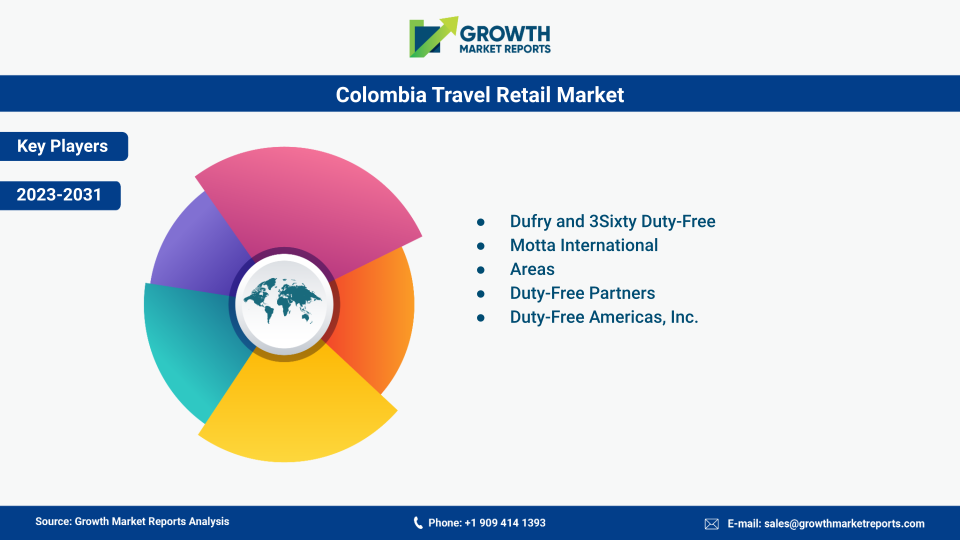

Colombia Travel Retail Market Keyplayers

Frequently Asked Questions

Yes, the Travel Retail Market Research Report 2033 can be customized according to specific needs.

Key challenges include regulatory restrictions on products like tobacco and alcohol, health concerns, economic uncertainties, geopolitical tensions, and currency fluctuations.

Major companies include Dufry AG, Lagardère Travel Retail, Lotte Duty Free, DFS Group, Heinemann SE & Co. KG, King Power International Group, and Shilla Duty Free.

Millennials and Gen Z travelers prefer experiential shopping, sustainability, and ethical consumption, leading retailers to offer eco-friendly products, immersive experiences, and influencer-driven marketing.

Digital technologies like AI, augmented reality, mobile payments, and data analytics are enhancing personalization, streamlining purchases, and improving the overall shopping experience in travel retail.

Growth is driven by rising disposable incomes, increasing international air passenger traffic, evolving consumer preferences for premium products, and technological advancements in retail.

Asia Pacific leads the travel retail market, followed by Europe and North America. The Middle East, Latin America, and Africa are emerging markets with significant growth potential.

The main channels are airports, airlines, ferries & cruise lines, and border, downtown & hotel shops, with airports being the dominant channel due to high international passenger traffic.

Perfumes & cosmetics dominate the travel retail market, followed by wine & spirits, tobacco products, fashion & accessories, electronics, and food & confectionery.

The global travel retail market reached USD 80.3 billion in 2024 and is expected to grow at a CAGR of 8.1% from 2025 to 2033, reaching USD 154.6 billion by 2033.

Table Of Content

Chapter 1 Executive Summary
Chapter 2 Assumptions and Acronyms Used
Chapter 3 Research Methodology
Chapter 4 Travel Retail Market Overview
   4.1 Introduction
      4.1.1 Market Taxonomy
      4.1.2 Market Definition
      4.1.3 Macro-Economic Factors Impacting the Market Growth
   4.2 Travel Retail Market Dynamics
      4.2.1 Market Drivers
      4.2.2 Market Restraints
      4.2.3 Market Opportunity
   4.3 Travel Retail Market - Supply Chain Analysis
      4.3.1 List of Key Suppliers
      4.3.2 List of Key Distributors
      4.3.3 List of Key Consumers
   4.4 Key Forces Shaping the Travel Retail Market
      4.4.1 Bargaining Power of Suppliers
      4.4.2 Bargaining Power of Buyers
      4.4.3 Threat of Substitution
      4.4.4 Threat of New Entrants
      4.4.5 Competitive Rivalry
   4.5 Global Travel Retail Market Size & Forecast, 2023-2032
      4.5.1 Travel Retail Market Size and Y-o-Y Growth
      4.5.2 Travel Retail Market Absolute $ Opportunity

Chapter 5 Global Travel Retail Market Analysis and Forecast By Product Type
   5.1 Introduction
      5.1.1 Key Market Trends & Growth Opportunities By Product Type
      5.1.2 Basis Point Share (BPS) Analysis By Product Type
      5.1.3 Absolute $ Opportunity Assessment By Product Type
   5.2 Travel Retail Market Size Forecast By Product Type
      5.2.1 Perfumes & Cosmetics
      5.2.2 Wine & Spirits
      5.2.3 Tobacco Products
      5.2.4 Fashion & Accessories
      5.2.5 Electronics
      5.2.6 Food & Confectionery
      5.2.7 Others
   5.3 Market Attractiveness Analysis By Product Type

Chapter 6 Global Travel Retail Market Analysis and Forecast By Channel
   6.1 Introduction
      6.1.1 Key Market Trends & Growth Opportunities By Channel
      6.1.2 Basis Point Share (BPS) Analysis By Channel
      6.1.3 Absolute $ Opportunity Assessment By Channel
   6.2 Travel Retail Market Size Forecast By Channel
      6.2.1 Airports
      6.2.2 Airlines
      6.2.3 Ferries & Cruise Lines
      6.2.4 Border
      6.2.5 Downtown & Hotel Shops
   6.3 Market Attractiveness Analysis By Channel

Chapter 7 Global Travel Retail Market Analysis and Forecast By End User
   7.1 Introduction
      7.1.1 Key Market Trends & Growth Opportunities By End User
      7.1.2 Basis Point Share (BPS) Analysis By End User
      7.1.3 Absolute $ Opportunity Assessment By End User
   7.2 Travel Retail Market Size Forecast By End User
      7.2.1 Men
      7.2.2 Women
      7.2.3 Children
   7.3 Market Attractiveness Analysis By End User

Chapter 8 Global Travel Retail Market Analysis and Forecast by Region
   8.1 Introduction
      8.1.1 Key Market Trends & Growth Opportunities By Region
      8.1.2 Basis Point Share (BPS) Analysis By Region
      8.1.3 Absolute $ Opportunity Assessment By Region
   8.2 Travel Retail Market Size Forecast By Region
      8.2.1 North America
      8.2.2 Europe
      8.2.3 Asia Pacific
      8.2.4 Latin America
      8.2.5 Middle East & Africa (MEA)
   8.3 Market Attractiveness Analysis By Region

Chapter 9 Coronavirus Disease (COVID-19) Impact 
   9.1 Introduction 
   9.2 Current & Future Impact Analysis 
   9.3 Economic Impact Analysis 
   9.4 Government Policies 
   9.5 Investment Scenario

Chapter 10 North America Travel Retail Analysis and Forecast
   10.1 Introduction
   10.2 North America Travel Retail Market Size Forecast by Country
      10.2.1 U.S.
      10.2.2 Canada
   10.3 Basis Point Share (BPS) Analysis by Country
   10.4 Absolute $ Opportunity Assessment by Country
   10.5 Market Attractiveness Analysis by Country
   10.6 North America Travel Retail Market Size Forecast By Product Type
      10.6.1 Perfumes & Cosmetics
      10.6.2 Wine & Spirits
      10.6.3 Tobacco Products
      10.6.4 Fashion & Accessories
      10.6.5 Electronics
      10.6.6 Food & Confectionery
      10.6.7 Others
   10.7 Basis Point Share (BPS) Analysis By Product Type 
   10.8 Absolute $ Opportunity Assessment By Product Type 
   10.9 Market Attractiveness Analysis By Product Type
   10.10 North America Travel Retail Market Size Forecast By Channel
      10.10.1 Airports
      10.10.2 Airlines
      10.10.3 Ferries & Cruise Lines
      10.10.4 Border
      10.10.5 Downtown & Hotel Shops
   10.11 Basis Point Share (BPS) Analysis By Channel 
   10.12 Absolute $ Opportunity Assessment By Channel 
   10.13 Market Attractiveness Analysis By Channel
   10.14 North America Travel Retail Market Size Forecast By End User
      10.14.1 Men
      10.14.2 Women
      10.14.3 Children
   10.15 Basis Point Share (BPS) Analysis By End User 
   10.16 Absolute $ Opportunity Assessment By End User 
   10.17 Market Attractiveness Analysis By End User

Chapter 11 Europe Travel Retail Analysis and Forecast
   11.1 Introduction
   11.2 Europe Travel Retail Market Size Forecast by Country
      11.2.1 Germany
      11.2.2 France
      11.2.3 Italy
      11.2.4 U.K.
      11.2.5 Spain
      11.2.6 Russia
      11.2.7 Rest of Europe
   11.3 Basis Point Share (BPS) Analysis by Country
   11.4 Absolute $ Opportunity Assessment by Country
   11.5 Market Attractiveness Analysis by Country
   11.6 Europe Travel Retail Market Size Forecast By Product Type
      11.6.1 Perfumes & Cosmetics
      11.6.2 Wine & Spirits
      11.6.3 Tobacco Products
      11.6.4 Fashion & Accessories
      11.6.5 Electronics
      11.6.6 Food & Confectionery
      11.6.7 Others
   11.7 Basis Point Share (BPS) Analysis By Product Type 
   11.8 Absolute $ Opportunity Assessment By Product Type 
   11.9 Market Attractiveness Analysis By Product Type
   11.10 Europe Travel Retail Market Size Forecast By Channel
      11.10.1 Airports
      11.10.2 Airlines
      11.10.3 Ferries & Cruise Lines
      11.10.4 Border
      11.10.5 Downtown & Hotel Shops
   11.11 Basis Point Share (BPS) Analysis By Channel 
   11.12 Absolute $ Opportunity Assessment By Channel 
   11.13 Market Attractiveness Analysis By Channel
   11.14 Europe Travel Retail Market Size Forecast By End User
      11.14.1 Men
      11.14.2 Women
      11.14.3 Children
   11.15 Basis Point Share (BPS) Analysis By End User 
   11.16 Absolute $ Opportunity Assessment By End User 
   11.17 Market Attractiveness Analysis By End User

Chapter 12 Asia Pacific Travel Retail Analysis and Forecast
   12.1 Introduction
   12.2 Asia Pacific Travel Retail Market Size Forecast by Country
      12.2.1 China
      12.2.2 Japan
      12.2.3 South Korea
      12.2.4 India
      12.2.5 Australia
      12.2.6 South East Asia (SEA)
      12.2.7 Rest of Asia Pacific (APAC)
   12.3 Basis Point Share (BPS) Analysis by Country
   12.4 Absolute $ Opportunity Assessment by Country
   12.5 Market Attractiveness Analysis by Country
   12.6 Asia Pacific Travel Retail Market Size Forecast By Product Type
      12.6.1 Perfumes & Cosmetics
      12.6.2 Wine & Spirits
      12.6.3 Tobacco Products
      12.6.4 Fashion & Accessories
      12.6.5 Electronics
      12.6.6 Food & Confectionery
      12.6.7 Others
   12.7 Basis Point Share (BPS) Analysis By Product Type 
   12.8 Absolute $ Opportunity Assessment By Product Type 
   12.9 Market Attractiveness Analysis By Product Type
   12.10 Asia Pacific Travel Retail Market Size Forecast By Channel
      12.10.1 Airports
      12.10.2 Airlines
      12.10.3 Ferries & Cruise Lines
      12.10.4 Border
      12.10.5 Downtown & Hotel Shops
   12.11 Basis Point Share (BPS) Analysis By Channel 
   12.12 Absolute $ Opportunity Assessment By Channel 
   12.13 Market Attractiveness Analysis By Channel
   12.14 Asia Pacific Travel Retail Market Size Forecast By End User
      12.14.1 Men
      12.14.2 Women
      12.14.3 Children
   12.15 Basis Point Share (BPS) Analysis By End User 
   12.16 Absolute $ Opportunity Assessment By End User 
   12.17 Market Attractiveness Analysis By End User

Chapter 13 Latin America Travel Retail Analysis and Forecast
   13.1 Introduction
   13.2 Latin America Travel Retail Market Size Forecast by Country
      13.2.1 Brazil
      13.2.2 Mexico
      13.2.3 Rest of Latin America (LATAM)
   13.3 Basis Point Share (BPS) Analysis by Country
   13.4 Absolute $ Opportunity Assessment by Country
   13.5 Market Attractiveness Analysis by Country
   13.6 Latin America Travel Retail Market Size Forecast By Product Type
      13.6.1 Perfumes & Cosmetics
      13.6.2 Wine & Spirits
      13.6.3 Tobacco Products
      13.6.4 Fashion & Accessories
      13.6.5 Electronics
      13.6.6 Food & Confectionery
      13.6.7 Others
   13.7 Basis Point Share (BPS) Analysis By Product Type 
   13.8 Absolute $ Opportunity Assessment By Product Type 
   13.9 Market Attractiveness Analysis By Product Type
   13.10 Latin America Travel Retail Market Size Forecast By Channel
      13.10.1 Airports
      13.10.2 Airlines
      13.10.3 Ferries & Cruise Lines
      13.10.4 Border
      13.10.5 Downtown & Hotel Shops
   13.11 Basis Point Share (BPS) Analysis By Channel 
   13.12 Absolute $ Opportunity Assessment By Channel 
   13.13 Market Attractiveness Analysis By Channel
   13.14 Latin America Travel Retail Market Size Forecast By End User
      13.14.1 Men
      13.14.2 Women
      13.14.3 Children
   13.15 Basis Point Share (BPS) Analysis By End User 
   13.16 Absolute $ Opportunity Assessment By End User 
   13.17 Market Attractiveness Analysis By End User

Chapter 14 Middle East & Africa (MEA) Travel Retail Analysis and Forecast
   14.1 Introduction
   14.2 Middle East & Africa (MEA) Travel Retail Market Size Forecast by Country
      14.2.1 Saudi Arabia
      14.2.2 South Africa
      14.2.3 UAE
      14.2.4 Rest of Middle East & Africa (MEA)
   14.3 Basis Point Share (BPS) Analysis by Country
   14.4 Absolute $ Opportunity Assessment by Country
   14.5 Market Attractiveness Analysis by Country
   14.6 Middle East & Africa (MEA) Travel Retail Market Size Forecast By Product Type
      14.6.1 Perfumes & Cosmetics
      14.6.2 Wine & Spirits
      14.6.3 Tobacco Products
      14.6.4 Fashion & Accessories
      14.6.5 Electronics
      14.6.6 Food & Confectionery
      14.6.7 Others
   14.7 Basis Point Share (BPS) Analysis By Product Type 
   14.8 Absolute $ Opportunity Assessment By Product Type 
   14.9 Market Attractiveness Analysis By Product Type
   14.10 Middle East & Africa (MEA) Travel Retail Market Size Forecast By Channel
      14.10.1 Airports
      14.10.2 Airlines
      14.10.3 Ferries & Cruise Lines
      14.10.4 Border
      14.10.5 Downtown & Hotel Shops
   14.11 Basis Point Share (BPS) Analysis By Channel 
   14.12 Absolute $ Opportunity Assessment By Channel 
   14.13 Market Attractiveness Analysis By Channel
   14.14 Middle East & Africa (MEA) Travel Retail Market Size Forecast By End User
      14.14.1 Men
      14.14.2 Women
      14.14.3 Children
   14.15 Basis Point Share (BPS) Analysis By End User 
   14.16 Absolute $ Opportunity Assessment By End User 
   14.17 Market Attractiveness Analysis By End User

Chapter 15 Competition Landscape 
   15.1 Travel Retail Market: Competitive Dashboard
   15.2 Global Travel Retail Market: Market Share Analysis, 2023
   15.3 Company Profiles (Details – Overview, Financials, Developments, Strategy) 
      15.3.1 Dufry Group
Lotte Duty Free
The Shilla Duty Free
DFS Group
Gebr. Heinemann
Lagardère Travel Retail
King Power International Group
China Duty Free Group
Aer Rianta International
Duty Free Americas
Japan Airport Terminal Co.
Dubai Duty Free
Aelia Duty Free
Ever Rich Duty Free
Heinemann Asia Pacific
Shenzhen Duty Free
Sky Connection
Delhi Duty Free Services
Nuance Group
World Duty Free Group

Methodology

Our Clients

Deloitte
Microsoft
General Mills
Honda Motor Co. Ltd.
Nestle SA
The John Holland Group
sinopec
FedEx Logistics