Coffee Roaster Market Research Report 2033

Coffee Roaster Market Research Report 2033

Segments - by Product Type (Drum Roasters, Hot Air Roasters, Stove Top Roasters, Others), by Capacity (Small, Medium, Large), by Application (Commercial, Industrial, Household), by Distribution Channel (Online, Offline), by End-User (Cafés, Restaurants, Roasting Plants, Home Users, Others)

https://growthmarketreports.com/Anuradha
Author : Anuradha B. More
https://growthmarketreports.com/Vaibhav
Fact-checked by : Vaibhav Chandola
https://growthmarketreports.com/Shruti
Editor : Shruti Bhat

Upcoming | Report ID :FB-1159 | 4.8 Rating | 99 Reviews | 253 Pages | Format : Docx PDF

Report Description


Coffee Roaster Market Outlook

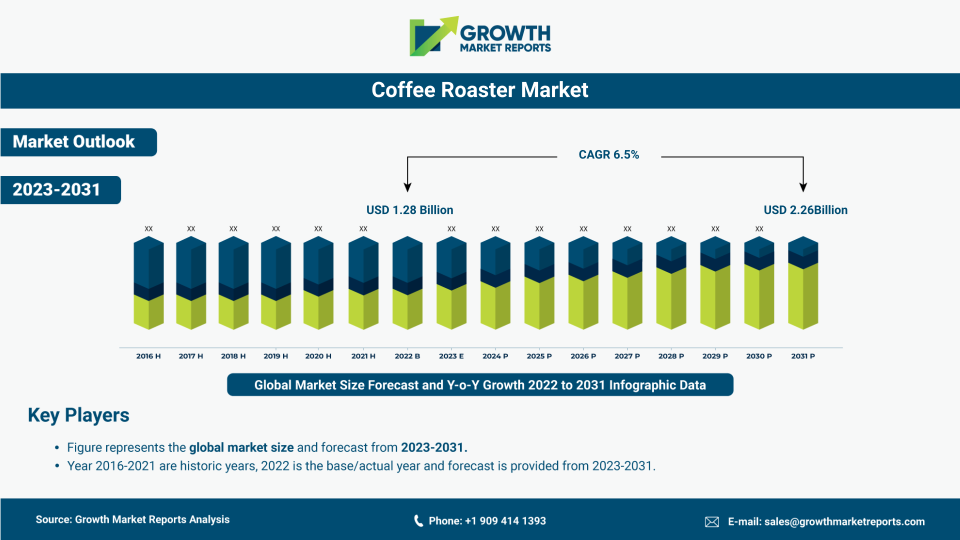
According to our latest research, the global coffee roaster market size reached USD 637.2 million in 2024, with a robust year-on-year growth trajectory. The market is expected to expand at a CAGR of 6.7% from 2025 to 2033, reaching a projected value of USD 1,145.3 million by the end of the forecast period. This growth is primarily driven by the increasing demand for specialty coffee, the rapid proliferation of coffee culture worldwide, and the technological advancements in roasting equipment. The market's upward trajectory is further supported by the surge in both commercial and artisanal coffee businesses seeking to differentiate their offerings through unique roasting profiles and enhanced product quality.

The coffee roaster market is experiencing significant momentum owing to the global shift in consumer preferences toward premium, freshly roasted coffee. Modern consumers are increasingly aware of the nuances in coffee flavor profiles, origin, and processing methods, which has spurred demand for high-quality roasting equipment. Furthermore, the rise of specialty coffee shops and third-wave coffee movements in major urban centers is fueling the adoption of advanced roasters that offer precision and consistency. These factors, combined with the growing trend of home coffee roasting among enthusiasts, are catalyzing market expansion across both developed and emerging economies. The integration of smart technologies, such as IoT-enabled roasters, is also empowering users to monitor and control the roasting process more efficiently, further enhancing product appeal and market penetration.

Another significant growth driver is the increasing emphasis on sustainability and traceability within the coffee industry. Roasters are now investing in energy-efficient machines and adopting eco-friendly practices to reduce their carbon footprint and comply with stringent environmental regulations. This shift is not only attracting environmentally conscious consumers but also encouraging coffee producers and retailers to adopt sustainable roasting solutions. Additionally, the market is witnessing a surge in collaborations between coffee equipment manufacturers and specialty coffee brands, leading to the development of customized roasting solutions tailored to specific flavor profiles and batch sizes. These strategic partnerships are creating new avenues for innovation and market differentiation, further reinforcing the growth trajectory of the coffee roaster market.

The proliferation of e-commerce platforms and digital marketing strategies has also played a pivotal role in expanding the reach of coffee roasters to a global audience. The convenience of online purchasing, coupled with detailed product information and customer reviews, is enabling buyers to make informed decisions and access a broader range of roasting equipment. This digital shift is particularly pronounced in markets where traditional retail infrastructure is limited, allowing manufacturers to tap into previously underserved customer segments. As a result, the online distribution channel is emerging as a key growth enabler, complementing the established offline retail networks and driving overall market expansion.

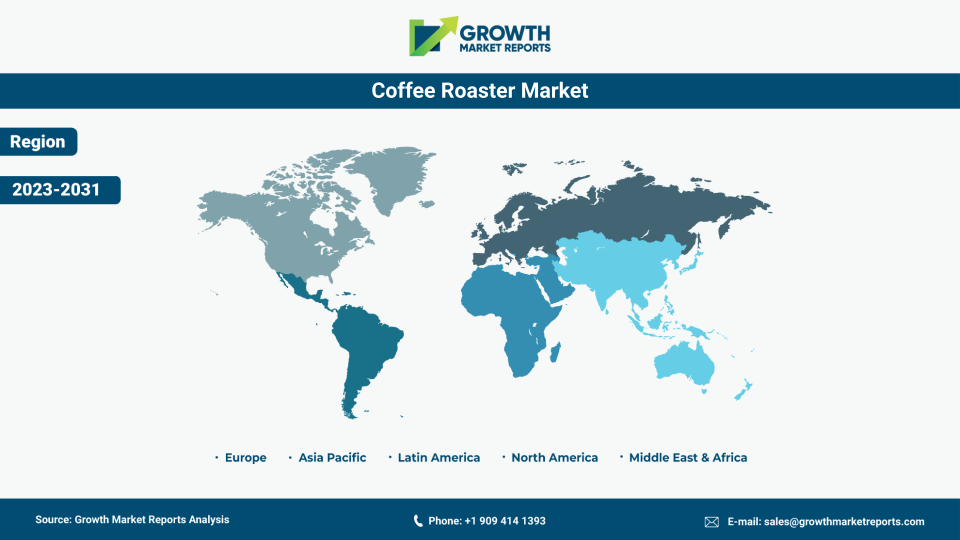
Regionally, the Asia Pacific market is emerging as a hotspot for coffee roaster adoption, driven by the rapid urbanization, rising disposable incomes, and a burgeoning café culture in countries such as China, Japan, South Korea, and India. North America and Europe continue to dominate the market in terms of revenue, owing to their mature coffee industries and high per capita coffee consumption. Latin America, as a leading coffee-producing region, is also witnessing increased investments in local roasting facilities to add value and cater to both domestic and export markets. Meanwhile, the Middle East & Africa region is showing promising growth potential, supported by the rising popularity of specialty coffee and the expansion of international coffee chains. Collectively, these regional dynamics are shaping a vibrant and competitive landscape for the global coffee roaster market.

In addition to the advancements in coffee roaster technology, the industry is seeing a parallel growth in the Cocoa Bean Roasters market. As consumers develop a more refined palate for chocolate, similar to coffee, there is an increasing demand for high-quality cocoa products. Cocoa Bean Roasters are becoming essential for chocolatiers and artisanal chocolate makers who wish to control the roasting process and develop unique flavor profiles. This trend mirrors the coffee industry, where precision and customization in roasting are key to product differentiation. The integration of smart technology in Cocoa Bean Roasters is also enabling producers to achieve consistent quality and efficiency, catering to the growing market for premium chocolate products.

Global Coffee Roaster Industry Outlook

Product Type Analysis

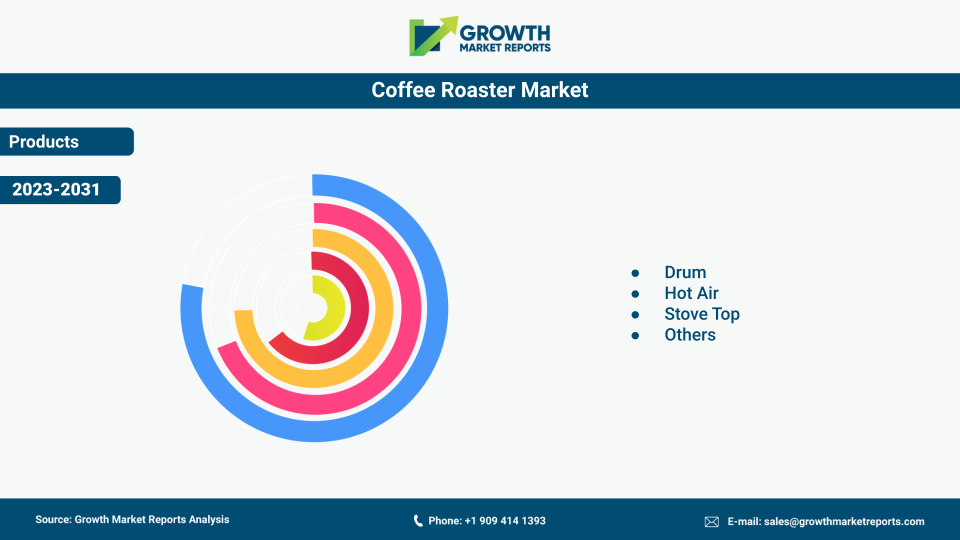
The coffee roaster market is segmented by product type into drum roasters, hot air roasters, stove top roasters, and others, each catering to distinct consumer needs and operational contexts. Drum roasters remain the most widely adopted due to their ability to deliver consistent roasting results at varying batch sizes. These machines are favored by both commercial and industrial users for their robust construction, scalability, and versatility in handling diverse bean varieties. Drum roasters are particularly renowned for their even heat distribution, allowing for precise control over the roasting curve and resulting in superior flavor development. The growing demand for specialty and artisanal coffee has further elevated the prominence of drum roasters, as they enable meticulous customization and experimentation with roast profiles.

Hot air roasters, also known as fluid bed roasters, are gaining traction among small-scale commercial operators and home users seeking a cleaner and faster roasting process. Unlike drum roasters, hot air roasters use a stream of heated air to roast the beans, minimizing the risk of scorching and promoting uniform color development. These machines are valued for their energy efficiency, reduced smoke emission, and ease of maintenance. As consumer awareness of air quality and health considerations increases, hot air roasters are positioned to capture a larger share of the market, especially among environmentally conscious buyers and those operating in urban settings with stringent air quality regulations.

Stove top roasters represent a niche but enduring segment, primarily appealing to home enthusiasts and small-batch artisanal roasters. These compact devices offer a cost-effective entry point for individuals looking to experiment with home roasting without significant upfront investment. Although stove top roasters lack the automation and precision of larger commercial machines, their tactile, hands-on approach appeals to hobbyists seeking a deeper connection with the roasting process. The rise of do-it-yourself coffee culture and the proliferation of online tutorials and communities have further fueled interest in stove top roasting, driving modest but steady growth in this segment.

The “others” category encompasses a range of innovative and hybrid roasting technologies, including infrared roasters, microwave roasters, and specialty machines designed for specific bean types or processing methods. These emerging products are often targeted at niche markets or high-end specialty coffee shops seeking unique selling propositions. Manufacturers in this segment are investing in research and development to enhance energy efficiency, automation, and digital integration, catering to the evolving needs of tech-savvy and sustainability-minded customers. As the coffee industry continues to embrace innovation, the “others” segment is expected to yield new growth opportunities and drive differentiation within the broader coffee roaster market.

Report Scope

Attributes Details
Report Title Coffee Roaster Market Research Report 2033
By Product Type Drum Roasters, Hot Air Roasters, Stove Top Roasters, Others
By Capacity Small, Medium, Large
By Application Commercial, Industrial, Household
By Distribution Channel Online, Offline
By End-User Cafés, Restaurants, Roasting Plants, Home Users, Others
Regions Covered North America, Europe, APAC, Latin America, MEA
Base Year 2024
Historic Data 2018-2023
Forecast Period 2025-2033
Number of Pages 253
Number of Tables & Figures 380
Customization Available Yes, the report can be customized as per your need.

Capacity Analysis

Capacity is a critical factor influencing the selection of coffee roasters, with the market segmented into small, medium, and large capacity machines. Small capacity roasters, typically ranging from 100 grams to 1 kilogram per batch, are predominantly used by home users, small cafés, and specialty coffee shops. These machines offer flexibility, ease of use, and lower upfront costs, making them ideal for businesses and individuals seeking to experiment with different roast profiles or cater to limited customer bases. The rise of micro-roasteries and the growing trend of personalized coffee experiences are driving demand for small capacity roasters, particularly in urban centers and among coffee enthusiasts.

Medium capacity roasters, with batch sizes ranging from 1 to 15 kilograms, represent the backbone of the commercial coffee roasting segment. These machines strike a balance between throughput and flexibility, enabling operators to efficiently meet moderate demand while maintaining control over roast quality. Medium capacity roasters are widely adopted by independent cafés, boutique roasteries, and regional coffee chains looking to differentiate themselves through unique blends and freshly roasted offerings. The increasing popularity of specialty coffee and the expansion of café culture in developing markets are fueling the adoption of medium capacity roasters, as businesses seek to enhance their product portfolios and customer experiences.

Large capacity roasters, designed for industrial-scale operations, can handle batch sizes exceeding 15 kilograms and are essential for large roasting plants, contract manufacturers, and major coffee brands. These high-throughput machines are engineered for efficiency, consistency, and automation, enabling operators to process significant volumes of coffee beans with minimal labor and downtime. The global expansion of coffee consumption, coupled with the growing demand for packaged and ready-to-brew products, is driving investments in large capacity roasting facilities. Additionally, advancements in automation, data analytics, and quality control are enhancing the performance and reliability of large capacity roasters, supporting their adoption in high-volume production environments.

The choice of capacity is closely linked to business models, target markets, and operational requirements. As the coffee industry becomes increasingly segmented and diversified, manufacturers are offering a broader range of capacity options to accommodate the unique needs of different customer segments. Customization, modularity, and scalability are emerging as key trends, enabling businesses to upgrade or reconfigure their roasting operations in response to changing market dynamics. This flexibility is particularly valuable for startups and small businesses seeking to scale their operations without incurring excessive capital expenditure.

Application Analysis

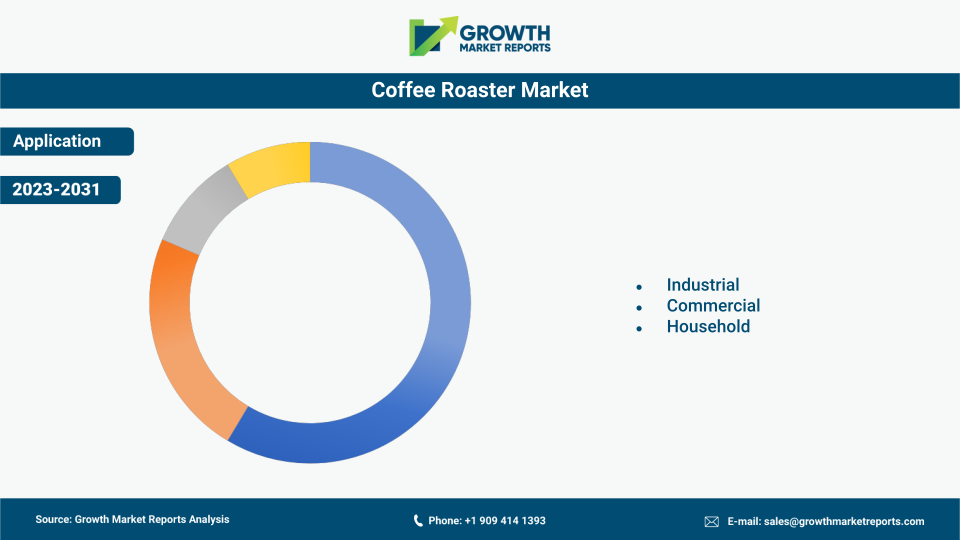
The coffee roaster market is segmented by application into commercial, industrial, and household uses, each characterized by distinct operational requirements and purchasing behaviors. Commercial applications dominate the market, accounting for the largest share of revenue and unit sales. Coffee shops, cafés, and restaurants rely on commercial-grade roasters to deliver freshly roasted coffee in-house, enhancing product quality and customer satisfaction. The proliferation of specialty coffee shops and the growing emphasis on unique flavor profiles are driving demand for advanced commercial roasters with precision controls and customizable settings. In addition, the trend toward on-site roasting is enabling businesses to differentiate themselves in a crowded marketplace and build stronger brand loyalty.

Industrial applications involve large-scale roasting operations conducted by major coffee producers, contract manufacturers, and private label brands. These facilities require high-capacity, fully automated roasters capable of processing thousands of kilograms of coffee beans per day. The industrial segment is characterized by stringent quality control, efficiency, and cost-effectiveness, with operators seeking to maximize throughput while minimizing waste and energy consumption. The global demand for packaged coffee products, including ground coffee, instant coffee, and coffee pods, is fueling investments in industrial roasting infrastructure, particularly in major coffee-producing and consuming regions.

Household applications represent a growing segment, driven by the increasing popularity of home coffee roasting among enthusiasts and hobbyists. Advances in technology have made home roasters more affordable, user-friendly, and compact, enabling consumers to experiment with different beans, roast levels, and flavor profiles from the comfort of their kitchens. The rise of specialty coffee culture, online coffee communities, and educational resources is empowering consumers to take greater control over their coffee experiences, driving demand for household roasting equipment. Manufacturers are responding by offering a range of products tailored to varying skill levels, batch sizes, and price points.

The application landscape is further shaped by evolving consumer preferences, regulatory requirements, and technological innovations. Businesses and individuals alike are seeking roasting solutions that align with their sustainability goals, operational constraints, and desired quality outcomes. As the coffee industry continues to evolve, the boundaries between commercial, industrial, and household applications are becoming increasingly fluid, with new business models and hybrid solutions emerging to meet the diverse needs of the market.

Distribution Channel Analysis

The distribution channel segment of the coffee roaster market is divided into online and offline channels, each playing a significant role in shaping market dynamics and customer access. Offline channels, including specialty retailers, distributors, and direct sales, have traditionally dominated the market, offering customers the opportunity to physically inspect products, receive personalized advice, and access after-sales support. These channels are particularly important for commercial and industrial buyers, who often require customized solutions, installation services, and ongoing maintenance. The strong presence of established retail networks and showrooms in major urban centers has supported the growth of offline sales, especially in developed markets.

However, the rise of online distribution channels has transformed the purchasing landscape, enabling manufacturers and retailers to reach a broader and more diverse customer base. E-commerce platforms, brand websites, and online marketplaces offer unparalleled convenience, competitive pricing, and access to a wide range of products. The ability to compare features, read customer reviews, and access detailed product information is empowering buyers to make informed decisions and explore new brands and technologies. Online channels are particularly popular among home users, small businesses, and buyers in remote or underserved regions, where traditional retail infrastructure may be limited.

The growth of online sales is further supported by digital marketing strategies, social media engagement, and targeted advertising campaigns. Manufacturers are leveraging these tools to build brand awareness, educate consumers, and drive direct-to-consumer sales. The COVID-19 pandemic accelerated the shift toward online purchasing, as restrictions on physical retail and heightened health concerns prompted consumers to seek contactless and convenient shopping options. As a result, many manufacturers have expanded their online presence and invested in user-friendly websites, secure payment systems, and efficient logistics to enhance the customer experience.

Despite the rapid growth of online channels, offline sales remain vital for high-value and complex equipment purchases, where personalized service, product demonstrations, and technical support are essential. Many customers prefer to establish long-term relationships with trusted suppliers and benefit from tailored solutions, training, and after-sales care. As the market continues to evolve, a hybrid approach that combines the strengths of both online and offline channels is emerging as the preferred strategy for manufacturers and distributors seeking to maximize reach, customer satisfaction, and market share.

End-User Analysis

The coffee roaster market is segmented by end-user into cafés, restaurants, roasting plants, home users, and others, each with unique purchasing behaviors and operational requirements. Cafés represent a major end-user segment, driven by the growing trend of in-house roasting and the desire to offer freshly roasted, signature blends. The rise of specialty coffee culture and the increasing focus on product differentiation are prompting cafés to invest in advanced roasting equipment that enables precise control over flavor profiles and batch sizes. These businesses are also leveraging roasting as a marketing tool, showcasing their commitment to quality and craftsmanship to attract discerning customers.

Restaurants are another significant end-user segment, particularly those aiming to elevate their beverage offerings and enhance the overall dining experience. High-end and specialty restaurants are increasingly incorporating on-site roasting to deliver unique coffee experiences and pairings, aligning with broader trends in culinary innovation and experiential dining. The demand for compact, user-friendly, and aesthetically pleasing roasters is particularly strong in this segment, as restaurants seek to integrate roasting operations into their existing workflows without compromising on space or design.

Roasting plants and industrial-scale operators account for a substantial share of the market, supplying packaged coffee products to retailers, wholesalers, and foodservice providers. These end-users require high-capacity, fully automated roasters capable of delivering consistent quality at scale. The growing demand for private label and contract roasting services is driving investments in advanced roasting infrastructure, quality control systems, and supply chain integration. Roasting plants are also at the forefront of sustainability initiatives, adopting energy-efficient technologies and traceability solutions to meet the demands of environmentally conscious customers and regulatory authorities.

Home users represent a rapidly growing segment, fueled by the increasing popularity of home coffee roasting and the desire for personalized coffee experiences. Advances in product design, affordability, and ease of use are making home roasting accessible to a wider audience, from casual enthusiasts to dedicated hobbyists. Manufacturers are responding with a diverse range of products tailored to different skill levels, batch sizes, and aesthetic preferences. The rise of online communities, educational resources, and direct-to-consumer sales is further empowering home users to explore new roasting techniques and share their experiences with a global audience.

The “others” category includes a variety of niche and emerging end-users, such as educational institutions, research centers, and specialty retailers. These organizations often require customized roasting solutions for training, experimentation, or product development purposes. As the coffee industry continues to diversify and innovate, the range of end-users is expected to expand, creating new opportunities for manufacturers and distributors to tailor their offerings and capture additional market share.

Opportunities & Threats

The coffee roaster market presents a wealth of opportunities for growth, innovation, and value creation across the supply chain. The ongoing shift toward specialty coffee and premiumization is driving demand for advanced roasting equipment that enables precise control over flavor development, batch sizes, and quality consistency. Manufacturers that invest in research and development to deliver energy-efficient, user-friendly, and digitally integrated roasters are well positioned to capture emerging opportunities in both established and developing markets. The rise of home roasting, micro-roasteries, and direct-to-consumer sales is opening new avenues for product differentiation and customer engagement, particularly among younger, tech-savvy consumers seeking personalized coffee experiences. Additionally, the growing emphasis on sustainability and traceability is creating opportunities for manufacturers to develop eco-friendly solutions and forge strategic partnerships with coffee producers, retailers, and certification bodies.

The expansion of e-commerce and digital marketing channels is another significant opportunity, enabling manufacturers and retailers to reach a global audience and engage with customers in new and innovative ways. The ability to leverage data analytics, customer feedback, and targeted advertising is empowering businesses to refine their product offerings, optimize pricing strategies, and enhance the overall customer experience. The proliferation of online communities and educational resources is also fostering greater awareness and adoption of coffee roasting, driving demand for entry-level and mid-range equipment among home users and small businesses. As the market continues to evolve, companies that embrace digital transformation, customer-centricity, and continuous innovation are likely to achieve sustained competitive advantage and long-term growth.

Despite these opportunities, the coffee roaster market faces several threats and restraining factors that could impact growth prospects. The high initial cost of advanced roasting equipment, coupled with ongoing maintenance and operational expenses, may deter small businesses and individual consumers from investing in new machines. Economic uncertainties, fluctuating raw material prices, and supply chain disruptions can also impact market dynamics, particularly in regions heavily dependent on coffee imports or exports. Additionally, the increasing complexity of regulatory requirements related to energy efficiency, emissions, and food safety may pose compliance challenges for manufacturers and operators, necessitating ongoing investments in technology, training, and quality assurance.

Regional Outlook

The regional analysis of the coffee roaster market reveals distinct patterns of growth, adoption, and innovation across key geographies. North America remains the largest market, with a value of USD 215.4 million in 2024, driven by high per capita coffee consumption, a mature specialty coffee industry, and a strong culture of innovation. The United States and Canada are home to a vibrant ecosystem of coffee shops, roasteries, and equipment manufacturers, supported by robust retail infrastructure and a growing community of home roasting enthusiasts. The region is also characterized by early adoption of digital technologies, sustainability initiatives, and premiumization trends, positioning it at the forefront of market innovation and growth.

Europe is another major market, with a value of USD 184.2 million in 2024, supported by a rich coffee heritage, diverse consumer preferences, and a strong presence of specialty coffee shops and artisanal roasteries. Countries such as Italy, Germany, France, and the United Kingdom are leading adopters of advanced roasting equipment, driven by a culture of quality, craftsmanship, and culinary innovation. The European market is also characterized by stringent regulatory standards related to energy efficiency, emissions, and food safety, prompting manufacturers to invest in sustainable and compliant solutions. The region is expected to grow at a CAGR of 6.2% through 2033, reflecting ongoing investments in product innovation, digital transformation, and market expansion.

Asia Pacific is emerging as the fastest-growing region, with a market value of USD 146.5 million in 2024 and a projected CAGR of 8.1% from 2025 to 2033. Rapid urbanization, rising disposable incomes, and the proliferation of café culture in countries such as China, Japan, South Korea, and India are driving demand for both commercial and household roasting equipment. The region is also witnessing increased investments in local roasting facilities, supply chain integration, and digital marketing, enabling manufacturers to tap into new customer segments and capitalize on evolving consumer preferences. Latin America and the Middle East & Africa, with market values of USD 53.2 million and USD 37.9 million respectively, are showing promising growth potential, supported by rising coffee consumption, expanding retail networks, and the entry of international coffee brands.

Coffee Roaster Market Statistics

Competitor Outlook

The competitive landscape of the coffee roaster market is characterized by a diverse array of players, ranging from established multinational corporations to innovative startups and regional specialists. Market leaders are investing heavily in research and development, product innovation, and digital integration to maintain their competitive edge and capture emerging opportunities. The focus on energy efficiency, automation, and user-friendly design is driving the development of next-generation roasting equipment that meets the evolving needs of commercial, industrial, and household users. Companies are also leveraging strategic partnerships, mergers and acquisitions, and global distribution networks to expand their market presence and enhance customer engagement.

Innovation is a key differentiator in the coffee roaster market, with manufacturers competing on features such as precision controls, batch size flexibility, connectivity, and sustainability. The integration of IoT, data analytics, and cloud-based platforms is enabling operators to monitor and optimize the roasting process in real time, enhancing product quality and operational efficiency. Customization and modularity are also gaining traction, allowing customers to tailor their roasting solutions to specific business models, market segments, and growth trajectories. As competition intensifies, companies are placing greater emphasis on after-sales support, training, and customer education to build long-term relationships and drive brand loyalty.

The market is also witnessing the entry of new players, particularly in the home and small business segments, where lower barriers to entry and rising consumer interest are creating opportunities for niche brands and disruptive technologies. These entrants are leveraging digital marketing, direct-to-consumer sales, and community engagement to build brand awareness and capture market share. At the same time, established players are responding by expanding their product portfolios, investing in digital transformation, and exploring new business models such as equipment leasing, subscription services, and value-added partnerships.

Major companies operating in the global coffee roaster market include Probat, Diedrich Manufacturing Inc., Giesen Coffee Roasters, Loring Smart Roast Inc., Joper Roasters, Toper Roasters, Sonofresco, Ambex Roasters, and US Roaster Corp. Probat is renowned for its high-capacity industrial roasters and global distribution network, while Diedrich and Giesen are recognized for their focus on precision controls, sustainability, and artisanal craftsmanship. Loring Smart Roast is a leader in energy-efficient and environmentally friendly roasting solutions, catering to both commercial and industrial operators. Sonofresco and Ambex are prominent in the small and medium capacity segments, offering user-friendly and customizable equipment for cafés, restaurants, and home users. These companies are continuously innovating to address emerging market trends, regulatory requirements, and customer preferences, ensuring their continued relevance and leadership in a dynamic and competitive market.

Key Players

  • Nestlé S.A.
  • JDE Peet's
  • Starbucks Corporation
  • The Kraft Heinz Company
  • The J.M. Smucker Company
  • Lavazza Group
  • Tchibo GmbH
  • Strauss Group Ltd.
  • Keurig Dr Pepper Inc.
  • Melitta Group
  • illycaffè S.p.A.
  • Massimo Zanetti Beverage Group
  • Dunkin' Brands Group, Inc.
  • PeetÂ’s Coffee
  • Caribou Coffee Company, Inc.
  • Eight OÂ’Clock Coffee Company
  • Gloria JeanÂ’s Coffees
  • Coffee Beanery
  • Allegro Coffee Company
  • Blue Bottle Coffee Inc.
Coffee Roaster Market Overview

Segments

The Coffee Roaster market has been segmented on the basis of

Product Type

  • Drum Roasters
  • Hot Air Roasters
  • Stove Top Roasters
  • Others

Capacity

  • Small
  • Medium
  • Large

Application

  • Commercial
  • Industrial
  • Household

Distribution Channel

  • Online
  • Offline

End-User

  • Cafés
  • Restaurants
  • Roasting Plants
  • Home Users
  • Others

Competitive Landscape

Key players operating in the global coffee roasters market includes US Roaster Corp., Coffee Holding Company Inc., Behmor Inc., Hottop, and Giesen Coffee Roasters.
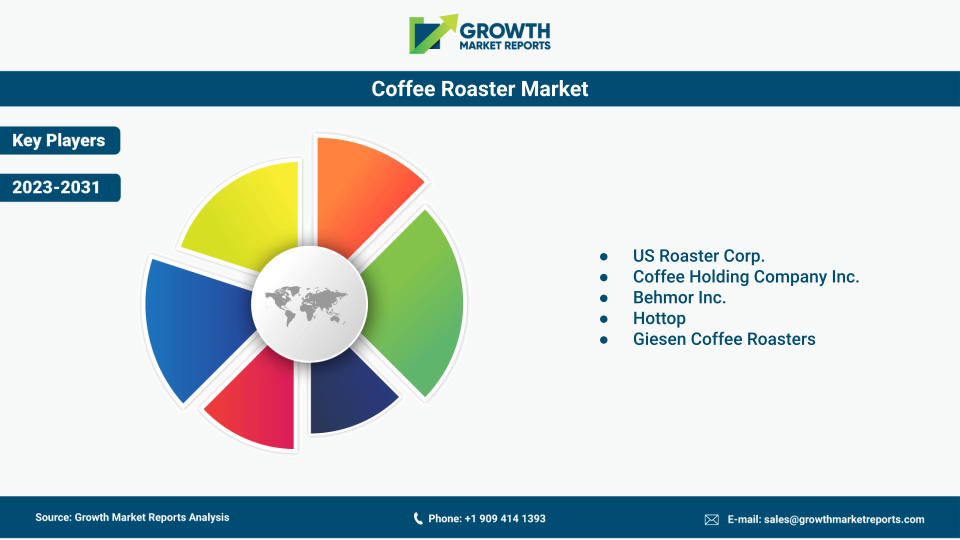

Coffee Roaster Market Key Players

Frequently Asked Questions

Key players include Probat, Diedrich Manufacturing Inc., Giesen Coffee Roasters, Loring Smart Roast Inc., Joper Roasters, Toper Roasters, Sonofresco, Ambex Roasters, US Roaster Corp, and major coffee brands like Nestlé, Starbucks, JDE Peet's, Lavazza, and illycaffè.

Opportunities include growth in specialty coffee, home roasting trends, digital sales channels, and sustainability initiatives. Threats include high equipment costs, economic uncertainties, supply chain disruptions, and regulatory compliance challenges.

Major end-users include cafés, restaurants, roasting plants, home users, and other niche segments like educational institutions and specialty retailers.

North America and Europe are the largest markets due to mature coffee industries and high consumption. Asia Pacific is the fastest-growing region, while Latin America and the Middle East & Africa show promising growth potential.

Coffee roasters are sold through both offline channels (specialty retailers, distributors, direct sales) and online channels (e-commerce platforms, brand websites, online marketplaces). The online segment is rapidly growing due to convenience and broader reach.

Coffee roasters are used in commercial (cafés, restaurants), industrial (large roasting plants, contract manufacturers), and household (home users, hobbyists) applications.

The market is segmented into small (100g-1kg), medium (1-15kg), and large (over 15kg) capacity roasters, catering to home users, small cafés, commercial operators, and industrial-scale roasting plants.

The main types of coffee roasters are drum roasters, hot air roasters (fluid bed), stove top roasters, and others such as infrared and microwave roasters. Drum roasters are the most widely adopted, especially for commercial and industrial use.

Key growth drivers include rising demand for specialty coffee, the spread of coffee culture worldwide, technological advancements in roasting equipment, and the increasing emphasis on sustainability and traceability.

The global coffee roaster market reached USD 637.2 million in 2024 and is expected to grow at a CAGR of 6.7% from 2025 to 2033, reaching USD 1,145.3 million by the end of the forecast period.

Table Of Content

Chapter 1 Executive Summary
Chapter 2 Assumptions and Acronyms Used
Chapter 3 Research Methodology
Chapter 4 Coffee Roaster Market Overview
   4.1 Introduction
      4.1.1 Market Taxonomy
      4.1.2 Market Definition
      4.1.3 Macro-Economic Factors Impacting the Market Growth
   4.2 Coffee Roaster Market Dynamics
      4.2.1 Market Drivers
      4.2.2 Market Restraints
      4.2.3 Market Opportunity
   4.3 Coffee Roaster Market - Supply Chain Analysis
      4.3.1 List of Key Suppliers
      4.3.2 List of Key Distributors
      4.3.3 List of Key Consumers
   4.4 Key Forces Shaping the Coffee Roaster Market
      4.4.1 Bargaining Power of Suppliers
      4.4.2 Bargaining Power of Buyers
      4.4.3 Threat of Substitution
      4.4.4 Threat of New Entrants
      4.4.5 Competitive Rivalry
   4.5 Global Coffee Roaster Market Size & Forecast, 2023-2032
      4.5.1 Coffee Roaster Market Size and Y-o-Y Growth
      4.5.2 Coffee Roaster Market Absolute $ Opportunity

Chapter 5 Global Coffee Roaster Market Analysis and Forecast By Product Type
   5.1 Introduction
      5.1.1 Key Market Trends & Growth Opportunities By Product Type
      5.1.2 Basis Point Share (BPS) Analysis By Product Type
      5.1.3 Absolute $ Opportunity Assessment By Product Type
   5.2 Coffee Roaster Market Size Forecast By Product Type
      5.2.1 Drum Roasters
      5.2.2 Hot Air Roasters
      5.2.3 Stove Top Roasters
      5.2.4 Others
   5.3 Market Attractiveness Analysis By Product Type

Chapter 6 Global Coffee Roaster Market Analysis and Forecast By Capacity
   6.1 Introduction
      6.1.1 Key Market Trends & Growth Opportunities By Capacity
      6.1.2 Basis Point Share (BPS) Analysis By Capacity
      6.1.3 Absolute $ Opportunity Assessment By Capacity
   6.2 Coffee Roaster Market Size Forecast By Capacity
      6.2.1 Small
      6.2.2 Medium
      6.2.3 Large
   6.3 Market Attractiveness Analysis By Capacity

Chapter 7 Global Coffee Roaster Market Analysis and Forecast By Application
   7.1 Introduction
      7.1.1 Key Market Trends & Growth Opportunities By Application
      7.1.2 Basis Point Share (BPS) Analysis By Application
      7.1.3 Absolute $ Opportunity Assessment By Application
   7.2 Coffee Roaster Market Size Forecast By Application
      7.2.1 Commercial
      7.2.2 Industrial
      7.2.3 Household
   7.3 Market Attractiveness Analysis By Application

Chapter 8 Global Coffee Roaster Market Analysis and Forecast By Distribution Channel
   8.1 Introduction
      8.1.1 Key Market Trends & Growth Opportunities By Distribution Channel
      8.1.2 Basis Point Share (BPS) Analysis By Distribution Channel
      8.1.3 Absolute $ Opportunity Assessment By Distribution Channel
   8.2 Coffee Roaster Market Size Forecast By Distribution Channel
      8.2.1 Online
      8.2.2 Offline
   8.3 Market Attractiveness Analysis By Distribution Channel

Chapter 9 Global Coffee Roaster Market Analysis and Forecast By End-User
   9.1 Introduction
      9.1.1 Key Market Trends & Growth Opportunities By End-User
      9.1.2 Basis Point Share (BPS) Analysis By End-User
      9.1.3 Absolute $ Opportunity Assessment By End-User
   9.2 Coffee Roaster Market Size Forecast By End-User
      9.2.1 Cafés
      9.2.2 Restaurants
      9.2.3 Roasting Plants
      9.2.4 Home Users
      9.2.5 Others
   9.3 Market Attractiveness Analysis By End-User

Chapter 10 Global Coffee Roaster Market Analysis and Forecast by Region
   10.1 Introduction
      10.1.1 Key Market Trends & Growth Opportunities By Region
      10.1.2 Basis Point Share (BPS) Analysis By Region
      10.1.3 Absolute $ Opportunity Assessment By Region
   10.2 Coffee Roaster Market Size Forecast By Region
      10.2.1 North America
      10.2.2 Europe
      10.2.3 Asia Pacific
      10.2.4 Latin America
      10.2.5 Middle East & Africa (MEA)
   10.3 Market Attractiveness Analysis By Region

Chapter 11 Coronavirus Disease (COVID-19) Impact 
   11.1 Introduction 
   11.2 Current & Future Impact Analysis 
   11.3 Economic Impact Analysis 
   11.4 Government Policies 
   11.5 Investment Scenario

Chapter 12 North America Coffee Roaster Analysis and Forecast
   12.1 Introduction
   12.2 North America Coffee Roaster Market Size Forecast by Country
      12.2.1 U.S.
      12.2.2 Canada
   12.3 Basis Point Share (BPS) Analysis by Country
   12.4 Absolute $ Opportunity Assessment by Country
   12.5 Market Attractiveness Analysis by Country
   12.6 North America Coffee Roaster Market Size Forecast By Product Type
      12.6.1 Drum Roasters
      12.6.2 Hot Air Roasters
      12.6.3 Stove Top Roasters
      12.6.4 Others
   12.7 Basis Point Share (BPS) Analysis By Product Type 
   12.8 Absolute $ Opportunity Assessment By Product Type 
   12.9 Market Attractiveness Analysis By Product Type
   12.10 North America Coffee Roaster Market Size Forecast By Capacity
      12.10.1 Small
      12.10.2 Medium
      12.10.3 Large
   12.11 Basis Point Share (BPS) Analysis By Capacity 
   12.12 Absolute $ Opportunity Assessment By Capacity 
   12.13 Market Attractiveness Analysis By Capacity
   12.14 North America Coffee Roaster Market Size Forecast By Application
      12.14.1 Commercial
      12.14.2 Industrial
      12.14.3 Household
   12.15 Basis Point Share (BPS) Analysis By Application 
   12.16 Absolute $ Opportunity Assessment By Application 
   12.17 Market Attractiveness Analysis By Application
   12.18 North America Coffee Roaster Market Size Forecast By Distribution Channel
      12.18.1 Online
      12.18.2 Offline
   12.19 Basis Point Share (BPS) Analysis By Distribution Channel 
   12.20 Absolute $ Opportunity Assessment By Distribution Channel 
   12.21 Market Attractiveness Analysis By Distribution Channel
   12.22 North America Coffee Roaster Market Size Forecast By End-User
      12.22.1 Cafés
      12.22.2 Restaurants
      12.22.3 Roasting Plants
      12.22.4 Home Users
      12.22.5 Others
   12.23 Basis Point Share (BPS) Analysis By End-User 
   12.24 Absolute $ Opportunity Assessment By End-User 
   12.25 Market Attractiveness Analysis By End-User

Chapter 13 Europe Coffee Roaster Analysis and Forecast
   13.1 Introduction
   13.2 Europe Coffee Roaster Market Size Forecast by Country
      13.2.1 Germany
      13.2.2 France
      13.2.3 Italy
      13.2.4 U.K.
      13.2.5 Spain
      13.2.6 Russia
      13.2.7 Rest of Europe
   13.3 Basis Point Share (BPS) Analysis by Country
   13.4 Absolute $ Opportunity Assessment by Country
   13.5 Market Attractiveness Analysis by Country
   13.6 Europe Coffee Roaster Market Size Forecast By Product Type
      13.6.1 Drum Roasters
      13.6.2 Hot Air Roasters
      13.6.3 Stove Top Roasters
      13.6.4 Others
   13.7 Basis Point Share (BPS) Analysis By Product Type 
   13.8 Absolute $ Opportunity Assessment By Product Type 
   13.9 Market Attractiveness Analysis By Product Type
   13.10 Europe Coffee Roaster Market Size Forecast By Capacity
      13.10.1 Small
      13.10.2 Medium
      13.10.3 Large
   13.11 Basis Point Share (BPS) Analysis By Capacity 
   13.12 Absolute $ Opportunity Assessment By Capacity 
   13.13 Market Attractiveness Analysis By Capacity
   13.14 Europe Coffee Roaster Market Size Forecast By Application
      13.14.1 Commercial
      13.14.2 Industrial
      13.14.3 Household
   13.15 Basis Point Share (BPS) Analysis By Application 
   13.16 Absolute $ Opportunity Assessment By Application 
   13.17 Market Attractiveness Analysis By Application
   13.18 Europe Coffee Roaster Market Size Forecast By Distribution Channel
      13.18.1 Online
      13.18.2 Offline
   13.19 Basis Point Share (BPS) Analysis By Distribution Channel 
   13.20 Absolute $ Opportunity Assessment By Distribution Channel 
   13.21 Market Attractiveness Analysis By Distribution Channel
   13.22 Europe Coffee Roaster Market Size Forecast By End-User
      13.22.1 Cafés
      13.22.2 Restaurants
      13.22.3 Roasting Plants
      13.22.4 Home Users
      13.22.5 Others
   13.23 Basis Point Share (BPS) Analysis By End-User 
   13.24 Absolute $ Opportunity Assessment By End-User 
   13.25 Market Attractiveness Analysis By End-User

Chapter 14 Asia Pacific Coffee Roaster Analysis and Forecast
   14.1 Introduction
   14.2 Asia Pacific Coffee Roaster Market Size Forecast by Country
      14.2.1 China
      14.2.2 Japan
      14.2.3 South Korea
      14.2.4 India
      14.2.5 Australia
      14.2.6 South East Asia (SEA)
      14.2.7 Rest of Asia Pacific (APAC)
   14.3 Basis Point Share (BPS) Analysis by Country
   14.4 Absolute $ Opportunity Assessment by Country
   14.5 Market Attractiveness Analysis by Country
   14.6 Asia Pacific Coffee Roaster Market Size Forecast By Product Type
      14.6.1 Drum Roasters
      14.6.2 Hot Air Roasters
      14.6.3 Stove Top Roasters
      14.6.4 Others
   14.7 Basis Point Share (BPS) Analysis By Product Type 
   14.8 Absolute $ Opportunity Assessment By Product Type 
   14.9 Market Attractiveness Analysis By Product Type
   14.10 Asia Pacific Coffee Roaster Market Size Forecast By Capacity
      14.10.1 Small
      14.10.2 Medium
      14.10.3 Large
   14.11 Basis Point Share (BPS) Analysis By Capacity 
   14.12 Absolute $ Opportunity Assessment By Capacity 
   14.13 Market Attractiveness Analysis By Capacity
   14.14 Asia Pacific Coffee Roaster Market Size Forecast By Application
      14.14.1 Commercial
      14.14.2 Industrial
      14.14.3 Household
   14.15 Basis Point Share (BPS) Analysis By Application 
   14.16 Absolute $ Opportunity Assessment By Application 
   14.17 Market Attractiveness Analysis By Application
   14.18 Asia Pacific Coffee Roaster Market Size Forecast By Distribution Channel
      14.18.1 Online
      14.18.2 Offline
   14.19 Basis Point Share (BPS) Analysis By Distribution Channel 
   14.20 Absolute $ Opportunity Assessment By Distribution Channel 
   14.21 Market Attractiveness Analysis By Distribution Channel
   14.22 Asia Pacific Coffee Roaster Market Size Forecast By End-User
      14.22.1 Cafés
      14.22.2 Restaurants
      14.22.3 Roasting Plants
      14.22.4 Home Users
      14.22.5 Others
   14.23 Basis Point Share (BPS) Analysis By End-User 
   14.24 Absolute $ Opportunity Assessment By End-User 
   14.25 Market Attractiveness Analysis By End-User

Chapter 15 Latin America Coffee Roaster Analysis and Forecast
   15.1 Introduction
   15.2 Latin America Coffee Roaster Market Size Forecast by Country
      15.2.1 Brazil
      15.2.2 Mexico
      15.2.3 Rest of Latin America (LATAM)
   15.3 Basis Point Share (BPS) Analysis by Country
   15.4 Absolute $ Opportunity Assessment by Country
   15.5 Market Attractiveness Analysis by Country
   15.6 Latin America Coffee Roaster Market Size Forecast By Product Type
      15.6.1 Drum Roasters
      15.6.2 Hot Air Roasters
      15.6.3 Stove Top Roasters
      15.6.4 Others
   15.7 Basis Point Share (BPS) Analysis By Product Type 
   15.8 Absolute $ Opportunity Assessment By Product Type 
   15.9 Market Attractiveness Analysis By Product Type
   15.10 Latin America Coffee Roaster Market Size Forecast By Capacity
      15.10.1 Small
      15.10.2 Medium
      15.10.3 Large
   15.11 Basis Point Share (BPS) Analysis By Capacity 
   15.12 Absolute $ Opportunity Assessment By Capacity 
   15.13 Market Attractiveness Analysis By Capacity
   15.14 Latin America Coffee Roaster Market Size Forecast By Application
      15.14.1 Commercial
      15.14.2 Industrial
      15.14.3 Household
   15.15 Basis Point Share (BPS) Analysis By Application 
   15.16 Absolute $ Opportunity Assessment By Application 
   15.17 Market Attractiveness Analysis By Application
   15.18 Latin America Coffee Roaster Market Size Forecast By Distribution Channel
      15.18.1 Online
      15.18.2 Offline
   15.19 Basis Point Share (BPS) Analysis By Distribution Channel 
   15.20 Absolute $ Opportunity Assessment By Distribution Channel 
   15.21 Market Attractiveness Analysis By Distribution Channel
   15.22 Latin America Coffee Roaster Market Size Forecast By End-User
      15.22.1 Cafés
      15.22.2 Restaurants
      15.22.3 Roasting Plants
      15.22.4 Home Users
      15.22.5 Others
   15.23 Basis Point Share (BPS) Analysis By End-User 
   15.24 Absolute $ Opportunity Assessment By End-User 
   15.25 Market Attractiveness Analysis By End-User

Chapter 16 Middle East & Africa (MEA) Coffee Roaster Analysis and Forecast
   16.1 Introduction
   16.2 Middle East & Africa (MEA) Coffee Roaster Market Size Forecast by Country
      16.2.1 Saudi Arabia
      16.2.2 South Africa
      16.2.3 UAE
      16.2.4 Rest of Middle East & Africa (MEA)
   16.3 Basis Point Share (BPS) Analysis by Country
   16.4 Absolute $ Opportunity Assessment by Country
   16.5 Market Attractiveness Analysis by Country
   16.6 Middle East & Africa (MEA) Coffee Roaster Market Size Forecast By Product Type
      16.6.1 Drum Roasters
      16.6.2 Hot Air Roasters
      16.6.3 Stove Top Roasters
      16.6.4 Others
   16.7 Basis Point Share (BPS) Analysis By Product Type 
   16.8 Absolute $ Opportunity Assessment By Product Type 
   16.9 Market Attractiveness Analysis By Product Type
   16.10 Middle East & Africa (MEA) Coffee Roaster Market Size Forecast By Capacity
      16.10.1 Small
      16.10.2 Medium
      16.10.3 Large
   16.11 Basis Point Share (BPS) Analysis By Capacity 
   16.12 Absolute $ Opportunity Assessment By Capacity 
   16.13 Market Attractiveness Analysis By Capacity
   16.14 Middle East & Africa (MEA) Coffee Roaster Market Size Forecast By Application
      16.14.1 Commercial
      16.14.2 Industrial
      16.14.3 Household
   16.15 Basis Point Share (BPS) Analysis By Application 
   16.16 Absolute $ Opportunity Assessment By Application 
   16.17 Market Attractiveness Analysis By Application
   16.18 Middle East & Africa (MEA) Coffee Roaster Market Size Forecast By Distribution Channel
      16.18.1 Online
      16.18.2 Offline
   16.19 Basis Point Share (BPS) Analysis By Distribution Channel 
   16.20 Absolute $ Opportunity Assessment By Distribution Channel 
   16.21 Market Attractiveness Analysis By Distribution Channel
   16.22 Middle East & Africa (MEA) Coffee Roaster Market Size Forecast By End-User
      16.22.1 Cafés
      16.22.2 Restaurants
      16.22.3 Roasting Plants
      16.22.4 Home Users
      16.22.5 Others
   16.23 Basis Point Share (BPS) Analysis By End-User 
   16.24 Absolute $ Opportunity Assessment By End-User 
   16.25 Market Attractiveness Analysis By End-User

Chapter 17 Competition Landscape 
   17.1 Coffee Roaster Market: Competitive Dashboard
   17.2 Global Coffee Roaster Market: Market Share Analysis, 2023
   17.3 Company Profiles (Details – Overview, Financials, Developments, Strategy) 
      17.3.1 Nestlé S.A.
JDE Peet's
Starbucks Corporation
The Kraft Heinz Company
The J.M. Smucker Company
Lavazza Group
Tchibo GmbH
Strauss Group Ltd.
Keurig Dr Pepper Inc.
Melitta Group
illycaffè S.p.A.
Massimo Zanetti Beverage Group
Dunkin' Brands Group, Inc.
Peet’s Coffee
Caribou Coffee Company, Inc.
Eight O’Clock Coffee Company
Gloria Jean’s Coffees
Coffee Beanery
Allegro Coffee Company
Blue Bottle Coffee Inc.

Methodology

Our Clients

Deloitte
Honda Motor Co. Ltd.
Siemens Healthcare
sinopec
General Electric
The John Holland Group
General Mills
Nestle SA