Coaxial Cable Assemblies Market Report 2034

Coaxial Cable Assemblies Market Report 2034

Segments - by Product Type (Standard Coaxial Cable Assemblies, Custom Coaxial Cable Assemblies), by Cable Type (Semi-Rigid, Flexible, Formable, Rigid), by Application (Telecommunications, Military & Aerospace, Medical, Automotive, Consumer Electronics, Others), by End-User (Commercial, Industrial, Residential), by Distribution Channel (Direct Sales, Distributors/Wholesalers, Online Retail)

https://growthmarketreports.com/Raksha
Author : Raksha Sharma
https://growthmarketreports.com/Vaibhav
Fact-checked by : V. Chandola
https://growthmarketreports.com/Shruti
Editor : Shruti Bhat

Last Updated : Jun, 2026 | Report ID :ICT-SE-3828 | 4.7 Rating | 73 Reviews | 261 Pages | Format : Docx PDF

Report Description

This report is updated with the latest market data and insights as of June 2026. Base year: 2025  |  Forecast period: 2026-2034


Coaxial Cable Assemblies Market Outlook

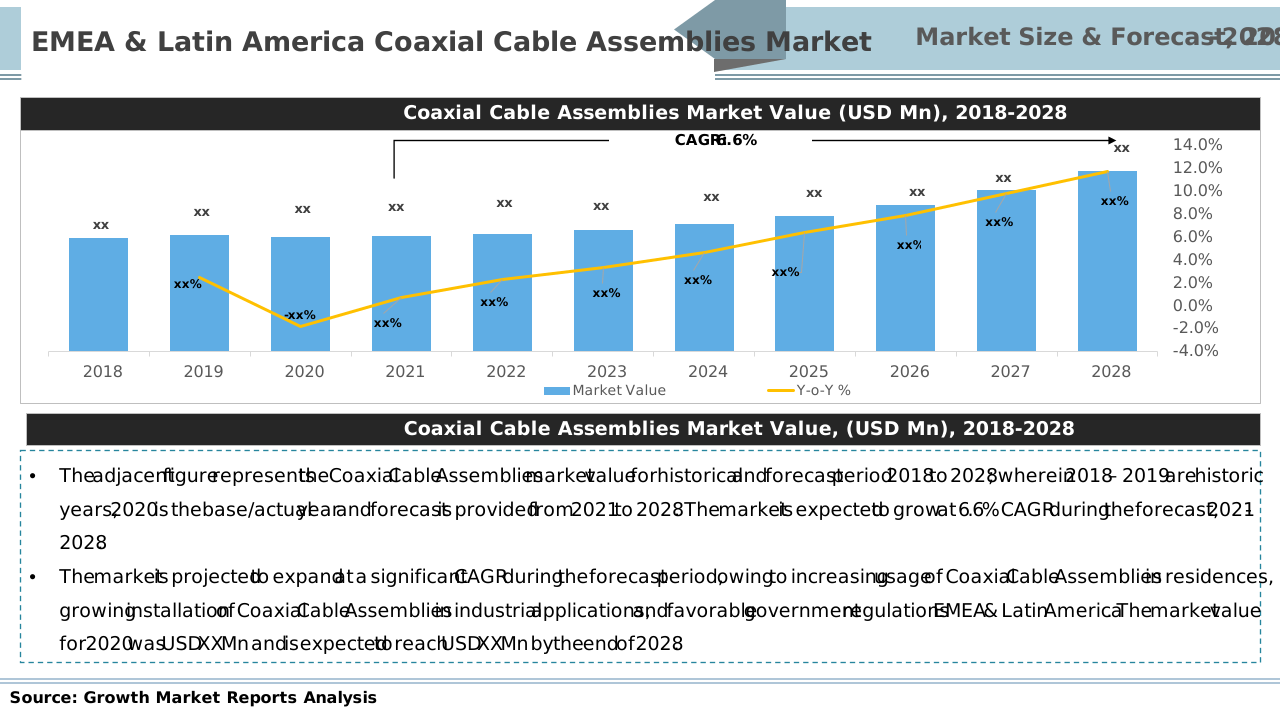
According to our latest research, the global coaxial cable assemblies market size reached USD 14.1 billion in 2025, demonstrating robust momentum driven by expanding telecommunications infrastructure and increasing demand across various industrial sectors. The market is projected to grow at a CAGR of 7.0% over the forecast period, reaching a value of USD 26.1 billion by 2034. This growth is primarily attributed to the rapid proliferation of high-speed internet networks, the surge in data transmission requirements, and significant technological advancements in cable design and materials that have accelerated considerably since 2023.

Global Coaxial Cable Assemblies Market Size Forecast 2025-2034, USD Billion

One of the most significant growth factors for the coaxial cable assemblies market is the ongoing expansion and modernization of global telecommunications networks. The large-scale deployment of 5G technology and the continuous upgrade of broadband infrastructure have led to a substantial increase in demand for high-performance coaxial cable assemblies. These cables are essential for ensuring reliable signal transmission, minimal interference, and high bandwidth, all of which are critical for supporting next-generation communication networks. The growing adoption of IoT devices and the increasing need for seamless connectivity in both urban and rural areas are further accelerating the demand for coaxial cable solutions, as they offer durability, flexibility, and superior shielding capabilities.

Another key driver shaping the market landscape is the rising application of coaxial cable assemblies in the military, aerospace, and medical sectors. In the military and aerospace industries, coaxial cables are indispensable for mission-critical communications, radar systems, and avionics due to their robust construction and ability to withstand extreme environmental conditions. Similarly, the medical sector relies on these assemblies for diagnostic imaging and patient monitoring equipment, where signal integrity and reliability are paramount. The automotive industry is also contributing to market expansion, with coaxial cables being increasingly integrated into advanced driver-assistance systems (ADAS), infotainment, and vehicle-to-everything (V2X) communication technologies that are now standard features across mid-range and premium vehicle segments.

Technological advancements in cable materials, design, and manufacturing processes are playing a pivotal role in enhancing the performance and versatility of coaxial cable assemblies. Innovations such as improved shielding, miniaturization, and the use of advanced polymers are enabling manufacturers to develop cables that are lighter, more flexible, and capable of handling higher frequencies. These advancements are not only meeting the evolving requirements of end-users but also opening new avenues in emerging applications such as smart homes, industrial automation, and high-definition broadcasting. As a result, manufacturers are focusing on research and development to offer customized solutions tailored to specific industry needs, further fueling market growth through 2034.

In the realm of aerospace and satellite communications, the demand for space-qualified coaxial cable assemblies has been on a strong upward trajectory heading into 2025. These cables are specifically engineered to withstand the harsh conditions of space, including extreme temperatures, radiation, and vacuum environments. The unique construction of space-qualified assemblies ensures that they maintain signal integrity and reliability, which are critical for successful space missions. As space exploration and commercial satellite deployment continue to expand under programs from government agencies and private launch providers, the need for advanced coaxial connectors and assemblies that meet stringent space standards is becoming increasingly important. Manufacturers are focusing on developing cables that not only meet these rigorous requirements but also offer lightweight and compact designs to optimize payload capacity, contributing to the overall expansion of the market.

From a regional perspective, Asia Pacific remains the dominant market for coaxial cable assemblies, driven by rapid industrialization, urbanization, and the large-scale rollout of telecommunications infrastructure in countries like China, India, Japan, and South Korea. North America and Europe are also significant markets, benefiting from advanced technological ecosystems and strong demand from military, aerospace, and medical sectors. Meanwhile, Latin America and the Middle East & Africa are witnessing increasing investments in infrastructure development and digital transformation initiatives, contributing to the steady expansion of the market in these regions through the 2026-2034 forecast window.

Product Type Analysis

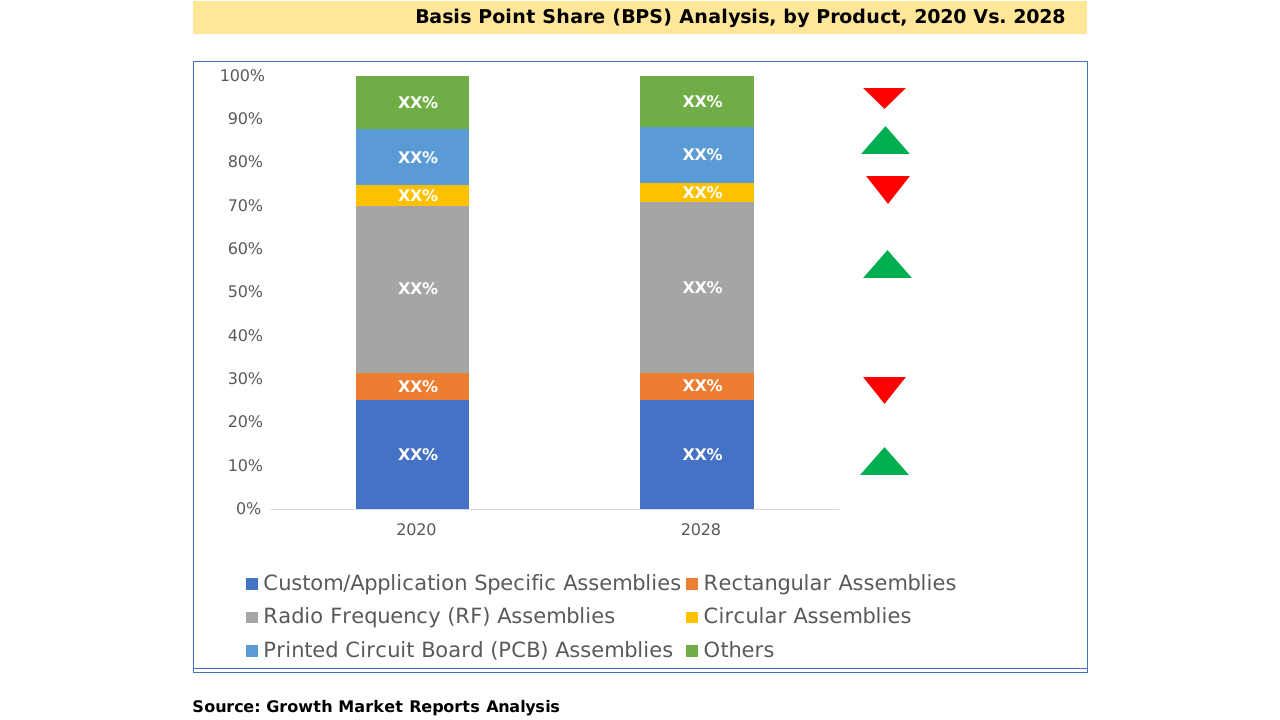
The coaxial cable assemblies market is broadly segmented by product type into standard coaxial cable assemblies and custom coaxial cable assemblies. Standard coaxial cable assemblies are pre-configured solutions designed to meet the general requirements of telecommunications, broadcasting, and consumer electronics applications. These products are favored for their cost-effectiveness, ease of installation, and widespread availability. They are commonly used in environments where performance requirements are well-defined and standardized, such as residential broadband connections, cable television, and office networking. The demand for standard coaxial cable assemblies continues to grow as more households and businesses seek reliable and affordable connectivity solutions, with this sub-segment holding approximately 56.5% of the global market share in 2025.

Coaxial Cable Assemblies Market Share by Product Type 2025

Custom coaxial cable assemblies, on the other hand, are tailored to meet specific technical and environmental requirements of specialized applications. These assemblies are designed with unique connectors, shielding, and cable lengths to ensure optimal performance in challenging conditions. Industries such as military, aerospace, and medical often require custom solutions to address stringent safety, durability, and signal integrity standards. The increasing complexity of electronic systems and the need for high-frequency, low-loss transmission are driving the adoption of custom coaxial cable assemblies, as they offer enhanced flexibility and adaptability for mission-critical applications. This segment accounts for roughly 43.5% of the market in 2025 and is growing at a faster pace than the standard segment.

The growing demand for miniaturized and high-density electronic systems has further fueled the market for custom coaxial cable assemblies. As devices become more compact and sophisticated, manufacturers are leveraging advanced engineering techniques to design cable assemblies that can fit into tight spaces without compromising performance. This trend is particularly evident in the medical and automotive sectors, where space constraints and reliability are of utmost importance. The ability to customize cable assemblies according to specific application requirements is providing manufacturers with a competitive edge and enabling them to cater to a broader range of end-users.

In addition to technical performance, aesthetics and ease of integration are becoming increasingly important considerations for both standard and custom coaxial cable assemblies. End-users are seeking solutions that not only deliver superior electrical characteristics but also align with the design and layout of their systems. Manufacturers are responding by offering a variety of cable colors, connector types, and mounting options, ensuring seamless integration into diverse applications. The emphasis on customization and user-centric design is expected to continue shaping the product landscape through 2034, as next-generation electronics demand ever more precise and application-specific interconnect solutions.

Report Scope

Attributes Details
Report Title Coaxial Cable Assemblies Market Research Report 2034
By Product Type Standard Coaxial Cable Assemblies, Custom Coaxial Cable Assemblies
By Cable Type Semi-Rigid, Flexible, Formable, Rigid
By Application Telecommunications, Military & Aerospace, Medical, Automotive, Consumer Electronics, Others
By End-User Commercial, Industrial, Residential
By Distribution Channel Direct Sales, Distributors/Wholesalers, Online Retail
Regions Covered North America, Europe, APAC, Latin America, MEA
Base Year 2025
Historic Data 2019-2024
Forecast Period 2026-2034
Number of Pages 261
Number of Tables & Figures 320
Customization Available Yes, the report can be customized as per your need.

Cable Type Analysis

The cable type segment of the coaxial cable assemblies market encompasses semi-rigid, flexible, formable, and rigid coaxial cables, each offering distinct advantages for specific applications. Semi-rigid coaxial cables are characterized by their solid outer conductor, which provides excellent shielding and minimal signal loss. These cables are widely used in high-frequency and high-performance applications, such as aerospace, defense, and test and measurement equipment. Their ability to maintain precise shapes and configurations makes them ideal for environments where signal integrity and electromagnetic compatibility are critical. Demand for semi-rigid variants remained robust in 2025, particularly from defense modernization programs and mmWave 5G deployments.

Cable assembly services play a crucial role in the production and deployment of coaxial cable assemblies, providing end-to-end solutions that encompass design, manufacturing, and testing. These services are essential for ensuring that assemblies meet specific performance and quality standards required by various industries. By outsourcing to specialized providers, companies can benefit from advanced manufacturing capabilities and cost efficiencies while focusing on their core competencies. The growing complexity of electronic systems and the demand for high-voltage shielded cable assemblies and other precision products are driving the expansion of these services, offering the flexibility and scalability needed to meet diverse customer requirements through the 2026-2034 period.

Flexible coaxial cables are designed to offer greater flexibility and ease of routing in complex installations. These cables feature braided or spiral-wound outer conductors, allowing them to bend and twist without compromising performance. Flexible coaxial cables are extensively used in telecommunications, consumer electronics, and automotive applications, where installation flexibility and durability are essential. The rising demand for flexible cables is being driven by the growing adoption of mobile devices, wireless networks, and in-vehicle connectivity systems, and this sub-segment is projected to register one of the stronger CAGRs through 2034 as EV architectures multiply.

Formable coaxial cables, also known as conformable cables, combine the advantages of semi-rigid and flexible cables. They can be easily shaped by hand to fit specific installation requirements, providing a cost-effective alternative to custom-formed semi-rigid cables. Formable cables are increasingly being used in prototyping, laboratory setups, and low-volume production runs, where quick and easy cable routing is required. Their versatility and ease of use are making them a popular choice among engineers and system integrators, particularly in rapidly evolving application domains such as satellite ground stations and advanced robotics.

Rigid coaxial cables, although less common in commercial applications, are essential for environments that demand maximum shielding and minimal signal attenuation. These cables are typically used in high-power transmission, broadcast, and military applications, where performance and reliability are paramount. The ongoing advancements in cable materials and manufacturing processes are enabling the development of rigid cables with improved mechanical strength and electrical properties, expanding their use in demanding industrial and scientific settings including particle accelerator facilities and high-power radar installations.

Application Analysis

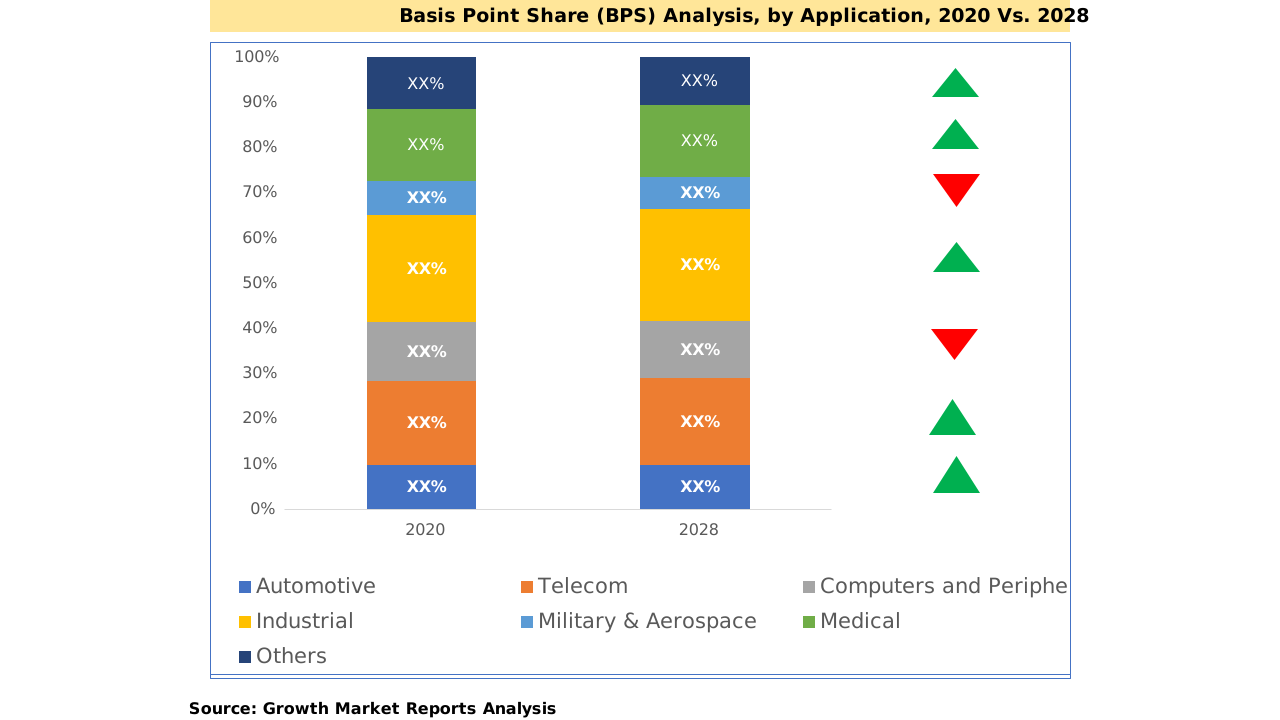
The application landscape for coaxial cable assemblies is diverse and spans several key industries, including telecommunications, military & aerospace, medical, automotive, consumer electronics, and others. Telecommunications remains the dominant application segment, accounting for a significant share of the market due to the continuous expansion of broadband networks, mobile communication systems, and data centers. The accelerated rollout of 5G standalone networks and fiber-to-the-home (FTTH) technologies is sustaining demand for high-quality assemblies that can support high-speed data transmission and low latency, a trend that is set to intensify through 2034.

In the military and aerospace sector, coaxial cable assemblies are critical for ensuring secure and reliable communications, radar operations, and navigation systems. The stringent requirements for electromagnetic interference (EMI) shielding, durability, and resistance to harsh environmental conditions make coaxial cables the preferred choice for mission-critical applications. Increased defense budgets across NATO member states, combined with expanding space launch activity from both government and commercial players, are expected to drive further growth in this segment over the forecast period.

The medical application segment is witnessing rapid expansion, driven by the growing adoption of advanced diagnostic and imaging equipment, as well as patient monitoring systems. Coaxial cable assemblies are valued for their ability to deliver high signal integrity, low noise, and reliable performance in sensitive medical devices. The trend towards minimally invasive robotic surgical procedures and the integration of AI-powered telemedicine platforms are further boosting the demand for specialized assemblies in the healthcare sector, making medical one of the fastest-growing application areas between 2026 and 2034.

Proper coaxial termination remains essential for ensuring the optimal performance of cable assemblies across every application. Precise termination minimizes signal reflection and loss, which can significantly impact the efficiency and reliability of communication systems. As the demand for high-frequency and high-bandwidth applications grows, advanced termination techniques are becoming increasingly vital. Manufacturers are investing in innovative termination technologies alongside related advances in fiber optic cable assemblies and harnesses to deliver comprehensive interconnect portfolios that address the stringent requirements of telecommunications, aerospace, and medical end-users. These advancements in termination and hybrid assembly design are expected to drive further growth and innovation in the broader cable assemblies market through 2034.

The automotive industry is also emerging as a significant end-user of coaxial cable assemblies, particularly with the advent of connected vehicles, battery electric vehicles (BEVs), and autonomous driving technologies. Coaxial cables are used for infotainment systems, sensor connectivity, and V2X communications, where high-speed data transfer and electromagnetic compatibility are essential. Additionally, the consumer electronics segment continues to drive demand in applications such as home entertainment systems, gaming consoles, and smart devices, supported by continuous product refresh cycles and the growing installed base of connected homes globally.

End-User Analysis

The end-user landscape for coaxial cable assemblies is segmented into commercial, industrial, and residential sectors, each exhibiting distinct demand patterns and growth drivers. The commercial segment encompasses telecommunications companies, broadcasting networks, healthcare facilities, and IT service providers, all of which rely heavily on coaxial cable assemblies for reliable connectivity and data transmission. The increasing adoption of high-speed internet, cloud computing, and unified communications in commercial settings is fueling the demand for advanced cable solutions that can support large-scale operations and complex network architectures, with this segment commanding the largest revenue share in 2025.

The industrial segment includes manufacturing plants, automotive factories, aerospace facilities, and energy companies, where coaxial cable assemblies are used for process automation, control systems, and instrumentation. The broad adoption of Industry 4.0 frameworks and the digitalization of manufacturing processes are driving the integration of coaxial cables into industrial automation systems, robotics, and machine-to-machine (M2M) communications. The need for robust, high-performance cables that can withstand harsh operating conditions is a key factor influencing purchasing decisions in the industrial sector, and this segment is expected to record above-average growth through 2034.

In the residential segment, the demand for coaxial cable assemblies is primarily driven by the widespread adoption of broadband internet, cable television, and home automation systems. As consumers seek faster and more reliable connectivity for streaming, gaming, and smart home devices, the importance of high-quality coaxial cables is becoming increasingly evident. The growing popularity of home theaters, surveillance systems, and IoT-enabled appliances is further contributing to the steady growth of this segment, even as fiber-to-the-home progressively displaces legacy coaxial runs in certain markets.

The convergence of commercial, industrial, and residential applications is creating new opportunities for manufacturers to develop versatile and scalable coaxial cable assemblies that cater to a broad spectrum of end-users. By offering customizable solutions and value-added services, companies are able to differentiate themselves in a competitive marketplace and address the evolving needs of their customers across all three segments through 2034.

Distribution Channel Analysis

The distribution channel for coaxial cable assemblies is segmented into direct sales, distributors/wholesalers, and online retail, each playing a pivotal role in the market's value chain. Direct sales channels are primarily utilized by large manufacturers and OEMs who cater to enterprise customers and government contracts. This channel allows for greater control over pricing, customization, and after-sales support, making it the preferred choice for high-value and complex projects. The ability to establish long-term relationships with key clients and offer tailored solutions is a significant advantage of the direct sales model, and it retains the largest share of market revenue in 2025.

Distributors and wholesalers serve as intermediaries between manufacturers and end-users, providing a wide range of coaxial cable assemblies to various industries. This channel is particularly important for reaching small and medium-sized enterprises (SMEs) and customers in remote or underserved regions. Distributors offer logistical support, inventory management, and technical assistance, enabling manufacturers to expand their market reach and respond quickly to changing customer demands. The presence of established distributor networks, particularly in Asia Pacific and Latin America, is a key factor driving the growth of this channel through 2034.

Online retail has emerged as a dynamic and rapidly growing distribution channel, driven by the increasing digitization of procurement processes and the rising preference for e-commerce platforms. Online retailers offer a convenient and cost-effective way for customers to browse, compare, and purchase coaxial cable assemblies from a wide selection of brands and suppliers. The ability to access detailed product specifications, customer reviews, and competitive pricing is making online retail an attractive option for both individual consumers and businesses, and this channel is registering the highest growth rate among the three segments.

The integration of digital technologies and supply chain automation is further enhancing the efficiency and transparency of distribution channels. Manufacturers are leveraging data analytics, CRM systems, and online marketplaces to streamline order fulfillment, track inventory, and improve customer engagement. The shift towards omnichannel distribution strategies is enabling companies to provide a seamless purchasing experience and strengthen their market presence across multiple touchpoints, a capability that is becoming a meaningful competitive differentiator as procurement habits evolve through 2034.

Opportunities & Threats

The coaxial cable assemblies market is poised to benefit from several emerging opportunities, particularly the ongoing expansion of 5G standalone networks and the increasing adoption of IoT and smart infrastructure. As governments and private sector players invest in upgrading telecommunications networks and deploying next-generation connectivity solutions, the demand for high-performance coaxial cable assemblies is expected to surge through 2034. The proliferation of smart cities, connected vehicles, and industrial automation is creating new application areas, driving innovation and product development. Manufacturers that can offer customized, high-frequency, and miniaturized cable assemblies are well-positioned to capture a larger share of these high-growth segments.

Another significant opportunity lies in the integration of advanced materials and manufacturing technologies to enhance the performance and sustainability of coaxial cable assemblies. The adoption of lightweight, eco-friendly materials and the implementation of automated production processes are enabling manufacturers to reduce costs, improve product quality, and meet stringent environmental regulations. The growing emphasis on energy efficiency, recyclability, and reduced electromagnetic interference is expected to drive further innovation in cable design and construction through 2034. Strategic partnerships, mergers, and acquisitions are also providing companies with opportunities to expand their product portfolios, enter new markets, and strengthen their competitive positioning.

Despite the favorable growth outlook, the coaxial cable assemblies market faces certain restraints, including intense competition from alternative technologies such as fiber optic cables and wireless communication systems. Fiber optics, in particular, offer superior bandwidth, longer transmission distances, and immunity to electromagnetic interference, making them an attractive option for high-speed data transmission. The rapid advancements in wireless technologies are also reducing the reliance on physical cabling in some applications. To remain competitive, coaxial cable manufacturers must continue to innovate, enhance product performance, and offer value-added services that address the specific needs of their target markets while managing raw material cost volatility and supply chain disruptions.

Regional Outlook

The Asia Pacific region dominates the global coaxial cable assemblies market, accounting for approximately 42% of the total market share in 2025. The market size in Asia Pacific reached USD 5.9 billion in 2025, driven by rapid industrialization, urbanization, and the large-scale deployment of telecommunications infrastructure in countries such as China, India, Japan, and South Korea. The region is expected to register the highest CAGR of 7.8% during the 2026-2034 forecast period, fueled by government initiatives to expand broadband connectivity, the proliferation of smart devices, and the growing adoption of Industry 4.0 technologies across various sectors.

Coaxial Cable Assemblies Market Regional Share 2025

North America remains a key market for coaxial cable assemblies, with a market size of USD 3.3 billion in 2025. The region benefits from a well-established technology ecosystem, significant investments in military and aerospace sectors, and strong demand for high-speed internet and advanced medical devices. The presence of leading manufacturers and a mature distribution network further support market growth. Europe, with a market size of USD 2.9 billion in 2025, is characterized by robust demand from automotive, telecommunications, and industrial automation sectors, particularly in Germany, the United Kingdom, and France, where electrification and connectivity investments remain strong.

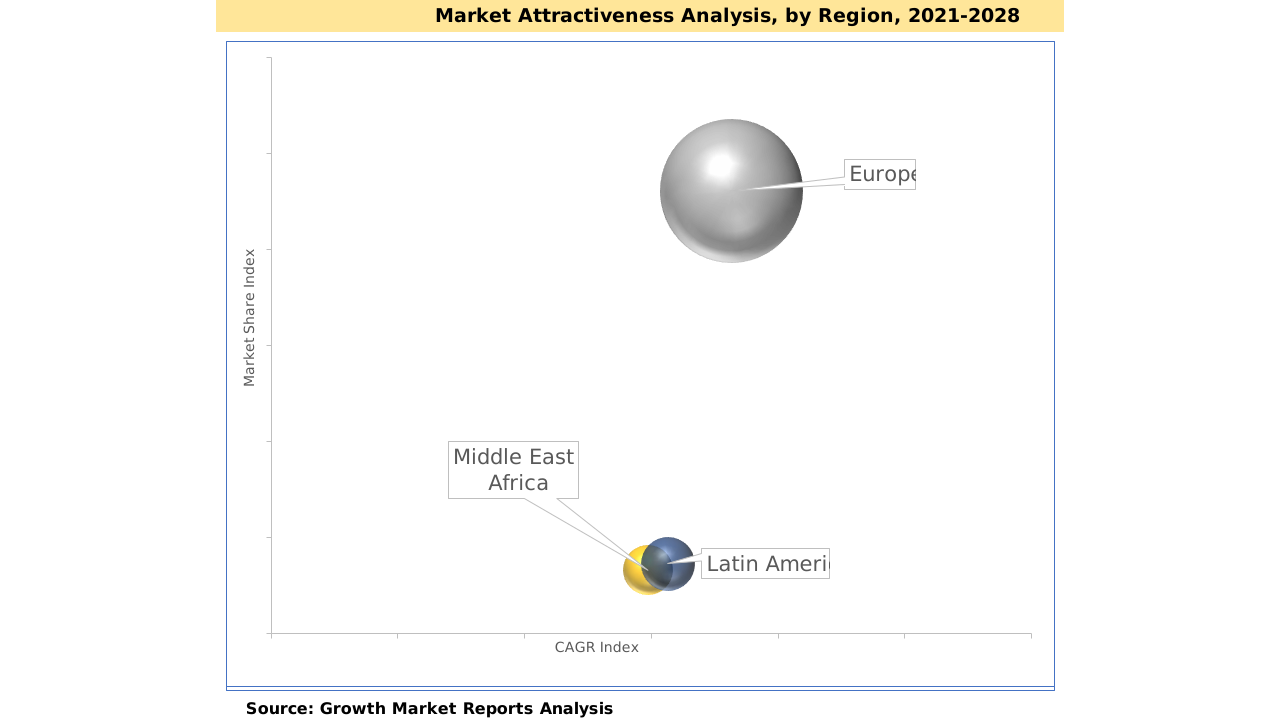
Latin America and the Middle East & Africa are emerging as promising markets for coaxial cable assemblies, with a combined market size of USD 2.0 billion in 2025. These regions are witnessing increased investments in infrastructure development, digital transformation, and energy projects, creating new opportunities for cable manufacturers. The adoption of online retail and the expansion of distributor networks are facilitating market penetration and enabling companies to cater to a broader customer base. While growth rates in these regions may be slightly lower than in Asia Pacific, the untapped potential and rising demand for reliable connectivity solutions are expected to drive steady market expansion, with both regions collectively projected to grow at a CAGR of approximately 6.5% through 2034.

Competitor Outlook

The global coaxial cable assemblies market is characterized by intense competition, with a mix of established multinational corporations and regional players vying for market share. The competitive landscape is defined by continuous innovation, product differentiation, and strategic partnerships aimed at expanding product portfolios and enhancing market reach. Leading companies are investing heavily in research and development to introduce advanced cable assemblies that offer superior performance, reliability, and customization options tailored to the demands of 2025 and beyond. The emphasis on quality, compliance with international standards, and the ability to deliver tailored solutions are key factors influencing competitive positioning.

Mergers and acquisitions, joint ventures, and collaborations are increasingly being used as strategic tools to gain access to new technologies, enter emerging markets, and strengthen distribution networks. Companies are also focusing on expanding their manufacturing capabilities and optimizing supply chains to meet the growing demand for high-performance coaxial cable assemblies. The shift towards digitalization and the adoption of Industry 4.0 practices are enabling manufacturers to improve production efficiency, reduce lead times, and enhance customer service. The ability to offer value-added services, such as technical support, installation assistance, and after-sales maintenance, is becoming a key differentiator in a competitive marketplace.

In addition to established players, the market is witnessing the entry of new entrants and niche manufacturers specializing in custom and high-frequency cable assemblies. These companies are leveraging their agility and technical expertise to address specific customer requirements and capitalize on emerging opportunities in sectors such as medical devices, automotive electronics, and smart infrastructure. The growing demand for eco-friendly and sustainable cable solutions is also prompting manufacturers to explore new materials and production techniques, further intensifying competition across the 2026-2034 forecast period.

Some of the major companies operating in the global coaxial cable assemblies market include TE Connectivity, Amphenol Corporation, Molex LLC, Carlisle Interconnect Technologies, Radiall, Huber+Suhner, Pasternack Enterprises, Rosenberger Hochfrequenztechnik, Samtec, Belden Inc., Smiths Interconnect, W. L. Gore & Associates, Times Microwave Systems, and Junkosha Inc. These companies have established a strong presence through extensive product portfolios, global distribution networks, and a commitment to innovation and quality. TE Connectivity and Amphenol Corporation are recognized for their comprehensive range of standard and custom coaxial cable assemblies, serving diverse industries such as telecommunications, aerospace, and automotive. Molex LLC and Carlisle Interconnect Technologies are known for their focus on high-performance and ruggedized cable solutions, catering to demanding applications in defense and medical sectors.

Radiall and Huber+Suhner have built reputations for delivering advanced RF and microwave cable assemblies, with a strong emphasis on research and development aligned with mmWave and satellite communication requirements. Samtec and Rosenberger Hochfrequenztechnik are notable for their expertise in providing tailored solutions and rapid prototyping services, enabling customers to meet specific design and performance requirements. Belden Inc. and Pasternack Enterprises are recognized for their extensive distribution networks and commitment to customer service, offering a wide selection of coaxial cable assemblies for both standard and specialized applications. Times Microwave Systems and Smiths Interconnect continue to lead in defense-grade and precision RF interconnect solutions. Collectively, these companies are driving innovation, setting industry standards, and shaping the future of the global coaxial cable assemblies market through 2034.

Key Players

  • TE Connectivity
  • Amphenol Corporation
  • Molex LLC (Koch Industries)
  • Carlisle Interconnect Technologies
  • Radiall
  • Huber+Suhner
  • Pasternack Enterprises
  • Rosenberger Hochfrequenztechnik
  • Samtec
  • Belden Inc.
  • Smiths Interconnect
  • W. L. Gore & Associates
  • Times Microwave Systems
  • Junkosha Inc.
  • Axon' Cable
  • Harbour Industries
  • L-com Global Connectivity
  • Gore Electronics

Segments

The Coaxial Cable Assemblies market has been segmented on the basis of

Product Type

  • Standard Coaxial Cable Assemblies
  • Custom Coaxial Cable Assemblies

Cable Type

  • Semi-Rigid
  • Flexible
  • Formable
  • Rigid

Application

  • Telecommunications
  • Military & Aerospace
  • Medical
  • Automotive
  • Consumer Electronics
  • Others

End-User

  • Commercial
  • Industrial
  • Residential

Distribution Channel

  • Direct Sales
  • Distributors/Wholesalers
  • Online Retail

Frequently Asked Questions

The base year for this report is 2025, with the global coaxial cable assemblies market valued at USD 14.1 billion. The historical analysis covers the period from 2019 to 2024, providing context for recent market trends and growth drivers. The forecast period spans from 2026 to 2034, during which the market is projected to expand at a CAGR of 7.0%, reaching approximately USD 26.1 billion by 2034. This nine-year forecast horizon provides strategic visibility for investors, manufacturers, and procurement professionals planning long-term business decisions.

Beyond the core market sizing and forecasting data, the report offers comprehensive analysis including competitive benchmarking, market attractiveness assessment by segment and region, supply chain analysis, value chain mapping, pricing trend analysis, technology evolution landscape, and patent activity overview. The report also includes detailed profiles of 18 leading companies, an analysis of mergers and acquisitions from 2019 to 2025, and scenario-based forecasting models. Custom datasets and data cuts by additional geographies, end-user categories, or connector types are available upon request.

The COVID-19 pandemic had a mixed impact on the coaxial cable assemblies market during 2019-2020. While the initial outbreak in early 2020 disrupted global supply chains, halted manufacturing operations, and delayed infrastructure projects, certain segments such as telecommunications and medical devices experienced increased demand. The sudden surge in remote work, telemedicine, and online consumption accelerated investments in broadband and data center infrastructure, partially offsetting the decline in automotive and aerospace applications. The market demonstrated resilience and began recovering in late 2020, setting the foundation for sustained growth through 2025 and beyond.

The major players operating in the global coaxial cable assemblies market as of 2025 include TE Connectivity, Amphenol Corporation, Molex LLC, Carlisle Interconnect Technologies, Radiall, Huber+Suhner, Pasternack Enterprises, Rosenberger Hochfrequenztechnik, Samtec, Belden Inc., Smiths Interconnect, W. L. Gore & Associates, Times Microwave Systems, and Junkosha Inc. These companies compete on the basis of product quality, customization capability, technological innovation, global distribution reach, and compliance with international performance standards.

The report primarily covers commercial, industrial, and technical applications of coaxial cable assemblies across sectors such as telecommunications, military and aerospace, medical, automotive, and consumer electronics. Legal or regulatory frameworks governing the use of coaxial cable assemblies are discussed in the context of compliance standards and certification requirements relevant to specific industries. If you require a more detailed analysis of legal or regulatory aspects, this can be incorporated through our report customization service.

The key industries driving coaxial cable assemblies market growth are telecommunications, military and aerospace, medical devices, automotive, and consumer electronics. Telecommunications leads due to 5G and broadband infrastructure expansion. The military and aerospace sector demands ruggedized, high-performance assemblies for mission-critical systems. The medical industry requires reliable signal integrity for diagnostic and imaging equipment. Automotive growth is propelled by ADAS, V2X, and EV platforms, while consumer electronics demand is sustained by home entertainment, gaming, and smart home ecosystems.

Based on our base year 2025 market size of USD 14.1 billion and a projected CAGR of 7.0% through 2034, the global coaxial cable assemblies market is estimated to reach approximately USD 17.3 billion by 2028. This growth will be driven by continued 5G network expansion, rising demand from military and aerospace sectors, and increasing adoption in automotive electronics and medical devices across North America, Europe, and the Asia Pacific region.

The primary drivers of the coaxial cable assemblies market include the global rollout of 5G networks, rising demand for high-speed broadband infrastructure, and the expanding adoption of IoT and connected devices. Significant growth in defense and aerospace modernization programs, the increasing use of coaxial assemblies in advanced medical diagnostic equipment, and the rise of connected and autonomous vehicles are also key contributors. Additionally, the proliferation of smart homes, data centers, and industrial automation under Industry 4.0 is sustaining robust demand through the 2026-2034 forecast period.

Companies are selected for profiling based on several criteria, including overall market revenue, geographic presence, product portfolio breadth, technological innovation, and strategic significance within the coaxial cable assemblies industry. We also consider recent developments such as mergers, acquisitions, partnerships, and new product launches. The selection process ensures that the profiled companies represent a balanced mix of established multinational corporations and emerging regional players, providing a comprehensive view of the competitive landscape as of 2025.

Yes, absolutely. The report can be customized to include different or additional company profiles based on your specific research needs. If you require profiles of companies not listed in the standard report, our research team can incorporate them. Please share your requirements and we will tailor the report accordingly. Customization requests can be submitted at the time of purchase or discussed with our sales team prior to finalizing your order.

Table Of Content

Chapter 1 Executive Summary
Chapter 2 Assumptions and Acronyms Used
Chapter 3 Research Methodology
Chapter 4 Coaxial Cable Assemblies Market Overview
   4.1 Introduction
      4.1.1 Market Taxonomy
      4.1.2 Market Definition
      4.1.3 Macro-Economic Factors Impacting the Market Growth
   4.2 Coaxial Cable Assemblies Market Dynamics
      4.2.1 Market Drivers
      4.2.2 Market Restraints
      4.2.3 Market Opportunity
   4.3 Coaxial Cable Assemblies Market - Supply Chain Analysis
      4.3.1 List of Key Suppliers
      4.3.2 List of Key Distributors
      4.3.3 List of Key Consumers
   4.4 Key Forces Shaping the Coaxial Cable Assemblies Market
      4.4.1 Bargaining Power of Suppliers
      4.4.2 Bargaining Power of Buyers
      4.4.3 Threat of Substitution
      4.4.4 Threat of New Entrants
      4.4.5 Competitive Rivalry
   4.5 Global Coaxial Cable Assemblies Market Size & Forecast, 2023-2032
      4.5.1 Coaxial Cable Assemblies Market Size and Y-o-Y Growth
      4.5.2 Coaxial Cable Assemblies Market Absolute $ Opportunity

Chapter 5 Global Coaxial Cable Assemblies Market Analysis and Forecast By Product Type
   5.1 Introduction
      5.1.1 Key Market Trends & Growth Opportunities By Product Type
      5.1.2 Basis Point Share (BPS) Analysis By Product Type
      5.1.3 Absolute $ Opportunity Assessment By Product Type
   5.2 Coaxial Cable Assemblies Market Size Forecast By Product Type
      5.2.1 Standard Coaxial Cable Assemblies
      5.2.2 Custom Coaxial Cable Assemblies
   5.3 Market Attractiveness Analysis By Product Type

Chapter 6 Global Coaxial Cable Assemblies Market Analysis and Forecast By Cable Type
   6.1 Introduction
      6.1.1 Key Market Trends & Growth Opportunities By Cable Type
      6.1.2 Basis Point Share (BPS) Analysis By Cable Type
      6.1.3 Absolute $ Opportunity Assessment By Cable Type
   6.2 Coaxial Cable Assemblies Market Size Forecast By Cable Type
      6.2.1 Semi-Rigid
      6.2.2 Flexible
      6.2.3 Formable
      6.2.4 Rigid
   6.3 Market Attractiveness Analysis By Cable Type

Chapter 7 Global Coaxial Cable Assemblies Market Analysis and Forecast By Application
   7.1 Introduction
      7.1.1 Key Market Trends & Growth Opportunities By Application
      7.1.2 Basis Point Share (BPS) Analysis By Application
      7.1.3 Absolute $ Opportunity Assessment By Application
   7.2 Coaxial Cable Assemblies Market Size Forecast By Application
      7.2.1 Telecommunications
      7.2.2 Military & Aerospace
      7.2.3 Medical
      7.2.4 Automotive
      7.2.5 Consumer Electronics
      7.2.6 Others
   7.3 Market Attractiveness Analysis By Application

Chapter 8 Global Coaxial Cable Assemblies Market Analysis and Forecast By End-User
   8.1 Introduction
      8.1.1 Key Market Trends & Growth Opportunities By End-User
      8.1.2 Basis Point Share (BPS) Analysis By End-User
      8.1.3 Absolute $ Opportunity Assessment By End-User
   8.2 Coaxial Cable Assemblies Market Size Forecast By End-User
      8.2.1 Commercial
      8.2.2 Industrial
      8.2.3 Residential
   8.3 Market Attractiveness Analysis By End-User

Chapter 9 Global Coaxial Cable Assemblies Market Analysis and Forecast By Distribution Channel
   9.1 Introduction
      9.1.1 Key Market Trends & Growth Opportunities By Distribution Channel
      9.1.2 Basis Point Share (BPS) Analysis By Distribution Channel
      9.1.3 Absolute $ Opportunity Assessment By Distribution Channel
   9.2 Coaxial Cable Assemblies Market Size Forecast By Distribution Channel
      9.2.1 Direct Sales
      9.2.2 Distributors/Wholesalers
      9.2.3 Online Retail
   9.3 Market Attractiveness Analysis By Distribution Channel

Chapter 10 Global Coaxial Cable Assemblies Market Analysis and Forecast by Region
   10.1 Introduction
      10.1.1 Key Market Trends & Growth Opportunities By Region
      10.1.2 Basis Point Share (BPS) Analysis By Region
      10.1.3 Absolute $ Opportunity Assessment By Region
   10.2 Coaxial Cable Assemblies Market Size Forecast By Region
      10.2.1 North America
      10.2.2 Europe
      10.2.3 Asia Pacific
      10.2.4 Latin America
      10.2.5 Middle East & Africa (MEA)
   10.3 Market Attractiveness Analysis By Region

Chapter 11 Coronavirus Disease (COVID-19) Impact 
   11.1 Introduction 
   11.2 Current & Future Impact Analysis 
   11.3 Economic Impact Analysis 
   11.4 Government Policies 
   11.5 Investment Scenario

Chapter 12 North America Coaxial Cable Assemblies Analysis and Forecast
   12.1 Introduction
   12.2 North America Coaxial Cable Assemblies Market Size Forecast by Country
      12.2.1 U.S.
      12.2.2 Canada
   12.3 Basis Point Share (BPS) Analysis by Country
   12.4 Absolute $ Opportunity Assessment by Country
   12.5 Market Attractiveness Analysis by Country
   12.6 North America Coaxial Cable Assemblies Market Size Forecast By Product Type
      12.6.1 Standard Coaxial Cable Assemblies
      12.6.2 Custom Coaxial Cable Assemblies
   12.7 Basis Point Share (BPS) Analysis By Product Type 
   12.8 Absolute $ Opportunity Assessment By Product Type 
   12.9 Market Attractiveness Analysis By Product Type
   12.10 North America Coaxial Cable Assemblies Market Size Forecast By Cable Type
      12.10.1 Semi-Rigid
      12.10.2 Flexible
      12.10.3 Formable
      12.10.4 Rigid
   12.11 Basis Point Share (BPS) Analysis By Cable Type 
   12.12 Absolute $ Opportunity Assessment By Cable Type 
   12.13 Market Attractiveness Analysis By Cable Type
   12.14 North America Coaxial Cable Assemblies Market Size Forecast By Application
      12.14.1 Telecommunications
      12.14.2 Military & Aerospace
      12.14.3 Medical
      12.14.4 Automotive
      12.14.5 Consumer Electronics
      12.14.6 Others
   12.15 Basis Point Share (BPS) Analysis By Application 
   12.16 Absolute $ Opportunity Assessment By Application 
   12.17 Market Attractiveness Analysis By Application
   12.18 North America Coaxial Cable Assemblies Market Size Forecast By End-User
      12.18.1 Commercial
      12.18.2 Industrial
      12.18.3 Residential
   12.19 Basis Point Share (BPS) Analysis By End-User 
   12.20 Absolute $ Opportunity Assessment By End-User 
   12.21 Market Attractiveness Analysis By End-User
   12.22 North America Coaxial Cable Assemblies Market Size Forecast By Distribution Channel
      12.22.1 Direct Sales
      12.22.2 Distributors/Wholesalers
      12.22.3 Online Retail
   12.23 Basis Point Share (BPS) Analysis By Distribution Channel 
   12.24 Absolute $ Opportunity Assessment By Distribution Channel 
   12.25 Market Attractiveness Analysis By Distribution Channel

Chapter 13 Europe Coaxial Cable Assemblies Analysis and Forecast
   13.1 Introduction
   13.2 Europe Coaxial Cable Assemblies Market Size Forecast by Country
      13.2.1 Germany
      13.2.2 France
      13.2.3 Italy
      13.2.4 U.K.
      13.2.5 Spain
      13.2.6 Russia
      13.2.7 Rest of Europe
   13.3 Basis Point Share (BPS) Analysis by Country
   13.4 Absolute $ Opportunity Assessment by Country
   13.5 Market Attractiveness Analysis by Country
   13.6 Europe Coaxial Cable Assemblies Market Size Forecast By Product Type
      13.6.1 Standard Coaxial Cable Assemblies
      13.6.2 Custom Coaxial Cable Assemblies
   13.7 Basis Point Share (BPS) Analysis By Product Type 
   13.8 Absolute $ Opportunity Assessment By Product Type 
   13.9 Market Attractiveness Analysis By Product Type
   13.10 Europe Coaxial Cable Assemblies Market Size Forecast By Cable Type
      13.10.1 Semi-Rigid
      13.10.2 Flexible
      13.10.3 Formable
      13.10.4 Rigid
   13.11 Basis Point Share (BPS) Analysis By Cable Type 
   13.12 Absolute $ Opportunity Assessment By Cable Type 
   13.13 Market Attractiveness Analysis By Cable Type
   13.14 Europe Coaxial Cable Assemblies Market Size Forecast By Application
      13.14.1 Telecommunications
      13.14.2 Military & Aerospace
      13.14.3 Medical
      13.14.4 Automotive
      13.14.5 Consumer Electronics
      13.14.6 Others
   13.15 Basis Point Share (BPS) Analysis By Application 
   13.16 Absolute $ Opportunity Assessment By Application 
   13.17 Market Attractiveness Analysis By Application
   13.18 Europe Coaxial Cable Assemblies Market Size Forecast By End-User
      13.18.1 Commercial
      13.18.2 Industrial
      13.18.3 Residential
   13.19 Basis Point Share (BPS) Analysis By End-User 
   13.20 Absolute $ Opportunity Assessment By End-User 
   13.21 Market Attractiveness Analysis By End-User
   13.22 Europe Coaxial Cable Assemblies Market Size Forecast By Distribution Channel
      13.22.1 Direct Sales
      13.22.2 Distributors/Wholesalers
      13.22.3 Online Retail
   13.23 Basis Point Share (BPS) Analysis By Distribution Channel 
   13.24 Absolute $ Opportunity Assessment By Distribution Channel 
   13.25 Market Attractiveness Analysis By Distribution Channel

Chapter 14 Asia Pacific Coaxial Cable Assemblies Analysis and Forecast
   14.1 Introduction
   14.2 Asia Pacific Coaxial Cable Assemblies Market Size Forecast by Country
      14.2.1 China
      14.2.2 Japan
      14.2.3 South Korea
      14.2.4 India
      14.2.5 Australia
      14.2.6 South East Asia (SEA)
      14.2.7 Rest of Asia Pacific (APAC)
   14.3 Basis Point Share (BPS) Analysis by Country
   14.4 Absolute $ Opportunity Assessment by Country
   14.5 Market Attractiveness Analysis by Country
   14.6 Asia Pacific Coaxial Cable Assemblies Market Size Forecast By Product Type
      14.6.1 Standard Coaxial Cable Assemblies
      14.6.2 Custom Coaxial Cable Assemblies
   14.7 Basis Point Share (BPS) Analysis By Product Type 
   14.8 Absolute $ Opportunity Assessment By Product Type 
   14.9 Market Attractiveness Analysis By Product Type
   14.10 Asia Pacific Coaxial Cable Assemblies Market Size Forecast By Cable Type
      14.10.1 Semi-Rigid
      14.10.2 Flexible
      14.10.3 Formable
      14.10.4 Rigid
   14.11 Basis Point Share (BPS) Analysis By Cable Type 
   14.12 Absolute $ Opportunity Assessment By Cable Type 
   14.13 Market Attractiveness Analysis By Cable Type
   14.14 Asia Pacific Coaxial Cable Assemblies Market Size Forecast By Application
      14.14.1 Telecommunications
      14.14.2 Military & Aerospace
      14.14.3 Medical
      14.14.4 Automotive
      14.14.5 Consumer Electronics
      14.14.6 Others
   14.15 Basis Point Share (BPS) Analysis By Application 
   14.16 Absolute $ Opportunity Assessment By Application 
   14.17 Market Attractiveness Analysis By Application
   14.18 Asia Pacific Coaxial Cable Assemblies Market Size Forecast By End-User
      14.18.1 Commercial
      14.18.2 Industrial
      14.18.3 Residential
   14.19 Basis Point Share (BPS) Analysis By End-User 
   14.20 Absolute $ Opportunity Assessment By End-User 
   14.21 Market Attractiveness Analysis By End-User
   14.22 Asia Pacific Coaxial Cable Assemblies Market Size Forecast By Distribution Channel
      14.22.1 Direct Sales
      14.22.2 Distributors/Wholesalers
      14.22.3 Online Retail
   14.23 Basis Point Share (BPS) Analysis By Distribution Channel 
   14.24 Absolute $ Opportunity Assessment By Distribution Channel 
   14.25 Market Attractiveness Analysis By Distribution Channel

Chapter 15 Latin America Coaxial Cable Assemblies Analysis and Forecast
   15.1 Introduction
   15.2 Latin America Coaxial Cable Assemblies Market Size Forecast by Country
      15.2.1 Brazil
      15.2.2 Mexico
      15.2.3 Rest of Latin America (LATAM)
   15.3 Basis Point Share (BPS) Analysis by Country
   15.4 Absolute $ Opportunity Assessment by Country
   15.5 Market Attractiveness Analysis by Country
   15.6 Latin America Coaxial Cable Assemblies Market Size Forecast By Product Type
      15.6.1 Standard Coaxial Cable Assemblies
      15.6.2 Custom Coaxial Cable Assemblies
   15.7 Basis Point Share (BPS) Analysis By Product Type 
   15.8 Absolute $ Opportunity Assessment By Product Type 
   15.9 Market Attractiveness Analysis By Product Type
   15.10 Latin America Coaxial Cable Assemblies Market Size Forecast By Cable Type
      15.10.1 Semi-Rigid
      15.10.2 Flexible
      15.10.3 Formable
      15.10.4 Rigid
   15.11 Basis Point Share (BPS) Analysis By Cable Type 
   15.12 Absolute $ Opportunity Assessment By Cable Type 
   15.13 Market Attractiveness Analysis By Cable Type
   15.14 Latin America Coaxial Cable Assemblies Market Size Forecast By Application
      15.14.1 Telecommunications
      15.14.2 Military & Aerospace
      15.14.3 Medical
      15.14.4 Automotive
      15.14.5 Consumer Electronics
      15.14.6 Others
   15.15 Basis Point Share (BPS) Analysis By Application 
   15.16 Absolute $ Opportunity Assessment By Application 
   15.17 Market Attractiveness Analysis By Application
   15.18 Latin America Coaxial Cable Assemblies Market Size Forecast By End-User
      15.18.1 Commercial
      15.18.2 Industrial
      15.18.3 Residential
   15.19 Basis Point Share (BPS) Analysis By End-User 
   15.20 Absolute $ Opportunity Assessment By End-User 
   15.21 Market Attractiveness Analysis By End-User
   15.22 Latin America Coaxial Cable Assemblies Market Size Forecast By Distribution Channel
      15.22.1 Direct Sales
      15.22.2 Distributors/Wholesalers
      15.22.3 Online Retail
   15.23 Basis Point Share (BPS) Analysis By Distribution Channel 
   15.24 Absolute $ Opportunity Assessment By Distribution Channel 
   15.25 Market Attractiveness Analysis By Distribution Channel

Chapter 16 Middle East & Africa (MEA) Coaxial Cable Assemblies Analysis and Forecast
   16.1 Introduction
   16.2 Middle East & Africa (MEA) Coaxial Cable Assemblies Market Size Forecast by Country
      16.2.1 Saudi Arabia
      16.2.2 South Africa
      16.2.3 UAE
      16.2.4 Rest of Middle East & Africa (MEA)
   16.3 Basis Point Share (BPS) Analysis by Country
   16.4 Absolute $ Opportunity Assessment by Country
   16.5 Market Attractiveness Analysis by Country
   16.6 Middle East & Africa (MEA) Coaxial Cable Assemblies Market Size Forecast By Product Type
      16.6.1 Standard Coaxial Cable Assemblies
      16.6.2 Custom Coaxial Cable Assemblies
   16.7 Basis Point Share (BPS) Analysis By Product Type 
   16.8 Absolute $ Opportunity Assessment By Product Type 
   16.9 Market Attractiveness Analysis By Product Type
   16.10 Middle East & Africa (MEA) Coaxial Cable Assemblies Market Size Forecast By Cable Type
      16.10.1 Semi-Rigid
      16.10.2 Flexible
      16.10.3 Formable
      16.10.4 Rigid
   16.11 Basis Point Share (BPS) Analysis By Cable Type 
   16.12 Absolute $ Opportunity Assessment By Cable Type 
   16.13 Market Attractiveness Analysis By Cable Type
   16.14 Middle East & Africa (MEA) Coaxial Cable Assemblies Market Size Forecast By Application
      16.14.1 Telecommunications
      16.14.2 Military & Aerospace
      16.14.3 Medical
      16.14.4 Automotive
      16.14.5 Consumer Electronics
      16.14.6 Others
   16.15 Basis Point Share (BPS) Analysis By Application 
   16.16 Absolute $ Opportunity Assessment By Application 
   16.17 Market Attractiveness Analysis By Application
   16.18 Middle East & Africa (MEA) Coaxial Cable Assemblies Market Size Forecast By End-User
      16.18.1 Commercial
      16.18.2 Industrial
      16.18.3 Residential
   16.19 Basis Point Share (BPS) Analysis By End-User 
   16.20 Absolute $ Opportunity Assessment By End-User 
   16.21 Market Attractiveness Analysis By End-User
   16.22 Middle East & Africa (MEA) Coaxial Cable Assemblies Market Size Forecast By Distribution Channel
      16.22.1 Direct Sales
      16.22.2 Distributors/Wholesalers
      16.22.3 Online Retail
   16.23 Basis Point Share (BPS) Analysis By Distribution Channel 
   16.24 Absolute $ Opportunity Assessment By Distribution Channel 
   16.25 Market Attractiveness Analysis By Distribution Channel

Chapter 17 Competition Landscape 
   17.1 Coaxial Cable Assemblies Market: Competitive Dashboard
   17.2 Global Coaxial Cable Assemblies Market: Market Share Analysis, 2023
   17.3 Company Profiles (Details – Overview, Financials, Developments, Strategy) 
      17.3.1 TE Connectivity
      17.3.2 Amphenol Corporation
      17.3.3 Molex LLC (Koch Industries)
      17.3.4 Carlisle Interconnect Technologies
      17.3.5 Radiall
      17.3.6 Huber+Suhner
      17.3.7 Pasternack Enterprises
      17.3.8 Rosenberger Hochfrequenztechnik
      17.3.9 Samtec
      17.3.10 Belden Inc.
      17.3.11 Smiths Interconnect
      17.3.12 W. L. Gore & Associates
      17.3.13 Times Microwave Systems
      17.3.14 Junkosha Inc.
      17.3.15 Axon' Cable
      17.3.16 Harbour Industries
      17.3.17 L-com Global Connectivity
      17.3.18 Gore Electronics

Methodology

Our Clients

The John Holland Group
General Electric
FedEx Logistics
sinopec
Nestle SA
Deloitte
Siemens Healthcare
Microsoft