Segments - by Type (Acrylic, Fluoropolymers, Urethanes, Metallic Additives, Others), by Function (Rheology Modification, Anti-Foaming, Wetting & Dispersion, Biocides, Others), by Formulation (Water-borne, Solvent-borne, Powder-based, Others), by Application (Architectural, Industrial, Automotive, Wood & Furniture, Others)
This report is updated with the latest market data and insights as of June 2026. Base year: 2025 | Forecast period: 2026-2034
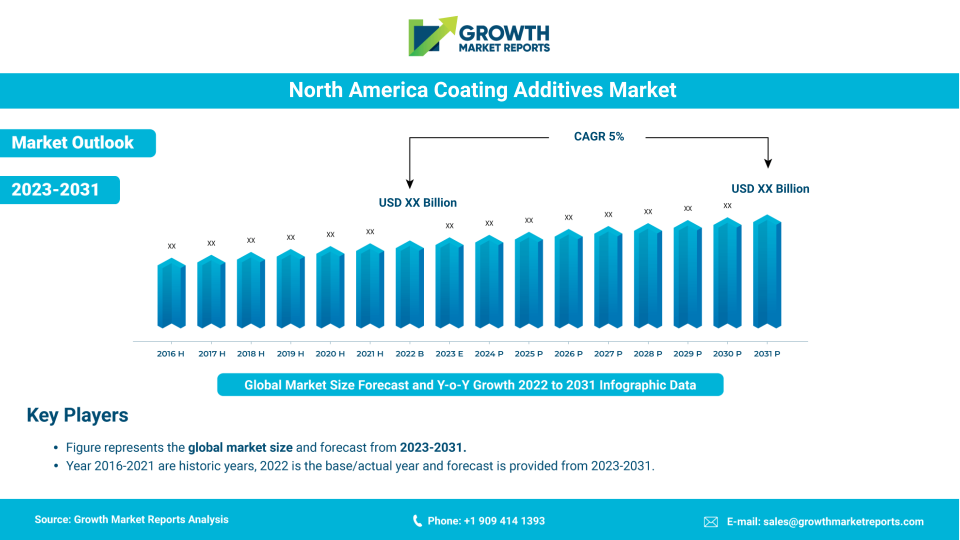
According to our latest research, the global coating additives market size reached USD 10.8 billion in 2025, driven by robust demand across diverse industries and ongoing innovation in material science. The market is experiencing healthy expansion, registering a CAGR of 5.9% from 2026 to 2034. By the end of 2034, the market is forecasted to attain a value of USD 18.1 billion. The principal growth factor for this sector is the widespread adoption of high-performance coatings in automotive, construction, and industrial applications, coupled with stringent regulatory standards promoting the use of eco-friendly and efficient additives. The transition toward sustainable chemistries, accelerated by evolving global environmental frameworks, is reshaping the competitive landscape and encouraging significant R&D investment from major producers of paints and coatings additives.
One of the predominant growth drivers in the coating additives market is the escalating demand for advanced coatings with enhanced properties such as improved durability, weather resistance, and aesthetic appeal. The construction sector, in particular, has seen a surge in the use of additives for architectural paints that enhance flow, leveling, and surface protection. This trend is further amplified by increasing urbanization and infrastructure development in emerging economies, which necessitate high-quality coatings with specialized additives to ensure longevity and performance. Additionally, the growing preference for water-borne and low-VOC (volatile organic compound) formulations is compelling manufacturers to invest in innovative additive technologies that align with evolving environmental regulations and net-zero commitments.
Another significant factor propelling the market is the automotive industry's shift towards lightweight and energy-efficient vehicles, which demand coatings with superior protective and functional attributes. Coating additives are instrumental in imparting scratch resistance, corrosion protection, and UV stability to automotive coatings, thereby extending the lifespan and visual appeal of vehicles. The rapid proliferation of electric and hybrid vehicles is fostering the development of novel coating solutions, including thermally conductive and EMI-shielding formulations, further boosting the demand for specialized additives. Moreover, manufacturers are increasingly focusing on customization and product differentiation, leveraging advanced additives to meet specific performance requirements and regulatory standards in various regions.
Technological advancements in coating formulation and the integration of nanotechnology are opening new avenues for the coating additives market. Nanostructured additives offer enhanced mechanical, thermal, and barrier properties, making them highly desirable for high-performance applications in electronics, aerospace, and industrial machinery. Ongoing R&D activities aimed at creating multifunctional additives that combine anti-microbial, anti-corrosive, and self-cleaning properties are expected to further expand the application landscape. This innovation-driven approach is also facilitating the transition towards sustainable and bio-based additives, aligning with global sustainability goals and catering to rising consumer awareness regarding environmental impact. The broader trend in polymer additives development is converging with coating additive chemistry, unlocking cross-industry performance benefits.
Regionally, Asia Pacific continues to dominate the global coating additives market, accounting for the largest share due to its booming construction, automotive, and manufacturing sectors. North America and Europe also represent significant markets, driven by stringent environmental regulations and a strong focus on technological innovation. Meanwhile, Latin America and the Middle East and Africa are witnessing steady growth, supported by infrastructure development and increasing industrialization. The regional outlook is further shaped by varying regulatory frameworks, economic conditions, and consumer preferences, all of which influence the adoption patterns and demand for coating additives across different geographies.
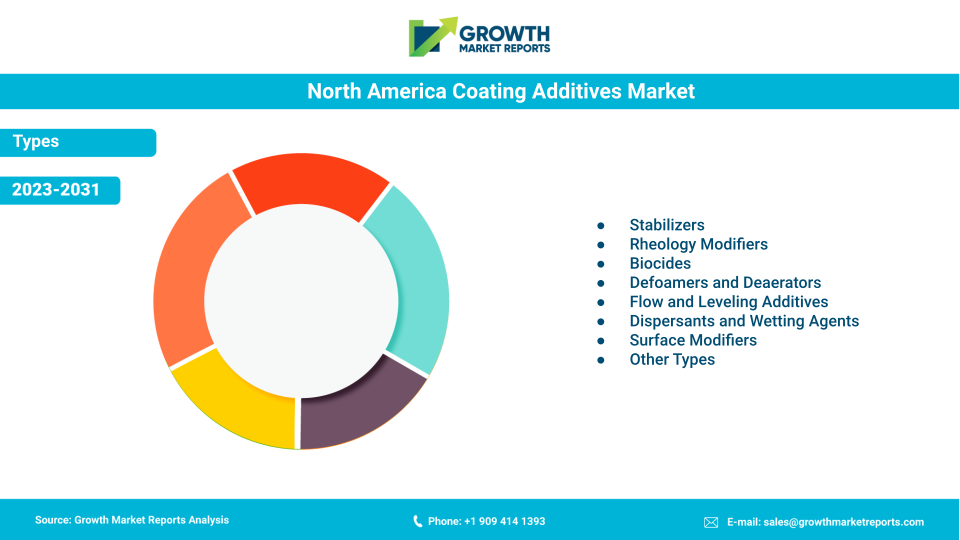
The coating additives market is segmented by type into acrylic, fluoropolymers, urethanes, metallic additives, and others, each offering unique properties and catering to specific end-use requirements. Acrylic additives hold the largest share at approximately 34.5% in 2025, widely utilized due to their excellent weatherability, transparency, and compatibility with various resin systems. These additives play a crucial role in improving the durability and appearance of coatings, making them a preferred choice in both architectural and automotive applications. The demand for acrylic-based additives is further bolstered by their ability to enhance the performance of water-borne coatings, which are gaining traction due to environmental concerns and regulatory mandates across North America and Europe.
Fluoropolymer additives are gaining prominence in the coating additives market owing to their exceptional resistance to chemicals, heat, and UV radiation, accounting for approximately 14.2% of market share in 2025. These properties make them ideal for high-performance applications in industries such as aerospace, electronics, and automotive, where long-term protection and minimal maintenance are critical. The increasing adoption of fluoropolymer additives is driven by their low surface energy, which imparts non-stick and easy-to-clean characteristics to coated surfaces. However, intensifying regulatory scrutiny surrounding PFAS compounds in key markets such as the EU and the United States is prompting manufacturers to accelerate the development of PFAS-free fluoropolymer alternatives, reshaping the competitive dynamics within this sub-segment.
Urethane additives represent the second-largest type segment at around 22.8% of the market in 2025, highly valued for their flexibility, abrasion resistance, and superior mechanical properties. These additives are extensively used in industrial and automotive coatings to enhance toughness and elasticity, thereby improving the overall performance and lifespan of coated products. The growing demand for high-performance coatings in sectors such as transportation, machinery, and consumer goods is expected to sustain the consumption of urethane additives through the forecast period. Additionally, ongoing research aimed at developing bio-based urethane additives is creating new growth opportunities, particularly in regions with stringent environmental regulations. The advances in urethane chemistry are also closely related to improvements being tracked in the broader protective coatings segment.
Metallic additives serve specialized functions in the coating additives market, contributing approximately 12.5% of total market value in 2025, such as providing conductivity, magnetic properties, or decorative effects. These additives are increasingly used in applications requiring enhanced electrical or thermal conductivity, corrosion resistance, and aesthetic appeal. Metallic additives are essential in the formulation of anti-static and EMI-shielding coatings for electronic devices, a segment growing rapidly alongside the expansion of consumer electronics and electric vehicles. The demand for metallic additives is also rising in the automotive and architectural sectors, where they contribute to both functional and decorative purposes. Other types of additives, including silicates, phosphates, and bio-based options, collectively account for approximately 16.0% of the market and are gaining traction as manufacturers seek to diversify their product offerings and address specific application needs.
| Attributes | Details |
| Report Title | Coating Additives Market Research Report 2025-2034 |
| By Type | Acrylic, Fluoropolymers, Urethanes, Metallic Additives, Others |
| By Function | Rheology Modification, Anti-Foaming, Wetting & Dispersion, Biocides, Others |
| By Formulation | Water-borne, Solvent-borne, Powder-based, Others |
| By Application | Architectural, Industrial, Automotive, Wood & Furniture, Others |
| Regions Covered | North America, Europe, APAC, Latin America, MEA |
| Base Year | 2025 |
| Historic Data | 2019-2024 |
| Forecast Period | 2026-2034 |
| Number of Pages | 278 |
| Number of Tables & Figures | 338 |
| Customization Available | Yes, the report can be customized as per your need. |
The coating additives market is segmented by function into rheology modification, anti-foaming, wetting and dispersion, biocides, and others. Rheology modifiers are critical in controlling the flow and viscosity of coatings, ensuring optimal application and finish. These additives help prevent sagging, dripping, and settling during application, thereby enhancing the overall quality and appearance of the coated surface. The demand for advanced rheology modifiers is rising in 2025, particularly in high-performance coatings for automotive and industrial applications, where precise control over viscosity is essential for achieving uniform coverage and desired film thickness. The development of associative and non-associative thickener technologies is broadening formulator options for both water-borne and solvent-borne systems.
Anti-foaming additives are essential in preventing the formation of foam during the manufacturing and application of coatings. Foam can lead to defects such as pinholes, craters, and poor adhesion, compromising the performance and aesthetics of the final product. As a result, anti-foaming agents are widely used across all major segments, including architectural, industrial, and automotive coatings. The development of silicone-based and non-silicone anti-foaming agents has expanded the range of options available to formulators, allowing them to tailor solutions to specific process and application requirements. Innovation in this segment is also being driven by the shift to water-borne systems, which are inherently more prone to foam generation than traditional solvent-borne coatings.
Wetting and dispersion additives play a pivotal role in ensuring the uniform distribution of pigments and fillers within the coating matrix. These additives enhance color development, gloss, and stability by preventing pigment agglomeration and settling. The increasing demand for high-quality finishes and vibrant colors in architectural and automotive coatings is driving the adoption of advanced wetting and dispersion agents in 2025. Furthermore, the shift towards water-borne and low-VOC formulations has necessitated the development of new additives that are compatible with environmentally friendly systems, further stimulating innovation in this segment. Hyperdispersants and polymeric dispersants are among the fastest-growing product categories within this function.
Biocides are gaining importance in the coating additives market as they provide protection against microbial growth, algae, and fungi, thereby extending the lifespan of coatings in humid and challenging environments. The use of biocidal additives is particularly prevalent in architectural and wood coatings, where exposure to moisture and biological contaminants is a concern. Regulatory scrutiny regarding the safety and environmental impact of biocides, particularly under the EU Biocidal Products Regulation, is driving manufacturers to develop more sustainable and effective solutions. Other functional additives, such as UV stabilizers, corrosion inhibitors, and adhesion promoters, continue to gain traction as end-users seek to enhance the performance and durability of their coatings in diverse applications.
Segmentation by formulation in the coating additives market includes water-borne, solvent-borne, powder-based, and other systems. Water-borne formulations are witnessing rapid growth due to their low environmental impact, reduced VOC emissions, and ease of application. Regulatory pressures and increasing consumer awareness regarding sustainability have accelerated the adoption of water-borne coatings, particularly in developed markets like North America and Europe. As of 2025, water-borne systems account for the largest formulation share, reflecting the industry's sustained pivot toward green chemistry. The compatibility of water-borne systems with a wide range of additives, including rheology modifiers, wetting agents, and biocides, is further propelling their usage in architectural, industrial, and automotive applications.
Solvent-borne formulations continue to hold a significant share of the market, especially in applications where high performance and rapid drying are required. These coatings offer excellent adhesion, durability, and resistance to harsh environmental conditions, making them suitable for industrial and automotive uses. However, concerns over VOC emissions and tightening regulatory restrictions in the EU, North America, and increasingly in China are prompting manufacturers to explore alternative formulations and invest in the development of low-VOC and high-solids solvent-borne systems. The transition towards greener solutions is expected to gradually reduce the market share of traditional solvent-borne coatings in favor of more sustainable options over the 2026-2034 forecast period. These dynamics are closely mirrored in the adjacent industrial coatings segment in Germany, a key bellwether for European formulation trends.
Powder-based coatings represent a fast-growing segment in the coating additives market, driven by their environmental benefits, superior finish quality, and cost-effectiveness. Powder coatings eliminate the need for solvents, resulting in negligible VOC emissions and minimal waste generation. The increasing adoption of powder coatings in automotive, appliance, and metal finishing industries is fueling the demand for specialized additives that enhance flow, leveling, and surface protection. Innovations in powder coating technology, including the development of low-temperature curing and UV-curable systems, are expected to further expand the application scope of powder-based additives through 2034.
Other formulations, such as high-solid and radiation-cured coatings, are also gaining traction in the market as manufacturers seek to address specific performance requirements and regulatory challenges. High-solid coatings offer reduced solvent content and improved film build, while radiation-cured systems provide rapid curing and excellent durability. The ongoing trend towards customized and high-performance coatings is driving the need for a diverse range of additives that can cater to the unique demands of different formulation types. As the market evolves through the forecast period, the formulation segment will continue to play a pivotal role in shaping the future of coating additives.
The coating additives market is segmented by application into architectural, industrial, automotive, wood and furniture, and others. Architectural coatings account for a substantial share of the market, driven by the booming global construction sector and the growing demand for high-performance, aesthetically pleasing finishes. Additives are essential in architectural coatings to improve flow, leveling, weather resistance, and microbial protection. The increasing focus on sustainable and energy-efficient buildings is fostering the adoption of eco-friendly additives that enhance the durability and environmental profile of architectural coatings. The expansion of smart city initiatives and green building certification programs in Asia Pacific, the Middle East, and Europe is further stimulating demand in this segment.
Industrial coatings represent another major application segment, encompassing a wide range of end-uses such as machinery, equipment, infrastructure, and marine structures. The need for corrosion resistance, chemical protection, and enhanced mechanical properties is driving the demand for advanced additives in industrial coatings. The ongoing expansion of manufacturing and infrastructure projects in emerging economies is further boosting the consumption of industrial coating additives. Manufacturers are increasingly investing in research and development to create multifunctional additives that cater to the diverse needs of industrial applications. The synergies between this segment and the wider market for professional coating services are creating integrated demand chains that support premium additive adoption.
Automotive coatings are a key growth driver for the coating additives market, as the automotive industry seeks to improve vehicle aesthetics, durability, and environmental performance. Additives play a crucial role in imparting scratch resistance, UV stability, and corrosion protection to automotive coatings, thereby enhancing vehicle longevity and visual appeal. The accelerating shift towards electric vehicles, with global EV sales reaching new records in 2024 and 2025, is generating new opportunities for innovative coating solutions and specialized additives including thermally conductive and EMI-protective formulations. As automotive manufacturers prioritize lightweight materials and advanced finishes, the demand for high-performance coating additives is expected to rise significantly through 2034.
Wood and furniture coatings constitute an important application segment, with additives being used to enhance surface protection, gloss, and resistance to moisture and microbial attack. The growing popularity of eco-friendly and water-borne coatings in the furniture industry is driving the adoption of sustainable additives that offer superior performance without compromising environmental safety. Other applications, including electronics, packaging, and aerospace, are also contributing to market growth as they require specialized coatings with unique functional properties enabled by advanced additives. The continued development of specialized technologies, including polypropylene wax additives for coatings, is further broadening the functional toolkit available to formulators serving wood, furniture, and industrial end-markets.
The coating additives market presents substantial opportunities for innovation and growth, particularly in the realm of sustainable and high-performance solutions. The rising demand for eco-friendly coatings, driven by stringent environmental regulations and increasing consumer awareness, is creating a fertile ground for the development of bio-based and low-VOC additives. Manufacturers that invest in research and development to create multifunctional and sustainable additives stand to gain a competitive edge in the evolving market landscape. Furthermore, the integration of nanotechnology and smart materials is opening up new possibilities for coatings with enhanced mechanical, thermal, and barrier properties, catering to the needs of advanced industries such as electronics, aerospace, and healthcare.
Another significant opportunity lies in the expansion of the coating additives market in emerging economies, where rapid industrialization, urbanization, and infrastructure development are driving the demand for high-quality coatings. Countries in Asia Pacific, Latin America, and the Middle East and Africa are witnessing robust growth in construction, automotive, and manufacturing sectors, creating strong demand for innovative additives that enhance the performance and sustainability of coatings. Strategic partnerships, mergers, and acquisitions can further facilitate market entry and expansion in these high-growth regions, enabling companies to tap into new customer segments and diversify their product portfolios. Digital formulation platforms and AI-driven additive recommendation tools are also emerging as competitive differentiators in 2025.
However, the market also faces certain restraining factors, chief among them being the volatility in raw material prices and the stringent regulatory landscape governing the use of chemicals in coatings. Fluctuations in the prices of key raw materials such as resins, solvents, and specialty chemicals can impact the profitability of additive manufacturers and lead to supply chain disruptions. Additionally, compliance with evolving environmental and safety regulations, including PFAS restrictions and biocide approval processes, requires continuous investment in product innovation and testing, which can increase operational costs and pose challenges for smaller players. The need to balance performance, cost, and sustainability will remain a critical challenge for stakeholders in the coating additives market throughout the 2026-2034 forecast period.
The Asia Pacific region leads the global coating additives market, accounting for approximately 42.5% of the total market value in 2025, which translates to around USD 4.6 billion. This dominance is attributed to rapid industrialization, urbanization, and infrastructure development across major economies such as China, India, and Southeast Asia. The burgeoning construction and automotive sectors in these countries are driving the demand for high-performance coatings and, consequently, advanced additives. The region is also witnessing significant investments in manufacturing and export-oriented industries, further stimulating the consumption of coating additives. The Asia Pacific market is projected to grow at a robust CAGR of 6.6% through 2034, outpacing other regions due to its dynamic economic growth and increasingly favorable regulatory environment for green chemistry investments.
North America holds a significant share of the global coating additives market, with a market value of approximately USD 2.5 billion in 2025. The region's growth is driven by a strong focus on technological innovation, stringent environmental regulations, and a well-established automotive and construction industry. The adoption of eco-friendly and high-performance coatings is particularly pronounced in the United States and Canada, where regulatory frameworks such as EPA VOC limits and LEED standards are shaping market trends. The presence of leading manufacturers and a mature supply chain infrastructure further support the growth of the coating additives market in North America. The region is expected to maintain steady growth at a CAGR of approximately 5.2% through 2034, supported by ongoing investments in research and development and the increasing adoption of sustainable solutions.
Europe is another major market for coating additives, valued at around USD 2.1 billion in 2025. The region is characterized by stringent environmental and safety regulations, including REACH and the EU Green Deal, which are driving the adoption of low-VOC, water-borne, and bio-based additives. The automotive, construction, and industrial sectors in countries such as Germany, France, and the United Kingdom are key contributors to market demand. Europe is also at the forefront of innovation in sustainable and multifunctional additives, supported by robust research and development activities and collaboration between industry and academia. While growth in Europe is relatively moderate compared to Asia Pacific, registering an estimated CAGR of approximately 4.8% through 2034, the region remains a critical market for premium and specialized coating additives. Latin America and the Middle East and Africa collectively represent a growing opportunity, with combined market values projected to rise consistently through the forecast period as infrastructure investment and local manufacturing capacity expand.
The global coating additives market is highly competitive, characterized by the presence of both multinational corporations and regional players vying for market share. The competitive landscape is defined by continuous innovation, strategic collaborations, and a strong focus on sustainability and regulatory compliance. Leading companies are investing heavily in research and development to create advanced additives that cater to evolving customer needs and regulatory requirements. Product differentiation, customization, and the ability to offer integrated solutions are key factors that determine success in this dynamic market. Mergers and acquisitions are prevalent, enabling companies to expand their product portfolios, enter new markets, and enhance their technological capabilities. As of 2025, digital tools for additive selection and formulation assistance are also becoming important competitive differentiators.
Major players in the coating additives market are leveraging their global presence, extensive distribution networks, and strong brand reputation to maintain a competitive edge. These companies are also actively engaged in partnerships and alliances with raw material suppliers, formulators, and end-users to drive innovation and address emerging market trends. The focus on sustainability is particularly pronounced, with leading manufacturers developing eco-friendly and bio-based additives to align with global environmental goals and meet the growing demand for green coatings. The ability to anticipate and respond to changing market dynamics, regulatory developments, and customer preferences is crucial for sustaining long-term growth and profitability through the 2026-2034 forecast period.
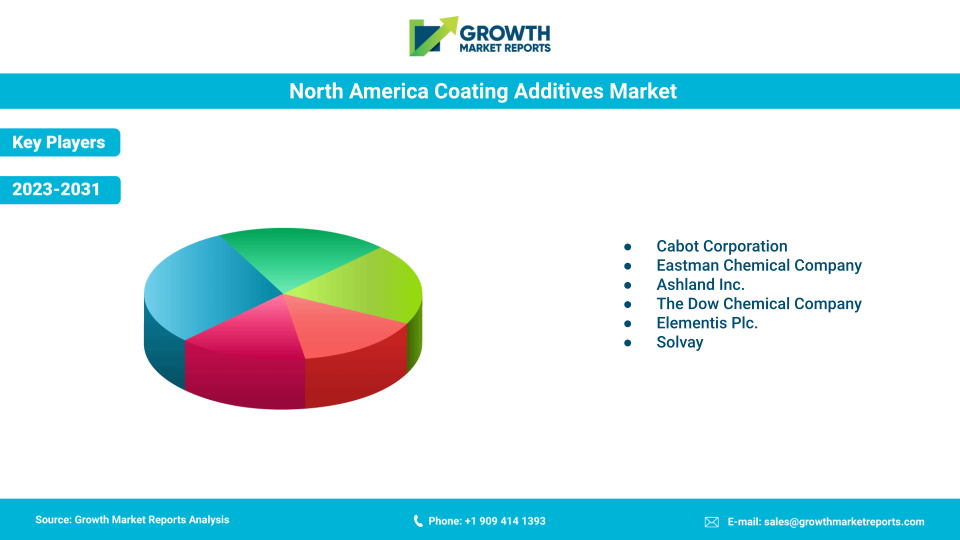
Some of the prominent companies operating in the coating additives market include BASF SE, Evonik Industries AG, The Dow Chemical Company, Arkema Group, BYK-Chemie GmbH (ALTANA AG), Clariant AG, Lubrizol Corporation, Eastman Chemical Company, Elementis PLC, Allnex Group, Covestro AG, Croda International Plc, Wacker Chemie AG, Huntsman Corporation, Ashland Global Holdings Inc., Momentive Performance Materials Inc., Solvay S.A., Shin-Etsu Chemical Co. Ltd., Akzo Nobel N.V., and Stepan Company. These companies are at the forefront of innovation, offering a wide range of additives that cater to diverse applications and performance requirements. BASF and Evonik, for instance, are recognized for their comprehensive product portfolios and commitment to sustainability, while BYK-Chemie and Elementis are known for their expertise in specialty additives and advanced dispersion science.
In addition to the global leaders, several regional and niche players contribute to the vibrancy of the coating additives market by offering specialized products and tailored solutions. These companies often focus on specific applications, such as wood coatings, industrial maintenance, or marine coatings, and leverage their technical expertise and customer relationships to carve out a competitive niche. The ongoing trend towards digitalization and smart manufacturing is enabling companies to optimize their production processes, improve product quality, and enhance customer engagement. As the market continues to evolve through 2034, the ability to innovate, collaborate, and adapt to changing industry dynamics will remain critical for success in the coating additives sector.
The Coating Additives market has been segmented on the basis of
The coating additives market faces several challenges in 2025 and beyond. Raw material price volatility for specialty chemicals, resins, and solvents continues to pressure margins across the value chain. Regulatory complexity is intensifying, especially regarding PFAS restrictions in fluoropolymer additives and biocide approvals under the EU Biocidal Products Regulation. Smaller manufacturers struggle to absorb the cost of continuous reformulation and compliance testing. Geopolitical supply chain disruptions and energy cost inflation add further uncertainty. Balancing performance, environmental compliance, and cost competitiveness remains the central challenge for all stakeholders.
The leading players in the global coating additives market include BASF SE, Evonik Industries AG, The Dow Chemical Company, Arkema Group, BYK-Chemie GmbH (ALTANA AG), Clariant AG, Lubrizol Corporation, Eastman Chemical Company, Elementis PLC, Allnex Group, Covestro AG, Croda International Plc, Wacker Chemie AG, Huntsman Corporation, Ashland Global Holdings Inc., Momentive Performance Materials Inc., Solvay S.A., Shin-Etsu Chemical Co. Ltd., Akzo Nobel N.V., and Stepan Company. These firms compete on the basis of innovation, sustainability credentials, formulation expertise, and global supply chain strength.
As of 2025, the dominant trends include the development of bio-based and sustainable additives to meet circular economy goals, integration of nanotechnology for enhanced barrier and mechanical properties, growth of multifunctional additives combining anti-corrosion with self-cleaning or anti-microbial properties, and digitalization of coating formulation processes. The rise of electric vehicles is spurring demand for thermally conductive and EMI-shielding coatings. Additionally, the adoption of AI-assisted formulation tools is accelerating additive innovation cycles, while regulatory pressure is pushing the phase-out of certain PFAS-based fluoropolymer additives.
The primary end-use industries for coating additives are architectural construction, industrial manufacturing, automotive, and wood and furniture. Architectural coatings account for the largest share, driven by global construction activity and the need for weather-resistant and aesthetically superior finishes. Industrial coatings are the second-largest segment, covering machinery, infrastructure, and marine applications. Automotive coatings are a key growth driver, particularly with the expansion of electric vehicle production. Wood and furniture, electronics, packaging, and aerospace are additional important application areas.
Water-borne formulations are the fastest-growing and now the most widely adopted, driven by stringent VOC regulations and sustainability mandates in North America and Europe. Solvent-borne formulations retain a significant share in industrial and heavy-duty applications where rapid drying and superior adhesion are critical. Powder-based coatings represent a fast-expanding segment due to their near-zero VOC profile and cost-efficiency, especially in automotive and appliance finishing. High-solid and radiation-cured systems are emerging as complementary growth areas.
The coating additives market is segmented by function into rheology modification, anti-foaming, wetting and dispersion, biocides, and others (including UV stabilizers, corrosion inhibitors, and adhesion promoters). Rheology modifiers represent the dominant functional segment, essential for controlling flow and viscosity in both water-borne and solvent-borne systems. Wetting and dispersion additives are the second-largest segment, critical for pigment stabilization and color development, while biocides are gaining traction for mold and algae resistance in architectural and marine coatings.
The principal types of coating additives are acrylic, fluoropolymers, urethanes, metallic additives, and others (including silicone-based, phosphate, and bio-based variants). Acrylic additives hold the largest share at around 34.5% due to their versatility and compatibility with water-borne systems. Urethane additives follow at approximately 22.8%, prized for their mechanical strength and flexibility. Fluoropolymers, metallic additives, and specialty options serve high-performance niche applications across aerospace, electronics, and decorative segments.
Asia Pacific leads the global coating additives market, accounting for approximately 42.5% of total market value in 2025, driven by booming construction and manufacturing activity in China, India, and Southeast Asia. North America holds the second-largest share at around 23.5%, followed by Europe at approximately 19.8%. Latin America and the Middle East and Africa collectively represent the remaining share, with both regions showing steady growth trajectories supported by infrastructure investment and industrialization.
Key growth drivers include rising demand for high-performance and eco-friendly coatings, tightening VOC emission regulations, rapid urbanization and infrastructure expansion in Asia Pacific and other emerging regions, the shift toward electric vehicles requiring advanced protective coatings, and ongoing technological innovation in nano-enabled and bio-based additive chemistries. The growing preference for water-borne low-VOC formulations is also compelling manufacturers to develop next-generation additive platforms.
The global coating additives market reached USD 10.8 billion in 2025 and is projected to grow at a CAGR of 5.9% from 2026 to 2034, reaching approximately USD 18.1 billion by the end of the forecast period. This growth is underpinned by robust demand from construction, automotive, and industrial sectors, alongside accelerating adoption of sustainable and high-performance coating formulations worldwide.