Coated Abrasives Market Research Report 2033

Coated Abrasives Market Research Report 2033

Segments - by Product Type (Belts, Discs, Rolls, Sheets, Wheels, Others), by Material (Aluminum Oxide, Silicon Carbide, Zirconia Alumina, Ceramic Alumina, Others), by Backing Material (Paper, Cloth, Fiber, Polyester, Others), by Application (Metalworking, Woodworking, Automotive, Electronics, Aerospace & Defense, Others), by End-User (Industrial, Automotive, Construction, Electronics, Others)

https://growthmarketreports.com/Raksha
Author : Raksha Sharma
https://growthmarketreports.com/Vaibhav
Fact-checked by : V. Chandola
https://growthmarketreports.com/Shruti
Editor : Shruti Bhat

Upcoming | Report ID :MC-2523 | 4.0 Rating | 39 Reviews | 289 Pages | Format : Docx PDF

Report Description


Coated Abrasives Market Outlook

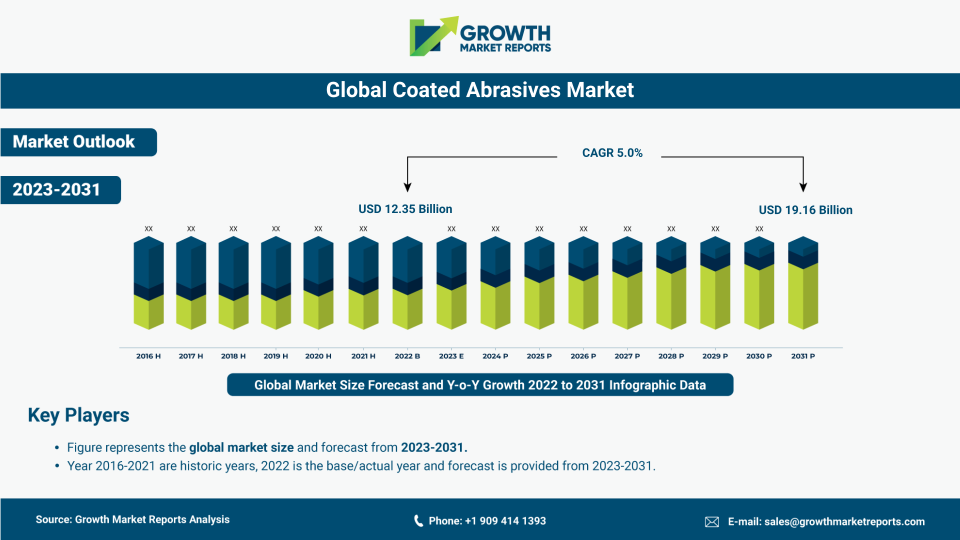
According to our latest research, the global coated abrasives market size reached USD 15.7 billion in 2024. The market is poised to grow at a robust CAGR of 6.1% from 2025 to 2033, fueled by rising demand across diverse industries. By 2033, the coated abrasives market is forecasted to achieve a valuation of USD 26.6 billion. This growth trajectory is underpinned by technological advancements, rapid industrialization, and the expanding application scope of coated abrasives in manufacturing, automotive, electronics, and construction sectors.

One of the primary growth drivers for the coated abrasives market is the surge in manufacturing activities worldwide. As industries increasingly prioritize precision finishing and high-quality surface treatment, the demand for coated abrasives in metalworking, woodworking, and automotive applications has soared. The rapid expansion of the automotive industry, especially in emerging economies, has led to a higher requirement for abrasive materials in vehicle production, repair, and maintenance. Furthermore, the proliferation of advanced manufacturing processes, such as CNC machining and automated finishing systems, has further accelerated the adoption of coated abrasives, ensuring consistent product quality and operational efficiency.

Another significant factor contributing to the market's expansion is the ongoing technological innovation in abrasive materials and backing substrates. Manufacturers are investing heavily in research and development to create coated abrasives with enhanced durability, superior cutting efficiency, and longer service life. The integration of advanced materials like ceramic alumina and zirconia alumina has revolutionized the performance of coated abrasives, making them suitable for demanding applications in aerospace, defense, and electronics. Additionally, the shift toward sustainable and eco-friendly abrasives, driven by stringent environmental regulations, has prompted the development of recyclable and low-emission products, further propelling market growth.

The coated abrasives market is also benefiting from the rising trend of automation and digitalization in industrial processes. Automated sanding, grinding, and finishing solutions are being adopted across various sectors to improve productivity and reduce human error. This transition has led to an increased demand for high-performance coated abrasives that can withstand continuous use in automated systems. Moreover, the growing emphasis on product customization and the need to cater to specific industry requirements have encouraged manufacturers to offer a diverse range of abrasive products, thereby expanding the market's reach and versatility.

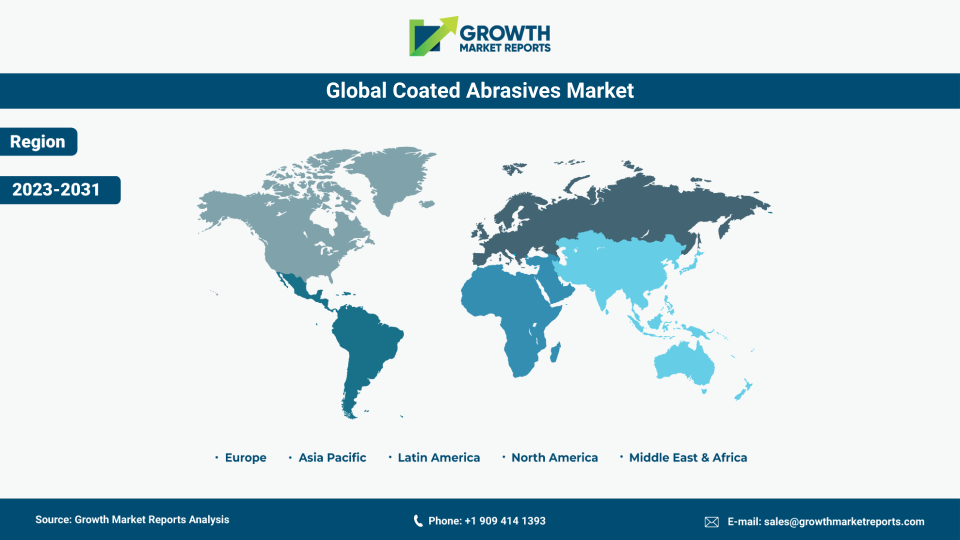
Regionally, Asia Pacific dominates the coated abrasives market, accounting for the largest share in 2024. The region's robust manufacturing base, particularly in China, India, and Southeast Asia, is a key contributor to this dominance. North America and Europe also represent significant markets, driven by advanced technological adoption and high standards in industrial production. In contrast, Latin America, the Middle East, and Africa are witnessing steady growth, supported by infrastructure development and the gradual expansion of manufacturing capabilities. The regional dynamics of the coated abrasives market are expected to evolve further as investments in industrialization and technological upgrades continue across the globe.

Global Coated Abrasives Industry Outlook

Product Type Analysis

The coated abrasives market is segmented by product type into belts, discs, rolls, sheets, wheels, and others. Among these, abrasive belts hold a significant share, owing to their extensive use in metalworking, woodworking, and automotive industries. Belts are favored for their ability to deliver consistent surface finishes and their adaptability to various machines. The demand for abrasive belts is particularly high in large-scale manufacturing environments where high throughput and precision are essential. As industries continue to automate their finishing processes, the requirement for belts that can withstand rigorous operational conditions is expected to rise, further driving segment growth.

Abrasive discs are another prominent product type, widely utilized for grinding, deburring, and polishing applications. Their versatility and ease of use make them a preferred choice for both manual and automated operations. The adoption of advanced disc designs, such as quick-change and flap discs, has enhanced their performance, enabling faster material removal and improved surface quality. The automotive, aerospace, and electronics sectors are major consumers of abrasive discs, as they require precise finishing for components and assemblies. The increasing focus on lightweight materials and complex geometries in these industries is anticipated to boost the demand for high-performance abrasive discs.

Abrasive rolls and sheets are primarily employed in woodworking and surface preparation tasks. These products are valued for their flexibility and ability to conform to intricate surfaces, making them ideal for hand sanding and finishing operations. The growth of the furniture and construction industries has fueled the demand for abrasive rolls and sheets, as manufacturers seek efficient solutions for achieving smooth and defect-free surfaces. Innovations in backing materials and abrasive grains have further improved the durability and effectiveness of these products, enabling their use in a broader range of applications.

Abrasive wheels, though a smaller segment compared to belts and discs, play a crucial role in specialized grinding and cutting tasks. Wheels are commonly used in metal fabrication, tool sharpening, and precision engineering. The development of high-strength abrasive wheels, capable of withstanding extreme pressures and temperatures, has expanded their application scope in heavy-duty industries. Other product types, including specialty abrasives, are gaining traction for niche applications that require customized solutions. As end-users continue to demand tailored abrasive products for specific tasks, the product type segment is expected to witness ongoing diversification and innovation.

Report Scope

Attributes Details
Report Title Coated Abrasives Market Research Report 2033
By Product Type Belts, Discs, Rolls, Sheets, Wheels, Others
By Material Aluminum Oxide, Silicon Carbide, Zirconia Alumina, Ceramic Alumina, Others
By Backing Material Paper, Cloth, Fiber, Polyester, Others
By Application Metalworking, Woodworking, Automotive, Electronics, Aerospace & Defense, Others
By End-User Industrial, Automotive, Construction, Electronics, Others
Regions Covered North America, Europe, APAC, Latin America, MEA
Base Year 2024
Historic Data 2018-2023
Forecast Period 2025-2033
Number of Pages 289
Number of Tables & Figures 254
Customization Available Yes, the report can be customized as per your need.

Material Analysis

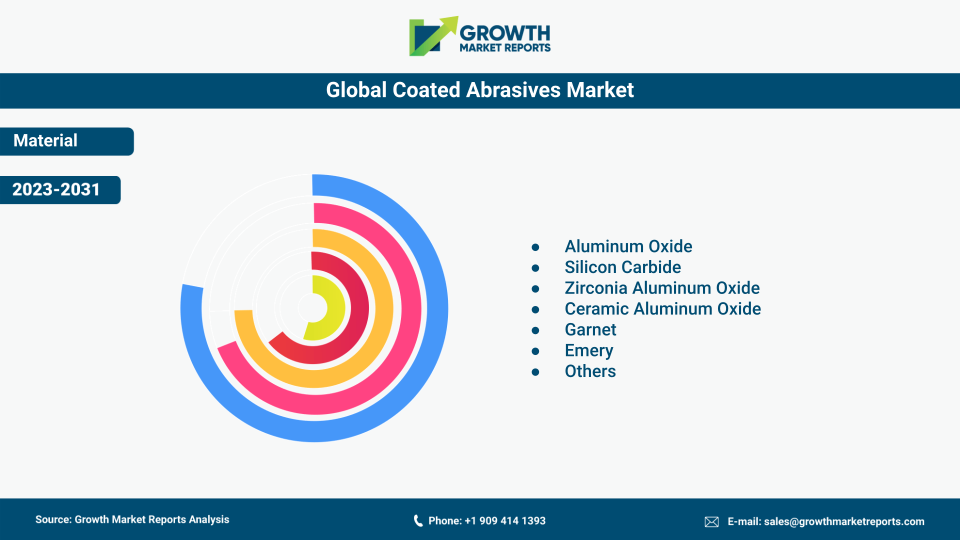
The material segment of the coated abrasives market encompasses aluminum oxide, silicon carbide, zirconia alumina, ceramic alumina, and others. Aluminum oxide remains the most widely used abrasive material due to its cost-effectiveness, versatility, and excellent cutting properties. It is suitable for a range of substrates, including metals, wood, and plastics, making it a staple in general-purpose applications. The widespread availability and consistent performance of aluminum oxide abrasives have cemented their position as the preferred choice for industrial and commercial users alike.

Silicon carbide abrasives are renowned for their superior hardness and sharpness, making them ideal for applications that require aggressive material removal. They are particularly effective on non-ferrous metals, glass, ceramics, and stone. The electronics and semiconductor industries have emerged as key consumers of silicon carbide abrasives, given their need for precision polishing and surface finishing. As the demand for high-performance electronics continues to grow, the use of silicon carbide in coated abrasives is expected to increase, driving segment expansion.

Zirconia alumina and ceramic alumina represent the next generation of abrasive materials, offering enhanced durability and cutting efficiency. Zirconia alumina is favored in heavy-duty grinding and metalworking applications, where high stock removal rates and long service life are essential. Ceramic alumina, on the other hand, provides exceptional performance in demanding environments, such as aerospace and defense manufacturing. These advanced materials are designed to maintain their sharpness over extended periods, reducing the frequency of abrasive replacement and improving overall process efficiency.

Other materials, including garnet and diamond, are used for specialized applications that require unique properties, such as minimal heat generation or ultra-fine finishing. The ongoing development of hybrid and composite abrasive materials is further expanding the capabilities of coated abrasives, enabling their use in emerging technologies and high-precision industries. As end-users seek abrasives that can deliver superior performance while minimizing operational costs, the material segment is poised for continuous innovation and growth.

Backing Material Analysis

The backing material segment plays a critical role in determining the performance and application suitability of coated abrasives. Paper backings are widely used in light-duty applications, such as woodworking and automotive refinishing, due to their flexibility and cost-effectiveness. Paper-backed abrasives are easy to handle and provide a smooth finish, making them ideal for hand sanding and finishing tasks. However, their limited strength and durability restrict their use in heavy-duty or high-pressure operations.

Cloth backings offer enhanced strength and tear resistance, making them suitable for more demanding applications, including metalworking and industrial surface preparation. Cloth-backed abrasives can withstand higher pressures and repeated flexing, allowing them to deliver consistent performance in both manual and machine-assisted operations. The versatility of cloth backings has led to their widespread adoption across multiple industries, particularly where long-lasting and reliable abrasives are required.

Fiber backings are primarily used in abrasive discs and wheels, providing a rigid and stable platform for aggressive grinding and cutting tasks. Fiber-backed abrasives are favored in metal fabrication and heavy machinery industries, where high material removal rates and resistance to heat buildup are essential. The development of advanced fiber materials has improved the durability and heat dissipation capabilities of these abrasives, enabling their use in high-intensity applications.

Polyester and other synthetic backings are gaining popularity due to their superior moisture resistance, strength, and flexibility. These backings are particularly well-suited for wet sanding and applications that require exposure to harsh chemicals or extreme temperatures. The automotive, aerospace, and electronics industries are increasingly adopting polyester-backed abrasives for their ability to maintain performance under challenging conditions. As manufacturers continue to develop innovative backing materials that enhance the functionality and longevity of coated abrasives, this segment is expected to witness sustained growth.

Application Analysis

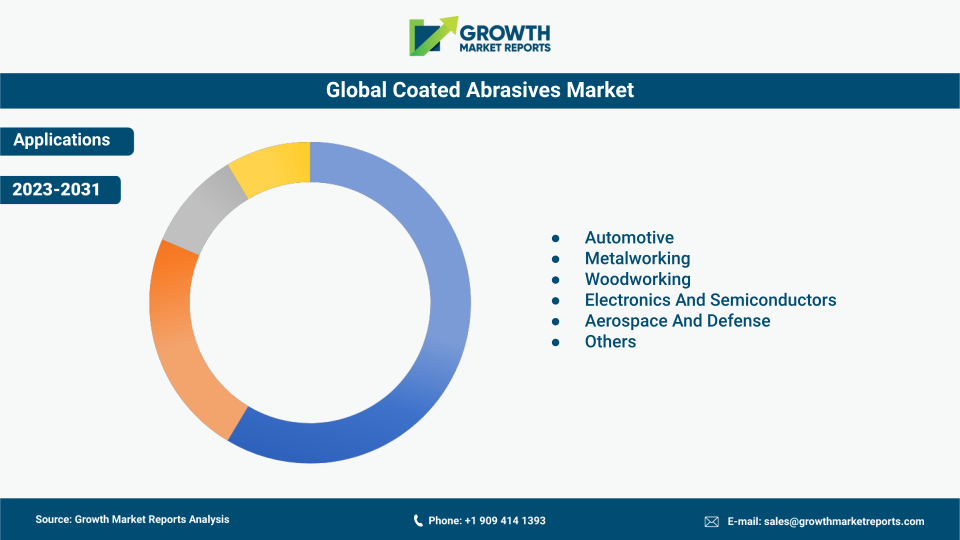
The coated abrasives market serves a diverse range of applications, including metalworking, woodworking, automotive, electronics, aerospace and defense, and others. Metalworking remains the largest application segment, driven by the need for efficient grinding, deburring, and surface finishing processes. The increasing adoption of automated metal fabrication and machining systems has amplified the demand for high-performance coated abrasives that can deliver precise and consistent results. As industries strive to improve productivity and product quality, the role of coated abrasives in metalworking is becoming increasingly critical.

Woodworking is another significant application area, encompassing furniture manufacturing, cabinetry, and construction. Coated abrasives are essential for achieving smooth surfaces, removing imperfections, and preparing wood for finishing. The growth of the global construction and furniture industries has fueled the demand for abrasives that can deliver superior surface quality and reduce processing time. Innovations in abrasive materials and backing technologies have further enhanced the performance of coated abrasives in woodworking applications, enabling manufacturers to meet evolving customer expectations.

The automotive industry relies heavily on coated abrasives for a wide range of tasks, including paint preparation, bodywork, and component finishing. The increasing complexity of automotive designs and the use of lightweight materials have created new challenges for surface finishing, driving the need for advanced abrasive solutions. Coated abrasives play a vital role in ensuring the durability, appearance, and performance of automotive components, making them indispensable in both OEM and aftermarket operations. The ongoing shift toward electric vehicles and sustainable manufacturing practices is expected to further boost the demand for coated abrasives in the automotive sector.

In the electronics and aerospace and defense industries, coated abrasives are used for precision polishing, deburring, and surface preparation of sensitive components. The stringent quality standards and complex geometries involved in these sectors require abrasives that can deliver exceptional accuracy and reliability. As the demand for miniaturized and high-performance electronic devices continues to rise, the importance of coated abrasives in achieving defect-free surfaces and optimal functionality is set to increase. The application segment is thus characterized by a constant drive for innovation and customization to address the unique requirements of each industry.

End-User Analysis

The end-user segment of the coated abrasives market includes industrial, automotive, construction, electronics, and others. The industrial sector accounts for the largest share, driven by the extensive use of coated abrasives in manufacturing, metal fabrication, and general maintenance operations. Industrial users require abrasives that can deliver high productivity, consistent performance, and cost-effectiveness across a wide range of applications. The ongoing expansion of manufacturing capabilities in emerging economies is expected to sustain the growth of this segment in the coming years.

The automotive end-user segment is characterized by its dynamic nature and evolving requirements. Automotive manufacturers and repair shops rely on coated abrasives for tasks ranging from surface preparation and painting to component finishing and polishing. The increasing adoption of advanced materials and the shift toward electric vehicles are driving the need for innovative abrasive solutions that can address new manufacturing challenges. As the automotive industry continues to prioritize quality and efficiency, the demand for high-performance coated abrasives is projected to rise.

The construction sector represents another key end-user, utilizing coated abrasives for surface preparation, finishing, and maintenance of building materials and structures. The growth of infrastructure development projects worldwide has boosted the demand for durable and reliable abrasive products that can withstand harsh operating conditions. The construction industry's emphasis on safety, sustainability, and efficiency is driving the adoption of advanced coated abrasives that offer improved performance and reduced environmental impact.

Electronics manufacturers require coated abrasives for the precise finishing and polishing of delicate components, such as circuit boards and semiconductor devices. The miniaturization of electronic devices and the increasing complexity of component geometries have heightened the need for abrasives that can deliver exceptional accuracy and consistency. As the electronics industry continues to innovate and expand, the demand for specialized coated abrasives tailored to specific applications is expected to grow.

Opportunities & Threats

The coated abrasives market offers a plethora of opportunities for growth and innovation. One of the most promising avenues is the development of eco-friendly and sustainable abrasive products. As environmental regulations become increasingly stringent, manufacturers are investing in the creation of abrasives made from recyclable materials and low-emission processes. This shift not only aligns with global sustainability goals but also opens up new market segments among environmentally conscious customers. Additionally, the integration of digital technologies and automation in abrasive manufacturing and application processes presents significant opportunities for improving efficiency, reducing waste, and enhancing product quality.

Another major opportunity lies in the expansion of coated abrasives applications in emerging industries, such as renewable energy, medical devices, and advanced electronics. The growing demand for precision finishing and high-quality surfaces in these sectors is driving the need for innovative abrasive solutions. Manufacturers that can develop customized products tailored to the unique requirements of these industries are well-positioned to capitalize on new revenue streams. Furthermore, the increasing adoption of Industry 4.0 principles in manufacturing is expected to create additional opportunities for coated abrasives suppliers to offer value-added services, such as predictive maintenance and process optimization.

Despite the numerous opportunities, the coated abrasives market faces certain restraining factors. One of the primary challenges is the volatility in raw material prices, particularly for key abrasive materials like aluminum oxide and silicon carbide. Fluctuations in supply and demand, coupled with geopolitical uncertainties, can impact the cost structure and profitability of coated abrasives manufacturers. Additionally, the market is highly competitive, with numerous players vying for market share through price competition and product innovation. This intense competition can put pressure on margins and limit the ability of smaller players to invest in research and development. Addressing these challenges will require strategic sourcing, operational efficiency, and a focus on differentiation through innovation and quality.

Regional Outlook

The Asia Pacific region leads the global coated abrasives market, accounting for over 42% of the total market value in 2024, or approximately USD 6.6 billion. This dominance is driven by the region's robust manufacturing sector, particularly in China, India, and Southeast Asia. The rapid pace of industrialization, coupled with significant investments in infrastructure and construction, has fueled the demand for coated abrasives across a wide range of applications. The presence of major automotive, electronics, and metalworking industries in the region further contributes to its leading position. With a projected CAGR of 6.8% through 2033, Asia Pacific is expected to maintain its dominance, supported by ongoing economic development and technological advancements.

North America and Europe are also significant contributors to the coated abrasives market, collectively representing approximately 38% of the global market in 2024, with North America accounting for USD 3.8 billion and Europe for USD 2.2 billion. These regions benefit from advanced manufacturing capabilities, high standards of product quality, and a strong focus on innovation. The automotive, aerospace, and electronics sectors in North America and Europe are major consumers of coated abrasives, driving the demand for high-performance and specialized products. The emphasis on sustainability and regulatory compliance in these regions is also fostering the development of eco-friendly abrasive solutions.

Latin America, the Middle East, and Africa represent emerging markets for coated abrasives, with a combined market value of USD 3.1 billion in 2024. These regions are experiencing steady growth, driven by infrastructure development, urbanization, and the gradual expansion of manufacturing capabilities. While the market size in these regions is smaller compared to Asia Pacific, North America, and Europe, the growth potential is significant, particularly as governments and private sector players invest in industrialization and modernization initiatives. The regional outlook for the coated abrasives market is thus characterized by a dynamic balance between mature and emerging markets, each offering unique opportunities and challenges for industry participants.

Coated Abrasives Market Statistics

Competitor Outlook

The coated abrasives market is highly competitive, with a diverse array of global and regional players vying for market share. The competitive landscape is characterized by continuous innovation, product differentiation, and strategic collaborations aimed at expanding market presence and enhancing product portfolios. Leading companies are investing heavily in research and development to develop advanced abrasive materials, improve manufacturing processes, and introduce eco-friendly products that meet evolving customer demands. The ability to offer customized solutions and value-added services has become a key differentiator in the market, enabling companies to build long-term relationships with customers and secure repeat business.

Mergers and acquisitions are a common strategy among major players seeking to strengthen their market position and gain access to new technologies and markets. Companies are also focusing on expanding their distribution networks and enhancing their digital capabilities to better serve customers and streamline operations. The rise of e-commerce and online sales channels has further intensified competition, as manufacturers and distributors seek to reach a broader customer base and offer more convenient purchasing options. In addition to established players, the market is witnessing the entry of new entrants and startups, particularly in niche segments and emerging regions, adding to the competitive intensity.

The competitive environment in the coated abrasives market is also shaped by the need to comply with stringent regulatory requirements related to product safety, environmental impact, and occupational health. Companies that can demonstrate compliance with international standards and offer products with reduced environmental footprints are well-positioned to capture market share, especially in regions with strict regulatory frameworks. The ability to adapt to changing customer preferences and market trends, such as the growing demand for sustainable and high-performance abrasives, is essential for maintaining a competitive edge.

Some of the major companies operating in the coated abrasives market include 3M Company, Saint-Gobain Abrasives, Robert Bosch GmbH, Hermes Schleifmittel GmbH, and Mirka Ltd. 3M Company is renowned for its extensive product portfolio and commitment to innovation, regularly introducing new abrasive solutions tailored to various industries. Saint-Gobain Abrasives is a global leader with a strong focus on sustainability and advanced material technologies. Robert Bosch GmbH leverages its expertise in engineering and manufacturing to deliver high-quality abrasive products for industrial and automotive applications. Hermes Schleifmittel GmbH and Mirka Ltd. are recognized for their specialization in precision abrasives and their ability to address the unique needs of customers in woodworking, electronics, and automotive sectors.

These leading companies are supported by a network of regional and local players who cater to specific market segments and geographic areas. The presence of a diverse supplier base ensures healthy competition and fosters innovation, benefiting end-users through a wide range of product choices and competitive pricing. As the coated abrasives market continues to evolve, companies that can balance innovation, quality, sustainability, and customer-centricity will be best positioned to succeed in an increasingly dynamic and competitive environment.

Key Players

  • 3M
  • Saint-Gobain Abrasives
  • Klingspor AG
  • Norton Abrasives
  • Hermes Schleifmittel GmbH
  • SIA Abrasives (Bosch Group)
  • Mirka Ltd.
  • Norton Company
  • Deerfos Co., Ltd.
  • Carborundum Universal Limited (CUMI)
  • Nihon Kenshi Co., Ltd.
  • Fujimi Incorporated
  • VSM Abrasives Corporation
  • Awuko Abrasives
  • Indasa Abrasives
  • Sungold Abrasives
  • Robert Bosch GmbH
  • Ekamant AB
  • Weiler Abrasives Group
  • Gator Finishing Products
Coated Abrasives Market Overview

Segments

The Coated Abrasives market has been segmented on the basis of

Product Type

  • Belts
  • Discs
  • Rolls
  • Sheets
  • Wheels
  • Others

Material

  • Aluminum Oxide
  • Silicon Carbide
  • Zirconia Alumina
  • Ceramic Alumina
  • Others

Backing Material

  • Paper
  • Cloth
  • Fiber
  • Polyester
  • Others

Application

  • Metalworking
  • Woodworking
  • Automotive
  • Electronics
  • Aerospace & Defense
  • Others

End-User

  • Industrial
  • Automotive
  • Construction
  • Electronics
  • Others

Competitive Landscape

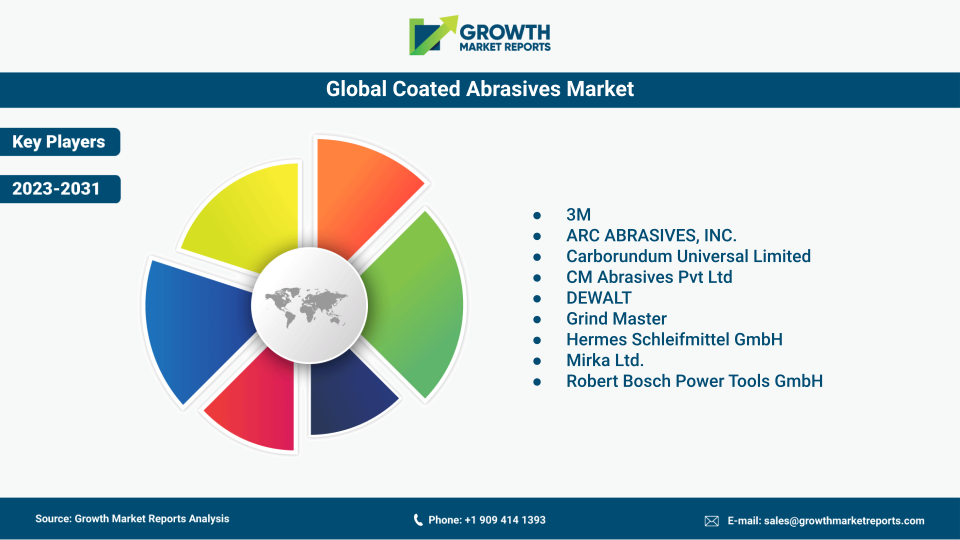
  • Prominent players in the global coated abrasives market are 3M, ARC ABRASIVES, INC., Carborundum Universal Limited, CM Abrasives Pvt Ltd, DEWALT, Grind Master, Hermes Schleifmittel GmbH, Mirka Ltd., Robert Bosch Power Tools GmbH, and Saint Gobain.
  • In January 2019, Stanley Black & Decker, Inc. acquired a 20% interest in MTD Holdings Inc., a manufacturer of outdoor power equipment, for USD ~234 million in cash. Stanley Black & Decker, Inc. is to acquire the remaining 80% of MTD Holdings Inc for USD ~1.6 billion. The investment is aimed at enhancing Stanley Black & Decker, Inc.’s presence in the lawn and garden segment and work on revenue and cost opportunities, as well as launch products targeted at professional and residential outdoor equipment customers.
  • In April 2021, Saint Gobain PAM launched a pipe for gravity sewerage applications compatible with Saint-Gobain PAM fittings, connections, and sleeves.
Coated Abrasives Market Key Players

Video Summary for Coated Abrasives Market

Frequently Asked Questions

Sustainability is driving the development of eco-friendly, recyclable, and low-emission abrasive products, as manufacturers respond to stricter environmental regulations and growing demand from environmentally conscious customers.

Challenges include volatility in raw material prices, intense market competition, compliance with environmental regulations, and the need for continuous innovation to meet evolving customer demands.

Major companies include 3M Company, Saint-Gobain Abrasives, Robert Bosch GmbH, Hermes Schleifmittel GmbH, Mirka Ltd., Klingspor AG, SIA Abrasives, Norton Abrasives, Deerfos Co., Ltd., and others.

Coated abrasives are used for metalworking, woodworking, automotive finishing, electronics manufacturing, aerospace, and defense applications, providing solutions for grinding, polishing, deburring, and surface preparation.

Asia Pacific is the leading region, accounting for over 42% of the market in 2024, followed by North America and Europe. Latin America, the Middle East, and Africa are emerging markets with significant growth potential.

Key trends include the adoption of advanced materials like ceramic and zirconia alumina, development of eco-friendly and recyclable abrasives, increased automation and digitalization in manufacturing, and a focus on product customization.

Common abrasive materials include aluminum oxide, silicon carbide, zirconia alumina, ceramic alumina, garnet, and diamond. Aluminum oxide is the most widely used due to its cost-effectiveness and versatility.

The coated abrasives market is segmented by product type into belts, discs, rolls, sheets, wheels, and specialty abrasives, with belts and discs holding significant market shares due to their widespread industrial applications.

Key industries driving demand for coated abrasives include manufacturing, automotive, electronics, construction, woodworking, aerospace, and defense, with significant growth in emerging economies and advanced manufacturing sectors.

The global coated abrasives market reached USD 15.7 billion in 2024 and is projected to grow at a CAGR of 6.1% from 2025 to 2033, reaching an estimated value of USD 26.6 billion by 2033.

Table Of Content

Chapter 1 Executive Summary
Chapter 2 Assumptions and Acronyms Used
Chapter 3 Research Methodology
Chapter 4 Coated Abrasives Market Overview
   4.1 Introduction
      4.1.1 Market Taxonomy
      4.1.2 Market Definition
      4.1.3 Macro-Economic Factors Impacting the Market Growth
   4.2 Coated Abrasives Market Dynamics
      4.2.1 Market Drivers
      4.2.2 Market Restraints
      4.2.3 Market Opportunity
   4.3 Coated Abrasives Market - Supply Chain Analysis
      4.3.1 List of Key Suppliers
      4.3.2 List of Key Distributors
      4.3.3 List of Key Consumers
   4.4 Key Forces Shaping the Coated Abrasives Market
      4.4.1 Bargaining Power of Suppliers
      4.4.2 Bargaining Power of Buyers
      4.4.3 Threat of Substitution
      4.4.4 Threat of New Entrants
      4.4.5 Competitive Rivalry
   4.5 Global Coated Abrasives Market Size & Forecast, 2023-2032
      4.5.1 Coated Abrasives Market Size and Y-o-Y Growth
      4.5.2 Coated Abrasives Market Absolute $ Opportunity

Chapter 5 Global Coated Abrasives Market Analysis and Forecast By Product Type
   5.1 Introduction
      5.1.1 Key Market Trends & Growth Opportunities By Product Type
      5.1.2 Basis Point Share (BPS) Analysis By Product Type
      5.1.3 Absolute $ Opportunity Assessment By Product Type
   5.2 Coated Abrasives Market Size Forecast By Product Type
      5.2.1 Belts
      5.2.2 Discs
      5.2.3 Rolls
      5.2.4 Sheets
      5.2.5 Wheels
      5.2.6 Others
   5.3 Market Attractiveness Analysis By Product Type

Chapter 6 Global Coated Abrasives Market Analysis and Forecast By Material
   6.1 Introduction
      6.1.1 Key Market Trends & Growth Opportunities By Material
      6.1.2 Basis Point Share (BPS) Analysis By Material
      6.1.3 Absolute $ Opportunity Assessment By Material
   6.2 Coated Abrasives Market Size Forecast By Material
      6.2.1 Aluminum Oxide
      6.2.2 Silicon Carbide
      6.2.3 Zirconia Alumina
      6.2.4 Ceramic Alumina
      6.2.5 Others
   6.3 Market Attractiveness Analysis By Material

Chapter 7 Global Coated Abrasives Market Analysis and Forecast By Backing Material
   7.1 Introduction
      7.1.1 Key Market Trends & Growth Opportunities By Backing Material
      7.1.2 Basis Point Share (BPS) Analysis By Backing Material
      7.1.3 Absolute $ Opportunity Assessment By Backing Material
   7.2 Coated Abrasives Market Size Forecast By Backing Material
      7.2.1 Paper
      7.2.2 Cloth
      7.2.3 Fiber
      7.2.4 Polyester
      7.2.5 Others
   7.3 Market Attractiveness Analysis By Backing Material

Chapter 8 Global Coated Abrasives Market Analysis and Forecast By Application
   8.1 Introduction
      8.1.1 Key Market Trends & Growth Opportunities By Application
      8.1.2 Basis Point Share (BPS) Analysis By Application
      8.1.3 Absolute $ Opportunity Assessment By Application
   8.2 Coated Abrasives Market Size Forecast By Application
      8.2.1 Metalworking
      8.2.2 Woodworking
      8.2.3 Automotive
      8.2.4 Electronics
      8.2.5 Aerospace & Defense
      8.2.6 Others
   8.3 Market Attractiveness Analysis By Application

Chapter 9 Global Coated Abrasives Market Analysis and Forecast By End-User
   9.1 Introduction
      9.1.1 Key Market Trends & Growth Opportunities By End-User
      9.1.2 Basis Point Share (BPS) Analysis By End-User
      9.1.3 Absolute $ Opportunity Assessment By End-User
   9.2 Coated Abrasives Market Size Forecast By End-User
      9.2.1 Industrial
      9.2.2 Automotive
      9.2.3 Construction
      9.2.4 Electronics
      9.2.5 Others
   9.3 Market Attractiveness Analysis By End-User

Chapter 10 Global Coated Abrasives Market Analysis and Forecast by Region
   10.1 Introduction
      10.1.1 Key Market Trends & Growth Opportunities By Region
      10.1.2 Basis Point Share (BPS) Analysis By Region
      10.1.3 Absolute $ Opportunity Assessment By Region
   10.2 Coated Abrasives Market Size Forecast By Region
      10.2.1 North America
      10.2.2 Europe
      10.2.3 Asia Pacific
      10.2.4 Latin America
      10.2.5 Middle East & Africa (MEA)
   10.3 Market Attractiveness Analysis By Region

Chapter 11 Coronavirus Disease (COVID-19) Impact 
   11.1 Introduction 
   11.2 Current & Future Impact Analysis 
   11.3 Economic Impact Analysis 
   11.4 Government Policies 
   11.5 Investment Scenario

Chapter 12 North America Coated Abrasives Analysis and Forecast
   12.1 Introduction
   12.2 North America Coated Abrasives Market Size Forecast by Country
      12.2.1 U.S.
      12.2.2 Canada
   12.3 Basis Point Share (BPS) Analysis by Country
   12.4 Absolute $ Opportunity Assessment by Country
   12.5 Market Attractiveness Analysis by Country
   12.6 North America Coated Abrasives Market Size Forecast By Product Type
      12.6.1 Belts
      12.6.2 Discs
      12.6.3 Rolls
      12.6.4 Sheets
      12.6.5 Wheels
      12.6.6 Others
   12.7 Basis Point Share (BPS) Analysis By Product Type 
   12.8 Absolute $ Opportunity Assessment By Product Type 
   12.9 Market Attractiveness Analysis By Product Type
   12.10 North America Coated Abrasives Market Size Forecast By Material
      12.10.1 Aluminum Oxide
      12.10.2 Silicon Carbide
      12.10.3 Zirconia Alumina
      12.10.4 Ceramic Alumina
      12.10.5 Others
   12.11 Basis Point Share (BPS) Analysis By Material 
   12.12 Absolute $ Opportunity Assessment By Material 
   12.13 Market Attractiveness Analysis By Material
   12.14 North America Coated Abrasives Market Size Forecast By Backing Material
      12.14.1 Paper
      12.14.2 Cloth
      12.14.3 Fiber
      12.14.4 Polyester
      12.14.5 Others
   12.15 Basis Point Share (BPS) Analysis By Backing Material 
   12.16 Absolute $ Opportunity Assessment By Backing Material 
   12.17 Market Attractiveness Analysis By Backing Material
   12.18 North America Coated Abrasives Market Size Forecast By Application
      12.18.1 Metalworking
      12.18.2 Woodworking
      12.18.3 Automotive
      12.18.4 Electronics
      12.18.5 Aerospace & Defense
      12.18.6 Others
   12.19 Basis Point Share (BPS) Analysis By Application 
   12.20 Absolute $ Opportunity Assessment By Application 
   12.21 Market Attractiveness Analysis By Application
   12.22 North America Coated Abrasives Market Size Forecast By End-User
      12.22.1 Industrial
      12.22.2 Automotive
      12.22.3 Construction
      12.22.4 Electronics
      12.22.5 Others
   12.23 Basis Point Share (BPS) Analysis By End-User 
   12.24 Absolute $ Opportunity Assessment By End-User 
   12.25 Market Attractiveness Analysis By End-User

Chapter 13 Europe Coated Abrasives Analysis and Forecast
   13.1 Introduction
   13.2 Europe Coated Abrasives Market Size Forecast by Country
      13.2.1 Germany
      13.2.2 France
      13.2.3 Italy
      13.2.4 U.K.
      13.2.5 Spain
      13.2.6 Russia
      13.2.7 Rest of Europe
   13.3 Basis Point Share (BPS) Analysis by Country
   13.4 Absolute $ Opportunity Assessment by Country
   13.5 Market Attractiveness Analysis by Country
   13.6 Europe Coated Abrasives Market Size Forecast By Product Type
      13.6.1 Belts
      13.6.2 Discs
      13.6.3 Rolls
      13.6.4 Sheets
      13.6.5 Wheels
      13.6.6 Others
   13.7 Basis Point Share (BPS) Analysis By Product Type 
   13.8 Absolute $ Opportunity Assessment By Product Type 
   13.9 Market Attractiveness Analysis By Product Type
   13.10 Europe Coated Abrasives Market Size Forecast By Material
      13.10.1 Aluminum Oxide
      13.10.2 Silicon Carbide
      13.10.3 Zirconia Alumina
      13.10.4 Ceramic Alumina
      13.10.5 Others
   13.11 Basis Point Share (BPS) Analysis By Material 
   13.12 Absolute $ Opportunity Assessment By Material 
   13.13 Market Attractiveness Analysis By Material
   13.14 Europe Coated Abrasives Market Size Forecast By Backing Material
      13.14.1 Paper
      13.14.2 Cloth
      13.14.3 Fiber
      13.14.4 Polyester
      13.14.5 Others
   13.15 Basis Point Share (BPS) Analysis By Backing Material 
   13.16 Absolute $ Opportunity Assessment By Backing Material 
   13.17 Market Attractiveness Analysis By Backing Material
   13.18 Europe Coated Abrasives Market Size Forecast By Application
      13.18.1 Metalworking
      13.18.2 Woodworking
      13.18.3 Automotive
      13.18.4 Electronics
      13.18.5 Aerospace & Defense
      13.18.6 Others
   13.19 Basis Point Share (BPS) Analysis By Application 
   13.20 Absolute $ Opportunity Assessment By Application 
   13.21 Market Attractiveness Analysis By Application
   13.22 Europe Coated Abrasives Market Size Forecast By End-User
      13.22.1 Industrial
      13.22.2 Automotive
      13.22.3 Construction
      13.22.4 Electronics
      13.22.5 Others
   13.23 Basis Point Share (BPS) Analysis By End-User 
   13.24 Absolute $ Opportunity Assessment By End-User 
   13.25 Market Attractiveness Analysis By End-User

Chapter 14 Asia Pacific Coated Abrasives Analysis and Forecast
   14.1 Introduction
   14.2 Asia Pacific Coated Abrasives Market Size Forecast by Country
      14.2.1 China
      14.2.2 Japan
      14.2.3 South Korea
      14.2.4 India
      14.2.5 Australia
      14.2.6 South East Asia (SEA)
      14.2.7 Rest of Asia Pacific (APAC)
   14.3 Basis Point Share (BPS) Analysis by Country
   14.4 Absolute $ Opportunity Assessment by Country
   14.5 Market Attractiveness Analysis by Country
   14.6 Asia Pacific Coated Abrasives Market Size Forecast By Product Type
      14.6.1 Belts
      14.6.2 Discs
      14.6.3 Rolls
      14.6.4 Sheets
      14.6.5 Wheels
      14.6.6 Others
   14.7 Basis Point Share (BPS) Analysis By Product Type 
   14.8 Absolute $ Opportunity Assessment By Product Type 
   14.9 Market Attractiveness Analysis By Product Type
   14.10 Asia Pacific Coated Abrasives Market Size Forecast By Material
      14.10.1 Aluminum Oxide
      14.10.2 Silicon Carbide
      14.10.3 Zirconia Alumina
      14.10.4 Ceramic Alumina
      14.10.5 Others
   14.11 Basis Point Share (BPS) Analysis By Material 
   14.12 Absolute $ Opportunity Assessment By Material 
   14.13 Market Attractiveness Analysis By Material
   14.14 Asia Pacific Coated Abrasives Market Size Forecast By Backing Material
      14.14.1 Paper
      14.14.2 Cloth
      14.14.3 Fiber
      14.14.4 Polyester
      14.14.5 Others
   14.15 Basis Point Share (BPS) Analysis By Backing Material 
   14.16 Absolute $ Opportunity Assessment By Backing Material 
   14.17 Market Attractiveness Analysis By Backing Material
   14.18 Asia Pacific Coated Abrasives Market Size Forecast By Application
      14.18.1 Metalworking
      14.18.2 Woodworking
      14.18.3 Automotive
      14.18.4 Electronics
      14.18.5 Aerospace & Defense
      14.18.6 Others
   14.19 Basis Point Share (BPS) Analysis By Application 
   14.20 Absolute $ Opportunity Assessment By Application 
   14.21 Market Attractiveness Analysis By Application
   14.22 Asia Pacific Coated Abrasives Market Size Forecast By End-User
      14.22.1 Industrial
      14.22.2 Automotive
      14.22.3 Construction
      14.22.4 Electronics
      14.22.5 Others
   14.23 Basis Point Share (BPS) Analysis By End-User 
   14.24 Absolute $ Opportunity Assessment By End-User 
   14.25 Market Attractiveness Analysis By End-User

Chapter 15 Latin America Coated Abrasives Analysis and Forecast
   15.1 Introduction
   15.2 Latin America Coated Abrasives Market Size Forecast by Country
      15.2.1 Brazil
      15.2.2 Mexico
      15.2.3 Rest of Latin America (LATAM)
   15.3 Basis Point Share (BPS) Analysis by Country
   15.4 Absolute $ Opportunity Assessment by Country
   15.5 Market Attractiveness Analysis by Country
   15.6 Latin America Coated Abrasives Market Size Forecast By Product Type
      15.6.1 Belts
      15.6.2 Discs
      15.6.3 Rolls
      15.6.4 Sheets
      15.6.5 Wheels
      15.6.6 Others
   15.7 Basis Point Share (BPS) Analysis By Product Type 
   15.8 Absolute $ Opportunity Assessment By Product Type 
   15.9 Market Attractiveness Analysis By Product Type
   15.10 Latin America Coated Abrasives Market Size Forecast By Material
      15.10.1 Aluminum Oxide
      15.10.2 Silicon Carbide
      15.10.3 Zirconia Alumina
      15.10.4 Ceramic Alumina
      15.10.5 Others
   15.11 Basis Point Share (BPS) Analysis By Material 
   15.12 Absolute $ Opportunity Assessment By Material 
   15.13 Market Attractiveness Analysis By Material
   15.14 Latin America Coated Abrasives Market Size Forecast By Backing Material
      15.14.1 Paper
      15.14.2 Cloth
      15.14.3 Fiber
      15.14.4 Polyester
      15.14.5 Others
   15.15 Basis Point Share (BPS) Analysis By Backing Material 
   15.16 Absolute $ Opportunity Assessment By Backing Material 
   15.17 Market Attractiveness Analysis By Backing Material
   15.18 Latin America Coated Abrasives Market Size Forecast By Application
      15.18.1 Metalworking
      15.18.2 Woodworking
      15.18.3 Automotive
      15.18.4 Electronics
      15.18.5 Aerospace & Defense
      15.18.6 Others
   15.19 Basis Point Share (BPS) Analysis By Application 
   15.20 Absolute $ Opportunity Assessment By Application 
   15.21 Market Attractiveness Analysis By Application
   15.22 Latin America Coated Abrasives Market Size Forecast By End-User
      15.22.1 Industrial
      15.22.2 Automotive
      15.22.3 Construction
      15.22.4 Electronics
      15.22.5 Others
   15.23 Basis Point Share (BPS) Analysis By End-User 
   15.24 Absolute $ Opportunity Assessment By End-User 
   15.25 Market Attractiveness Analysis By End-User

Chapter 16 Middle East & Africa (MEA) Coated Abrasives Analysis and Forecast
   16.1 Introduction
   16.2 Middle East & Africa (MEA) Coated Abrasives Market Size Forecast by Country
      16.2.1 Saudi Arabia
      16.2.2 South Africa
      16.2.3 UAE
      16.2.4 Rest of Middle East & Africa (MEA)
   16.3 Basis Point Share (BPS) Analysis by Country
   16.4 Absolute $ Opportunity Assessment by Country
   16.5 Market Attractiveness Analysis by Country
   16.6 Middle East & Africa (MEA) Coated Abrasives Market Size Forecast By Product Type
      16.6.1 Belts
      16.6.2 Discs
      16.6.3 Rolls
      16.6.4 Sheets
      16.6.5 Wheels
      16.6.6 Others
   16.7 Basis Point Share (BPS) Analysis By Product Type 
   16.8 Absolute $ Opportunity Assessment By Product Type 
   16.9 Market Attractiveness Analysis By Product Type
   16.10 Middle East & Africa (MEA) Coated Abrasives Market Size Forecast By Material
      16.10.1 Aluminum Oxide
      16.10.2 Silicon Carbide
      16.10.3 Zirconia Alumina
      16.10.4 Ceramic Alumina
      16.10.5 Others
   16.11 Basis Point Share (BPS) Analysis By Material 
   16.12 Absolute $ Opportunity Assessment By Material 
   16.13 Market Attractiveness Analysis By Material
   16.14 Middle East & Africa (MEA) Coated Abrasives Market Size Forecast By Backing Material
      16.14.1 Paper
      16.14.2 Cloth
      16.14.3 Fiber
      16.14.4 Polyester
      16.14.5 Others
   16.15 Basis Point Share (BPS) Analysis By Backing Material 
   16.16 Absolute $ Opportunity Assessment By Backing Material 
   16.17 Market Attractiveness Analysis By Backing Material
   16.18 Middle East & Africa (MEA) Coated Abrasives Market Size Forecast By Application
      16.18.1 Metalworking
      16.18.2 Woodworking
      16.18.3 Automotive
      16.18.4 Electronics
      16.18.5 Aerospace & Defense
      16.18.6 Others
   16.19 Basis Point Share (BPS) Analysis By Application 
   16.20 Absolute $ Opportunity Assessment By Application 
   16.21 Market Attractiveness Analysis By Application
   16.22 Middle East & Africa (MEA) Coated Abrasives Market Size Forecast By End-User
      16.22.1 Industrial
      16.22.2 Automotive
      16.22.3 Construction
      16.22.4 Electronics
      16.22.5 Others
   16.23 Basis Point Share (BPS) Analysis By End-User 
   16.24 Absolute $ Opportunity Assessment By End-User 
   16.25 Market Attractiveness Analysis By End-User

Chapter 17 Competition Landscape 
   17.1 Coated Abrasives Market: Competitive Dashboard
   17.2 Global Coated Abrasives Market: Market Share Analysis, 2023
   17.3 Company Profiles (Details – Overview, Financials, Developments, Strategy) 
      17.3.1 3M
Saint-Gobain Abrasives
Klingspor AG
Norton Abrasives
Hermes Schleifmittel GmbH
SIA Abrasives (Bosch Group)
Mirka Ltd.
Norton Company
Deerfos Co., Ltd.
Carborundum Universal Limited (CUMI)
Nihon Kenshi Co., Ltd.
Fujimi Incorporated
VSM Abrasives Corporation
Awuko Abrasives
Indasa Abrasives
Sungold Abrasives
Robert Bosch GmbH
Ekamant AB
Weiler Abrasives Group
Gator Finishing Products

Methodology

Our Clients

Nestle SA
Deloitte
sinopec
Siemens Healthcare
The John Holland Group
Microsoft
FedEx Logistics
Dassault Aviation