Cloud Gaming Market Research Report 2033

Cloud Gaming Market Research Report 2033

Segments - by Offering (Infrastructure, Game Platform Services, Content Services), by Device Type (Smartphones, Tablets, Gaming Consoles, PCs & Laptops, Smart TVs, Others), by Gamer Type (Casual Gamers, Avid Gamers, Hardcore Gamers), by Solution (Video Streaming, File Streaming)

https://growthmarketreports.com/Debadatta
Author : Debadatta Patel
https://growthmarketreports.com/Vaibhav
Fact-checked by : V. Chandola
https://growthmarketreports.com/Shruti
Editor : Shruti Bhat

Upcoming | Report ID :CG-2665 | 4.6 Rating | 70 Reviews | 279 Pages | Format : Docx PDF

Report Description


Cloud Gaming Market Outlook

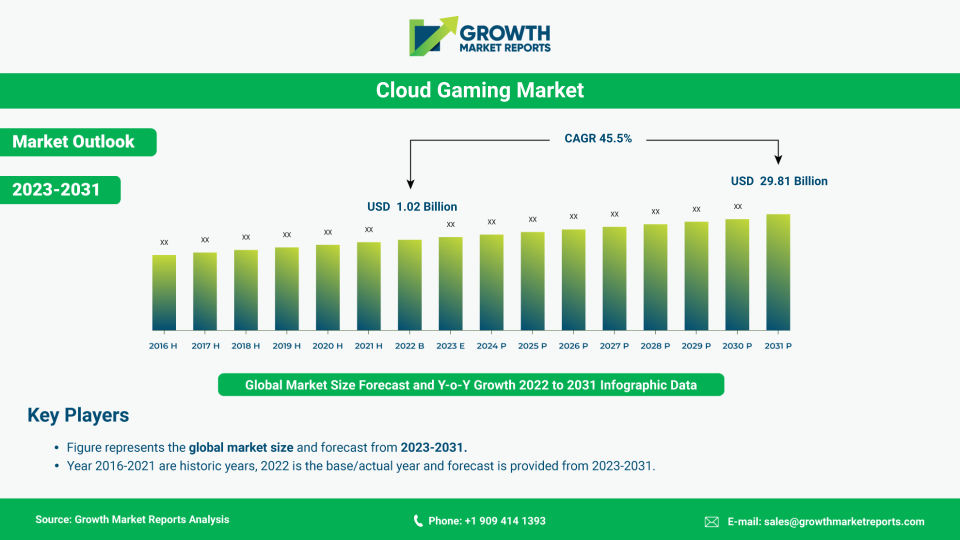
According to our latest research, the global cloud gaming market size reached USD 2.6 billion in 2024, demonstrating robust momentum driven by technological advancements and growing consumer demand. The market is forecasted to expand at a remarkable CAGR of 44.8% from 2025 to 2033, ultimately reaching a projected value of USD 54.7 billion by 2033. This exceptional growth is attributed to the increasing penetration of high-speed internet, the proliferation of advanced gaming devices, and the rising popularity of subscription-based gaming services globally.

One of the primary growth factors fueling the cloud gaming market is the widespread adoption of 5G technology, which delivers ultra-low latency and high bandwidth connectivity necessary for seamless cloud-based gaming experiences. With telecom operators rolling out 5G infrastructure across developed and developing regions, gamers can now access high-quality, resource-intensive games on a multitude of devices without the need for expensive hardware. This democratization of gaming, where users can play AAA titles on smartphones, tablets, or smart TVs, is significantly broadening the addressable market and attracting new gamers who previously faced barriers due to hardware limitations. The cloud gaming ecosystem is also benefiting from strategic collaborations between technology giants, gaming studios, and telecom providers, further accelerating the marketÂ’s expansion.

Another critical driver for the cloud gaming market is the shift in consumer preferences towards on-demand entertainment and subscription-based models. Modern gamers increasingly seek flexibility, instant access, and a diverse library of games without the necessity to purchase individual titles or invest in high-end gaming consoles. Cloud gaming services, such as Xbox Cloud Gaming, NVIDIA GeForce NOW, and Google Stadia, are capitalizing on this trend by offering extensive game libraries, cross-platform compatibility, and affordable monthly plans. This shift is further amplified by the growing trend of social and multiplayer gaming, where cloud platforms enable real-time collaboration and competition, regardless of usersÂ’ physical locations or device types.

Additionally, ongoing advancements in cloud infrastructure, including the deployment of edge computing and AI-driven content optimization, are enhancing the overall user experience and reliability of cloud gaming platforms. These technologies address common challenges such as latency, buffering, and graphical fidelity, ensuring that gamers enjoy smooth, immersive gameplay. The integration of AI-powered personalization and recommendation engines is also boosting user engagement and retention, as platforms tailor content and gameplay experiences to individual preferences. As cloud service providers continue to invest in data center expansion and network optimization, the scalability and accessibility of cloud gaming are expected to reach unprecedented levels in the coming years.

From a regional perspective, North America currently dominates the cloud gaming market, accounting for the largest revenue share in 2024, followed closely by Asia Pacific and Europe. The strong presence of leading technology companies, high disposable incomes, and early adoption of advanced connectivity solutions in North America have contributed to its leadership position. However, Asia Pacific is emerging as the fastest-growing region, driven by a massive gamer population, rapid urbanization, and increasing investments in digital infrastructure. Europe, with its tech-savvy consumers and supportive regulatory environment, is also witnessing substantial growth. Latin America and the Middle East & Africa, while still nascent markets, are expected to register impressive CAGRs as internet penetration and mobile device adoption continue to rise.

Global Cloud Gaming Industry Outlook

Offering Analysis

The cloud gaming market is segmented by offering into infrastructure, game platform services, and content services, each playing a pivotal role in shaping the industry landscape. Infrastructure encompasses the underlying cloud servers, data centers, and network resources essential for delivering high-performance gaming experiences. Leading cloud providers, such as Amazon Web Services, Microsoft Azure, and Google Cloud, are investing heavily in expanding their global data center footprints and integrating edge computing capabilities. This enables cloud gaming platforms to reduce latency, enhance data processing speeds, and provide geographically dispersed gamers with consistent and reliable access to high-quality games. The infrastructure segment is critical not only for supporting current user demand but also for ensuring scalability as the market grows exponentially.

Game Streaming has become a pivotal component of the cloud gaming ecosystem, offering gamers the ability to access and play games directly from the cloud without the need for extensive downloads or installations. This technology leverages powerful remote servers to process game data and stream it in real-time to users' devices, ensuring that even those with limited hardware capabilities can enjoy high-quality gaming experiences. The rise of game streaming services has democratized access to gaming, allowing users to play a wide range of titles on various devices, from smartphones to smart TVs. As internet speeds continue to improve globally, game streaming is expected to become even more seamless, providing an immersive and flexible gaming experience that caters to both casual and hardcore gamers alike.

Game platform services represent the middleware layer that connects the infrastructure with end-user devices. These services include game streaming platforms, digital storefronts, and user account management systems. Providers in this segment focus on delivering seamless user interfaces, secure payment gateways, and robust content delivery networks. Innovations such as AI-driven matchmaking, real-time multiplayer synchronization, and cross-platform compatibility are enhancing the value proposition of game platform services. Furthermore, partnerships between platform providers and game developers are leading to exclusive content releases and early access programs, which are instrumental in attracting and retaining subscribers.

Content services, the third major offering segment, revolve around the licensing, aggregation, and distribution of game titles. This segment is witnessing rapid growth as cloud gaming platforms compete to secure exclusive rights to popular franchises and indie games alike. Content services also include value-added features such as in-game purchases, downloadable content (DLC), and live events, which generate additional revenue streams for providers. The availability of diverse and regularly updated content libraries is a key differentiator in the highly competitive cloud gaming market, influencing user acquisition and retention rates. As consumer expectations for high-quality, immersive content continue to rise, content services will remain a focal point for strategic investments and innovation.

The synergy between infrastructure, platform services, and content is essential for delivering a seamless and engaging cloud gaming experience. Market leaders are increasingly adopting an integrated approach, offering bundled solutions that encompass all three segments. This not only simplifies the user experience but also enables providers to capture a larger share of the value chain. As the market matures, we anticipate further convergence and collaboration among infrastructure providers, platform operators, and content creators, leading to the emergence of holistic cloud gaming ecosystems that cater to a wide range of gamer preferences and requirements.

Report Scope

Attributes Details
Report Title Cloud Gaming Market Research Report 2033
By Offering Infrastructure, Game Platform Services, Content Services
By Device Type Smartphones, Tablets, Gaming Consoles, PCs & Laptops, Smart TVs, Others
By Gamer Type Casual Gamers, Avid Gamers, Hardcore Gamers
By Solution Video Streaming, File Streaming
Regions Covered North America, Europe, APAC, Latin America, MEA
Base Year 2024
Historic Data 2018-2023
Forecast Period 2025-2033
Number of Pages 279
Number of Tables & Figures 277
Customization Available Yes, the report can be customized as per your need.

Device Type Analysis

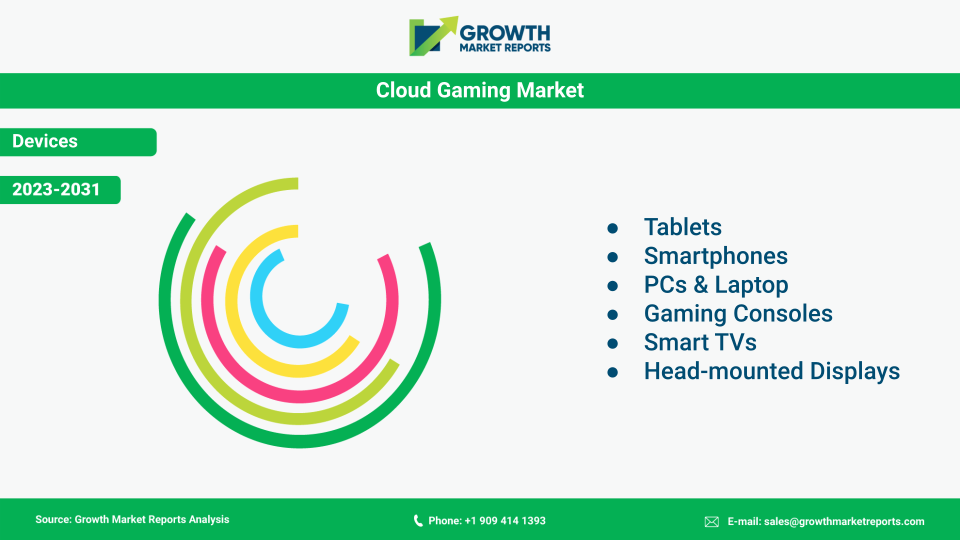
The cloud gaming market is experiencing a significant shift in device preferences, with smartphones emerging as the most popular gaming platform in 2024. The proliferation of affordable, high-performance smartphones equipped with advanced GPUs, coupled with widespread 4G and 5G connectivity, has democratized access to cloud gaming. This trend is particularly pronounced in emerging markets, where mobile devices are often the primary gateway to digital content. Cloud gaming platforms are optimizing their services for mobile devices, offering touch-friendly interfaces, adaptive streaming technologies, and exclusive mobile-first game titles to cater to this growing user base.

Tablets, while representing a smaller share compared to smartphones, are gaining traction among casual and family gamers who prefer larger screens for enhanced visual experiences. The versatility of tablets, combined with their portability and increasingly powerful hardware, makes them an attractive option for cloud gaming on the go. Gaming consoles and PCs & laptops, traditionally the mainstay of hardcore and avid gamers, continue to play a crucial role in the market. These devices offer superior processing power, advanced graphics capabilities, and support for high-end peripherals, enabling immersive gameplay experiences for demanding titles. Cloud gaming services are leveraging these platforms to deliver 4K and even 8K resolution gaming, further blurring the lines between local and cloud-based gaming experiences.

Smart TVs are emerging as a promising device category, transforming living rooms into gaming hubs without the need for dedicated consoles or PCs. The integration of cloud gaming apps directly into smart TV operating systems, coupled with support for wireless controllers, is making it easier than ever for households to access a vast library of games with minimal setup. This trend is expected to accelerate as TV manufacturers partner with cloud gaming providers to pre-install gaming apps and optimize hardware for low-latency streaming. Other devices, such as streaming sticks, set-top boxes, and virtual reality headsets, are also contributing to the diversity of the cloud gaming ecosystem, catering to niche segments and specialized use cases.

The proliferation of compatible devices is expanding the total addressable market for cloud gaming, enabling users to play anytime, anywhere, and on any screen. This device-agnostic approach is a key differentiator for cloud gaming platforms, as it removes traditional hardware barriers and fosters cross-platform play. As device manufacturers continue to innovate and enhance compatibility with cloud gaming services, we expect to see even greater convergence between entertainment, productivity, and gaming devices, further fueling market growth and user engagement.

Gamer Type Analysis

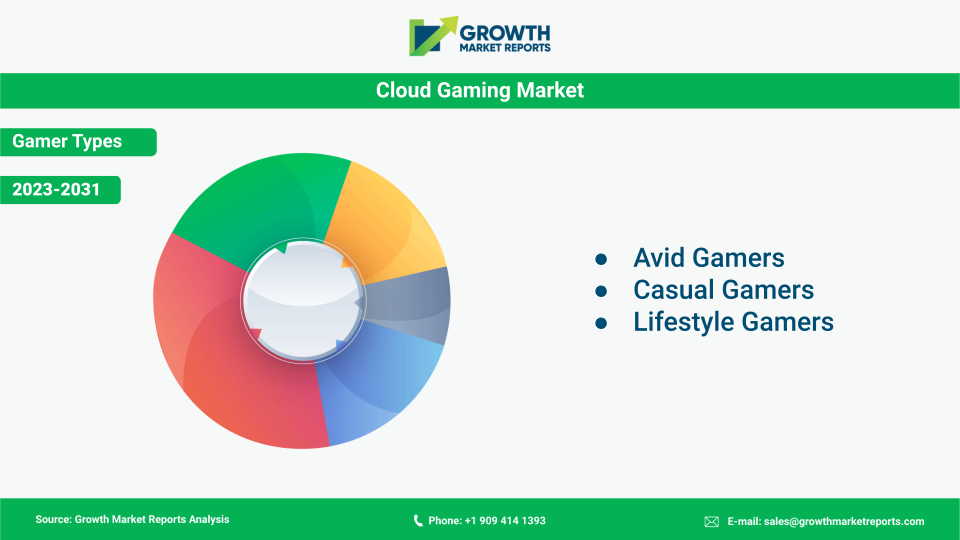
The cloud gaming market caters to a diverse spectrum of gamer types, including casual gamers, avid gamers, and hardcore gamers, each with distinct preferences and usage patterns. Casual gamers, who play intermittently and prioritize convenience and accessibility, represent the largest user segment. Cloud gaming platforms are particularly well-suited to this demographic, as they offer instant access to a wide variety of games without the need for downloads or installations. Subscription-based models and free-to-play offerings are especially appealing to casual gamers, who value flexibility and low commitment. As a result, platforms are investing in user-friendly interfaces, social features, and mobile-optimized content to attract and retain this segment.

Avid gamers, who engage in gaming more frequently and often participate in online multiplayer experiences, form the core user base for many cloud gaming services. This segment values high-quality graphics, low latency, and a diverse game library, often seeking new releases and exclusive content. Cloud gaming platforms are responding by securing partnerships with leading game developers, offering early access to new titles, and integrating advanced features such as real-time voice chat and competitive leaderboards. The ability to seamlessly switch between devices and maintain progress across platforms is a key selling point for avid gamers, who demand flexibility and continuity in their gaming experiences.

Hardcore gamers, who invest significant time and resources in gaming and often participate in esports or competitive gaming, have traditionally preferred local hardware for its superior performance and customization options. However, advancements in cloud infrastructure and streaming technologies are beginning to sway this segment towards cloud gaming, particularly for titles that require high processing power and graphical fidelity. Platforms are introducing premium subscription tiers, support for external peripherals, and customizable performance settings to cater to the demanding requirements of hardcore gamers. The integration of esports tournaments and community-driven features is also enhancing the appeal of cloud gaming for this segment.

The ability of cloud gaming platforms to cater to the unique needs of different gamer types is a critical factor in market growth and user retention. By offering tailored experiences, flexible pricing models, and a wide range of content, providers can maximize their reach and appeal to a broad audience. As the market continues to mature, we anticipate further segmentation and personalization, with platforms leveraging data analytics and AI to deliver customized recommendations, gameplay experiences, and community engagement initiatives for each gamer type.

Solution Analysis

The cloud gaming market is segmented by solution into video streaming and file streaming, each offering distinct advantages and use cases for both providers and end-users. Video streaming, the predominant solution in the market, involves rendering game graphics and processing on remote servers, with the resulting video stream transmitted to the userÂ’s device in real-time. This approach eliminates the need for powerful local hardware, enabling users to play graphically intensive games on a wide range of devices. Video streaming solutions are highly scalable and can support millions of concurrent users, making them ideal for mass-market adoption. Providers are investing in advanced video compression algorithms, adaptive bitrate streaming, and edge computing to minimize latency and ensure high-quality, uninterrupted gameplay experiences.

File streaming, on the other hand, involves downloading small portions of game files as needed, allowing users to begin playing before the entire game is downloaded. This solution offers a hybrid approach, combining the benefits of traditional downloads with the instant access of cloud gaming. File streaming is particularly well-suited for users with limited bandwidth or those who prefer to play offline after an initial download. It also enables providers to offer larger game titles without overwhelming usersÂ’ storage capacities. As internet infrastructure improves and user preferences evolve, we expect to see increased adoption of file streaming solutions, particularly in regions with inconsistent connectivity or data usage restrictions.

The choice between video streaming and file streaming depends on a variety of factors, including network quality, device capabilities, and user preferences. Leading cloud gaming platforms are increasingly offering both solutions, allowing users to select the option that best meets their needs. This flexibility is enhancing the overall user experience and expanding the reach of cloud gaming to new markets and demographics. Providers are also exploring innovative hybrid models, such as progressive downloads and cloud-assisted rendering, to further optimize performance and accessibility.

As the cloud gaming market evolves, solution providers will continue to innovate and refine their offerings to address emerging challenges and opportunities. The integration of AI-driven optimization, real-time analytics, and personalized content delivery will play a key role in differentiating solutions and driving user engagement. By staying at the forefront of technological advancements, cloud gaming platforms can ensure that they meet the evolving needs of gamers and maintain a competitive edge in this dynamic and rapidly growing market.

Opportunities & Threats

The cloud gaming market presents numerous opportunities for growth and innovation across the value chain. One of the most significant opportunities lies in expanding access to gaming in emerging markets, where high hardware costs and limited availability have traditionally hindered market penetration. Cloud gaming platforms, by leveraging affordable mobile devices and widespread internet connectivity, can tap into vast, underserved populations and introduce millions of new users to digital gaming. Additionally, the rise of cross-platform play and social gaming features is creating new avenues for user engagement and monetization, as gamers seek to connect and compete with friends across devices and geographies.

Another major opportunity is the integration of cloud gaming with complementary technologies such as virtual reality (VR), augmented reality (AR), and artificial intelligence (AI). These technologies have the potential to transform the gaming experience, enabling immersive, interactive, and personalized gameplay that transcends traditional boundaries. Cloud gaming platforms are uniquely positioned to capitalize on these trends, as they can deliver resource-intensive VR and AR experiences without the need for specialized local hardware. The adoption of AI-driven content curation, matchmaking, and in-game personalization is also enhancing user satisfaction and retention, driving long-term market growth.

Despite these opportunities, the cloud gaming market faces several restraining factors that could impede its growth trajectory. Chief among these is the persistent challenge of network reliability and latency, particularly in regions with underdeveloped digital infrastructure. High-quality cloud gaming experiences require stable, high-speed internet connections, which are not universally available. Additionally, concerns around data privacy, security, and intellectual property protection may deter some users and content creators from fully embracing cloud-based solutions. Addressing these challenges will require ongoing investment in infrastructure, regulatory compliance, and user education to build trust and ensure the long-term sustainability of the market.

Regional Outlook

In 2024, North America led the global cloud gaming market with a market size of USD 1.1 billion, driven by early adoption of advanced connectivity solutions, a mature gaming ecosystem, and the strong presence of leading technology companies. The region benefits from widespread availability of high-speed broadband and 5G networks, enabling seamless cloud gaming experiences across devices. North American consumers are also more likely to embrace subscription-based models and on-demand entertainment, contributing to high user engagement and revenue generation. The region is expected to maintain its leadership position through 2033, supported by ongoing investments in digital infrastructure and content innovation.

The Asia Pacific region is emerging as the fastest-growing market for cloud gaming, with a market size of USD 0.85 billion in 2024 and an anticipated CAGR of 53.2% through 2033. This growth is fueled by a massive and rapidly expanding gamer population, particularly in countries such as China, India, Japan, and South Korea. Rising disposable incomes, urbanization, and government initiatives to promote digitalization are further accelerating market adoption. The proliferation of affordable smartphones and mobile internet access is democratizing gaming, enabling millions of new users to participate in cloud gaming ecosystems. Asia Pacific is projected to account for a significant share of global market growth over the forecast period.

Europe holds a substantial share of the cloud gaming market, with a market size of USD 0.45 billion in 2024. The region is characterized by tech-savvy consumers, strong regulatory support for digital innovation, and a vibrant gaming culture. European cloud gaming platforms are focusing on content localization, exclusive partnerships, and cross-border collaborations to enhance user engagement and expand their reach. Latin America and the Middle East & Africa, while still developing markets, are showing strong potential, with combined market sizes of USD 0.2 billion in 2024. These regions are expected to register robust CAGRs as internet penetration improves and mobile device adoption continues to rise, unlocking new growth opportunities for cloud gaming providers.

Cloud Gaming Market Statistics

Competitor Outlook

The cloud gaming market is characterized by intense competition and rapid innovation, with both established technology giants and emerging startups vying for market share. Leading players are focusing on expanding their service offerings, securing exclusive content partnerships, and investing in advanced infrastructure to differentiate themselves from competitors. The market is witnessing a wave of mergers, acquisitions, and strategic alliances as companies seek to enhance their technological capabilities, broaden their user base, and accelerate time-to-market for new solutions. Competition is further intensified by the entry of non-traditional players, such as telecom operators and consumer electronics manufacturers, who are leveraging their existing customer relationships and distribution networks to launch cloud gaming services.

Key competitive strategies in the cloud gaming market include the development of proprietary streaming technologies, integration with popular gaming ecosystems, and the introduction of flexible pricing models to attract diverse user segments. Market leaders are also prioritizing user experience, investing in AI-driven personalization, real-time analytics, and community engagement features to boost user retention and lifetime value. The ability to deliver high-quality, low-latency gaming experiences across multiple devices is a critical differentiator, prompting providers to invest heavily in edge computing, data center expansion, and network optimization.

The competitive landscape is further shaped by the ongoing race to secure exclusive content and intellectual property rights. Leading cloud gaming platforms are entering into partnerships with game developers and publishers to offer early access to new titles, exclusive in-game content, and branded experiences. This content-centric approach is essential for attracting and retaining subscribers in a crowded market, where user loyalty is often driven by access to popular and unique games. The emergence of cross-platform play and interoperability is also fostering collaboration between competitors, as platforms seek to enhance the overall gaming ecosystem and provide seamless experiences for users.

Among the major companies in the cloud gaming market are Microsoft (Xbox Cloud Gaming), Google (Stadia), NVIDIA (GeForce NOW), Amazon (Luna), and Sony (PlayStation Now). Microsoft has leveraged its extensive cloud infrastructure and gaming expertise to establish Xbox Cloud Gaming as a leading platform, offering a vast library of titles and seamless integration with the Xbox ecosystem. Google Stadia, while facing challenges in user adoption, continues to innovate with new features and partnerships. NVIDIA GeForce NOW stands out for its device compatibility and support for existing game libraries, attracting a loyal user base. Amazon Luna is leveraging Prime memberships and exclusive content deals to drive user acquisition, while SonyÂ’s PlayStation Now benefits from a strong portfolio of exclusive titles and integration with the PlayStation Network.

Other notable players include Tencent Cloud, Shadow, Ubitus, and Blacknut, each bringing unique strengths and regional expertise to the market. Tencent Cloud is rapidly expanding its footprint in Asia Pacific, leveraging its dominance in the Chinese gaming market and partnerships with leading game developers. Shadow offers high-performance cloud gaming solutions for power users and professionals, while Ubitus and Blacknut focus on content aggregation and white-label solutions for telecom operators and device manufacturers. As the market continues to evolve, we anticipate further consolidation, innovation, and collaboration among these and other key players, shaping the future of cloud gaming on a global scale.

Key Players

  • Microsoft (Xbox Cloud Gaming)
  • NVIDIA (GeForce NOW)
  • Sony Interactive Entertainment (PlayStation Now)
  • Google (Stadia)
  • Amazon (Luna)
  • Tencent Cloud
  • Shadow (Blade)
  • Parsec
  • Vortex
  • Blacknut
  • Ubitus
  • Tencent START
  • NetEase Cloud Gaming
  • Rainway
  • Paperspace
  • LiquidSky
  • Boosteroid
  • Playkey
  • GameFly Streaming
  • Hatch Entertainment
Cloud Gaming Market Overview

Segments

The Cloud Gaming market has been segmented on the basis of

Offering

  • Infrastructure
  • Game Platform Services
  • Content Services

Device Type

  • Smartphones
  • Tablets
  • Gaming Consoles
  • PCs & Laptops
  • Smart TVs
  • Others

Gamer Type

  • Casual Gamers
  • Avid Gamers
  • Hardcore Gamers

Solution

  • Video Streaming
  • File Streaming

Competitive Landscape

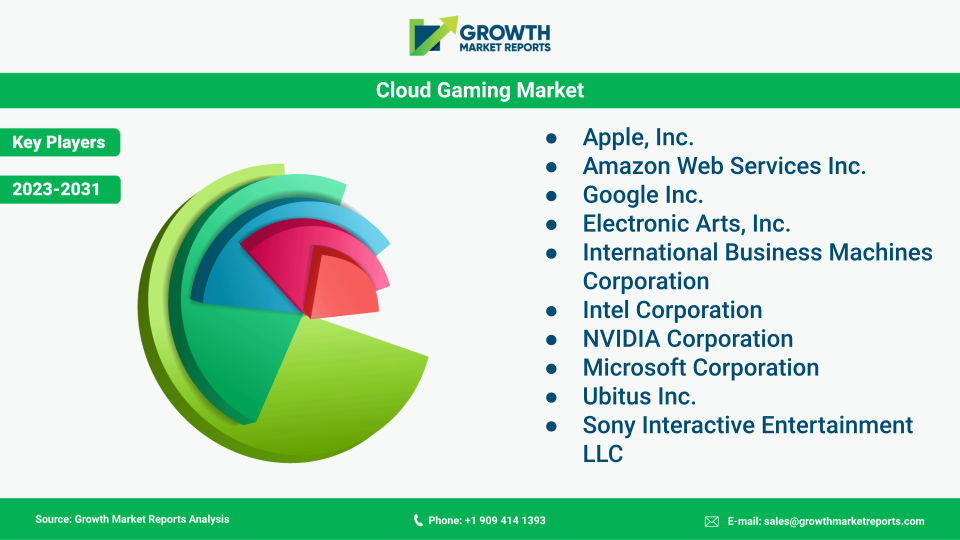
Key players competing in the global cloud gaming market share are Apple, Inc.; Amazon Web Services Inc.; Google Inc.; Electronic Arts, Inc.; International Business Machines Corporation; Intel Corporation; NVIDIA Corporation; Microsoft Corporation; Ubitus Inc.; and Sony Interactive Entertainment LLC.

The main market players are continuously engaged in various development strategies such as mergers and acquisitions, research and developments, investments for innovative products, and collaborations. For instance, Tencent partnered with a chip designer company called NVIDIA Corporation to introduce cloud gaming in China in December 2019.

Cloud Gaming Market Key Players

Frequently Asked Questions

Cloud gaming platforms offer tailored experiences for casual, avid, and hardcore gamers by providing flexible pricing, diverse game libraries, high-quality graphics, and features like cross-platform play and esports integration.

Cloud gaming solutions include video streaming, where games are rendered on remote servers and streamed in real-time, and file streaming, which allows users to play while downloading game files in segments. Both solutions cater to different user needs and network conditions.

Challenges include network reliability and latency, especially in regions with underdeveloped infrastructure, as well as concerns over data privacy, security, and intellectual property protection.

Major players include Microsoft (Xbox Cloud Gaming), NVIDIA (GeForce NOW), Sony Interactive Entertainment (PlayStation Now), Google (Stadia), Amazon (Luna), Tencent Cloud, Shadow, Ubitus, and Blacknut.

The cloud gaming market is segmented into infrastructure (cloud servers, data centers), game platform services (streaming platforms, digital storefronts), and content services (game licensing, aggregation, and distribution).

Smartphones are the most popular devices for cloud gaming in 2024, followed by tablets, gaming consoles, PCs & laptops, and smart TVs. The market is shifting towards device-agnostic gaming experiences.

Key growth drivers include the adoption of 5G technology, increasing penetration of high-speed internet, the popularity of subscription-based gaming services, and advancements in cloud and edge computing.

North America currently leads the cloud gaming market, followed by Asia Pacific and Europe. Asia Pacific is the fastest-growing region due to its large gamer population and rapid digital infrastructure development.

The cloud gaming market is expected to grow at a CAGR of 44.8% from 2025 to 2033, reaching an estimated value of USD 54.7 billion by 2033.

As of 2024, the global cloud gaming market reached USD 2.6 billion, with strong growth driven by technological advancements and increasing consumer demand.

Table Of Content

Chapter 1 Executive Summary
Chapter 2 Assumptions and Acronyms Used
Chapter 3 Research Methodology
Chapter 4 Cloud Gaming Market Overview
   4.1 Introduction
      4.1.1 Market Taxonomy
      4.1.2 Market Definition
      4.1.3 Macro-Economic Factors Impacting the Market Growth
   4.2 Cloud Gaming Market Dynamics
      4.2.1 Market Drivers
      4.2.2 Market Restraints
      4.2.3 Market Opportunity
   4.3 Cloud Gaming Market - Supply Chain Analysis
      4.3.1 List of Key Suppliers
      4.3.2 List of Key Distributors
      4.3.3 List of Key Consumers
   4.4 Key Forces Shaping the Cloud Gaming Market
      4.4.1 Bargaining Power of Suppliers
      4.4.2 Bargaining Power of Buyers
      4.4.3 Threat of Substitution
      4.4.4 Threat of New Entrants
      4.4.5 Competitive Rivalry
   4.5 Global Cloud Gaming Market Size & Forecast, 2023-2032
      4.5.1 Cloud Gaming Market Size and Y-o-Y Growth
      4.5.2 Cloud Gaming Market Absolute $ Opportunity

Chapter 5 Global Cloud Gaming Market Analysis and Forecast By Offering
   5.1 Introduction
      5.1.1 Key Market Trends & Growth Opportunities By Offering
      5.1.2 Basis Point Share (BPS) Analysis By Offering
      5.1.3 Absolute $ Opportunity Assessment By Offering
   5.2 Cloud Gaming Market Size Forecast By Offering
      5.2.1 Infrastructure
      5.2.2 Game Platform Services
      5.2.3 Content Services
   5.3 Market Attractiveness Analysis By Offering

Chapter 6 Global Cloud Gaming Market Analysis and Forecast By Device Type
   6.1 Introduction
      6.1.1 Key Market Trends & Growth Opportunities By Device Type
      6.1.2 Basis Point Share (BPS) Analysis By Device Type
      6.1.3 Absolute $ Opportunity Assessment By Device Type
   6.2 Cloud Gaming Market Size Forecast By Device Type
      6.2.1 Smartphones
      6.2.2 Tablets
      6.2.3 Gaming Consoles
      6.2.4 PCs & Laptops
      6.2.5 Smart TVs
      6.2.6 Others
   6.3 Market Attractiveness Analysis By Device Type

Chapter 7 Global Cloud Gaming Market Analysis and Forecast By Gamer Type
   7.1 Introduction
      7.1.1 Key Market Trends & Growth Opportunities By Gamer Type
      7.1.2 Basis Point Share (BPS) Analysis By Gamer Type
      7.1.3 Absolute $ Opportunity Assessment By Gamer Type
   7.2 Cloud Gaming Market Size Forecast By Gamer Type
      7.2.1 Casual Gamers
      7.2.2 Avid Gamers
      7.2.3 Hardcore Gamers
   7.3 Market Attractiveness Analysis By Gamer Type

Chapter 8 Global Cloud Gaming Market Analysis and Forecast By Solution
   8.1 Introduction
      8.1.1 Key Market Trends & Growth Opportunities By Solution
      8.1.2 Basis Point Share (BPS) Analysis By Solution
      8.1.3 Absolute $ Opportunity Assessment By Solution
   8.2 Cloud Gaming Market Size Forecast By Solution
      8.2.1 Video Streaming
      8.2.2 File Streaming
   8.3 Market Attractiveness Analysis By Solution

Chapter 9 Global Cloud Gaming Market Analysis and Forecast by Region
   9.1 Introduction
      9.1.1 Key Market Trends & Growth Opportunities By Region
      9.1.2 Basis Point Share (BPS) Analysis By Region
      9.1.3 Absolute $ Opportunity Assessment By Region
   9.2 Cloud Gaming Market Size Forecast By Region
      9.2.1 North America
      9.2.2 Europe
      9.2.3 Asia Pacific
      9.2.4 Latin America
      9.2.5 Middle East & Africa (MEA)
   9.3 Market Attractiveness Analysis By Region

Chapter 10 Coronavirus Disease (COVID-19) Impact 
   10.1 Introduction 
   10.2 Current & Future Impact Analysis 
   10.3 Economic Impact Analysis 
   10.4 Government Policies 
   10.5 Investment Scenario

Chapter 11 North America Cloud Gaming Analysis and Forecast
   11.1 Introduction
   11.2 North America Cloud Gaming Market Size Forecast by Country
      11.2.1 U.S.
      11.2.2 Canada
   11.3 Basis Point Share (BPS) Analysis by Country
   11.4 Absolute $ Opportunity Assessment by Country
   11.5 Market Attractiveness Analysis by Country
   11.6 North America Cloud Gaming Market Size Forecast By Offering
      11.6.1 Infrastructure
      11.6.2 Game Platform Services
      11.6.3 Content Services
   11.7 Basis Point Share (BPS) Analysis By Offering 
   11.8 Absolute $ Opportunity Assessment By Offering 
   11.9 Market Attractiveness Analysis By Offering
   11.10 North America Cloud Gaming Market Size Forecast By Device Type
      11.10.1 Smartphones
      11.10.2 Tablets
      11.10.3 Gaming Consoles
      11.10.4 PCs & Laptops
      11.10.5 Smart TVs
      11.10.6 Others
   11.11 Basis Point Share (BPS) Analysis By Device Type 
   11.12 Absolute $ Opportunity Assessment By Device Type 
   11.13 Market Attractiveness Analysis By Device Type
   11.14 North America Cloud Gaming Market Size Forecast By Gamer Type
      11.14.1 Casual Gamers
      11.14.2 Avid Gamers
      11.14.3 Hardcore Gamers
   11.15 Basis Point Share (BPS) Analysis By Gamer Type 
   11.16 Absolute $ Opportunity Assessment By Gamer Type 
   11.17 Market Attractiveness Analysis By Gamer Type
   11.18 North America Cloud Gaming Market Size Forecast By Solution
      11.18.1 Video Streaming
      11.18.2 File Streaming
   11.19 Basis Point Share (BPS) Analysis By Solution 
   11.20 Absolute $ Opportunity Assessment By Solution 
   11.21 Market Attractiveness Analysis By Solution

Chapter 12 Europe Cloud Gaming Analysis and Forecast
   12.1 Introduction
   12.2 Europe Cloud Gaming Market Size Forecast by Country
      12.2.1 Germany
      12.2.2 France
      12.2.3 Italy
      12.2.4 U.K.
      12.2.5 Spain
      12.2.6 Russia
      12.2.7 Rest of Europe
   12.3 Basis Point Share (BPS) Analysis by Country
   12.4 Absolute $ Opportunity Assessment by Country
   12.5 Market Attractiveness Analysis by Country
   12.6 Europe Cloud Gaming Market Size Forecast By Offering
      12.6.1 Infrastructure
      12.6.2 Game Platform Services
      12.6.3 Content Services
   12.7 Basis Point Share (BPS) Analysis By Offering 
   12.8 Absolute $ Opportunity Assessment By Offering 
   12.9 Market Attractiveness Analysis By Offering
   12.10 Europe Cloud Gaming Market Size Forecast By Device Type
      12.10.1 Smartphones
      12.10.2 Tablets
      12.10.3 Gaming Consoles
      12.10.4 PCs & Laptops
      12.10.5 Smart TVs
      12.10.6 Others
   12.11 Basis Point Share (BPS) Analysis By Device Type 
   12.12 Absolute $ Opportunity Assessment By Device Type 
   12.13 Market Attractiveness Analysis By Device Type
   12.14 Europe Cloud Gaming Market Size Forecast By Gamer Type
      12.14.1 Casual Gamers
      12.14.2 Avid Gamers
      12.14.3 Hardcore Gamers
   12.15 Basis Point Share (BPS) Analysis By Gamer Type 
   12.16 Absolute $ Opportunity Assessment By Gamer Type 
   12.17 Market Attractiveness Analysis By Gamer Type
   12.18 Europe Cloud Gaming Market Size Forecast By Solution
      12.18.1 Video Streaming
      12.18.2 File Streaming
   12.19 Basis Point Share (BPS) Analysis By Solution 
   12.20 Absolute $ Opportunity Assessment By Solution 
   12.21 Market Attractiveness Analysis By Solution

Chapter 13 Asia Pacific Cloud Gaming Analysis and Forecast
   13.1 Introduction
   13.2 Asia Pacific Cloud Gaming Market Size Forecast by Country
      13.2.1 China
      13.2.2 Japan
      13.2.3 South Korea
      13.2.4 India
      13.2.5 Australia
      13.2.6 South East Asia (SEA)
      13.2.7 Rest of Asia Pacific (APAC)
   13.3 Basis Point Share (BPS) Analysis by Country
   13.4 Absolute $ Opportunity Assessment by Country
   13.5 Market Attractiveness Analysis by Country
   13.6 Asia Pacific Cloud Gaming Market Size Forecast By Offering
      13.6.1 Infrastructure
      13.6.2 Game Platform Services
      13.6.3 Content Services
   13.7 Basis Point Share (BPS) Analysis By Offering 
   13.8 Absolute $ Opportunity Assessment By Offering 
   13.9 Market Attractiveness Analysis By Offering
   13.10 Asia Pacific Cloud Gaming Market Size Forecast By Device Type
      13.10.1 Smartphones
      13.10.2 Tablets
      13.10.3 Gaming Consoles
      13.10.4 PCs & Laptops
      13.10.5 Smart TVs
      13.10.6 Others
   13.11 Basis Point Share (BPS) Analysis By Device Type 
   13.12 Absolute $ Opportunity Assessment By Device Type 
   13.13 Market Attractiveness Analysis By Device Type
   13.14 Asia Pacific Cloud Gaming Market Size Forecast By Gamer Type
      13.14.1 Casual Gamers
      13.14.2 Avid Gamers
      13.14.3 Hardcore Gamers
   13.15 Basis Point Share (BPS) Analysis By Gamer Type 
   13.16 Absolute $ Opportunity Assessment By Gamer Type 
   13.17 Market Attractiveness Analysis By Gamer Type
   13.18 Asia Pacific Cloud Gaming Market Size Forecast By Solution
      13.18.1 Video Streaming
      13.18.2 File Streaming
   13.19 Basis Point Share (BPS) Analysis By Solution 
   13.20 Absolute $ Opportunity Assessment By Solution 
   13.21 Market Attractiveness Analysis By Solution

Chapter 14 Latin America Cloud Gaming Analysis and Forecast
   14.1 Introduction
   14.2 Latin America Cloud Gaming Market Size Forecast by Country
      14.2.1 Brazil
      14.2.2 Mexico
      14.2.3 Rest of Latin America (LATAM)
   14.3 Basis Point Share (BPS) Analysis by Country
   14.4 Absolute $ Opportunity Assessment by Country
   14.5 Market Attractiveness Analysis by Country
   14.6 Latin America Cloud Gaming Market Size Forecast By Offering
      14.6.1 Infrastructure
      14.6.2 Game Platform Services
      14.6.3 Content Services
   14.7 Basis Point Share (BPS) Analysis By Offering 
   14.8 Absolute $ Opportunity Assessment By Offering 
   14.9 Market Attractiveness Analysis By Offering
   14.10 Latin America Cloud Gaming Market Size Forecast By Device Type
      14.10.1 Smartphones
      14.10.2 Tablets
      14.10.3 Gaming Consoles
      14.10.4 PCs & Laptops
      14.10.5 Smart TVs
      14.10.6 Others
   14.11 Basis Point Share (BPS) Analysis By Device Type 
   14.12 Absolute $ Opportunity Assessment By Device Type 
   14.13 Market Attractiveness Analysis By Device Type
   14.14 Latin America Cloud Gaming Market Size Forecast By Gamer Type
      14.14.1 Casual Gamers
      14.14.2 Avid Gamers
      14.14.3 Hardcore Gamers
   14.15 Basis Point Share (BPS) Analysis By Gamer Type 
   14.16 Absolute $ Opportunity Assessment By Gamer Type 
   14.17 Market Attractiveness Analysis By Gamer Type
   14.18 Latin America Cloud Gaming Market Size Forecast By Solution
      14.18.1 Video Streaming
      14.18.2 File Streaming
   14.19 Basis Point Share (BPS) Analysis By Solution 
   14.20 Absolute $ Opportunity Assessment By Solution 
   14.21 Market Attractiveness Analysis By Solution

Chapter 15 Middle East & Africa (MEA) Cloud Gaming Analysis and Forecast
   15.1 Introduction
   15.2 Middle East & Africa (MEA) Cloud Gaming Market Size Forecast by Country
      15.2.1 Saudi Arabia
      15.2.2 South Africa
      15.2.3 UAE
      15.2.4 Rest of Middle East & Africa (MEA)
   15.3 Basis Point Share (BPS) Analysis by Country
   15.4 Absolute $ Opportunity Assessment by Country
   15.5 Market Attractiveness Analysis by Country
   15.6 Middle East & Africa (MEA) Cloud Gaming Market Size Forecast By Offering
      15.6.1 Infrastructure
      15.6.2 Game Platform Services
      15.6.3 Content Services
   15.7 Basis Point Share (BPS) Analysis By Offering 
   15.8 Absolute $ Opportunity Assessment By Offering 
   15.9 Market Attractiveness Analysis By Offering
   15.10 Middle East & Africa (MEA) Cloud Gaming Market Size Forecast By Device Type
      15.10.1 Smartphones
      15.10.2 Tablets
      15.10.3 Gaming Consoles
      15.10.4 PCs & Laptops
      15.10.5 Smart TVs
      15.10.6 Others
   15.11 Basis Point Share (BPS) Analysis By Device Type 
   15.12 Absolute $ Opportunity Assessment By Device Type 
   15.13 Market Attractiveness Analysis By Device Type
   15.14 Middle East & Africa (MEA) Cloud Gaming Market Size Forecast By Gamer Type
      15.14.1 Casual Gamers
      15.14.2 Avid Gamers
      15.14.3 Hardcore Gamers
   15.15 Basis Point Share (BPS) Analysis By Gamer Type 
   15.16 Absolute $ Opportunity Assessment By Gamer Type 
   15.17 Market Attractiveness Analysis By Gamer Type
   15.18 Middle East & Africa (MEA) Cloud Gaming Market Size Forecast By Solution
      15.18.1 Video Streaming
      15.18.2 File Streaming
   15.19 Basis Point Share (BPS) Analysis By Solution 
   15.20 Absolute $ Opportunity Assessment By Solution 
   15.21 Market Attractiveness Analysis By Solution

Chapter 16 Competition Landscape 
   16.1 Cloud Gaming Market: Competitive Dashboard
   16.2 Global Cloud Gaming Market: Market Share Analysis, 2023
   16.3 Company Profiles (Details – Overview, Financials, Developments, Strategy) 
      16.3.1 Microsoft (Xbox Cloud Gaming)
NVIDIA (GeForce NOW)
Sony Interactive Entertainment (PlayStation Now)
Google (Stadia)
Amazon (Luna)
Tencent Cloud
Shadow (Blade)
Parsec
Vortex
Blacknut
Ubitus
Tencent START
NetEase Cloud Gaming
Rainway
Paperspace
LiquidSky
Boosteroid
Playkey
GameFly Streaming
Hatch Entertainment

Methodology

Our Clients

Microsoft
Honda Motor Co. Ltd.
Nestle SA
General Mills
General Electric
Dassault Aviation
Deloitte
sinopec